Art Basel Paris 2026Master Works
Group Presentation
Booth C18, Grand Palais, Paris
23 – 25 October 2026
Goodman Gallery’s presentation at Art Basel Paris also encompasses secondary market works by major historical figures, including Alexander Calder, Henri Matisse and Pablo Picasso. In 1984, the gallery presented a posthumous solo exhibition of Picasso’s career spanning the period from 1902 to 1967, marking the first time Picasso's work is shown in South Africa.
Explore the Stand
Create a Goodman Gallery account to view our full selection of available works, access pricing and check out online.
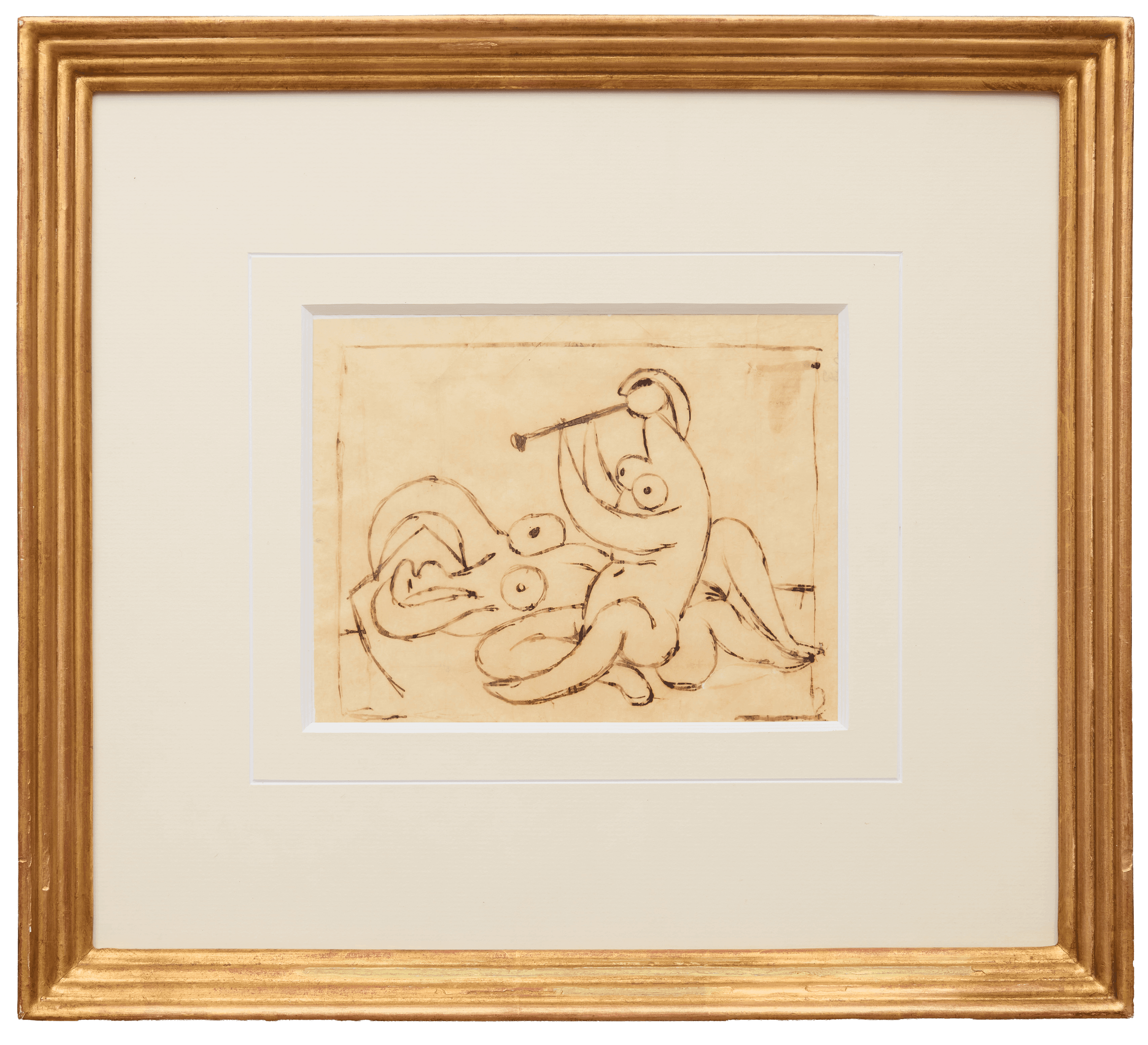
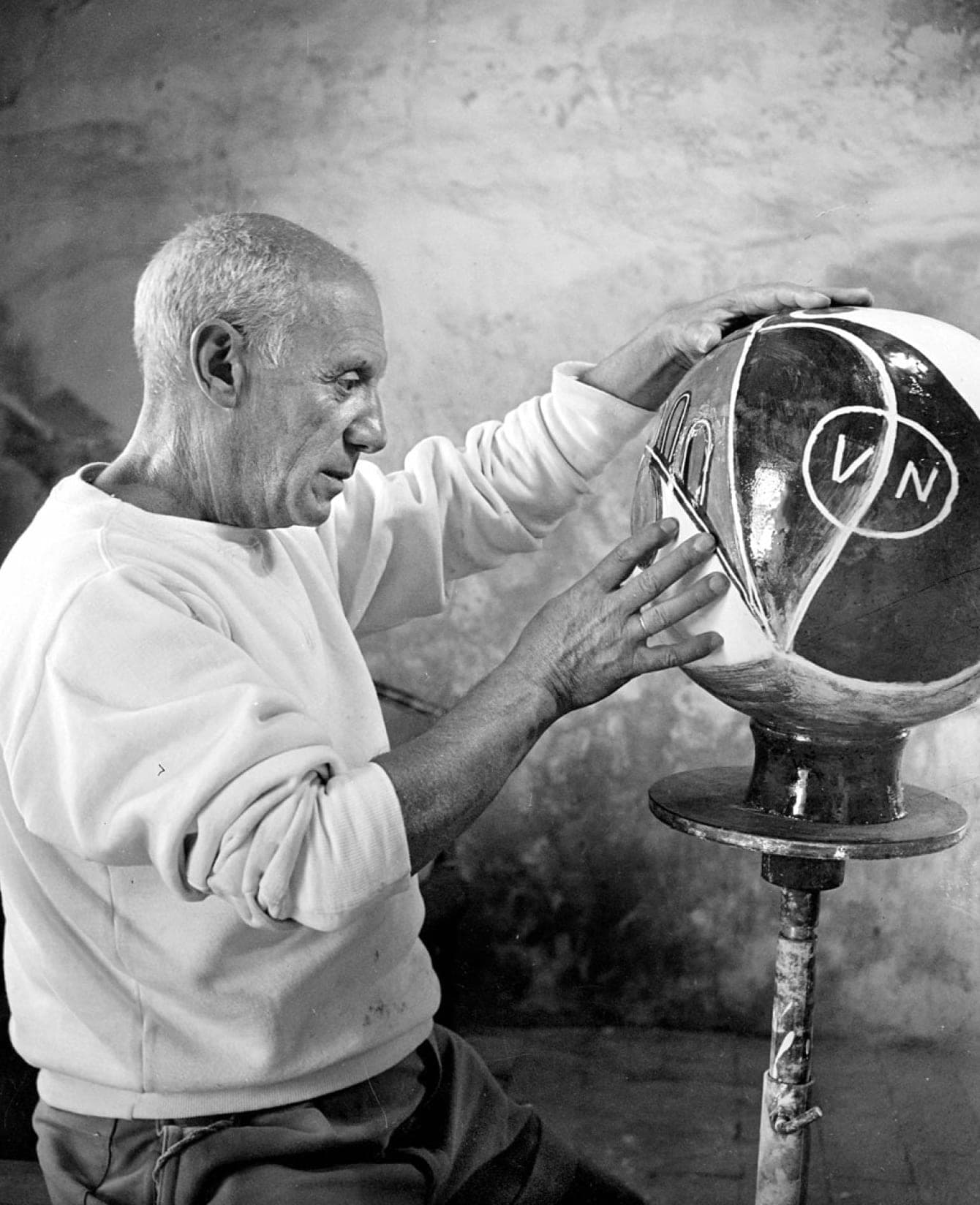
In Flûtiste assise et dormeuse (Seated Flutist and Sleeping Woman), Picasso employs one of the most intimate and recurring motifs of his 1930s output: the watchful musician serenading a reclining, sleeping nude. Created during a crucial period defined by his intense passion for his young muse Marie-Thérèse Walter, this work on paper captures the neoclassical voyeurism and Mediterranean arcadian ideal that dominated Picasso's imagination throughout the early 1930s, most famously codified in his contemporaneous prints for the Vollard Suite.
The composition is built around a stark, expressive contrast in posture and energy. On the left, the sleeping figure reclines in a fluid, voluptuous cascade of sinuous lines. Her limbs, breasts, and features are rendered with rounded, biomorphic curves that reflect Marie-Thérèse’s unmistakable physical influence on Picasso’s work during this era. Beside her, a seated flutist holds a pipe to her lips, her body structured with upright, dynamic arcs. Picasso’s ink line varies from thin, fluid contours to dark, pooling strokes where the wet ink saturates the paper. A quick, hand-drawn linear border frames the scene, emphasizing the drawing’s status as a private, captured moment.


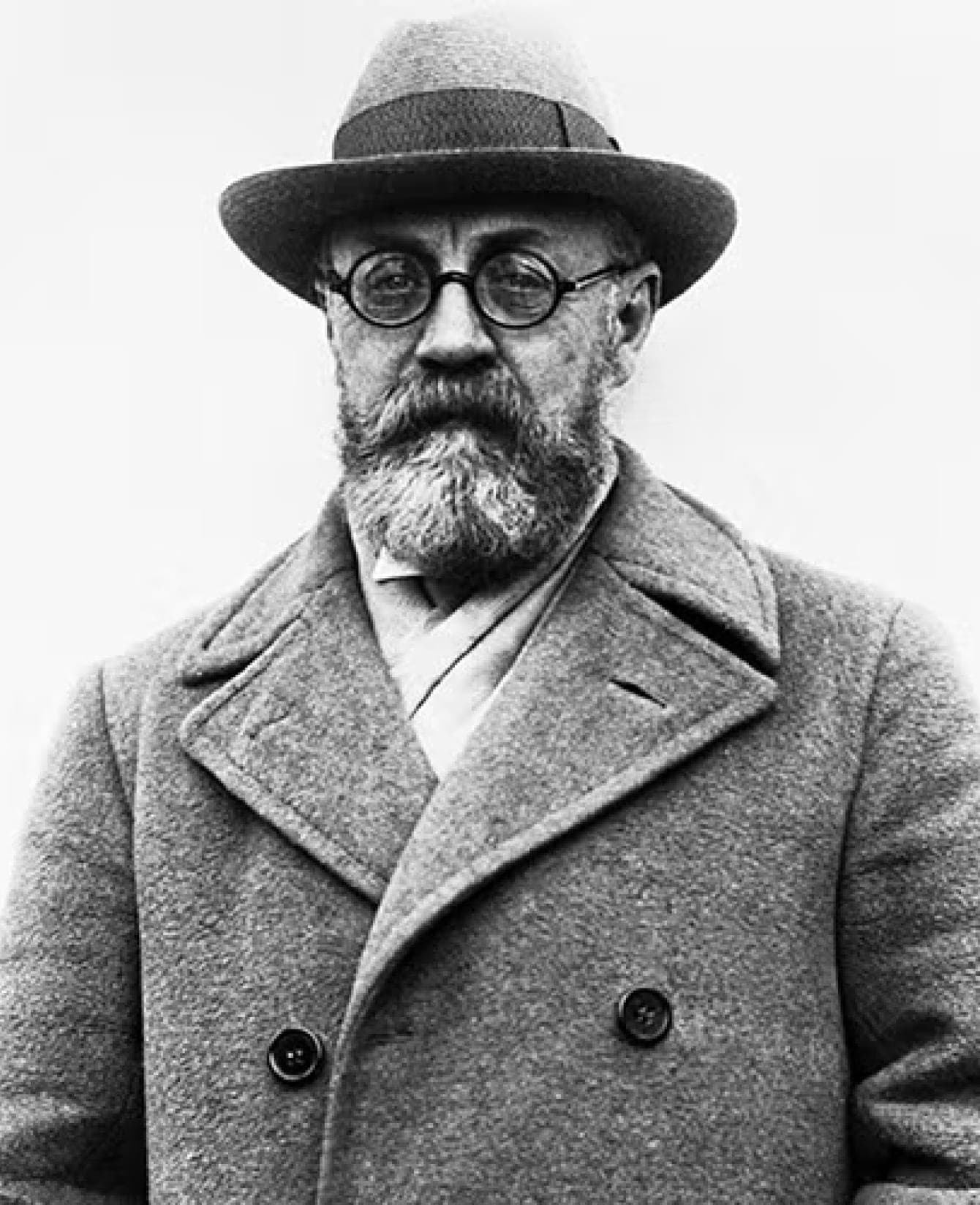
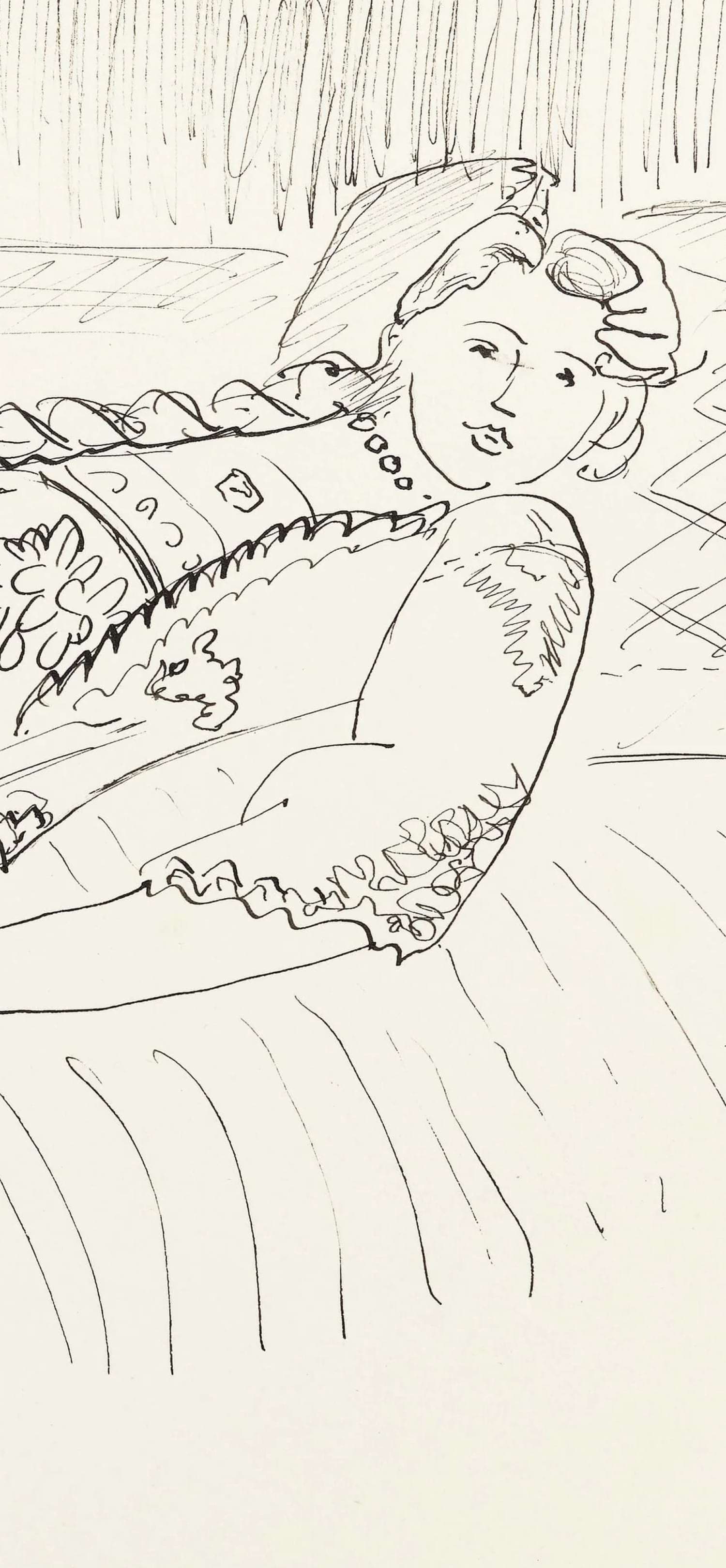
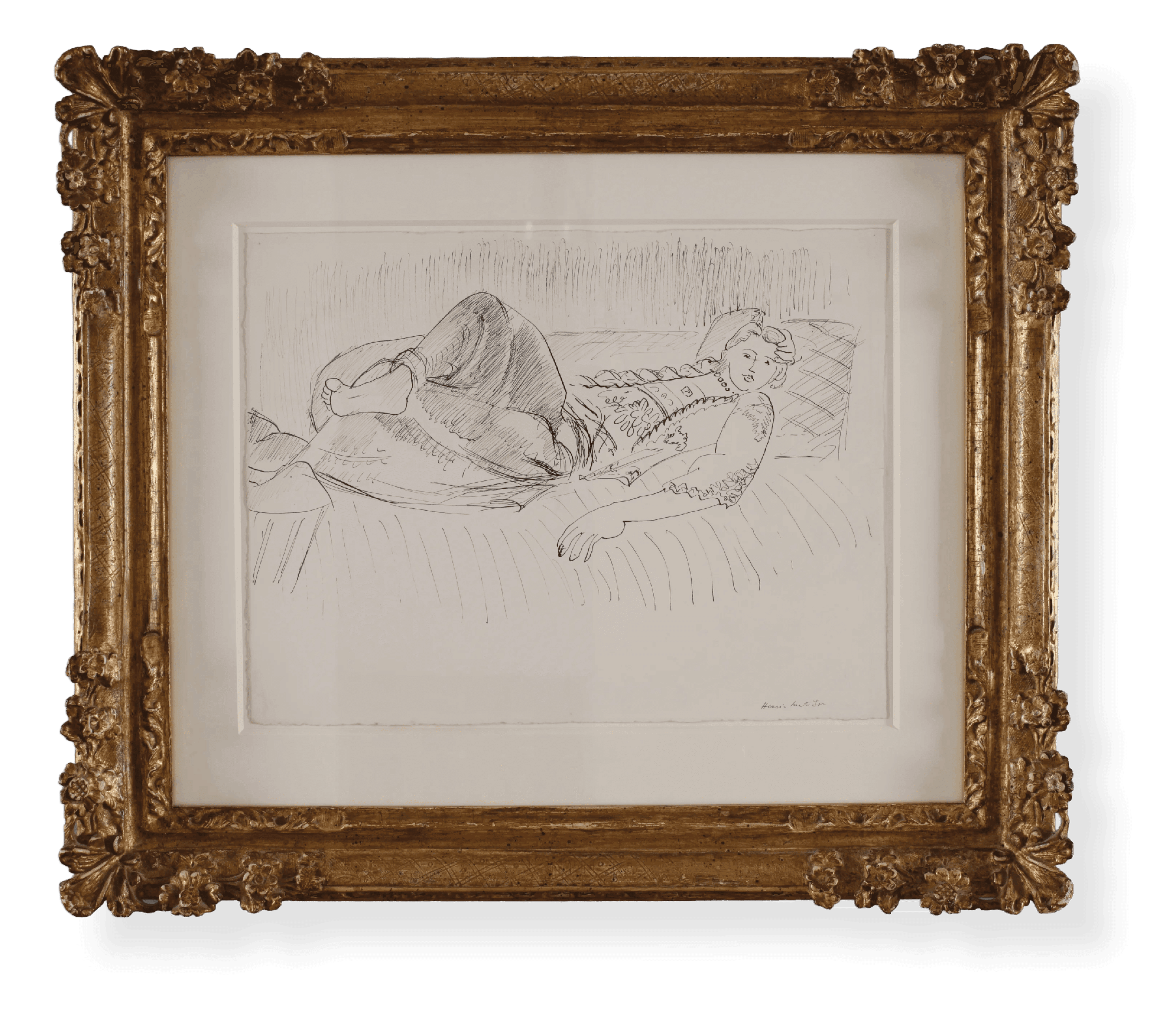
In Odalisque étendue (Reclining Odalisk), Henri Matisse captures the sensual luxury and decorative harmony that defined his celebrated Nice period (1917–1929). Executed during the culmination of his famed Odalisques cycle, this drawing demonstrates Matisse’s extraordinary capacity to synthesize line, light, and ornament through the most fluid of graphic mediums, pen and ink on paper. Reclining across a striped daybed, the model, likely Henriette Darricarrère, his primary muse throughout the 1920s, is transformed into a study of relaxed elegance, framed by the decorative rhythms of an imagined Orientalist interior.
Matisse’s penwork exhibits a particular mastery in linear economy and textural variation. The composition pivots on the reclining figure, her upper body propped against cushions, while her legs are bent up toward the left of the composition, her bare foot resting casually on the support of her other leg. Matisse uses clean, unbroken contours to delineate the smooth expanse of her arm, neck, and serene face. In contrast, he applies a rich vocabulary of decorative hatching to depict her elaborate, embroidered Romanian blouse and voluminous trousers. Fine, parallel vertical hatching along the upper margin suggests wallpaper or light filtering through a shuttered window, while quick crosshatching casts soft shadows under her legs and pillow, giving weight to her posture without muddying the brightness of the paper.


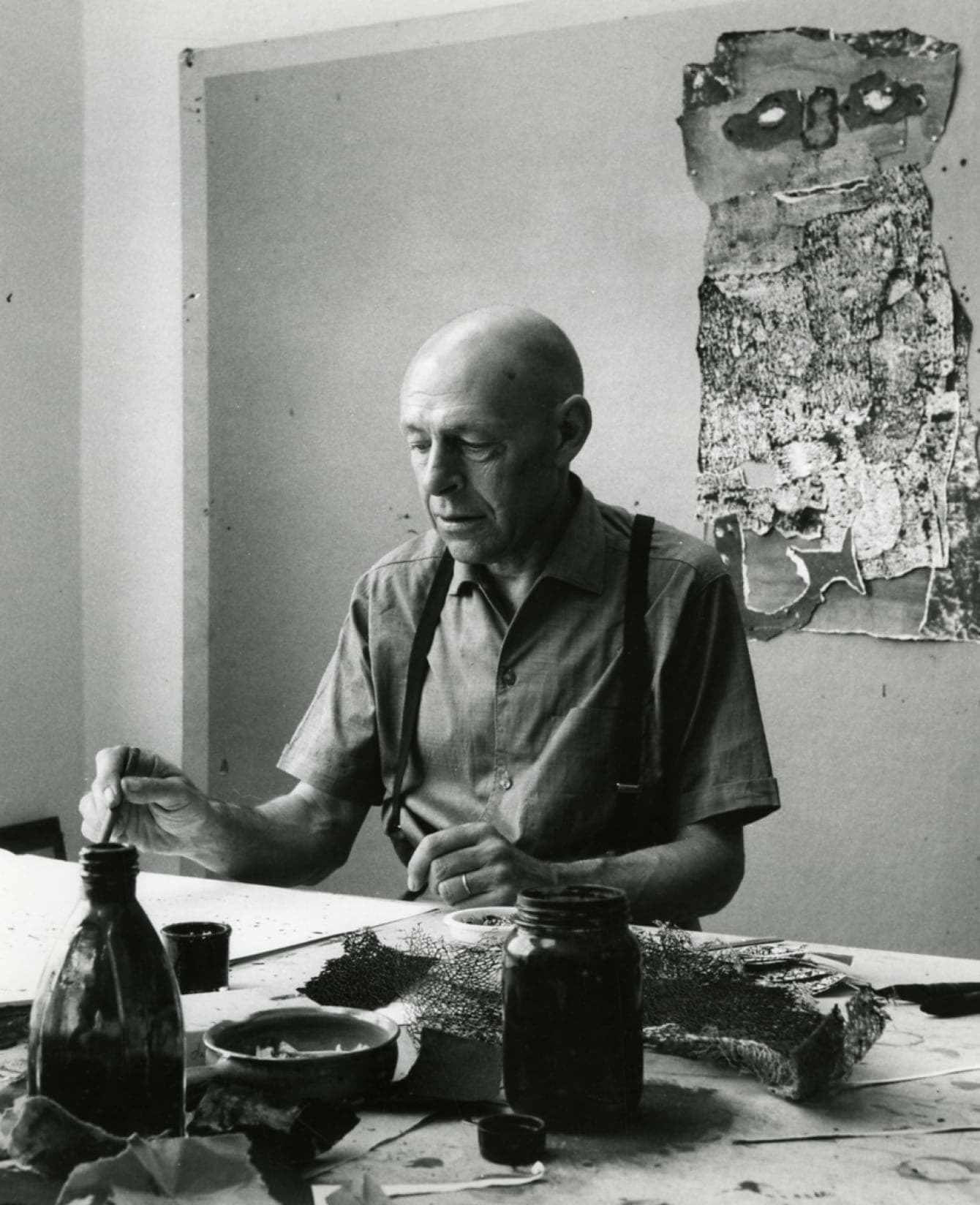
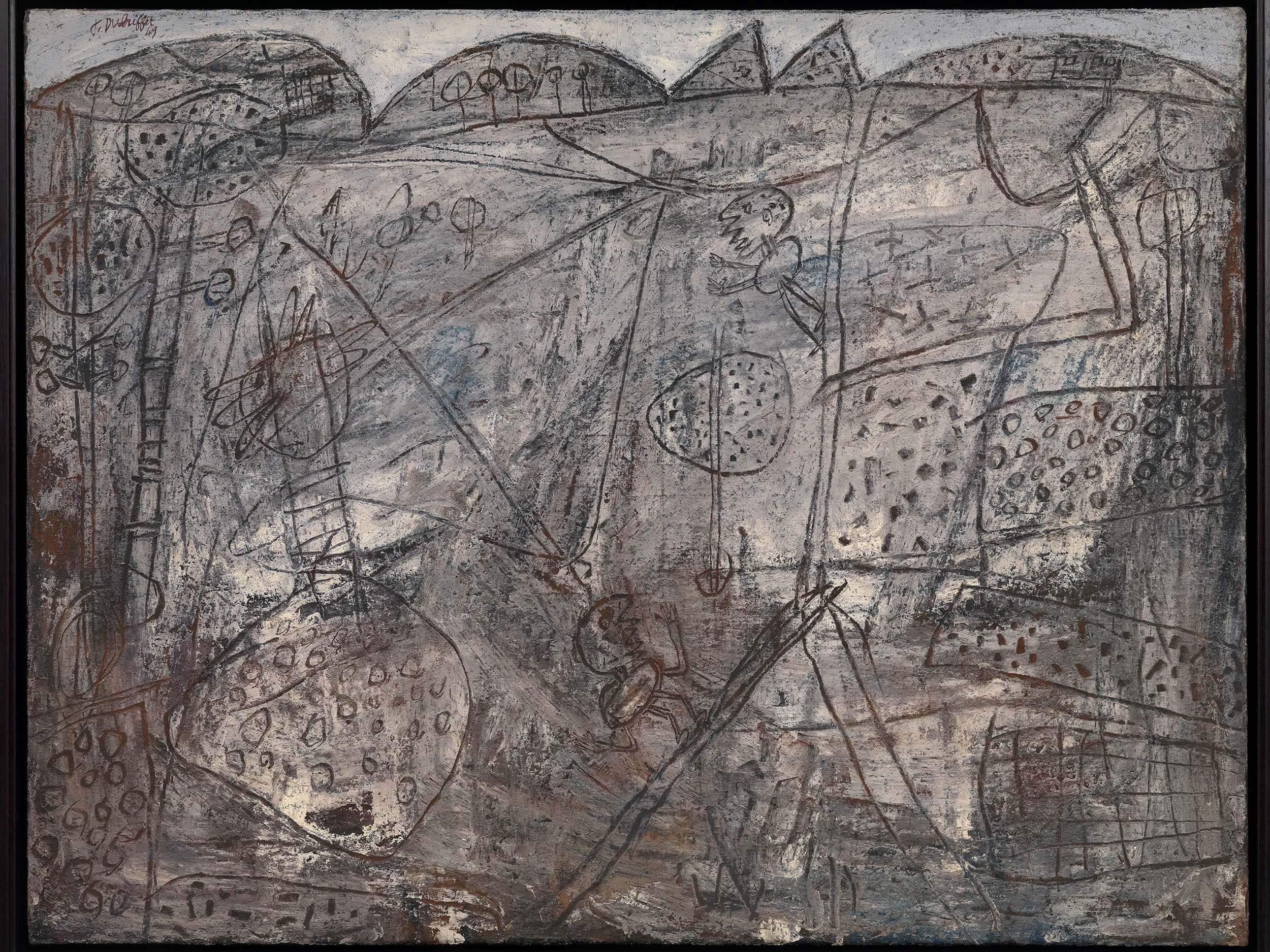
In Paysage gris aux taches cerise (Grey Landscape with Cherry Spots), Jean Dubuffet offers an uncompromising vision of terrain, matter, and human existence stripped of conventional academic refinement. Executed shortly after his third transformative voyage to the Algerian Sahara in early 1949, the painting belongs to Dubuffet’s seminal Paysages grotesques (Grotesque Landscapes) cycle. In these works, he abandoned traditional linear perspective to treat the canvas as a raw, geological strata, with a flattening horizon, soil, and stick-like figures into a unified tactile plane.
The painting’s physical construction reflects Dubuffet’s core belief in Art Brut, an anti-cultural art form unburdened by institutional rules, drawing inspiration instead from children's drawings, graffiti, and self-taught creators. Here, Dubuffet uses coarse burlap as his substrate, building up thick layers of ash-grey impasto over a darker ground. Rather than applying paint strictly with a brush, he physically incises, scratches, and carves into the wet paste. Spidery, childlike outlines delineate rolling dunes, skeletal trees, and gesticulating, balloon-like figures that seem directly embedded into the earth. Interspersed throughout the chalky grey field are rhythmic, textured patches punctuated by deep red and dark maroon "cherry spots," punctuating the muted terrain with sudden bursts of raw, visceral color.


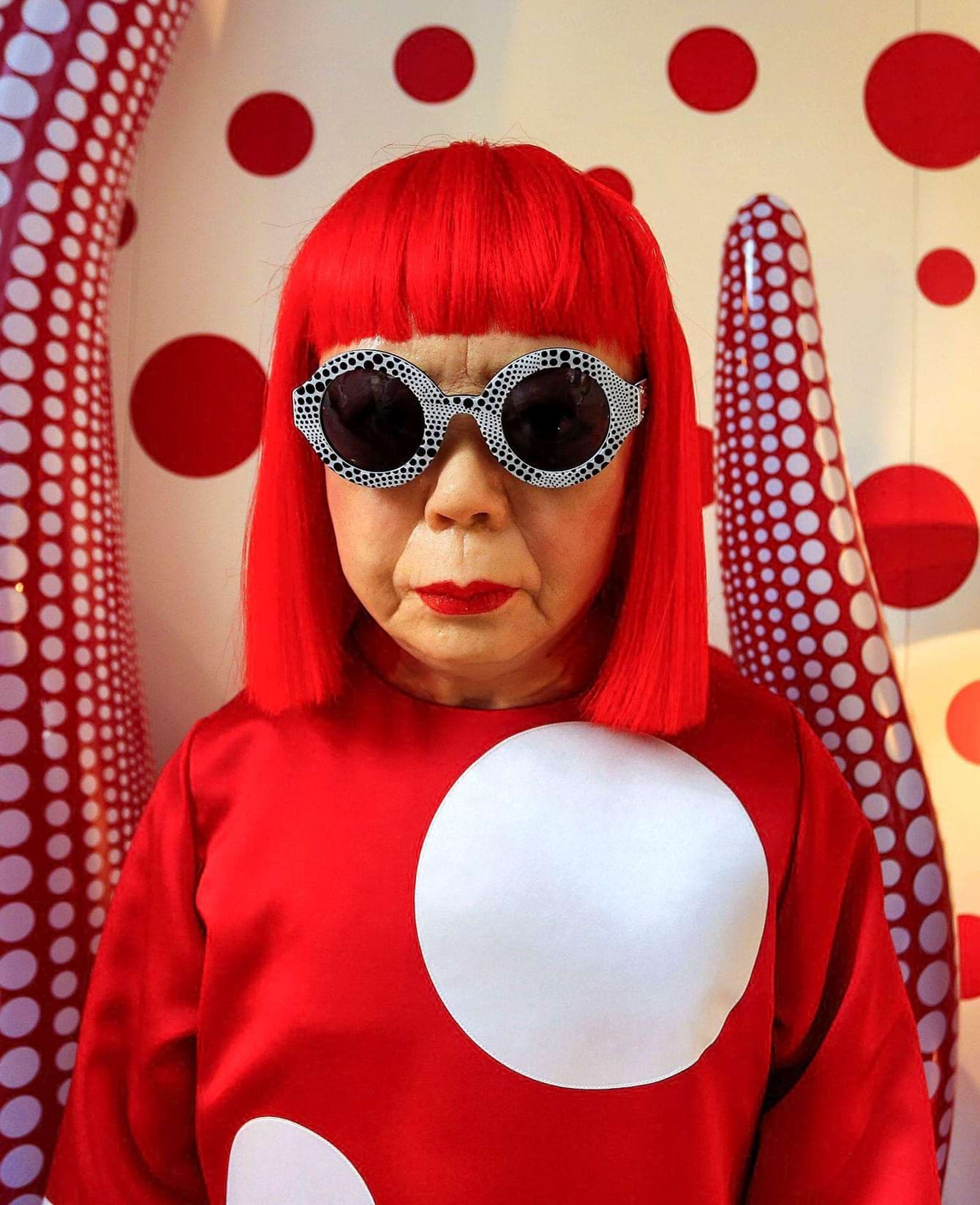
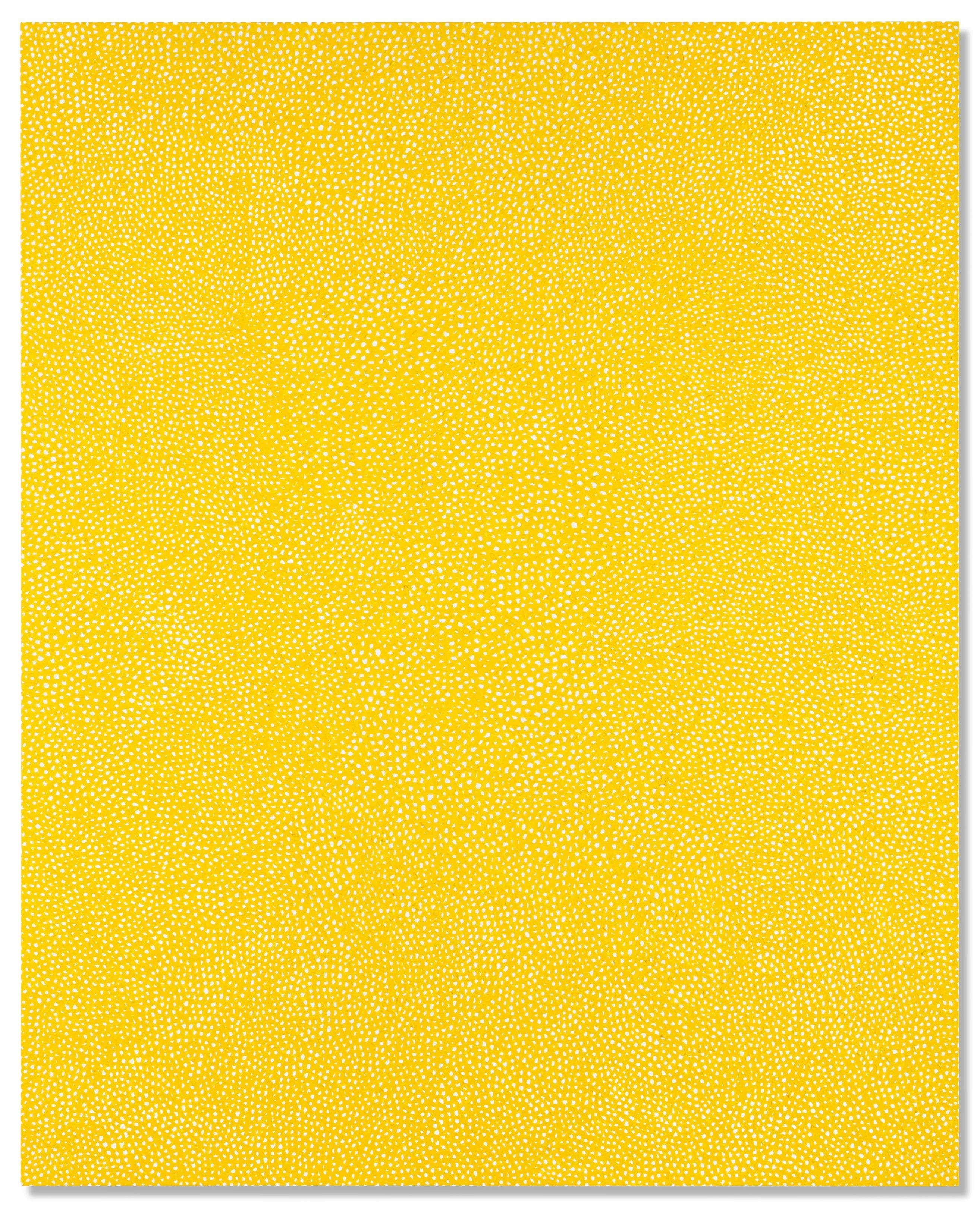
Yayoi Kusama’s Infinity-Nets (YRSEZ) 2017, immediately confronts the viewer by an expansive, luminous plane of yellow that seems to pulse with its own internal rhythm.The painting operates on two distinct perceptual levels: from across a room, it reads as a glowing, atmospheric field of golden light; up close, it reveals a dense, hyper-tactile topography of thousands of individual brushmarks.
The painting’s mechanics rely on Kusama’s signature method, a rhythmic, repetitive application of arc-like gestures. Working in thick yellow acrylic over a pale canvas ground, she repeatedly loops the brush to weave a continuous lattice. The raised edges of the impasto catch ambient light, creating tiny shadows and exposing negative space that reads as a delicate, cellular mesh. These two planes, at times, merge at the painting’s surface, and at other times diverge slightly.¹ This structural tension remains central, the eye constantly shifts between the physical weight of the paint and the illusion of depth behind it.


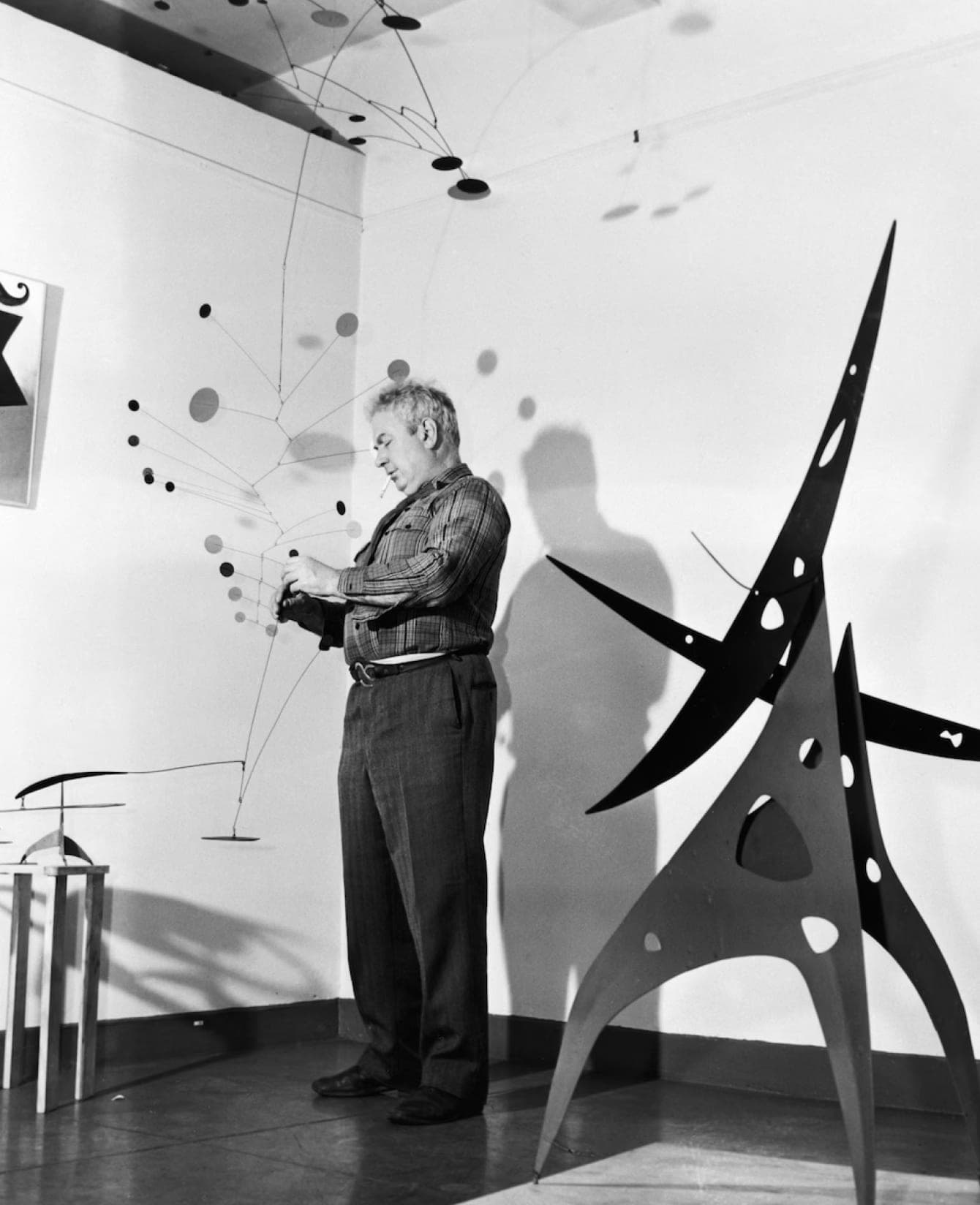
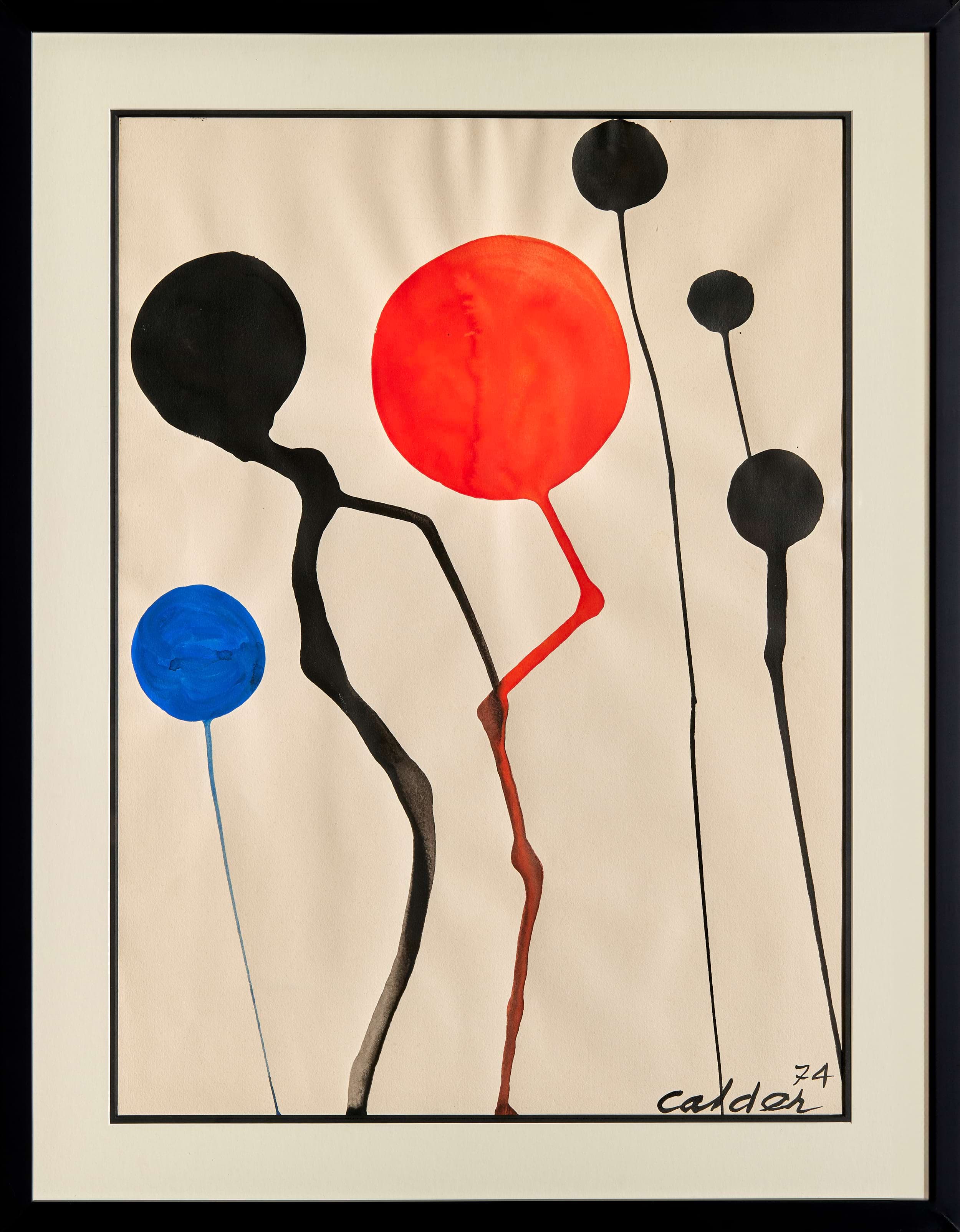
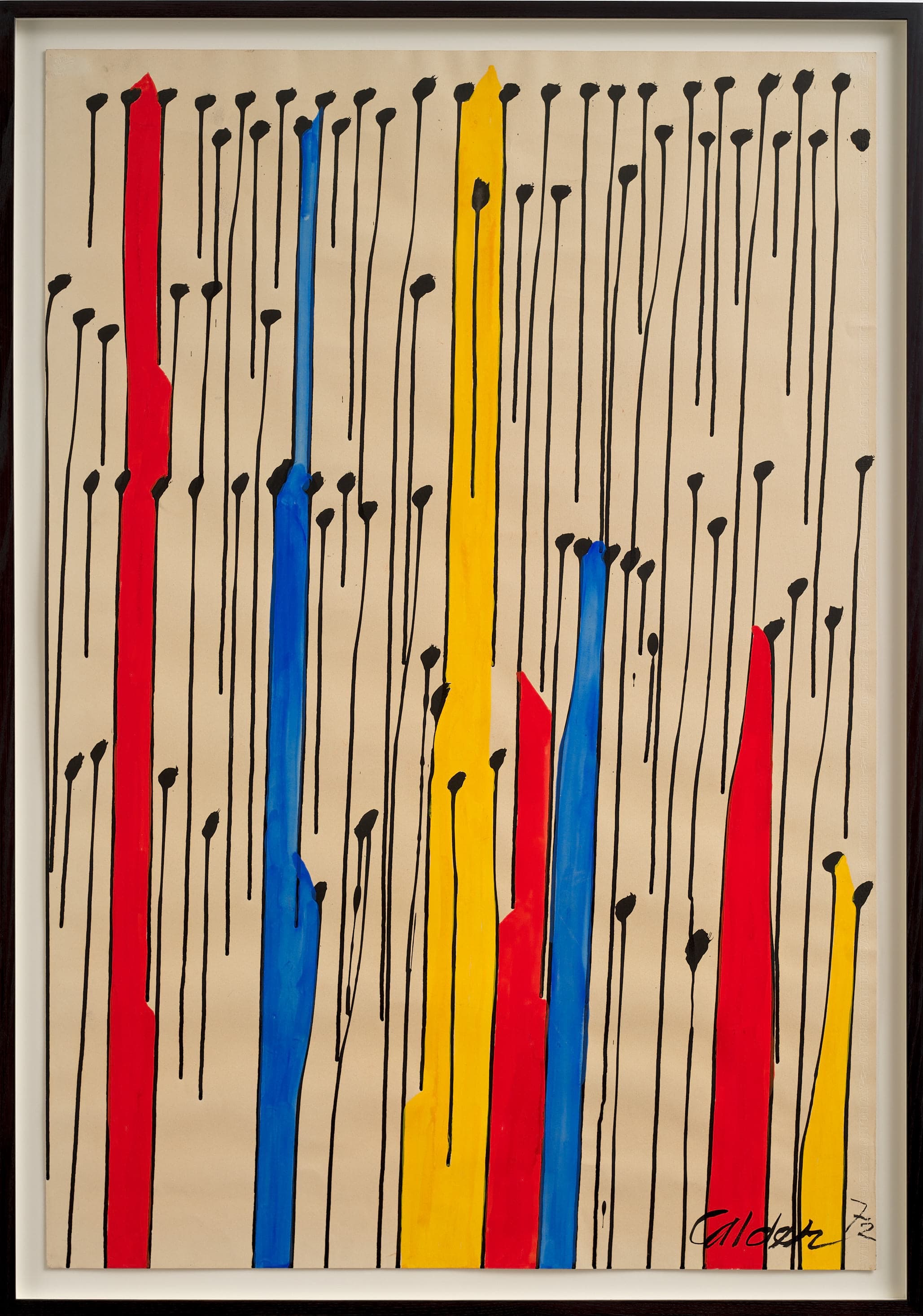
Throughout the late 1960s and 1970s, works on paper became an increasingly vital avenue for Calder. Free from the structural constraints of sheet metal, wire, and physical balance, paper afforded him an immediacy where he could execute instantaneous, intuitive compositions.¹ As art critic Jean Lipman noted of Calder's late graphic output, these works provided "a pure, liberated expression of his primary vocabulary, where line and color exist in perpetual, frozen motion."² The anthropomorphic, plant-like character of the shapes, evoking strange botanical flora or dancing figures, also connects back to his long-standing dialogue with Surrealists like Joan Miró and Jean Arp, who similarly sought to discover universal harmonies in simplified, biomorphic forms.

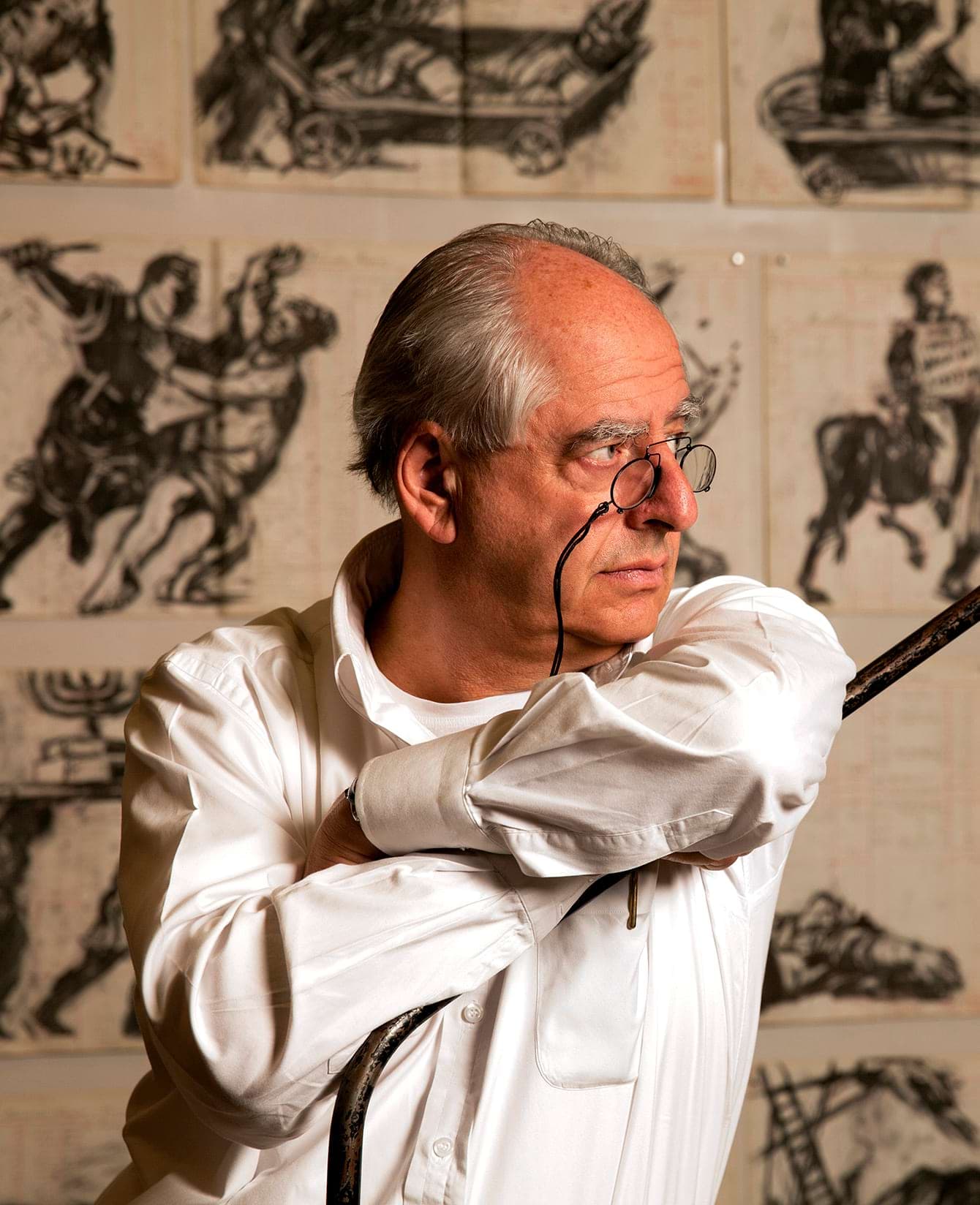
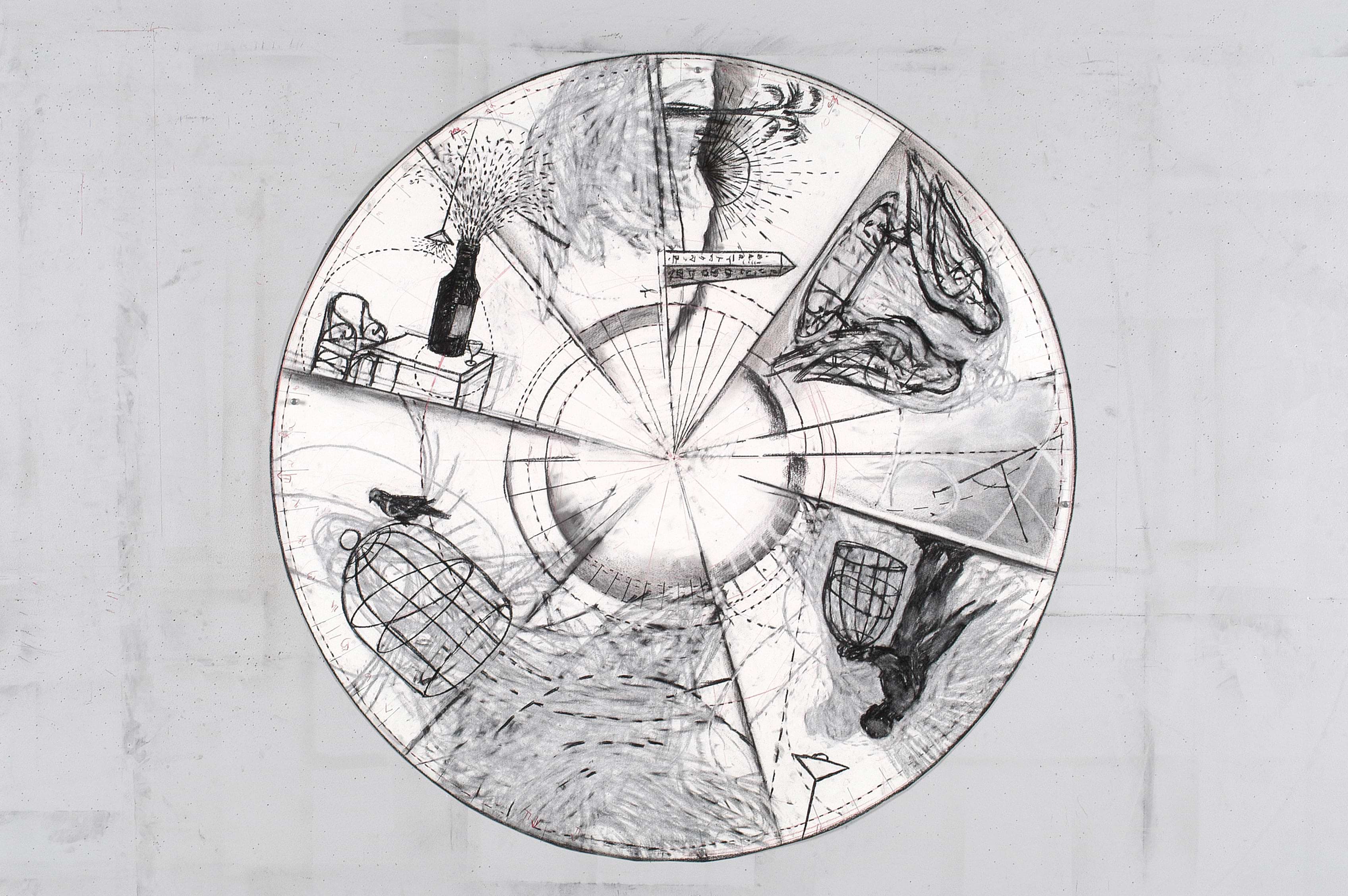
Adopting the classical Renaissance tondo (circular) format, the composition functions like an astrolabe, a camera shutter, or an optical wheel. At its core sits a solitary bird, a central symbol that resonates directly with Papageno, the bird-catcher of Mozart’s opera. Surrounding this central motif, Kentridge divides the wheel into wedge-like pie segments, each housing a distinct narrative scene: birds perched in pairs, a silhouette holding an open birdcage, an exploded birdcage lying upside down, a spilling bottle, and a desert landscape punctuated by an obelisk and the rising sun. Radiating construction lines, red pastel markings, and concentric circular guides crisscross the entire surface, making visible the geometric logic behind the illusion.
The choice of the circular frame is intimately connected to Kentridge's projection mechanics. In Preparing the Flute, Kentridge utilized projection boxes and miniature theater models where circular lenses and rotating paper disks transformed static charcoal drawings into moving light. Charcoal, Kentridge’s signature medium, is applied here with characteristic fluidity, smudged to evoke atmospheric shadow, heavily built up in jet-black strokes, and punctuated by subtle strokes of colored pastel. As art historian Kate McCrickard observed of Kentridge's opera drawings, "The drawing becomes a stage in itself, a site where themes of Enlightenment reason - symbolized by geometric lines and optics - are constantly weighed against the chaotic, dark realities of human nature and captivity."¹