Inside the Radical 60-Year Legacy of Goodman Gallery
“If I knew what I knew now, would I’ve been able to make such a move? Probably not. That’s the beauty of youth, right?” Liza Essers, owner and director of Goodman Gallery, is looking back to 2008, when she purchased the South African contemporary art gallery from its formidable founder, Linda Givon. She knew she was taking on more than a business. “I just really felt incredibly privileged to be able to hold an institution that stands for a value system that I’m aligned to.”
Givon founded Goodman Gallery in Johannesburg in 1966, at the height of South African apartheid, creating a space for artists across racial lines in a country under segregation. Some 60 years later, the gallery is marking its anniversary with exhibitions across three cities featuring artists El Anatsui, William Kentridge, Carrie Mae Weems, Yinka Shonibare and Pamela Phatsimo Sunstrum, to name a few.

For Essers, who has spent 18 years transforming Goodman into an international gallery, the milestone is also an opportunity to reflect on what it means to carry such a legacy forward. The gallery’s reach has expanded, but the artists and the values underpinning their work remain at the center.
Essers grew up in Durban and moved to Johannesburg straight out of university in 1996, two years after South Africa’s first democratic elections. Her first job, as a financial strategic consultant, was a secure choice for her mother, who had arrived in South Africa as a Libyan Jewish refugee.
By chance, her office was just down the road from Goodman Gallery. She became a regular visitor, learning about the exhibitions from senior curator Neil Dundas, and rediscovering a familiar feeling she traces to her childhood visits to Durban’s KZNSA Gallery (then NSA) and jazz clubs with her trumpet-playing father. “I could leave whatever else is outside and have space to reflect, to think, and to imagine,” she recalled. “So at the outset it was about that feeling.”

By the time Essers met Givon in the early aughts, she had left consulting to work as an independent art advisor and film producer. Givon lent her works for a multi-city exhibition marking 10 years of South African democracy, while Essers worked on films about Kentridge and Marlene Dumas.
“I just loved being in the artist studios,” she said. “That gave me so much joy.” Their relationship developed through conversations about art, artists, and the gallery’s future. When Givon retired, she entrusted Essers with the institution she had spent more than four decades building.
It was a significant inheritance. During the 1960s and ’70s, when artists who challenged the apartheid government routinely faced exile and censorship, Goodman exhibited the work of Black artists including Dumile Feni, Sydney Kumalo, and Ezrom Legae.
The gallery became the first from Africa to participate at Art Basel in 1984. It worked with artists such as Sue Williamson, whose book Resistance Art in South Africa was a landmark documentation of visual art that emerged in opposition to the apartheid regime. “I only met Linda later in her life,” Essers said, “But knowing her personality, I think when you do things with absolute passion and tenacity, then anything’s achievable.”


Givon had challenged the status quo within South Africa, and with the freedom that came post-apartheid, Essers saw the opportunity to extend Goodman’s influence across borders. From the outset, she wanted to build international careers for artists from the broader Global South, connect practices shaped by shared colonial histories, and bring artists from elsewhere to audiences on the African continent.
“The fact we were only representing South African artists limited our ability to influence the Western narrative,” she said. “From traveling to places like Brazil for the São Paulo Bienal and Cuba for the Havana Biennial, traveling throughout the continent, and being in the States and interacting with African American artists, it was clear that what was much more fascinating was being able to create a global discourse. I wanted to look at the African context more broadly.”
One of her first signings was Hank Willis Thomas, whom she met in New York. “We’ve grown up together,” she said. Her own history shaped her interests, too: She felt a particular connection to artists from North Africa, where her mother’s family were from.
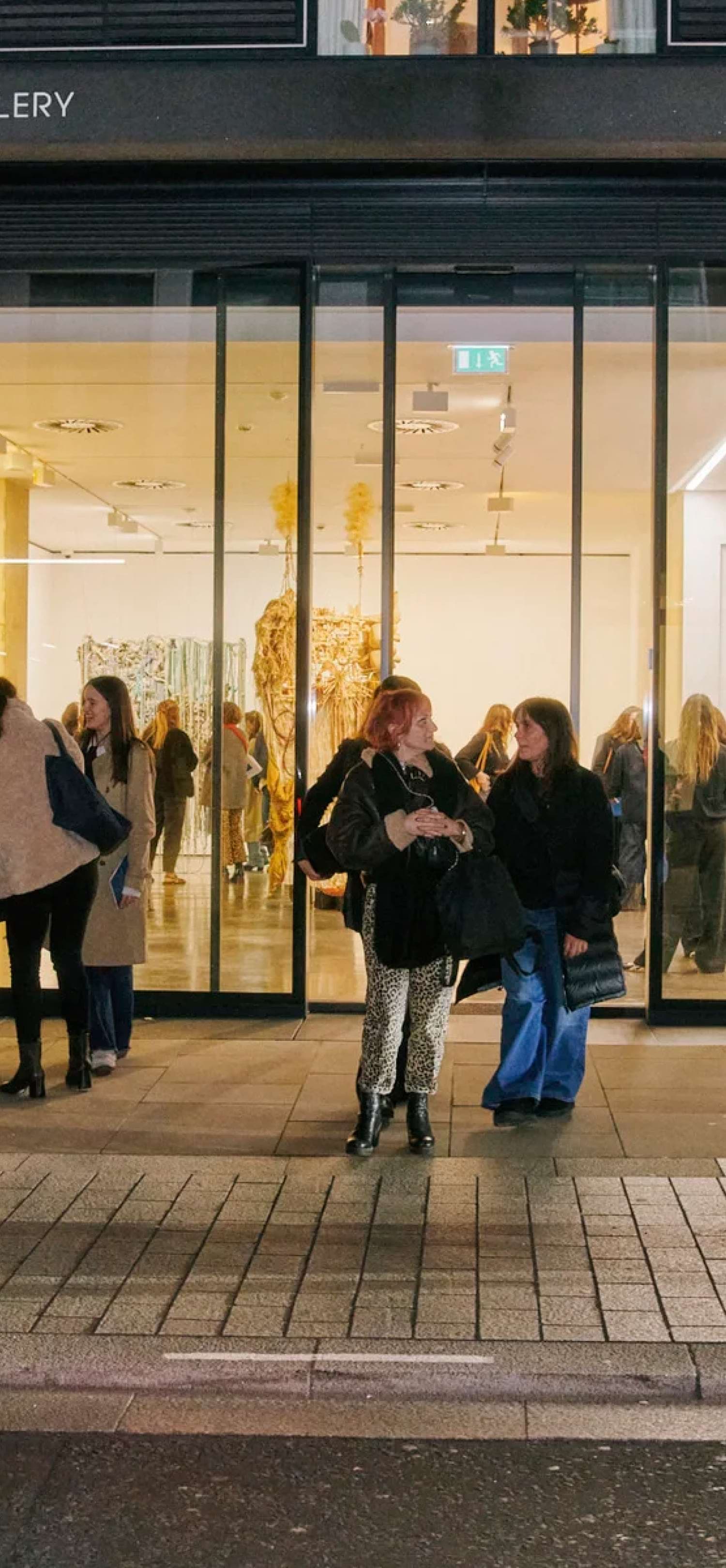
Essers’s expansive vision also changed the gallery’s physical footprint. Goodman opened in London in 2019 and established a New York viewing room in 2023, alongside its Johannesburg and Cape Town spaces. “The gallery has had to be different things to different audiences,” Essers said. London, a crossroads for international collectors, has been critical for building deeper relationships than traveling for art fairs could. At the same time, New York provides a platform for focused presentations to curators, contributing to institutional recognition for artists like Williamson.

Johannesburg, however, continues to ask something more of the gallery. Beyond exhibitions, sales, and supporting artists’ careers, it functions as a public cultural space. Where arts education and national museums have been neglected, schoolchildren are welcomed in to experience art in what is the first time for many. “It can change a child’s life just visiting an art gallery once,” Essers said. This role wasn’t part of a fixed strategy so much as a response to social realities.
“Our context is so different,” Essers said, contrasting Goodman’s responsibilities with those of galleries operating solely in art market capitals. “It makes it a lot more rewarding. I feel like we are extremely privileged because it becomes, always, about art.”
For all the demands of running an international business, it’s her proximity to artists that Essers values the most. The relationships are intensely individual. “For someone like William Kentridge, it’s an entrenched relationship. We speak to each other a few times a week, most weeks, and I’m at the forefront of leading his career globally,” she said. “But with an artist like Shirin Neshat, it’s more important to help with facilitating the production of her films—an important part of her practice.”
As Goodman enters its seventh decade in an art world increasingly experienced through screens, Essers is thinking about how a gallery can continue to offer the space necessary for meaningful engagement with art. So that the next generation may also experience the feeling she remembers from those early gallery visits, and listening to jazz with her father, totally immersed and far away from the outside world.
One answer may lie in film. A channel on the gallery’s new website will bring audiences into artists’ studios and up close with their practices—where Essers has always loved to be. “It’s about creating space for reflection as opposed to the scroll, scroll, scroll, lying in bed,” she said. “That’s front of mind for me.”
