Working Title 2026: Supporting South Africa's Next Generation of Artists
The latest edition of [Working Title] sees a new cohort of younger career artists take centre stage. The long-standing initiative by Goodman Gallery was launched in 2009 as an exhibition platform for emerging and under-recognised practitioners. Over the years it has evolved beyond just a presentation moment, gearing more towards artist development and enabling independent practice for the next generation of South African artists. The 2026 cohort includes artists Nyakallo Maleke, Khakhalethu Gxiya, Pebofatso Mokoena, Tinyiko Makwakwa and Vida Madighi-Oghu.
The announcement of the cohort took place at Art Joburg with work by Nyakallo Maleke and Tinyiko Makwakwa alongside 2025 cohort members Unathi Mkonto, Guy Simpson and Banele Khoza, emphasising the continued support of [Working Title] artists and the desire for cross dialogue across editions where relevant.
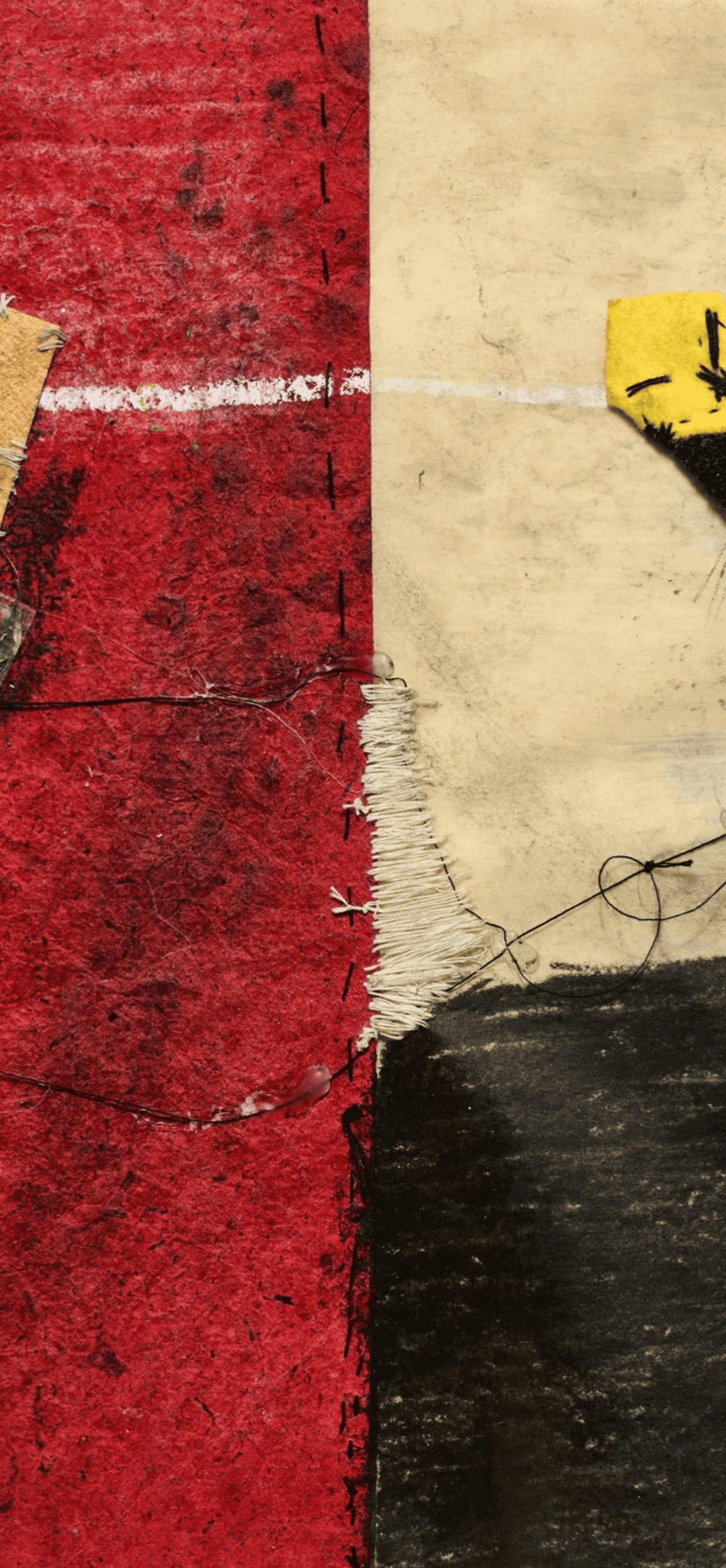
Maleke, recipient of the 2025 Standard Bank Young Artist Award, works across drawing, printmaking and installation. Writing also forms part of her creative process, allowing the visual and the narrative-driven components of her work to come together, the artist is interested in mapping movement, personal stories and reimagining spaces using materials and found objects. Leaning towards the experimental, Maleke’s work is fragile, tactile and abstract. It oscillates between two forms of existence: being both subtle and loud, flexible and resilient. Her drawings and installations in particular offer multiple points of entry and are in constant dialogue with space, pulling on the artist’s intuitive and observational methods of making.
The 2024 works on view during Art Joburg 2026 titled ‘drawing 3’, ‘drawing 4’ and’ drawing 5’, demonstrate how Maleke broadens and blurs the lines between what is considered drawing and installation through materials and techniques used. This is something the artist has been negotiating in her practice since 2018. Thread is sewn into wax paper, forming mounds and reliefs, as well as lines that map the paper. Through scale, texture and mark-making in the works, the artist continues to explore the material and conceptual possibilities of drawing.
“Initially, the relationship between drawing and writing is a conversation that was focal to my practice during my postgraduate journey. I was interested in exploring how drawing could be an extension of writing and how writing can exist as an extension of the drawings. These two forms of working depicted how I was seeing the worlds around me both personal and shared encounters. These works, although they are older, facilitate the gaps within the different stages of the broader conceptual practice, which different audiences may have not encountered before in my art making journey,” Maleke states about her practice and the work seen at Art Joburg.
Makwakwa, also based in Johannesburg, describes her practices as one that investigates African indigenous science and realities. At the centre of Makwakwa’s practice is what she calls "Matrilineal Methodologies". This refers to rituals and spiritual practices that promote circularity and link generations. This links to her interest highlighting African indigenous knowledge systems, examining how indigenous perspectives and lived experiences sustain cultures over time. This can be seen through her exploration of cultural materiality. The fabric Makwakwa uses for her work is called umbhaco. This is often used for traditional Xhosa attire. With textile as her primary material, she uses natural dye techniques to produce compositions of vibrant indigo and earth tones. The artist also uses beading and embroidery in her work, creating abstract forms that map landscapes and cosmological references.
The artist’s work presented at Art Joburg titled ‘Textile Totem VII’ (2026) is composed of umbhaco, ochre and cotton thread. The work is part of the larger body of work ‘SPECTACULAR VERNACULAR’ inspired by Litema, a mural art form by rural women in South Africa and Lesotho. Makwakwa sees these designs created by women to decorate the outside of their homes as an ecological and spatial practice that speaks directly to landscape, local materials and social structures.
With the new edition of [Working Title] underway, work by Khakhalethu Gxiya, Pebofatso Mokoena and Vida Madighi-Oghu will be seen across the gallery spaces and fair presentations throughout the year.