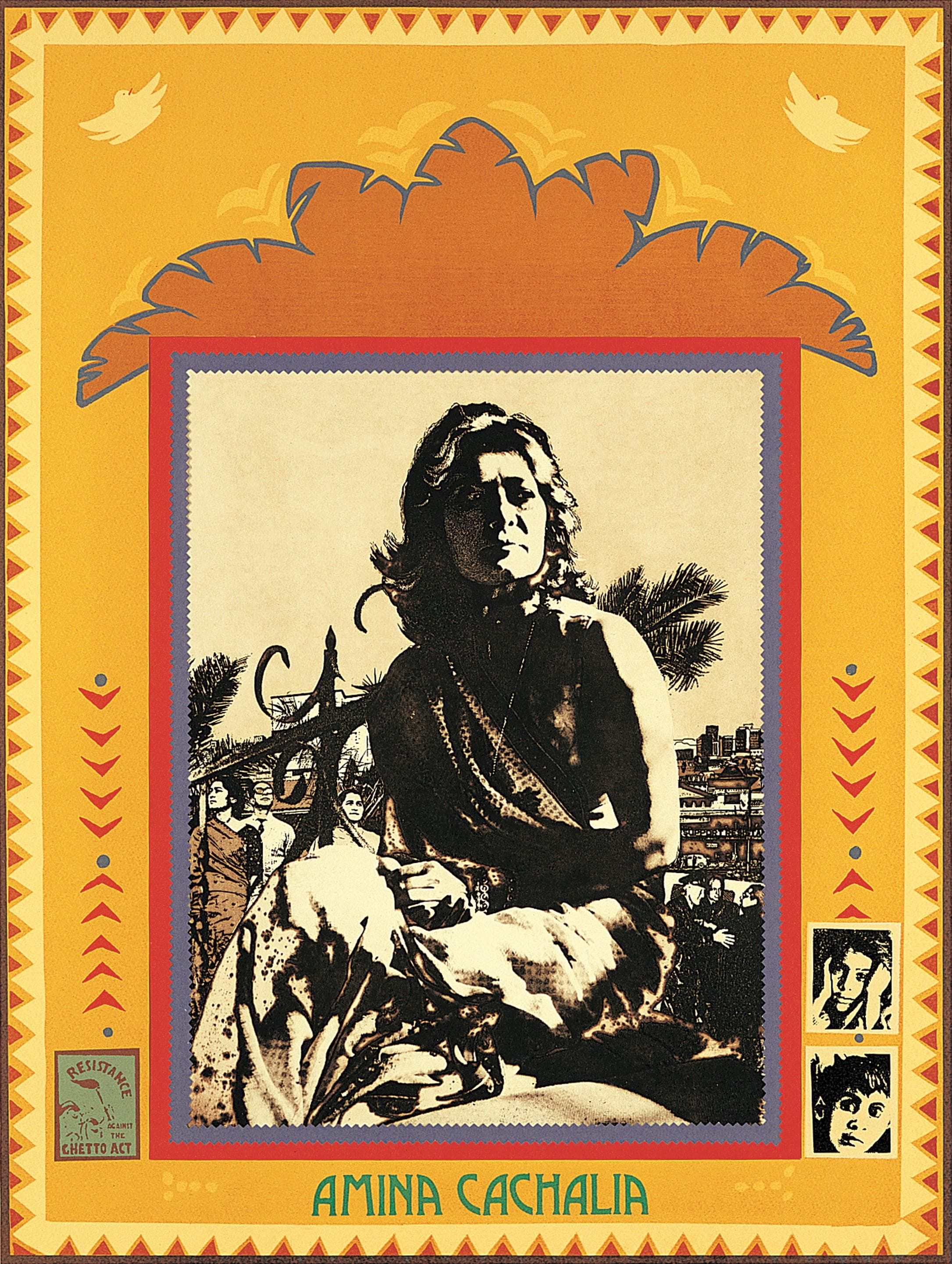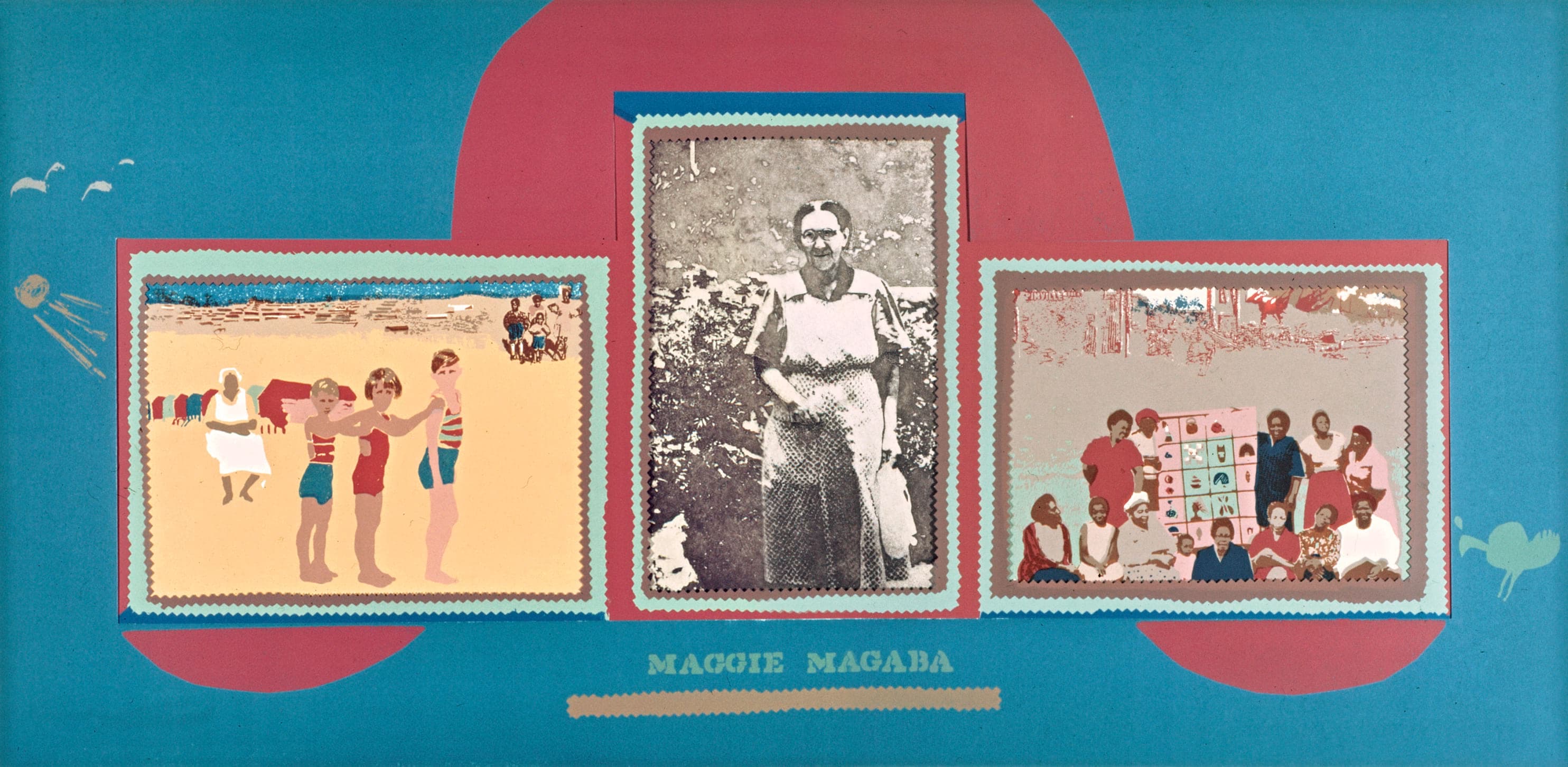
Sue WilliamsonA Few South Africans: Maggie Magaba, 1983
In 1982, Sue Williamson spent much of her time in Crossroads, an informal Cape Town community marked for destruction by the apartheid state. She was working with residents on strategies to oppose the demolitions. It was there that she first encountered the image of Elizabeth Paul – a Xhosa faith healer whose faded photo adorned the walls in many homes. This repetition marked Elizabeth as an important figure in the community, a person to be honoured and remembered.
Williamson began a series of photo-etched portraits with screen-printed frames, with the first in the series, a portrait of Elizabeth Paul. Each was a tribute to a woman who inspired others through her leadership, often in the struggle for liberation: Helen Joseph, Winnie Mandela, Annie Silinga, Mamphela Ramphele. Their names are familiar today, but in the 1980s they were largely invisible. Williamson’s work sought to give them visibility, and to honour them.
Her influences were many. Renaissance portraiture offered structure; the inventive frames of Crossroads homes provided texture. But more than technique, it was the desire to make these women known that shaped the work. In mass- producing and distributing postcard versions of the portraits, Williamson made the series portable, ensuring that these stories could travel, unbound by gallery walls.
Maggie Magaba was one of a vast army of black South African women who spend their lives dedicated to domestic service for a white employer. The daughter of the family for whom Maggie worked tells her story:
“Maggie Magaba came to work for my mother in 1926, the years of my parent’s marriage. She was exactly the same age as my mother, and worked as a cook.
“Maggie lived in the backyard of our house in a tiny room for over thirty years. During that time she saved every penny to educate her own children, with whom she was never able to live, and also to buy a small plot in Craddock, where she was born. She wanted to spend her remaining years there. When the time came she had to dispose of the plot because the area had been declared ‘white.’
“My own mother died when I was a young child, and Maggie was more of a mother to me than to her own children. In spite of all her suffering, she was a truly compassionate woman, and gave her love and strength to us as children. Whatever bitterness she might have felt, she did not show it towards us.”
In honour of this fine woman, the daughter formed the Maggie Magaba Trust, which sponsors bursaries for black students, and also groups such as the Zamani Soweto Sisters. The Zamani Sisters came into being when after the violence of Soweto in 1976, a group of women pledged themselves not to be bitter, but to take positive action. It consists of many small groups of women working together in various parts of Soweto. Skills are taught and beautiful clothes and patchwork items are made. Remembering a new vision of independence for the future.
-Sue Williamson 1983