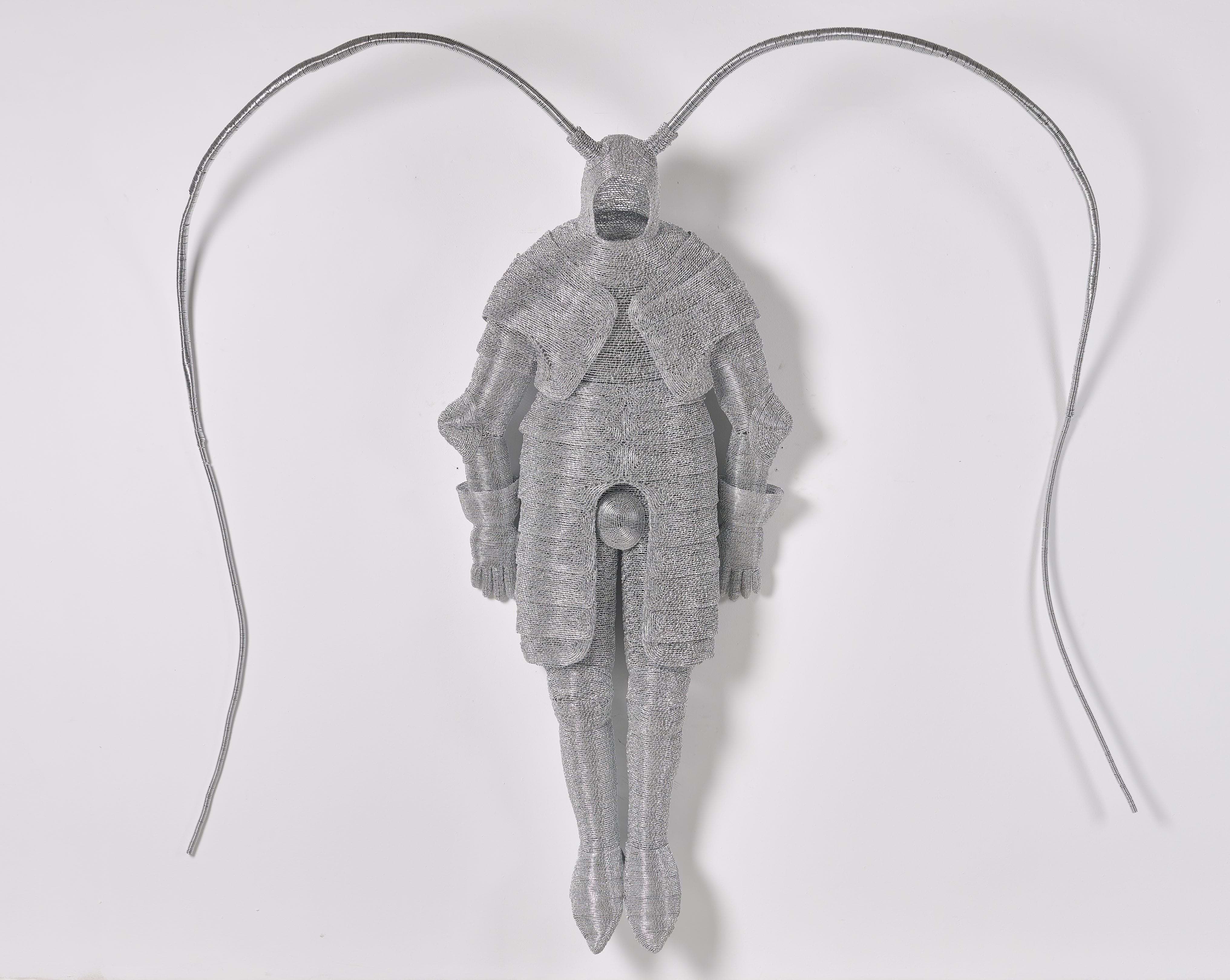

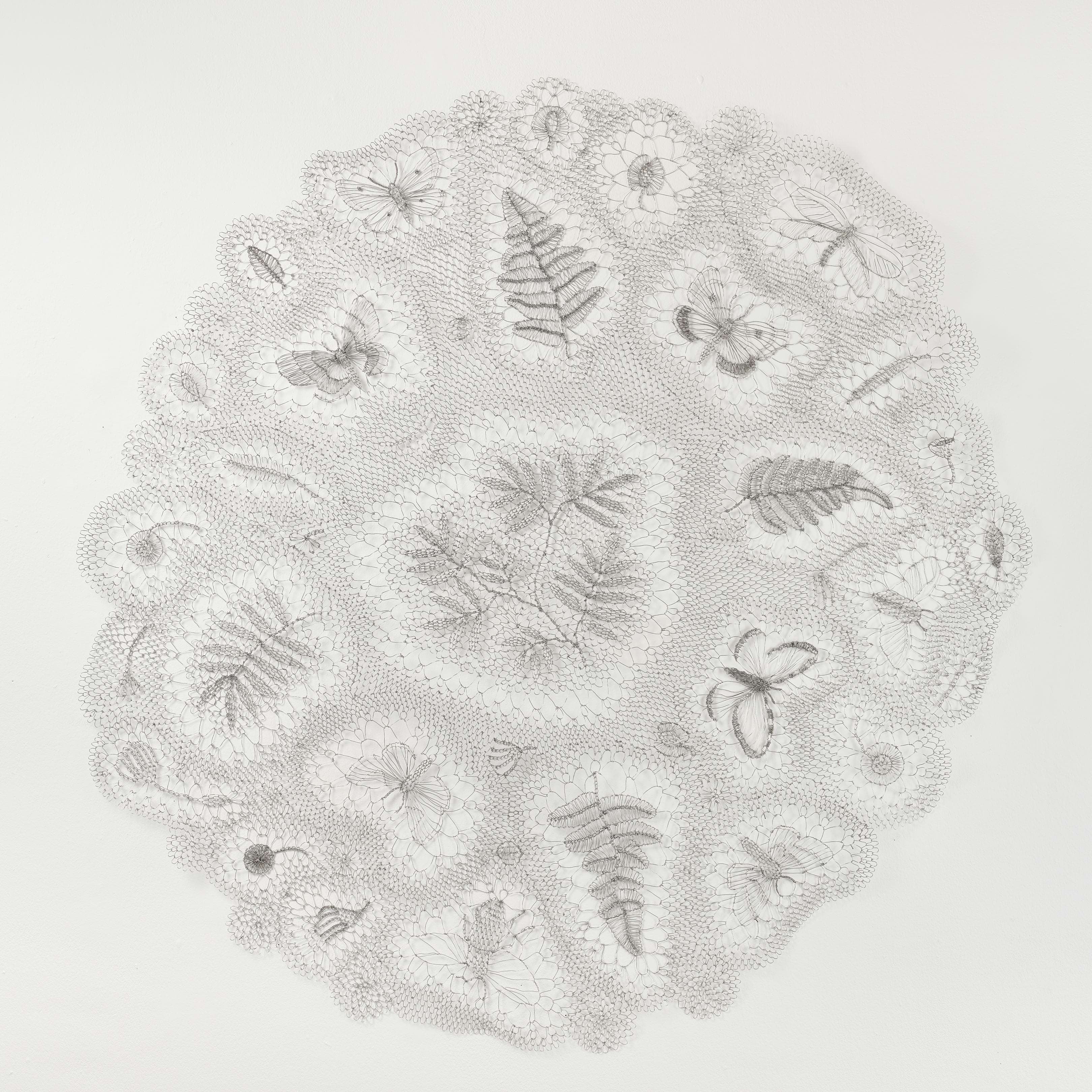
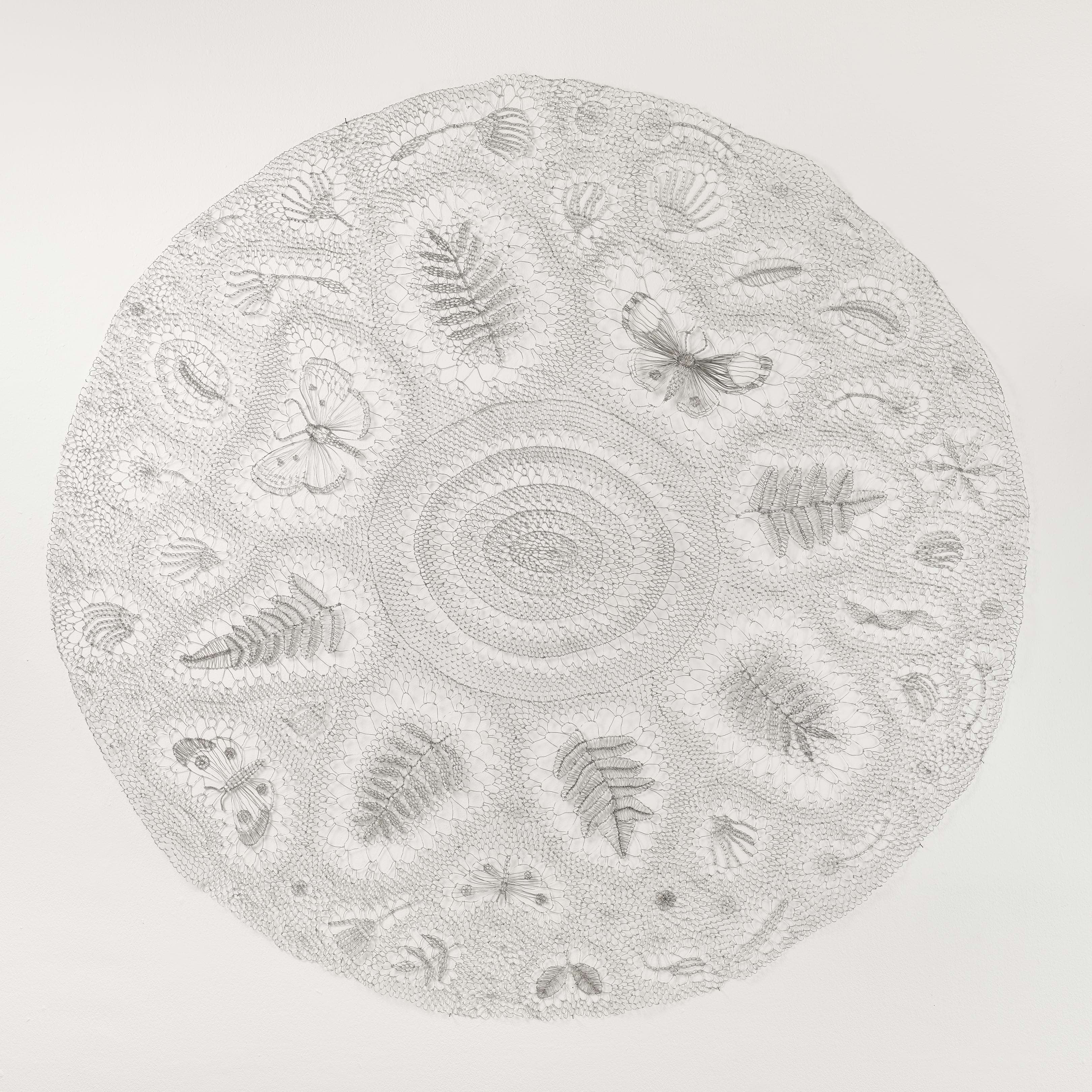
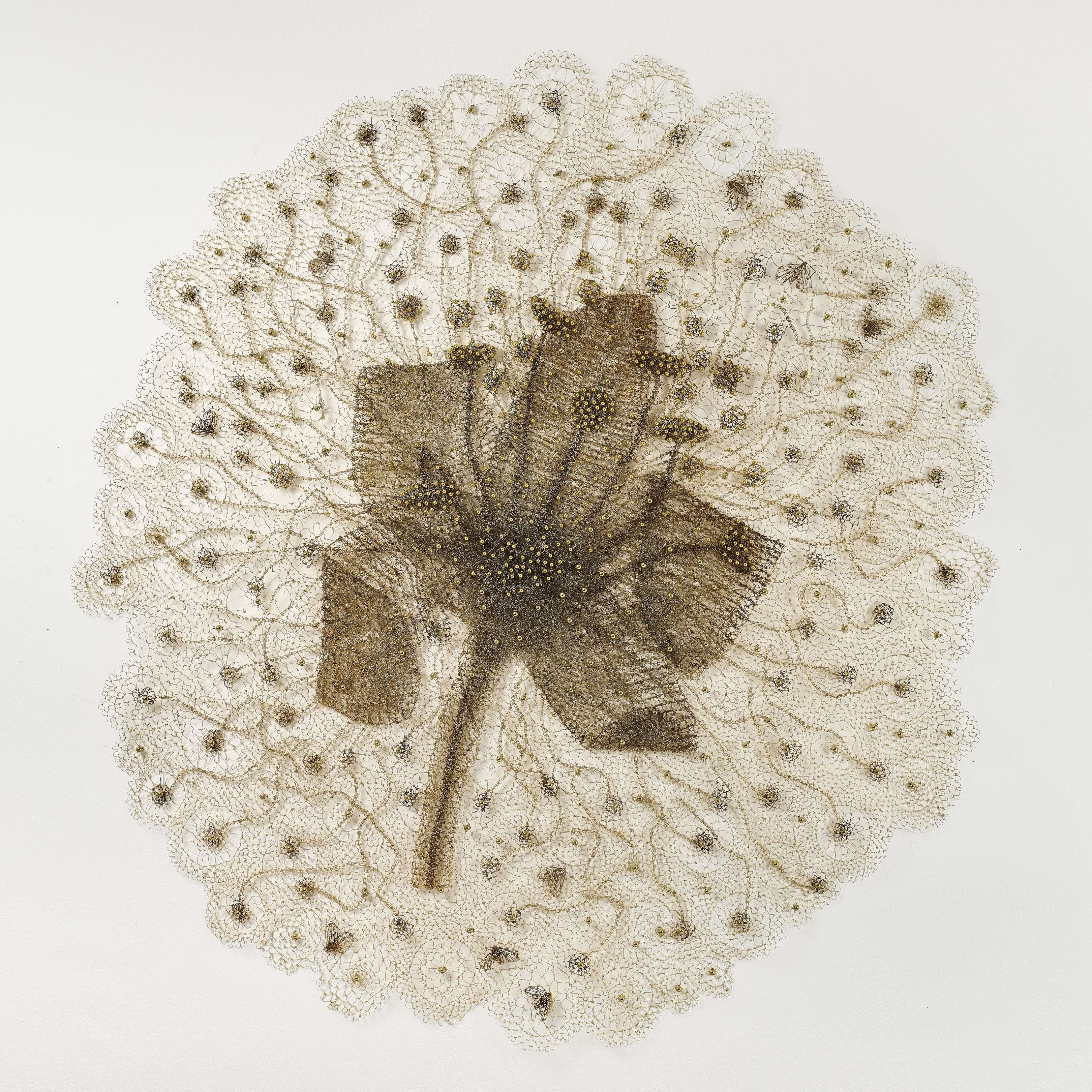
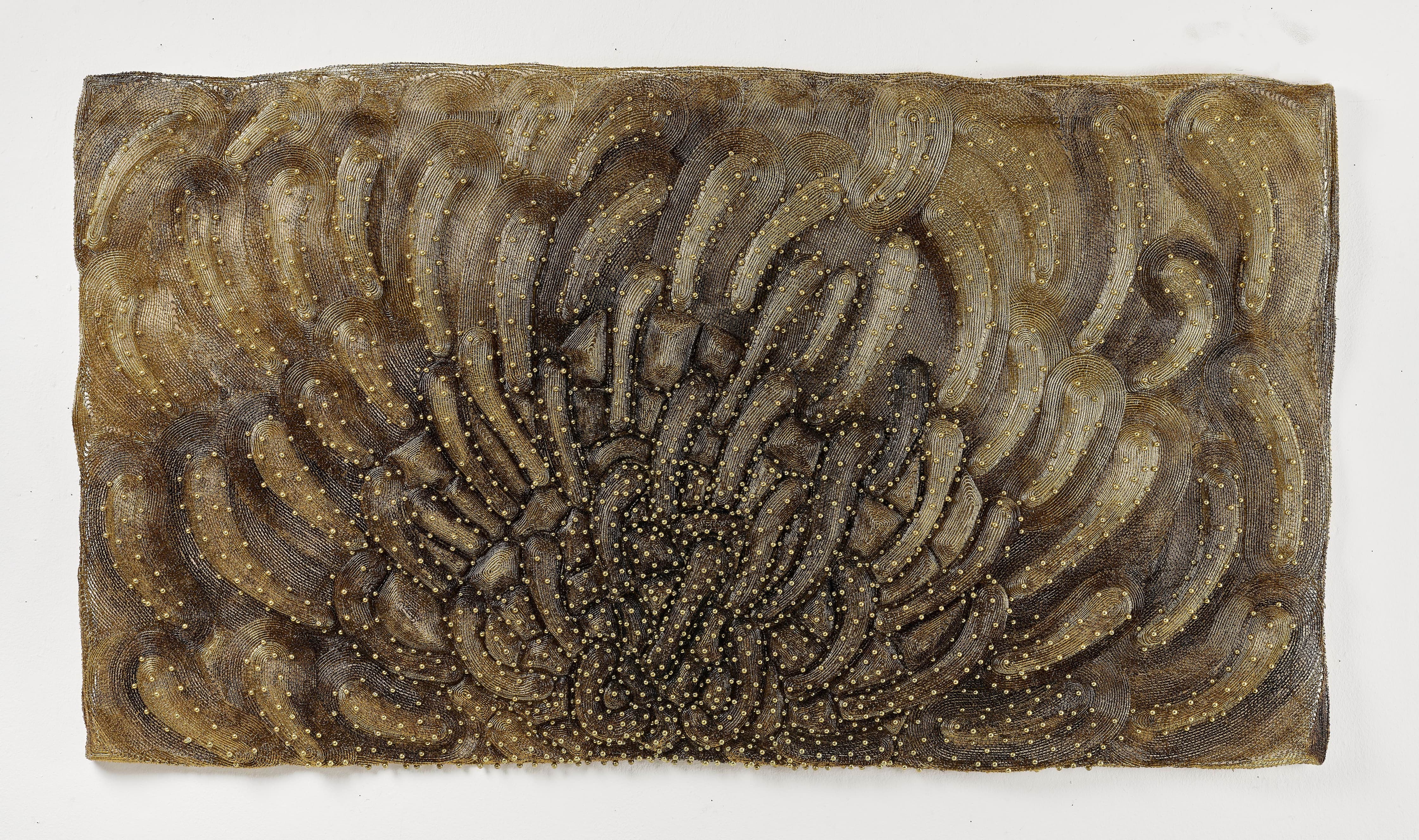
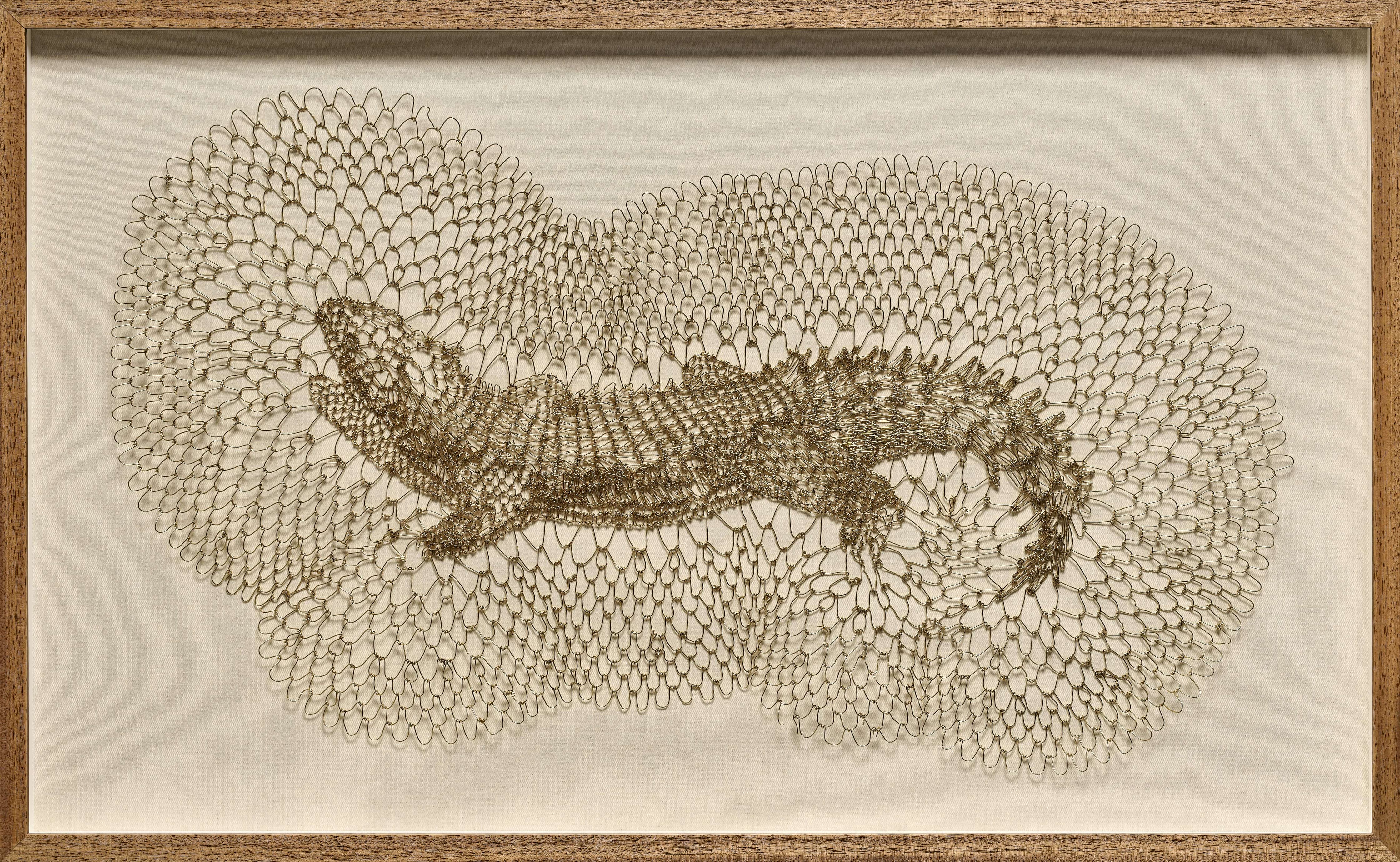
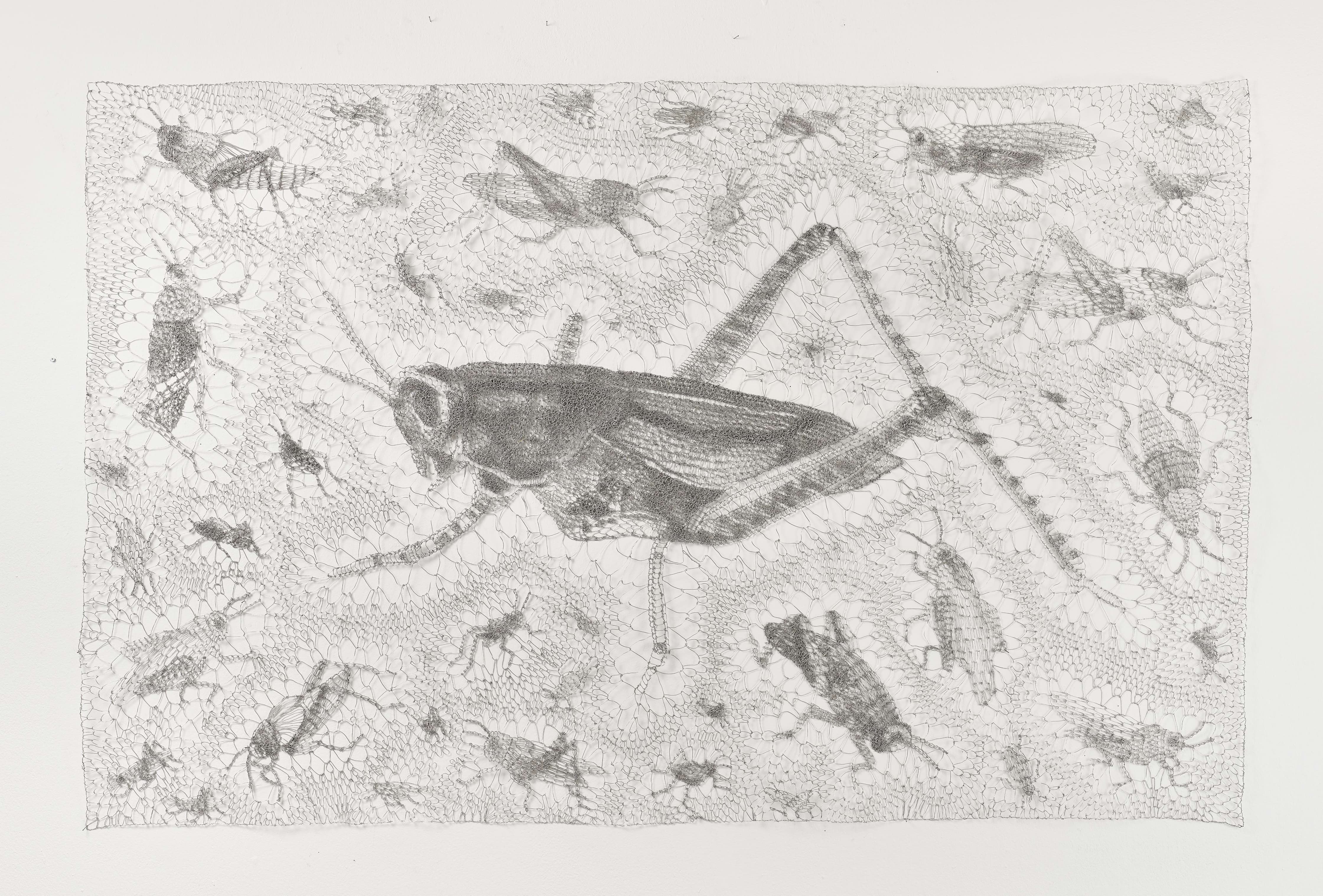
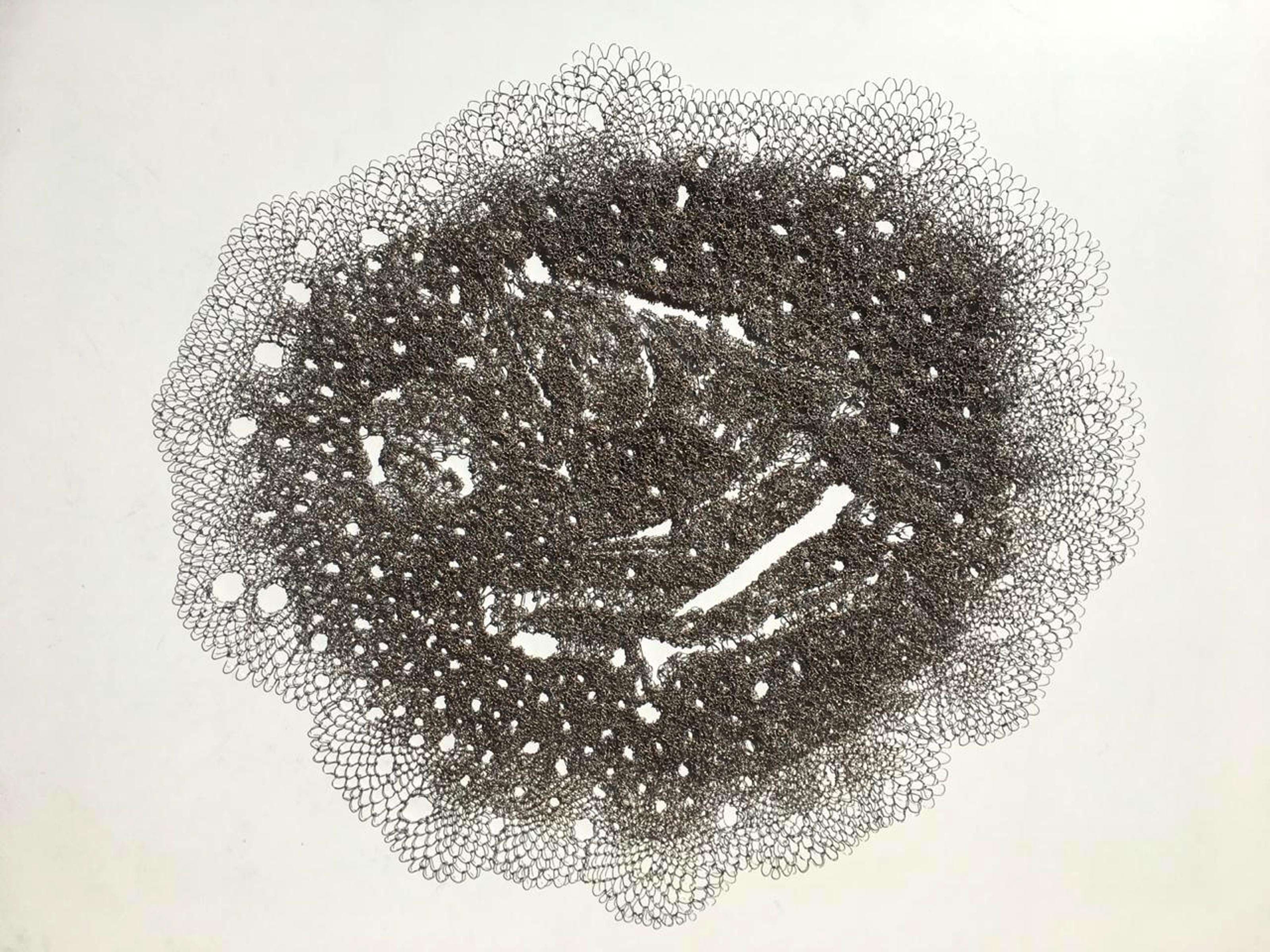
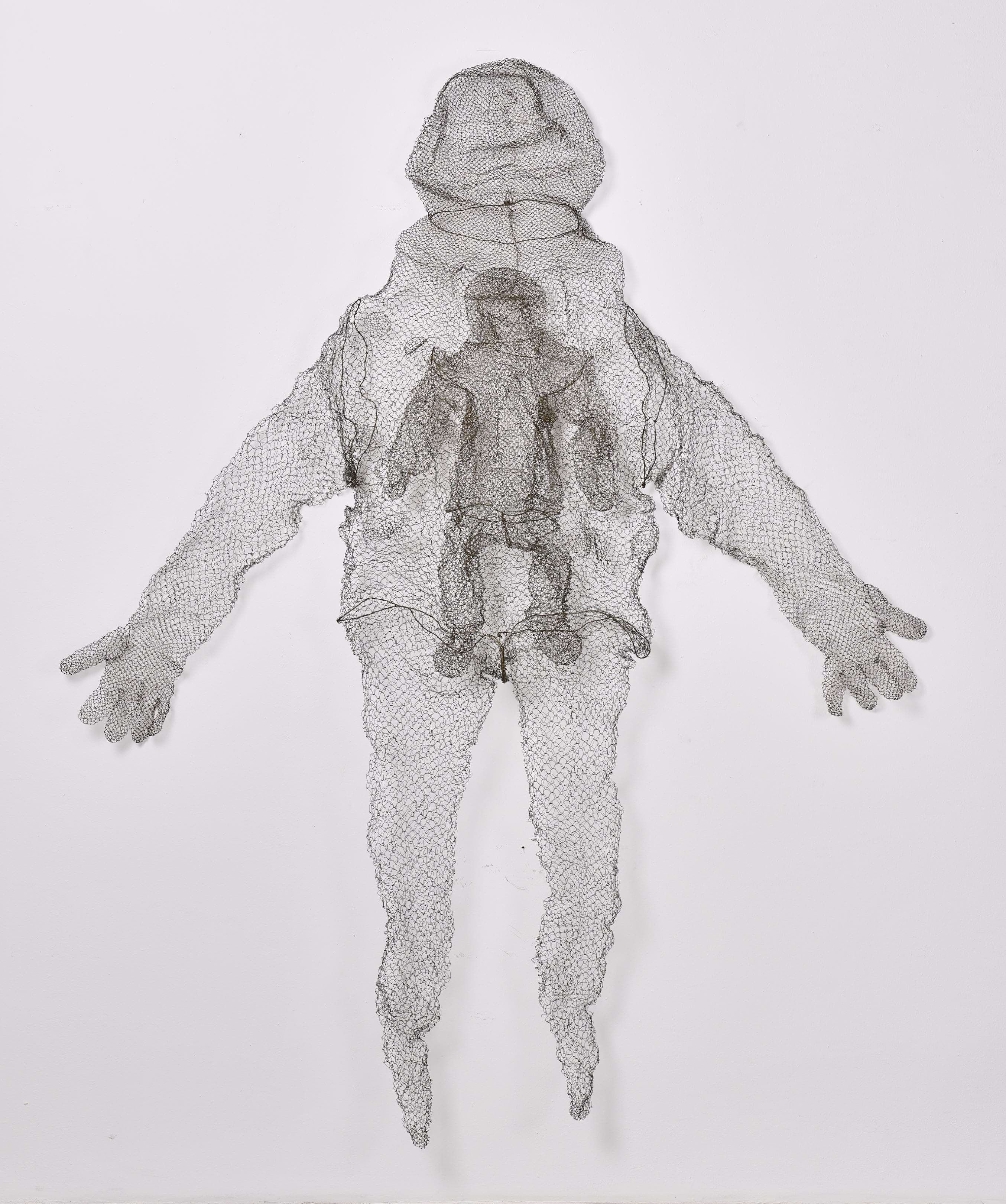
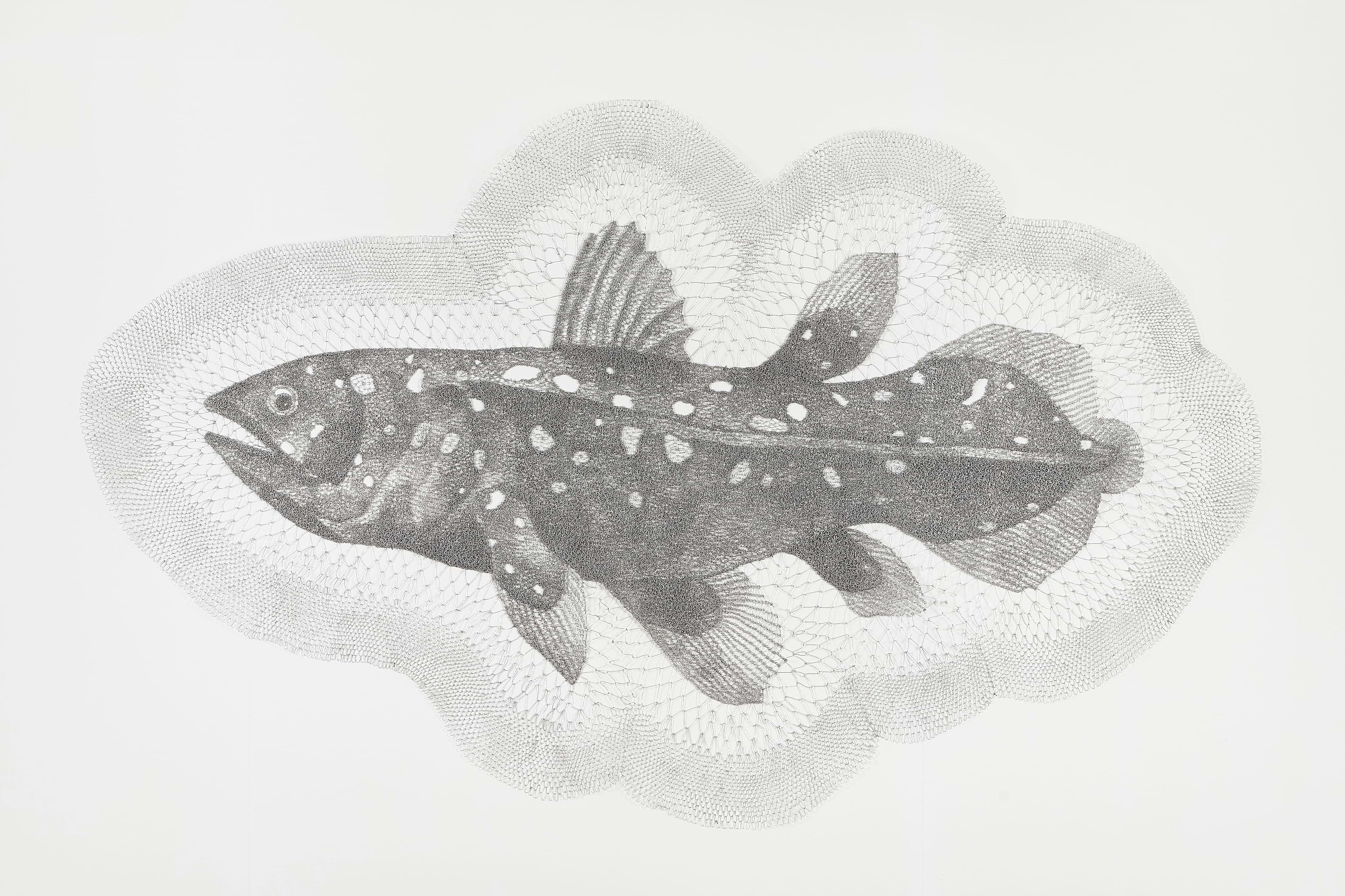
woven wire "drawing" which hangs on wall
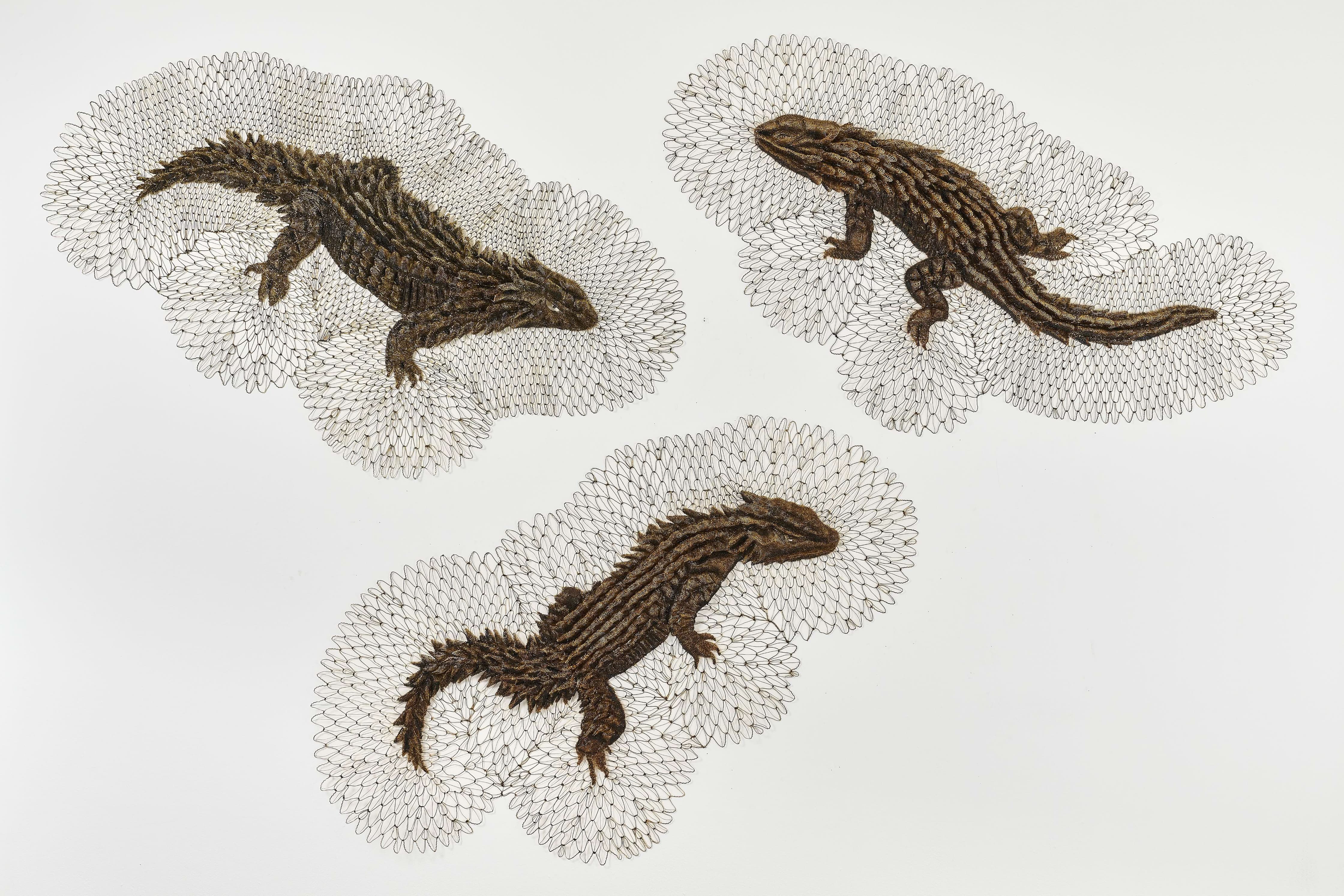
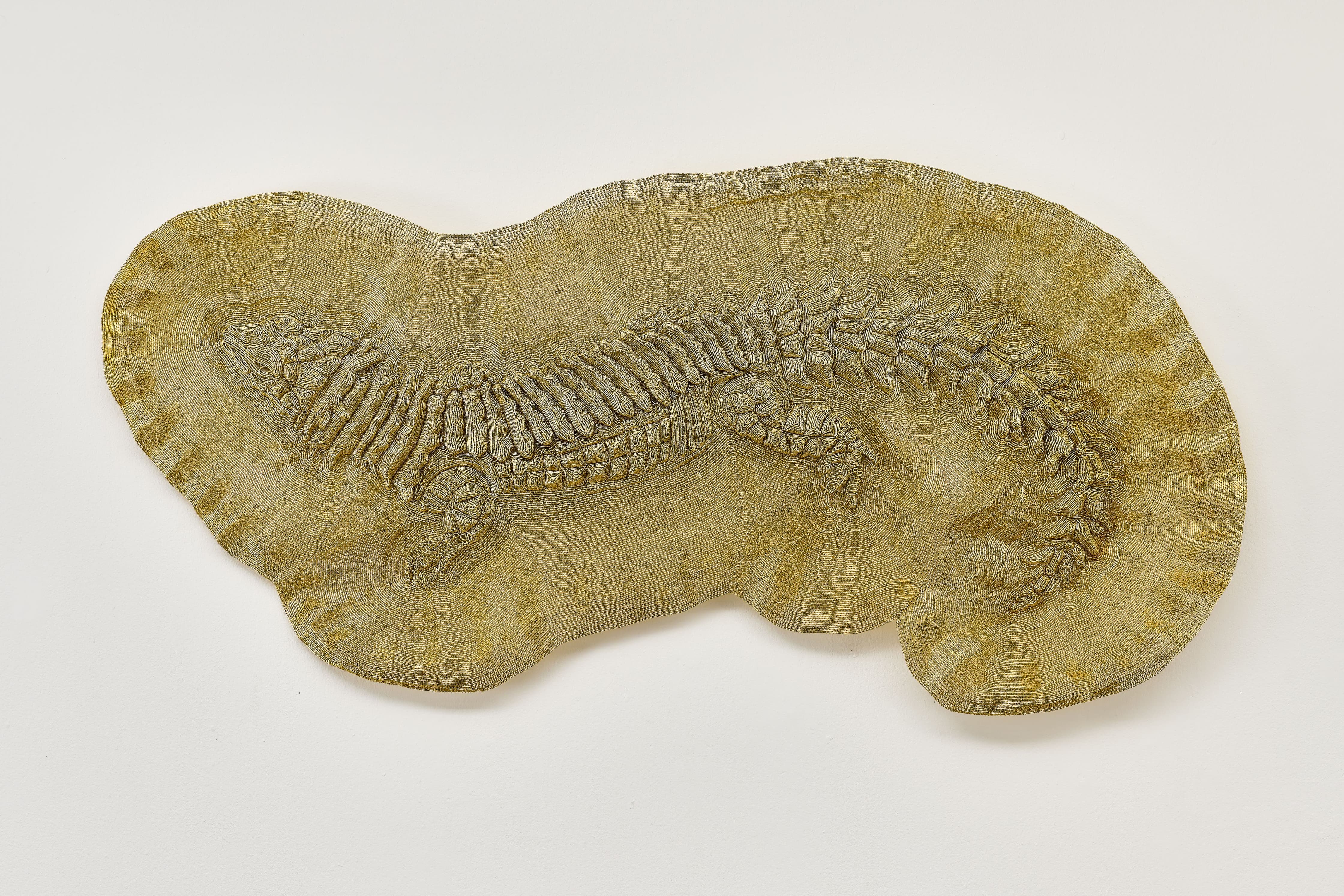
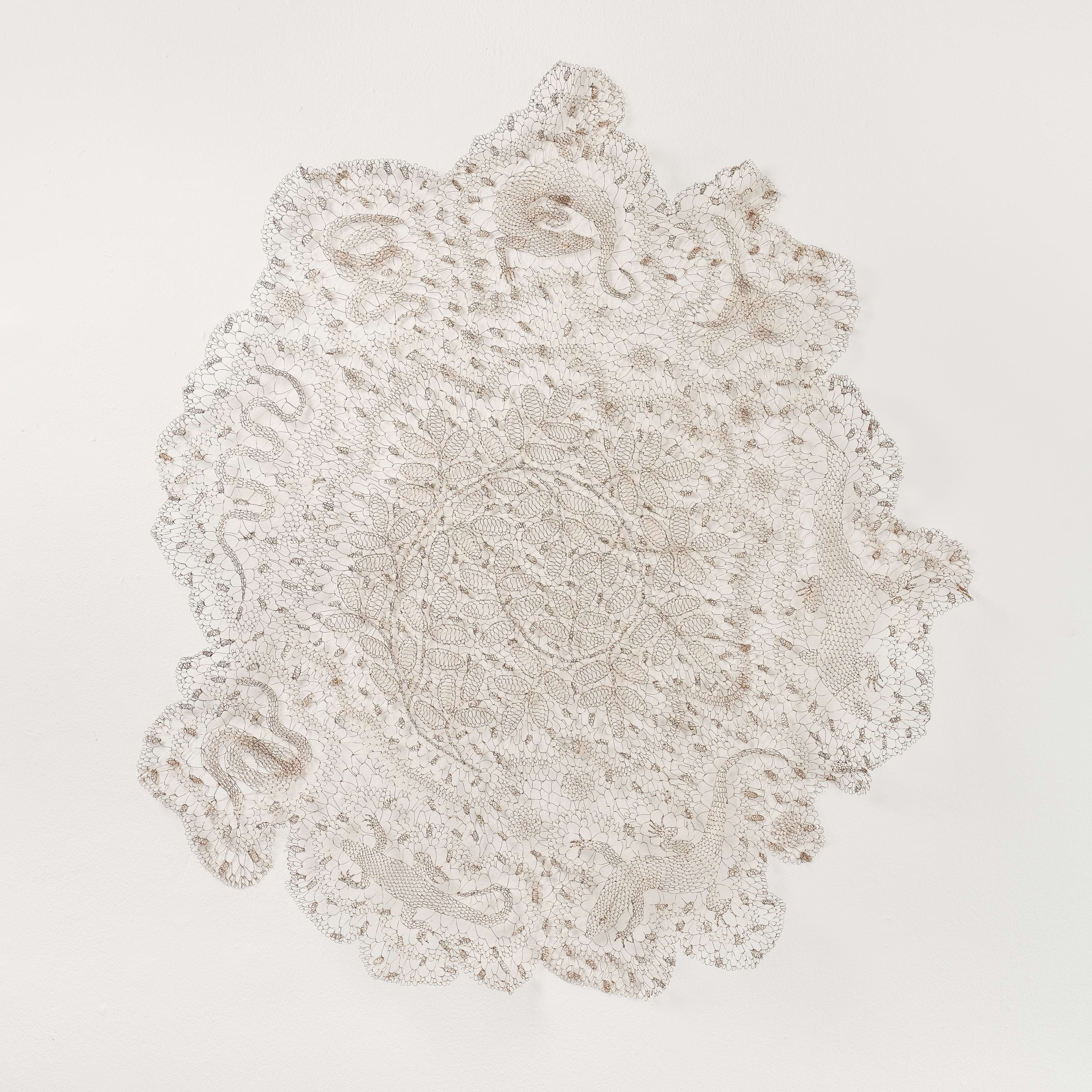
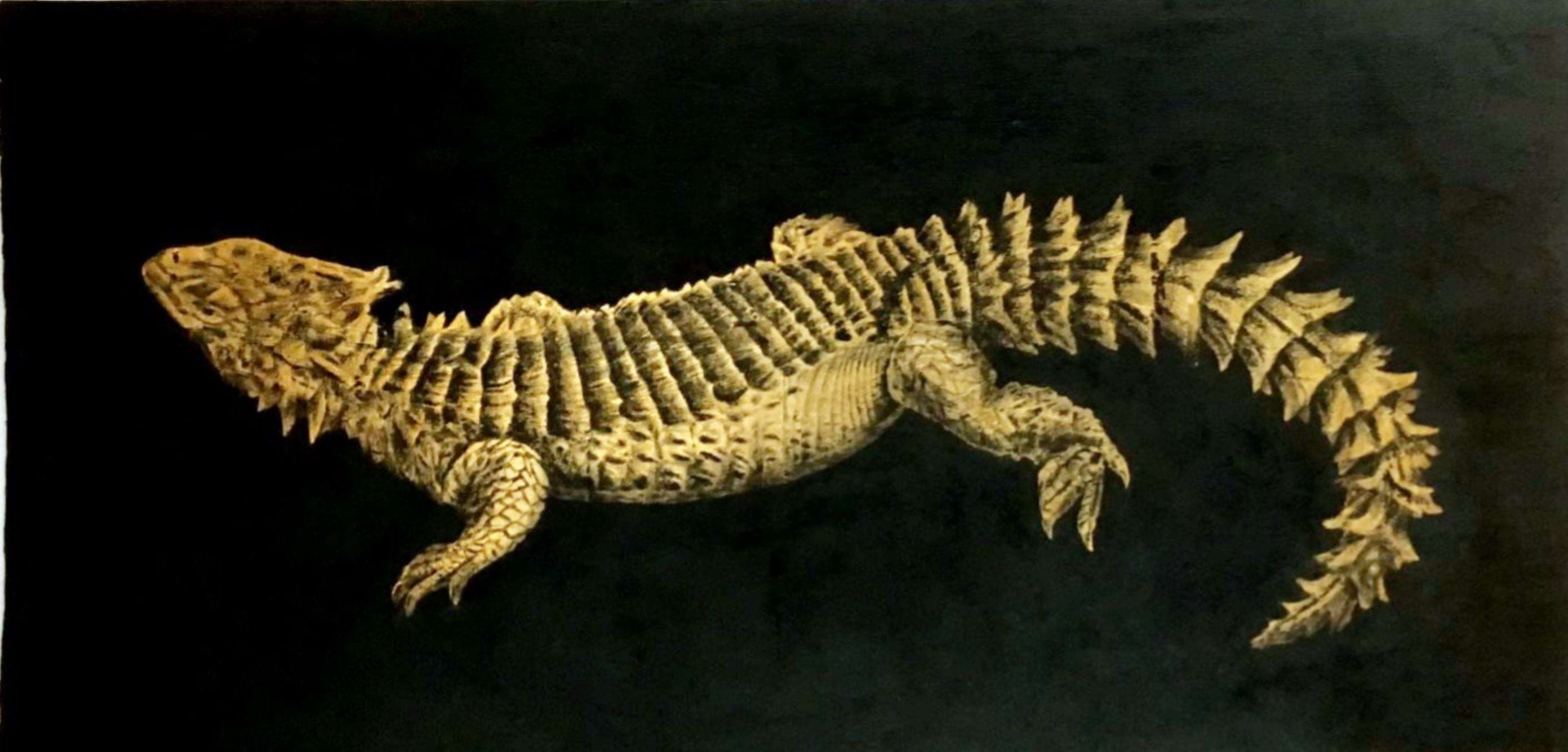
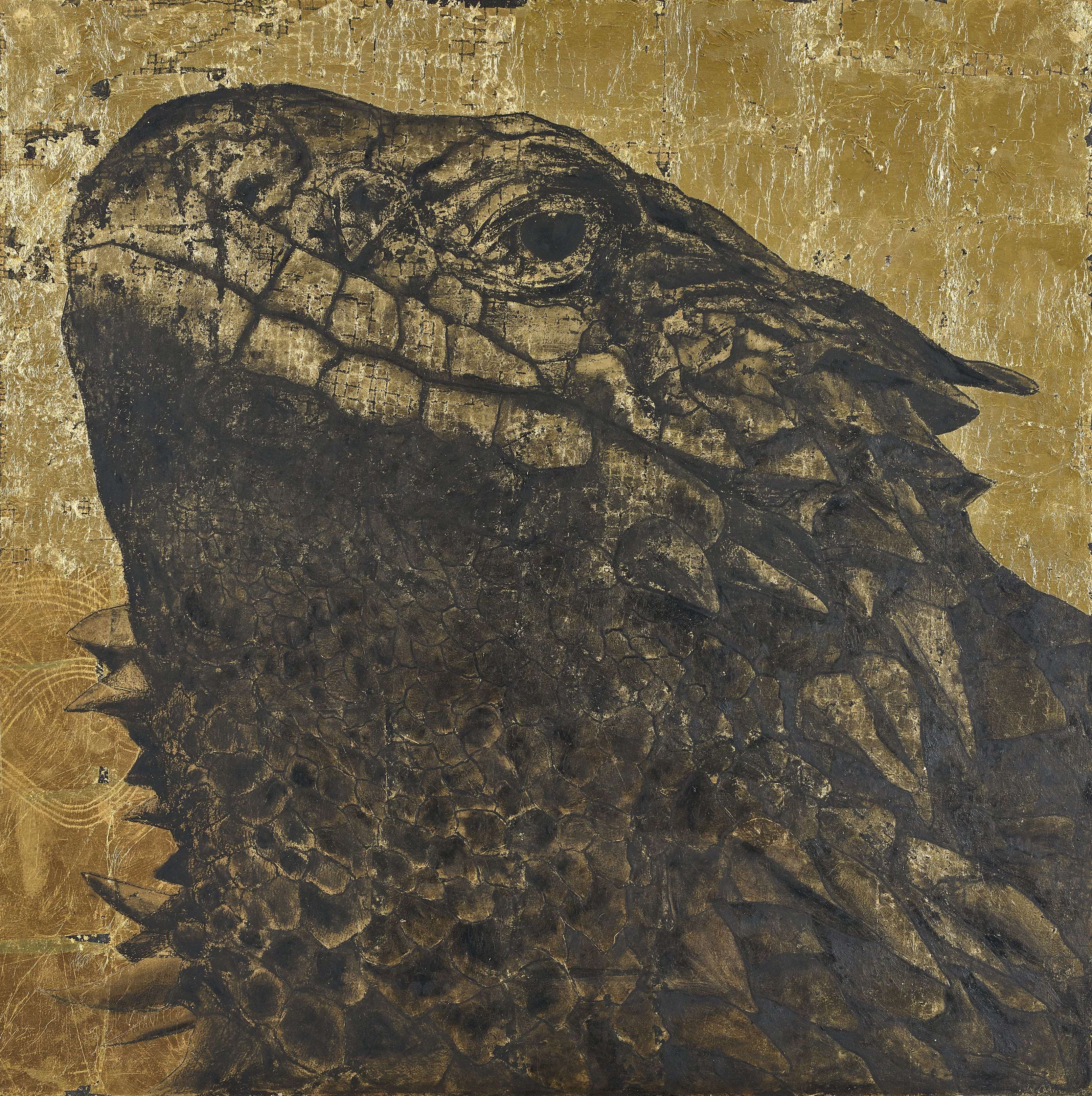
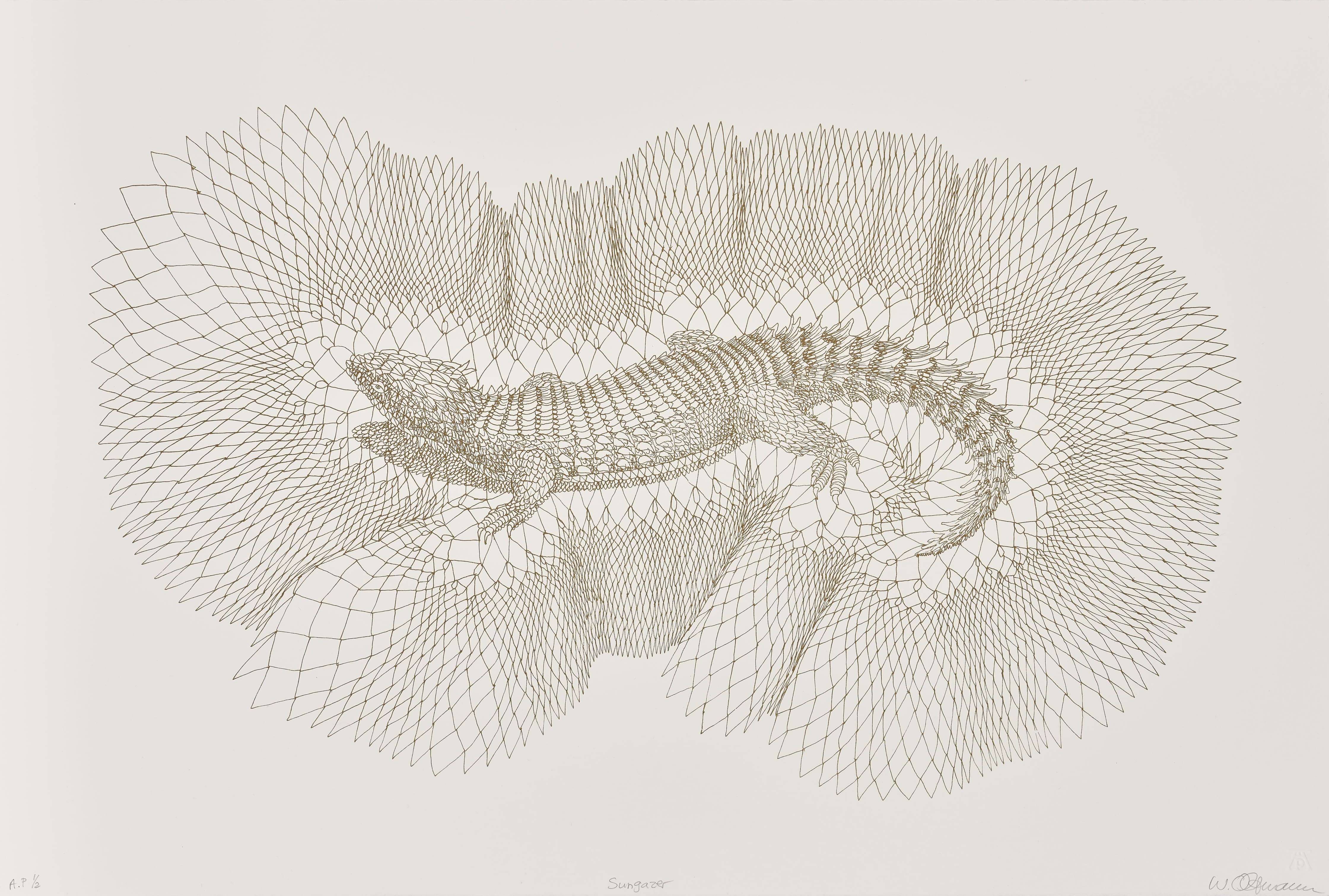
"I have seen sungazer lizards in real life in captivity but in the wild they are very shy creatures. This critically endangered animal is unique to southern Africa and lives in the grasslands of the northeastern Orange Free State, western Kwa-Zulu Natal and southern Gauteng. The common name for the lizard comes from its habit of basking on a rock or termite mound whilst facing the sun. It is mainly threatened due to habitat loss as a result of agriculture, mining and development, but the pet and muthi trades as well as insect and rodent control also contribute to its threatened status. I was drawn to include this endangered animal because of its armoured appearance. The sungazer lizard lives in burrows in the soil and if threatened, it retreats and inflates its body until it is jammed tightly against the burrow walls, making it almost impossible to extract. The genus name ‘Smaug Giganteus’ comes from J.R.R. Tolkien’s character in ‘The Hobbit’, the dragon encountered by Bilbo Baggins, the protagonist of Tolkien’s book. According to Tolkien the name comes from the Old German verb smeugen – to squeeze through a hole. Like the type species, Smaug lived underground and was heavily armoured. Appropriately, Tolkien was born in the Free State Province, the core area where the sungazer lizards come from."
- Walter Oltmann
wall sculpture
’
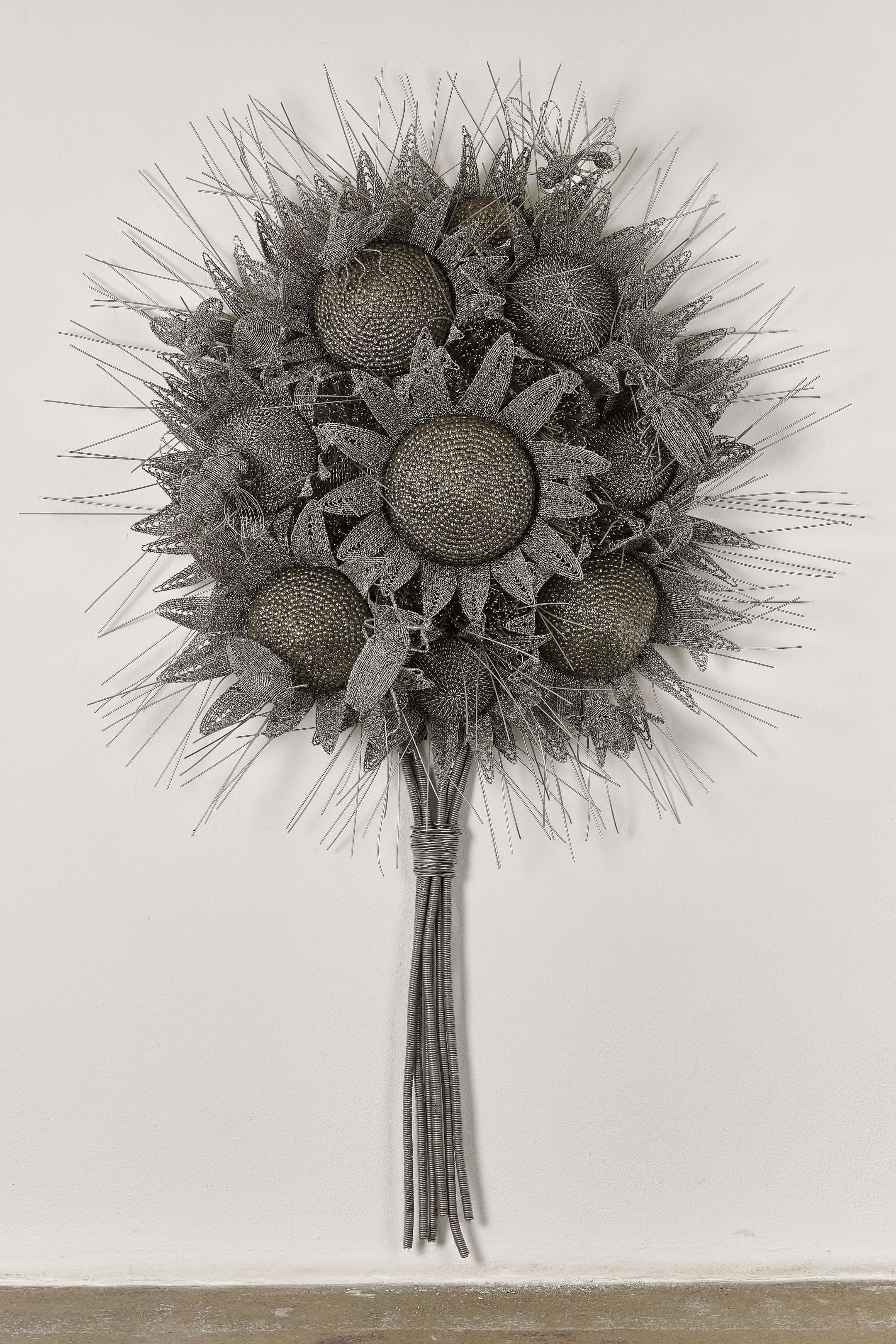
On his interest in flora and fauna the artist said: “Images of dissected flowers taken from botanical illustrations intrigue me and led to a series of flower sculptures and wall reliefs. I occasionally visited the specimen collections in the university Botany department, but most works were based on images from books. Studying plant images and preserved flora highlighted how plants have evolved in response to functional requirements. Some adapted with defensive appearance to preserve themselves and others using attractive colours or perfumes to attract their pollinators, in a complex web of interspecies signalling”.
"Images of dissected flowers taken from botanical illustrations intrigue me and led to a series of flower sculptures and wall reliefs. I occasionally visited the specimen collections in the university Botany department, but most works were based on images from books. Studying plant images and preserved flora highlighted how plants have evolved in response to functional requirements., some adapting with defensive appearance to preserve themselves and others using attractive colours or perfumes to attract their pollinators, in a complex web of interspecies signalling."
- Walter Oltmann
"I have seen sungazer lizards in real life in captivity but in the wild they are very shy creatures. This critically endangered animal is unique to southern Africa and lives in the grasslands of the northeastern Orange Free State, western Kwa-Zulu Natal and southern Gauteng. The common name for the lizard comes from its habit of basking on a rock or termite mound whilst facing the
sun. It is mainly threatened due to habitat loss as a result of agriculture, mining and development, but the pet and muthi trades as well as insect and rodent control also contribute to its threatened status. I was drawn to include this endangered animal because of its armoured appearance. The sungazer lizard lives in burrows in the soil and if threatened, it retreats and inflates its body until it is jammed tightly against the burrow walls, making it almost impossible to extract. The genus name ‘Smaug Giganteus’ comes from J.R.R. Tolkien’s character in ‘The Hobbit’, the dragon encountered by Bilbo Baggins, the protagonist of Tolkien’s book. According to Tolkien the name comes from the Old German verb smeugen – to squeeze through a hole. Like the type species, Smaug lived underground and was heavily armoured. Appropriately, Tolkien was born in the Free State Province, the core area where the sungazer lizards come from."
- Walter Oltmann
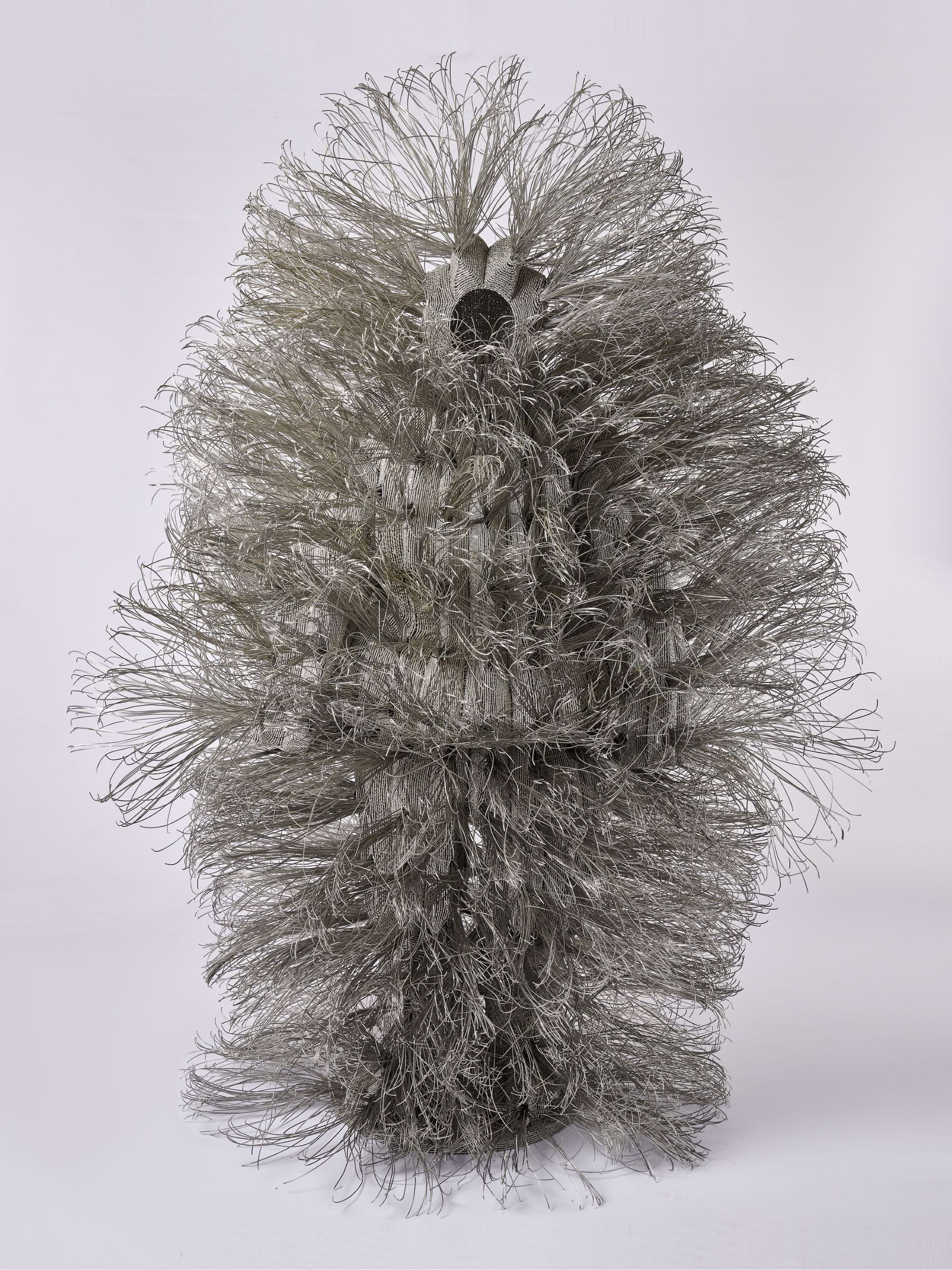
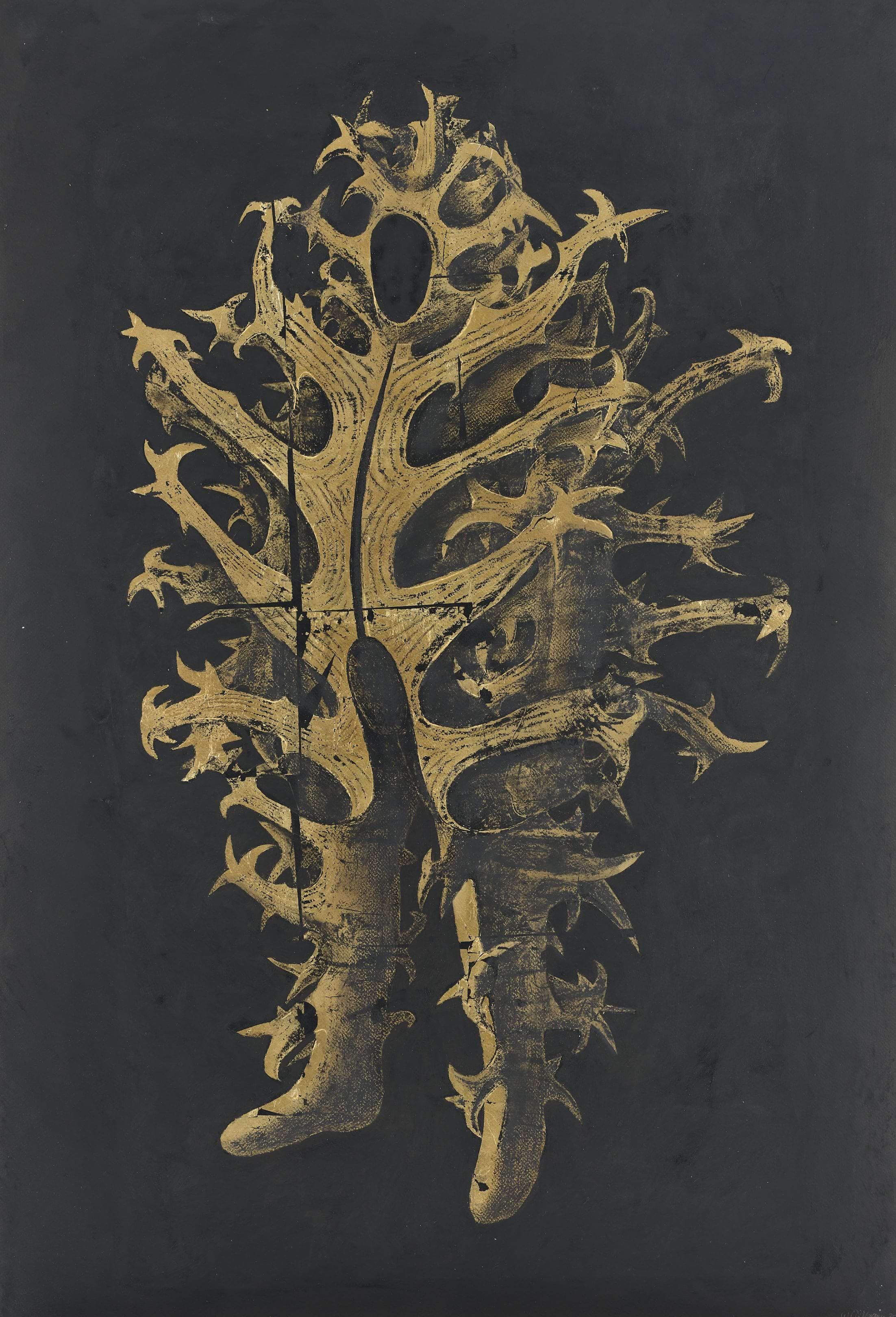
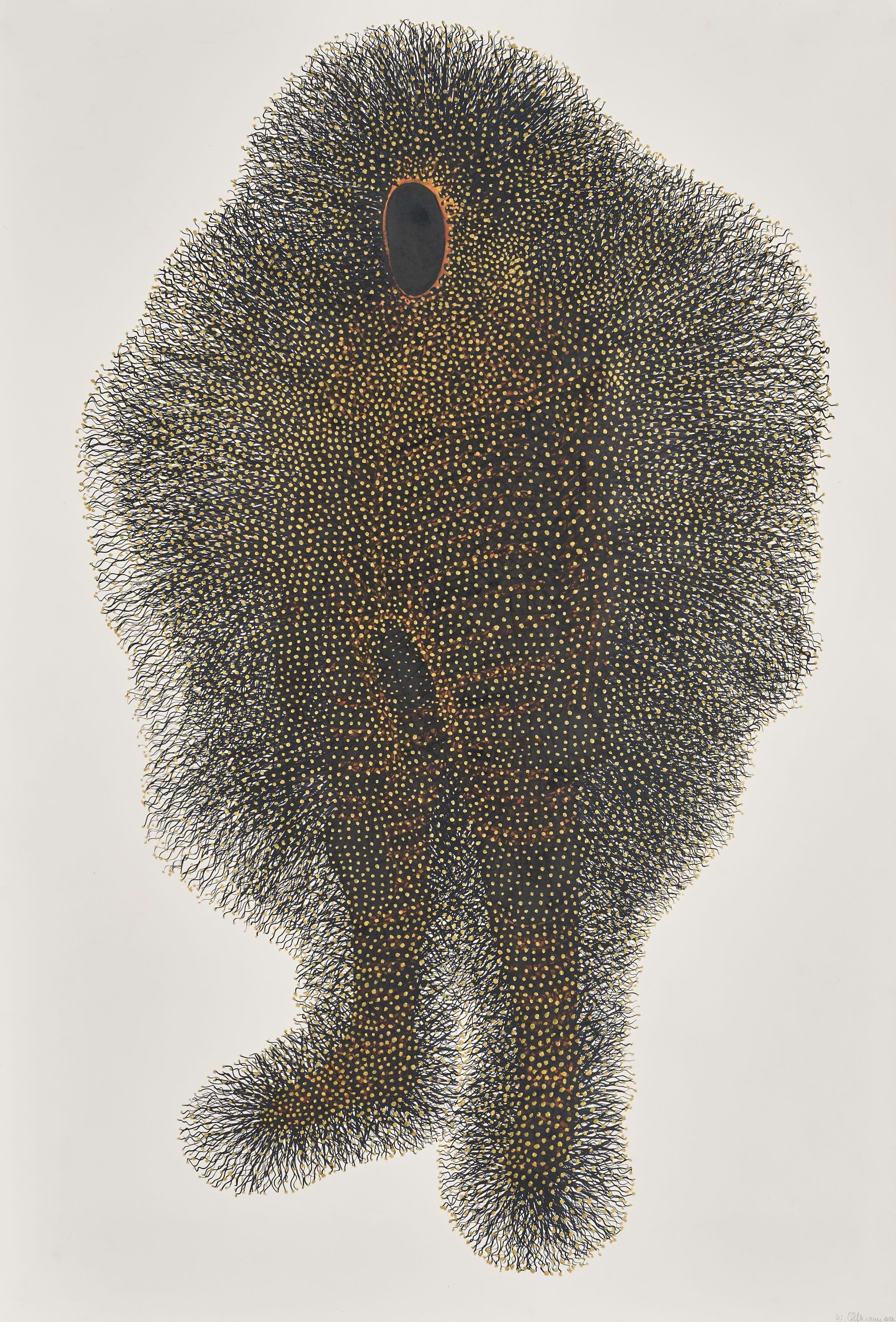
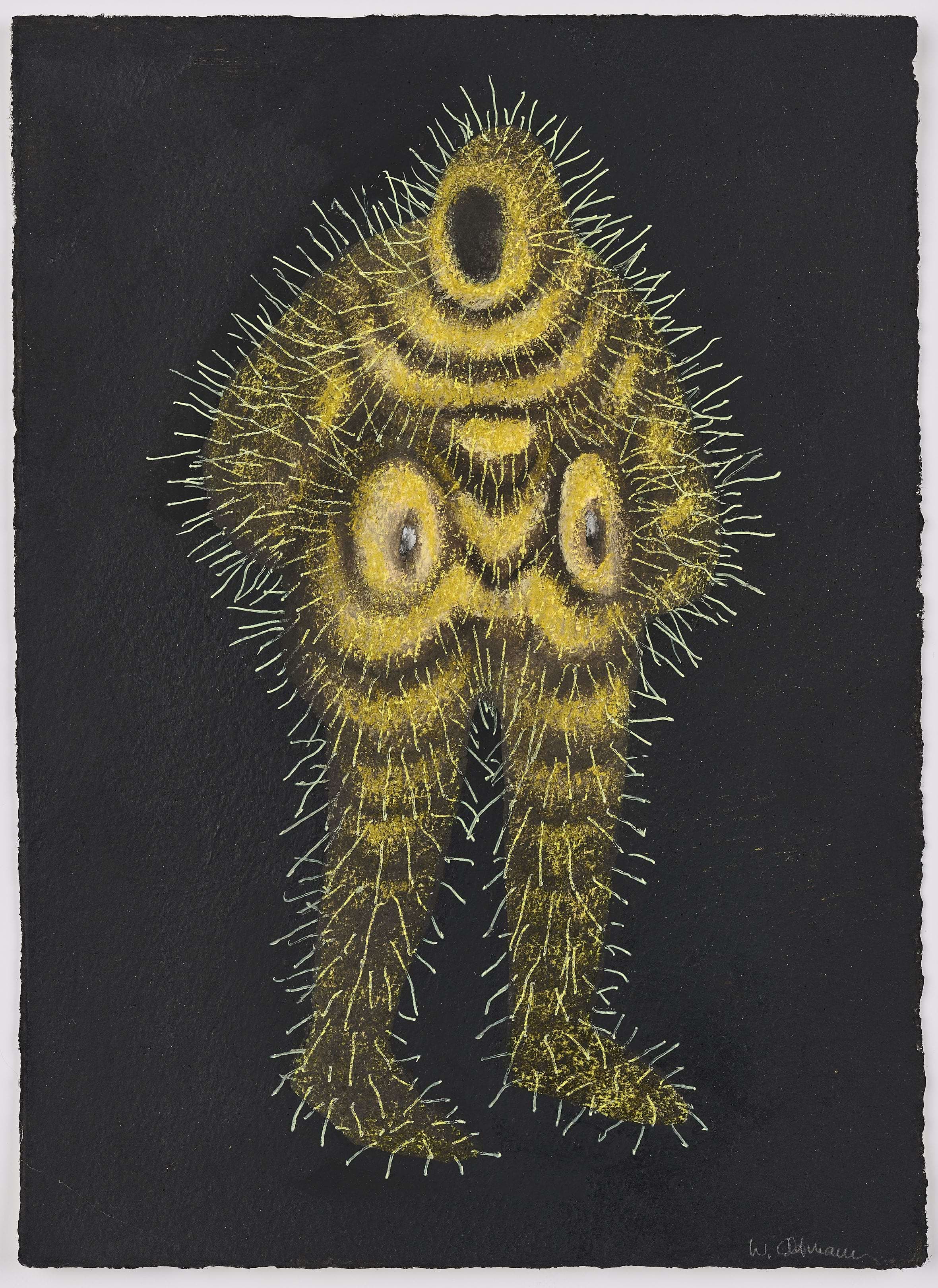
Evolution, metamorphosis, the environment, hybrids in nature, mutations and conservation are often at the heart of Oltmann’s subjects. He paints, draws and forms carapaces, defensive bristles and spines, protective evolutionary elements of creatures other than humans (who have favoured the brain over any such inbuilt defensive protection). Hs work contrasts delicate natural forms with their “monstrosity” of appearance, their vulnerability of soft substance and tiny form, with their spines and thorns, or poisons and armoured shells; in plant or animal forms.
"I have seen sungazer lizards in real life in captivity but in the wild they are very shy creatures. This critically endangered animal is unique to southern Africa and lives in the grasslands of the northeastern Orange Free State, western Kwa-Zulu Natal and southern Gauteng. The common name for the lizard comes from its habit of basking on a rock or termite mound whilst facing the
sun. It is mainly threatened due to habitat loss as a result of agriculture, mining and development, but the pet and muthi trades as well as insect and rodent control also contribute to its threatened status. I was drawn to include this endangered animal because of its armoured appearance. The sungazer lizard lives in burrows in the soil and if threatened, it retreats and inflates its body until it is jammed tightly against the burrow walls, making it almost impossible to extract. The genus name ‘Smaug Giganteus’ comes from J.R.R. Tolkien’s character in ‘The Hobbit’, the dragon encountered by Bilbo Baggins, the protagonist of Tolkien’s book. According to Tolkien the name comes from the Old German verb smeugen – to squeeze through a hole. Like the type species, Smaug lived underground and was heavily armoured. Appropriately, Tolkien was born in the Free State Province, the core area where the sungazer lizards come from."
- Walter Oltmann
wall sculpture
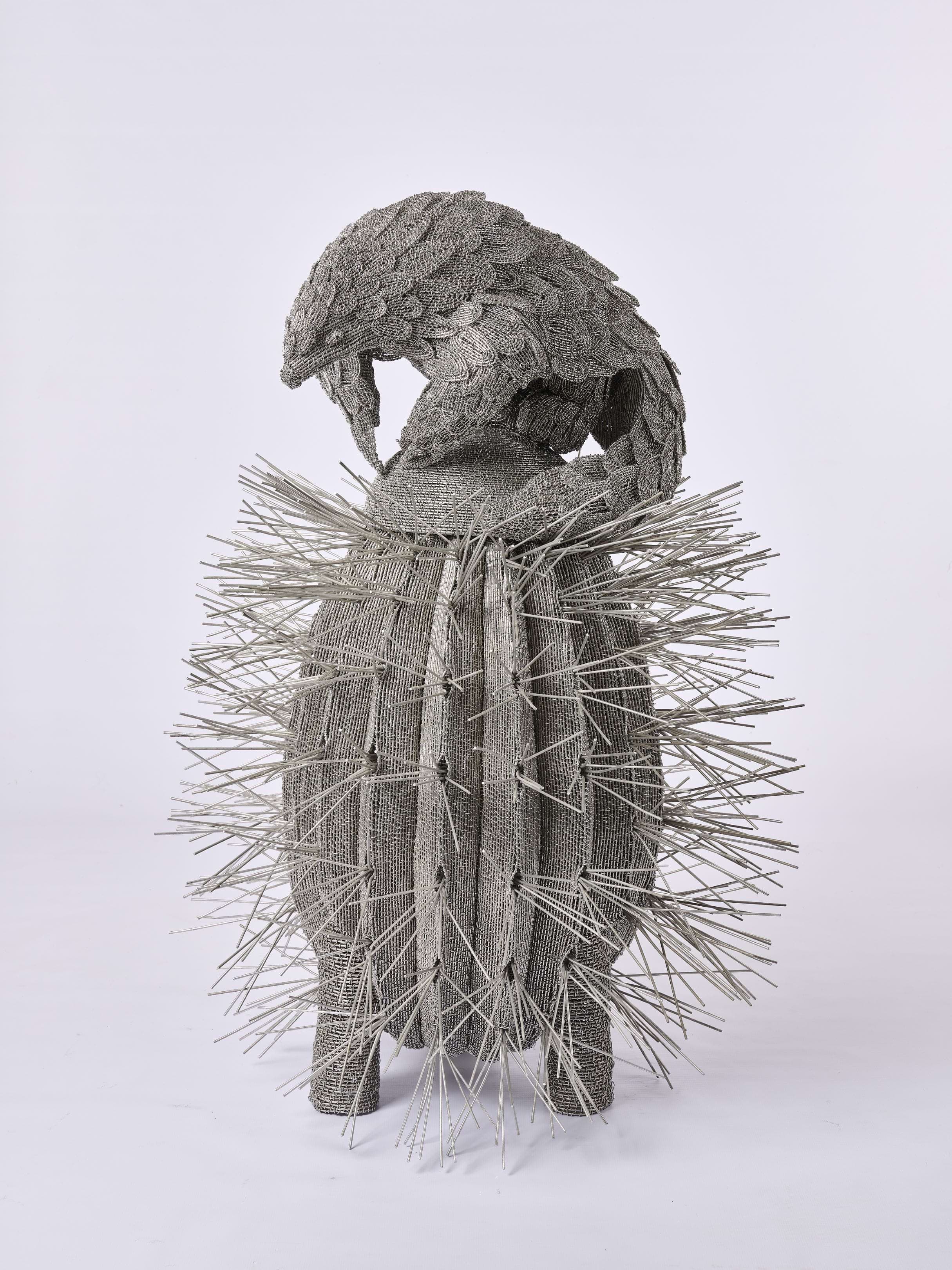
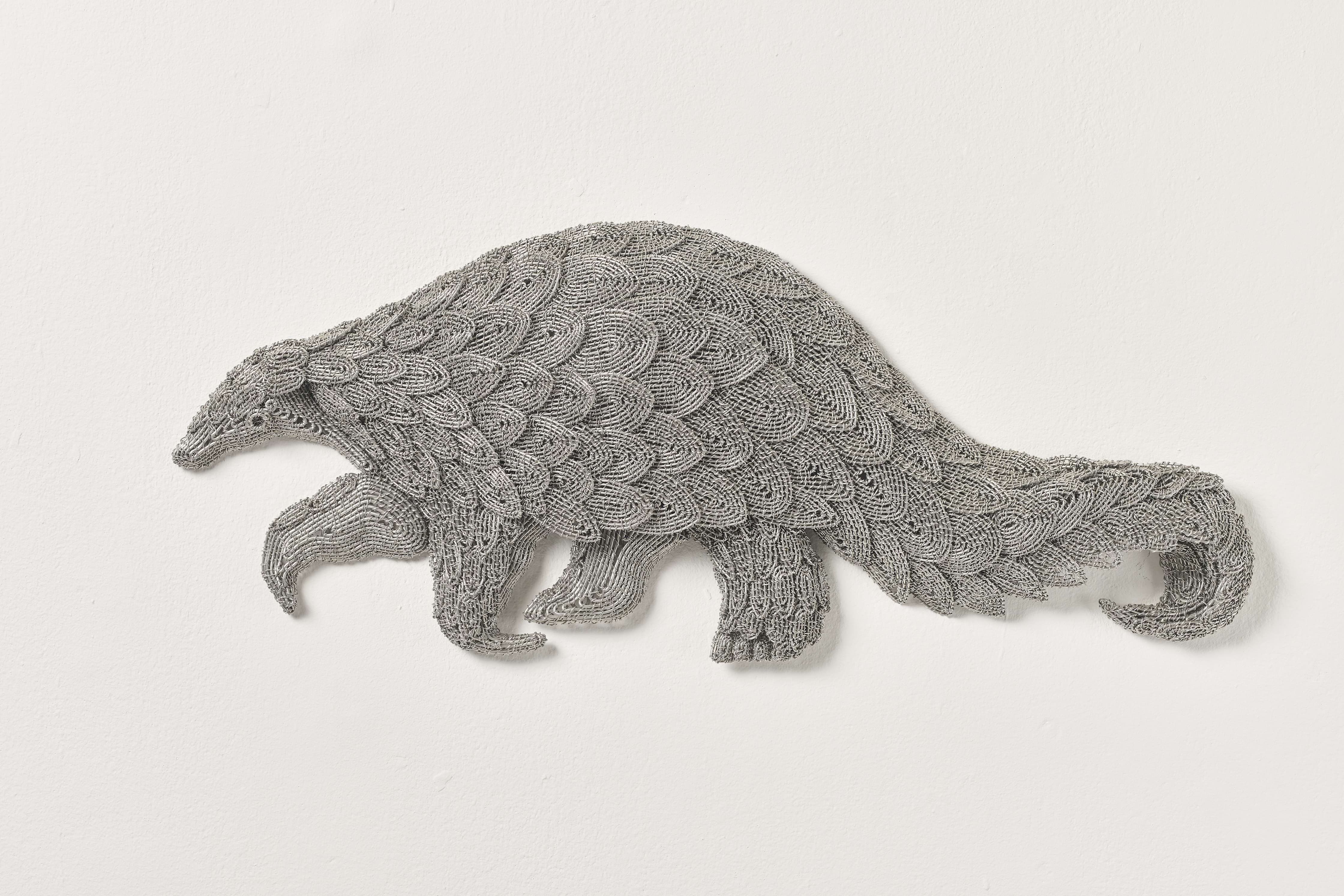
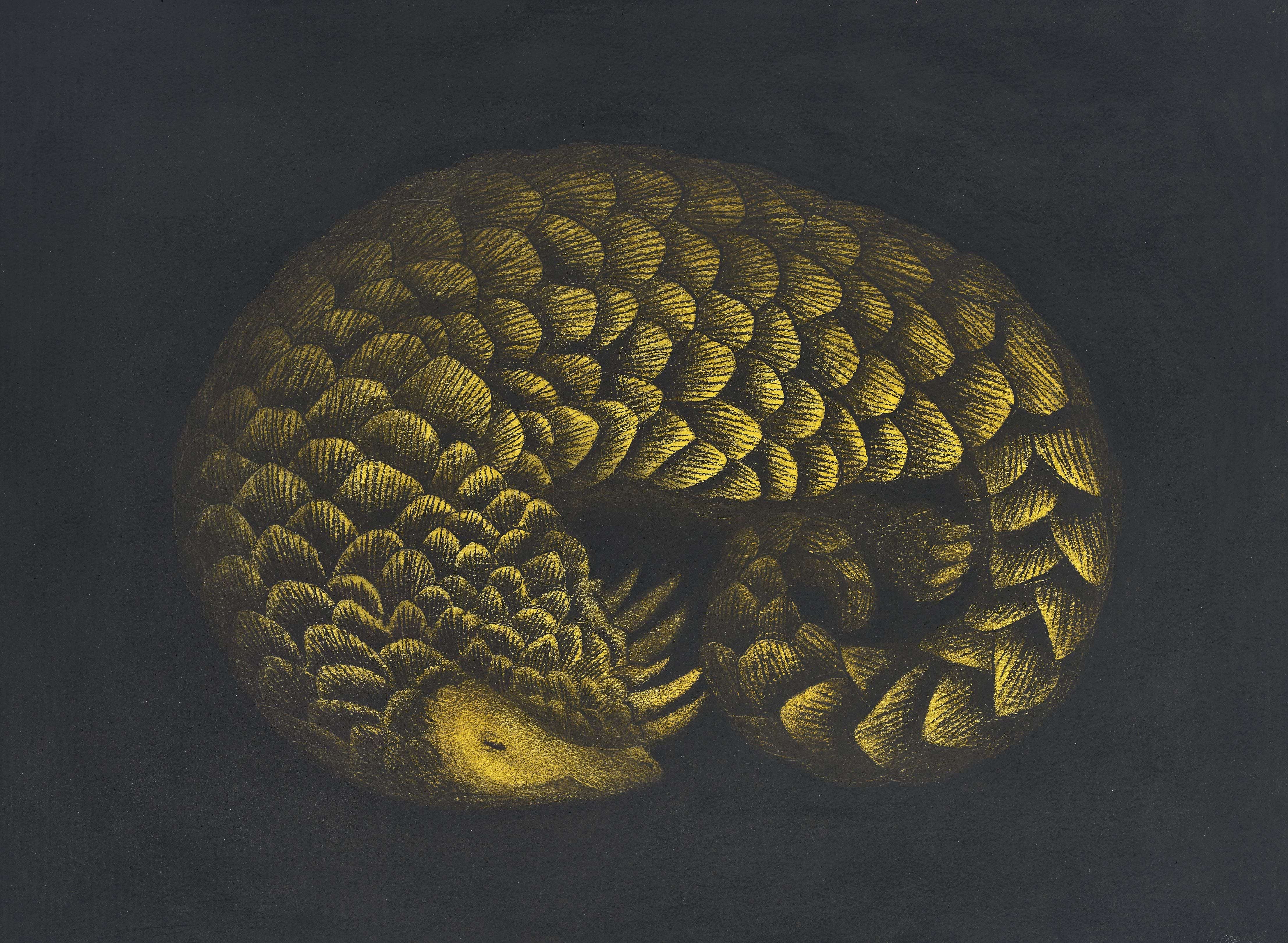
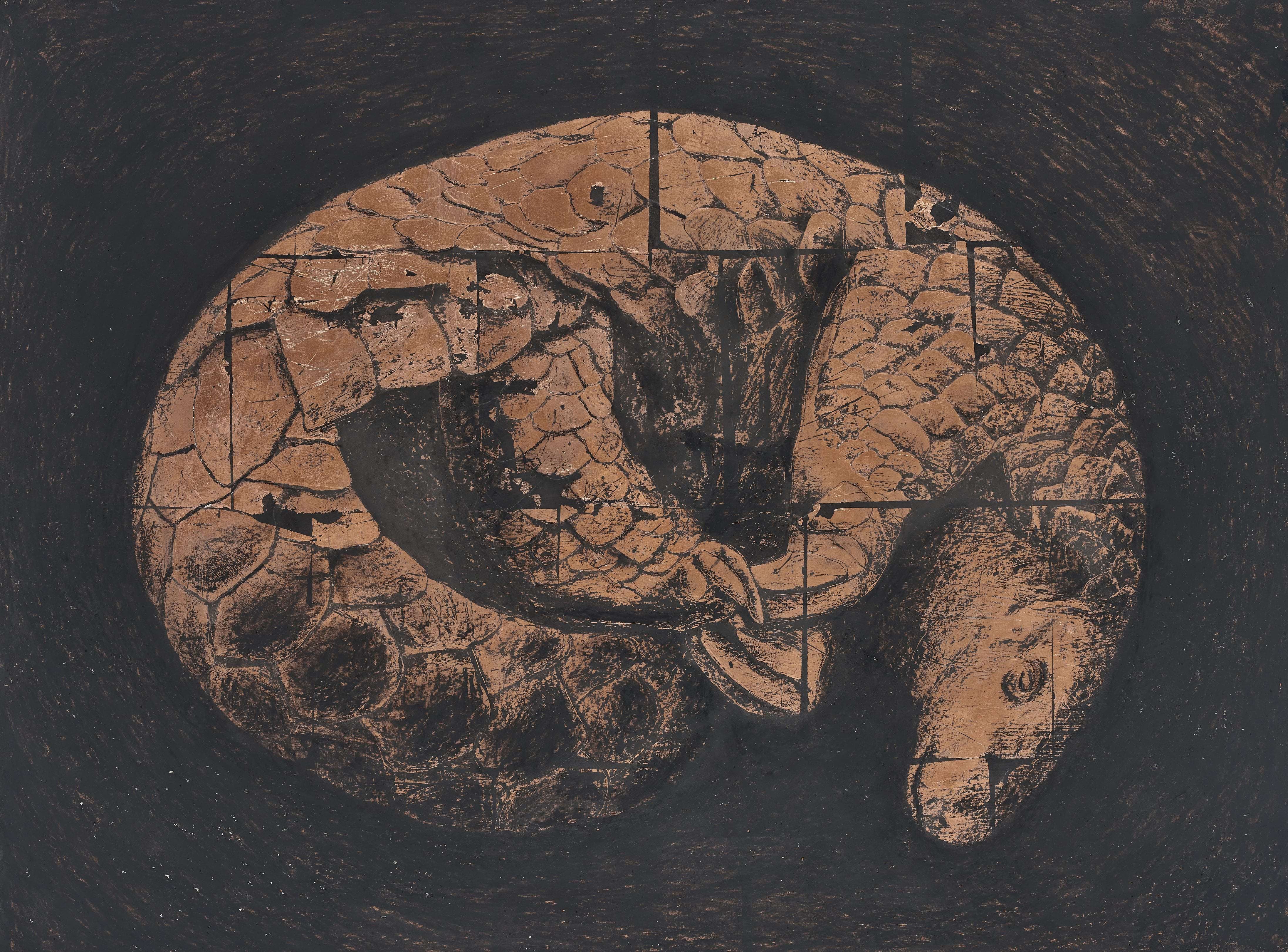
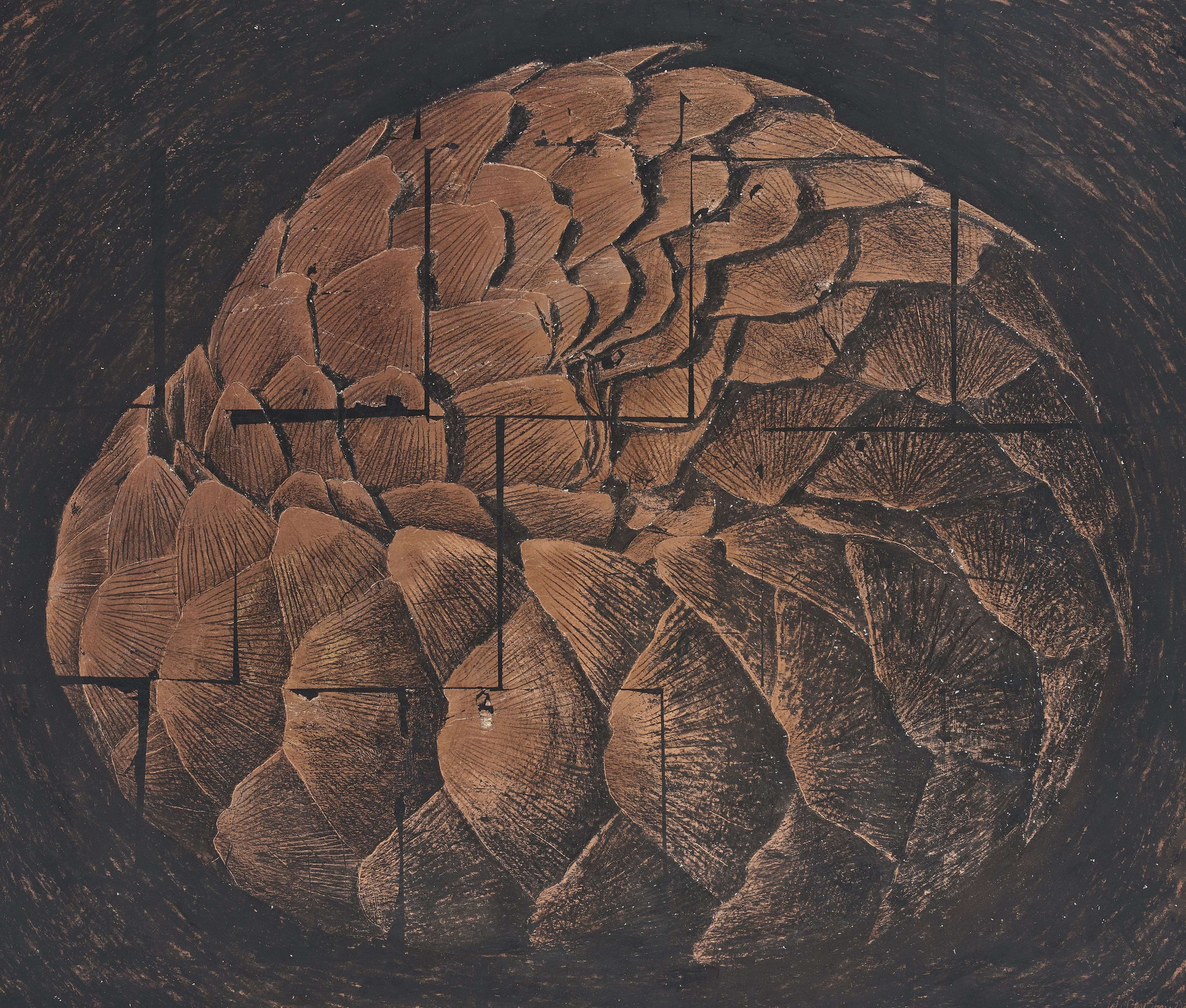
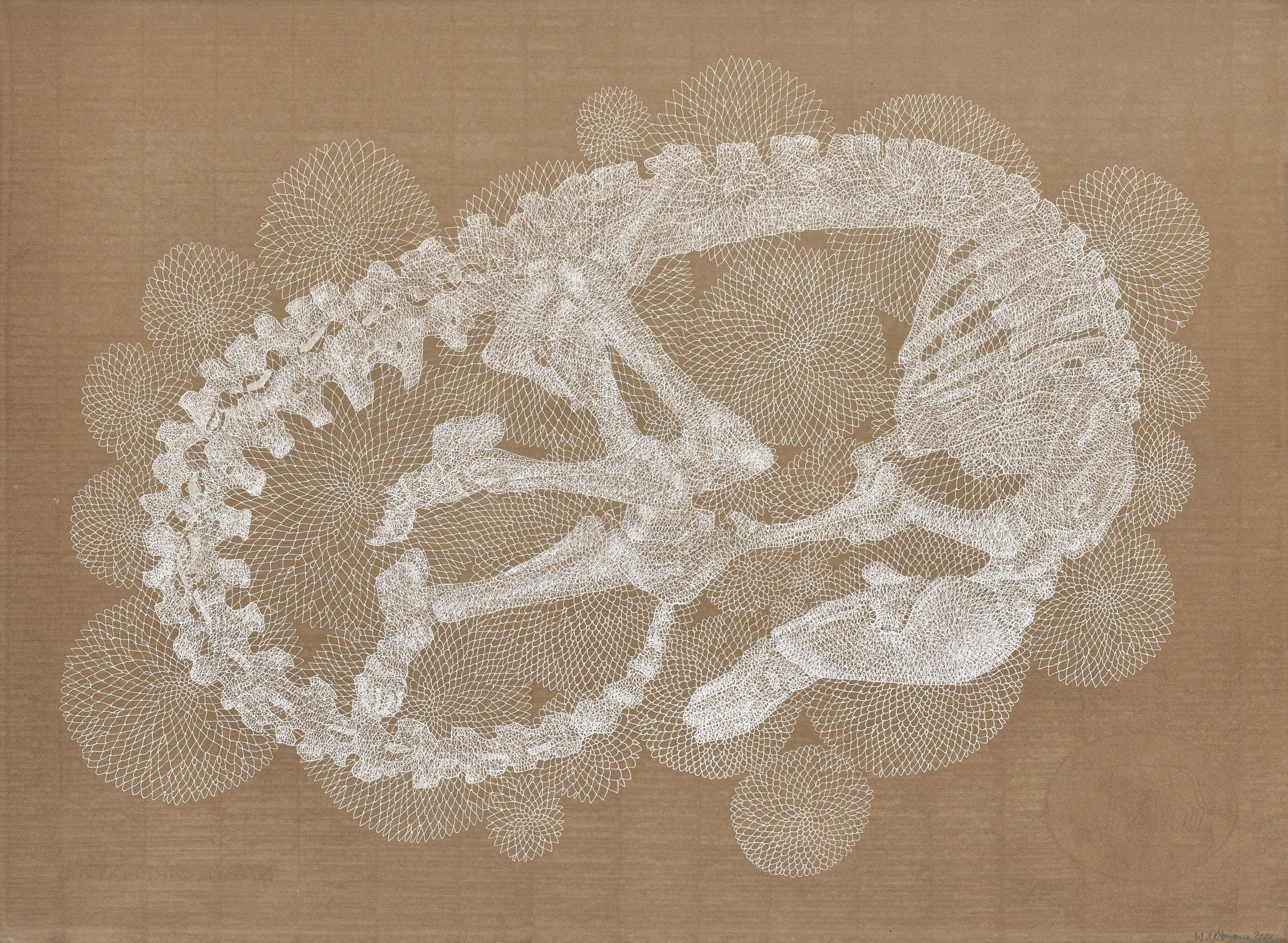
Oltmann creates a magical world inhabited by a variety of armoured suits next to armoured animals such as the Sungazer lizard (Smaug Giganteus) and the African pangolin (Smutsia Temminckii). Such works bring attention to the plight of critically endangered species and the impact of climate change, human predation and illegal captured wildlife trade. The pangolin is in grave peril since the animal’s lovable appearance also counts against it in the pet trade. Similarly, its defensive scales have become a target, prized as supposedly having such powerful medicinal properties to make it valuable and worth slaughtering pangolins for, despite no science in evidence of these properties. Oltmann’s animal subjects are at times playful and humorous but also include images of dead or near-dead creatures. The latter serve as memorials to animals that are not only dying, but literally ‘dying off’, i.e. on the edge of extinction. Images of fossils and skeletal remains similarly function as symbols of posteriority. As portraits of loss, they are meditations on the consequences and impact of environmental distress.
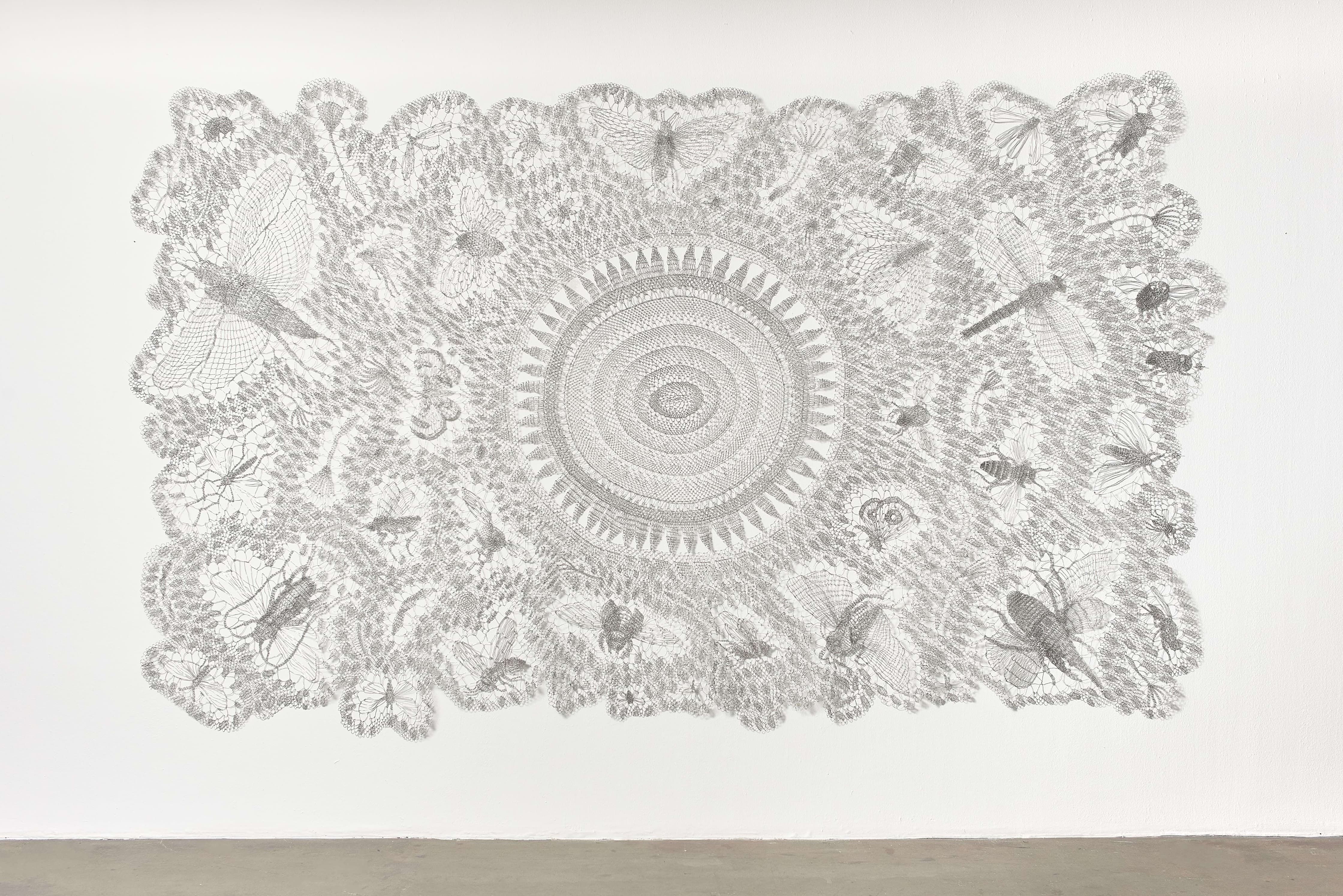
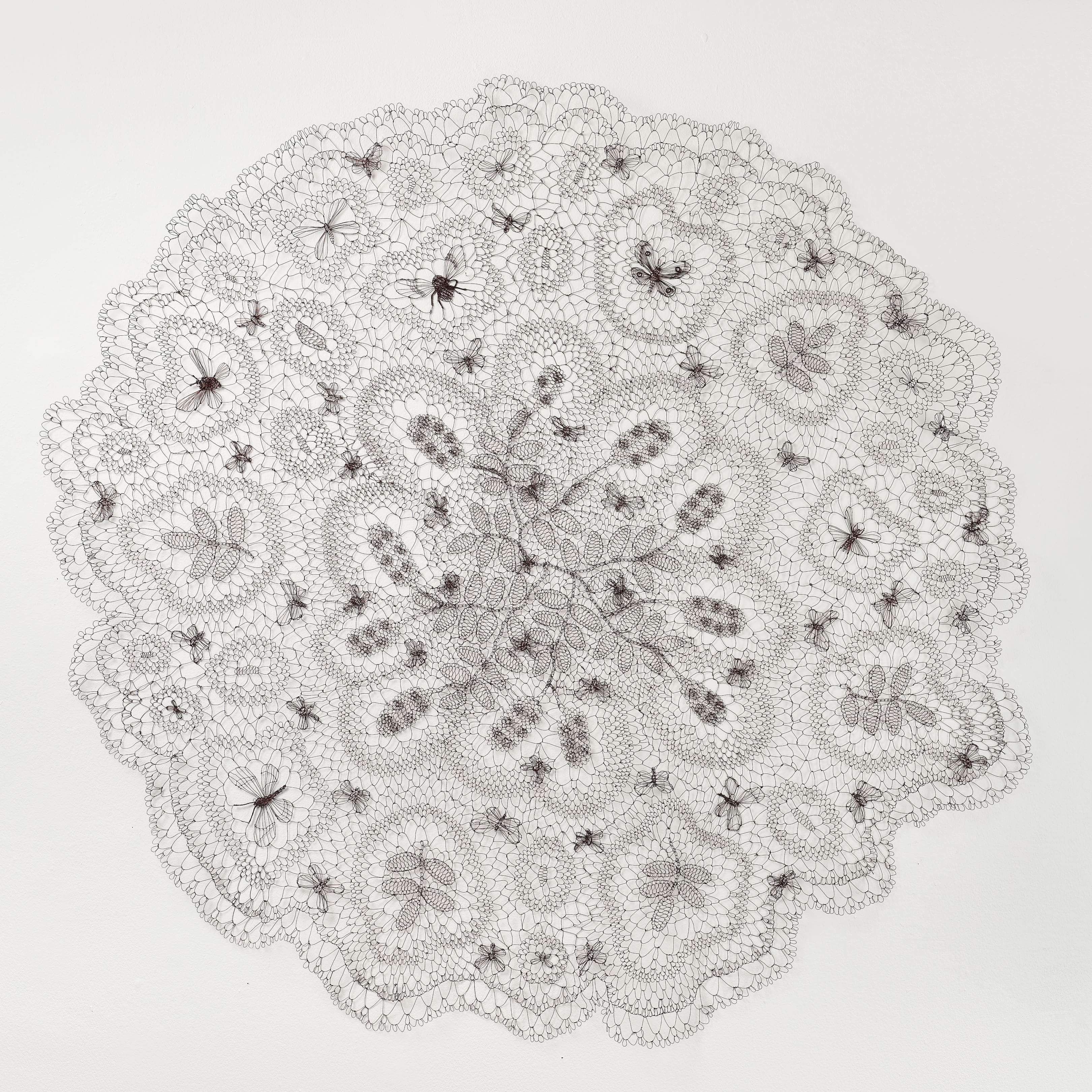
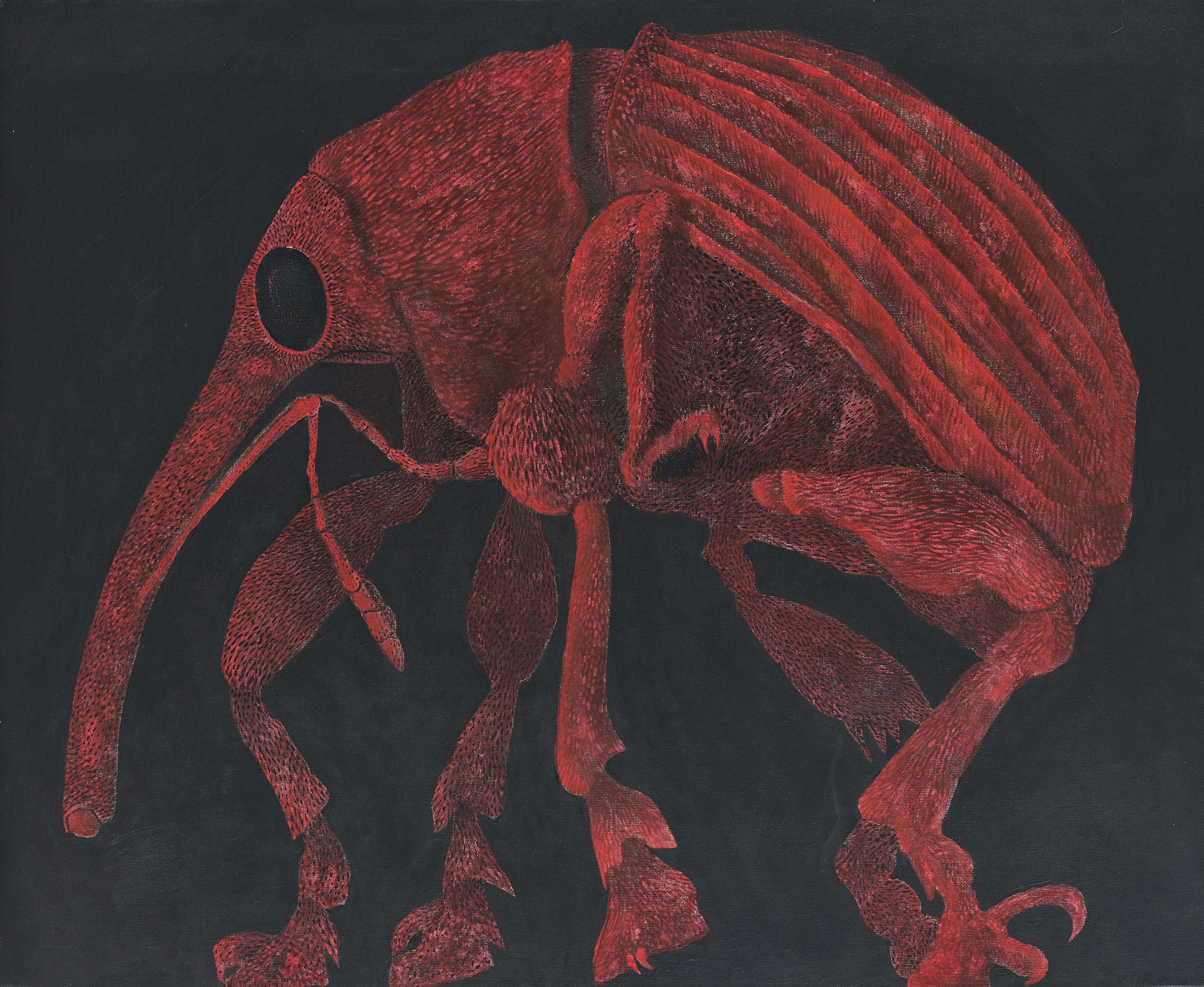
Insects are literally woven into the fabric of our human affairs, yet we consider them alien and observe them in a detached manner, being frequently both fascinated and repulsed by them. It is good to be reminded that all form integral parts of the food chain, of cycles of growth and interrelation on which our very existence depends. Showing them as though trapped in lacey nets or fabrics, the artist teases out some of these ambiguous feelings that we have towards them, Fragile, diminutive and vulnerable yet often feared and the subject of phobia. Seeds too, can be tiny yet virtually indestructible in protective casing, with sharp protrusions, or be so light and fluffy as to enable their own flight in the wind .Seeds and pods also range widely across species in their sophisticated evolutionary states to enable dispersal, and escape predation or being consumed before entering their new growth phases.
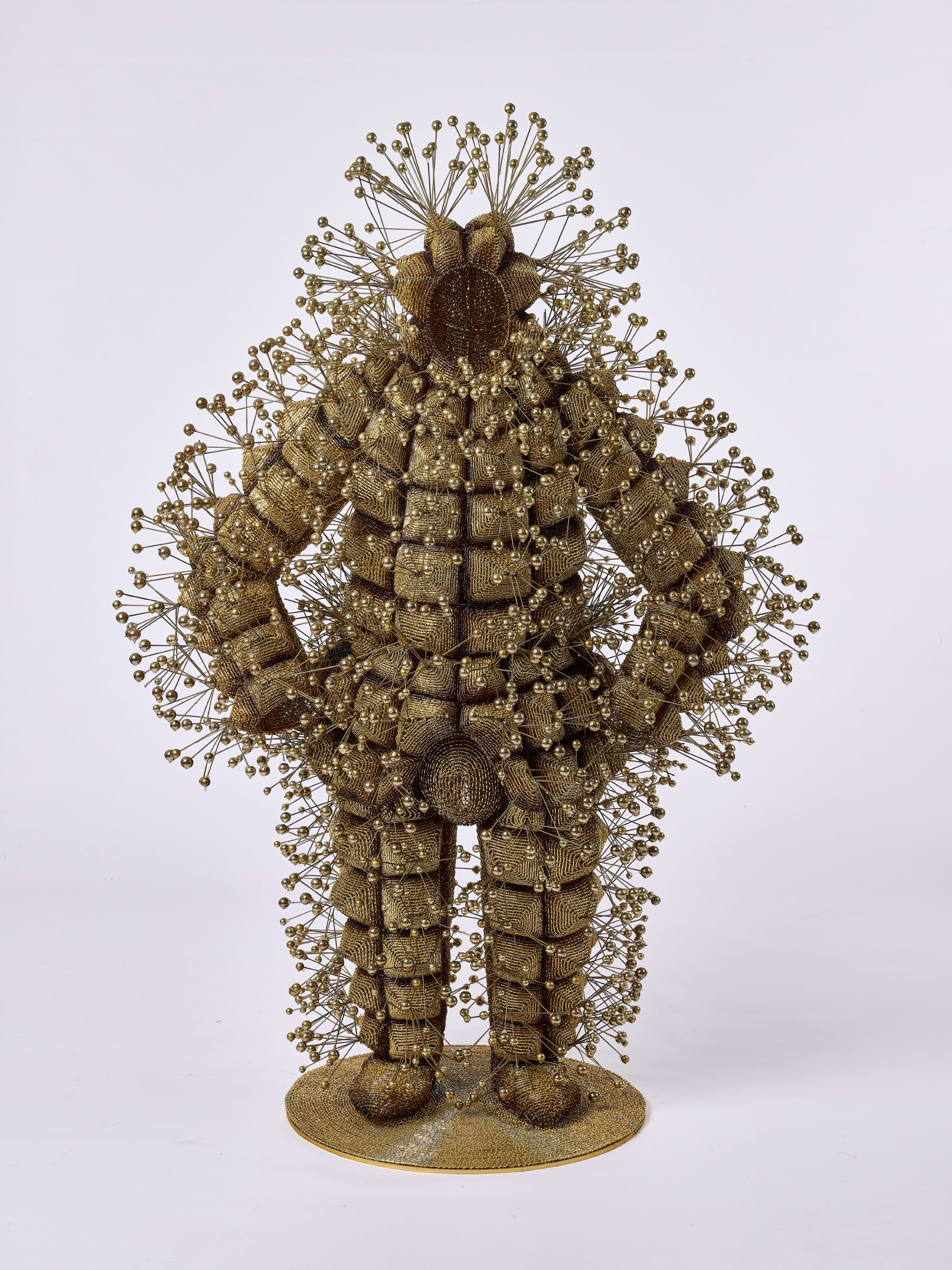
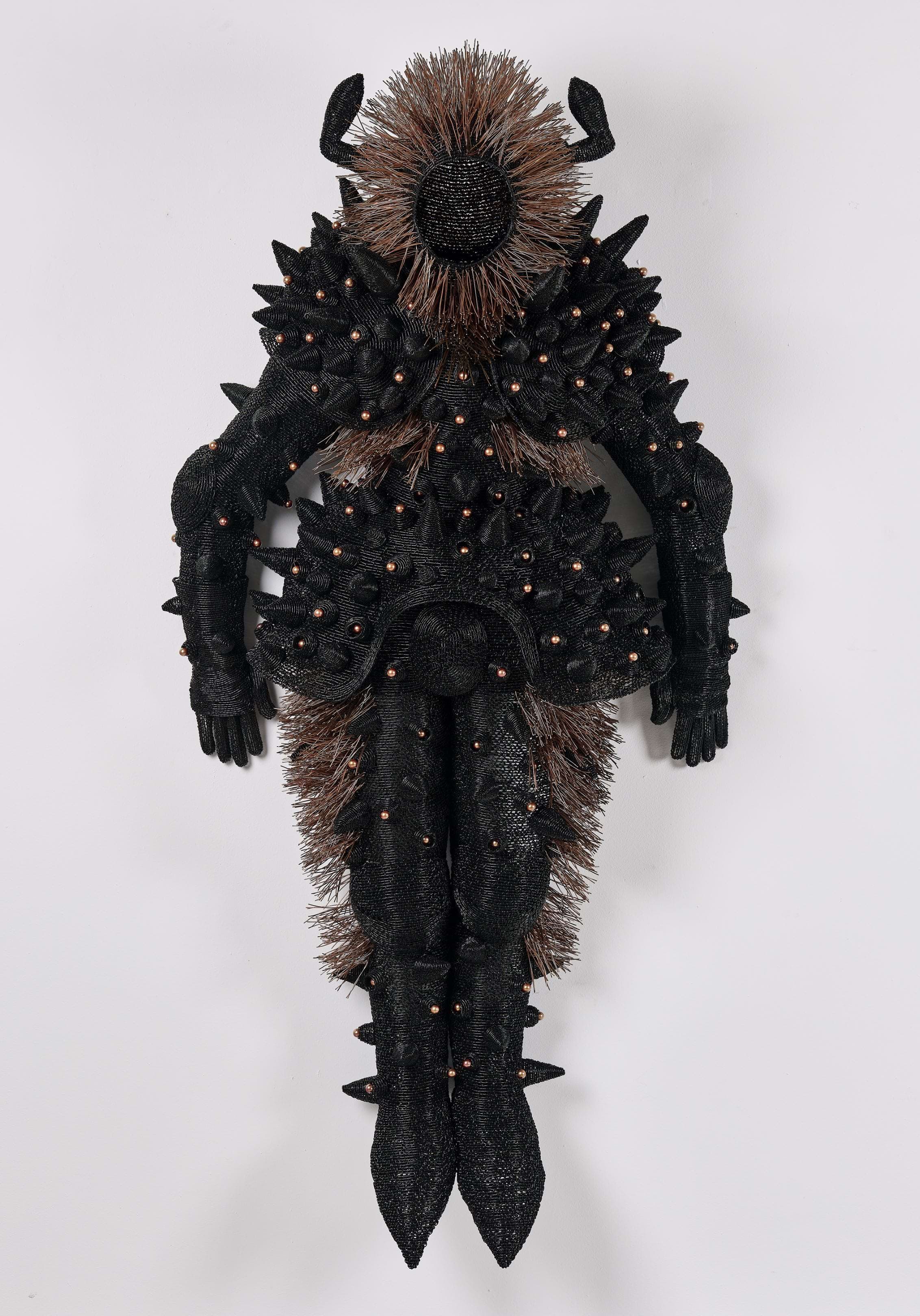
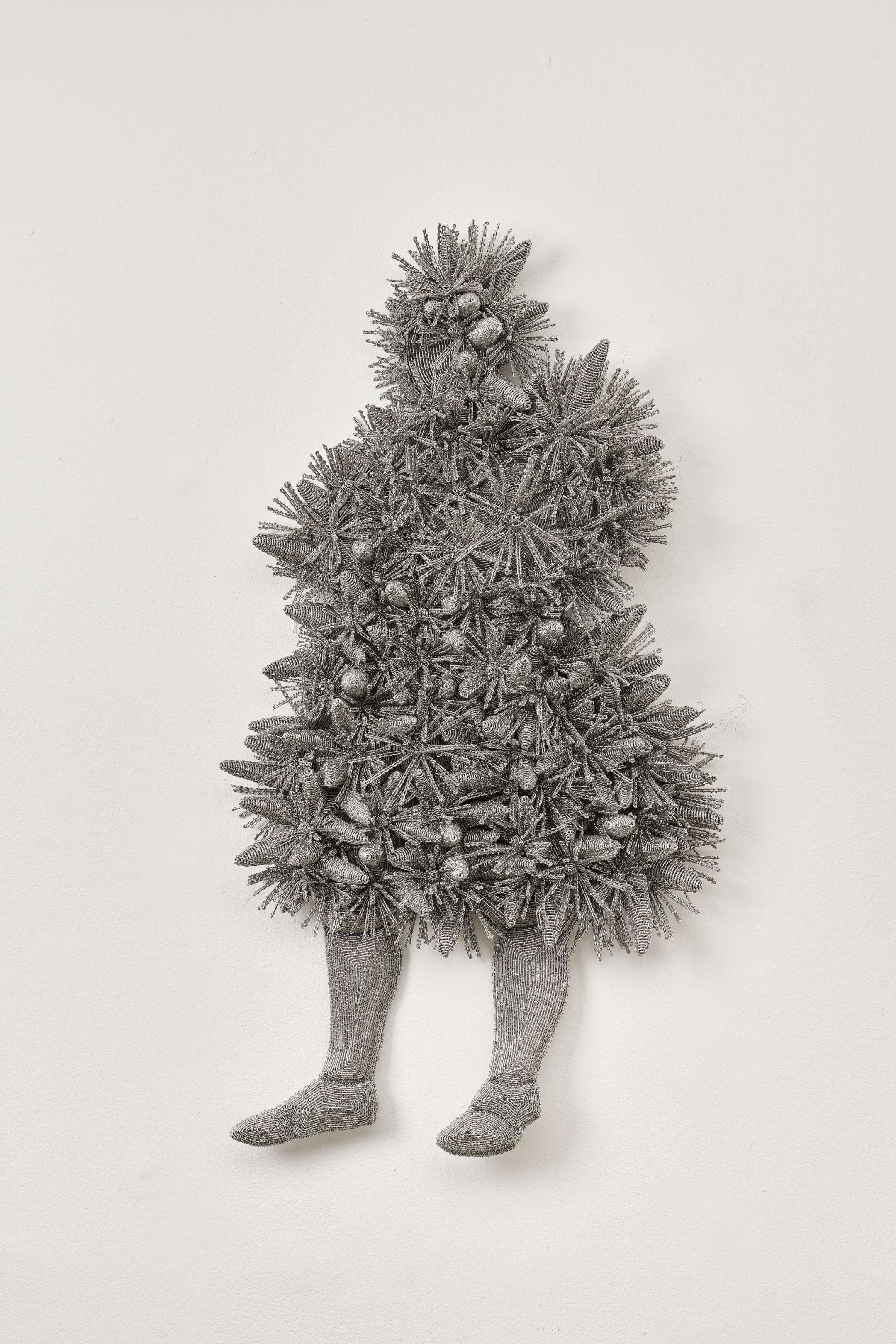
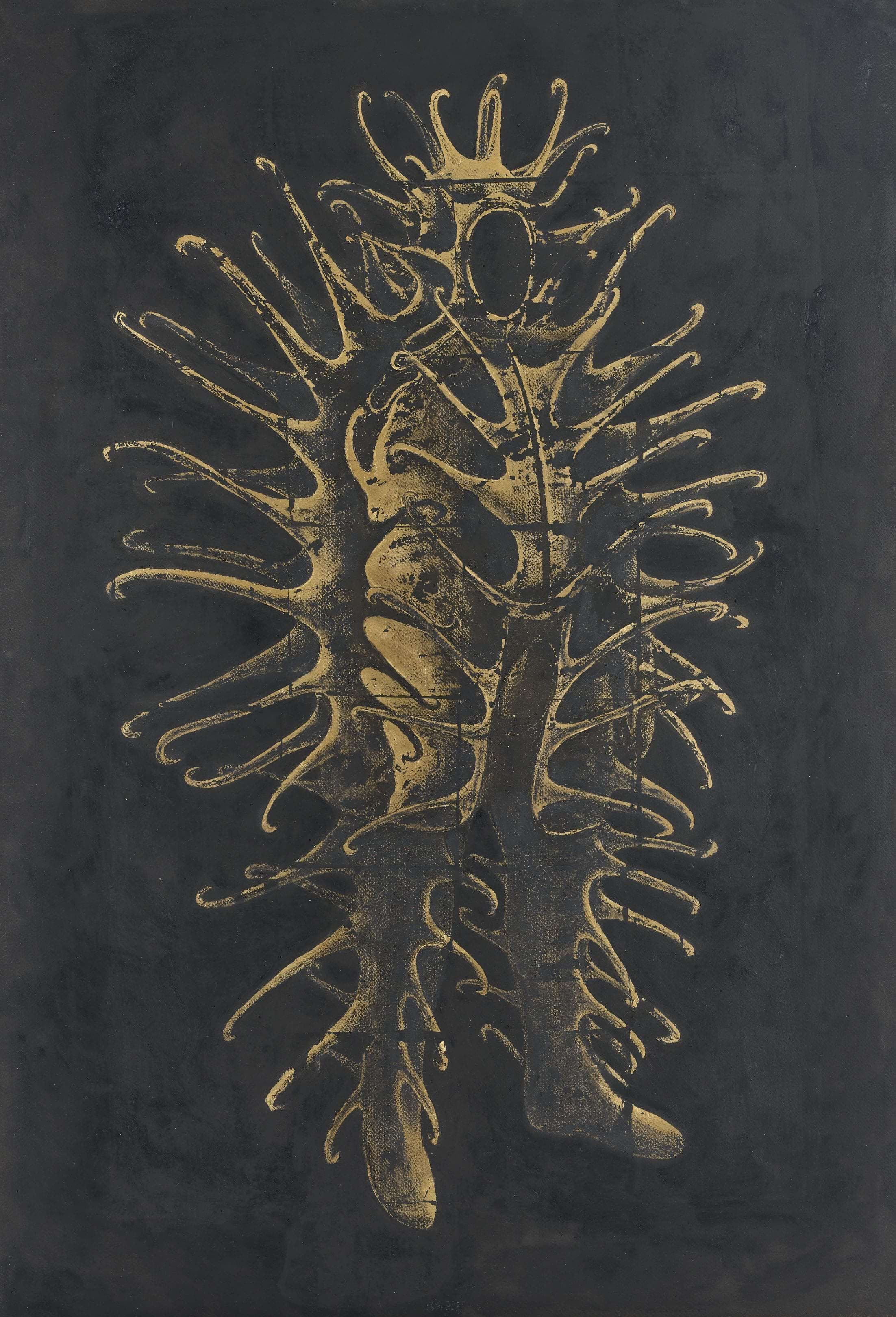
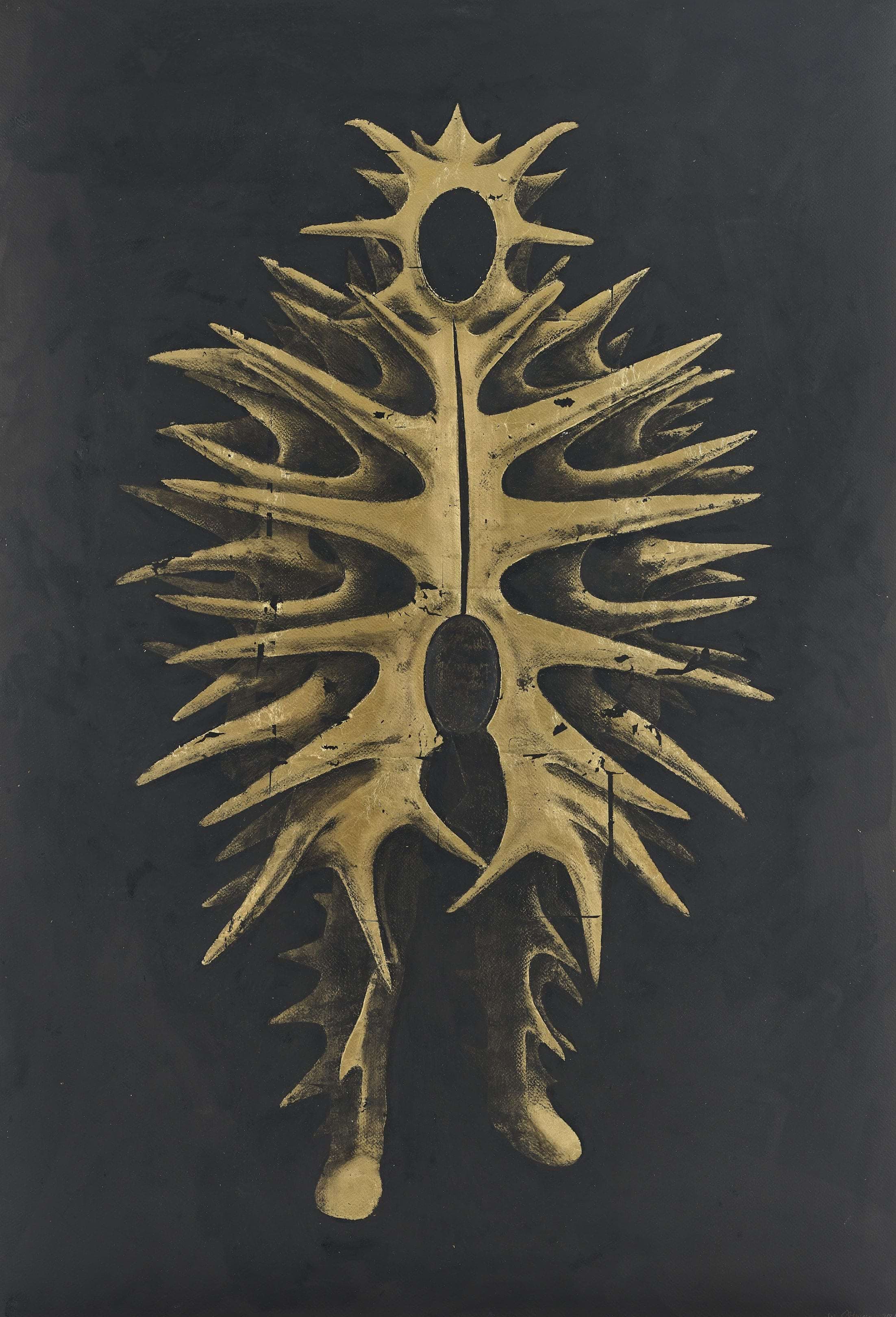
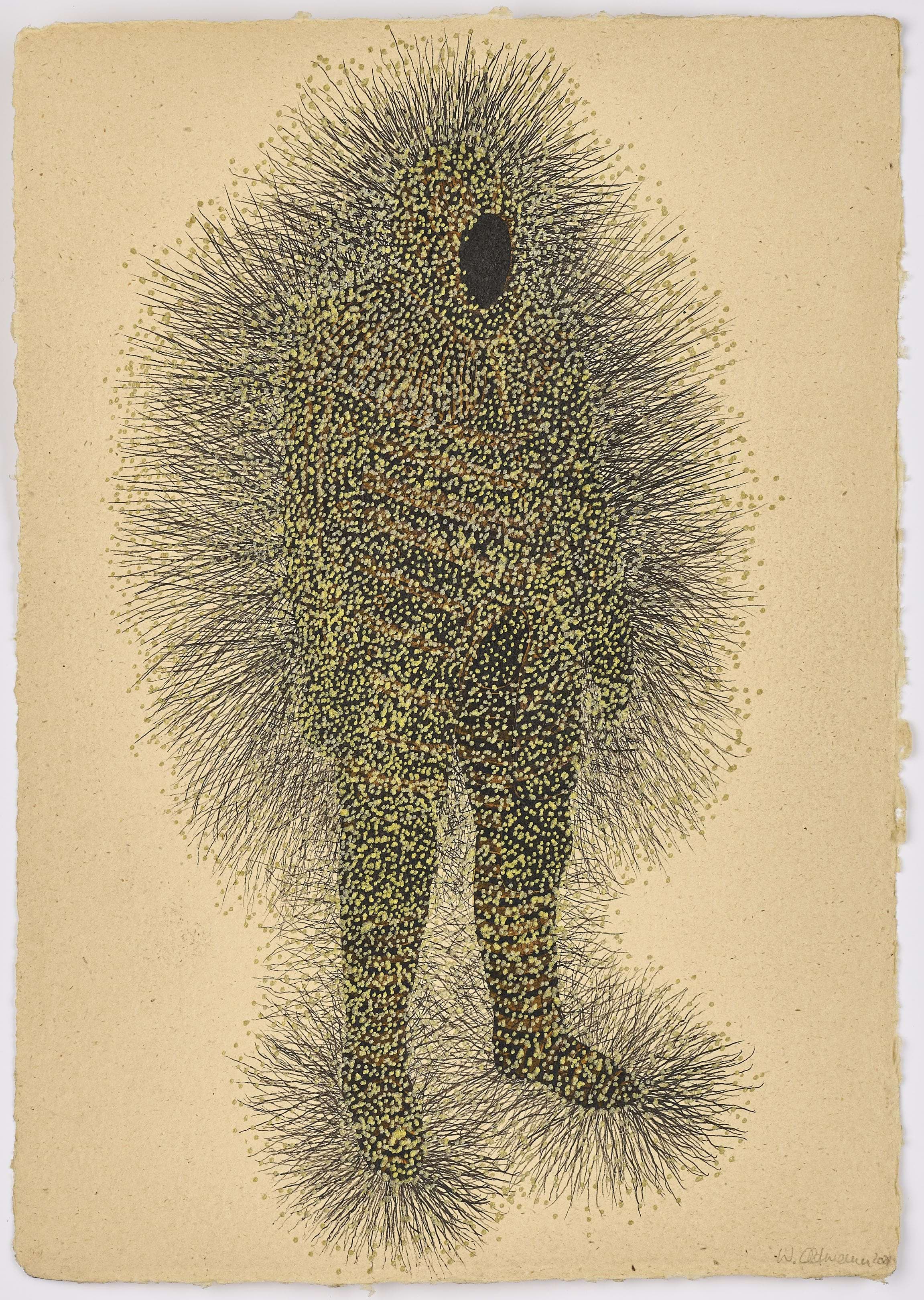
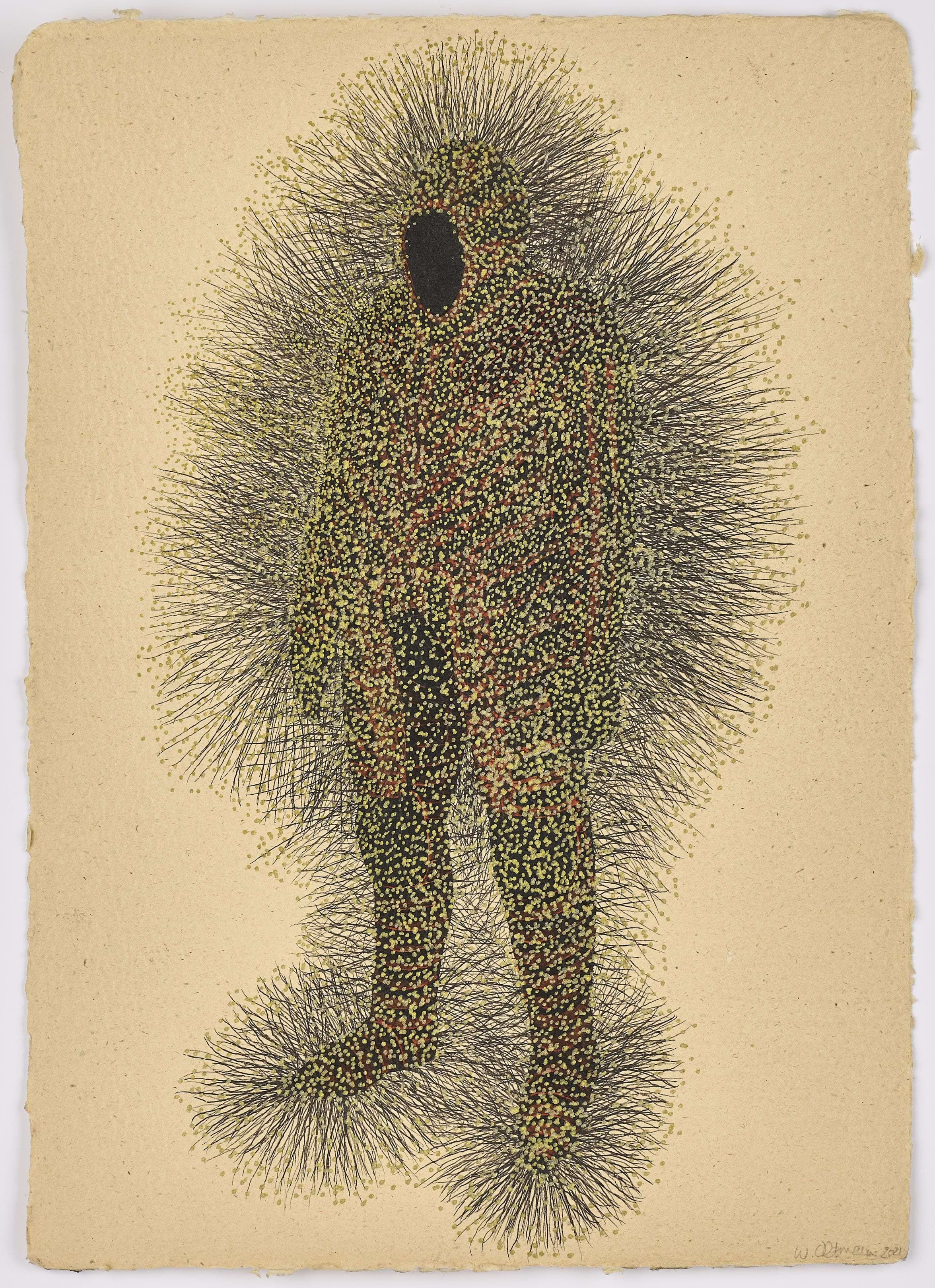
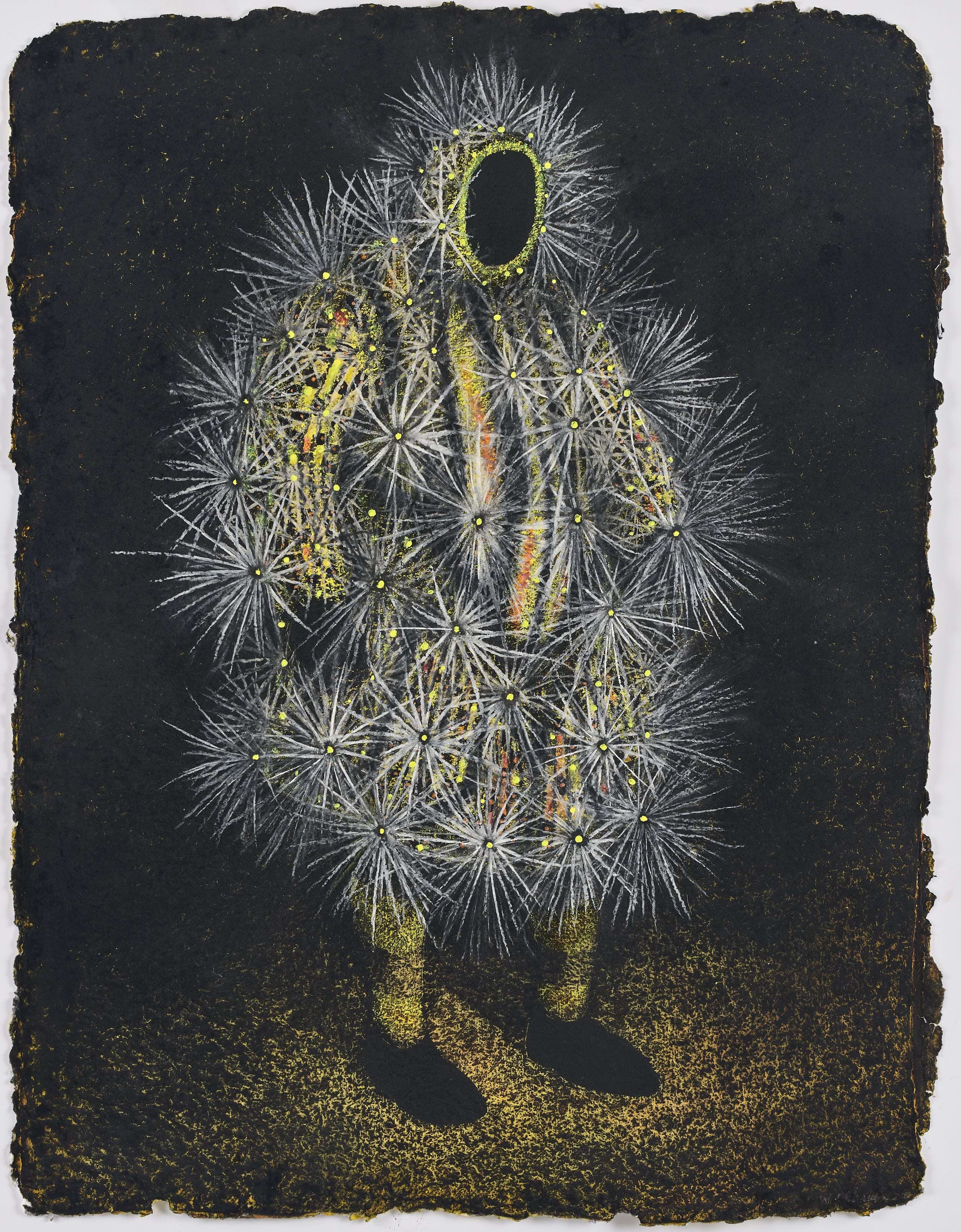
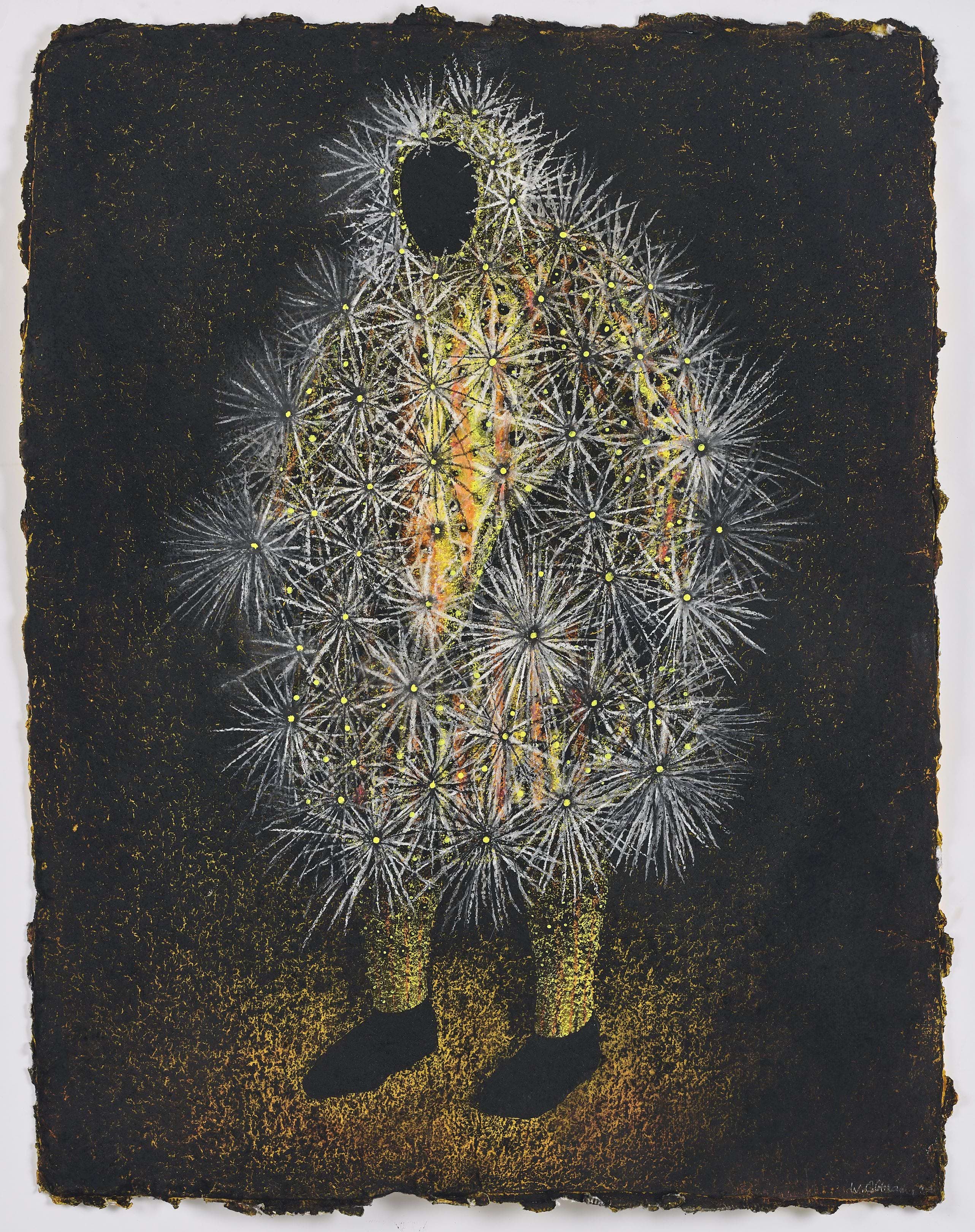
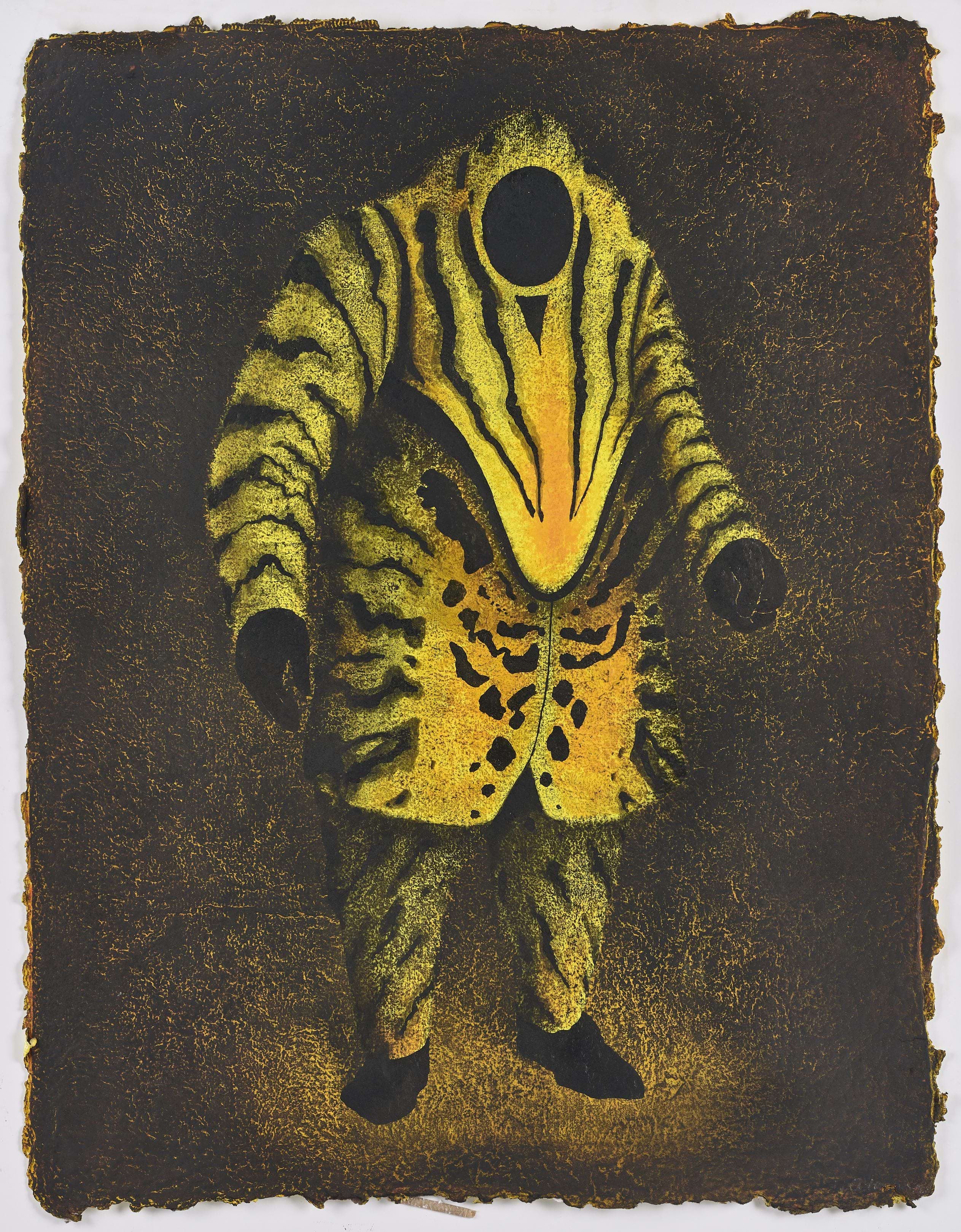
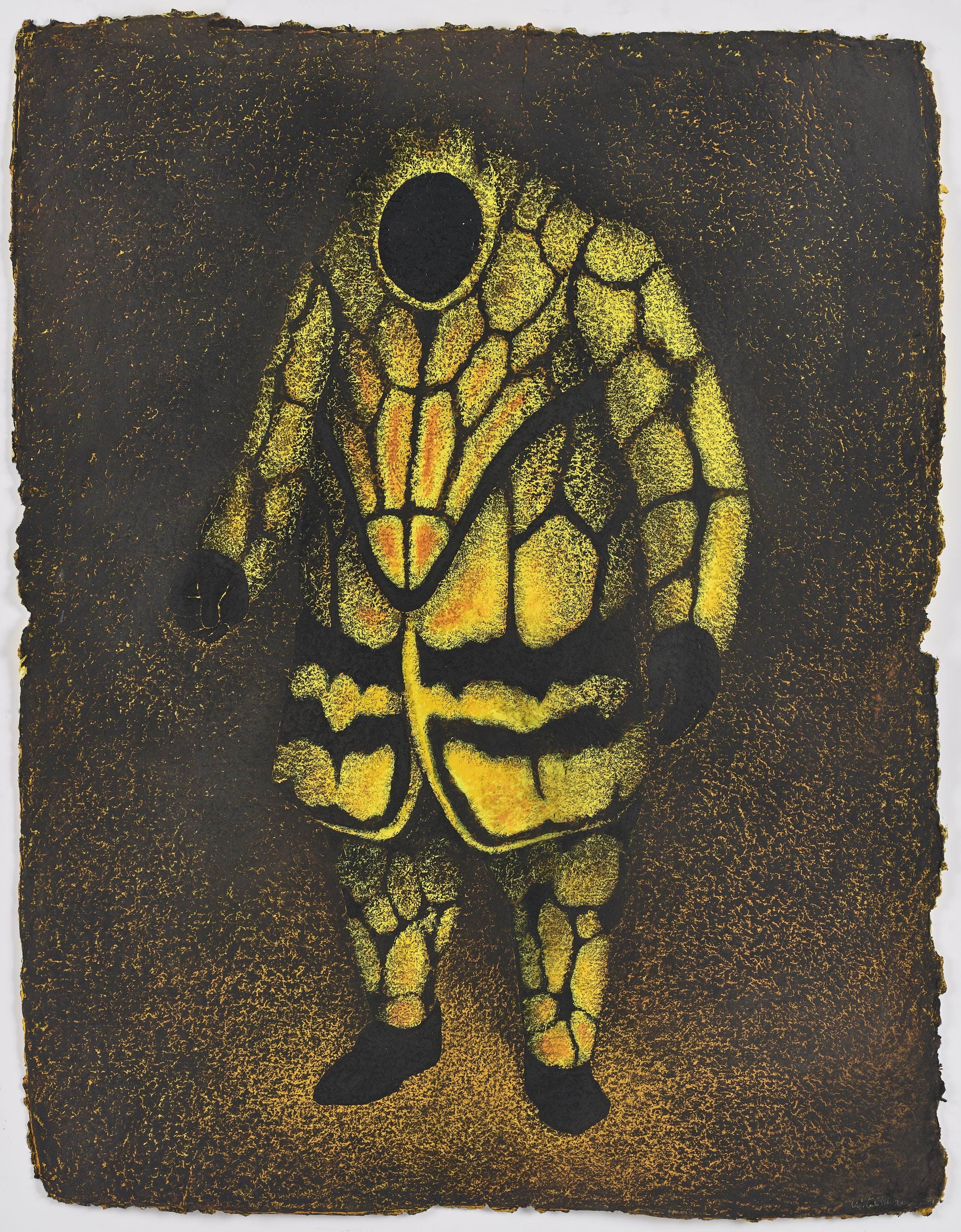
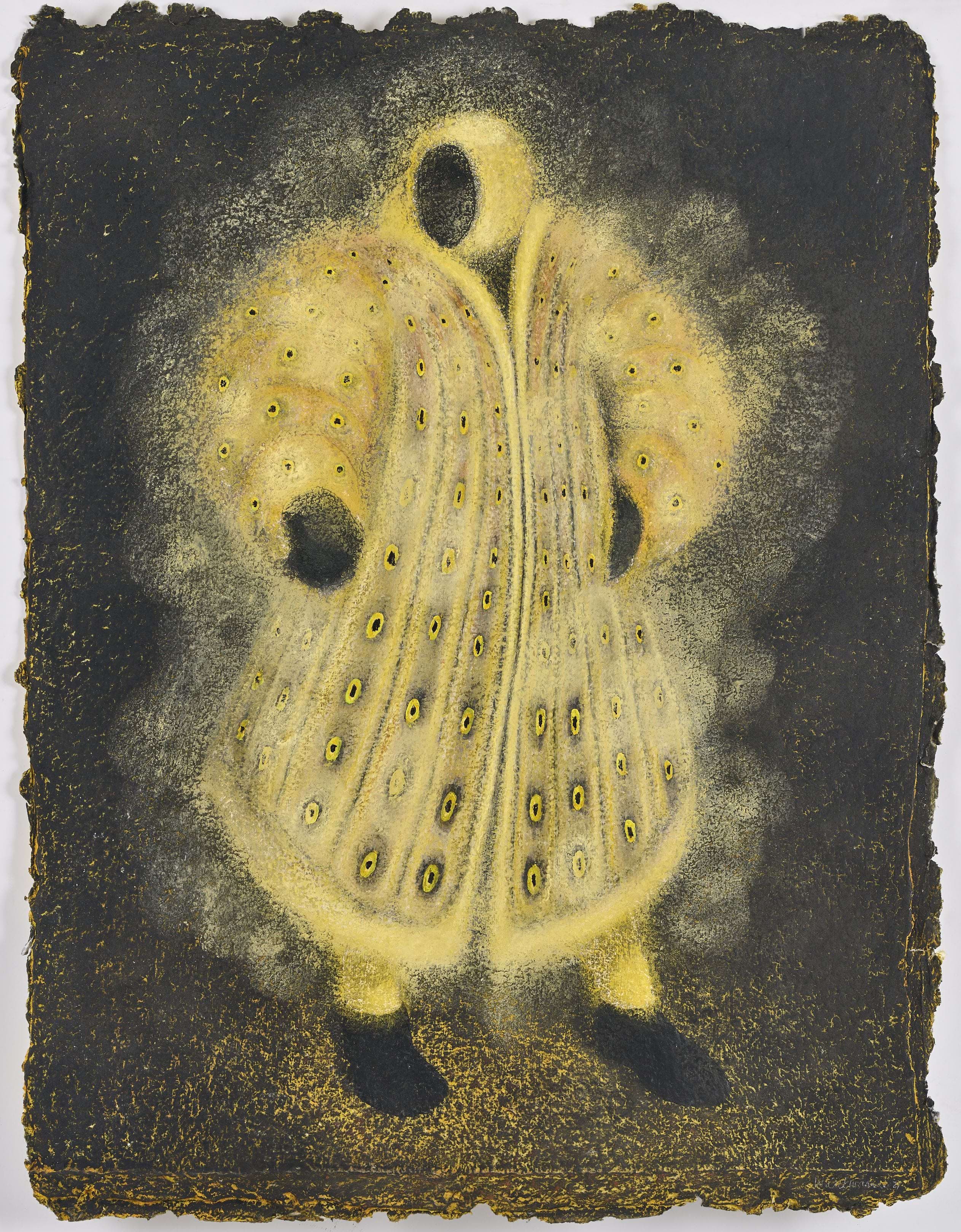
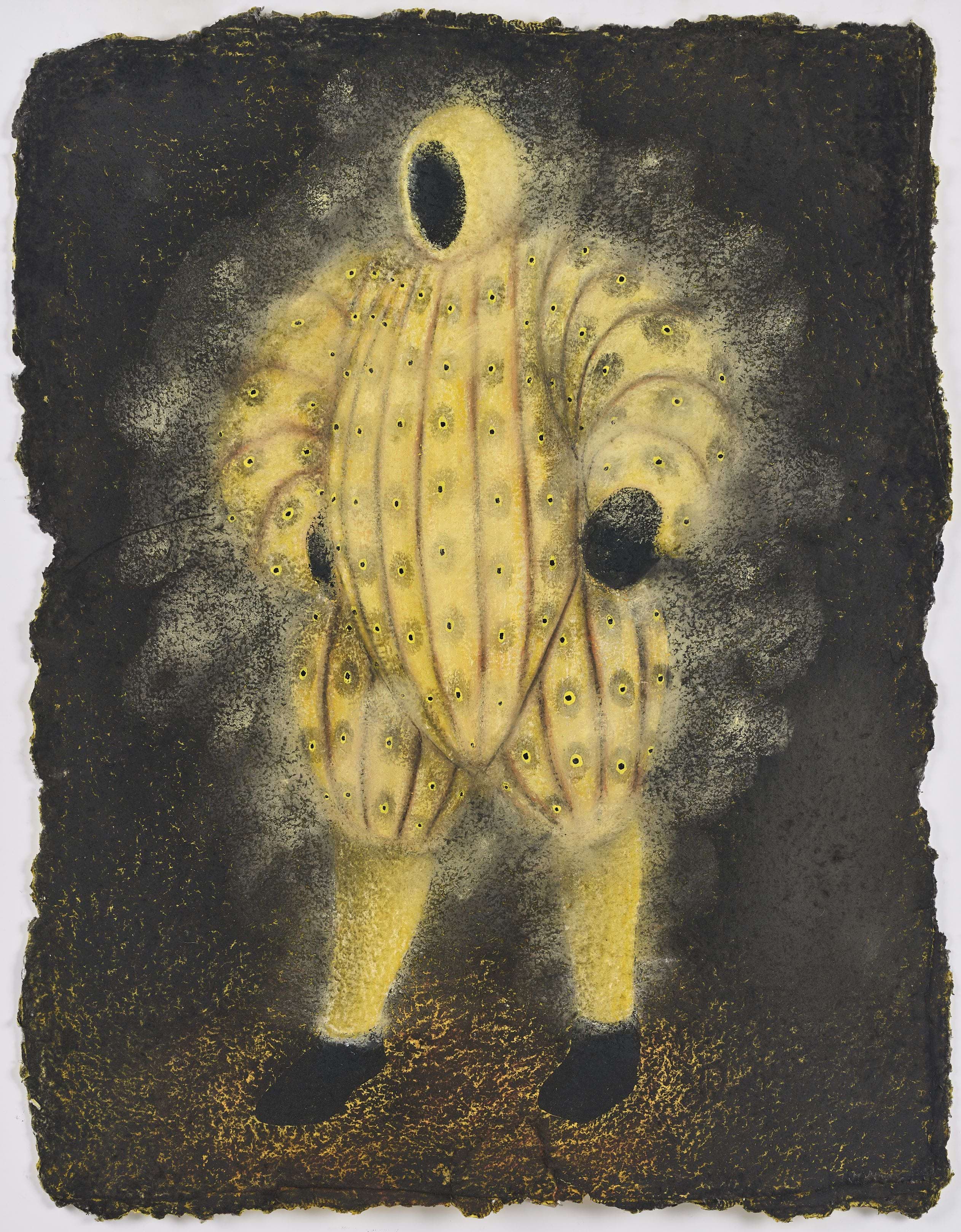
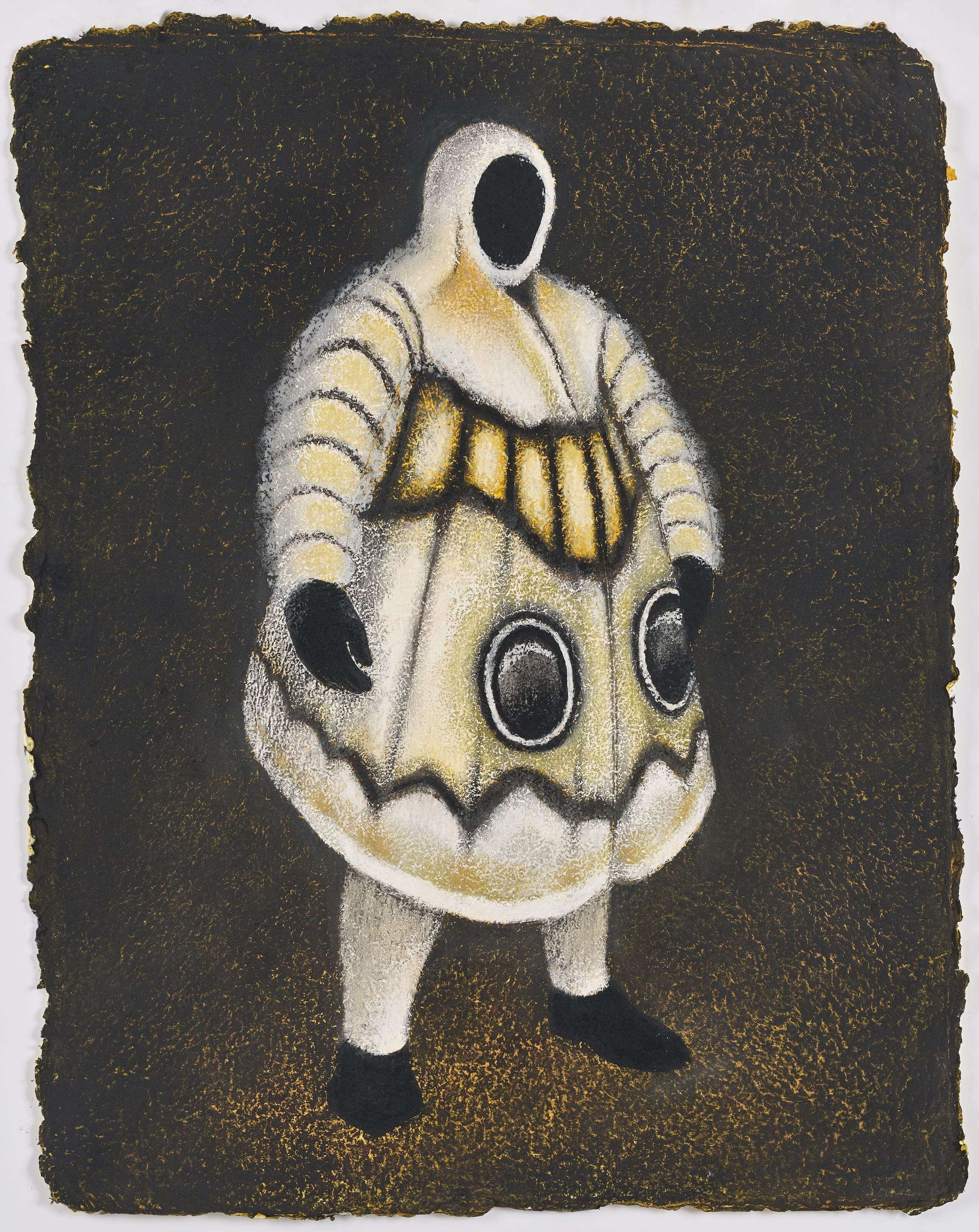
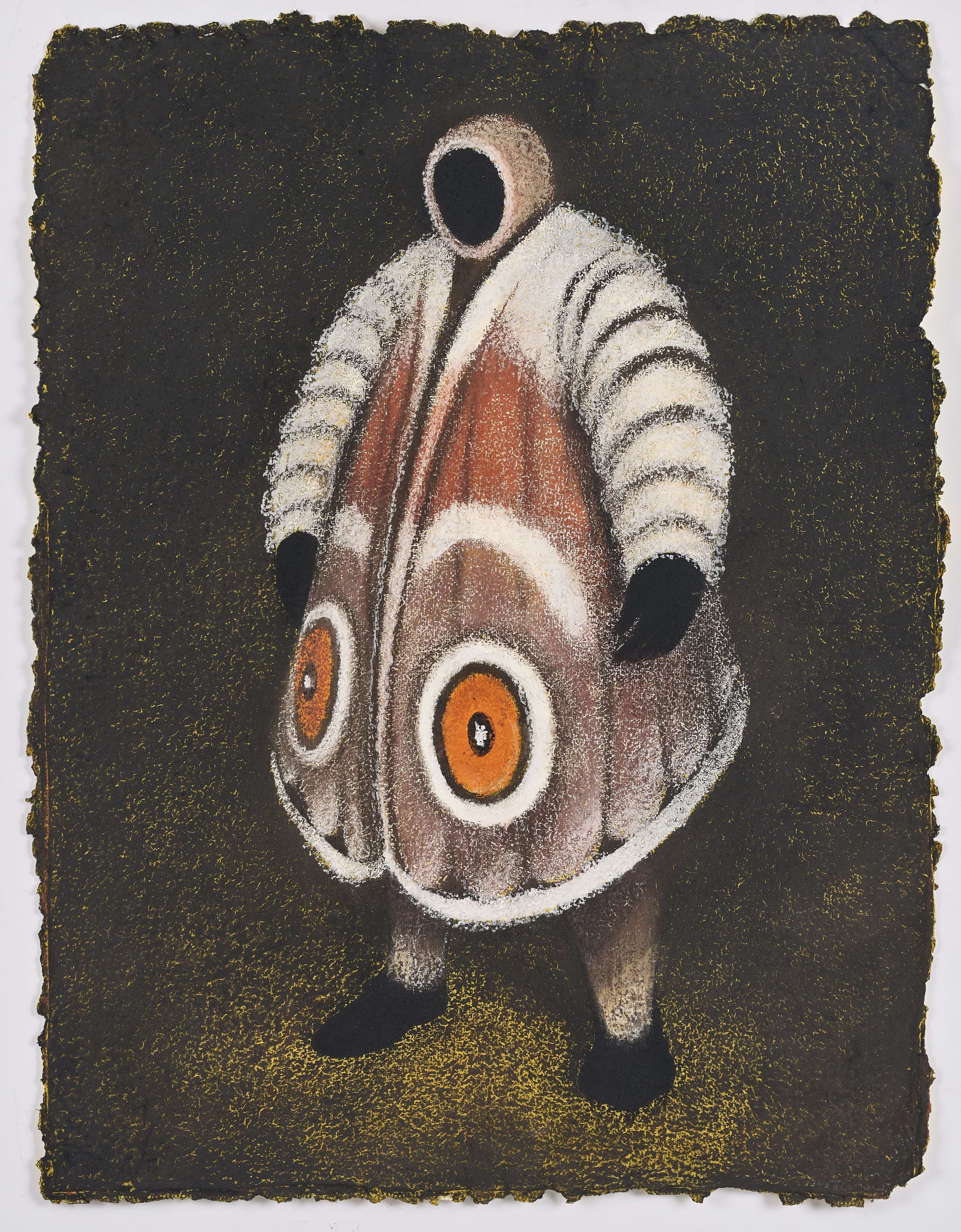
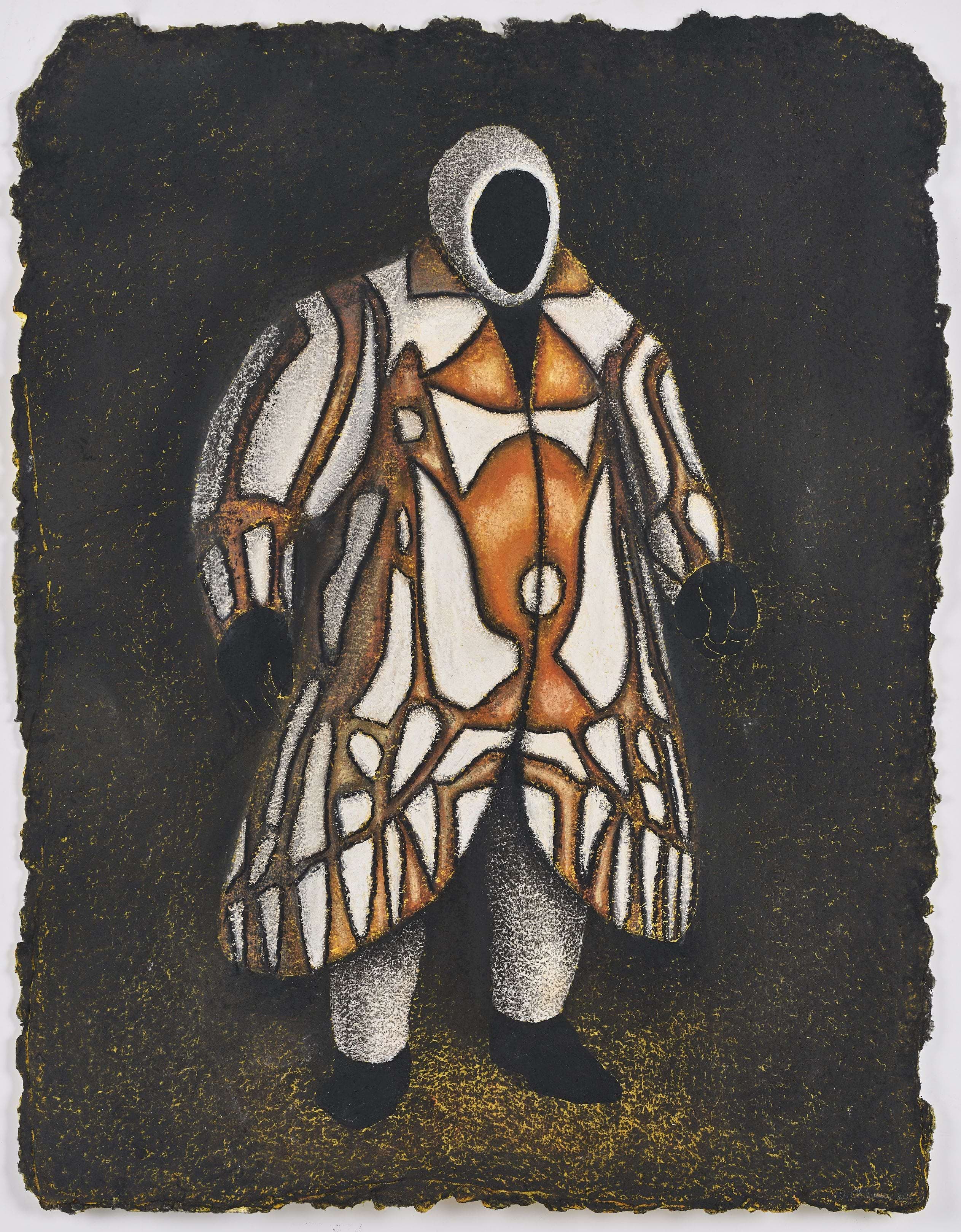
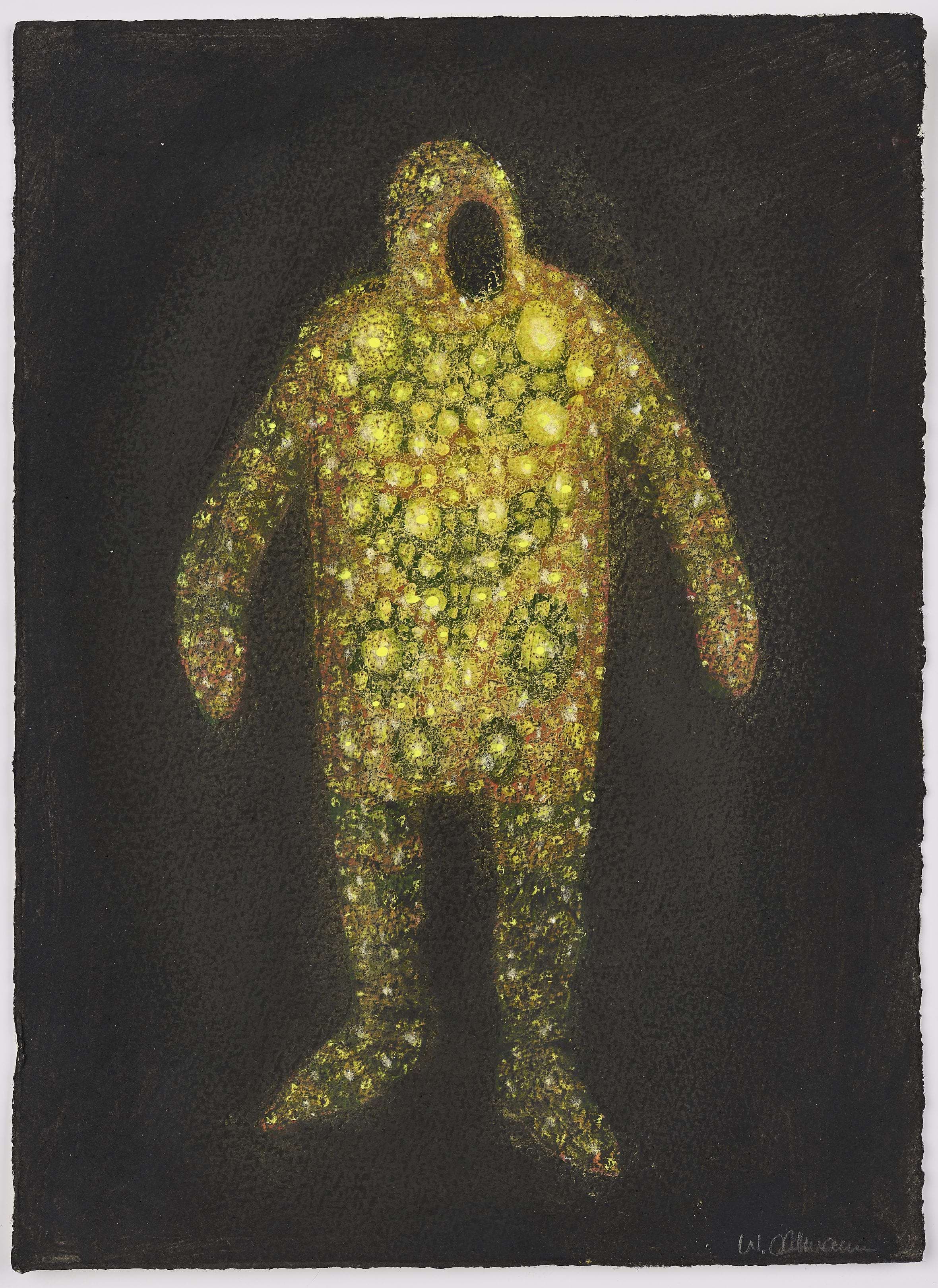
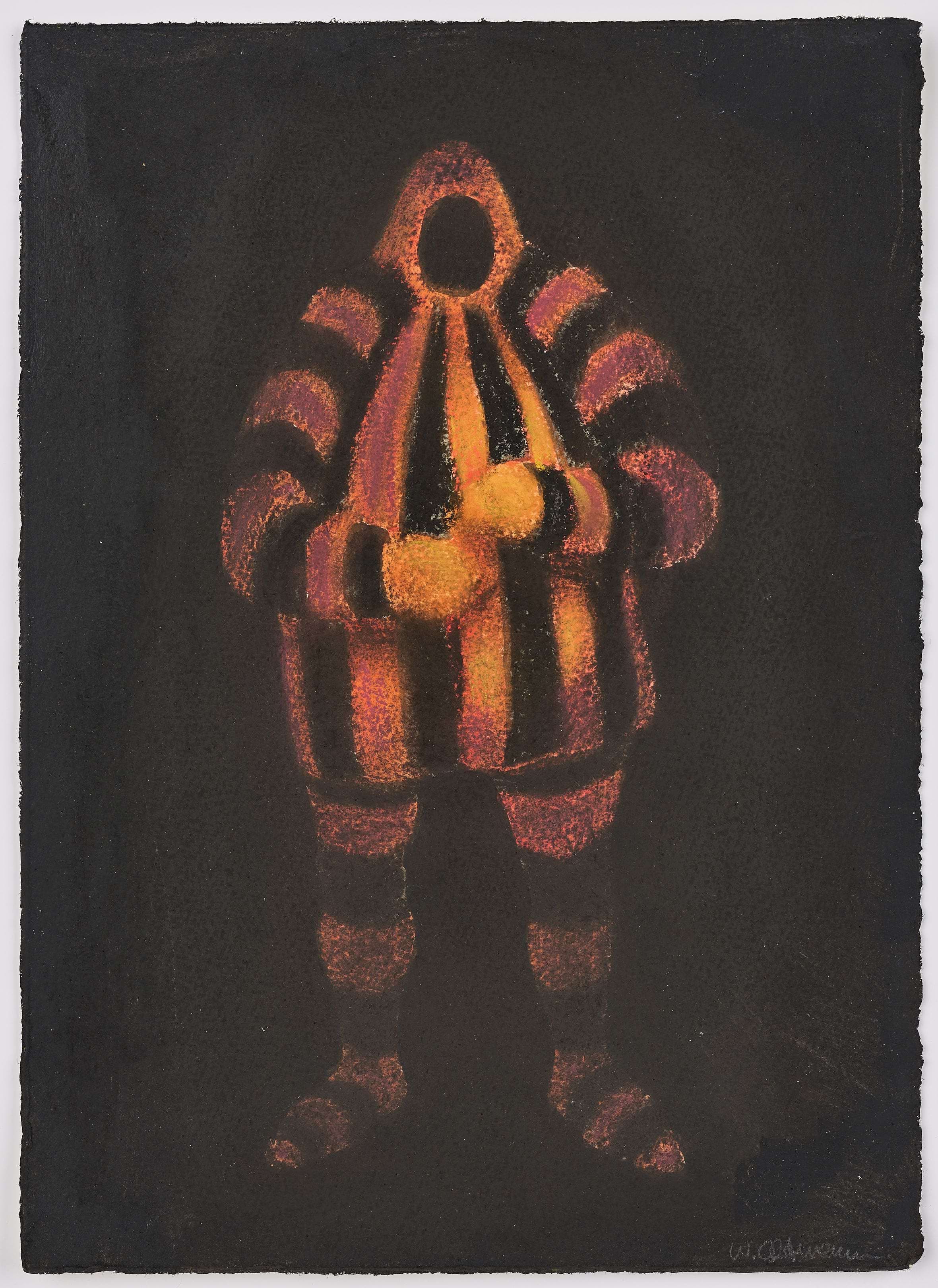
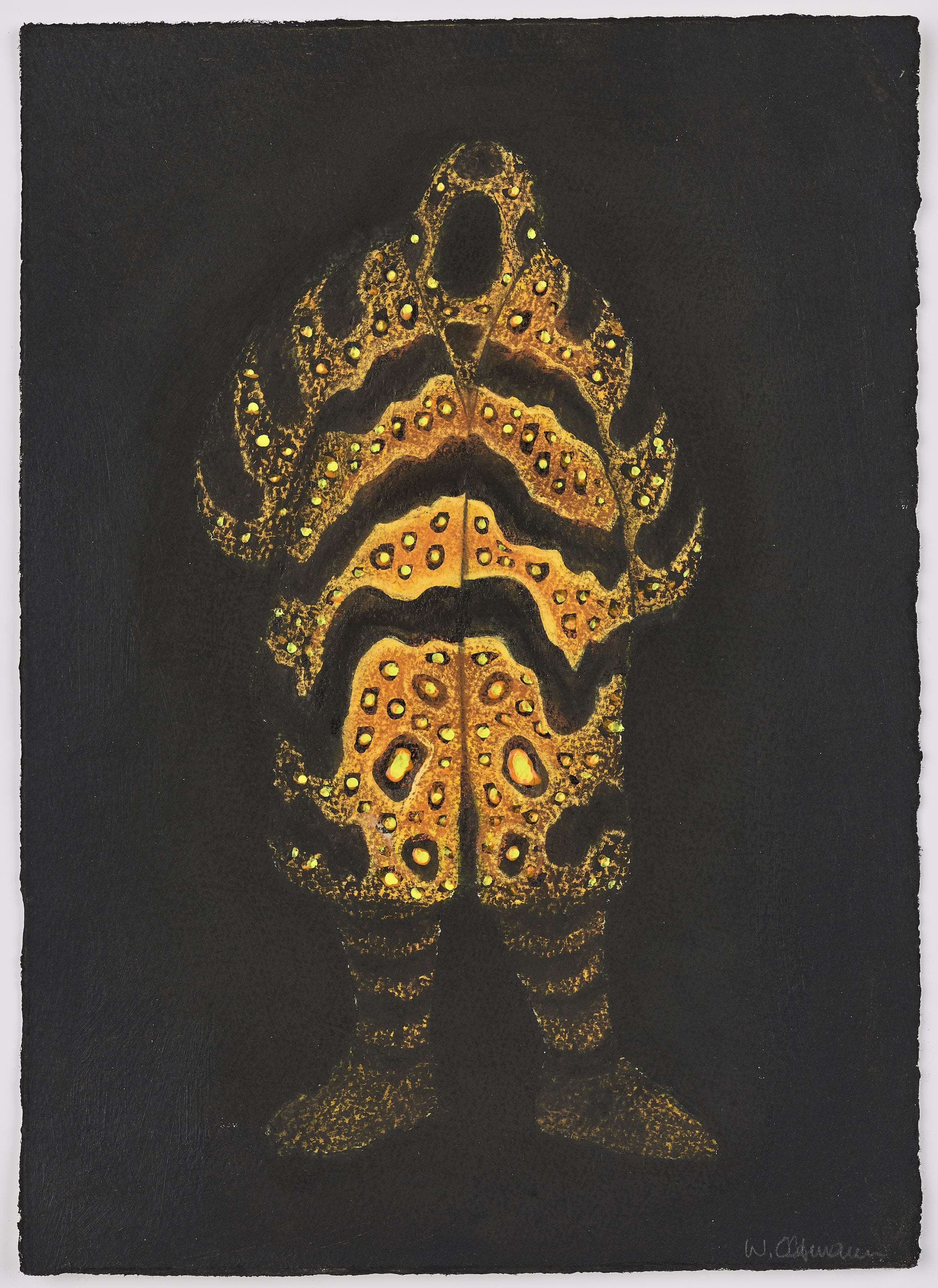
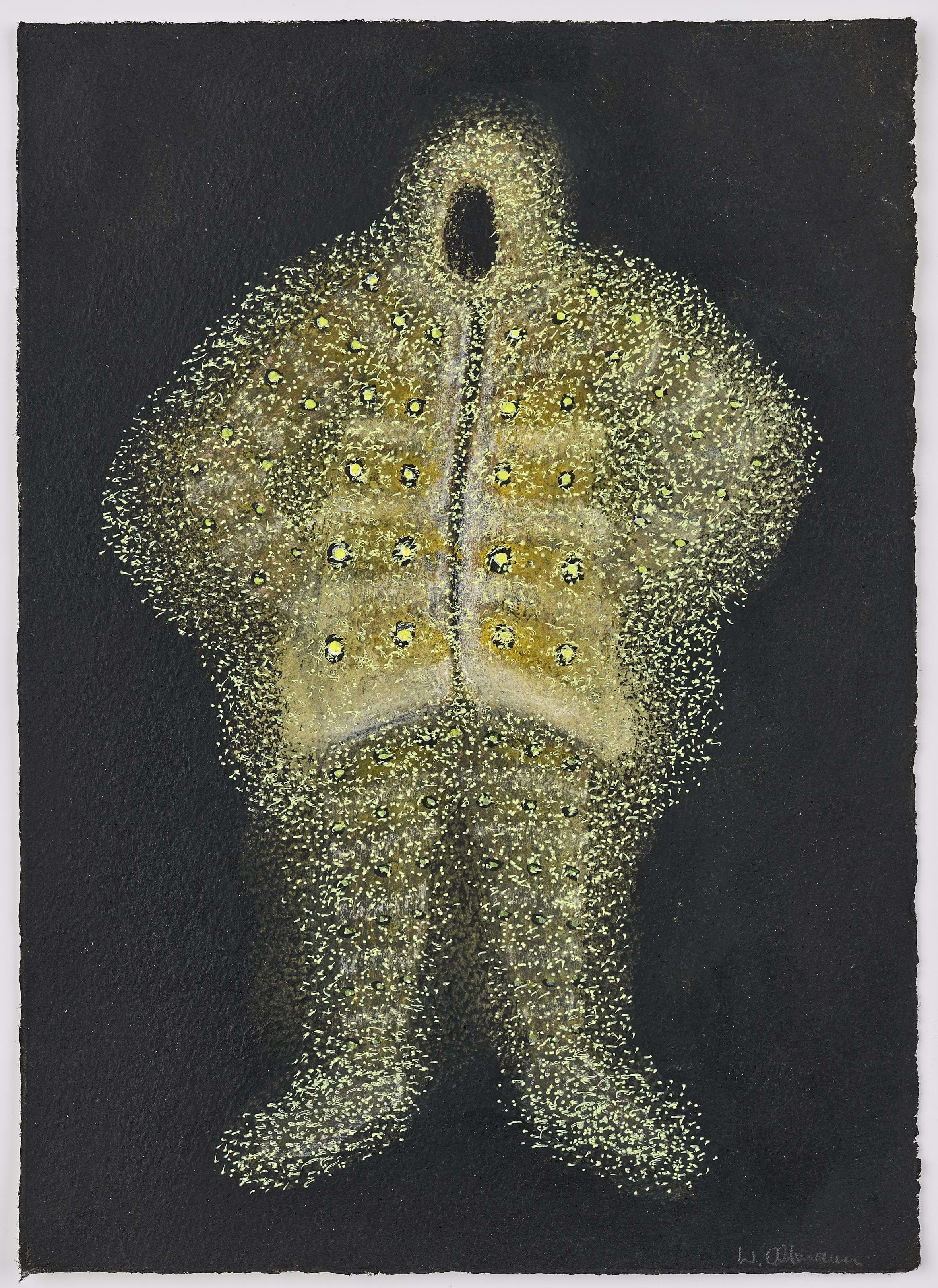
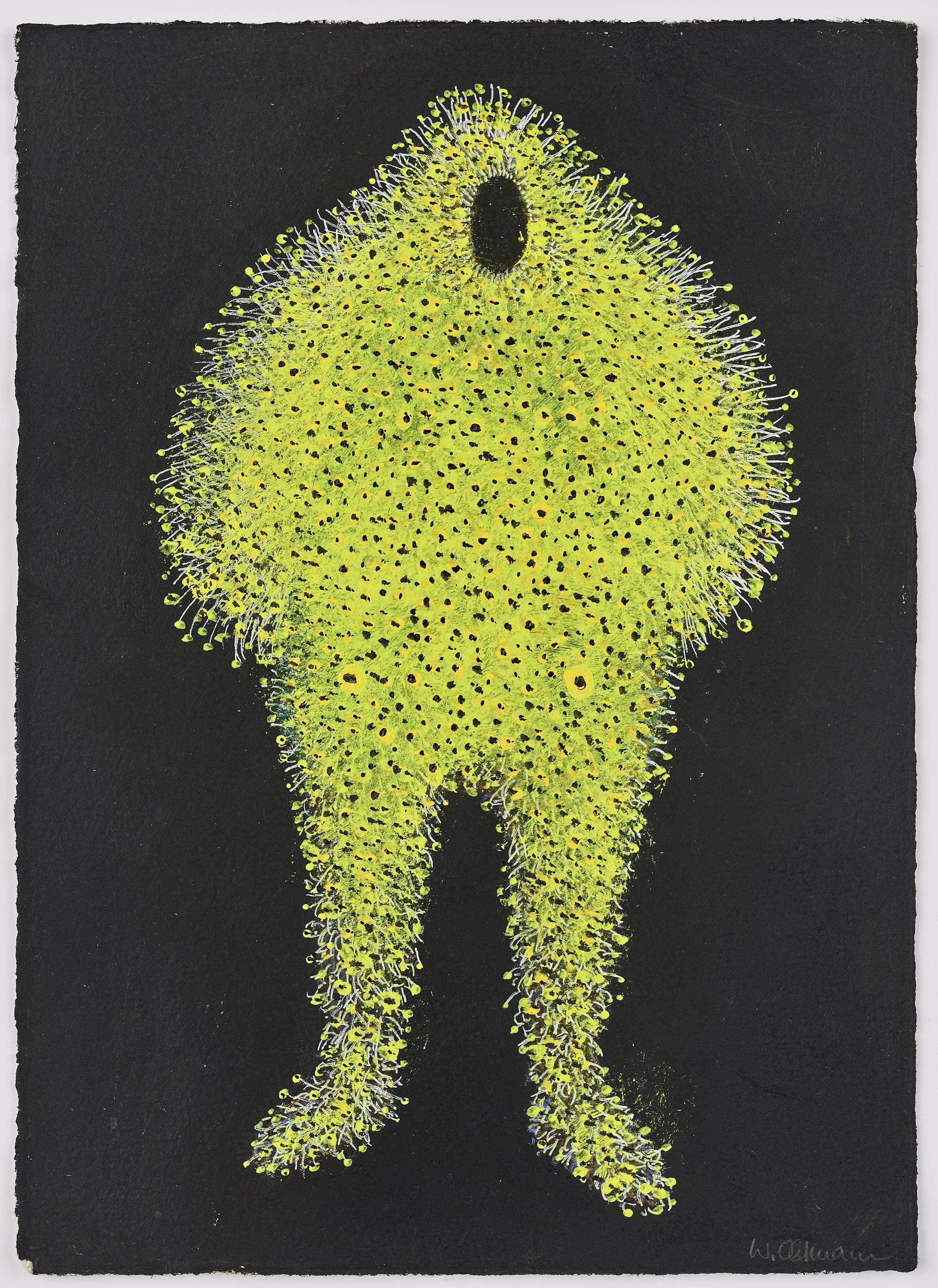
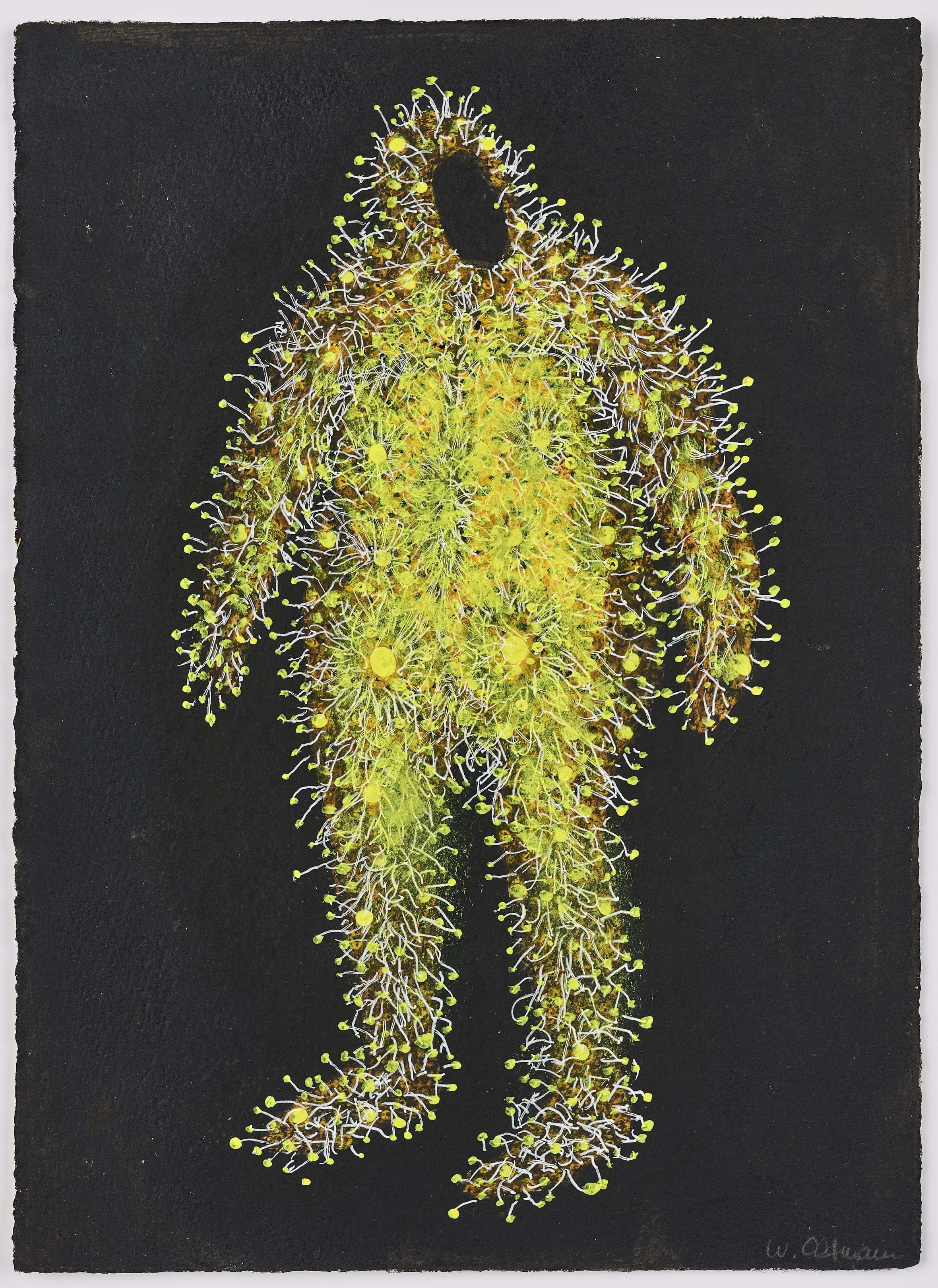
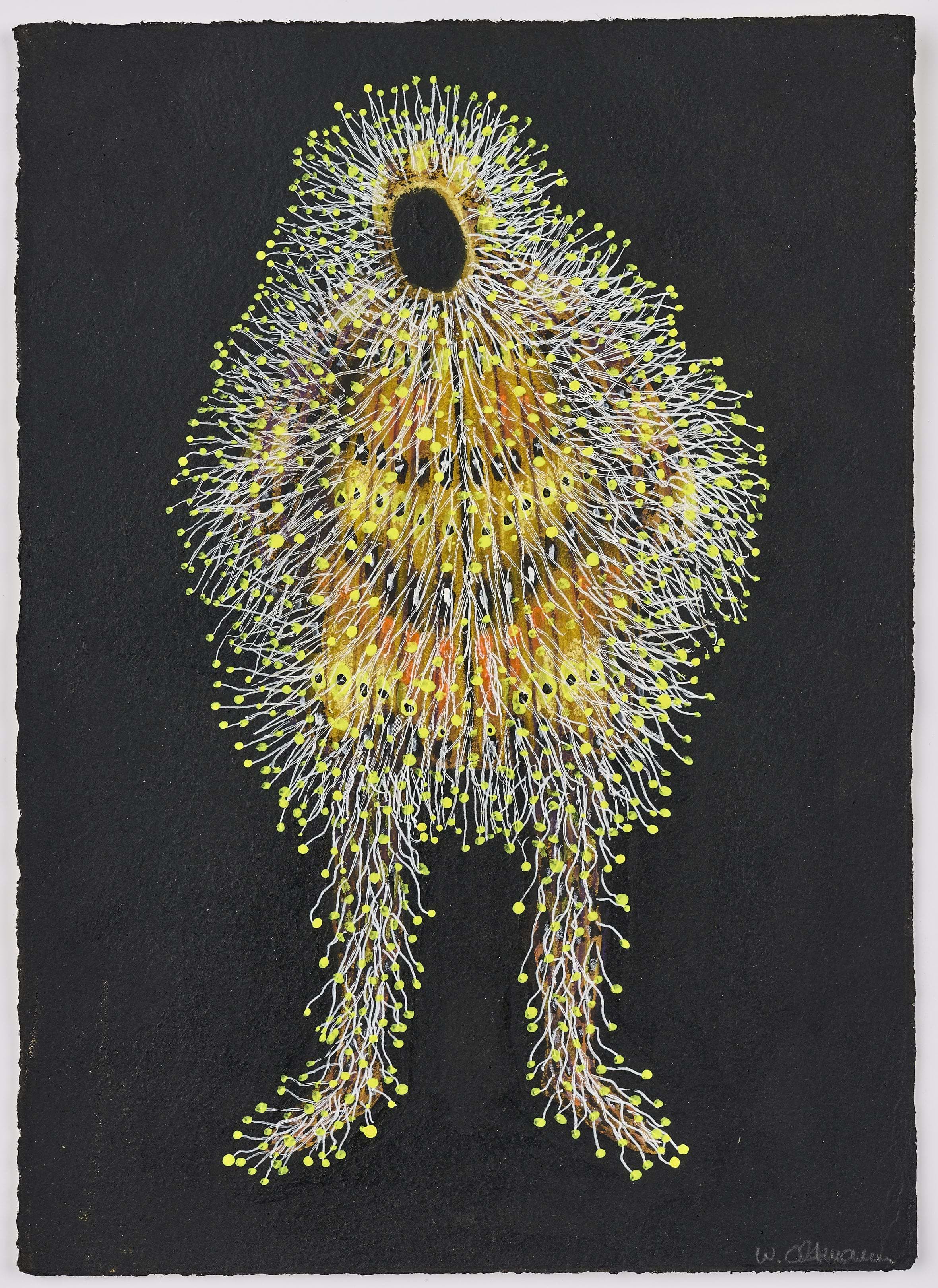
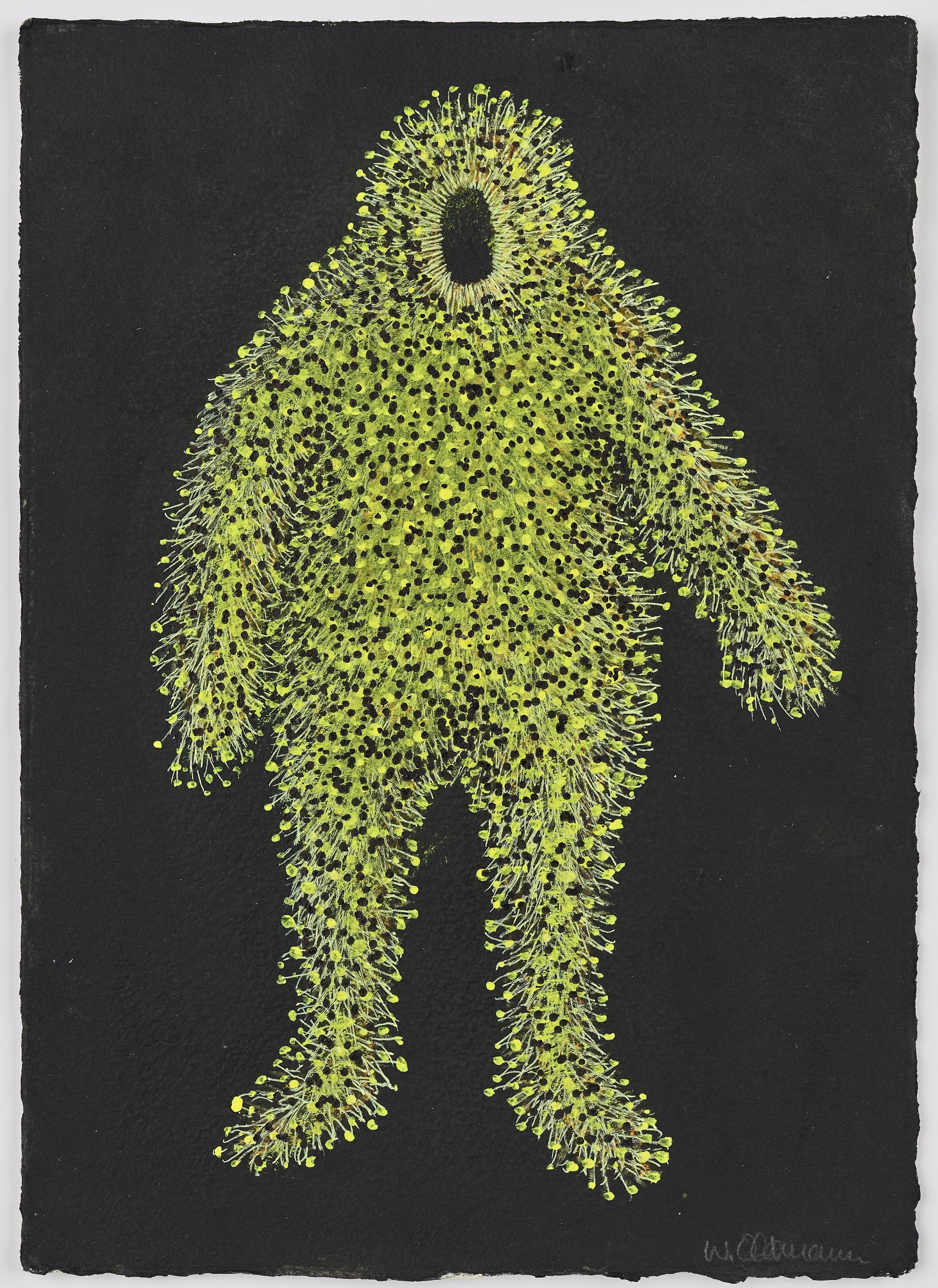
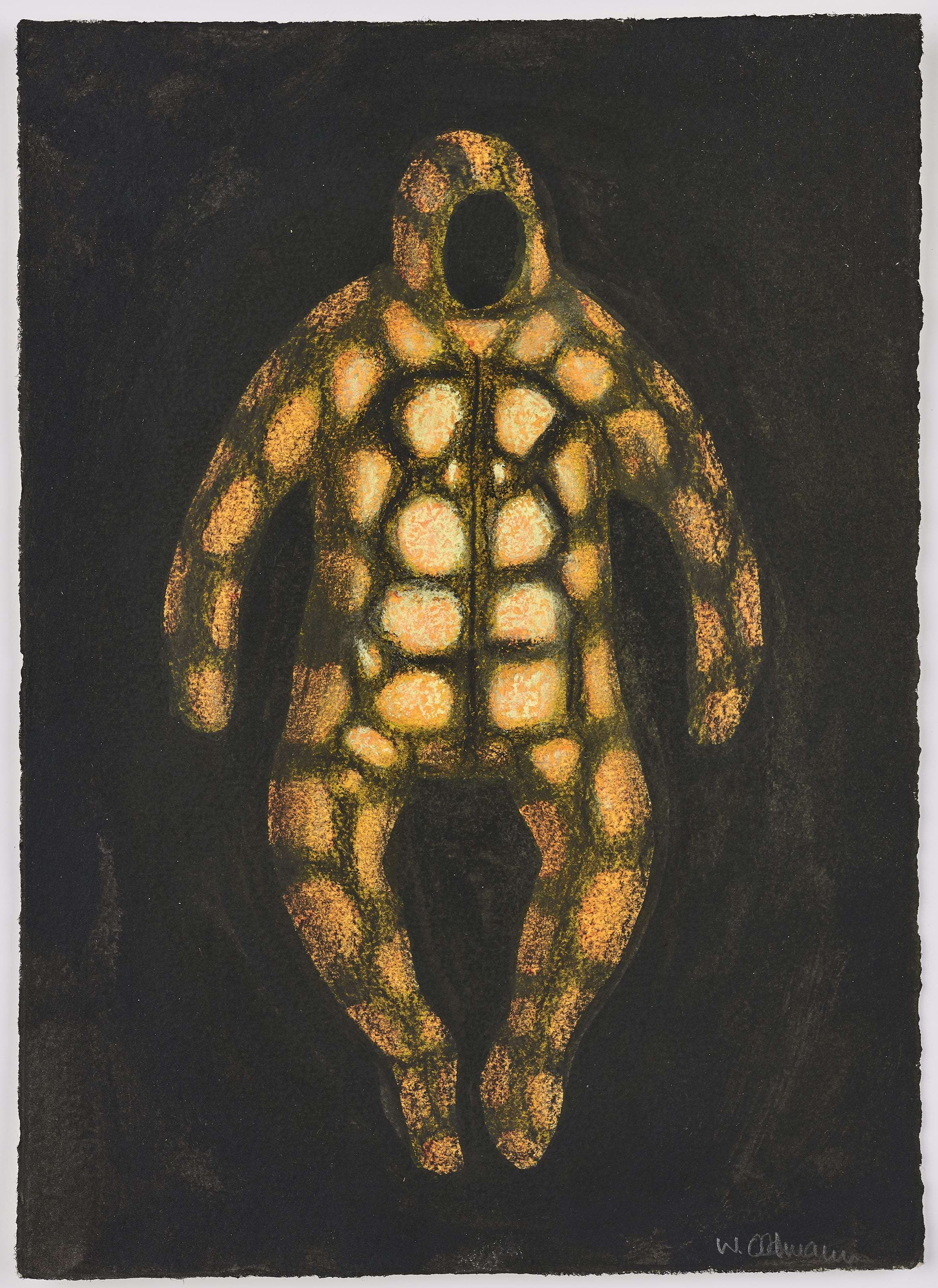
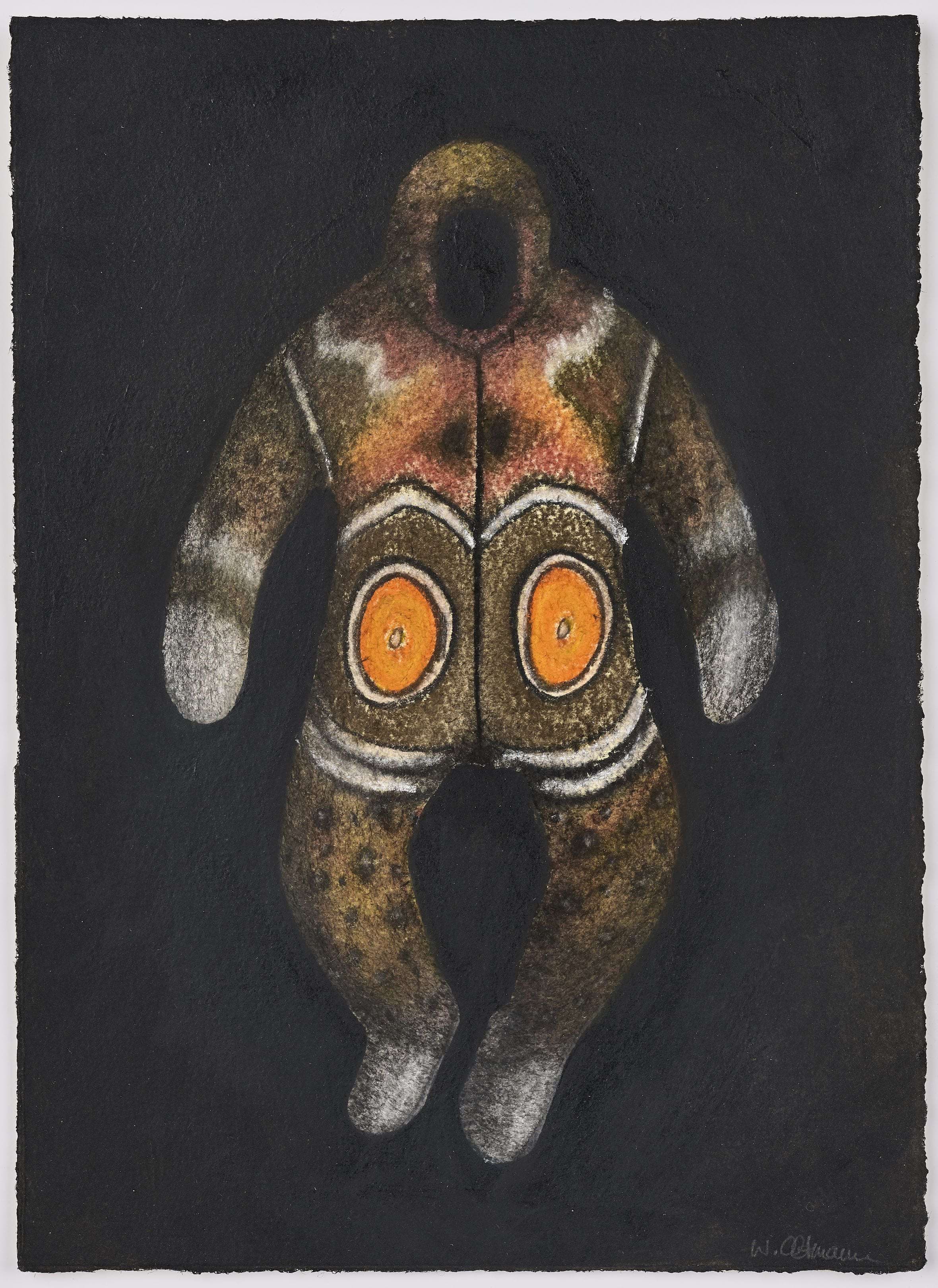
“Empty suits feature as substitutes or surrogates for the body.”, writes Oltmann. “Although they may look a bit like vacated husks and one can’t be quite sure whether they are waiting to be renewed or not, the hollow, shelllike space invites one to imagine inhabiting it; suggesting an in between space - a potential zone of commonality with nonhuman animals, allowing us to imaginatively step inside to have a different view or experience of them, and also of ourselves. The empty suits can also imply bodies in transition, or as if suspended between two states, as during metamorphosis. In many drawings and prints I present the suits in opposing pairs. The famous painting titled ‘The Ambassadors’ by Hans Holbein the Younger (1533) has always intrigued me. Holbein’s image depicts two powerful men posing in a stage-like manner in showy clothes. There is an exaggerated masculinity about their confident and formal stances; they convey their presence as men in positions of power and control. I use this twin image display as comparative power-dressing portraits; striking one pose against another. My suits too suggest personal armour or disguises to demonstrate power and defensive ability.”
- Walter Oltmann
“Empty suits feature as substitutes or surrogates for the body” writes Oltmann. “Although they may look a bit like vacated husks and one can’t be quite sure whether they are waiting to be renewed or not, the hollow, shelllike space invites one to imagine inhabiting it; suggesting an in between space - a potential zone of commonality with nonhuman animals, allowing us to imaginatively step inside to have a different view or experience of them, and also of ourselves.
The empty suits can also imply bodies in transition, or as if suspended between two states, as during metamorphosis. In many drawings and prints I present the suits in opposing pairs. The famous painting titled ‘The Ambassadors’ by Hans Holbein the Younger (1533) has always intrigued me. Holbein’s image depicts two powerful men posing in a stage-like manner in showy clothes. There is an exaggerated masculinity about their confident and formal stances; they convey their presence as men in positions of power and control. I use this twin image display as comparative power-dressing portraits; striking one pose against another. My suits suggest personal armour or disguises to demonstrate power and defensive ability.” - Walter Oltmann
“Empty suits feature as substitutes or surrogates for the body.”, writes Oltmann. “Although they may look a bit like vacated husks and one can’t be quite sure whether they are waiting to be renewed or not, the hollow, shelllike space invites one to imagine inhabiting it; suggesting an in between space - a potential zone of commonality with nonhuman animals, allowing us to imaginatively step inside to have a different view or experience of them, and also of ourselves. The empty suits can also imply bodies in transition, or as if suspended between two states, as during metamorphosis. In many drawings and prints I present the suits in opposing pairs. The famous painting titled ‘The Ambassadors’ by Hans Holbein the Younger (1533) has always intrigued me. Holbein’s image depicts two powerful men posing in a stage-like manner in showy clothes. There is an exaggerated masculinity about their confident and formal stances; they convey their presence as men in positions of power and control. I use this twin image display as comparative power-dressing portraits; striking one pose against another. My suits too suggest personal armour or disguises to demonstrate power and defensive ability.”
- Walter Oltmann
Oltmann’s animal subjects are at times playful and humorous but also include images of dead or near-dead creatures. The latter serve as memorials to animals that are not only dying, but literally ‘dying off’, i.e. on the edge of extinction. Images of fossils and skeletal remains similarly function as symbols of posteriority. As portraits of loss, they are meditations on the consequences and impact of environmental distress.
Oltmann’s animal subjects are at times playful and humorous but also include images of dead or near-dead creatures. The latter serve as memorials to animals that are not only dying, but literally ‘dying off’, i.e. on the edge of extinction. Images of fossils and skeletal remains similarly function as symbols of posteriority. As portraits of loss, they are meditations on the consequences and impact of environmental distress.
“Empty suits feature as substitutes or surrogates for the body” writes Oltmann. “Although they may look a bit like vacated husks and one can’t be quite sure whether they are waiting to be renewed or not, the hollow, shelllike space invites one to imagine inhabiting it; suggesting an in between space - a potential zone of commonality with nonhuman animals, allowing us to imaginatively step inside to have a different view or experience of them, and also of ourselves.
The empty suits can also imply bodies in transition, or as if suspended between two states, as during metamorphosis. In many drawings and prints I present the suits in opposing pairs. The famous painting titled ‘The Ambassadors’ by Hans Holbein the Younger (1533) has always intrigued me. Holbein’s image depicts two powerful men posing in a stage-like manner in showy clothes. There is an exaggerated masculinity about their confident and formal stances; they convey their presence as men in positions of power and control. I use this twin image display as comparative power-dressing portraits; striking one pose against another. My suits suggest personal armour or disguises to demonstrate power and defensive ability.” - Walter Oltmann
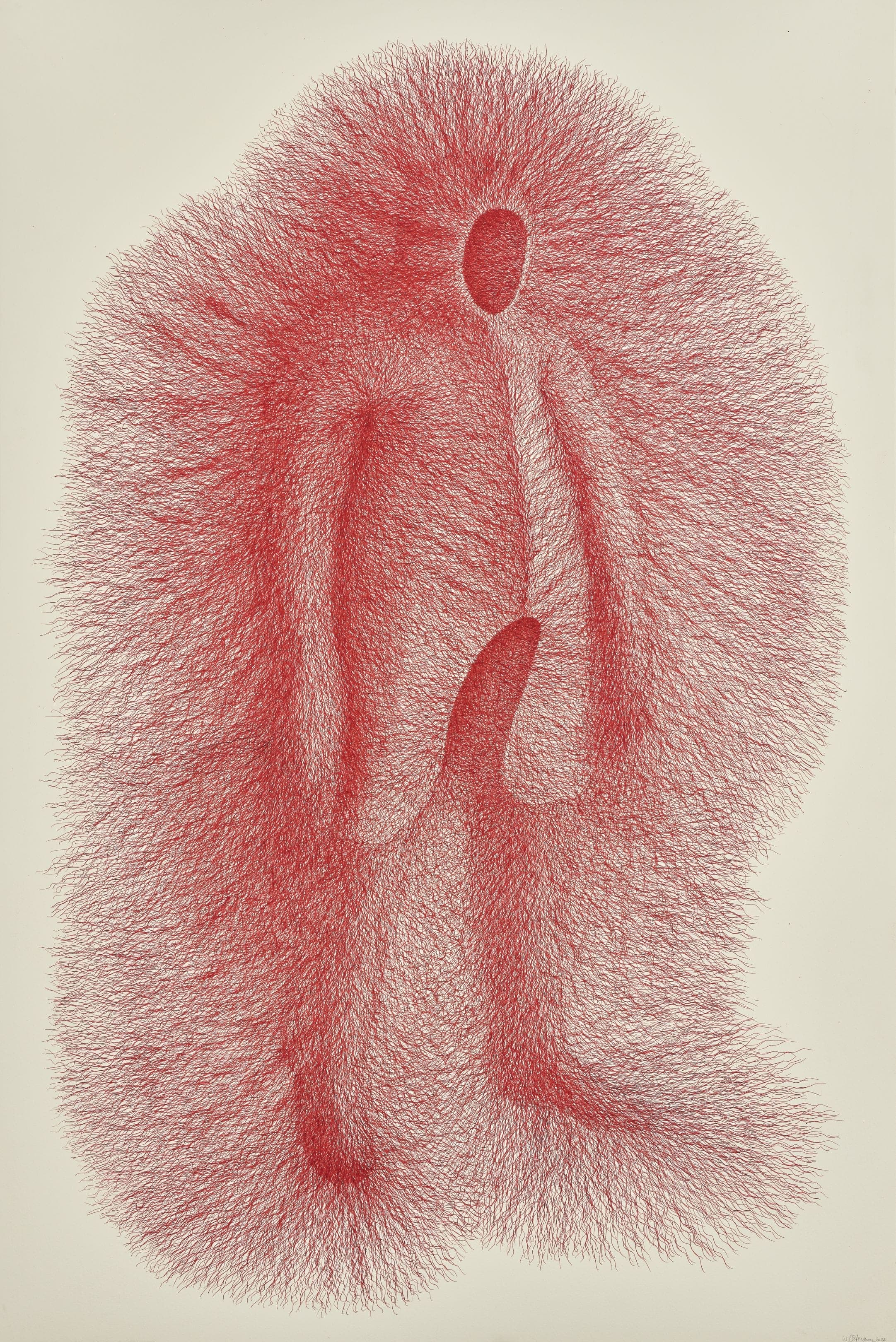
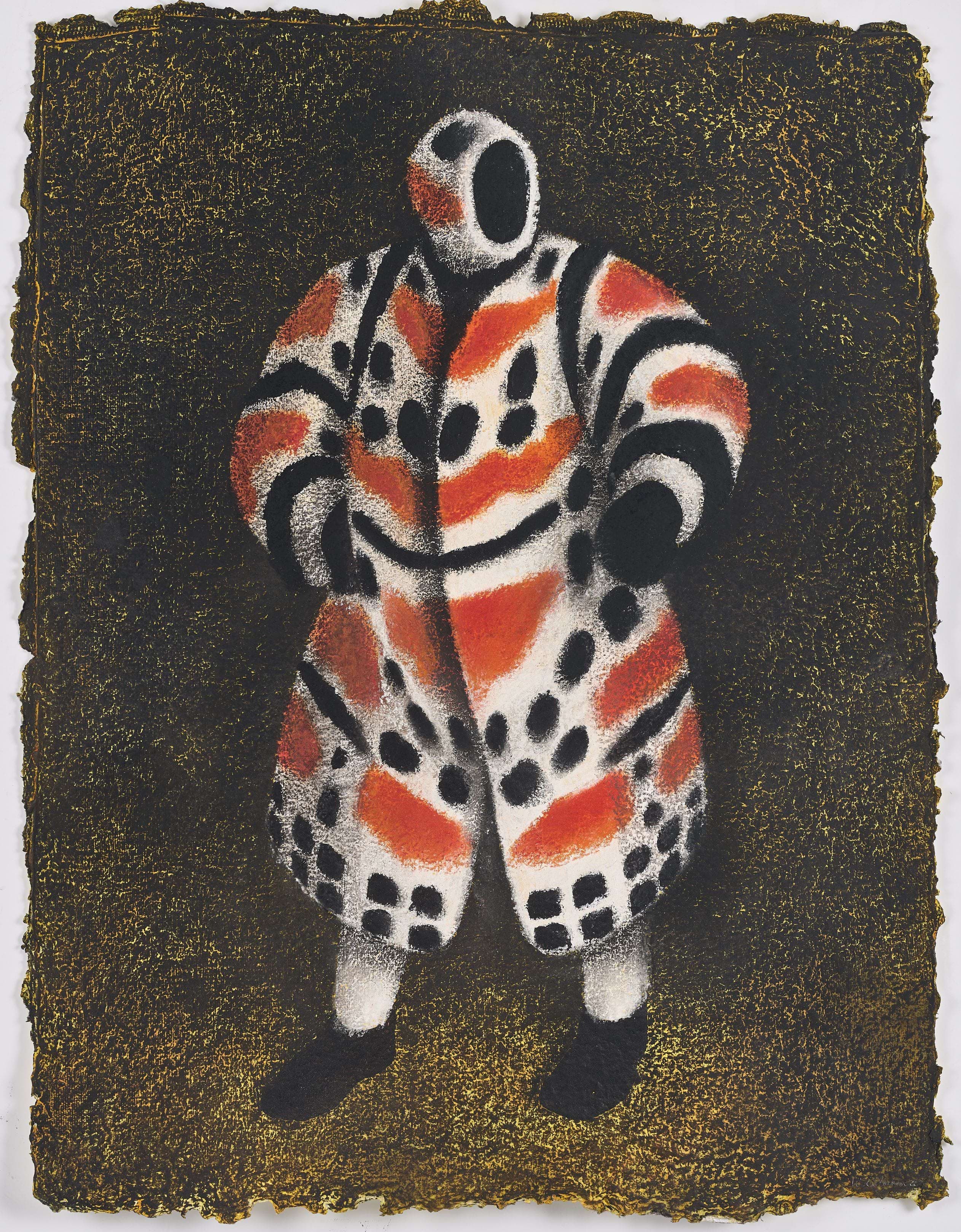
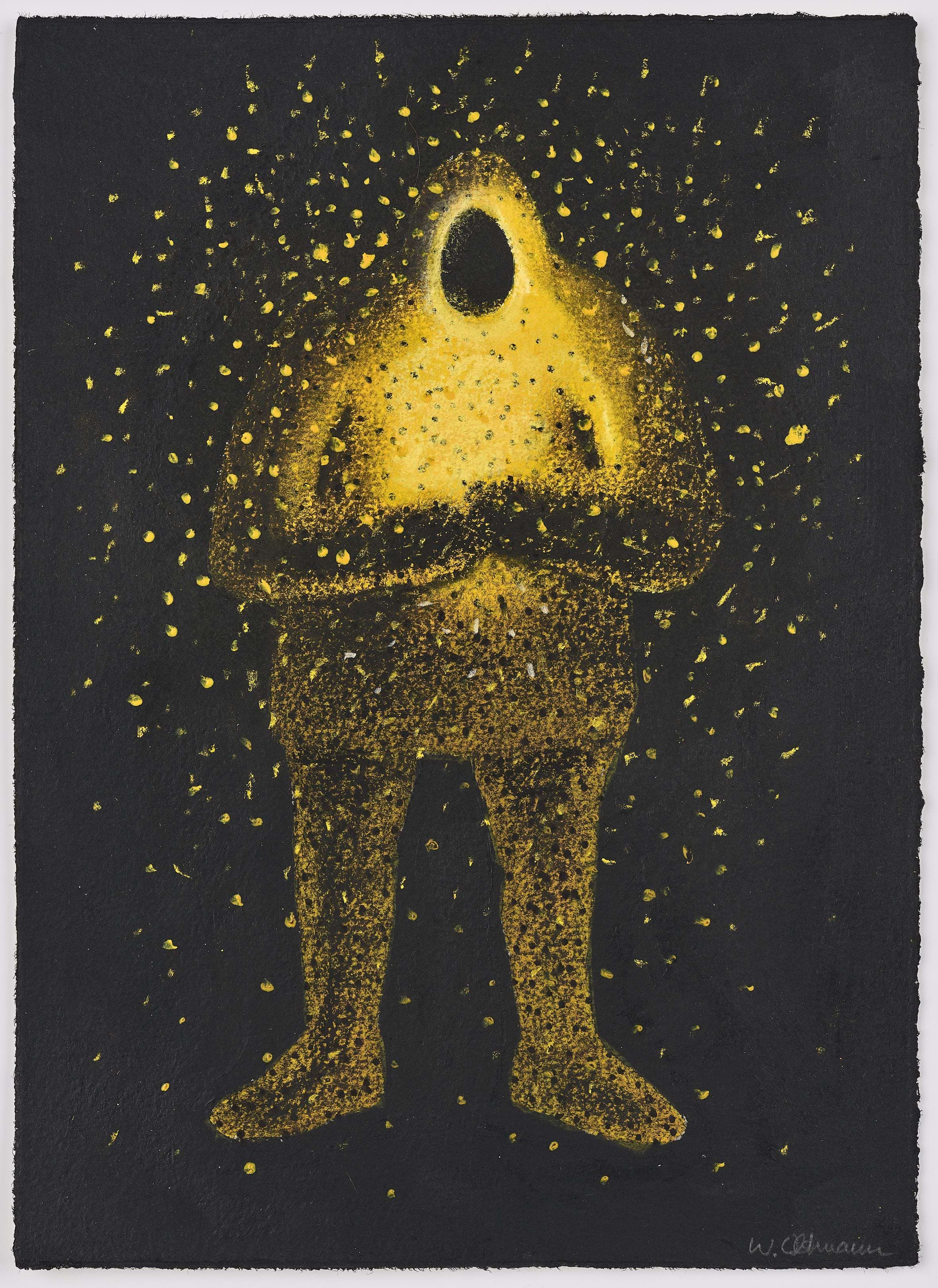
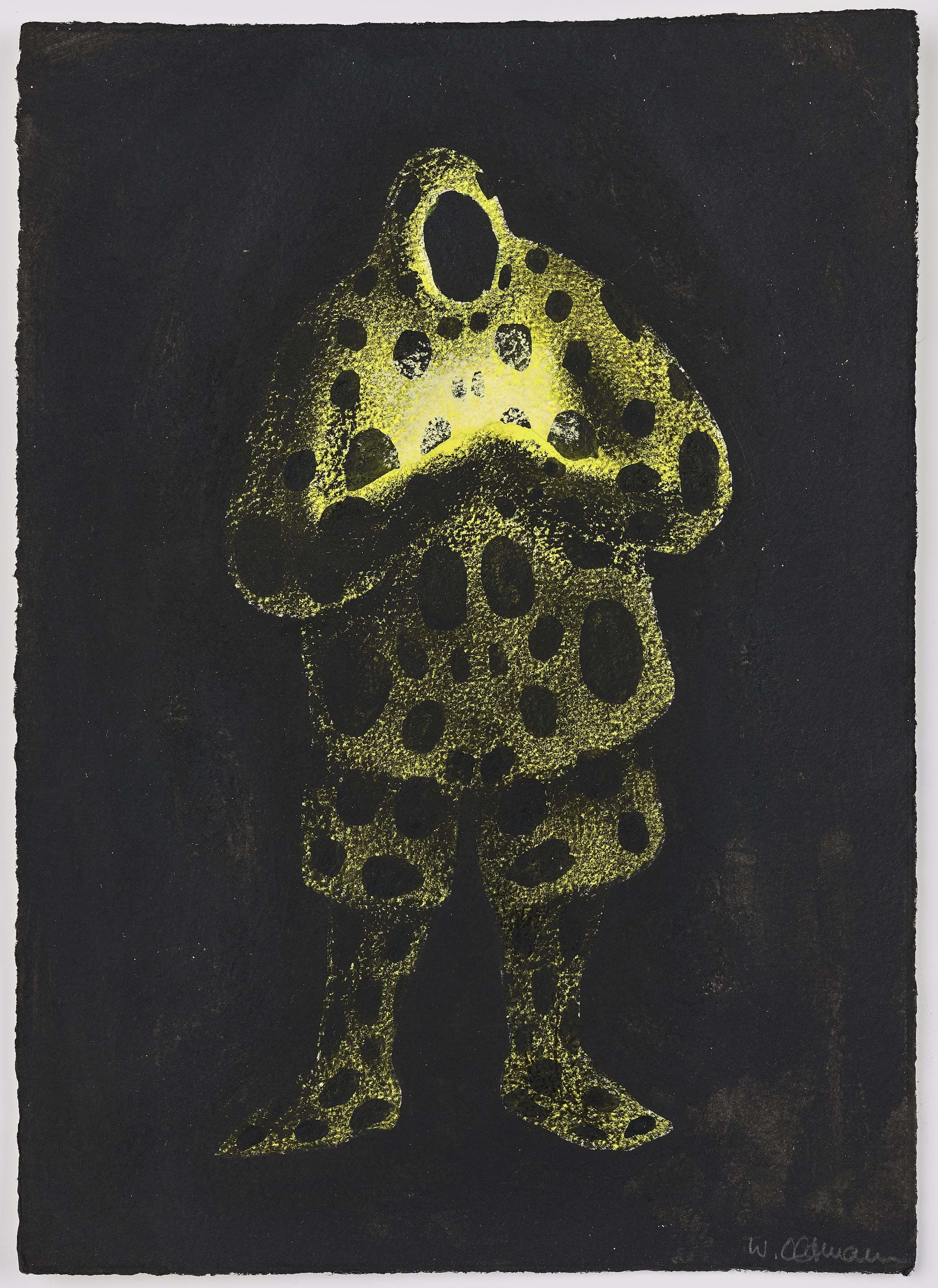
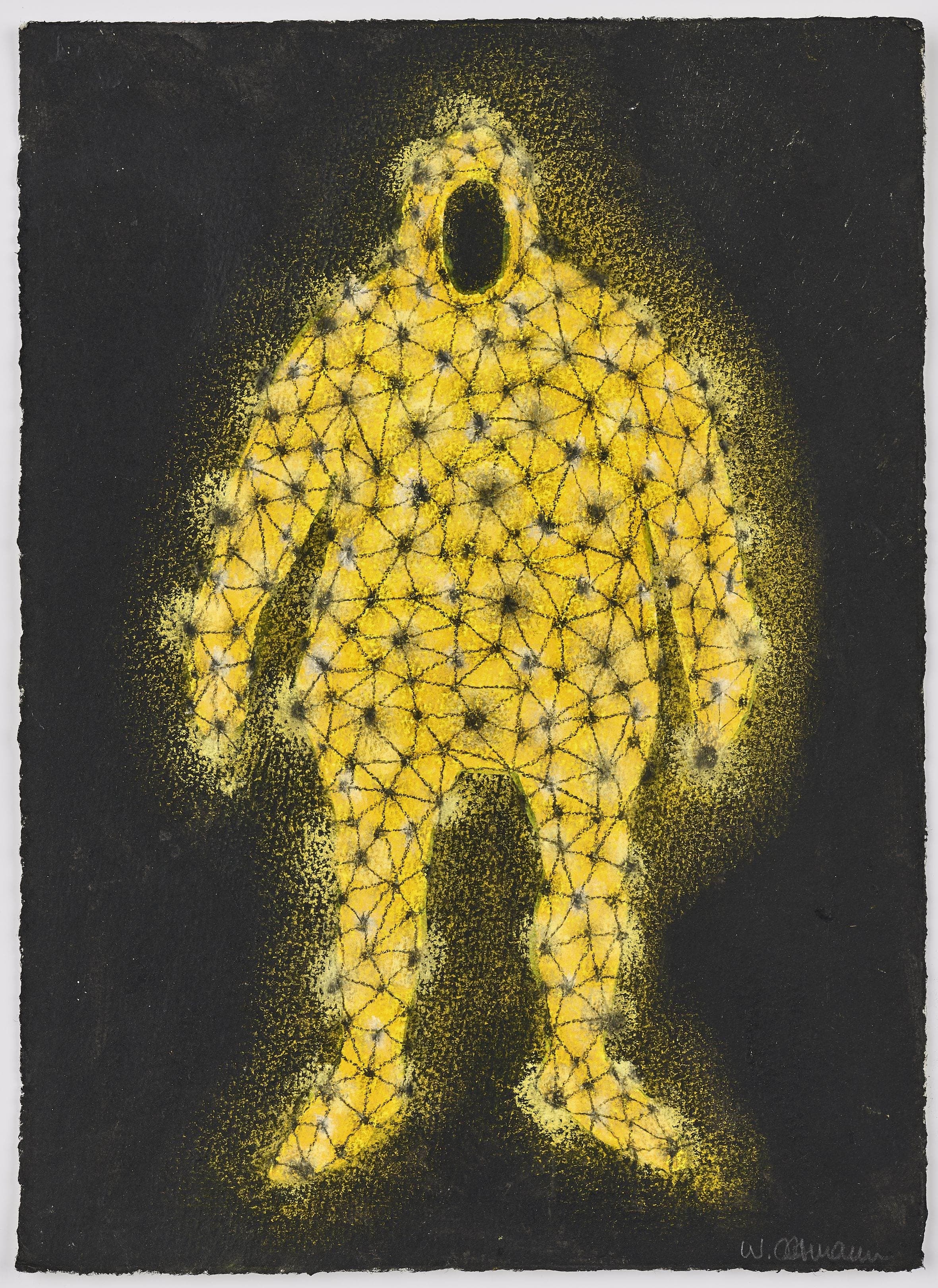
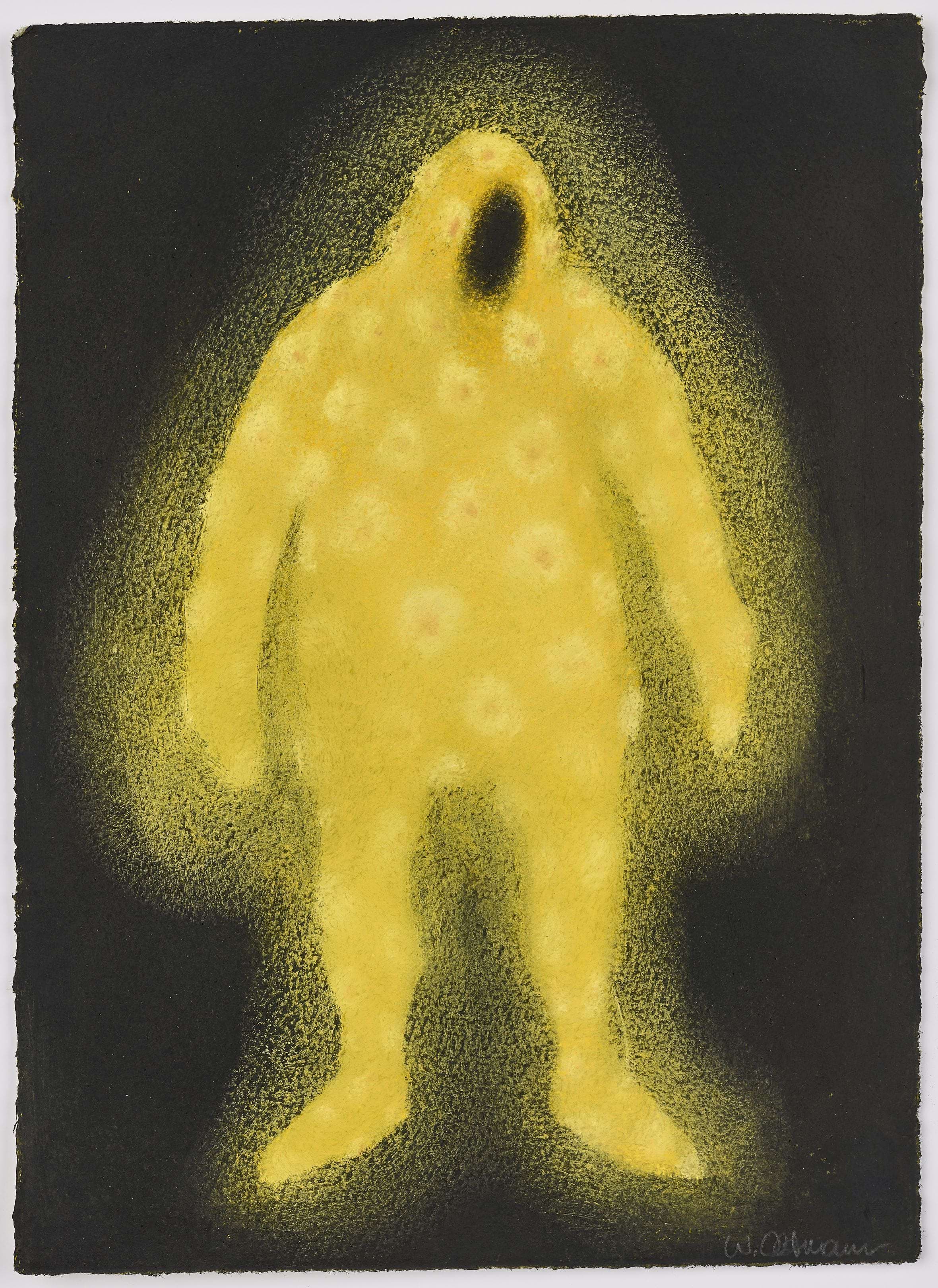
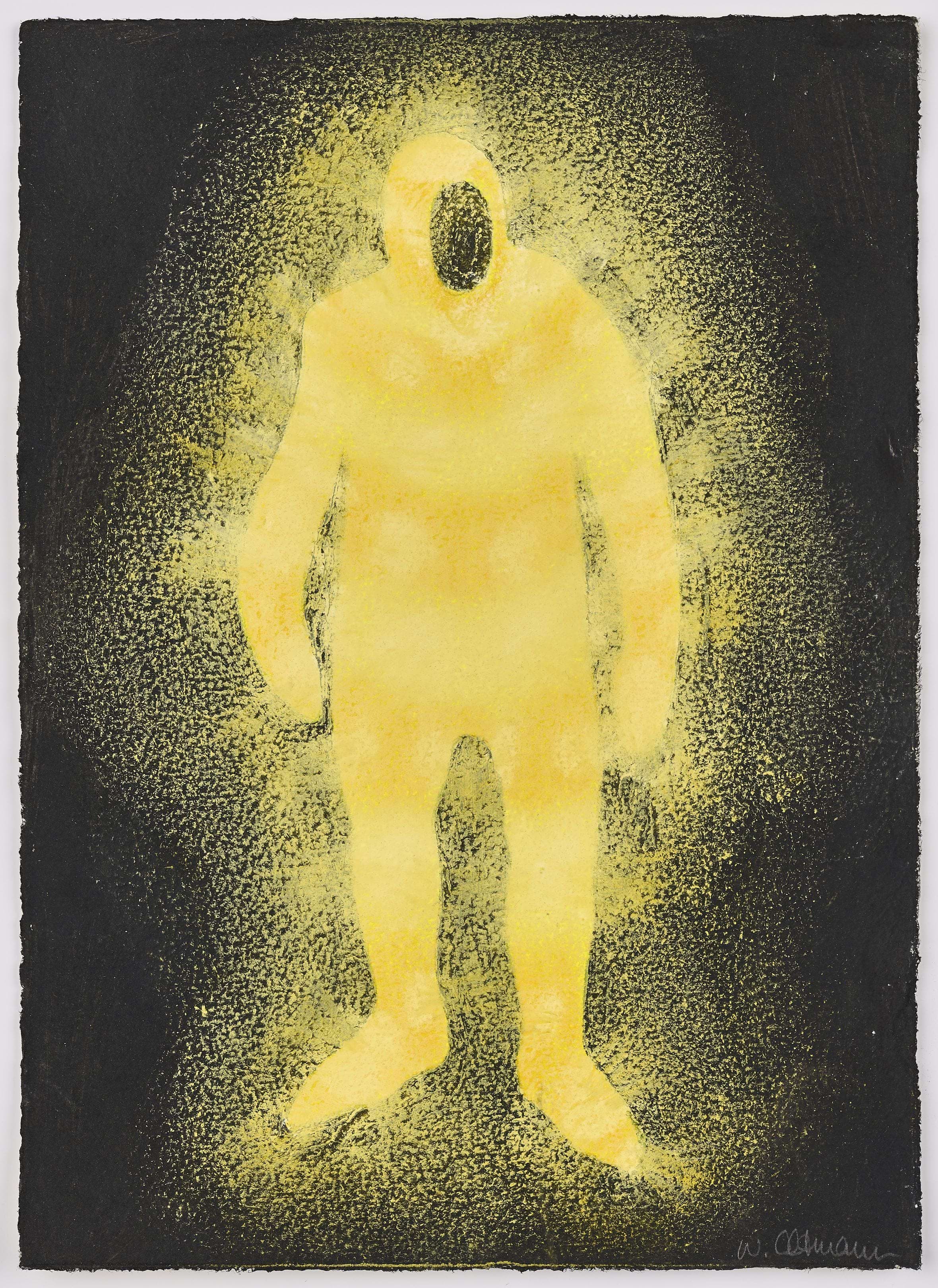
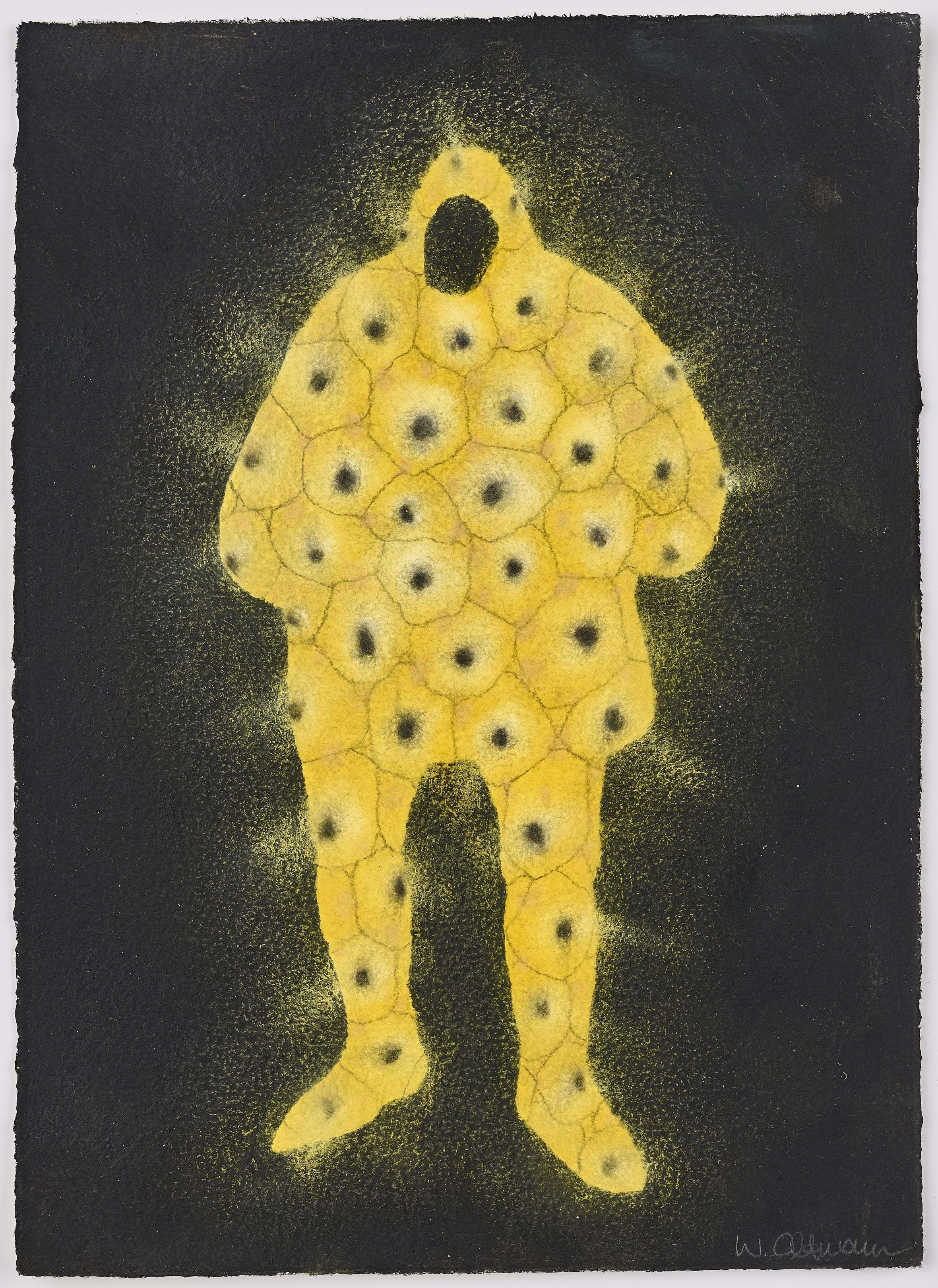
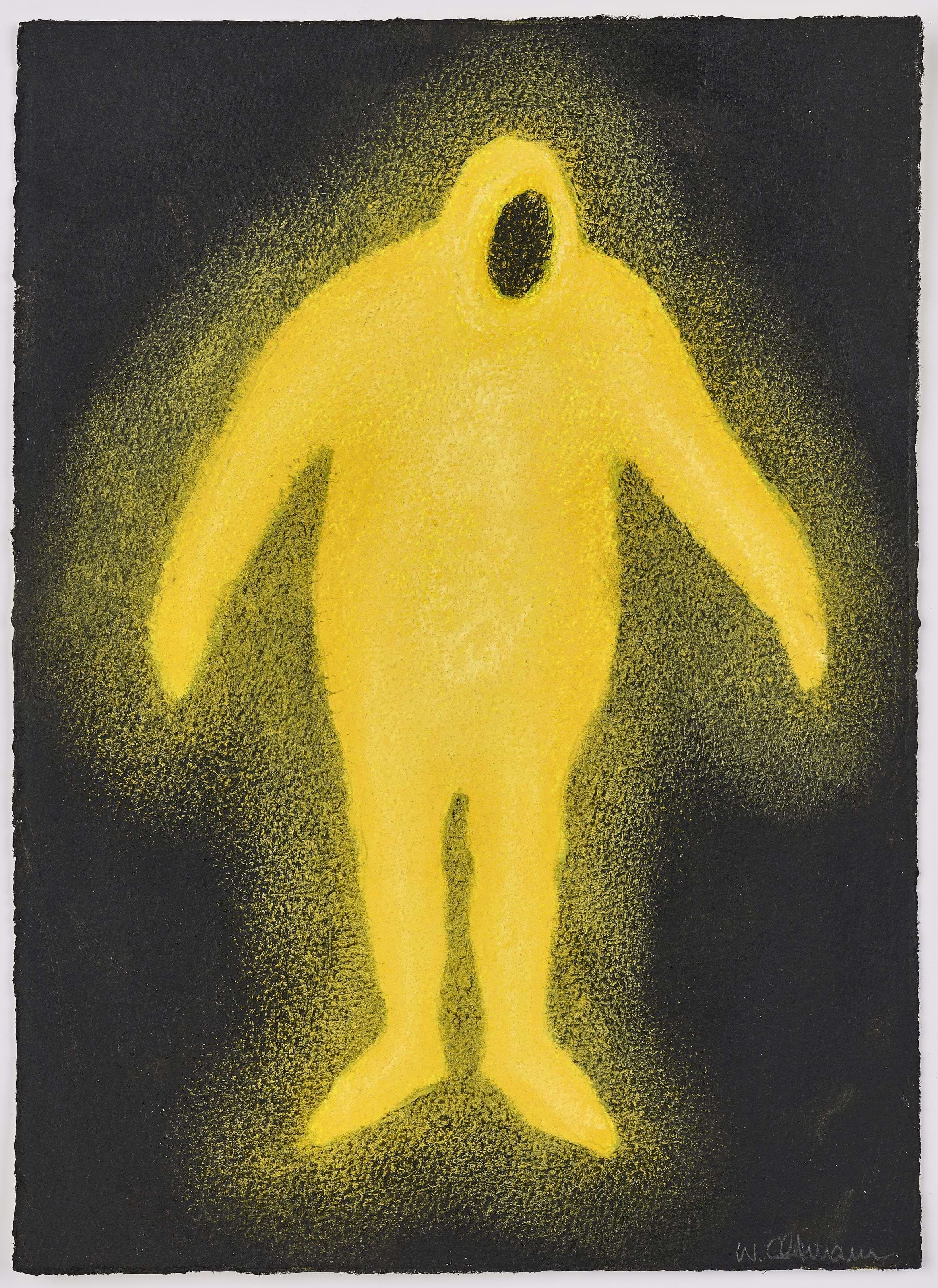
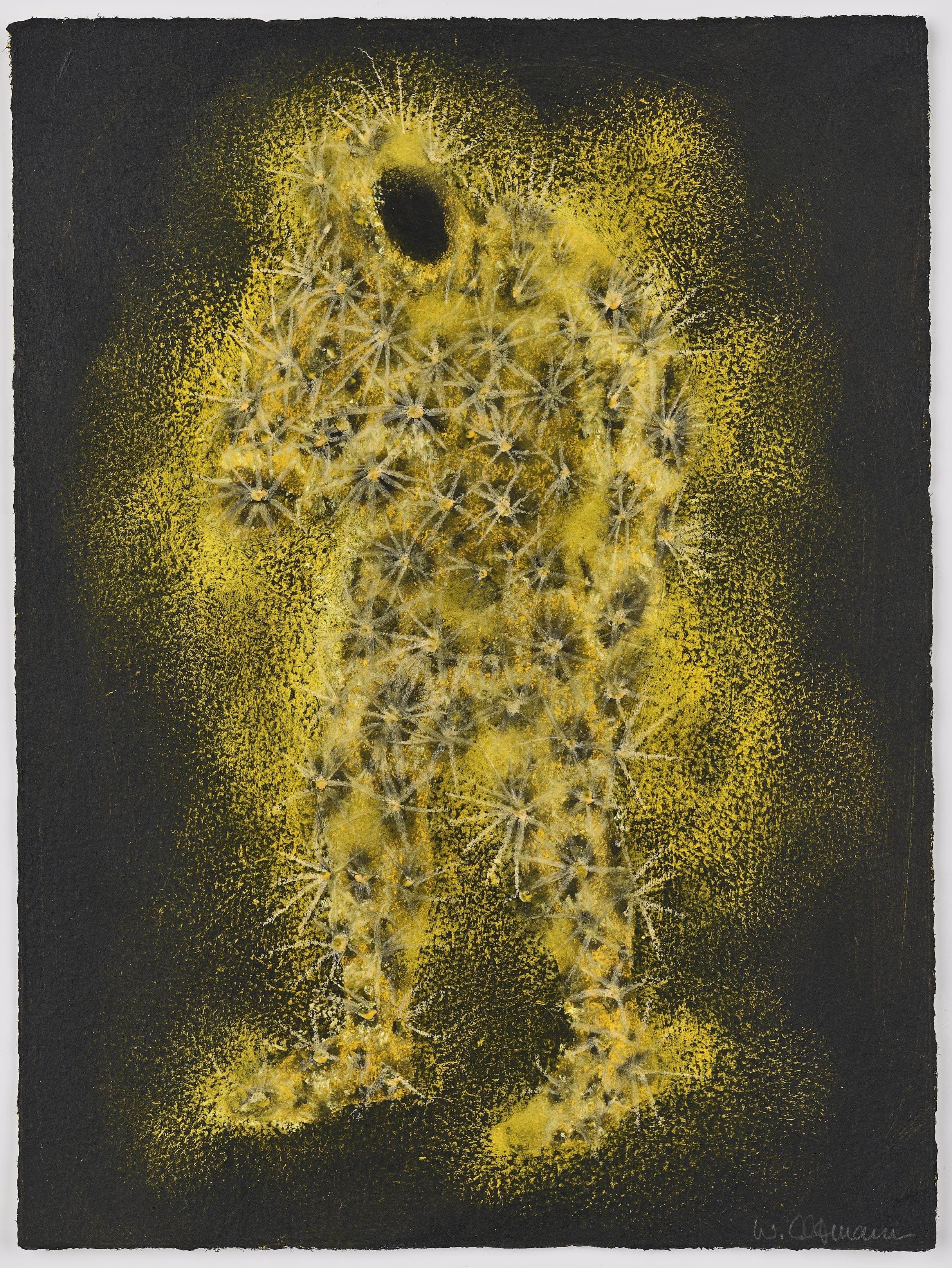
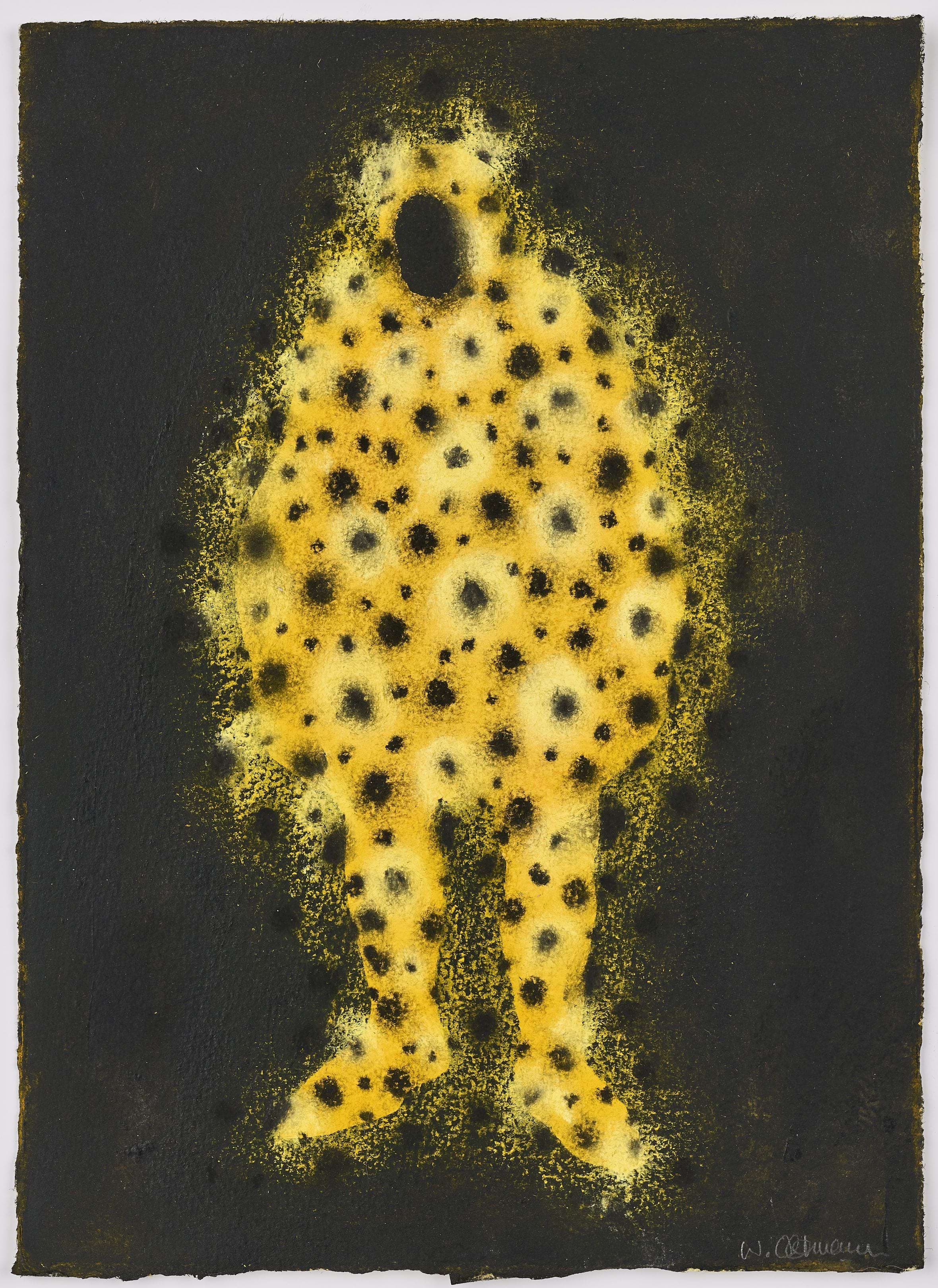
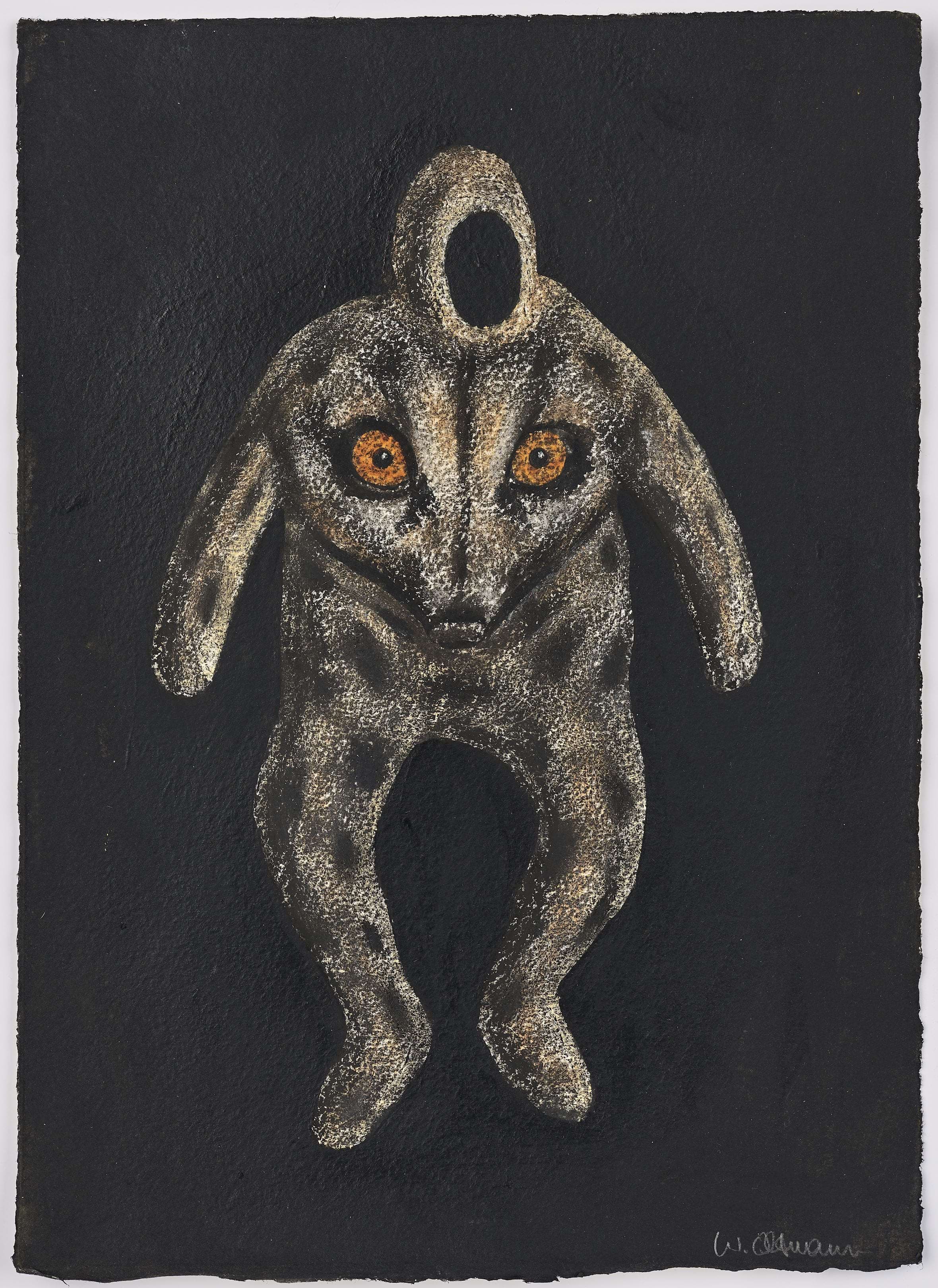
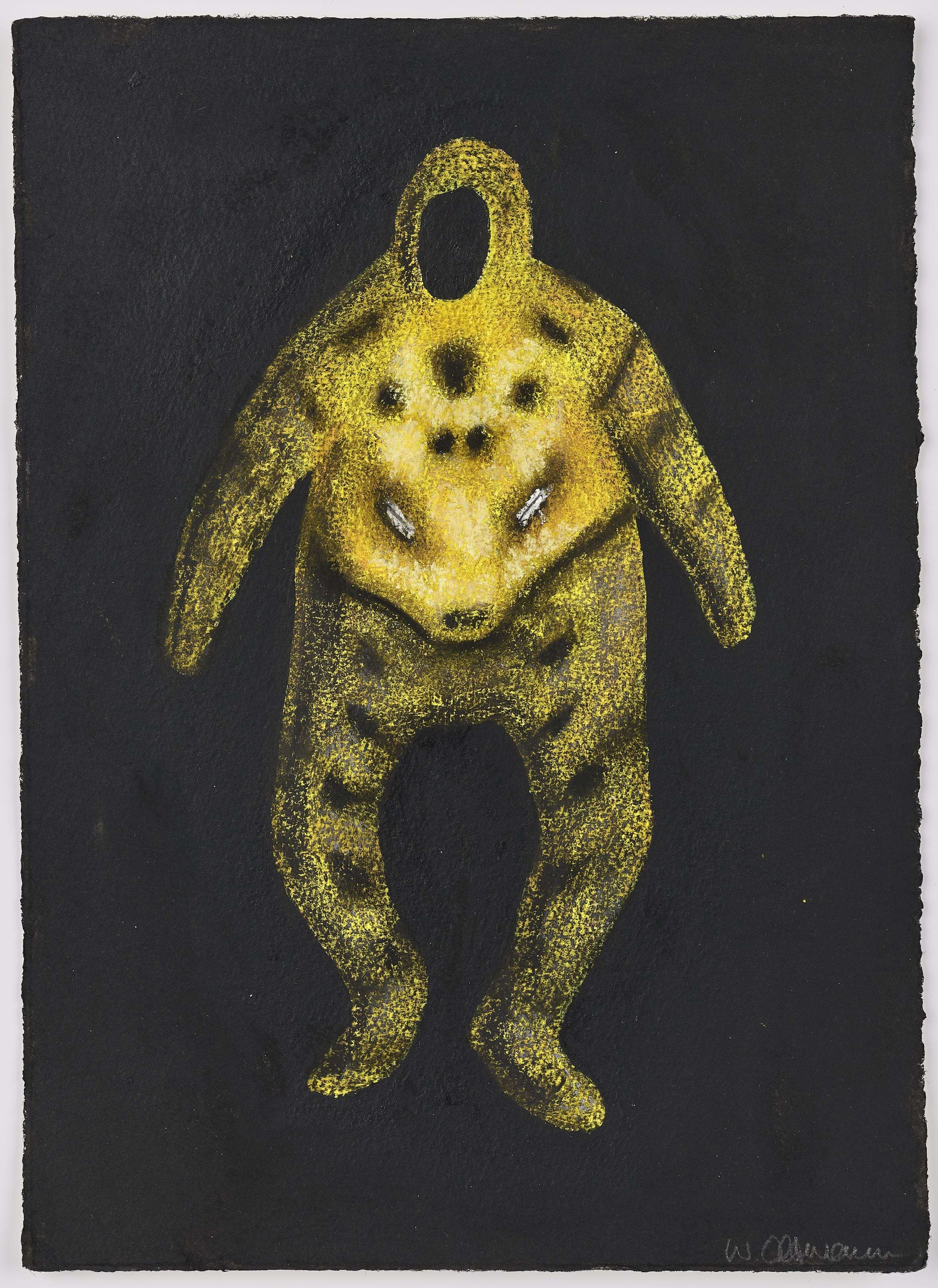
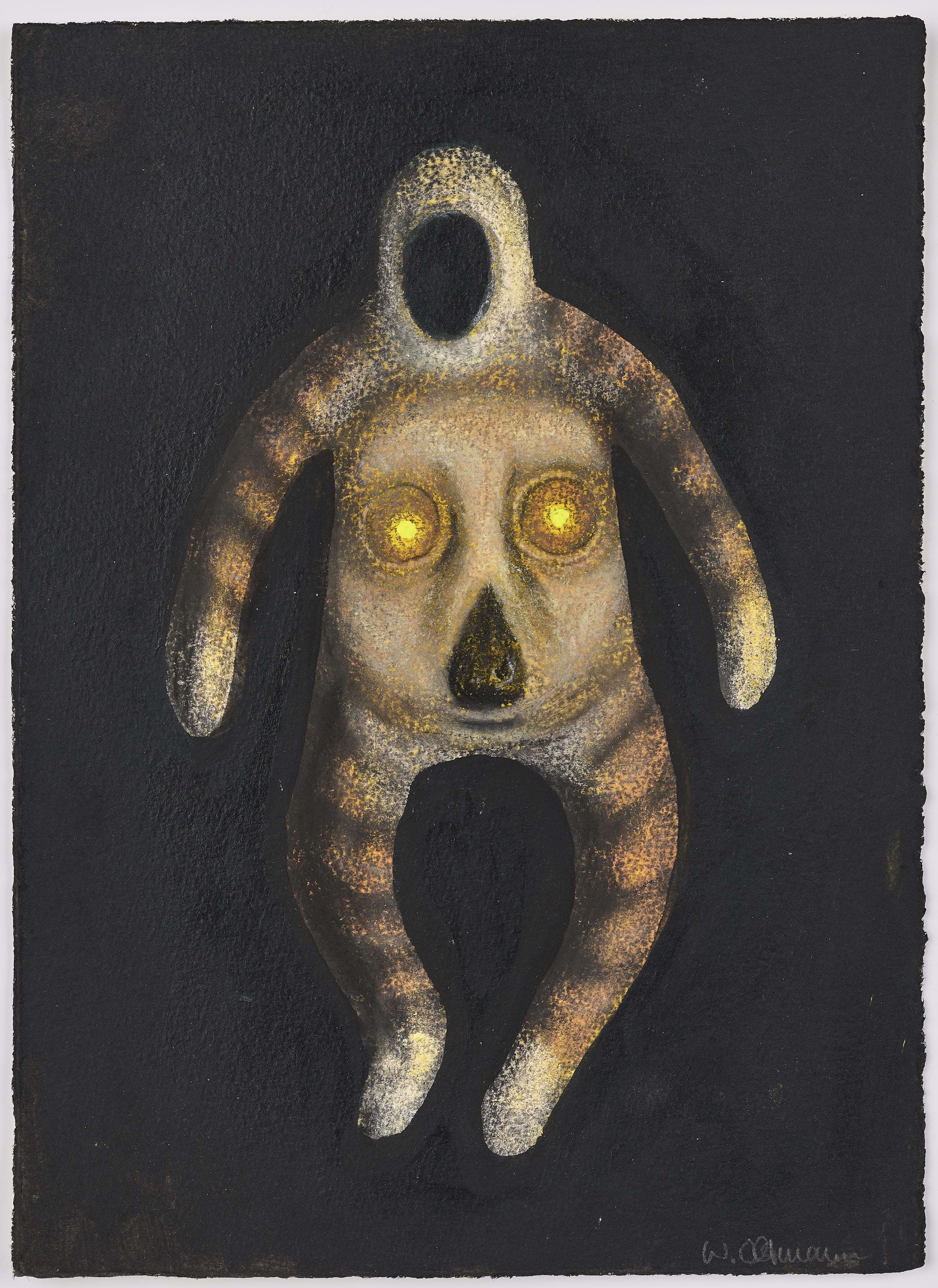
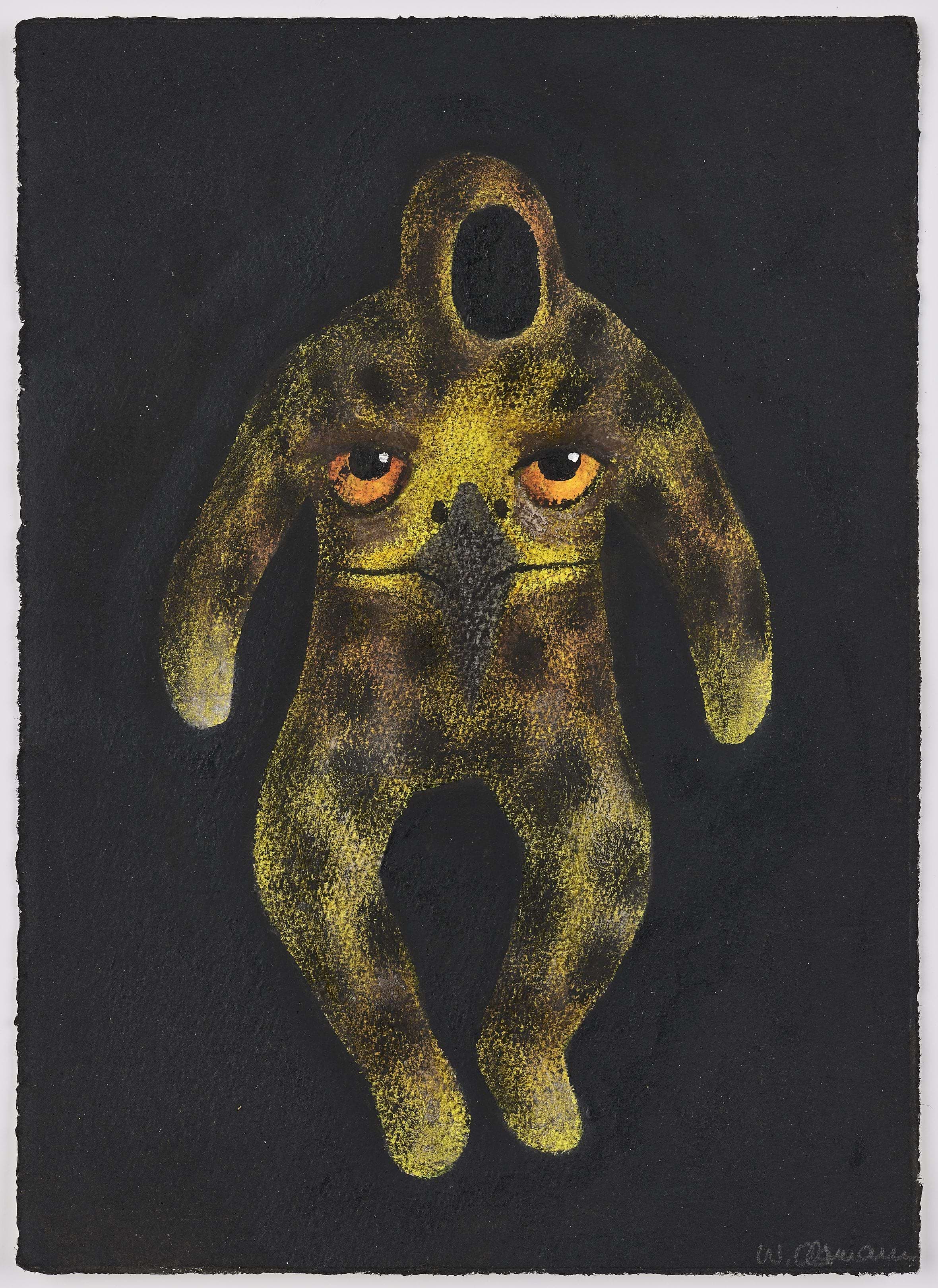
"Certain plants signal to animal pollinators by way of their attractive colours. Some of my ‘Romper’ suit drawings suggest this form of signaling in a playful way. A romper is a one-piece garment, especially worn by a young child (a baby grow), but it can also be understood in the sense of boisterous and wild behaviour of a person. Here I have also used fluorescent colour to suggest bioluminescence in insects as defense mechanism as well as signaling other individuals of the same species to attract one another. The Lampyrid (glow worm) larvae use it to alert nocturnal visual predators that they are dangerous. My romper suits are an imaginative collection of luminescent creature garments and even include a few baby jumpers with wild animal faces on their fronts. While we are familiar with cuddly Maja the Bee and Mickey Mouse baby grows, these ones are of wilder animals. They raise questions of proximity of human to animal at an early stage of development and our later conditioning towards such animals."
- Walter Oltmann
"Certain plants signal to animal pollinators by way of their attractive colours. Some of my ‘Romper’ suit drawings suggest this form of signaling in a playful way. A romper is a one-piece garment, especially worn by a young child (a baby grow), but it can also be understood in the sense of boisterous and wild behaviour of a person. Here I have also used fluorescent colour to suggest bioluminescence in insects as defense mechanism as well as signaling other individuals of the same species to attract one another. The Lampyrid (glow worm) larvae use it to alert nocturnal visual predators that they are dangerous. My romper suits are an imaginative collection of luminescent creature garments and even include a few baby jumpers with wild animal faces on their fronts. While we are familiar with cuddly Maja the Bee and Mickey Mouse baby grows, these ones are of wilder animals. They raise questions of proximity of human to animal at an early stage of development and our later conditioning towards such animals."
- Walter Oltmann
"Certain plants signal to animal pollinators by way of their attractive colours. Some of my ‘Romper’ suit drawings suggest this form of signaling in a playful way. A romper is a one-piece garment, especially worn by a young child (a baby grow), but it can also be understood in the sense of boisterous and wild behaviour of a person. Here I have also used fluorescent colour to suggest bioluminescence in insects as defense mechanism as well as signaling other individuals of the same species to attract one another. The Lampyrid (glow worm) larvae use it to alert nocturnal visual predators that they are dangerous. My romper suits are an imaginative collection of luminescent creature garments and even include a few baby jumpers with wild animal faces on their fronts. While we are familiar with cuddly Maja the Bee and Mickey Mouse baby grows, these ones are of wilder animals. They raise questions of proximity of human to animal at an early stage of development and our later conditioning towards such animals."
- Walter Oltmann
"Certain plants signal to animal pollinators by way of their attractive colours. Some of my ‘Romper’ suit drawings suggest this form of signaling in a playful way. A romper is a one-piece garment, especially worn by a young child (a baby grow), but it can also be understood in the sense of boisterous and wild behaviour of a person. Here I have also used fluorescent colour to suggest bioluminescence in insects as defense mechanism as well as signaling other individuals of the same species to attract one another. The Lampyrid (glow worm) larvae use it to alert nocturnal visual predators that they are dangerous. My romper suits are an imaginative collection of luminescent creature garments and even include a few baby jumpers with wild animal faces on their fronts. While we are familiar with cuddly Maja the Bee and Mickey Mouse baby grows, these ones are of wilder animals. They raise questions of proximity of human to animal at an early stage of development and our later conditioning towards such animals."
- Walter Oltmann
"Certain plants signal to animal pollinators by way of their attractive colours. Some of my ‘Romper’ suit drawings suggest this form of signaling in a playful way. A romper is a one-piece garment, especially worn by a young child (a baby grow), but it can also be understood in the sense of boisterous and wild behaviour of a person. Here I have also used fluorescent colour to suggest bioluminescence in insects as defense mechanism as well as signaling other individuals of the same species to attract one another. The Lampyrid (glow worm) larvae use it to alert nocturnal visual predators that they are dangerous. My romper suits are an imaginative collection of luminescent creature garments and even include a few baby jumpers with wild animal faces on their fronts. While we are familiar with cuddly Maja the Bee and Mickey Mouse baby grows, these ones are of wilder animals. They raise questions of proximity of human to animal at an early stage of development and our later conditioning towards such animals."
- Walter Oltmann
"Certain plants signal to animal pollinators by way of their attractive colours. Some of my ‘Romper’ suit drawings suggest this form of signaling in a playful way. A romper is a one-piece garment, especially worn by a young child (a baby grow), but it can also be understood in the sense of boisterous and wild behaviour of a person. Here I have also used fluorescent colour to suggest bioluminescence in insects as defense mechanism as well as signaling other individuals of the same species to attract one another. The Lampyrid (glow worm) larvae use it to alert nocturnal visual predators that they are dangerous. My romper suits are an imaginative collection of luminescent creature garments and even include a few baby jumpers with wild animal faces on their fronts. While we are familiar with cuddly Maja the Bee and Mickey Mouse baby grows, these ones are of wilder animals. They raise questions of proximity of human to animal at an early stage of development and our later conditioning towards such animals."
- Walter Oltmann
"Certain plants signal to animal pollinators by way of their attractive colours. Some of my ‘Romper’ suit drawings suggest this form of signaling in a playful way. A romper is a one-piece garment, especially worn by a young child (a baby grow), but it can also be understood in the sense of boisterous and wild behaviour of a person. Here I have also used fluorescent colour to suggest bioluminescence in insects as defense mechanism as well as signaling other individuals of the same species to attract one another. The Lampyrid (glow worm) larvae use it to alert nocturnal visual predators that they are dangerous. My romper suits are an imaginative collection of luminescent creature garments and even include a few baby jumpers with wild animal faces on their fronts. While we are familiar with cuddly Maja the Bee and Mickey Mouse baby grows, these ones are of wilder animals. They raise questions of proximity of human to animal at an early stage of development and our later conditioning towards such animals."
- Walter Oltmann
"Certain plants signal to animal pollinators by way of their attractive colours. Some of my ‘Romper’ suit drawings suggest this form of signaling in a playful way. A romper is a one-piece garment, especially worn by a young child (a baby grow), but it can also be understood in the sense of boisterous and wild behaviour of a person. Here I have also used fluorescent colour to suggest bioluminescence in insects as defense mechanism as well as signaling other individuals of the same species to attract one another. The Lampyrid (glow worm) larvae use it to alert nocturnal visual predators that they are dangerous. My romper suits are an imaginative collection of luminescent creature garments and even include a few baby jumpers with wild animal faces on their fronts. While we are familiar with cuddly Maja the Bee and Mickey Mouse baby grows, these ones are of wilder animals. They raise questions of proximity of human to animal at an early stage of development and our later conditioning towards such animals."
- Walter Oltmann
"Certain plants signal to animal pollinators by way of their attractive colours. Some of my ‘Romper’ suit drawings suggest this form of signaling in a playful way. A romper is a one-piece garment, especially worn by a young child (a baby grow), but it can also be understood in the sense of boisterous and wild behaviour of a person. Here I have also used fluorescent colour to suggest bioluminescence in insects as defense mechanism as well as signaling other individuals of the same species to attract one another. The Lampyrid (glow worm) larvae use it to alert nocturnal visual predators that they are dangerous. My romper suits are an imaginative collection of luminescent creature garments and even include a few baby jumpers with wild animal faces on their fronts. While we are familiar with cuddly Maja the Bee and Mickey Mouse baby grows, these ones are of wilder animals. They raise questions of proximity of human to animal at an early stage of development and our later conditioning towards such animals."
- Walter Oltmann
"Certain plants signal to animal pollinators by way of their attractive colours. Some of my ‘Romper’ suit drawings suggest this form of signaling in a playful way. A romper is a one-piece garment, especially worn by a young child (a baby grow), but it can also be understood in the sense of boisterous and wild behaviour of a person. Here I have also used fluorescent colour to suggest bioluminescence in insects as defense mechanism as well as signaling other individuals of the same species to attract one another. The Lampyrid (glow worm) larvae use it to alert nocturnal visual predators that they are dangerous. My romper suits are an imaginative collection of luminescent creature garments and even include a few baby jumpers with wild animal faces on their fronts. While we are familiar with cuddly Maja the Bee and Mickey Mouse baby grows, these ones are of wilder animals. They raise questions of proximity of human to animal at an early stage of development and our later conditioning towards such animals."
- Walter Oltmann
"Certain plants signal to animal pollinators by way of their attractive colours. Some of my ‘Romper’ suit drawings suggest this form of signaling in a playful way. A romper is a one-piece garment, especially worn by a young child (a baby grow), but it can also be understood in the sense of boisterous and wild behaviour of a person. Here I have also used fluorescent colour to suggest bioluminescence in insects as defense mechanism as well as signaling other individuals of the same species to attract one another. The Lampyrid (glow worm) larvae use it to alert nocturnal visual predators that they are dangerous. My romper suits are an imaginative collection of luminescent creature garments and even include a few baby jumpers with wild animal faces on their fronts. While we are familiar with cuddly Maja the Bee and Mickey Mouse baby grows, these ones are of wilder animals. They raise questions of proximity of human to animal at an early stage of development and our later conditioning towards such animals."
- Walter Oltmann
"I have seen sungazer lizards in real life in captivity but in the wild they are very shy creatures. This critically endangered animal is unique to southern Africa and lives in the grasslands of the northeastern Orange Free State, western Kwa-Zulu Natal and southern Gauteng. The common name for the lizard comes from its habit of basking on a rock or termite mound whilst facing the
sun. It is mainly threatened due to habitat loss as a result of agriculture, mining and development, but the pet and muthi trades as well as insect and rodent control also contribute to its threatened status. I was drawn to include this endangered animal because of its armoured appearance. The sungazer lizard lives in burrows in the soil and if threatened, it retreats and inflates its body until it is jammed tightly against the burrow walls, making it almost impossible to extract. The genus name ‘Smaug Giganteus’ comes from J.R.R. Tolkien’s character in ‘The Hobbit’, the dragon encountered by Bilbo Baggins, the protagonist of Tolkien’s book. According to Tolkien the name comes from the Old German verb smeugen – to squeeze through a hole. Like the type species, Smaug lived underground and was heavily armoured. Appropriately, Tolkien was born in the Free State Province, the core area where the sungazer lizards come from."
- Walter Oltmann