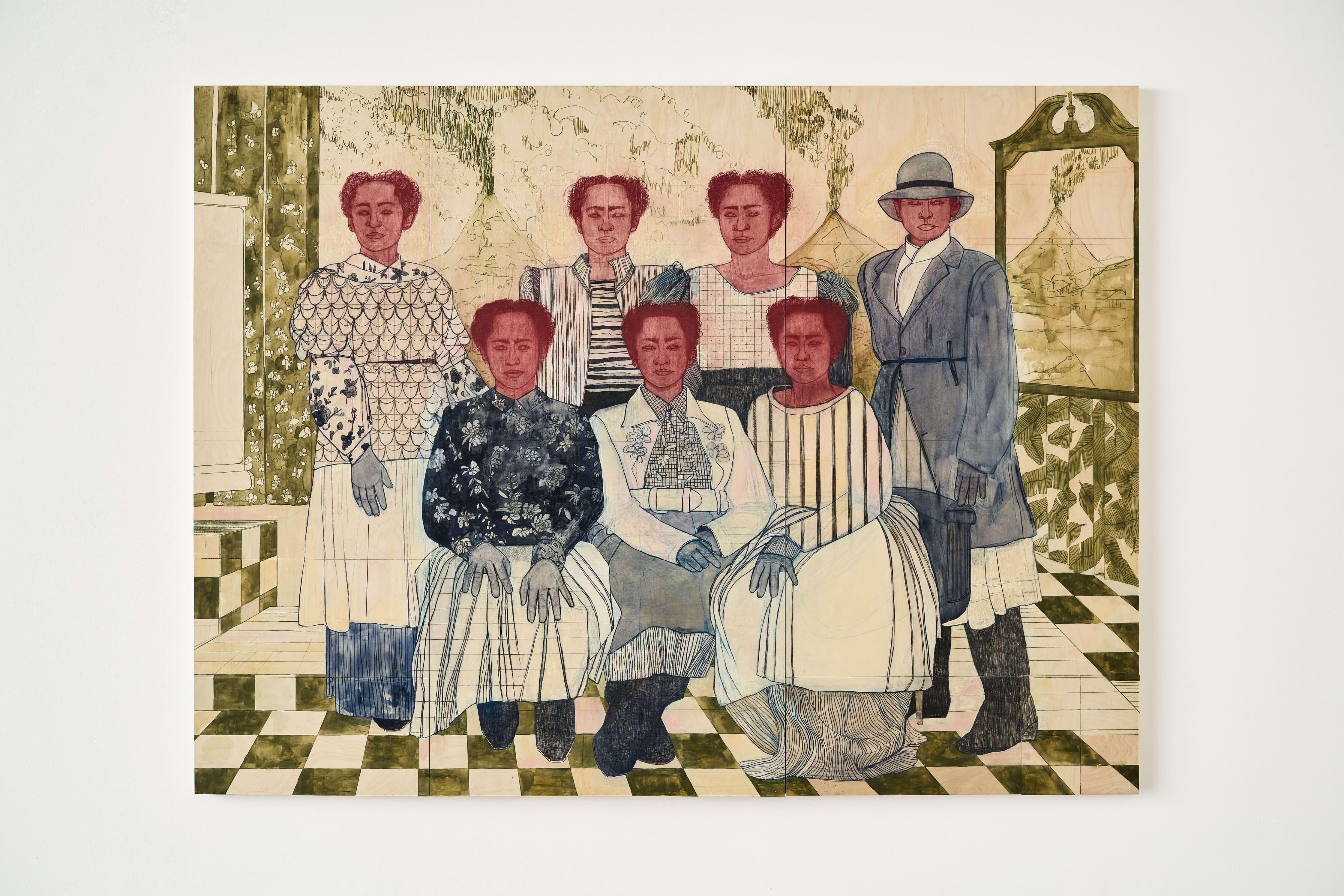
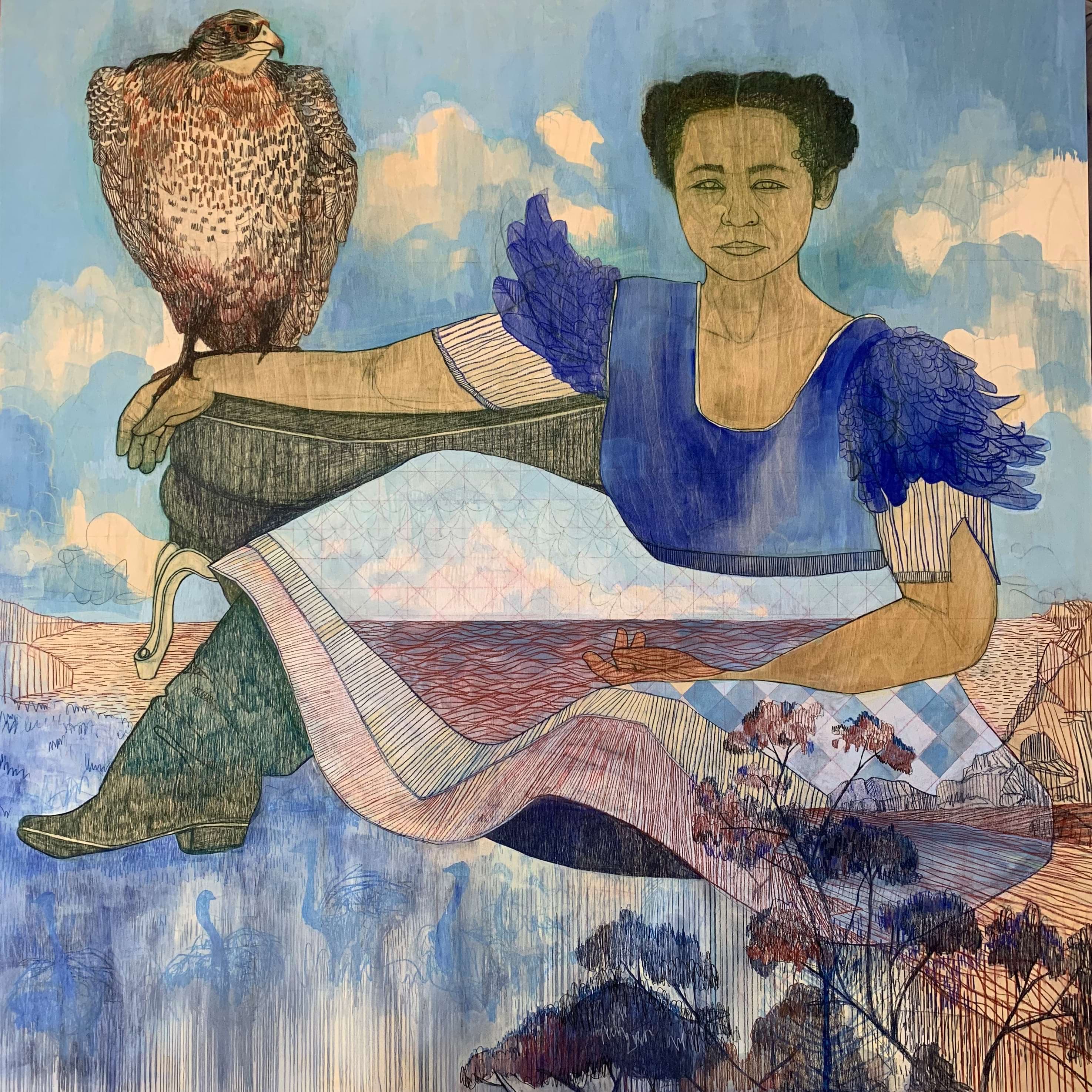
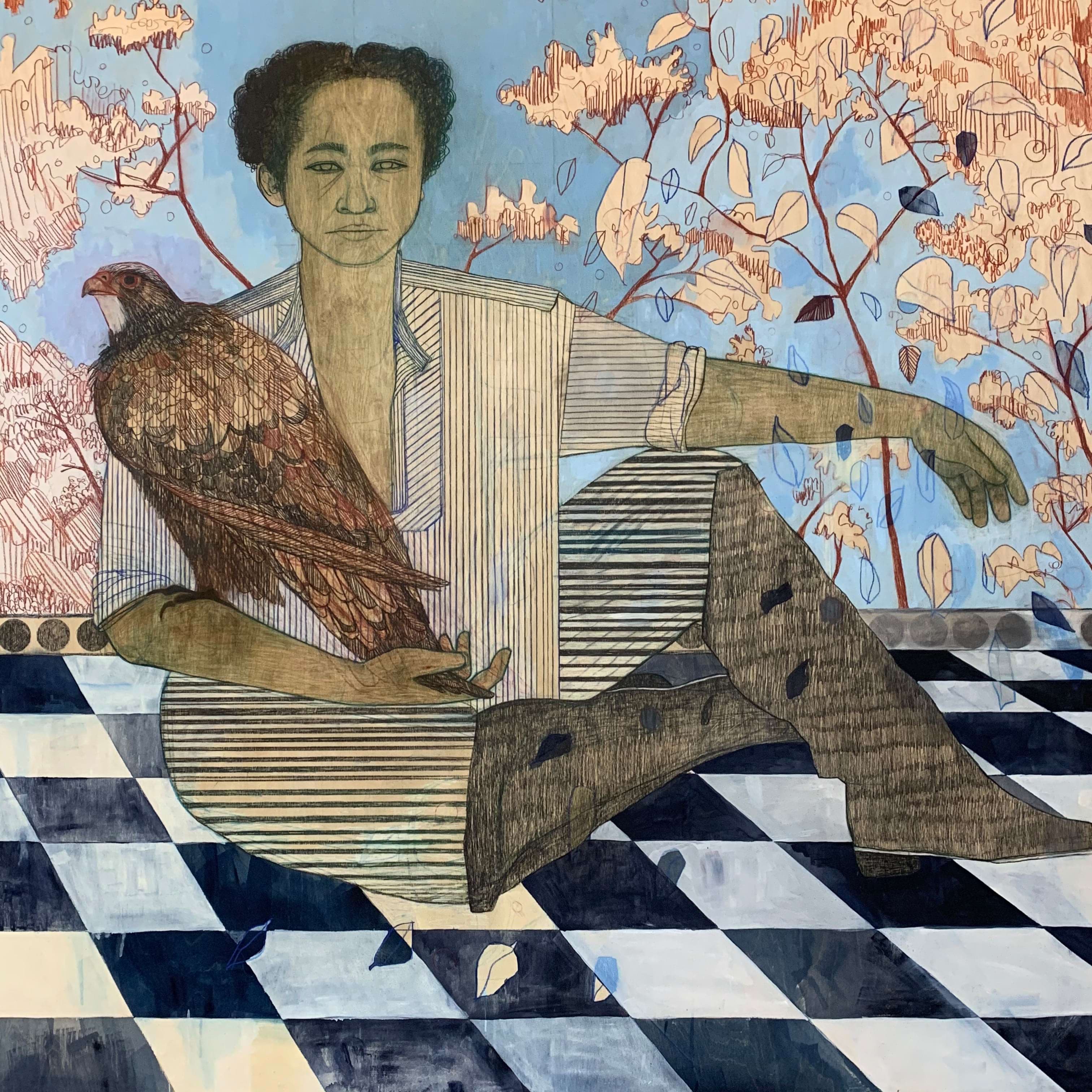
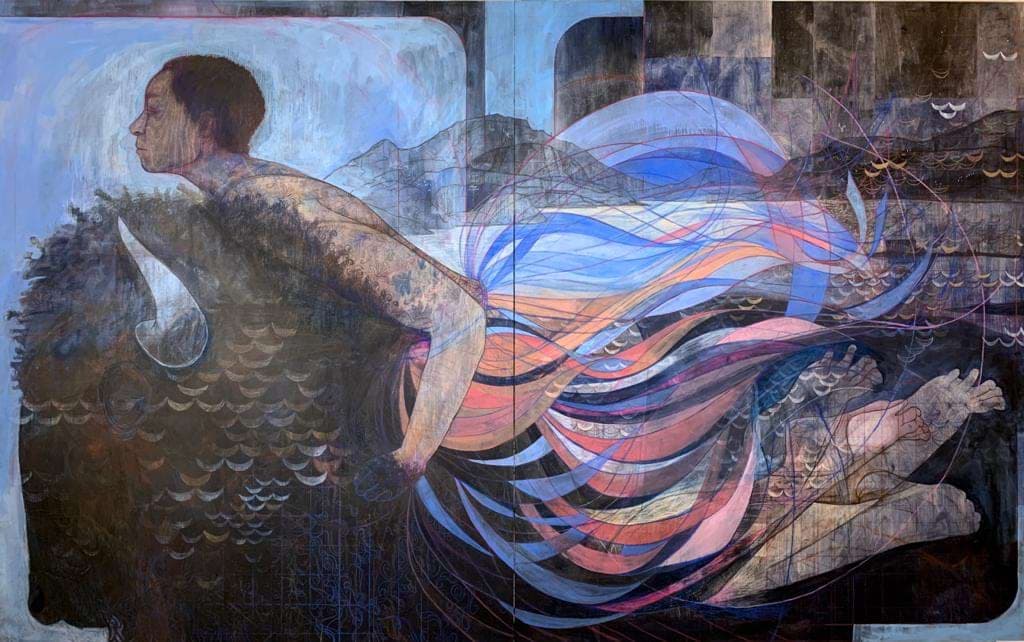
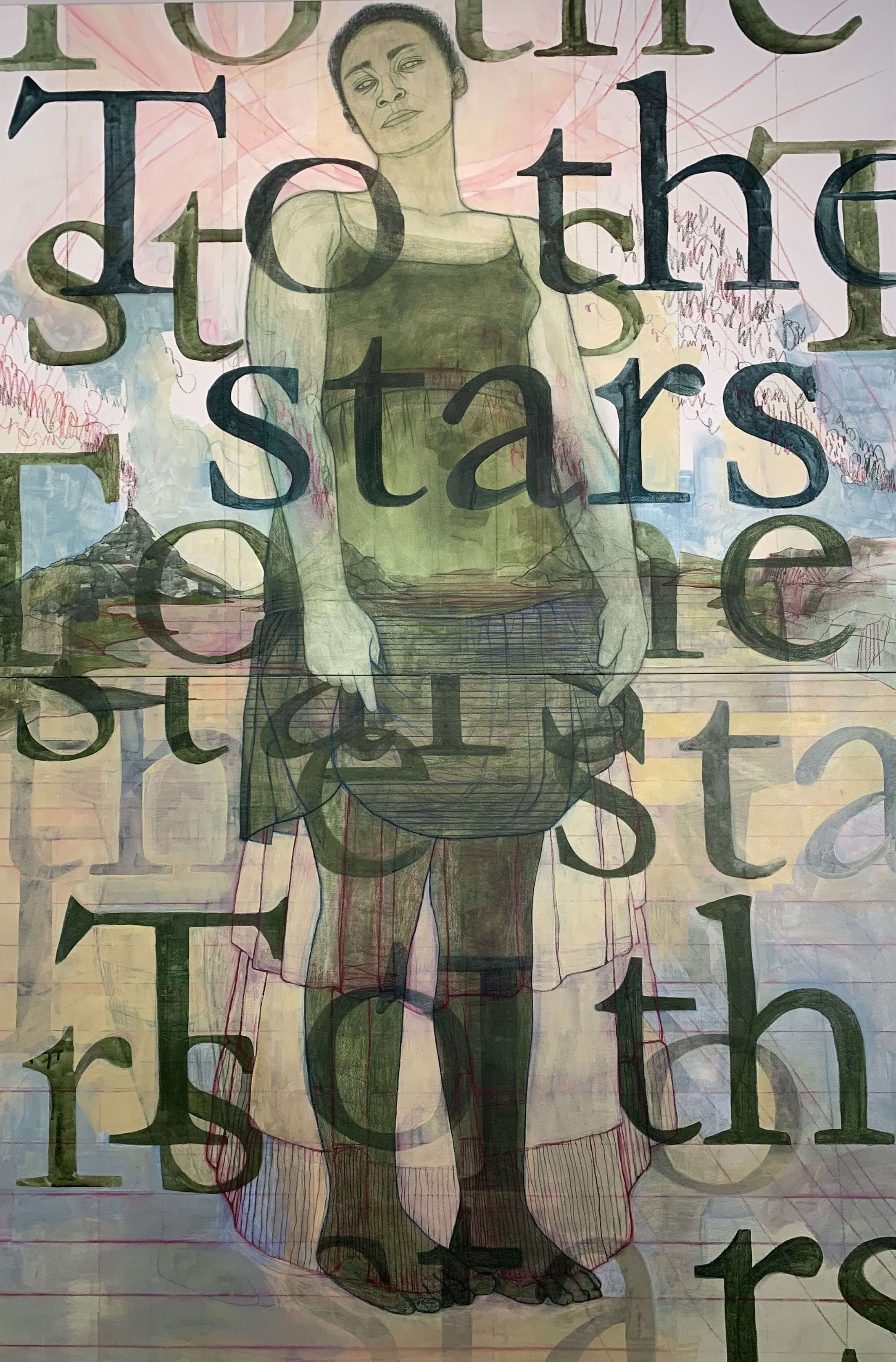

Pamela Phatsimo Sunstrum’s practice is shaped by her engagement with archetypes drawn from classical mythology, which she reimagines through a cast of recurring characters and alter egos. Sunstrum constructs richly layered compositions using pencil and oil paint, developing what she describes as a “collection of citations” that embed meaning through visual codes. These references range from (post)colonial portraiture to art historical dialogues with nineteenth century romanticist painters such as Robert S. Duncanson, whose ‘Land of the Lotos Eaters’ (1861) she cites as a touchstone.
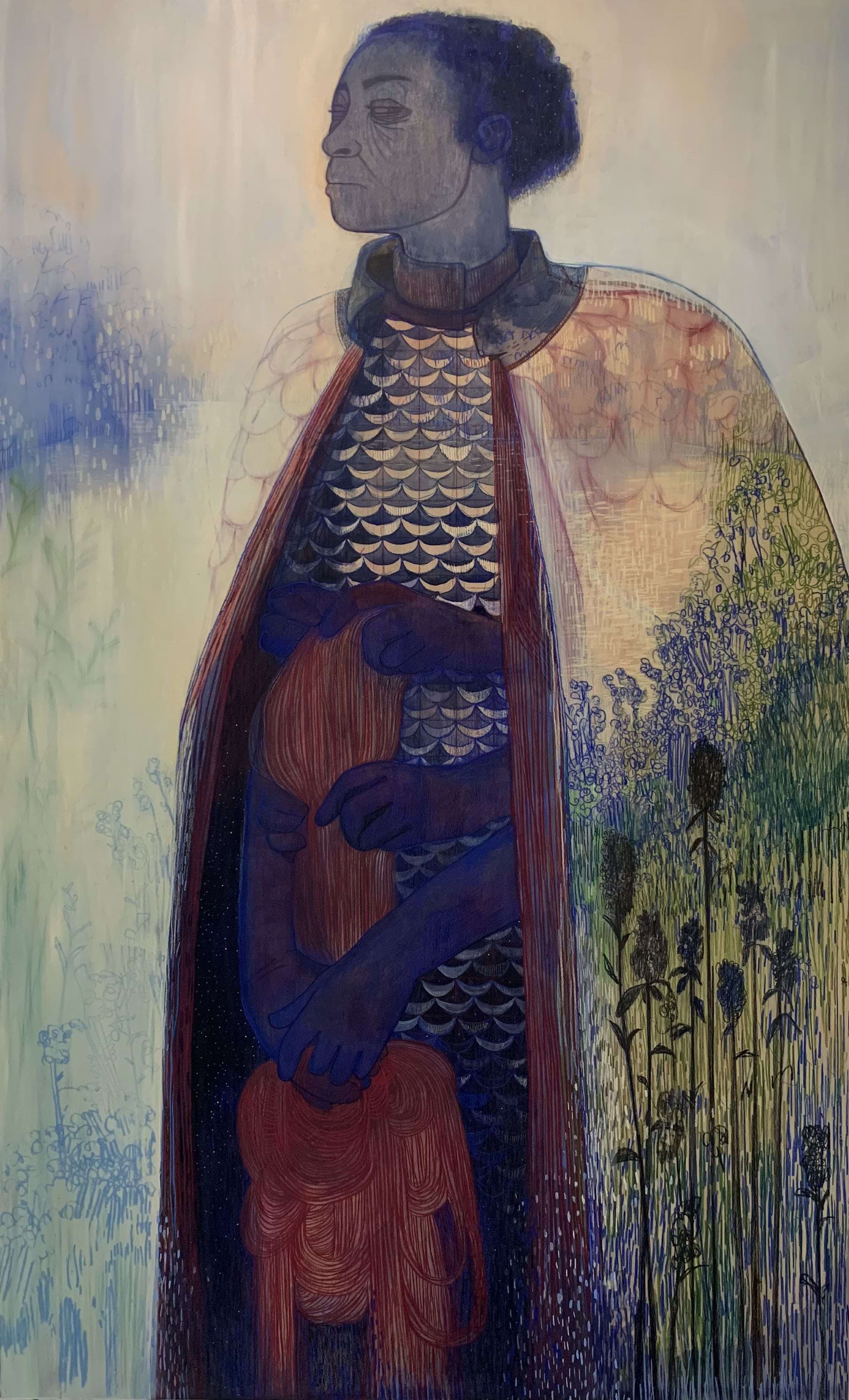
This tension is embodied in the recurring figure of ‘The Knitter’ – a quiet but enigmatic presence within the work. Conceived initially as a figure with multiple busy hands engaged in weaving, crocheting, or knitting, ‘The Knitter’ reflects on forms of so-called “women’s work,” traditionally associated with domesticity and intimacy. At the same time, the figure evokes expansive cosmological questions, drawing unexpected parallels between acts of thread-work and scientific theories like string theory, both of which seek order within chaos. The inside of ‘The Knitter’s cloak becomes a symbolic site where these ideas converge – a place that is universe and abyss, body and unknown, all at once.
Pamela Phatsimo Sunstrum’s painting practice intricately weaves together mythology, science, and speculative fiction to examine themes of identity, memory, and historical narrative. Working primarily in pencil and oil on wood, her layered compositions often feature recurring female figures situated within imagined landscapes that evoke both ancient worlds and futuristic terrains. She draws from a wide spectrum of references, including classical mythology, Romantic painting, postcolonial history, and quantum physics, to create visual spaces that feel at once intimate and monumental.
In ‘Grandpères’, Sunstrum brings together diverse historical and cultural sources to construct a composition that operates across multiple temporal planes. The painting references two works by James McNeill Whistler: an 1891 portrait of the Count of Montesquieu and an 1860 etching of men smoking pipes at the edge of a harbour surrounded by tall ships. These historical echoes are layered with imagery of geodesic domes, popularised by Buckminster Fuller and associated with utopian architectural ideals. According to the artist, the work is structured to introduce many depths of space, from far-off vistas to the immediacy of the foliage in the foreground, creating a sense of visual veils that suggest movement through time and space. The figures in Grandpères are imagined as travellers, perhaps even time travellers, whose garments and gestures contain subtle nods to ancestry.