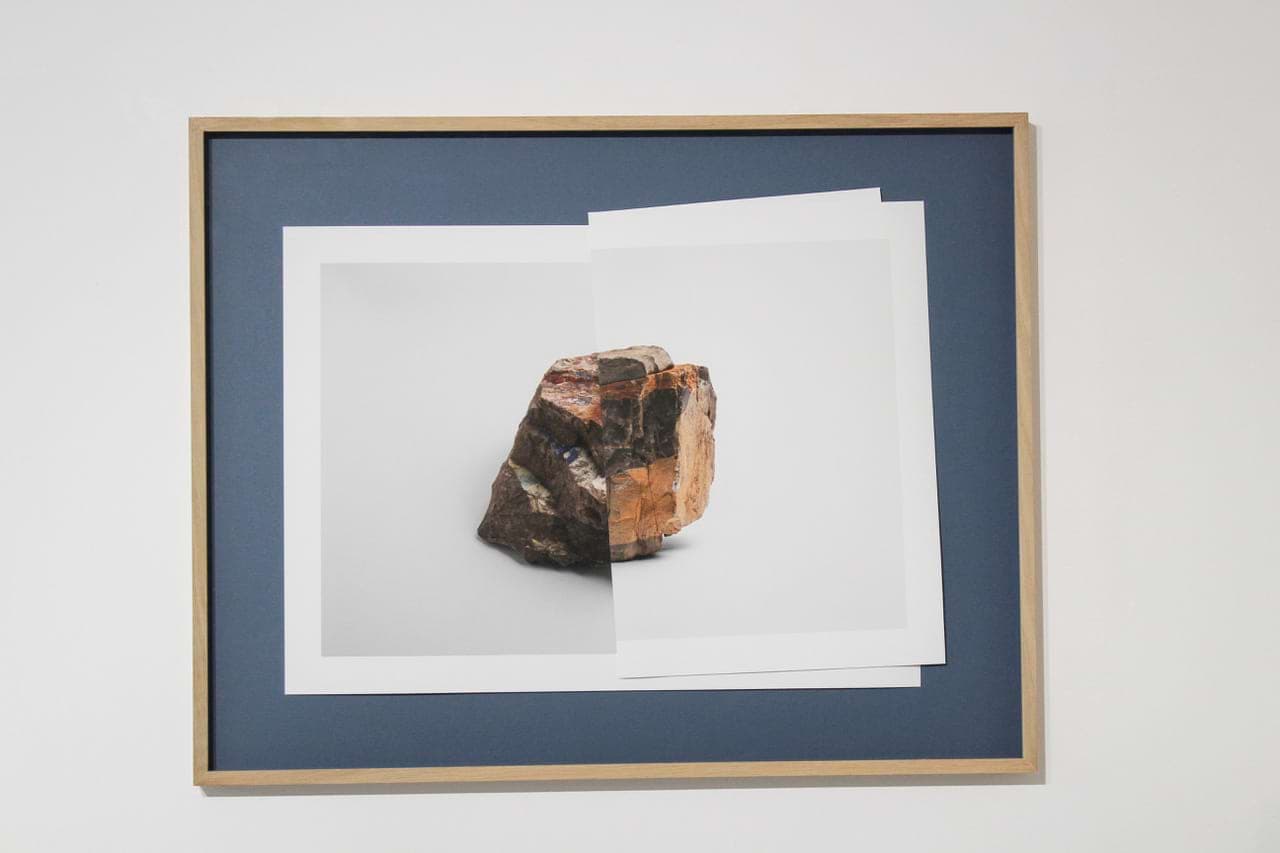
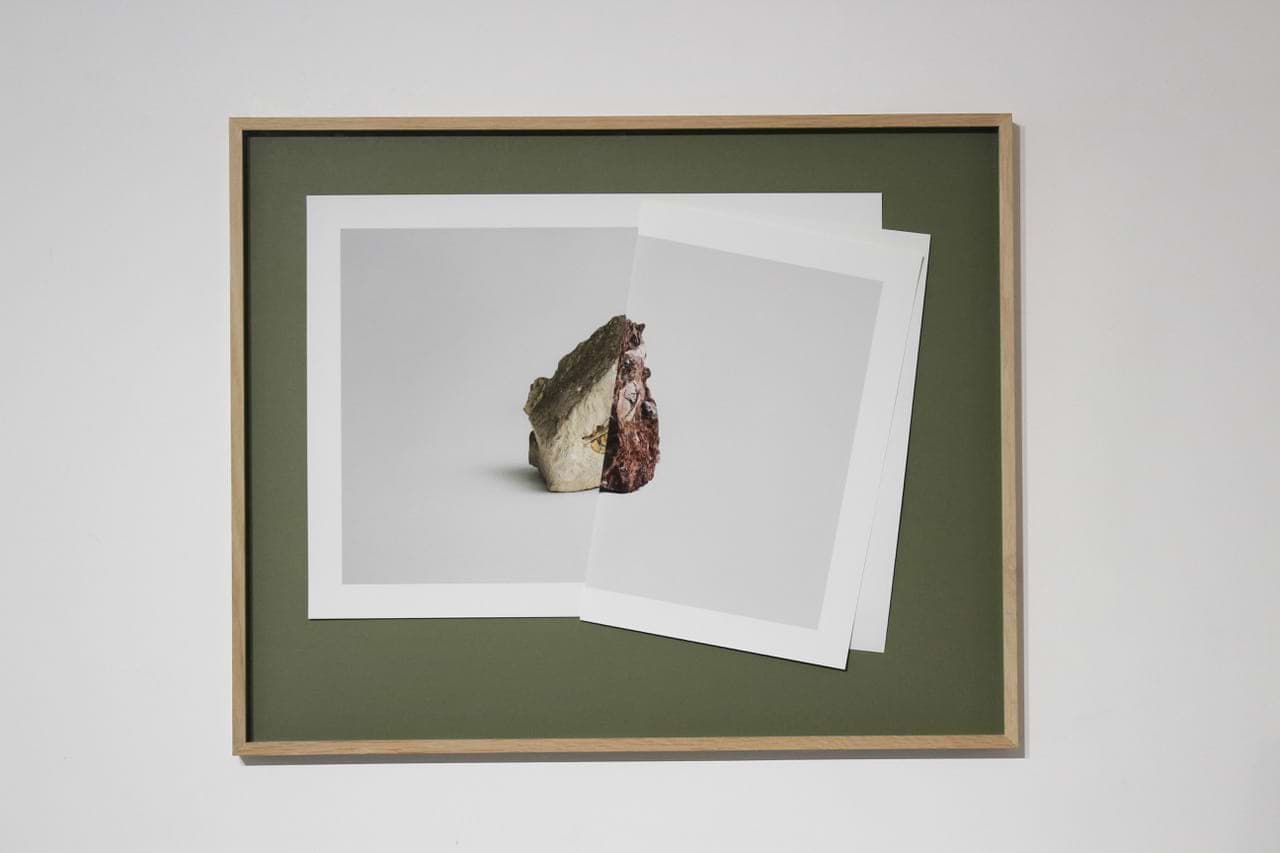
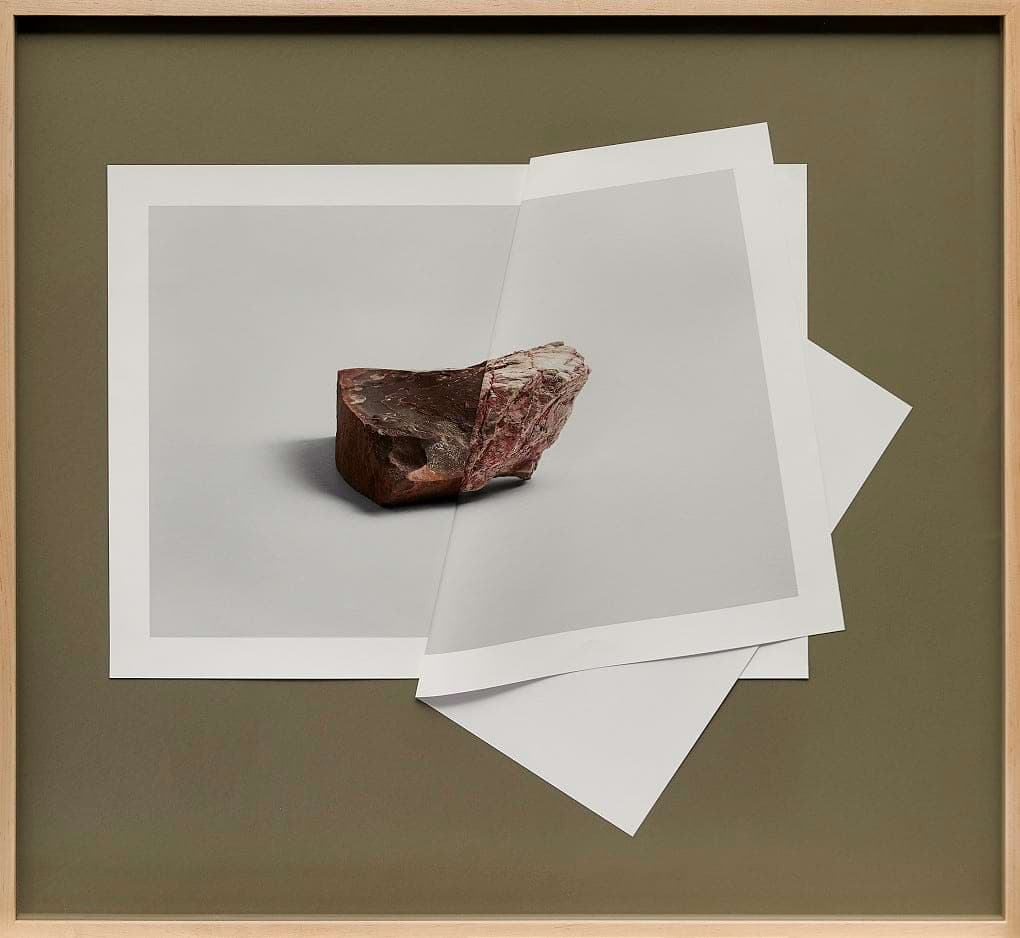
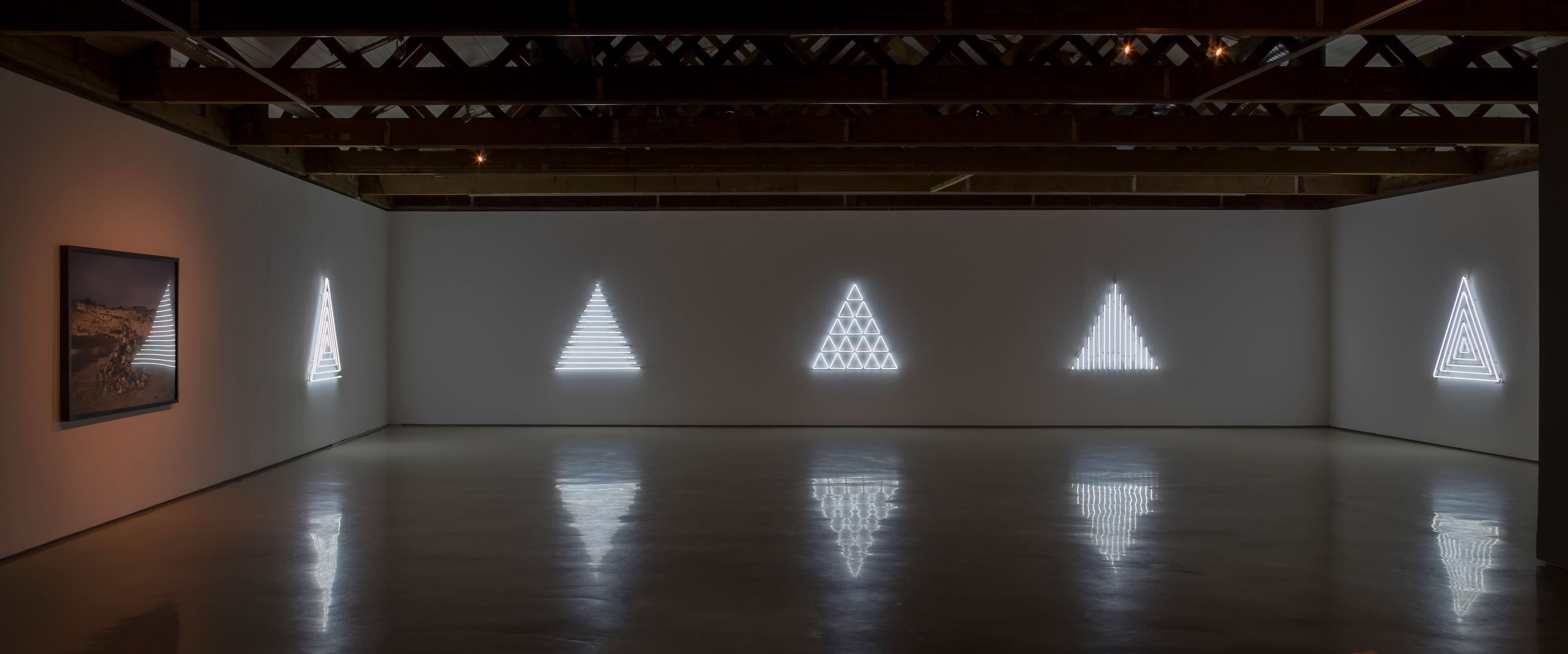
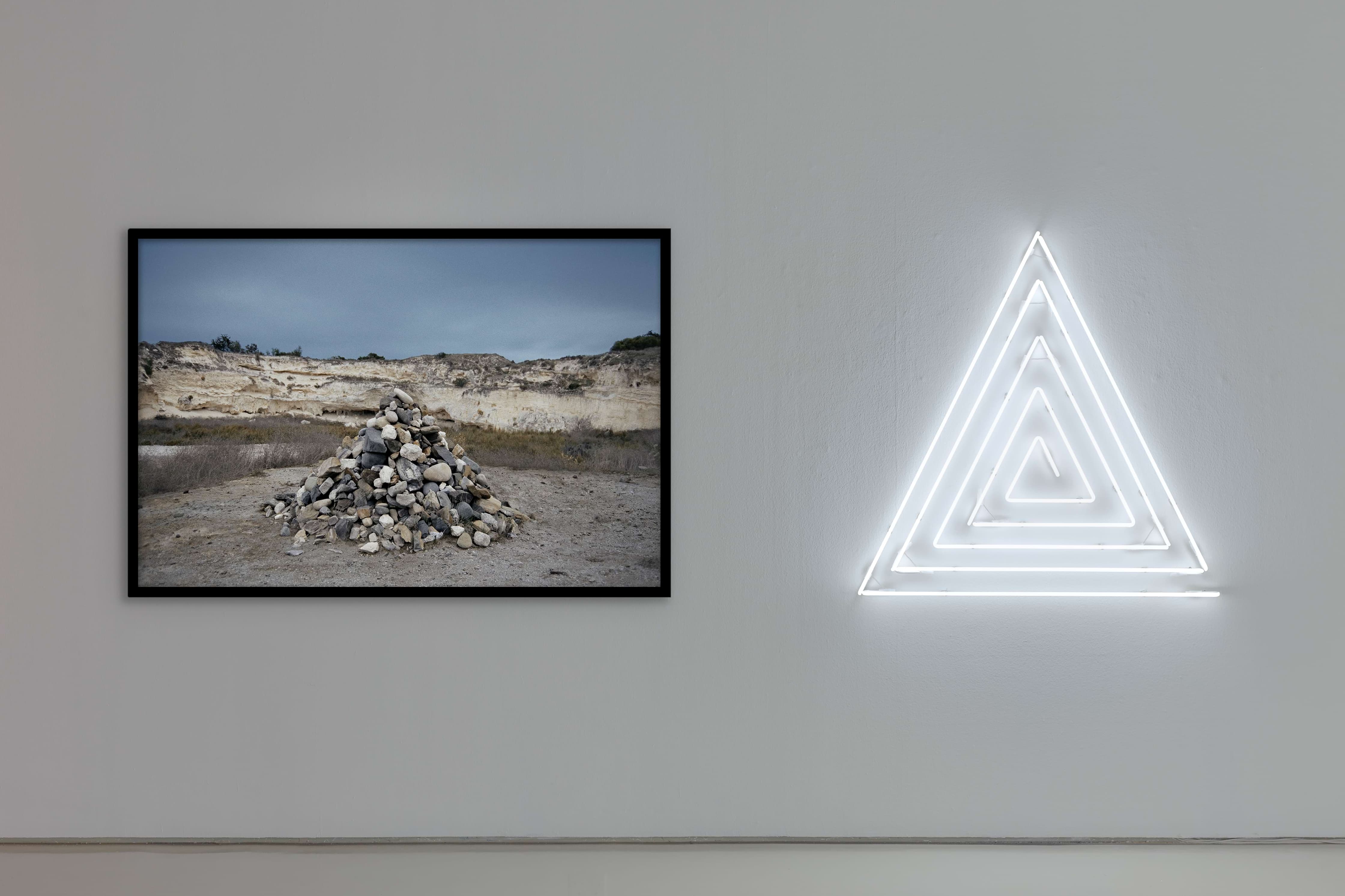
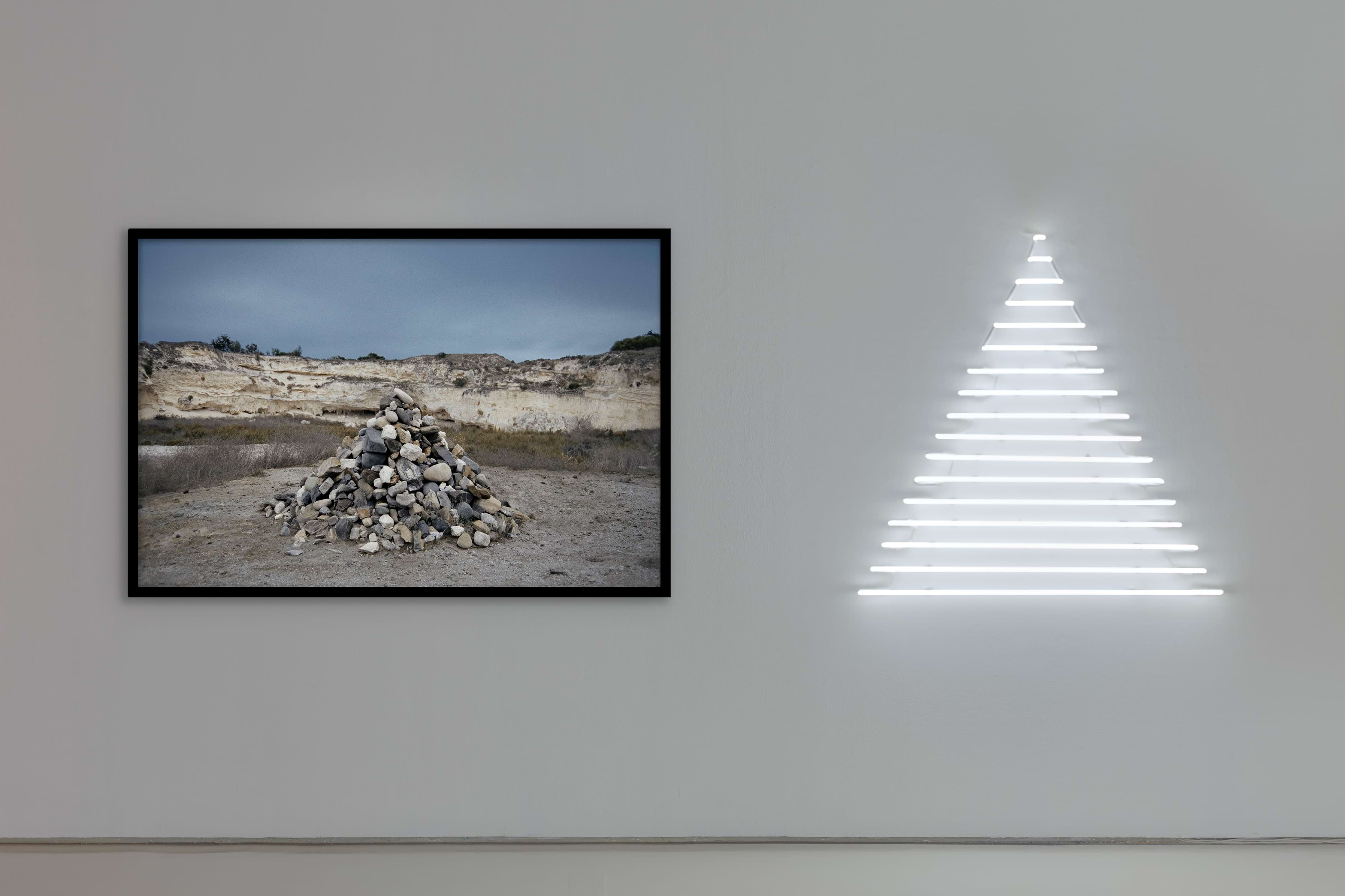
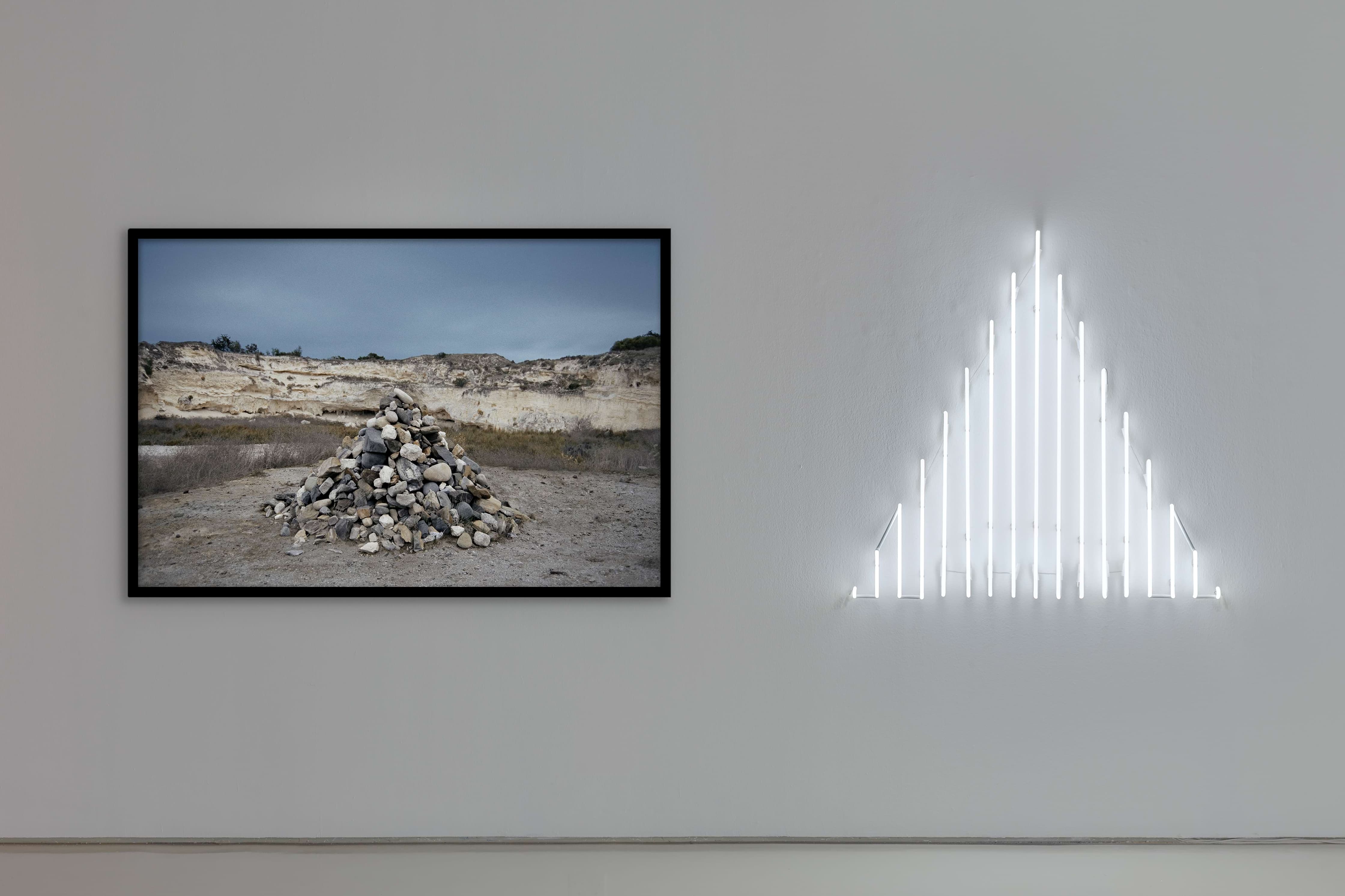
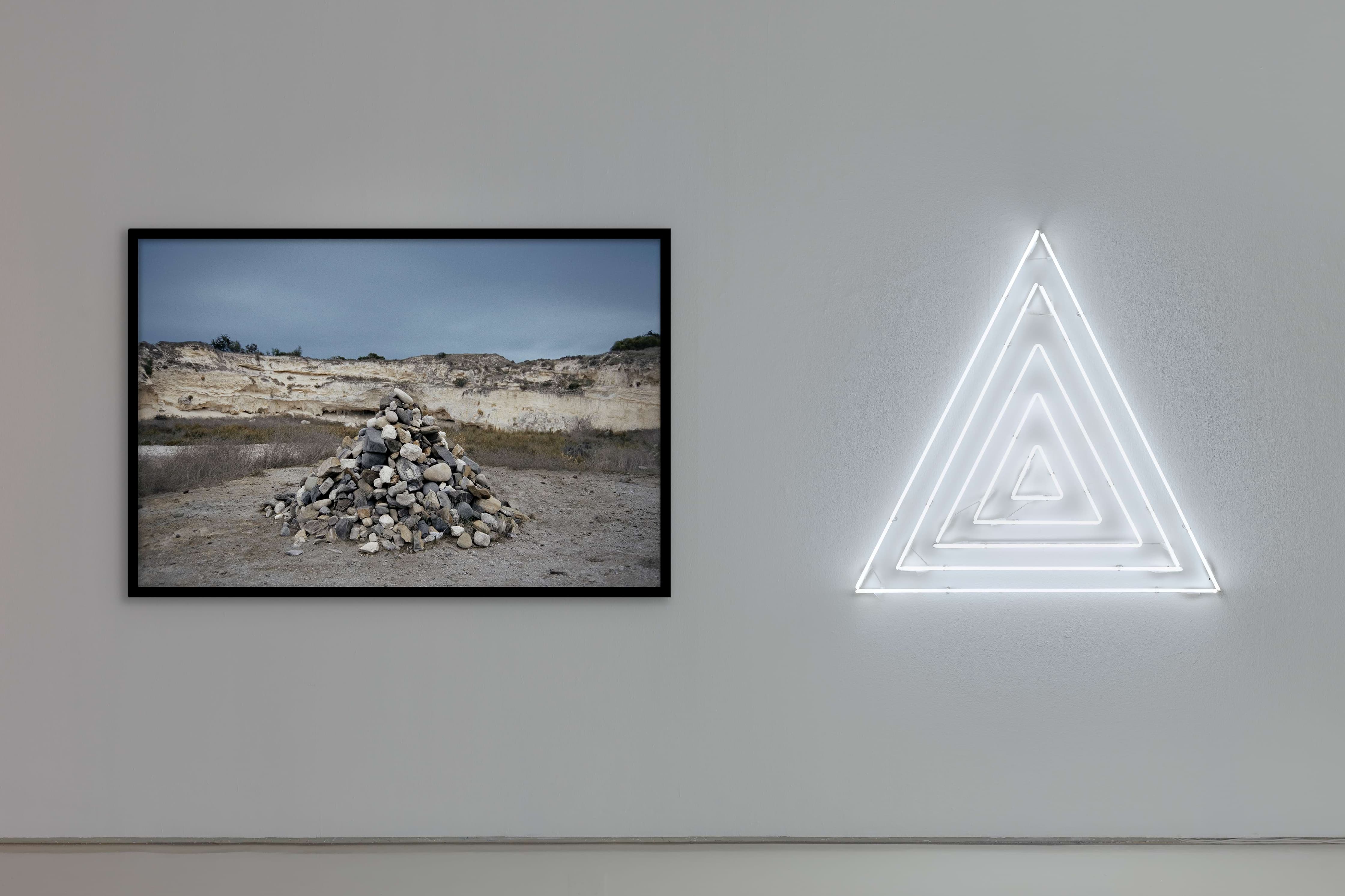
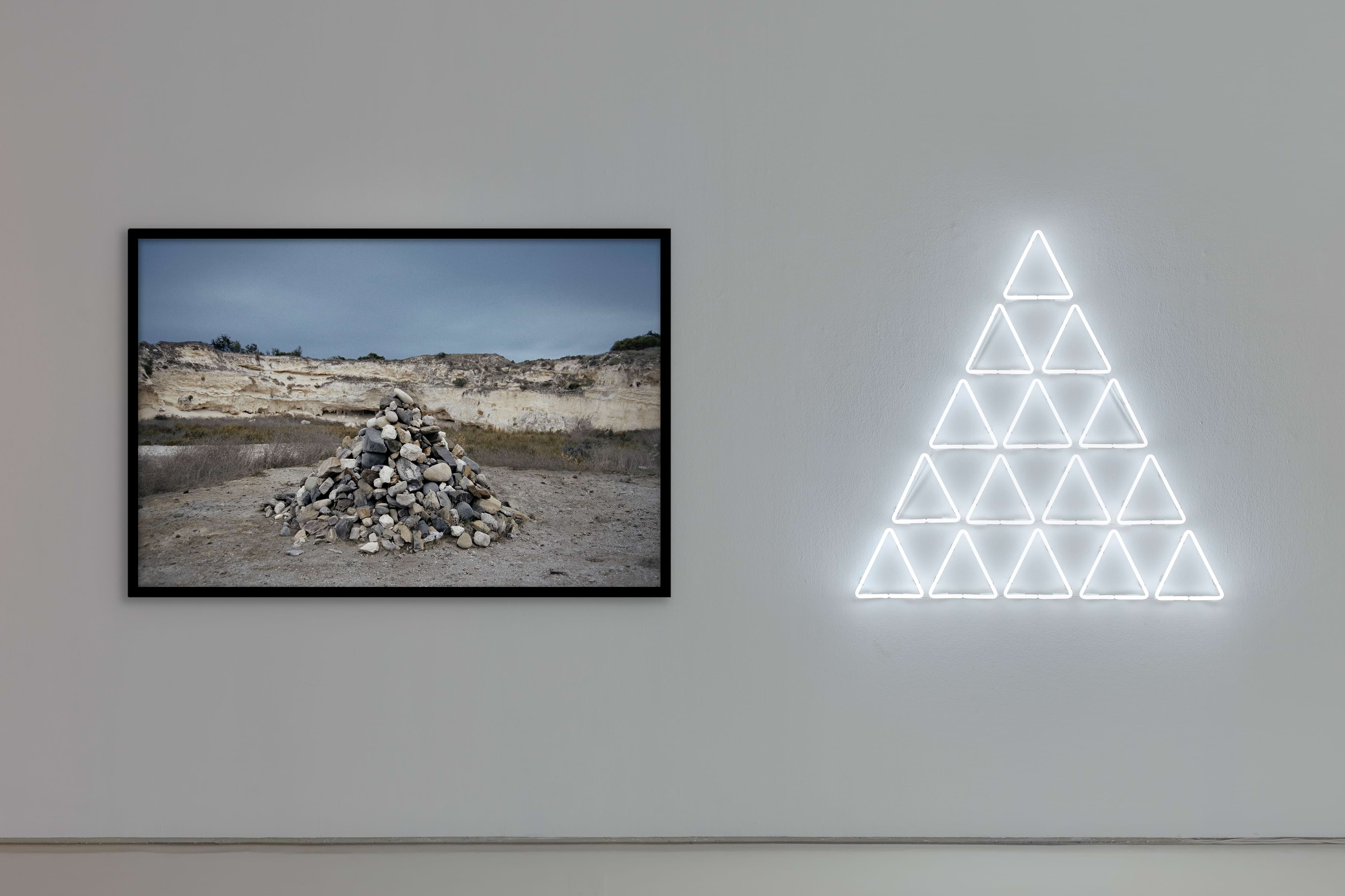
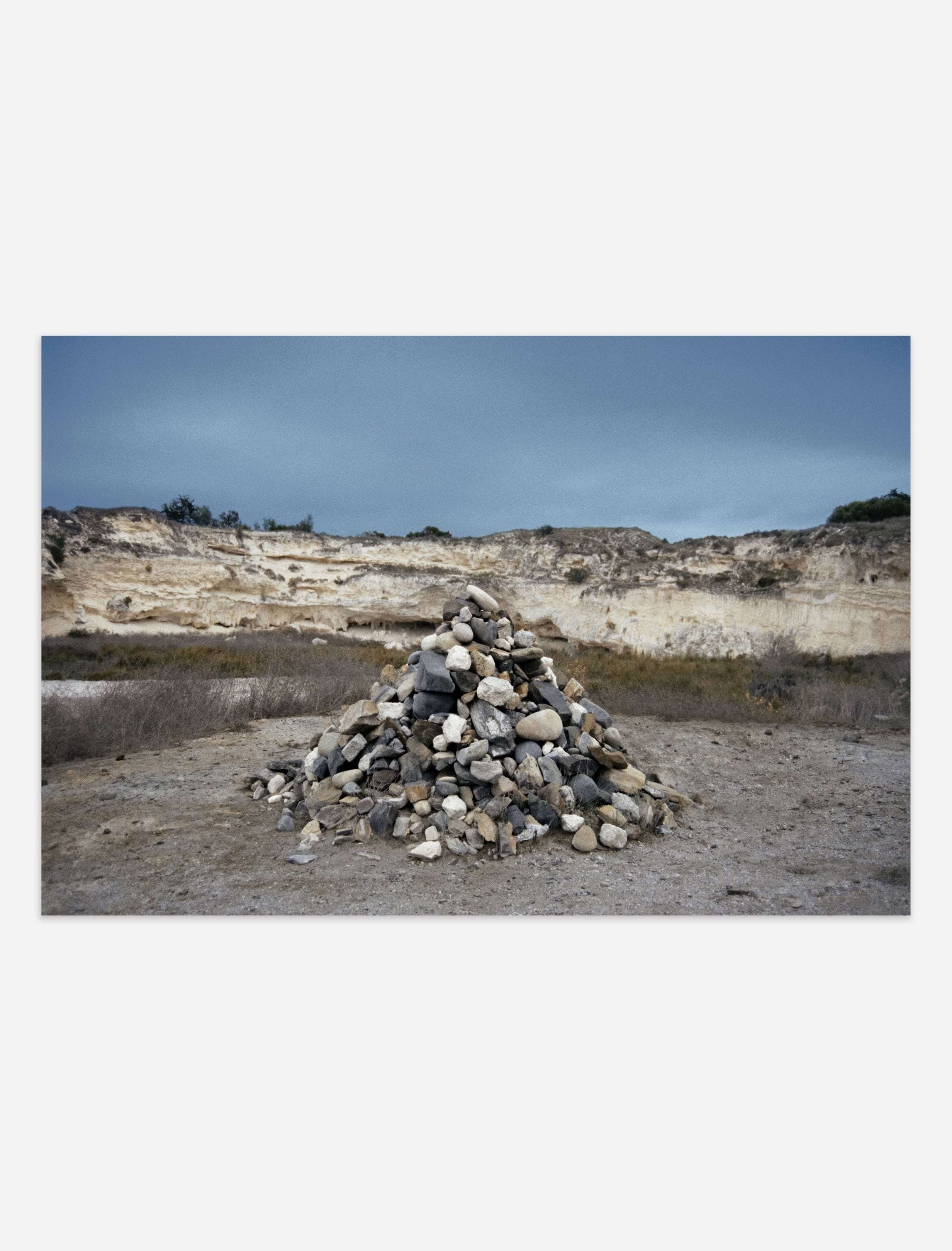
This series of photographic assemblages refer to subduction zones; a geological term which defines the process in which one tectonic plate moves under another before sinking into the mantle as the plates converge. These zones have high rates of earthquakes, volcanism and mountain formations. In this series two photographs taken from rocks in the collection of Paris’ Natural History Museum are placed in relation to one another. One image depicts a rock from the European side of the strait of Gibraltar, while the other belongs to an African country on the Mediterranean shore. As such this project speaks of the probable future collision of the African and European continents at and around the Strait of Gibraltar. The work thus proposes anew continental configuration; a new territory.
Rock information:
Roches Cuprifères Rouinat Maroc
Moume de Cornus, Commine de Bellver, île de Palma, îles Baléares, Espagne
This series of photographic assemblages refer to subduction zones; a geological term which defines the process in which one tectonic plate moves under another before sinking into the mantle as the plates converge. These zones have high rates of earthquakes, volcanism and mountain formations. In this series two photographs taken from rocks in the collection of Paris’ Natural History Museum are placed in relation to one another. One image depicts a rock from the European side of the strait of Gibraltar, while the other belongs to an African country on the Mediterranean shore. As such this project speaks of the probable future collision of the African and European continents at and around the Strait of Gibraltar. The work thus proposes anew continental configuration; a new territory
This series of photographic assemblages refer to subduction zones; a geological term which defines the process in which one tectonic plate moves under another before sinking into the mantle as the plates converge. These zones have high rates of earthquakes, volcanism and mountain formations. In this series two photographs taken from rocks in the collection of Paris’ Natural History Museum are placed in relation to one another. One image depicts a rock from the European side of the strait of Gibraltar, while the other belongs to an African country on the Mediterranean shore. As such this project speaks of the probable future collision of the African and European continents at and around the Strait of Gibraltar. The work thus proposes anew continental configuration; a new territory
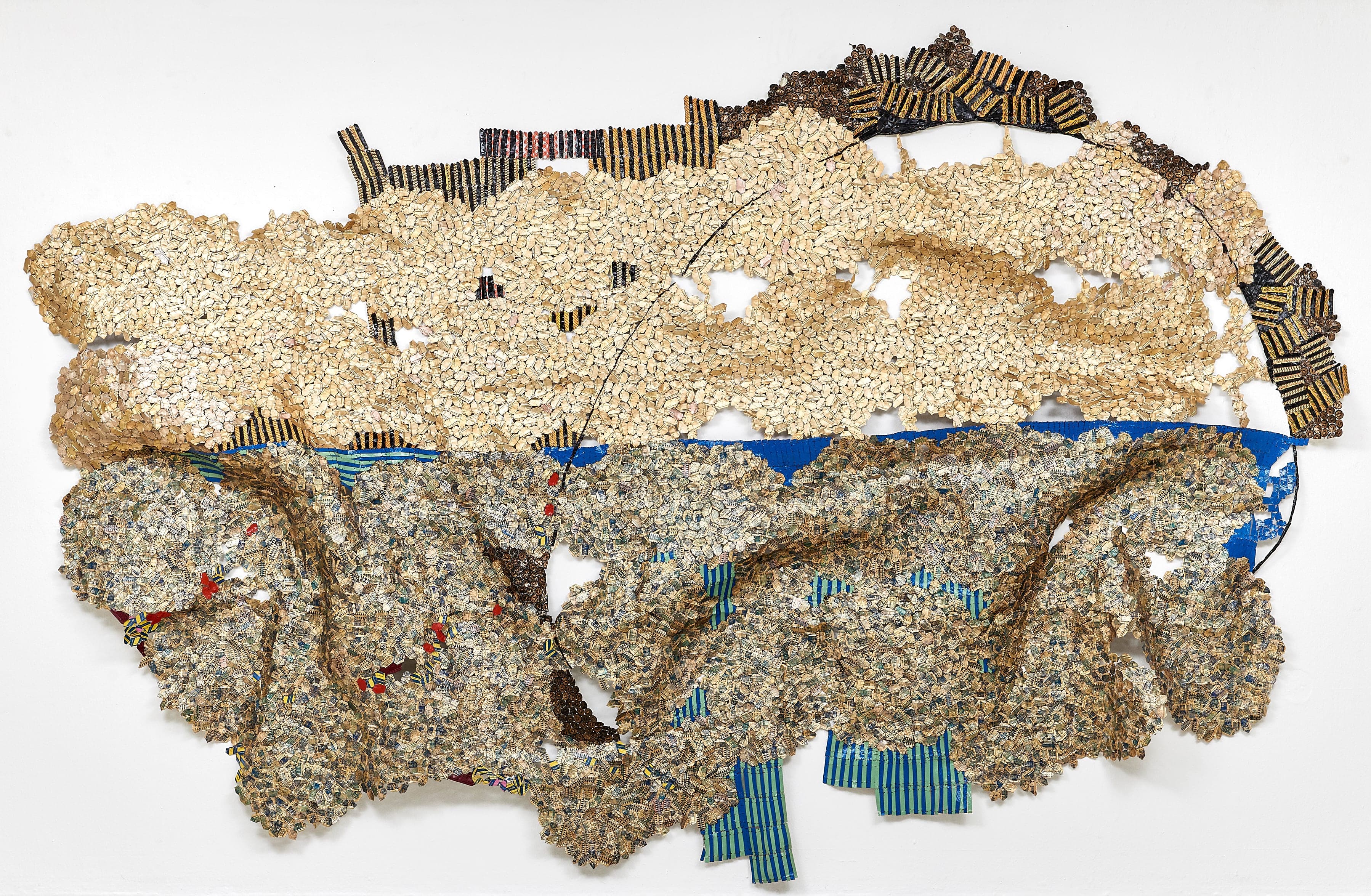
“If Anatsui’s complicated metal hangings of the past two decades confound the categories of painting and sculpture, when they became truly monumental in size they also began to approximate a third art form: architecture.”
— “Undefinable”, in El Anatsui: Art and Life, ed. Susan M Vogel (Prestel Publishing, 2020), pg.188.
[Horizon has been exhibited at The Prince Claus Fund, Amsterdam (2016), Goodman Gallery, Johannesburg (2017) and at The South African National Gallery, Cape Town (2018).]
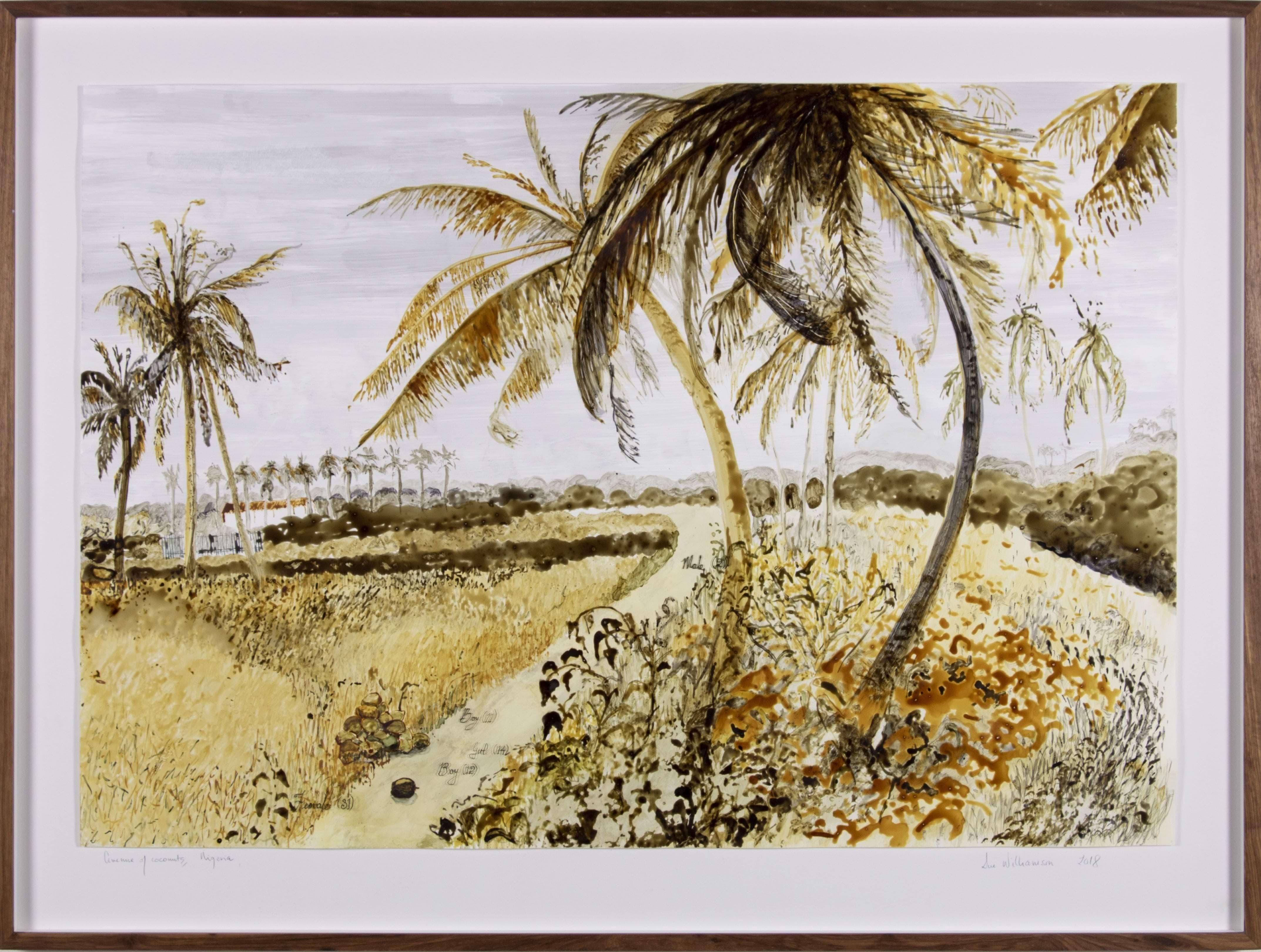
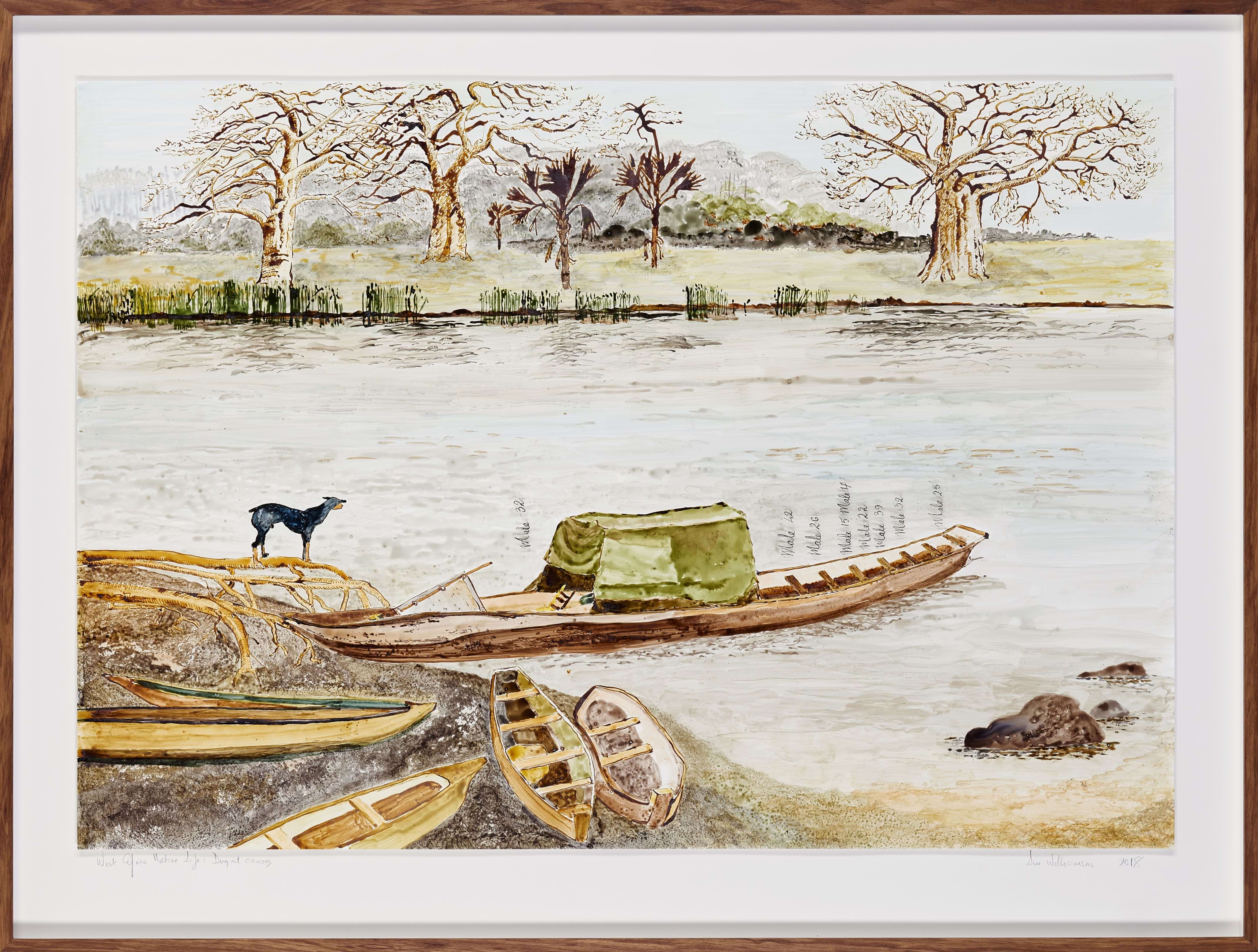
Postcards from Africa is a series of new ink drawings based on postcards from the early 1900s, produced for residents and travellers in Africa as well as for collectors who had never set foot on the continent. These postcards, which peaked in popularity at that time, now contribute to understanding political and cultural changes in Africa as the rise of the new medium coincided with the expansion and consolidation of colonial rule. In Williamson's re-drawn scenes from these postcards, all the figures have been left out: a reference to the scourge of slavery, which saw 12.5 million people shipped from the continent to the Americas.
Williamson’s new series of drawings, Postcards from Africa, continues the artist’s interest in the power of a small printed image to carry news of a specific moment in time to a far off audience, sometimes current, sometimes separated from the event by a century. Her early series of etchings The Modderdam Postcards (1978) was based on sketches made over seven days while witnessing the destruction by the apartheid state of an informal settlement near the airport in Cape Town.
Postcards made from A Few South Africans (1983-86), mixed media portraits of heroic women active in the struggle for liberation, were distributed not only across the country but the world. Most recently, the artist has turned her attention to vintage postcards of photographs taken by European colonisers in Africa in the first decades of the 20th century, who used the postcards as examples of the success of their missions, supposedly demonstrating the civilising effect of colonisation on the colonised, or presenting views of exotic Africa.
Sourcing these postcards from museum archives or from the internet, Williamson reverts to classic drawing techniques. She dips her pen into a bottle of ink, building up images with layers of intricate cross-hatching, adding colour from a limited palette to reproduce the rural landscapes on the postcards, or capture the scenes of daily community life: harvesting, swimming, gathering wood.
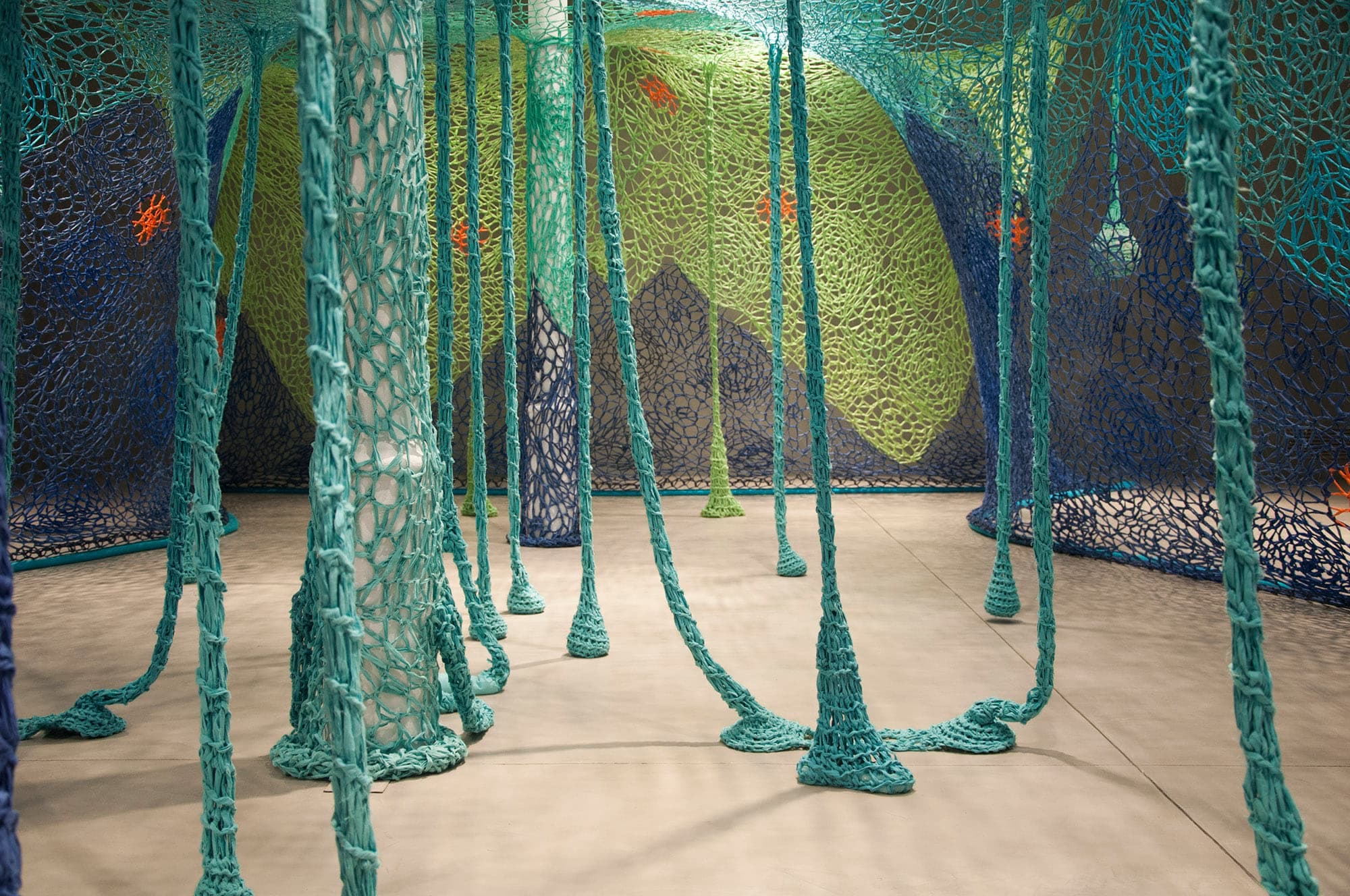
Ernesto Neto’s large-scale immersive sculpture Um dia todos fomos peixes (One Day We Were all Fish), commissioned for the Blueproject Foundation in Barcelona, is a knitted blue net scented with aromatic spices, inviting visitors to be present and relax within the atmosphere created by the work.
As the title and aesthetic of the sculpture suggest, Um dia todos fomos peixes draws much of its inspiration from the ocean. For Neto, the ocean has been a point of fascination since childhood, making it the perfect source material for his ongoing inquiry into the relationships between the human body and natural landscapes. The netting of the work itself is an abstracted representation of a giant fish, an idea which struck Neto during a ceremony in Brazil lead by the spiritual leader Álvaro Tukano.
‘He said, in the beginning, the Tukanos were fish, just a spine immersed in water,’ says Neto, recalling the experience. The teacher went on to describe how this was the origin of life on earth; a fact Neto saw echoed in our scientific understanding of the world, representing for him a continuity between these ‘two different fountains of knowledge. Inspired by this realization, Neto created Um dia todos fomos peixes as a ‘metaphor and a desire to encounter our ancestry and absolute connection to nature, the nature that we are.’
By creating an immersive space that evokes the flow of the ocean, Neto’s installation reminds us of our inextricable connection to water and the ocean, encouraging audiences ‘to meditate and reconnect to the time we all were fish.’
In Laura Lima’s sculptural and performative practice, the artwork is often conceived as a living system which is activated over extended periods and shaped by its interaction with people, animals, and environments. Much like artists such as Ernesto Neto, Lima draws from a wide range of sources including art history, science fiction, philosophy, and law. Her work spans intricate drawings, spatial interventions, and collaborative processes involving craftsmen and performers, all of which contribute to an expanded understanding of material and form.
Based in Rio de Janeiro, Lima has cultivated a body of work that consistently resists conventional classification. Her practice engages with the legacy of Brazil’s Neo-Concrete Movement, embracing its emphasis on sensorial experience and embodied engagement, while also pushing beyond into more speculative, post-relational terrain. Her installations often incorporate worn or repurposed objects, constructed environments, and ‘live agents’ highlighting the fluid and dynamic nature of assemblage as central to her artistic language.
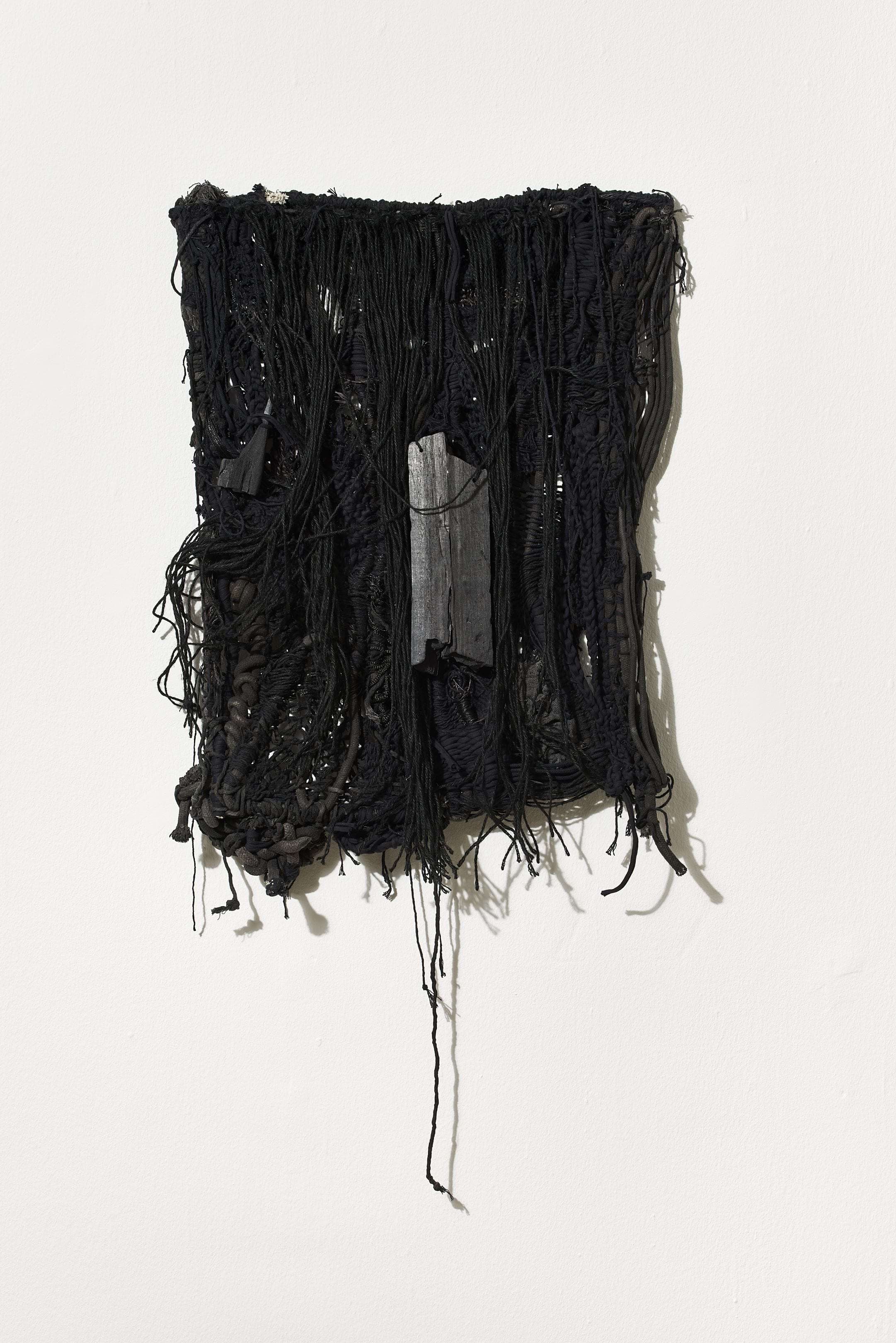
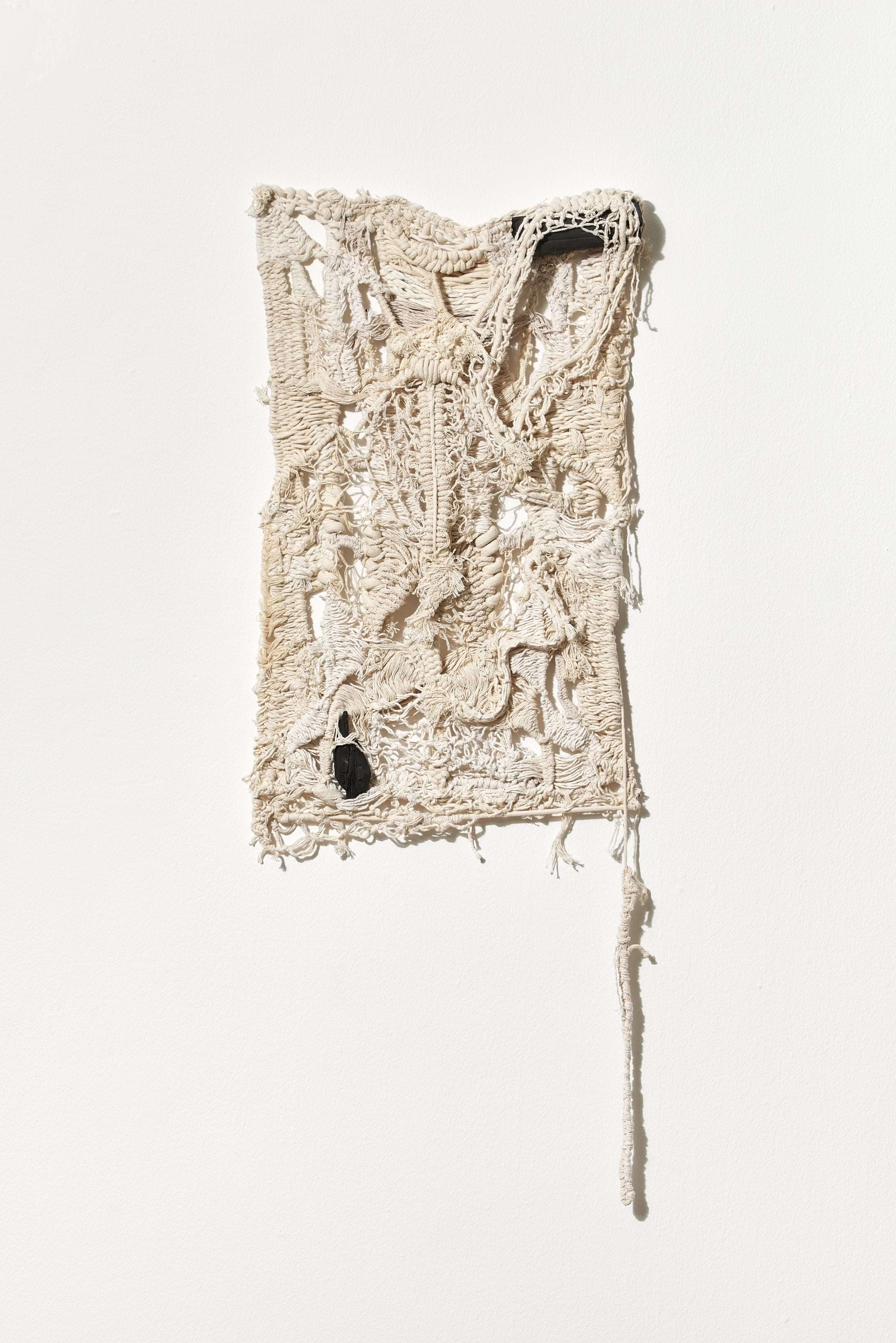
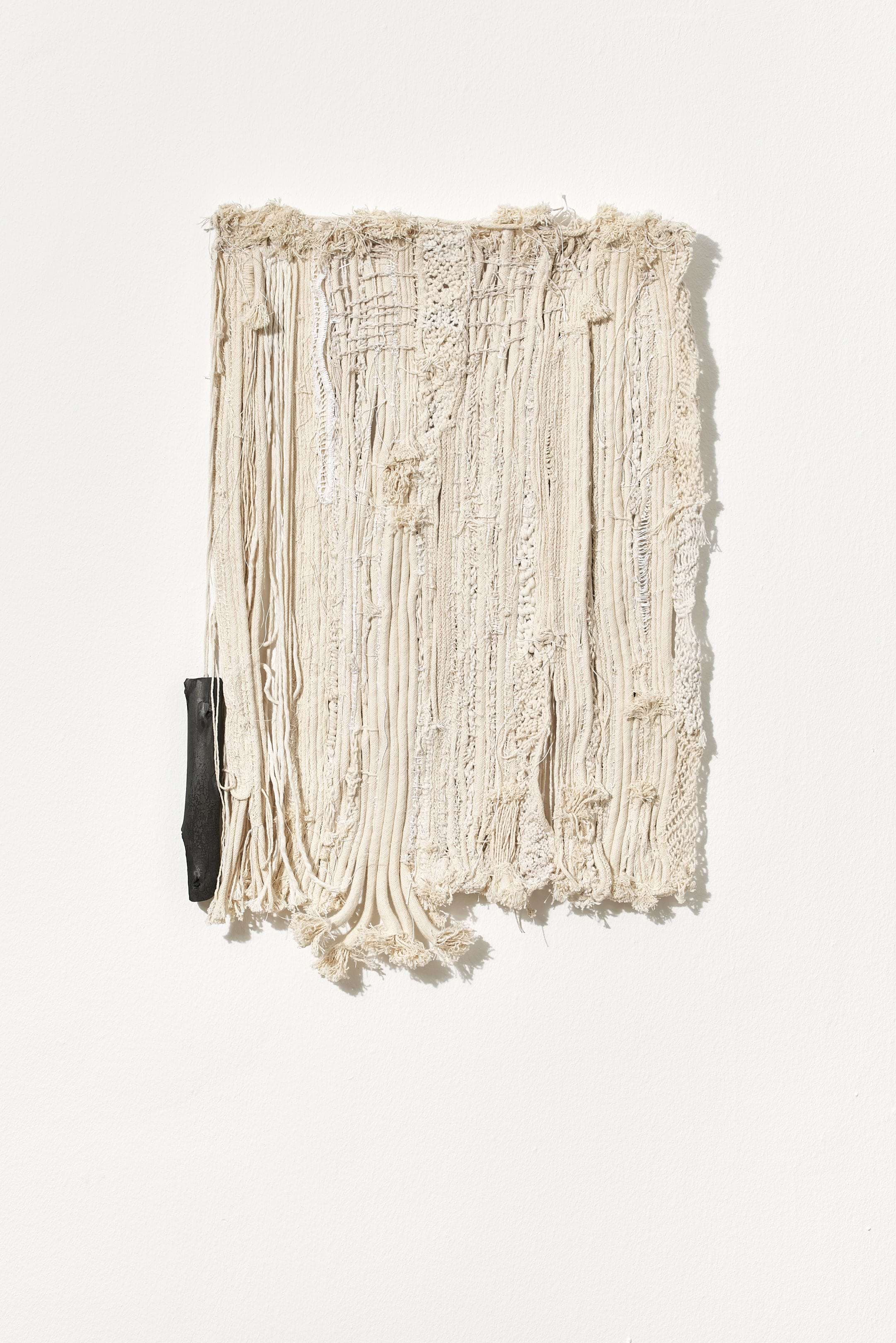
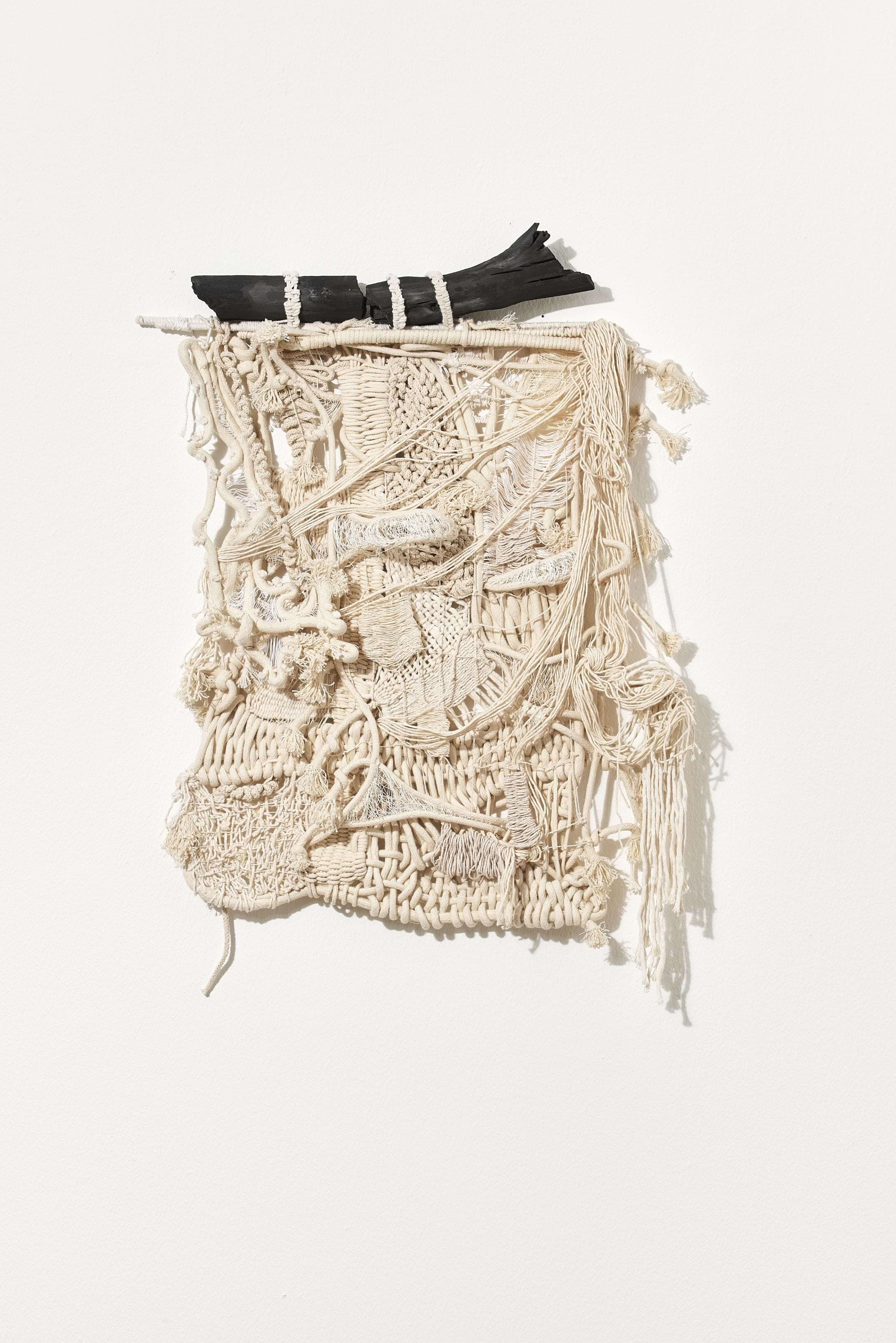
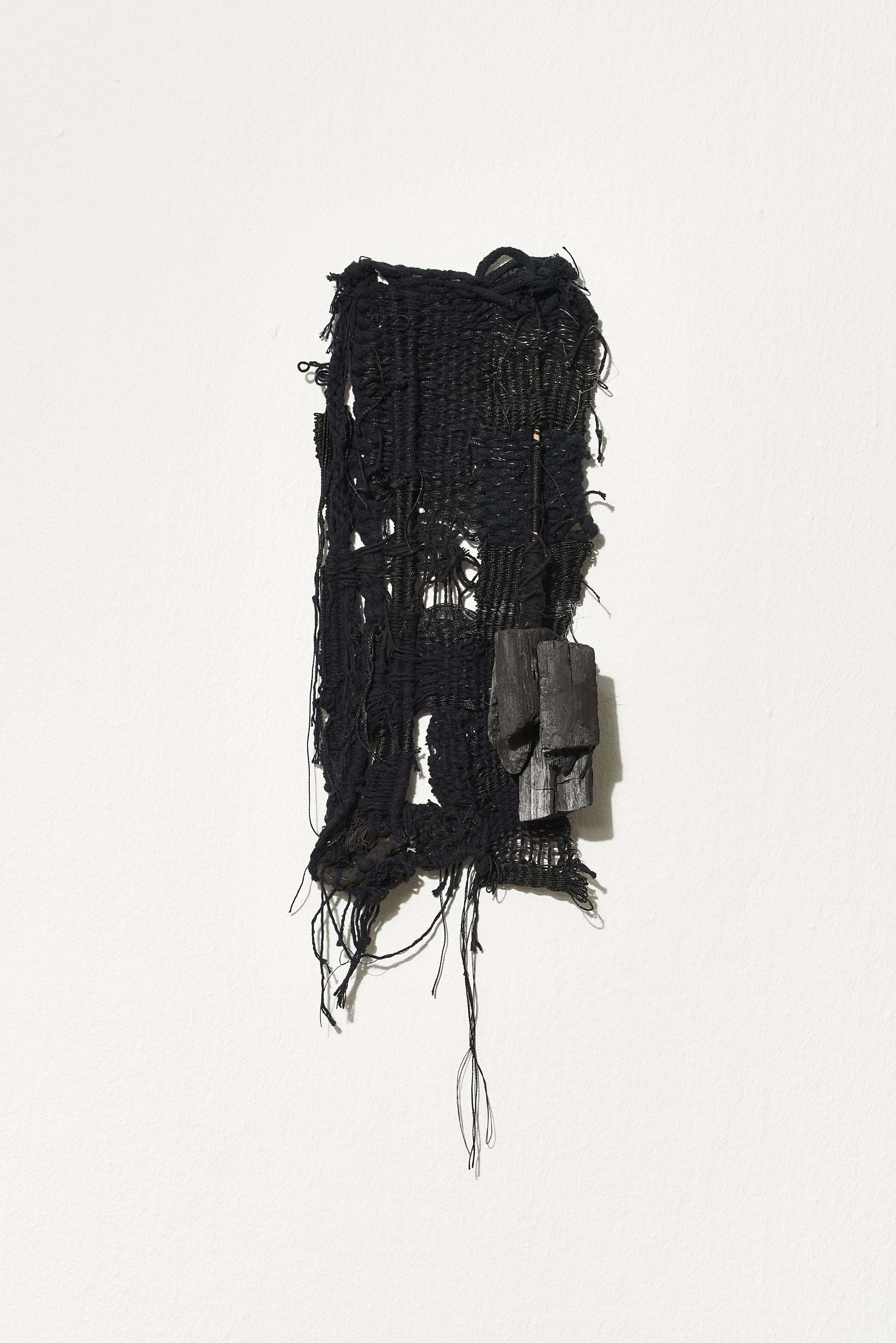
A compelling example of this is her ‘Wrong Drawings’ series, created from natural cotton, often embedded with pieces of coal. As time passes, the coal stains the fabric, slowly inscribing the surface through an extended, organic process. Each work is dated years into the future, pointing toward a speculative moment of completion – suggesting that drawing, in Lima’s hands, is not only an act of mark-making but one of duration, becoming, and deferred meaning.
In Laura Lima’s sculptural and performative practice, the artwork is often conceived as a living system which is activated over extended periods and shaped by its interaction with people, animals, and environments. Much like artists such as Ernesto Neto, Lima draws from a wide range of sources including art history, science fiction, philosophy, and law. Her work spans intricate drawings, spatial interventions, and collaborative processes involving craftsmen and performers, all of which contribute to an expanded understanding of material and form.
Based in Rio de Janeiro, Lima has cultivated a body of work that consistently resists conventional classification. Her practice engages with the legacy of Brazil’s Neo-Concrete Movement, embracing its emphasis on sensorial experience and embodied engagement, while also pushing beyond into more speculative, post-relational terrain. Her installations often incorporate worn or repurposed objects, constructed environments, and ‘live agents’ highlighting the fluid and dynamic nature of assemblage as central to her artistic language.
A compelling example of this is her ‘Wrong Drawings’ series, created from natural cotton, often embedded with pieces of coal. As time passes, the coal stains the fabric, slowly inscribing the surface through an extended, organic process. Each work is dated years into the future, pointing toward a speculative moment of completion – suggesting that drawing, in Lima’s hands, is not only an act of mark-making but one of duration, becoming, and deferred meaning.
In Laura Lima’s sculptural and performative practice, the artwork is often conceived as a living system which is activated over extended periods and shaped by its interaction with people, animals, and environments. Much like artists such as Ernesto Neto, Lima draws from a wide range of sources including art history, science fiction, philosophy, and law. Her work spans intricate drawings, spatial interventions, and collaborative processes involving craftsmen and performers, all of which contribute to an expanded understanding of material and form.
Based in Rio de Janeiro, Lima has cultivated a body of work that consistently resists conventional classification. Her practice engages with the legacy of Brazil’s Neo-Concrete Movement, embracing its emphasis on sensorial experience and embodied engagement, while also pushing beyond into more speculative, post-relational terrain. Her installations often incorporate worn or repurposed objects, constructed environments, and ‘live agents’ highlighting the fluid and dynamic nature of assemblage as central to her artistic language.
A compelling example of this is her ‘Wrong Drawings’ series, created from natural cotton, often embedded with pieces of coal. As time passes, the coal stains the fabric, slowly inscribing the surface through an extended, organic process. Each work is dated years into the future, pointing toward a speculative moment of completion – suggesting that drawing, in Lima’s hands, is not only an act of mark-making but one of duration, becoming, and deferred meaning.
In Laura Lima’s sculptural and performative practice, the artwork is often conceived as a living system which is activated over extended periods and shaped by its interaction with people, animals, and environments. Much like artists such as Ernesto Neto, Lima draws from a wide range of sources including art history, science fiction, philosophy, and law. Her work spans intricate drawings, spatial interventions, and collaborative processes involving craftsmen and performers, all of which contribute to an expanded understanding of material and form.
Based in Rio de Janeiro, Lima has cultivated a body of work that consistently resists conventional classification. Her practice engages with the legacy of Brazil’s Neo-Concrete Movement, embracing its emphasis on sensorial experience and embodied engagement, while also pushing beyond into more speculative, post-relational terrain. Her installations often incorporate worn or repurposed objects, constructed environments, and ‘live agents’ highlighting the fluid and dynamic nature of assemblage as central to her artistic language.
A compelling example of this is her ‘Wrong Drawings’ series, created from natural cotton, often embedded with pieces of coal. As time passes, the coal stains the fabric, slowly inscribing the surface through an extended, organic process. Each work is dated years into the future, pointing toward a speculative moment of completion – suggesting that drawing, in Lima’s hands, is not only an act of mark-making but one of duration, becoming, and deferred meaning.