Working with sound, film, performance, and objects, Kiwanga relies on extensive research to transform information into investigations of historical narratives and their impact on political and social systems.
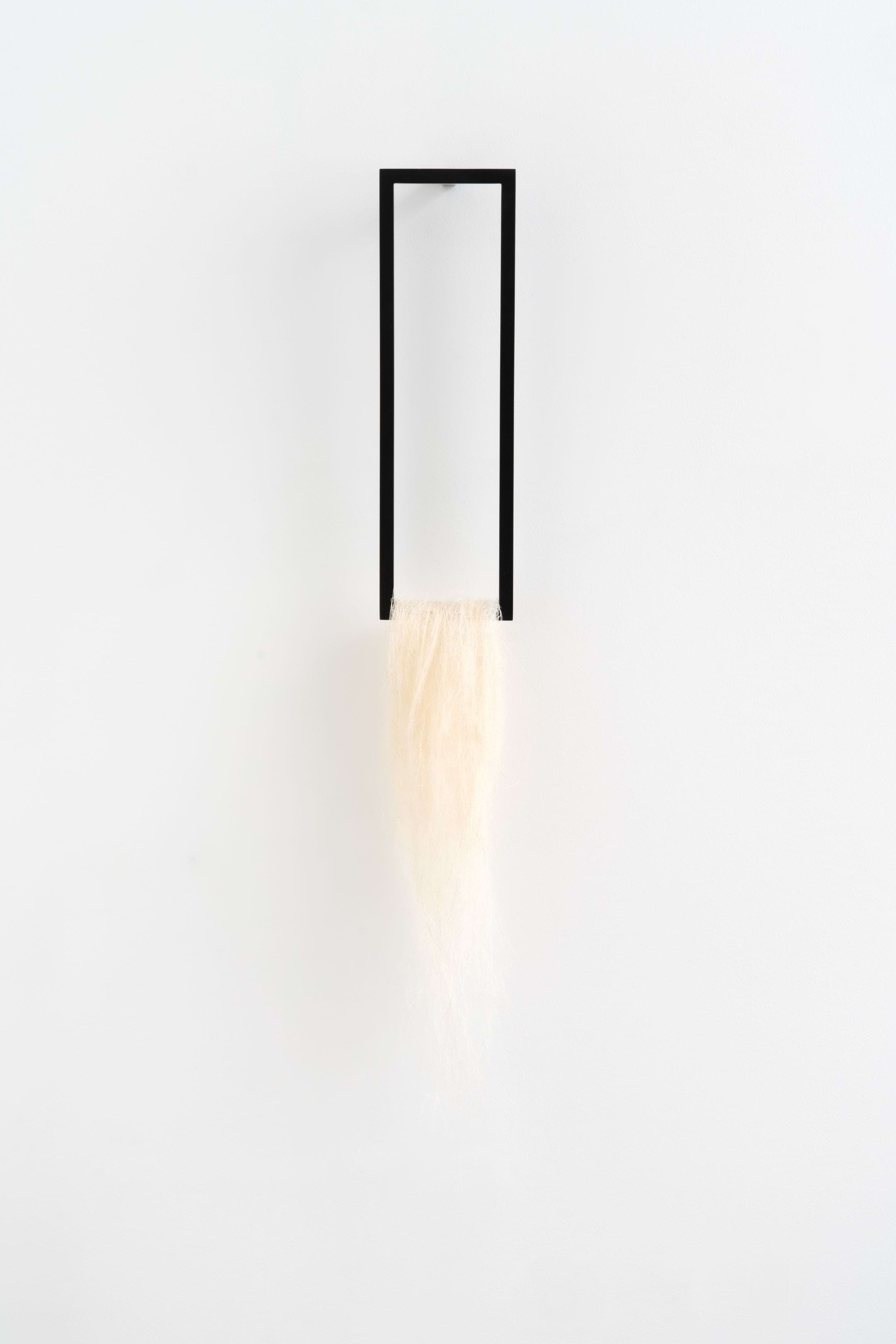
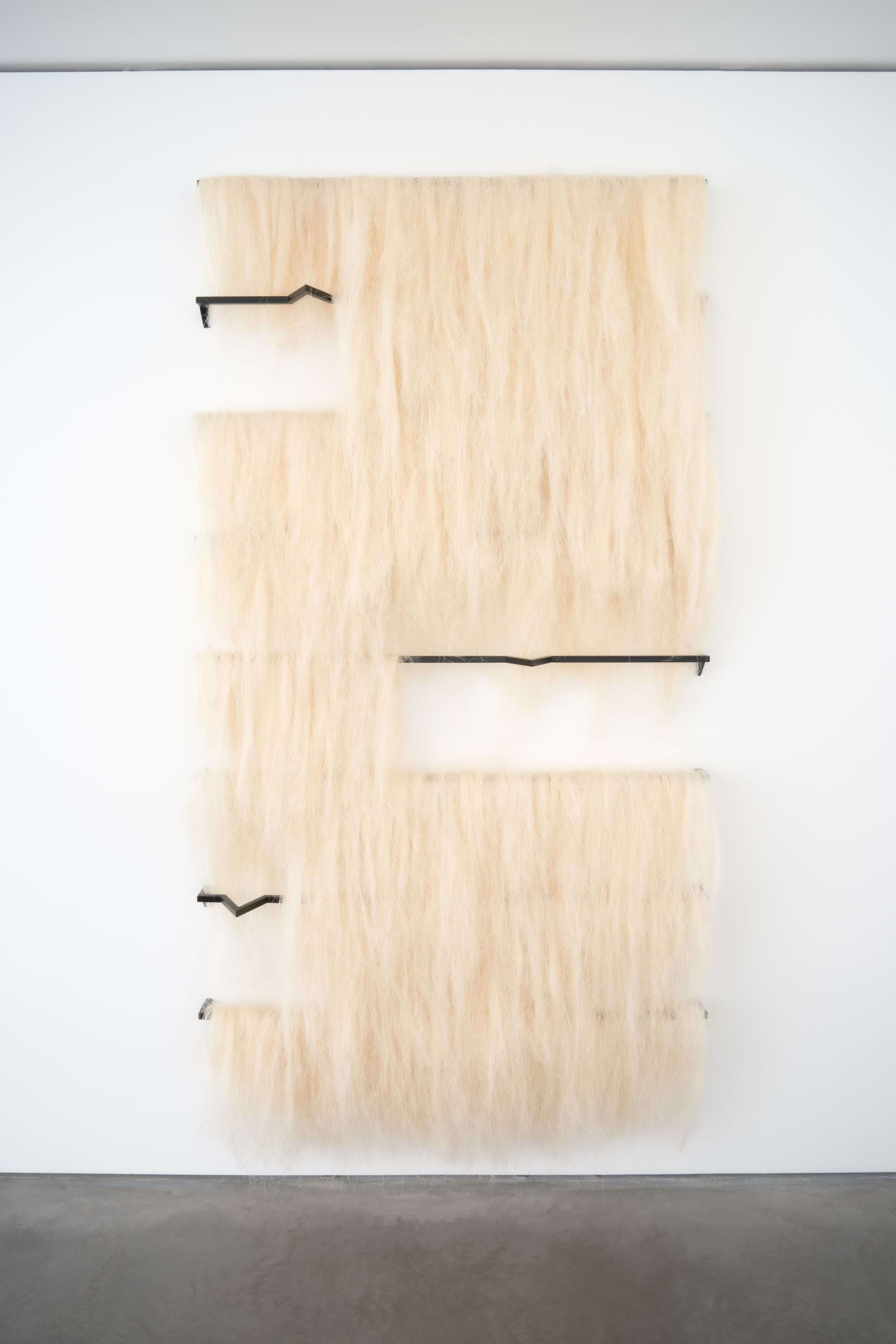
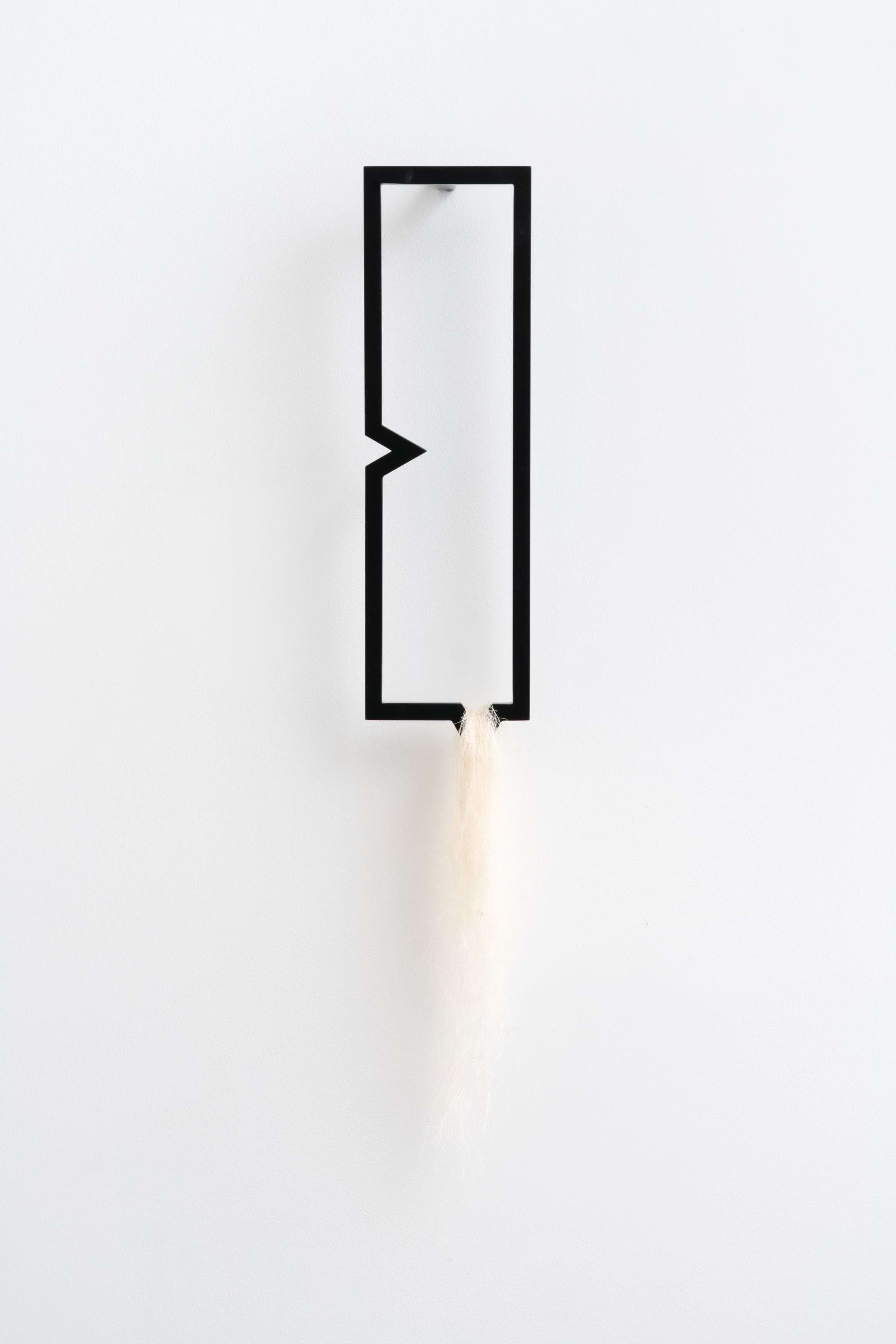
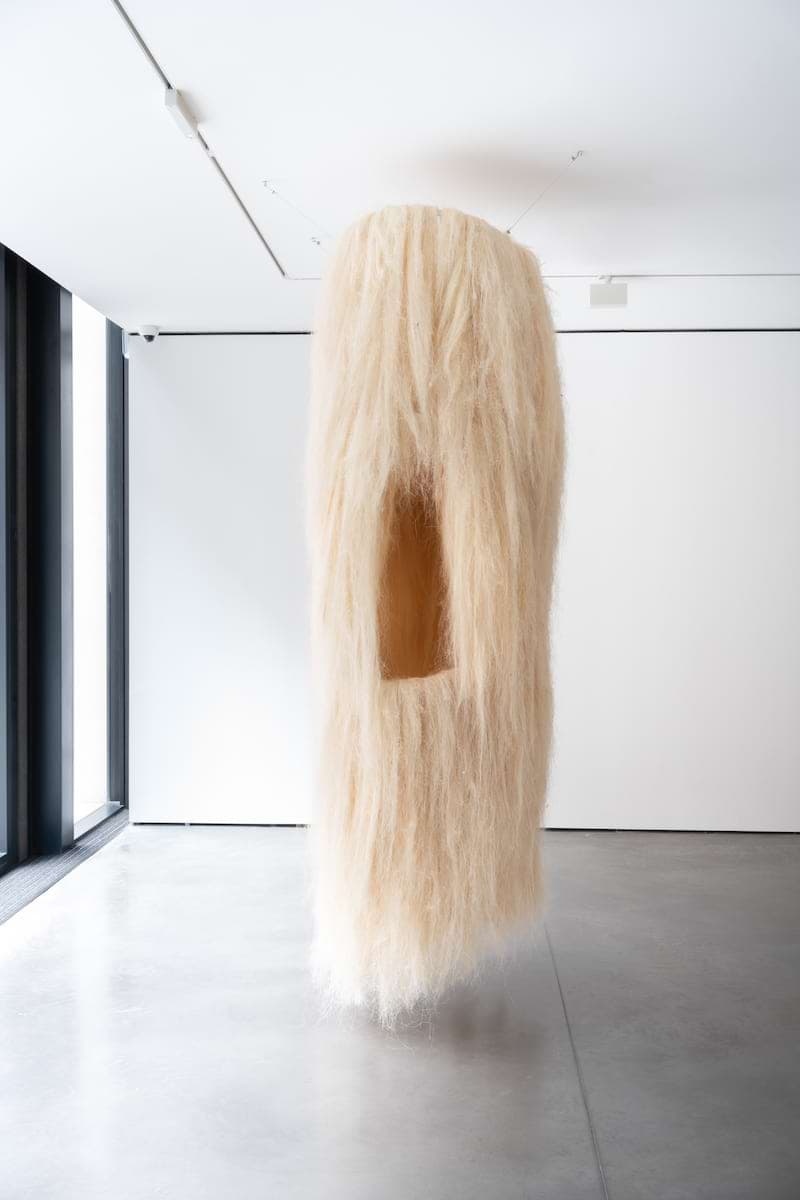
Kiwanga’s interest in the historical and symbolic affect of materials is demonstrated through an arrangement of steelworks covered in sisal fibre. The golden spun fibre, harvested from the botanical plant Agave sisalana, is typically used for rope and twine. Kiwanga first encountered sisal whilst travelling through rural Tanzania where this flowering plant is a primary export commodity. Fascinated by the fibre’s colour (yellow and gold) as well as the rhythmic rows of the crop, Kiwanga came to learn more about the plant in relation to Tanzania’s political, economic and social history.
“The agave cactus was first brought illegally to Tanzania by German plantation owners who began to develop the crop on a large scale,” Kiwanga explains in an interview from her new book published by Kunsthaus Pasquart, elaborating further; “At the time of Tanzanian independence, plantations that had once been privately owned were nationalised, in an attempt to assure Tanzania would be economically self-sufficient. Sisal was meant to play an economic role in the country becoming an independent socialist state. Ujamaa socialism failed, for many different reasons, but when the price of sisal plummeted on the world markets it contributed to this as it adversely affected prospects of financial resilience.”
Working with sound, film, performance, and objects, Kiwanga relies on extensive research to transform information into investigations of historical narratives and their impact on political and social systems.
Kiwanga’s interest in the historical and symbolic affect of materials is demonstrated through an arrangement of steelworks covered in sisal fibre. The golden spun fibre, harvested from the botanical plant Agave sisalana, is typically used for rope and twine. Kiwanga first encountered sisal whilst travelling through rural Tanzania where this flowering plant is a primary export commodity. Fascinated by the fibre’s colour (yellow and gold) as well as the rhythmic rows of the crop, Kiwanga came to learn more about the plant in relation to Tanzania’s political, economic and social history.
“The agave cactus was first brought illegally to Tanzania by German plantation owners who began to develop the crop on a large scale,” Kiwanga explains in an interview from her new book published by Kunsthaus Pasquart, elaborating further; “At the time of Tanzanian independence, plantations that had once been privately owned were nationalised, in an attempt to assure Tanzania would be economically self-sufficient. Sisal was meant to play an economic role in the country becoming an independent socialist state. Ujamaa socialism failed, for many different reasons, but when the price of sisal plummeted on the world markets it contributed to this as it adversely affected prospects of financial resilience.”
Working with sound, film, performance, and objects, Kiwanga relies on extensive research to transform information into investigations of historical narratives and their impact on political and social systems.
Kiwanga’s interest in the historical and symbolic affect of materials is demonstrated through an arrangement of steelworks covered in sisal fibre. The golden spun fibre, harvested from the botanical plant Agave sisalana, is typically used for rope and twine. Kiwanga first encountered sisal whilst travelling through rural Tanzania where this flowering plant is a primary export commodity. Fascinated by the fibre’s colour (yellow and gold) as well as the rhythmic rows of the crop, Kiwanga came to learn more about the plant in relation to Tanzania’s political, economic and social history.
“The agave cactus was first brought illegally to Tanzania by German plantation owners who began to develop the crop on a large scale,” Kiwanga explains in an interview from her new book published by Kunsthaus Pasquart, elaborating further; “At the time of Tanzanian independence, plantations that had once been privately owned were nationalised, in an attempt to assure Tanzania would be economically self-sufficient. Sisal was meant to play an economic role in the country becoming an independent socialist state. Ujamaa socialism failed, for many different reasons, but when the price of sisal plummeted on the world markets it contributed to this as it adversely affected prospects of financial resilience.”
There are many testimonies about how those kidnapped from the African continent and sold as slaves, carried on them during the long and violent crossing of the Atlantic, their heritage and sustenance in the form of seeds and plants. Testimonies describe how people hid grains of rice in their hair, transporting them to other continents—mainly the America—proof of how the transatlantic slave trade has also changed the biodiversity of the locus of colonialism.
The African Rice (Oryza glaberrima Steud) figured here, is a particular type of rice that was once thought of as the lost crop of the enslaved Africans. It was rediscovered in Suriname. Dutch academic Tinde van Andel has been tracing the history and presence of this type of rice, presenting evidence that Oryza glaberrima is still grown by “Saramaccan Maroons” both for food and ritual uses. As she notes, many locals informed her that “their forefathers collected their first “black rice” from a mysterious wild rice swamp and cultivated these seeds afterwards. Unmilled spikelets (grains with their husk still attached) are sold in small quantities for ancestor offerings, and even exported to the Netherlands.”1 More research is conducted currently on the different varieties of rice and other “lost crops” grown by descendants of enslaved Africans some of whom escaped from plantations in the seventeenth and eighteenth centuries and maintained much of their African cultural heritage in the deep forests. Kiwanga commissioned local artisanal Lisanne Ceelen, to re-create ceramic grains of the variety Oryza glaberrima.
The worlds we tell: Nü Gua (2021) evokes the Chinese myth of the great mother goddess who created the earth. The red silk embroidery and coloured concrete allude to the establishment of class which is tied to the separation between the upper classes and the common people, crafted by a superior being. Notions of class difference are captured in the tales but also in the materials themselves, which embody opulence and affluence.
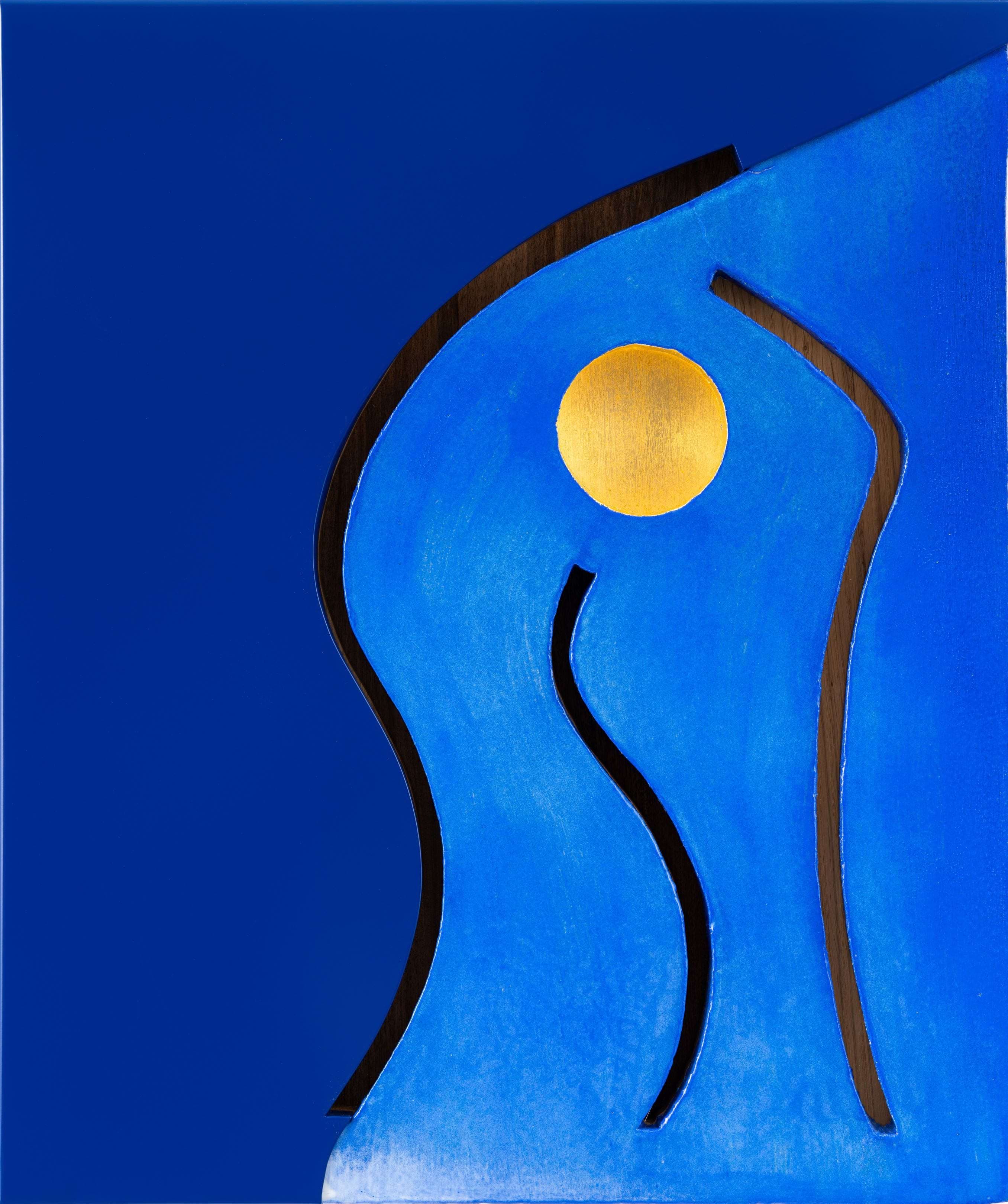
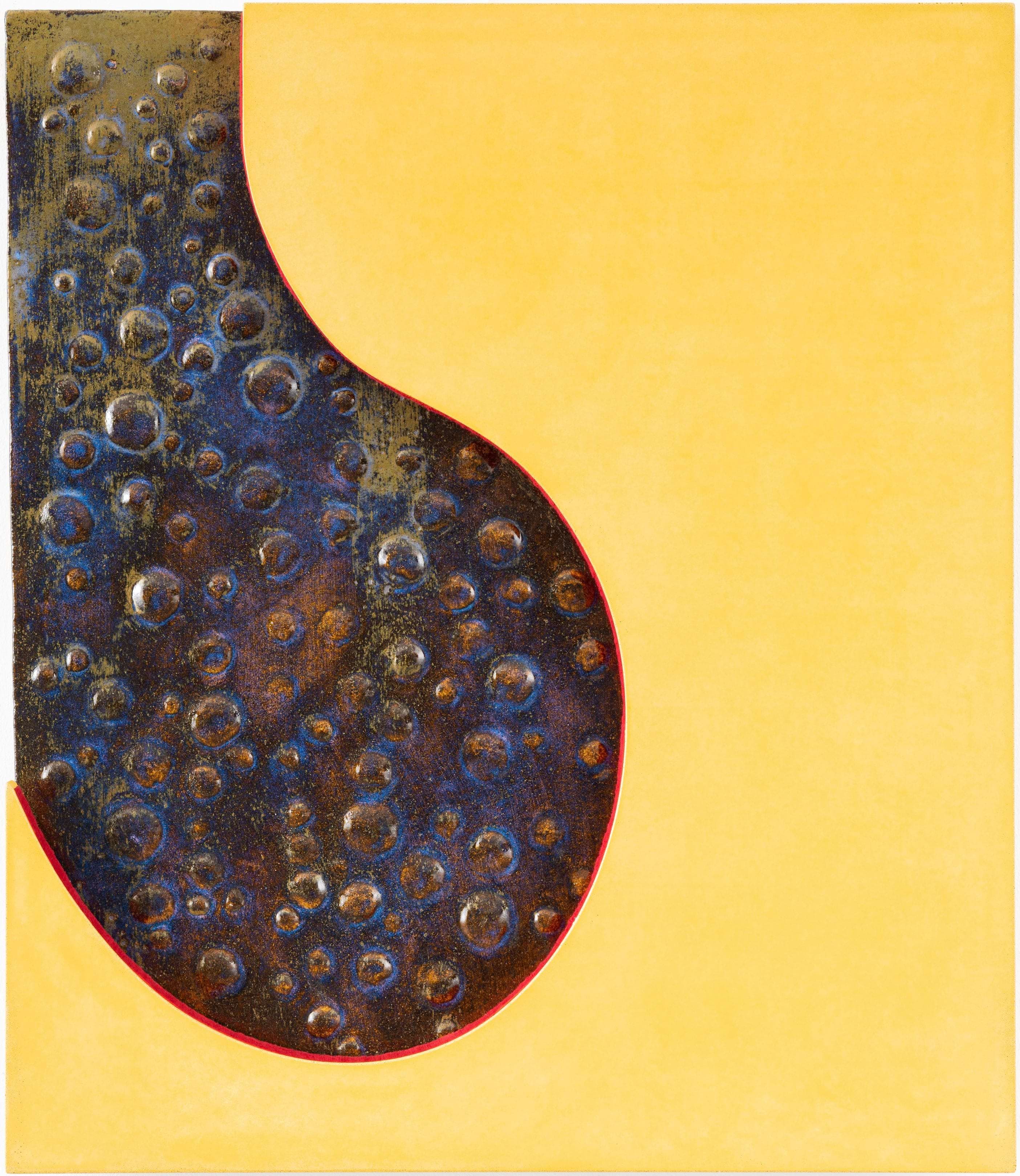
Kiwanga’s mixed-media works and wall-based reliefs explore cosmogonies detailing specific creation myths from Africa, Asia and South America. The series of
works allude to how one creates and understands the world through language and storytelling.The language of world-building and world-making is translated through the material —rendering an aesthetic experience while animating the artist’s desire to create new forms. In examining aesthetics and shifting perspectives in forms, Kiwanga considers how storytelling is used to form social and cultural
structures.
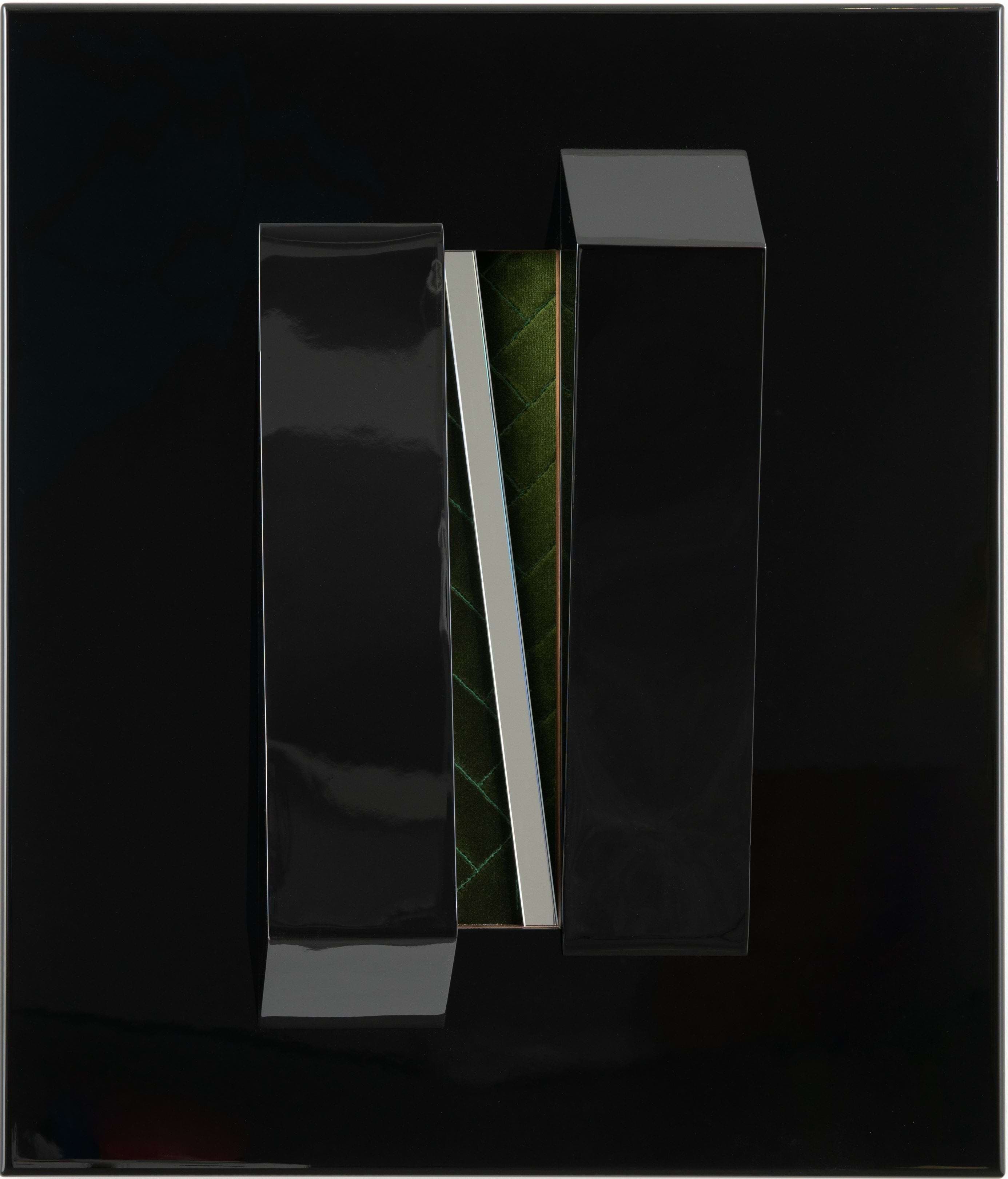
The worlds we tell: Xevioso (2021) alludes to Xevioso, who is the Fon god of thunder. Through the use of mirrors, painted steel, wood and embroidery, the work is a personification of the primordial storm which connects earth and sky and whose fucunding rains bring about vegetation. The work is three dimensional and engages geology through an interrogation of substances of the earth, their histories and their processes.
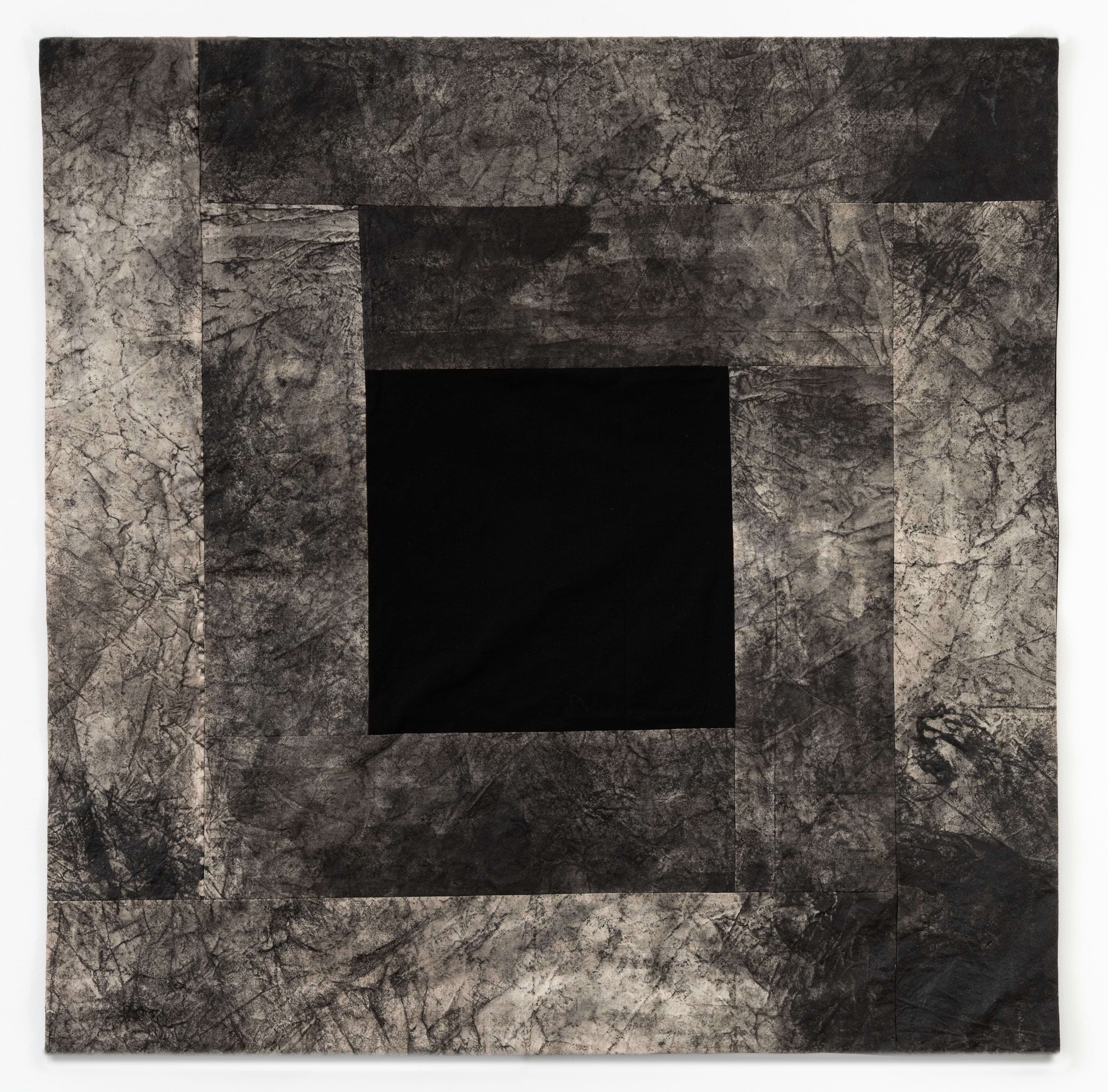
The Log Cabin pattern could give information about a safe house if it had a blue center. Black is often thought to indicate death or danger but many experts say that a black center in the Log Cabin pattern indicated a safe house ahead, while yellow centers meant use caution and red centers meant danger.
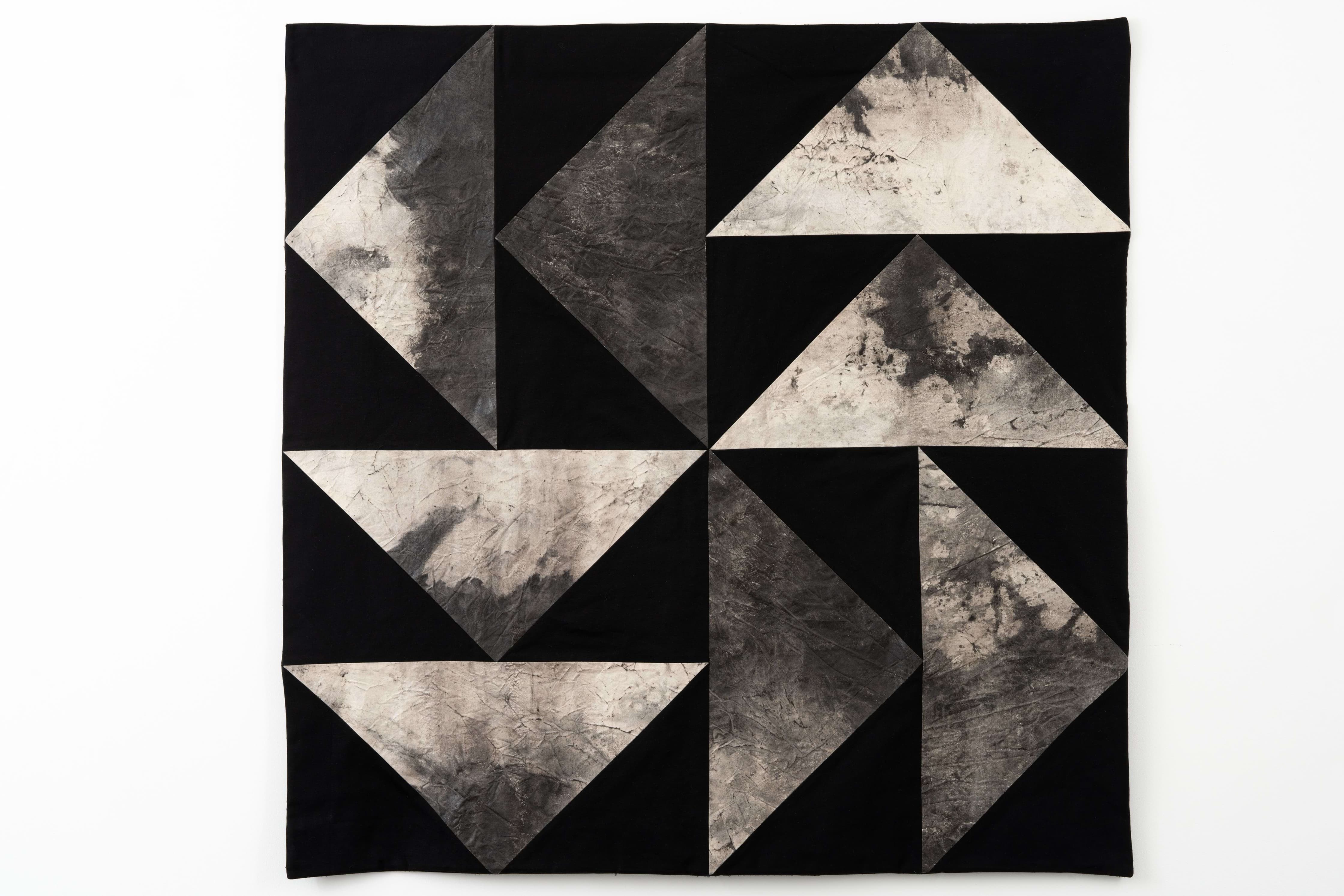
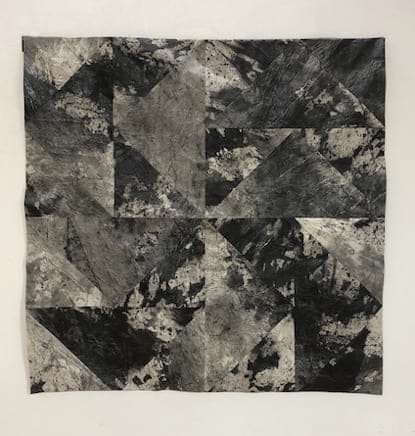
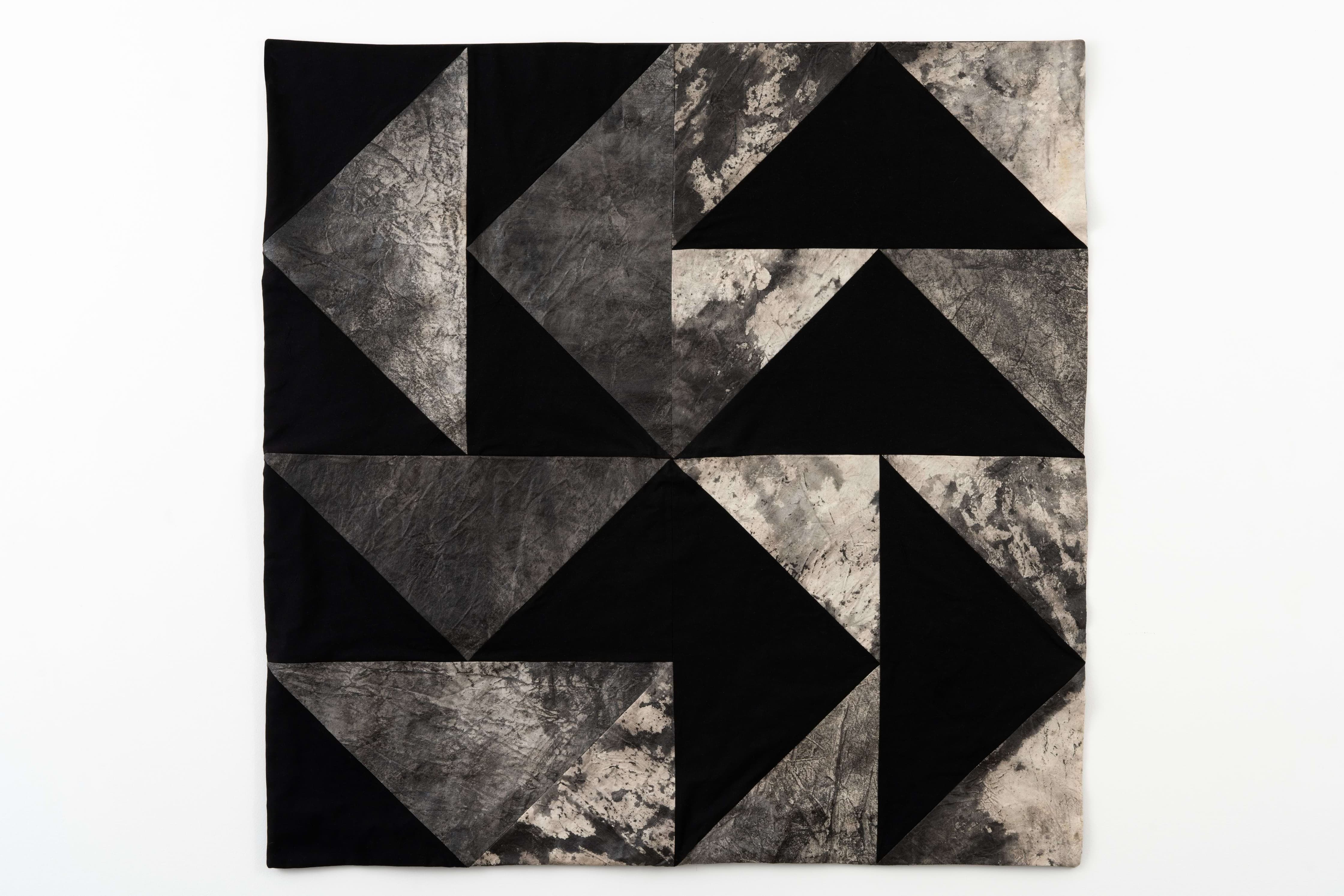
In a sequence of quilt works created out of cotton treated with pigment and saltwater from the Atlantic Ocean, Kiwanga extends the intangible components of her narrative compositions, continuing her investigation into the transatlantic slave trade. For the artist, the sea is an archive and witness of violent pasts.
The cloth work, Triangulation 3 (2021) combines and materializes her analysis of forced movement and liberatory strategies. Kiwanga’s use of symbols on textiles allude to the safe houses along the Underground Railroad, often indicated by a quilt hanging from a clothesline or windowsill as a mode of communication. The geometric shapes function as conceptual coordinates of flight, escape and safety —by reading the motifs sewn into the design, an enslaved person on the run could assess immediate dangers. Various triangles, pointing upward, or to the right or left, indicate the direction towards safety whilst a black square indicates a place of safety and rest.
In a sequence of quilt works created out of cotton treated with pigment and saltwater from the Atlantic Ocean, Kiwanga extends the intangible components of her narrative compositions, continuing her investigation into the transatlantic slave trade. For the artist, the sea is an archive and witness of violent pasts.
The cloth work, Triangulation 3 (2021) combines and materializes her analysis of forced movement and liberatory strategies. Kiwanga’s use of symbols on textiles allude to the safe houses along the Underground Railroad, often indicated by a quilt hanging from a clothesline or windowsill as a mode of communication. The geometric shapes function as conceptual coordinates of flight, escape and safety —by reading the motifs sewn into the design, an enslaved person on the run could assess immediate dangers. Various triangles, pointing upward, or to the right or left, indicate the direction towards safety whilst a black square indicates a place of safety and rest.
In a sequence of quilt works created out of cotton treated with pigment and saltwater from the Atlantic Ocean, Kiwanga extends the intangible components of her narrative compositions, continuing her investigation into the transatlantic slave trade. For the artist, the sea is an archive and witness of violent pasts.
The cloth work, Triangulation 3 (2021) combines and materializes her analysis of forced movement and liberatory strategies. Kiwanga’s use of symbols on textiles allude to the safe houses along the Underground Railroad, often indicated by a quilt hanging from a clothesline or windowsill as a mode of communication. The geometric shapes function as conceptual coordinates of flight, escape and safety —by reading the motifs sewn into the design, an enslaved person on the run could assess immediate dangers. Various triangles, pointing upward, or to the right or left, indicate the direction towards safety whilst a black square indicates a place of safety and rest.