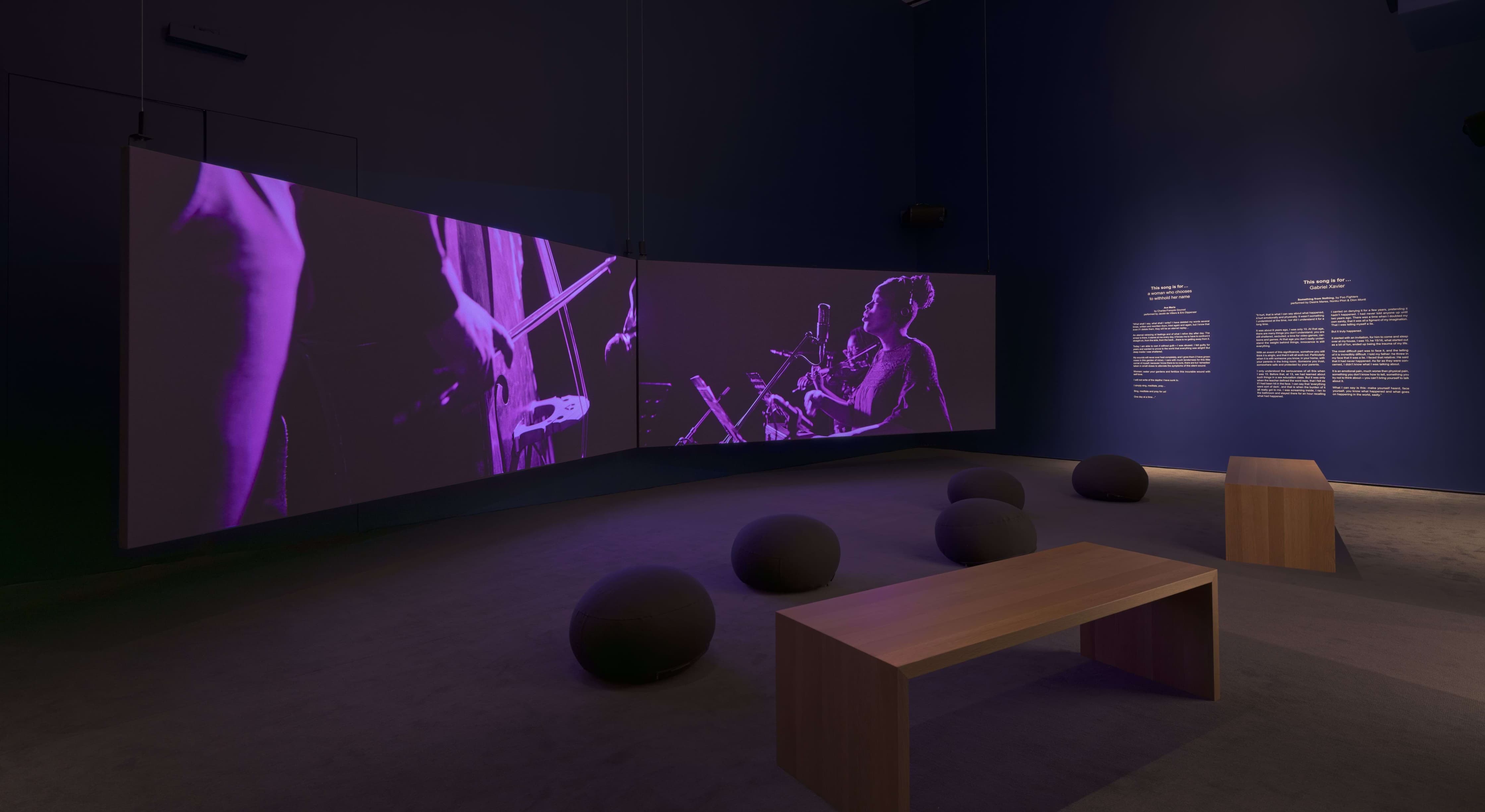
In 'This song is for...' Gabrielle Goliath returns to and re-performs the popular convention of the dedication song, in collaboration with a group of women and gender-queer led musical ensembles.
Playing sequentially within the immersive, sonic space of the installation is a unique collection of dedication songs, each chosen by a survivor of rape and performed as a newly produced cover-version. These are songs of personal significance to the survivors – songs that transport them back to a particular time and place, evoking a sensory world of memory and feeling.
A sonic disruption is introduced at a point within each song; a recurring musical rupture recalling the ‘broken record’ effect of a scratched vinyl LP. Presented in this performed disruption is an opportunity for listeners to affectively inhabit a contested space of traumatic recall – one in which the de-subjectifying violence of rape and its psychic afterlives become painfully entangled with personal and political claims to life, dignity, hope, faith, even joy.
This work is in the The Taguchi Art; Kunsthaus Zürich; and Mudam Museum of Modern Art collections.
On August 25, 2019, Uyinene Mrwetyana, a 19-year old student at the University of Cape Town, was raped, tortured and bludgeoned to death by Luyanda Botha, who worked at her local post office. The following day Botha dumped her remains in an open field, doused them with petrol and set them alight.
Uyinene’s murder sparked public outcry: vigils were held, people wore black, thousands gathered in protest outside the South African Parliament in Cape Town, and nationwide. In response, the government acknowledged gender-based violence and femicide as a national crisis, assigning over a billion South African Rand to emergency interventions and initiating a ‘National Strategic Plan’ for GBV. The puncture, exception and profound national reckoning of this crisis moment held for many the promise of an historic turning point.
The days and then months that followed, however, gave way once more to the steady, incremental and terrifying reality of this crisis as the norm, as an everyday of permissible violence. Since Uyinene, over four hundred and fifty women, children, trans and gender non-conforming individuals have been murdered in South Africa. This is the violence of rape culture, rooted in the deep structure and social wounding of white, colonial, patriarchal power, and daily reconstituted through the misogynistic, homophobic and Afrophobic behaviours of toxic masculinity. It is a violence of ambivalence, a disavowal of the human, through which raced, gendered and sexualized bodies remain the rapeable, killable, disposable matter of ungrievable life.
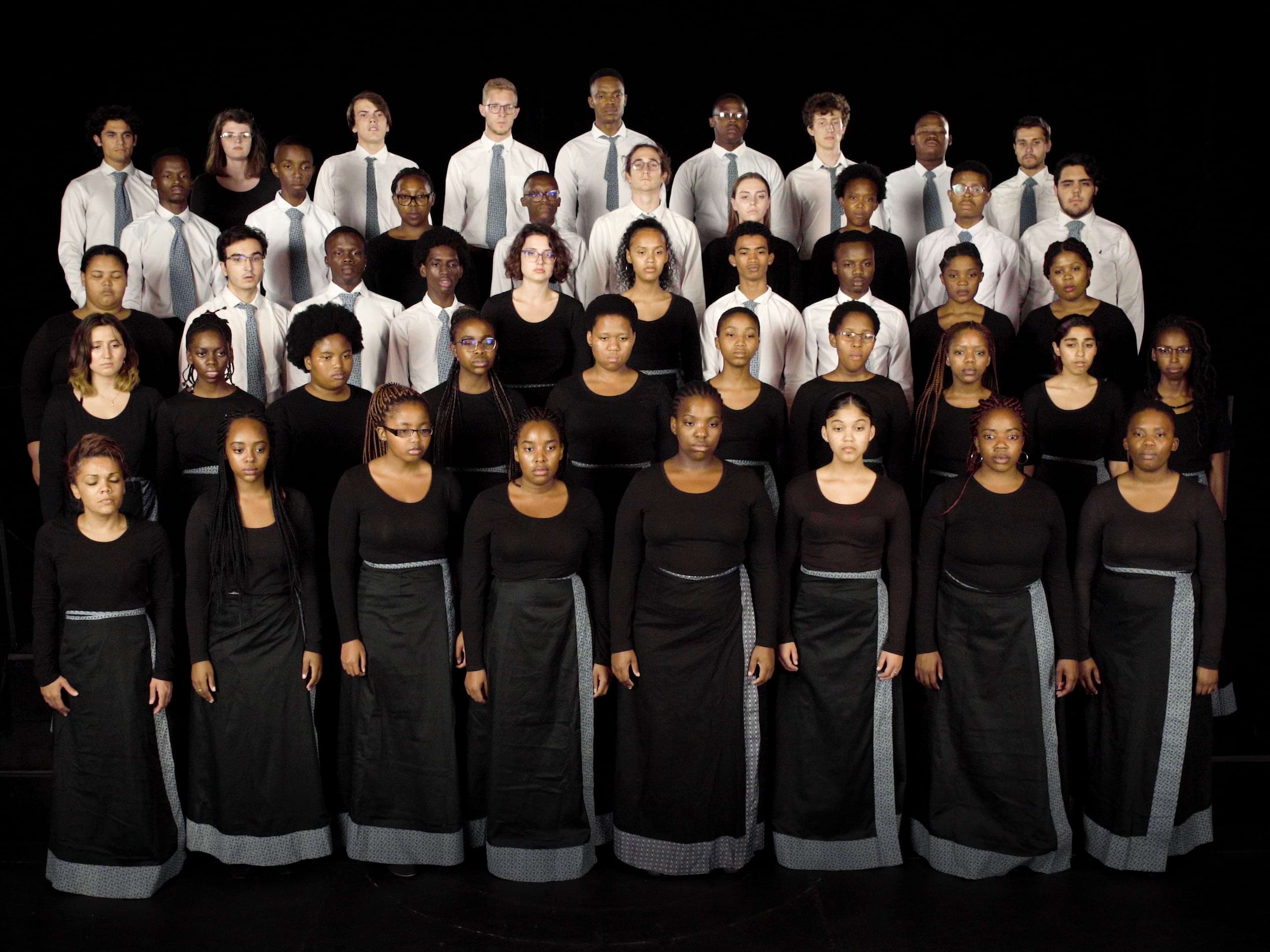
In Chorus, members of the University of Cape Town choir sound a lament for Uyinene Mrwetyana – not as song, but the internally generated resonance of a hum collectively sustained as a mutual offering of breath. In the utter loss marked by this labour, a certain recuperative gesture is nevertheless achieved, in the communal recognition of black feminine life. The performance sits, however, in uneasy relation to the stark absence of an empty rostrum – an absence marked by the listed names of those whose lost lives similarly call for the long, collective, and as we must hope, transformative work of mourning.
Chorus is presented with the blessing of the Uyinene Mrwetyana Foundation.