"William Kentridge is perhaps most widely known for his series of ten animated films drawn over a period of 22 years and set in his home city of Johannesburg. Originally conceived as a distraction, something to fill the gaps between exhibitions, the films have magnificently exceeded their brief, establishing instead one of the great characters in contemporary fictions: Soho Eckstein - Highveld mining magnate and Kentridge's alter ego.
The timeline of the films covers South Africa's transition from apartheid to democracy. The specific events and crises comprising the country's political transformation form the backdrop to the story unfolding across the screen. But the films are not about political events. Instead, the saga traces a different and parallel arc - Soho's grand awakening from capitalist blockhead and cuckold to sober penitent, coming to terms with his own frailties and the first signs of mortality - and it is this human quality that gives the films thei power and enduring appeal."
Matthew Kentridge, from The Soho Chronicles: 10 Films by William Kentridge
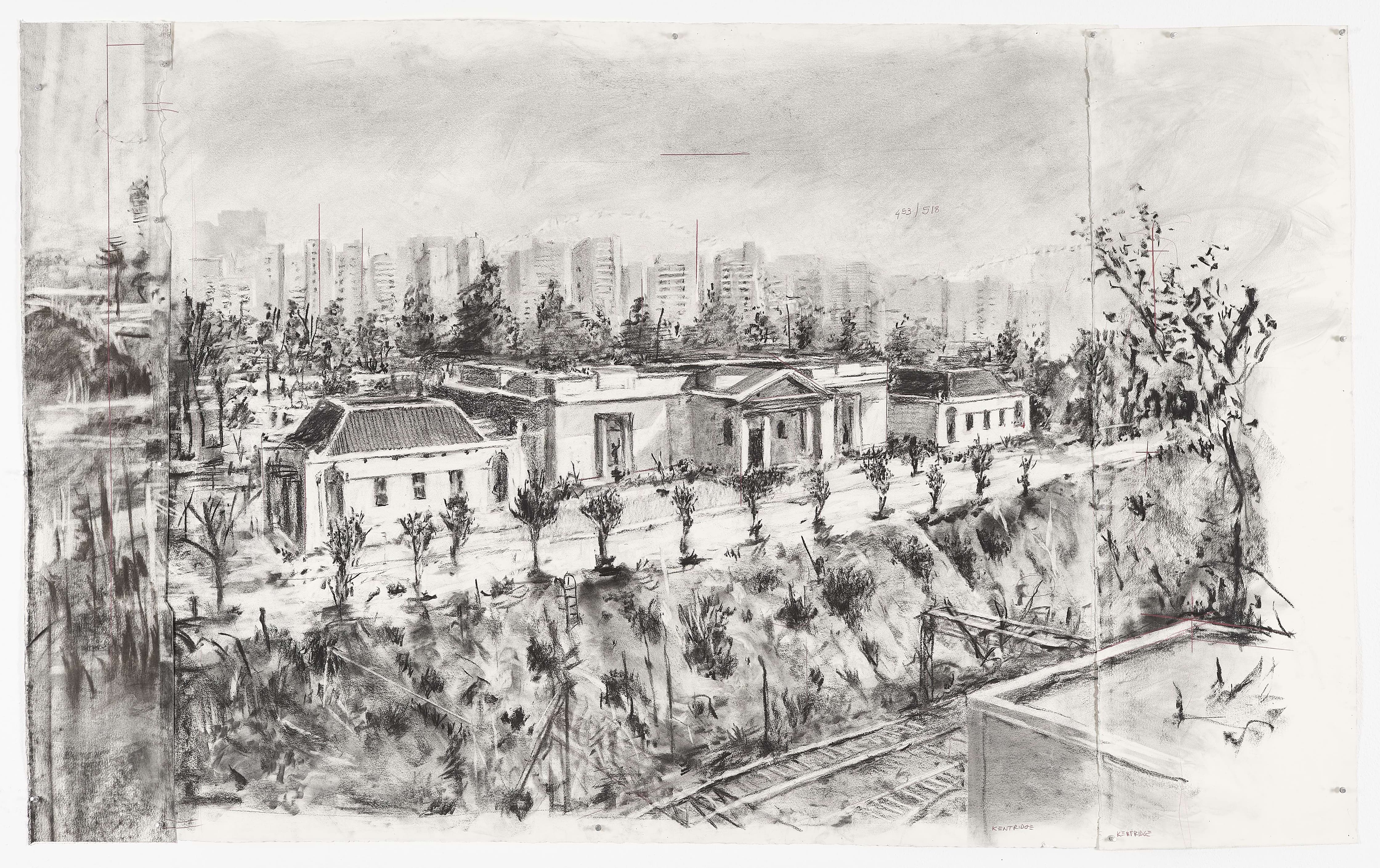
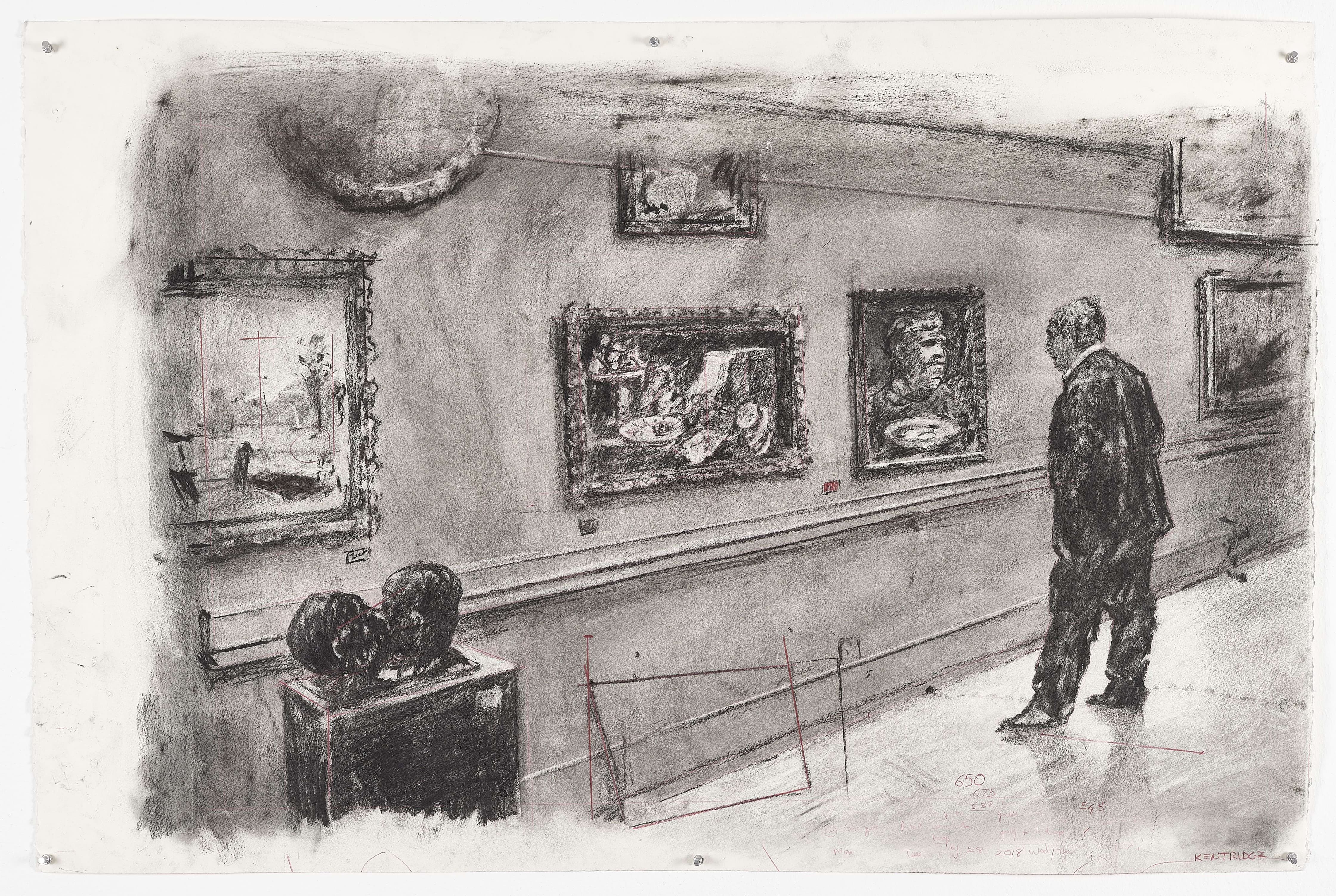
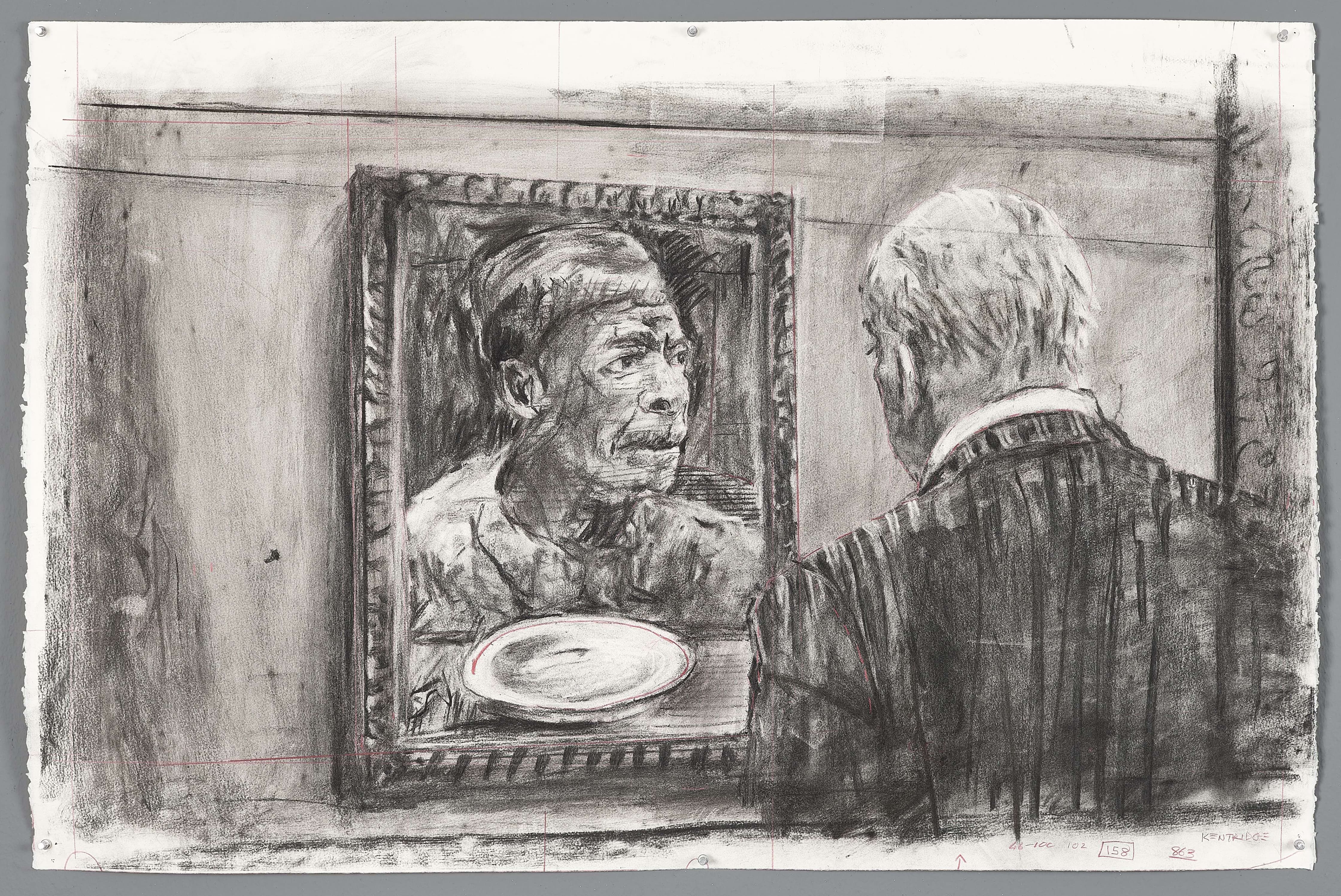
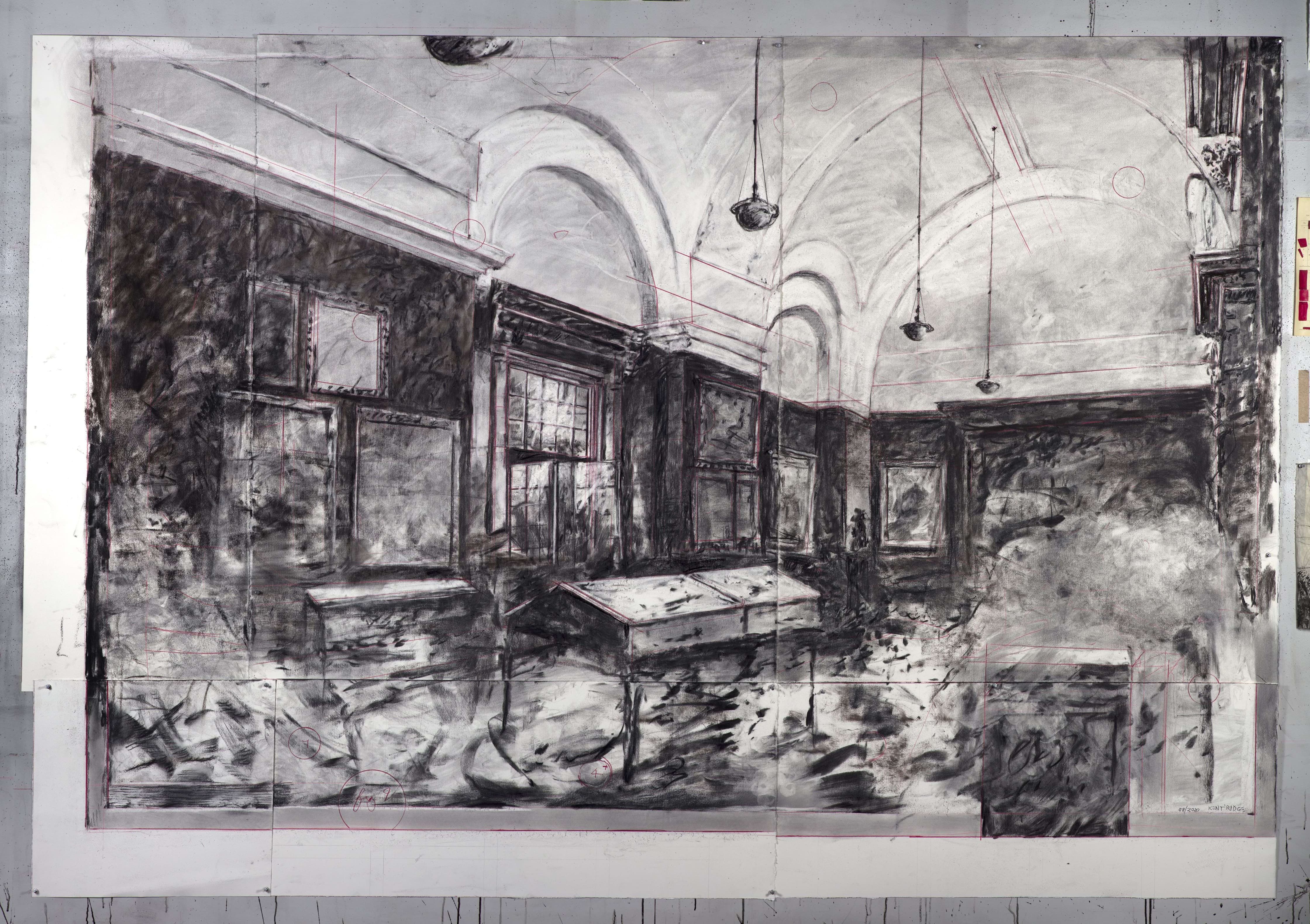
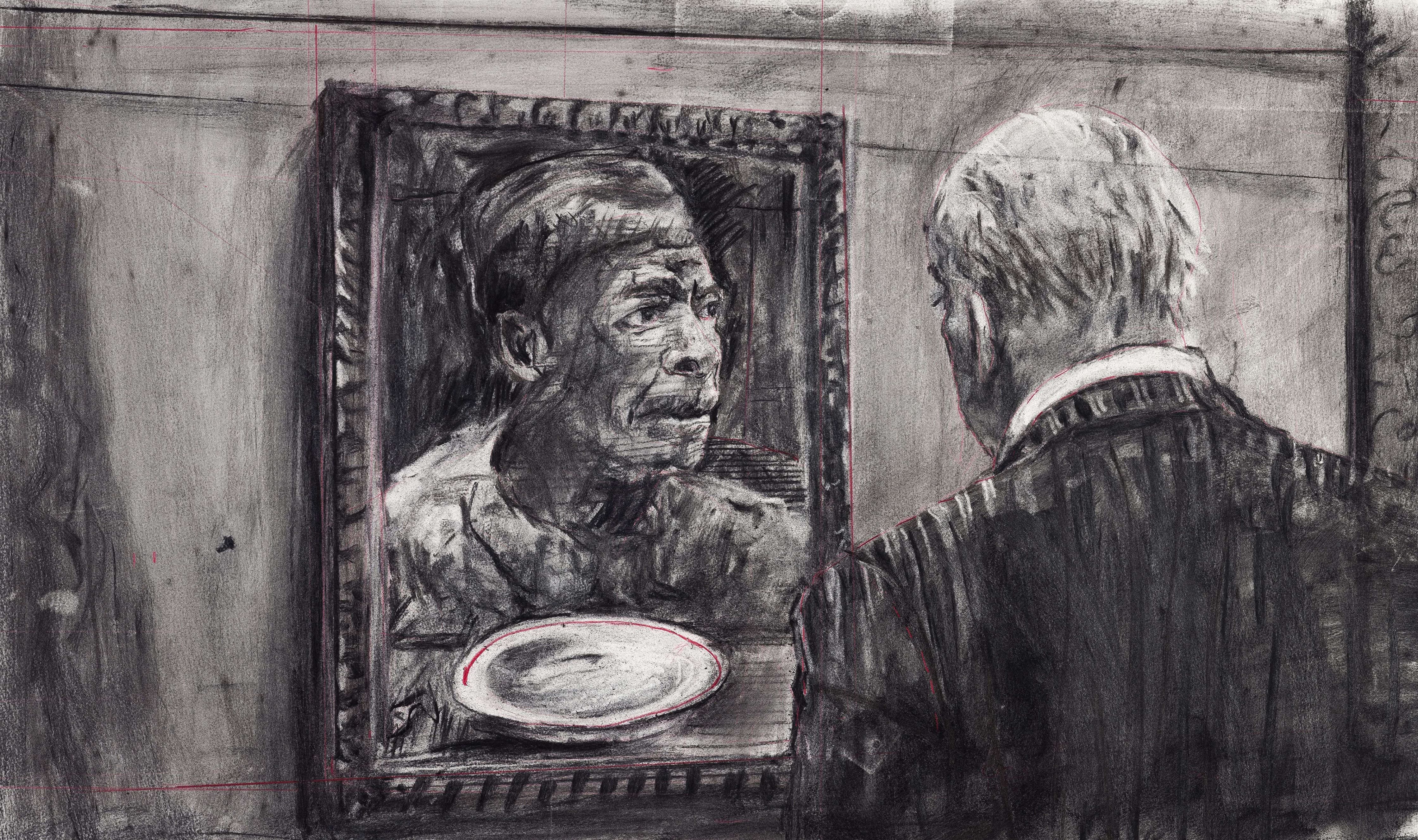
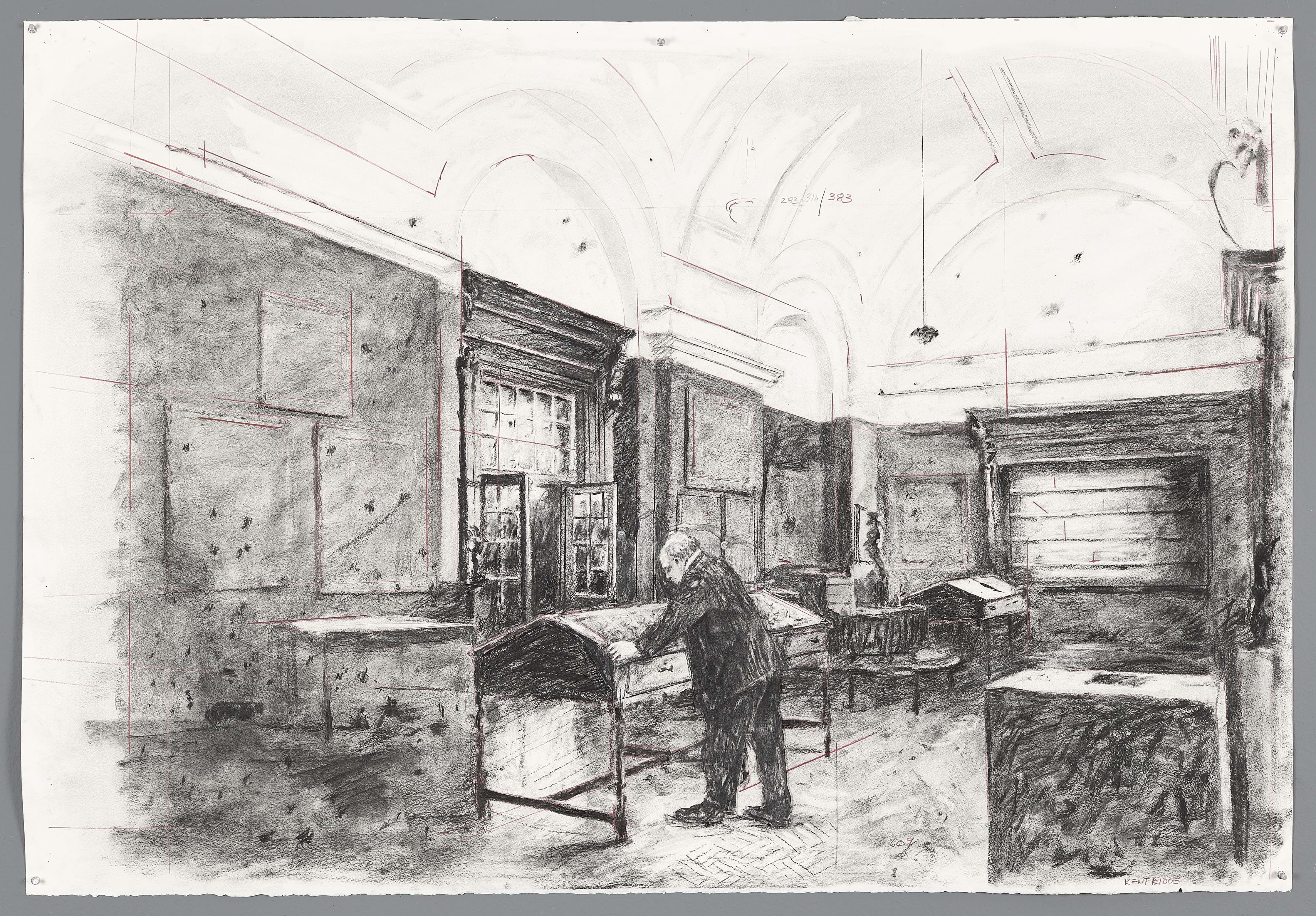
City Deep is the much anticipated 11th film in the Soho Eckstein series, which continues the narrative where we left off with Other Faces in 2011. City Deep is set chiefly in the highveld landscape and the Johannesburg Art Gallery - the gallery of Kentridge's childhood. We find a deeply contemplative Soho wandering the halls and exhibition spaces, staring dolefully at paintings and into vitrines, before the dramatic destruction of the gallery by flooding - the imagined demise of the actual institution in a state of woeful dereliction.
Video
City Deep is the anticipated 11th film in Kentridge’s Drawings for Projection series, a collection of animated films drawn over 30 years,featuring the protagonist Soho Eckstein. South Africa’s political transition from the violent years of apartheid to democracy sets the scene for a saga of loss, love, anger, compassion, guilt and forgiveness. The films revolve around the power-hungry mining magnate Soho Eckstein, his wife Mrs. Eckstein and her lover, the solitary artist Felix Teitlebaum. As the story unfolds, Soho’s empire crumbles as he comes to terms with his own frailties and the first signs of mortality.
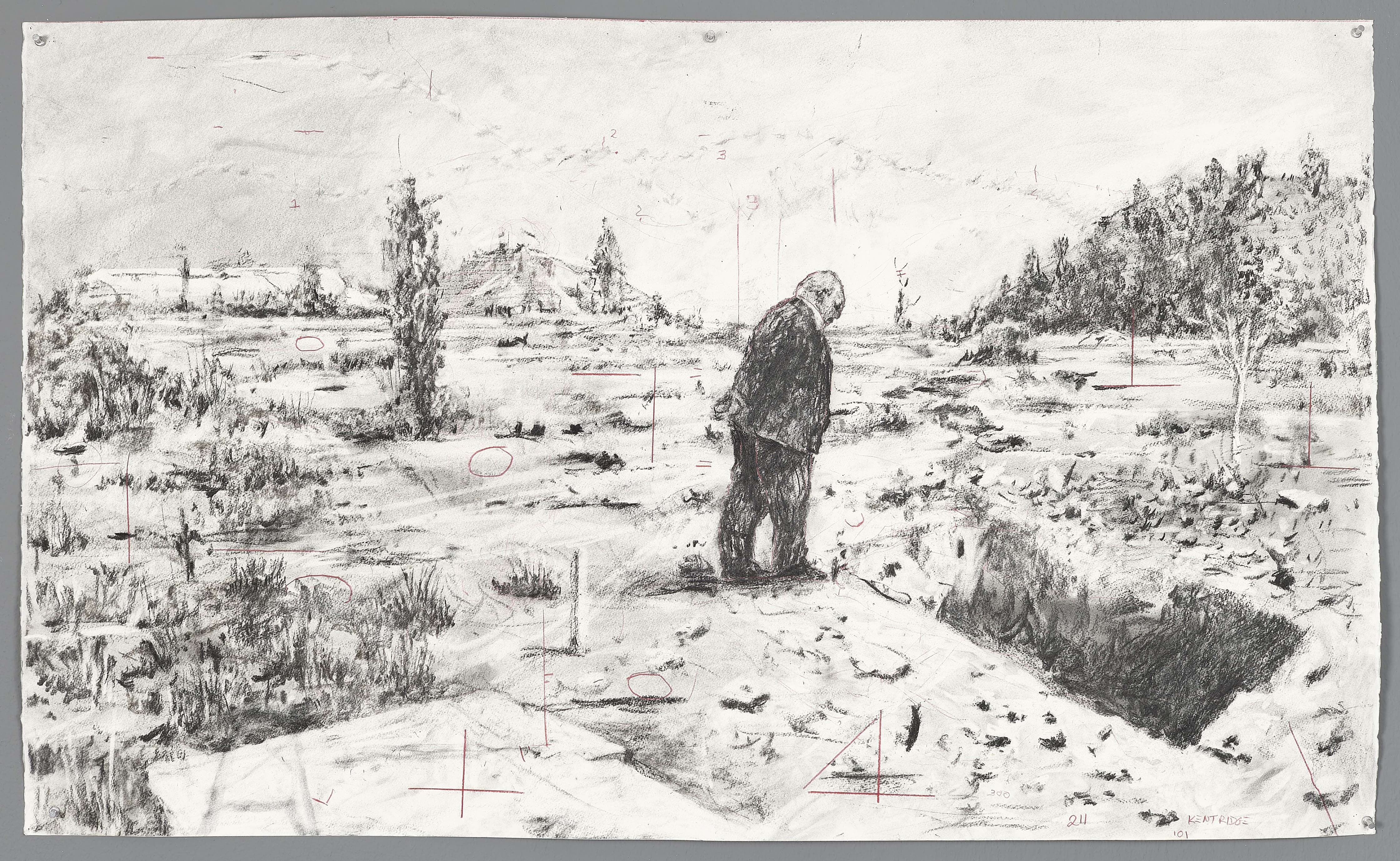
Like previous films in the series, City Deep is grounded within Kentridge’s home city of Johannesburg and can be viewed as a counterpoint to the 1990 film, Mine, which depicts images of the deep level mining industry. City Deep_extends this depiction to the informal, surface-level “zama zama” miners of current day Johannesburg. Translated from Zulu as ‘try your luck’ or ‘take a chance’, “zama zama” is the name given to the miners who illegally work decommissioned mines on the edges of the formal mining economy. Manual labour replaces large machines, creating open scars in the Highveld landscape.
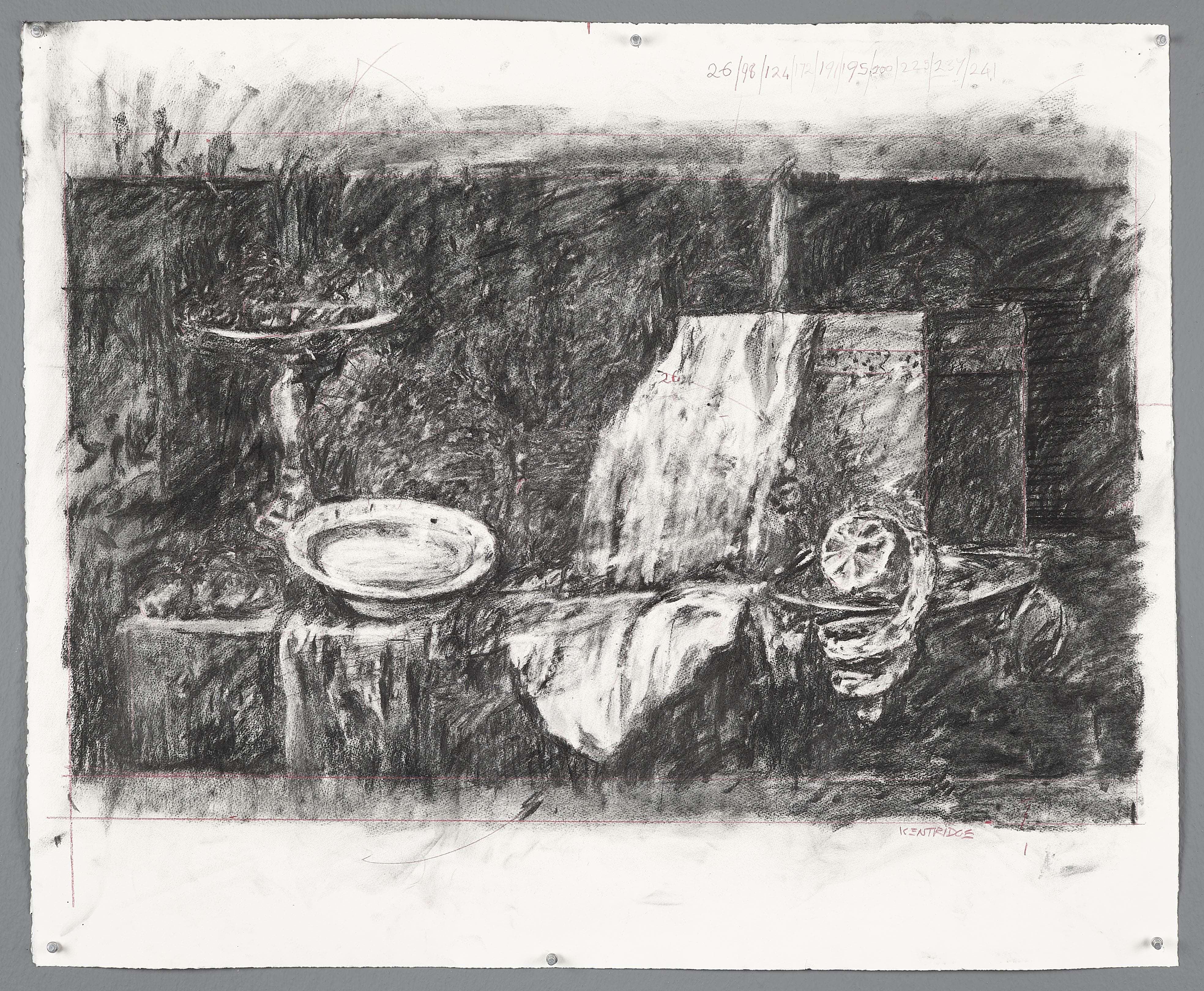
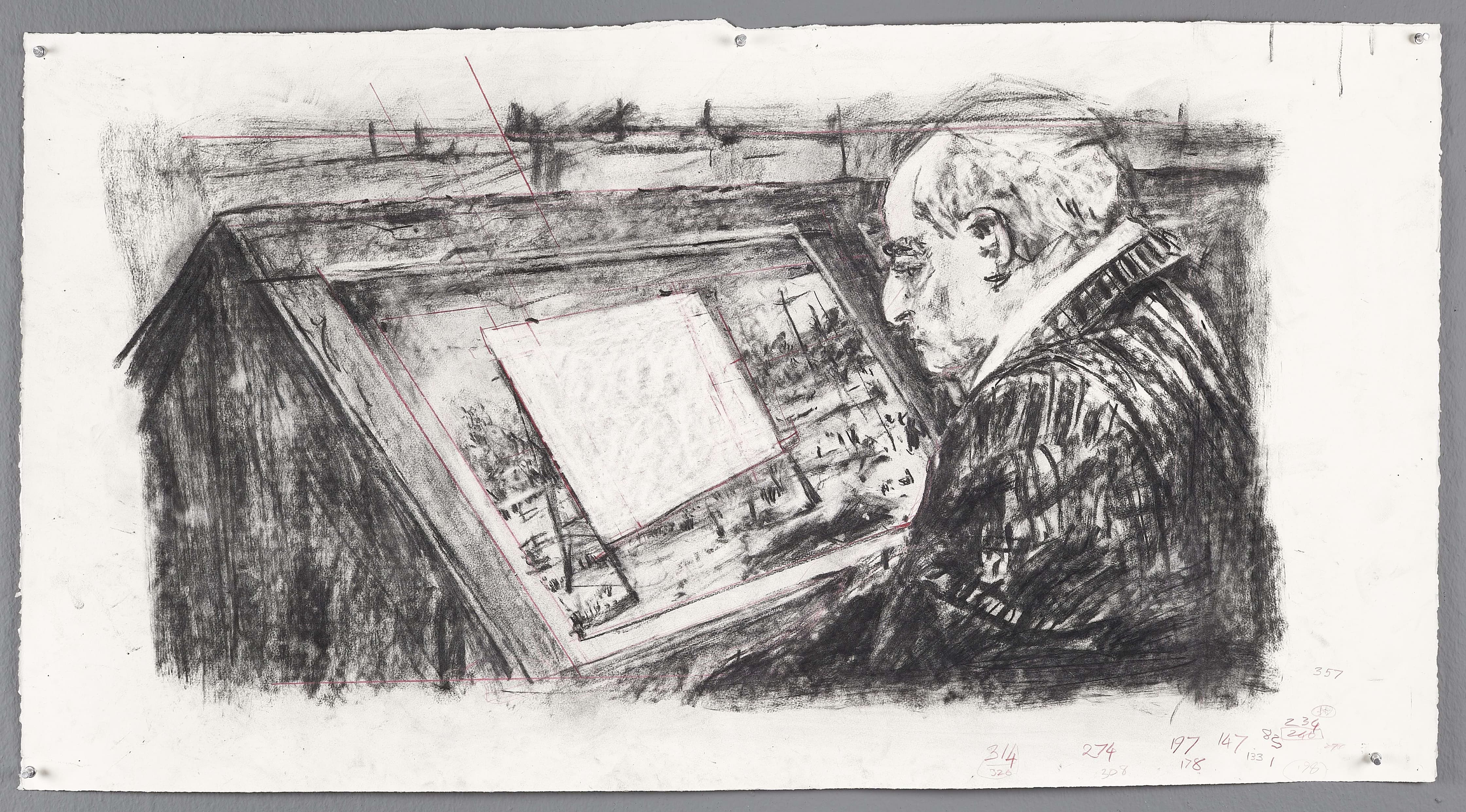
In City Deep, the “zama zama” miners and the landscape merge into artworks hanging in the Johannesburg Art Gallery, itself built during the heyday of gold mining in Johannesburg. Wandering the exhibition spaces is a deeply contemplative Soho gazing at the artworks and into vitrines. Towards the end of the film the gallery collapses in on itself, an imagined demise of an institution in a state of increasing dereliction.
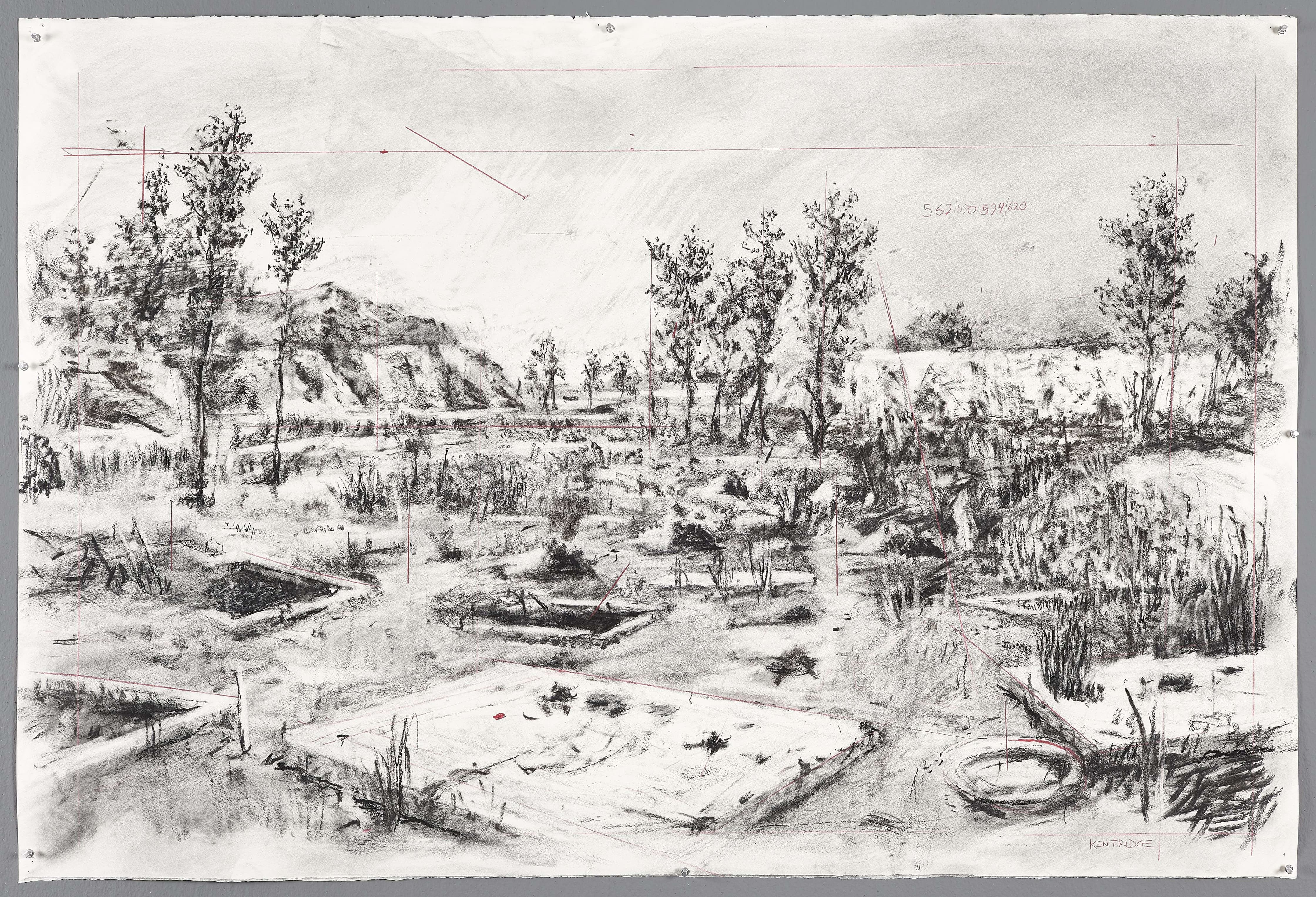
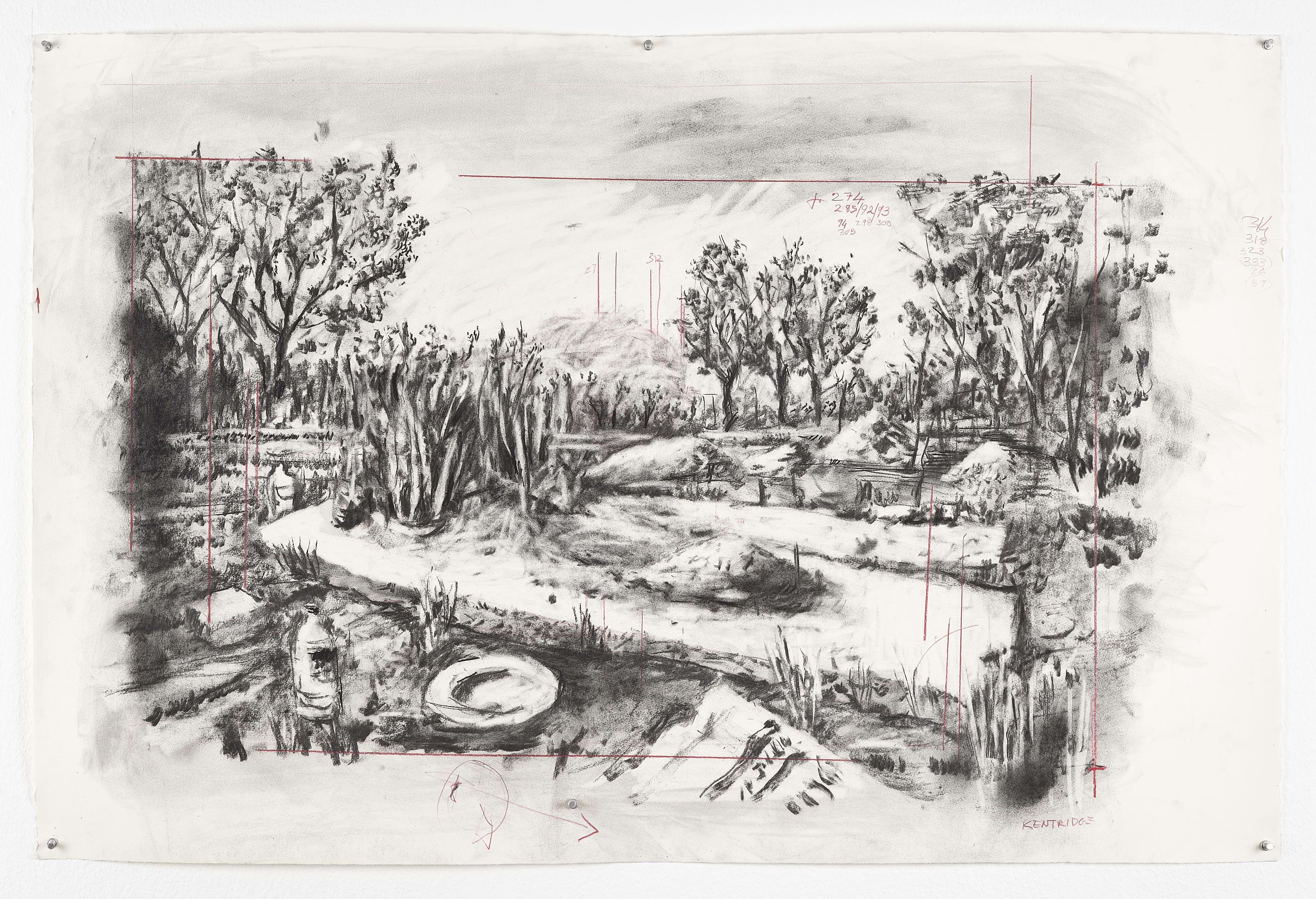
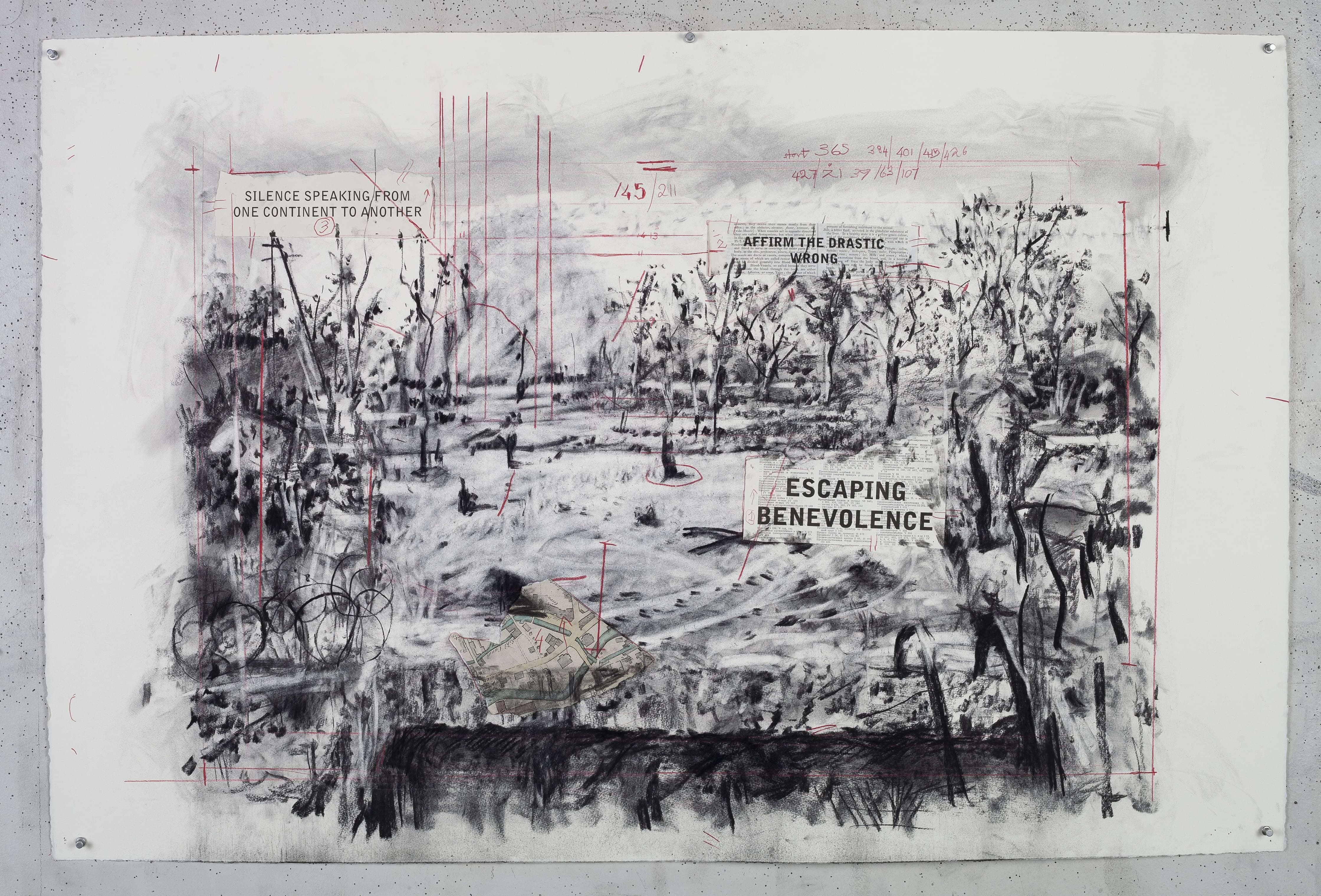
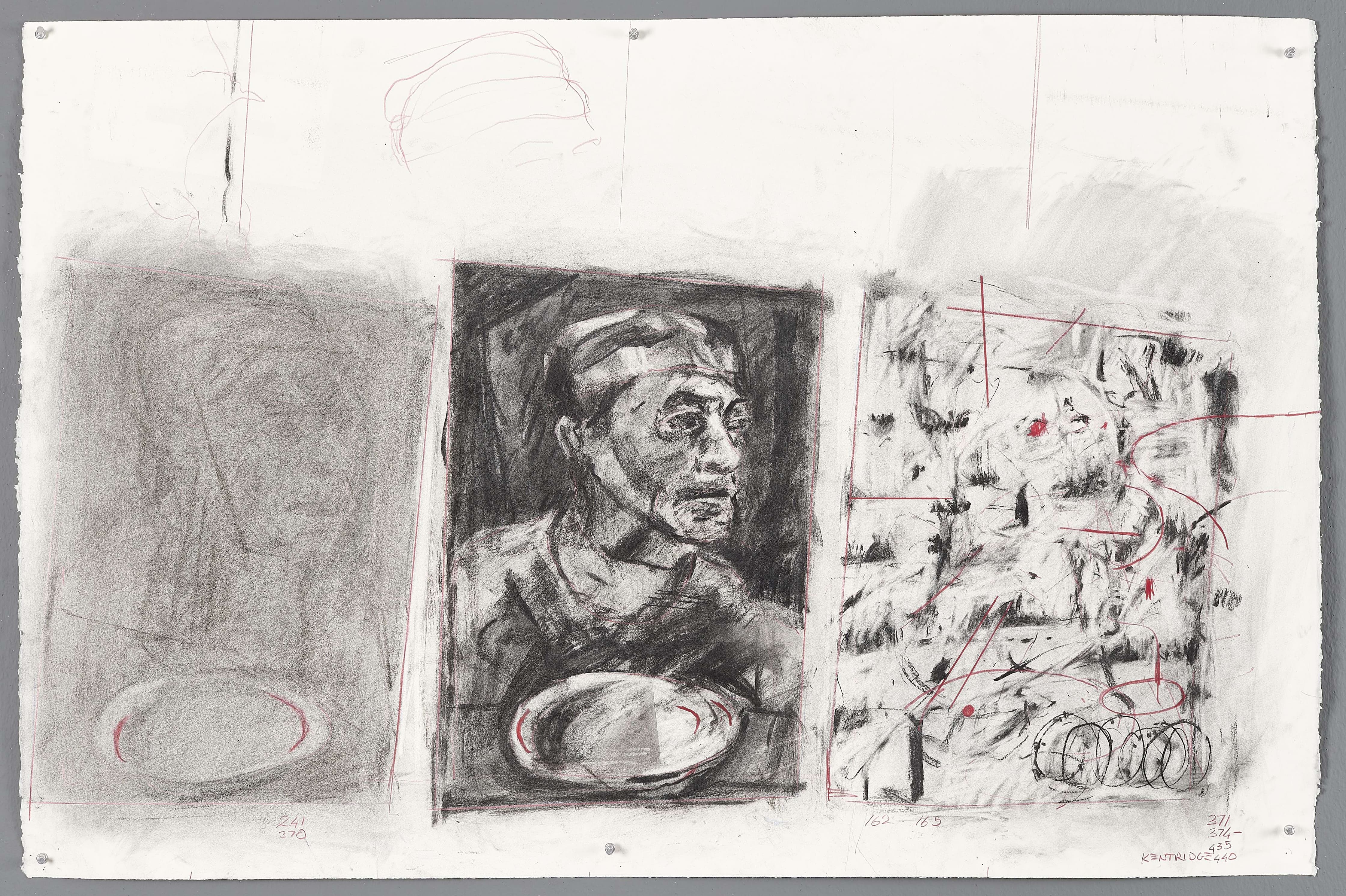
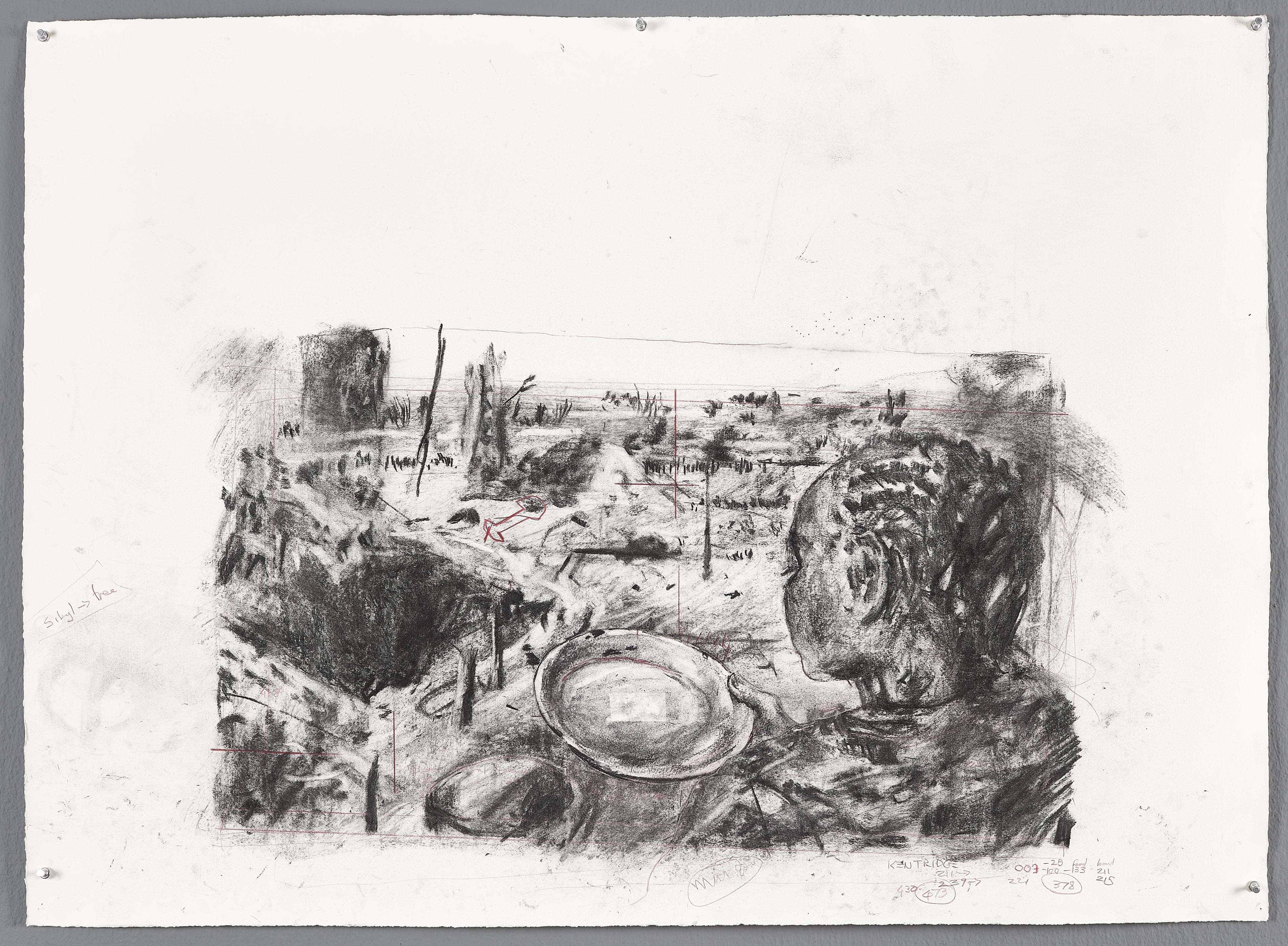
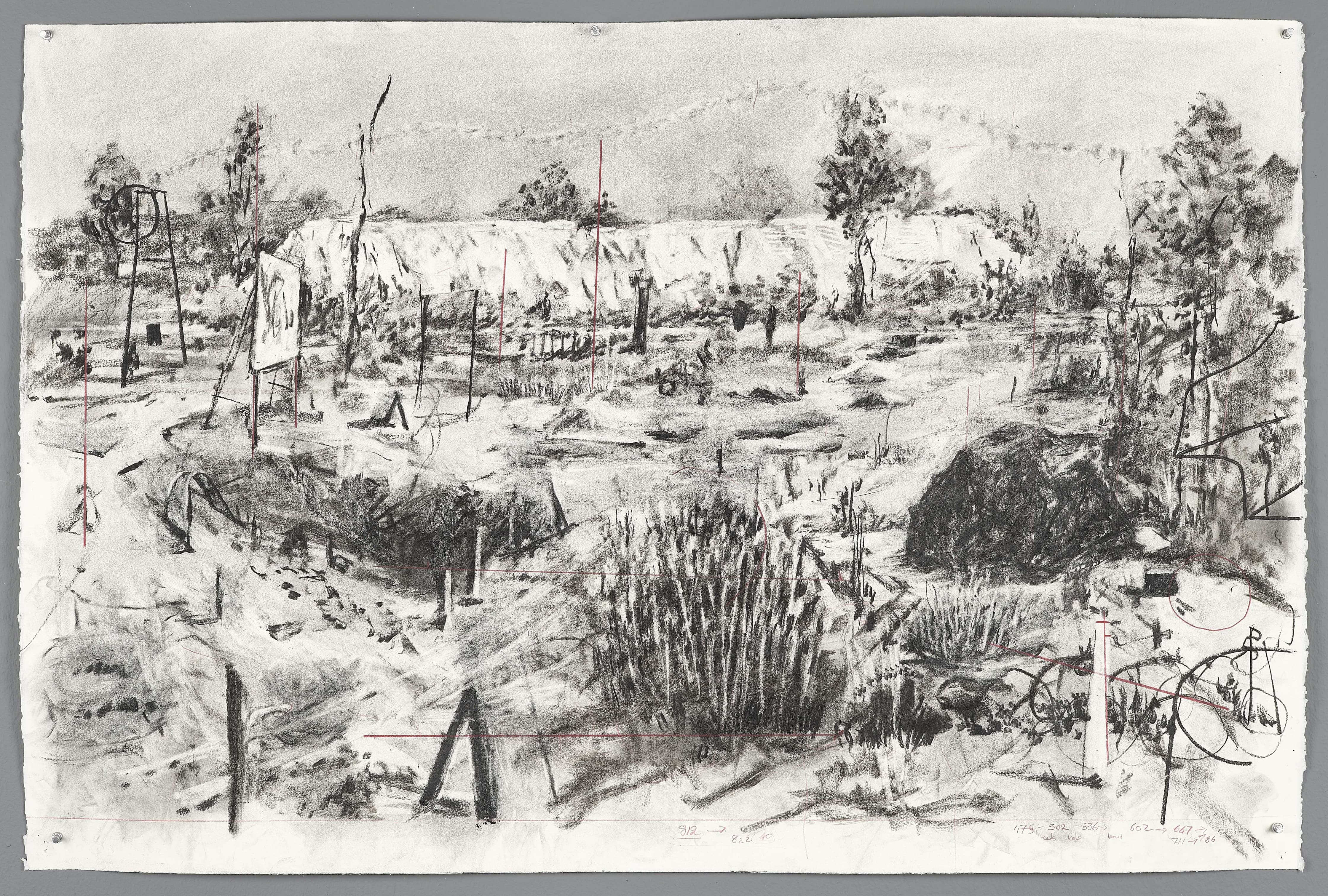
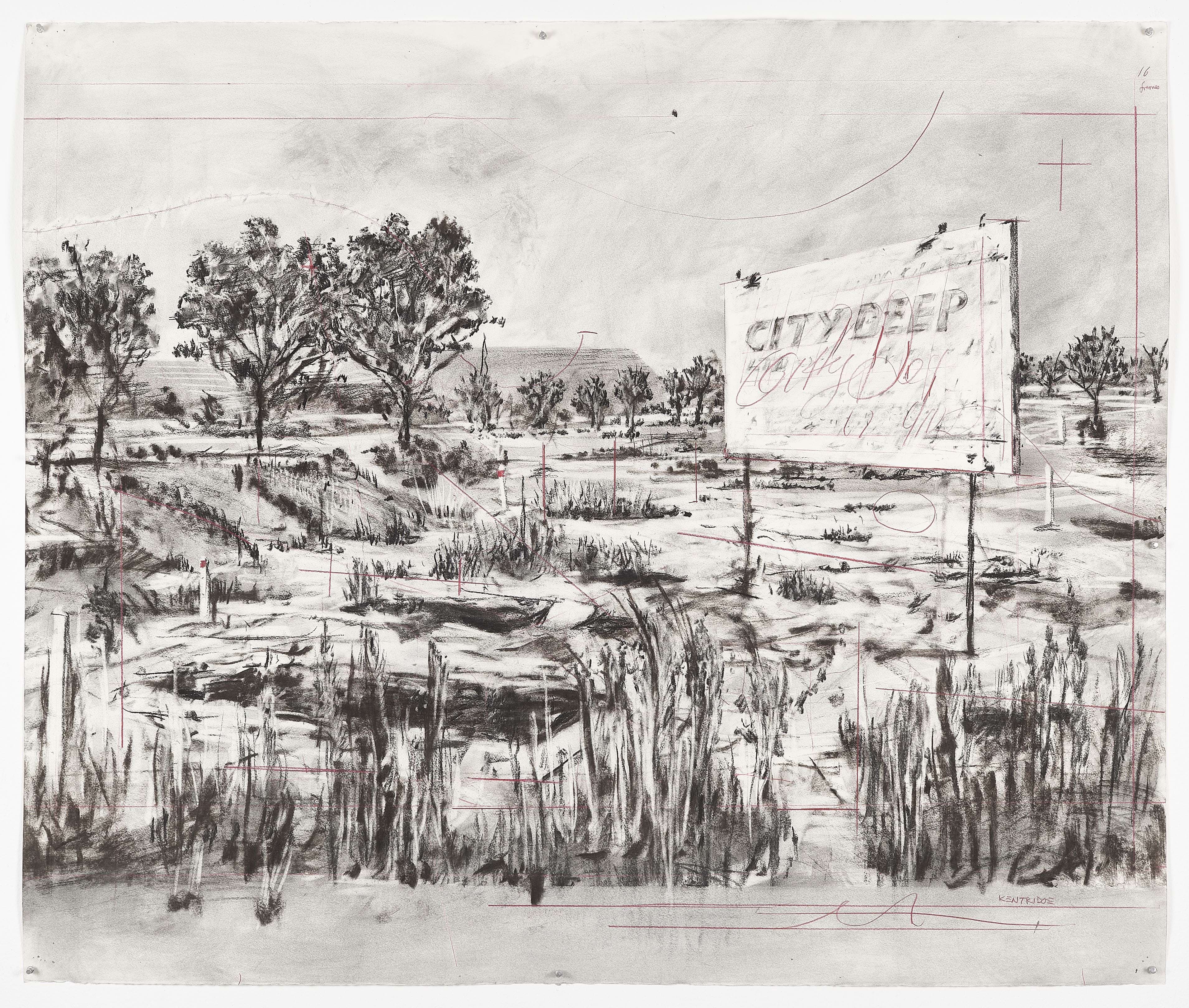
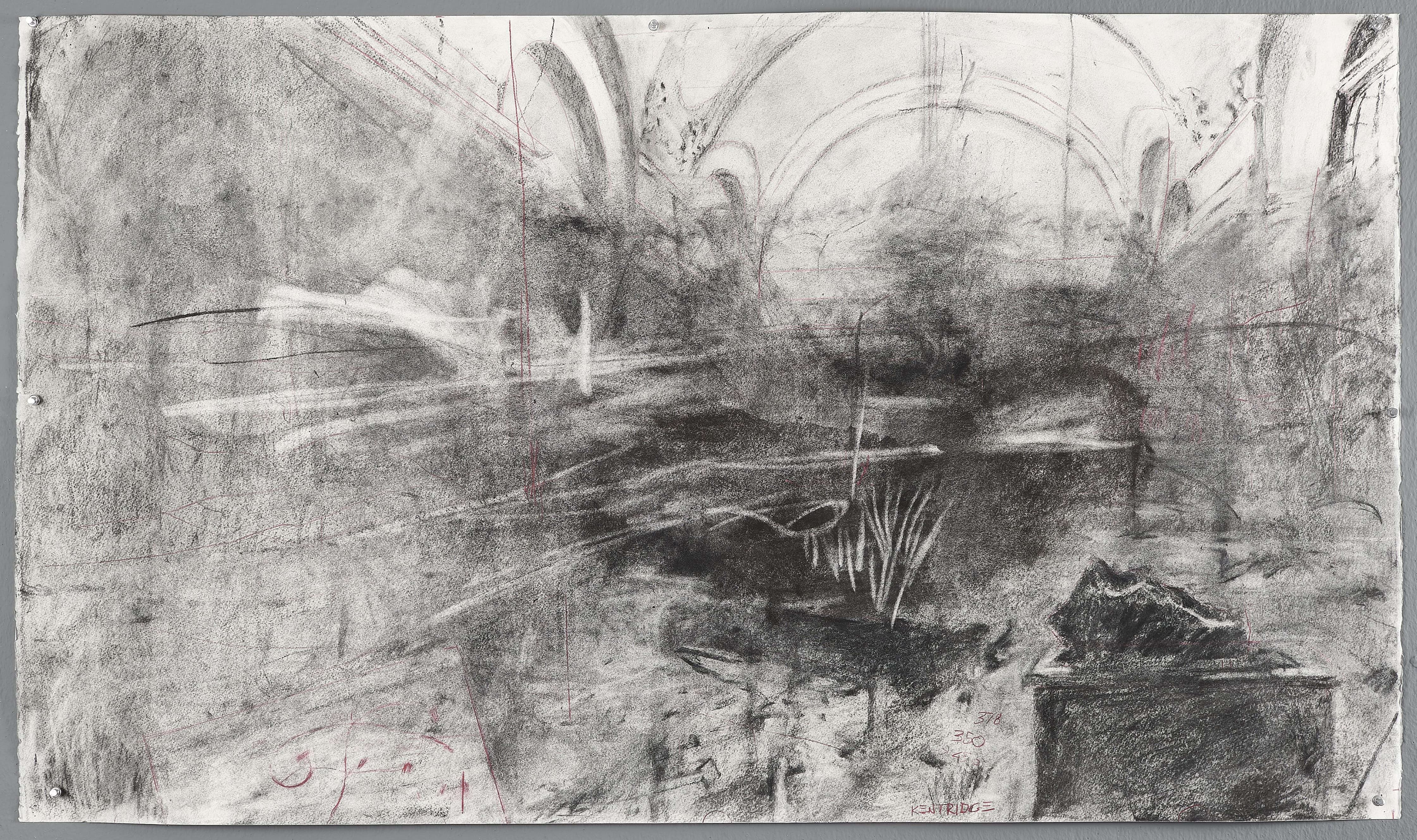
Drawing for City Deep (Zama Zama Pits) is a charcoal and red pencil drawing made as part of William Kentridge’s film City Deep (2020), his eleventh from the Soho Chronicles series. Continuing on themes found throughout the body of work, but particularly in Kentridge’s 1991 film Mine, this work explores the mining history of Johannesburg and its impact on the city. The landscape depicted in the drawing is of ‘Zama Zama pits’ - abandoned and ownerless mines - worked illegally by ‘Zama Zamas’ (which translates from Zulu to mean ‘take a chance’ or ‘try your luck’). Large open scars on the landscape, drawn without the surrounding machinery found in industrial mines, shows the damage to the landscape done long before ‘Zama Zamas’ arrive. Within the film ‘City Deep’ Kentridge situates the landscape and its informal miners in artworks at the Johannesburg Art Gallery, itself built during the gold mining heyday of Johannesburg, and contextualising the mining trade within the history of the city.
This Kentridge landscape is a unique, charcoal piece from the latest chapter in his ‘Drawings for Projection’ film series, and revisits the complex remarkable character of Soho Eckstein. First created over three decades years ago, Eckstein made his considerable wealth through mining, and in this film he’s in his retirement returning to the edge of old Johannesburg mine dumps where, because of inefficient mechanical techniques when they were first created, much gold remains in the earth.
There he encounters ‘Zama Zamas’ (illegal, unregistered workers digging and panning in the most hazardous conditions), who are extremely poor monetarily speaking, but industrious and courageous people, eking out an almost-living by literally revisiting the earth underneath the city that was made for, and by, gold. But, in ‘City Deep’, instead of that mineral, they find symbols hewn and cleft from the ground and stone originally mined from miles under Johannesburg (‘City Deep’ was the name of world’s deepest shaft when it was still open), but missed by machines - whilst the treasures these Zama Zamas pan and dig for are symbols and words.
This is not so much an archeological dig as an unearthing of private thoughts, ancient and contemporary symbols and associations infinitely more valuable and lasting than the gold that enriched those who furnished the original Johannesburg Art Gallery with its original Eurocentric artworks. In his dotage, Eckstein is learning about, and from, the Zama Zamas in ways he never allowed himself to risk learning before he retired. When the museum’s walls eventually subside, it’s not so much a destructive act or the routing of a citadel, but an inevitable, natural, necessarily cathartic returning: for him, for his country and his continent. A return to the open African bushveld, and to the earth whose riches built it.
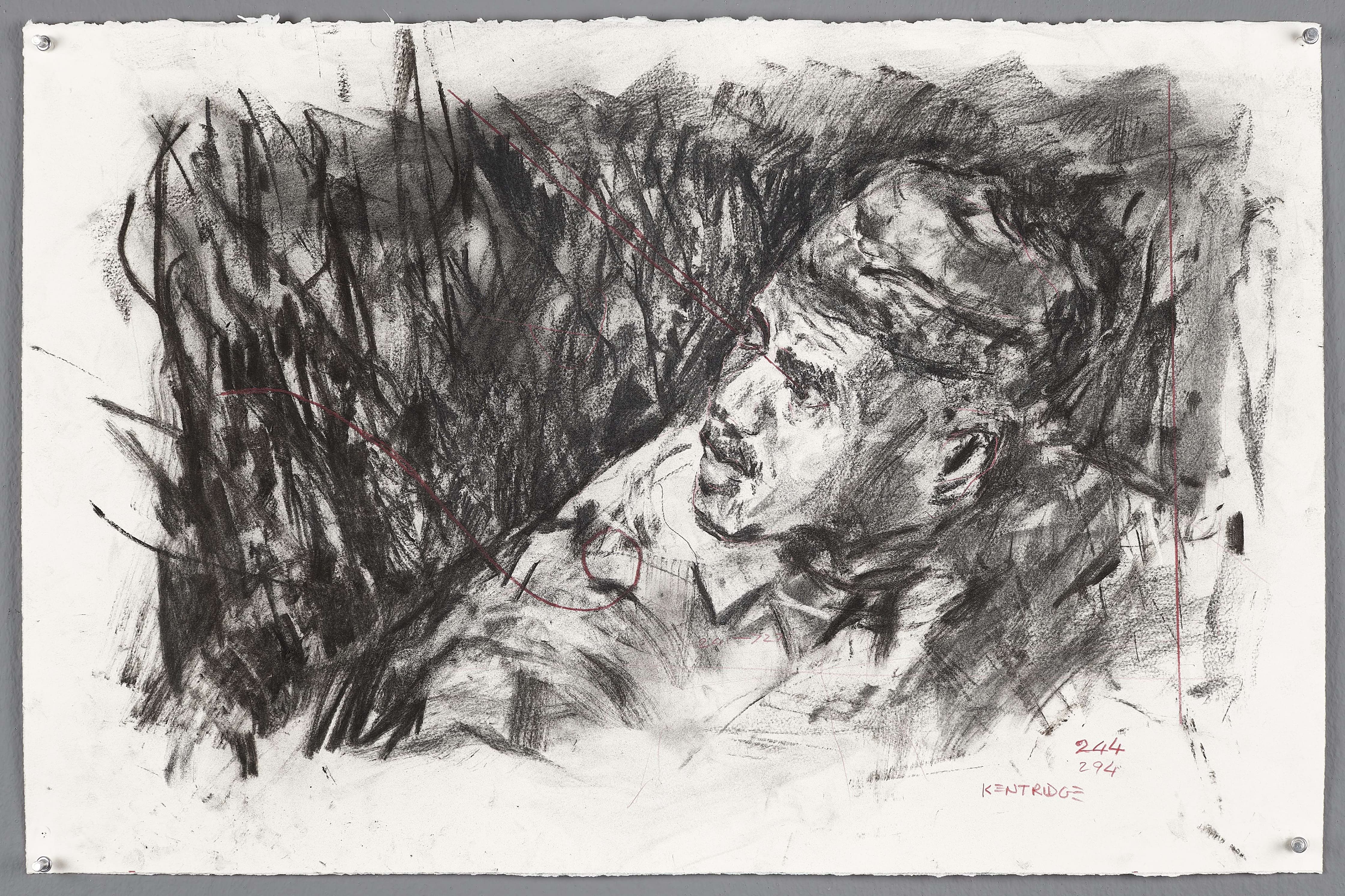
Drawing for City Deep is a charcoal and red pencil drawing made as part of Kentridge’s film City Deep. The film is the 11th in Kentridge’s Drawings for Projection series, a collection of animated films drawn over 30 years, featuring the protagonist Soho Eckstein. The work explores South Africa’s political transition from the violent years of apartheid to democracy, paying particular attention to the saga of loss, love, anger, compassion, guilt and forgiveness. The films revolve around the power-hungry mining magnate Soho Eckstein, his wife Mrs. Eckstein and her lover, the solitary artist Felix Teitlebaum. As the story unfolds, Soho’s empire crumbles as he comes to terms with his own frailties and the first signs of mortality.
William Kentridge's artistic practice, expressionist in nature, is entirely underpinned by drawing. He is perhaps best known for his series of eleven animated films, Drawings for Projection, the earliest of which was completed in 1989 and the most recent of which premiered in 2020. These hand-drawn films follow the narrative of fictional mining magnate, Soho Eckstein, his wife and her lover, Felix Teitlebaum. This saga is permeated with anecdotal elements from Kentridge's own life and the political events, which unfolded in South Africa's transition from apartheid to democracy.
The drawing for city deep is a charcoal and red pencil drawing made as part of Kentridge’s film City Deep - his eleventh from the Soho Chronicles series. Continuing on themes found throughout the body of work, particularly in Kentridge’s 1991 film Mine, this drawing explores the mining history of Johannesburg and its impact on the city.
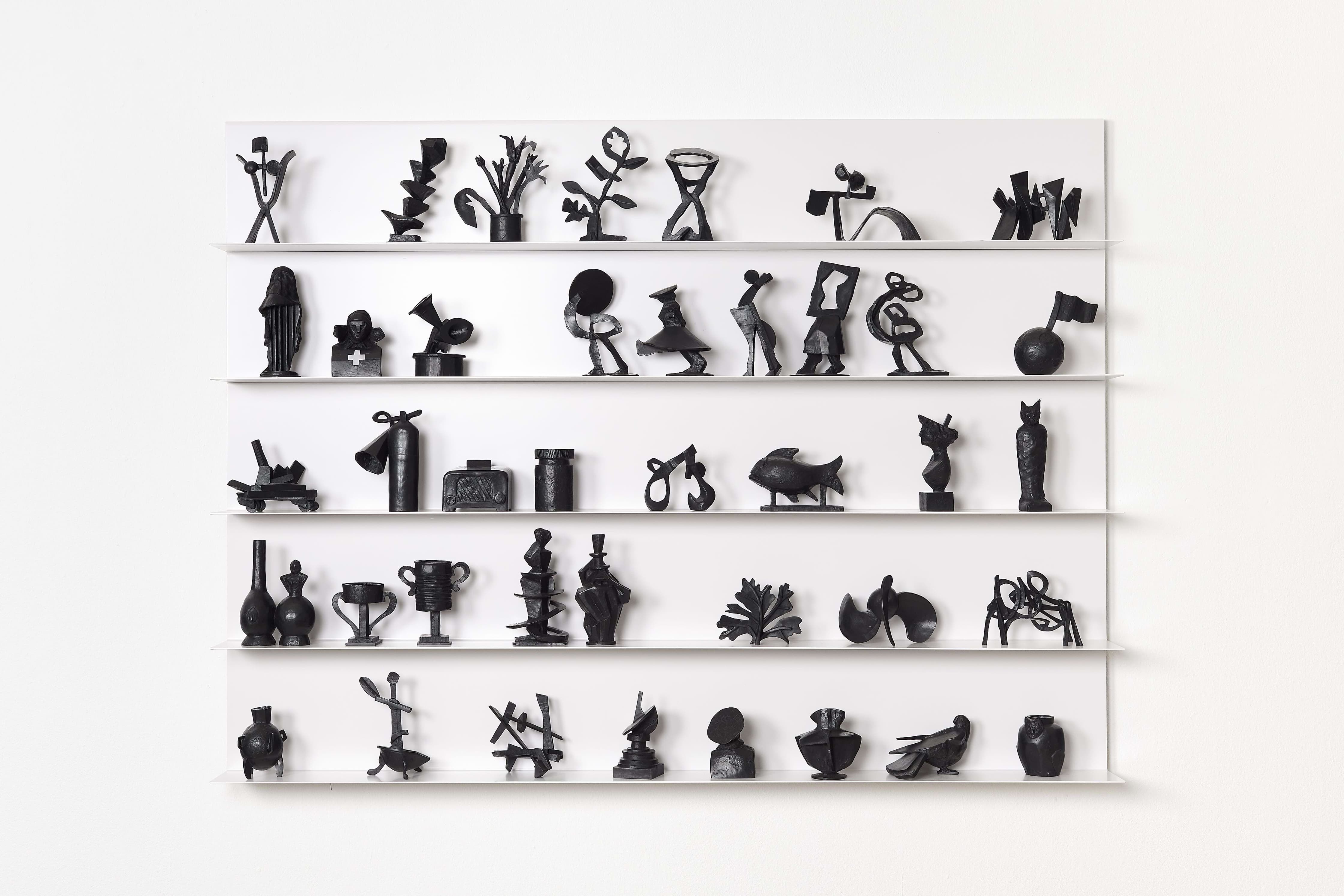
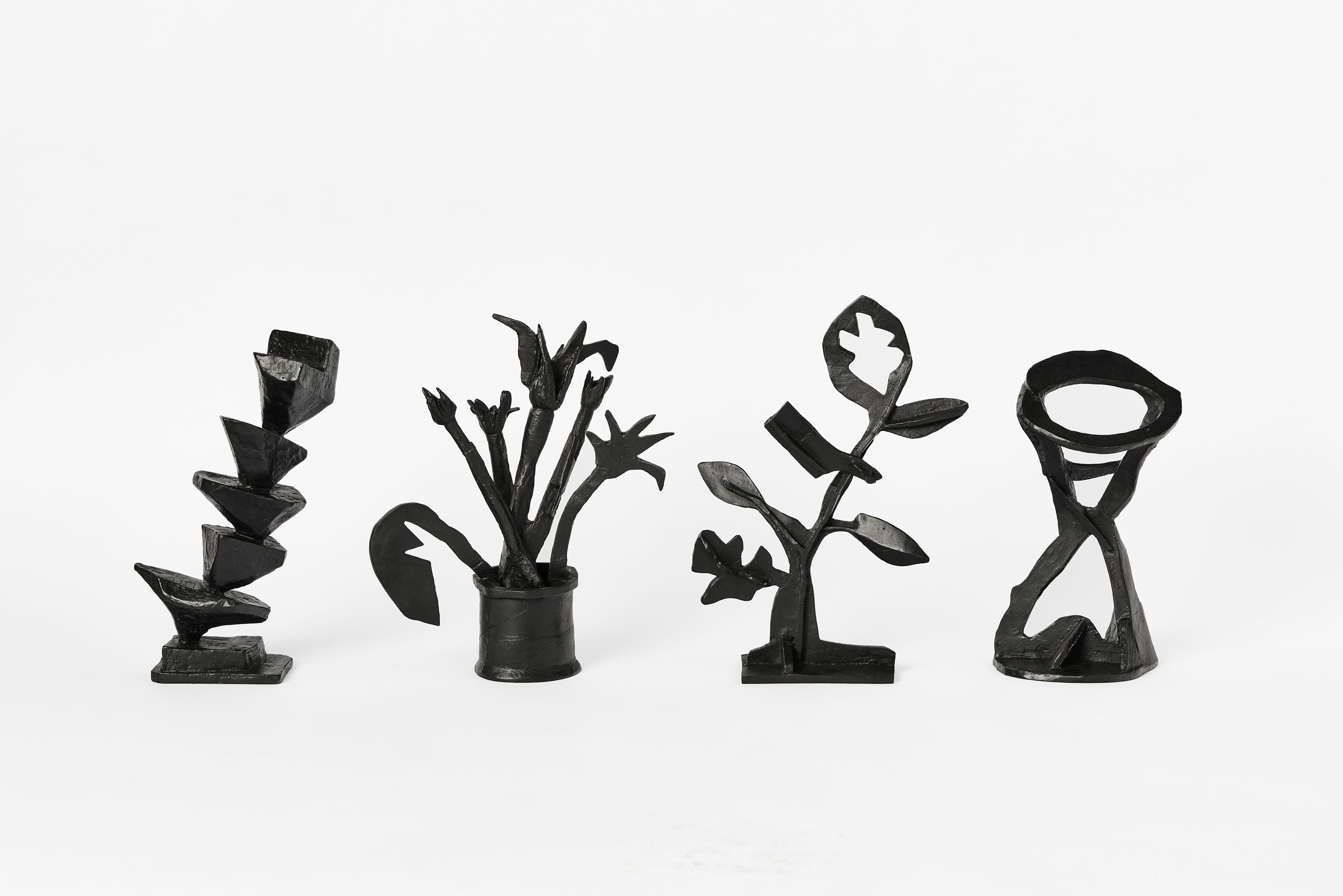
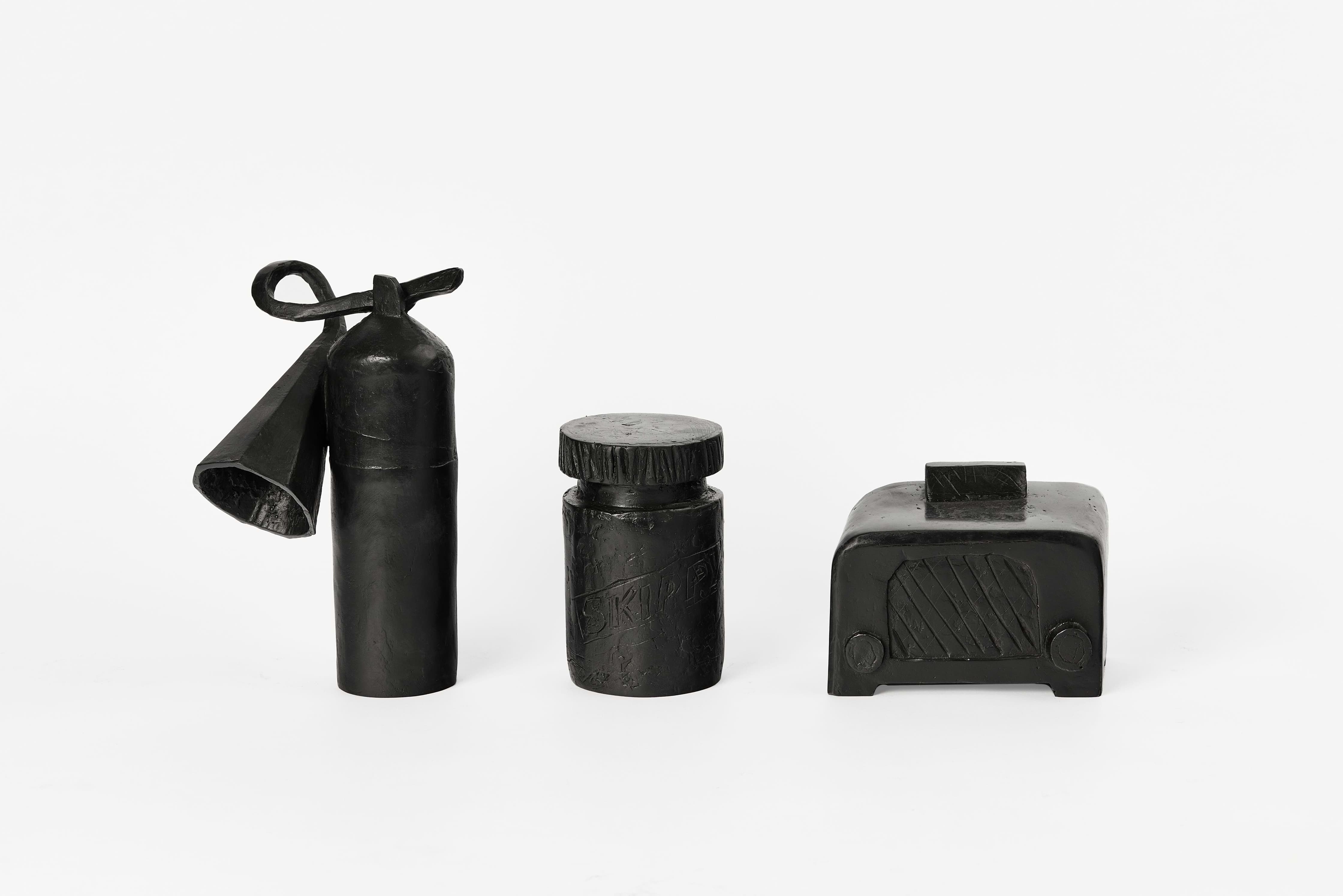
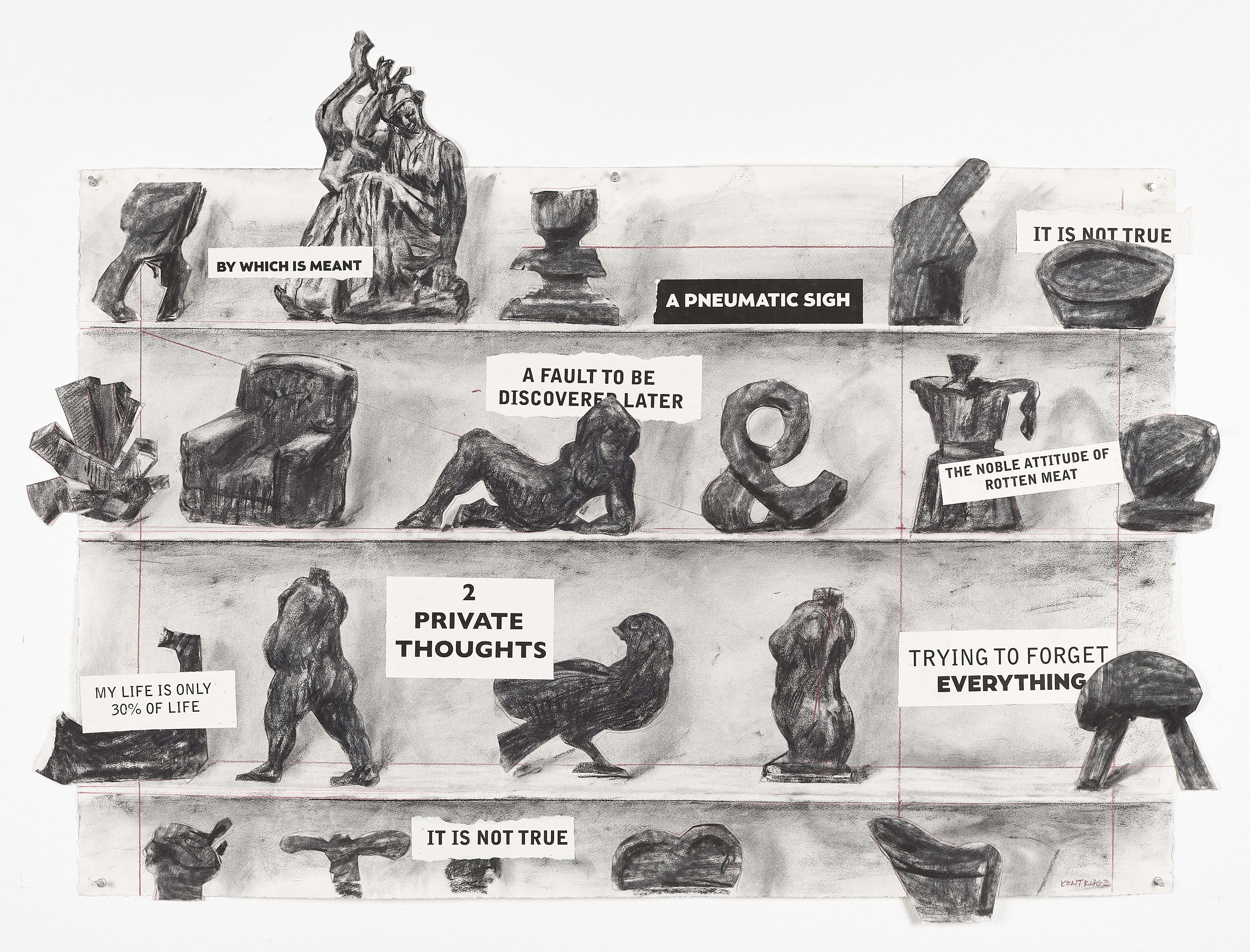
Cursive is the third in a series of William Kentridge’s Lexicon bronzes — an accumulation of elemental symbols within his broader practice. This series of bronze sculptures functions as a form of visual dictionary. The sculptures are symbols and ‘glyphs’, a repertoire of everyday objects or suggested words and icons, many of which have been used repeatedly across previous projects. The glyphs can be arranged to construct sculptural sentences and rearranged to deny meaning.
“The glyphs started as a collection of ink drawings and paper cut-outs, each on a single page from a dictionary. Previously I had taken a drawing or silhouette and given it just enough body to stand on its own feet - paper, added to cardboard and put on a stand. With the glyphs, I wanted a silhouette with the weight that the shape suggested. A shape not just balancing in space, but filling space. Something to hold in your hand, with both shape and heft.”
— William Kentridge, Why Should I Hesitate: Sculpture (2019), Norval Foundation
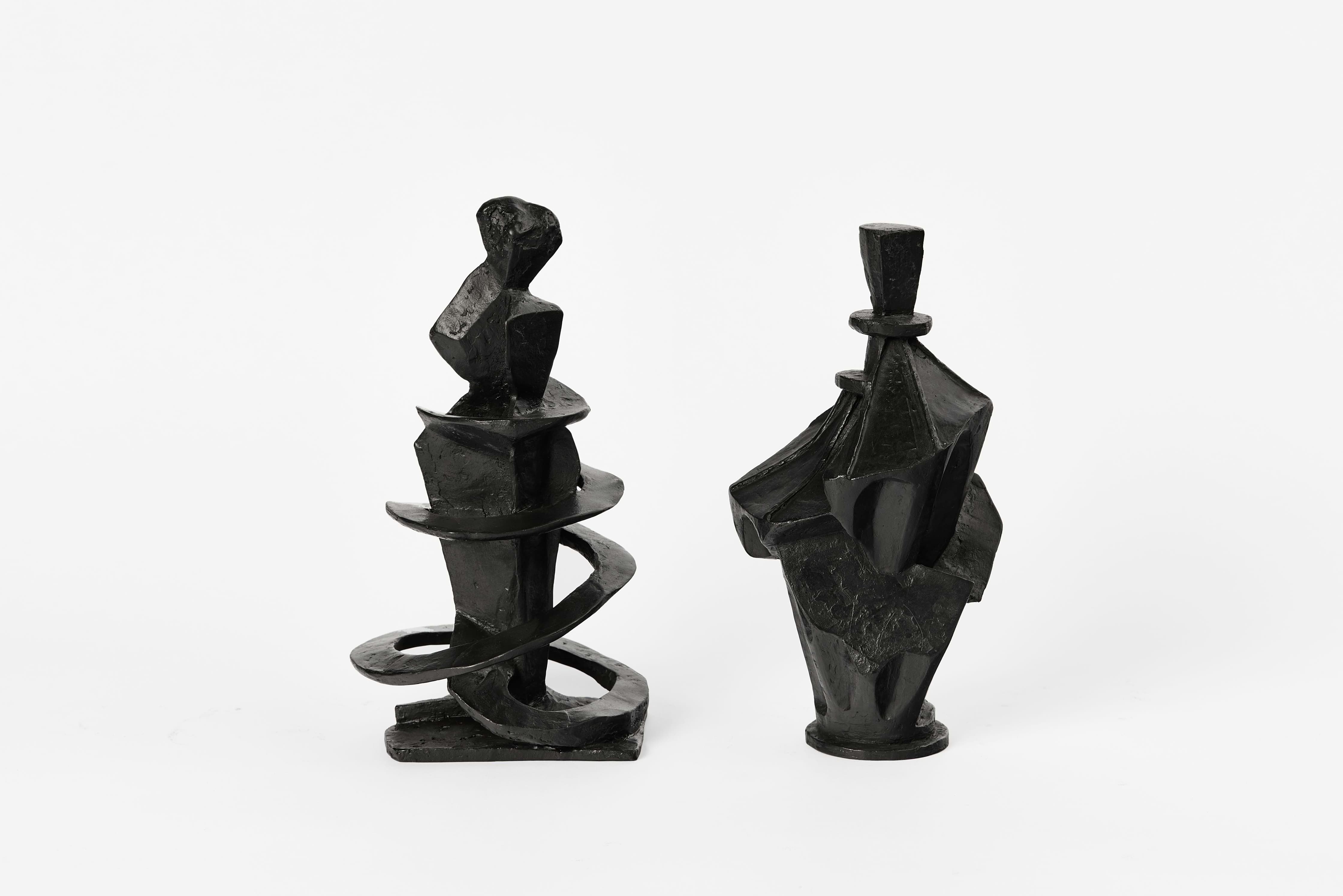
William Kentridge’s “Lexicon” (2017) and “Paragraph II” are accumulations of elemental symbols within the artist’s larger practice, in the form of two series of bronze glyphs. This collective sculptural vocabulary is comprised of symbols, abstract forms, portraits, texts and the commonplace objects, ubiquitous in his oeuvre, that have become iconic of his work. Between 2017 and 2019, Kentridge chose a small group glyphs from each series and made larger scale versions, each of close to a metre in height.
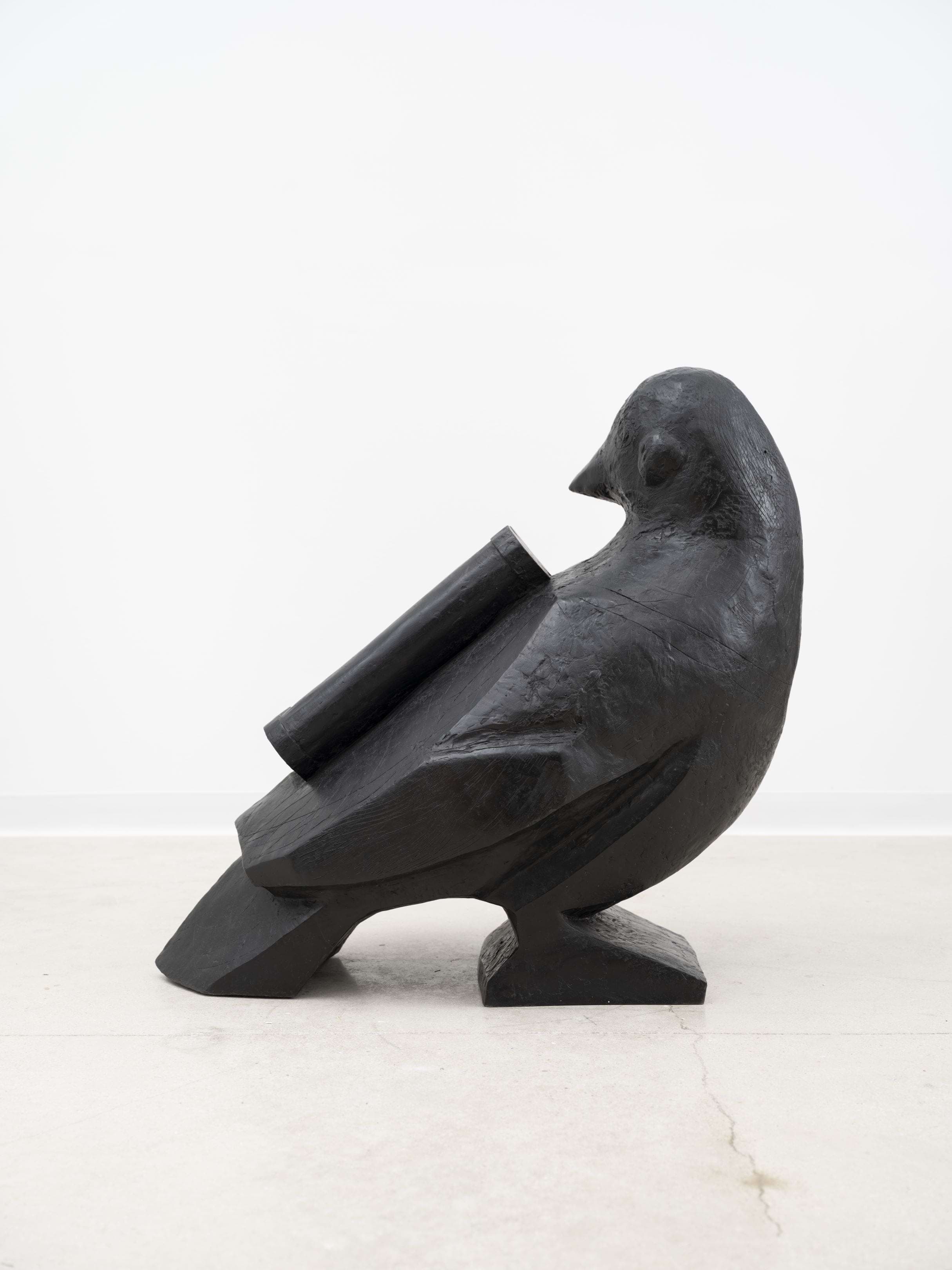
Carrier pigeon is a reference to Kentridge’s acclaimed performance piece, The Head and the Load, which premiered in 2018 at Tate Modern. A play on the Ghanaian proverb, ‘the head and the load are the troubles of the neck’, this large-scale production expressively speaks to the nearly two million African porters and carriers used by the British, French, and Germans during the First World War in Africa.
"City Deep is the eleventh in the series of Soho Eckstein films, started in 1989. In 1990 there was the film Mine, which had images of deep level industrial mining. 19 years later deep level mining has moved to the surface mining of the "zama zama" miners - the informal mine work taking place in abandoned mines - manual labour replacing large machines. This activity is set against images of the Johannesburg Art Gallery, itself built on the basis of the heyday of gold mining in Johannesburg. During the course of the film, images of the landscapes and the miners become the artworks in the gallery, viewed by Soho Eckstein."
William Kentridge
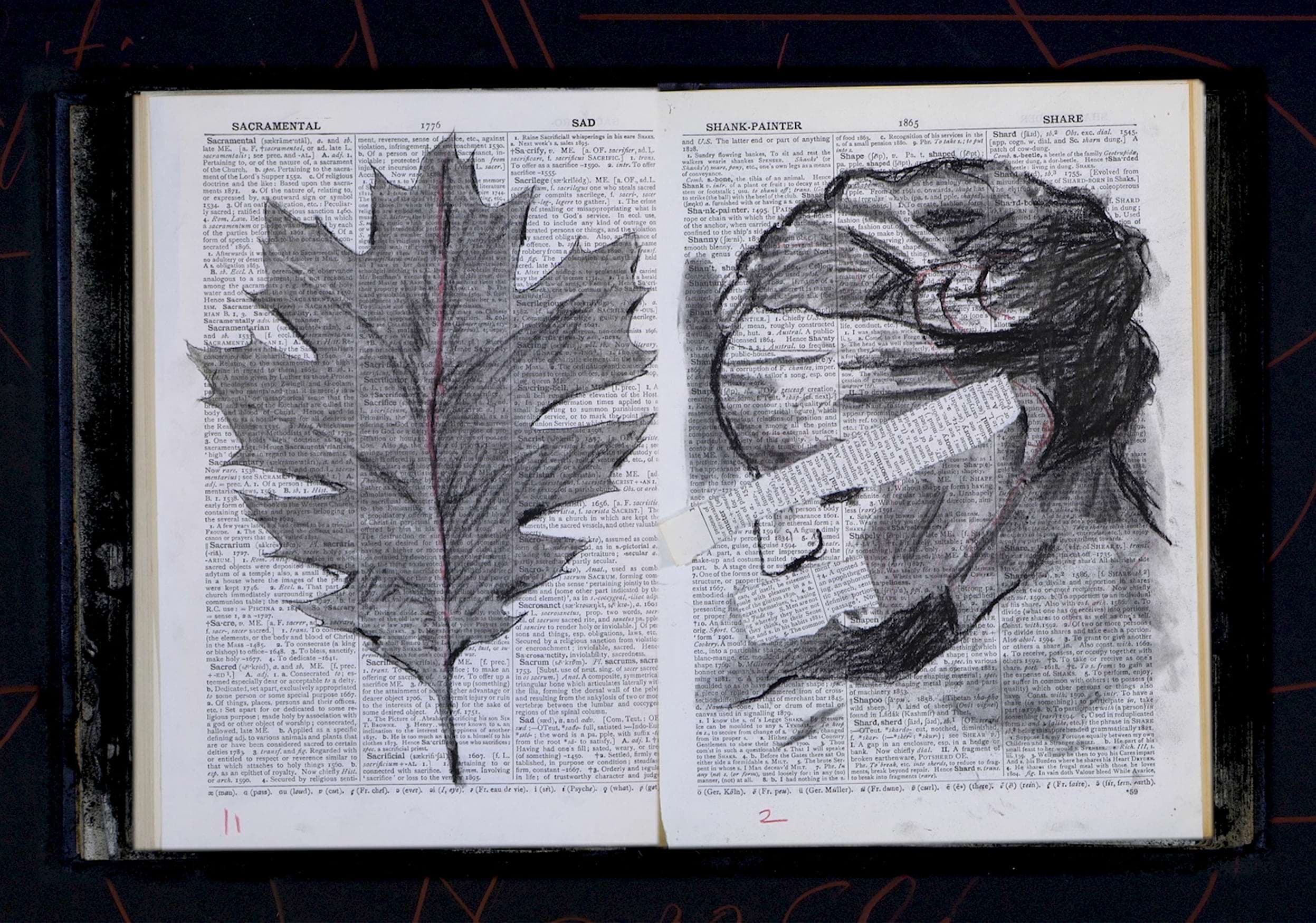
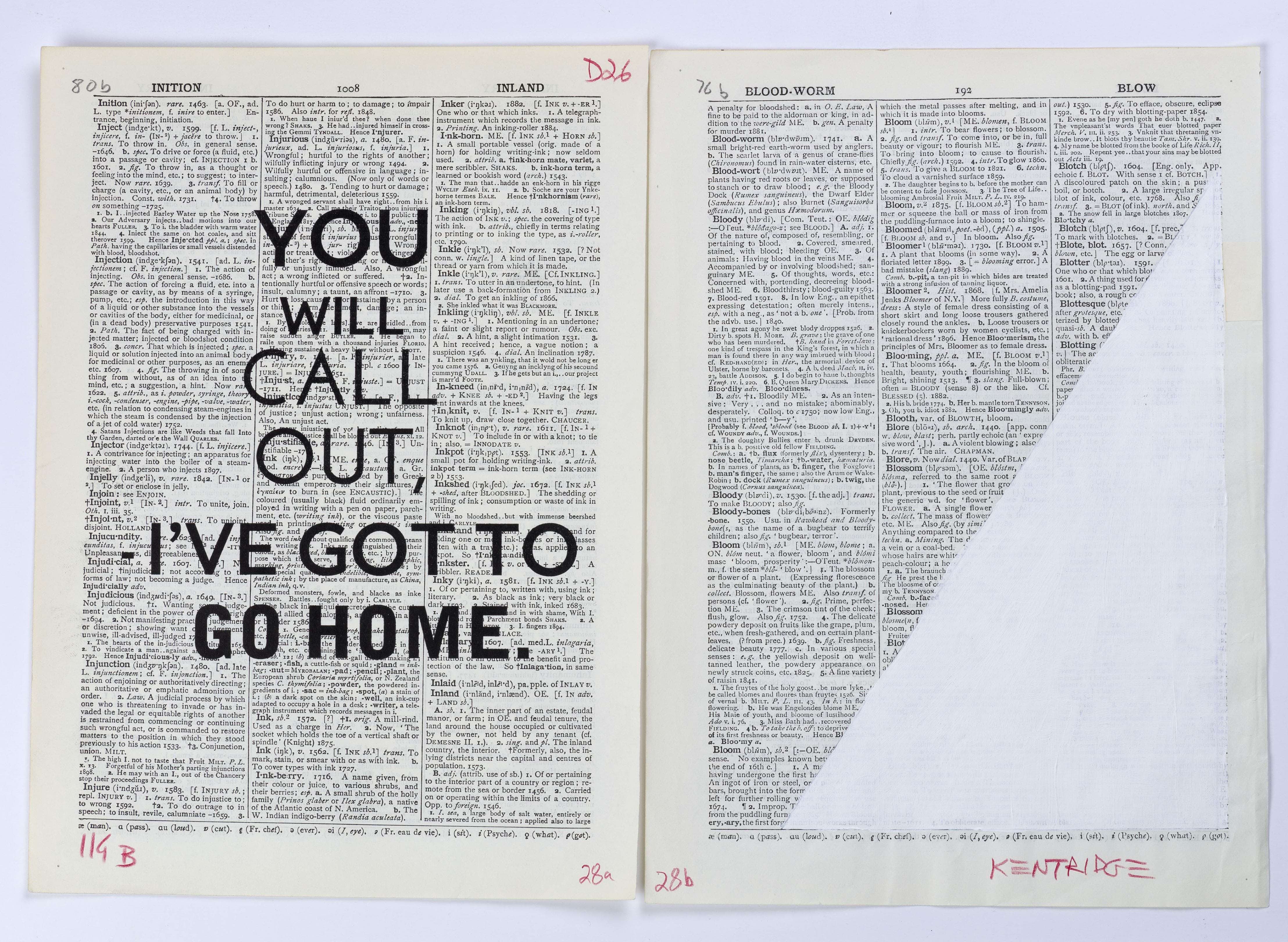
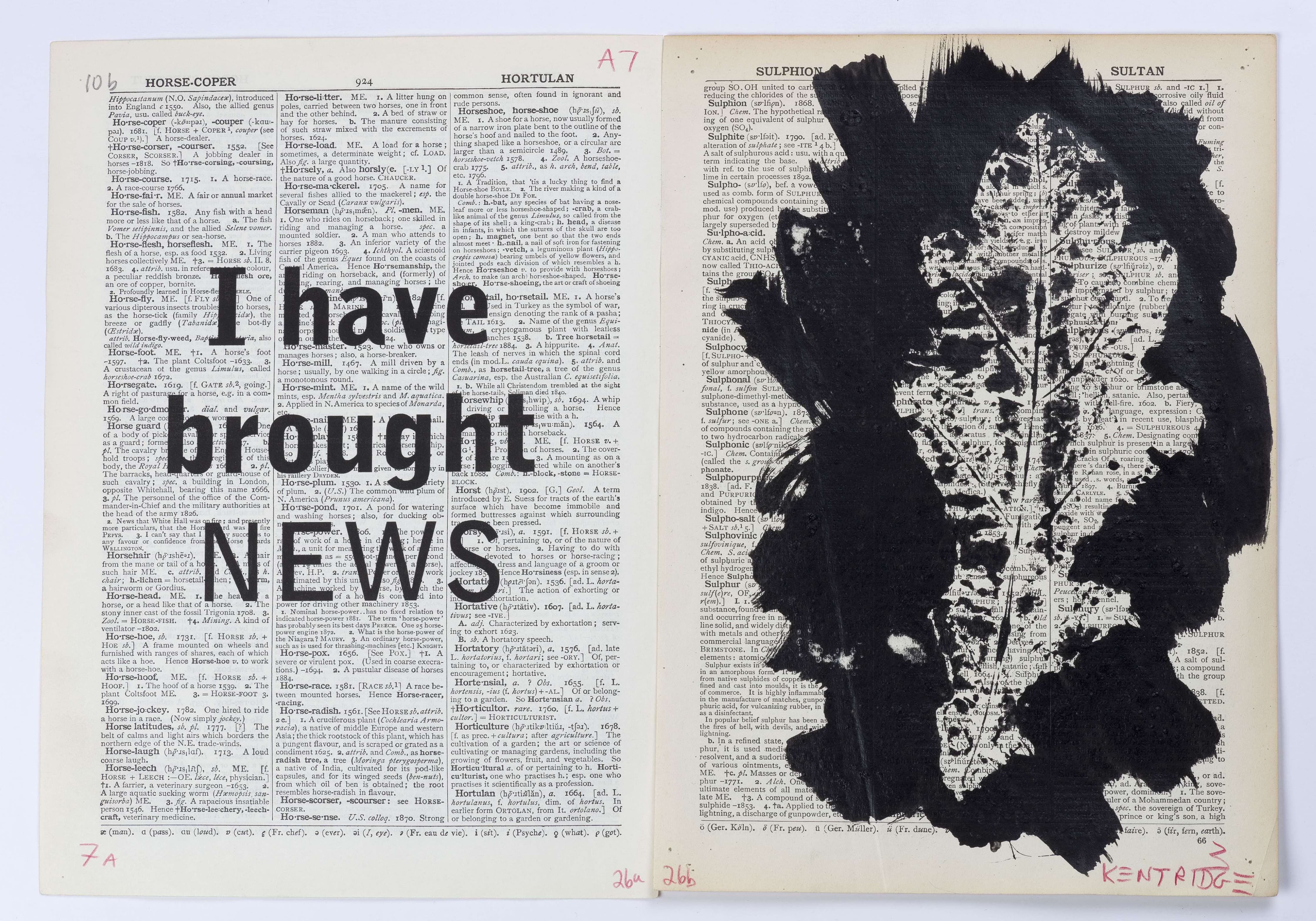
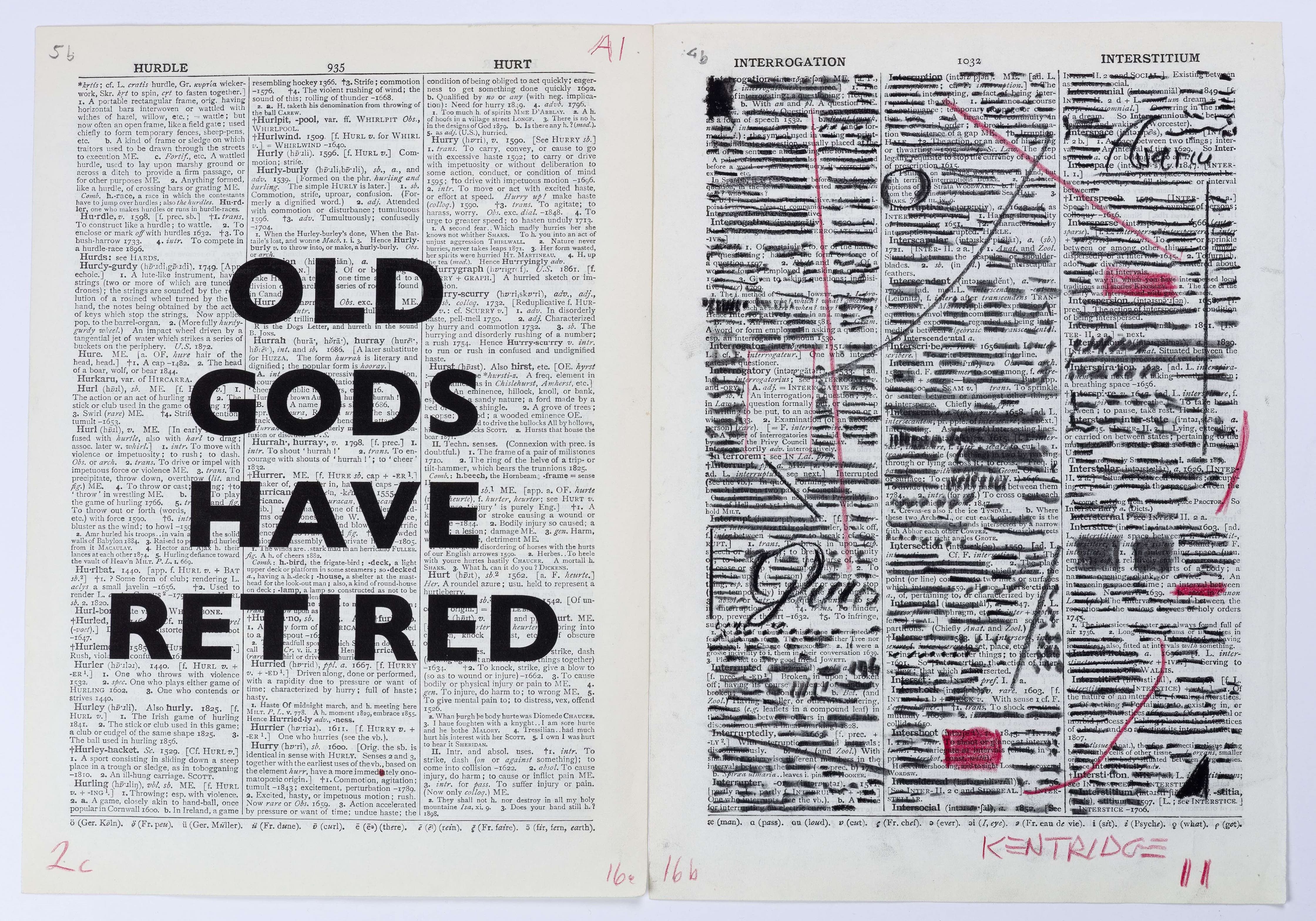
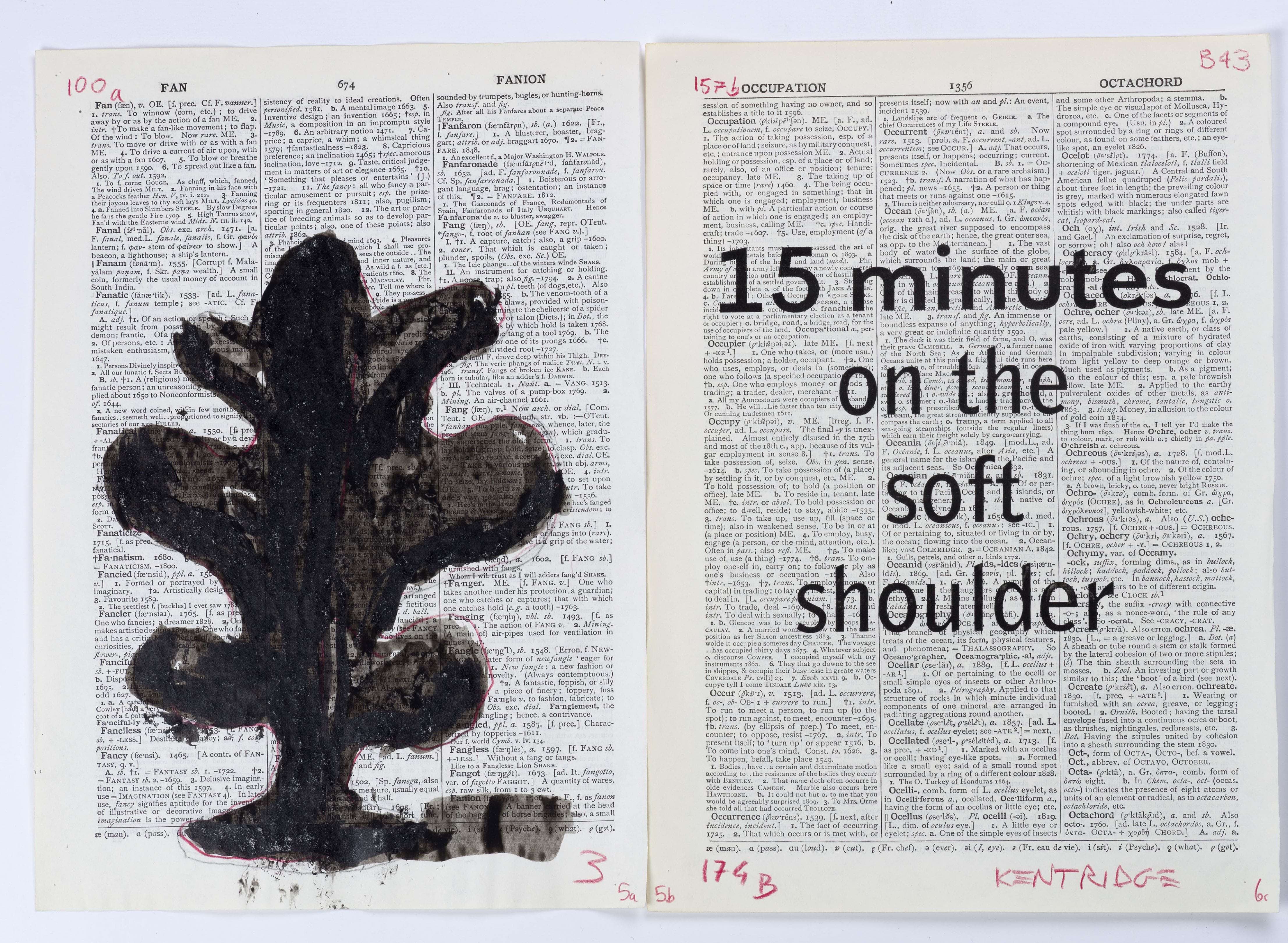
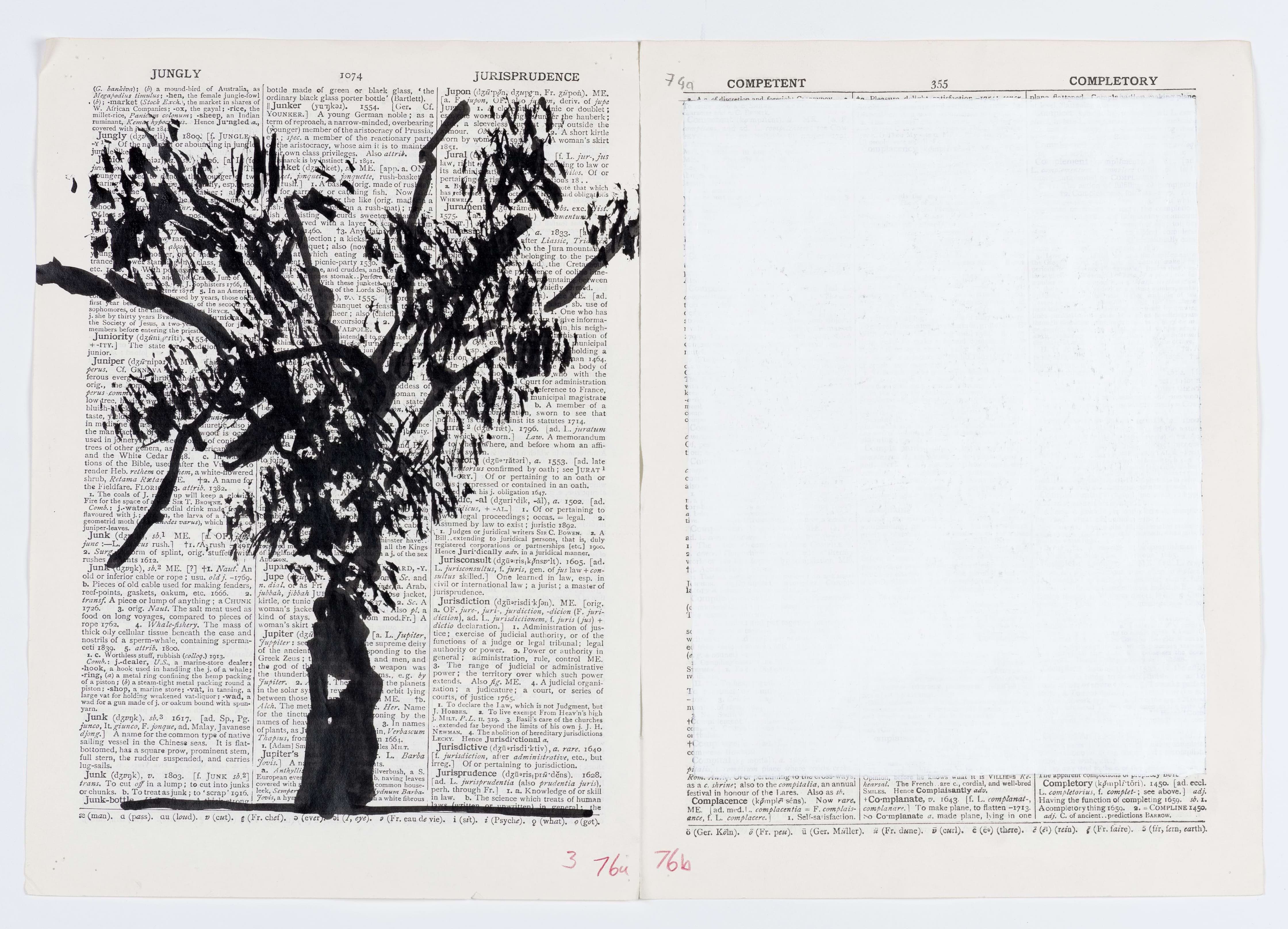
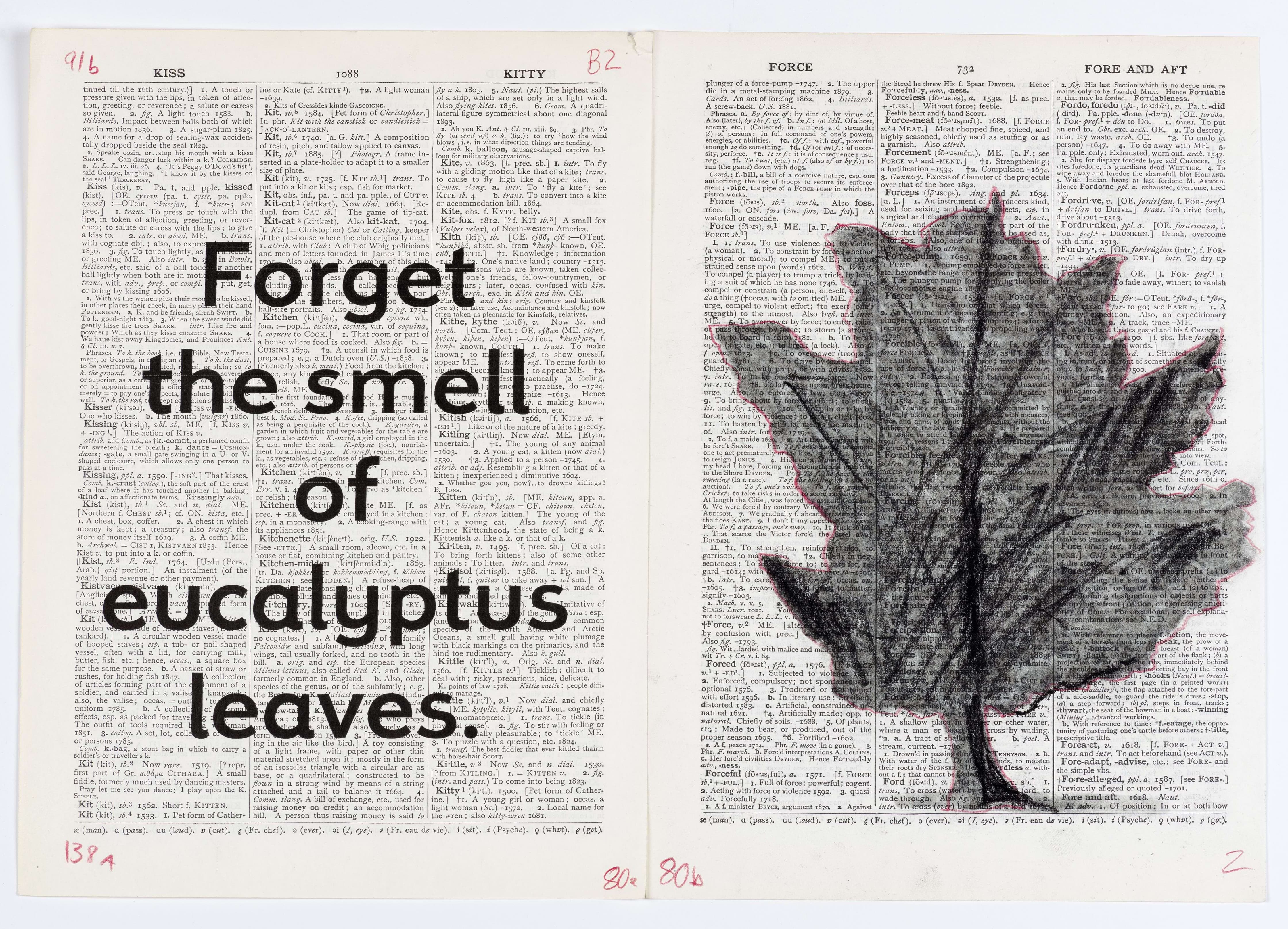
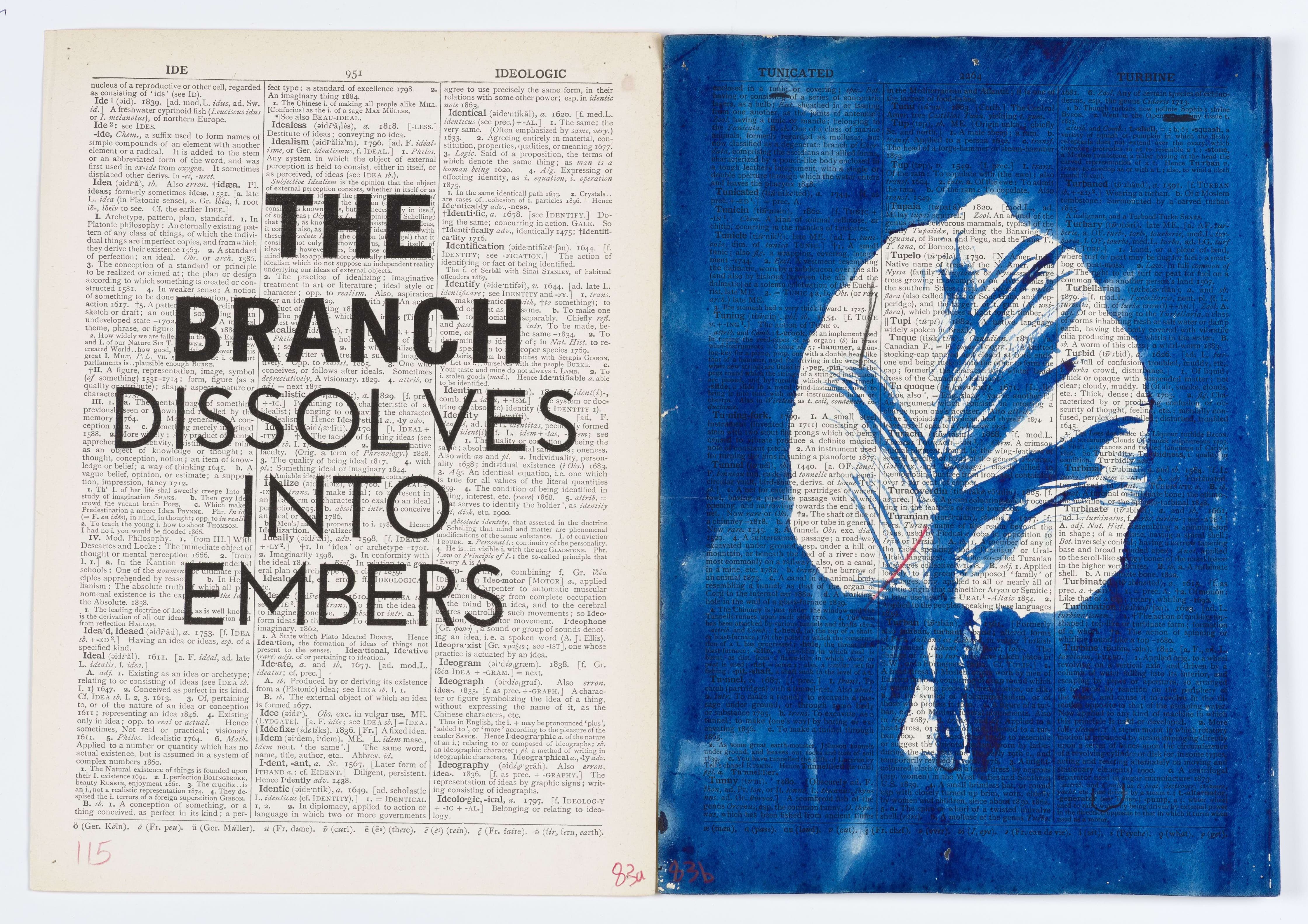
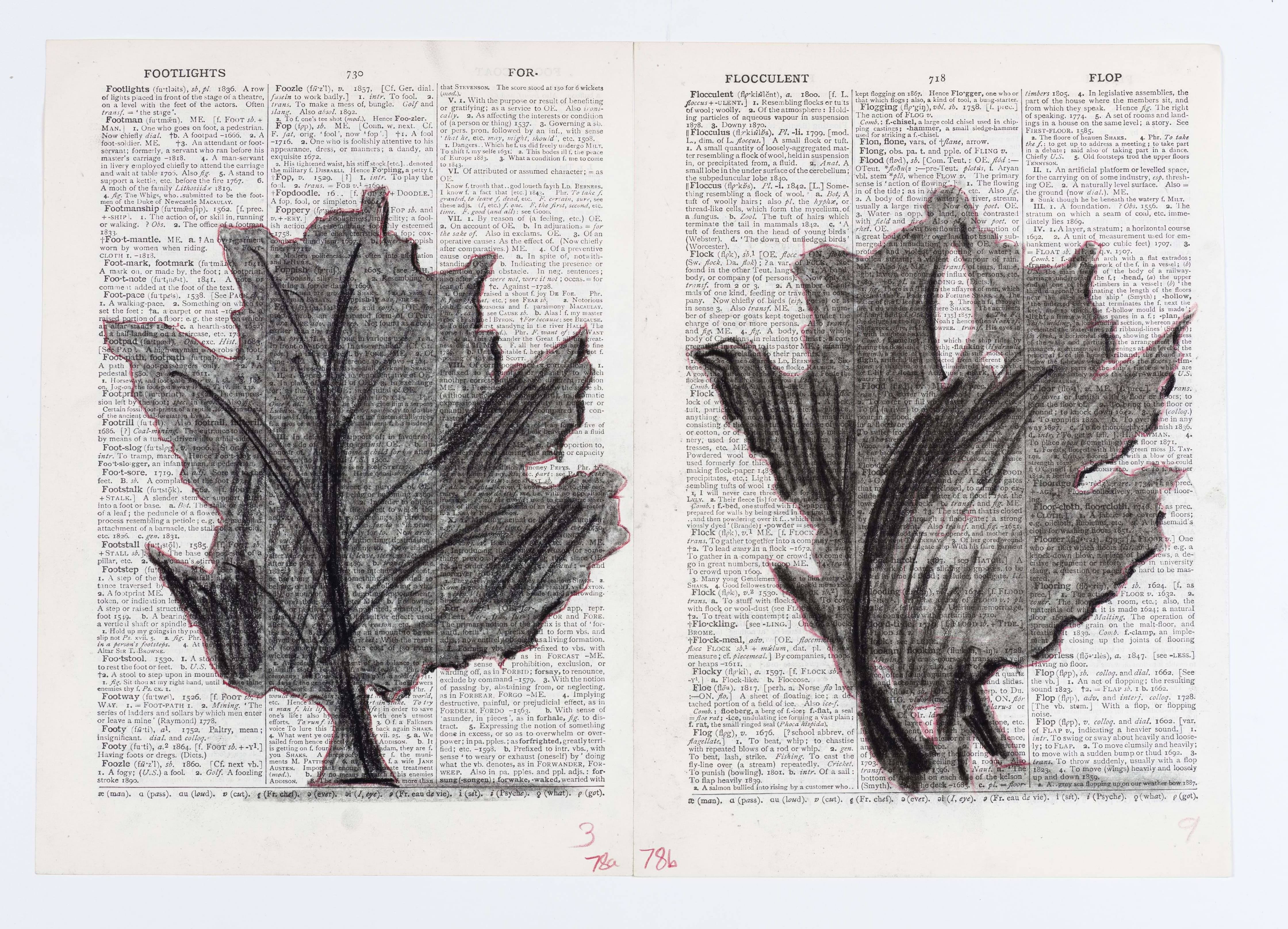
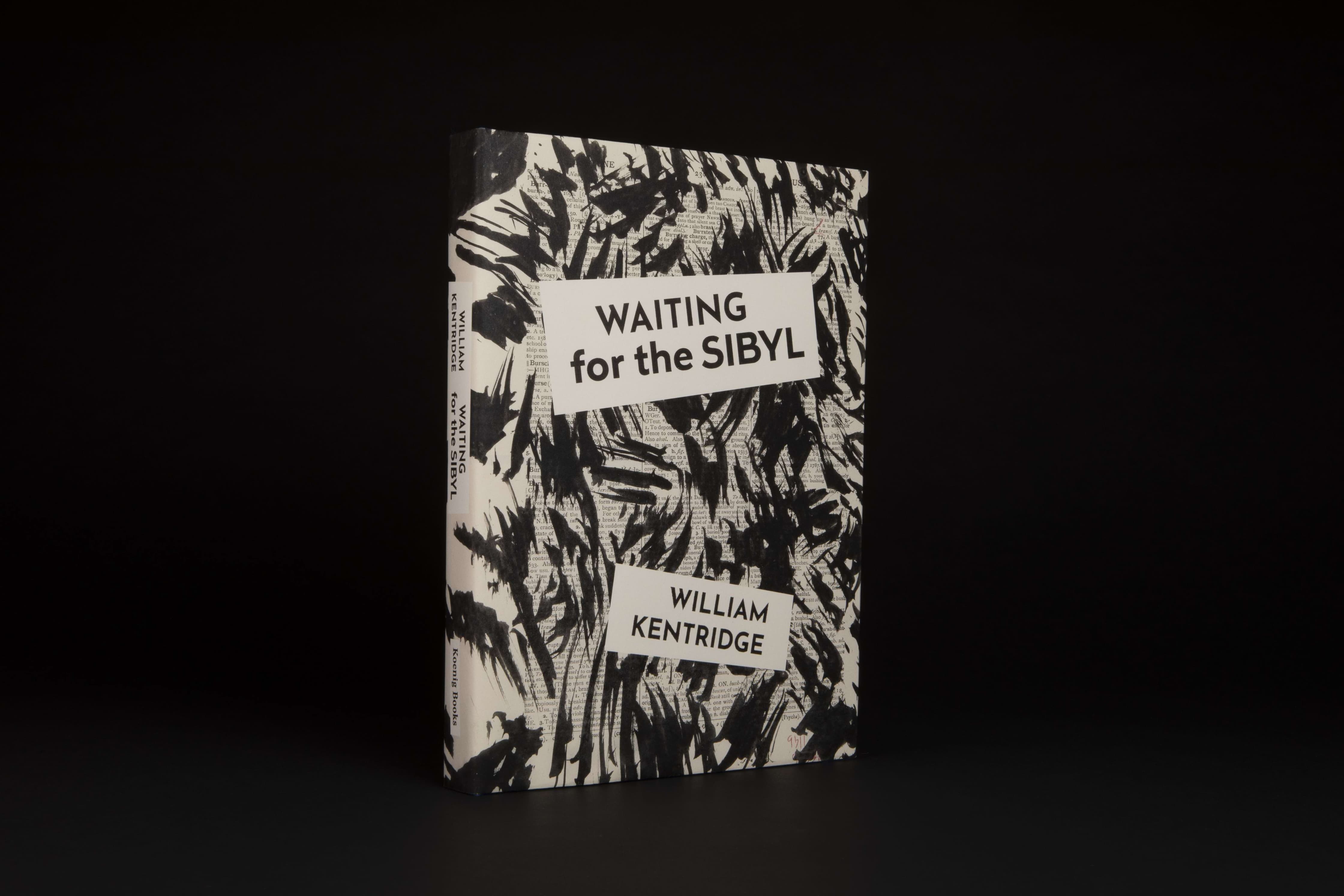
William Kentridge's latest flip book film is created form material produced in preparation for the chamber opera, "Waiting for the Sibyl", which premiered at Teatro dell'Opera di Roma in September 2019. The chamber opera was created in response to Alexander Calder's "Work in Progress", the only operatic work created by Calder, originally staged at the Opera in Rome in 1968.
“I thought that the paper, the fragments of paper with which I have always expressed myself, were the right elements to start the dialogue with Calder”, says Kentridge. In his mind, the floating papers immediately evoke the image of the Cumaean Sibyl, the priestess who wrote her prophecies on oak leaves. The floating papers, like loose leaves, with the prophecies written on them, are blown away by the wind, leading to a confusion of the fates.
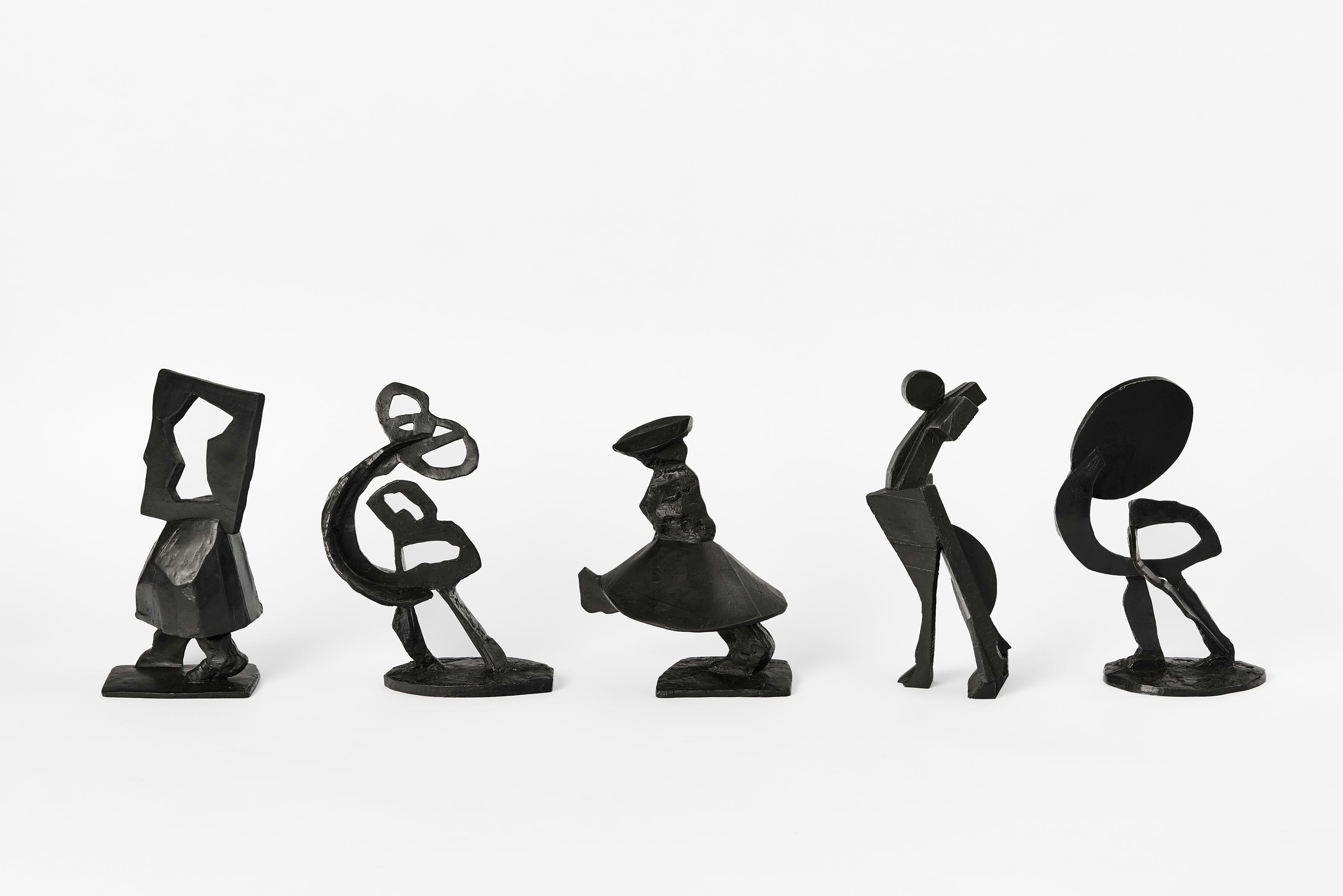
Quintet (Procession) is part of the third in a series of William Kentridge’s Lexicon bronzes, titled Cursive. Kentridge’s Lexicon bronzes are an accumulation of elemental symbols within his broader practice, which function as a form of visual dictionary. The sculptures are symbols, ‘glyphs’, a repertoire of everyday objects or suggested words and icons, many of which have been used repeatedly across previous projects. The glyphs can be arranged in order to construct sculptural sentences, and rearranged to deny meaning.
“The glyphs started as a collection of ink drawings and paper cut-outs, each on a single page from a dictionary. Previously I had taken a drawing or silhouette and given it just enough body to stand on its own feet - paper, added to cardboard, and put on a stand. With the glyphs I wanted a silhouette with the weight that the shape suggested. A shape not just balancing in space, but filling space. Something to hold in your hand, with both shape and heft.” (William Kentridge, Why Should I Hesitate : Sculpture, Norval Foundation and Koenig Books)
The procession is an important theme in Kentridge’s broader practice, which first emerged in his drawings and film animations in 1989. Like most of Kentridge’s practice, his first procession drawings were made within the context of his home city, Johannesburg. The appearance of the procession in his work not only spoke to markers of global mobilities, or to the fraudulent ideals of development, especially within postcolonial Africa. They were also in dialogue with local debates around resistance, cultural differences and the shape and form of state power in apartheid and post-apartheid South Africa. The procession motif has featured most notably in Kentridge’s films, Shadow Procession (1999), the eight channel film installation, More Sweetly Play the Dance (2015) and in his monumental frieze, Triumphs and Laments (2016), along the banks of the River Tiber in Rome.
Cursive is the third in a series of William Kentridge’s Lexicon bronzes, an accumulation of elemental symbols within his broader practice. This series of bronze sculptures, functions as a form of visual dictionary. The sculptures are symbols, ‘glyphs’, a repertoire of everyday objects or suggested words and icons, many of which have been used repeatedly across previous projects. The glyphs can be arranged in order to construct sculptural sentences, and rearranged to deny meaning.
“The glyphs started as a collection of ink drawings and paper cut-outs, each on a single page from a dictionary. Previously I had taken a drawing or silhouette and given it just enough body to stand on its own feet - paper, added to cardboard, and put on a stand. With the glyphs I wanted a silhouette with the weight that the shape suggested.
A shape not just balancing in space, but filling space. Something to hold in your hand, with both shape and heft.”
Video
City Deep is the anticipated 11th film in Kentridge’s Drawings for Projection series, a collection of animated films drawn over 30 years,featuring the protagonist Soho Eckstein. South Africa’s political transition from the violent years of apartheid to democracy sets the scene for a saga of loss, love, anger, compassion, guilt and forgiveness. The films revolve around the power-hungry mining magnate Soho Eckstein, his wife Mrs. Eckstein and her lover, the solitary artist Felix Teitlebaum. As the story unfolds, Soho’s empire crumbles as he comes to terms with his own frailties and the first signs of mortality.
Like previous films in the series, City Deep is grounded within Kentridge’s home city of Johannesburg and can be viewed as a counterpoint to the 1990 film, Mine, which depicts images of the deep level mining industry. City Deep_extends this depiction to the informal, surface-level “zama zama” miners of current day Johannesburg. Translated from Zulu as ‘try your luck’ or ‘take a chance’, “zama zama” is the name given to the miners who illegally work decommissioned mines on the edges of the formal mining economy. Manual labour replaces large machines, creating open scars in the Highveld landscape.
In City Deep, the “zama zama” miners and the landscape merge into artworks hanging in the Johannesburg Art Gallery, itself built during the heyday of gold mining in Johannesburg. Wandering the exhibition spaces is a deeply contemplative Soho gazing at the artworks and into vitrines. Towards the end of the film the gallery collapses in on itself, an imagined demise of an institution in a state of increasing dereliction.
City Deep is the anticipated 11th film in Kentridge’s Drawings for Projection series, a collection of animated films drawn over 30 years,featuring the protagonist Soho Eckstein. South Africa’s political transition from the violent years of apartheid to democracy sets the scene for a saga of loss, love, anger, compassion, guilt and forgiveness. The films revolve around the power-hungry mining magnate Soho Eckstein, his wife Mrs. Eckstein and her lover, the solitary artist Felix Teitlebaum. As the story unfolds, Soho’s empire crumbles as he comes to terms with his own frailties and the first signs of mortality.
Like previous films in the series, City Deep is grounded within Kentridge’s home city of Johannesburg and can be viewed as a counterpoint to the 1990 film, Mine, which depicts images of the deep level mining industry. City Deep extends this depiction to the informal, surface-level “zama zama” miners of current day Johannesburg. Translated from Zulu as ‘try your luck’ or ‘take a chance’, “zama zama” is the name given to the miners who illegally work decommissioned mines on the edges of the formal mining economy. Manual labour replaces large machines, creating open scars in the Highveld landscape.
In City Deep, the “zama zama” miners and the landscape merge into artworks hanging in the Johannesburg Art Gallery, itself built during the heyday of gold mining in Johannesburg. Wandering the exhibition spaces is a deeply contemplative Soho gazing at the artworks and into vitrines. Towards the end of the film the gallery collapses in on itself, an imagined demise of an institution in a state of increasing dereliction.