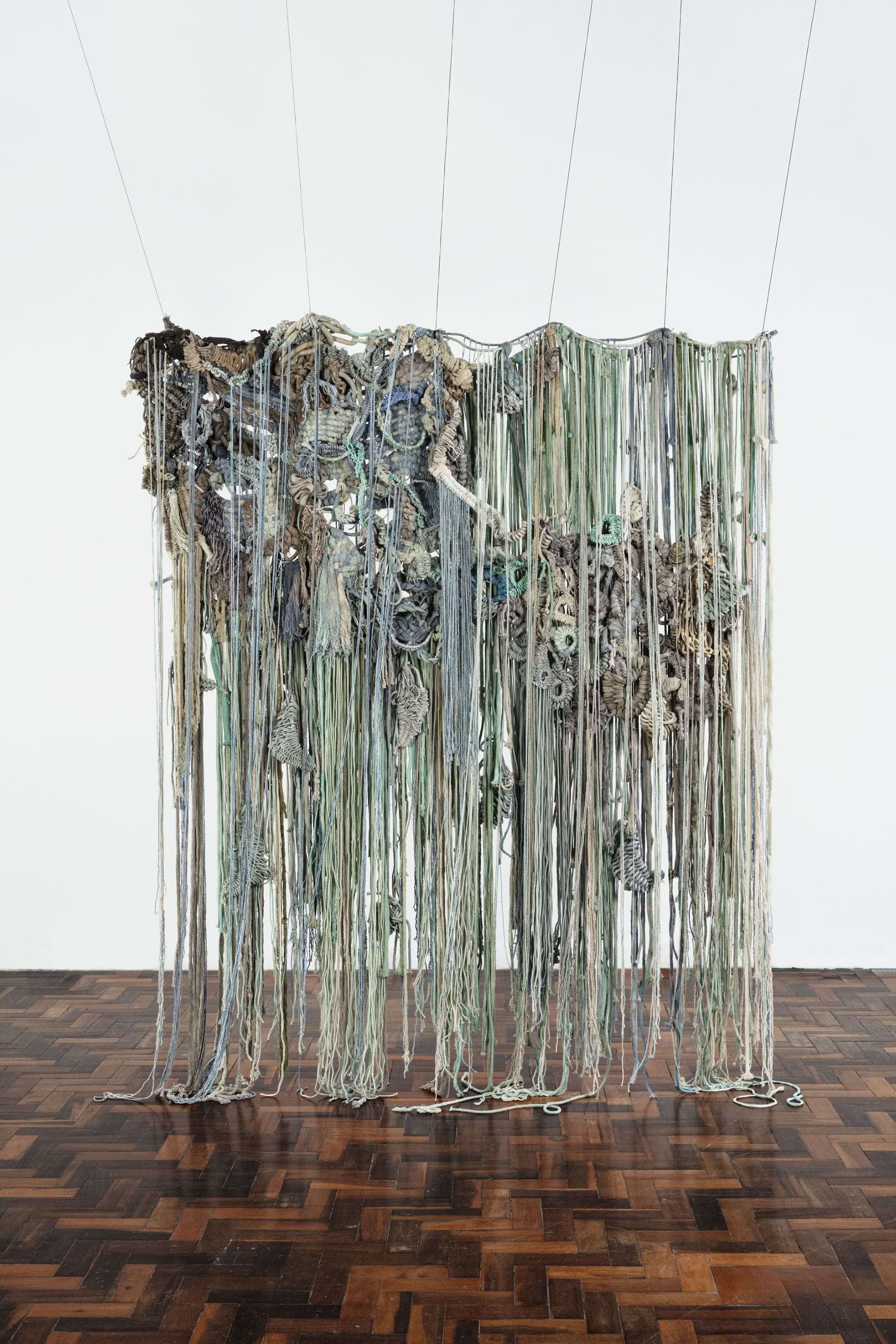
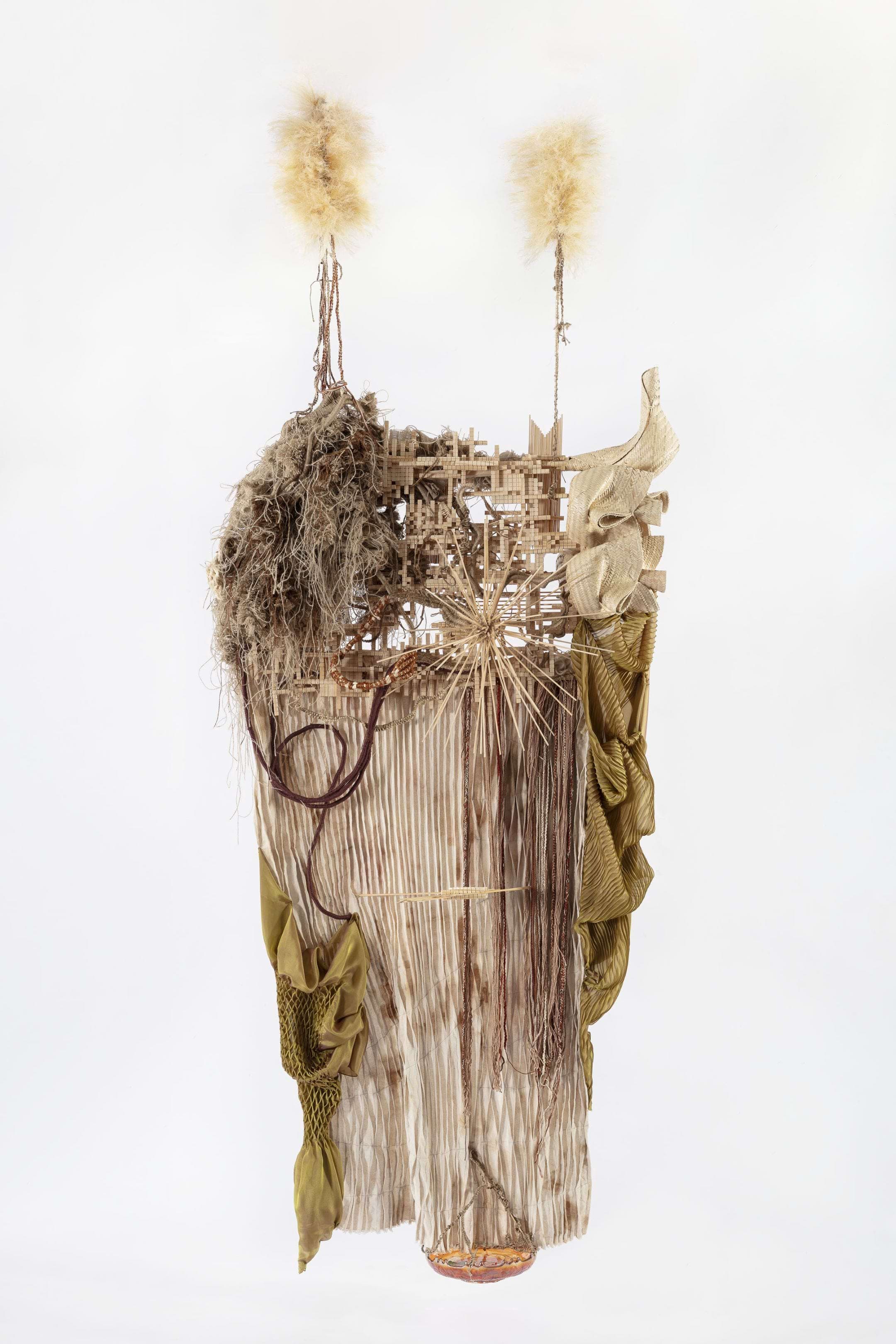
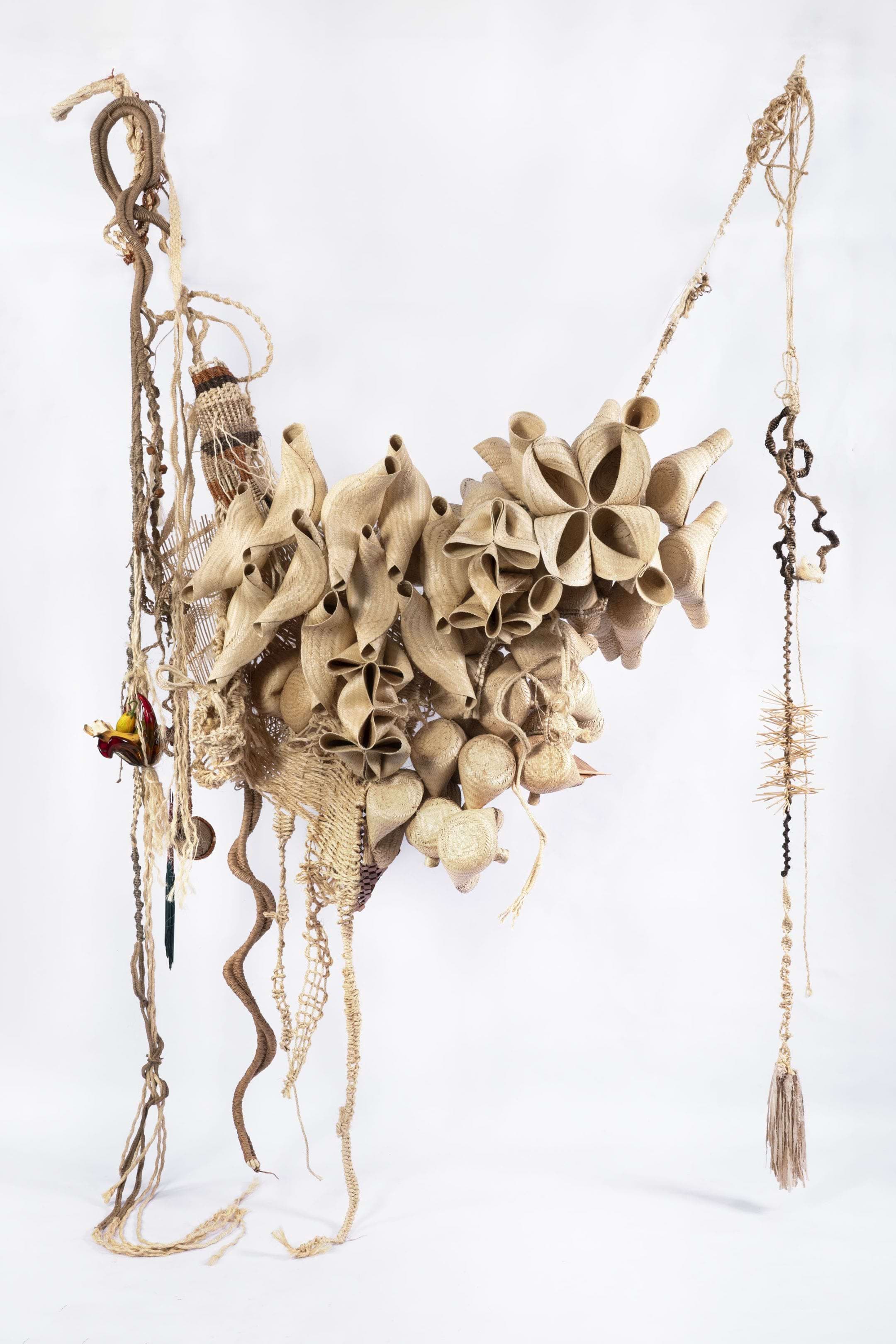
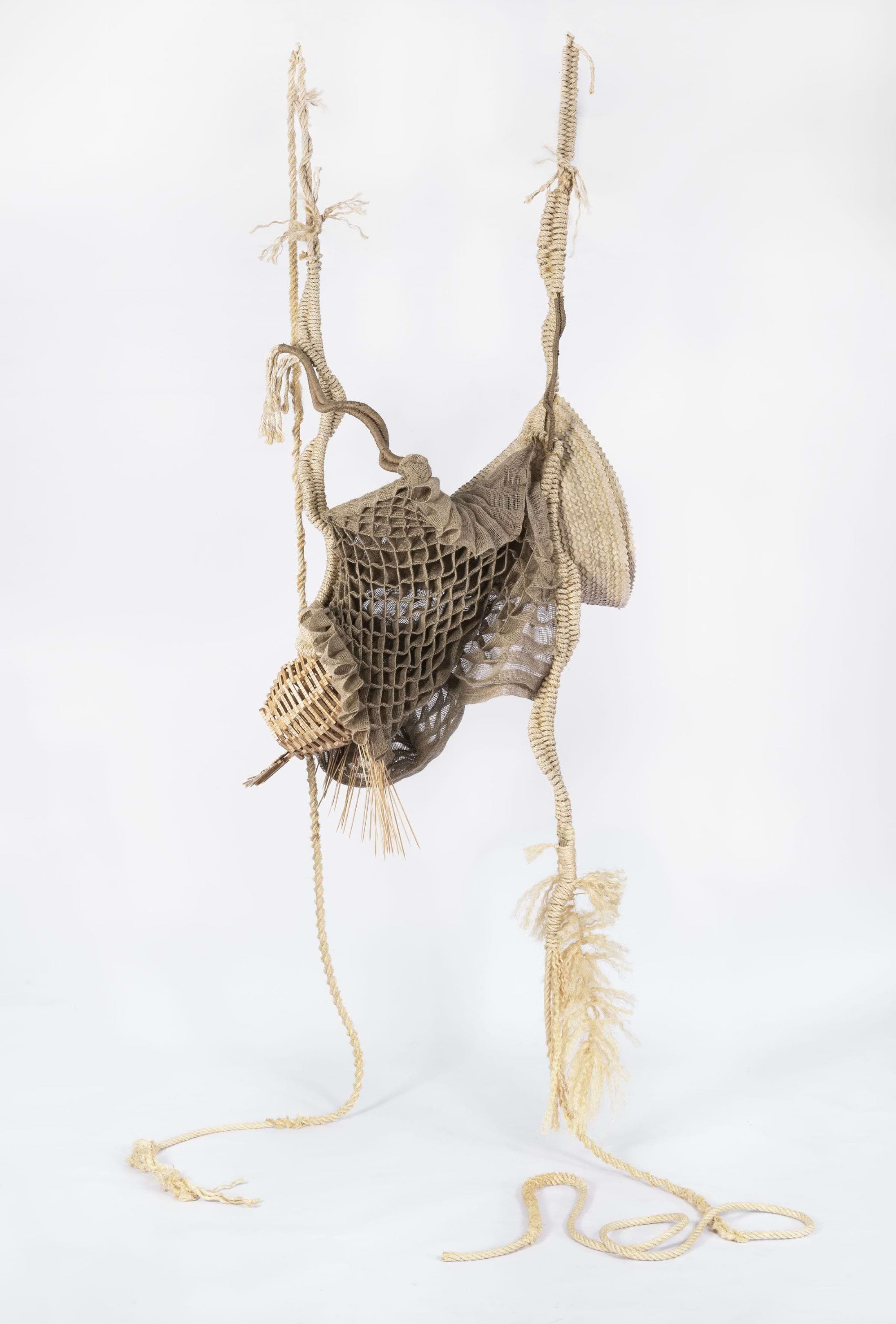
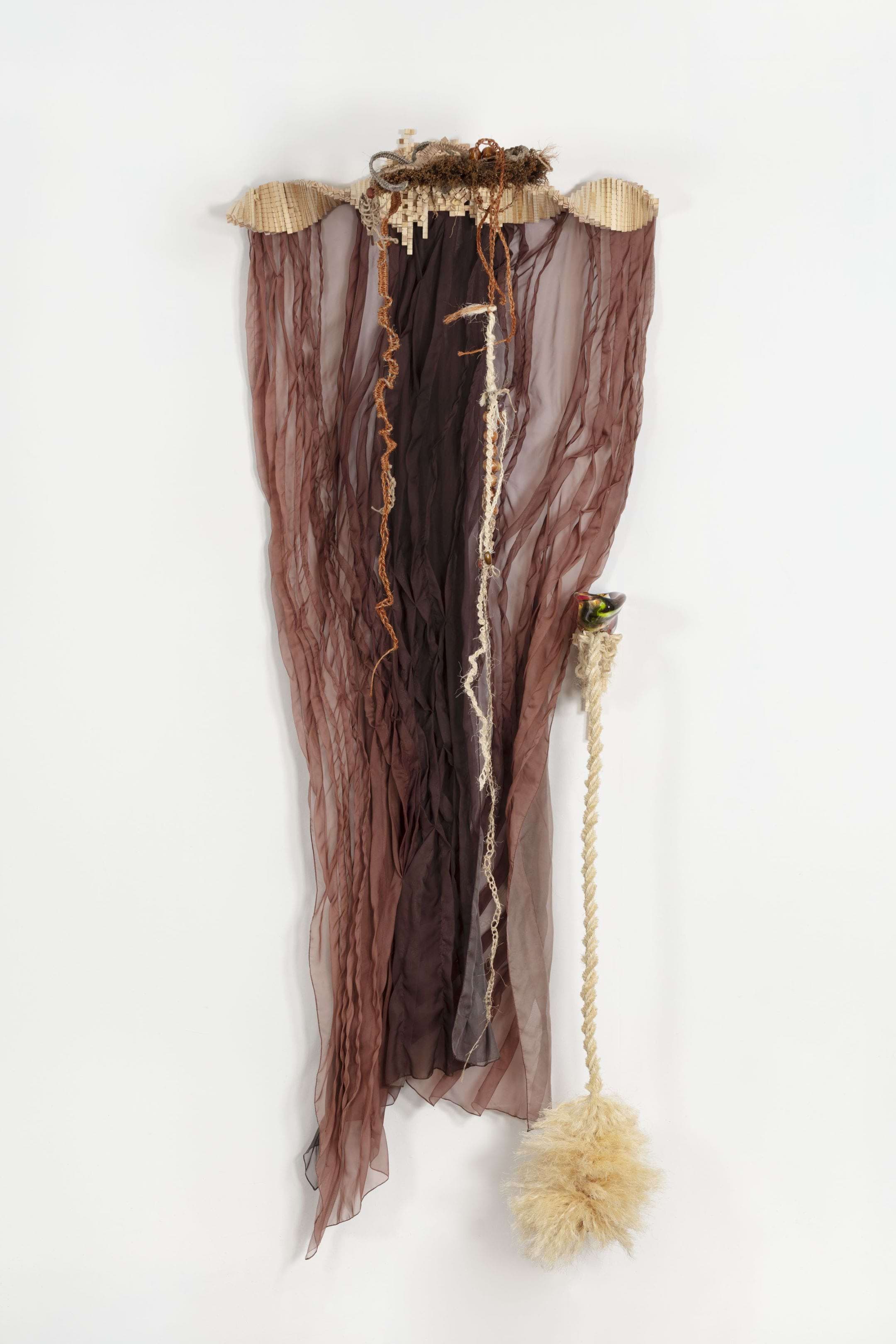
Charía is part of the Tupi-Guarani mythology. It is believed that eclipses are caused by a bluish jaguar eating the sun and moon. When the world ends, she will descend into the world and devour people. Until then, she rests beneath the hammock of Nhanderuvuçu, the supreme god.
Raw cotton threads dyed by natural pigments (indigo, red cabbage, black beans, porangaba) and steel wire
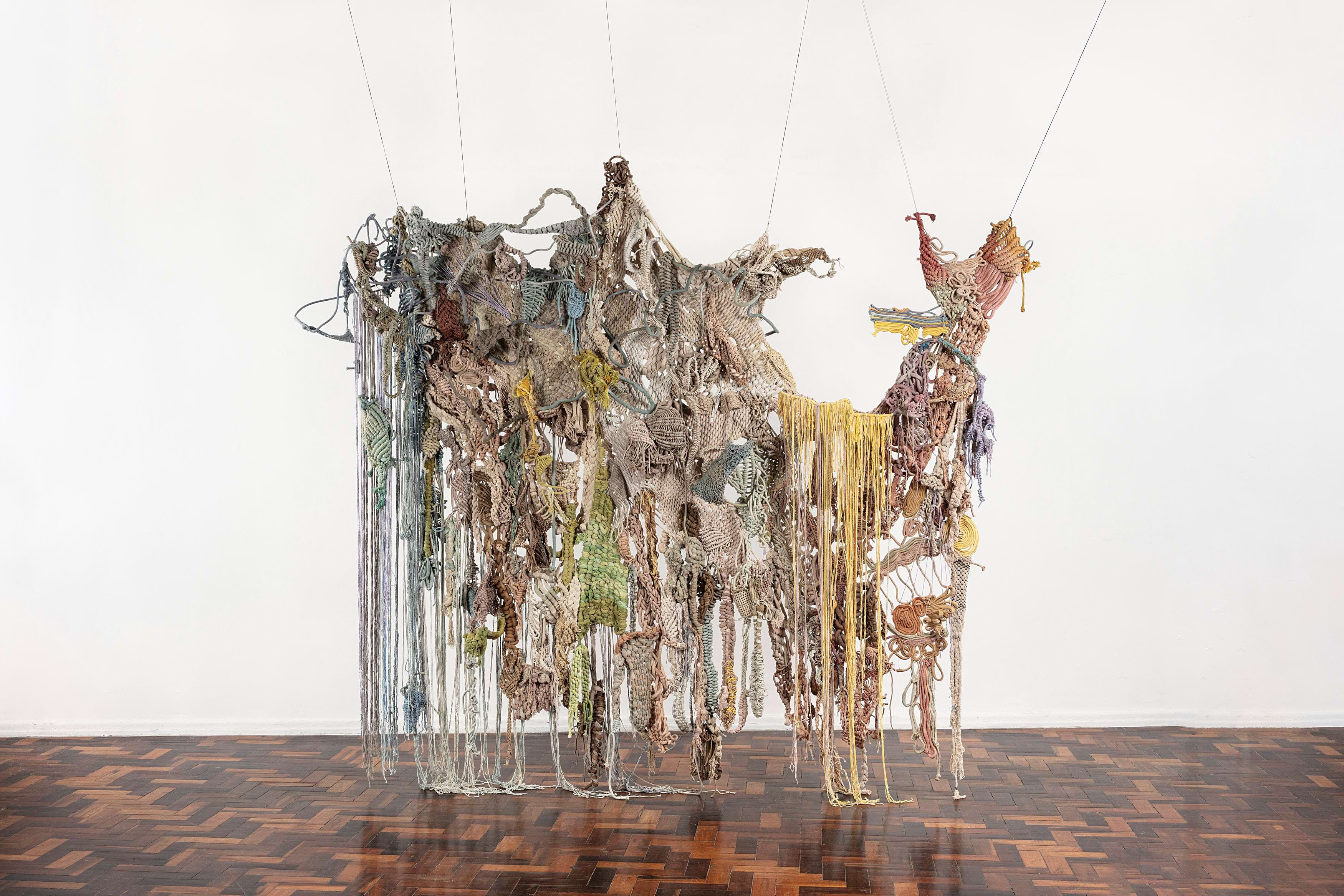
Irapuru is a magical red bird, a symbol of happiness in Brazilian folklore. According to the legend, a young indigenous man was cursed by a tribe chief for being in love with his daughter. The indigenous man became Irapuru and began to sing a beautiful song. The chief heard it and went into the forest to capture the bird, but he got lost and never returned. Irapuru still sings today, hoping that his lover will hear and recognize him. Whoever finds this bird gets a wish.
Raw cotton threads dyed by natural pigments (indigo, wine, red cabbage, porangaba, black tea, spinach, parsley, red beans, annatto, crajiru, redwood) and steel wire
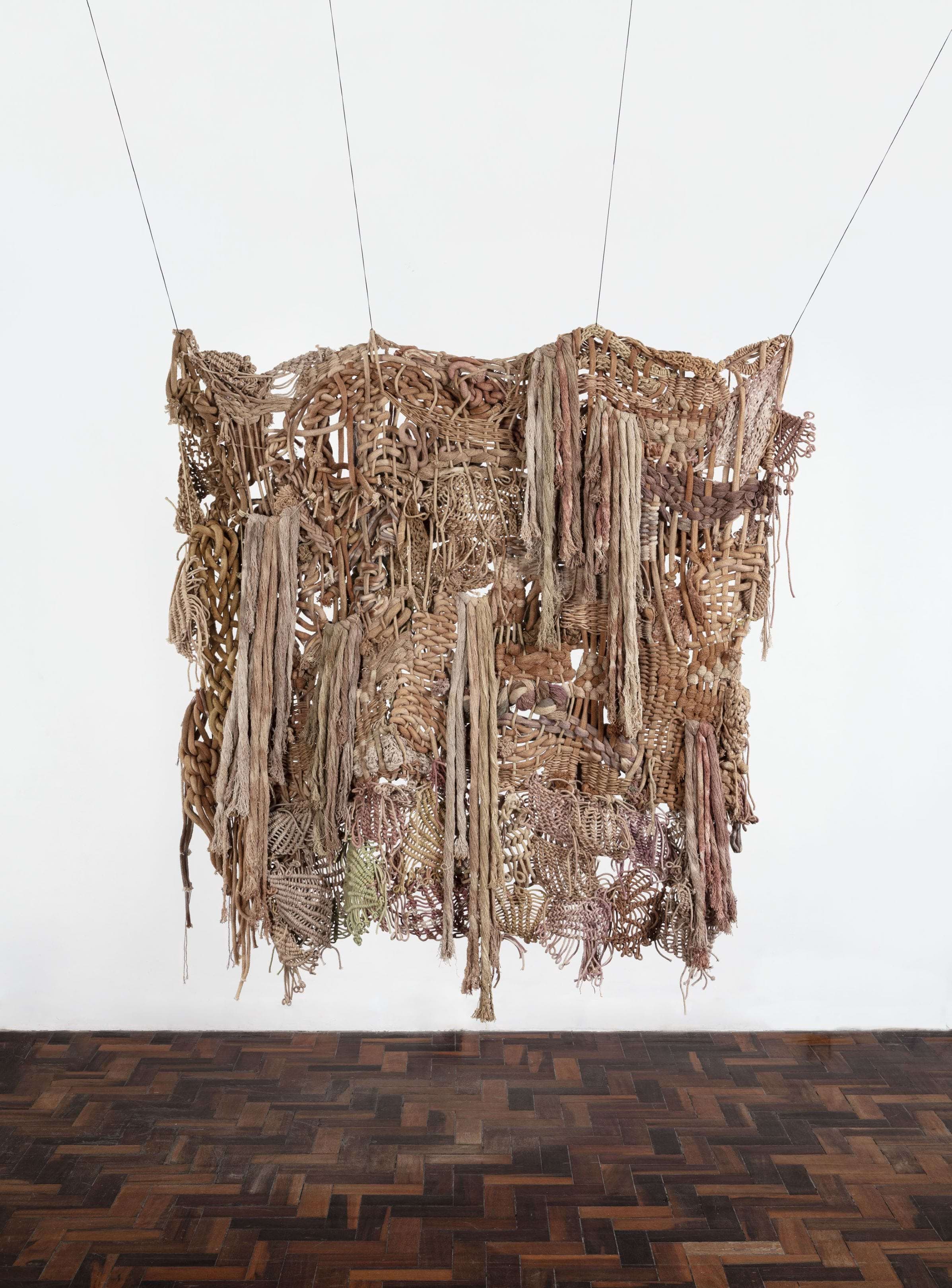
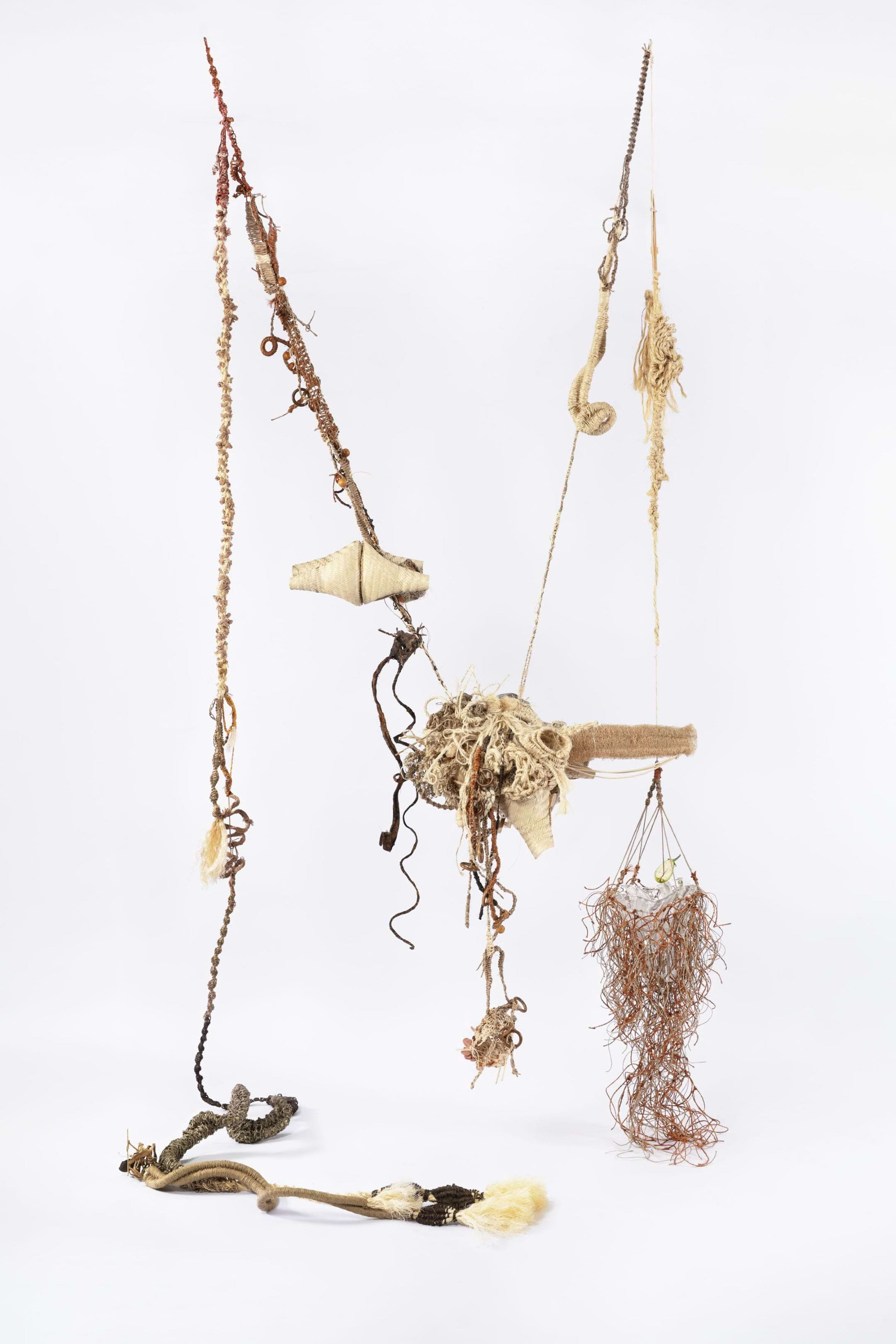
‘Chupa Cabra’ draws on the mythical creature from folklore across the Americas, known for its reported attacks on livestock, particularly goats. The name, meaning “goat sucker,” refers to its supposed vampiric behaviour, feeding on the blood of animals under the cover of night. Often described in conflicting accounts, the Chupa Cabra occupies a space between fear and fascination, its form shifting across stories and geographies.
In Laura Lima’s interpretation, the creature is evoked through a richly layered construction of raw cotton threads dyed with a wide array of natural pigments including black acacia, beetroot, coffee, tobacco, red wine, and indigo, combined with steel wire. The resulting work carries a sense of suspended tension and restless energy, suggesting a presence that is both material and elusive. As with much of Lima’s practice, Chupa Cabra resists easy definition, inviting viewers into a space shaped by uncertainty, transformation, and the quiet persistence of myth.
Video
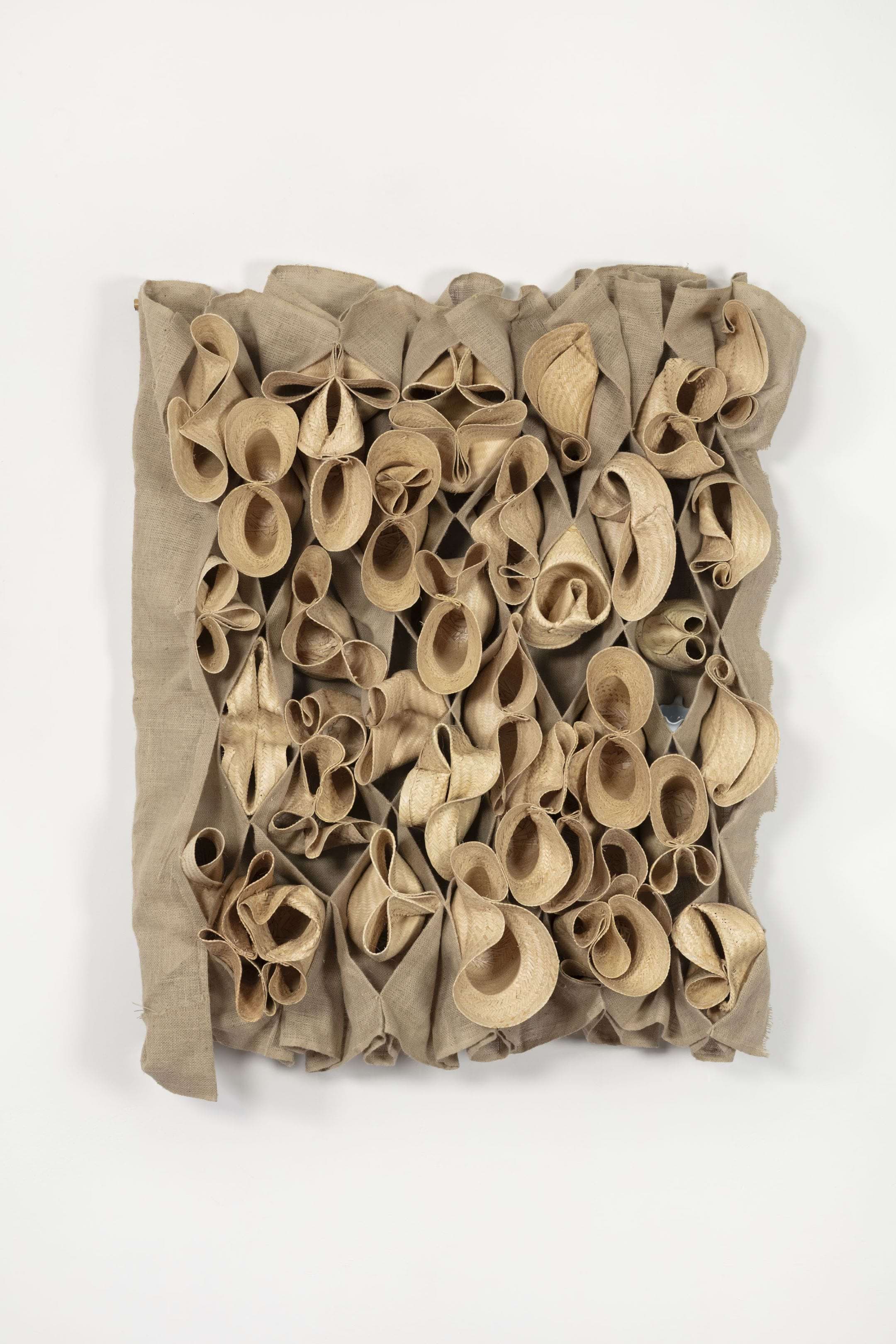
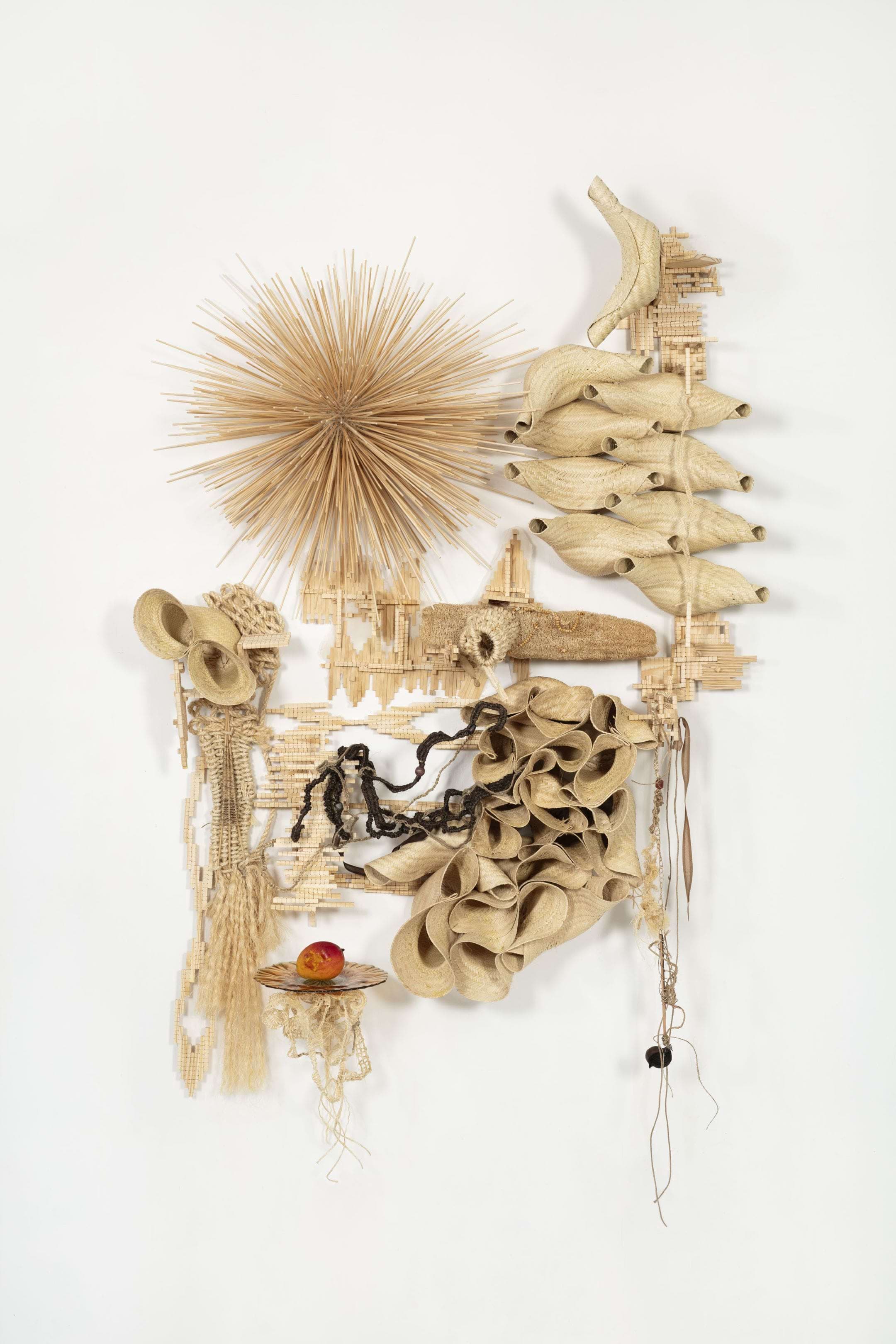
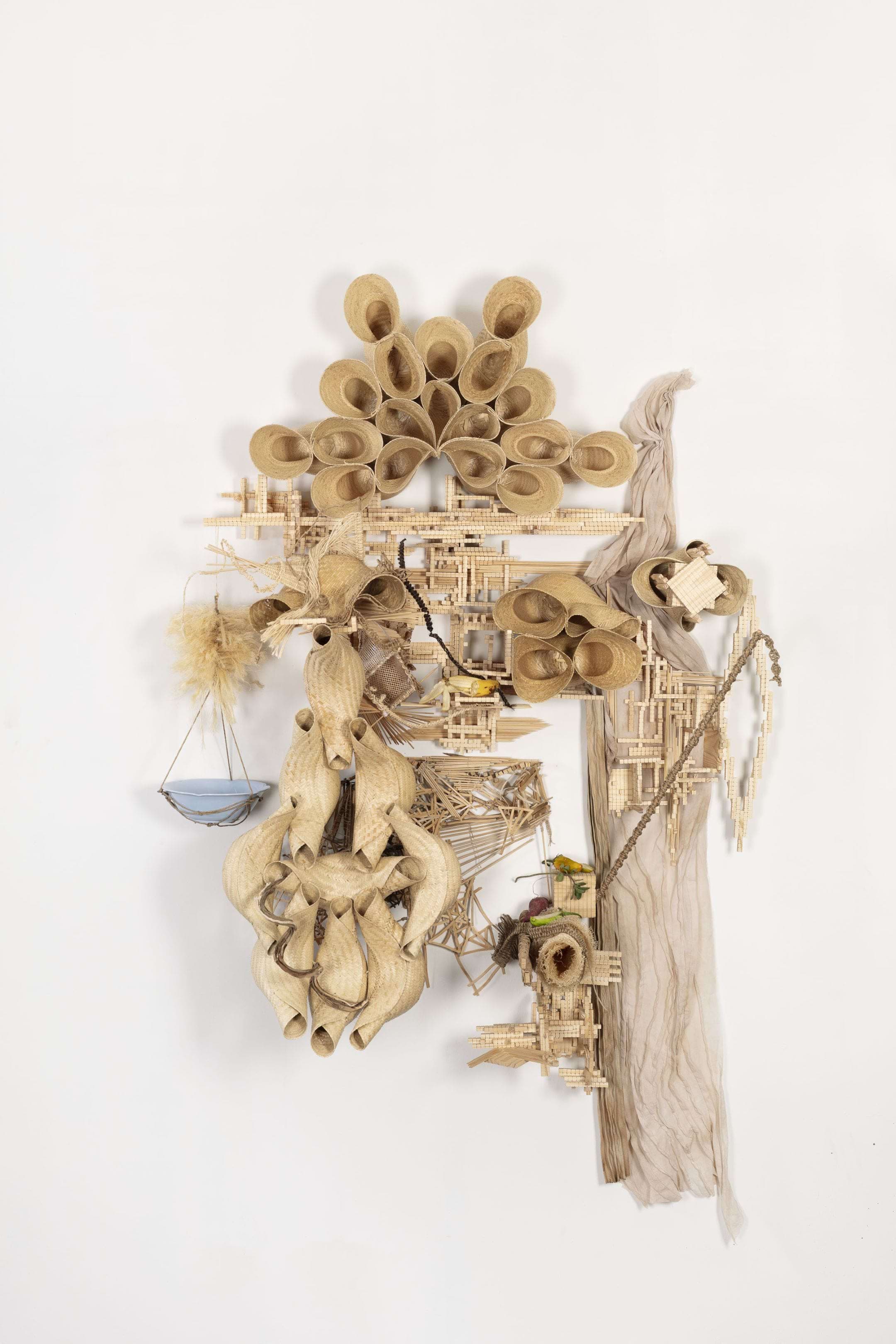
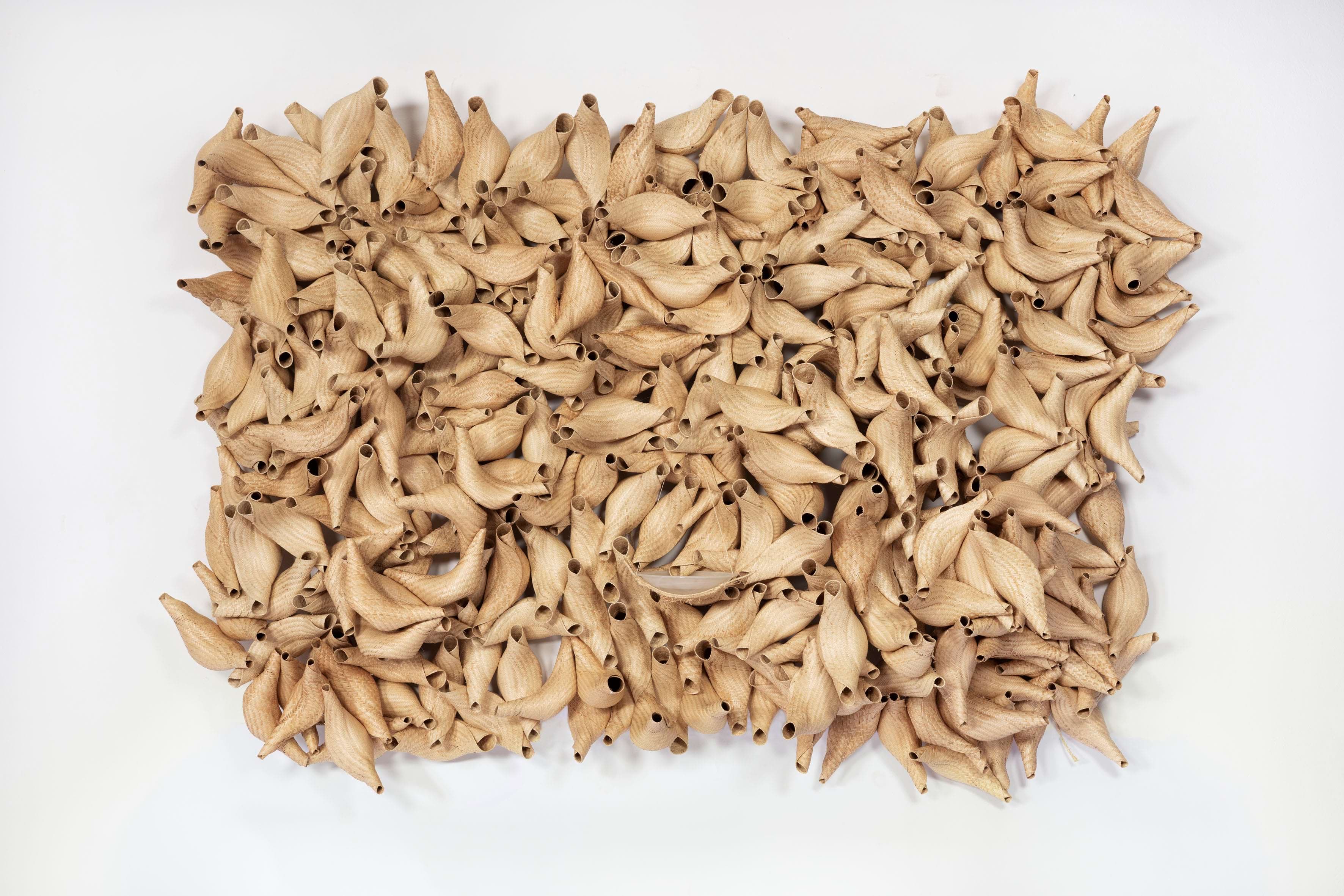
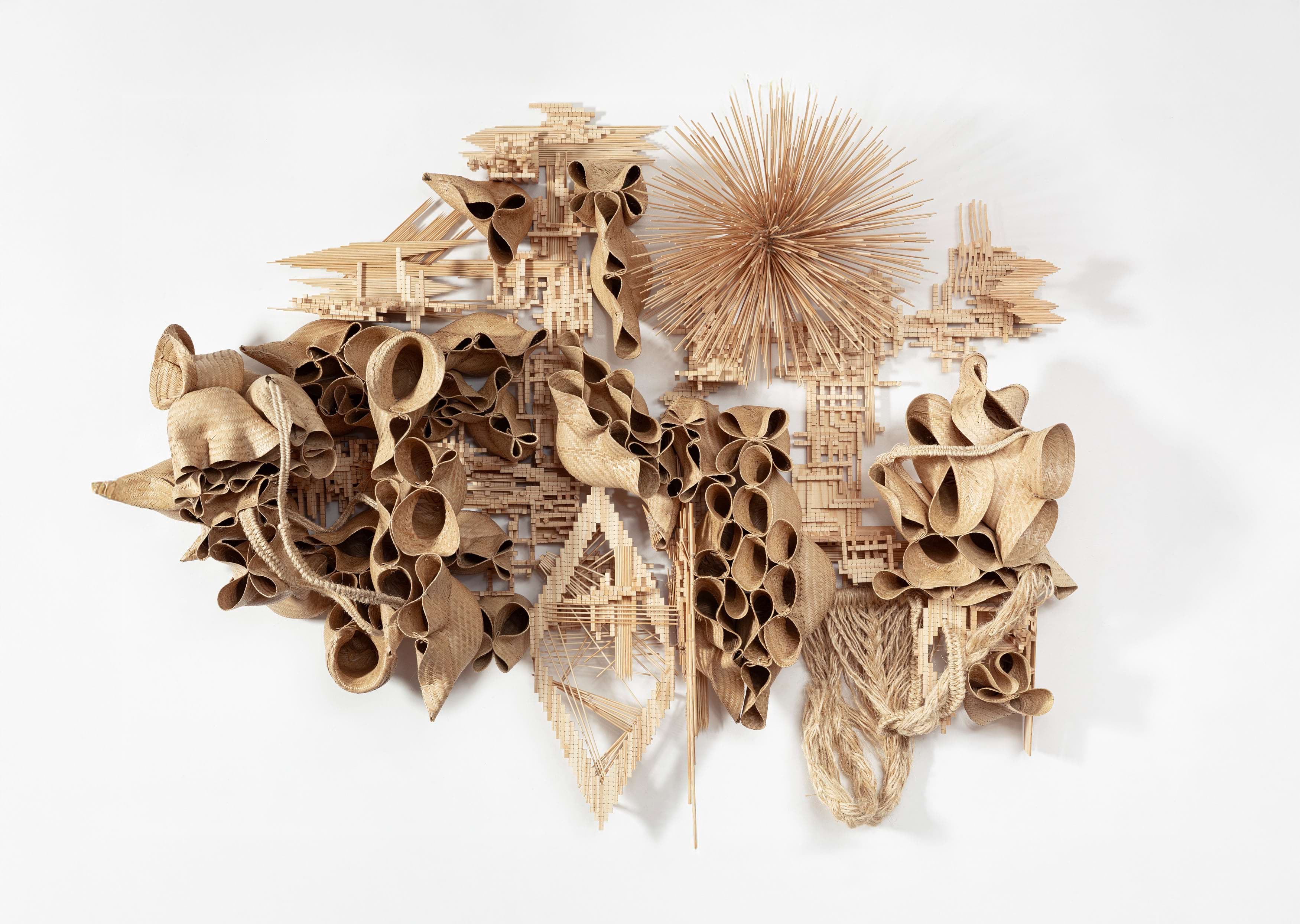
Lima’s work has always been deeply concerned with living things, with the vibration, unpredictability, and ongoing transformation of animate matter. Across three decades, her practice has traced the thresholds between bodies, creatures, environments, and the forces that shape them. ‘Ninho Comunal (Cocote)’ forms part of a body of work that continues this for which she created what she referred to as “architectural-sculptures”, offering a new kind of habitat for a variety of species – birds, squirrels, rodents and even their predators. The nests are made out of straw hats, sticks, adorned perches deliberately inviting interaction, and transformation. With the straw hats, she takes something designed for and by humans, and with a simple fold recreates it as a potential home for smaller creatures.