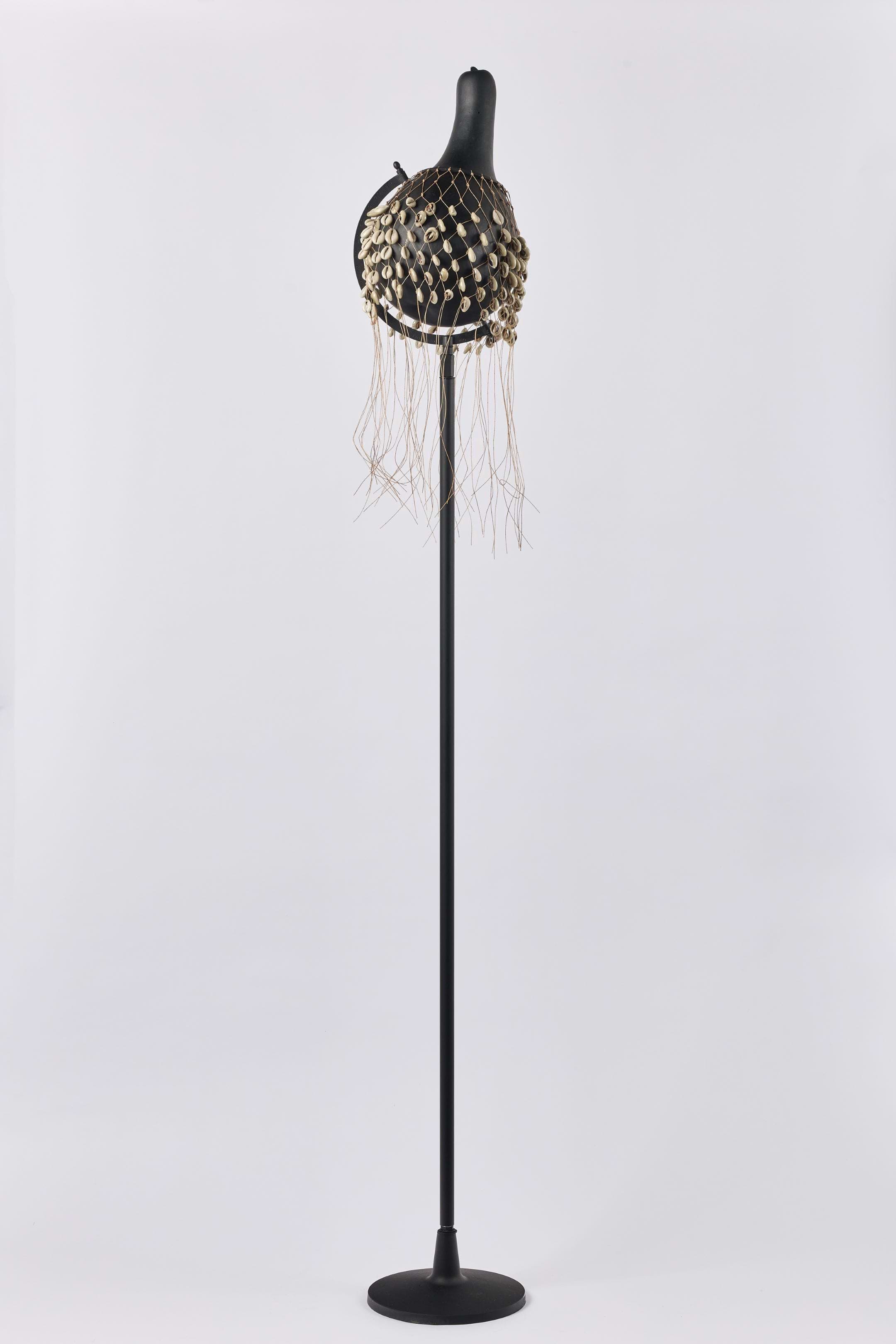
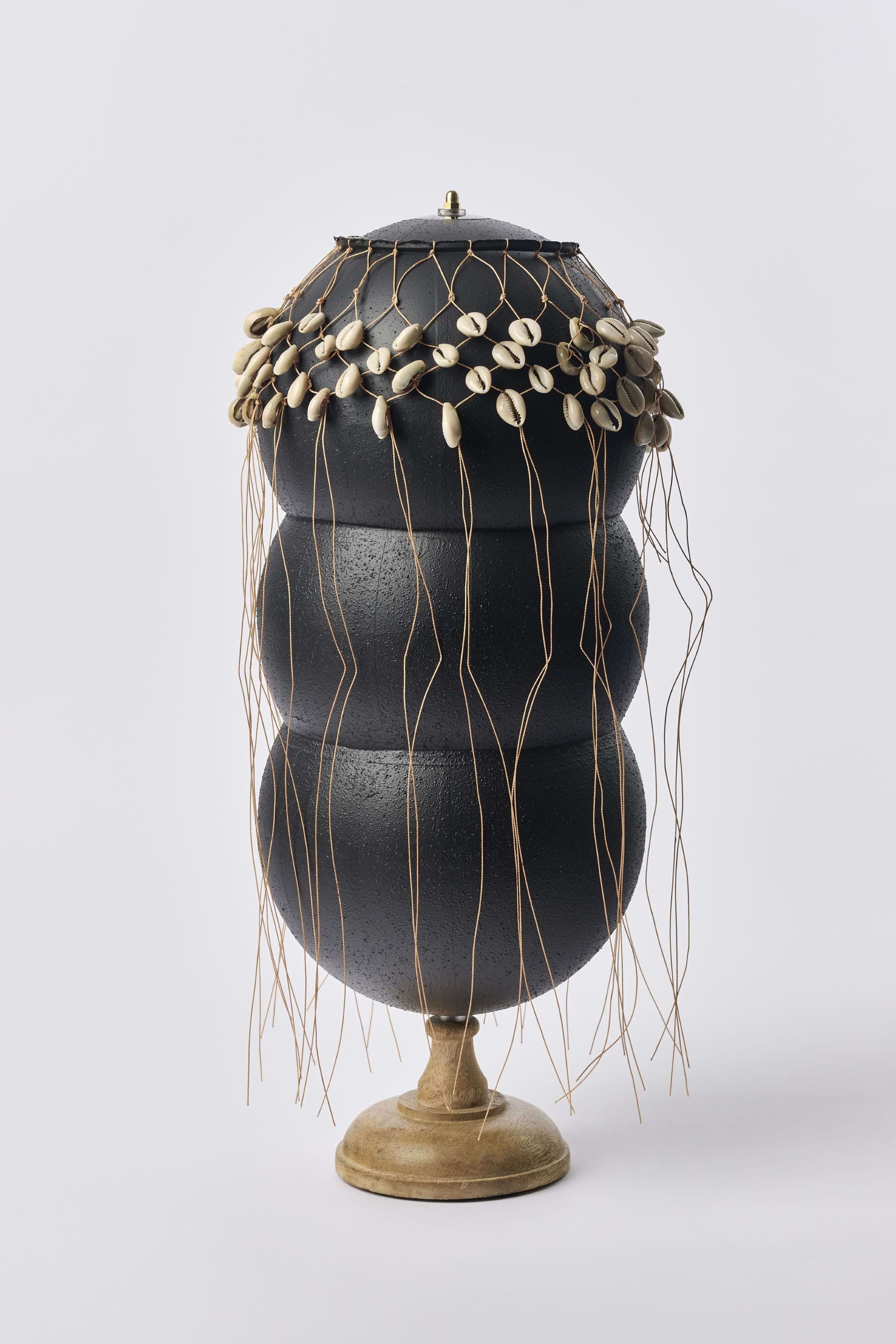
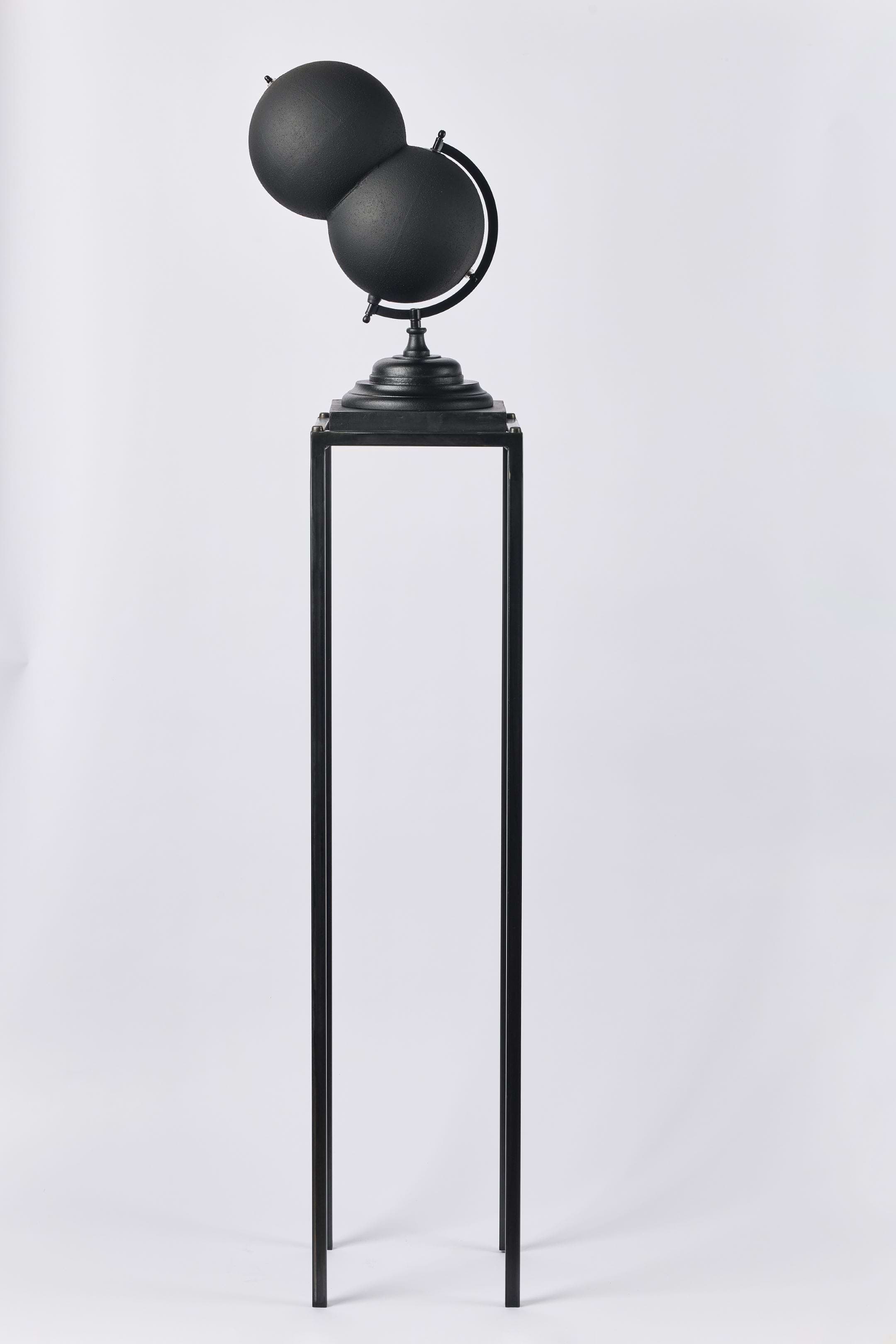
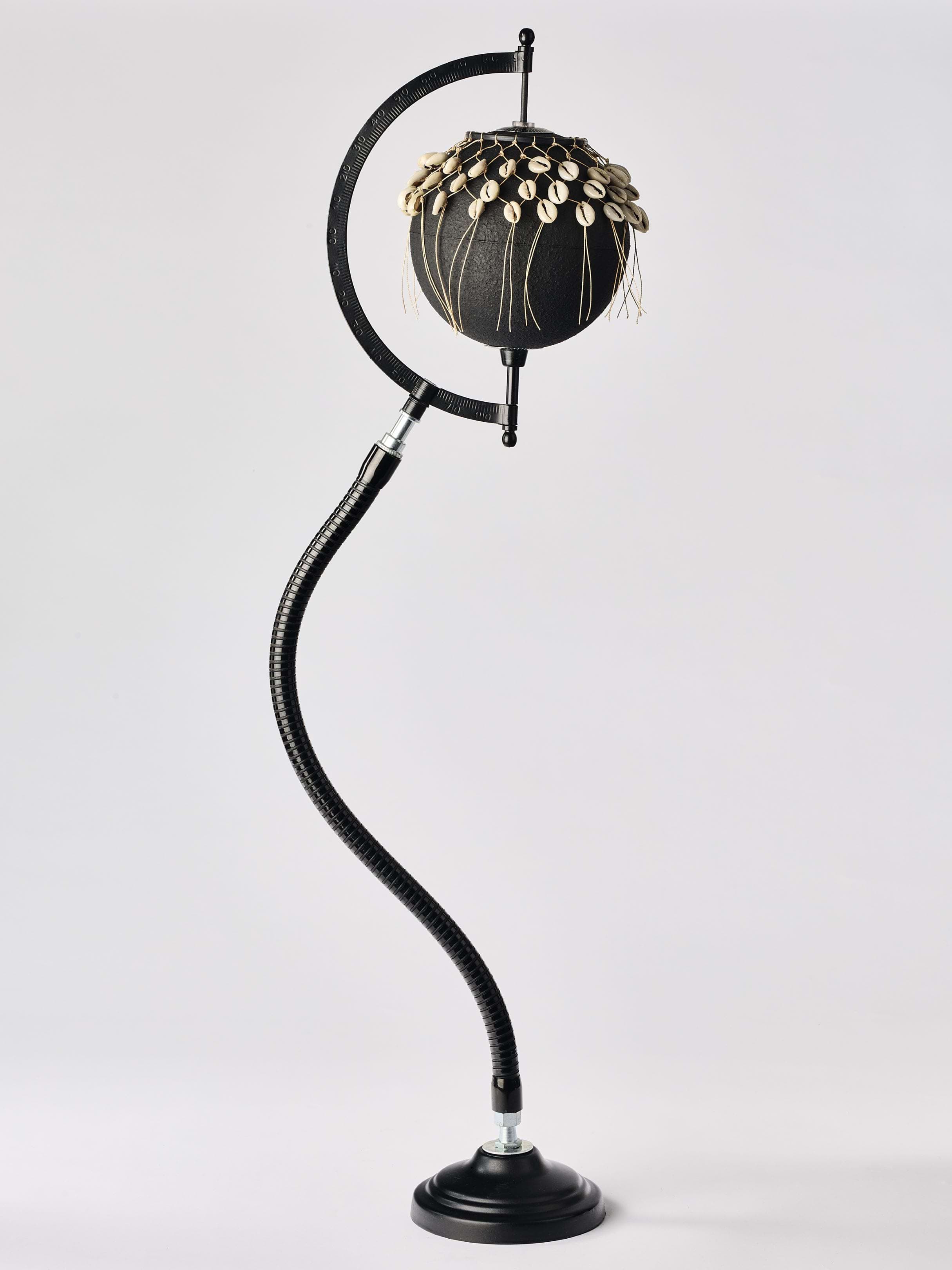
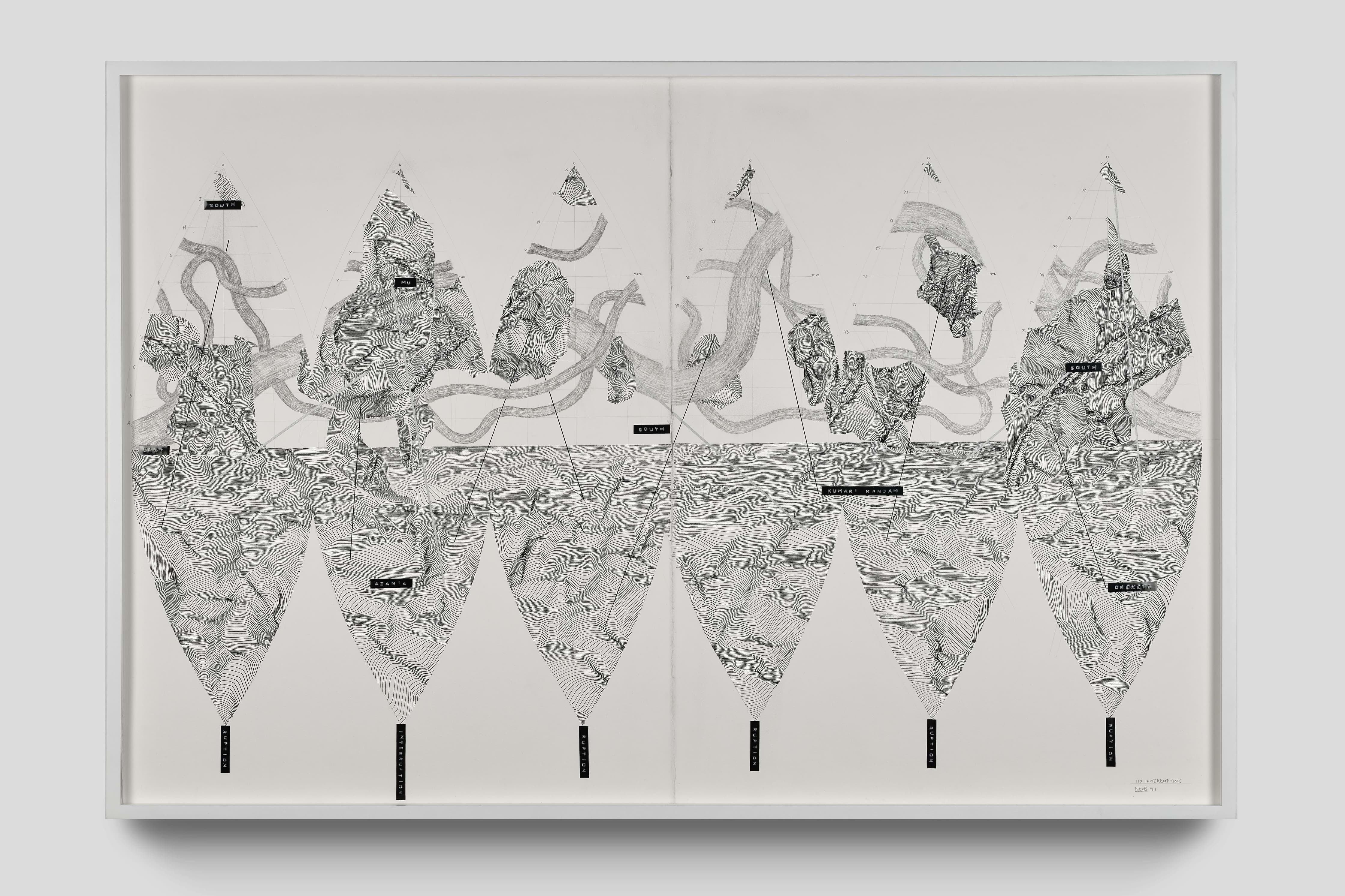
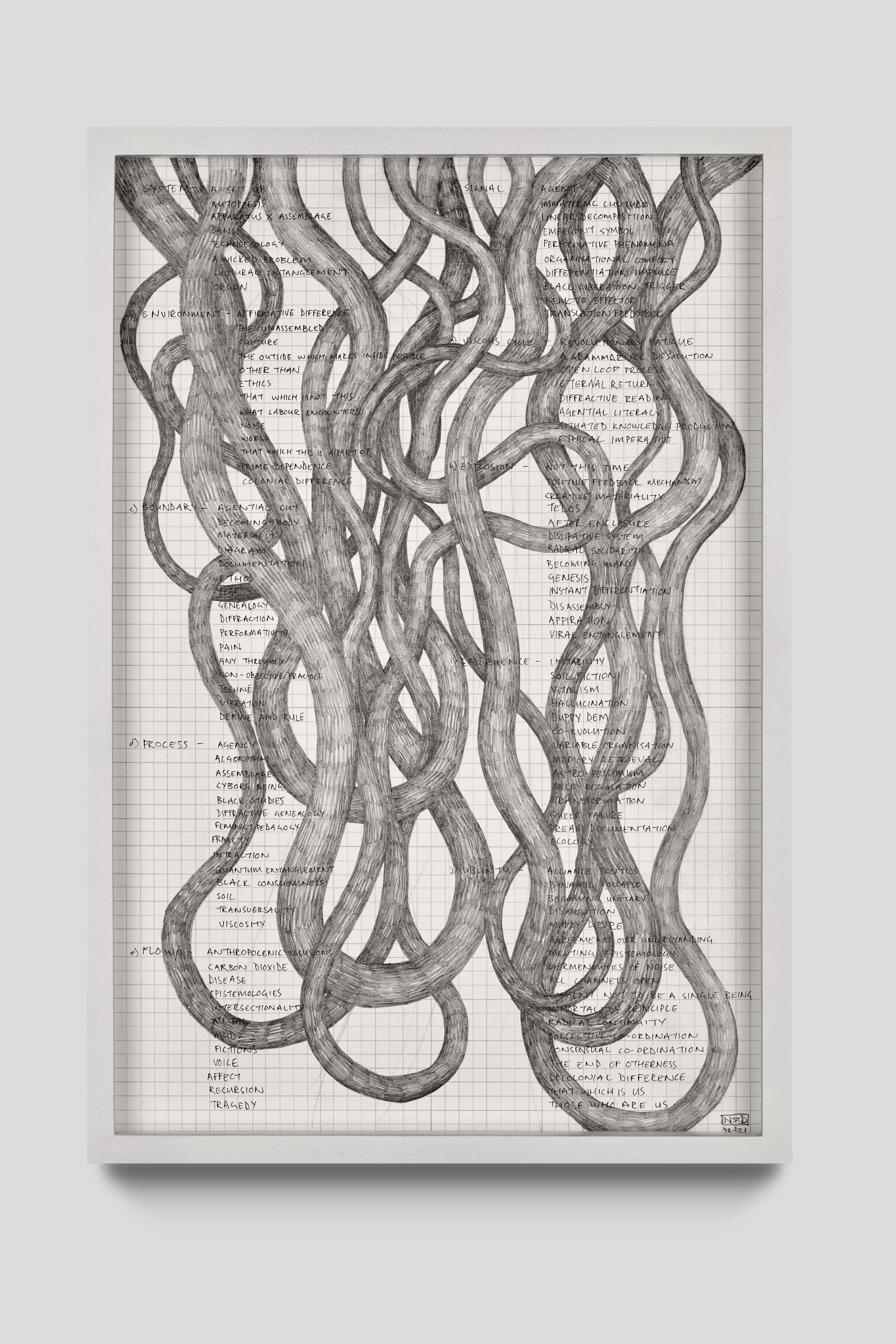
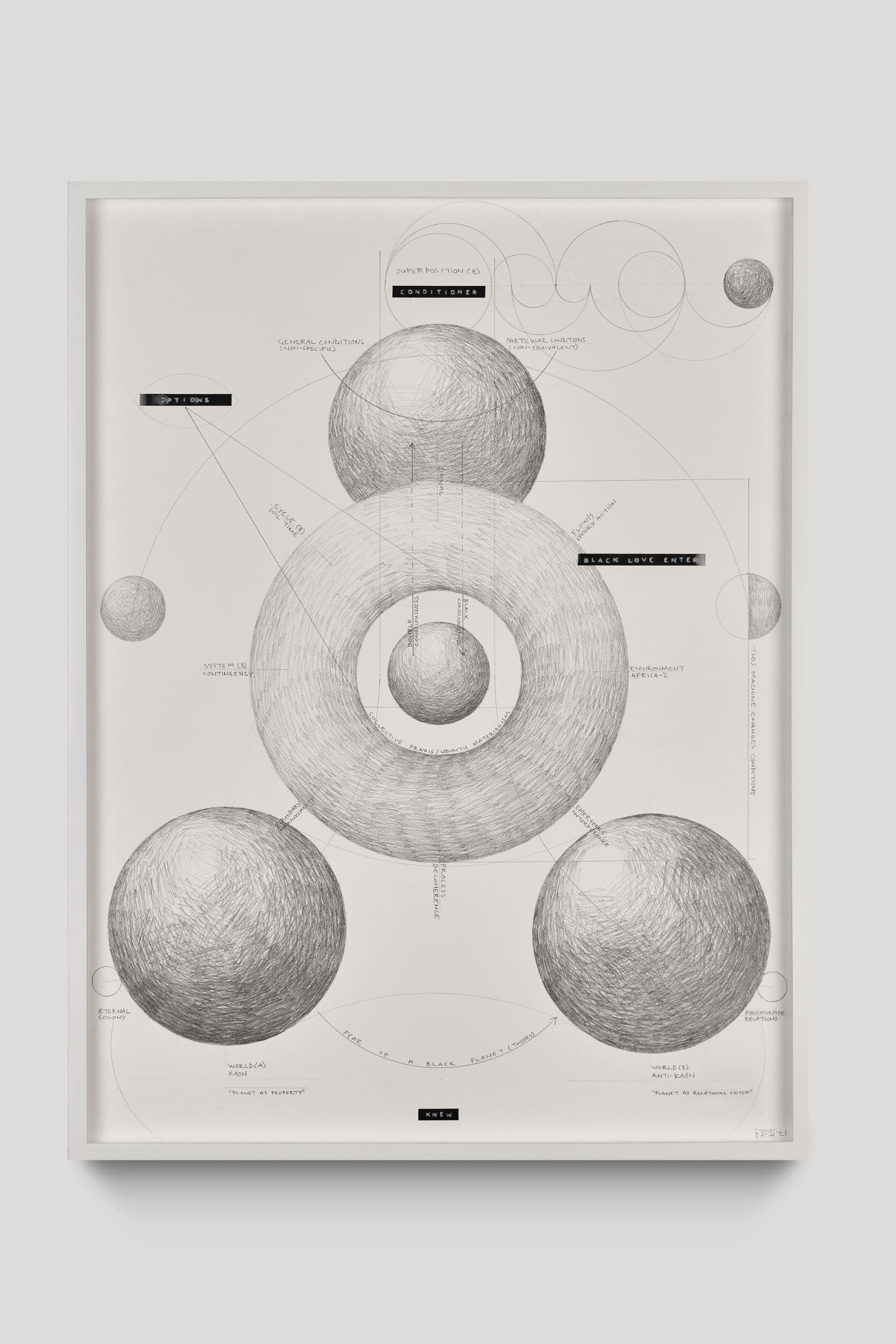
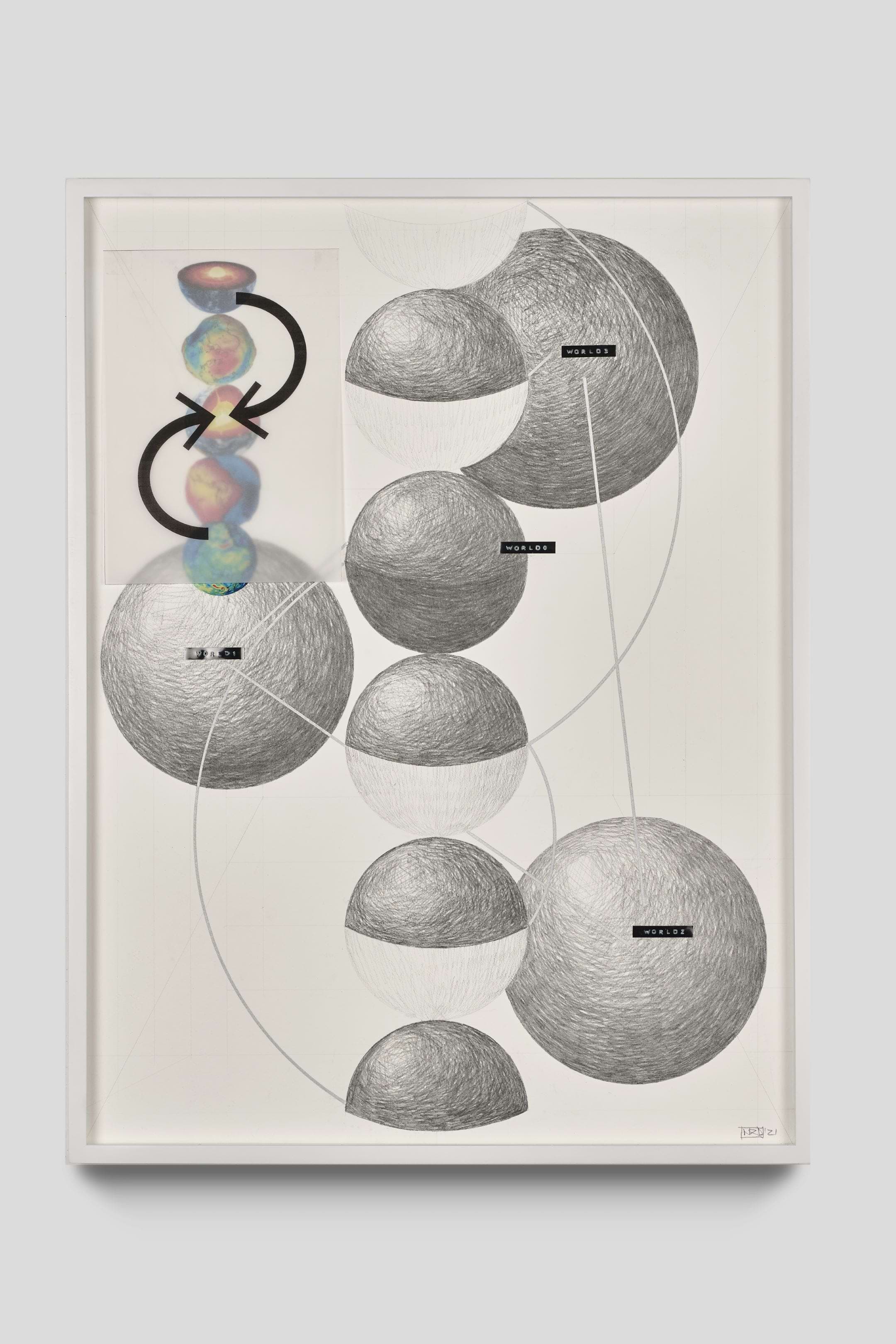
un voile with pillar forms part of Dennis' body of work, conditions, which is centred around the spherical globe, an idealised figure of the planet in Western cosmology which is seamless, smooth, unitary and knowable. Counter to this image of the world, Dennis proposes a series of transformations of the sphere, stretching and distorting the model in order to find space for other worlds, other world possibilities. Dennis’ explorations of a more awkward language to overwrite the globe builds on feminist, Marxist and postcolonial theorists whose work troubles the singular perspectives of the planet.
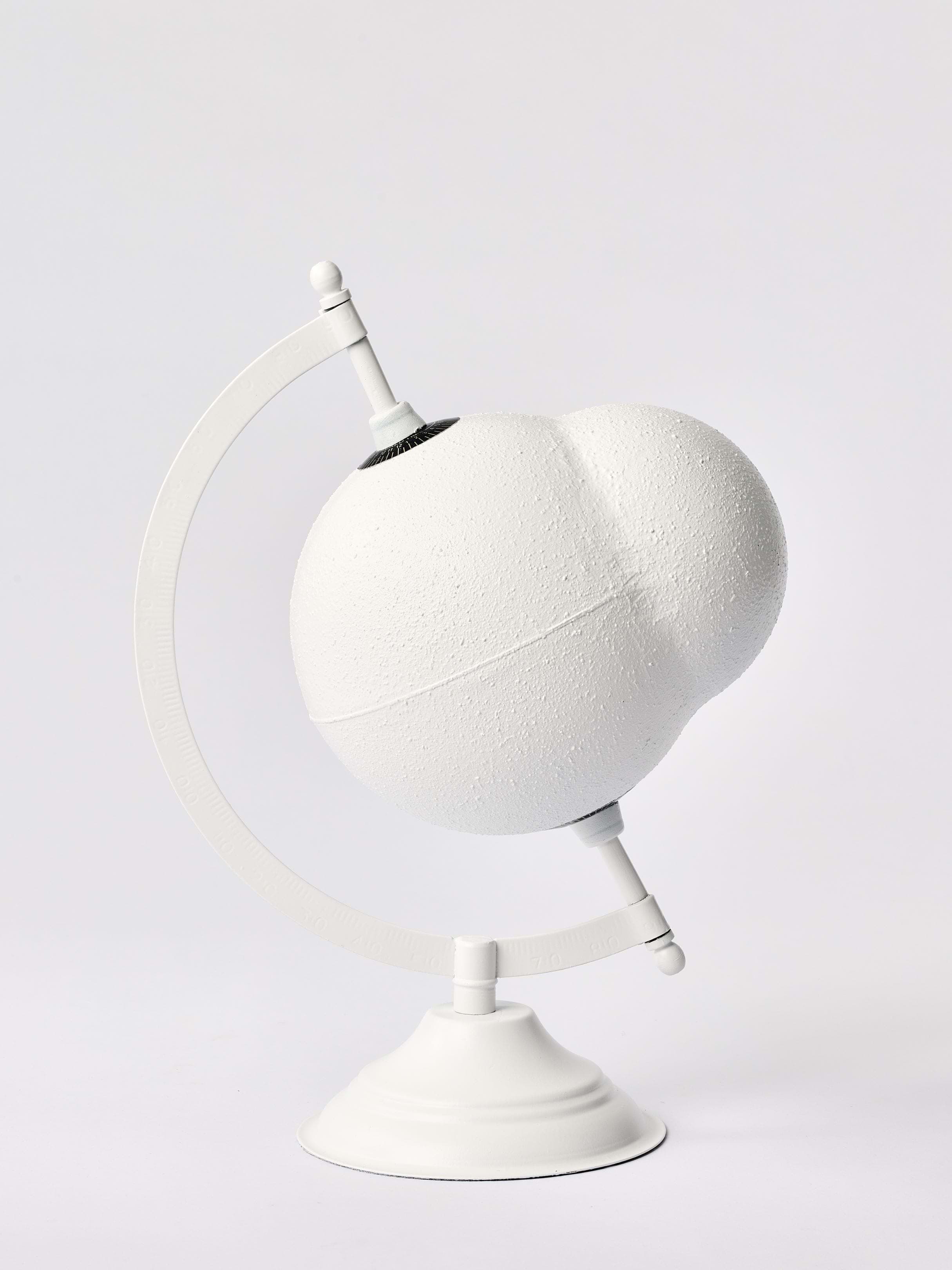
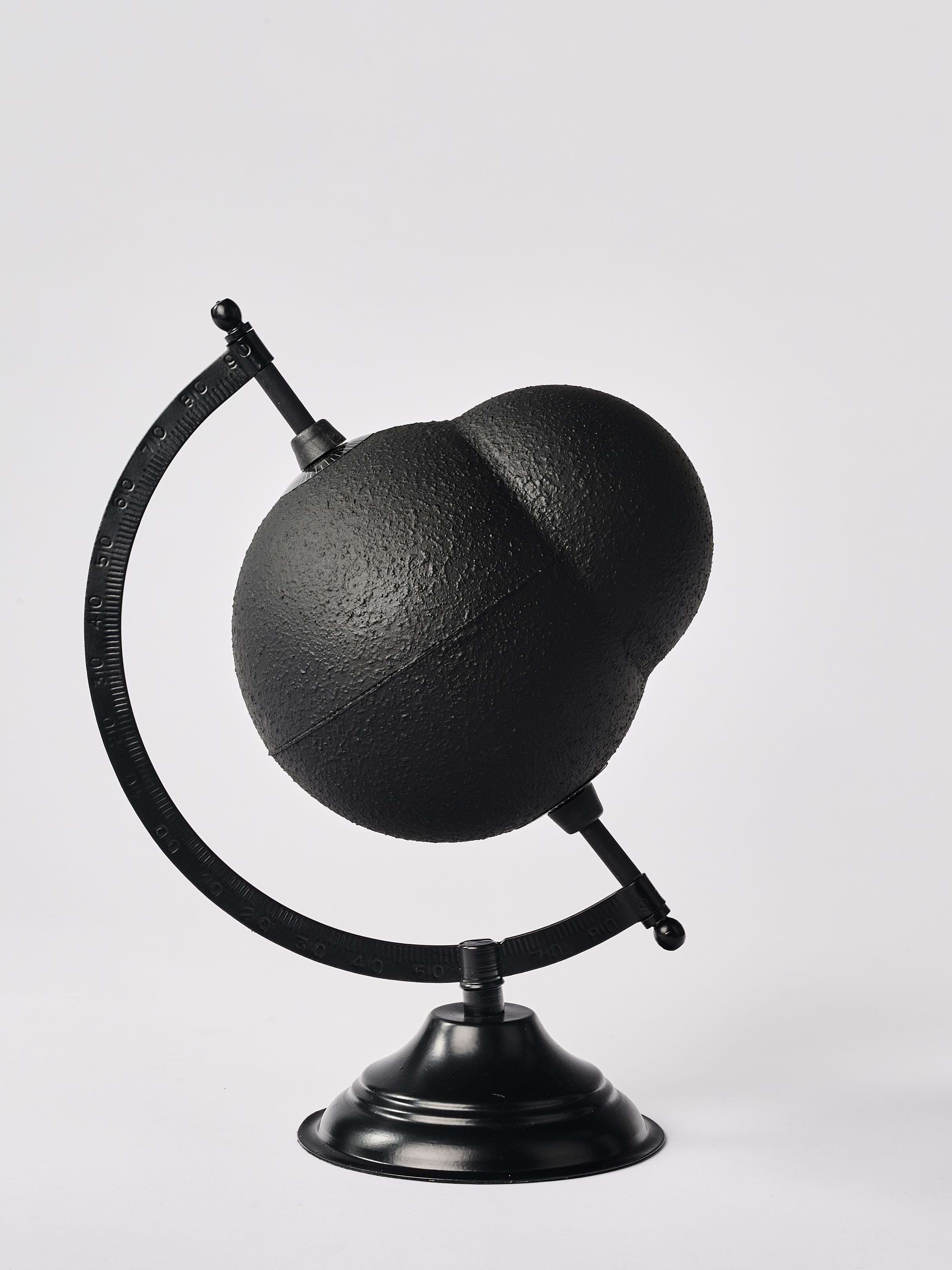
This series takes the terrestrial globe as a starting point and performs a series of simple
transformations: doubling, halving, substitutions. These prepared globes become instruments
for considering other planetary possibilities.
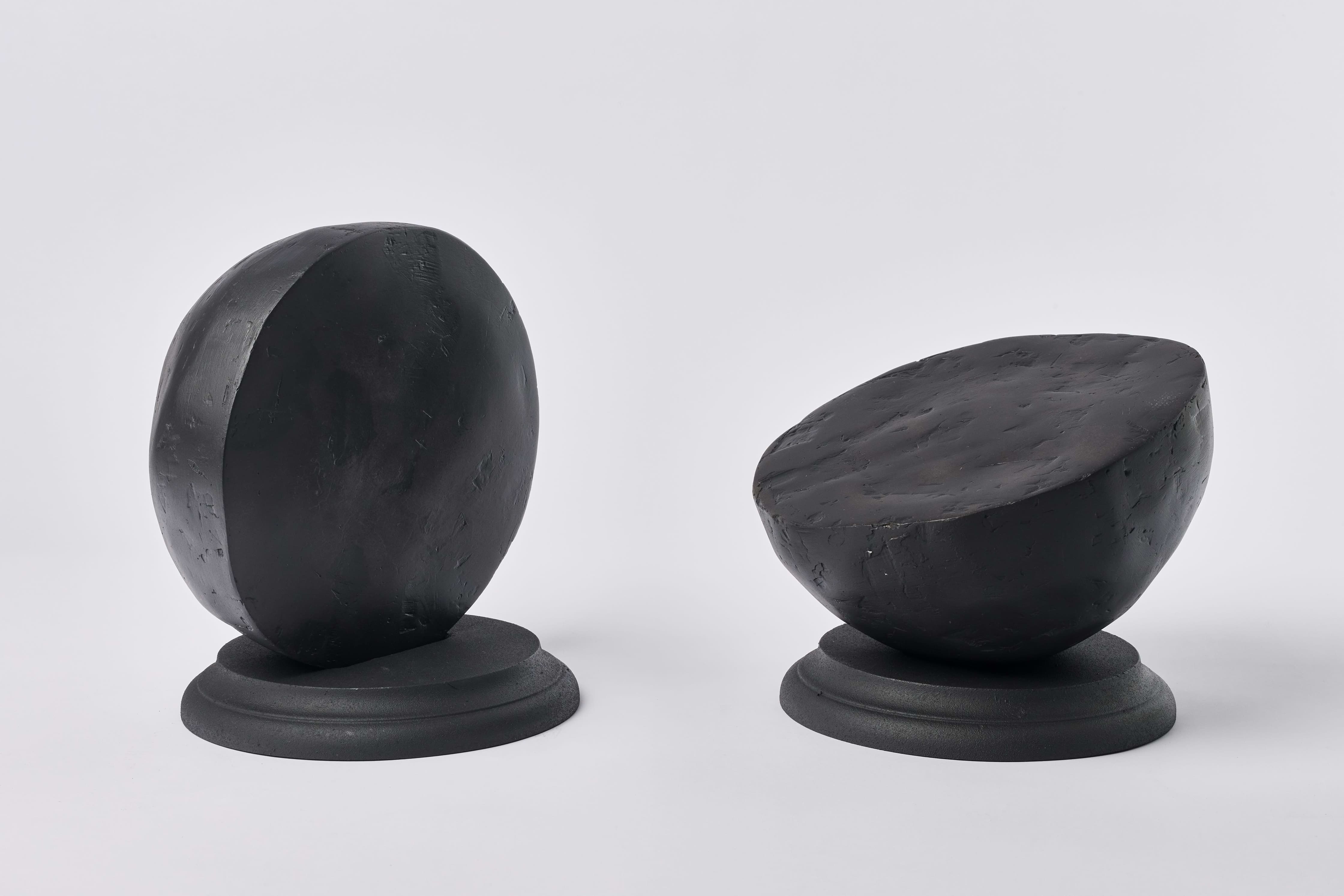
This series takes the terrestrial globe as a starting point and performs a series of simple transformations: doubling, halving, substitutions. These prepared globes become instruments for considering other planetary possibilities.
Dennis notes;
“Within this burning planet has always existed another world, and the struggle to realise it,” says Dennis. “The logic of colonial cosmology insists on the universality of the Western world: a planet rendered as private property, as social violence, as deliberate crisis. Occupying the same space and time as the colonial planet are other worlds. A planet rendered whole as indigenous land and life; a queer planet rendered just, feminist, socialist; a planet facing south, and east, and waterward. Altogether an ecology of black planets – a black cosmography (where black is a vector that opens toward hidden conditions of space and time).”
This series takes the terrestrial globe as a starting point and performs a series of simple
transformations: doubling, halving, substitutions. These prepared globes become instruments
for considering other planetary possibilities.
This series takes the terrestrial globe as a starting point and performs a series of simple
transformations: doubling, halving, substitutions. These prepared globes become instruments
for considering other planetary possibilities.
binary model (after Public Enemy) forms part of Dennis' body of work, conditions, which is centred around the spherical globe, an idealised figure of the planet in Western cosmology which is seamless, smooth, unitary and knowable. Counter to this image of the world, Dennis proposes a series of transformations of the sphere, stretching and distorting the model in order to find space for other worlds, other world possibilities.
He explains; “A materialist account of change considers the interaction between two forces, a dialectic between objective conditions, which is the situation of the world as we find it. Let's say the structures of alienation, exploitation, distribution of resources and violence. So, there’s a dialectic between these objective conditions and subjective conditions, which are the conscious organisations of history, technology, material and metaphysics, in order to either maintain or transform those objective conditions on the planet.”
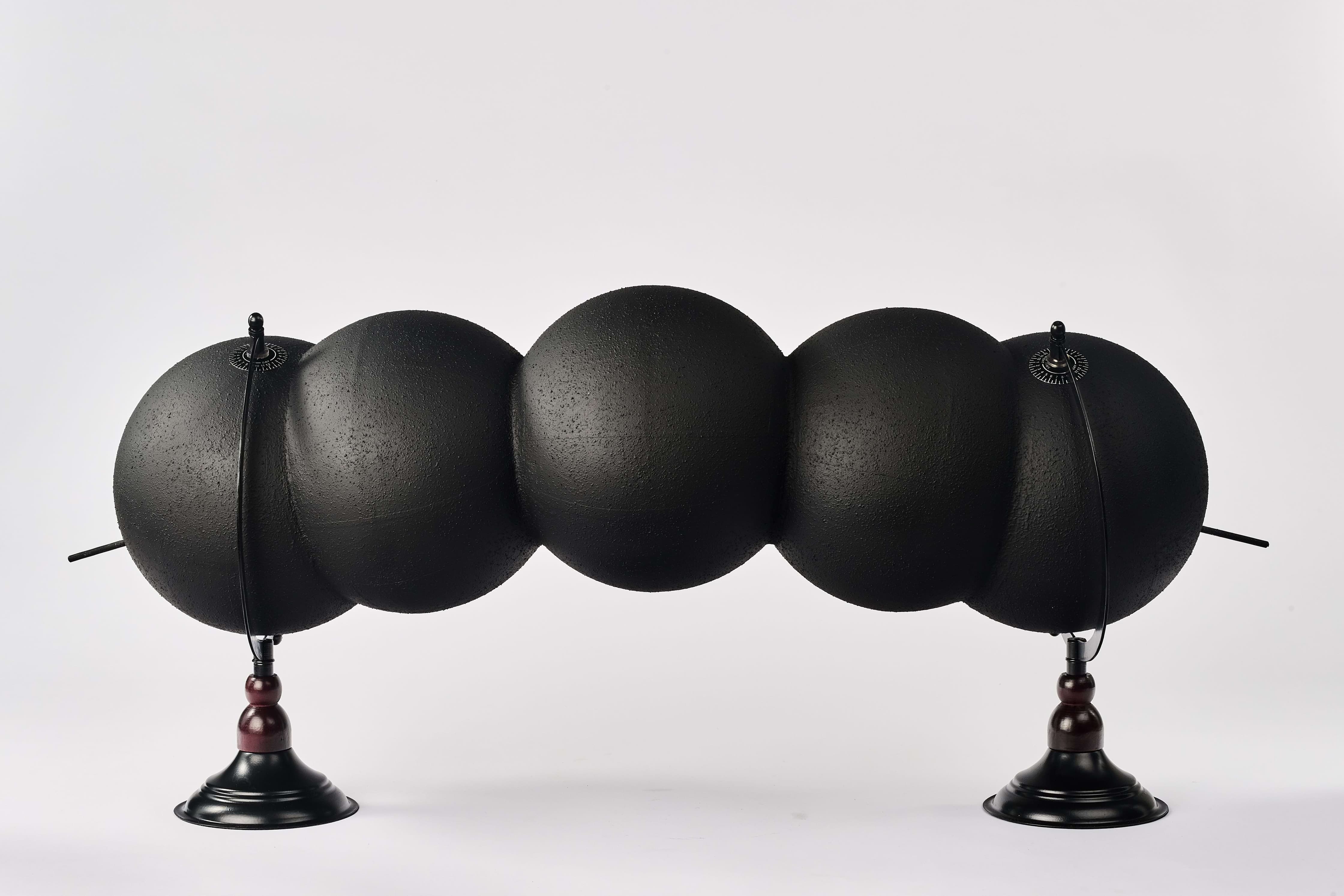
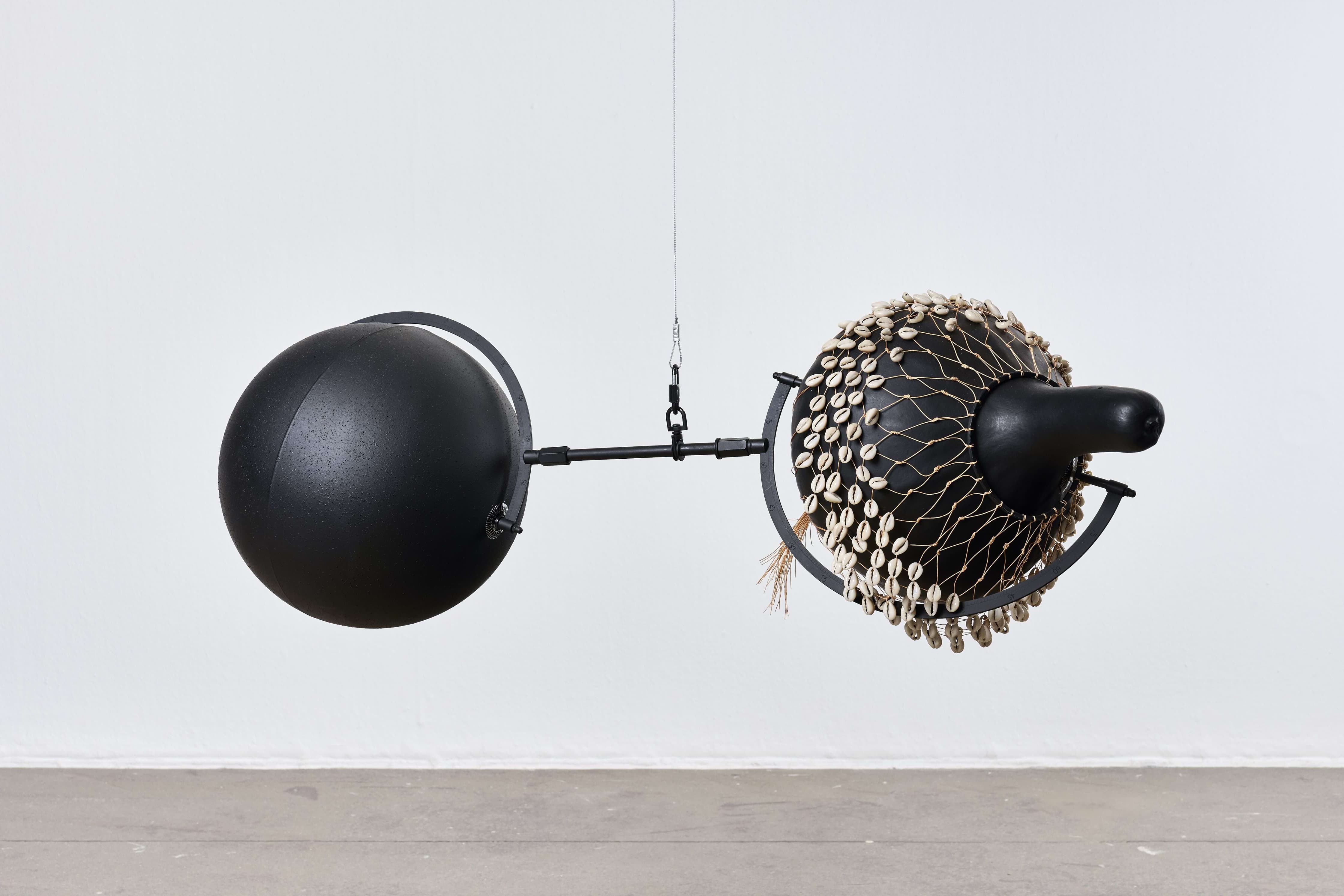
In ‘cycliverse model (cosmogony)’ a series of black spheres trace an arc between two standing globes. This shape references a theoretical model in cosmology where the universe undergoes cycles of contraction and expansion, moving from one beginning to another. In this model the origins of the world are always connected to the end of another world.
This series takes the terrestrial globe as a starting point and performs a series of simple transformations: doubling, halving, substitutions. These prepared globes become instruments for considering other planetary possibilities. ‘un voile with articulated arm (Former Land)’ uses a cowry shell net as a veil over a black globe, referencing cultural uses of cowry shells in spiritual and protective instruments.
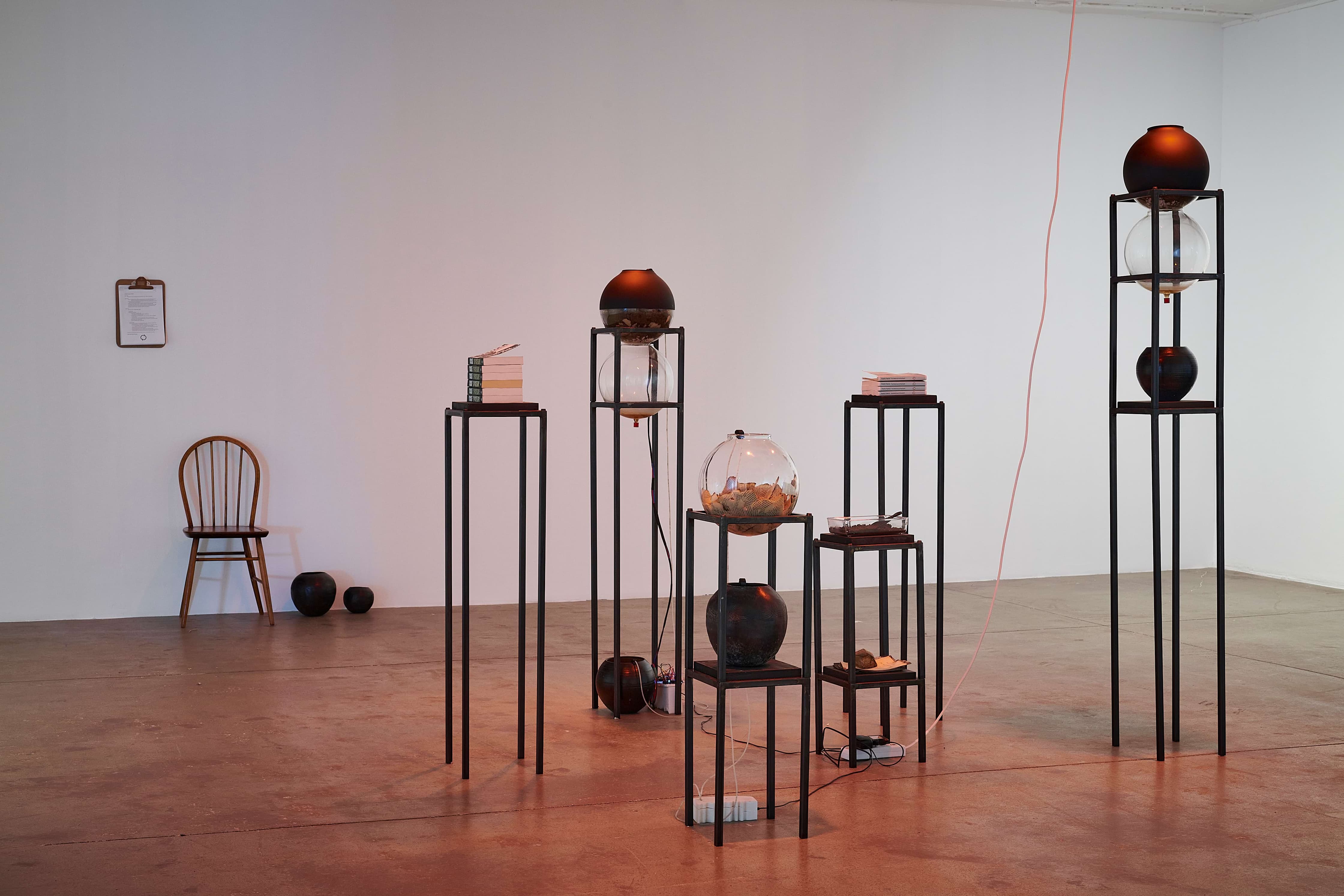
‘a garden for fanon’ - a set of stands, glass globes, izinkhamba pots, machine and human protocols for caring for a community of earthworms. The installation is assembled to provide an ideal environment for the community of earthworms to work through the body of the Pan-African philosopher and psychologist Frantz Fanon’s final book, ‘The Wretched of the Earth’. This garden is an ideal environment in the sense of a utopia. It sits apart from the world. A fabricated island as a model for a kind of landlessness that writhes and recreates the land, let’s say the world, on its own terms.
Our role here is not to observe or contemplate the garden as a work of art but to tend to the conditions that make the garden possible. Simply, one must feed the worms, one must maintain a conducive temperature, humidity and illumination. What comes at the end is a result of what we put in, and what we dont. Some soil and leachate and more worms and some time spent together caring.
not here forms part of Dennis' body of work, conditions, which is centred around the spherical globe, an idealised figure of the planet in Western cosmology which is seamless, smooth, unitary and knowable. Counter to this image of the world, Dennis proposes a series of transformations of the sphere, stretching and distorting the model in order to find space for other worlds, other world possibilities. He explains;
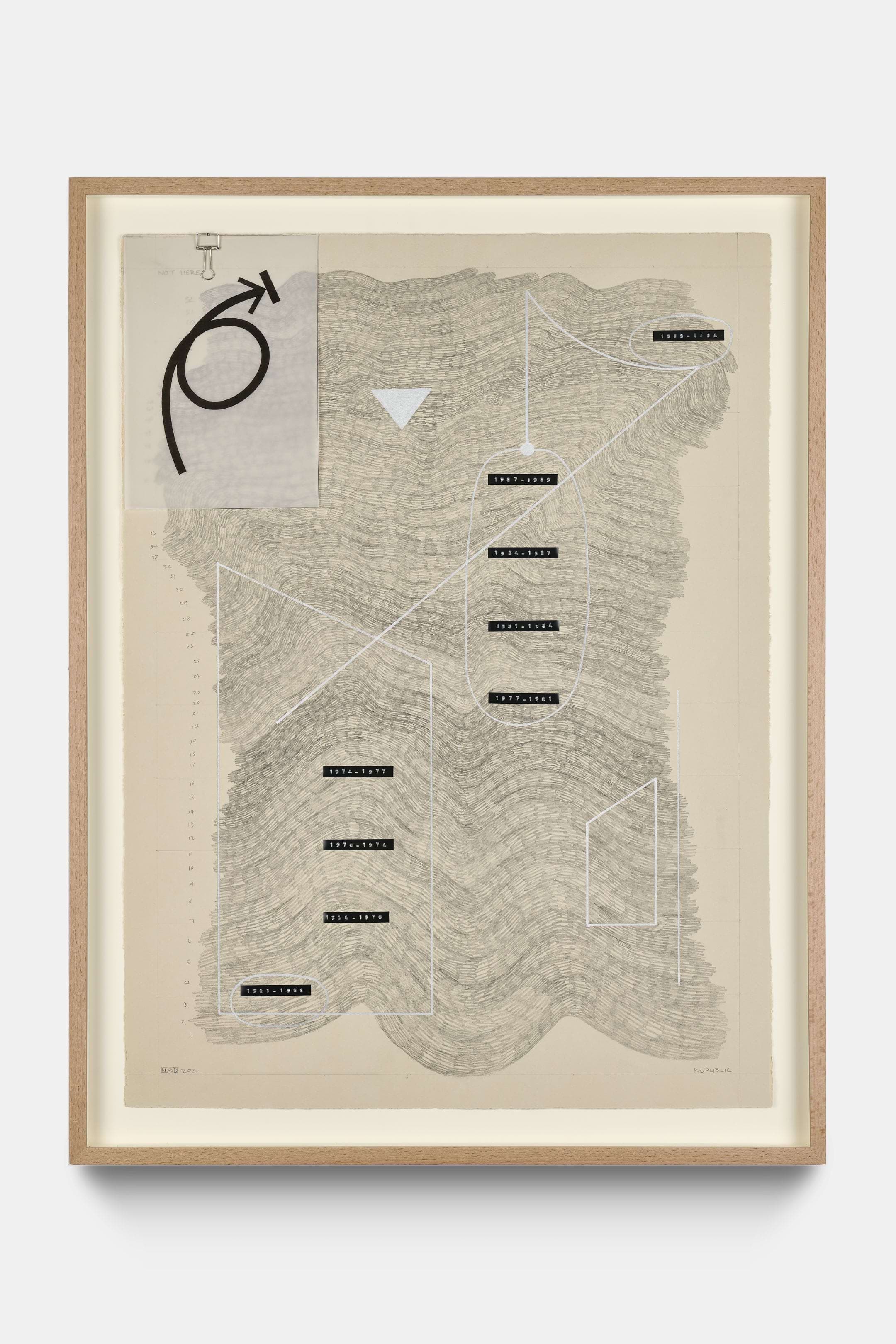
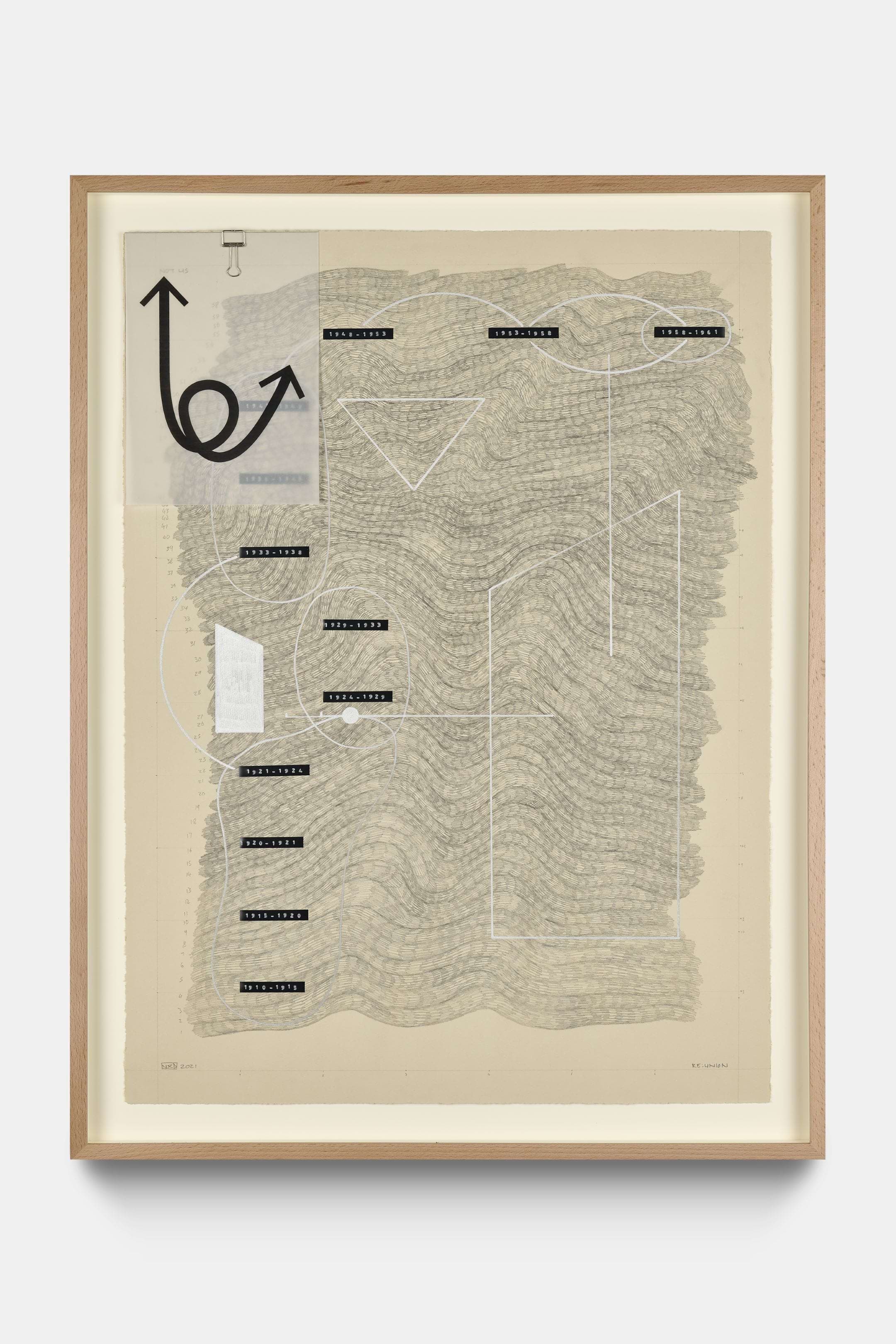
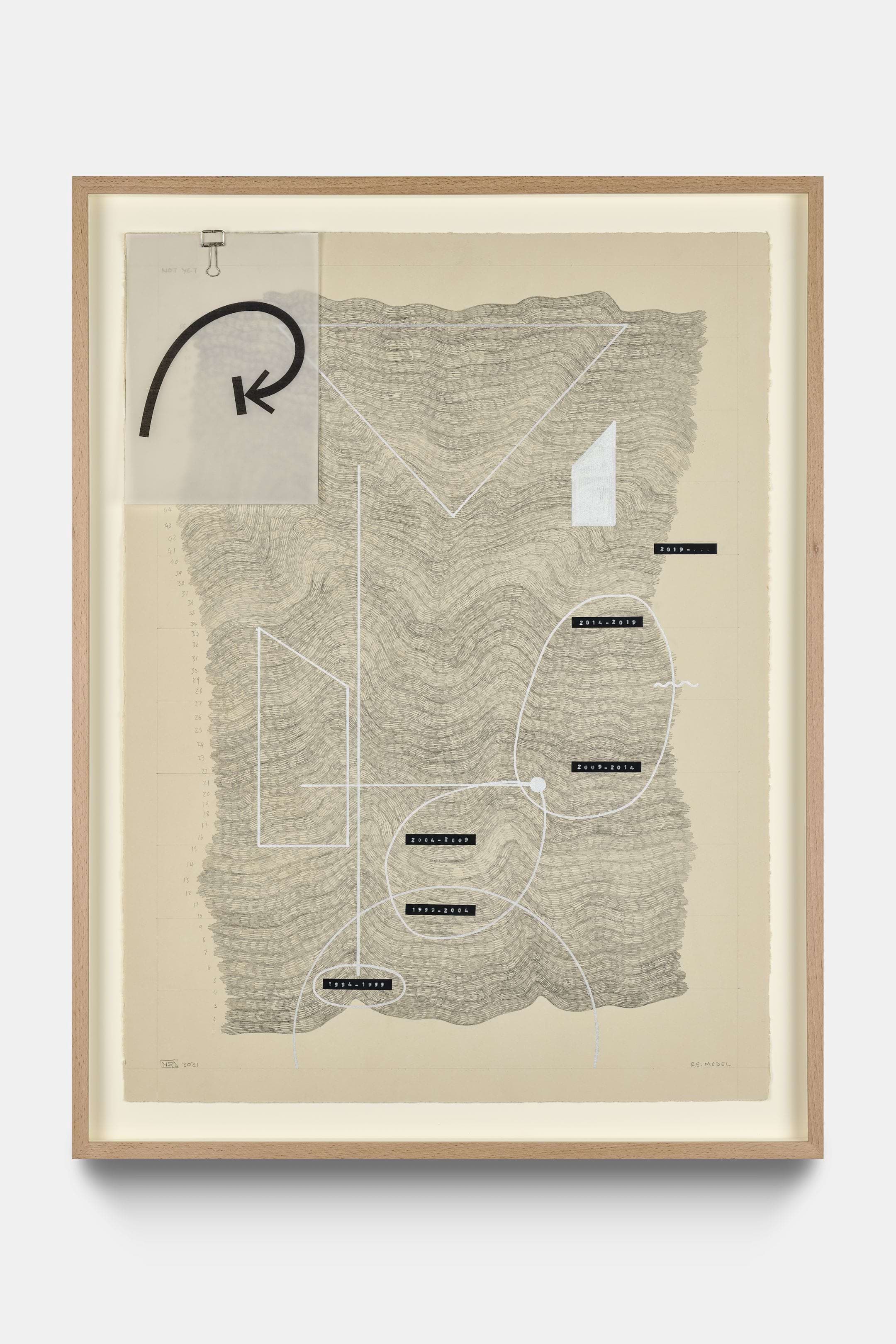
“Three drawings trace a short century of South African parliaments as stratigraphic features within the land. I borrow a representational language from geology, as well as the geologic principle of lateral continuity to think about this, our democratic representational form, this parliamentary structure of the state and its, maybe necessary, maybe tragic, principle of continuity. Familiar shapes in silver anticipate the symbolic geometry of the long transition from South Africa as a settler colonial object into something altogether different. And yet a certain legal continuity still connects the parliamentary system of the Apartheid state and our current state. Opposite this set of drawings is an isiZulu copy of the South African constitution pinned open to the page that describes the South African flag.”
not us forms part of Dennis' body of work, conditions, which is centred around the spherical globe, an idealised figure of the planet in Western cosmology which is seamless, smooth, unitary and knowable. Counter to this image of the world, Dennis proposes a series of transformations of the sphere, stretching and distorting the model in order to find space for other worlds, other world possibilities. He explains;
“Three drawings trace a short century of South African parliaments as stratigraphic features within the land. I borrow a representational language from geology, as well as the geologic principle of lateral continuity to think about this, our democratic representational form, this parliamentary structure of the state and its, maybe necessary, maybe tragic, principle of continuity. Familiar shapes in silver anticipate the symbolic geometry of the long transition from South Africa as a settler colonial object into something altogether different. And yet a certain legal continuity still connects the parliamentary system of the Apartheid state and our current state. Opposite this set of drawings is an isiZulu copy of the South African constitution pinned open to the page that describes the South African flag.”
not yet forms part of Dennis' body of work, conditions, which is centred around the spherical globe, an idealised figure of the planet in Western cosmology which is seamless, smooth, unitary and knowable. Counter to this image of the world, Dennis proposes a series of transformations of the sphere, stretching and distorting the model in order to find space for other worlds, other world possibilities. He explains;
“Three drawings trace a short century of South African parliaments as stratigraphic features within the land. I borrow a representational language from geology, as well as the geologic principle of lateral continuity to think about this, our democratic representational form, this parliamentary structure of the state and its, maybe necessary, maybe tragic, principle of continuity. Familiar shapes in silver anticipate the symbolic geometry of the long transition from South Africa as a settler colonial object into something altogether different. And yet a certain legal continuity still connects the parliamentary system of the Apartheid state and our current state. Opposite this set of drawings is an isiZulu copy of the South African constitution pinned open to the page that describes the South African flag.”
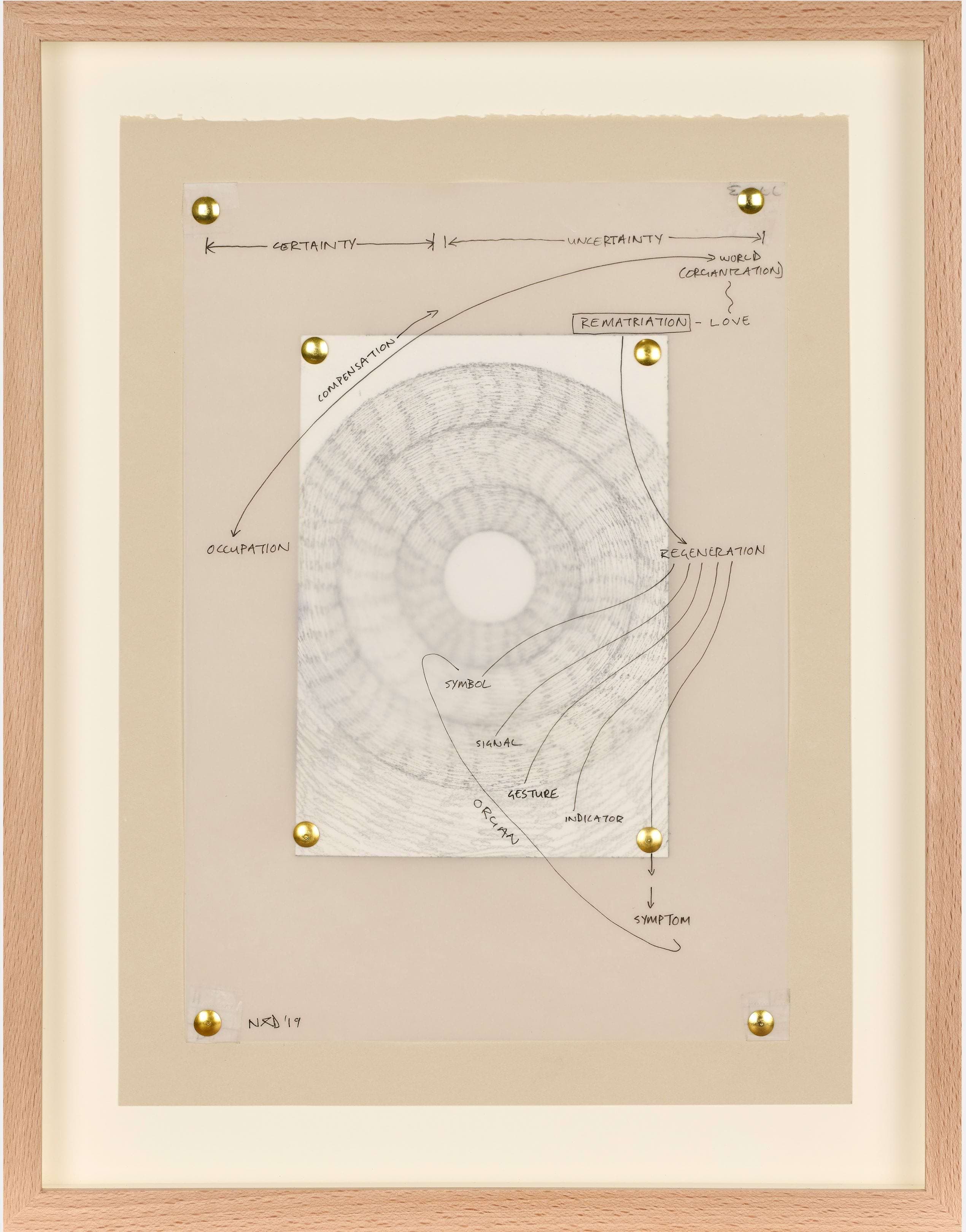
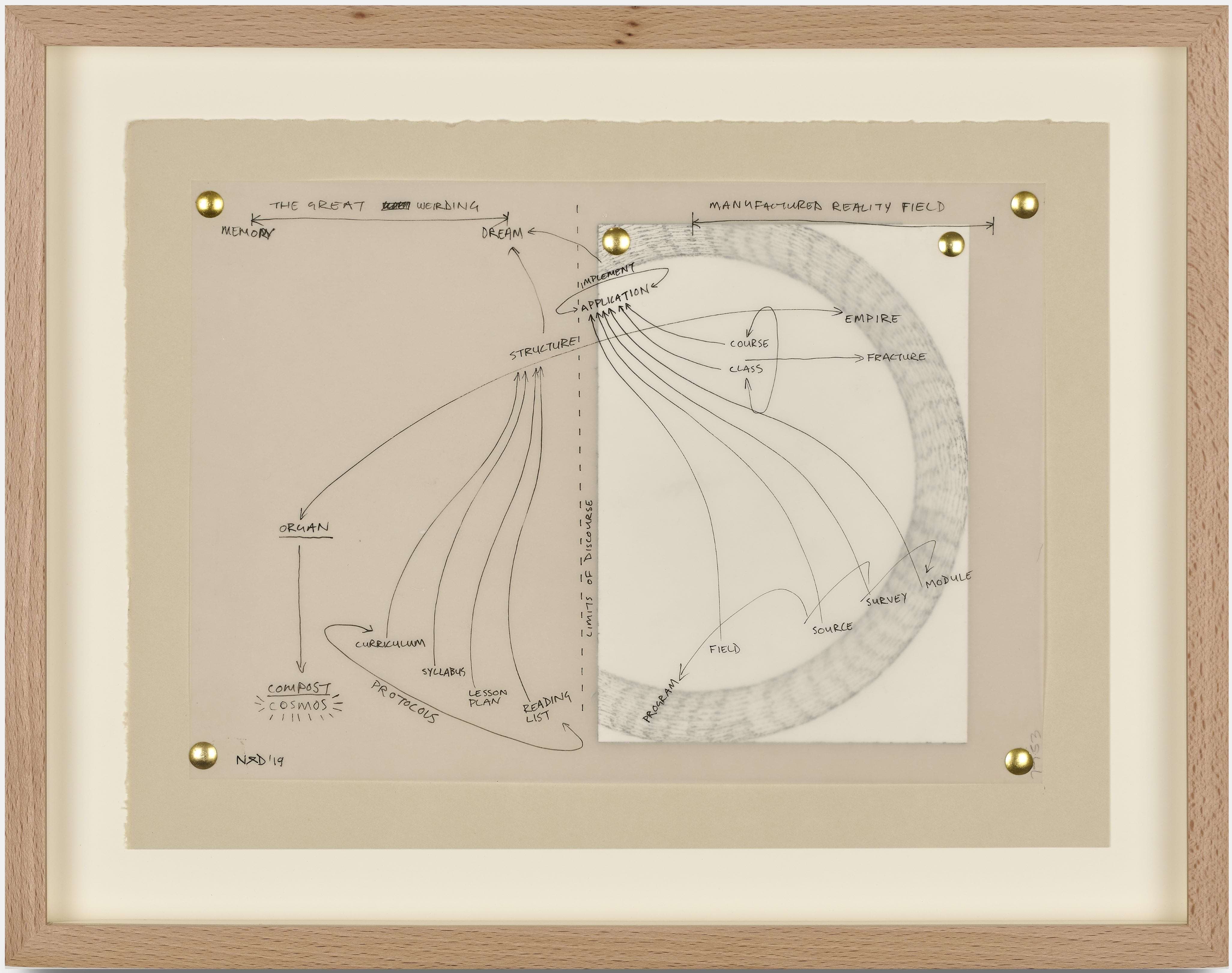
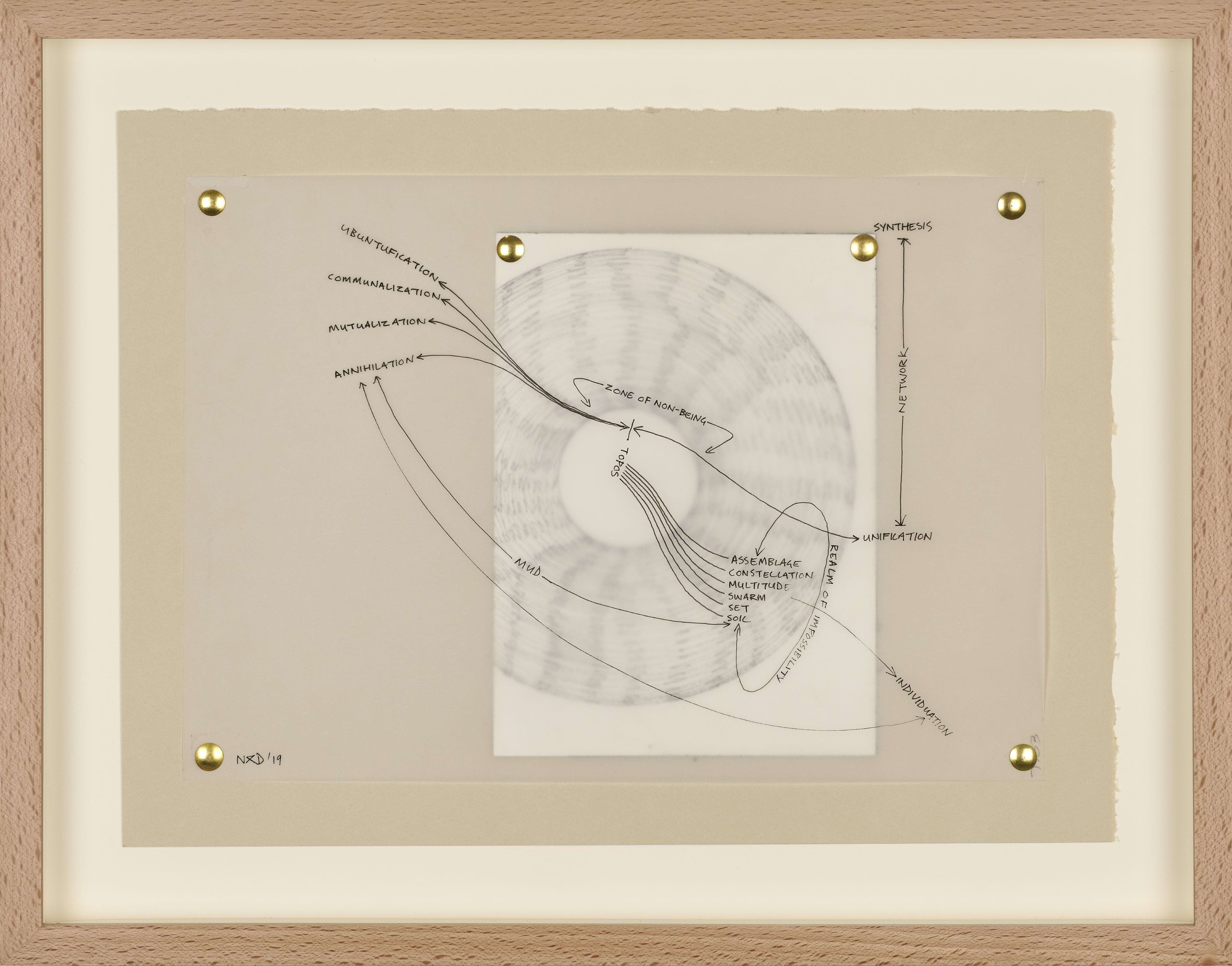
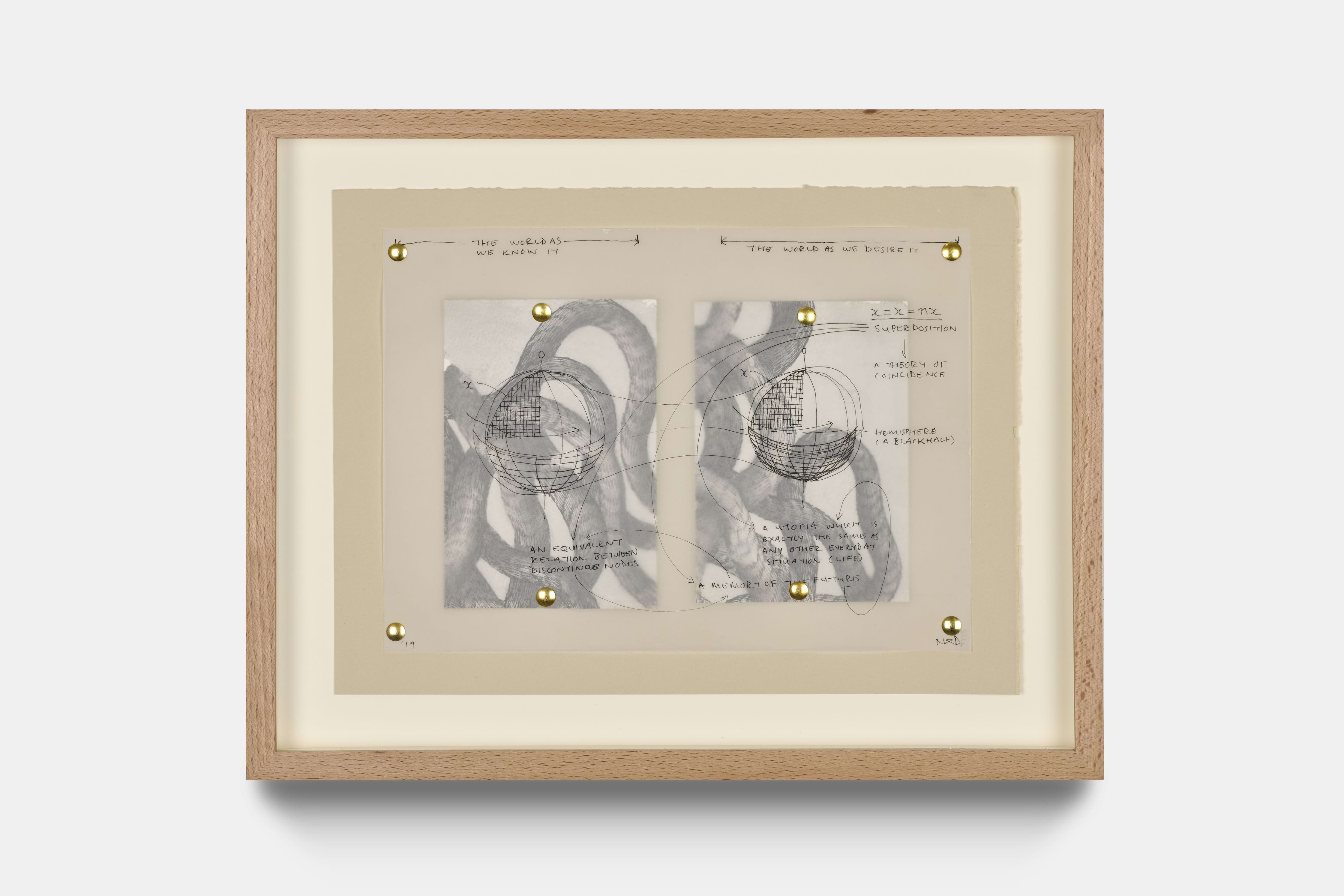
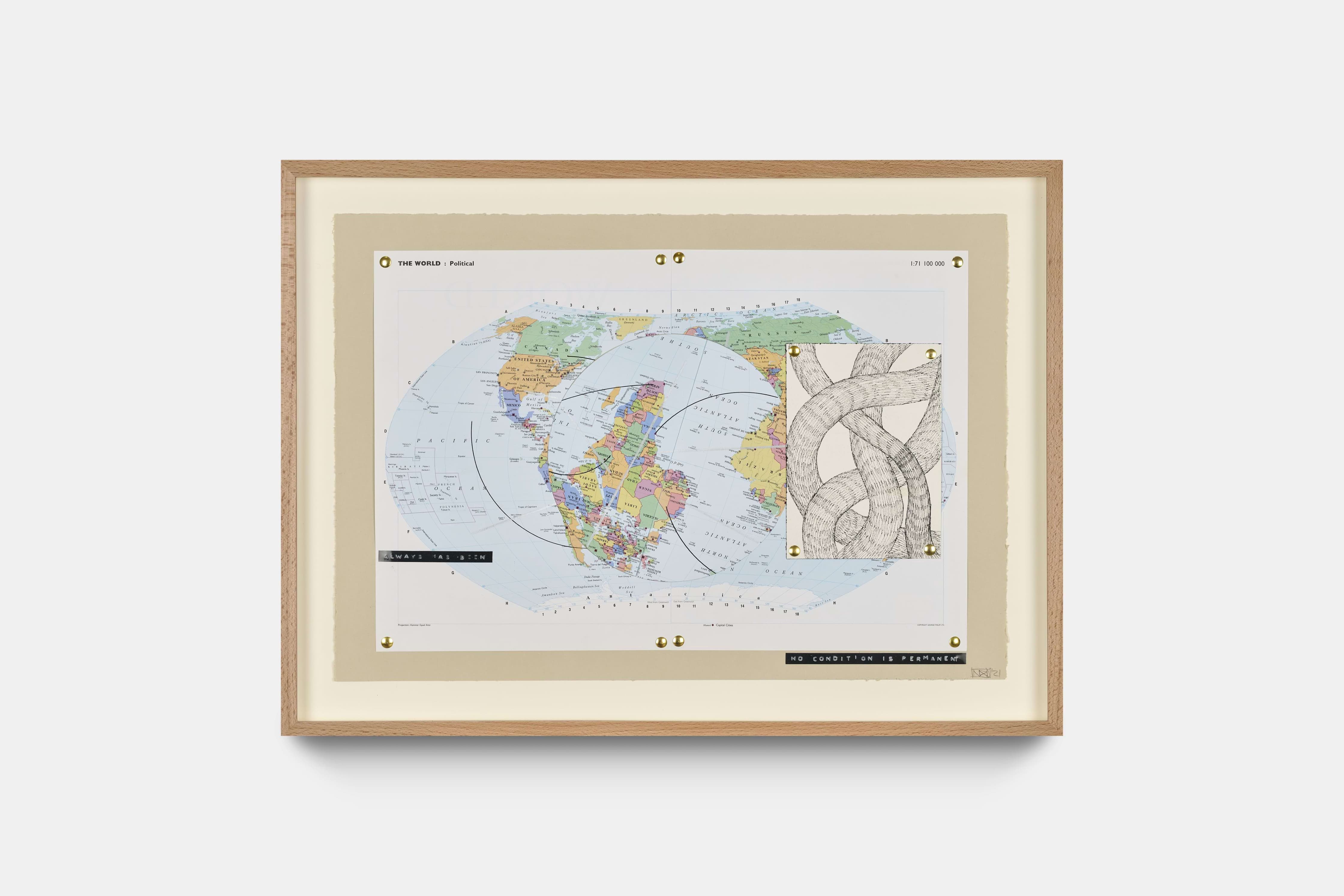
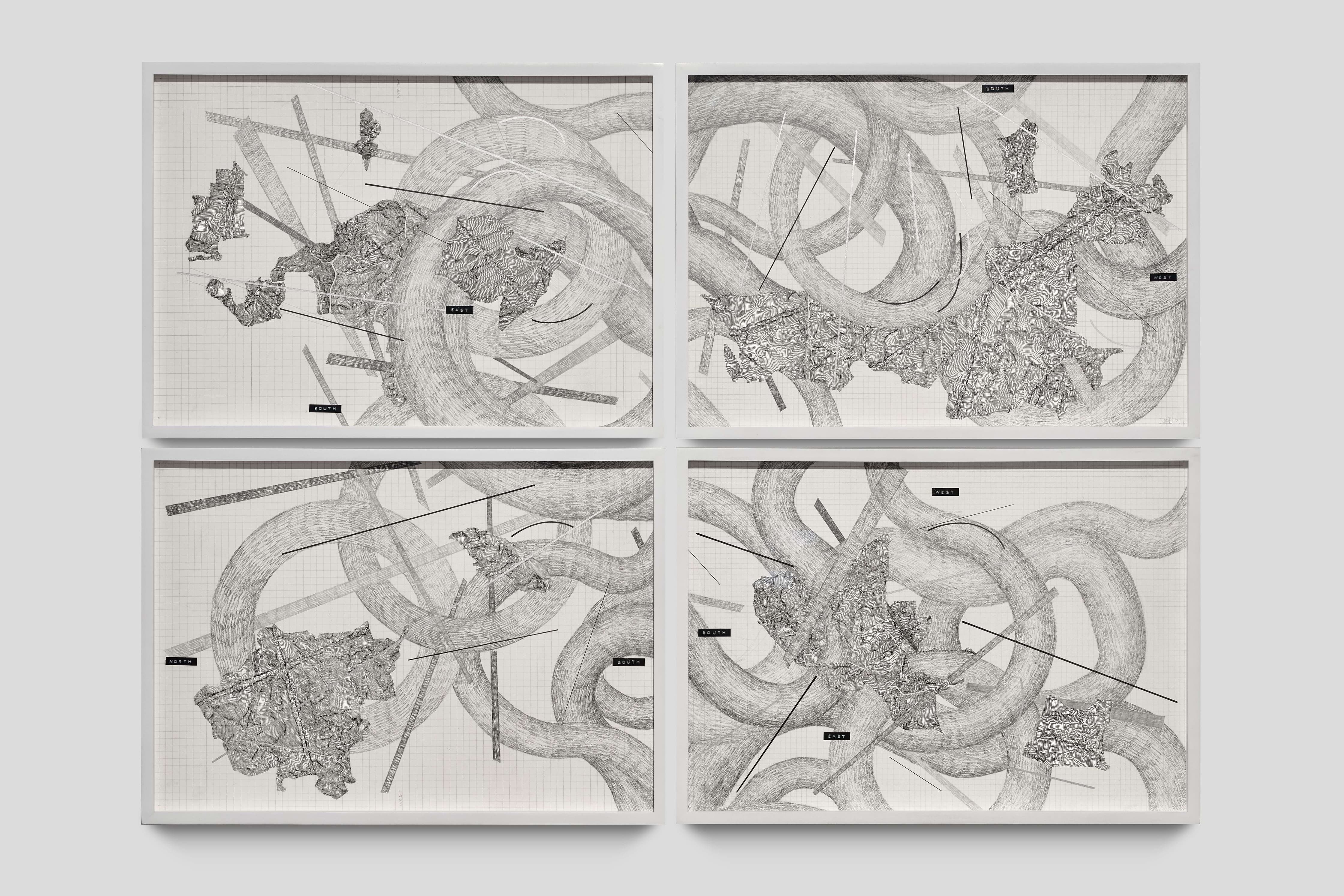
Four diagrams attempting, in their own way, to simplify the complexity of a difficult world made more difficult by our desire to simplify it. A paradoxical impulse, to unburden ourselves of the weight of being in the world and simultaneously to burden the world with the weight of our being in it, if not of it. This paradoxical push to be a part of this world and to pull apart from it, to pull the world apart in order to partake of it, to take part in that which takes so much of us. For us, hesitancy and ambivalence is a condition of transformation.
‘studio notes’ is an ongoing series of collaged drawings, diagrams and archive images made in the process of research and studio practice. These drawings are reflexive notes which inform the work being produced but also go places that the artwork cannot. ‘studio notes I, II, III & IV’ are the very first collages in this series of drawings reflecting on philosophies of uncertainty and transformation in processes of world-making from below.
‘studio notes’ is an ongoing series of collaged drawings, diagrams and archive images made in the process of research and studio practice. These drawings are reflexive notes which inform the work being produced but also go places that the artwork cannot. ‘studio notes I, II, III & IV’ are the very first collages in this series of drawings reflecting on philosophies of uncertainty and transformation in processes of world-making from below.
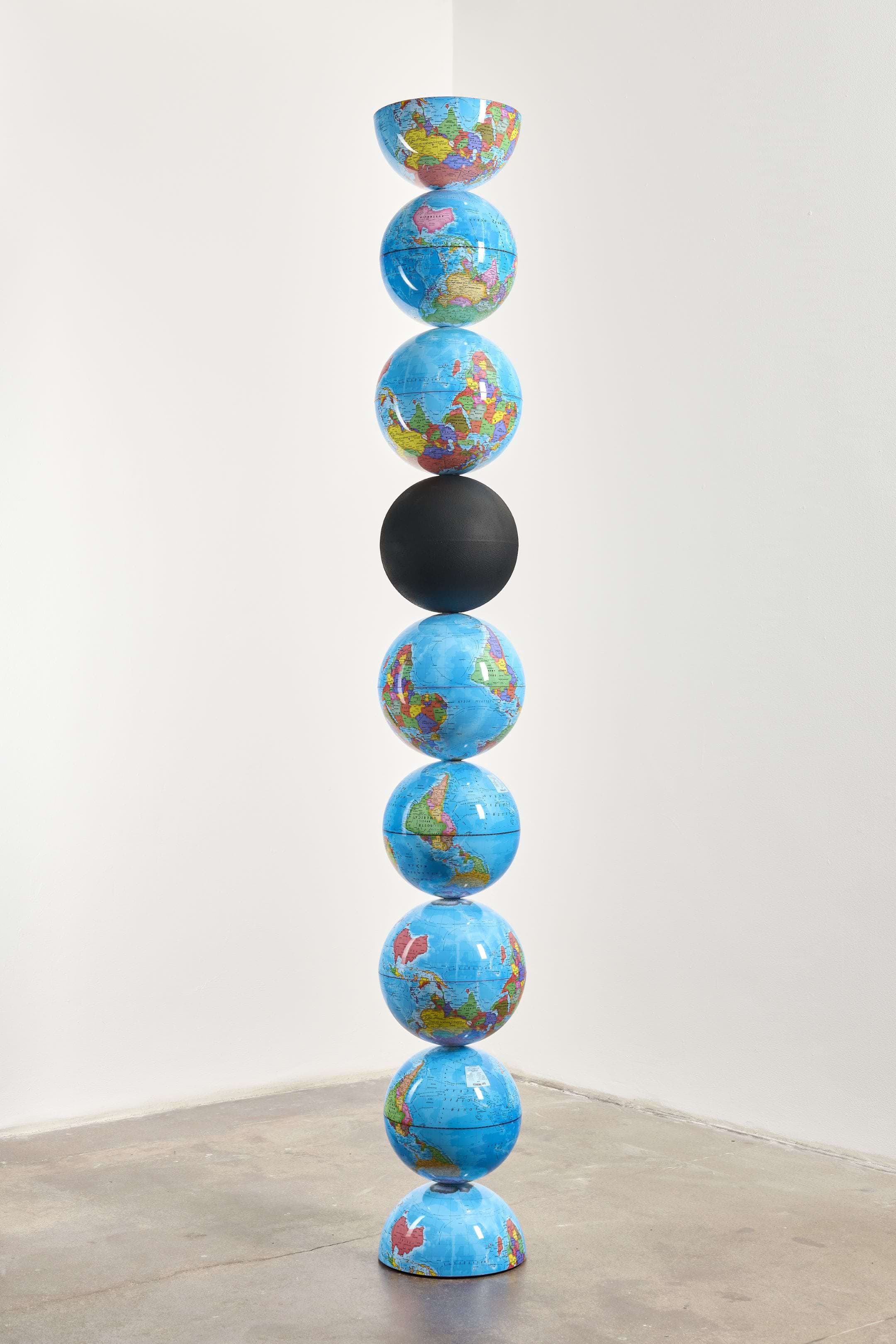
after-all (field) forms part of Dennis' body of work, conditions, which is centred around the spherical globe, an idealised figure of the planet in Western cosmology which is seamless, smooth, unitary and knowable. Counter to this image of the world, Dennis proposes a series of transformations of the sphere, stretching and distorting the model in order to find space for other worlds, other world possibilities. Dennis’ explorations of a more awkward language to overwrite the globe builds on feminist, Marxist and postcolonial theorists whose work troubles the singular perspectives of the planet.