

In this work Oguibe calls attention to the need to recognise sex work as labour, and to protect sex workers’ rights to work safely. It highlights the right to earn a living without the historical and perennial challenges that have demonised and subjected sex workers to a precarious existence at the margins of society.
Sex Work Is Honest Work is animated by the death of a young woman named Nokuphila Kumalo who was kicked and stomped to death on a Cape Town street by a man later identified as renowned South African artist Zwelethu Mthethwa. Kumalo was only twenty-three-years old. The artwork explores the confluence of morality, legality and capital around sex work looking into the historical denial of this form of labour as work and examining its complexities as migrant or indentured labour. In addition to the prevalence of continued violence towards sex workers, the work confronts patriarchal biases. It ultimately foregrounds the agency of sex workers to emphasise people’s freedom to work in any domain.
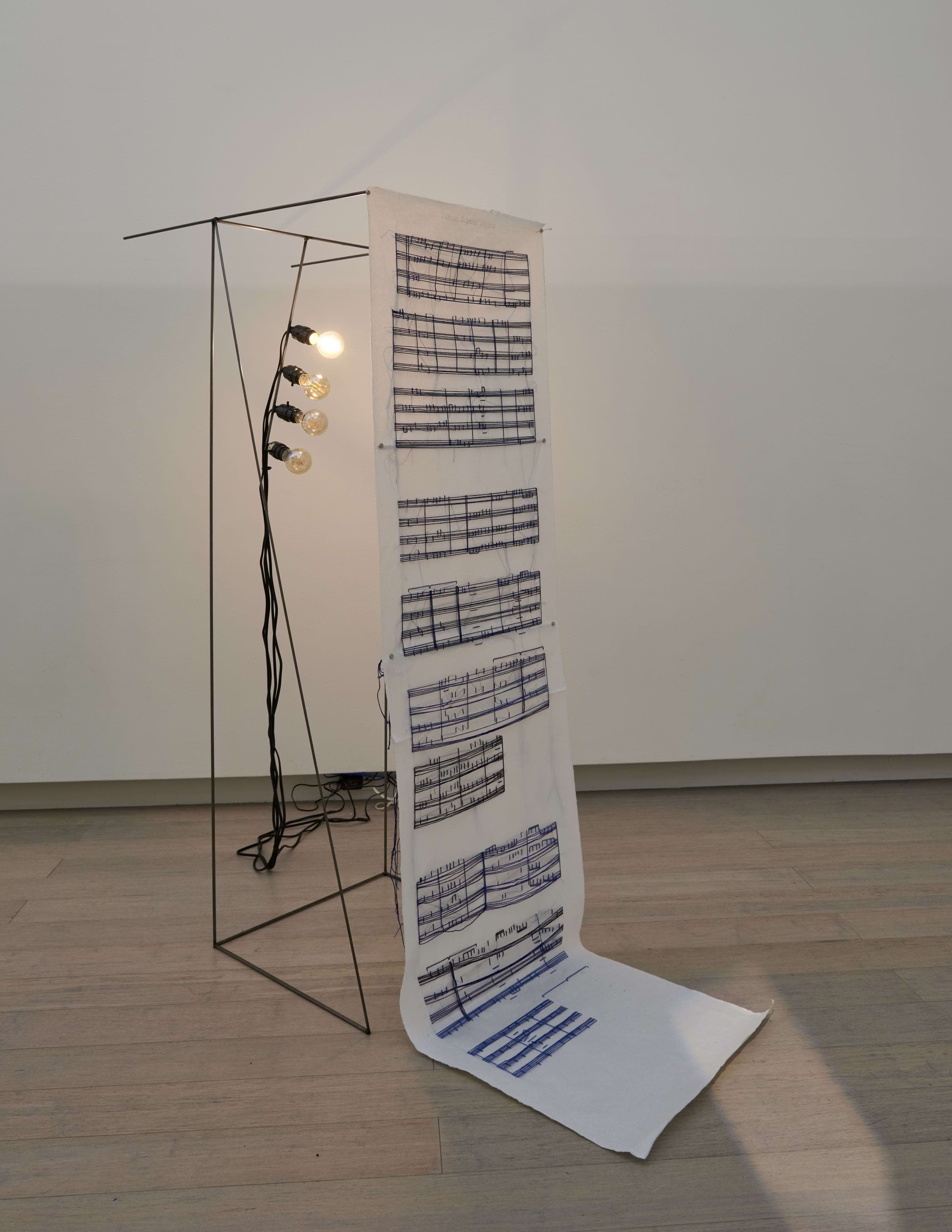
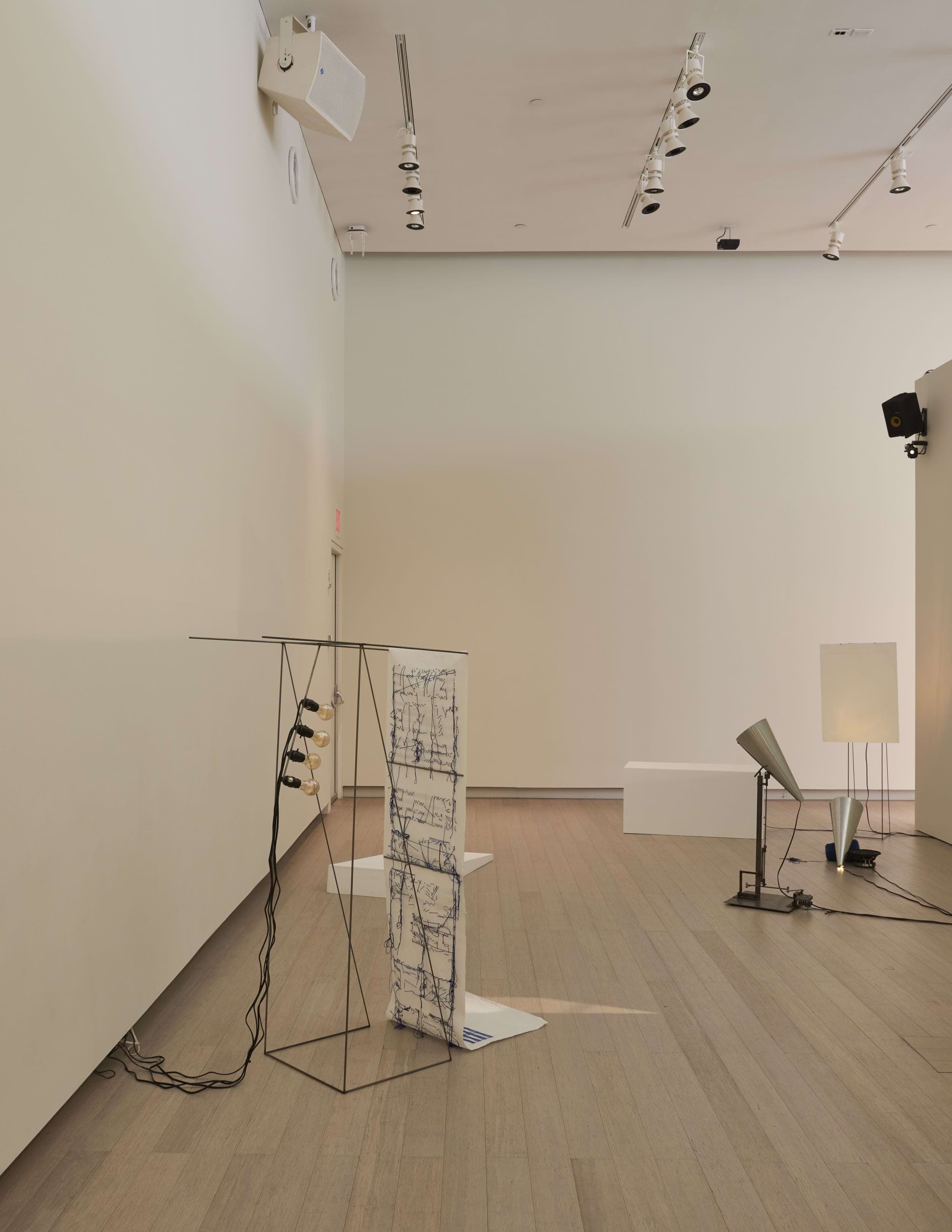
_Provisional Notes on Freedom_ utilizes ‘Nkosi Sikelel' iAfrika’, as a starting point to think about collective voice beyond borders; this is the South African hymn that turned into a Pan-African liberation song and was later adopted as the national anthems of five countries in Africa. Maksud is interested in how this anthem swells and echoes out from South Africa to other parts of the continent and to the diasporas mapping space, in this case black space, beyond formal borders.
In her work, Maksud thinks of national anthems as sonic borders, but sound, as we know, is omnidirectional and cannot be contained. Therefore, in this work she uses ideas based on leakage (as in sound leakage) and bleeding (as in light bleeding) as a framework to think about notions of excess. The installation includes embroideries of music taken from various sheet music of the anthem. On the one side, there are marks that resemble music. On the other, there are rhizomatic marks that are illegible, speaking metaphorically to a type of colonial order on the one side and a refusal of this order on the other. The sound component is generated from various people whistling the anthem and then is manipulated through various software.
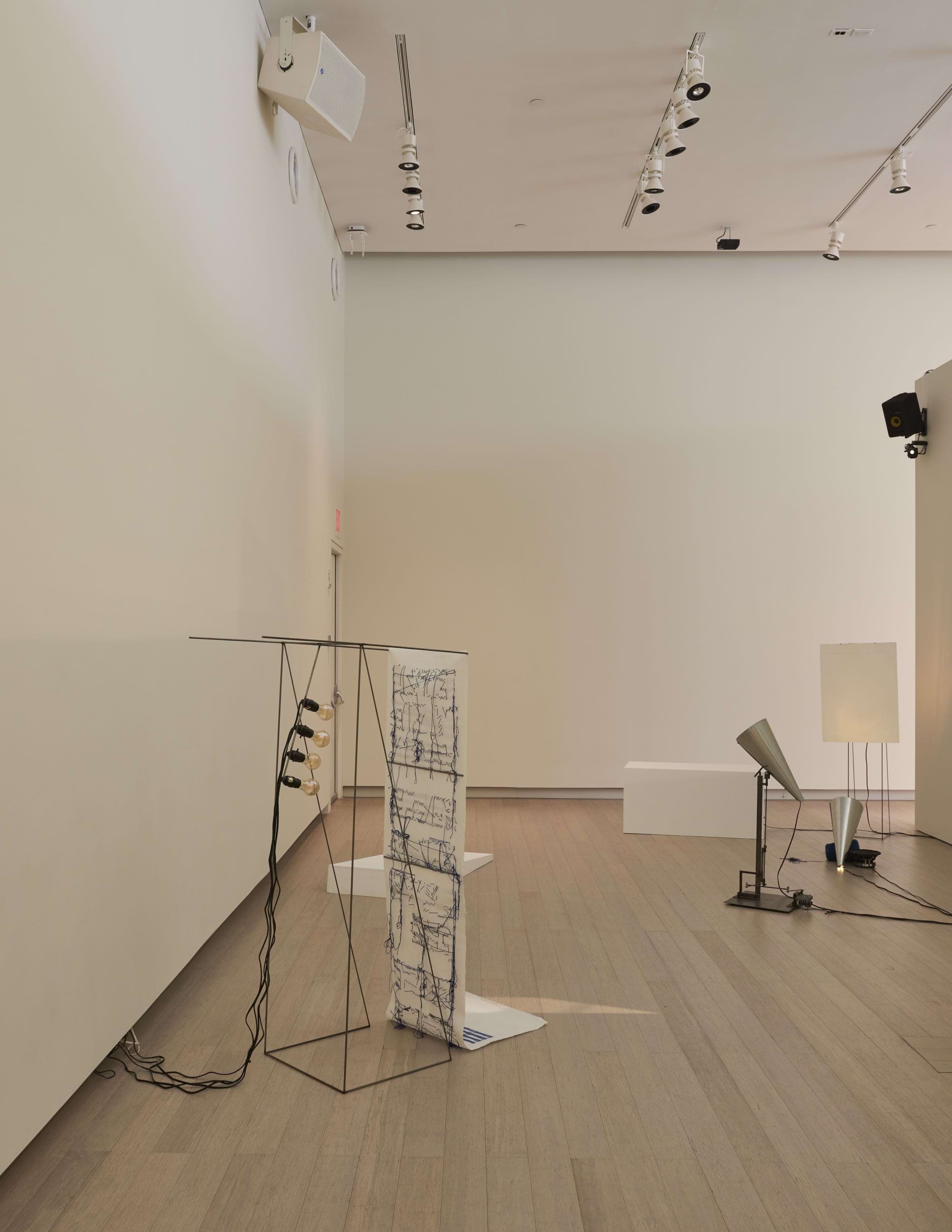
Provisional Notes on Freedom utilizes ‘Nkosi Sikelel' iAfrika’, as a starting point to think about collective voice beyond borders; this is the South African hymn that turned into a Pan-African liberation song and was later adopted as the national anthems of five countries in Africa. Maksud is interested in how this anthem swells and echoes out from South Africa to other parts of the continent and to the diasporas mapping space, in this case black space, beyond formal borders.
In her work, Maksud thinks of national anthems as sonic borders, but sound, as we know, is omnidirectional and cannot be contained. Therefore, in this work she uses ideas based on leakage (as in sound leakage) and bleeding (as in light bleeding) as a framework to think about notions of excess. The installation includes embroideries of music taken from various sheet music of the anthem. On the one side, there are marks that resemble music. On the other, there are rhizomatic marks that are illegible, speaking metaphorically to a type of colonial order on the one side and a refusal of this order on the other. The sound component is generated from various people whistling the anthem and then is manipulated through various software.
Provisional Notes on Freedom utilizes ‘Nkosi Sikelel' iAfrika’, as a starting point to think about collective voice beyond borders; this is the South African hymn that turned into a Pan-African liberation song and was later adopted as the national anthems of five countries in Africa. Maksud is interested in how this anthem swells and echoes out from South Africa to other parts of the continent and to the diasporas mapping space, in this case black space, beyond formal borders.
In her work, Maksud thinks of national anthems as sonic borders, but sound, as we know, is omnidirectional and cannot be contained. Therefore, in this work she uses ideas based on leakage (as in sound leakage) and bleeding (as in light bleeding) as a framework to think about notions of excess. The installation includes embroideries of music taken from various sheet music of the anthem. On the one side, there are marks that resemble music. On the other, there are rhizomatic marks that are illegible, speaking metaphorically to a type of colonial order on the one side and a refusal of this order on the other. The sound component is generated from various people whistling the anthem and then is manipulated through various software.
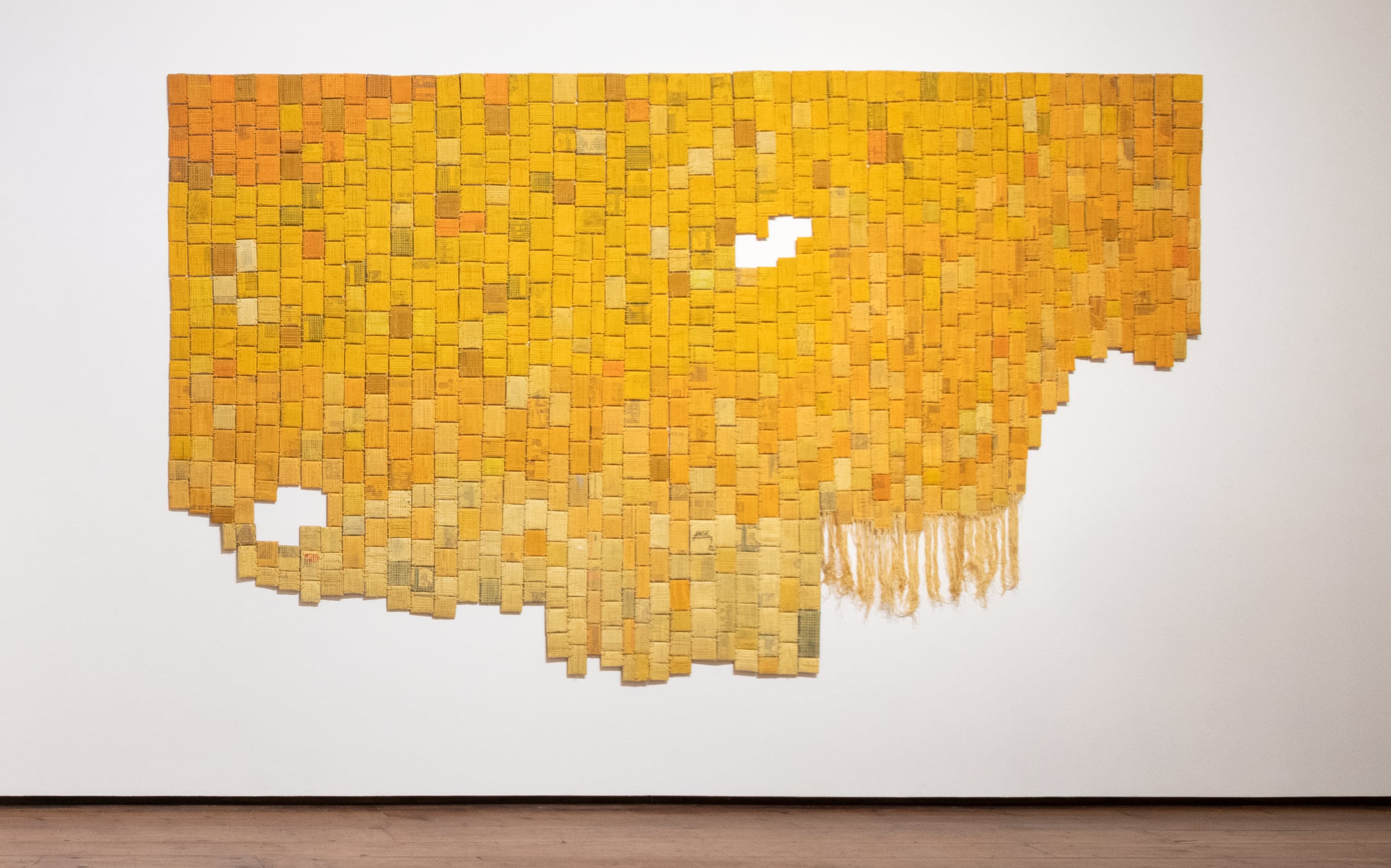
Dans mon rêve / In my dream, constructed with cardboard, newspaper, cotton thread, and acrylic, alludes to a philosophy towards life that places emphasis on the significance of hope. Here Dakouo considers the importance of staying strong when facing uncomfortable circumstances and the power that comes from transcending these difficulties. This is enabled by holding on to the idea that a better day is coming.
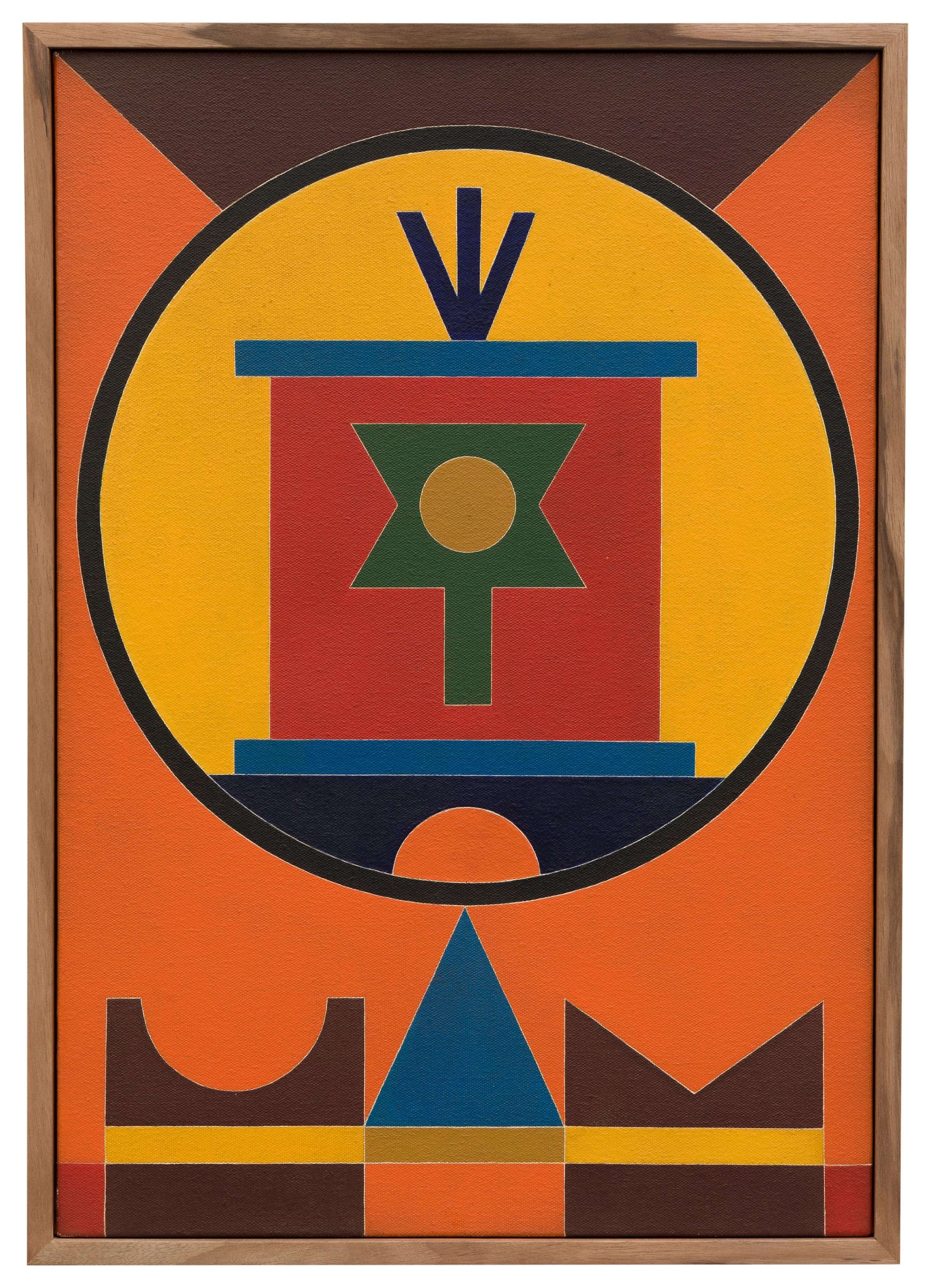
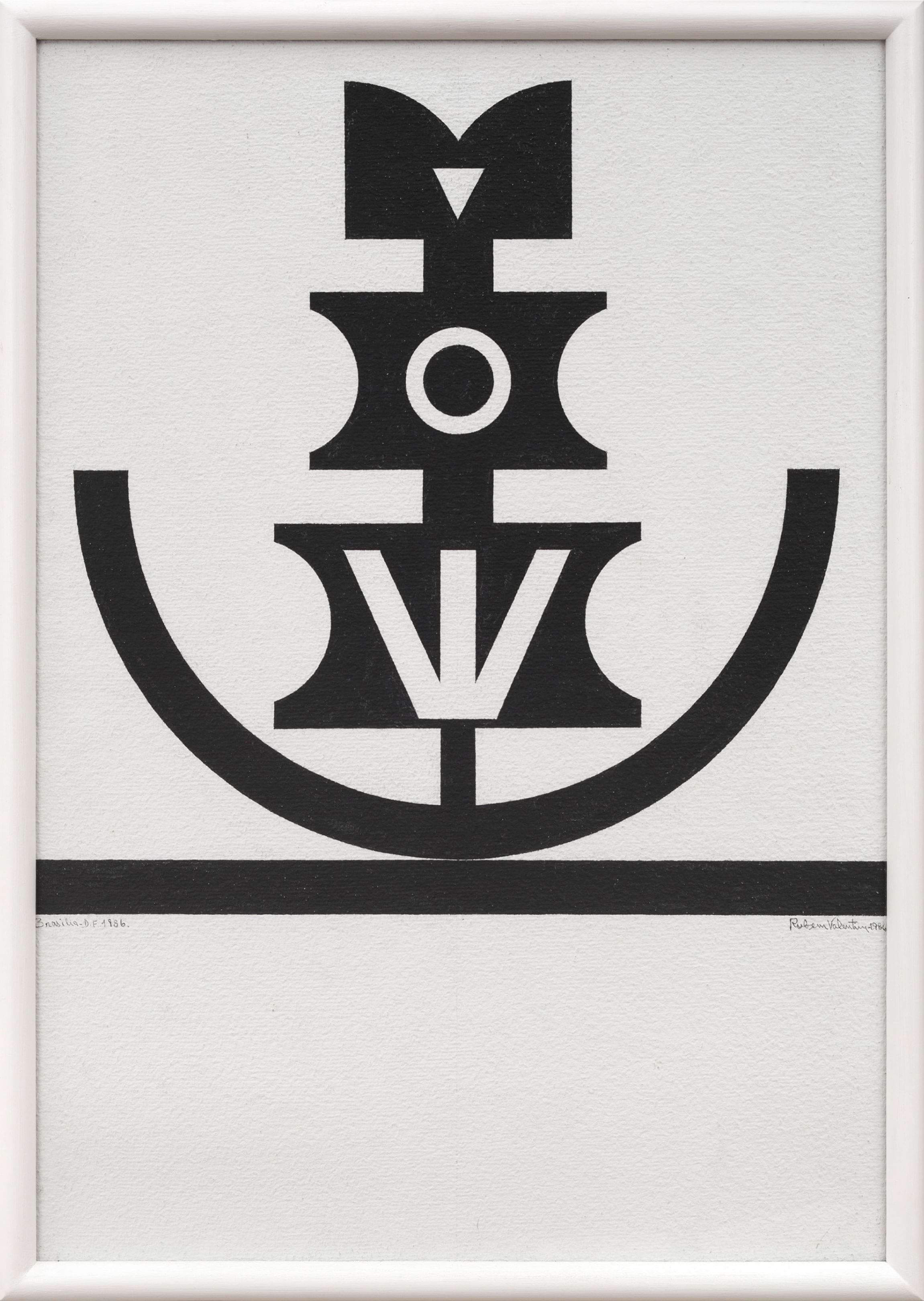
Valentim was among the first generation of artists who were openly inspired by the sacred symbology of Afro-Brazilian religions and adopted a syncretic approach within their respective practices. From the outset Valentim made a conscious decision to eschew the global artistic trends, introduced into Brazil’s artistic milieu by way of abstraction and concretism movements, in favour of the local folklore and religions of his hometown.
The artist adopted the European artistic languages—which dominated the Brazilian art production scene during the 1950s and 60s—only then to pool and transmute various elements of Afro-Atlantic symbols into a complex rubric of his own. The drawings and diagrams that the artist created mostly referenced the orishas (spirits in Latin American folklore), such as Shango’s double-edged axe, Oshoosi’s arrow, and Osanyin’s staff. Contrary to the avant-gardists who used constructivism and abstraction as neutralising compositional tools, Valentim imbued his geometric abstractions with mysticism and religious symbols of Candomblé and Umbanda. Creating and recreating the form and meaning of the sacred within this symbolic universe.
Valentim was among the first generation of artists who were openly inspired by the sacred symbology of Afro-Brazilian religions and adopted a syncretic approach within their respective practices. From the outset Valentim made a conscious decision to eschew the global artistic trends, introduced into Brazil’s artistic milieu by way of abstraction and concretism movements, in favour of the local folklore and religions of his hometown.
The artist adopted the European artistic languages—which dominated the Brazilian art production scene during the 1950s and 60s—only then to pool and transmute various elements of Afro-Atlantic symbols into a complex rubric of his own. The drawings and diagrams that the artist created mostly referenced the orishas (spirits in Latin American folklore), such as Shango’s double-edged axe, Oshoosi’s arrow, and Osanyin’s staff. Contrary to the avant-gardists who used constructivism and abstraction as neutralising compositional tools, Valentim imbued his geometric abstractions with mysticism and religious symbols of Candomblé and Umbanda. Creating and recreating the form and meaning of the sacred within this symbolic universe.
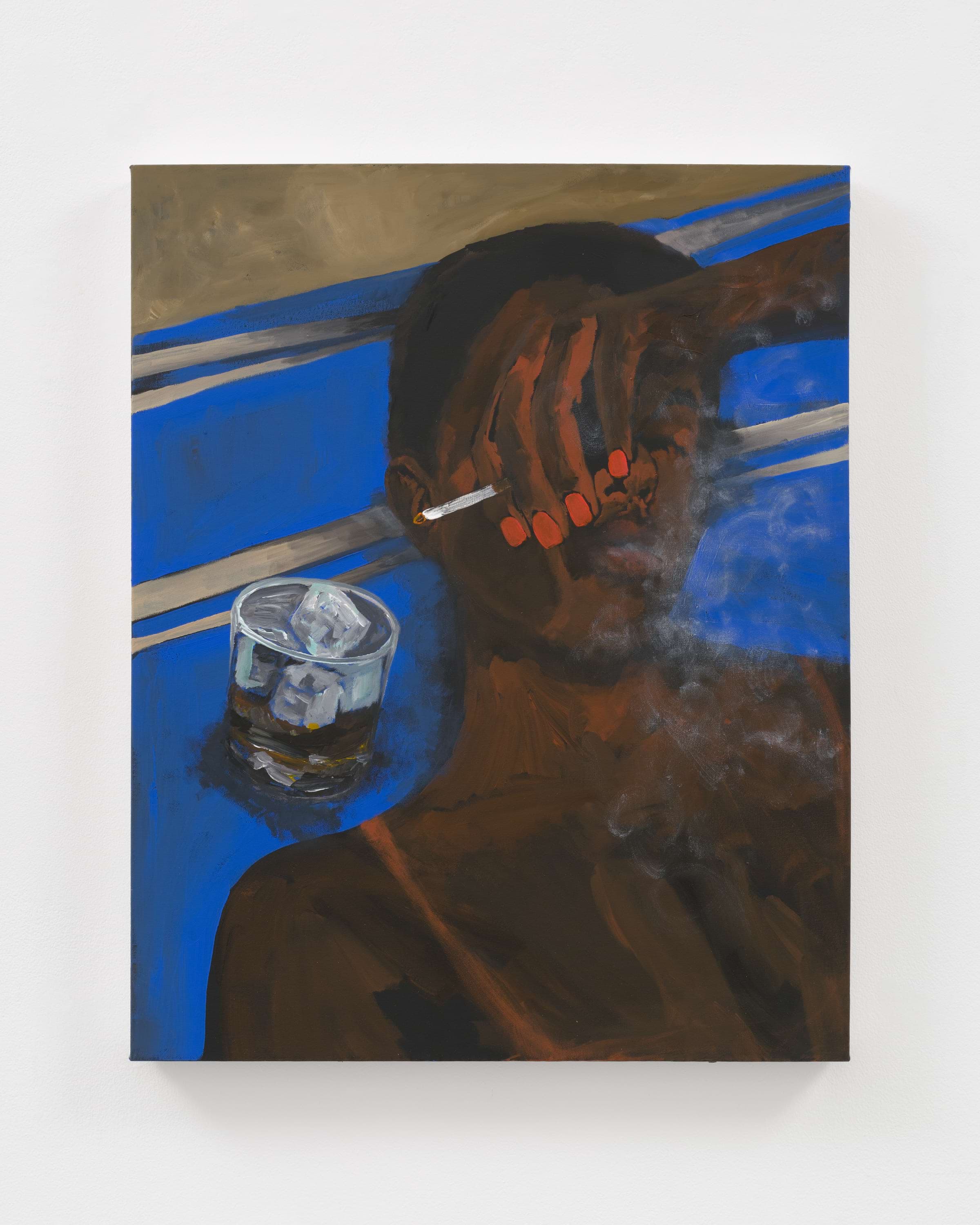
The inclusion of Last Call and Best Kept Secret follows Mckinney’s New York exhibition titled Golden Hour where she expands and deepens her exploration into female subjecthood. Depicted in abstractly domestic settings, the figures in Mckinney’s work offer a radical possibility: a space in which a person is utterly free to be themselves, an existence circumscribed in aesthetic terms of their own devising. These figures inhabit a sense of freedom and raw emotion one feels in the safety of their own space. For Mckinney, the spatial possibilities offered by painting are an entry point into accessing universal human experiences and spiritual truths.
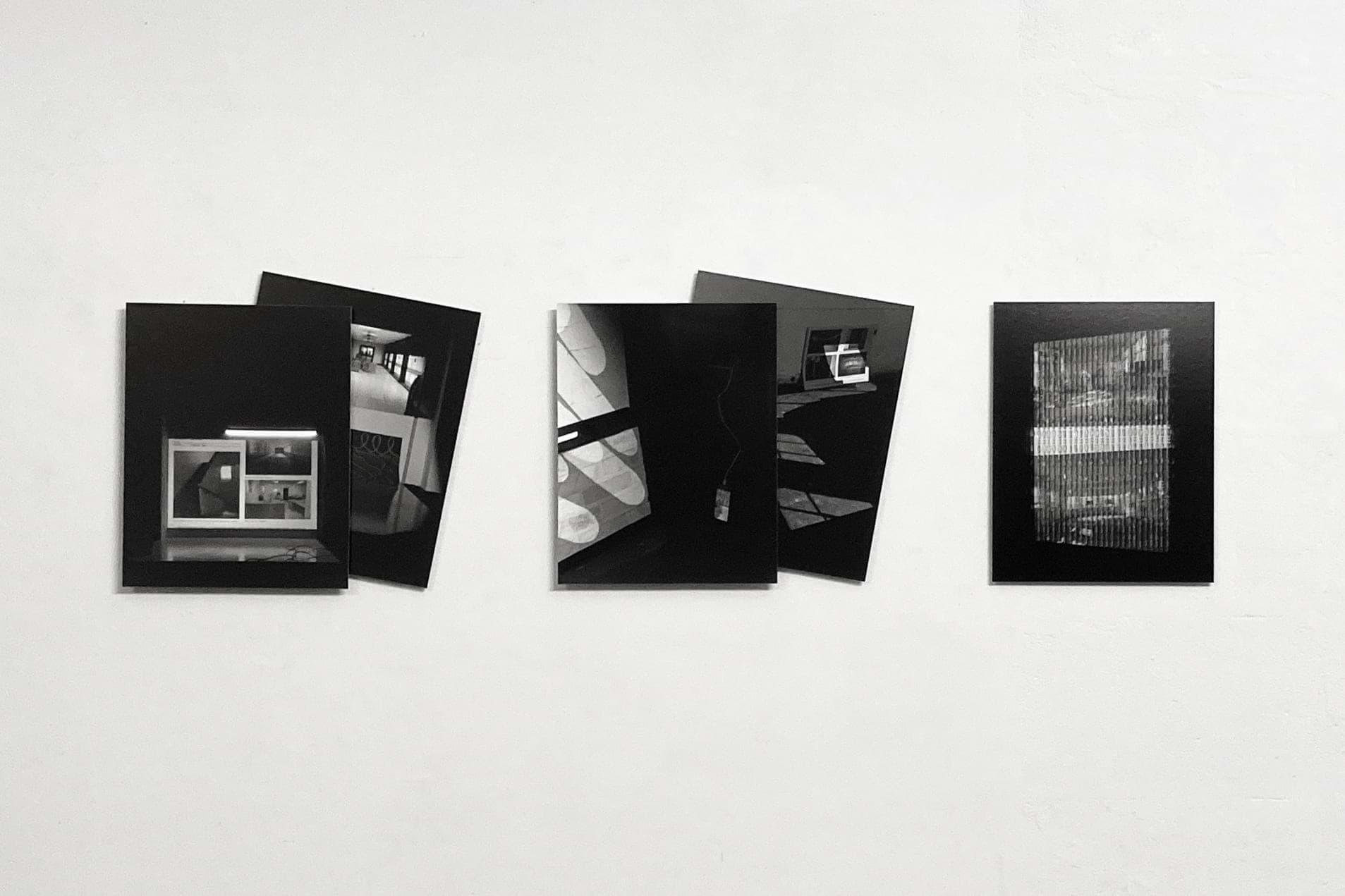
The photographic series shows an encounter with an architectural document, lit with a digital projector and shot on large format black and white film. The work orbits around a pdf document, a Heritage Impact Assessment that is publicly available online, as an embedded reference to a site with a difficult history and a determined future. The sets are fragmented, model-like arrangements where different interests meet – that of economic investment, the health industry and historical preservation. The complexity of the document and the actual place is only pointed at, instead what is shown is a certain interested or invested gaze devoid of pragmatic economies. Muted and focused on a future use, this is the gaze of the developer. Somewhat intrigued but also idle, it is detached from history, a seductive, glowing moment situated between an invested interest, criticality and a morbid neutrality.
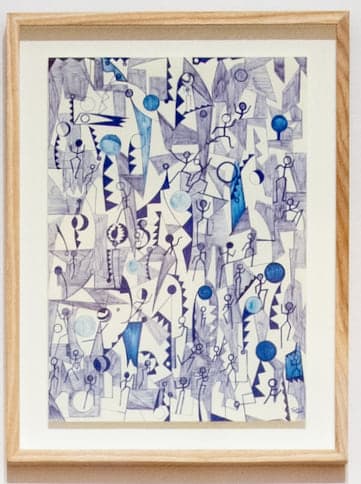
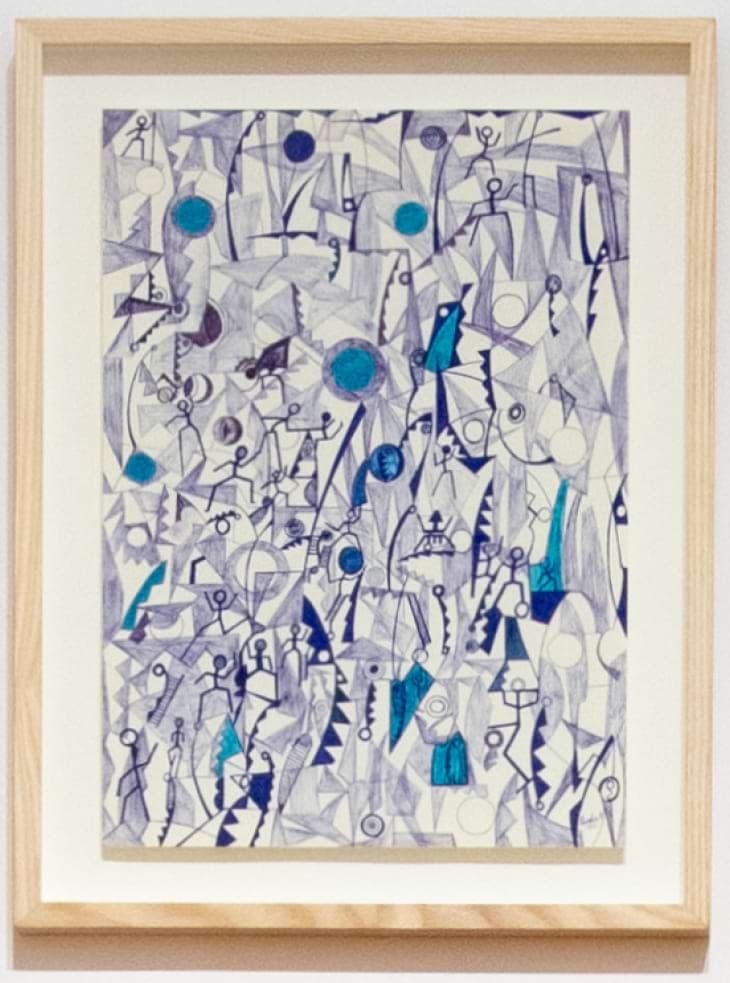
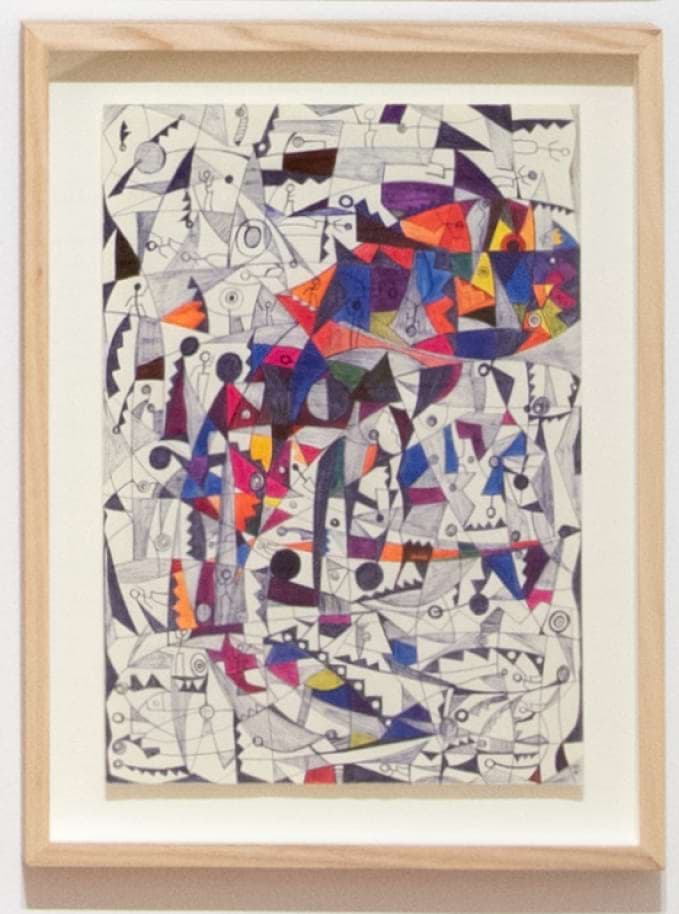
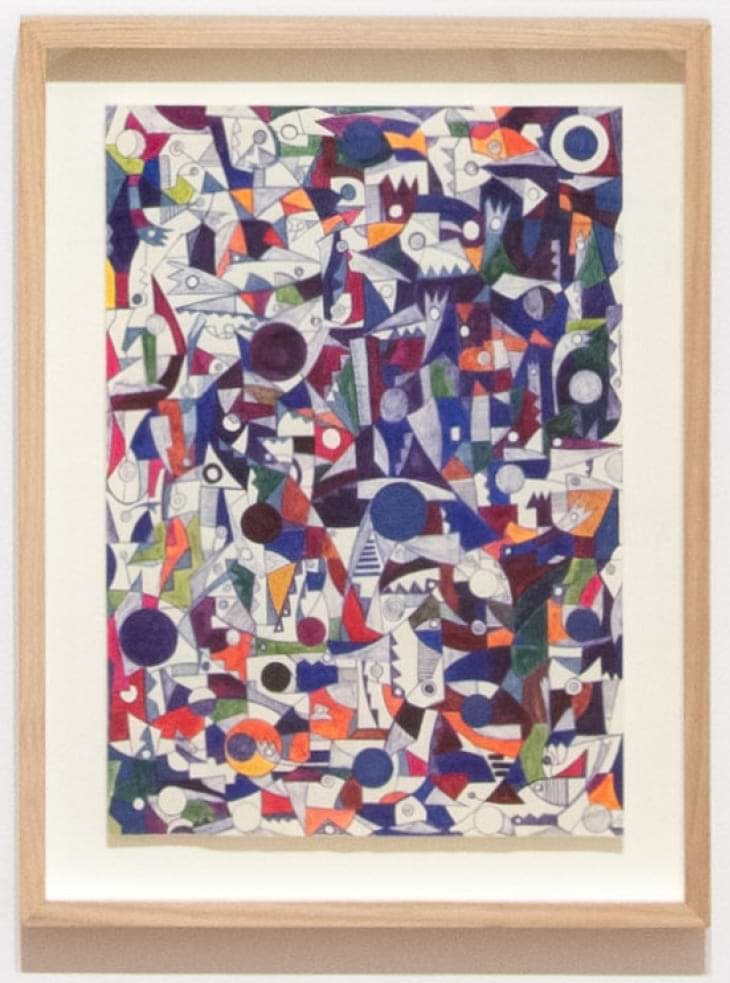
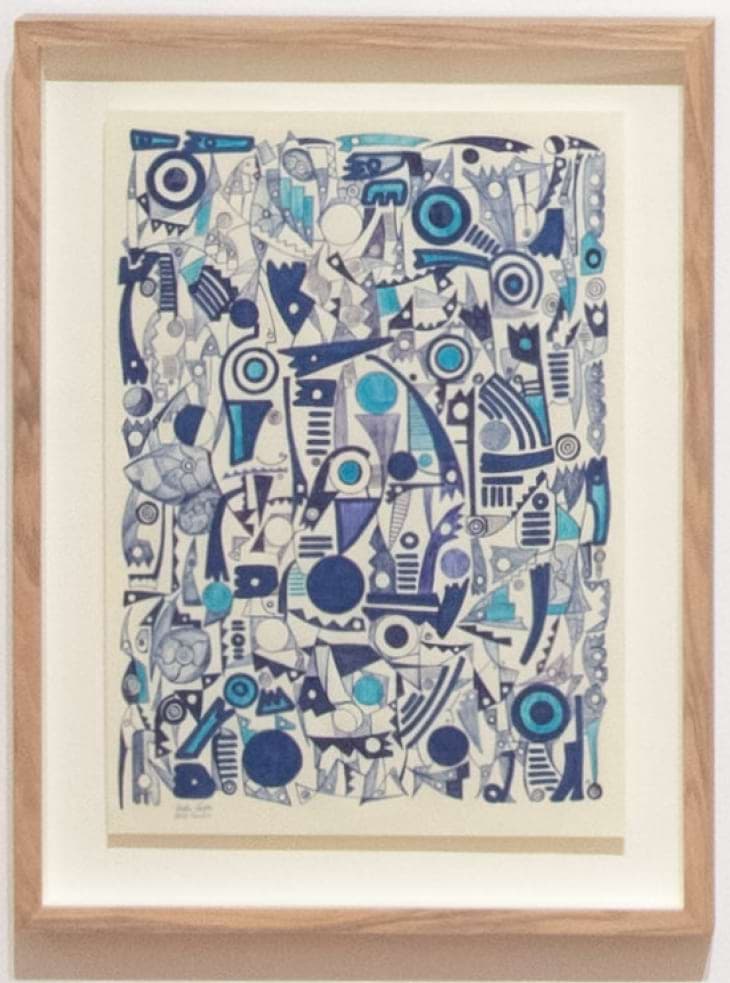
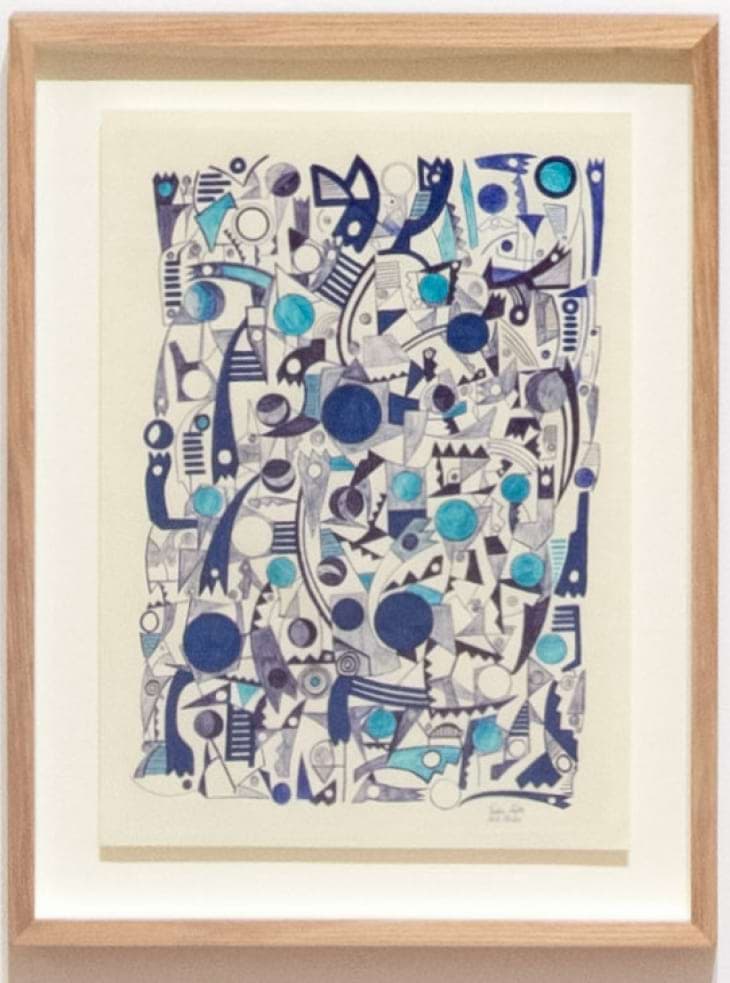
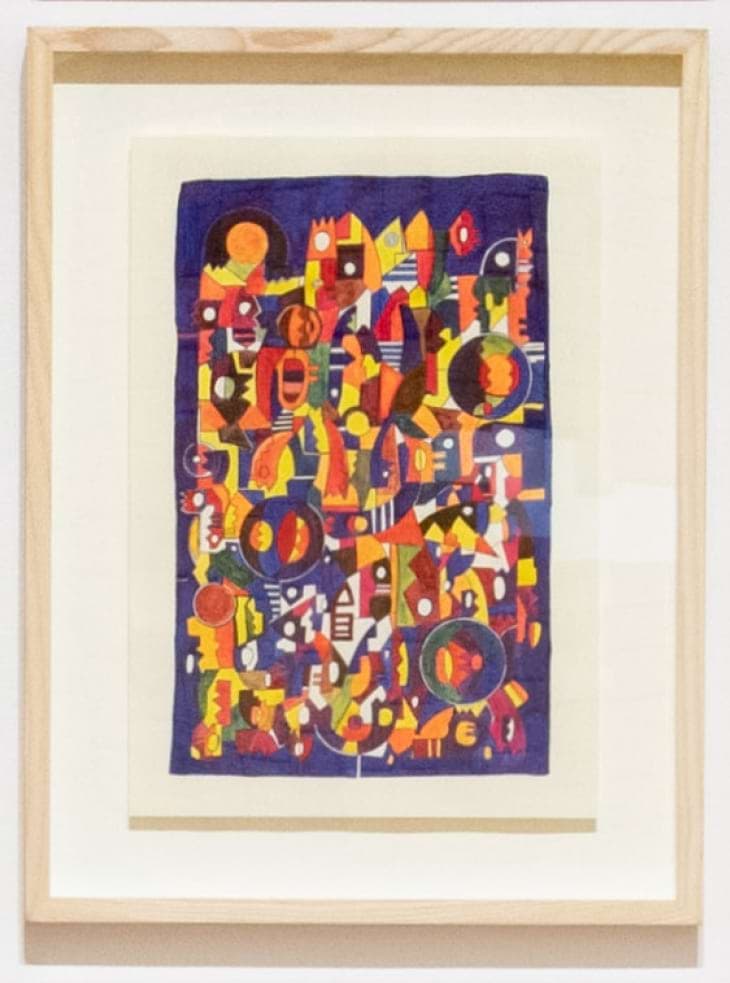
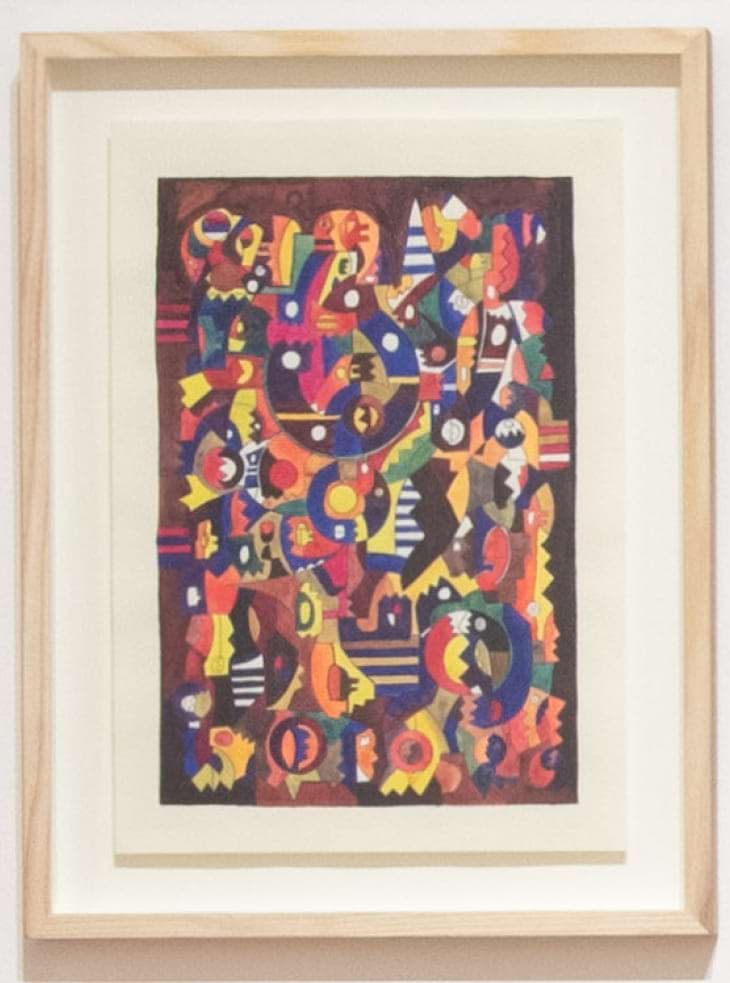
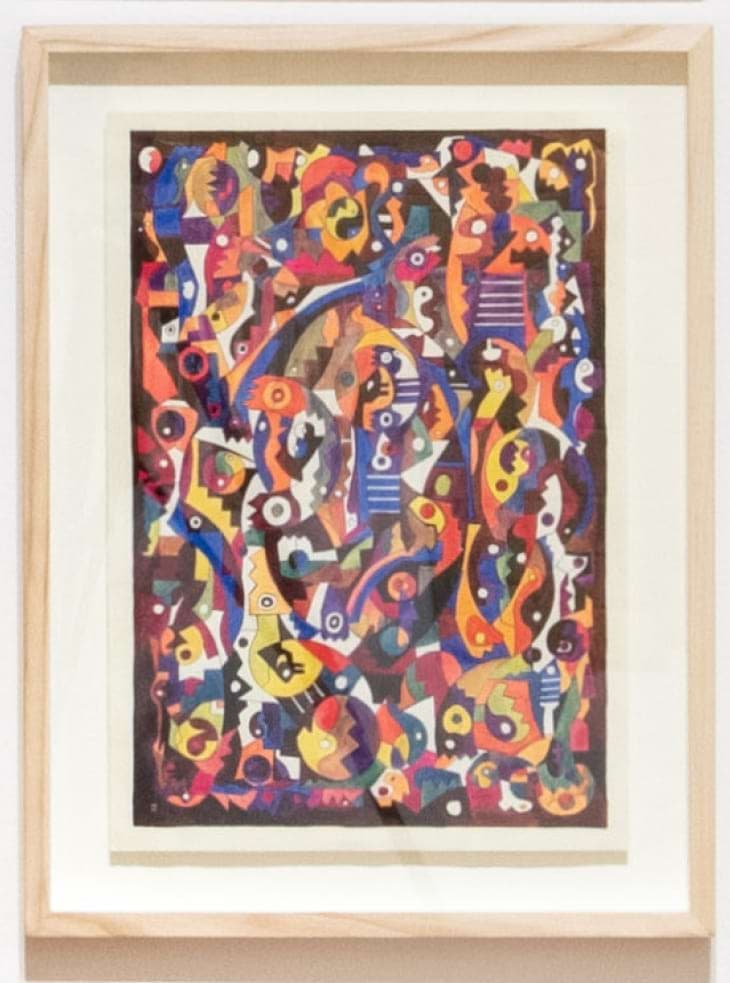
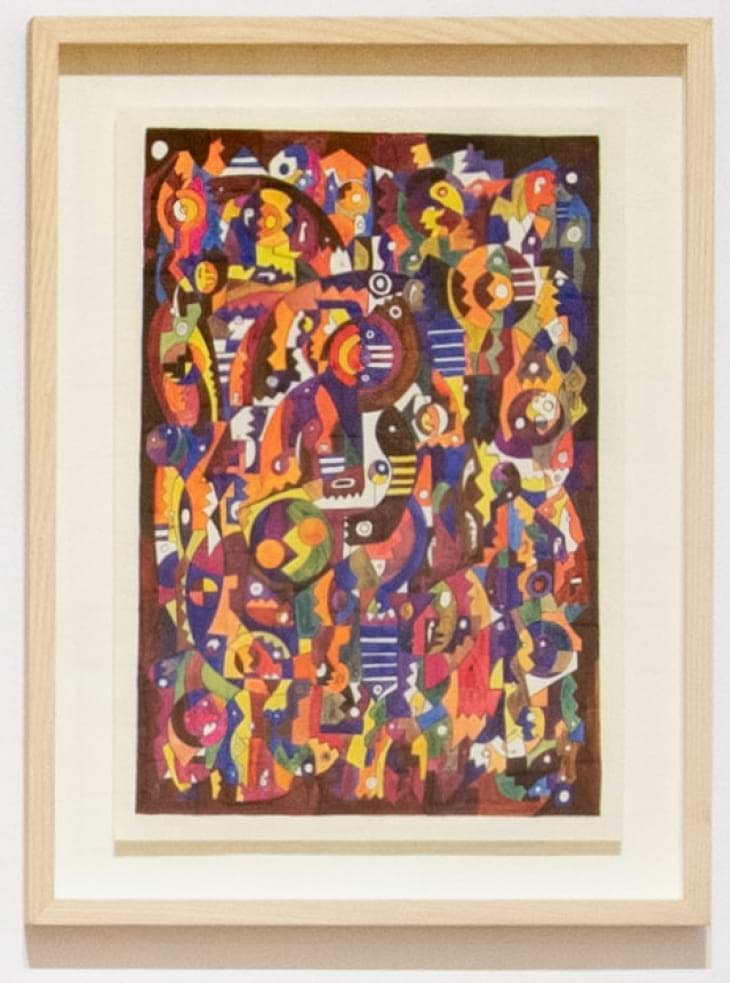
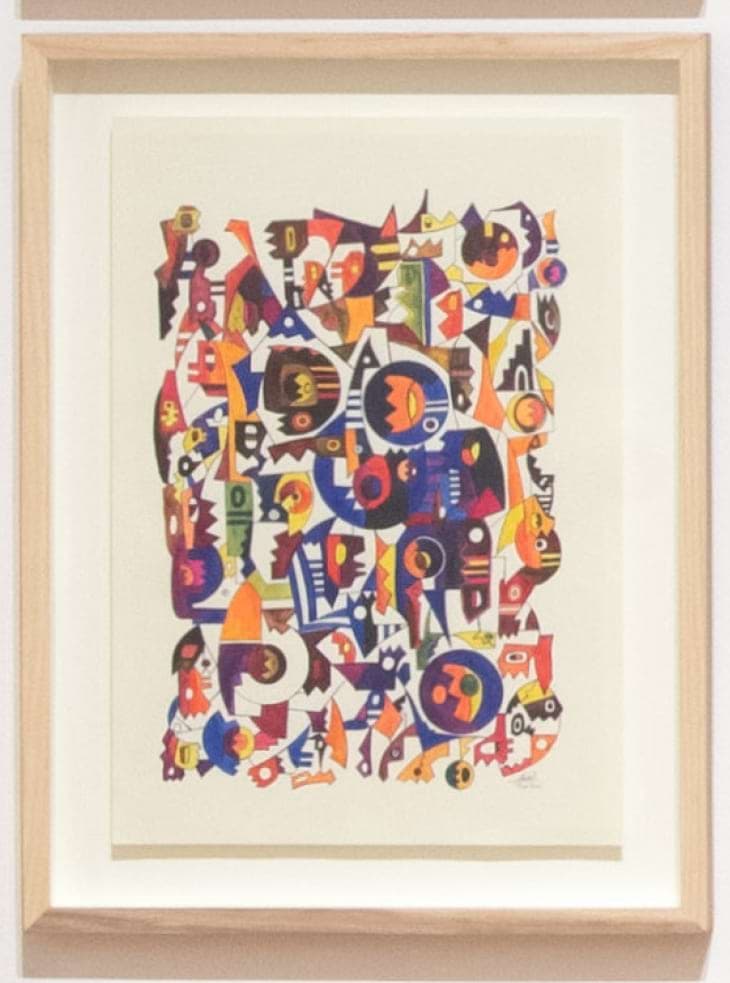
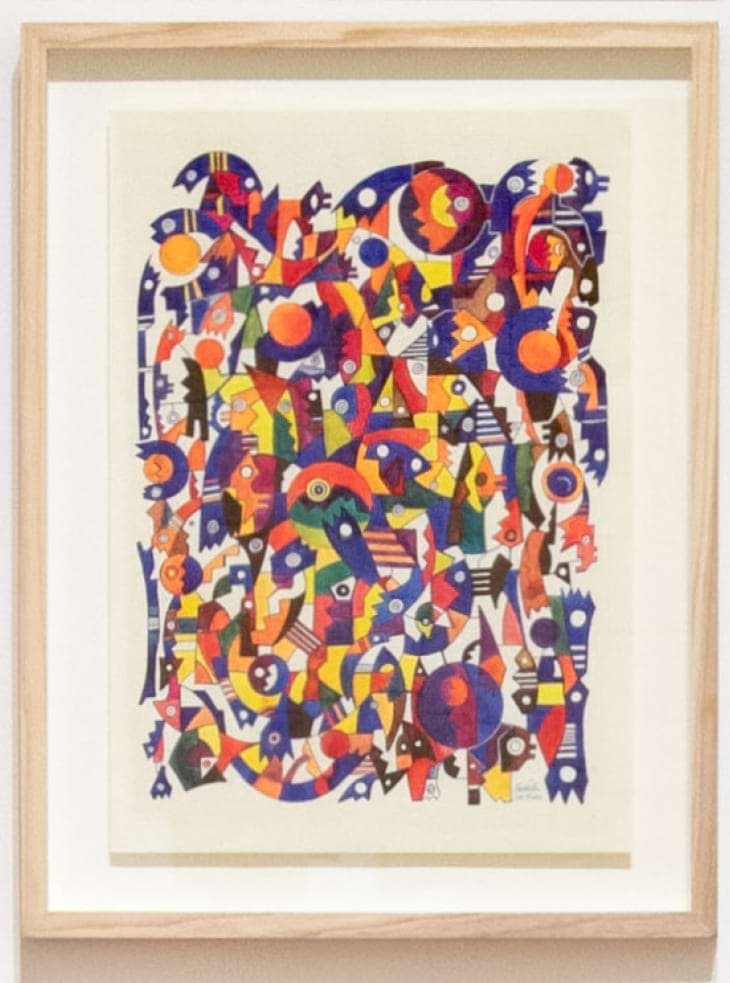
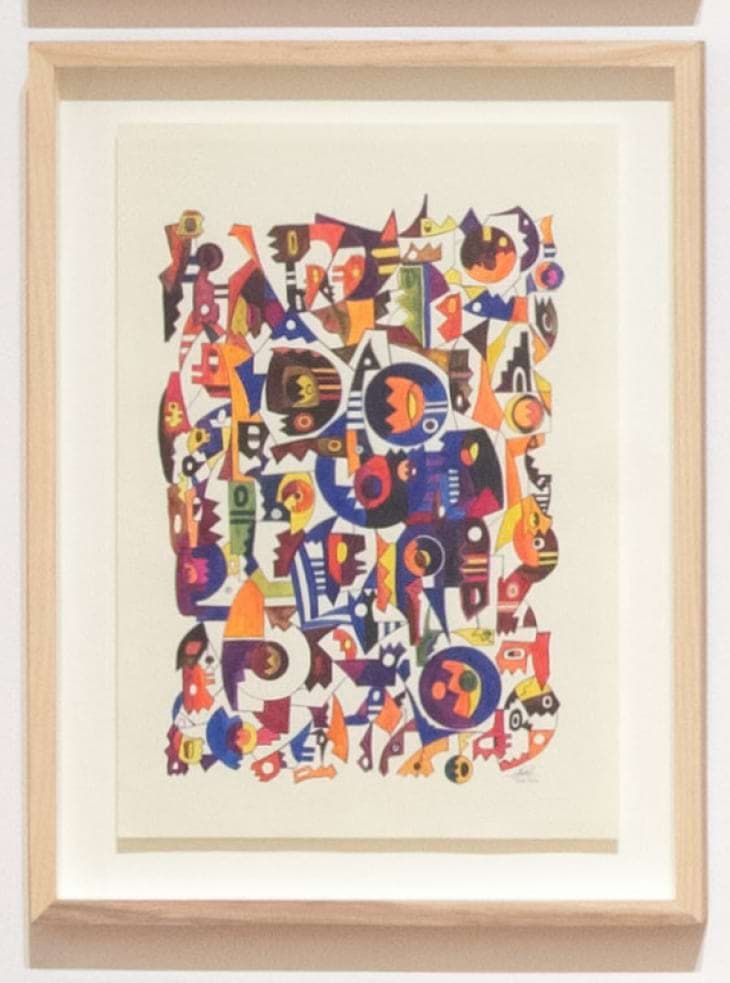
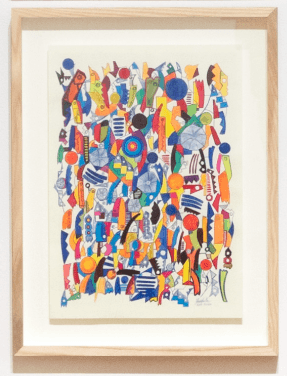
In these works Fonta translates his philosophical contemplations on fully experiencing the universe’s ongoing expression of form, energy and materials through ink and pen on paper. He considers the role of the artist as one to decode and convey the kaleidoscopic infinity that exists and that cannot be articulated through language. For him this involves disassembling inherited knowledge systems. It also involves exploring the spaces of emotional awareness, sensory perceptions and tapping into evolutionary lexical data.
In these works Fonta translates his philosophical contemplations on fully experiencing the universe’s ongoing expression of form, energy and materials through ink and pen on paper. He considers the role of the artist as one to decode and convey the kaleidoscopic infinity that exists and that cannot be articulated through language. For him this involves disassembling inherited knowledge systems. It also involves exploring the spaces of emotional awareness, sensory perceptions and tapping into evolutionary lexical data.
In these works Fonta translates his philosophical contemplations on fully experiencing the universe’s ongoing expression of form, energy and materials through ink and pen on paper. He considers the role of the artist as one to decode and convey the kaleidoscopic infinity that exists and that cannot be articulated through language. For him this involves disassembling inherited knowledge systems. It also involves exploring the spaces of emotional awareness, sensory perceptions and tapping into evolutionary lexical data.
In these works Fonta translates his philosophical contemplations on fully experiencing the universe’s ongoing expression of form, energy and materials through ink and pen on paper. He considers the role of the artist as one to decode and convey the kaleidoscopic infinity that exists and that cannot be articulated through language. For him this involves disassembling inherited knowledge systems. It also involves exploring the spaces of emotional awareness, sensory perceptions and tapping into evolutionary lexical data.
In these works Fonta translates his philosophical contemplations on fully experiencing the universe’s ongoing expression of form, energy and materials through ink and pen on paper. He considers the role of the artist as one to decode and convey the kaleidoscopic infinity that exists and that cannot be articulated through language. For him this involves disassembling inherited knowledge systems. It also involves exploring the spaces of emotional awareness, sensory perceptions and tapping into evolutionary lexical data.
In these works Fonta translates his philosophical contemplations on fully experiencing the universe’s ongoing expression of form, energy and materials through ink and pen on paper. He considers the role of the artist as one to decode and convey the kaleidoscopic infinity that exists and that cannot be articulated through language. For him this involves disassembling inherited knowledge systems. It also involves exploring the spaces of emotional awareness, sensory perceptions and tapping into evolutionary lexical data.
In these works Fonta translates his philosophical contemplations on fully experiencing the universe’s ongoing expression of form, energy and materials through ink and pen on paper. He considers the role of the artist as one to decode and convey the kaleidoscopic infinity that exists and that cannot be articulated through language. For him this involves disassembling inherited knowledge systems. It also involves exploring the spaces of emotional awareness, sensory perceptions and tapping into evolutionary lexical data.
In these works Fonta translates his philosophical contemplations on fully experiencing the universe’s ongoing expression of form, energy and materials through ink and pen on paper. He considers the role of the artist as one to decode and convey the kaleidoscopic infinity that exists and that cannot be articulated through language. For him this involves disassembling inherited knowledge systems. It also involves exploring the spaces of emotional awareness, sensory perceptions and tapping into evolutionary lexical data.
In these works Fonta translates his philosophical contemplations on fully experiencing the universe’s ongoing expression of form, energy and materials through ink and pen on paper. He considers the role of the artist as one to decode and convey the kaleidoscopic infinity that exists and that cannot be articulated through language. For him this involves disassembling inherited knowledge systems. It also involves exploring the spaces of emotional awareness, sensory perceptions and tapping into evolutionary lexical data.
In these works Fonta translates his philosophical contemplations on fully experiencing the universe’s ongoing expression of form, energy and materials through ink and pen on paper. He considers the role of the artist as one to decode and convey the kaleidoscopic infinity that exists and that cannot be articulated through language. For him this involves disassembling inherited knowledge systems. It also involves exploring the spaces of emotional awareness, sensory perceptions and tapping into evolutionary lexical data.
In these works Fonta translates his philosophical contemplations on fully experiencing the universe’s ongoing expression of form, energy and materials through ink and pen on paper. He considers the role of the artist as one to decode and convey the kaleidoscopic infinity that exists and that cannot be articulated through language. For him this involves disassembling inherited knowledge systems. It also involves exploring the spaces of emotional awareness, sensory perceptions and tapping into evolutionary lexical data.
In these works Fonta translates his philosophical contemplations on fully experiencing the universe’s ongoing expression of form, energy and materials through ink and pen on paper. He considers the role of the artist as one to decode and convey the kaleidoscopic infinity that exists and that cannot be articulated through language. For him this involves disassembling inherited knowledge systems. It also involves exploring the spaces of emotional awareness, sensory perceptions and tapping into evolutionary lexical data.
In these works Fonta translates his philosophical contemplations on fully experiencing the universe’s ongoing expression of form, energy and materials through ink and pen on paper. He considers the role of the artist as one to decode and convey the kaleidoscopic infinity that exists and that cannot be articulated through language. For him this involves disassembling inherited knowledge systems. It also involves exploring the spaces of emotional awareness, sensory perceptions and tapping into evolutionary lexical data.
In these works Fonta translates his philosophical contemplations on fully experiencing the universe’s ongoing expression of form, energy and materials through ink and pen on paper. He considers the role of the artist as one to decode and convey the kaleidoscopic infinity that exists and that cannot be articulated through language. For him this involves disassembling inherited knowledge systems. It also involves exploring the spaces of emotional awareness, sensory perceptions and tapping into evolutionary lexical data.
In these works Fonta translates his philosophical contemplations on fully experiencing the universe’s ongoing expression of form, energy and materials through ink and pen on paper. He considers the role of the artist as one to decode and convey the kaleidoscopic infinity that exists and that cannot be articulated through language. For him this involves disassembling inherited knowledge systems. It also involves exploring the spaces of emotional awareness, sensory perceptions and tapping into evolutionary lexical data.
In these works Fonta translates his philosophical contemplations on fully experiencing the universe’s ongoing expression of form, energy and materials through ink and pen on paper. He considers the role of the artist as one to decode and convey the kaleidoscopic infinity that exists and that cannot be articulated through language. For him this involves disassembling inherited knowledge systems. It also involves exploring the spaces of emotional awareness, sensory perceptions and tapping into evolutionary lexical data.
Created during the 2020 lockdown, ‘Taboo Durag’ is a performance work that explores the interface between vulnerability and resilience. Through the performance, the dance solo unfolds different narratives and choreographic registers with a score of heavy ambiance and vocals. Conveying a narrative around violence and acts of violence over bodies, ‘Taboo Durag’ utilises sound, text and movement to speak to themes of trauma and, in turn, healing both as personal catharsis and as a way of reaching out to establish a form of touch, without physical contact.
Written and performed by Paul Maheke
Music by Simon Maheke
Voice by Paul Maheke