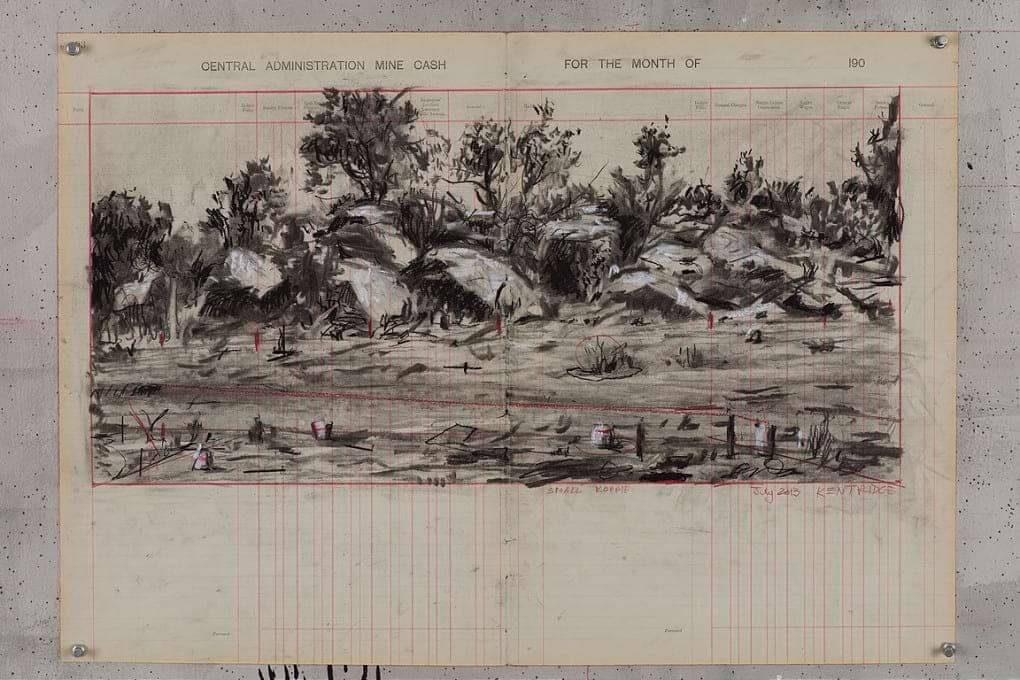
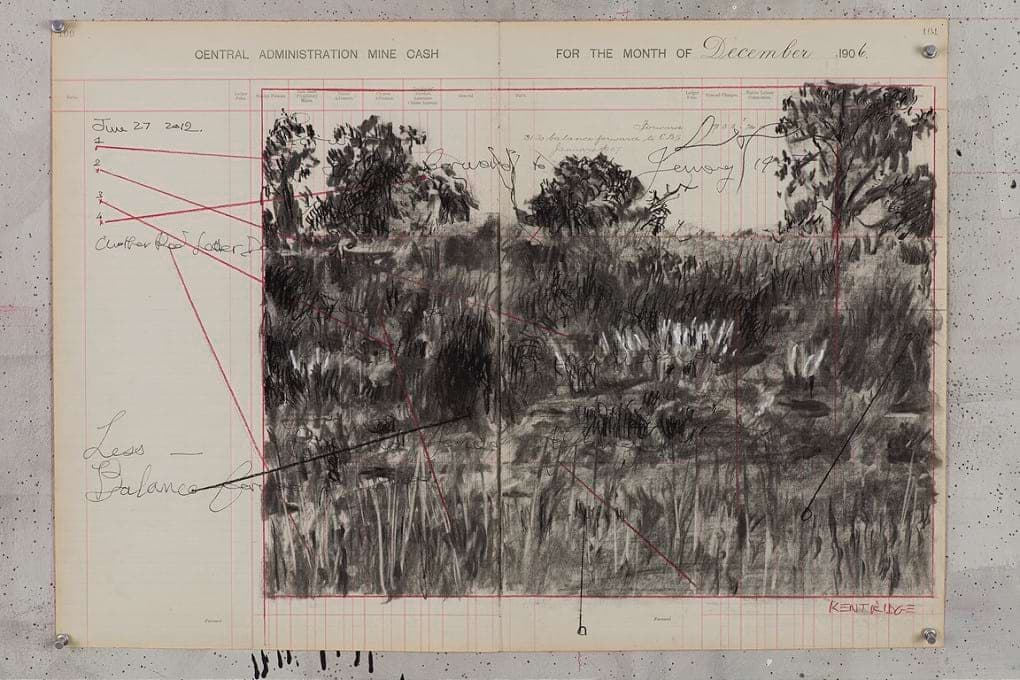
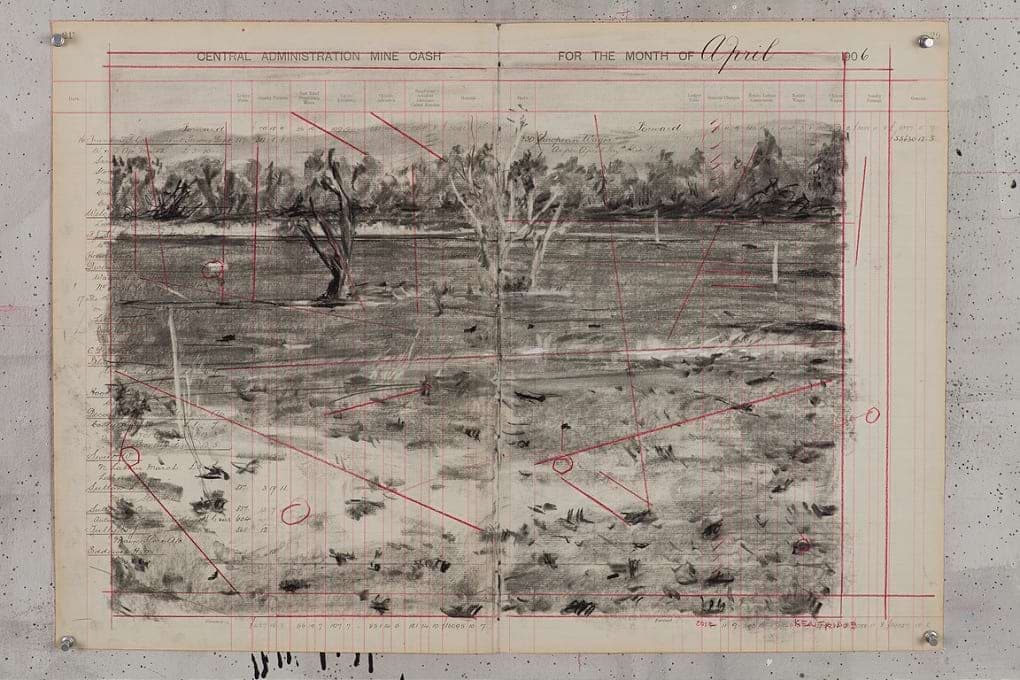
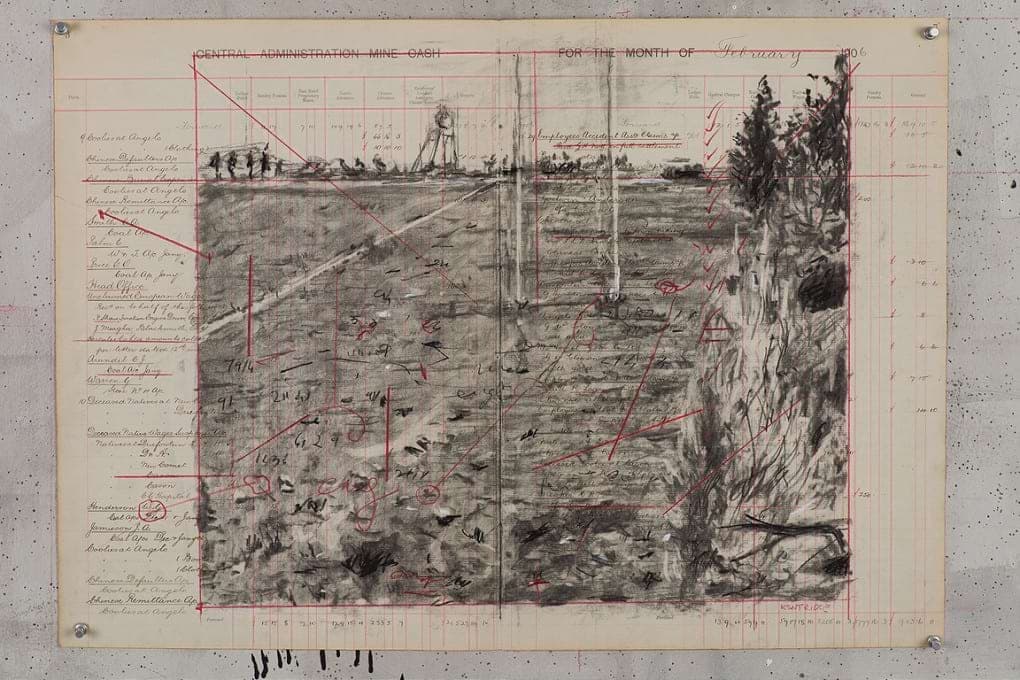
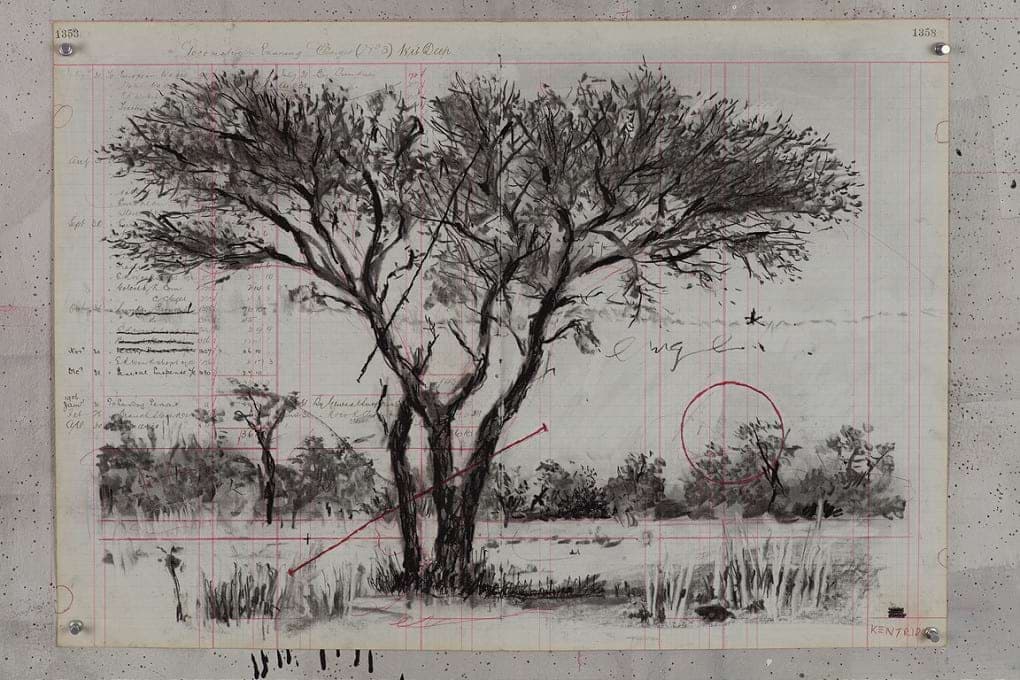
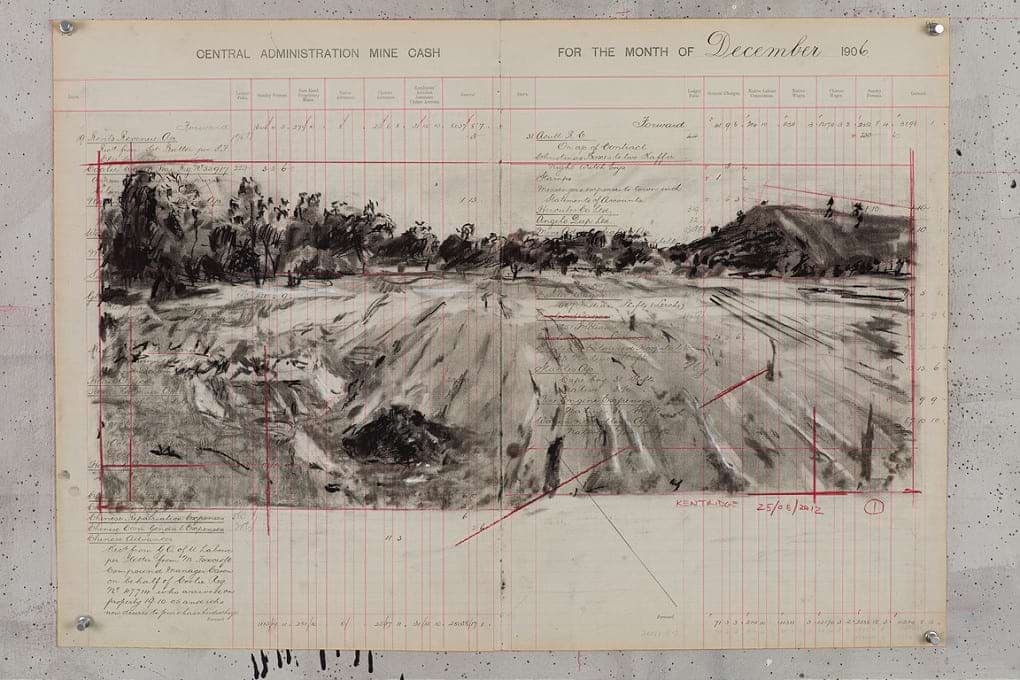
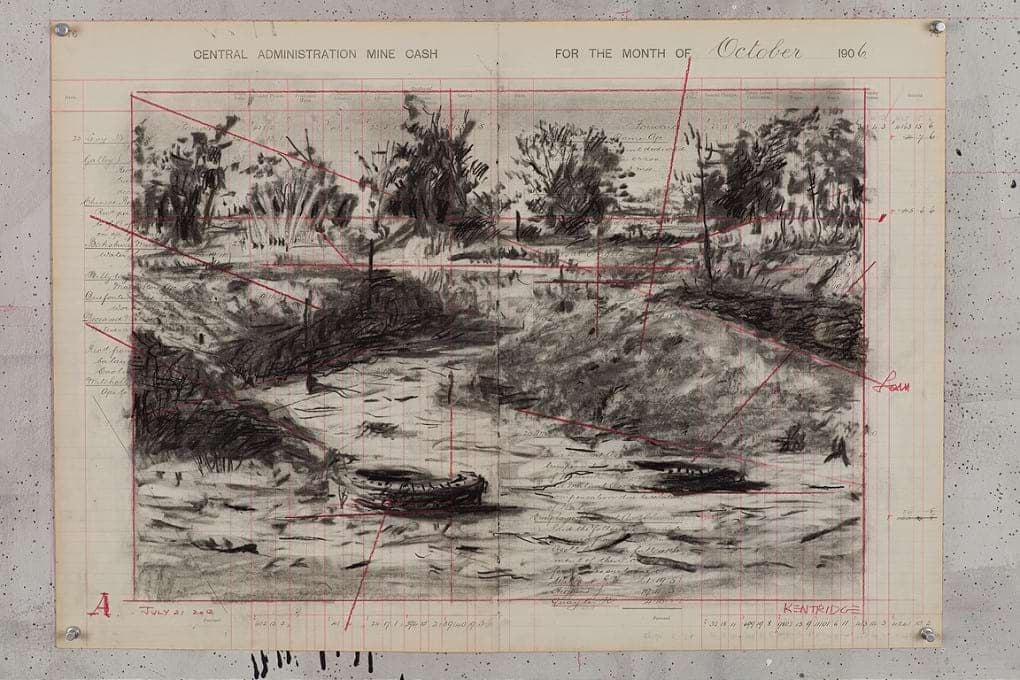
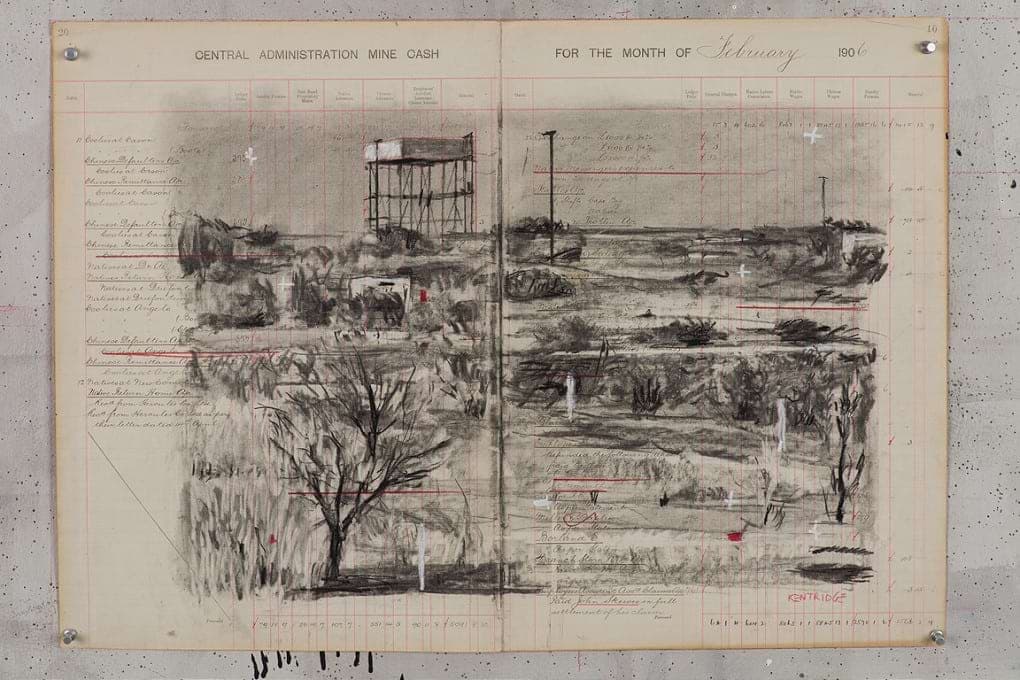
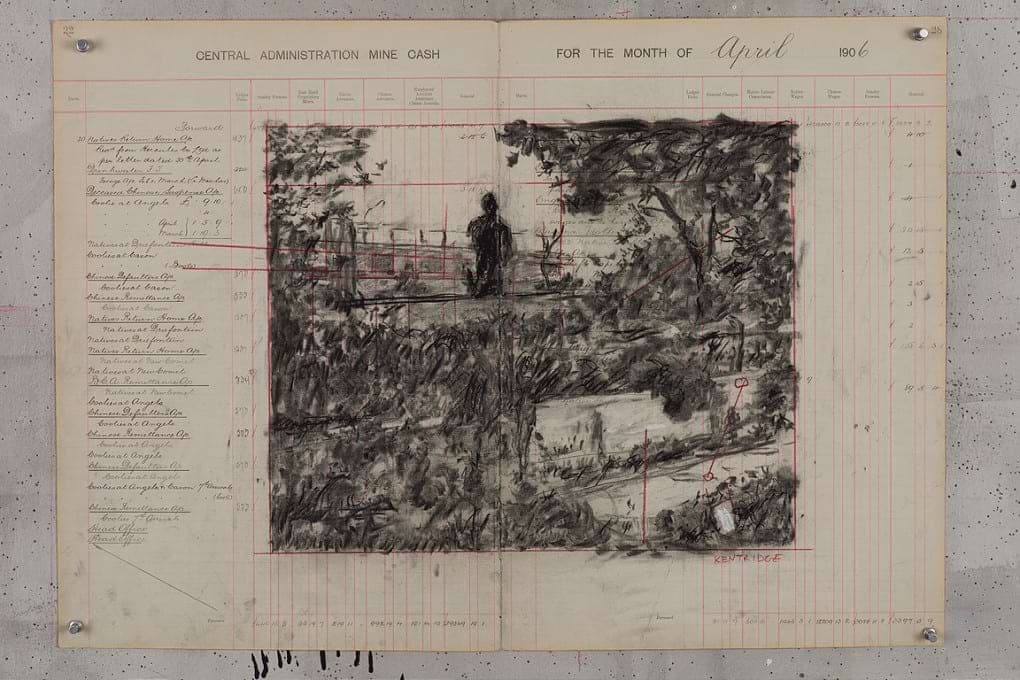
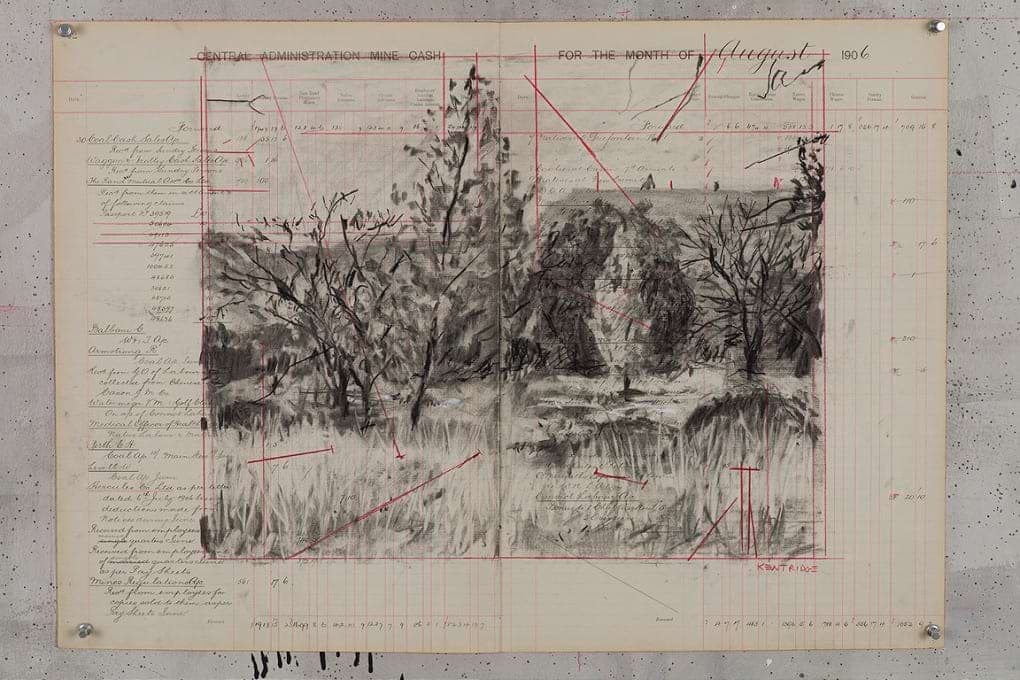
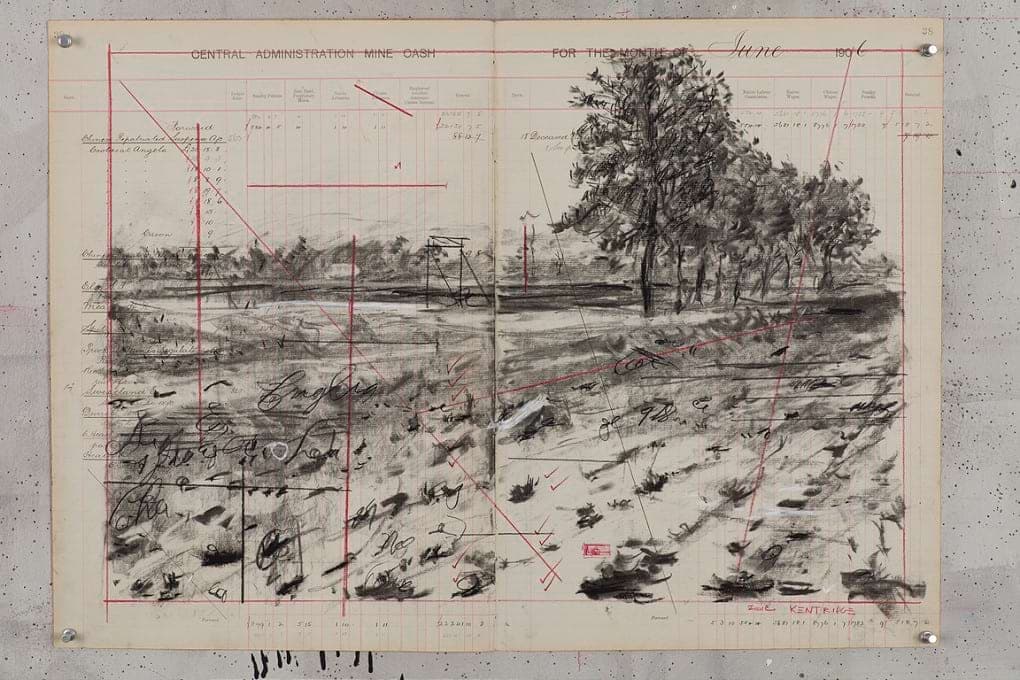
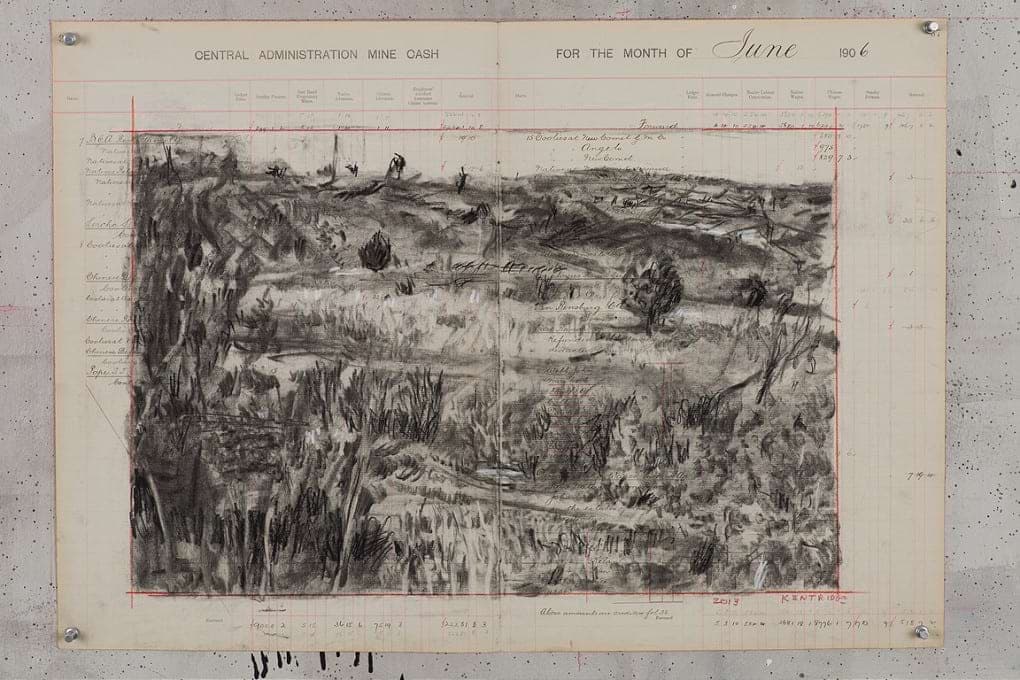
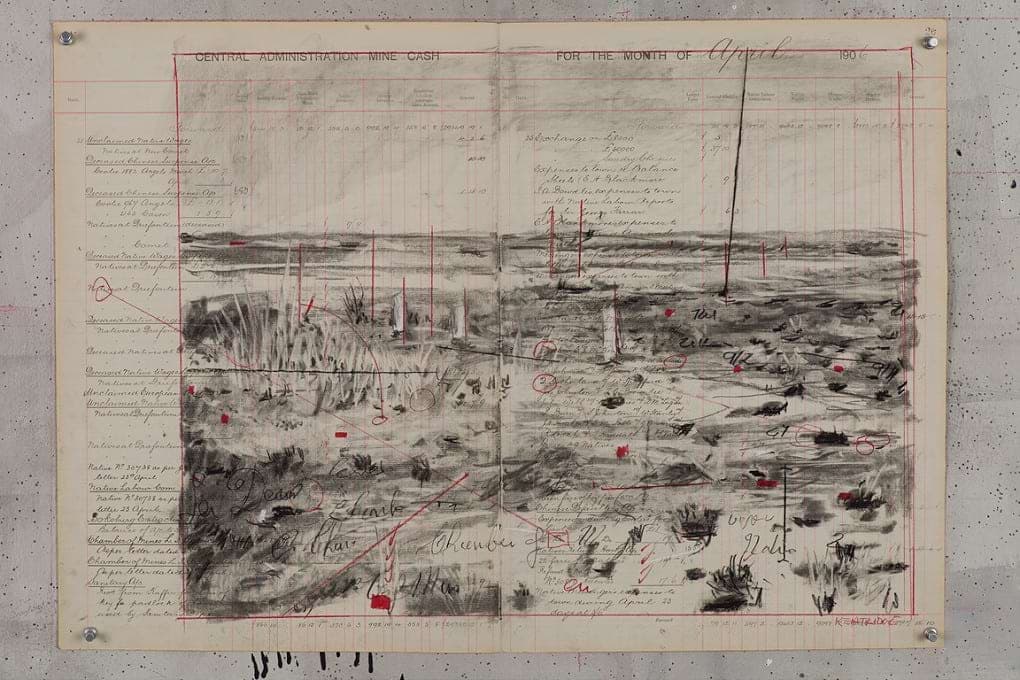
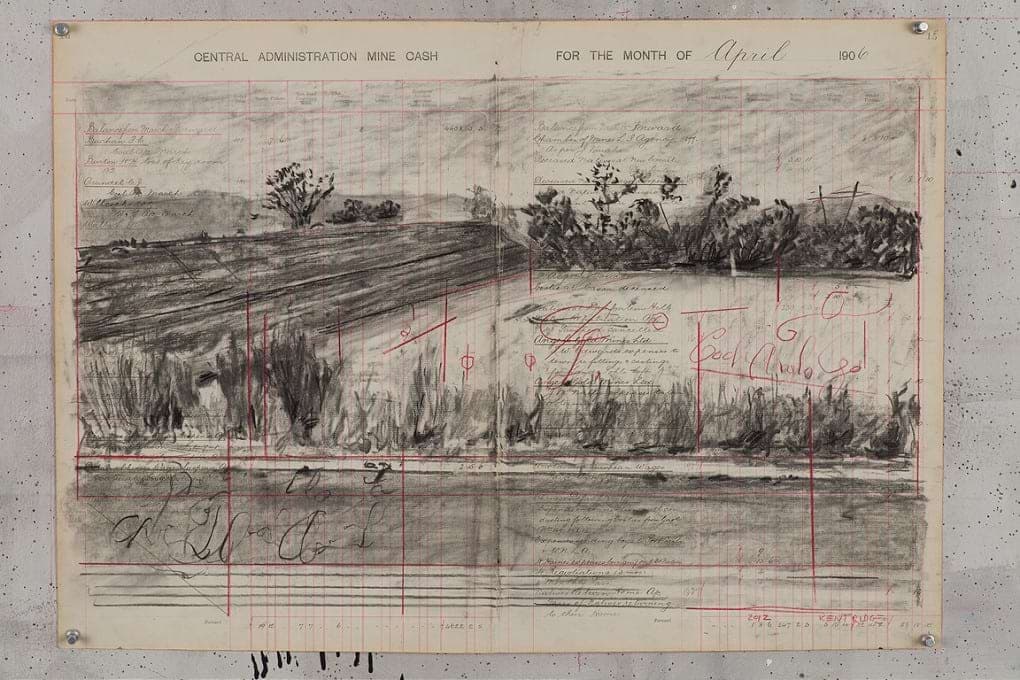
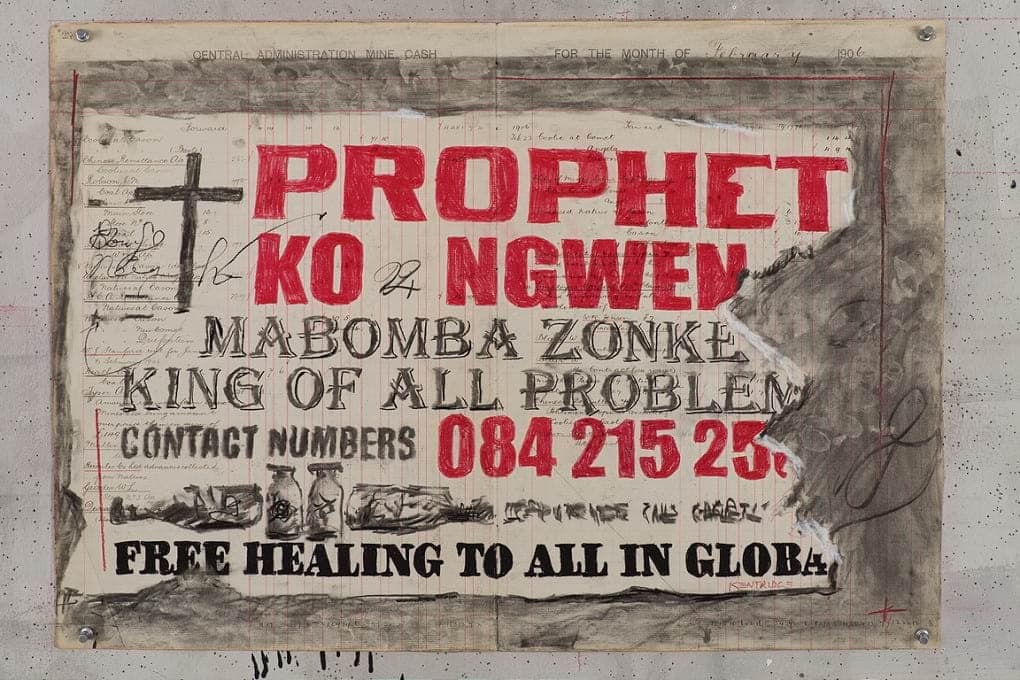
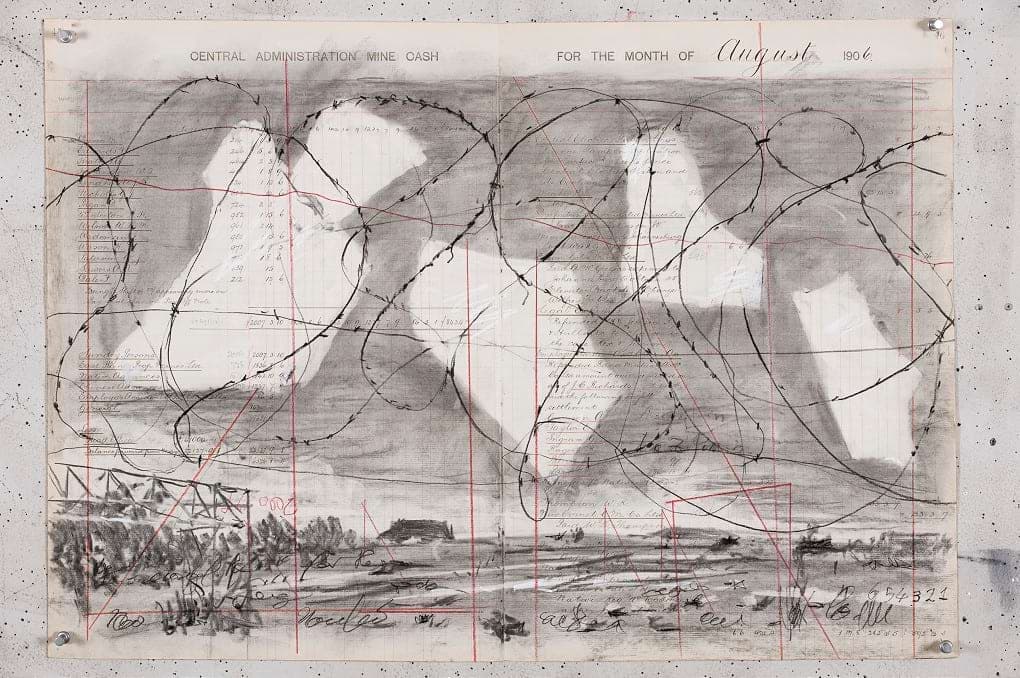
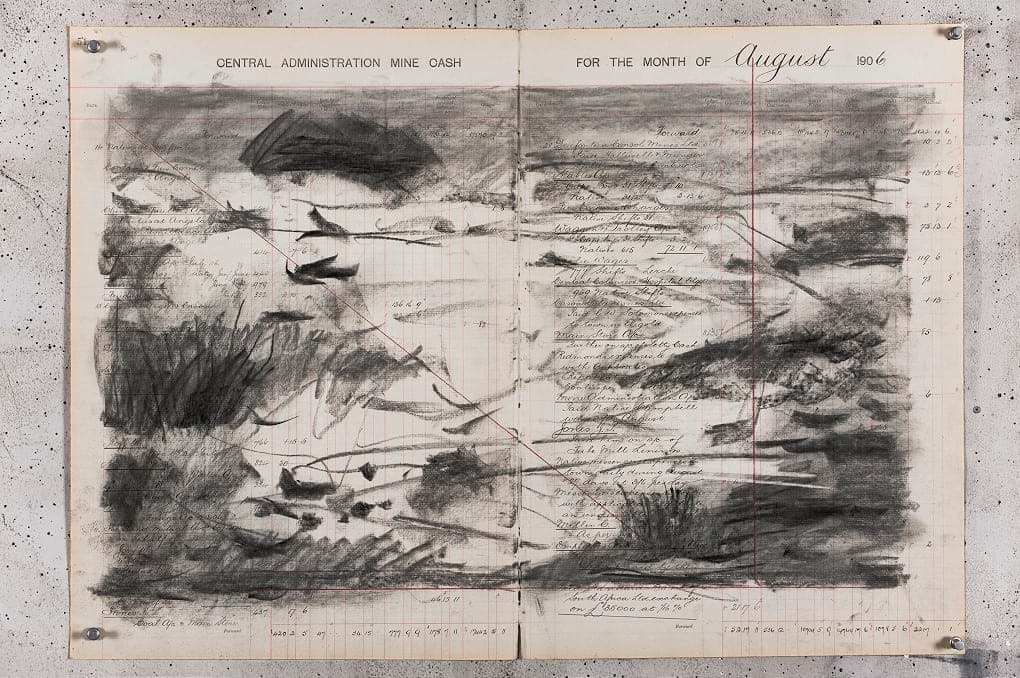
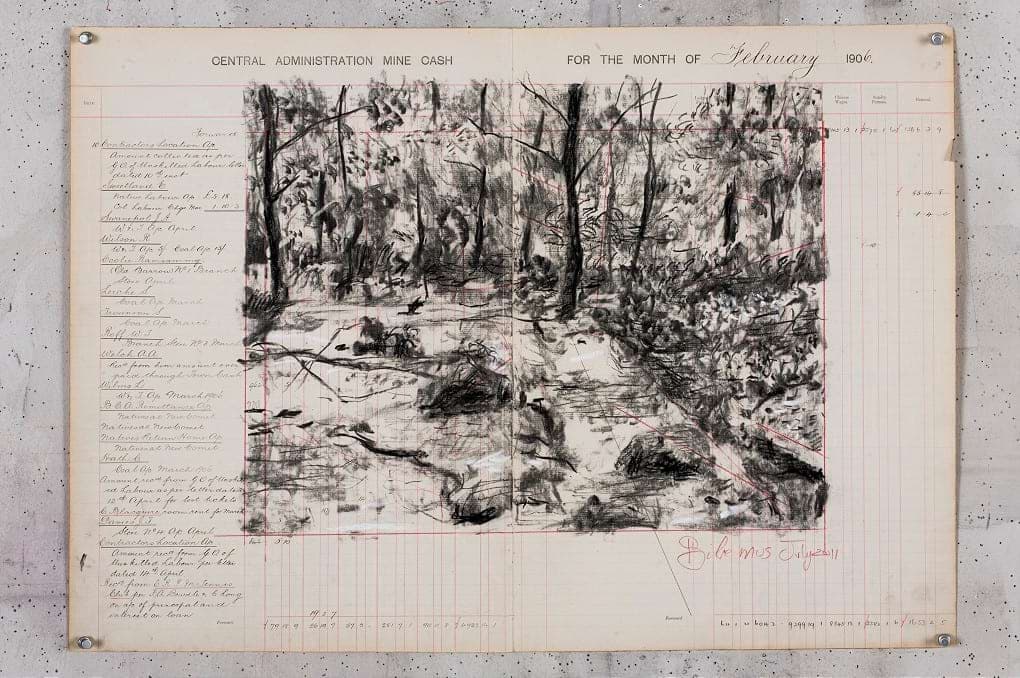
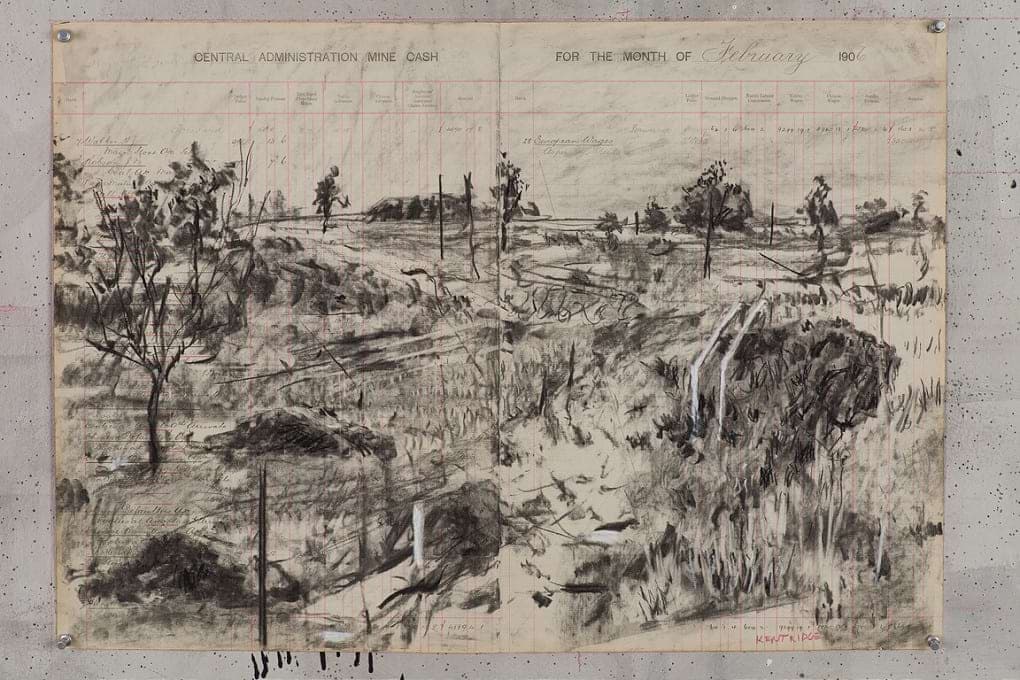
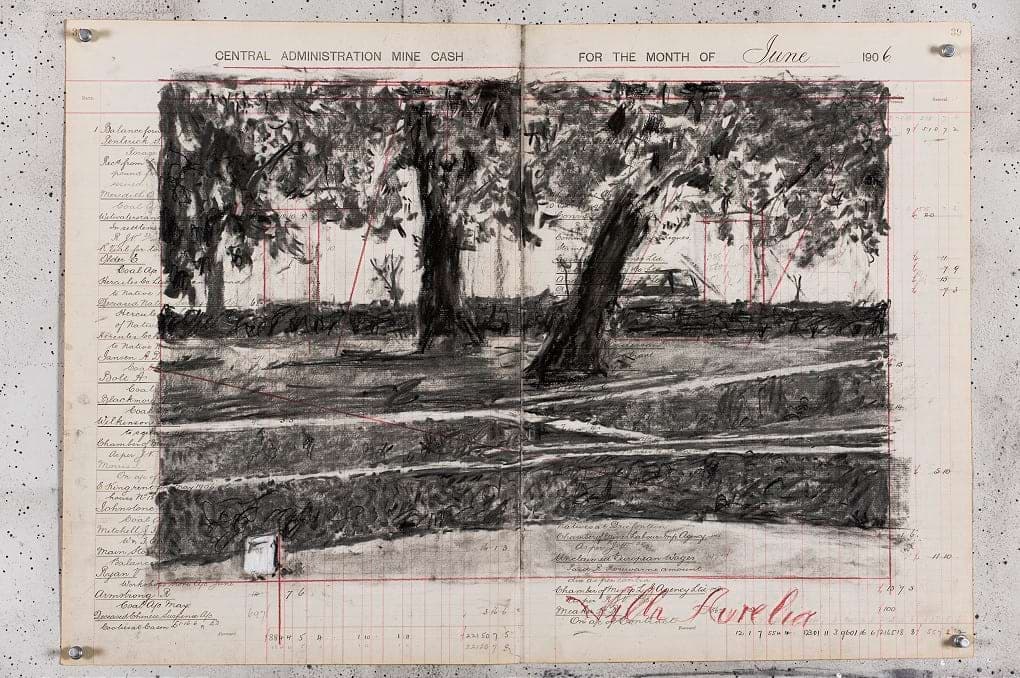
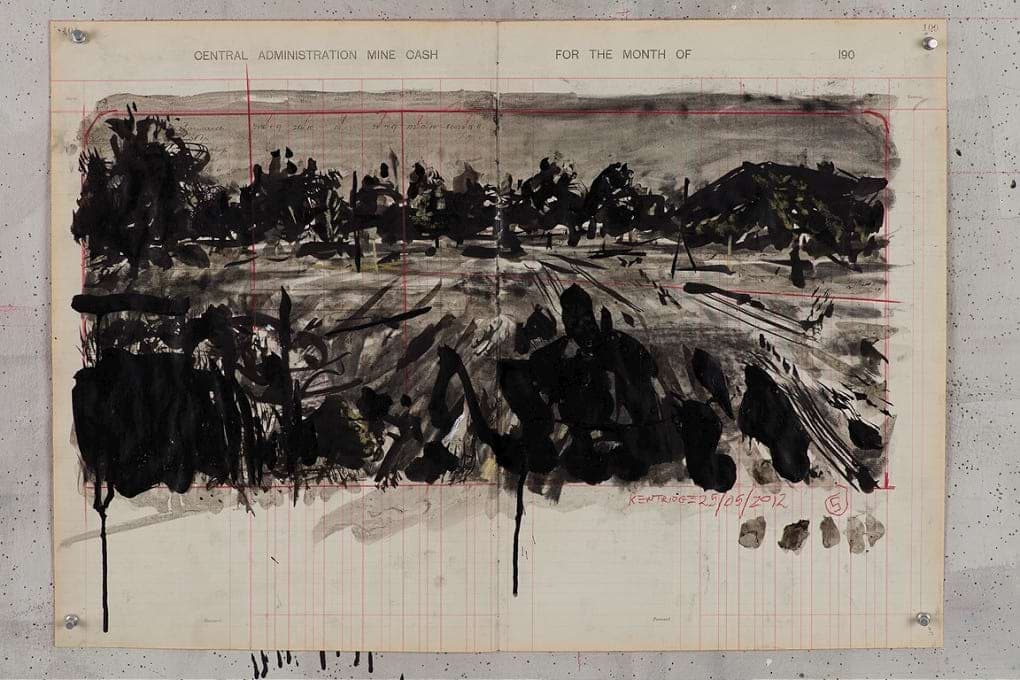
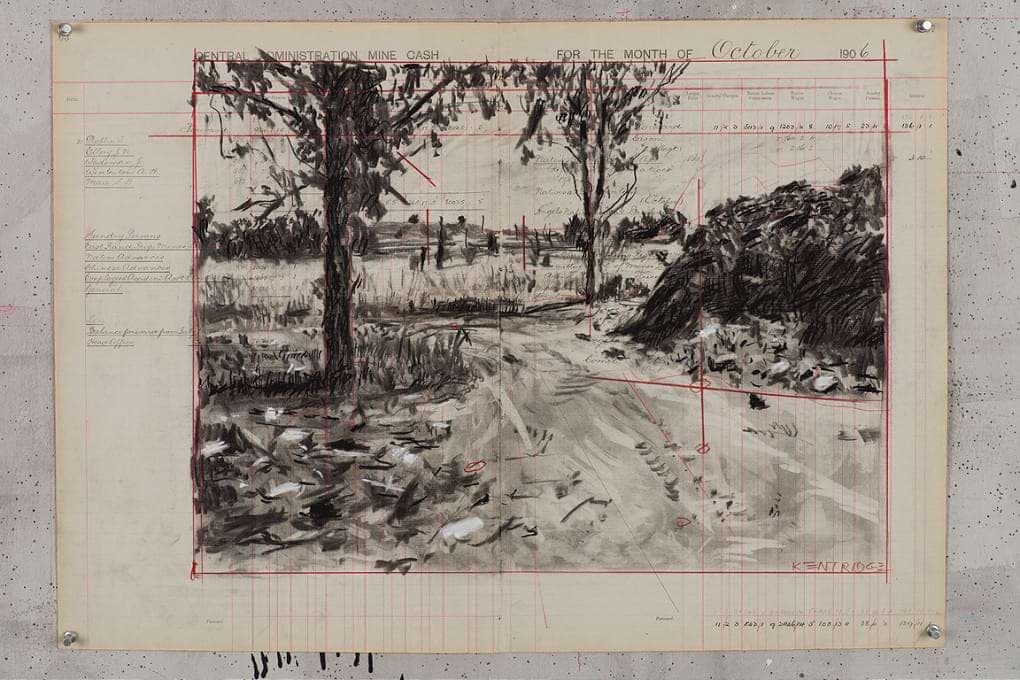
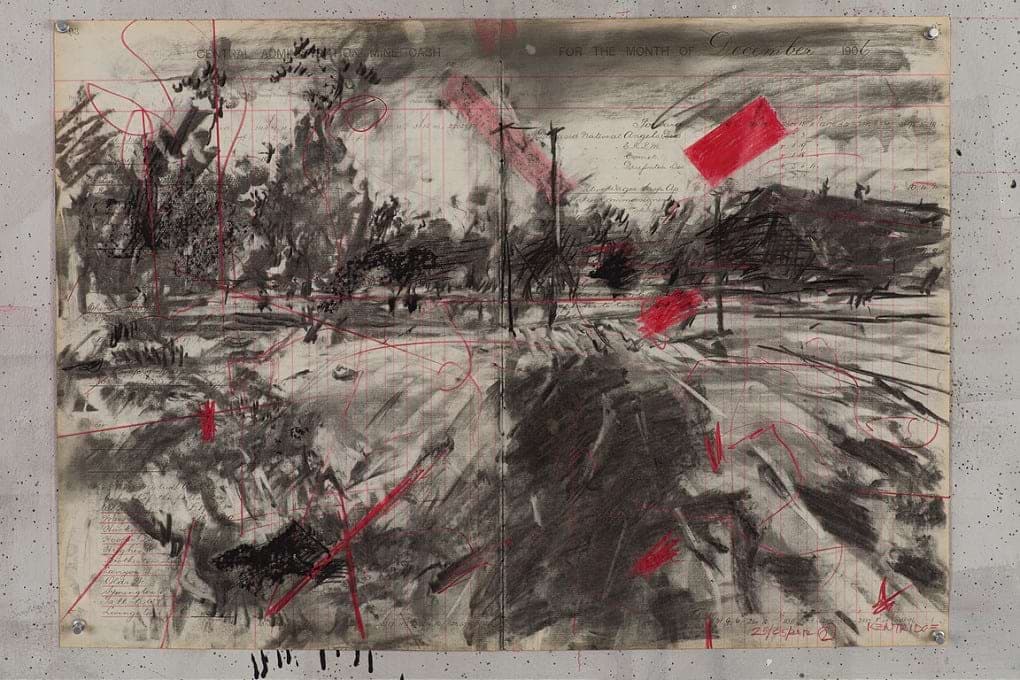
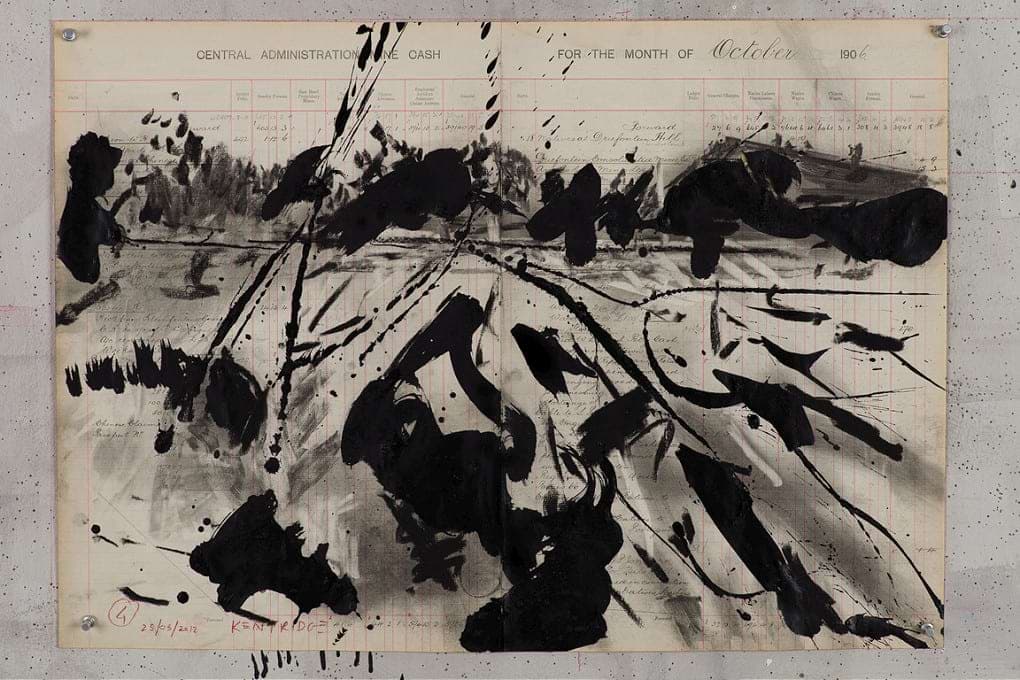
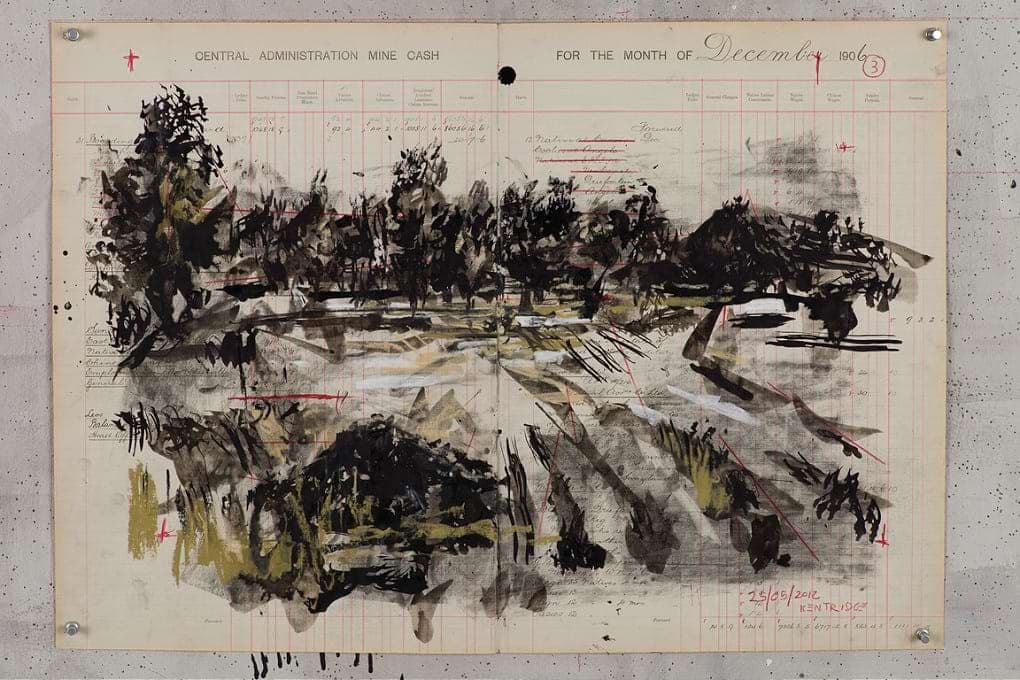
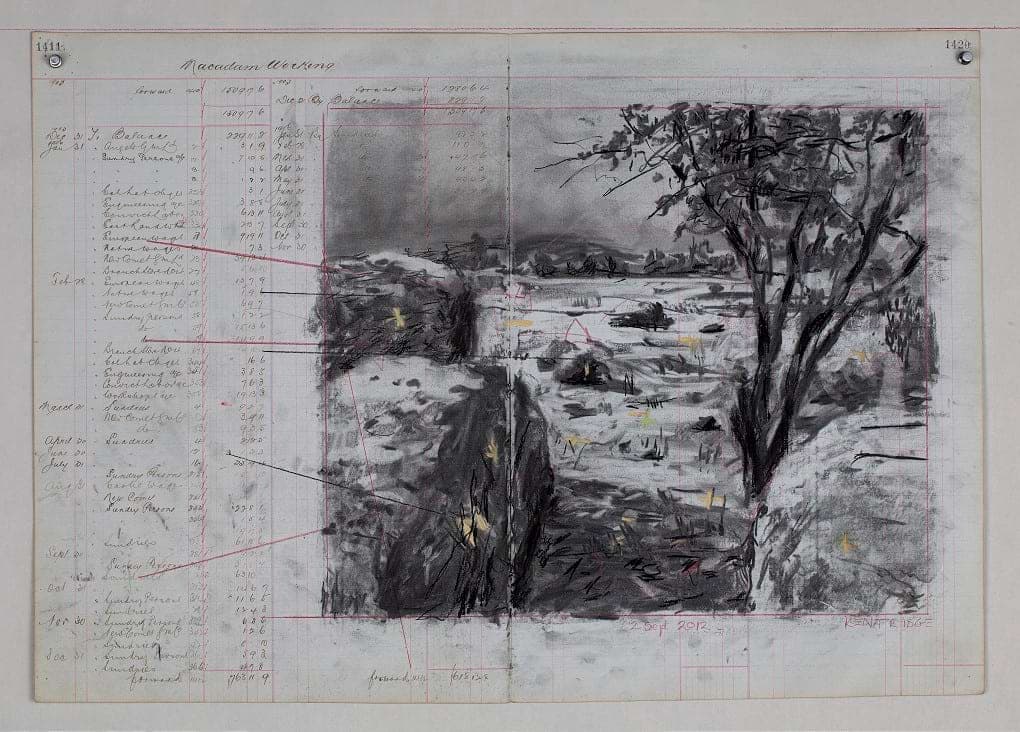
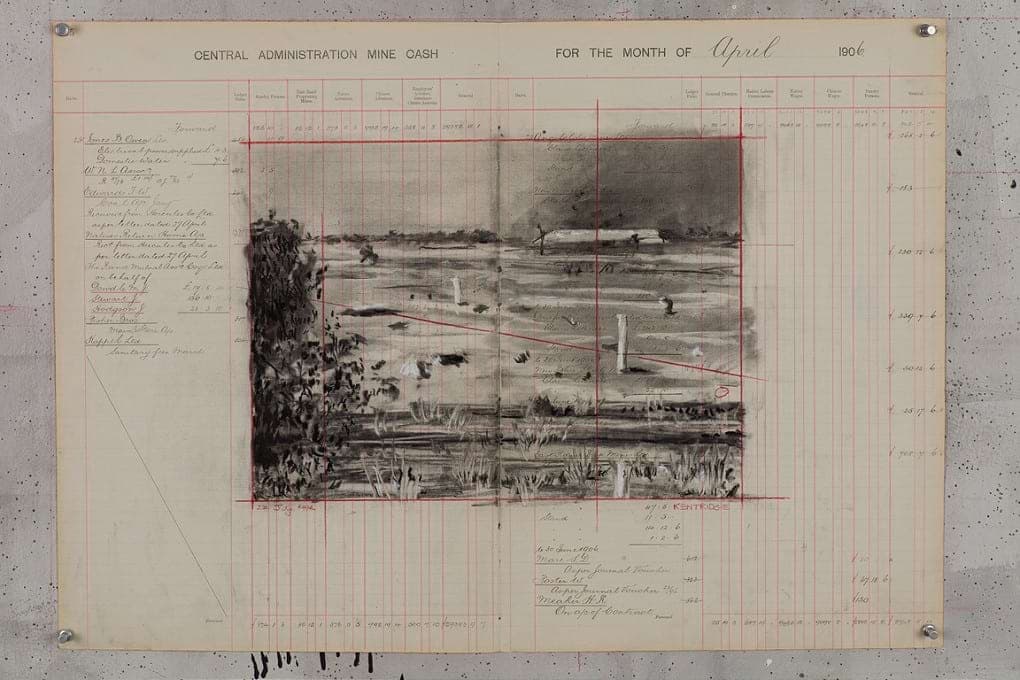
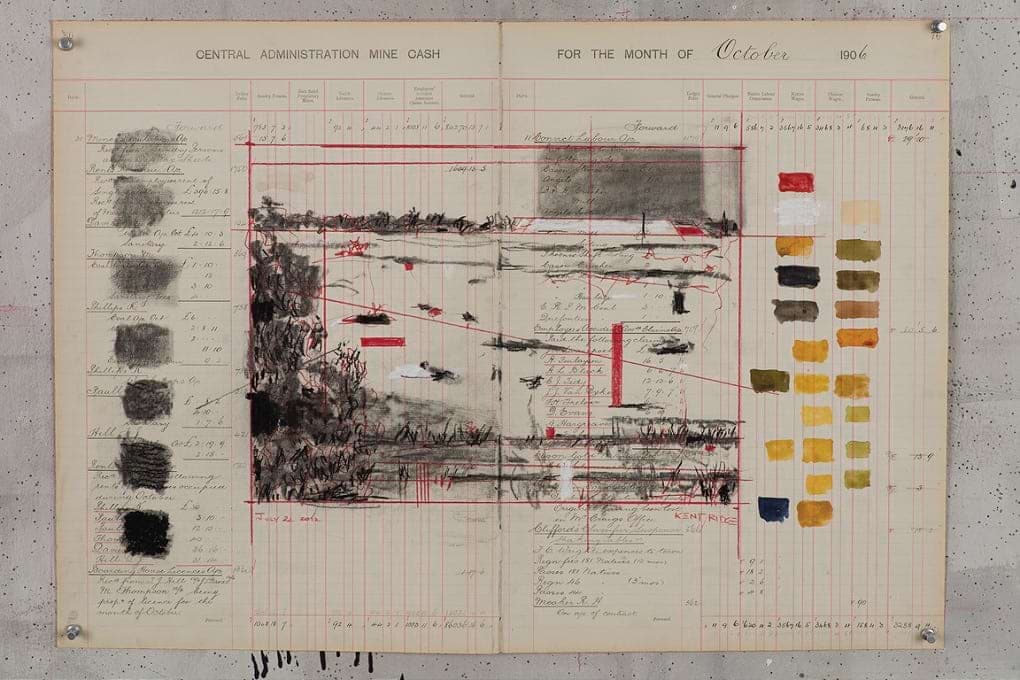
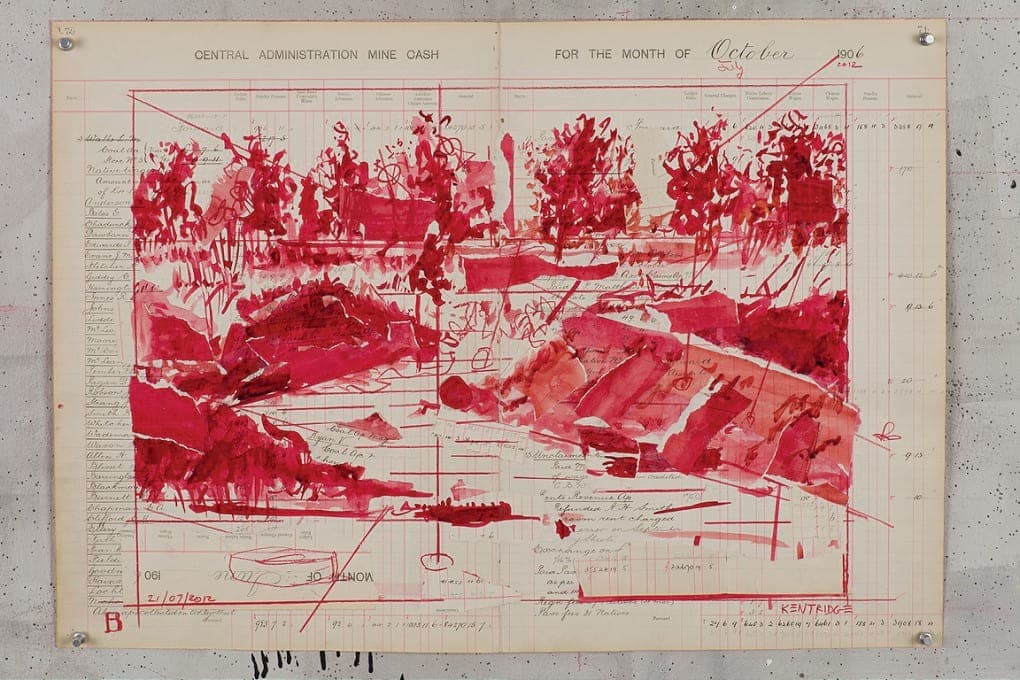
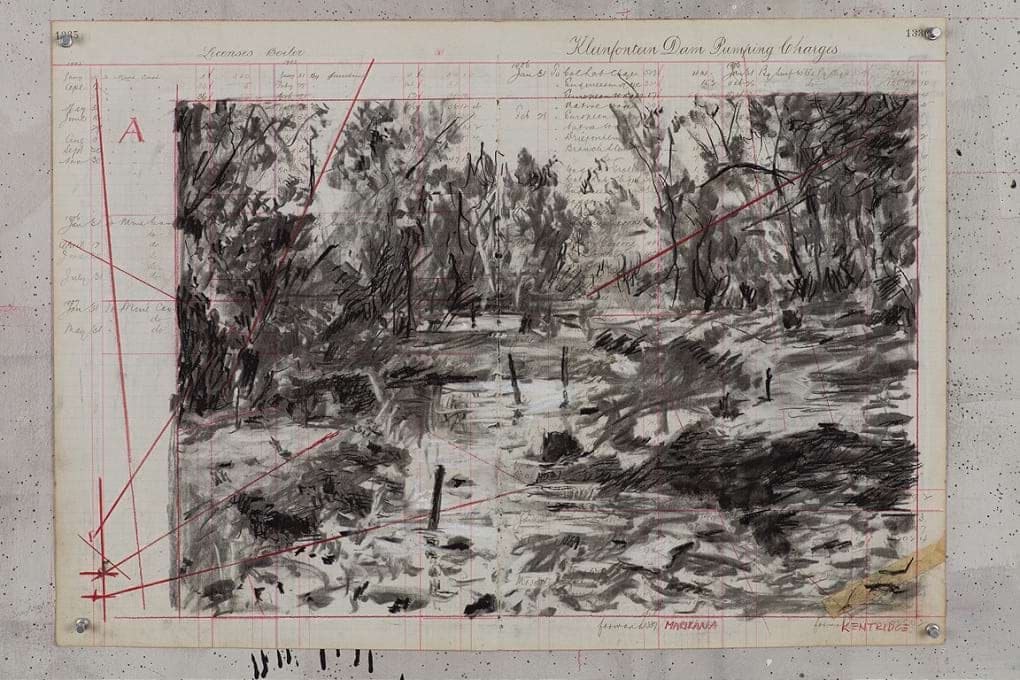
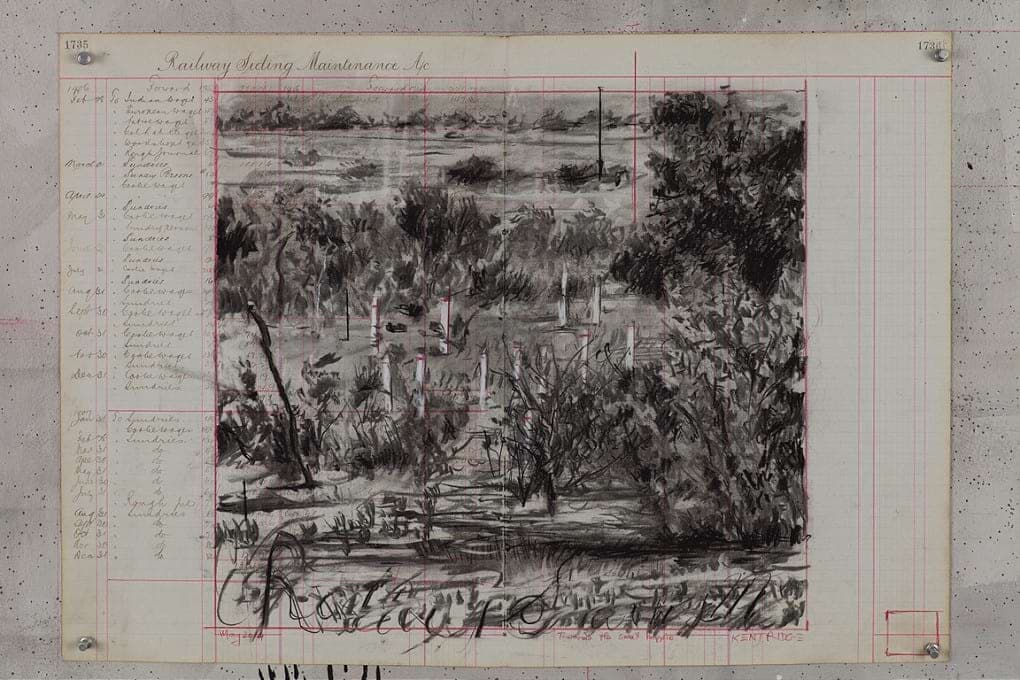
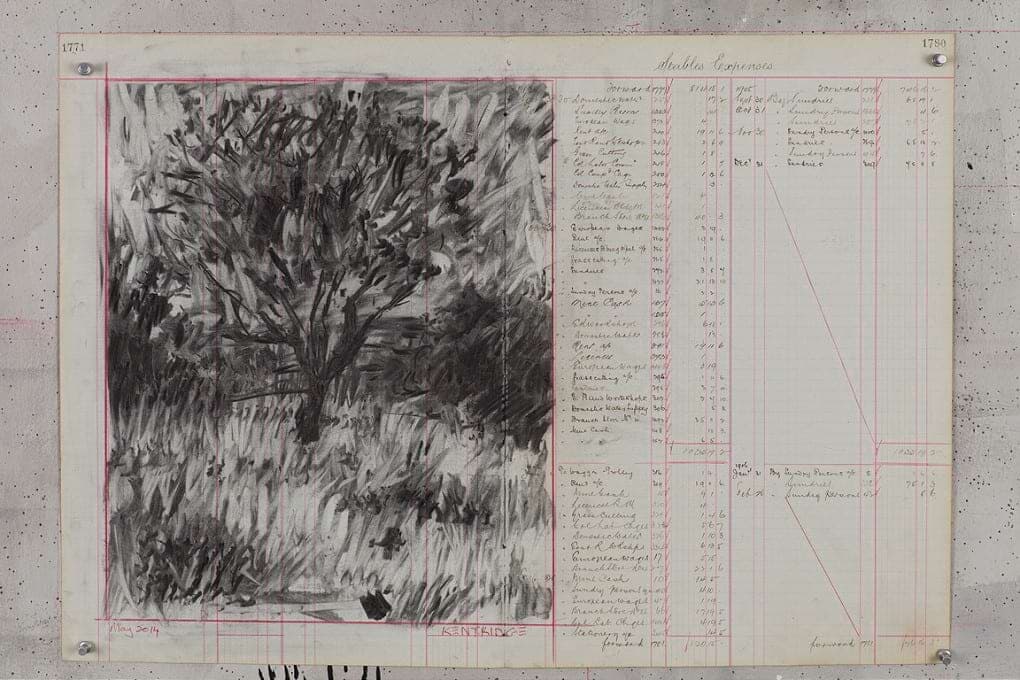
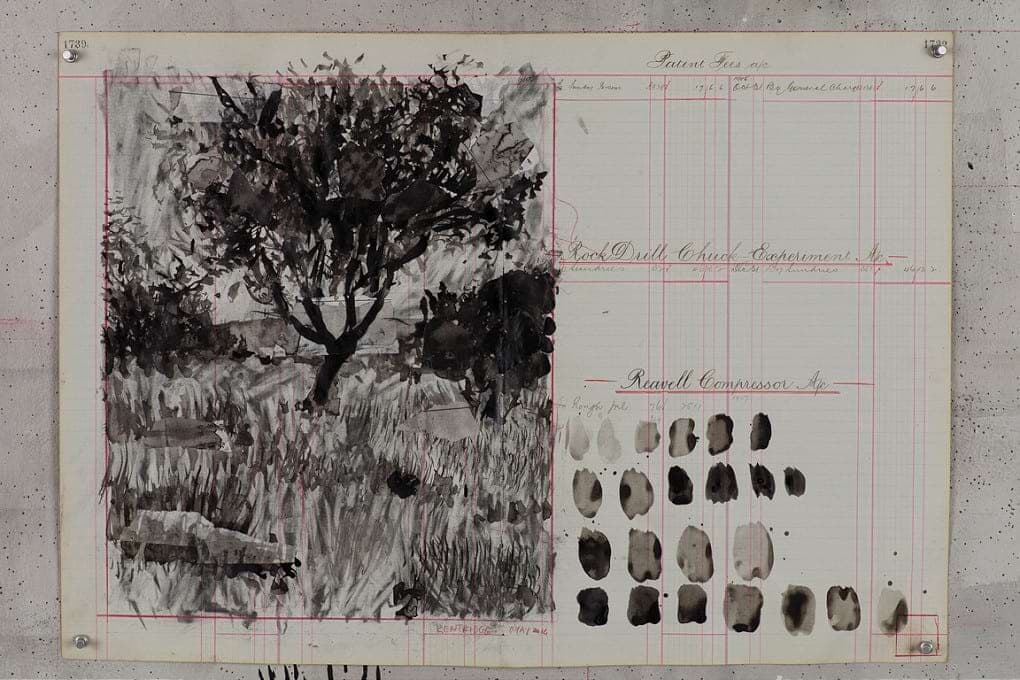
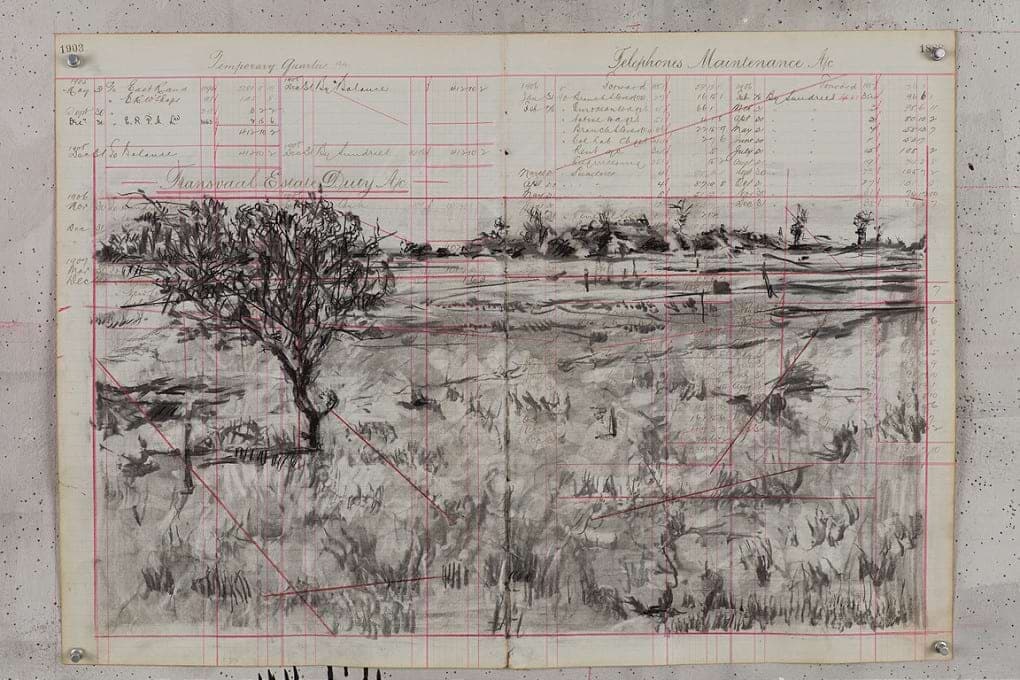
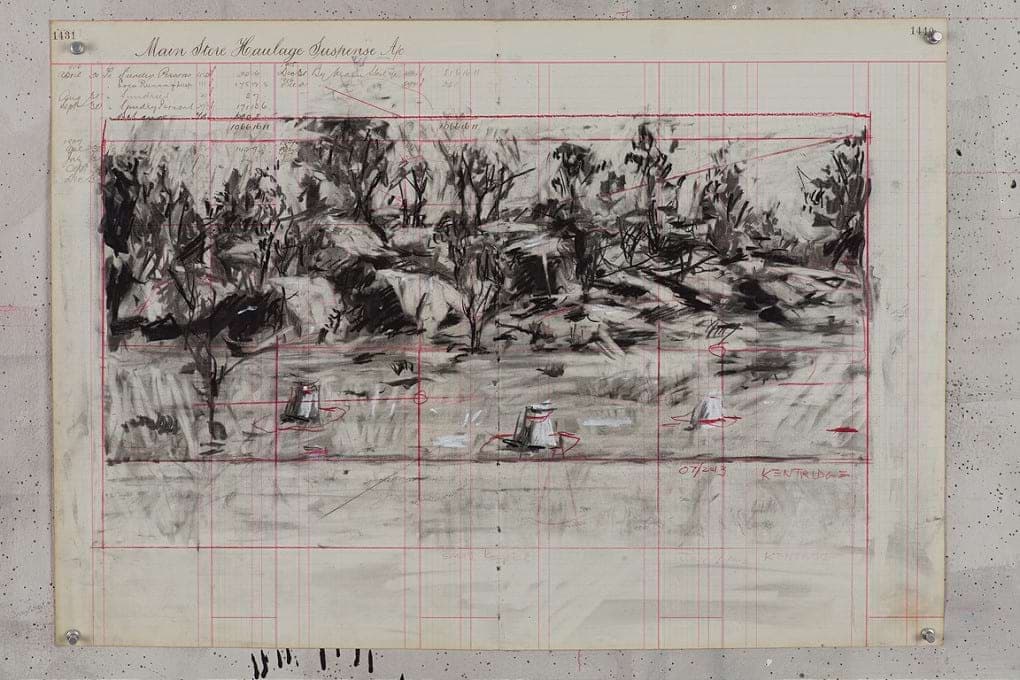
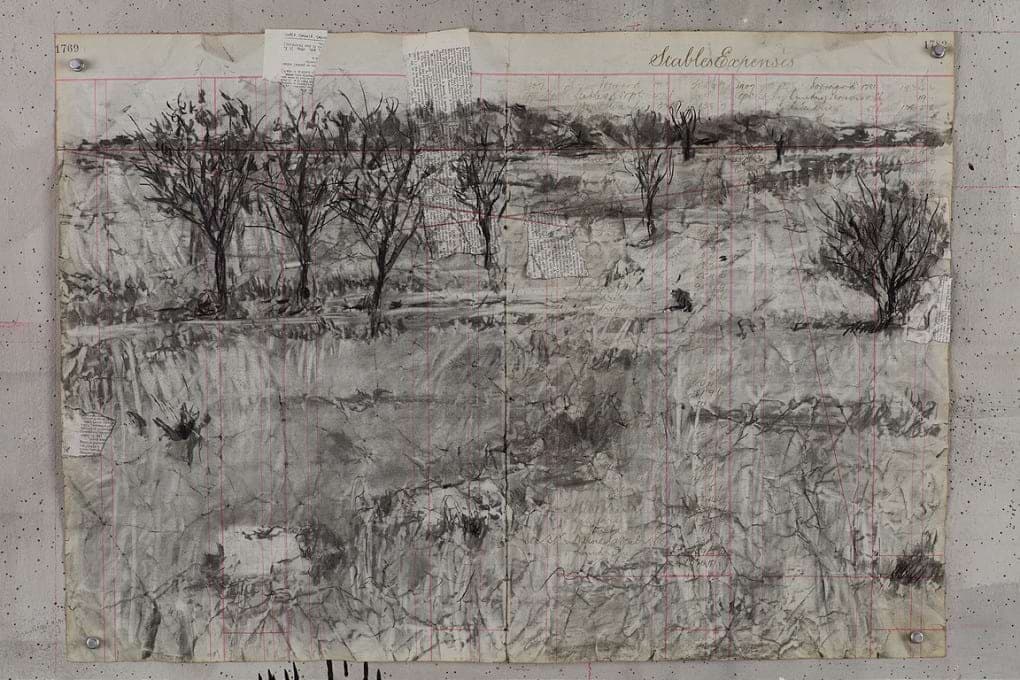
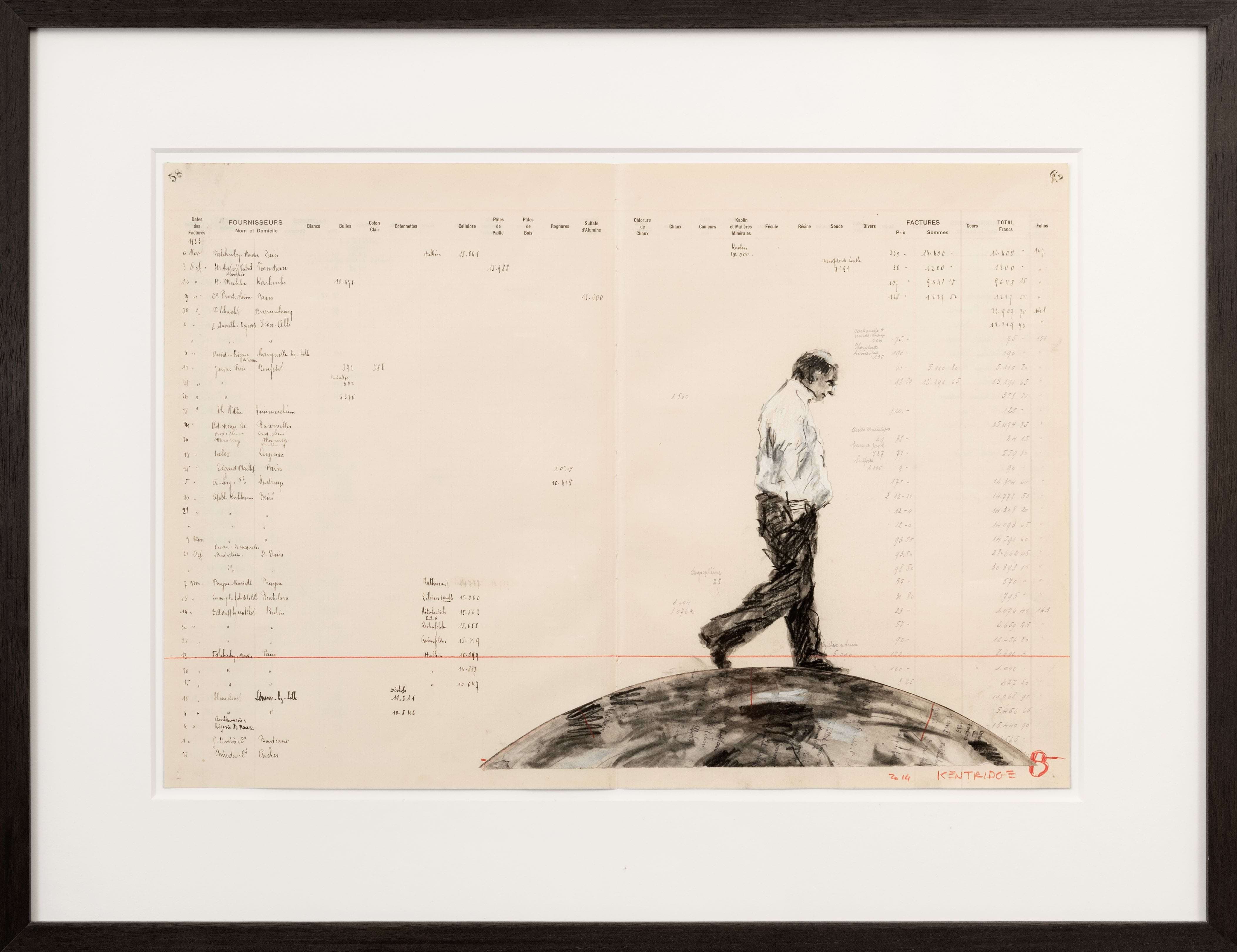
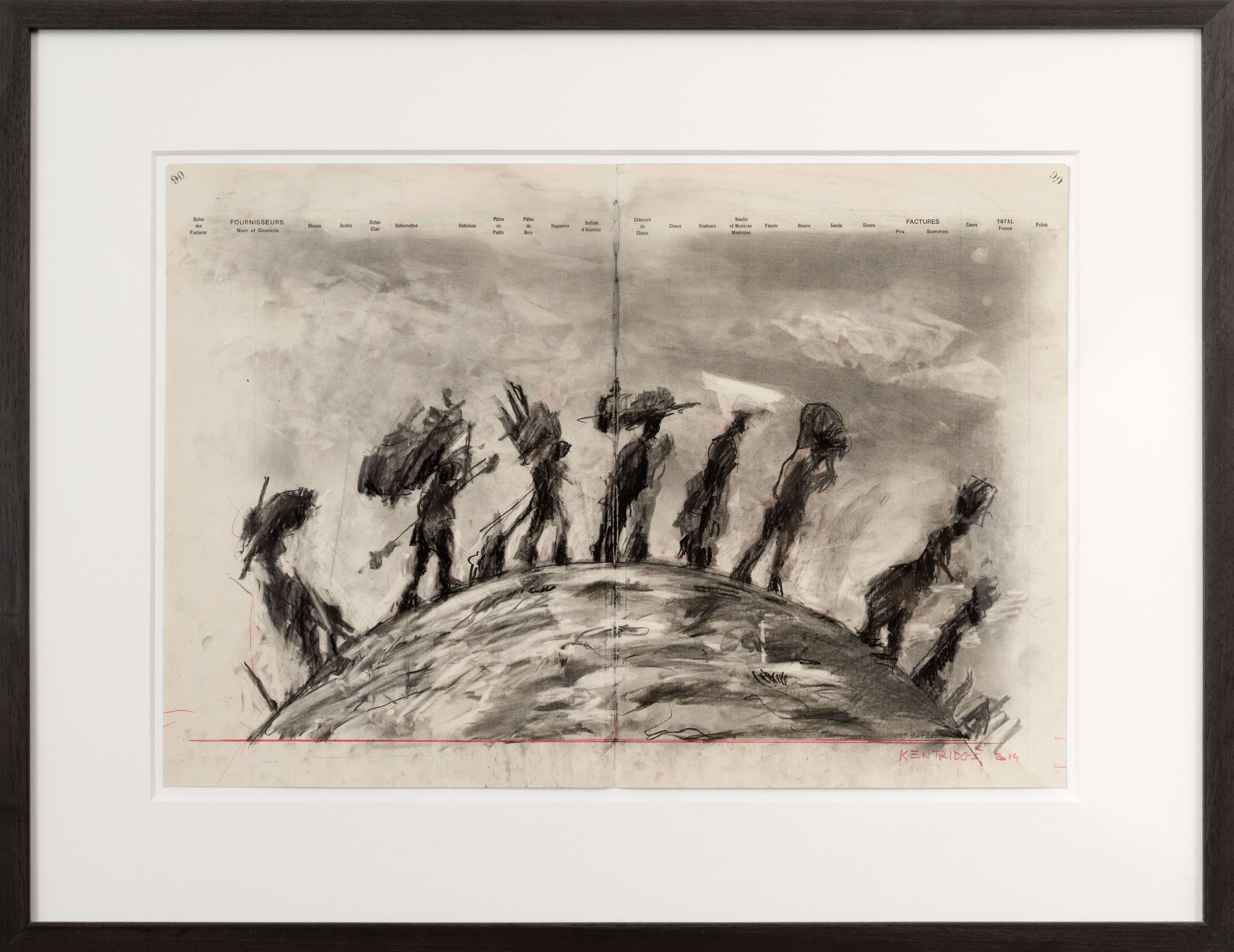
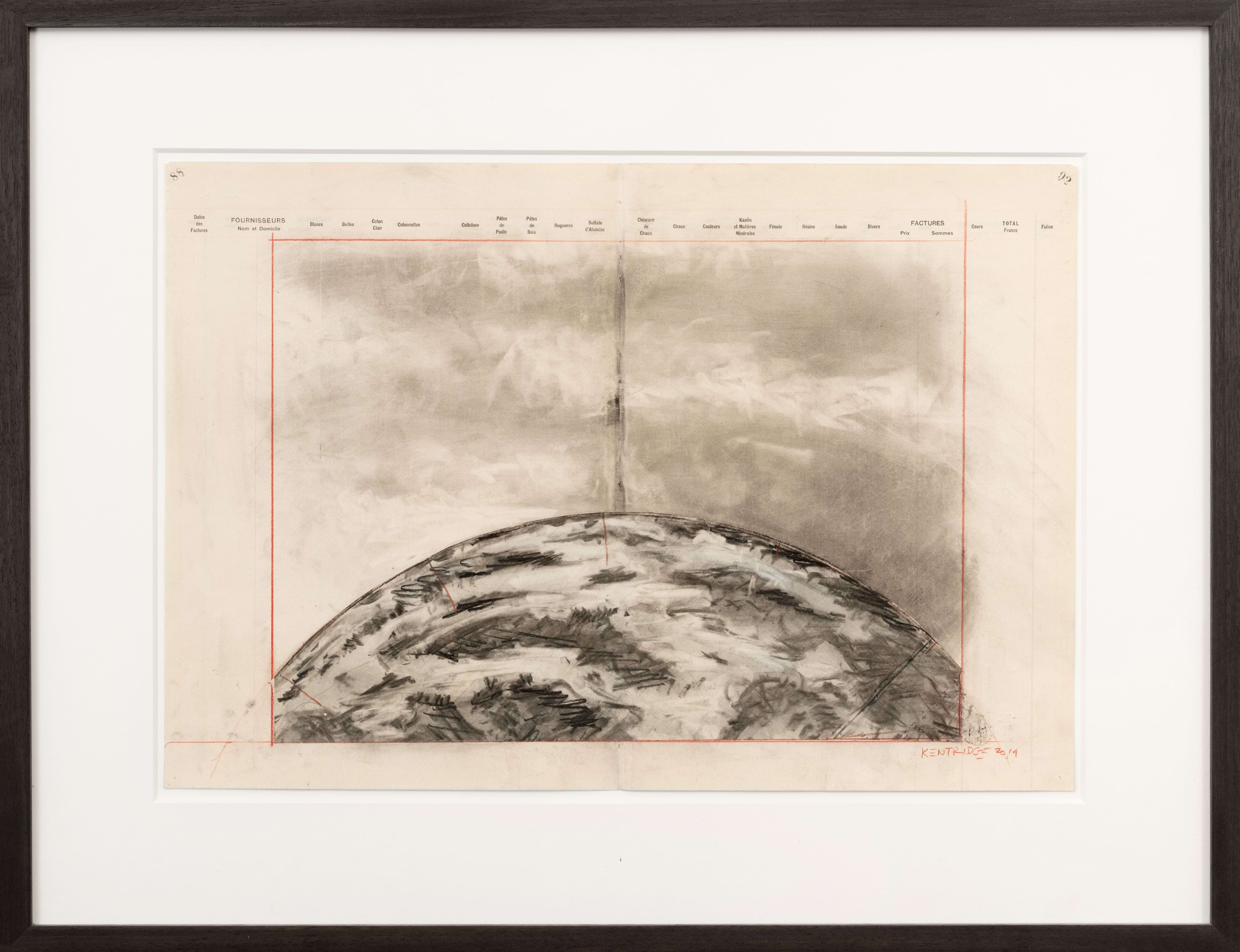
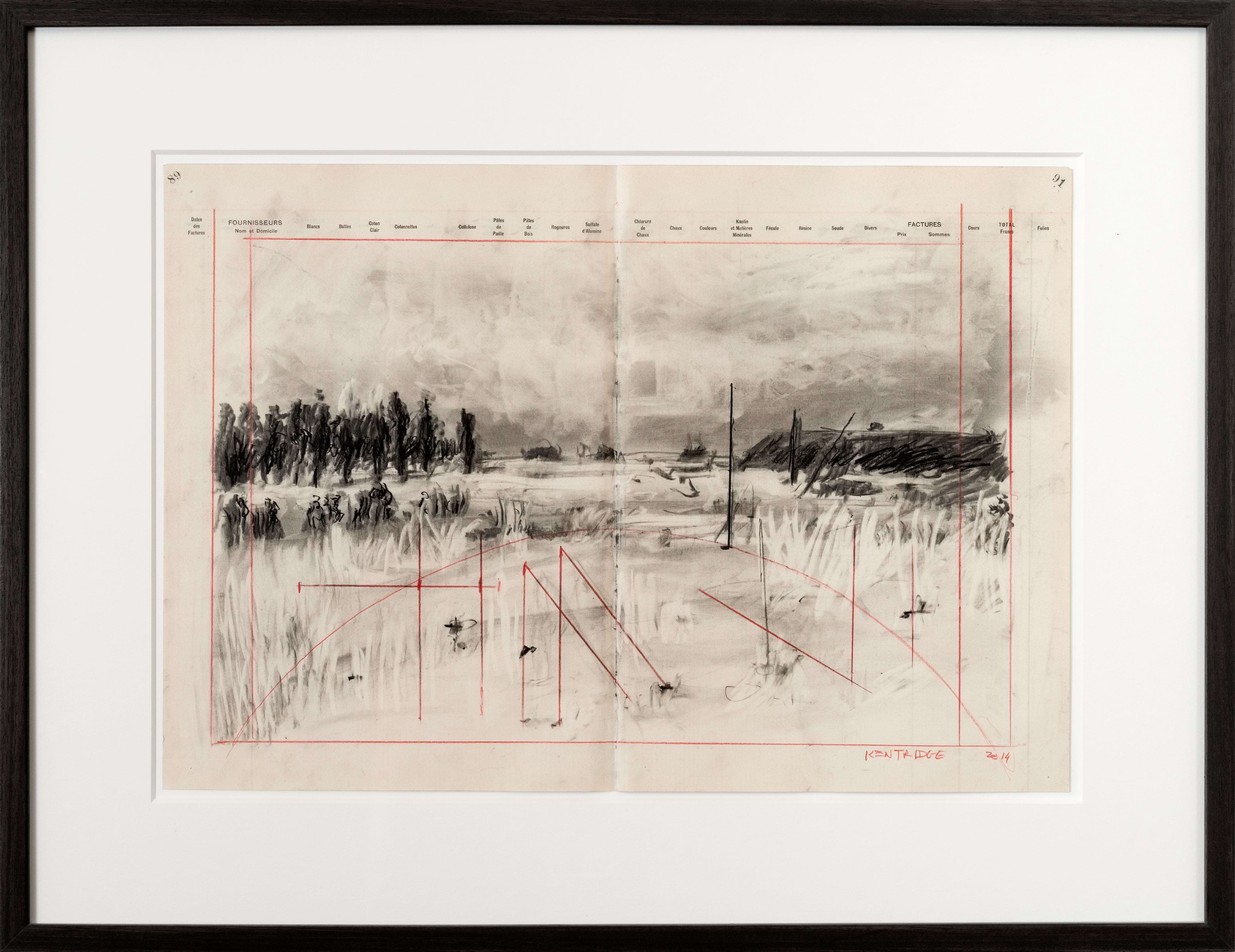
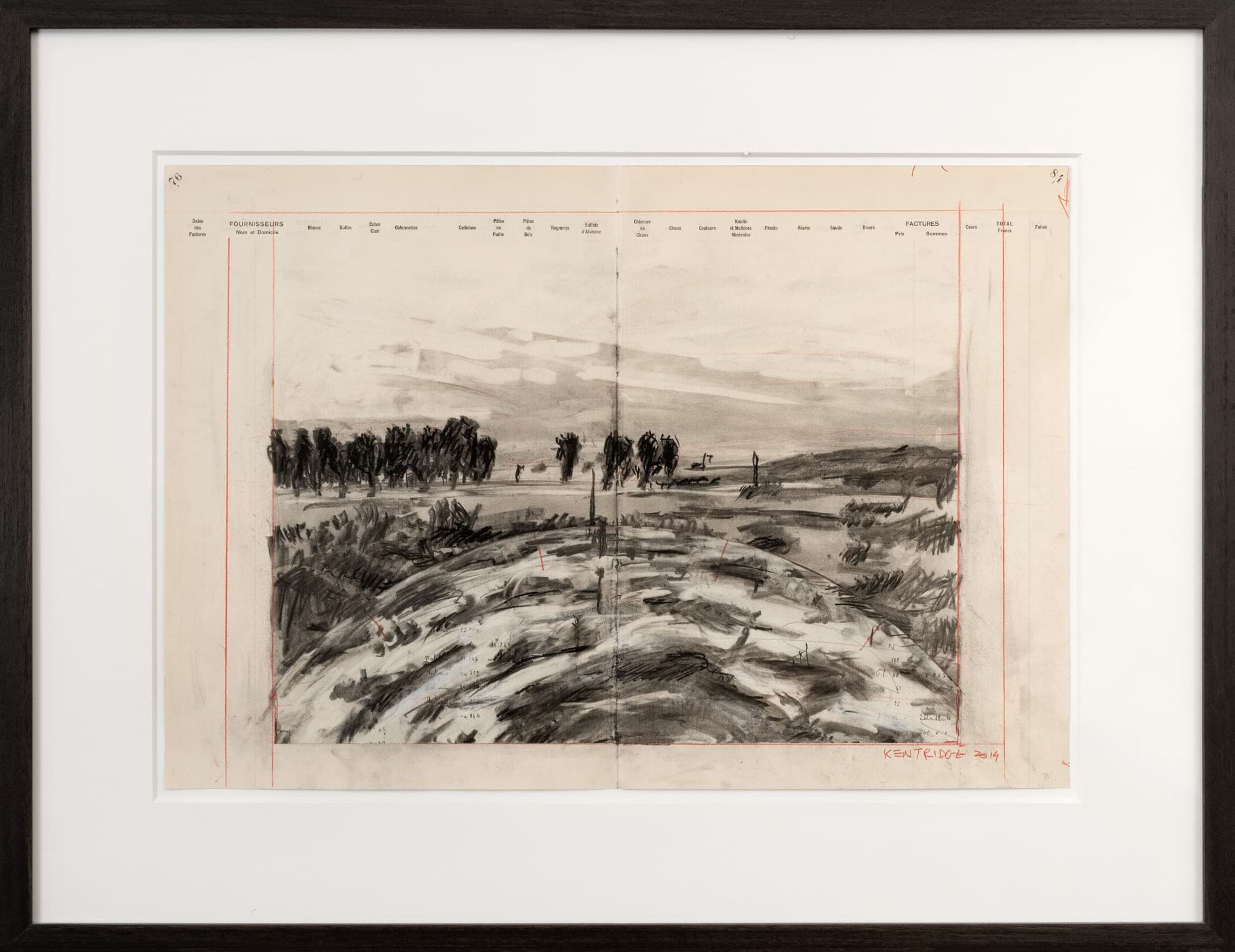
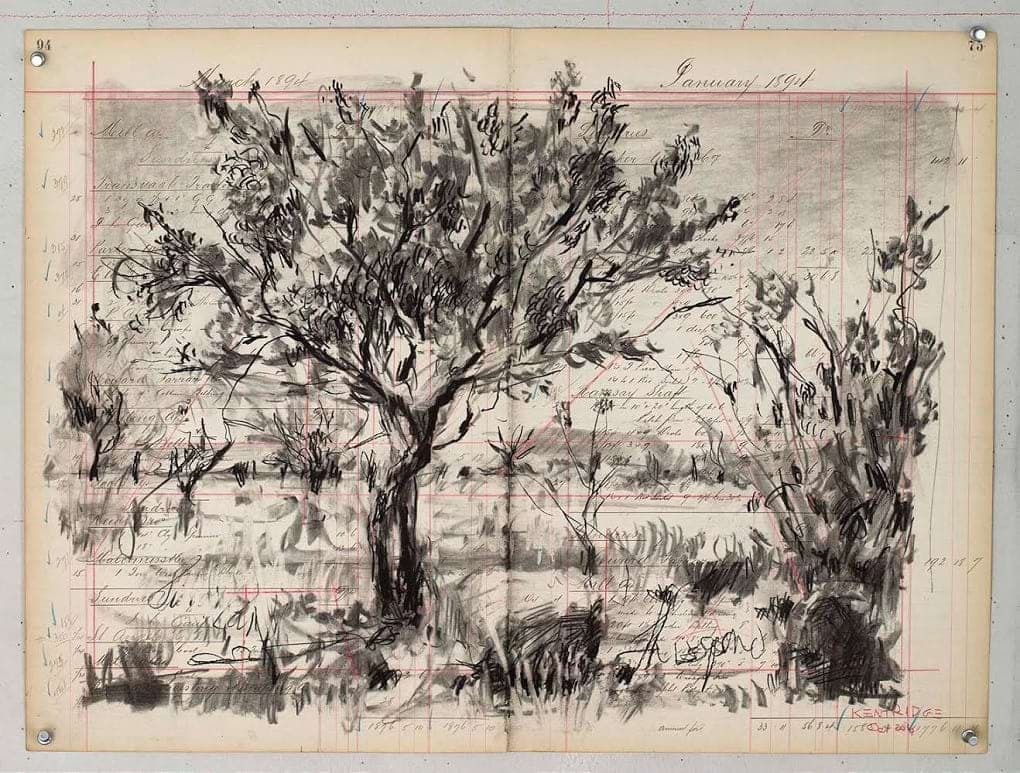
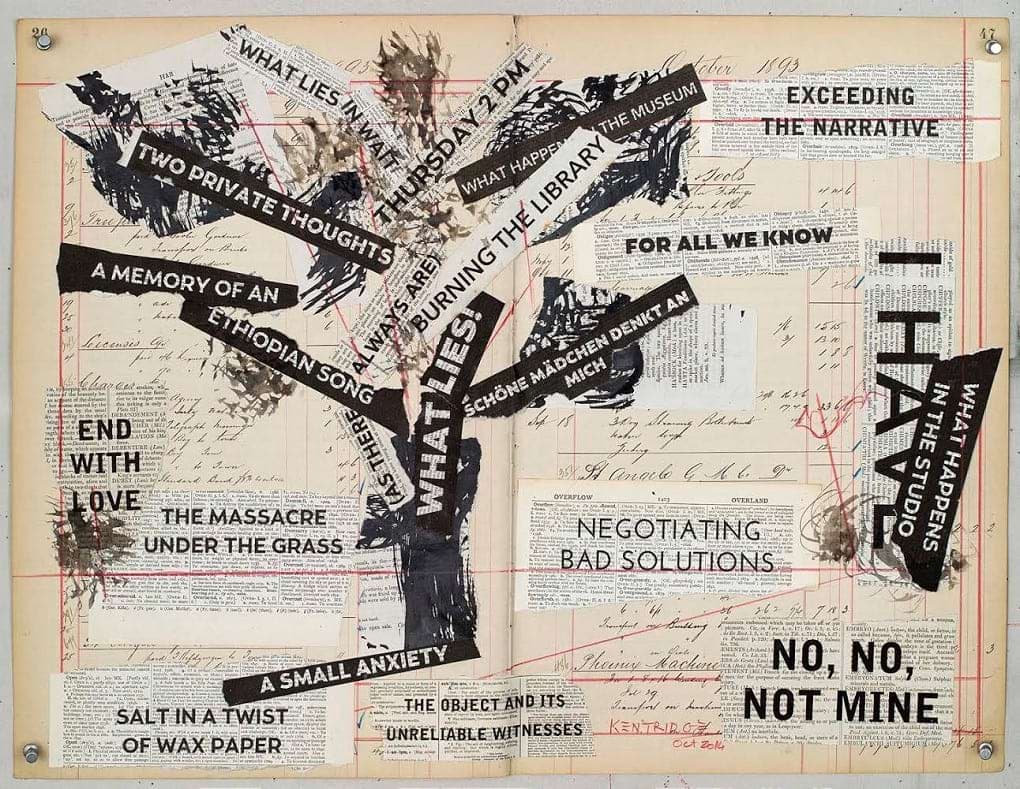
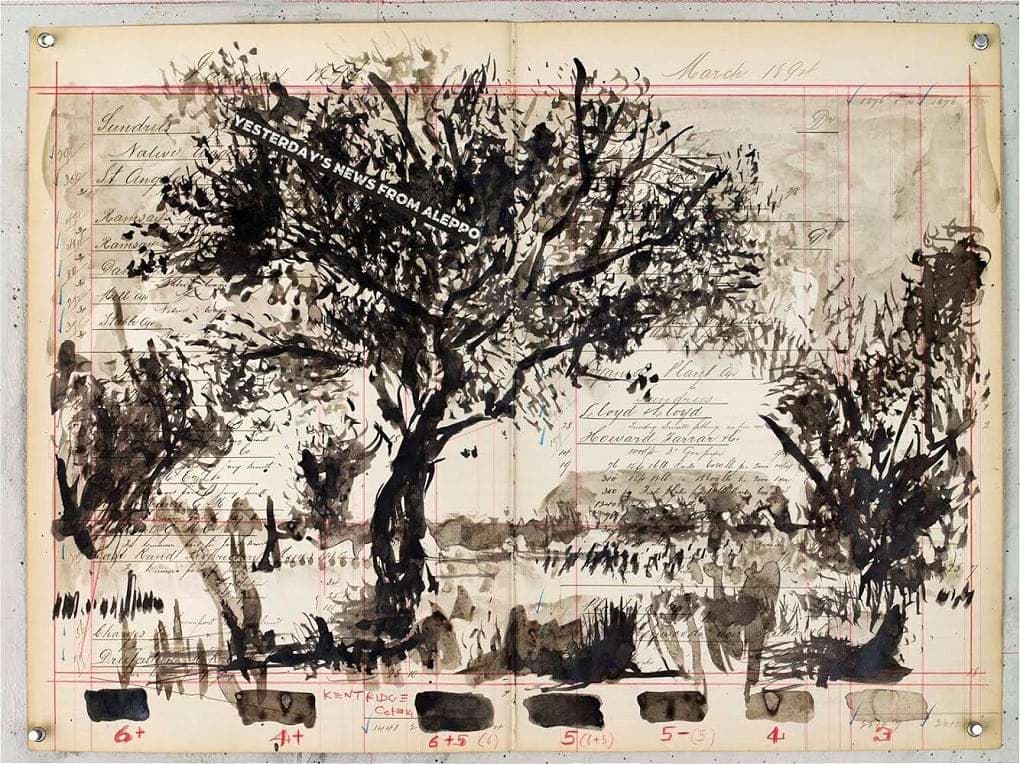
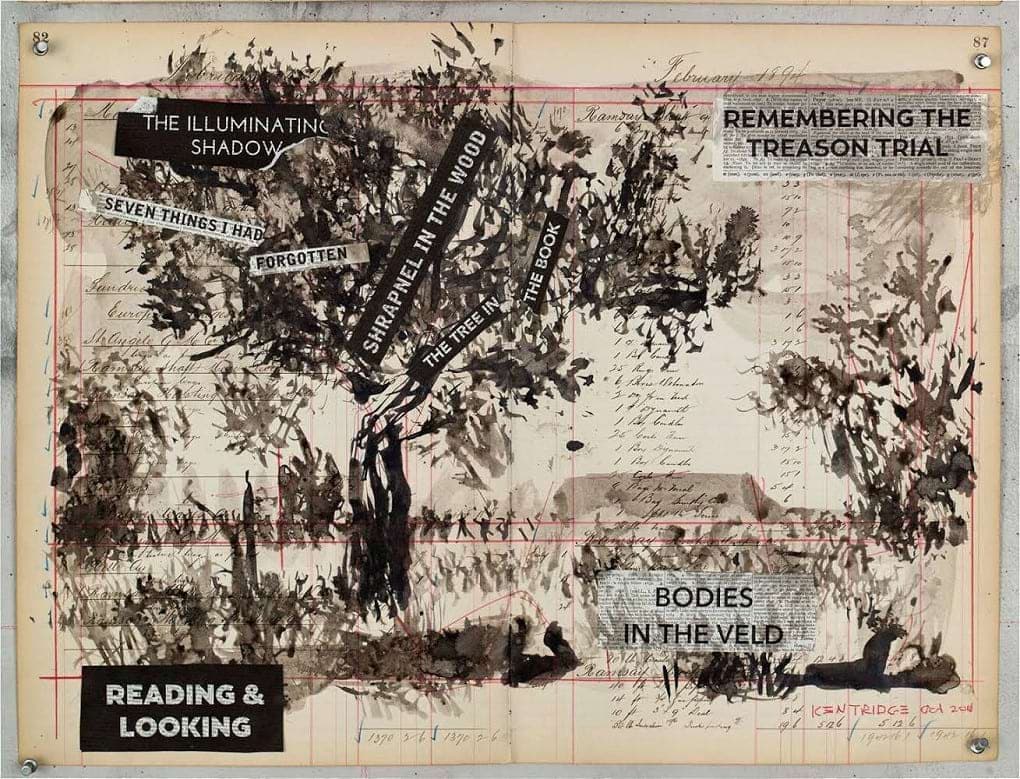
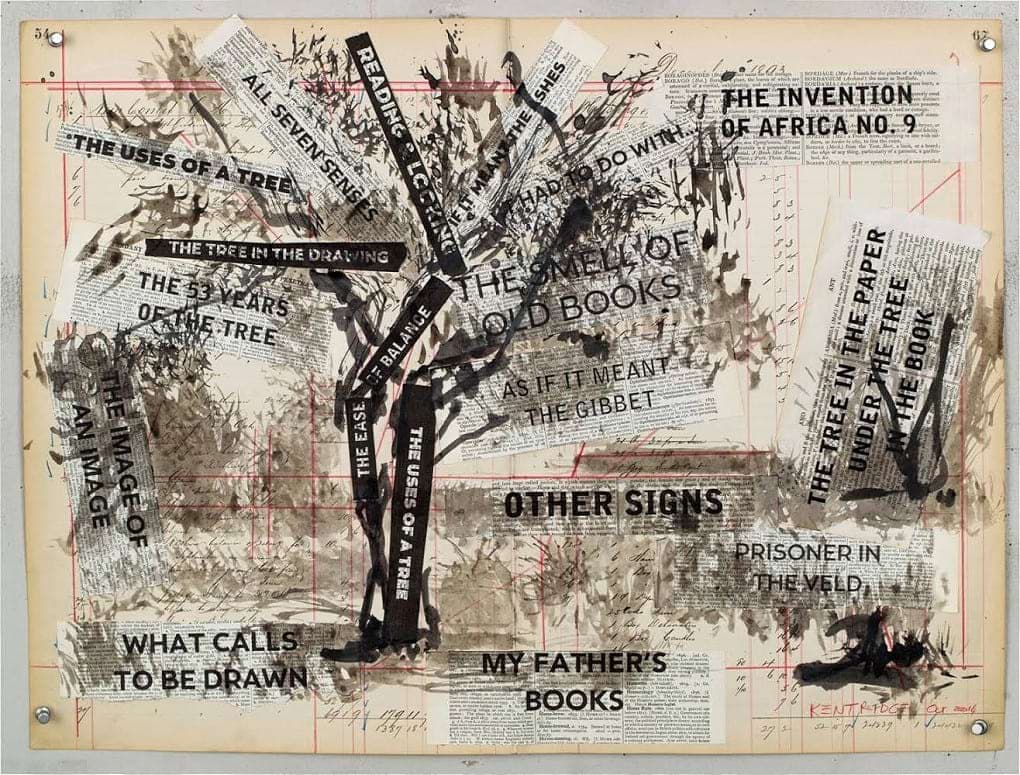
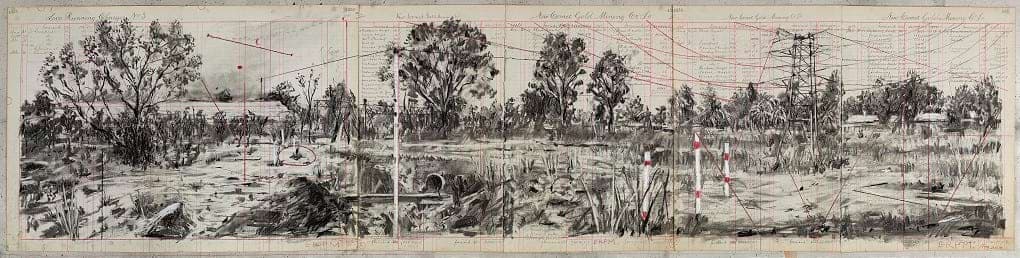
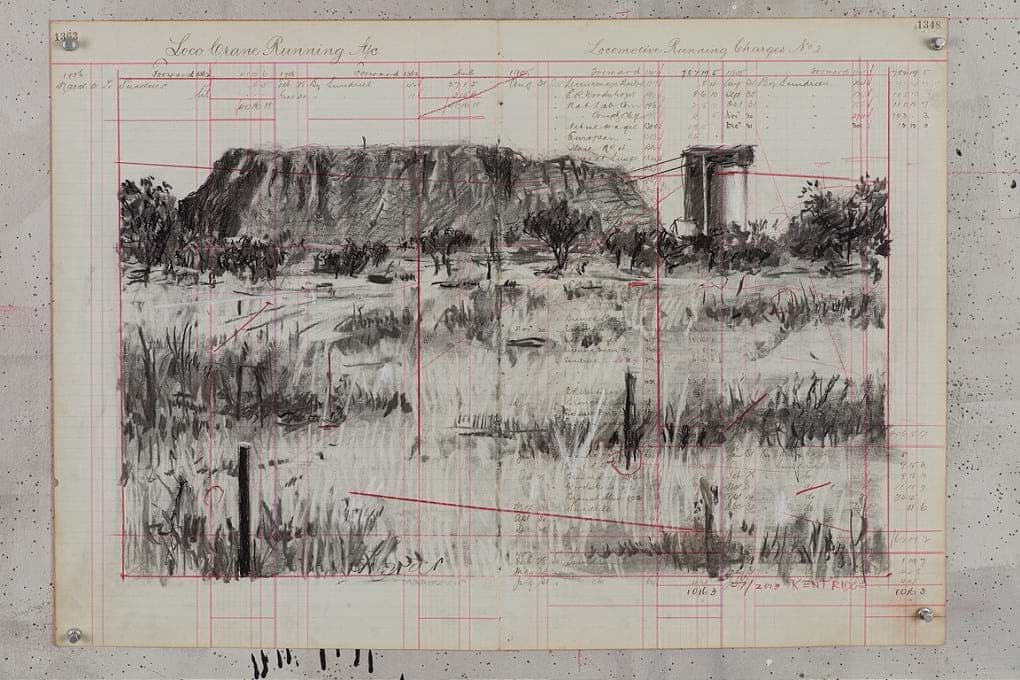
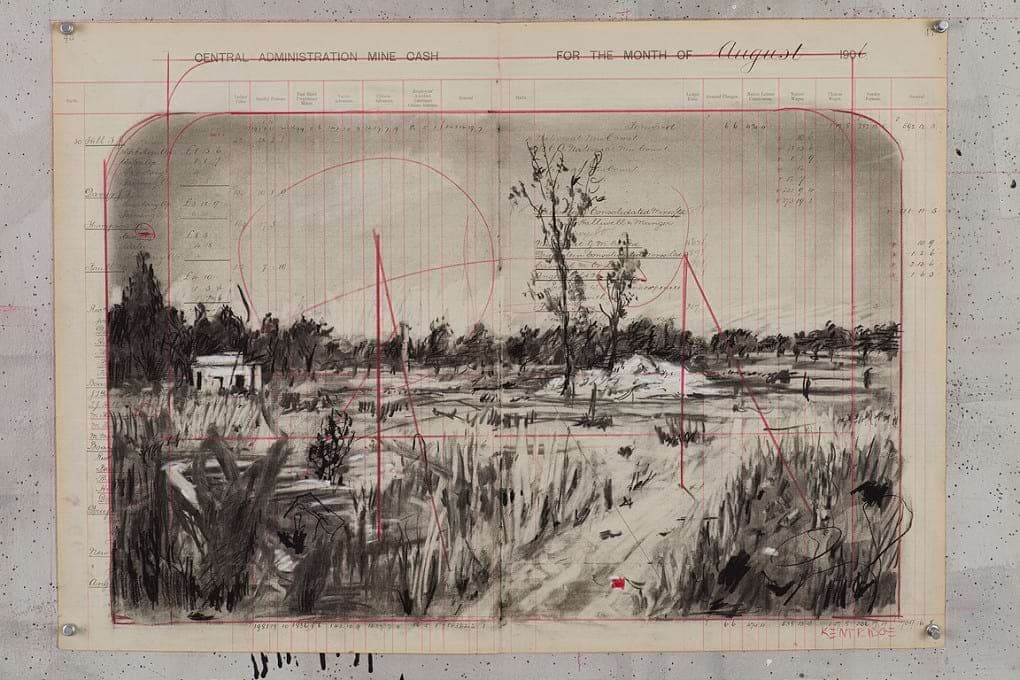
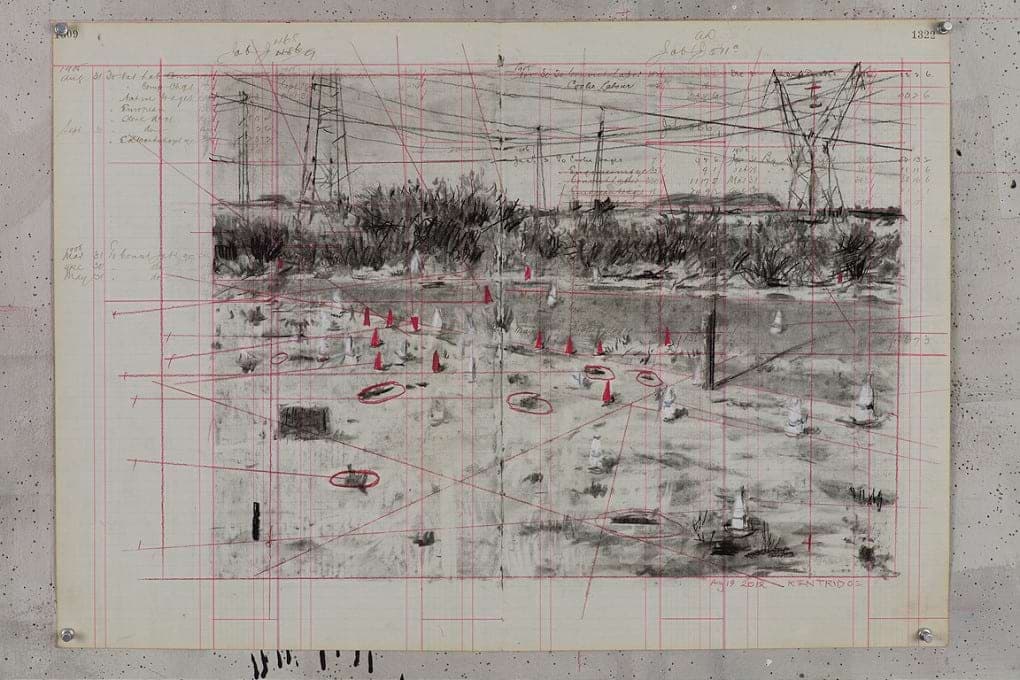
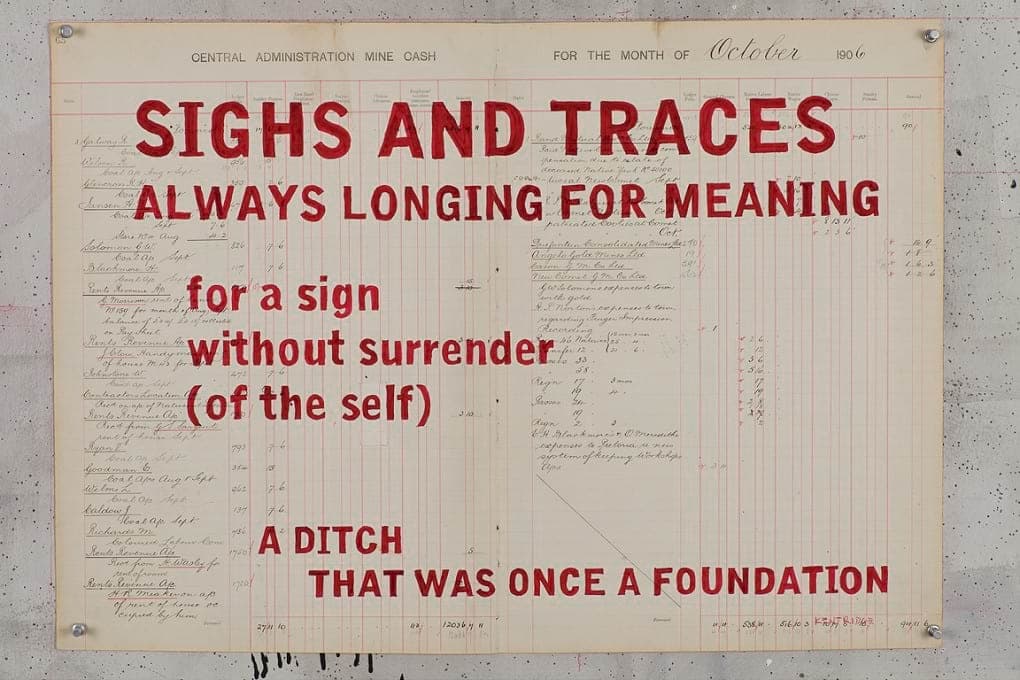
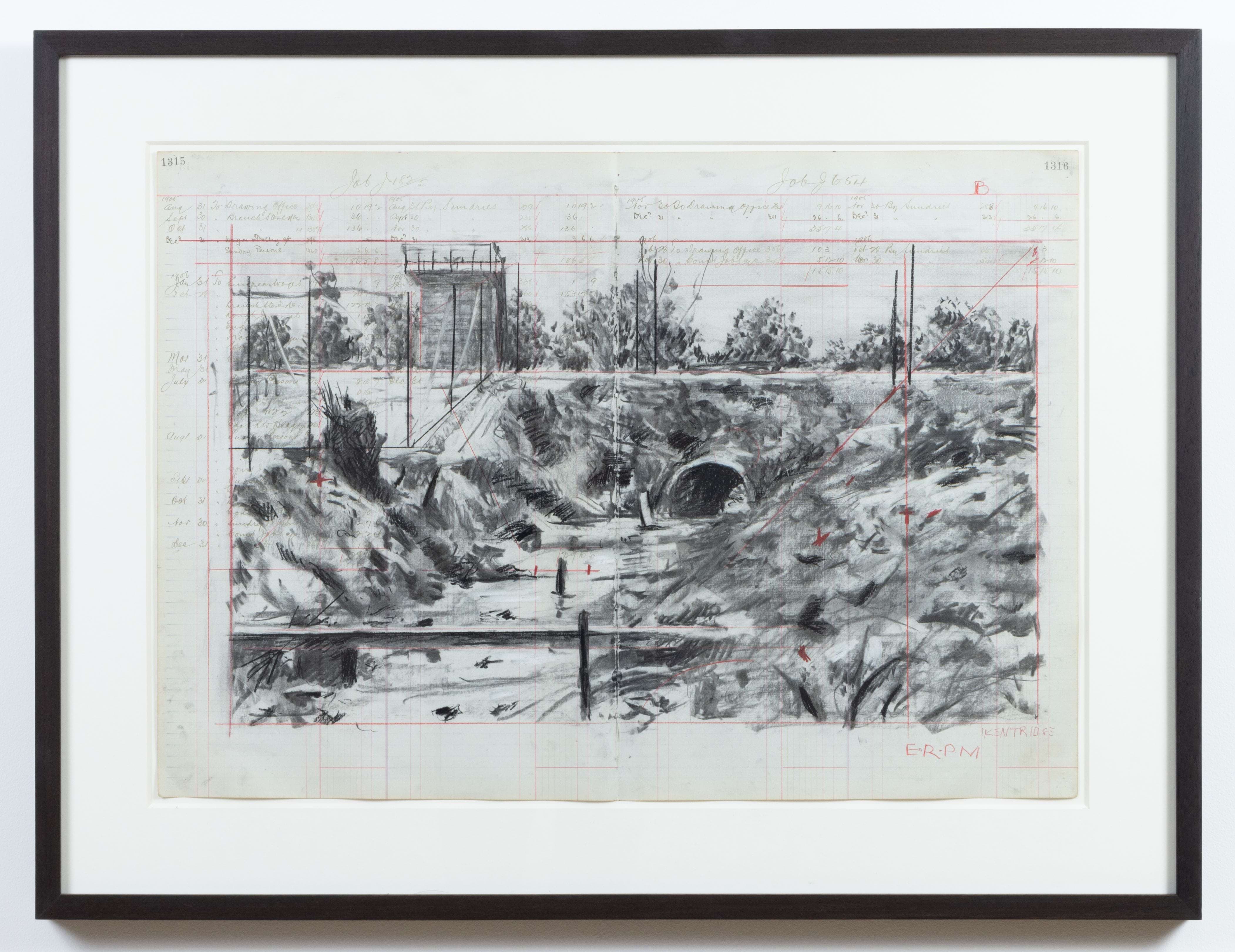
Kentridge made this series of sixty three charcoal drawings, mainly depicting mining landscapes around Johannesburg, on pages of an old cash book from East Rand Proprietary Mines from 1906, in which the text under the drawings, either covered or glimpsed, is an important part of the history of the drawing. Each drawing becomes a palimpsest of the artist’s marks and handwriting, which by turns conceals or exposes the information contained in the meticulously handwritten vintage journal pages beneath. These are portraits of some the great gold mines of the Witwatersrand, long after their closing, in which Kentridge represents traces left in the landscape by the actions upon it and how nature reclaims this damaged ground and erases its history.
The drawings were done over a five year period, between 2011 and 2016 and range from the East Rand to the platinum belt. Accompanying the drawings is a catalogue which reproduces the drawings and includes a text by Rosalind Morris, Professor of Anthropology at Columbia University. Part detective story, part archival history, part anthropological reverie, Morris's text reads between the lines to find evidence of the vast webs that linked South Africa to other parts of Africa, China, the United States, and Australia in an early moment of the globalizing economy.
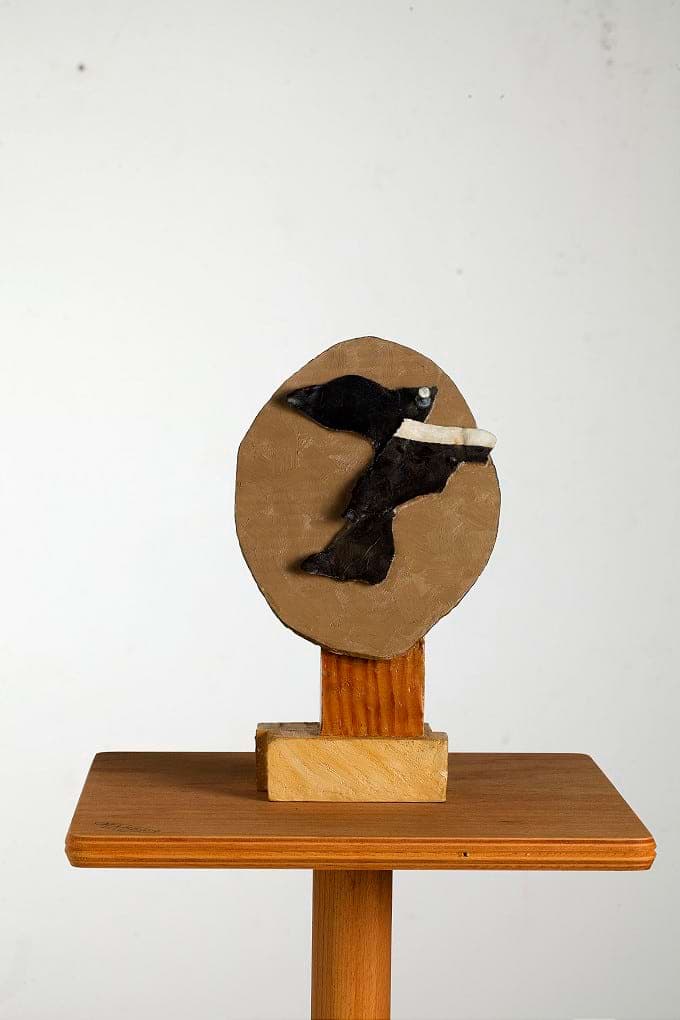
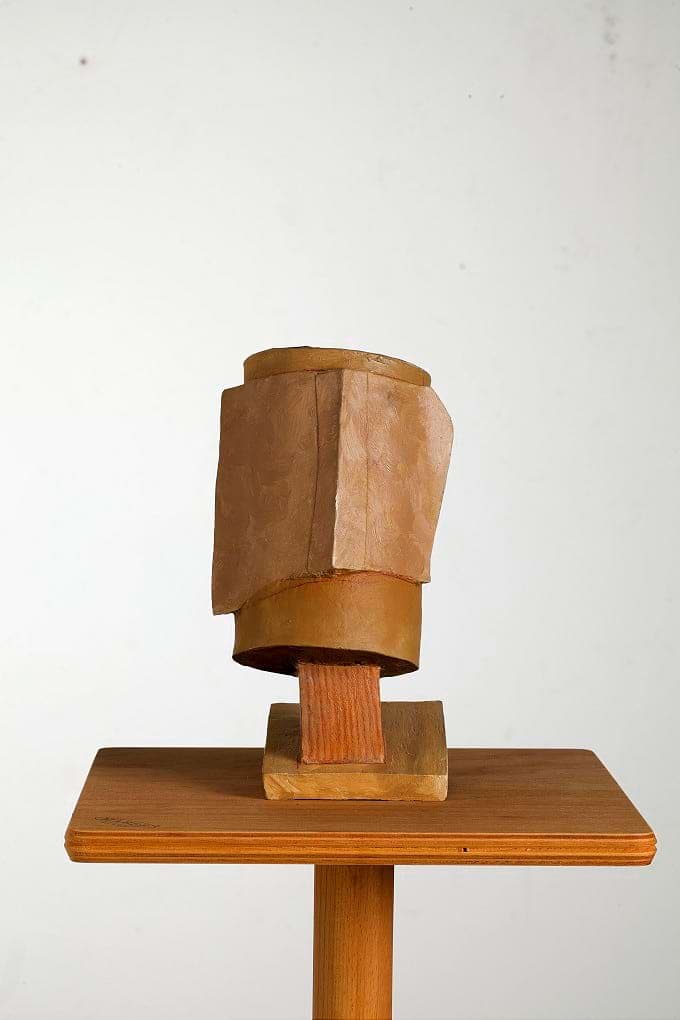
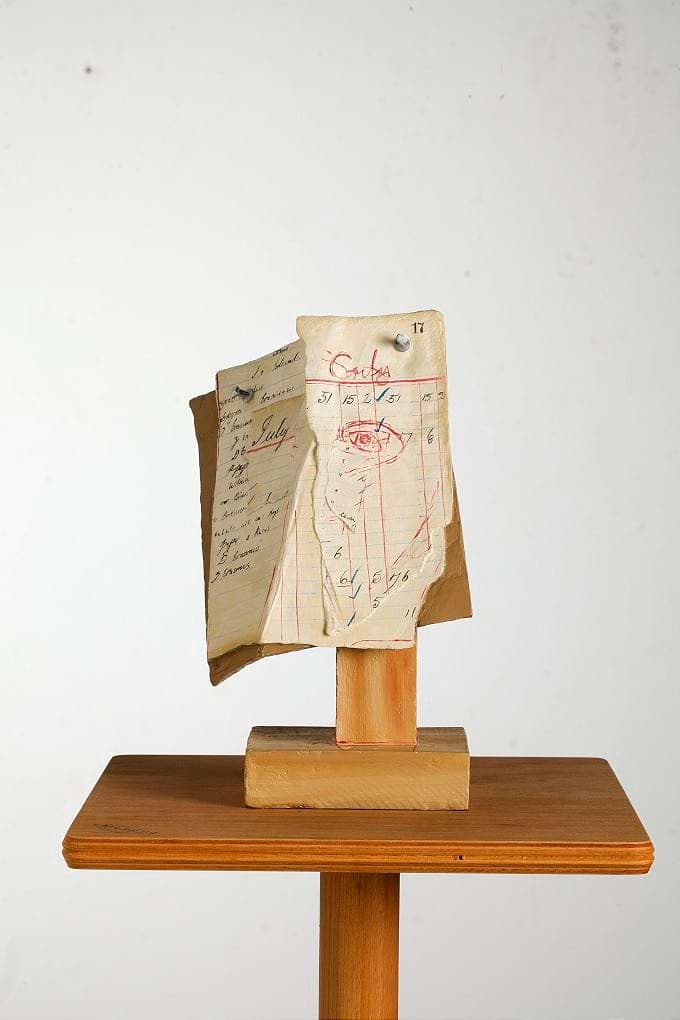
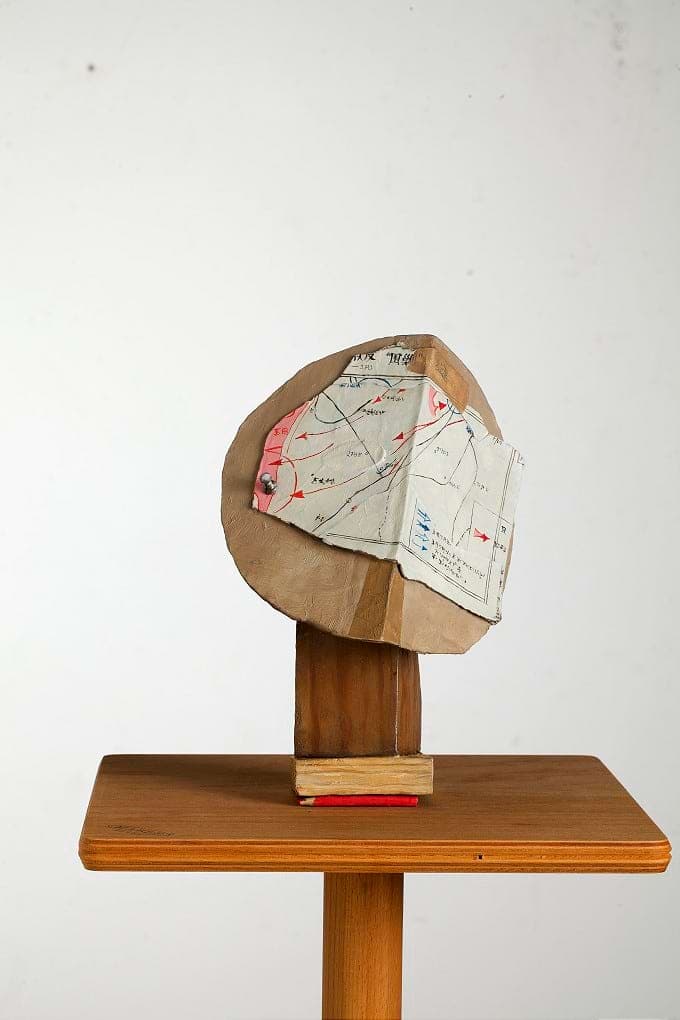
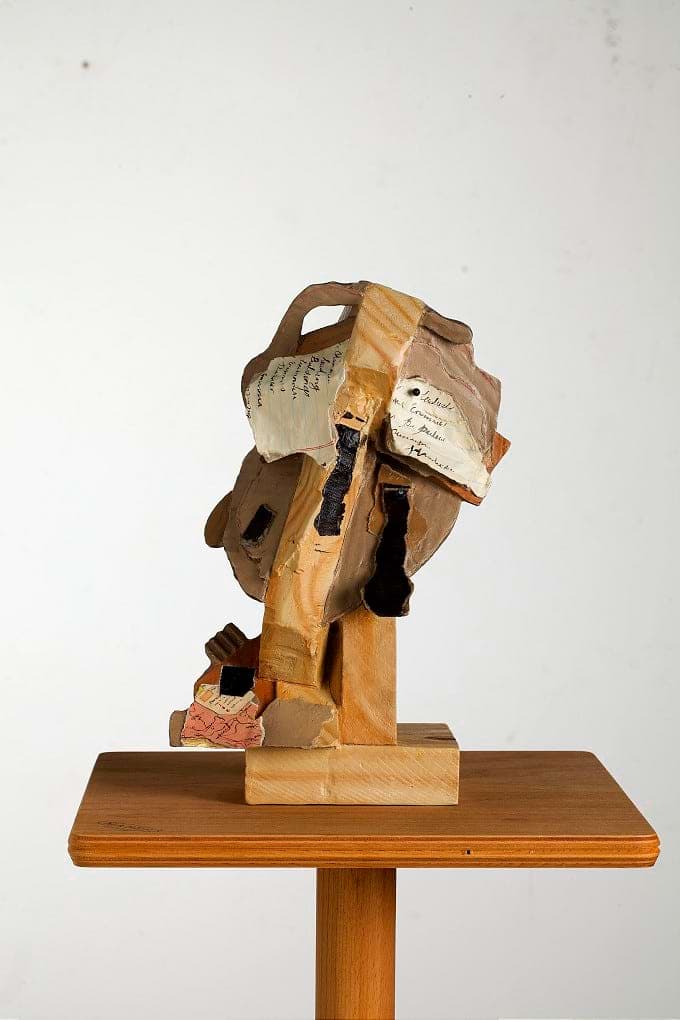
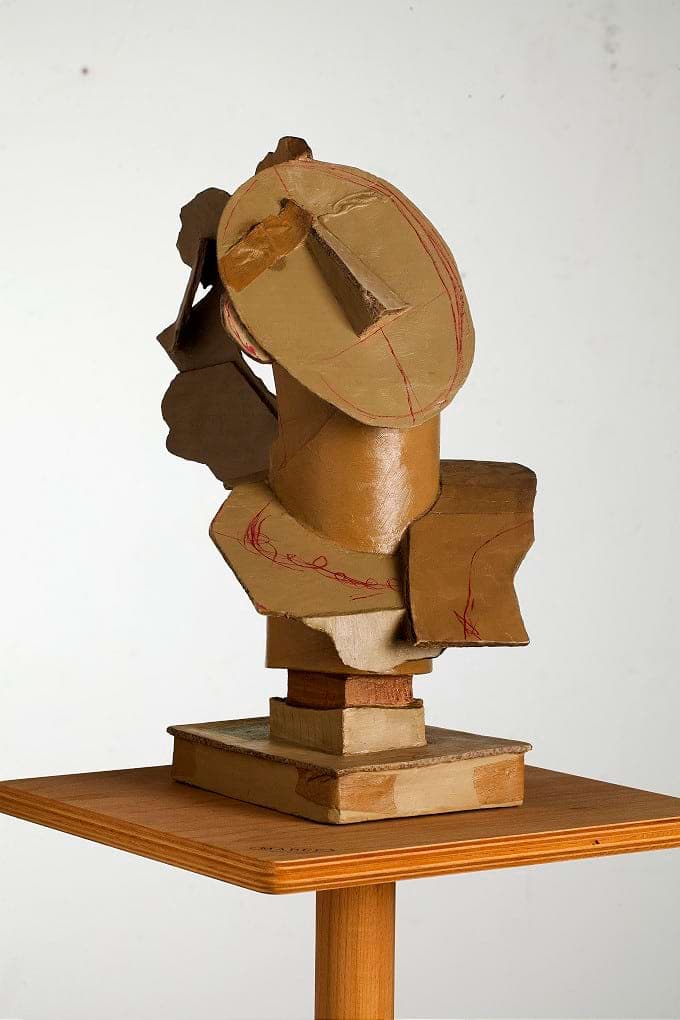
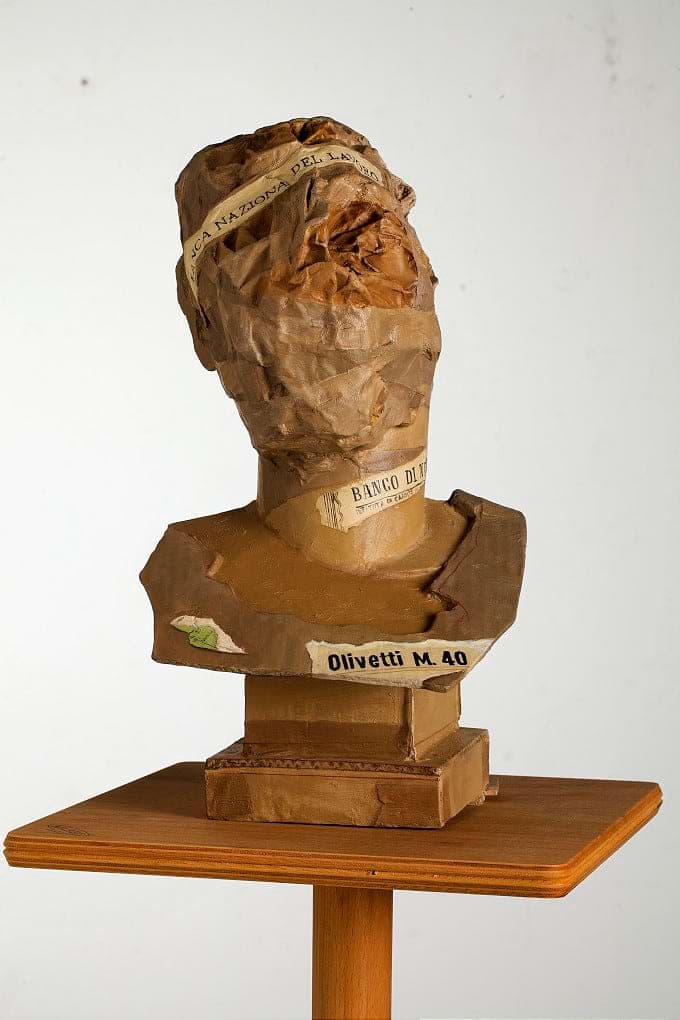
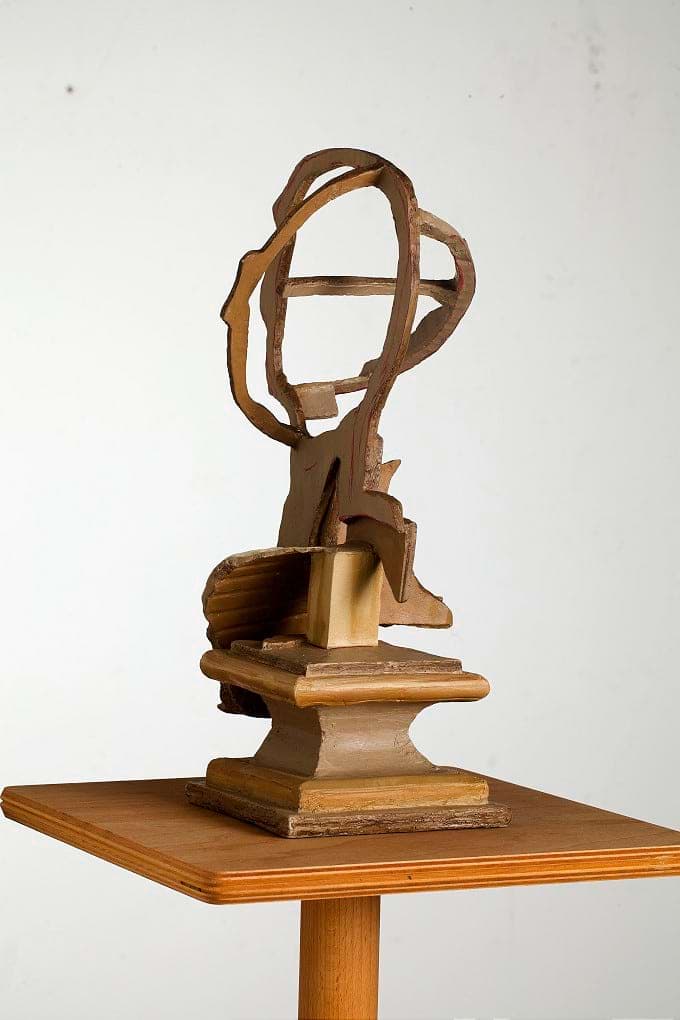
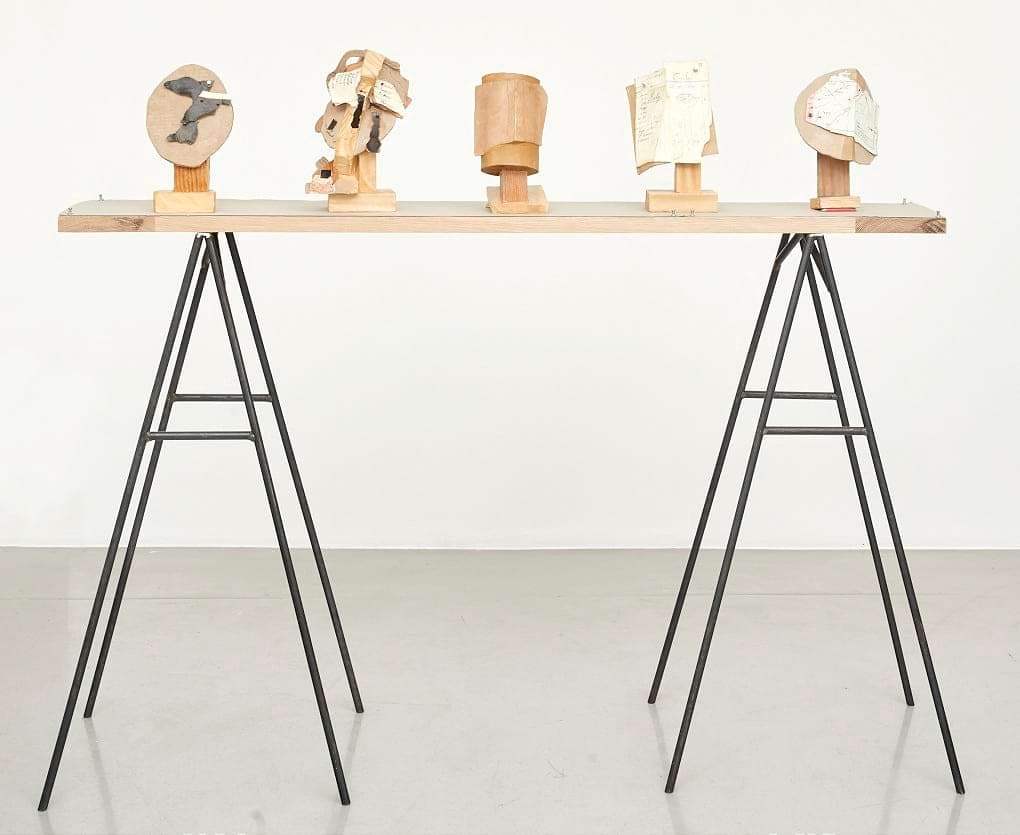
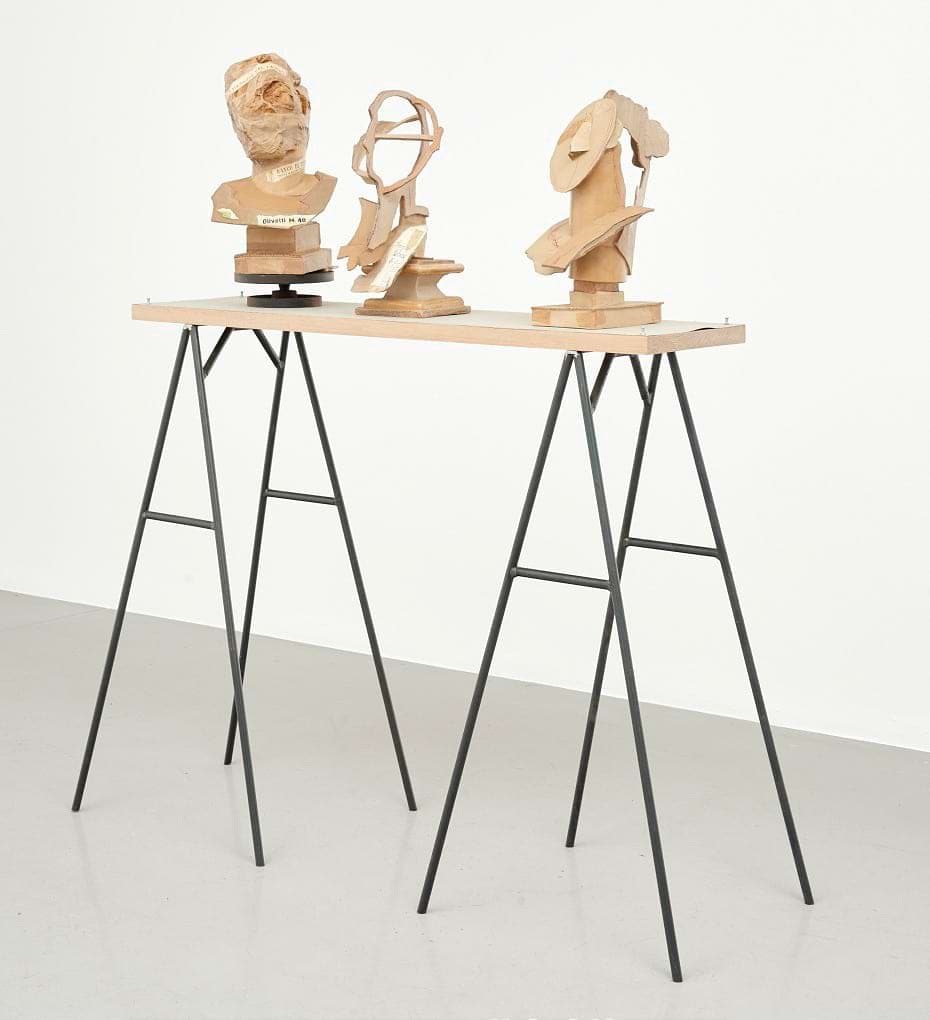
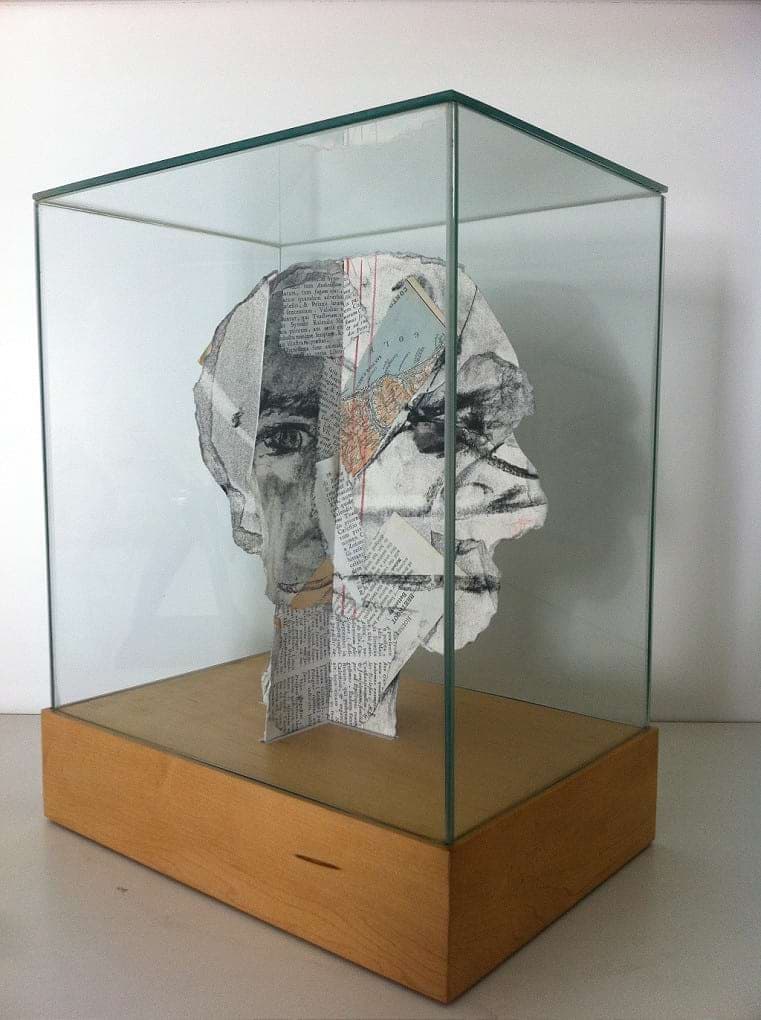
In his investigation of the substance of the opera Lulu William Kentridge produced a series of portrait heads, the Roman Heads, many of which are characterised by a manouevre of formal deception. Although the objects are cast in bronze, Kentridge and the painter Stella Olivier are able to evoke the character of transitory materials such as cardboard, adhesive tape or newspaper. The artist reflects on the phenomenon of ancient polychrome statues in his series Polychrome Heads. Paint is used to render the intrinsic colour of the counterfeited material, as well as the ornamentation of printed paper.
Handbook to O Sentimental Machine,
Liebieghaus Skulpturensammlung, 2018
In his investigation of the substance of the opera Lulu William Kentridge produced a series of portrait heads, the Roman Heads, many of which are characterised by a manouevre of formal deception. Although the objects are cast in bronze, Kentridge and the painter Stella Olivier are able to evoke the character of transitory materials such as cardboard, adhesive tape or newspaper. The artist reflects on the phenomenon of ancient polychrome statues in his series Polychrome Heads. Paint is used to render the intrinsic colour of the counterfeited material, as well as the ornamentation of printed paper.
Handbook to O Sentimental Machine,
Liebieghaus Skulpturensammlung, 2018
In his investigation of the substance of the opera Lulu William Kentridge produced a series of portrait heads, the Roman Heads, many of which are characterised by a manouevre of formal deception. Although the objects are cast in bronze, Kentridge and the painter Stella Olivier are able to evoke the character of transitory materials such as cardboard, adhesive tape or newspaper. The artist reflects on the phenomenon of ancient polychrome statues in his series Polychrome Heads. Paint is used to render the intrinsic colour of the counterfeited material, as well as the ornamentation of printed paper.
Handbook to O Sentimental Machine,
Liebieghaus Skulpturensammlung, 2018
In his investigation of the substance of the opera Lulu William Kentridge produced a series of portrait heads, the Roman Heads, many of which are characterised by a manouevre of formal deception. Although the objects are cast in bronze, Kentridge and the painter Stella Olivier are able to evoke the character of transitory materials such as cardboard, adhesive tape or newspaper. The artist reflects on the phenomenon of ancient polychrome statues in his series Polychrome Heads. Paint is used to render the intrinsic colour of the counterfeited material, as well as the ornamentation of printed paper.
Handbook to O Sentimental Machine,
Liebieghaus Skulpturensammlung, 2018
In his investigation of the substance of the opera Lulu William Kentridge produced a series of portrait heads, the Roman Heads, many of which are characterised by a manouevre of formal deception. Although the objects are cast in bronze, Kentridge and the painter Stella Olivier are able to evoke the character of transitory materials such as cardboard, adhesive tape or newspaper. The artist reflects on the phenomenon of ancient polychrome statues in his series Polychrome Heads. Paint is used to render the intrinsic colour of the counterfeited material, as well as the ornamentation of printed paper.
Handbook to O Sentimental Machine,
Liebieghaus Skulpturensammlung, 2018
In his investigation of the substance of the opera Lulu William Kentridge produced a series of portrait heads, the Roman Heads, many of which are characterised by a manouevre of formal deception. Although the objects are cast in bronze, Kentridge and the painter Stella Olivier are able to evoke the character of transitory materials such as cardboard, adhesive tape or newspaper. The artist reflects on the phenomenon of ancient polychrome statues in his series Polychrome Heads. Paint is used to render the intrinsic colour of the counterfeited material, as well as the ornamentation of printed paper.
Handbook to O Sentimental Machine,
Liebieghaus Skulpturensammlung, 2018
In his investigation of the substance of the opera Lulu William Kentridge produced a series of portrait heads, the Roman Heads, many of which are characterised by a manouevre of formal deception. Although the objects are cast in bronze, Kentridge and the painter Stella Olivier are able to evoke the character of transitory materials such as cardboard, adhesive tape or newspaper. The artist reflects on the phenomenon of ancient polychrome statues in his series Polychrome Heads. Paint is used to render the intrinsic colour of the counterfeited material, as well as the ornamentation of printed paper.
Handbook to O Sentimental Machine,
Liebieghaus Skulpturensammlung, 2018
In his investigation of the substance of the opera Lulu William Kentridge produced a series of portrait heads, the Roman Heads, many of which are characterised by a manouevre of formal deception. Although the objects are cast in bronze, Kentridge and the painter Stella Olivier are able to evoke the character of transitory materials such as cardboard, adhesive tape or newspaper. The artist reflects on the phenomenon of ancient polychrome statues in his series Polychrome Heads. Paint is used to render the intrinsic colour of the counterfeited material, as well as the ornamentation of printed paper.
Handbook to O Sentimental Machine,
Liebieghaus Skulpturensammlung, 2018
In his investigation of the substance of the opera Lulu William Kentridge produced a series of portrait heads, the Roman Heads, many of which are characterised by a manouevre of formal deception. Although the objects are cast in bronze, Kentridge and the painter Stella Olivier are able to evoke the character of transitory materials such as cardboard, adhesive tape or newspaper. The artist reflects on the phenomenon of ancient polychrome statues in his series Polychrome Heads. Paint is used to render the intrinsic colour of the counterfeited material, as well as the ornamentation of printed paper.
Handbook to O Sentimental Machine,
Liebieghaus Skulpturensammlung, 2018
In his investigation of the substance of the opera Lulu William Kentridge produced a series of portrait heads, the Roman Heads, many of which are characterised by a manouevre of formal deception. Although the objects are cast in bronze, Kentridge and the painter Stella Olivier are able to evoke the character of transitory materials such as cardboard, adhesive tape or newspaper. The artist reflects on the phenomenon of ancient polychrome statues in his series Polychrome Heads. Paint is used to render the intrinsic colour of the counterfeited material, as well as the ornamentation of printed paper.
Handbook to O Sentimental Machine,
Liebieghaus Skulpturensammlung, 2018