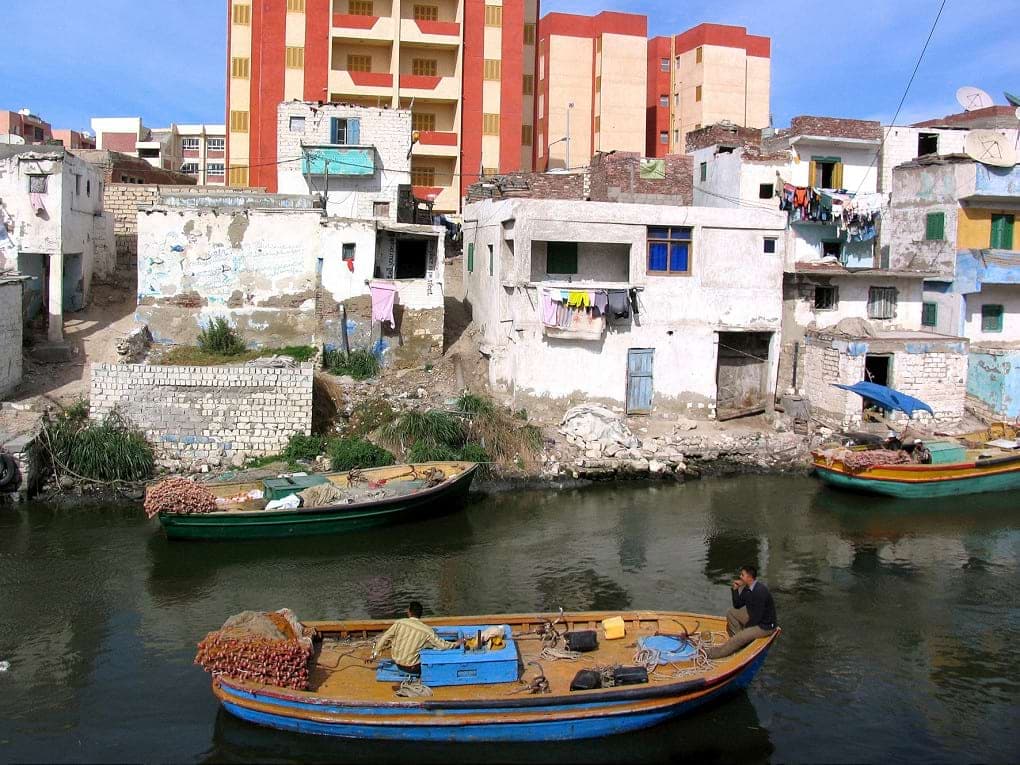
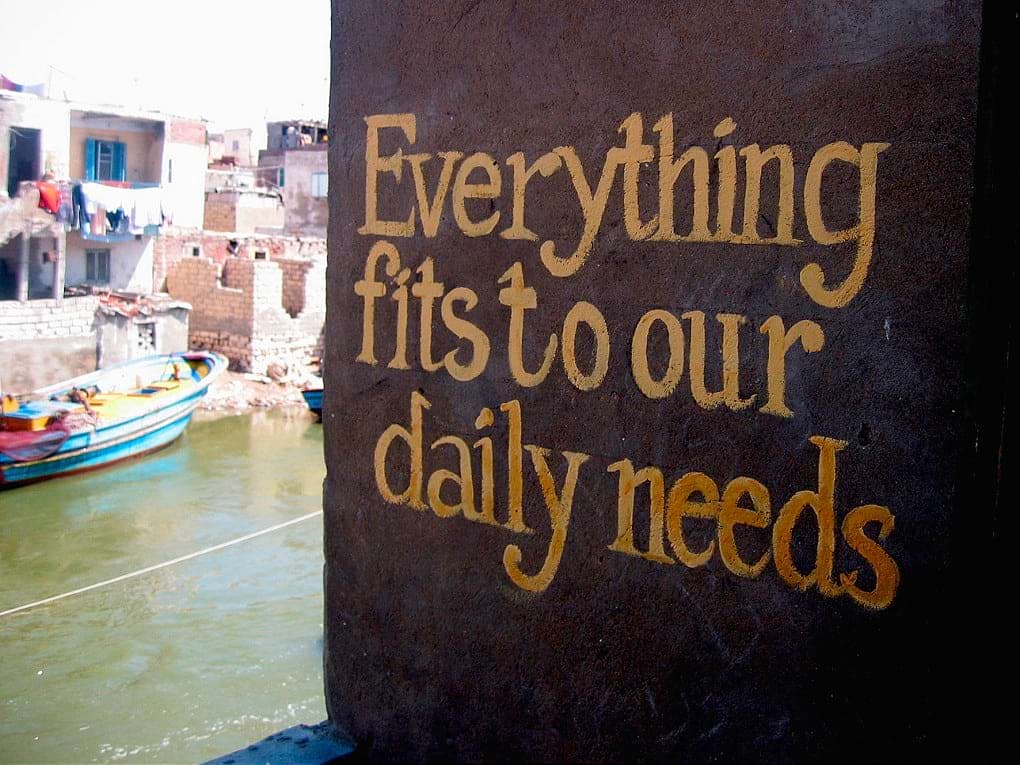
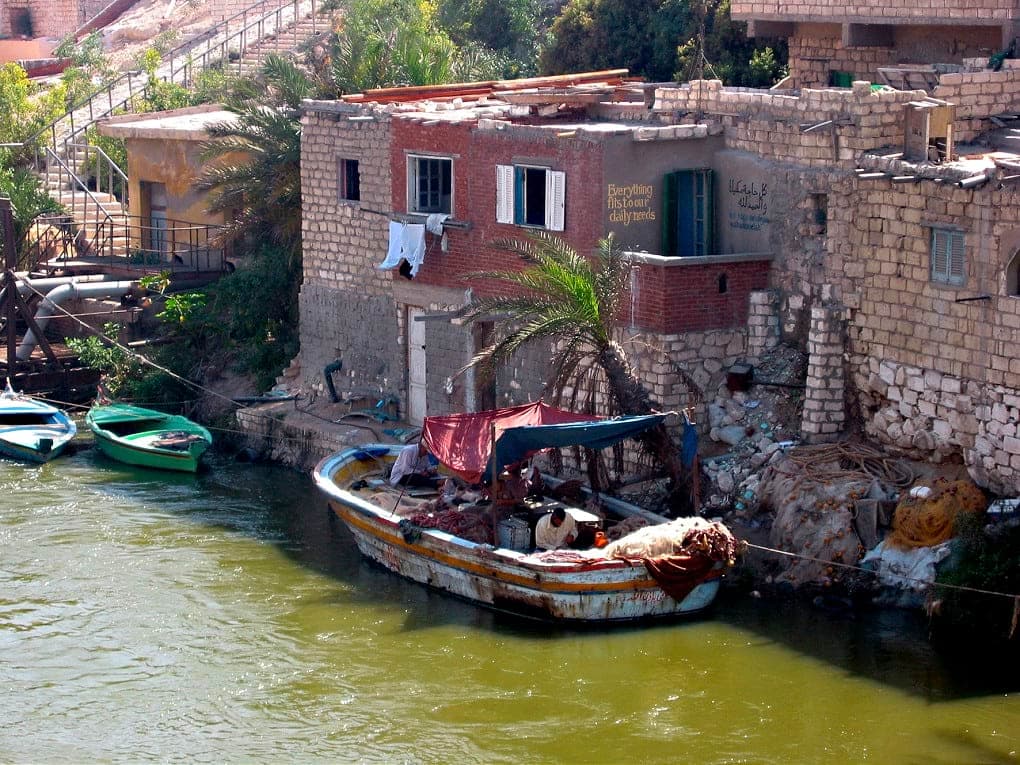
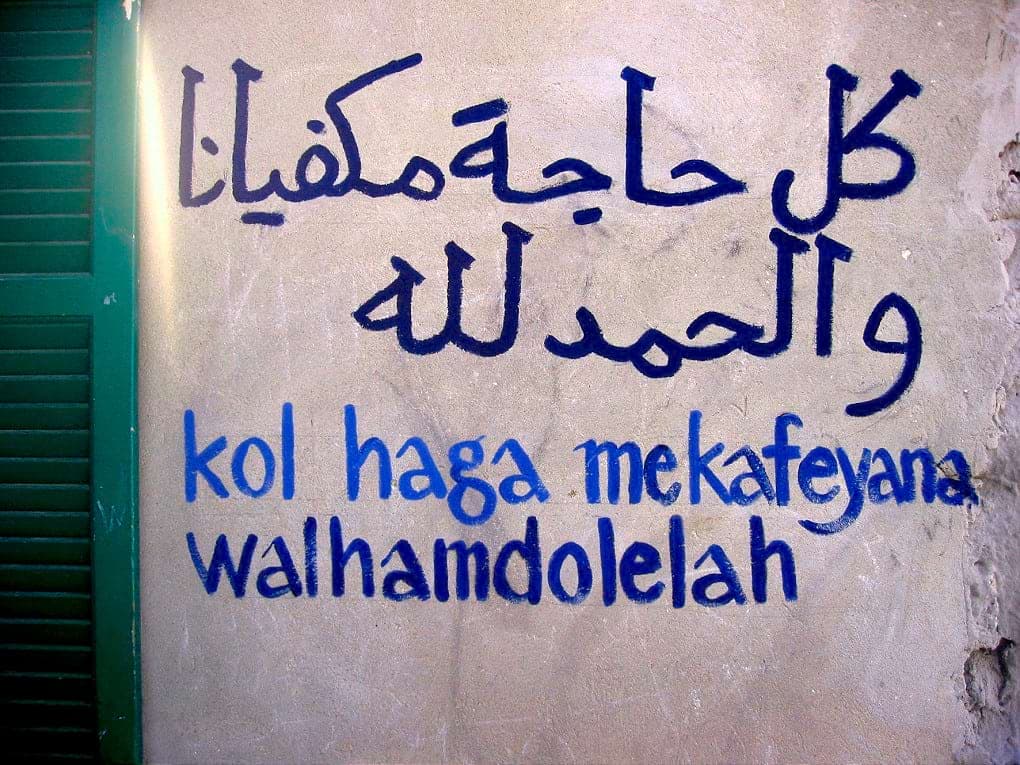
In 2003 Sue Williamson decides to take up again the idea of walls as support for personal testimonies. This time it was in Alexandria , Egypt , in a small fisher community named El Max that suffers the constant threat of military stationed near the zone in addition to the effects of contamination produced by a petrochemical company that prefers to move its inhabitants. What about El Max? was the title chosen by the artist for this photographic documentation created after a carefree exchange with the inhabitants in which they expressed their joy in living there. The artist then suggested them to show the world their love for El Max, and thus phrases like “Tell your people this place is perfect” and “We are like fish, we cannot live away from the sea” were written on the walls of their homes.
In 2003 Sue Williamson decides to take up again the idea of walls as support for personal testimonies. This time it was in Alexandria , Egypt , in a small fisher community named El Max that suffers the constant threat of military stationed near the zone in addition to the effects of contamination produced by a petrochemical company that prefers to move its inhabitants. What about El Max? was the title chosen by the artist for this photographic documentation created after a carefree exchange with the inhabitants in which they expressed their joy in living there. The artist then suggested them to show the world their love for El Max, and thus phrases like “Tell your people this place is perfect” and “We are like fish, we cannot live away from the sea” were written on the walls of their homes.
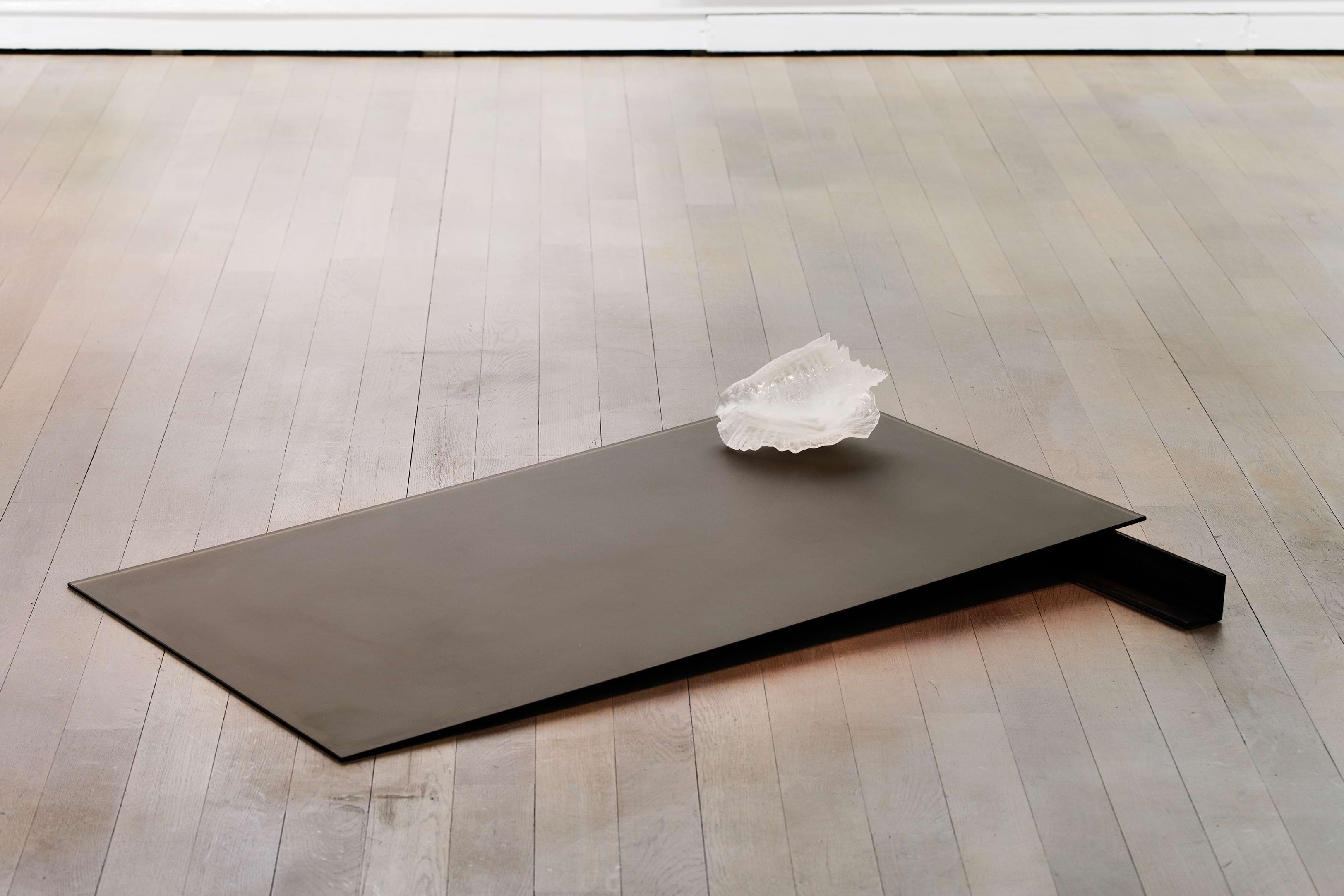
In Haiti, the conch (also called "lambi", the name of the mollusc) is used in rural areas as a trumpet to signal the beginning of a meeting of the community, as an alarm.
This call through the shell as an instrument has a very strong symbol in Haiti, because it was used in particular during the slave rebellion led by Francis Mackandal in 1791.
Indeed, Mackandal appealed to the African community in bondage through the conch, in order that they meet and free themselves. Their escape from their master's home was called marronage, and they themselves were nicknamed "brown niggers."
In Port-au-Prince, The Unknown Brown Monument (1968) represents an insurgent black man who has freed himself from his slave status. He wears a broken chain at his foot, holds a knife-cutter's cutlass in his hand and blows into a conch to call for rebellion. This sculpture, symbol of freedom, is the work of the architect Haitian Albert Mangonès
In 1989, the United Nations used it as the central motif of the postage stamp commemorating Article 4 of the Universal Declaration of Human Rights: "No one shall be held in slavery or servitude; Slavery and the slave trade are banned in all their forms. " He has also been featured on local Haitian stamps:
This rebellion was a pioneering event of the Haitian revolution, which gave rise to many battles, and in particular the battle of Vertières, which was the last. It led to the independence of the French colony Santo Domingo in 1804, renamed Haiti, the first free black republic in the world.
During the commemoration of the 214 years of this battle in 2017, the President of the Republic of Haiti notably evoked the Queen Conch during his speech: "The conch of concord, the union that is strength, sounded" .
Therefore, today, in the imagination of Afro-descendants of the whole world, the conch is a symbol of freedom as the torch is for the Western world.
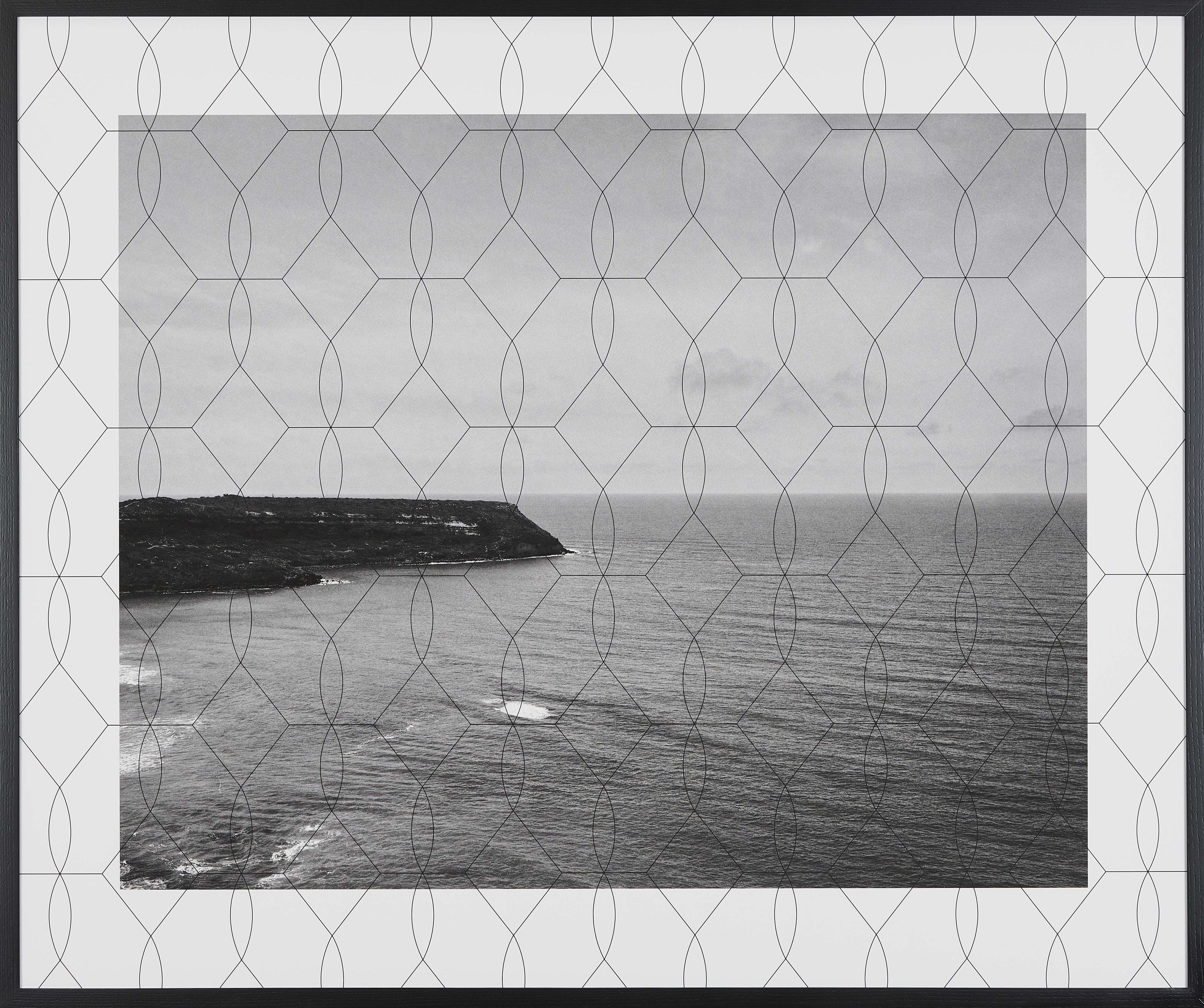
'The Geometric Ballad of Fear' is a series of nine photographs of idyllic landscapes on the Sardinian coast, between stacks, wild vegetation and the open sea. However, each photograph was superimposed on the structure of a grid, evocative of metal barriers of protection and repentance. The landscape scenarios, already anesthetized by the choice of black and white, appear inaccessible and forced into the distance, as if they were observed through a security barrier. The work evokes the walls and borders, physical and legal, with which the European continent has equipped itself in response to the arrival of migratory flows in recent years and which have transformed the arrival towards the European coasts into a trap, a geometry fear of a militarized continent.
The Geometric Ballad of Fear is a series of nine photographs of idyllic landscapes on the Sardinian coast, between stacks, wild vegetation and the open sea. However, each photograph was superimposed on the structure of a grid, evocative of metal barriers of protection and repentance. The landscape scenarios, already anesthetized by the choice of black and white, appear inaccessible and forced into the distance, as if they were observed through a security barrier. The work evokes the walls and borders, physical and legal, with which the European continent has equipped itself in response to the arrival of migratory flows in recent years and which have transformed the arrival towards the European coasts into a trap, a geometry fear of a militarized continent.
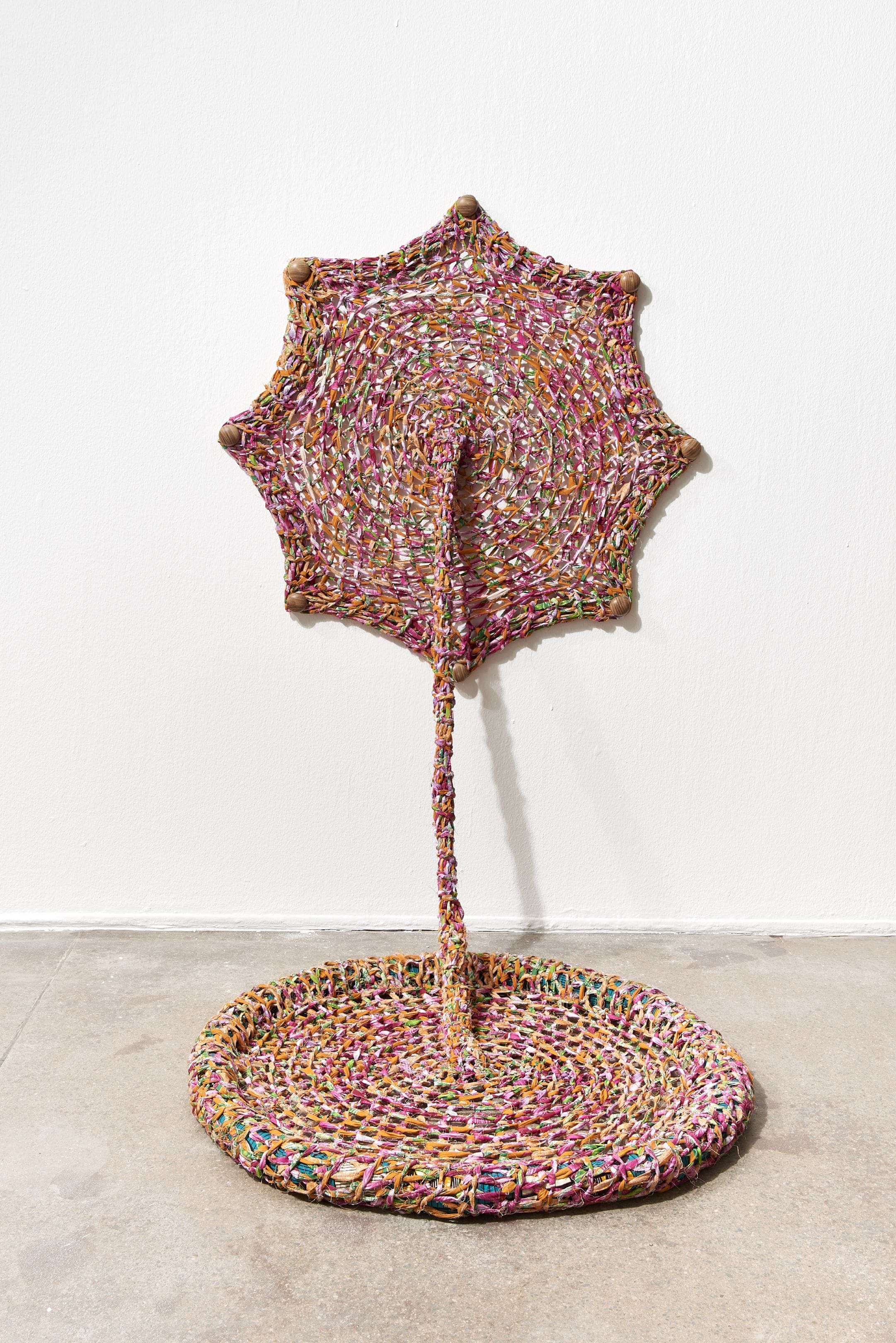
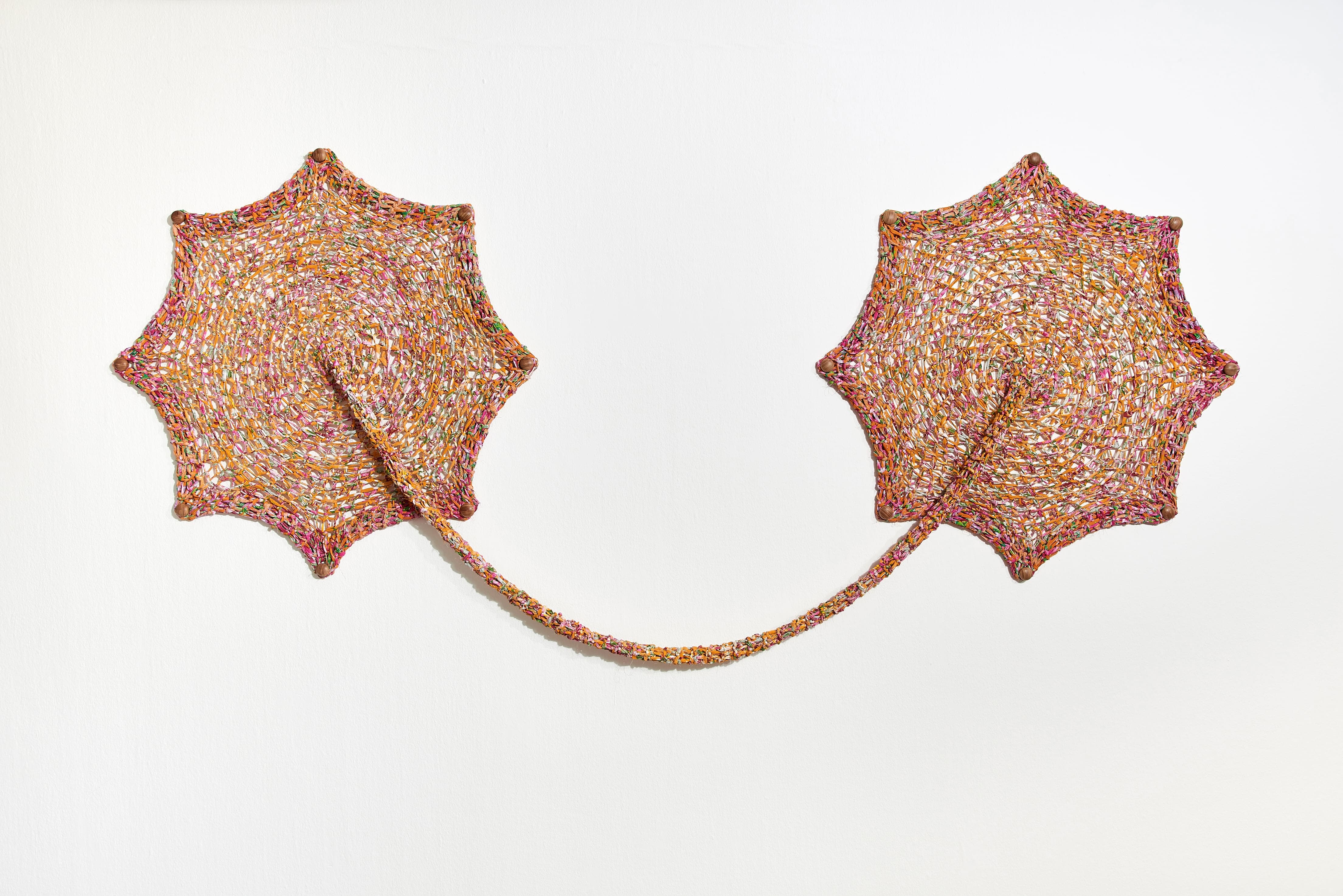
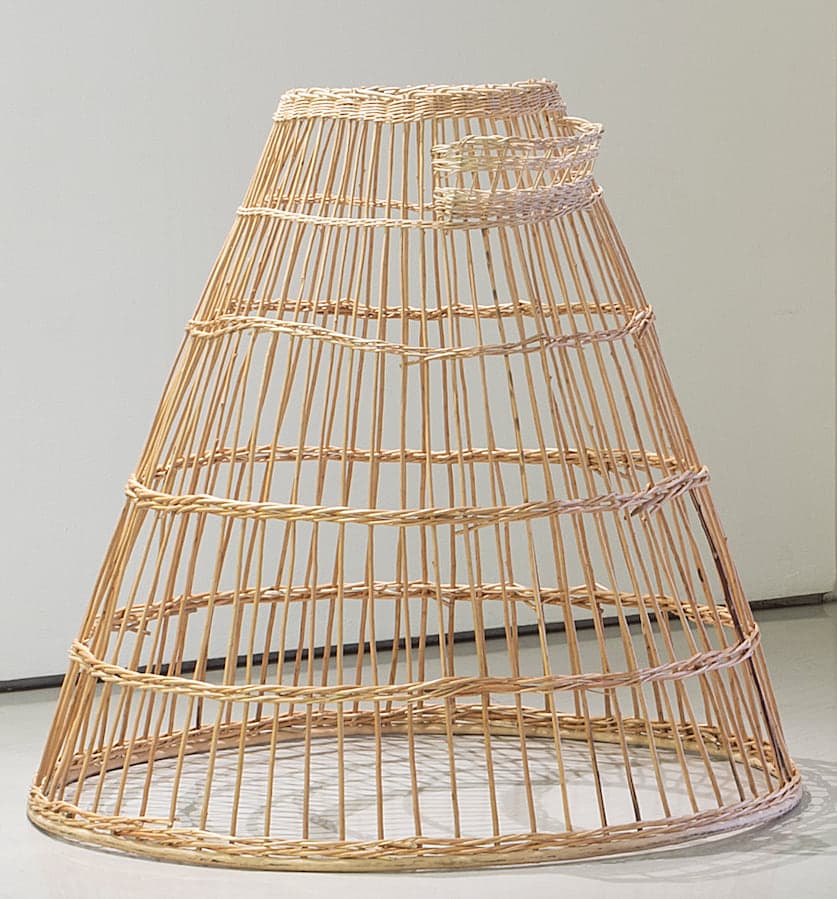
Barrada uses extracts from Mohammed Khair-Eddine’s 1967 novel Agadir, to further explore the Agadir earthquake. Extracts from this novel were performed, in which the Wicker sculpture became a prop for the actors to use and play with. This sculpture and many others similar to it, begins to resemble ruins of buildings, hotels and vacant lofts, which becomes sites of play after natural disasters such as earthquakes have occurred.Through the text, the viewer sees several issues and debates arising, since the text speaks to not only the earthquake, but also other forms of disasters. Through Barrada’s work, she questions how one restarts a life after a disaster has occurred and how to rebuild a city, where and for whom?
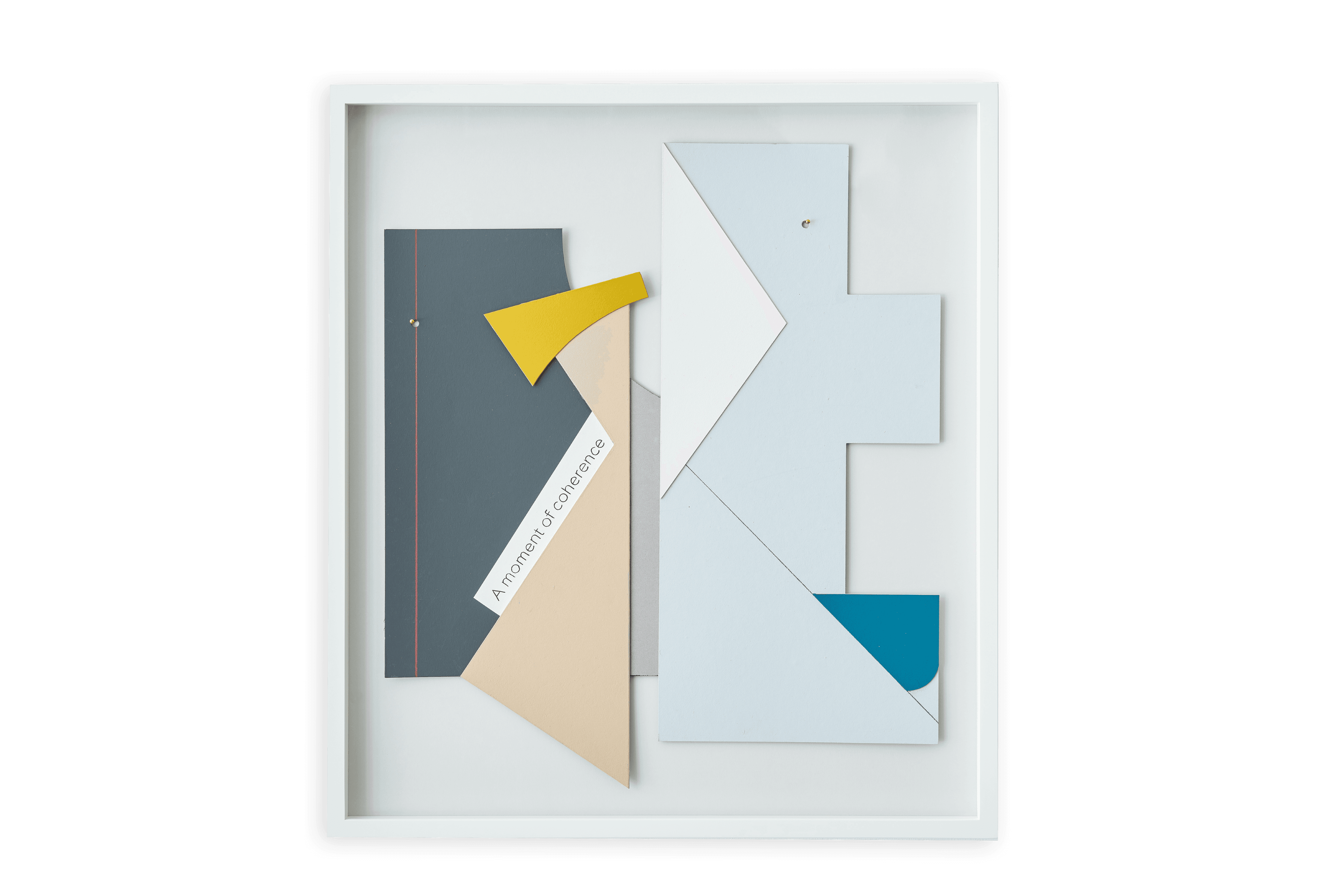
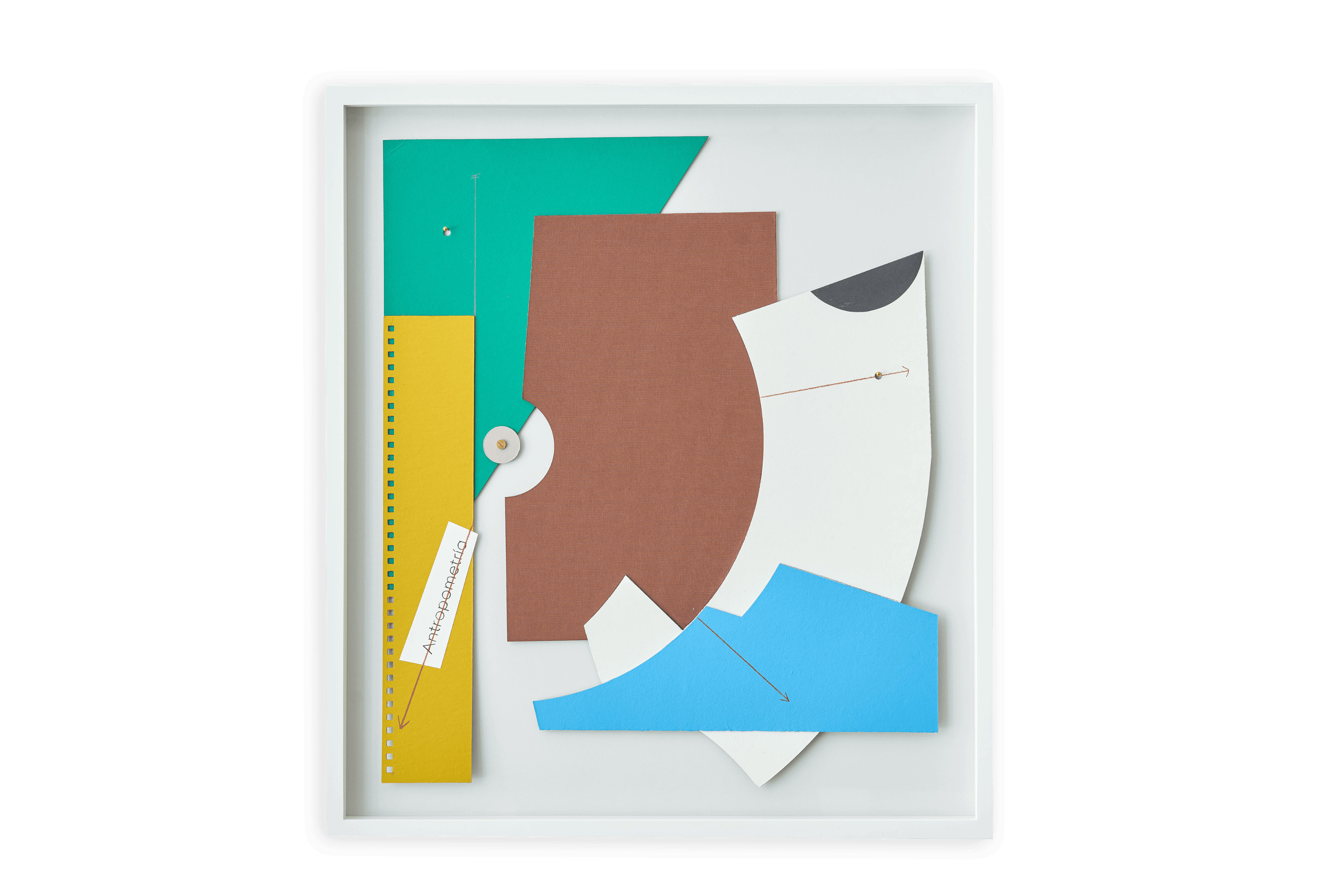
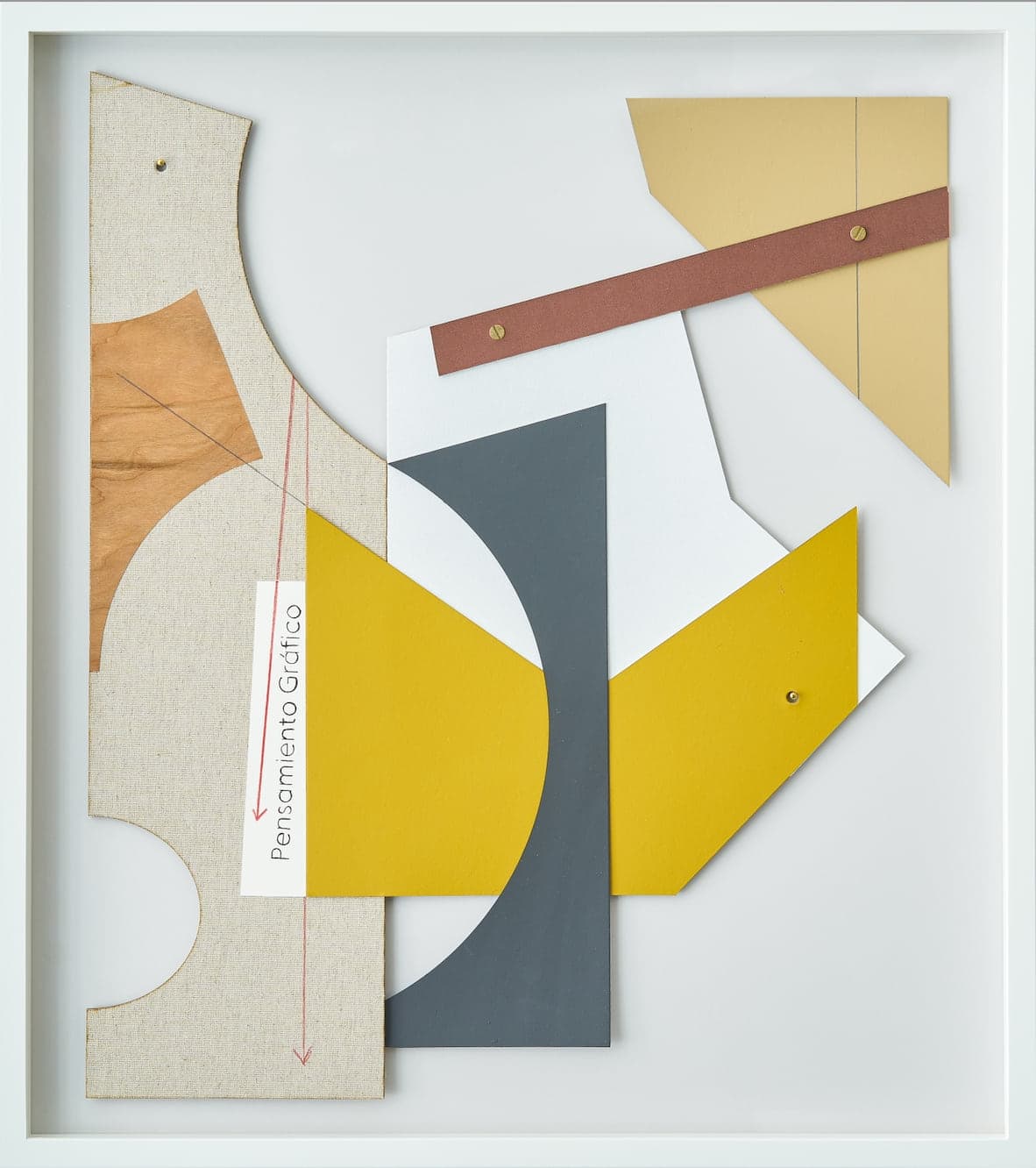
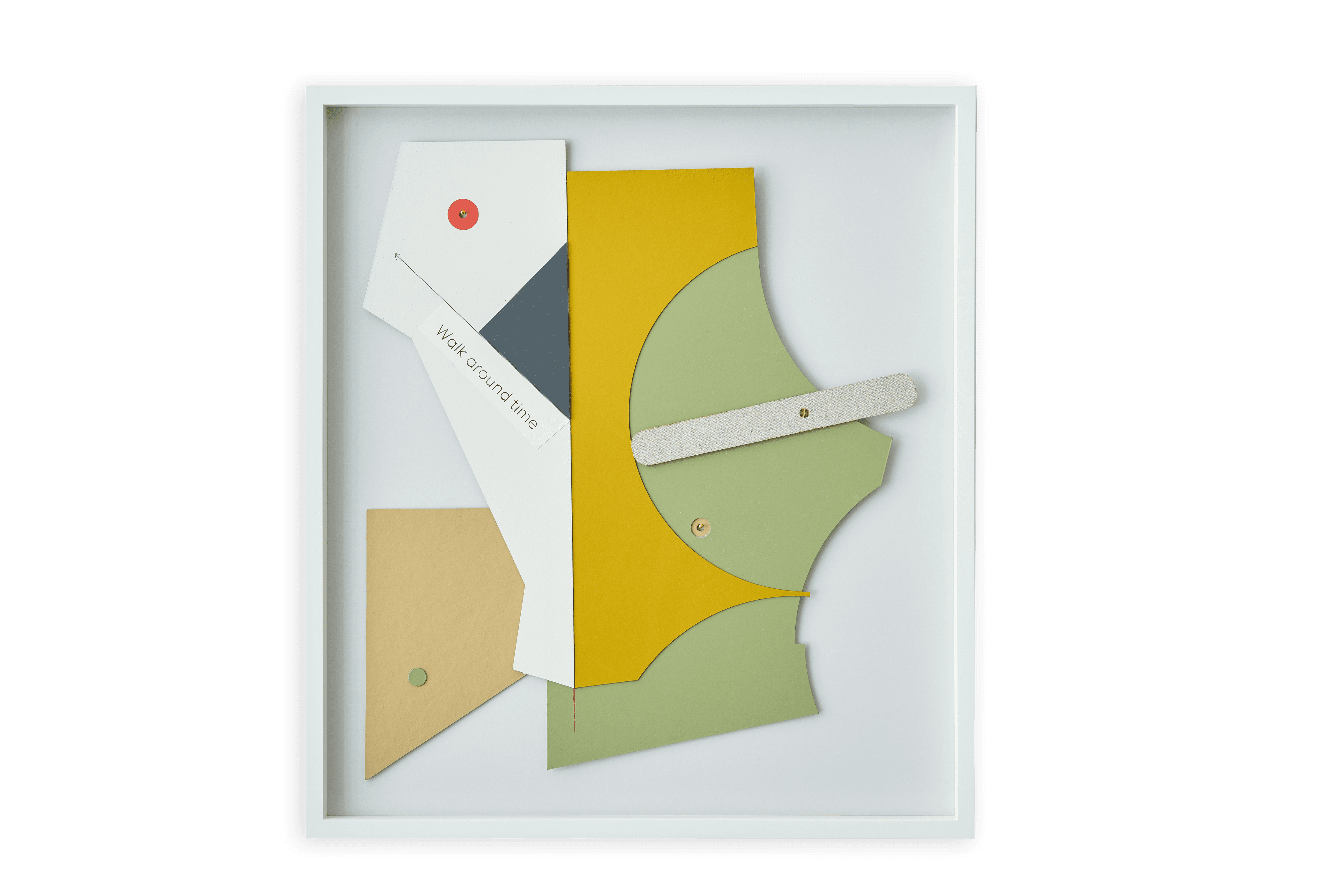
The collage works form part of the ongoing series, 'The waste of my time', in which Mateo López repurposes unused materials in his studio. The latest works in this series were made in the artist’s New York studio just before lockdown, using cardboard, acrylic paint and grommet. López draws inspiration from an anecdote on Josef Albers at Bauhaus Preliminary Class in 1923, which encapsulates his playful and paired down approach.
As told by López, “Albers entered the classroom with a bundle of newspaper under his arm. ‘Ladies and gentleman’, he said, ‘we are poor and not rich. We cannot afford to waste materials or time. Every piece of work has a starting material, and therefore we must examine the nature of this material. I would like you to take these newspapers in hand and make something more out of them than what they are at present. If you can do so without any accessories, such as cutters, scissors or glue, all the better.”
The collage works form part of the ongoing series, 'The waste of my time', in which Mateo López repurposes unused materials in his studio. The latest works in this series were made in the artist’s New York studio just before lockdown, using cardboard, acrylic paint and grommet. López draws inspiration from an anecdote on Josef Albers at Bauhaus Preliminary Class in 1923, which encapsulates his playful and paired down approach.
As told by López, “Albers entered the classroom with a bundle of newspaper under his arm. ‘Ladies and gentleman’, he said, ‘we are poor and not rich. We cannot afford to waste materials or time. Every piece of work has a starting material, and therefore we must examine the nature of this material. I would like you to take these newspapers in hand and make something more out of them than what they are at present. If you can do so without any accessories, such as cutters, scissors or glue, all the better.”
The collage works form part of the ongoing series, 'The waste of my time', in which Mateo López repurposes unused materials in his studio. The latest works in this series were made in the artist’s New York studio just before lockdown, using cardboard, acrylic paint and grommet. López draws inspiration from an anecdote on Josef Albers at Bauhaus Preliminary Class in 1923, which encapsulates his playful and paired down approach.
As told by López, “Albers entered the classroom with a bundle of newspaper under his arm. ‘Ladies and gentleman’, he said, ‘we are poor and not rich. We cannot afford to waste materials or time. Every piece of work has a starting material, and therefore we must examine the nature of this material. I would like you to take these newspapers in hand and make something more out of them than what they are at present. If you can do so without any accessories, such as cutters, scissors or glue, all the better.”
The collage works form part of the ongoing series, 'The waste of my time', in which Mateo López repurposes unused materials in his studio. The latest works in this series were made in the artist’s New York studio just before lockdown, using cardboard, acrylic paint and grommet. López draws inspiration from an anecdote on Josef Albers at Bauhaus Preliminary Class in 1923, which encapsulates his playful and paired down approach.
As told by López, “Albers entered the classroom with a bundle of newspaper under his arm. ‘Ladies and gentleman’, he said, ‘we are poor and not rich. We cannot afford to waste materials or time. Every piece of work has a starting material, and therefore we must examine the nature of this material. I would like you to take these newspapers in hand and make something more out of them than what they are at present. If you can do so without any accessories, such as cutters, scissors or glue, all the better.”
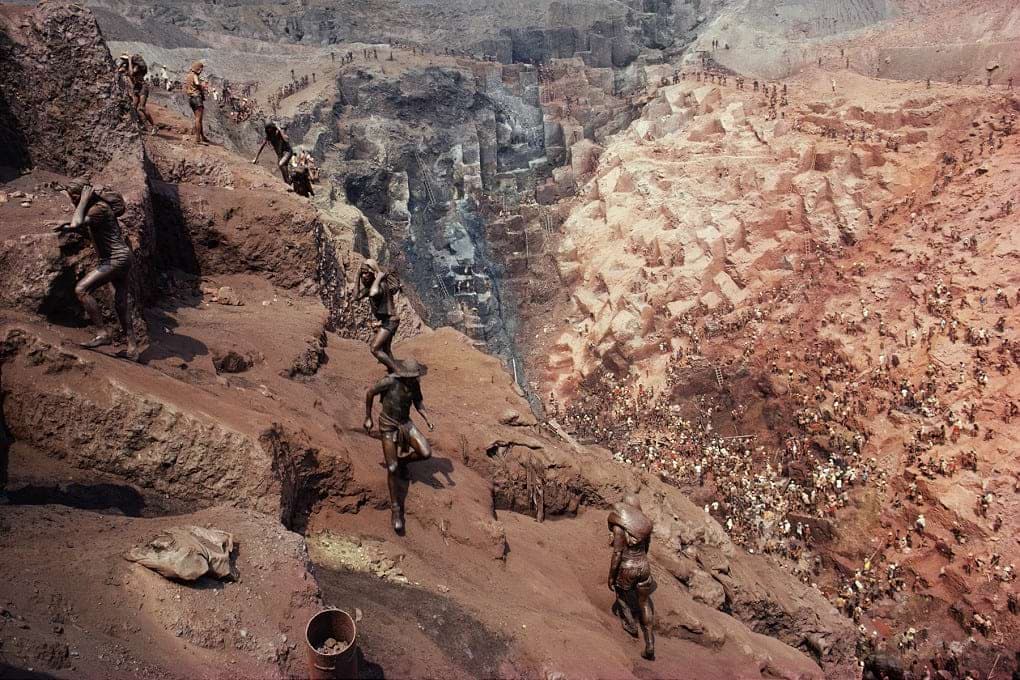
Eduard Suess, a 19th century geologist, is credited as the originator of the theory of Gondwana, a supercontinent that existed until the Jurassic period (about 180 million years ago) and consisted of two-thirds of today's continental area, including South America, Africa, Antarctica, Australia, the Indian Subcontinent, Zealandia, and Arabia. Suess based this theory on the discovery of fossilised ferns, Glossopteris, which were found both on the African and South American continents.This work is part of a series deconstructing the “fathers” of various Western schools of thought and study.
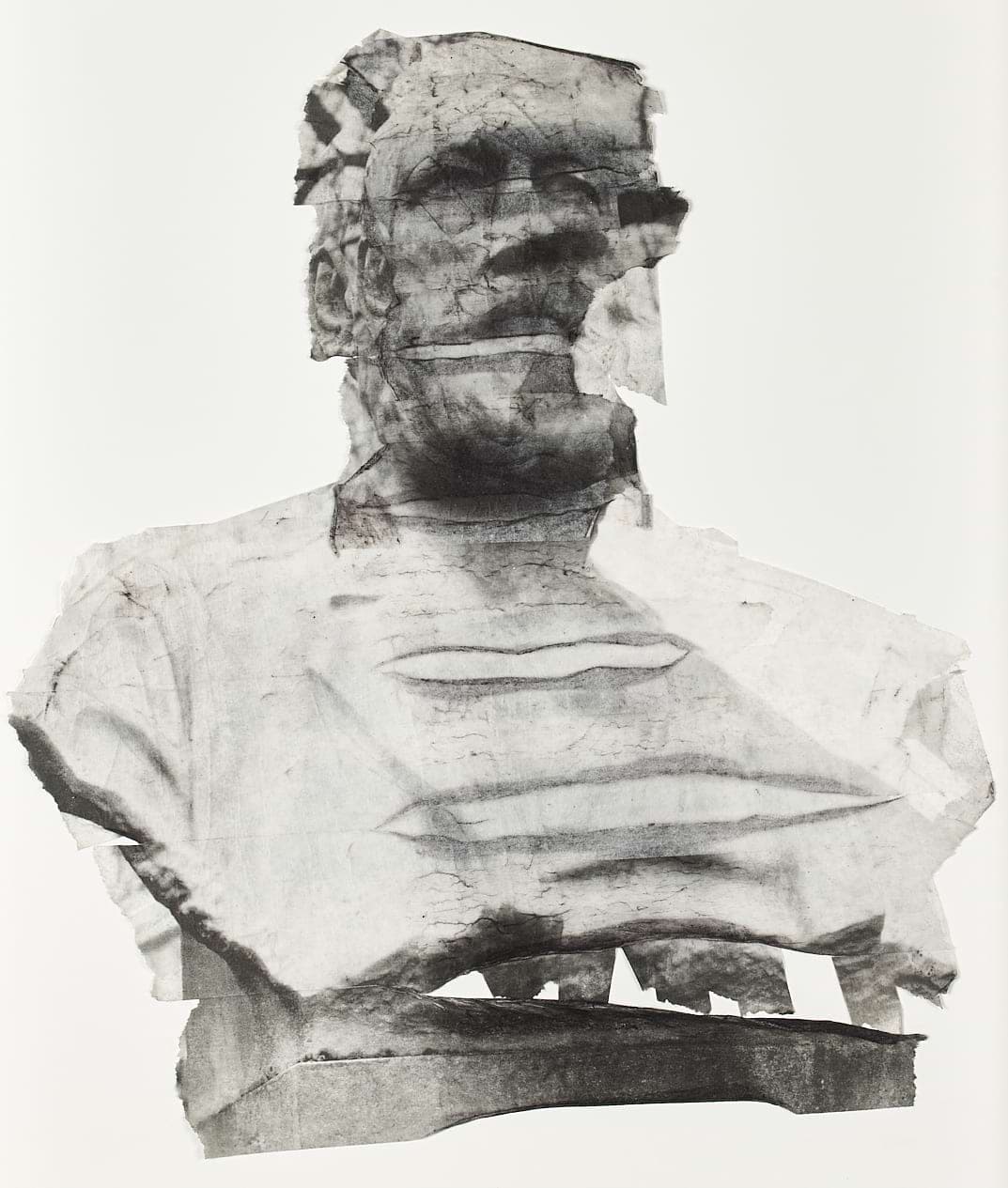
This work is part of the series Massive Nerve Corpus, which included a number of works where photographs and found images were printed on micropore surgical tape, a bandage that covers and protects like a temporary skin where the body has been opened, but which can also be used to constrain movement. Its physical presence on paintings and collages thus became an important element in the deconstruction of white masculinity through a focus on the dichotomy of power and vulnerability.
These works were created as part of the collaborative residency project Conversations in Gondwana (Centro Cultural São Paulo), staged in 2019. Mikhael Subotzky collaborated with artist Clara Ianni on an installation including these works.
About the collaborative installation:
Triangulation. The tracing or measure of a network of triangles in order to determine relative positions of various points. The use of two or more methods in a study to check results. The navigation of the unknown by the convergence of measurements taken from two known points. Coalescing.
Collaboration. The triangulation of ideas, thoughts, images, texts. A navigation towards an unknown point. Multiple points of thought, encounter, meeting. This project has existed in the ether, attempting to triangulate between Brazil and South Africa, the intermittent flow of messages, voice notes, emails, photos. Months. Then an in-person encounter in London. London, the birthplace of Eduard Suess, the originator of the theory of Gondwana.
Gondwana. A supercontinent, floating in the past, a land without borders existing in the present. These borderless exchanges, connected in a tangle of wire and electrons, the infrastructure of the art world. Our practices have passed through all of these, triangulated here, in the physical. Here, on this wall. Here, on the tip of the triangle.