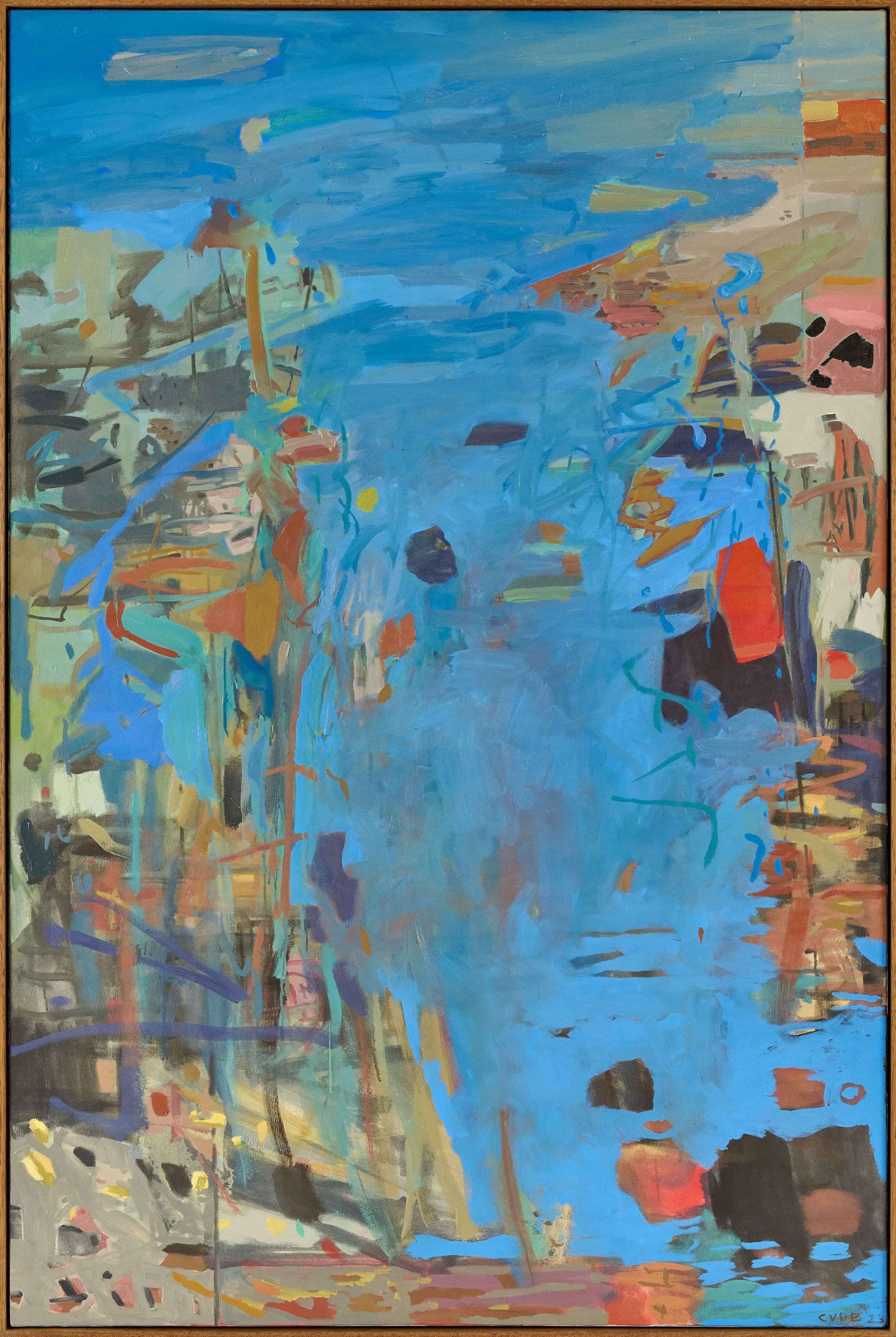
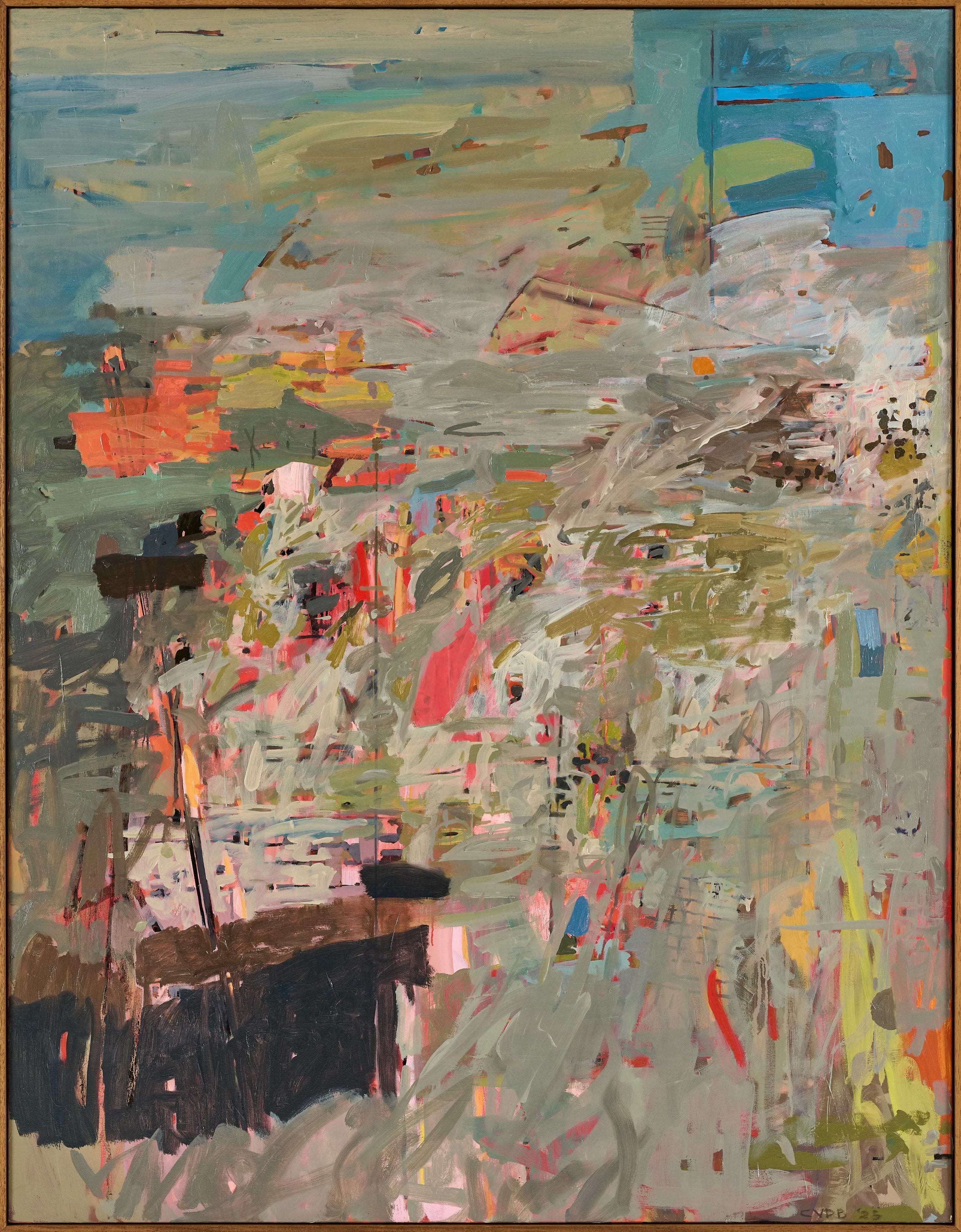
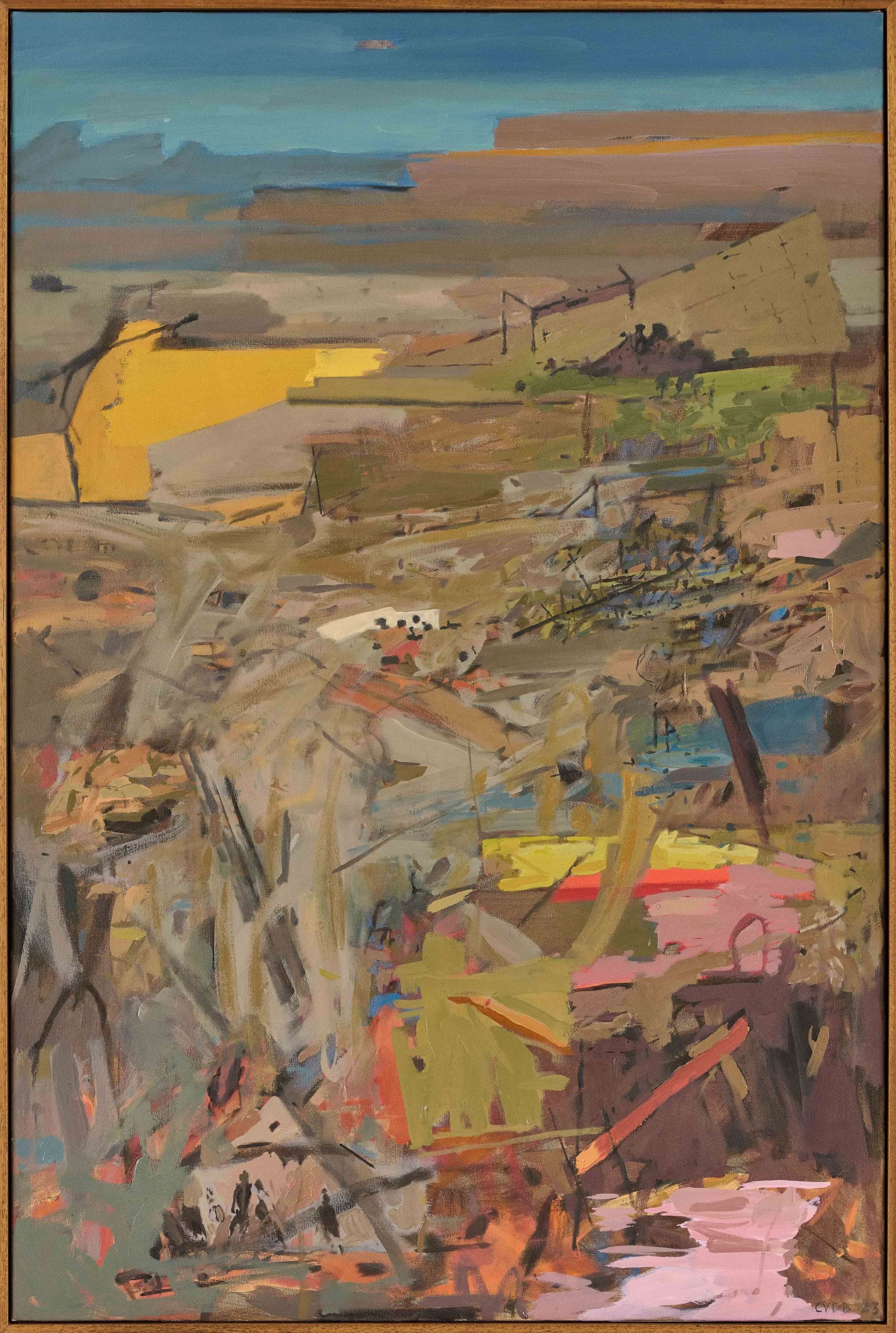
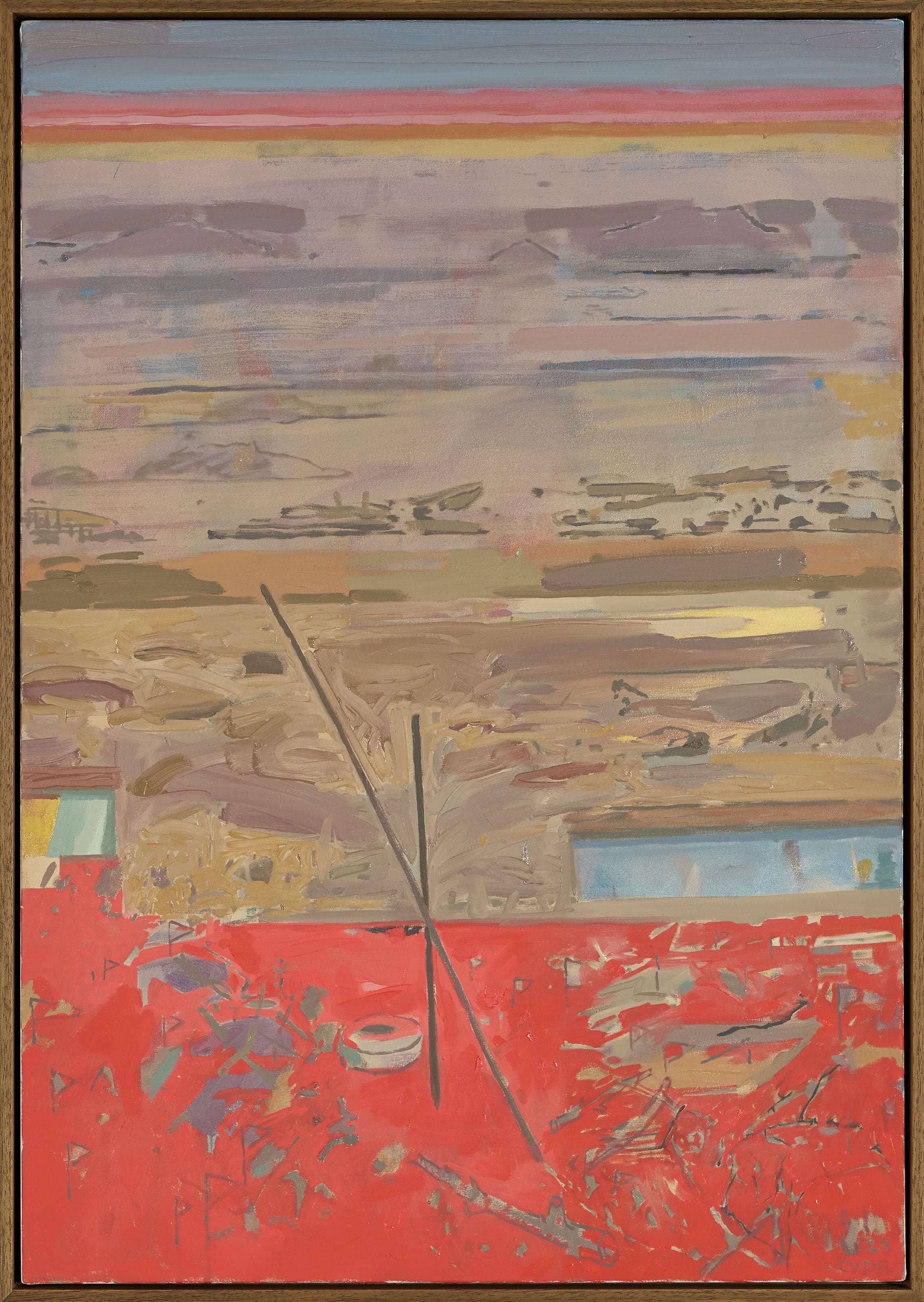
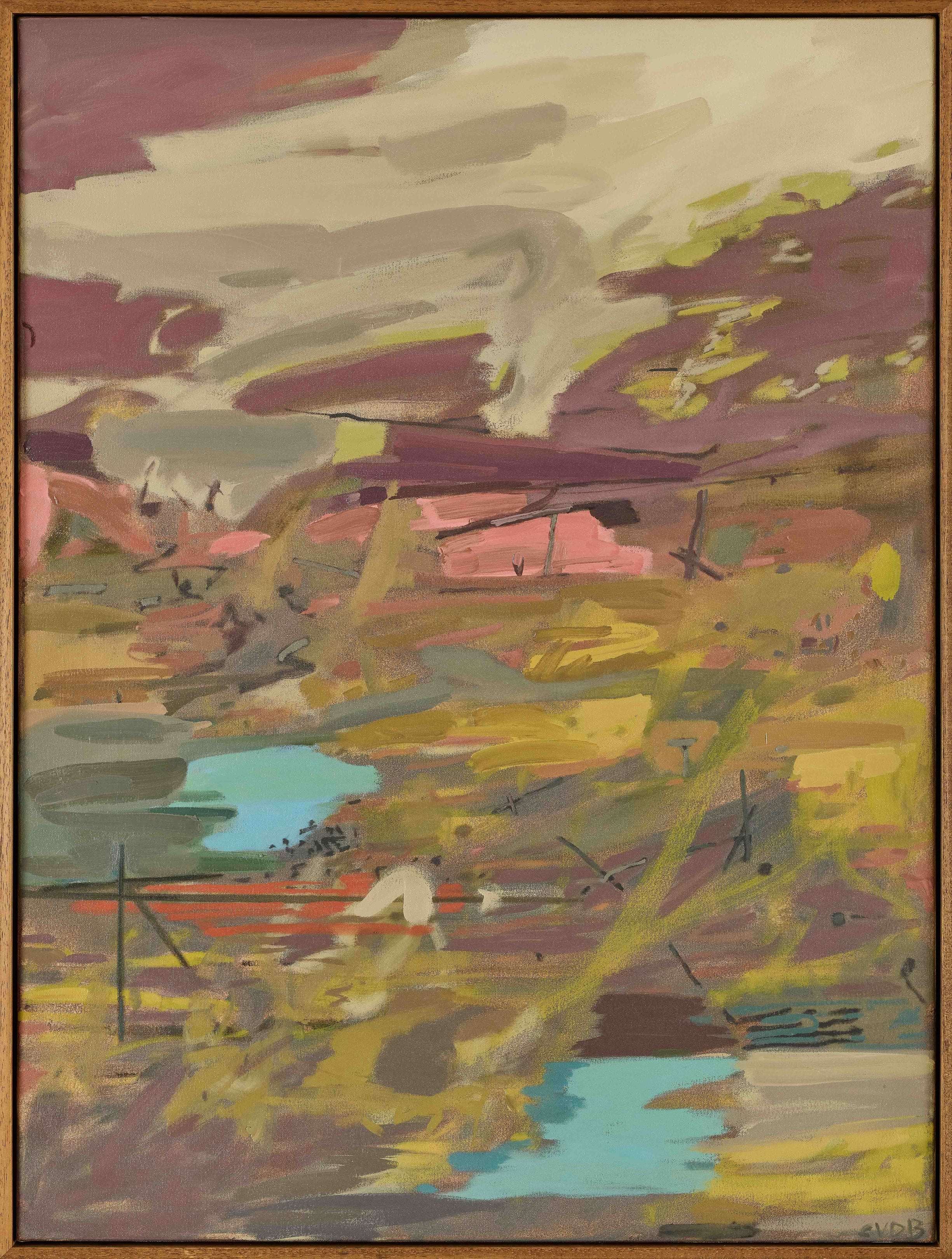
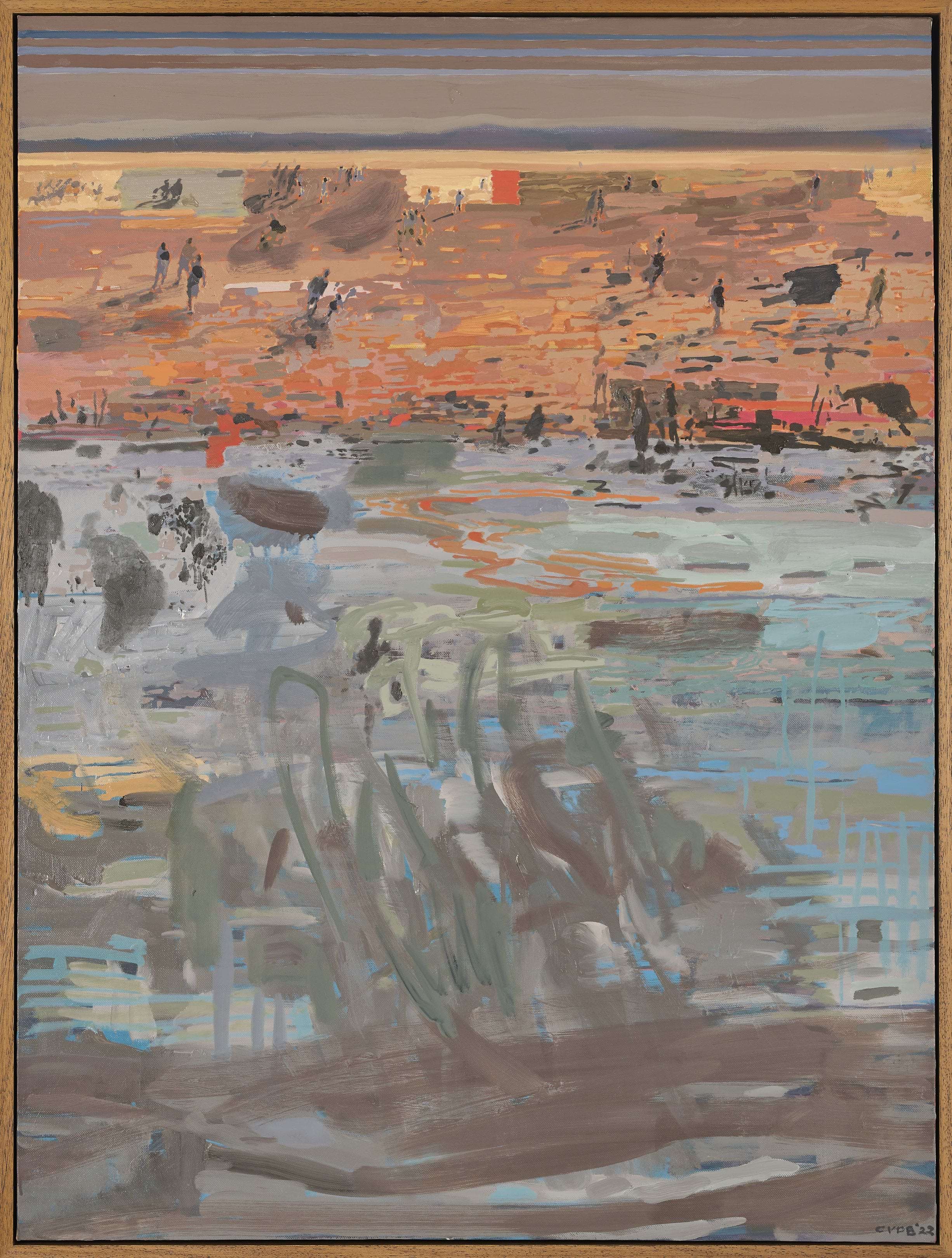
In Landscape Event XI, the artist offers a gestural and intuitive application of paint to these thematic explorations, letting the paint have greater direction in the visual composition and emotive capabilities of each work.
Drawing upon his distinctive visual language, Van den Berg's paintings explore the porous nature of land as a receptacle for lived experience, unearthing what lies unresolved beneath its surface. In this exhibition, the landscapes serve as a departure point, transcending their physicality to evoke a haunting absence that resonates within the viewer's consciousness. In this way, the works, with multiple modes of painting present, operate as a series of maps that guide viewers through imagined topographies and merged temporalities.
Clive van den Berg is a multidisciplinary artist whose practice spans painting, sculpture, printmaking, film, and public art. Drawing from the layered history of South Africa, his work explores the interrelation of memory, landscape, and the body. Through abstracted, imagined terrains, Van den Berg disrupts conventional artistic syntax, shifting between allegory and abstraction to examine how the land holds and reveals personal and political anxieties. His landscapes do not depict geography as static, but rather as fluid sites of entanglement, shaped by trauma, ideology, and time.
Raised in a Zambian mining town, Van den Berg’s early experiences shaped a deep awareness of the subterranean – what he refers to as the "underscape" – a hidden world beneath the surface that mirrors human intervention and historical extraction. This perspective continues to inform his visual language, particularly in works like ‘Landscape Event XIII’, where geological structures are reimagined through painterly gestures influenced by Ground Penetrating Radar and mining imagery. By peeling back the layers of the earth, Van den Berg transforms landscape into a space of inquiry, where absence, memory, and transformation converge.
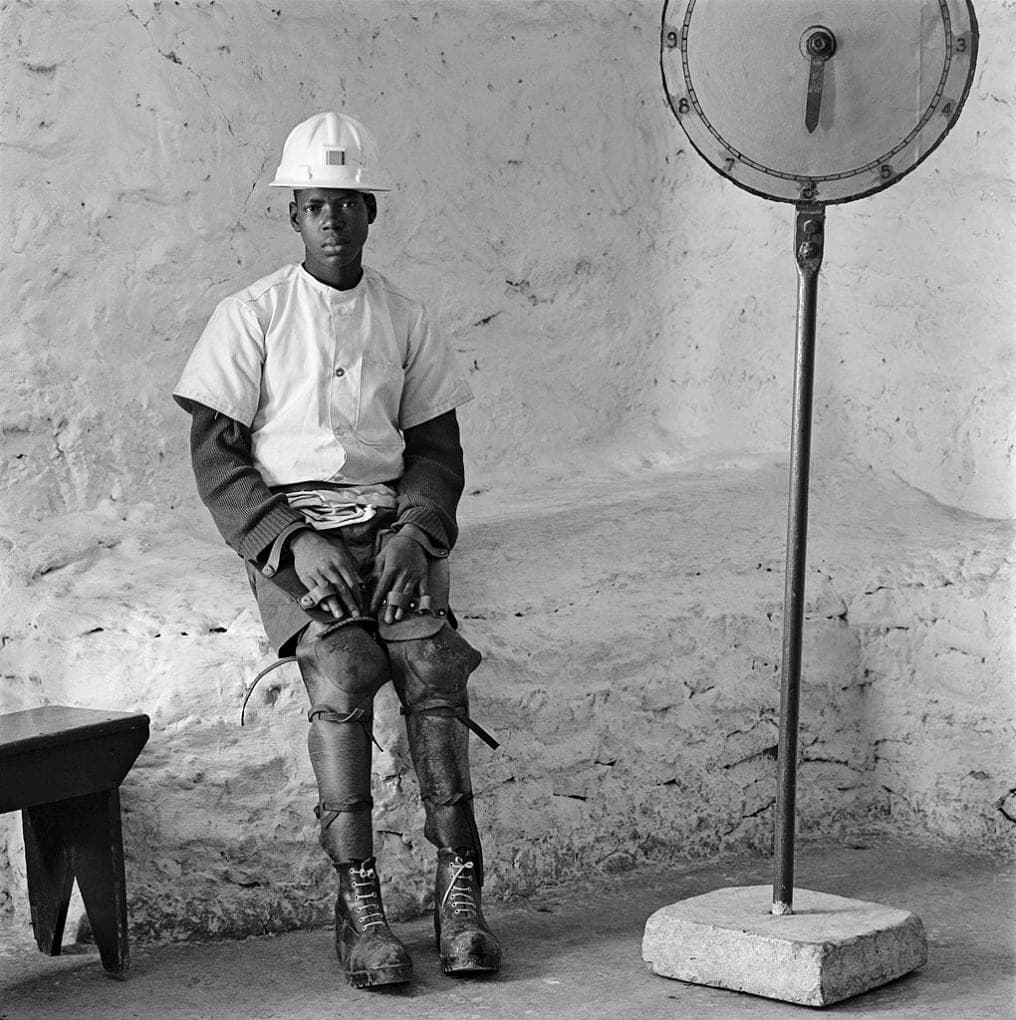
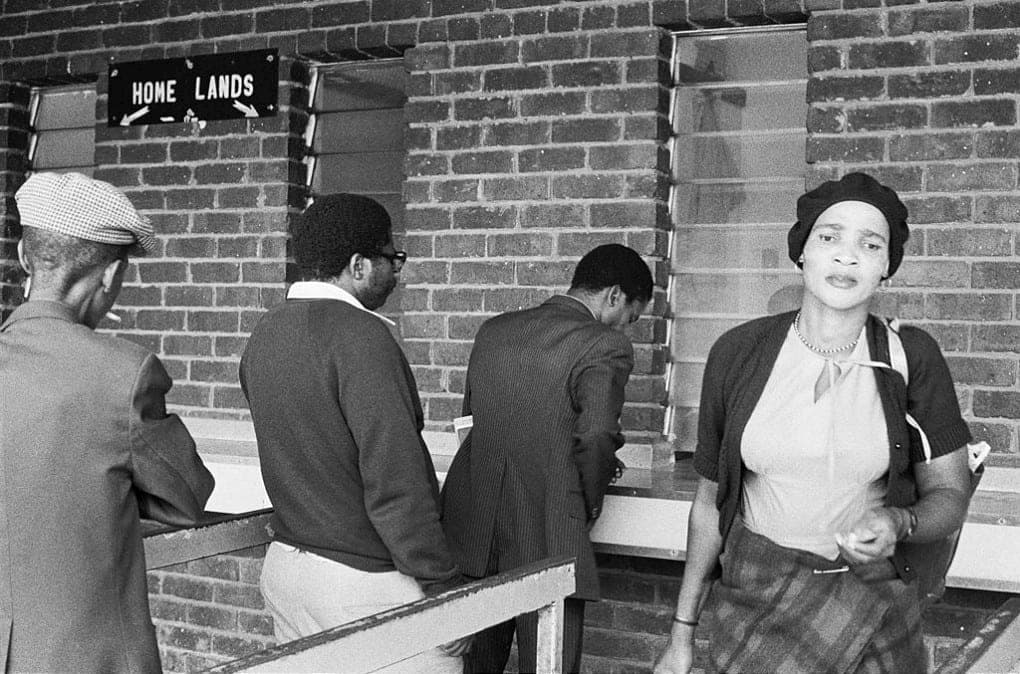
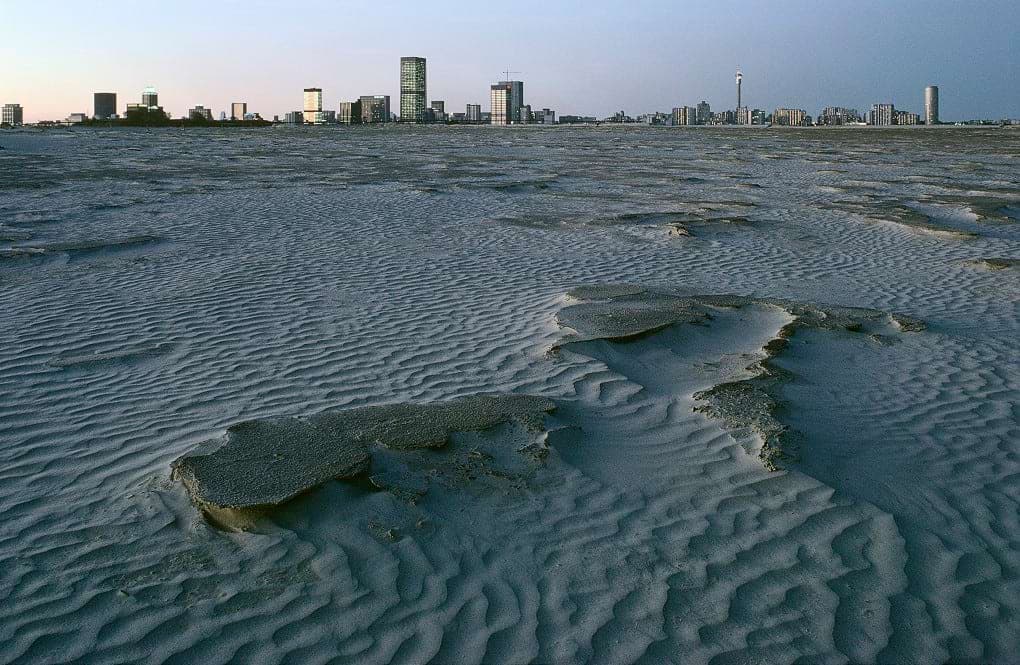
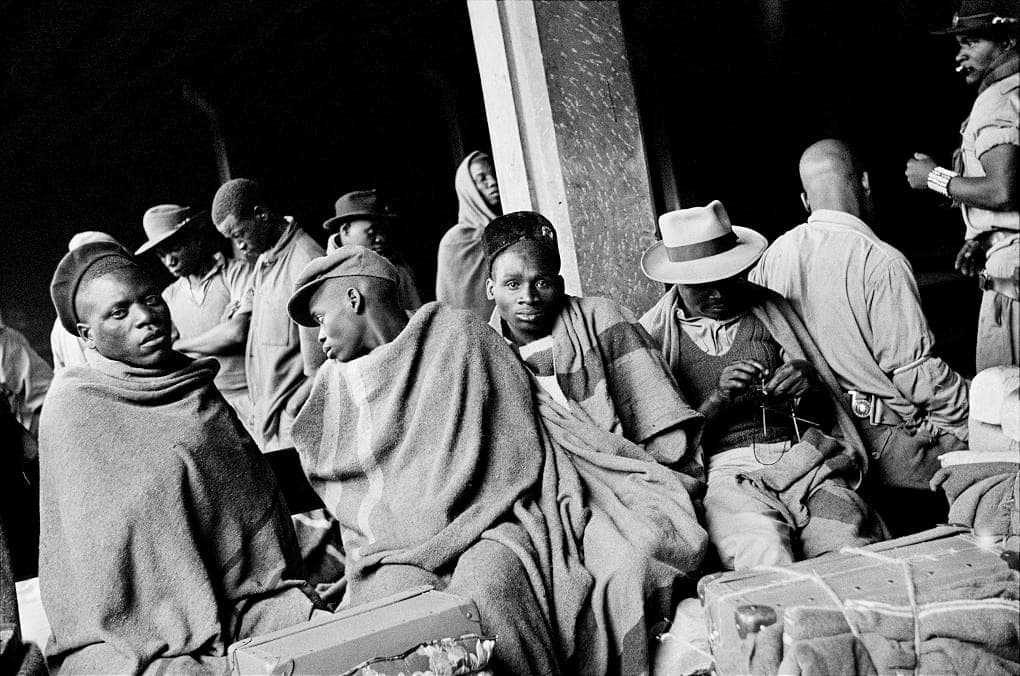
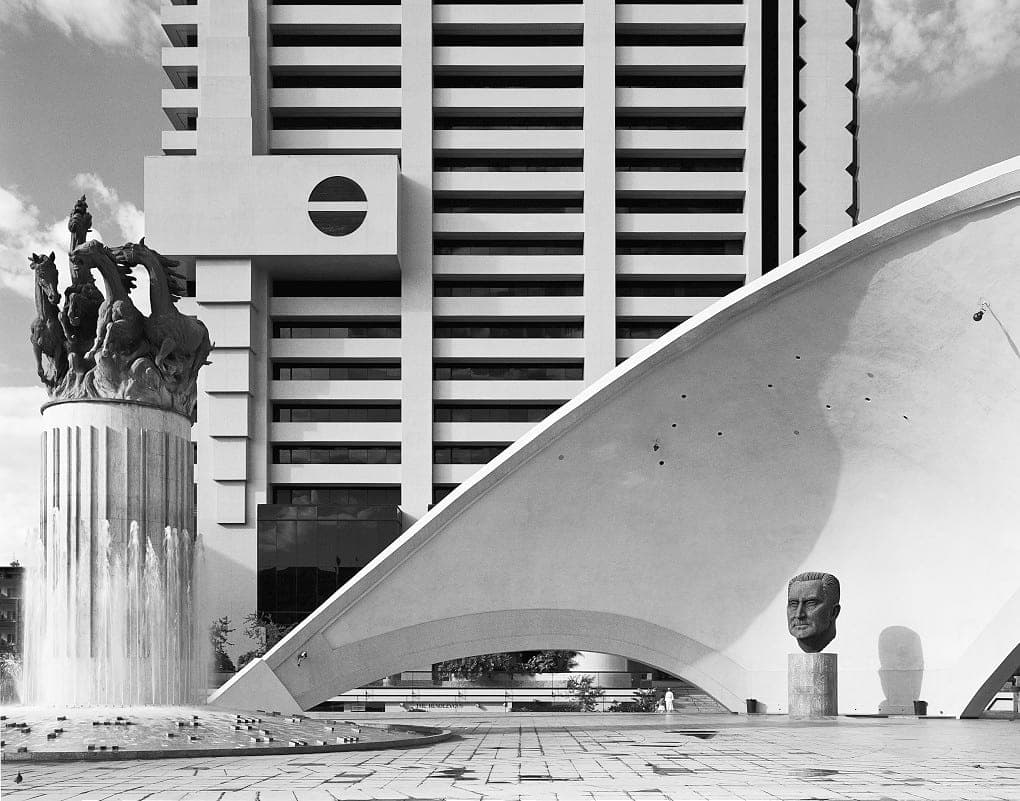
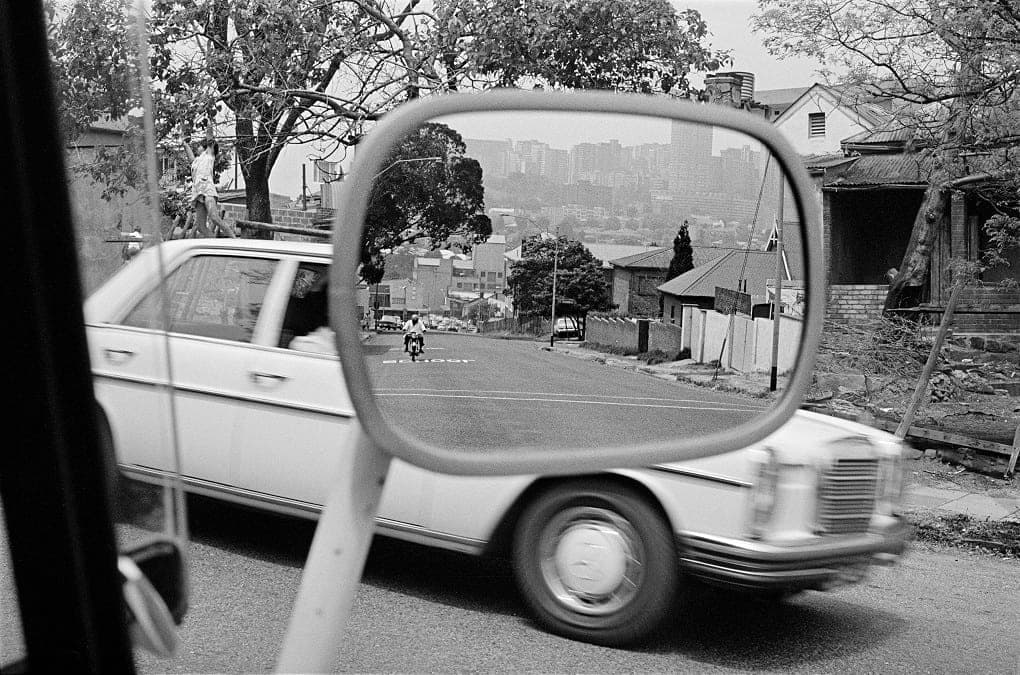
David Goldblatt (1930 -2018, South Africa), through his lens, chronicled the people, structures and landscapes of his country from 1948, through the rise of Afrikaner Nationalism, the apartheid regime and into the democratic era until his death in June, 2018. In particular, Goldblatt documented the people, landscapes and industry of the Witwatersrand, the resource-rich area in which he grew up and lived, where the local economy was based chiefly on mining. Art Institute Chicago will present an exhibition spanning Goldblatt’s seven-decade career titled No Ulterior Motive in December 2023.
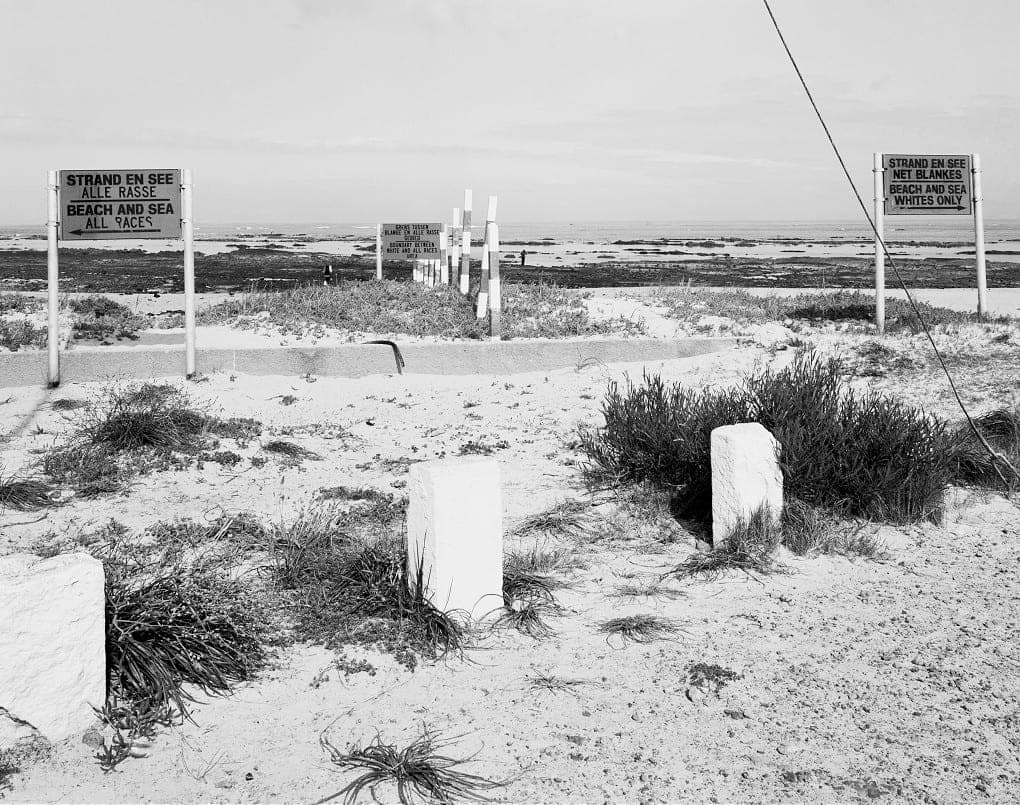
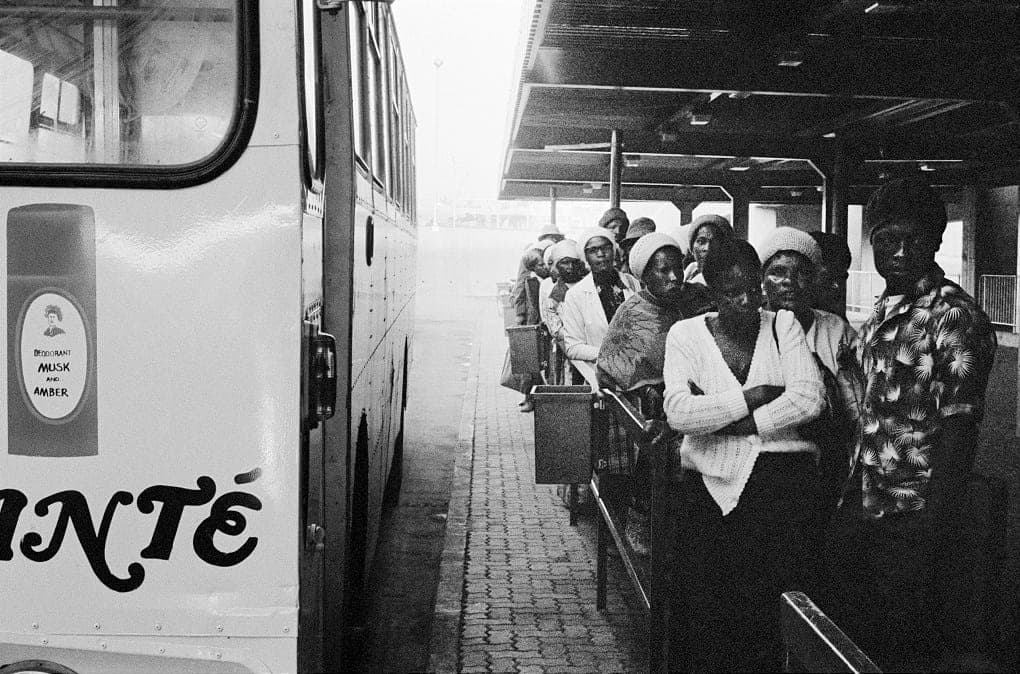
Goldblatt's subject matter spanned the whole of the country geographically and politically from sweeping landscapes of the Karoo desert to the arduous commutes of migrant black workers, forced to live in racially segregated areas. His broadest series, which spans six decades of photography, examines how South Africans have expressed their values through the structures, physical and ideological, that they have built.
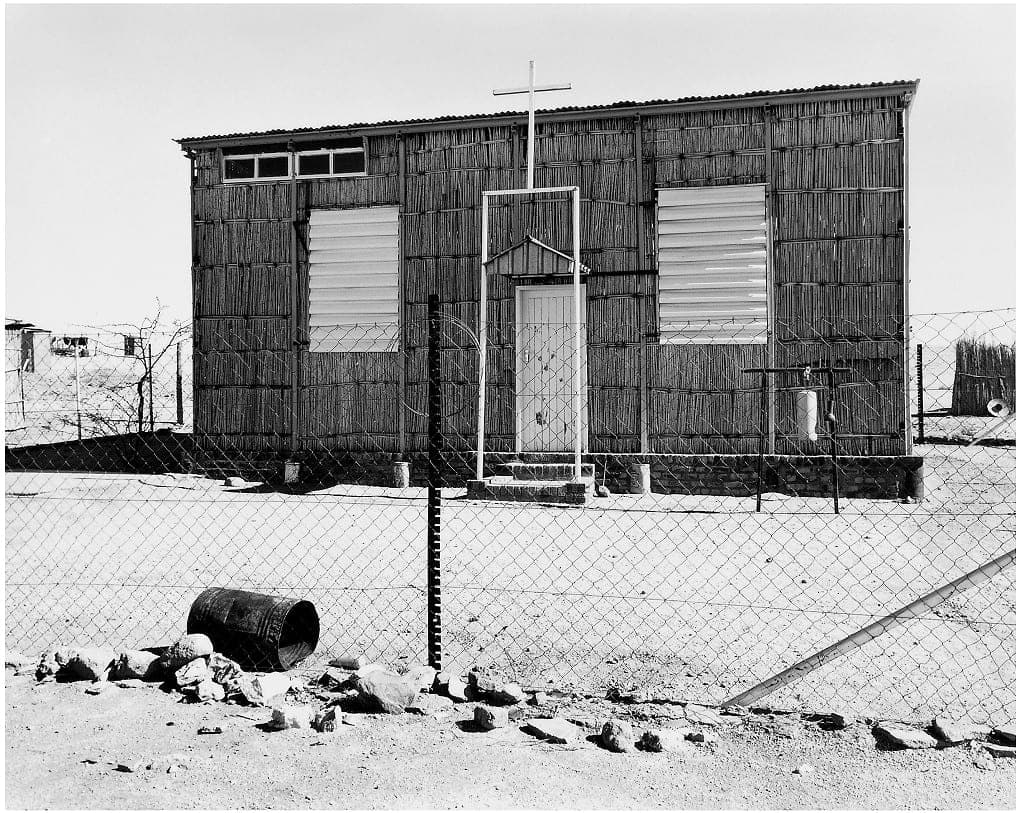
"Like many houses in the area, the walls of the church are made from the reeds which grow along the nearby Orange River. The church was designed by a priest, an Italian, and built by a member of the community. When I visited again in 1993 | found that the church was used only for prayer meetings and catechism classes. The community had shrunk and members went to a nearby town to celebrate mass." - David Goldblatt
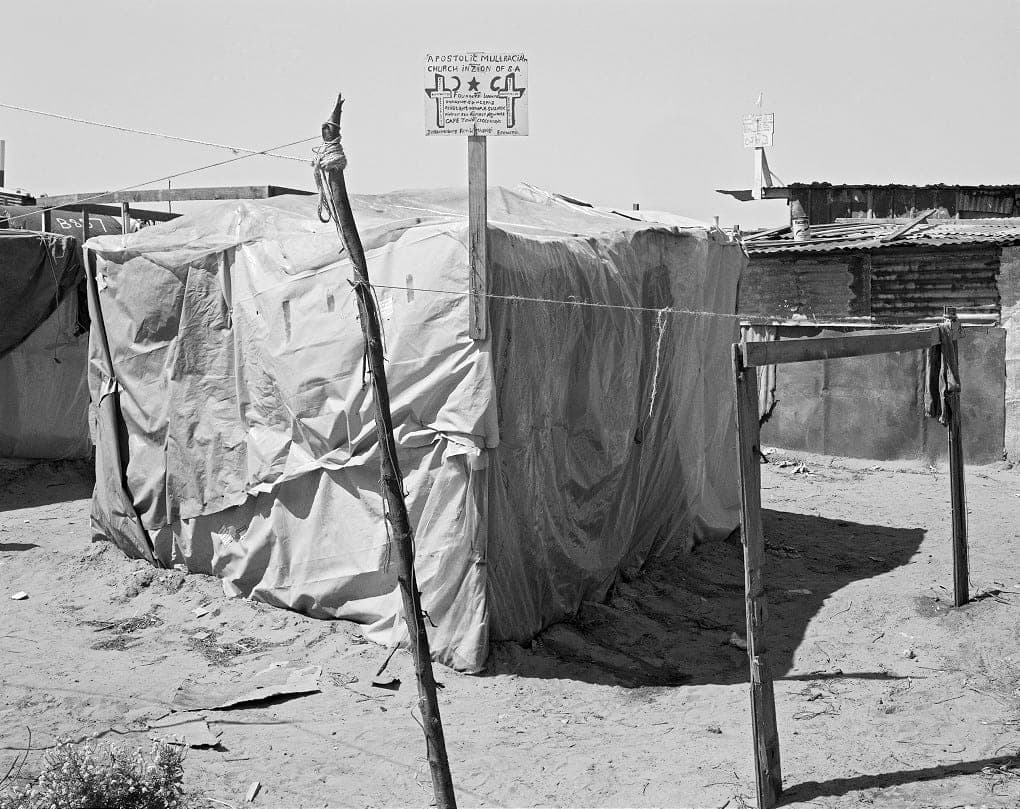
"This church was part of a squatter community, which, for a time, was notable for its cohesiveness in the face of efforts by the state to destroy it. Seeking escape from the destitution of the Transkei and Ciskei 'homelands' and searching for work, many thousands of Africans poured into the Western Cape in defiance of the apartheid influx control regulations restricting their access to the area. Most settled in squatter camps, the largest of which were Crossroads and KTC outside
Cape Town.'
Here, not withstanding extremely harsh conditions, community churches, shops, schools, and civic groups emerged. But the uncontrolled inflow of people and their sprawling settlement next to Cape Town's airport were the antithesis of apartheid planning. The government tried to reverse the tide.
Year after year shacks were destroyed and people arrested, jailed, and 'endorsed out' of the region. When that failed, a new area, Khayelitsha, was demarcated for Africans. But few wanted to go there: it was much farther from the city.
Meanwhile, leaders of different groups of squatters had become embroiled in power struggles which were encouraged if not fomented by agents of the state.
In 1986, supporters of one of these leaders, with the backing of government security forces, attacked residents and torched hundreds of shacks. Seventy thousand people fled, many to Khayelitsha" - David Goldblatt
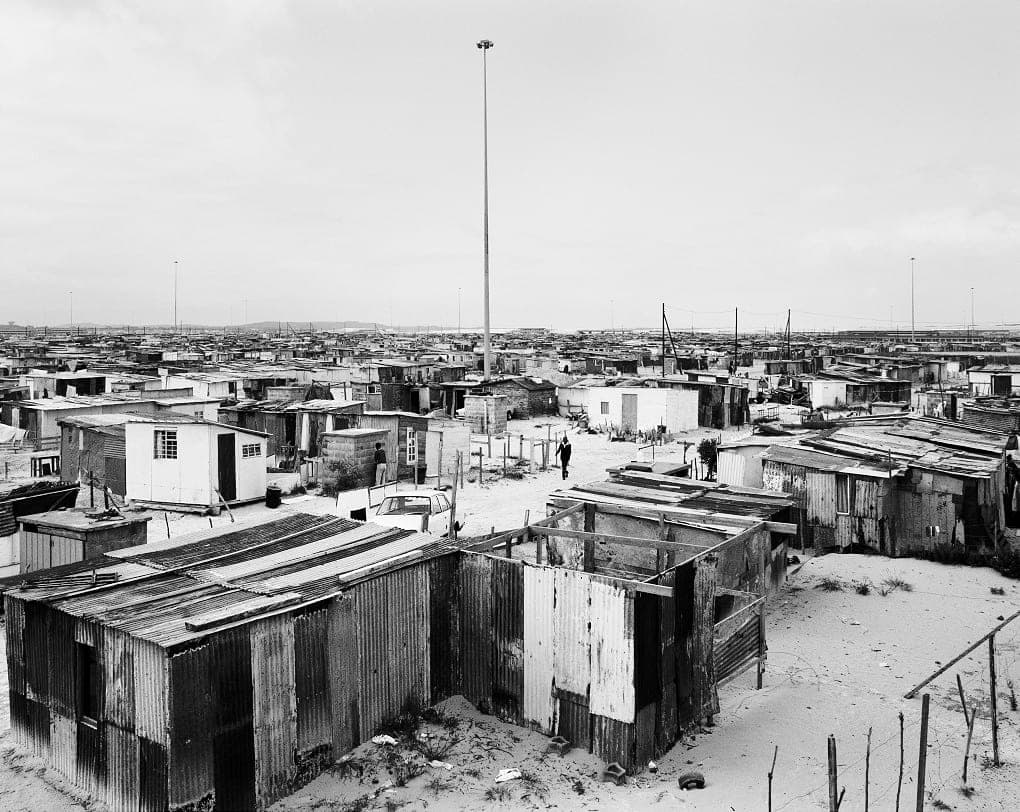
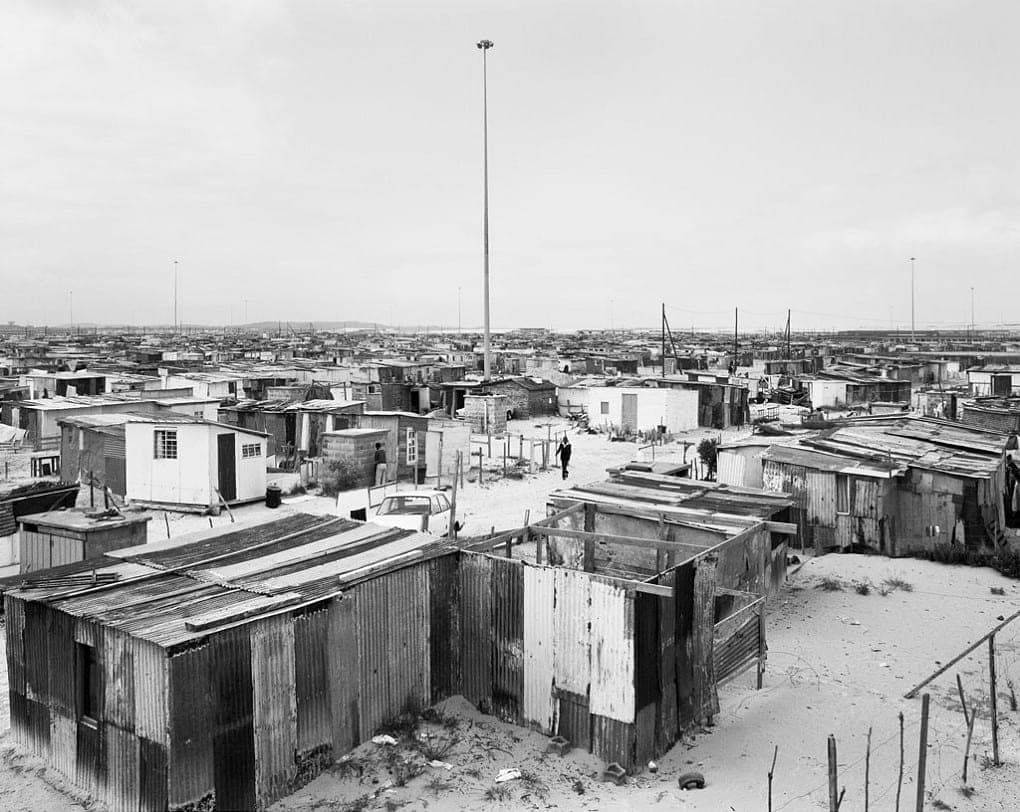
"At the top of each pole was a cluster of high-intensity lamps which shed a large pool of bright yellow light. This form of lighting was first applied in Soweto in the early 1970s to counter the tsotsis who, preferring darkness for their robberies, easily knocked out ordinary street lamps by throwing stones at them. However, these lights on their tall stalks were beyond their range and firearms were not then ubiquitous. But the device soon transcended its original application: it was most useful to the security forces in maintaining control in Black townships. High level lights sprouted in almost every 'location' in the country, even in small rural townships where crime was hardly a problem.
Khayelitsha, which means 'Our New Home', was established by the government in 1983 in an attempt to deflect and control the influx of Black people who were pouring into squatter camps such as Crossroads.
It lies among sand dunes on the Cape Flats, 28 kilometres from the city." - David Goldblatt
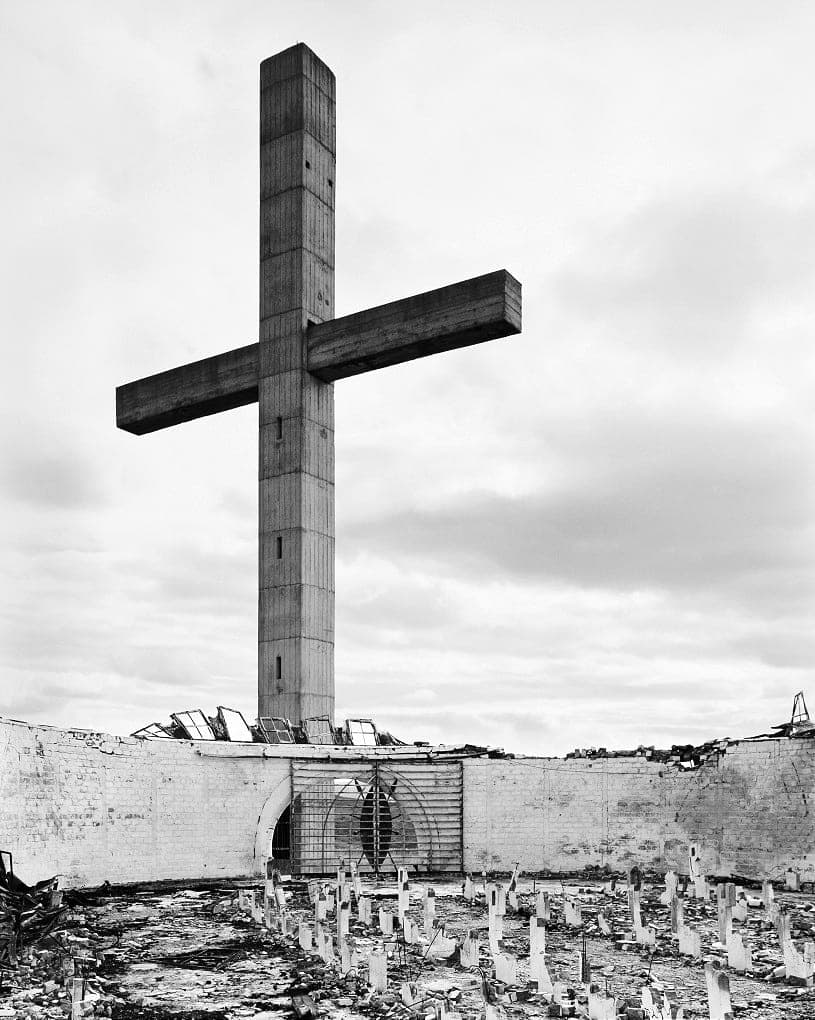
"At KwaMatiwane, the hill of execution where Piet Retief and his men were killed, a monument was erected in 1922. During the dedication the wish was expressed that rather than seek revenge the Afrikaners should bring Christianity to the Zulus. Inspired by this a farmer donated land nearby and a mission settlement, which later became a theological seminary with a church, was built by the NGK's Mission to Africans. That church became too small and another was inaugurated on Dingane's Day, 16 December
1969. It was burnt down in 1985. Some say the fire was caused by an electrical fault, others by the arson of a student
The 23-metre-high concrete cross, which, according to the Standard Encyclopaedia of Southern Africa was 'intended to express the victory of the cross over the scene of violence,' towers over Dingane's old capital at uMgungundlovu and the Makhosini Valley, the burial place of Zulu royal ancestors." - David Goldblatt
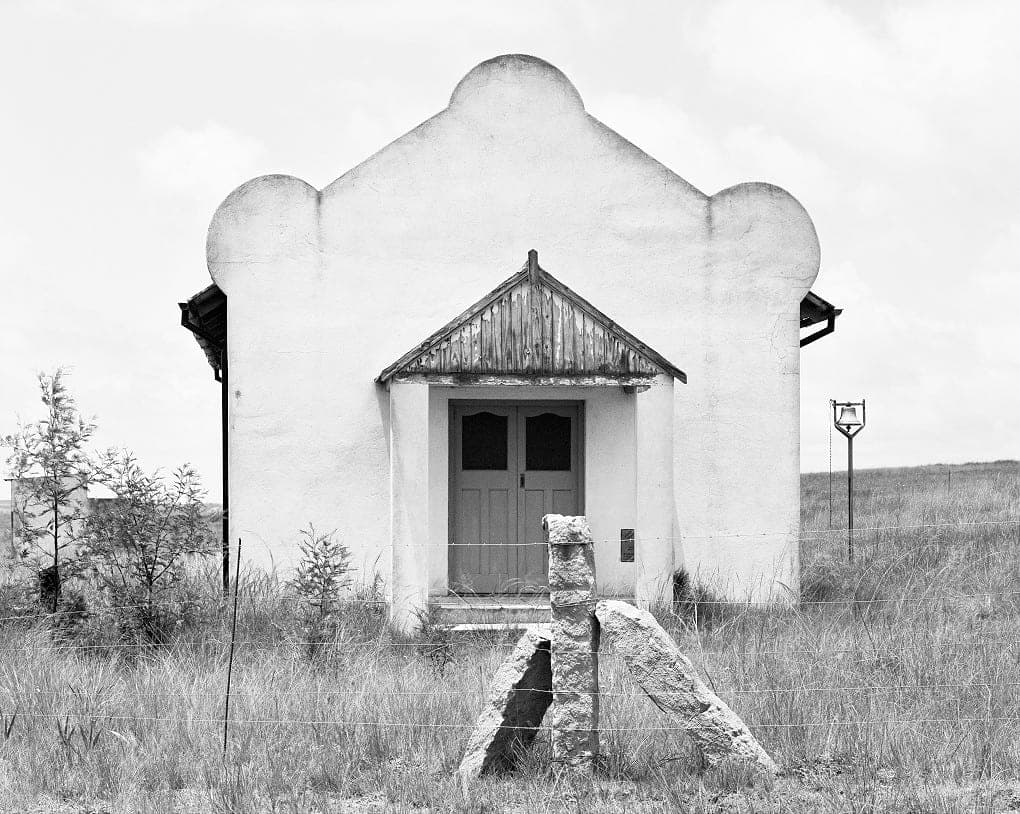
"A few houses, five shops, a post office, a police station, a sawmill and, standing alone, a long way off, this church. That was Lothair. Most members of the parish were farmers and the church was built by two of them in about 1954. Except during school holidays in July and December, when many of the congregation went to the coast for their vacations, services were taken on Sunday afternoons by the minister from Lake Chrissie, a nearby village.
Over the years some modest weddings and a few funerals were held in the church. Then, as time went on, the church was burgled more and more frequently.
Carpets, curtains, pews, the pulpit, and even the front door and sheets of corrugated iron from the roof were stolen. Restoration became so expensive that in the early 1990s the building was eventually abandoned. In an apparent effort to revive the church and provide it with some security, attempts were made in 1994 to attract members of the congregation to buy stands and build houses close to the church.' - David Goldblatt
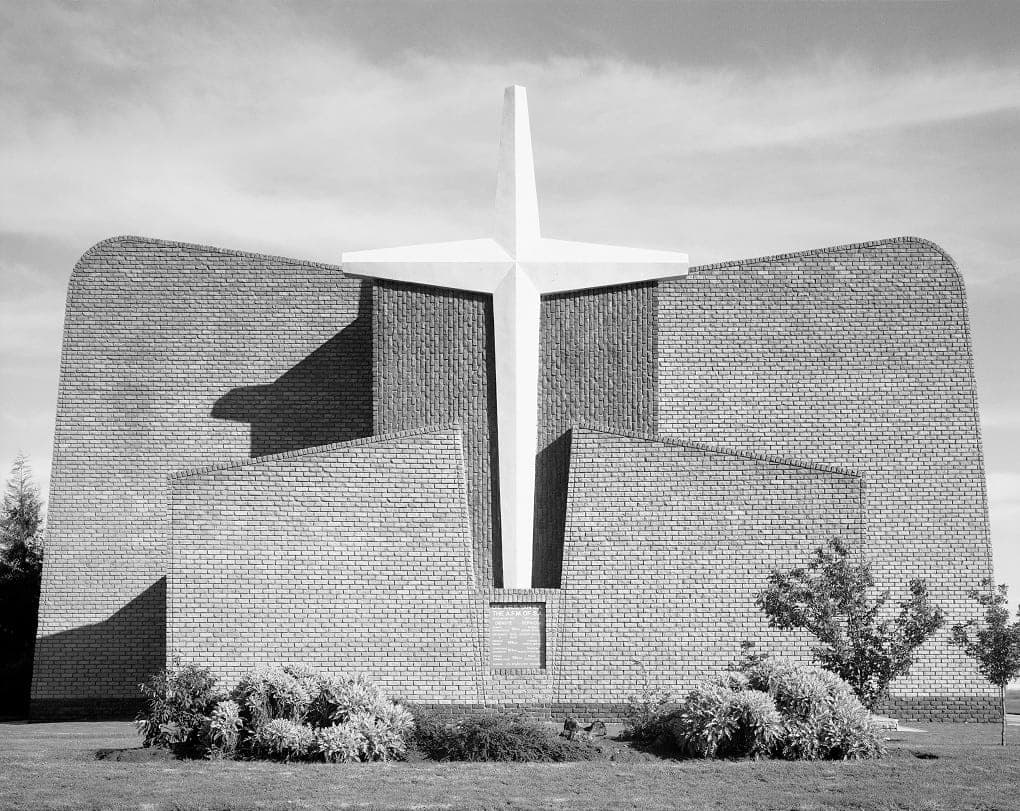
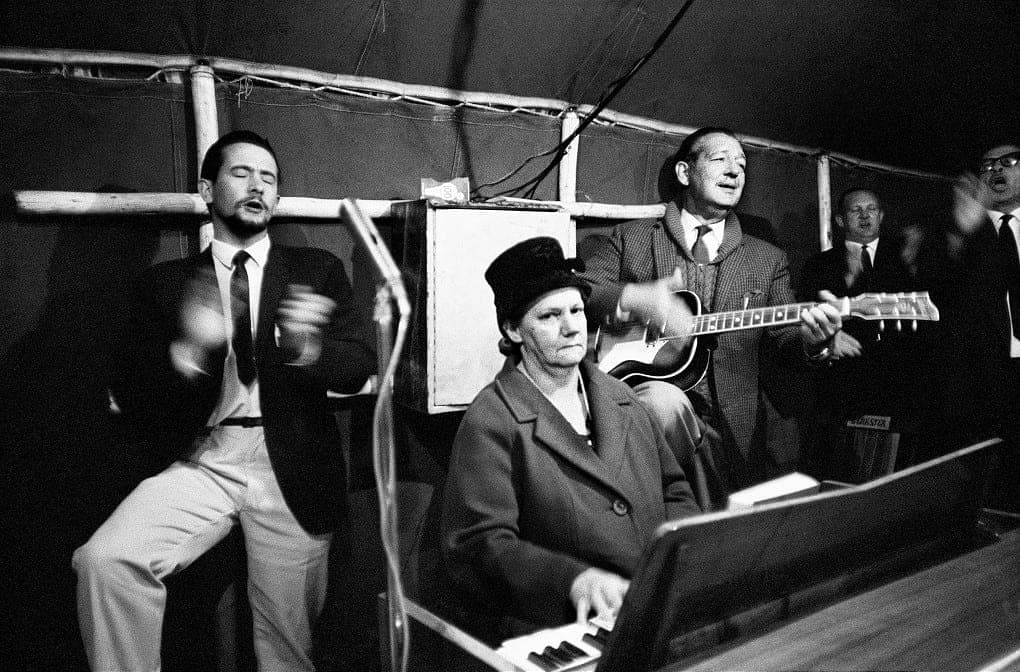
The AFM or AGS (Apostoliese Geloof Sending) had its origins in the revival of Christian fundamentalism and Pentecostalism that occurred in several parts of the world in the late 19th and early 20th centuries. Its growth in South Africa into a major denomination has had much to do with discontent among ordinary members of the Afrikaner Protestant Churches with the churchiness of those institutions and the remoteness of many of their dominees. The AGS encouraged spontaneity in its services and belief in the accessiblity of the gifts of the Holy Ghost to believers as manifested, for example, in speaking in tongues.
When the AGS built their own places of worship they were deliberately simple, spartan halls. This had as much to do with rejection of everything 'Church' as with cost, and with stress on evangelism rather than luxurious buildings. After the Second World War, however, the architecture of the AGS became increasingly substantial and churchlike. This, together with a tendency towards a more structured liturgy, meant for some that the AGS was losing its 'Pinkster' (Pentecostal) character. In 1958 a breakaway group formed the Pinkster Protestante Kerk
The AGS started as a non-racial church, but this became a problem ... as boer culture began to take hold'. A 1917 statement of the Workers' Council (synod) said:
[We] preach the gospel equally to all peoples making no distinctions. We wish it to be known ... that our White, Coloured, and Native peoples have their separate places of worship. We further recommend that in the Central Tabernacle, and other assemblies, if desirable, certain seats be reserved for coloured persons who may attend there. Further, that in the case of certain worthy coloured families attending at the Central Tabernacle the matter be left in the hands of the Spiritual Committee.
A 1985 meeting of the Indian, Coloured, Black, and White sections of the church rejected apartheid, accepted the unity of the church, and agreed that membership should be based on the 'spontaneous grouping of believers'. In 1994 the Indian, Coloured, and Black groups united and in 1996 the White section joined them in the complete unification of the church. - David Goldblatt
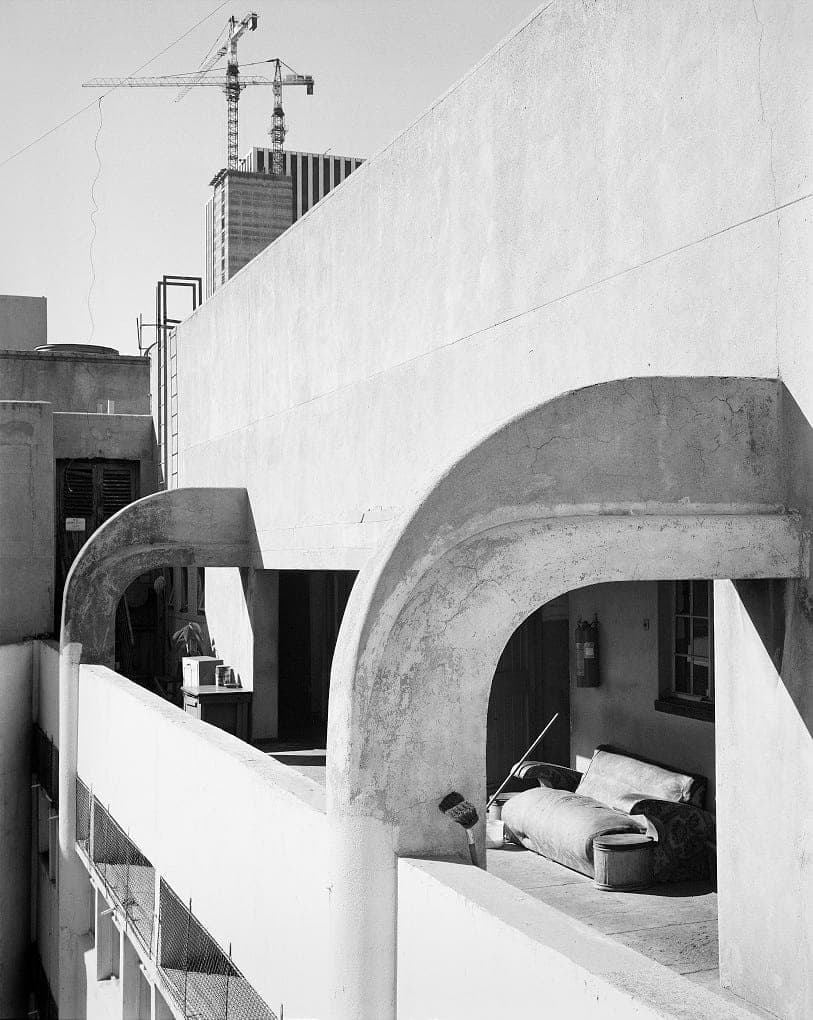
‘Location in the sky’ captures guarded buildings in the centre of Johannesburg where migrant workers lived. The buildings reflect the legacies of segregationist policies of the apartheid government which controlled the flow of Black people in and out of cities.
Through this series, Goldblatt captures place as well as the spirit of the people who inhabit the place, he noted; “To me, there is a seamless relationship between people and their places. People are marked by the places in which they have their being, and there are few places unmarked by the passing, the hand, the presence of people….There is a casual intimacy in this mutual relationship that inevitably permeates much photography. I don’t need people in a photograph to know that people are there.”
— David Goldblatt, Photographers References, 2014.
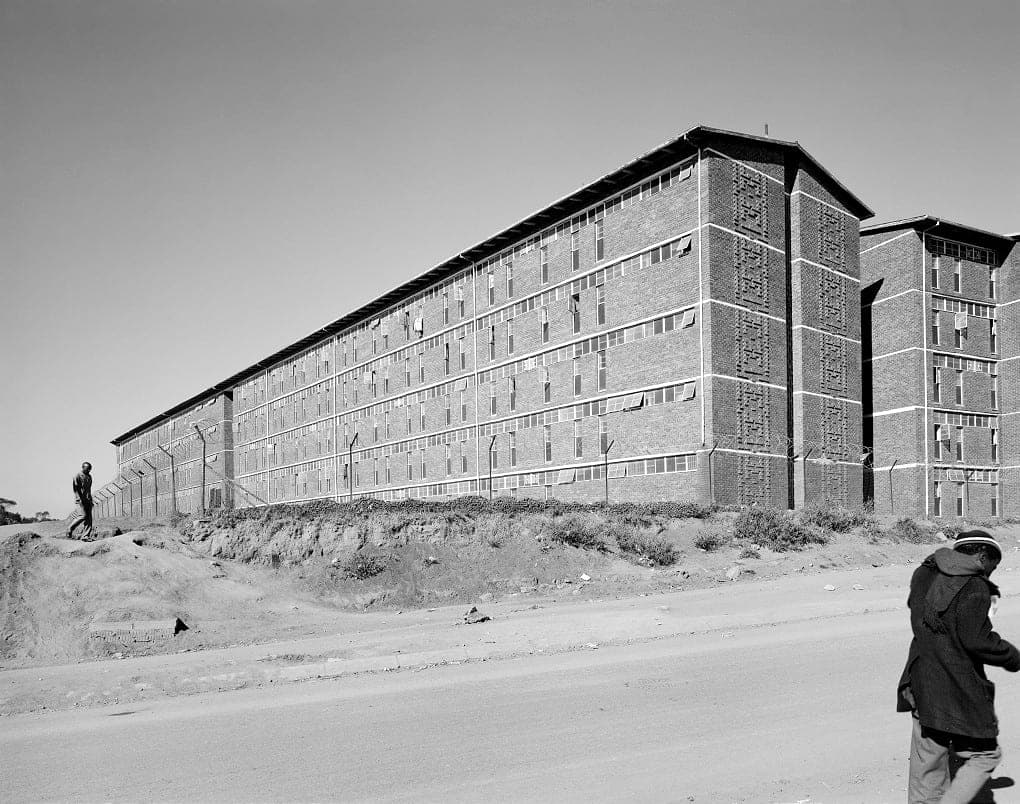
"Established early in the century, 'Alex' was one of the very few townships on the Witwatersrand in which Africans could acquire freehold title to land. By 1958 it had become hugely overcrowded with 98 000 people living on its one square mile. Government decided that it should house only those employed in certain areas north of Johannesburg and by 1963 had compulsorily removed 44 700 people. It was intended that 30 000 should live there as families and about 15 000 in hostels. Freehold rights were to be respected.
Then in 1963 a new plan was announced. All family accommodation and freehold rights were to be abolished. Alex was to become a township of single-sex hostels, six for men, six for women, each housing 2 500 people. No provision was to be made for Alex families wishing to stay together; somehow they would have to find accommodation in the area in which the head of the household was employed, which, given the influx control regulations and the restrictions on housing for Africans, would be almost impossible. No children were to be allowed to stay in the hostels and, obviously, no one of the opposite sex.'
Of the twelve hostels planned, only three were built: two for men and one for women. Some amelioration of their regimented harshness in the form of lounges, beer gardens, and other 'comforts' was attempted. Another facility' built into them was remotely controlled steel shutter doors that could rapidly isolate sections of the hostel if it became necessary to restrain the inmates or put down a riot.
The architect of the hostels, Ed Zickmann, told me that he had previously designed police quarters and high-density housing for the state. In the brief for the hostels he was told that they were needed because the policy of 'White by Night' was to be enforced in Johannesburg. To avoid homosexuality in the men's hostel he designed bedrooms to take odd numbers. 'I would have preferred to design family units', he said. 'I told them, guys I'm not happy with these hostels and the way they break up families. They said to me, "Yours is not to reason why ..." High-density, high-security hostels for workers were not new to South Africa. The first and longest-enduring was the Dutch East India Company's Slave Lodge in the centre of Cape Town. The modern' prototypes for single-sex hostels were the compounds used by the diamond and gold mining industries in the 19th and 20th centuries to enable them to house and control large numbers of men who came as migrant workers to the mines.
'spontaneous grouping of believers'. In 1994 the Indian, Coloured, and Black groups united and in 1996 the White section joined them in the complete unification of the church.
The hostels of Alex and other townships were built in pursuance of the apartheid dream that would have had all but a neglible number of African workers being commuters or migrants between their permanent homes in the bantustans and their jobs in the cities. The hostels fulfilled the worst fears of their numerous critics. Social disintegration, particularly among the men who lived in them, was widespread. Eventually, in the late 1980s, the hostels became sites of open warfare between inmates, who were mostly migrant workers, and the surrounding settled communities. Those conflicts often had political over-tones; the hostel men tended to be followers of the Zulu-based Inkatha Freedom Party, while the township residents were often sympathetic to the UDF and ANC.
This hostel was opened on 1 August 1972. In the late 1980s it became an Inkatha stronghold from which shots were fired on passersby." - David Goldblatt
Needs spotting
David Goldblatt (1930 -2018, South Africa), through his lens, chronicled the people, structures and landscapes of his country from 1948, through the rise of Afrikaner Nationalism, the apartheid regime and into the democratic era until his death in June, 2018. In particular, Goldblatt documented the people, landscapes and industry of the Witwatersrand, the resource-rich area in which he grew up and lived, where the local economy was based chiefly on mining. Art Institute Chicago will present an exhibition spanning Goldblatt’s seven-decade career titled No Ulterior Motive in December 2023.
Goldblatt's subject matter spanned the whole of the country geographically and politically from sweeping landscapes of the Karoo desert to the arduous commutes of migrant black workers, forced to live in racially segregated areas. His broadest series, which spans six decades of photography, examines how South Africans have expressed their values through the structures, physical and ideological, that they have built.