In contrast to the public and often mediated nature of war, domestic violence, as a scenario of conflict effecting the everyday experience of thousands of men, women and children in South Africa, is confined by definition to the environment of the home - is deemed ‘a private affair’, happens behind closed doors. On account of this ‘sanctum of the home’, as well as the stigma and fear of reprisal associated with any sort of disclosure, the victims as well as perpetrators of this conflict are to a large extent ‘faceless’.
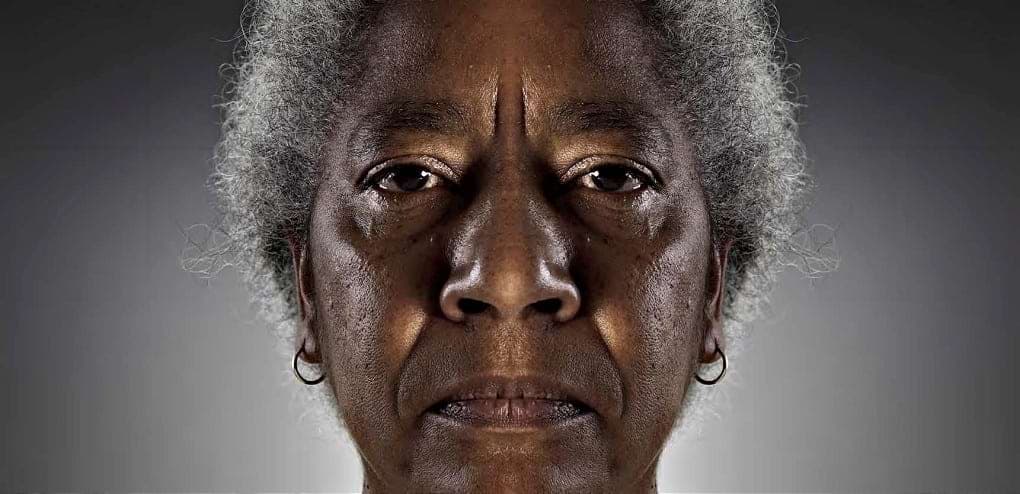
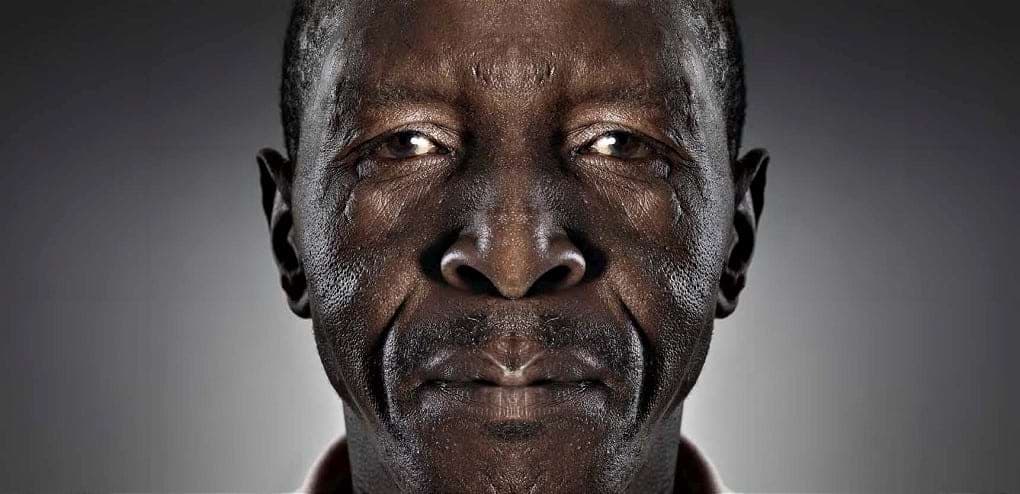
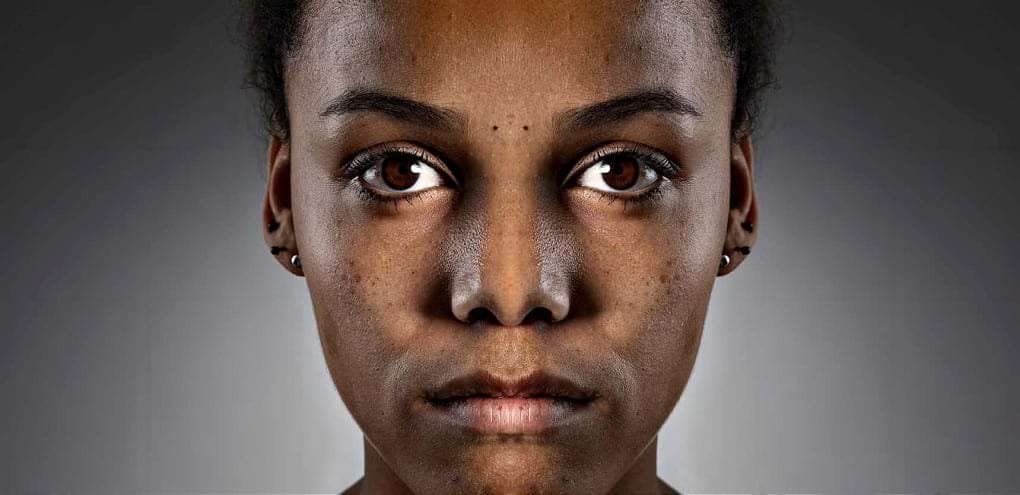
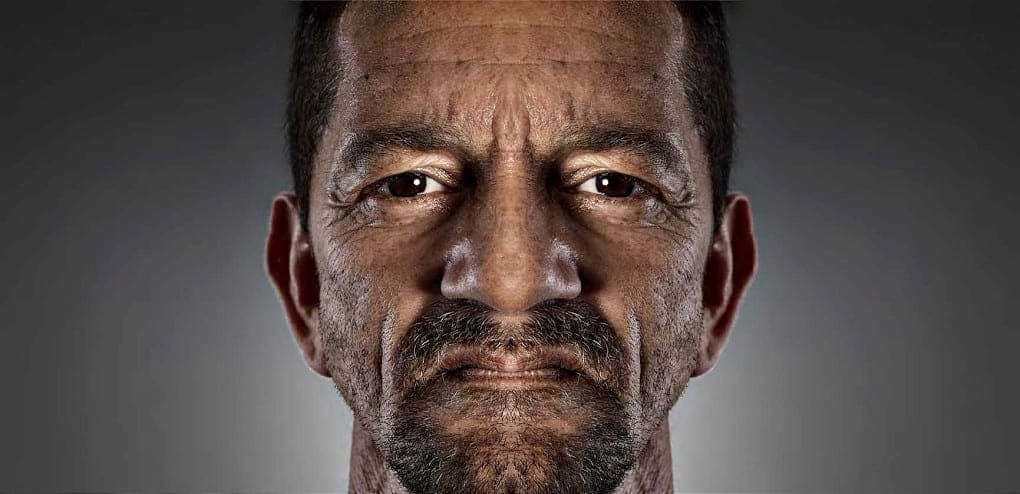
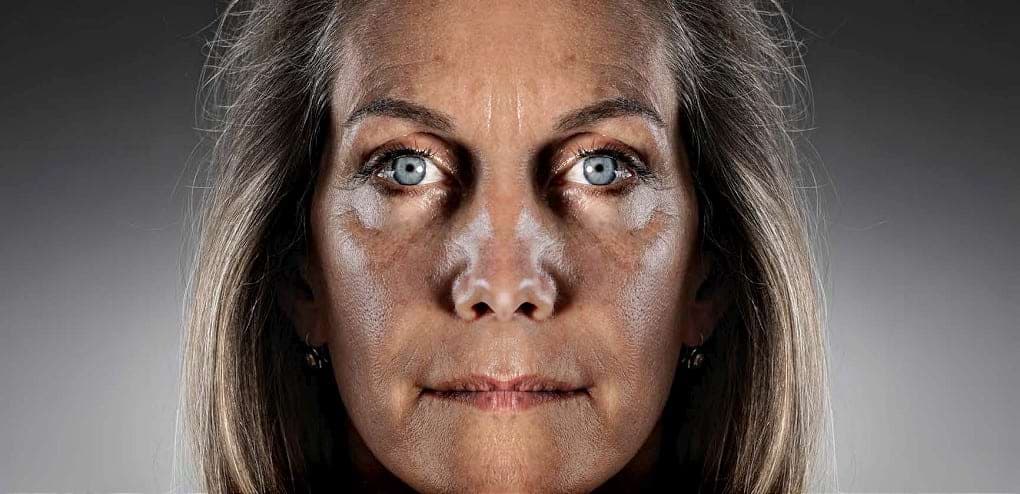
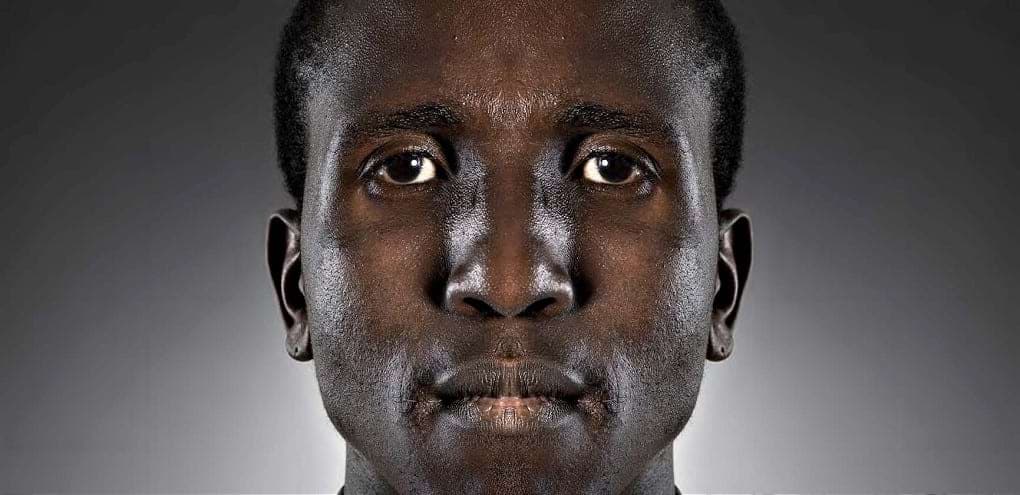
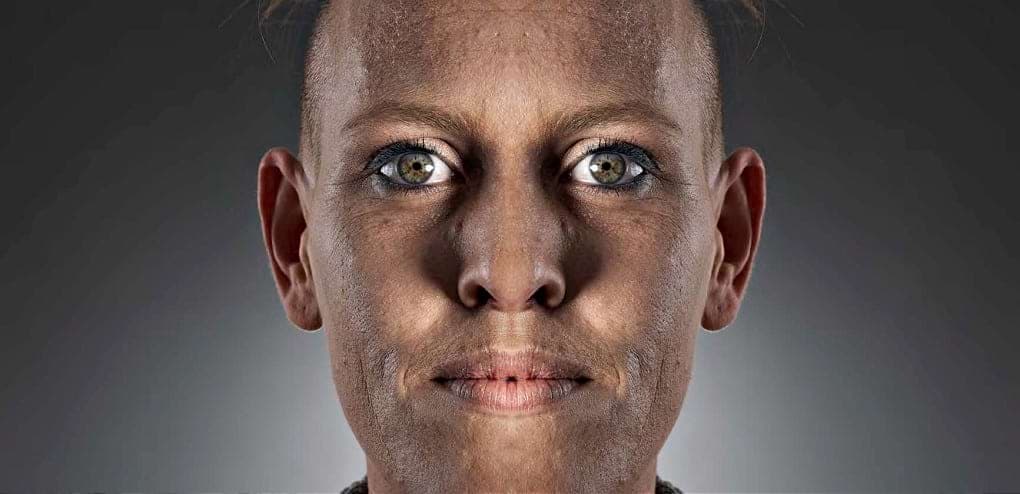
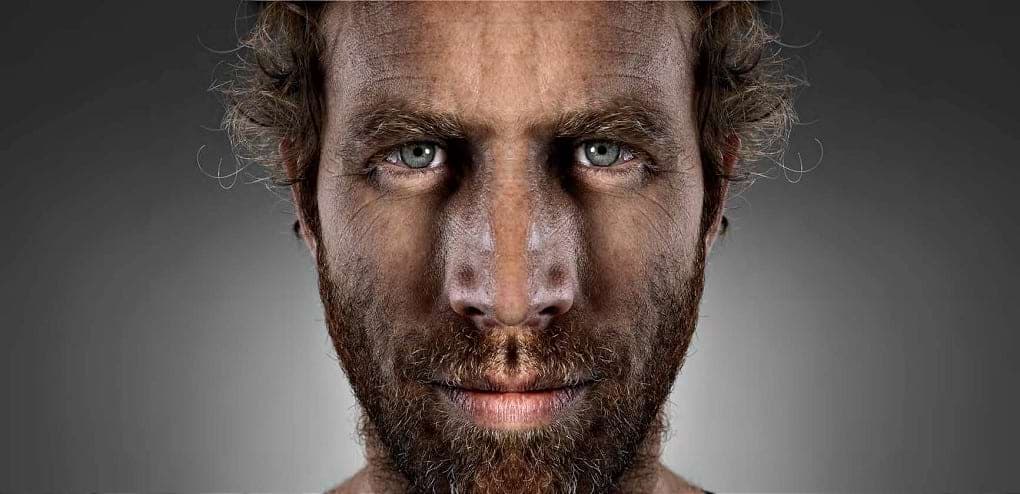
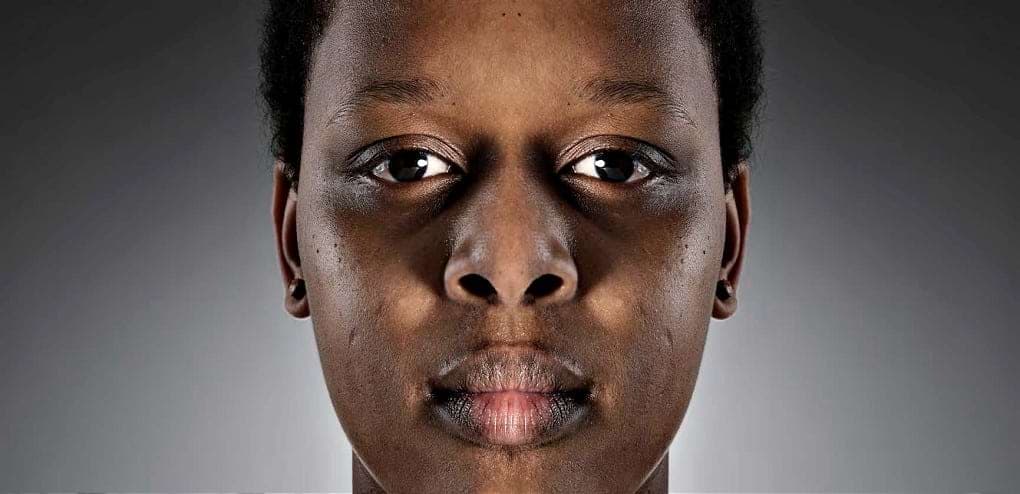
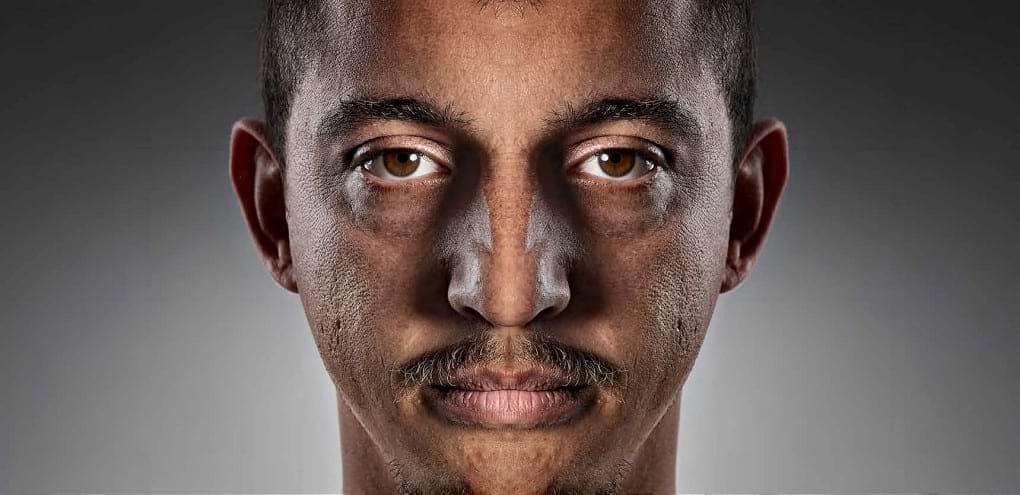
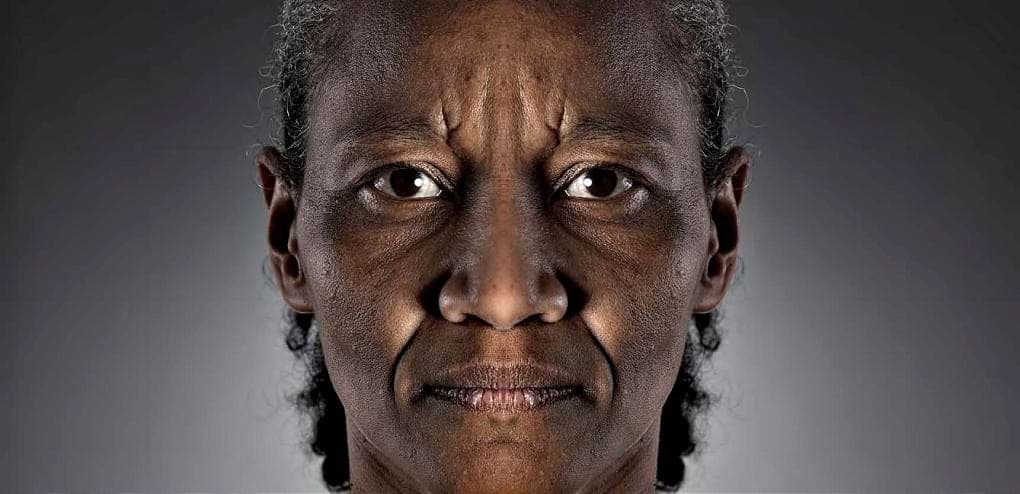
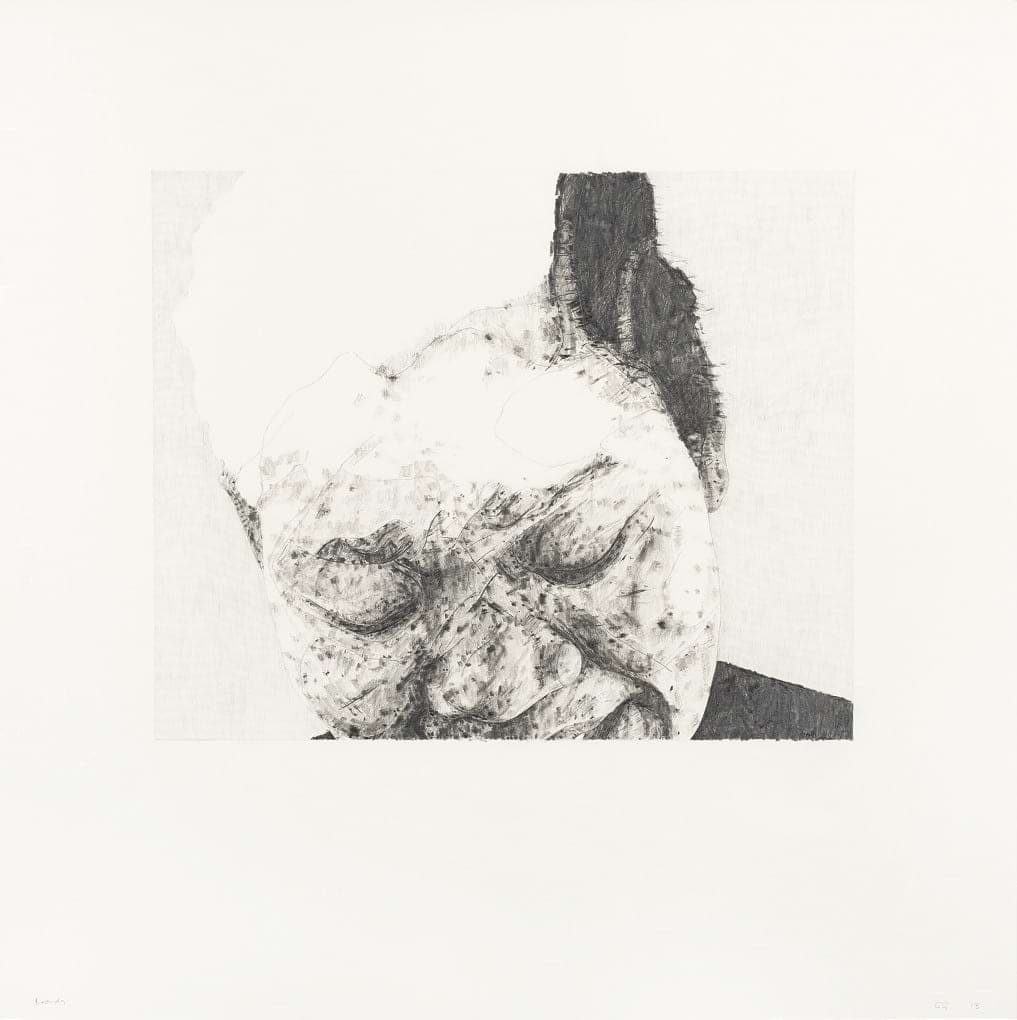
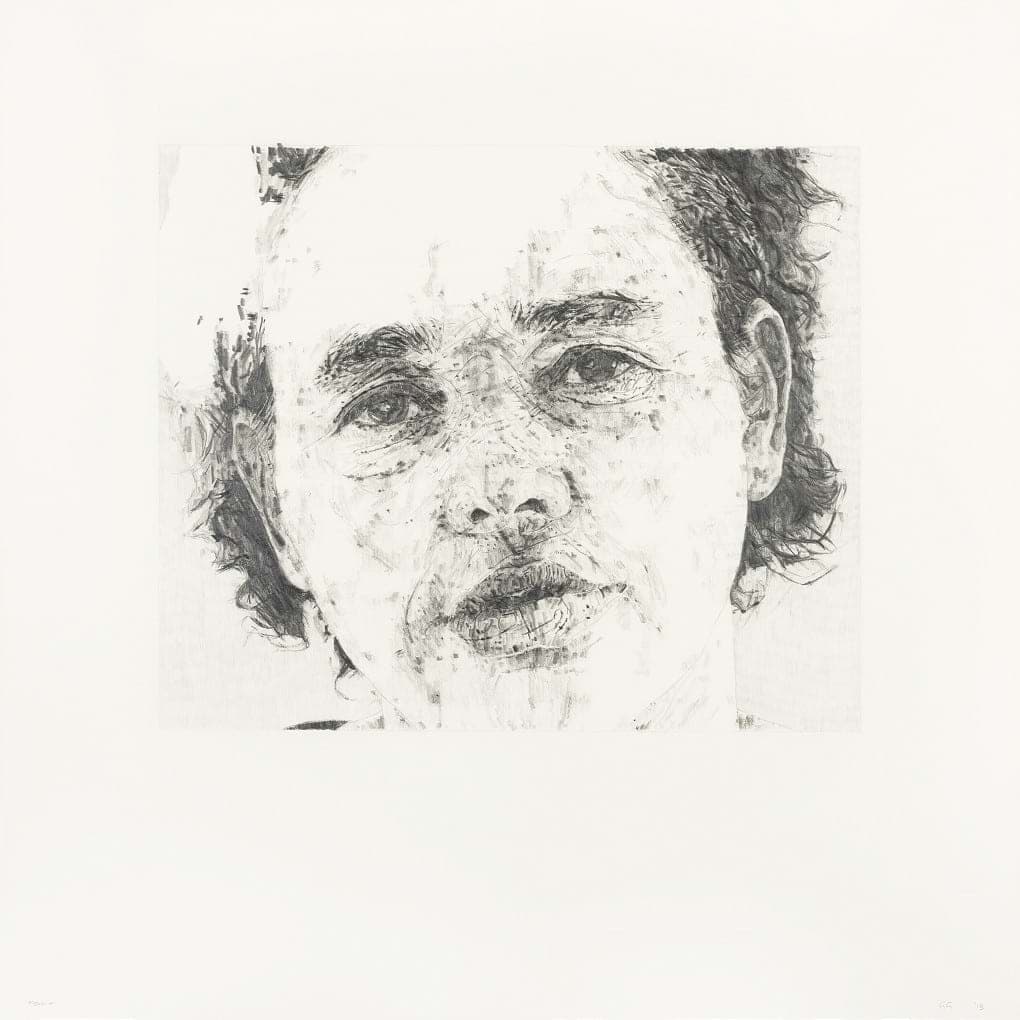
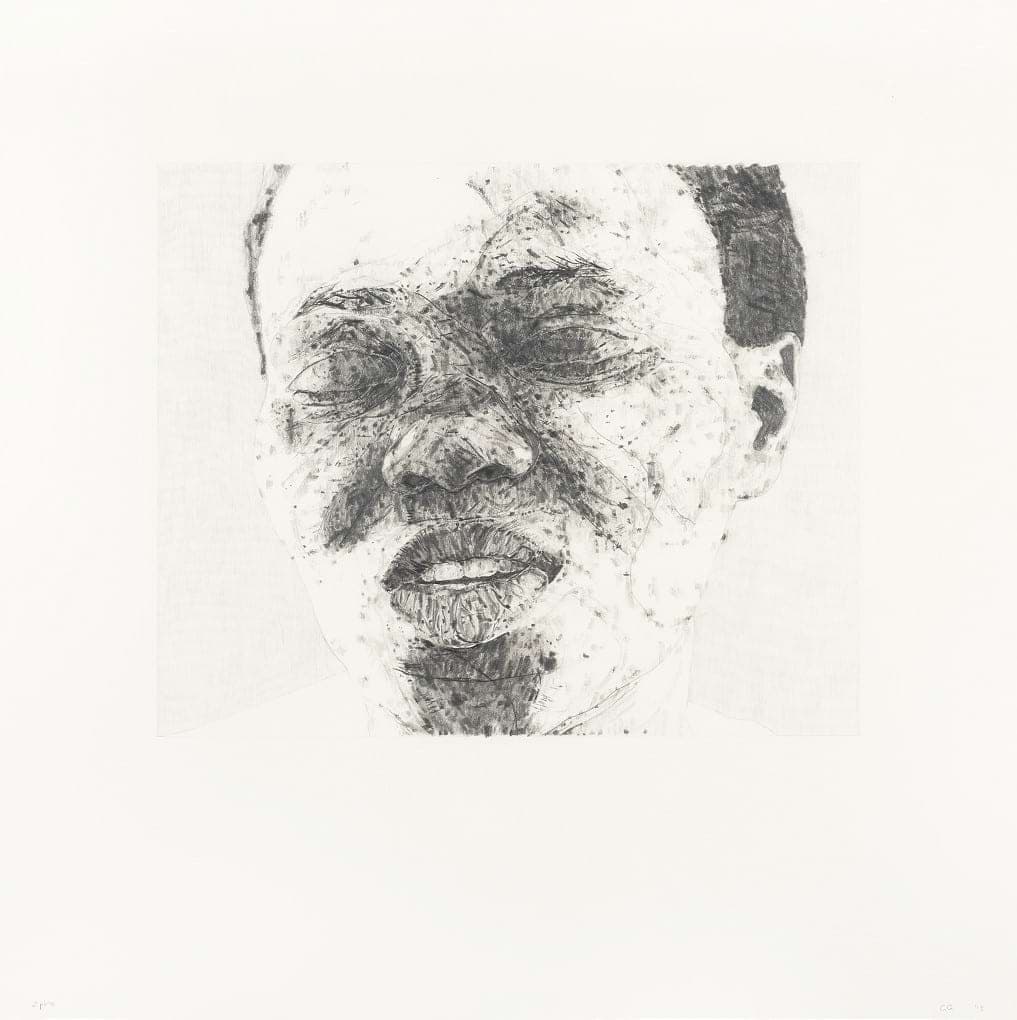
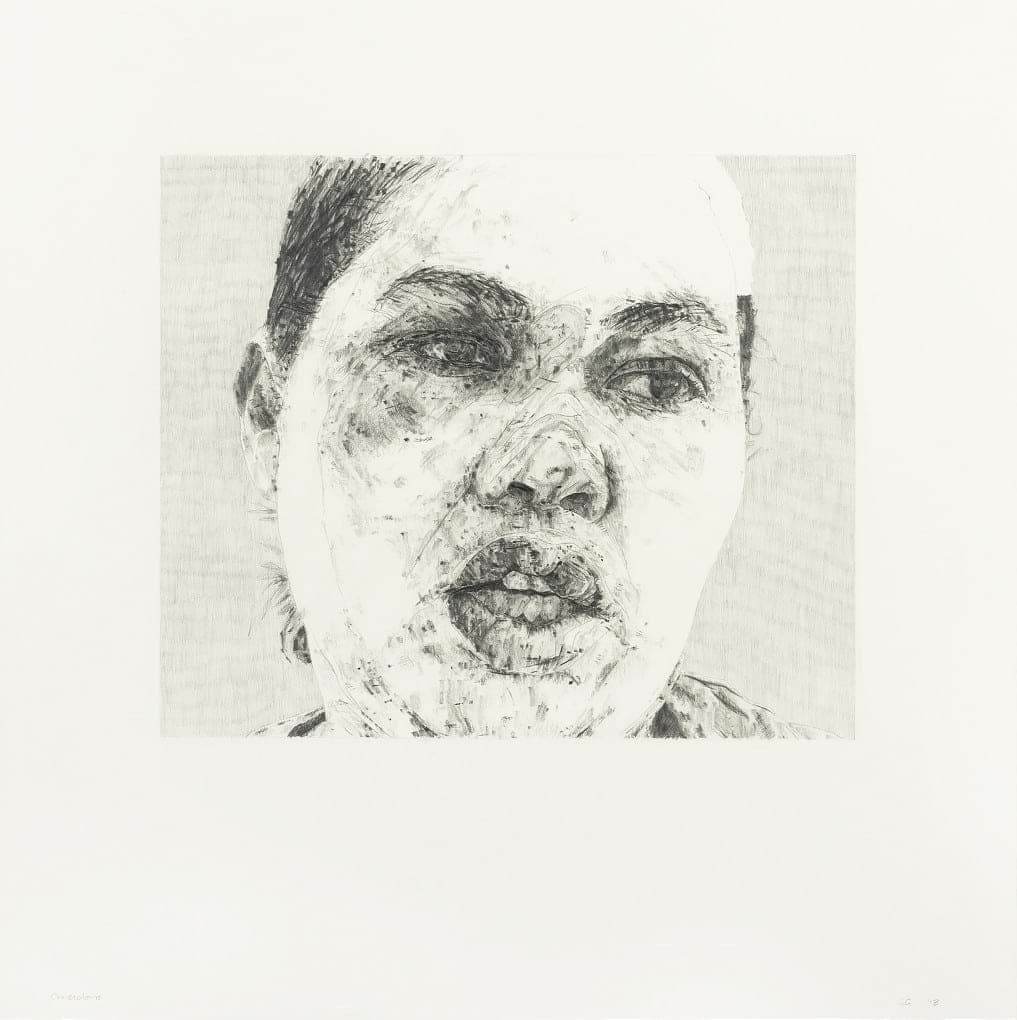
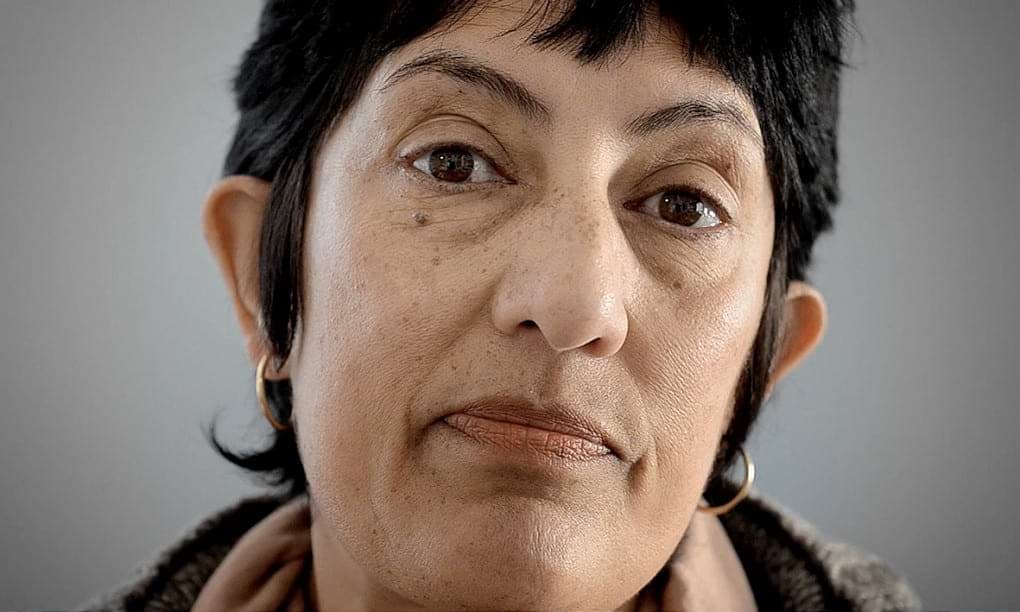
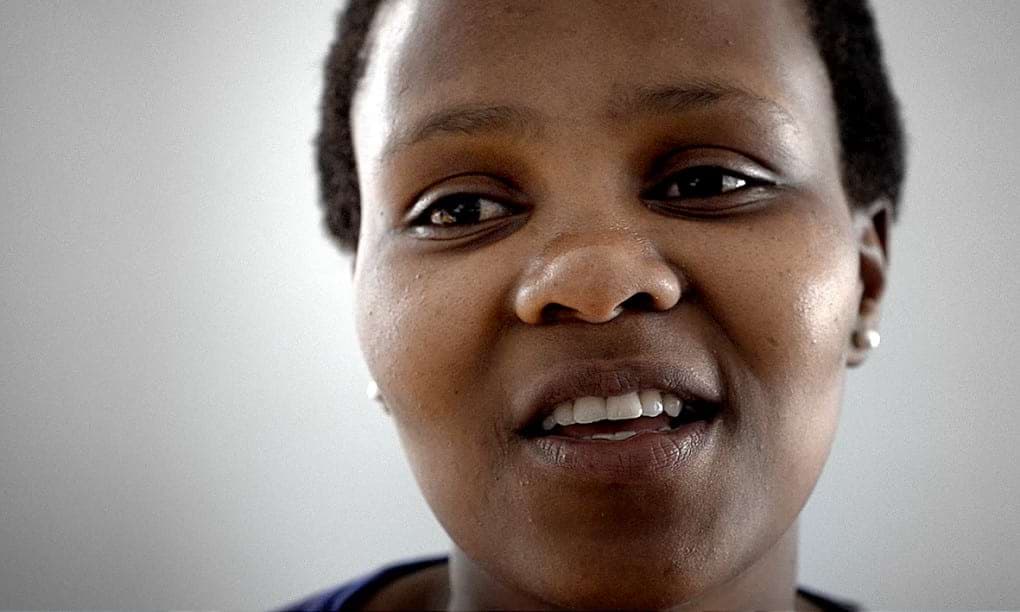
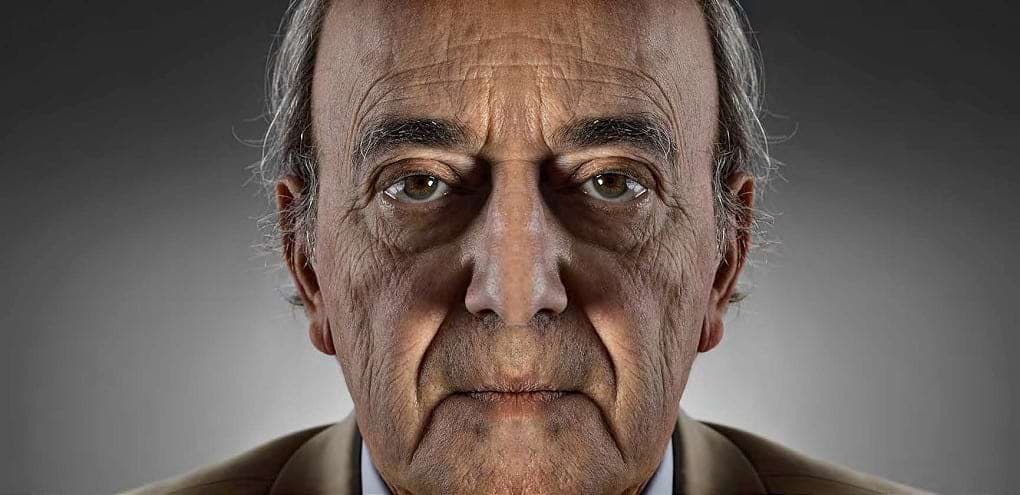
In a series of twelve oversized and strategically altered photographic portraits, Gabrielle Goliath presents a cross-section of ‘everyday South Africans’ as Faces of people who may or may not be victims or perpetrators of domestic violence. Casting her subjects in a shadow of doubt – each one a potential victim or perpetrator – Goliath invites the viewer to question the unsettling anonymity or ‘facelessness’ of this conflict.
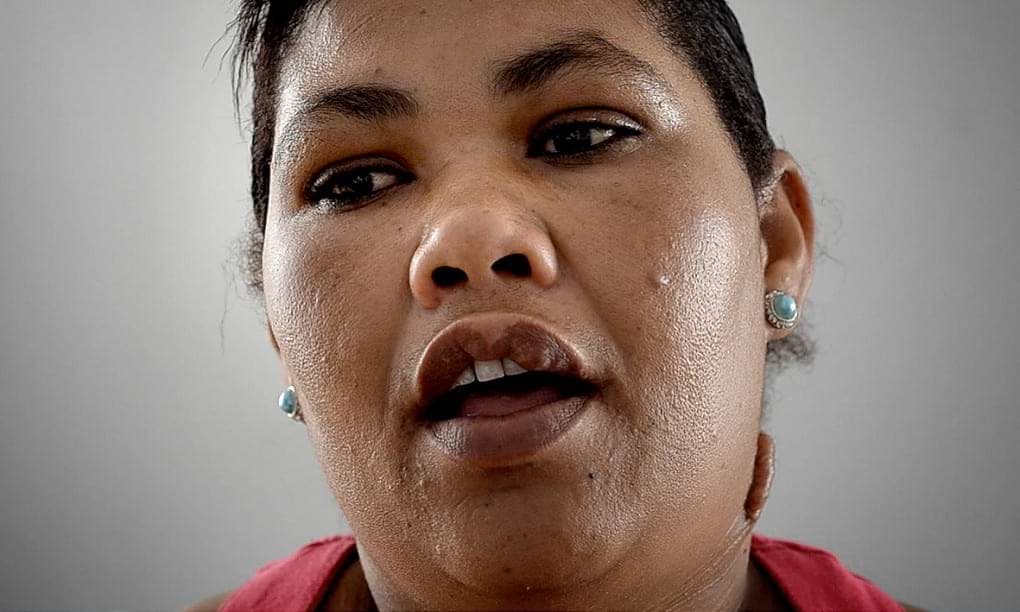
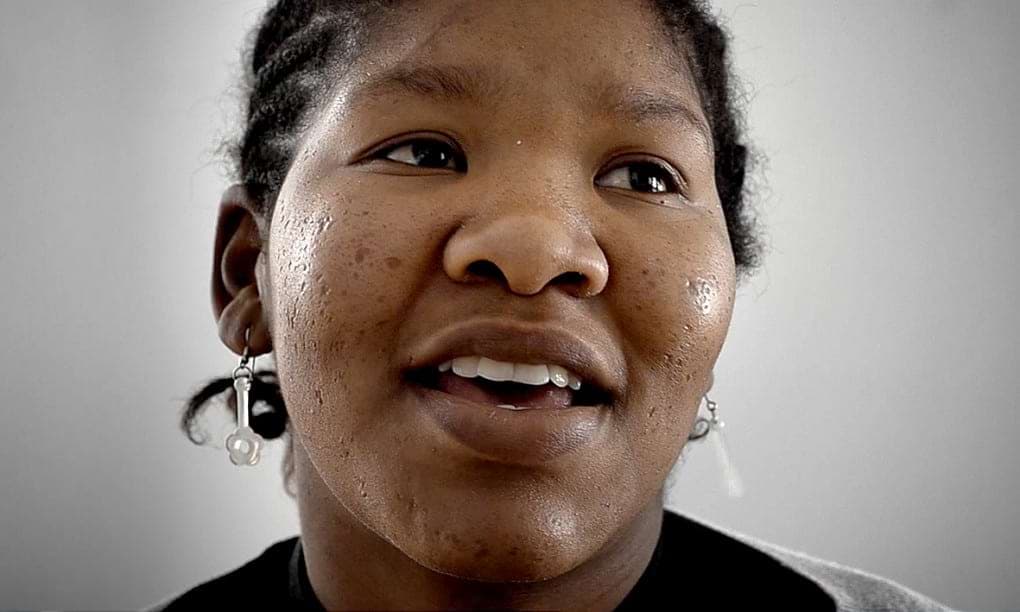
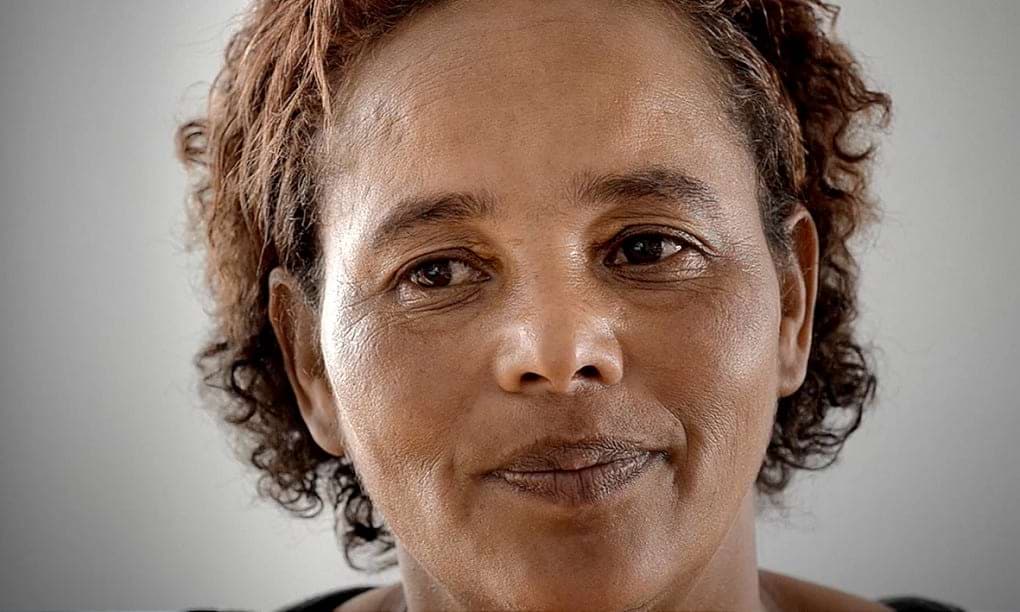
Five women bravely disclose their own experience of domestic violence in the cycle of video portraits that is Personal Accounts. Again, however, the portrait is strategically effected. In a violent but demonstrative act of censorship, Goliath extracts the words from these personal accounts, problematically muting the dialogue.
In Faces of War, Gabrielle Goliath’s provocative manipulation of the portrait seeks to visualise the unseen and ‘faceless’ nature of domestic violence, to articulate something of its silences.
In contrast to the public and often mediated nature of war, domestic violence, as a scenario of conflict effecting the everyday experience of thousands of men, women and children in South Africa, is confined by definition to the environment of the home - is deemed ‘a private affair’, happens behind closed doors. On account of this ‘sanctum of the home’, as well as the stigma and fear of reprisal associated with any sort of disclosure, the victims as well as perpetrators of this conflict are to a large extent ‘faceless’.
In a series of twelve oversized and strategically altered photographic portraits, Gabrielle Goliath presents a cross-section of ‘everyday South Africans’ as Faces of people who may or may not be victims or perpetrators of domestic violence. Casting her subjects in a shadow of doubt – each one a potential victim or perpetrator – Goliath invites the viewer to question the unsettling anonymity or ‘facelessness’ of this conflict.
Five women bravely disclose their own experience of domestic violence in the cycle of video portraits that is Personal Accounts. Again, however, the portrait is strategically effected. In a violent but demonstrative act of censorship, Goliath extracts the words from these personal accounts, problematically muting the dialogue.
In Faces of War, Gabrielle Goliath’s provocative manipulation of the portrait seeks to visualise the unseen and ‘faceless’ nature of domestic violence, to articulate something of its silences.
In contrast to the public and often mediated nature of war, domestic violence, as a scenario of conflict effecting the everyday experience of thousands of men, women and children in South Africa, is confined by definition to the environment of the home - is deemed ‘a private affair’, happens behind closed doors. On account of this ‘sanctum of the home’, as well as the stigma and fear of reprisal associated with any sort of disclosure, the victims as well as perpetrators of this conflict are to a large extent ‘faceless’.
In a series of twelve oversized and strategically altered photographic portraits, Gabrielle Goliath presents a cross-section of ‘everyday South Africans’ as Faces of people who may or may not be victims or perpetrators of domestic violence. Casting her subjects in a shadow of doubt – each one a potential victim or perpetrator – Goliath invites the viewer to question the unsettling anonymity or ‘facelessness’ of this conflict.
Five women bravely disclose their own experience of domestic violence in the cycle of video portraits that is Personal Accounts. Again, however, the portrait is strategically effected. In a violent but demonstrative act of censorship, Goliath extracts the words from these personal accounts, problematically muting the dialogue.
In Faces of War, Gabrielle Goliath’s provocative manipulation of the portrait seeks to visualise the unseen and ‘faceless’ nature of domestic violence, to articulate something of its silences.
In contrast to the public and often mediated nature of war, domestic violence, as a scenario of conflict effecting the everyday experience of thousands of men, women and children in South Africa, is confined by definition to the environment of the home - is deemed ‘a private affair’, happens behind closed doors. On account of this ‘sanctum of the home’, as well as the stigma and fear of reprisal associated with any sort of disclosure, the victims as well as perpetrators of this conflict are to a large extent ‘faceless’.
In a series of twelve oversized and strategically altered photographic portraits, Gabrielle Goliath presents a cross-section of ‘everyday South Africans’ as Faces of people who may or may not be victims or perpetrators of domestic violence. Casting her subjects in a shadow of doubt – each one a potential victim or perpetrator – Goliath invites the viewer to question the unsettling anonymity or ‘facelessness’ of this conflict.
Five women bravely disclose their own experience of domestic violence in the cycle of video portraits that is Personal Accounts. Again, however, the portrait is strategically effected. In a violent but demonstrative act of censorship, Goliath extracts the words from these personal accounts, problematically muting the dialogue.
In Faces of War, Gabrielle Goliath’s provocative manipulation of the portrait seeks to visualise the unseen and ‘faceless’ nature of domestic violence, to articulate something of its silences.
In contrast to the public and often mediated nature of war, domestic violence, as a scenario of conflict effecting the everyday experience of thousands of men, women and children in South Africa, is confined by definition to the environment of the home - is deemed ‘a private affair’, happens behind closed doors. On account of this ‘sanctum of the home’, as well as the stigma and fear of reprisal associated with any sort of disclosure, the victims as well as perpetrators of this conflict are to a large extent ‘faceless’.
In a series of twelve oversized and strategically altered photographic portraits, Gabrielle Goliath presents a cross-section of ‘everyday South Africans’ as Faces of people who may or may not be victims or perpetrators of domestic violence. Casting her subjects in a shadow of doubt – each one a potential victim or perpetrator – Goliath invites the viewer to question the unsettling anonymity or ‘facelessness’ of this conflict.
Five women bravely disclose their own experience of domestic violence in the cycle of video portraits that is Personal Accounts. Again, however, the portrait is strategically effected. In a violent but demonstrative act of censorship, Goliath extracts the words from these personal accounts, problematically muting the dialogue.
In Faces of War, Gabrielle Goliath’s provocative manipulation of the portrait seeks to visualise the unseen and ‘faceless’ nature of domestic violence, to articulate something of its silences.
In contrast to the public and often mediated nature of war, domestic violence, as a scenario of conflict effecting the everyday experience of thousands of men, women and children in South Africa, is confined by definition to the environment of the home - is deemed ‘a private affair’, happens behind closed doors. On account of this ‘sanctum of the home’, as well as the stigma and fear of reprisal associated with any sort of disclosure, the victims as well as perpetrators of this conflict are to a large extent ‘faceless’.
In a series of twelve oversized and strategically altered photographic portraits, Gabrielle Goliath presents a cross-section of ‘everyday South Africans’ as Faces of people who may or may not be victims or perpetrators of domestic violence. Casting her subjects in a shadow of doubt – each one a potential victim or perpetrator – Goliath invites the viewer to question the unsettling anonymity or ‘facelessness’ of this conflict.
Five women bravely disclose their own experience of domestic violence in the cycle of video portraits that is Personal Accounts. Again, however, the portrait is strategically effected. In a violent but demonstrative act of censorship, Goliath extracts the words from these personal accounts, problematically muting the dialogue.
In Faces of War, Gabrielle Goliath’s provocative manipulation of the portrait seeks to visualise the unseen and ‘faceless’ nature of domestic violence, to articulate something of its silences.
In contrast to the public and often mediated nature of war, domestic violence, as a scenario of conflict effecting the everyday experience of thousands of men, women and children in South Africa, is confined by definition to the environment of the home - is deemed ‘a private affair’, happens behind closed doors. On account of this ‘sanctum of the home’, as well as the stigma and fear of reprisal associated with any sort of disclosure, the victims as well as perpetrators of this conflict are to a large extent ‘faceless’.
In a series of twelve oversized and strategically altered photographic portraits, Gabrielle Goliath presents a cross-section of ‘everyday South Africans’ as Faces of people who may or may not be victims or perpetrators of domestic violence. Casting her subjects in a shadow of doubt – each one a potential victim or perpetrator – Goliath invites the viewer to question the unsettling anonymity or ‘facelessness’ of this conflict.
Five women bravely disclose their own experience of domestic violence in the cycle of video portraits that is Personal Accounts. Again, however, the portrait is strategically effected. In a violent but demonstrative act of censorship, Goliath extracts the words from these personal accounts, problematically muting the dialogue.
In Faces of War, Gabrielle Goliath’s provocative manipulation of the portrait seeks to visualise the unseen and ‘faceless’ nature of domestic violence, to articulate something of its silences.
In contrast to the public and often mediated nature of war, domestic violence, as a scenario of conflict effecting the everyday experience of thousands of men, women and children in South Africa, is confined by definition to the environment of the home - is deemed ‘a private affair’, happens behind closed doors. On account of this ‘sanctum of the home’, as well as the stigma and fear of reprisal associated with any sort of disclosure, the victims as well as perpetrators of this conflict are to a large extent ‘faceless’.
In a series of twelve oversized and strategically altered photographic portraits, Gabrielle Goliath presents a cross-section of ‘everyday South Africans’ as Faces of people who may or may not be victims or perpetrators of domestic violence. Casting her subjects in a shadow of doubt – each one a potential victim or perpetrator – Goliath invites the viewer to question the unsettling anonymity or ‘facelessness’ of this conflict.
Five women bravely disclose their own experience of domestic violence in the cycle of video portraits that is Personal Accounts. Again, however, the portrait is strategically effected. In a violent but demonstrative act of censorship, Goliath extracts the words from these personal accounts, problematically muting the dialogue.
In Faces of War, Gabrielle Goliath’s provocative manipulation of the portrait seeks to visualise the unseen and ‘faceless’ nature of domestic violence, to articulate something of its silences.
In contrast to the public and often mediated nature of war, domestic violence, as a scenario of conflict effecting the everyday experience of thousands of men, women and children in South Africa, is confined by definition to the environment of the home - is deemed ‘a private affair’, happens behind closed doors. On account of this ‘sanctum of the home’, as well as the stigma and fear of reprisal associated with any sort of disclosure, the victims as well as perpetrators of this conflict are to a large extent ‘faceless’.
In a series of twelve oversized and strategically altered photographic portraits, Gabrielle Goliath presents a cross-section of ‘everyday South Africans’ as Faces of people who may or may not be victims or perpetrators of domestic violence. Casting her subjects in a shadow of doubt – each one a potential victim or perpetrator – Goliath invites the viewer to question the unsettling anonymity or ‘facelessness’ of this conflict.
Five women bravely disclose their own experience of domestic violence in the cycle of video portraits that is Personal Accounts. Again, however, the portrait is strategically effected. In a violent but demonstrative act of censorship, Goliath extracts the words from these personal accounts, problematically muting the dialogue.
In Faces of War, Gabrielle Goliath’s provocative manipulation of the portrait seeks to visualise the unseen and ‘faceless’ nature of domestic violence, to articulate something of its silences.
In contrast to the public and often mediated nature of war, domestic violence, as a scenario of conflict effecting the everyday experience of thousands of men, women and children in South Africa, is confined by definition to the environment of the home - is deemed ‘a private affair’, happens behind closed doors. On account of this ‘sanctum of the home’, as well as the stigma and fear of reprisal associated with any sort of disclosure, the victims as well as perpetrators of this conflict are to a large extent ‘faceless’.
In a series of twelve oversized and strategically altered photographic portraits, Gabrielle Goliath presents a cross-section of ‘everyday South Africans’ as Faces of people who may or may not be victims or perpetrators of domestic violence. Casting her subjects in a shadow of doubt – each one a potential victim or perpetrator – Goliath invites the viewer to question the unsettling anonymity or ‘facelessness’ of this conflict.
Five women bravely disclose their own experience of domestic violence in the cycle of video portraits that is Personal Accounts. Again, however, the portrait is strategically effected. In a violent but demonstrative act of censorship, Goliath extracts the words from these personal accounts, problematically muting the dialogue.
In Faces of War, Gabrielle Goliath’s provocative manipulation of the portrait seeks to visualise the unseen and ‘faceless’ nature of domestic violence, to articulate something of its silences.
It was in Sontag’s treatise on the visual representation of war and violence in contemporary culture that Goliath first came across Ernst Friedrich’s Krieg dem Kriege, which translates as War Against War. Friedrich was a German pacifist and a member of various radical collectives, which were precursors to the anti-war movement of the 1960s and the ongoing peace movement today. Horrified by the unprecedented brutality and vast destruction of World War I,
he compiled and published a collection of images depicting the atrocities and human suffering produced by the war. Successfully suppressed up until that point, these photographs and related visual artifacts brought the public face to face with the horror of war. By means of the mass circulation of these images, Friedrich wanted to expose the lies and hypocrisy of the political and economic forces that instigated the war. It was his hope that when people saw the brutish realities of warfare, they would become more critical and actively opposed to the military and militarism. ‘Unfortunately other wars have followed the “war to end all wars”. War continued,’ says Goliath. ‘But Friedrich’s intention to unmask war got me thinking about how to expose a conflict like domestic violence that happens behind closed doors. For so many reasons it remains undisclosed – fear, stigma, economic reliance, fear of reprisal.’ The inability to stop loving somebody who keeps on hurting you is often paramount among these reasons.
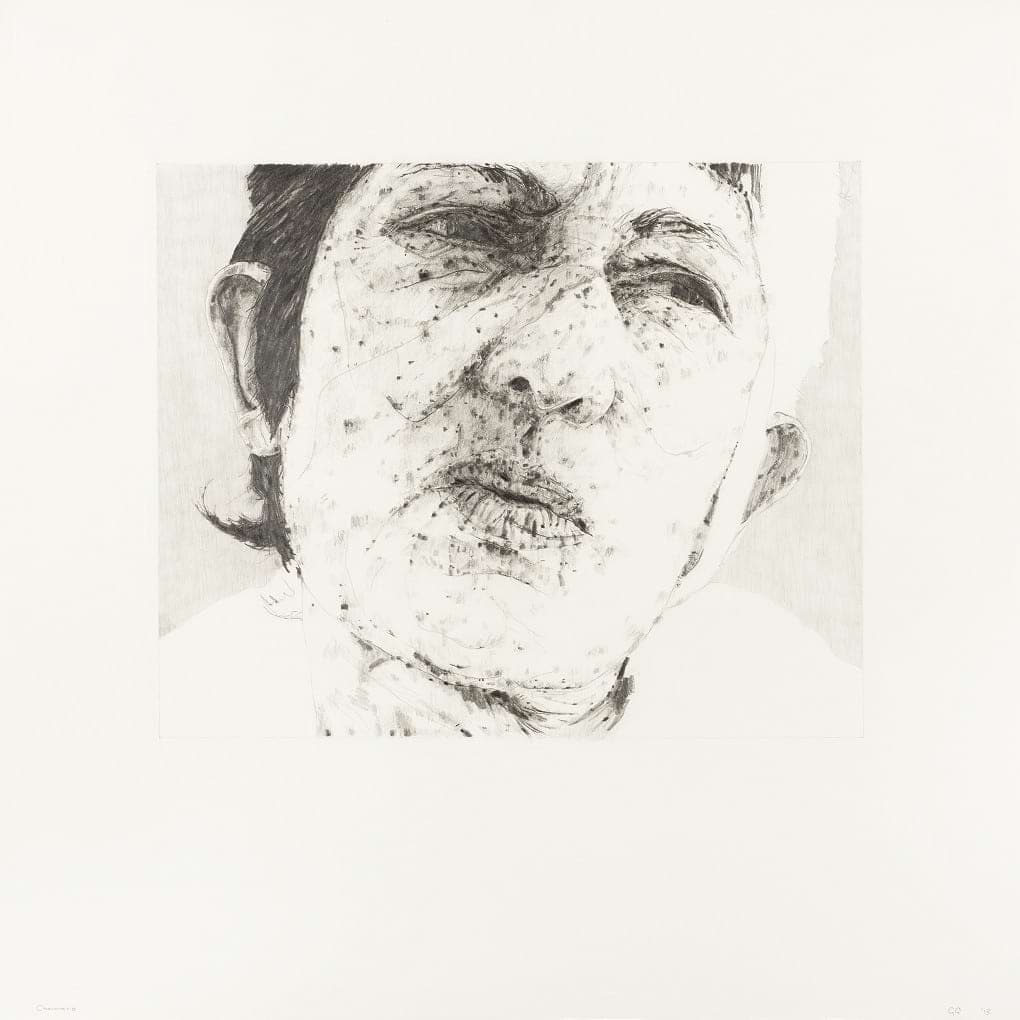
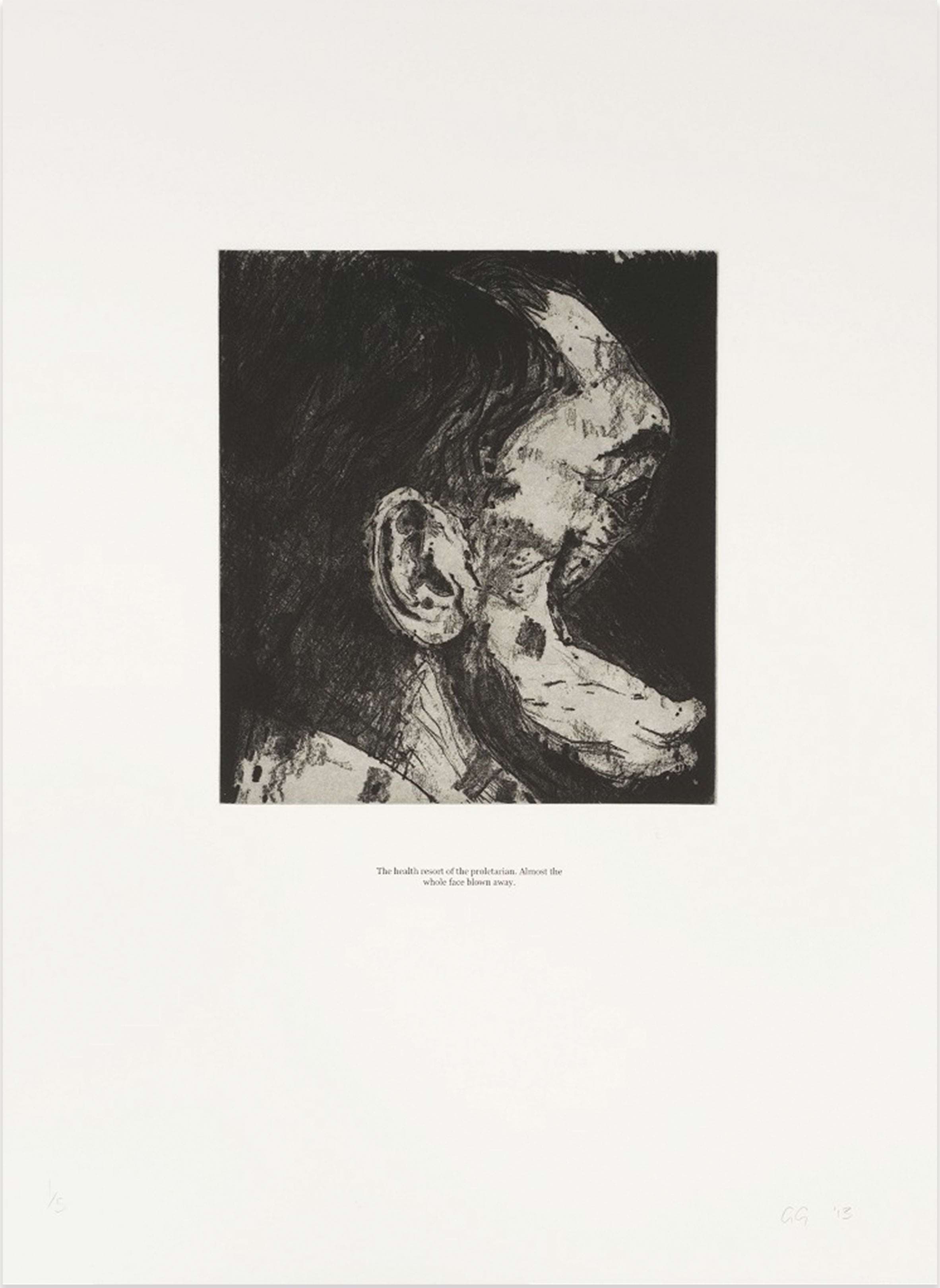
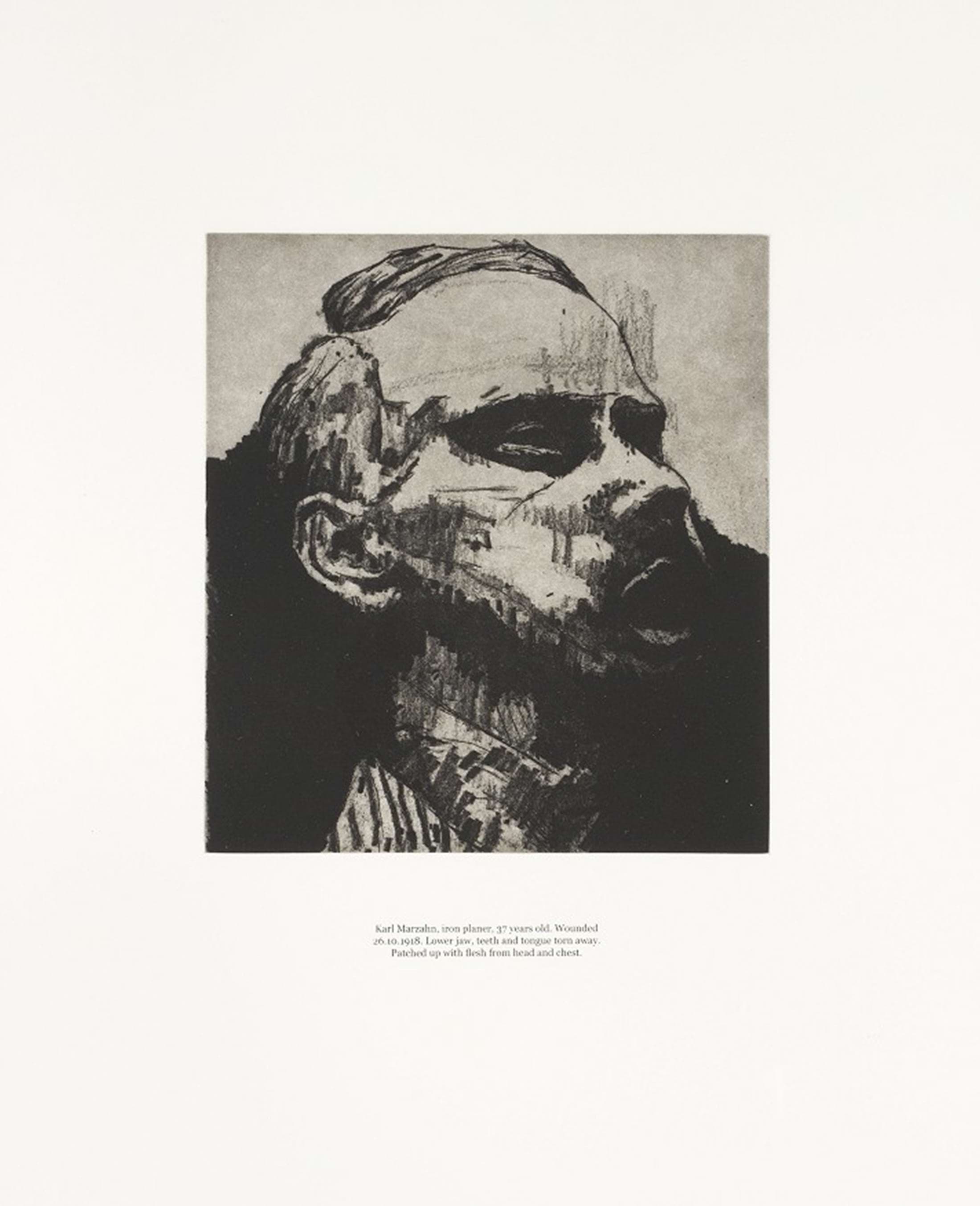
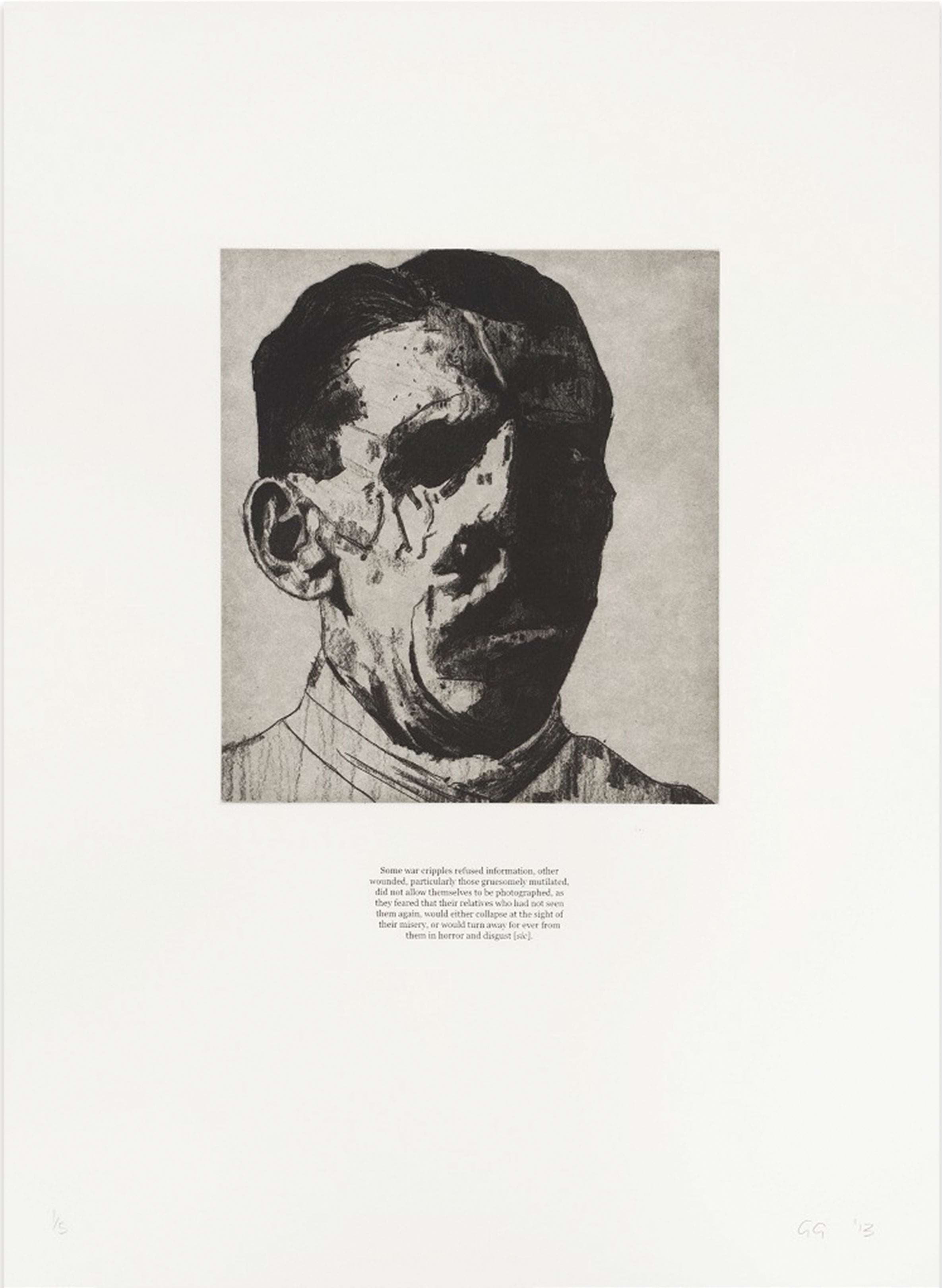
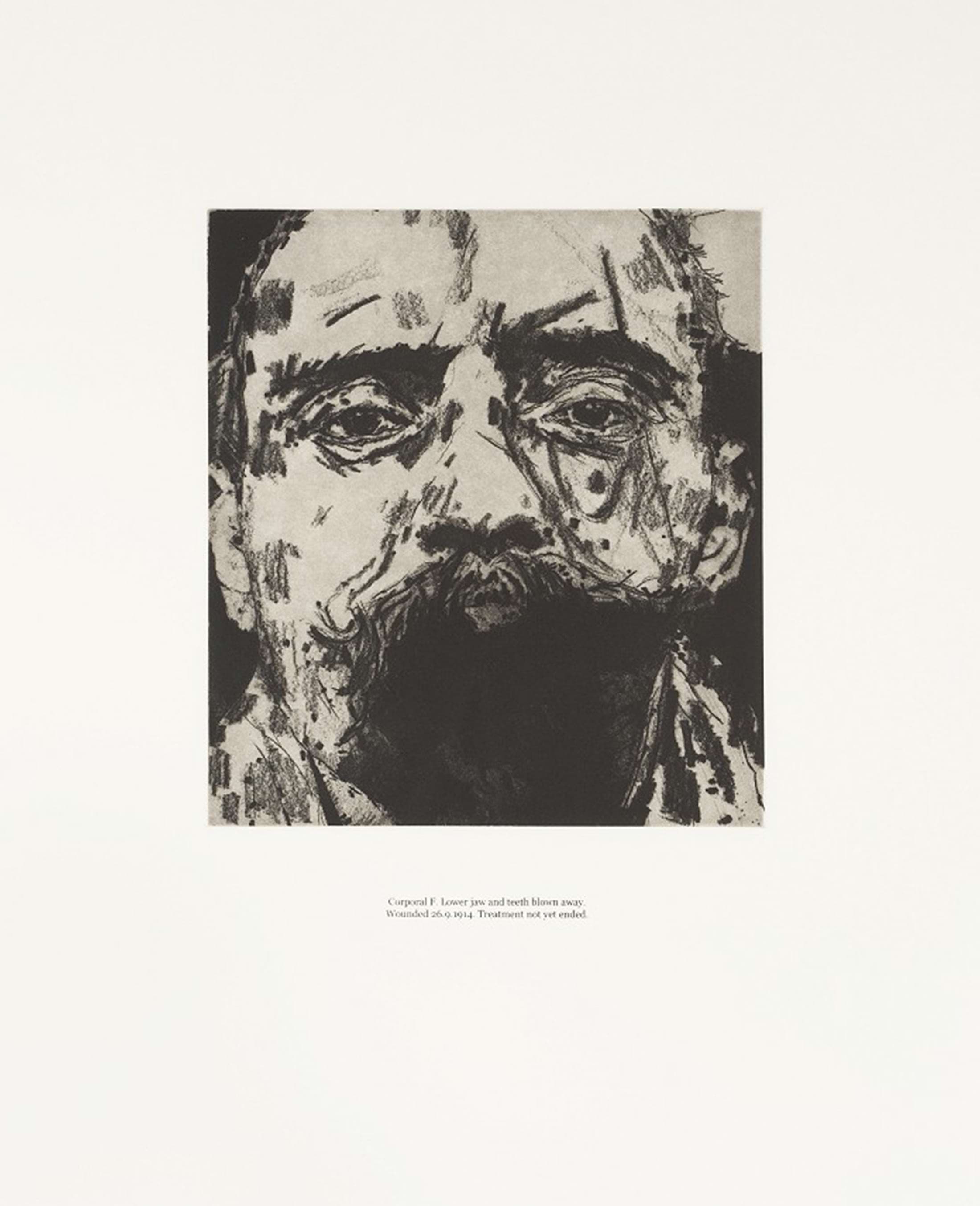
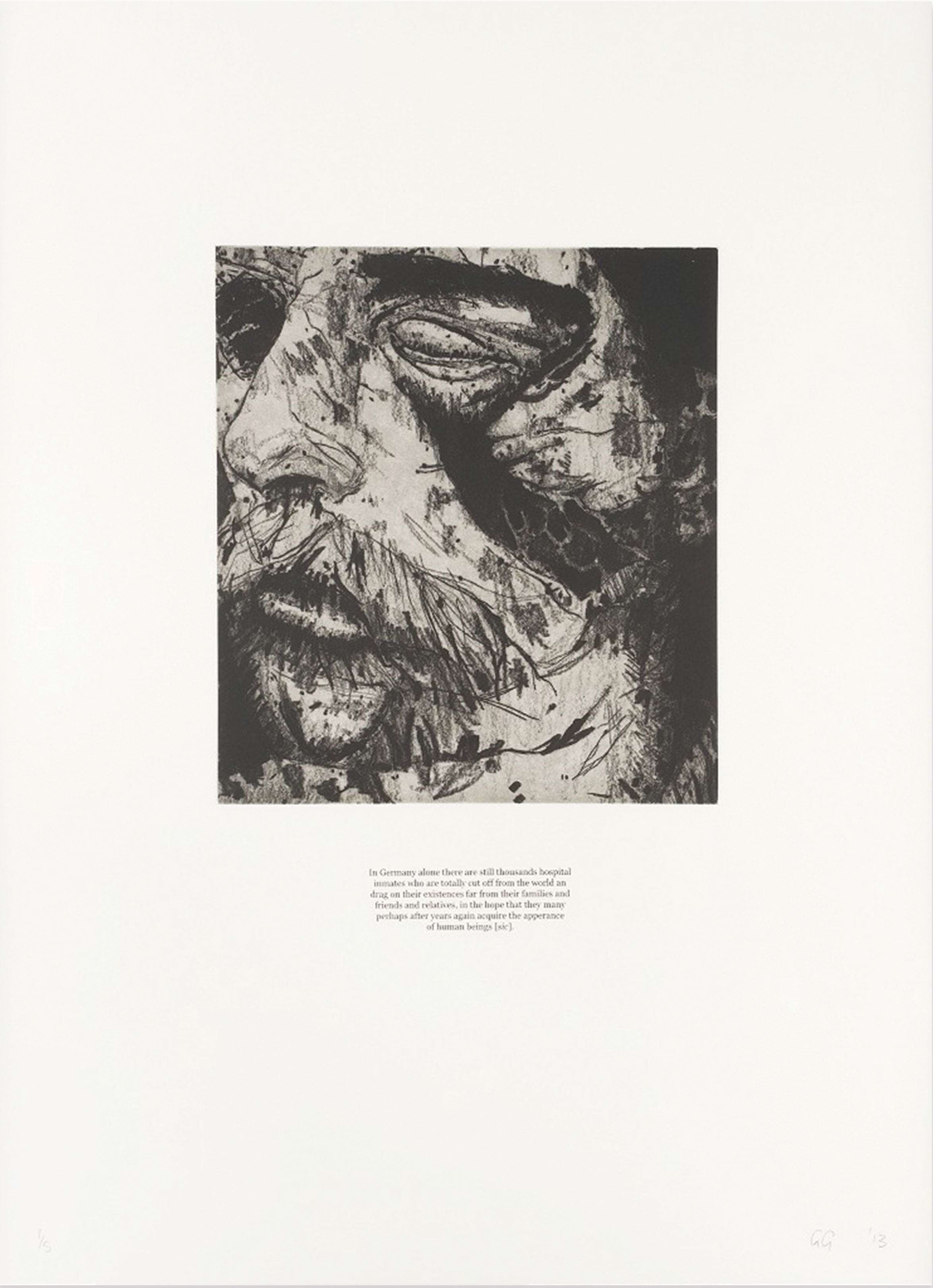
Goliath began with the etchings. Intimate, immaculately rendered, small-scale interpretations of the portraits from Friedrich’s visual polemic – men with their jaws blown off and their faces ripped apart... The images are accompanied by detailed descriptive captions from Friedrich’s book.
No such detail accompanies the Faces of War portraits – only the actual, true-to-life names of the people who appear in the photo- graphs and videos. What stands out about these portraits is
everything we don’t know about them – the information, both visual and verbal, that is missing from the picture. Not only is it missing; it has been purposely erased, extracted, redacted, so that the gaps in information become oddly prominent. What is not known comes to compete with or even exceed what is known, and the absence of information echoes the veil of secrecy that shrouds the act.
It was in Sontag’s treatise on the visual representation of war and violence in contemporary culture that Goliath first came across Ernst Friedrich’s Krieg dem Kriege, which translates as War Against War. Friedrich was a German pacifist and a member of various radical collectives, which were precursors to the anti-war movement of the 1960s and the ongoing peace movement today. Horrified by the unprecedented brutality and vast destruction of World War I,
he compiled and published a collection of images depicting the atrocities and human suffering produced by the war. Successfully suppressed up until that point, these photographs and related visual artifacts brought the public face to face with the horror of war. By means of the mass circulation of these images, Friedrich wanted to expose the lies and hypocrisy of the political and economic forces that instigated the war. It was his hope that when people saw the brutish realities of warfare, they would become more critical and actively opposed to the military and militarism. ‘Unfortunately other wars have followed the “war to end all wars”. War continued,’ says Goliath. ‘But Friedrich’s intention to unmask war got me thinking about how to expose a conflict like domestic violence that happens behind closed doors. For so many reasons it remains undisclosed – fear, stigma, economic reliance, fear of reprisal.’ The inability to stop loving somebody who keeps on hurting you is often paramount among these reasons.
Goliath began with the etchings. Intimate, immaculately rendered, small-scale interpretations of the portraits from Friedrich’s visual polemic – men with their jaws blown off and their faces ripped apart... The images are accompanied by detailed descriptive captions from Friedrich’s book.
No such detail accompanies the Faces of War portraits – only the actual, true-to-life names of the people who appear in the photo- graphs and videos. What stands out about these portraits is
everything we don’t know about them – the information, both visual and verbal, that is missing from the picture. Not only is it missing; it has been purposely erased, extracted, redacted, so that the gaps in information become oddly prominent. What is not known comes to compete with or even exceed what is known, and the absence of information echoes the veil of secrecy that shrouds the act.
It was in Sontag’s treatise on the visual representation of war and violence in contemporary culture that Goliath first came across Ernst Friedrich’s Krieg dem Kriege, which translates as War Against War. Friedrich was a German pacifist and a member of various radical collectives, which were precursors to the anti-war movement of the 1960s and the ongoing peace movement today. Horrified by the unprecedented brutality and vast destruction of World War I,
he compiled and published a collection of images depicting the atrocities and human suffering produced by the war. Successfully suppressed up until that point, these photographs and related visual artifacts brought the public face to face with the horror of war. By means of the mass circulation of these images, Friedrich wanted to expose the lies and hypocrisy of the political and economic forces that instigated the war. It was his hope that when people saw the brutish realities of warfare, they would become more critical and actively opposed to the military and militarism. ‘Unfortunately other wars have followed the “war to end all wars”. War continued,’ says Goliath. ‘But Friedrich’s intention to unmask war got me thinking about how to expose a conflict like domestic violence that happens behind closed doors. For so many reasons it remains undisclosed – fear, stigma, economic reliance, fear of reprisal.’ The inability to stop loving somebody who keeps on hurting you is often paramount among these reasons.
Goliath began with the etchings. Intimate, immaculately rendered, small-scale interpretations of the portraits from Friedrich’s visual polemic – men with their jaws blown off and their faces ripped apart... The images are accompanied by detailed descriptive captions from Friedrich’s book.
No such detail accompanies the Faces of War portraits – only the actual, true-to-life names of the people who appear in the photo- graphs and videos. What stands out about these portraits is
everything we don’t know about them – the information, both visual and verbal, that is missing from the picture. Not only is it missing; it has been purposely erased, extracted, redacted, so that the gaps in information become oddly prominent. What is not known comes to compete with or even exceed what is known, and the absence of information echoes the veil of secrecy that shrouds the act.
It was in Sontag’s treatise on the visual representation of war and violence in contemporary culture that Goliath first came across Ernst Friedrich’s Krieg dem Kriege, which translates as War Against War. Friedrich was a German pacifist and a member of various radical collectives, which were precursors to the anti-war movement of the 1960s and the ongoing peace movement today. Horrified by the unprecedented brutality and vast destruction of World War I,
he compiled and published a collection of images depicting the atrocities and human suffering produced by the war. Successfully suppressed up until that point, these photographs and related visual artifacts brought the public face to face with the horror of war. By means of the mass circulation of these images, Friedrich wanted to expose the lies and hypocrisy of the political and economic forces that instigated the war. It was his hope that when people saw the brutish realities of warfare, they would become more critical and actively opposed to the military and militarism. ‘Unfortunately other wars have followed the “war to end all wars”. War continued,’ says Goliath. ‘But Friedrich’s intention to unmask war got me thinking about how to expose a conflict like domestic violence that happens behind closed doors. For so many reasons it remains undisclosed – fear, stigma, economic reliance, fear of reprisal.’ The inability to stop loving somebody who keeps on hurting you is often paramount among these reasons.
Goliath began with the etchings. Intimate, immaculately rendered, small-scale interpretations of the portraits from Friedrich’s visual polemic – men with their jaws blown off and their faces ripped apart... The images are accompanied by detailed descriptive captions from Friedrich’s book.
No such detail accompanies the Faces of War portraits – only the actual, true-to-life names of the people who appear in the photo- graphs and videos. What stands out about these portraits is
everything we don’t know about them – the information, both visual and verbal, that is missing from the picture. Not only is it missing; it has been purposely erased, extracted, redacted, so that the gaps in information become oddly prominent. What is not known comes to compete with or even exceed what is known, and the absence of information echoes the veil of secrecy that shrouds the act.
It was in Sontag’s treatise on the visual representation of war and violence in contemporary culture that Goliath first came across Ernst Friedrich’s Krieg dem Kriege, which translates as War Against War. Friedrich was a German pacifist and a member of various radical collectives, which were precursors to the anti-war movement of the 1960s and the ongoing peace movement today. Horrified by the unprecedented brutality and vast destruction of World War I,
he compiled and published a collection of images depicting the atrocities and human suffering produced by the war. Successfully suppressed up until that point, these photographs and related visual artifacts brought the public face to face with the horror of war. By means of the mass circulation of these images, Friedrich wanted to expose the lies and hypocrisy of the political and economic forces that instigated the war. It was his hope that when people saw the brutish realities of warfare, they would become more critical and actively opposed to the military and militarism. ‘Unfortunately other wars have followed the “war to end all wars”. War continued,’ says Goliath. ‘But Friedrich’s intention to unmask war got me thinking about how to expose a conflict like domestic violence that happens behind closed doors. For so many reasons it remains undisclosed – fear, stigma, economic reliance, fear of reprisal.’ The inability to stop loving somebody who keeps on hurting you is often paramount among these reasons.
Goliath began with the etchings. Intimate, immaculately rendered, small-scale interpretations of the portraits from Friedrich’s visual polemic – men with their jaws blown off and their faces ripped apart... The images are accompanied by detailed descriptive captions from Friedrich’s book.
No such detail accompanies the Faces of War portraits – only the actual, true-to-life names of the people who appear in the photo- graphs and videos. What stands out about these portraits is
everything we don’t know about them – the information, both visual and verbal, that is missing from the picture. Not only is it missing; it has been purposely erased, extracted, redacted, so that the gaps in information become oddly prominent. What is not known comes to compete with or even exceed what is known, and the absence of information echoes the veil of secrecy that shrouds the act.
It was in Sontag’s treatise on the visual representation of war and violence in contemporary culture that Goliath first came across Ernst Friedrich’s Krieg dem Kriege, which translates as War Against War. Friedrich was a German pacifist and a member of various radical collectives, which were precursors to the anti-war movement of the 1960s and the ongoing peace movement today. Horrified by the unprecedented brutality and vast destruction of World War I,
he compiled and published a collection of images depicting the atrocities and human suffering produced by the war. Successfully suppressed up until that point, these photographs and related visual artifacts brought the public face to face with the horror of war. By means of the mass circulation of these images, Friedrich wanted to expose the lies and hypocrisy of the political and economic forces that instigated the war. It was his hope that when people saw the brutish realities of warfare, they would become more critical and actively opposed to the military and militarism. ‘Unfortunately other wars have followed the “war to end all wars”. War continued,’ says Goliath. ‘But Friedrich’s intention to unmask war got me thinking about how to expose a conflict like domestic violence that happens behind closed doors. For so many reasons it remains undisclosed – fear, stigma, economic reliance, fear of reprisal.’ The inability to stop loving somebody who keeps on hurting you is often paramount among these reasons.
Goliath began with the etchings. Intimate, immaculately rendered, small-scale interpretations of the portraits from Friedrich’s visual polemic – men with their jaws blown off and their faces ripped apart... The images are accompanied by detailed descriptive captions from Friedrich’s book.
It was in Sontag’s treatise on the visual representation of war and violence in contemporary culture that Goliath first came across Ernst Friedrich’s Krieg dem Kriege, which translates as War Against War. Friedrich was a German pacifist and a member of various radical collectives, which were precursors to the anti-war movement of the 1960s and the ongoing peace movement today. Horrified by the unprecedented brutality and vast destruction of World War I,
he compiled and published a collection of images depicting the atrocities and human suffering produced by the war. Successfully suppressed up until that point, these photographs and related visual artifacts brought the public face to face with the horror of war. By means of the mass circulation of these images, Friedrich wanted to expose the lies and hypocrisy of the political and economic forces that instigated the war. It was his hope that when people saw the brutish realities of warfare, they would become more critical and actively opposed to the military and militarism. ‘Unfortunately other wars have followed the “war to end all wars”. War continued,’ says Goliath. ‘But Friedrich’s intention to unmask war got me thinking about how to expose a conflict like domestic violence that happens behind closed doors. For so many reasons it remains undisclosed – fear, stigma, economic reliance, fear of reprisal.’ The inability to stop loving somebody who keeps on hurting you is often paramount among these reasons.
Goliath began with the etchings. Intimate, immaculately rendered, small-scale interpretations of the portraits from Friedrich’s visual polemic – men with their jaws blown off and their faces ripped apart... The images are accompanied by detailed descriptive captions from Friedrich’s book.
It was in Sontag’s treatise on the visual representation of war and violence in contemporary culture that Goliath first came across Ernst Friedrich’s Krieg dem Kriege, which translates as War Against War. Friedrich was a German pacifist and a member of various radical collectives, which were precursors to the anti-war movement of the 1960s and the ongoing peace movement today. Horrified by the unprecedented brutality and vast destruction of World War I,
he compiled and published a collection of images depicting the atrocities and human suffering produced by the war. Successfully suppressed up until that point, these photographs and related visual artifacts brought the public face to face with the horror of war. By means of the mass circulation of these images, Friedrich wanted to expose the lies and hypocrisy of the political and economic forces that instigated the war. It was his hope that when people saw the brutish realities of warfare, they would become more critical and actively opposed to the military and militarism. ‘Unfortunately other wars have followed the “war to end all wars”. War continued,’ says Goliath. ‘But Friedrich’s intention to unmask war got me thinking about how to expose a conflict like domestic violence that happens behind closed doors. For so many reasons it remains undisclosed – fear, stigma, economic reliance, fear of reprisal.’ The inability to stop loving somebody who keeps on hurting you is often paramount among these reasons.
Goliath began with the etchings. Intimate, immaculately rendered, small-scale interpretations of the portraits from Friedrich’s visual polemic – men with their jaws blown off and their faces ripped apart... The images are accompanied by detailed descriptive captions from Friedrich’s book.
It was in Sontag’s treatise on the visual representation of war and violence in contemporary culture that Goliath first came across Ernst Friedrich’s Krieg dem Kriege, which translates as War Against War. Friedrich was a German pacifist and a member of various radical collectives, which were precursors to the anti-war movement of the 1960s and the ongoing peace movement today. Horrified by the unprecedented brutality and vast destruction of World War I,
he compiled and published a collection of images depicting the atrocities and human suffering produced by the war. Successfully suppressed up until that point, these photographs and related visual artifacts brought the public face to face with the horror of war. By means of the mass circulation of these images, Friedrich wanted to expose the lies and hypocrisy of the political and economic forces that instigated the war. It was his hope that when people saw the brutish realities of warfare, they would become more critical and actively opposed to the military and militarism. ‘Unfortunately other wars have followed the “war to end all wars”. War continued,’ says Goliath. ‘But Friedrich’s intention to unmask war got me thinking about how to expose a conflict like domestic violence that happens behind closed doors. For so many reasons it remains undisclosed – fear, stigma, economic reliance, fear of reprisal.’ The inability to stop loving somebody who keeps on hurting you is often paramount among these reasons.
Goliath began with the etchings. Intimate, immaculately rendered, small-scale interpretations of the portraits from Friedrich’s visual polemic – men with their jaws blown off and their faces ripped apart... The images are accompanied by detailed descriptive captions from Friedrich’s book.
It was in Sontag’s treatise on the visual representation of war and violence in contemporary culture that Goliath first came across Ernst Friedrich’s Krieg dem Kriege, which translates as War Against War. Friedrich was a German pacifist and a member of various radical collectives, which were precursors to the anti-war movement of the 1960s and the ongoing peace movement today. Horrified by the unprecedented brutality and vast destruction of World War I,
he compiled and published a collection of images depicting the atrocities and human suffering produced by the war. Successfully suppressed up until that point, these photographs and related visual artifacts brought the public face to face with the horror of war. By means of the mass circulation of these images, Friedrich wanted to expose the lies and hypocrisy of the political and economic forces that instigated the war. It was his hope that when people saw the brutish realities of warfare, they would become more critical and actively opposed to the military and militarism. ‘Unfortunately other wars have followed the “war to end all wars”. War continued,’ says Goliath. ‘But Friedrich’s intention to unmask war got me thinking about how to expose a conflict like domestic violence that happens behind closed doors. For so many reasons it remains undisclosed – fear, stigma, economic reliance, fear of reprisal.’ The inability to stop loving somebody who keeps on hurting you is often paramount among these reasons.
Goliath began with the etchings. Intimate, immaculately rendered, small-scale interpretations of the portraits from Friedrich’s visual polemic – men with their jaws blown off and their faces ripped apart... The images are accompanied by detailed descriptive captions from Friedrich’s book.
In contrast to the public and often mediated nature of war, domestic violence, as a scenario of conflict effecting the everyday experience of thousands of men, women and children in South Africa, is confined by definition to the environment of the home - is deemed ‘a private affair’, happens behind closed doors. On account of this ‘sanctum of the home’, as well as the stigma and fear of reprisal associated with any sort of disclosure, the victims as well as perpetrators of this conflict are to a large extent ‘faceless’.
In a series of twelve oversized and strategically altered photographic portraits, Gabrielle Goliath presents a cross-section of ‘everyday South Africans’ as Faces of people who may or may not be victims or perpetrators of domestic violence. Casting her subjects in a shadow of doubt – each one a potential victim or perpetrator – Goliath invites the viewer to question the unsettling anonymity or ‘facelessness’ of this conflict.
Five women bravely disclose their own experience of domestic violence in the cycle of video portraits that is Personal Accounts. Again, however, the portrait is strategically effected. In a violent but demonstrative act of censorship, Goliath extracts the words from these personal accounts, problematically muting the dialogue.
In Faces of War, Gabrielle Goliath’s provocative manipulation of the portrait seeks to visualise the unseen and ‘faceless’ nature of domestic violence, to articulate something of its silences.
In contrast to the public and often mediated nature of war, domestic violence, as a scenario of conflict effecting the everyday experience of thousands of men, women and children in South Africa, is confined by definition to the environment of the home - is deemed ‘a private affair’, happens behind closed doors. On account of this ‘sanctum of the home’, as well as the stigma and fear of reprisal associated with any sort of disclosure, the victims as well as perpetrators of this conflict are to a large extent ‘faceless’.
In a series of twelve oversized and strategically altered photographic portraits, Gabrielle Goliath presents a cross-section of ‘everyday South Africans’ as Faces of people who may or may not be victims or perpetrators of domestic violence. Casting her subjects in a shadow of doubt – each one a potential victim or perpetrator – Goliath invites the viewer to question the unsettling anonymity or ‘facelessness’ of this conflict.
Five women bravely disclose their own experience of domestic violence in the cycle of video portraits that is Personal Accounts. Again, however, the portrait is strategically effected. In a violent but demonstrative act of censorship, Goliath extracts the words from these personal accounts, problematically muting the dialogue.
In Faces of War, Gabrielle Goliath’s provocative manipulation of the portrait seeks to visualise the unseen and ‘faceless’ nature of domestic violence, to articulate something of its silences.