Remy Jungerman
Fault Lines

Goodman Gallery presents, Fault Lines, an exhibition of new work by Remy Jungerman, marking the Dutch artist’s first solo presentation in the UK.
Fault Lines directly follows a major survey exhibition at The Stedelijk Museum Amsterdam for Jungerman, who is widely recognised as one of the Netherlands’ most important artists having co-represented his country at the 58th Venice Biennale in 2019.
Jungerman is part of a generation of Afro-Dutch artists whose practice challenges and destabilises Western art historical narratives.


Born in Suriname, the former Dutch colony in South America, Jungerman is a descendant, on his mother’s side, of the Surinamese Maroons who escaped enslavement on Dutch plantations to establish self-governed communities in the Surinamese rainforest. Jungerman honours his indebtedness to the culture of the Maroons through the act of creating.
Across his practice, Jungerman draws parallels between the geometric patterns of textiles indigenous to Maroon culture and to Modernism, particularly the Dutch strain epitomized by Piet Mondrian. Connecting, juxtaposing or contrasting cultures is intrinsic to his pursuit of an autonomous visual language, which deftly interweaves the cultures of the countries that define him: Suriname, the Netherlands and the United States.

THE DODECAGONS
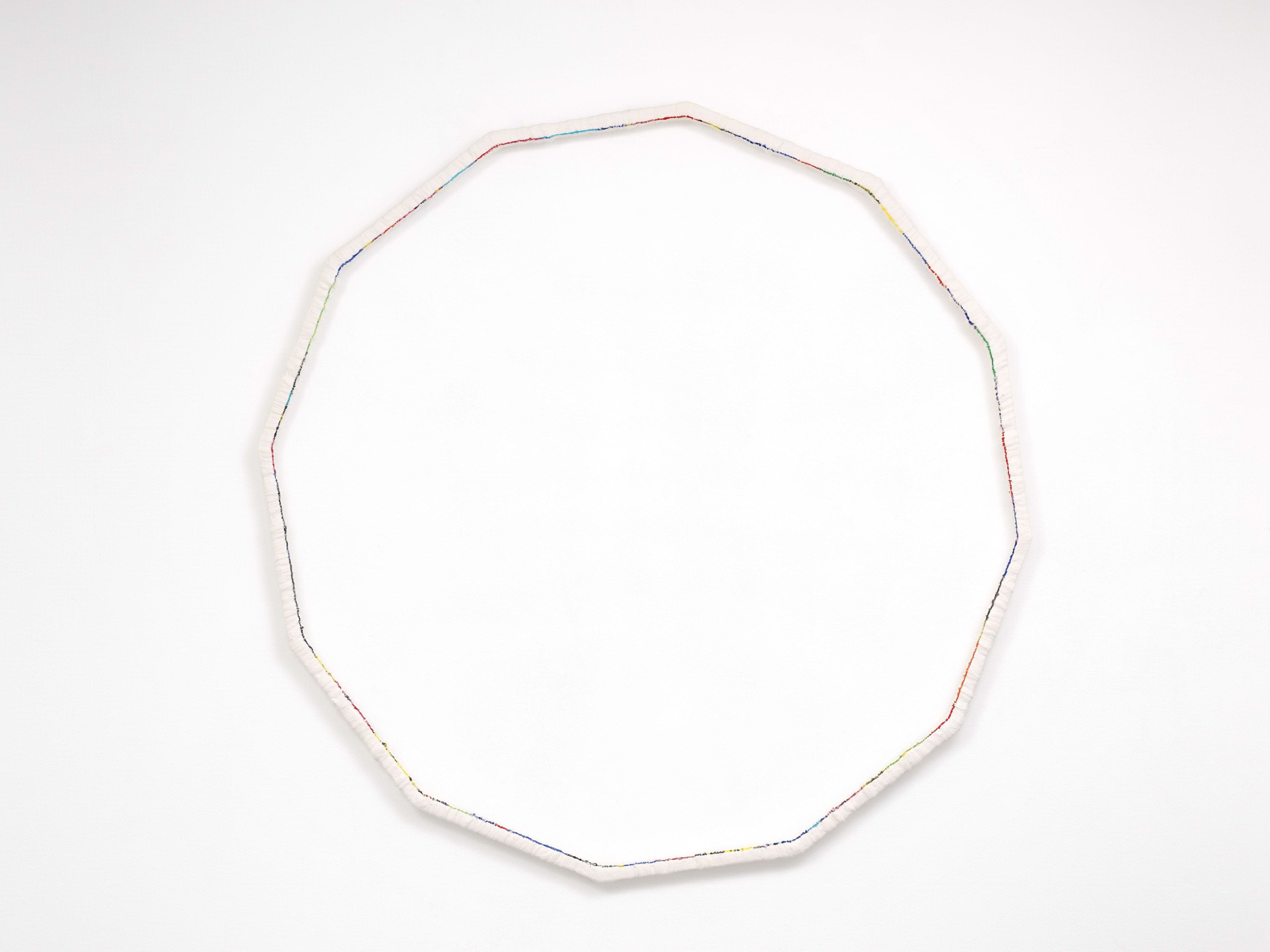
The dodecagons—abstracted snakes— serve a protective function. These sculptures reference Dagwé - one of the Winti Earth gods from the Afro-Surinamese religion - who manifests himself as a boa constrictor. Dagwé serves a role similar to that of a ritually blessed Prasara sibi: a reed broom secured at intervals with red, blue, and white ribbon which many Afro-Surinamese people place above their front doors to ward off negative energies.
HORIZONTALS / VERTICALS
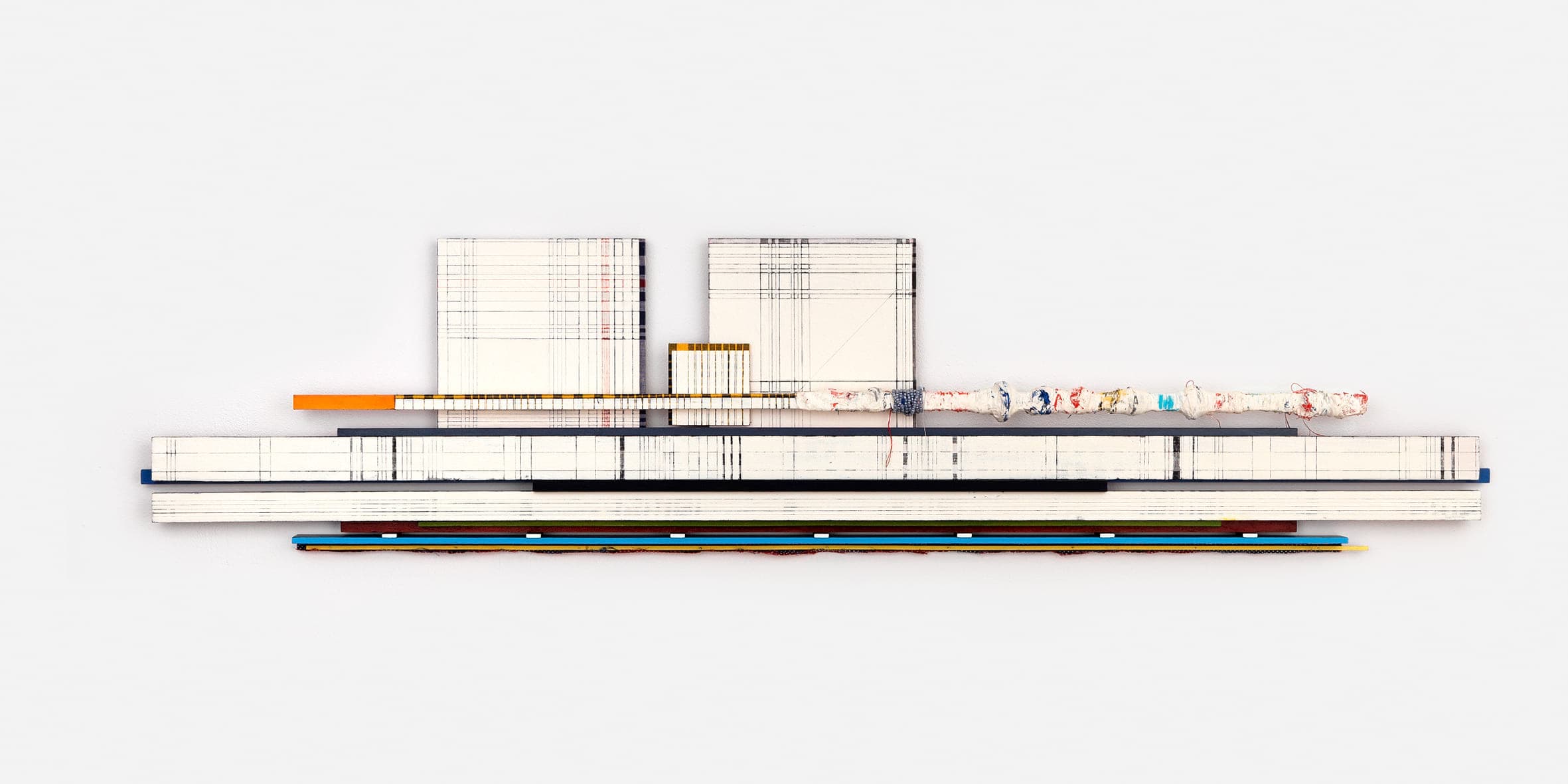
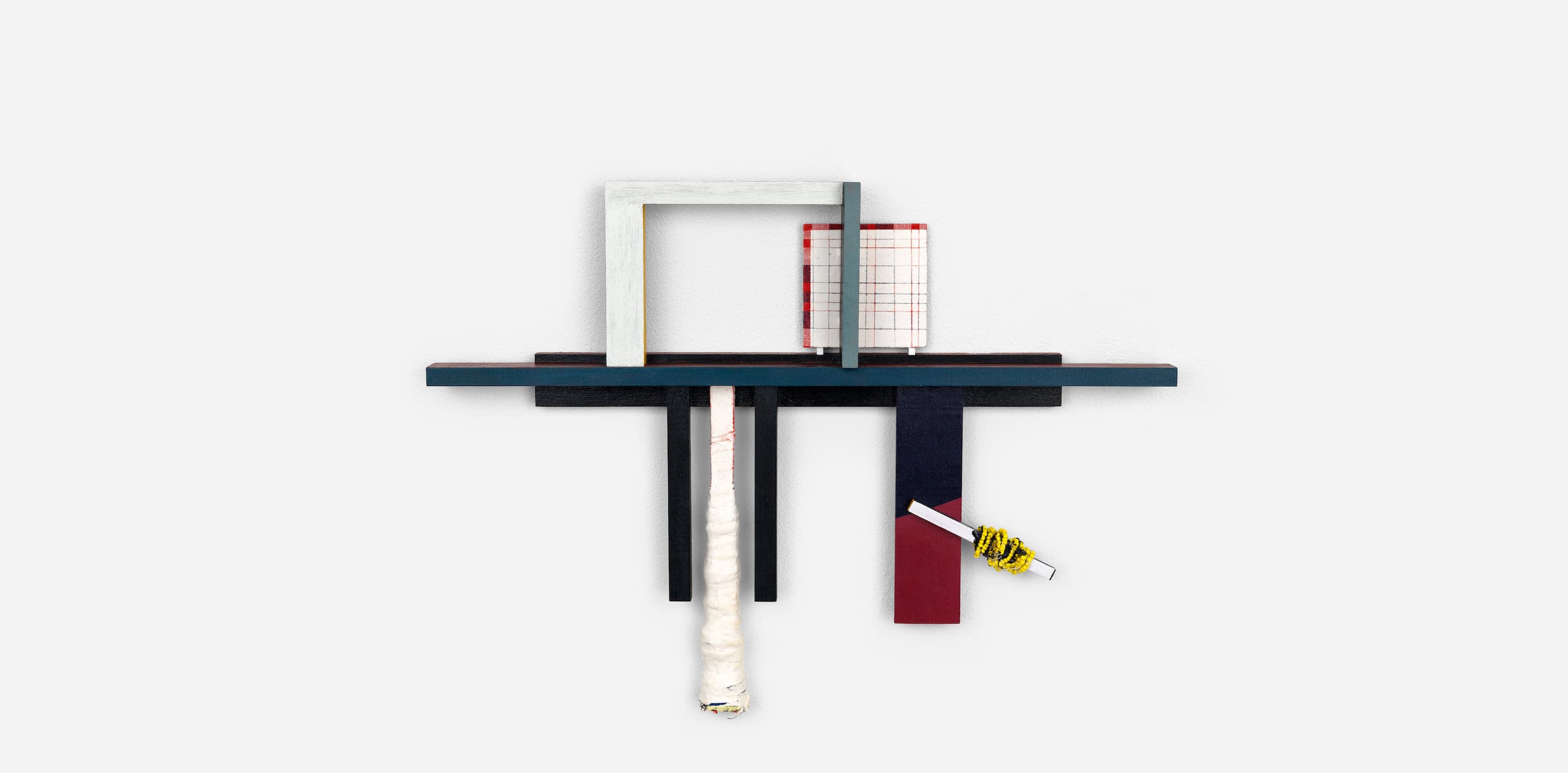
Jungerman’s horizontal works are inspired by the personal spaces where Winti devotees commune with their spiritual entities. Horizontals are composed of slats of varying length, width, and color, stacked atop one another or attached with small gaps in between. No matter the variety of additional elements or seeming randomness of a stack’s composition, the works always manifest balance. This stems from the Winti tradition of striving to achieve balance with one’s surroundings.


PANELS
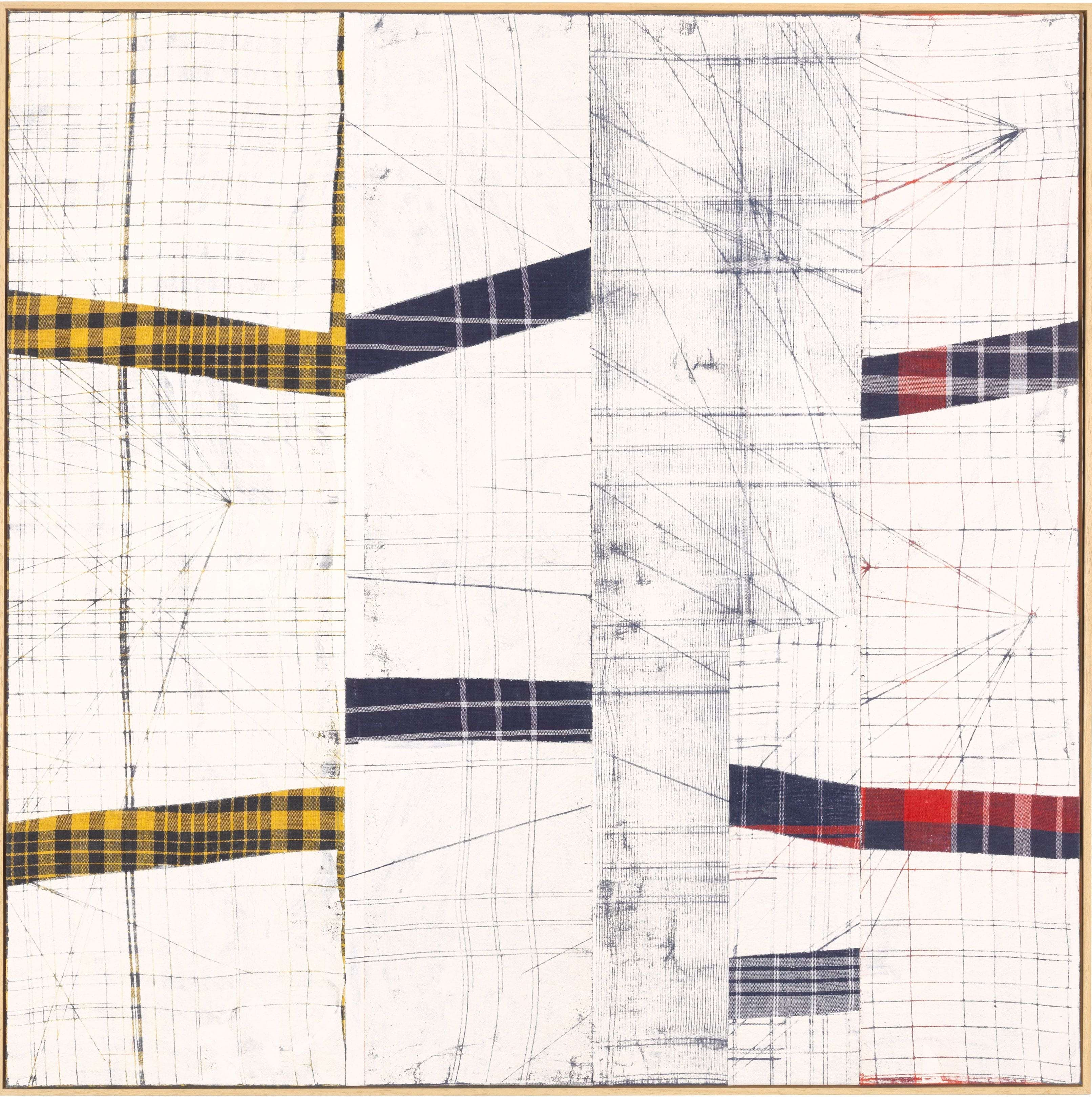
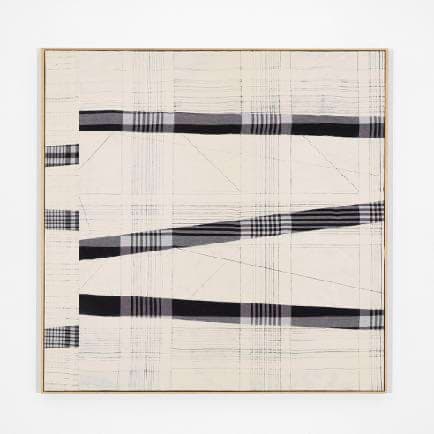
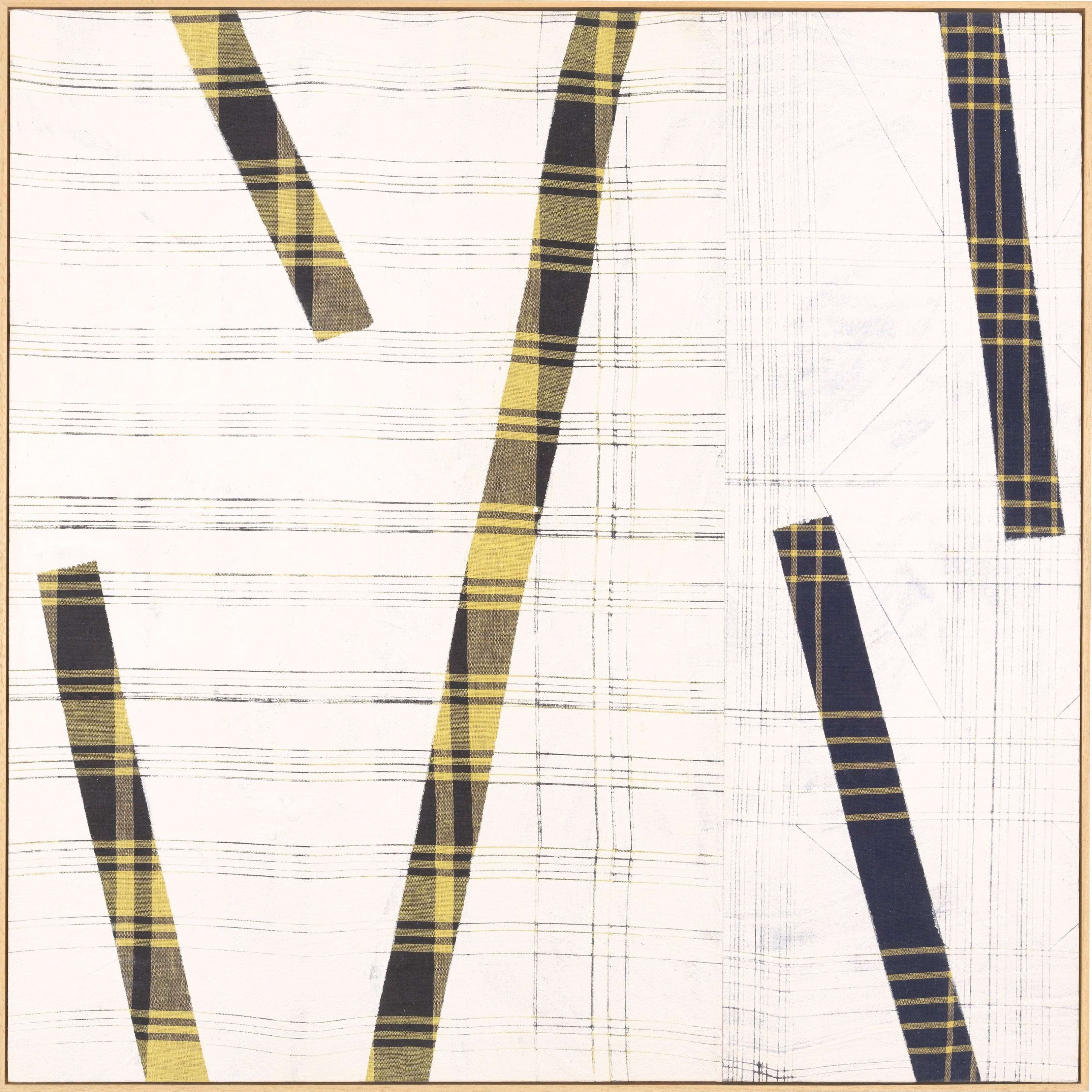
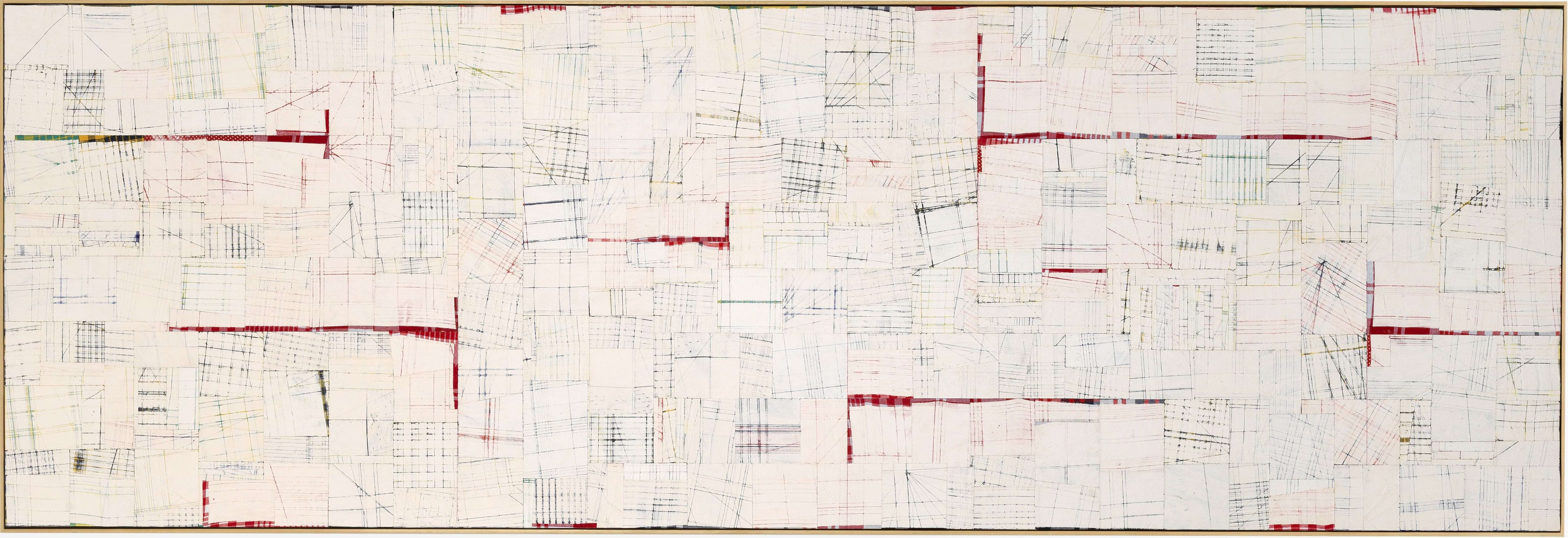
Jungerman’s panels come in various sizes and initially suggest paintings, but they are not. The panels are wooden and wrapped in plaids British-Ghanaian poet Victoria Adukwei Bulley of various colours before covering them in kaolin. In the ongoing series he made in 2020 and 2021, Jungerman adopts a collage-like approach, gluing strips of kaolintreated fabric to a primed surface. Each strip seems to evoke the next, yielding a rhythmic pulse reminiscent of the repeating sound patterns of the Agida drum—used in Winti rituals— or jazz.
CUBES
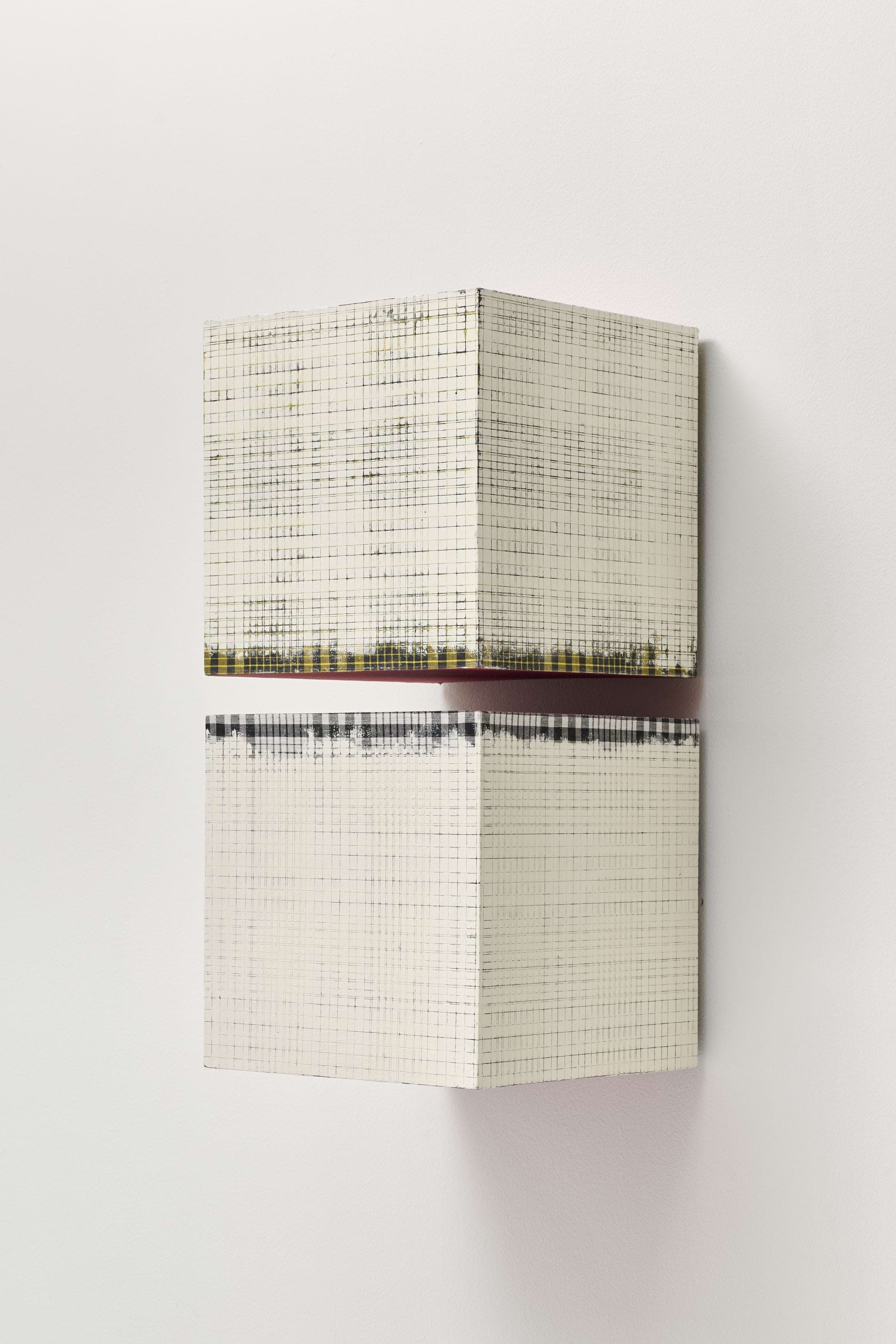
Jungerman’s cube works differ in size, in the number of stacked cubes, in the way the gap is filled, and in the extent to which the kaolin is treated or modified. The process of making these works is a ritual act: he sometimes encloses pieces of fabric in a cube, other times memories or emotions. Despite the austere geometric form of these works, they also include substantive references. The nails symbolize spiritual power, the bottles and shards from a broken gin jar refer to libations.
Featured Artworks
Create a Goodman Gallery account to view our full selection of available works, access pricing and check out online.
Artist Bio
In his work Remy Jungerman (b. 1959, Moengo, Suriname) explores the intersection of pattern and symbol in Surinamese Maroon culture, the larger African diaspora, and 20th century Modernism. Placing fragments of Maroon textiles and other materials found in the African diaspora—the kaolin clay used in several religious traditions or the nails featured in Nkisi Nkondi power sculpture—in direct contact with materials and imagery drawn from more “established” art traditions, Jungerman presents a peripheral vision that enriches our perspective on art history.
Jungerman’s work has been widely exhibited internationally. In 2019, he represented the Netherlands at the 58th Venice Biennale and in 2022 he was the subject of a career survey show at the Stedelijk Museum, Amsterdam, titled ‘Remy Jungerman: Behind the Forest.’ A solo show ‘Crossing the Water’ was featured at Kunstmuseum Den Haag (NL) in 2015. His solo show ‘Tracing the Line’ was at DOTS Gallery in Belgrade, Serbia in 2023 and ‘Higher Ground’ at Katonah Museum of Art in Katonah, New York in 2022. In 2025, his solo show “Off the Grid: Remy Jungerman” was featured at Mondrian House, the birthplace of Piet Mondrian, and he participated in the second Biennial of the Amazons in Belém, Brazil.
Jungerman is co-founder of the Wakaman Project - Drawing Lines, Connecting Dots. Wakaman, which in Sranan Tongo means “walking man,” was born out of a desire to examine the position of visual artists of Surinamese origin and to help raise their profile(s) on the international stage.
In 2008, Jungerman received the Fritschy Culture Award from the Museum het Domein, Sittard, The Netherlands and in 2022, he received the A.H. Heineken Prize for Art. Author of Tracing the Lines: Patterns of the African Diaspora (Jap Sam Books, 2024), his work is also featured in Remy Jungerman: Where the River Runs (Jap Sam Books, 2019) and Remy Jungerman: Behind the Forest (Jap Sam Books, 2021).
Solo exhibitions include: 'Still Waters,' Goodman Gallery Johannesburg (2024); 'Fault Lines,' Goodman Gallery, London (2022).
Group exhibitions include: ‘Infinite Island: Contemporary Caribbean Art,’ Brooklyn Museum, New York (2007); Prospect3, New Orleans, US (2013); ‘Mondrian Moves,’ Kunstmuseum, The Hague, Netherlands (2022); ‘Wi Sranan: Surinamese Art in Transition,’ Museum Cobra, NL (2026); ‘Re-Inventing Piet Mondrian and the Consequences,’ Kunstmuseum Wolfsburg, Germany (2024); ‘Creative Journeys’ International African American Museum (IAAM), Charleston, US (2023); 'Spirit Levels,' CCA Glasgow, Scotland (2014).
Jungerman lives and works between New York and Amsterdam.
Other Exhibitions
See All