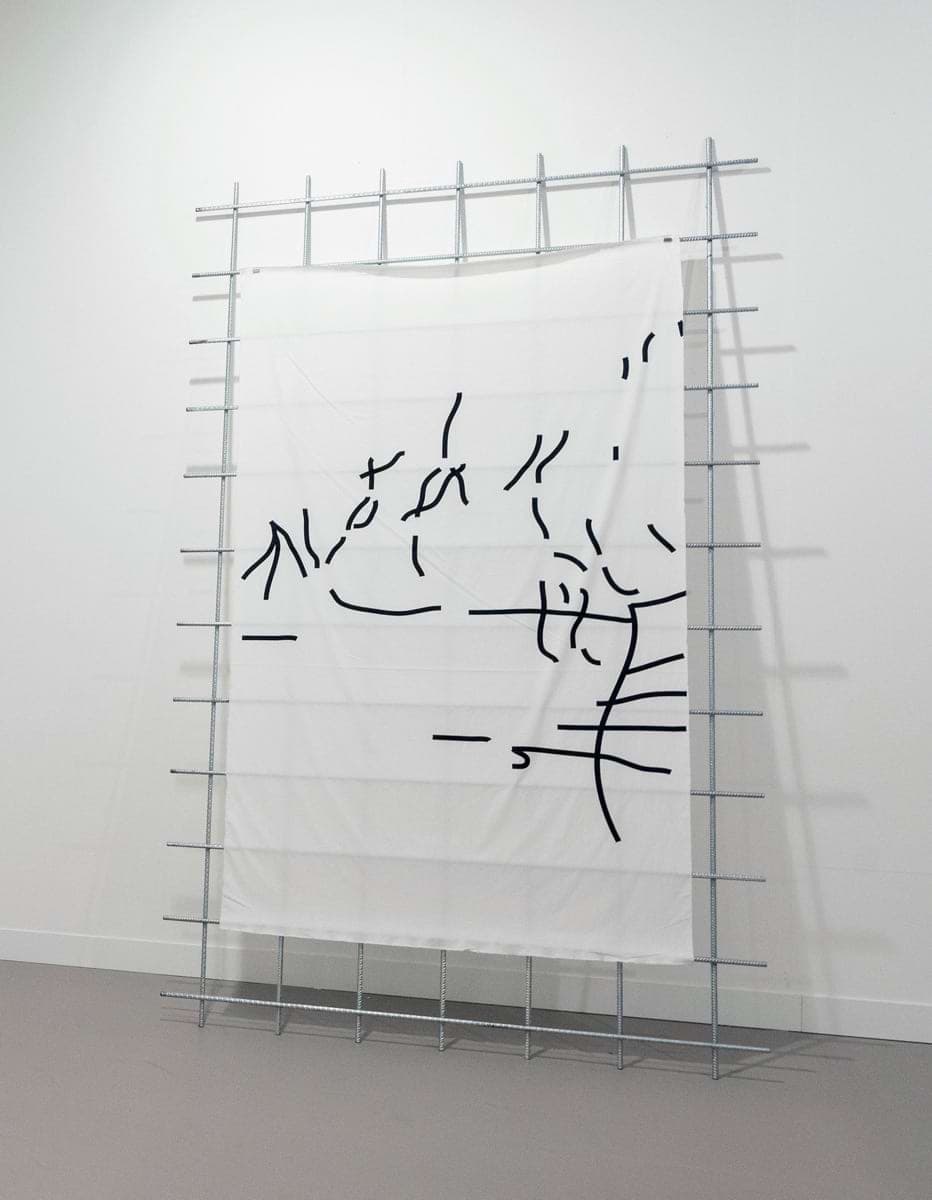
In Desire Paths research into town planning, aerial photography and other records relating specifically to Apartheid era townships results in a discovery of desire paths; routes carved out by human will and need that goes against the rigid grid of the installed infrastructure. Printed onto cotton fabric that undulates over the mesh grid, these graphics offer an aerial view on the movements of individuals through Soweto, Langa, District Six and the Cape Flats.
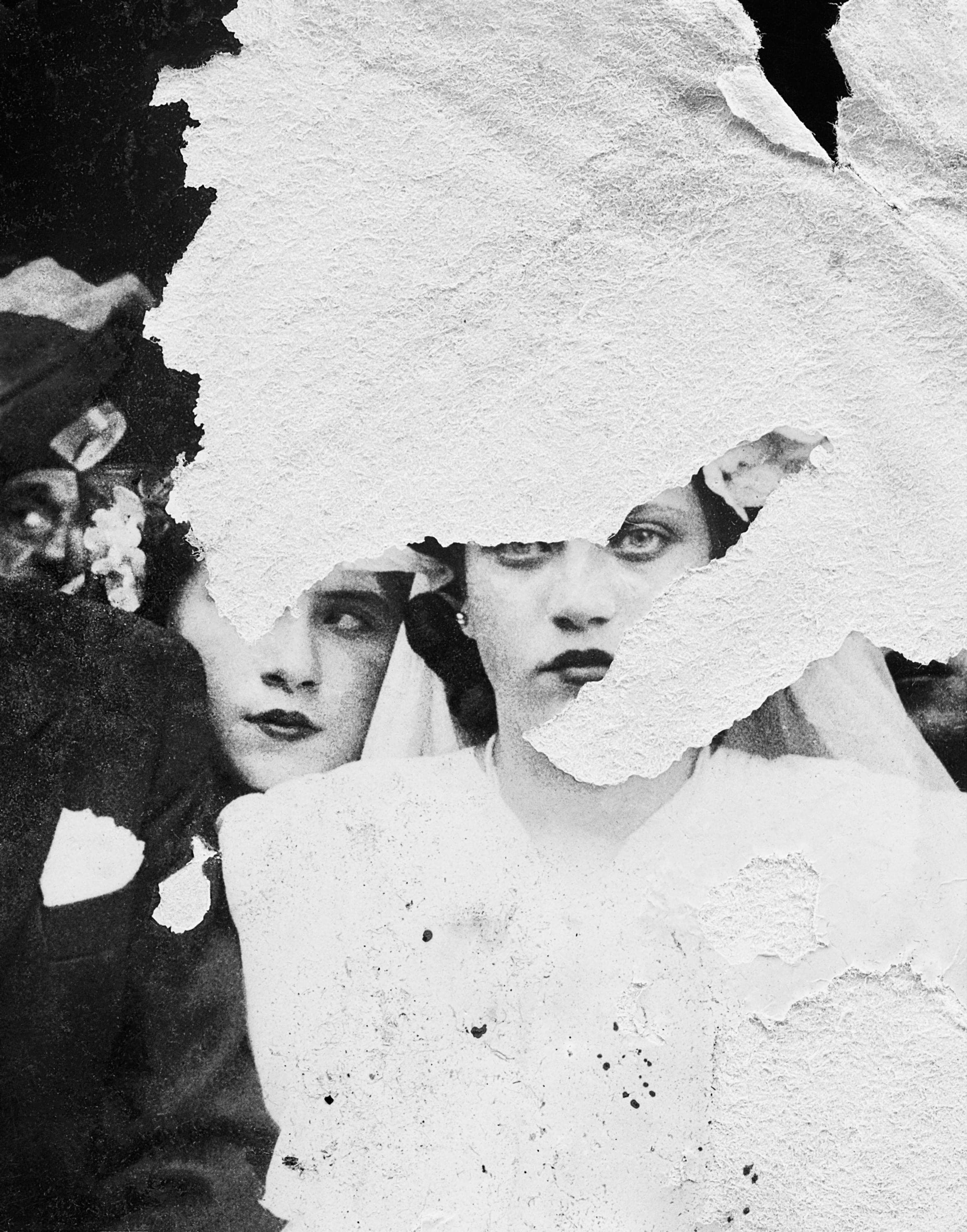
Dor Guez’s Samira, 2020 is a portrait of his grandmother taken on her wedding day in Lydda in 1949, shortly after the 1948 Palestinian exodus (al-Nakba). The image, part of Guez’s ongoing series of “scanograms,” bears the marks of time—creases, fading, and surface wear—emphasizing the photograph’s physical history as much as its subject. By emphasizing these traces, Guez transforms a personal family photograph into a layered meditation on memory, displacement, and survival. Samira, 2020 stands as both an intimate tribute and a powerful reflection on how private archives preserve histories often excluded from official narratives.
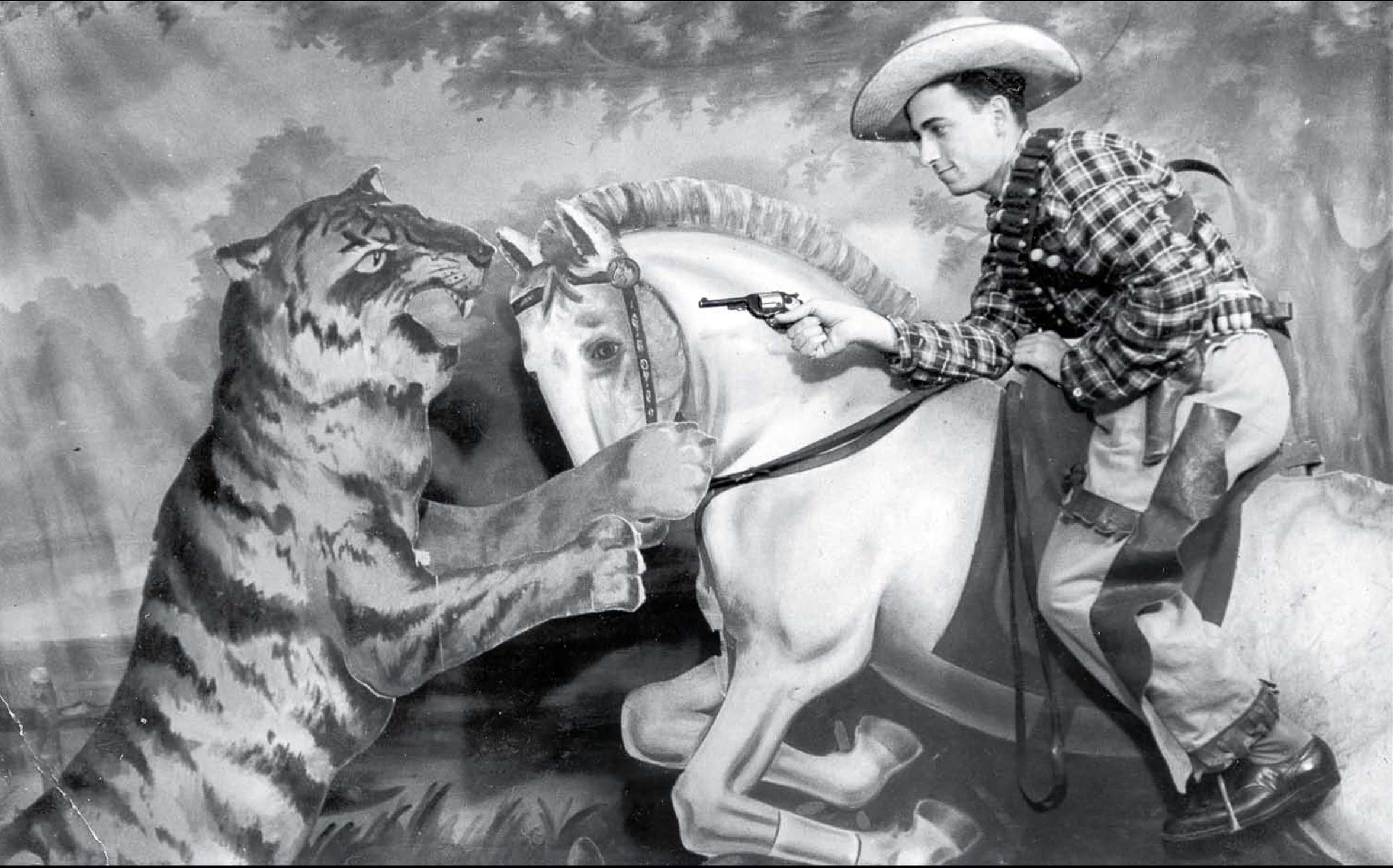
The Christian Palestinian Archive (CPA) is a growing collection of scans of archival documents from the first half of the 20th century, documenting the personal histories of the Christian Palestinian community worldwide. The archive has been useful for architects, scholars, artists, sociologists, and curators as a source of knowledge for their own practice. Unlike other archives, the CPA is not engaged in reconstruction or conservation, and all "original" photographs are sent to their owners after being scanned and added to the archive.
The CPA has been built by individuals for their community. Families from the Palestinian diaspora are contributing representations of their family albums to the archive on a daily basis. Unlike state archives, the CPA project is not based on collections of professional photographers, but on a wide range of professionals and "amateurs" photographers mixed together. Therefore, the archive includes scans of postcards, professional studio photographs, wedding photographs, passport photographs, maps, and more.
The project emphasizes the importance of representations of images in two parallel practices: Aesthetical and historical. The first is the arrangement of the ingredients in the scanned material- the visual content of the image which the original photographer wanted to point at. The second is the material qualities of the original photograph” its surface texture etc. It presents the historic photograph not only as an image, but also as an object. In other words, each JPEG effectively has two authors and two dates of creation: that of its original date and then the CPA's "revival" in a new form and context.
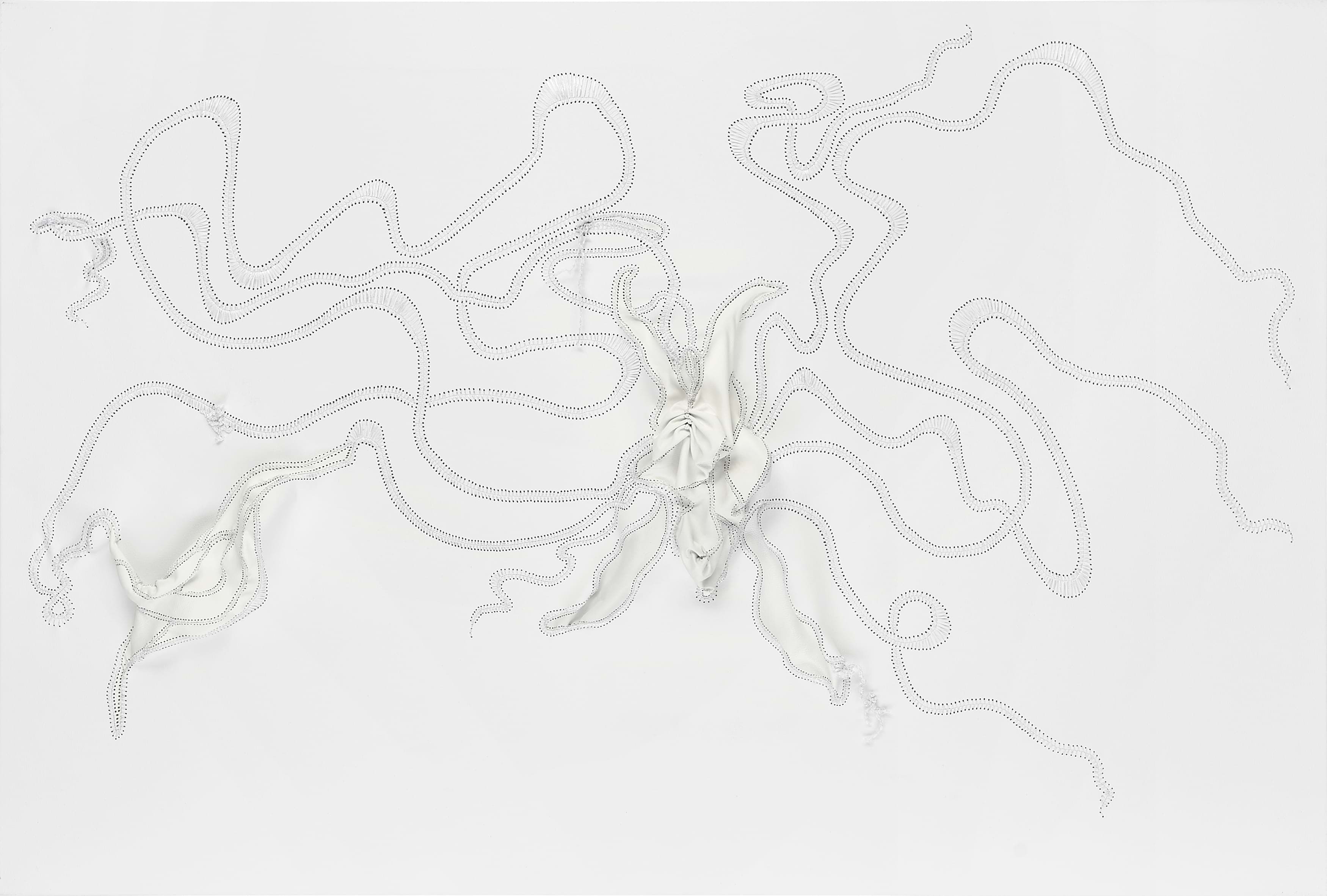
Working with various found objects and materials — leather, rubber, bronze, ribbons, copper and brass —Nicholas Hlobo considers his artistic practice to be a kind of autobiography through which he articulates a sense of self. Through an obscured grammar within a language of abstraction, Hlobo explores his psychological, emotional and spiritual journey. “My work is about my journey, how I relate to myself and to the outside world. I’m very curious about the invisible, intangible and incomprehensible aspects of that journey and there is always a slipperiness to the process of figuring it out”, says Hlobo.
Hlobo uses materials that have resonance to his personal memories, he explains; “Materials are found and used as a way to add more layers to the narrative. And how they are intervened with forms a part of becoming a language that tells the story. Found objects have their own stories with various patinas depending on where they come from.”
Ivulandlela which can be translated as “the pioneer” is about finding a path for others to follow. It is a way of paying tribute to those who come before and carve a path for others to follow.
Signed, titled, and dated in graphite (verso)
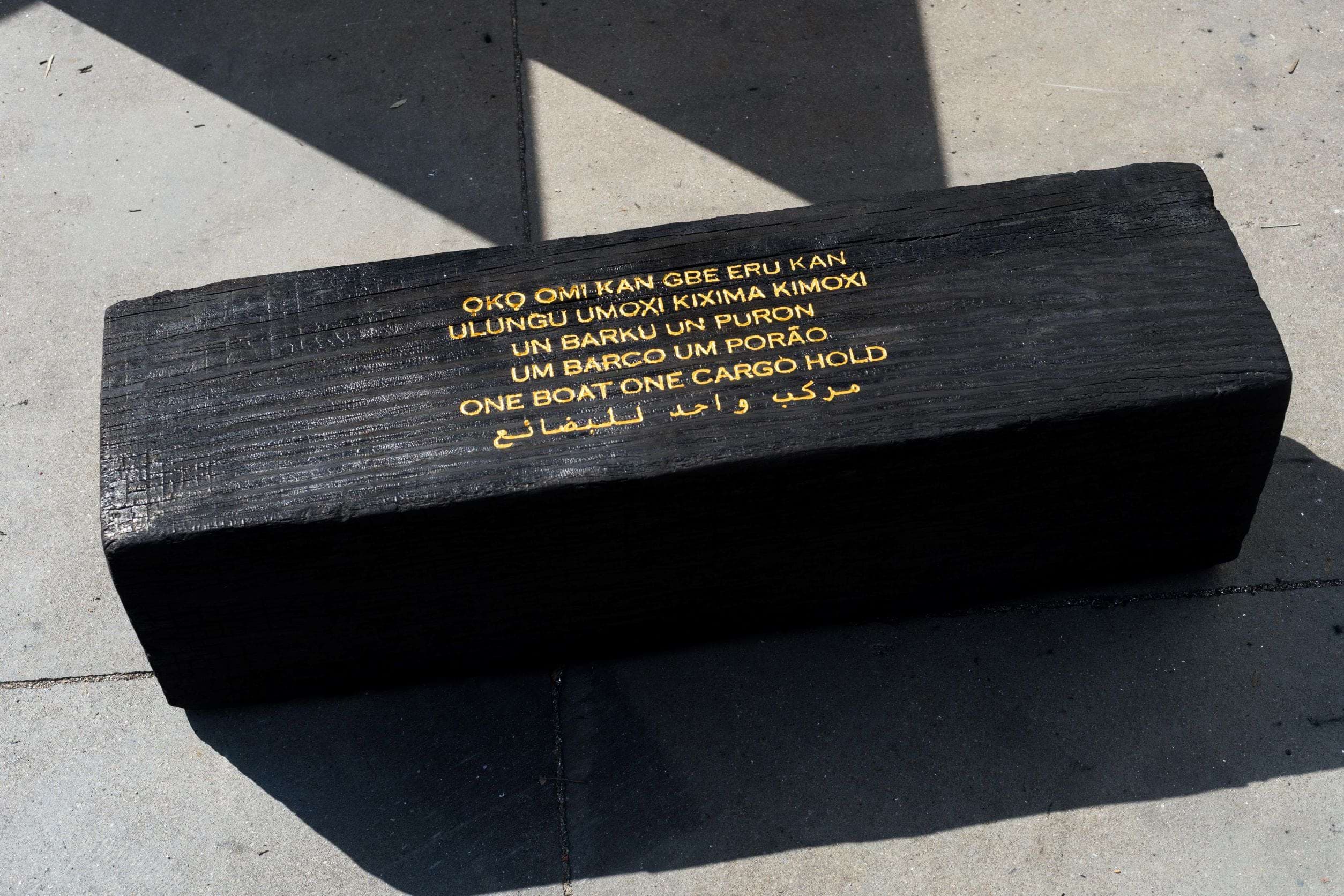
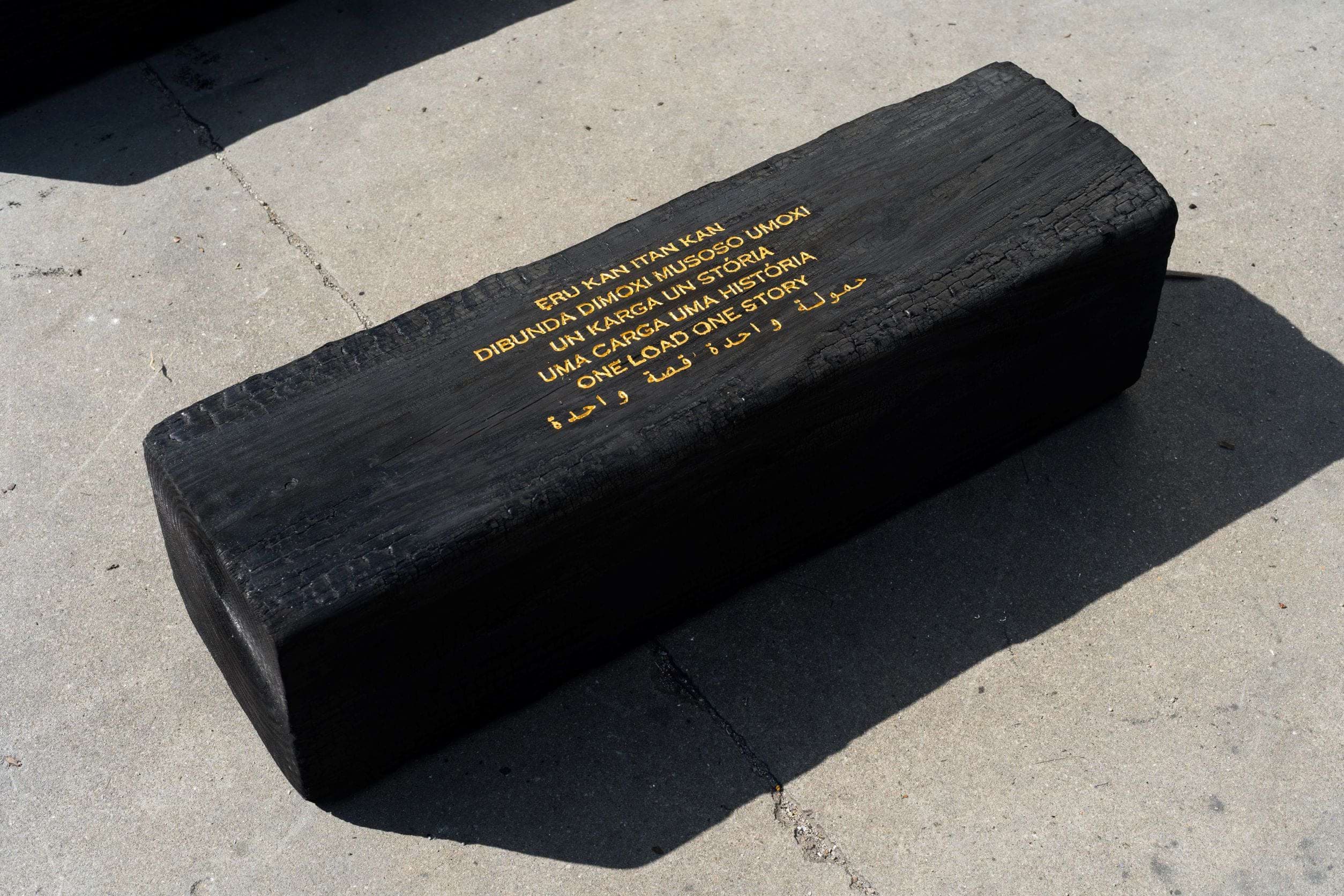
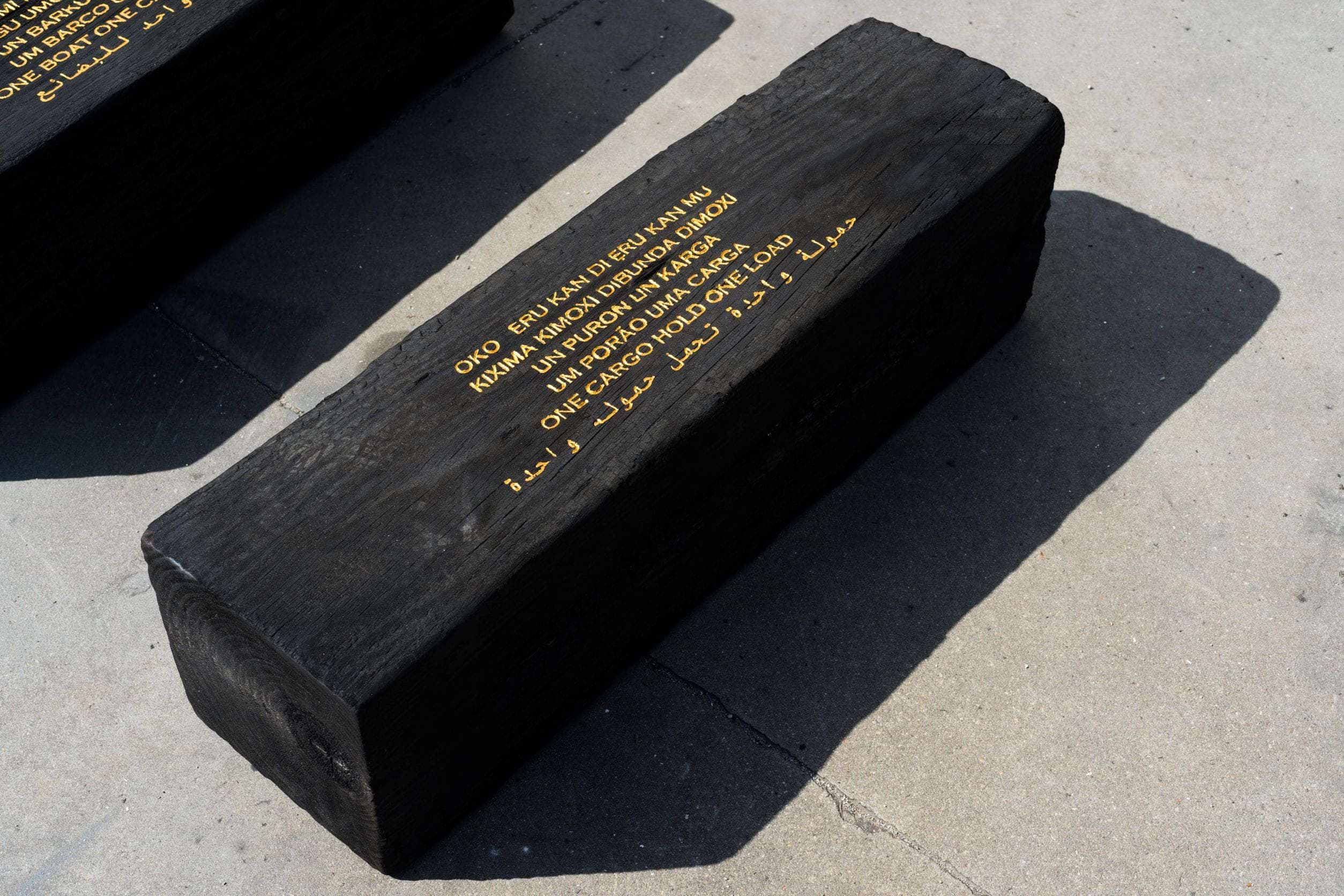
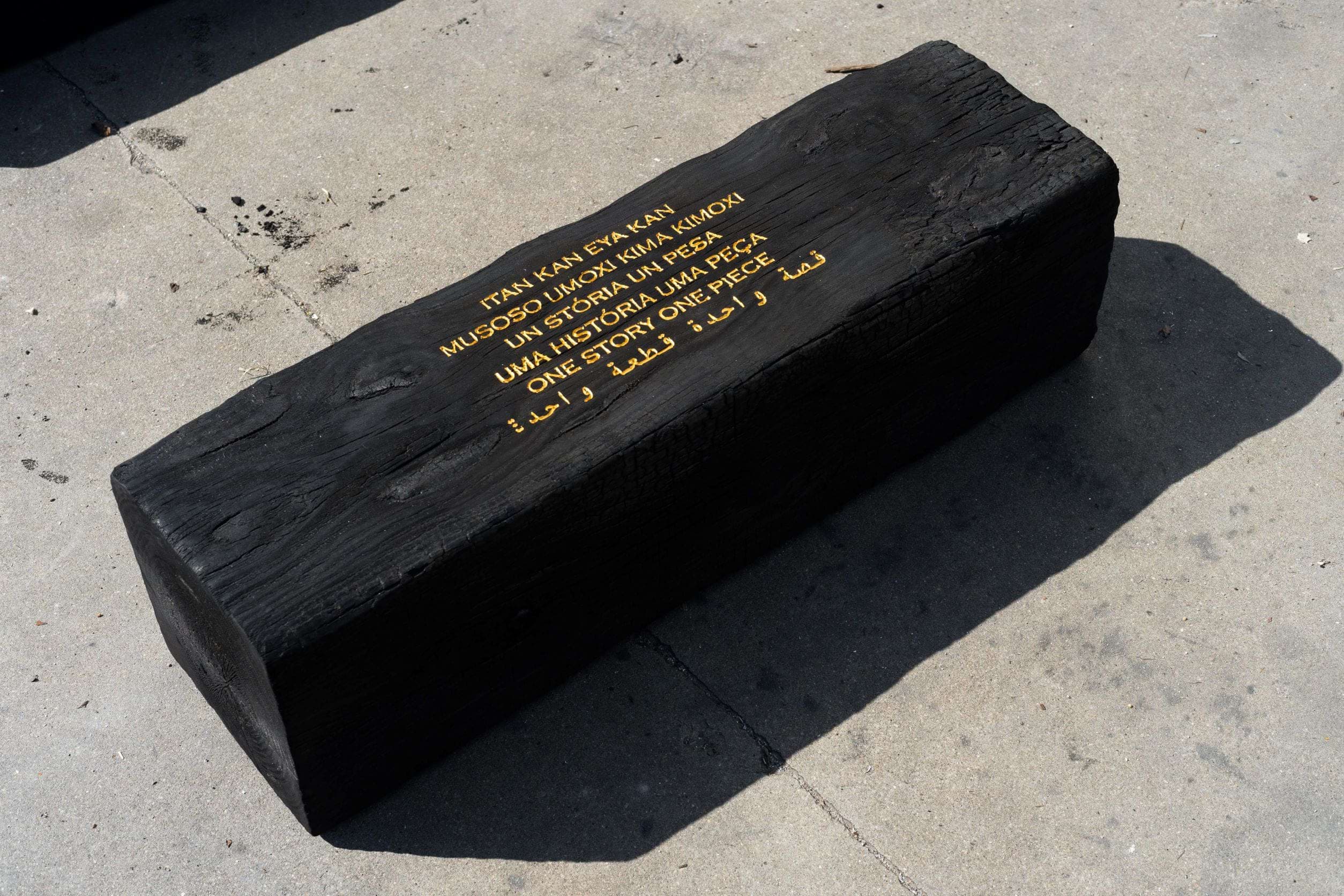
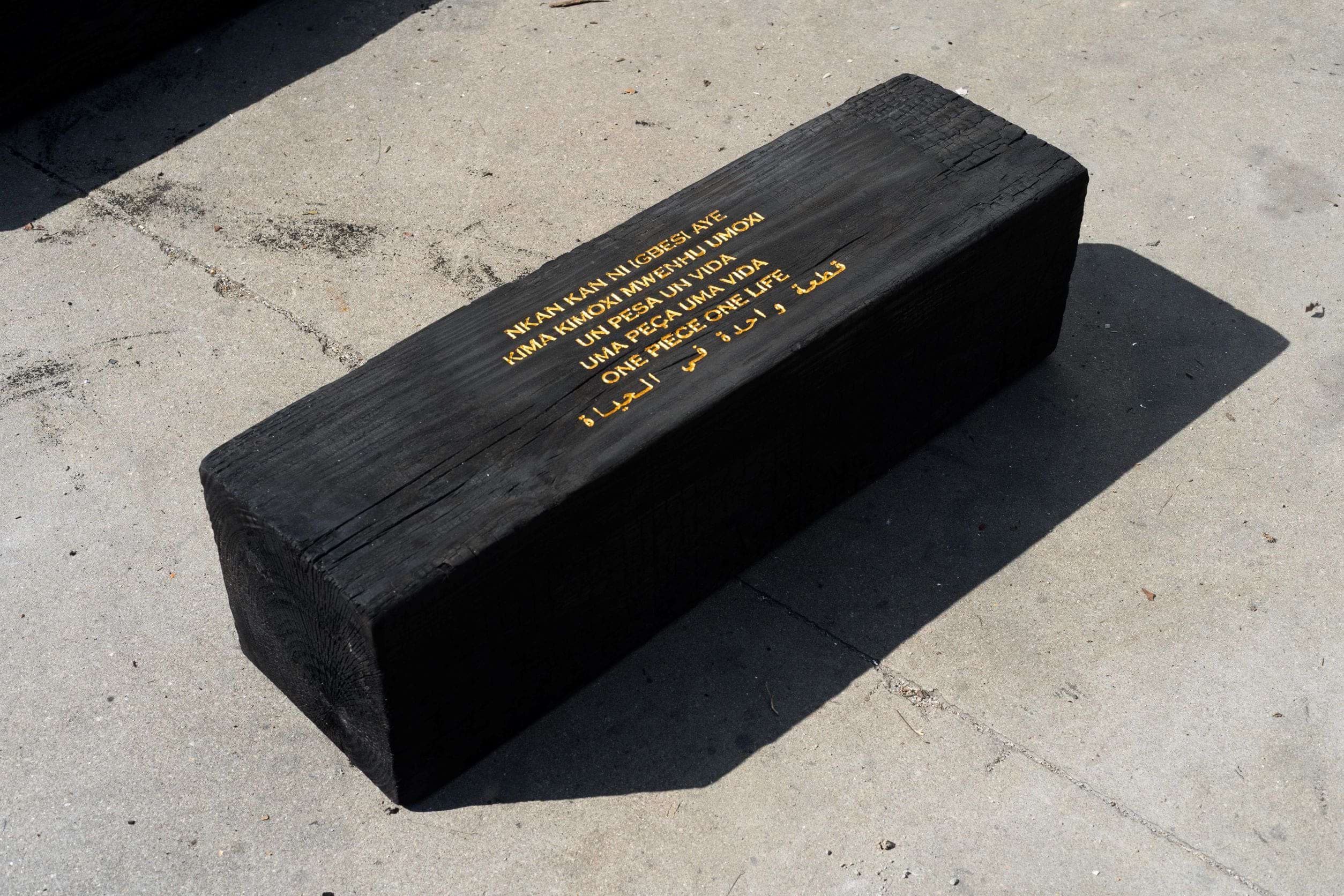
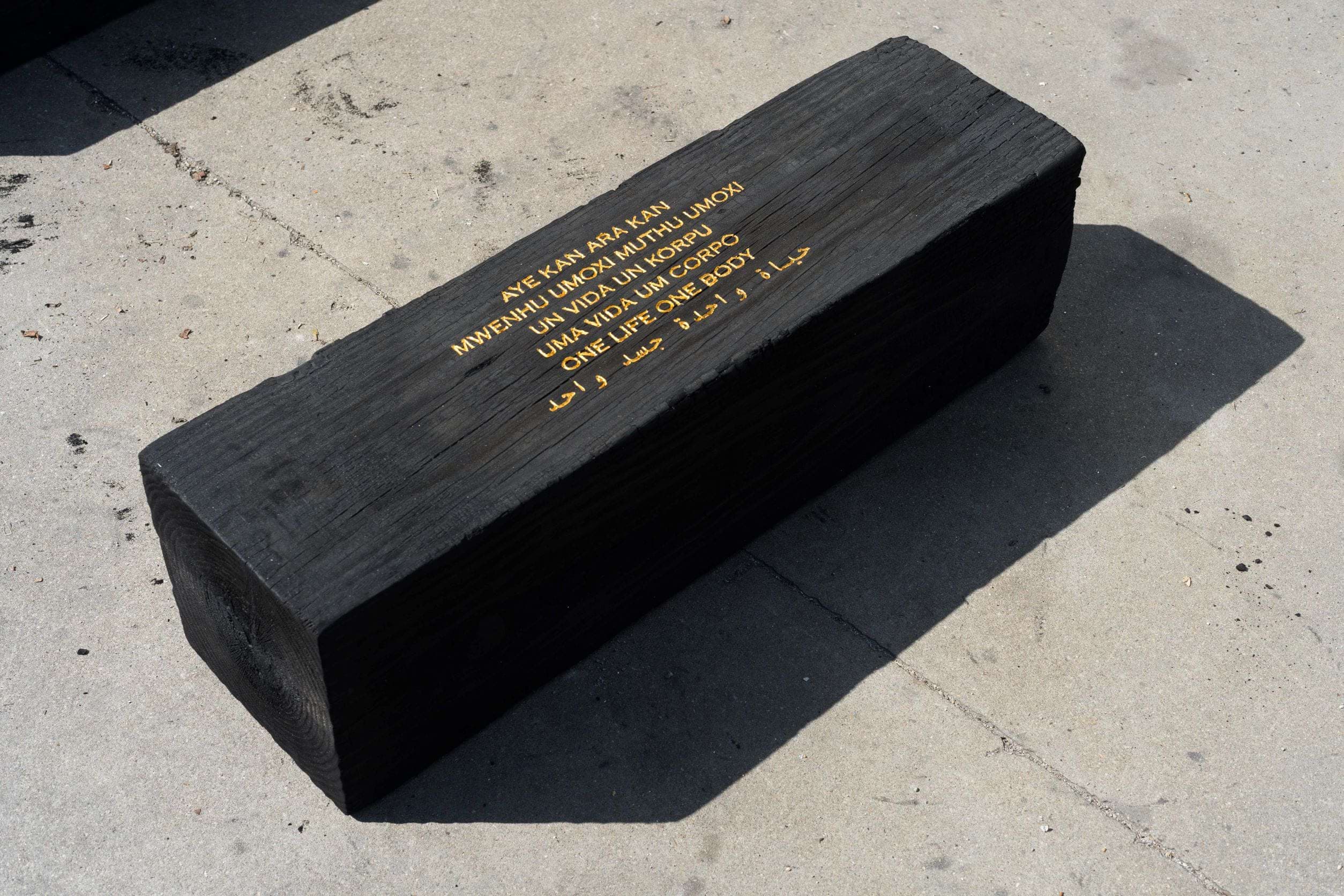
O Barco/The Boat' is an installation composed of 140 blocks (6 of which are exhibited in 'Fragile Crossings') that form the silhouette of the bottom of a ship and carefully draw the space created to accommodate the bodies of millions of Africans, enslaved by European empires. In the Western imaginary, a boat is easily associated with glory, freedom and maritime expansion, described as “discoveries,” but, in the artist's view, “a continent with millions of people cannot be discovered” nor “one of the longest and most horrendous chapters of humanity—Slavery—can be erased.”
This first large-scale installation by Grada Kilomba, which in its first iteration stretches 32 meters along the Tagus river, invites the audience to enter a garden of memory, in which poems rest on burnt wooden blocks, recalling forgotten stories and identities. What stories are told? Where are they told? How are they told? And told by whom? These are questions that arise when entering this installation.