Alt
Alt
Alt
Alt
Alt
Alt
Alt
Alt
Alt
Alt
Alt
Alt
David Goldblatt
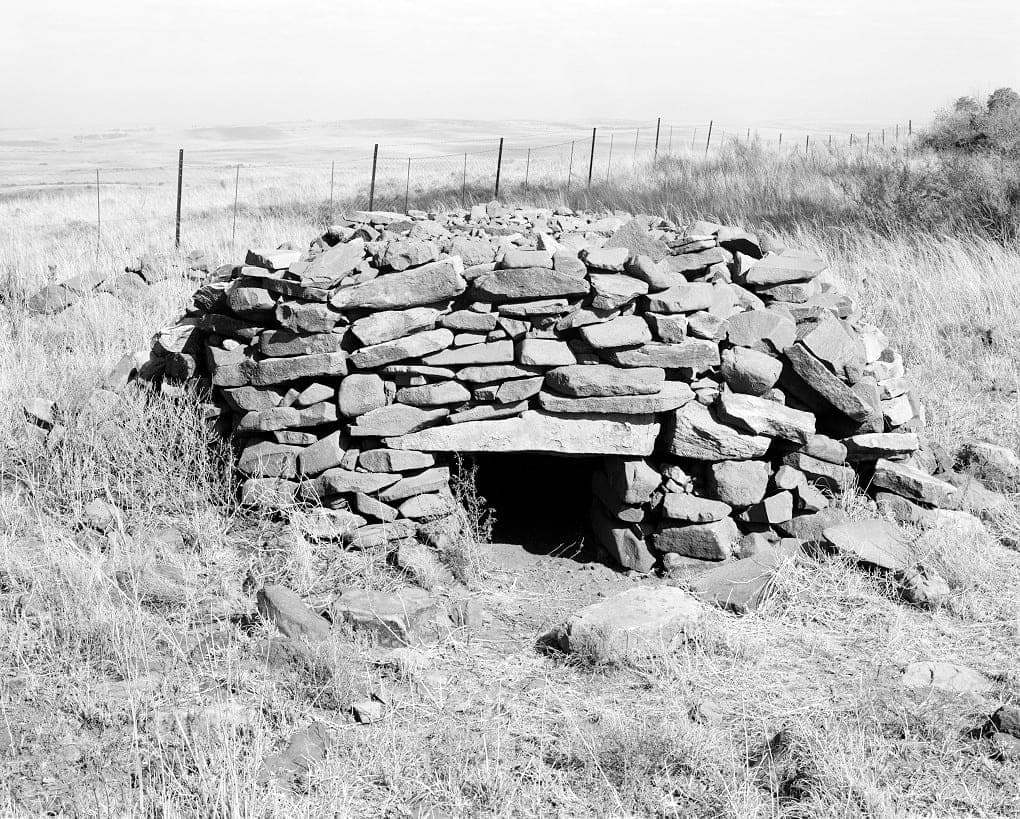
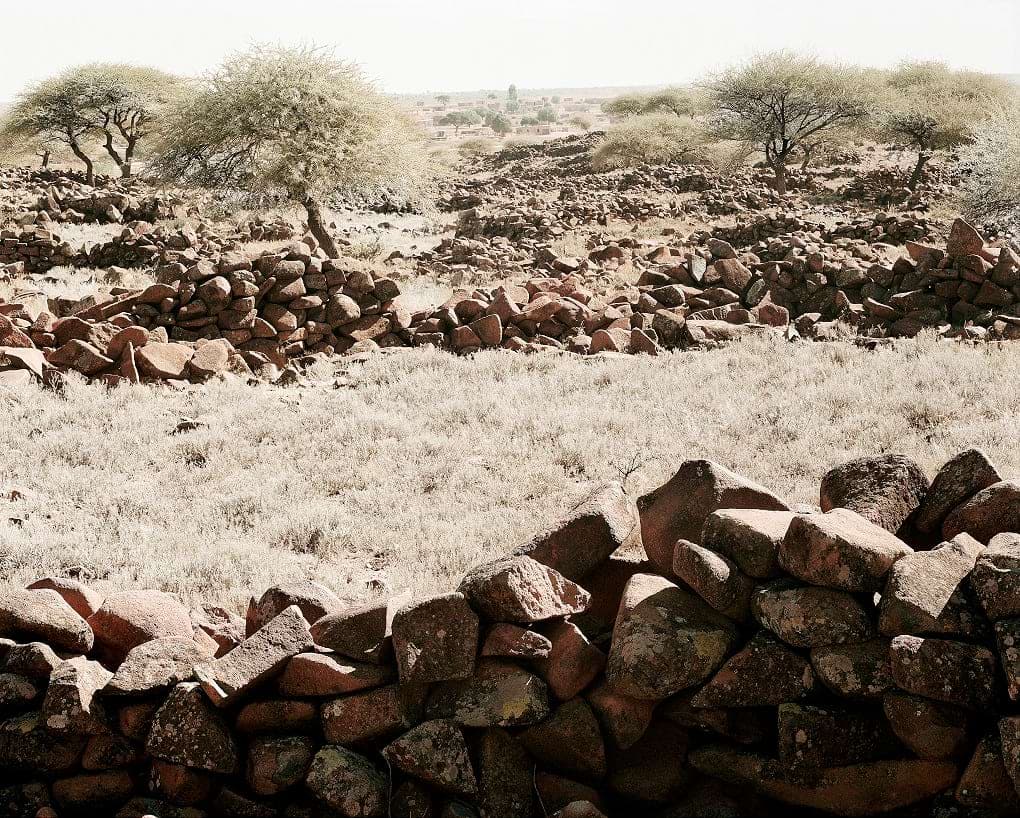
Iron Age corbelled stone huts, Sedan, Near Lindley, Ofs. 24/25 July 1992 , 1992
Silver gelatin hand print
12.7 x 15.9 cm
5 x 6.3 in
Unique
David Goldblatt
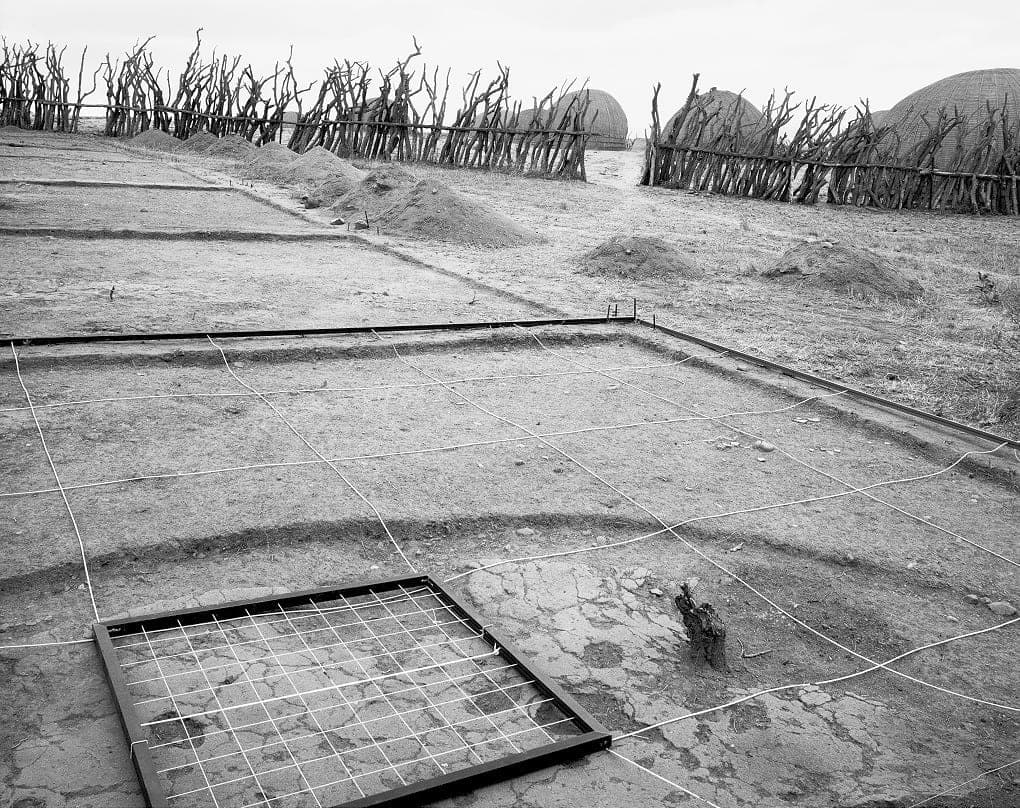
The Place of the Elephant, uMgungundlovu, capital of the Zulu king, Dingane, destroyed after his defeat by the Boers in 1838: here under excavation and reconstruction by archaeologists, Dinganestad, Natal , 1989
Silver gelatin print on fibre-based paper
48.7 x 48.6 cm
19.2 x 19.1 in
Edition of
David Goldblatt
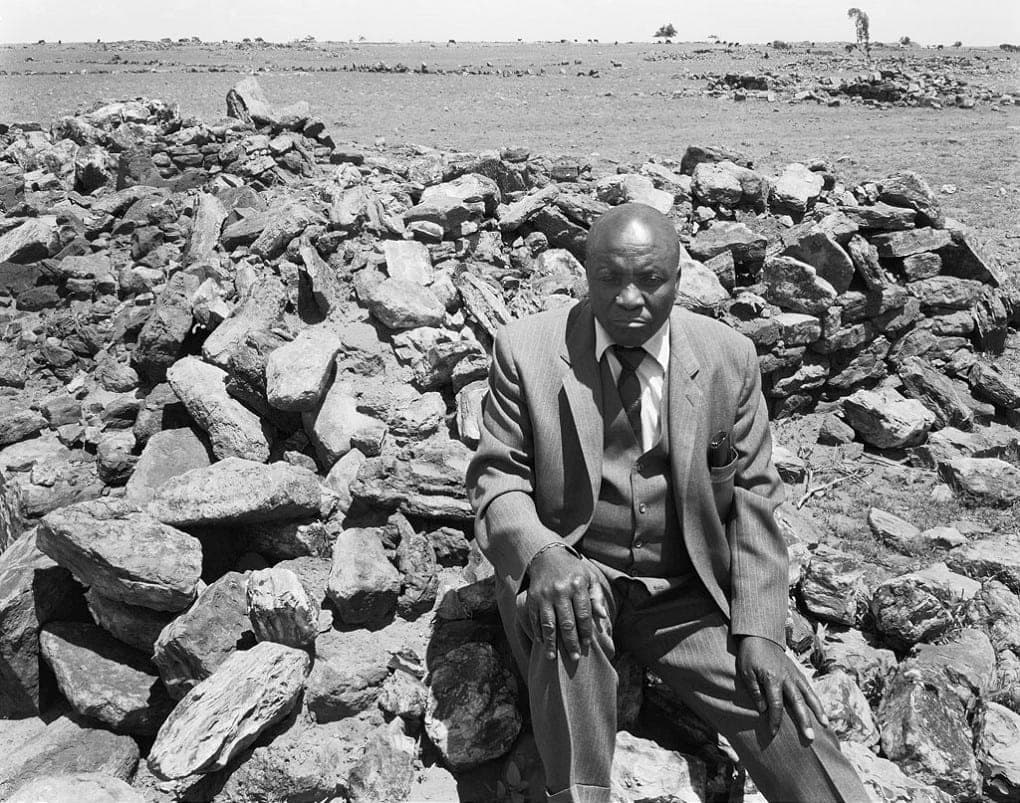
Luke Kgatitsoe in his house, bulldozed in February 1984 by the government after the forced removal of the people of Magopa, a black-owned farm, which had been declared a "black spot", Ventersdorp district, Transvaal. 21 October 1986 , 1986
Silver gelatin print on fibre-based paper
27.1 x 34.2 cm
10.7 x 13.5 in
Edition of 8
David Goldblatt
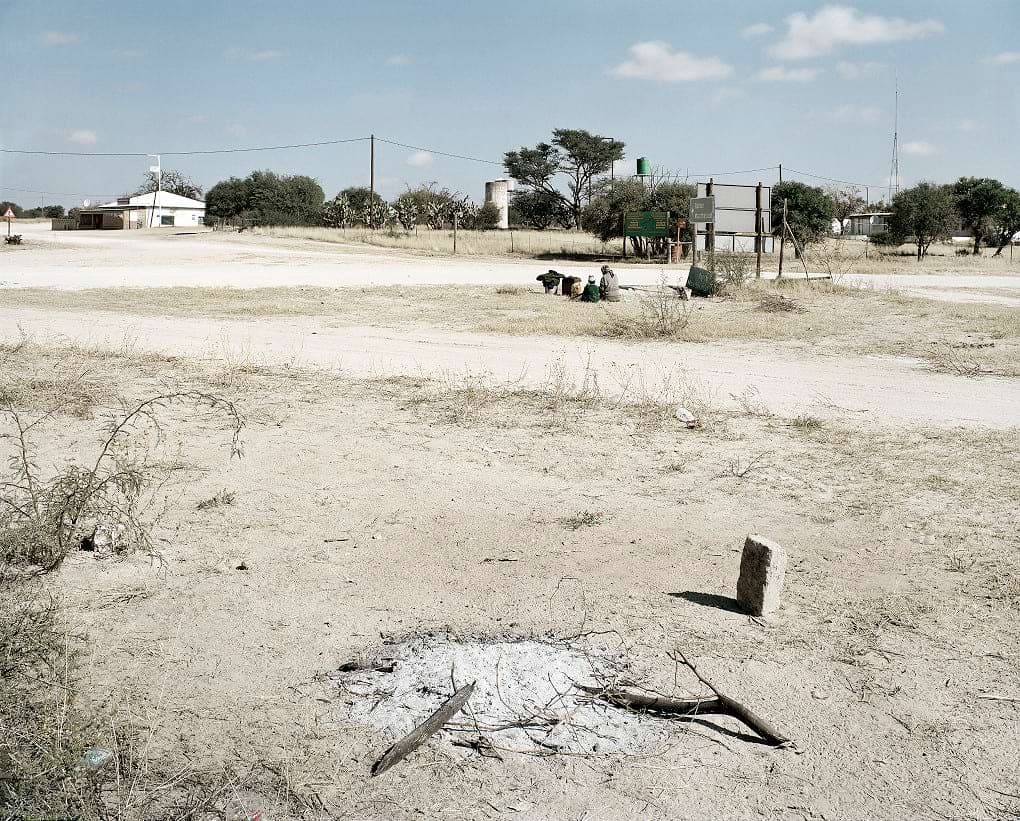
Mother and child, Vorstershoop, North-West Province. 11 April 2003 , 2003
Digital print in pigment inks on cotton rag paper
98.5 x 121.5 cm
38.8 x 47.8 in
Edition of 6
David Goldblatt
The ruins of what is thought to be a 15th or 16th century pre-colonial village, Dithakong, North-West Province. 13 June 2003 , 2003
Digital print in pigment inks on cotton rag paper
98 x 122.5 cm
38.6 x 48.2 in
Edition of 6

Driving across South Africa in a kitted-out campervan, Goldblatt describes the landscape as “deep, bland, vast and seemingly featureless.” He wrote that “precisely in these qualities is a presence that is difficult to hold or suggest in photographs. As soon as you try to bring what is before you into some sort of visual coherence, it eludes, it seems to move away. There seems no focal point, no way of coherently containing it. Often it is what I call a ‘fuck all’ landscape. Somehow one has to find ways of being true to what is there and yet bringing it fully to the page or print.” (Regarding Intersections, 2014).

David Goldblatt
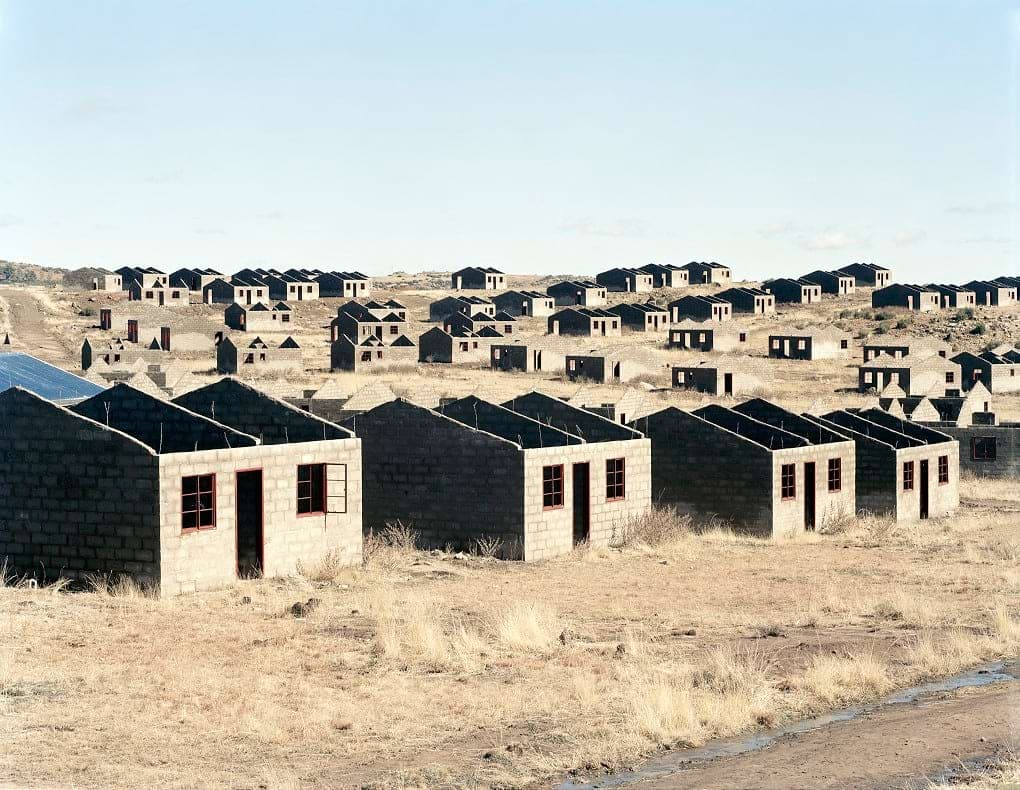
Incomplete houses, part of a stalled municipal development of 1000 houses. The funding allocation was made in 1998, building started in 2003. Officials and a politician gave various reasons for the stalling of the scheme: shortage of water, theft of materials, problems with sewerage disposal, problems caused by the high clay content of the soil and the shortage of funds. By August 2006 420 houses had been completed. Lady Grey, Eastern Cape. 5 August 2006 , 2006
Digital print in pigment inks on cotton rag paper
A0+
Edition of 10
David Goldblatt
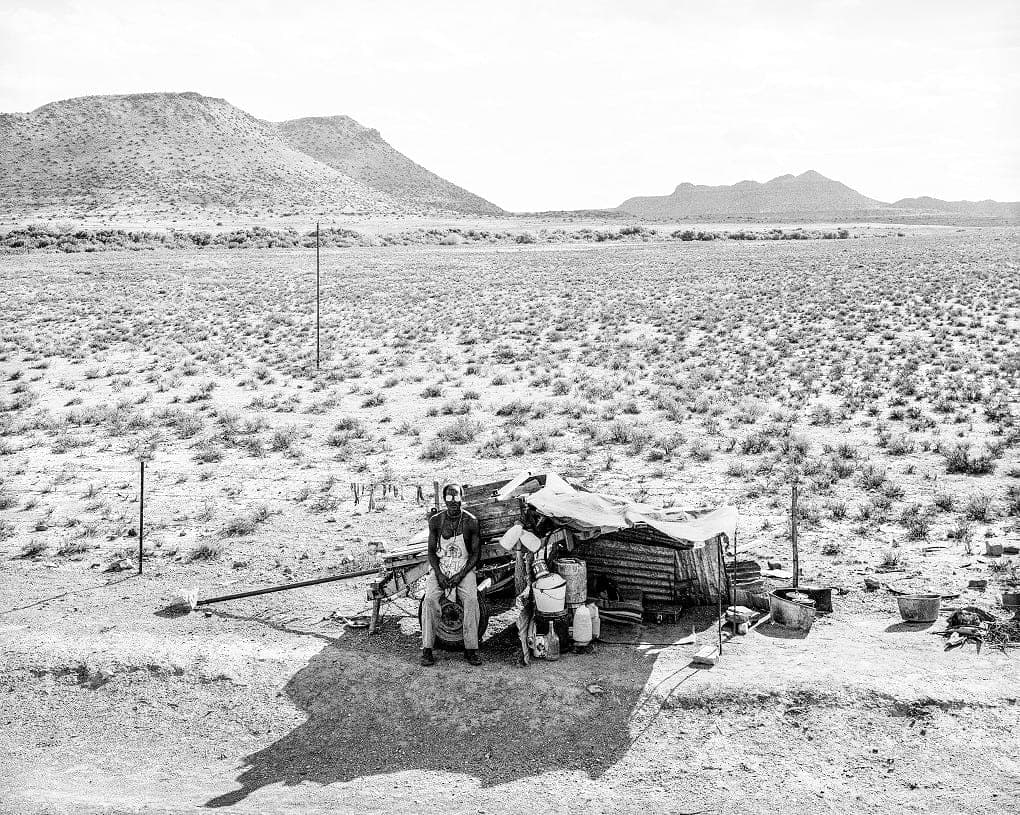
Sheep Shearer, Piet Rhenoster with his cart, Colesburg-Philipstown Road. 30 December 1986 , 1986
Silver gelatin hand print
28 x 35 cm
11 x 13.8 in
Unique
David Goldblatt
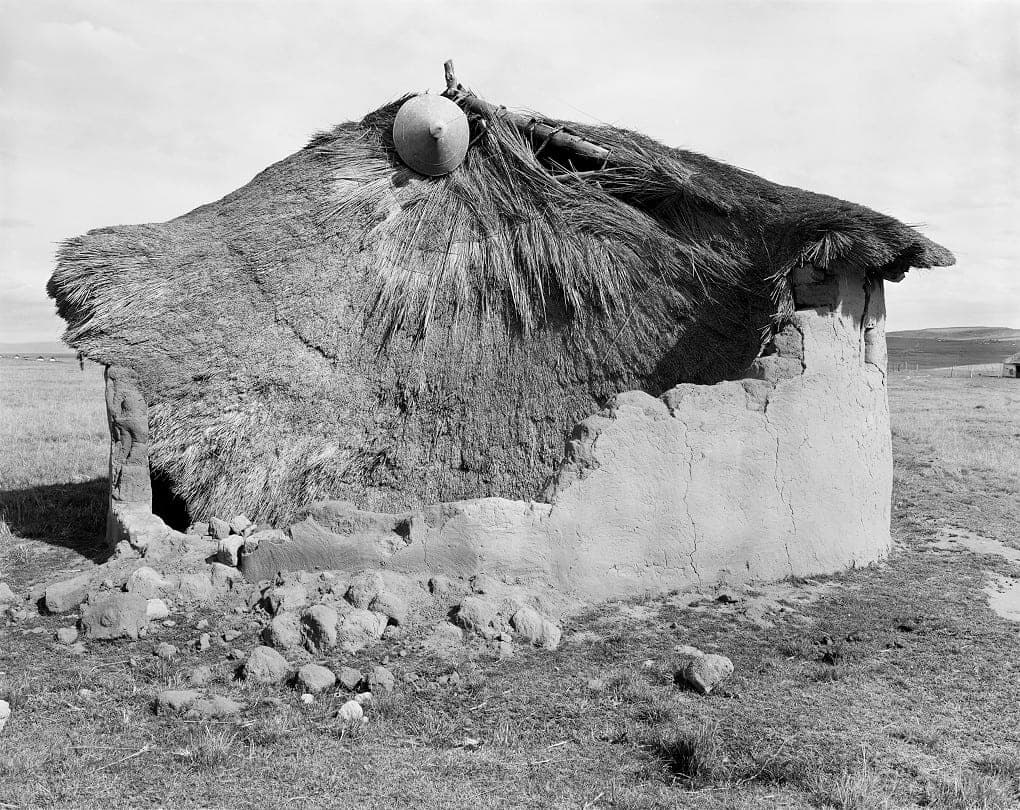
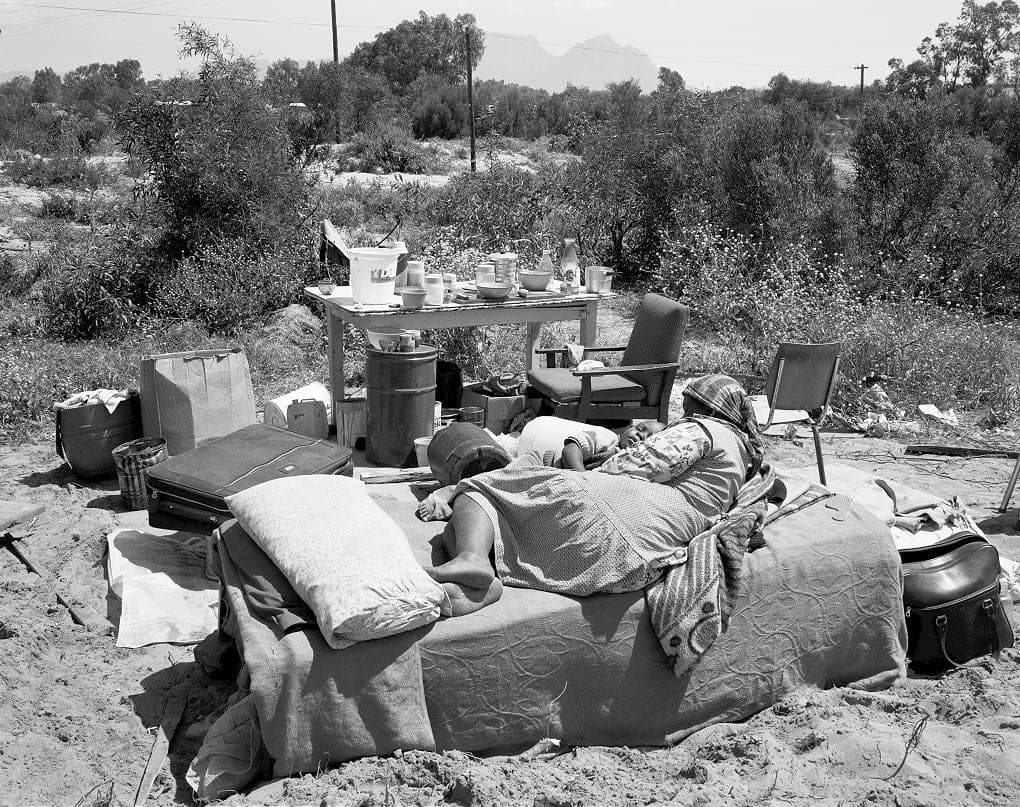
The home of a couple who went to Cape Town to look for work, Engcobo, Transkei. 9 October 1975 , 1975
Silver gelatin print on fibre-based paper
36.2 x 45.9 cm
14.3 x 18.1 in
Edition of 10
David Goldblatt
Mother and child in their home after the destruction of its shelter by officials of the Western Cape Development Board Crossroads, Cape Town, 11 October 1984. , 1984
Silver gelatin print on fibre-based paper
27 x 34 cm
10.6 x 13.4 in
Edition of
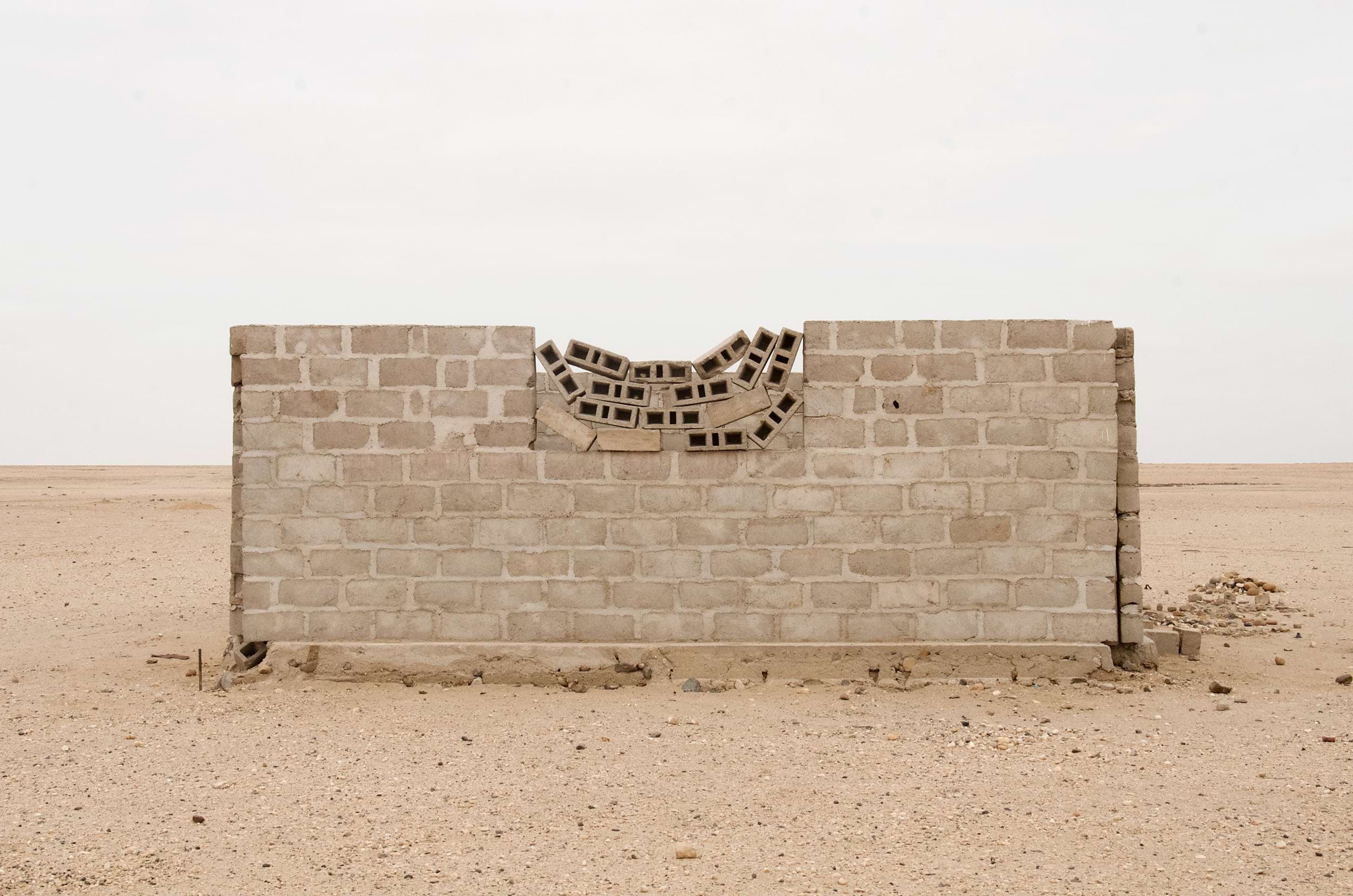
Kiluanji Kia Henda
Structures of Survival (Kilometer 19, Namibe) III, 2022
Inkjet on fine art paper
72.58 x 110 cm
28.6 x 43.3 in
Edition of 5

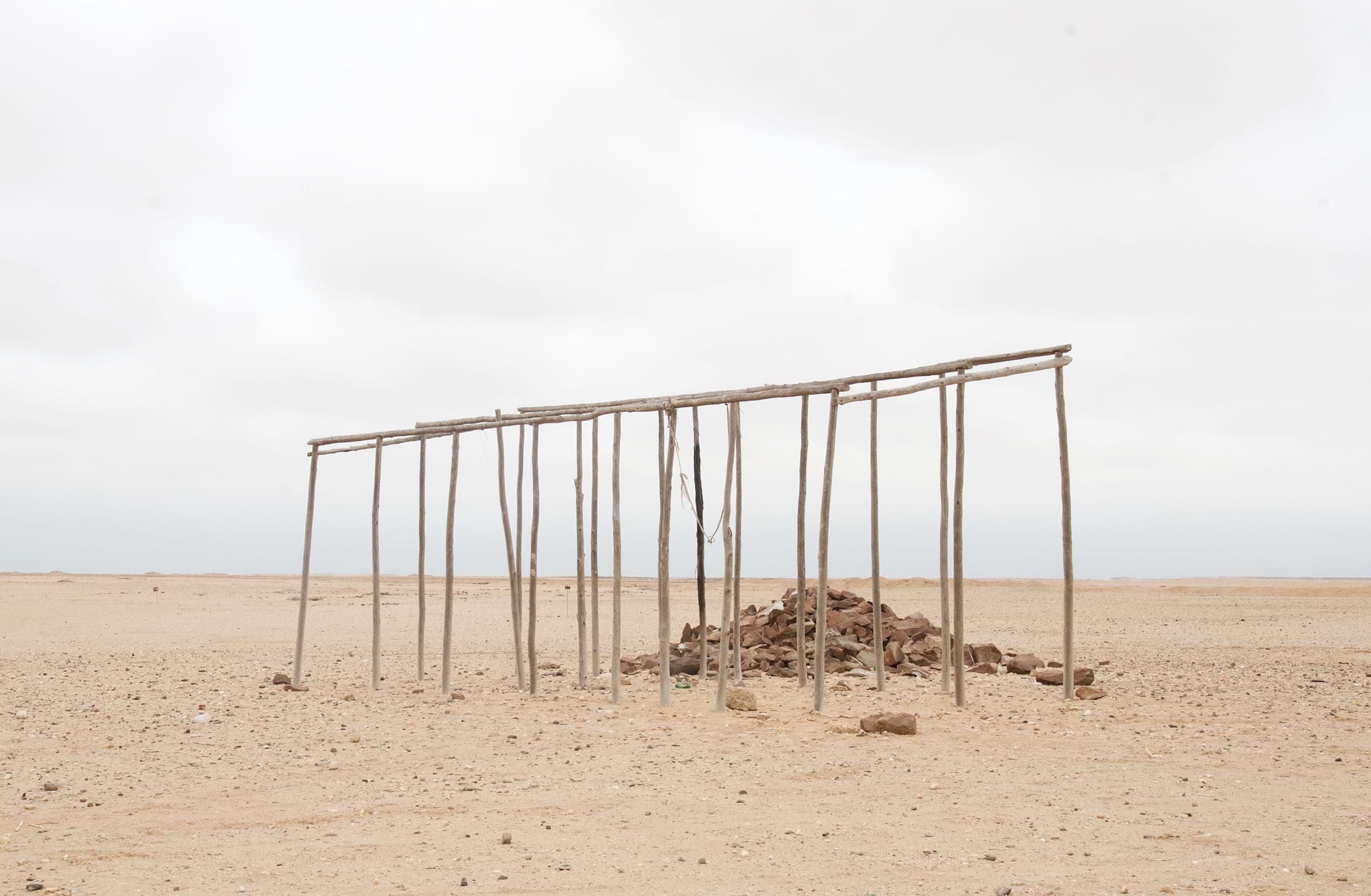
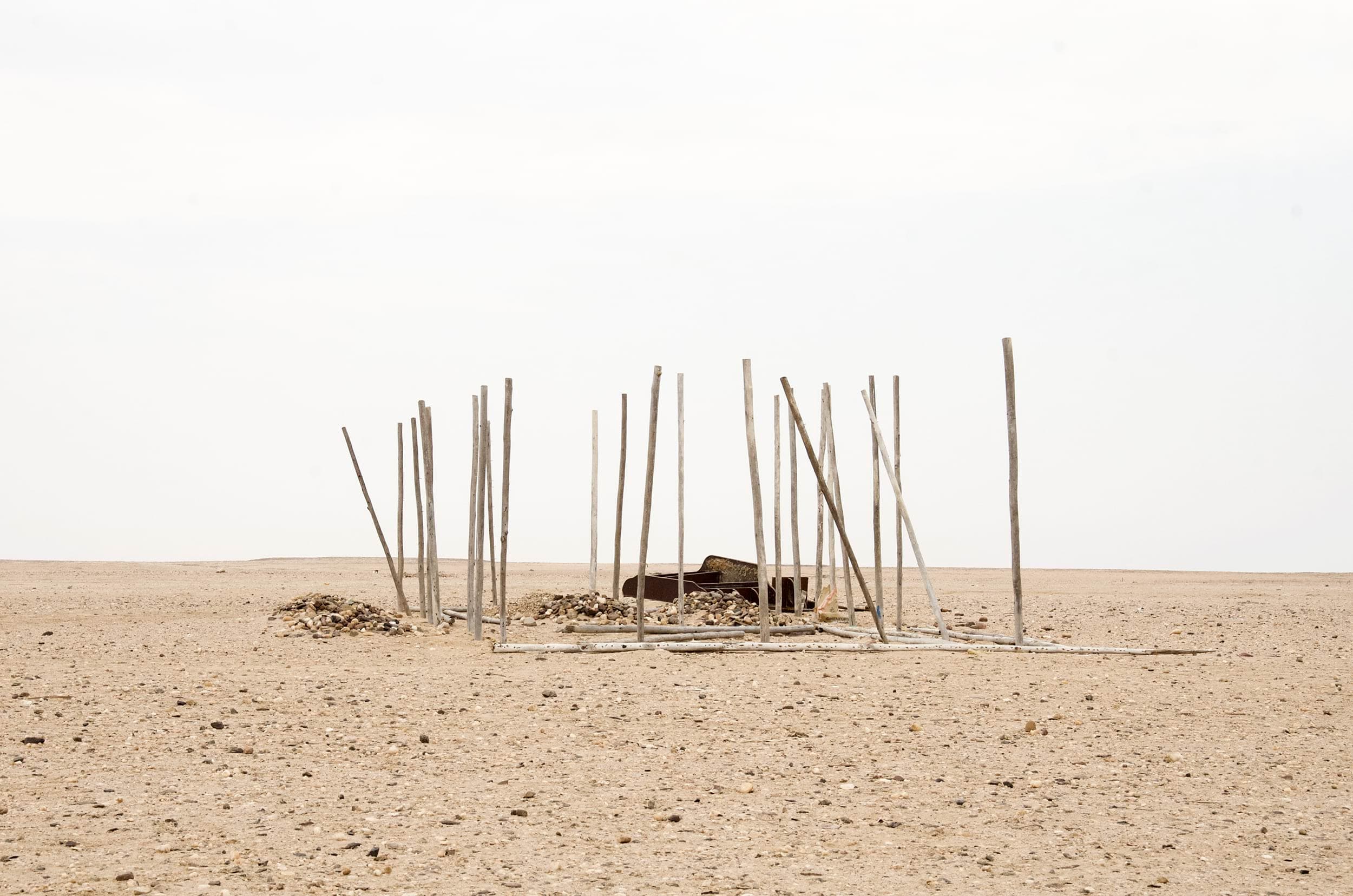
Kiluanji Kia Henda (b. 1979, Luanda, Angola) explores themes of identity, politics, and perceptions of post-colonialism and modernism in Africa. Structures of Survival (2022) depicts the fragile framework for a house in the heart of the Namib Desert. Related to how a construction boom in Angola following the civil war has excluded much of the local population, the work alludes to the unattainability of housing for many. Like a mirage, the impending threat of erosion to the structure's foundations only compounds its ephemerality.

Kiluanji Kia Henda
Structures of Survival (Kilometer 19, Namibe) II, 2022
Inkjet on fine art paper
72.85 x 110 cm
28.7 x 43.3 in
Edition of 5
Kiluanji Kia Henda
Structures of Survival (Kilometer 19, Namibe) I, 2022
Inkjet on fine art paper
72.85 x 110 cm
28.7 x 43.3 in
Edition of 5