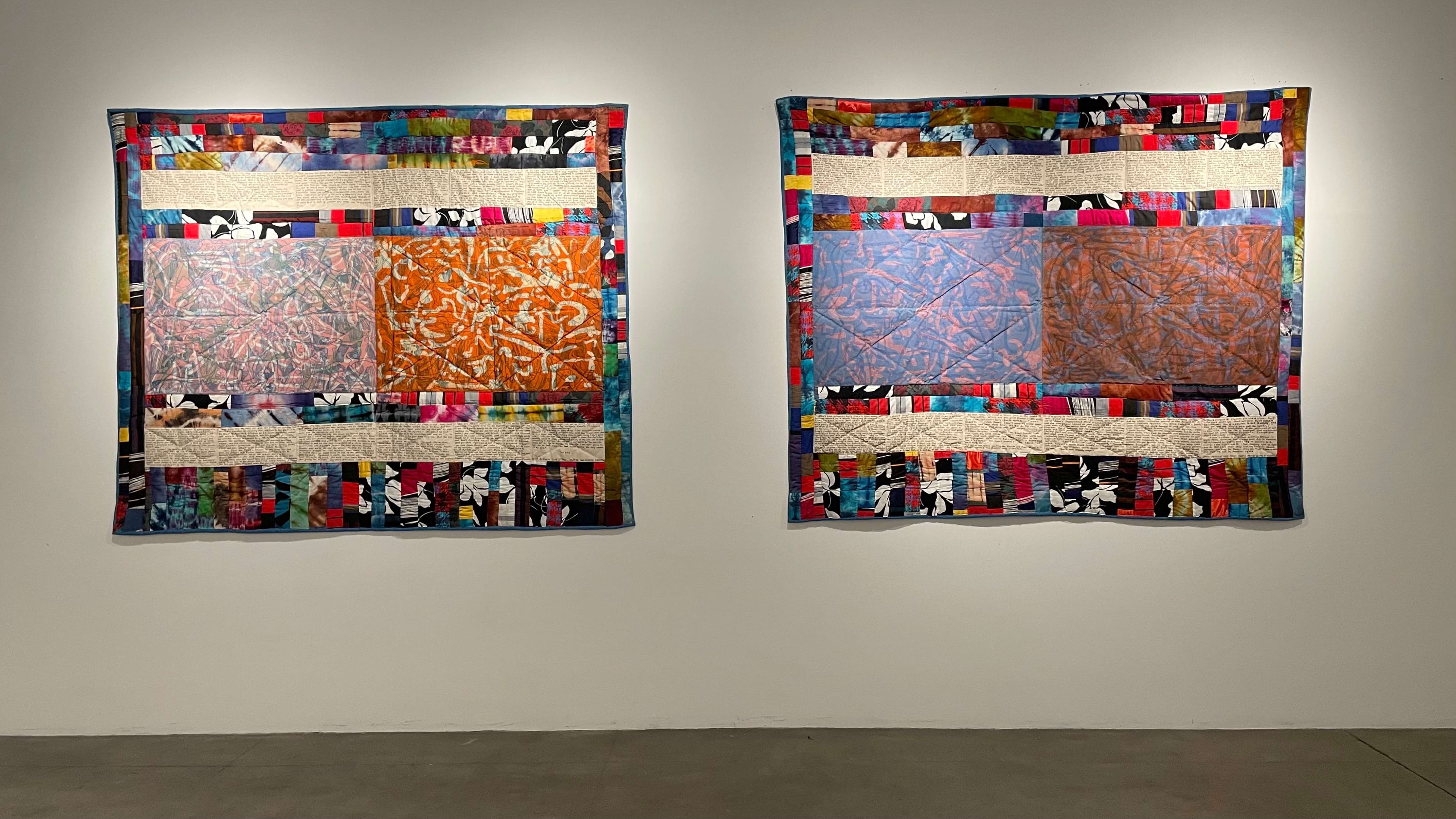
Faith Ringgold’s story quilt South African Love Story #2: Part I and II (diptych) (1985-87) is a work grounded in a South African narrative. Quoting a literary text, it tells the romantic story of a couple that has been separated and the struggle for freedom that eventually unites them. Produced during the 1980s, a highly volatile time in South Africa’s history, it highlights the intersections of race, gender and class in the country at the time and emphasizes solidarity between struggles across the Atlantic.
During the 1980s Ringgold collaborated with Robert Blackburn and his famous New York printmaking workshop to create various prints which she incorporated into her story quilts. In South African Love Story #2 patches of dyed, printed and painted fabric surround the text, with the central panels bearing a pattern of entangled human forms that echoes the story’s content.
This historic quilt will be presented at Goodman Gallery, Cape Town in April 2023 marking its first presentation in South Africa since its creation almost 40 years ago.
Exhibition History
Works of Visual Arts Department Faculty, University of California, San Diego (UCSD) Mandeville Gallery, San Diego, CA, April 6 – May 15, 1988
In 1974 Ringgold created the Windows of the Wedding series, her first completely abstract paintings. Each of the works were originally conceived of as a backdrop for a series of fantasy wedding doll couples, part of the artist’s ongoing series of doll soft sculptures. For Ringgold these couples represented ideal relationships and perfect weddings, an example she hoped to set for her two daughters.
The paintings feature a visual language she invented based on Kuba designs from Central Africa. Each work in the series is intended to be a kind of hanging prayer rug for the couples to meditate with every morning and evening, giving them magic protection - and, above all, happiness.
In 1974 Ringgold created the Windows of the Wedding series, her first completely abstract paintings. Each of the works were originally conceived of as a backdrop for a series of fantasy wedding doll couples, part of the artist’s ongoing series of doll soft sculptures. For Ringgold these couples represented ideal relationships and perfect weddings, an example she hoped to set for her two daughters.
The paintings feature a visual language she invented based on Kuba designs from Central Africa. Each work in the series is intended to be a kind of hanging prayer rug for the couples to meditate with every morning and evening, giving them magic protection - and, above all, happiness.
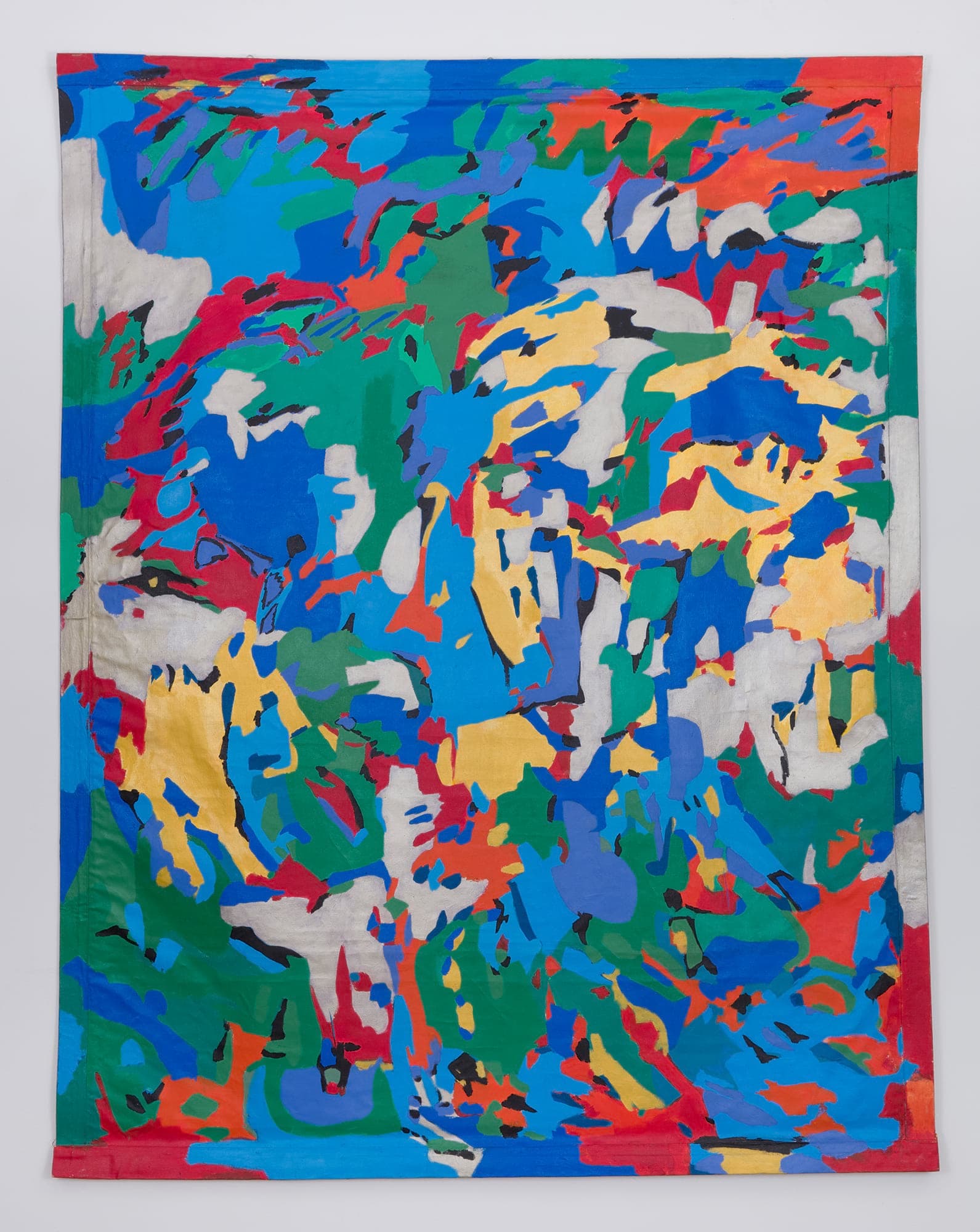
In 1983 Ringgold painted four abstract paintings which she named the Dah series. She refers to these works and others of this period as "painting the inside of my head”. Up to that point her art had always been about specific people and issues.
“In order to produce an abstract image in my painting I positioned myself close to the canvas and made strokes of color all over it, one color at a time, until I had covered the whole surface. When I finally moved away from the canvas, I was surprised and excited by the abstract composition I had created. There were all sorts of strange images there, so I was satisfied that I was indeed "painting the inside of my head" and not anything else. I made borders painted in gold or silver for these works from glued-on canvas. “
The title for the series is derived from Faith’s daughter, who was only one year old when she was asked what she thought of these paintings. She responded with "Dah."
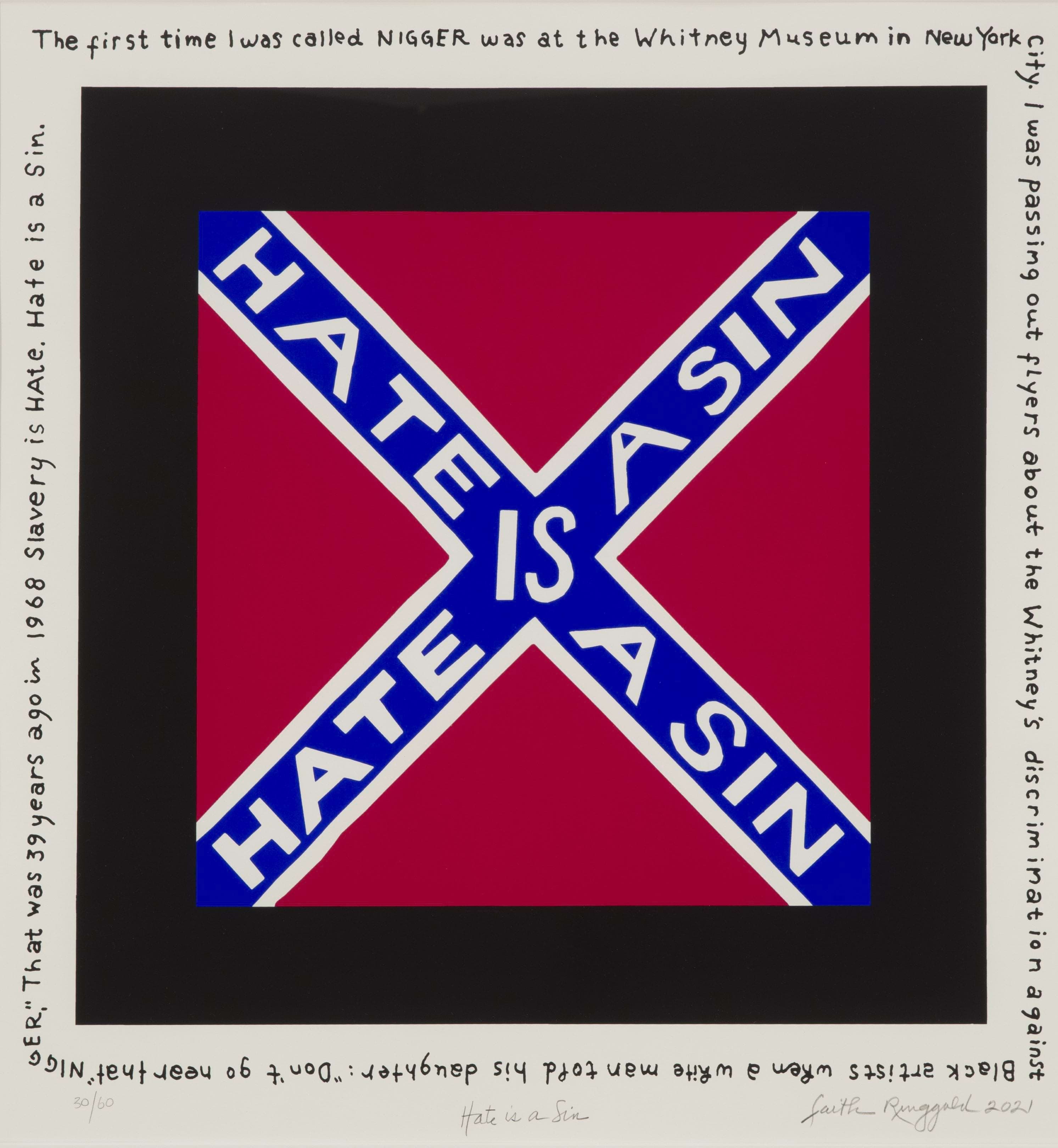
“The first time I was called NIGGER was at the Whitney Museum in New York City. I was passing out flyers about the Whitney’s discrimination against black artists when a white man told his daughter: “Don’t go near that “NIGGER” that was 39 years ago in 1968.
Slavery is HAte. Hate is a sin” (Transcription)
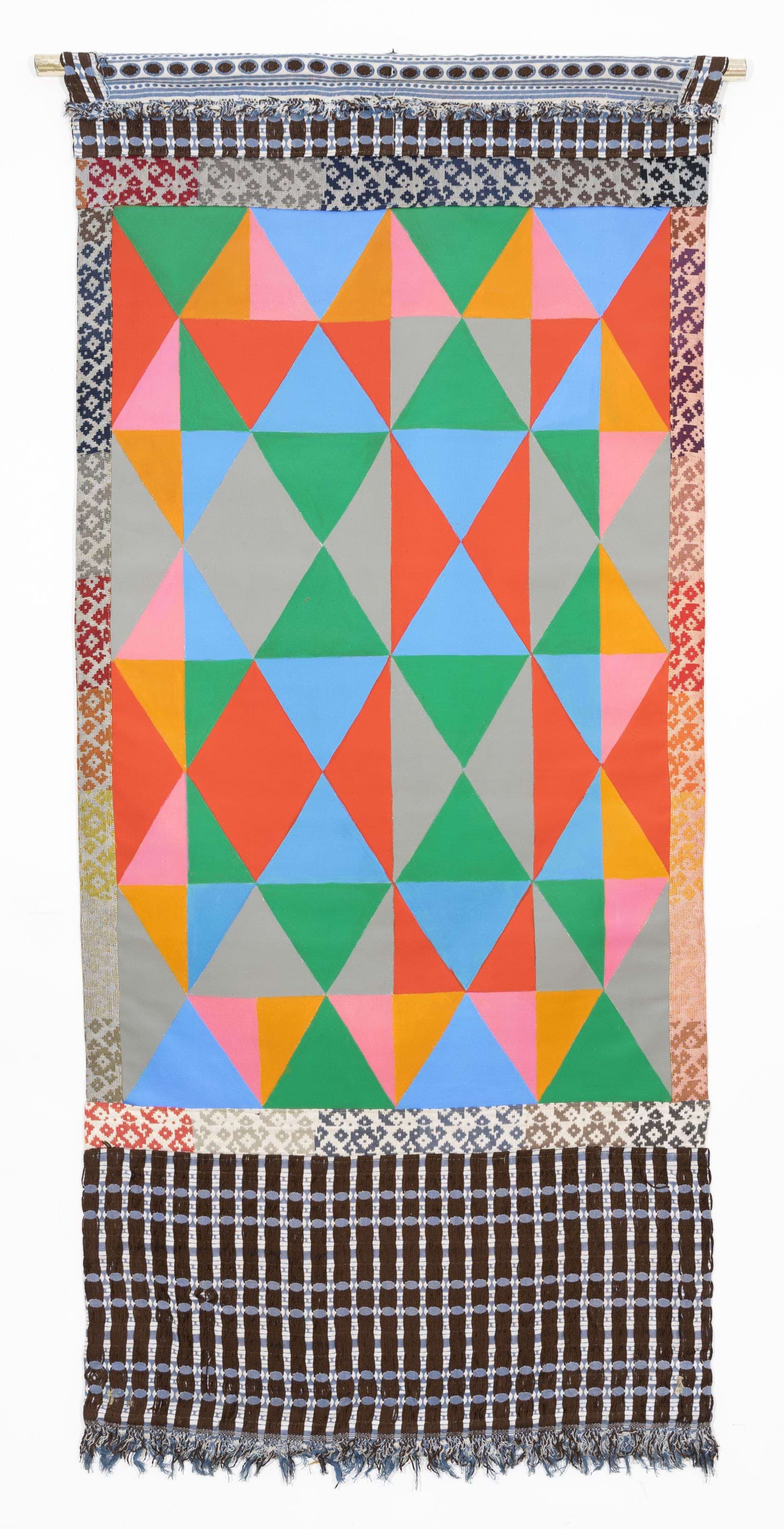
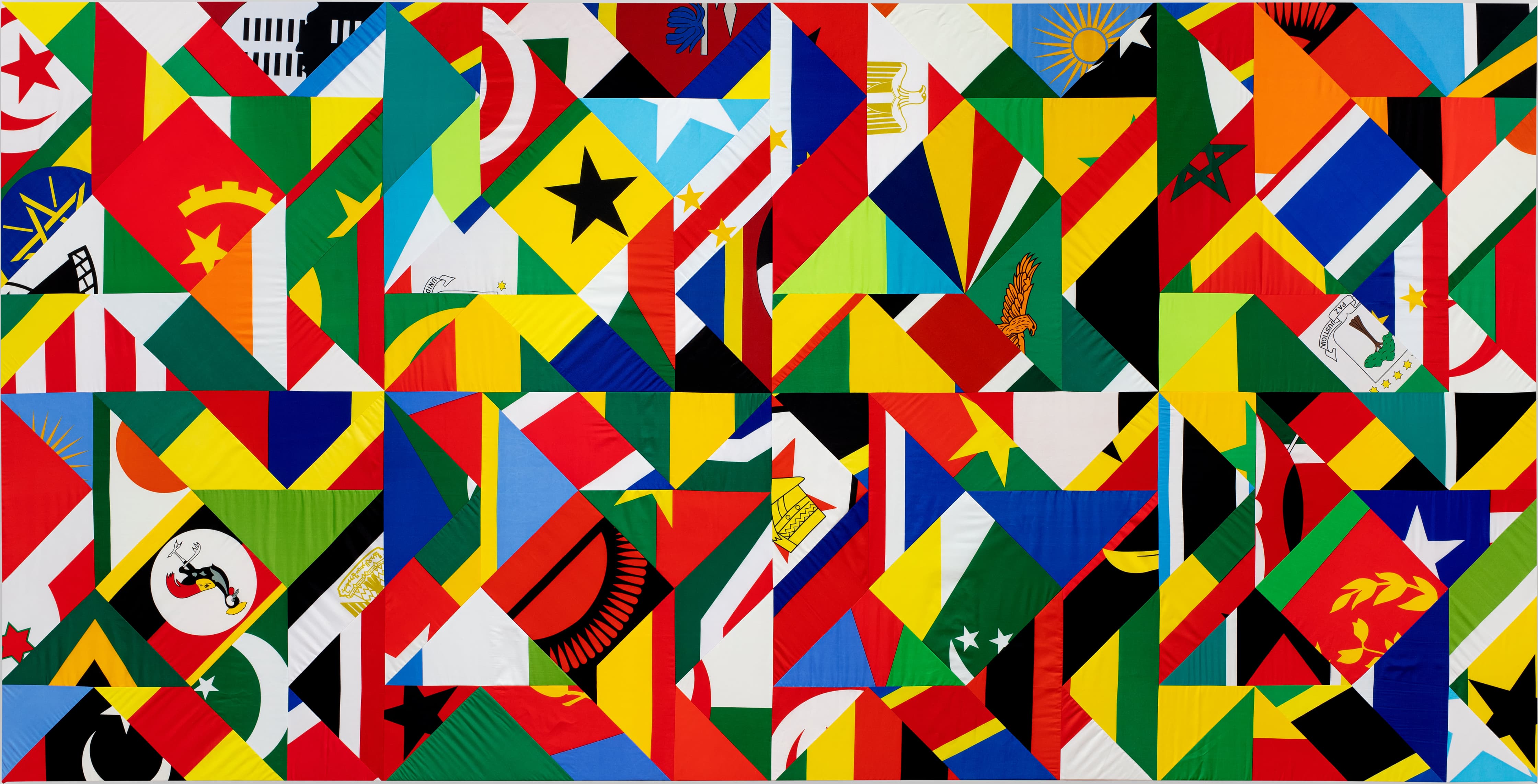
The series of quilts reimagines the flags of the states of Africa as source material for Willis Thomas’ ongoing quilt practice. Significant national symbols and colours are fragmented and rearranged into new constellations, using the folkloric quilt patterns of the American Underground Railroad as a guide. The titles are drawn from famous speeches or quotes from various Pan-Africanist leaders.
“Forward then to Independence, To independence now. Tomorrow, the United States of Africa.” Kwame Nkrumah, then prime minister of Ghana, at the All-African People’s Conference in 1958. The landmark gathering drew nationalist leaders from across the continent; some would later become presidents.
The quilt draws on the Flying Geese pattern, one of the many coded motifs believed to have been used in the underground railroad during the time of the American Civil War. It communicated to escaped slaves to take their direction, timing, and behavior from migrating geese. Since geese fly north in the spring, it was also the best time for slaves to escape.
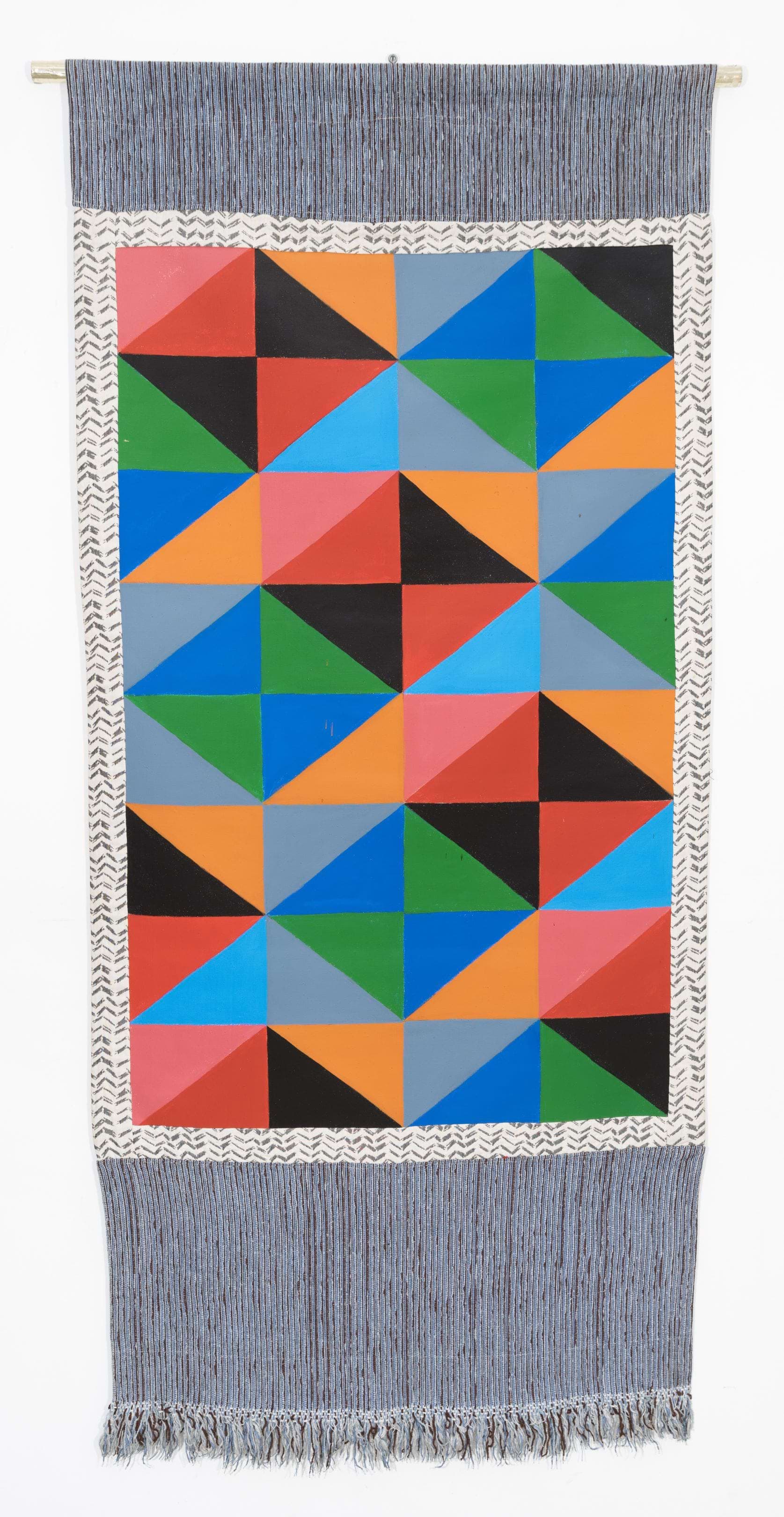
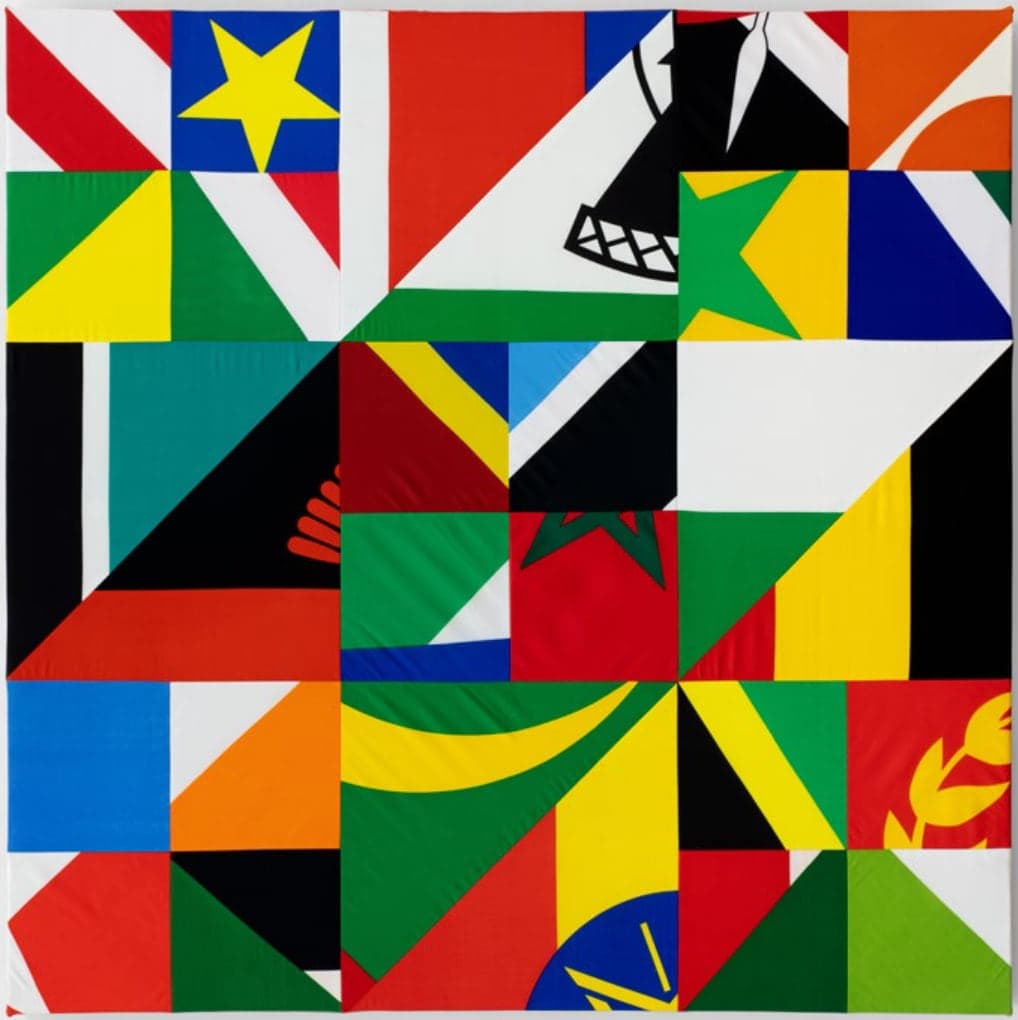
The series of quilts reimagines the flags of the states of Africa as source material for Willis Thomas’ ongoing quilt practice. Significant national symbols and colours are fragmented and rearranged into new constellations, using the folkloric quilt patterns of the American Underground Railroad as a guide. The titles are drawn from famous speeches or quotes from various Pan-Africanist leaders.
“ Let us now, as we plan for the coming year, set our GOALS too high; let us demand more of ourselves than we believe we possess.”
Speech From The Throne Delivered By His Imperial Majesty Haile Selassie I On The Opening Day Of The Ethiopian Parliament On November 21st, 1963.
This quilt draws on the Jacob's Ladder pattern, also referred to as the Road to California or Stepping Stones block, Underground Railway or Wagon Tracks block
Video
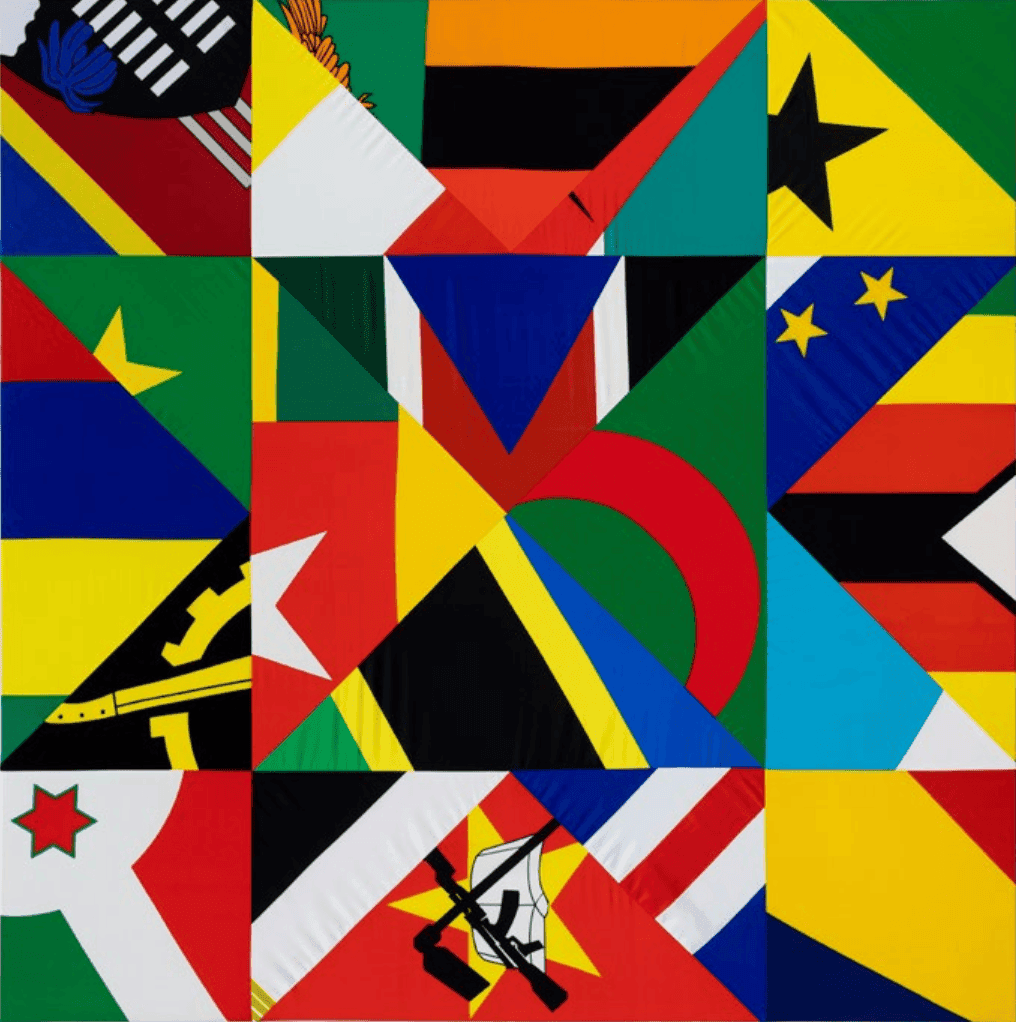
The series of quilts reimagines the flags of the states of Africa as source material for Willis Thomas’ ongoing quilt practice. Significant national symbols and colours are fragmented and rearranged into new constellations, using the folkloric quilt patterns of the American Underground Railroad as a guide. The titles are drawn from famous speeches or quotes from various Pan-Africanist leaders.
“You cannot carry out fundamental change without a certain amount of madness. In this case, it comes from nonconformity, the courage to turn your back on the old formulas, the courage to invent the future. It took the mad men of yesterday for us to be able to act with extreme clarity today. I want to be one of those mad men. … We must dare to invent the future.”
Thomas Sankara, excerpted from an interview with Swiss Journalist Jean-Philippe Rapp in 1985.
This quilt draws on the North Star quilt pattern. A signal with two messages--one to prepare to escape and the other to follow the North Star to freedom in Canada. North was the direction of traffic on the Underground Railroad.
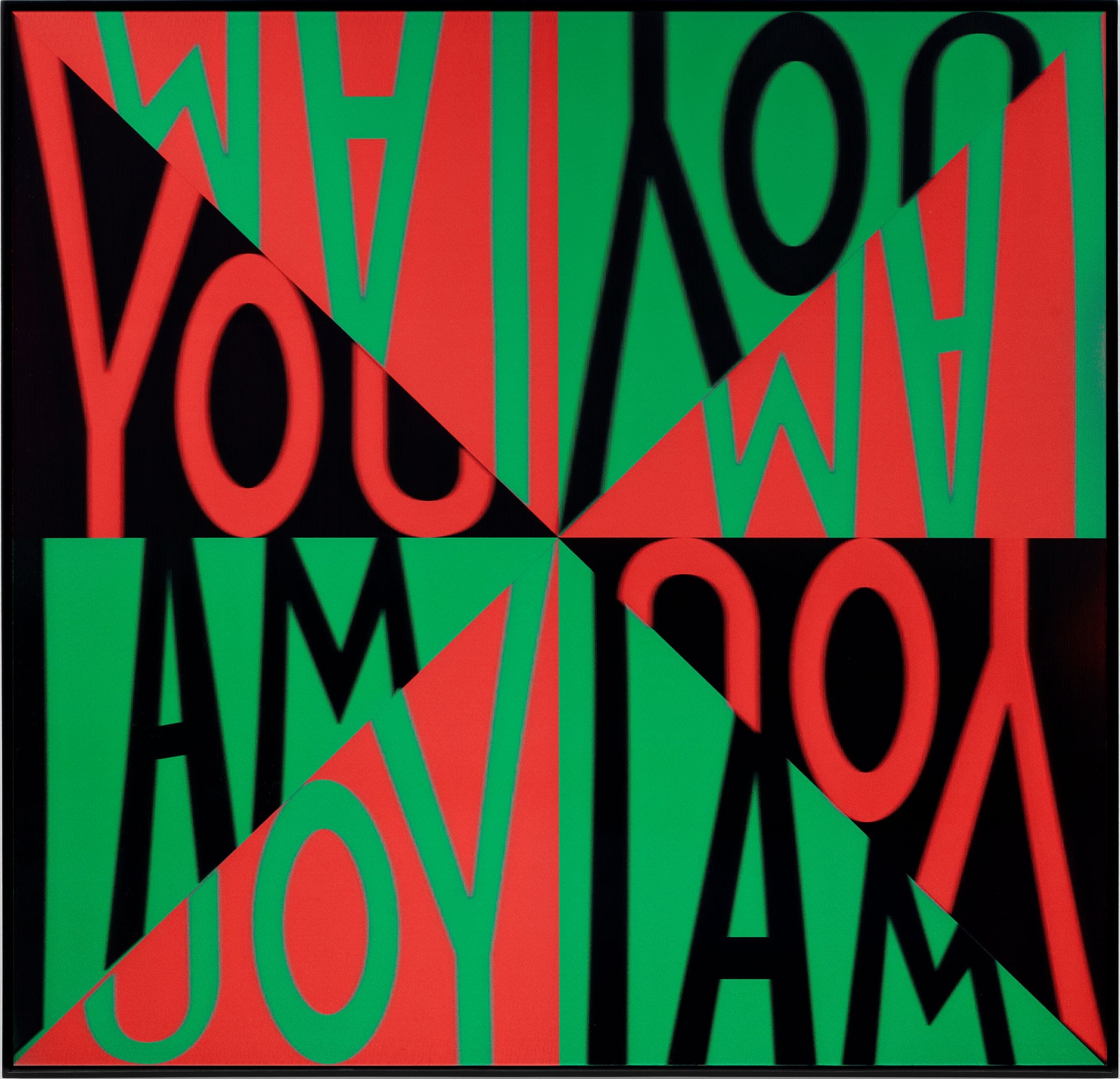
Thomas’s lenticular I am You / I Am Joy (2023) sees a direct interaction with Faith Ringgold’s set of collages from the 1970s. Her collages include phrases that speak to Black feminist sentiments borne out of her personal experiences. Thomas borrows Ringgold’s typographic aesthetic and layout to speak to ideas around identity in a contemporary context. The work also references the 1968 Memphis sanitation workers' strike, specifically the posters declaring “I AM A MAN.” These works, through the nature of their material, force viewers to look again, mirroring the artist’s revisiting of this historical moment and protest art more generally.
Video
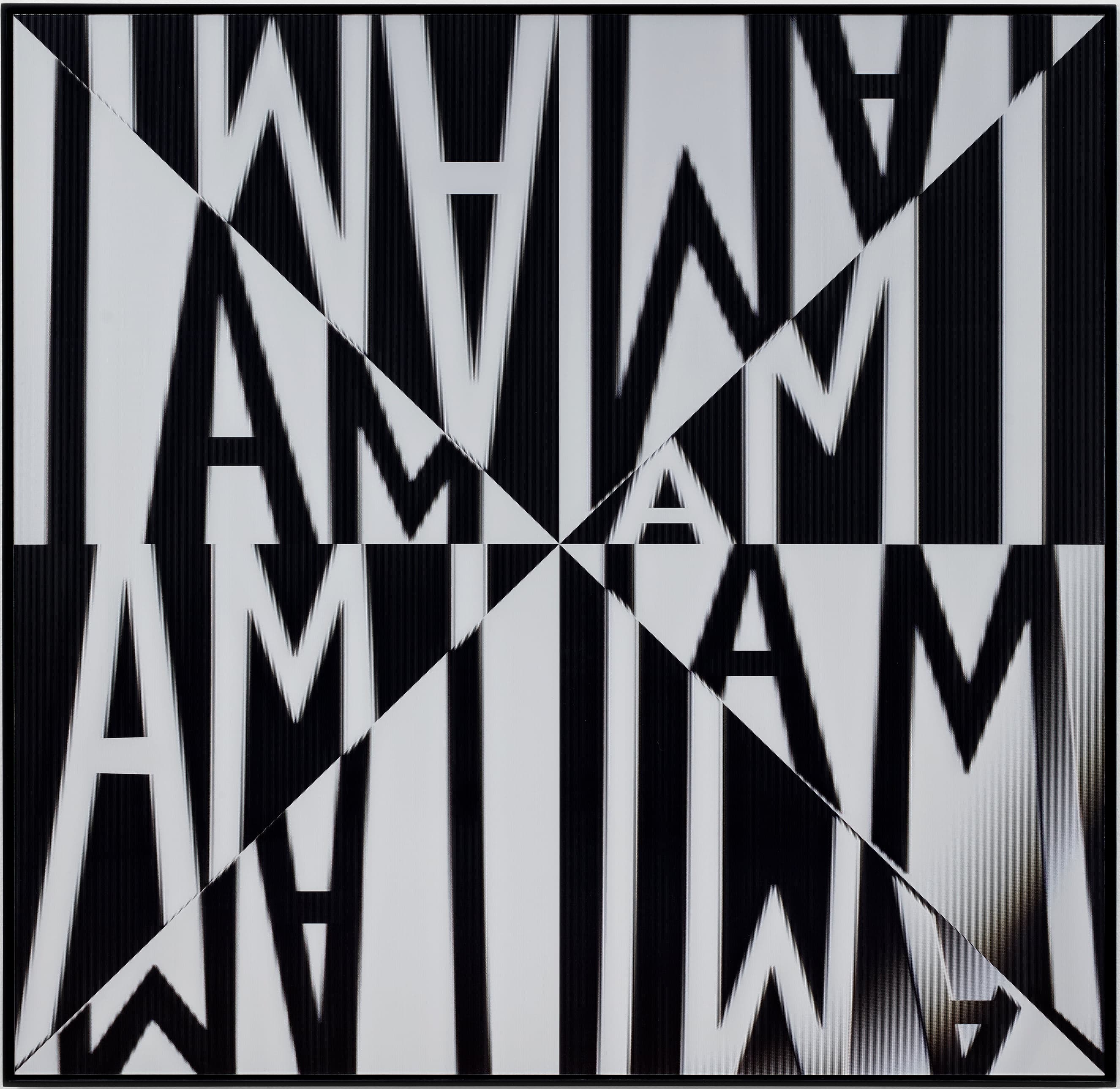
Hank Willis Thomas’ lenticular work I am. Am I? AM I? I Am plays with perception, language, and identity through visual movement and typographic intensity. As the viewer shifts position, the text morphs between affirmations and questions—I am, Am I?, AM I?, and I Am—inviting reflection on the fluid, and often unstable, nature of selfhood. Using the lenticular medium, Thomas transforms static text into a dynamic dialogue, visually embodying the internal oscillation between certainty and doubt. The mirrored, high-contrast design heightens this psychological tension, turning a simple statement into an existential inquiry.
Video
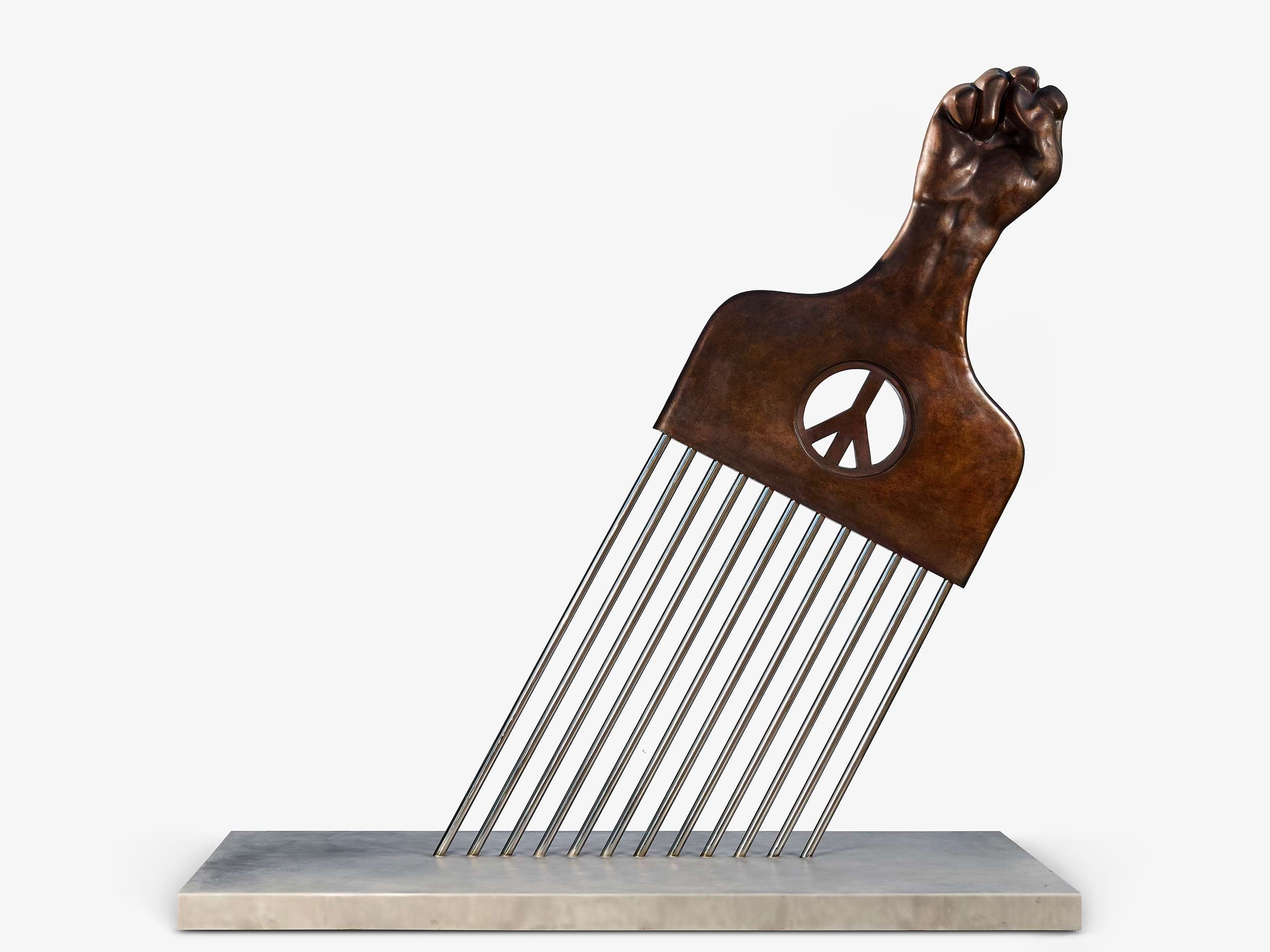
A public sculpture by Hank Willis Thomas that takes the form of a large Afro pick, standing upright with a clenched Black Power fist as its handle. Cast in bronze, the work is a powerful symbol of cultural pride, political resistance, and solidarity. It references both the history of the Black Power movement and the significance of the Afro pick as an emblem of Black identity. By monumentalizing this everyday object, Thomas invites reflection on issues of race, empowerment, and representation in public space.
Video
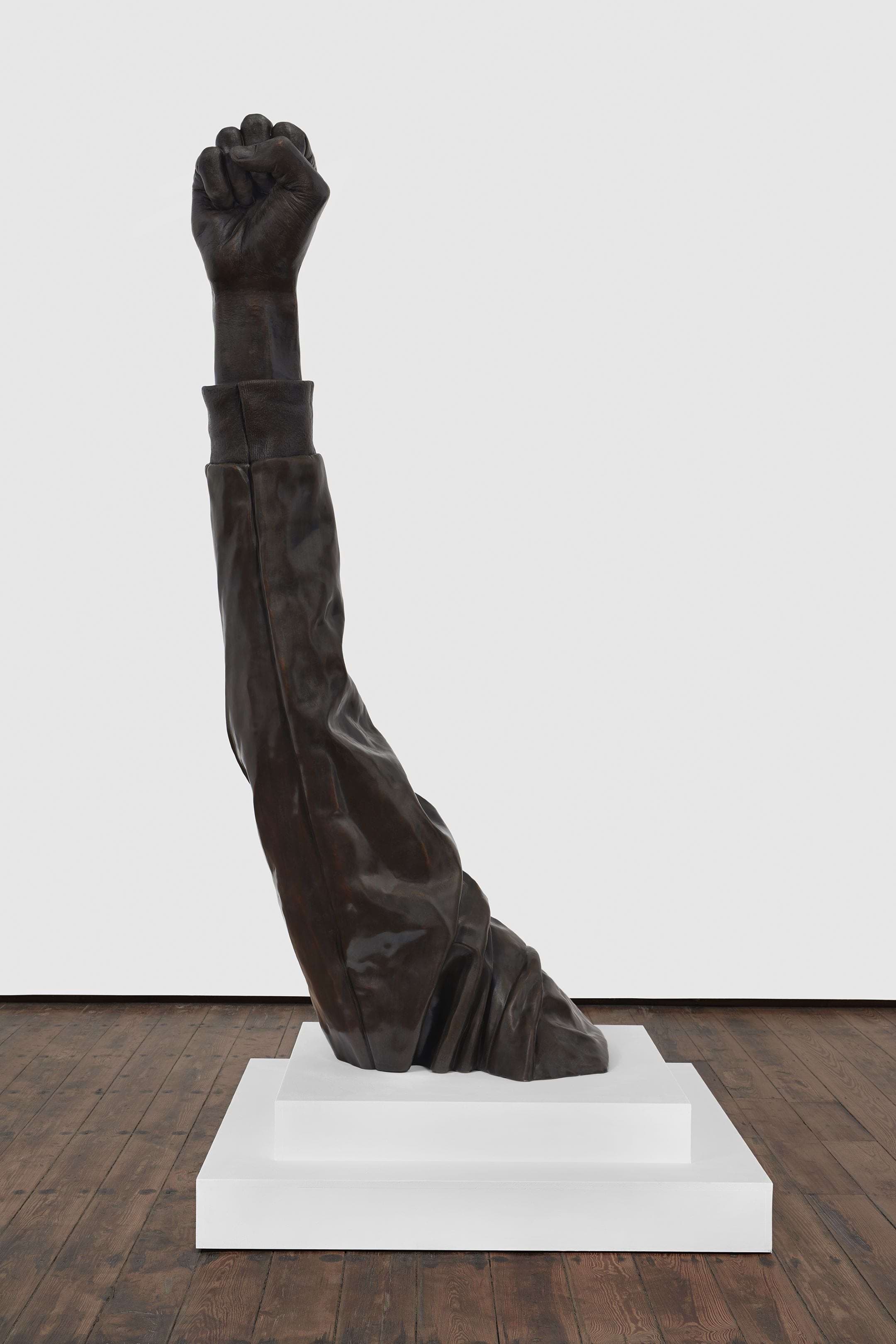
Solidarity forms part of the artist’s punctum series, inspired by Roland Barthes’ photographic theory of punctum, which refers to the detail in an image that pierces or stays with the viewer, Thomas uses sculpture to memorialize significant moments by isolating these gestures and investigating their ability to communicate ideas about individual and collective identity, ambition, perseverance, unity, and community.