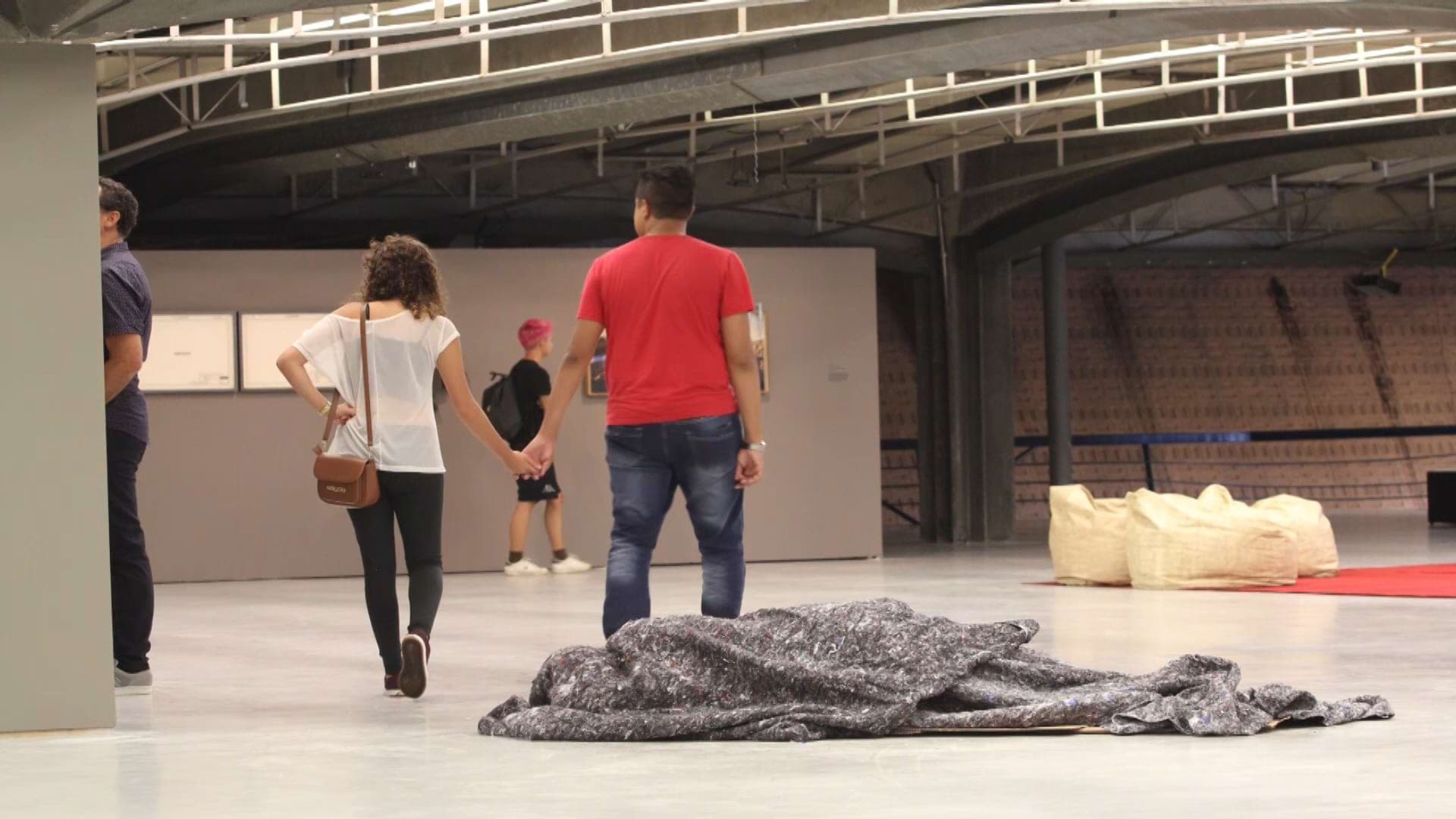
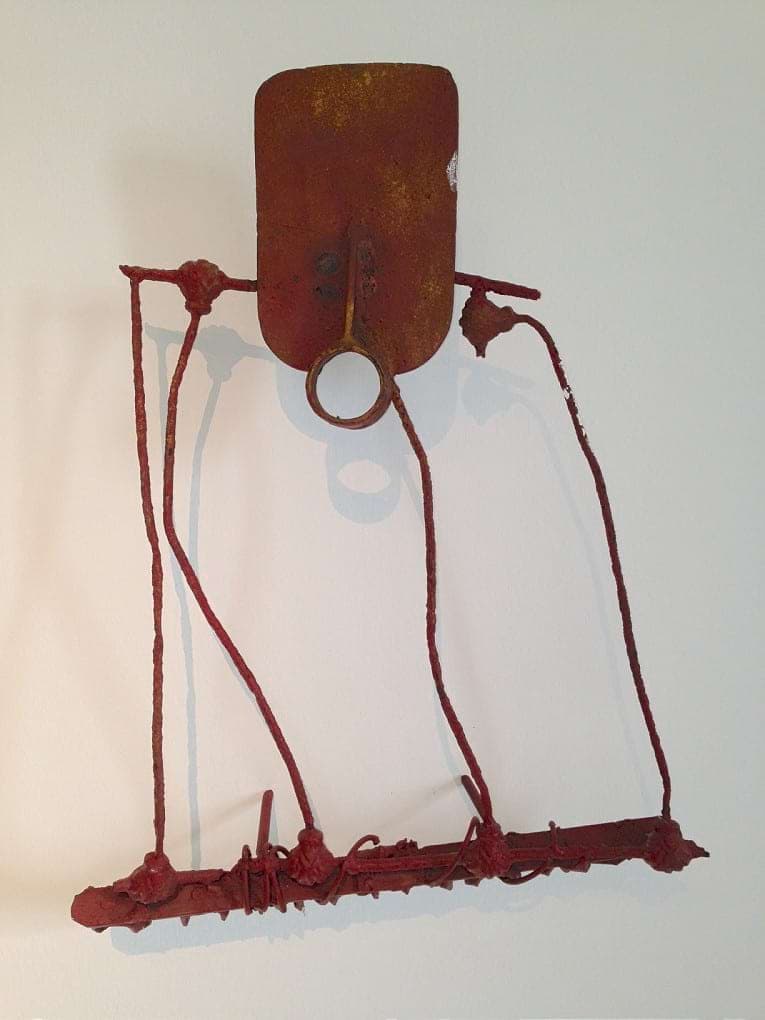
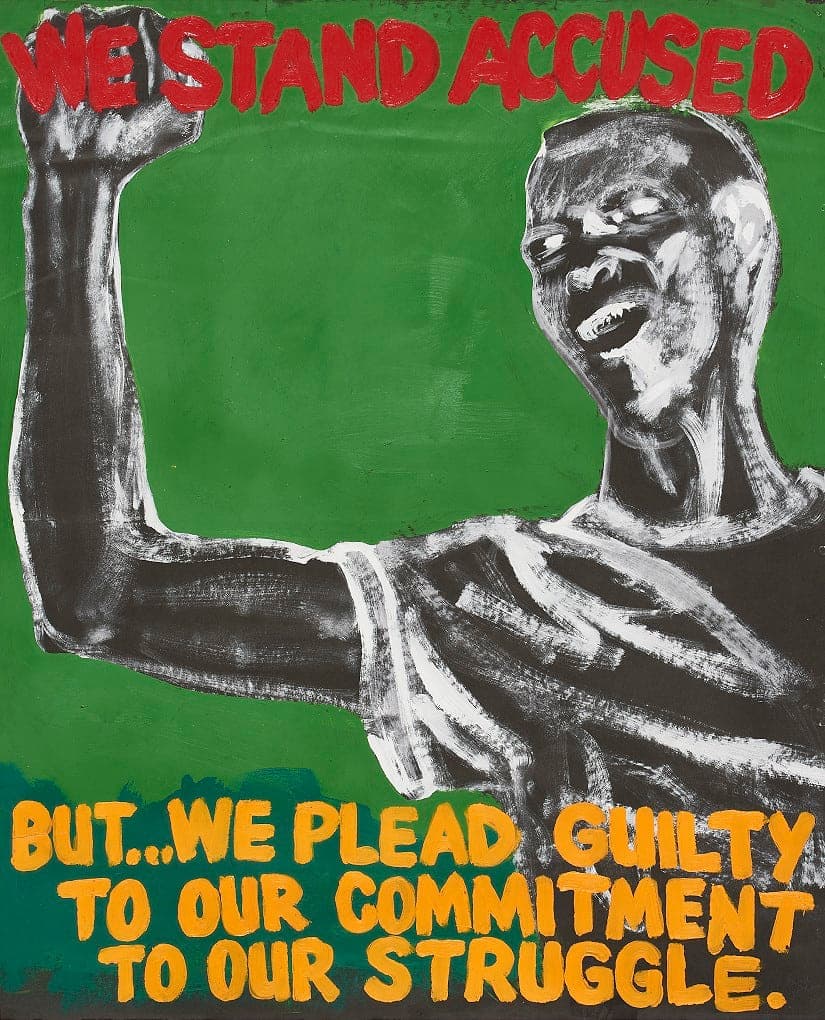
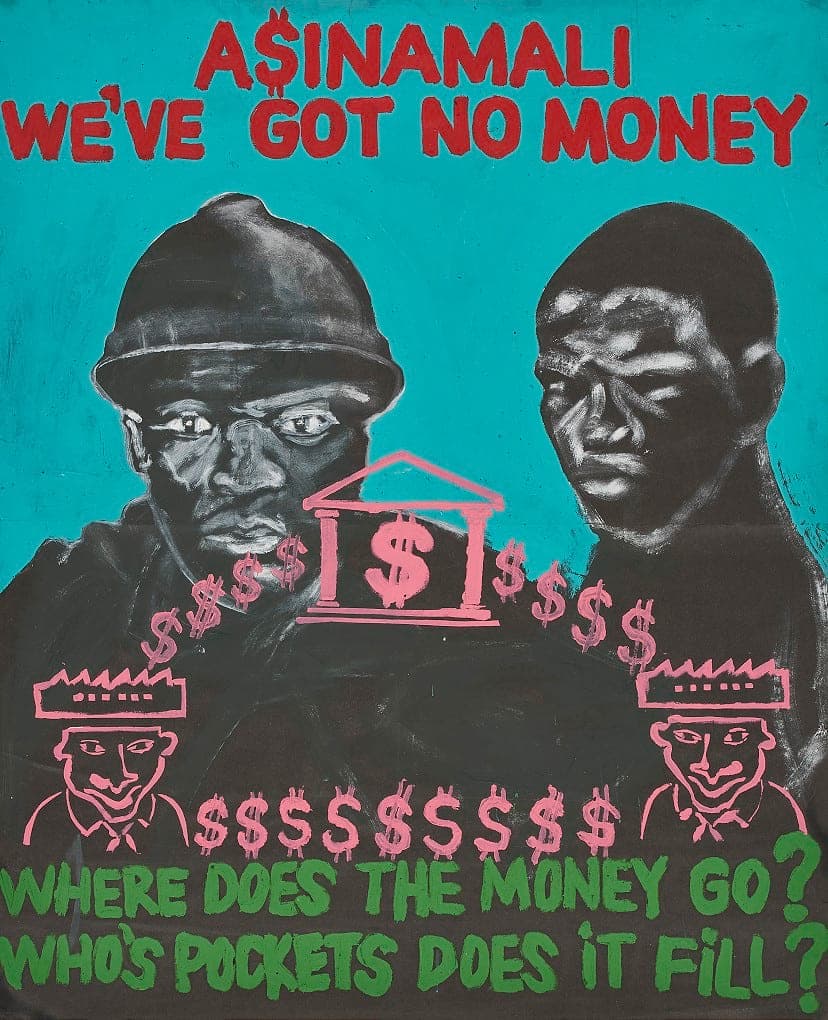
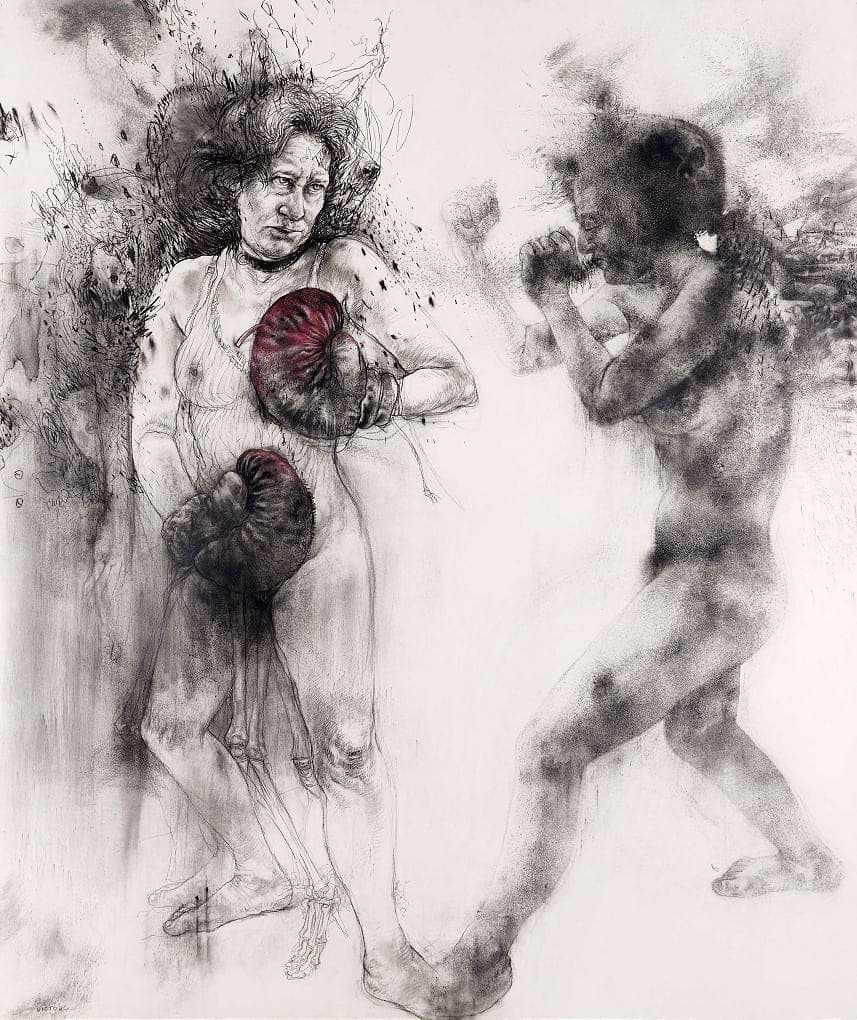
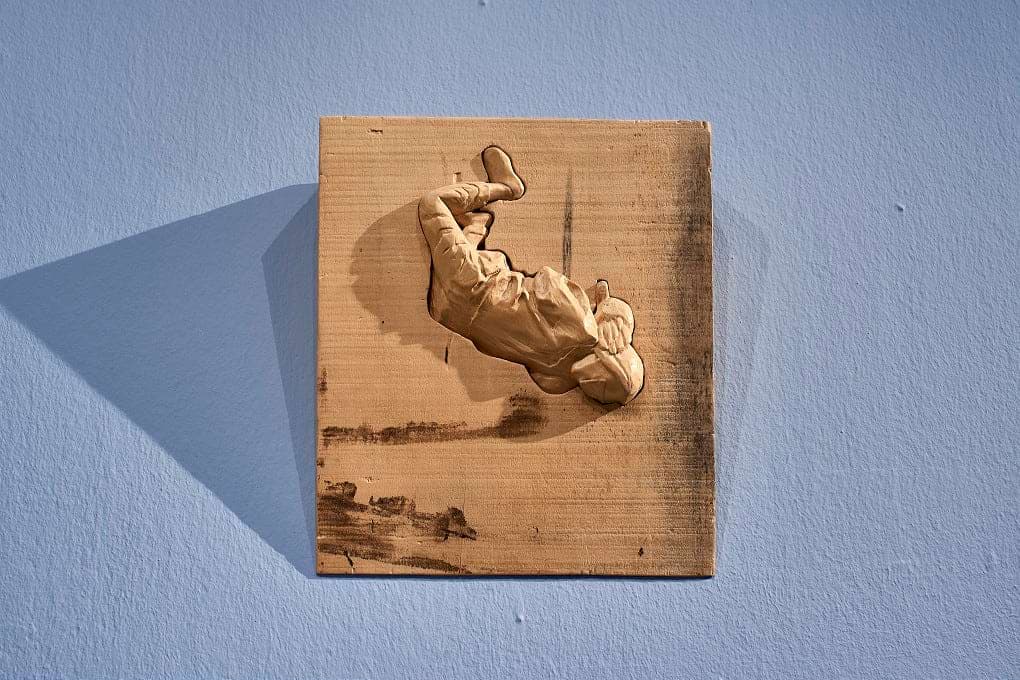
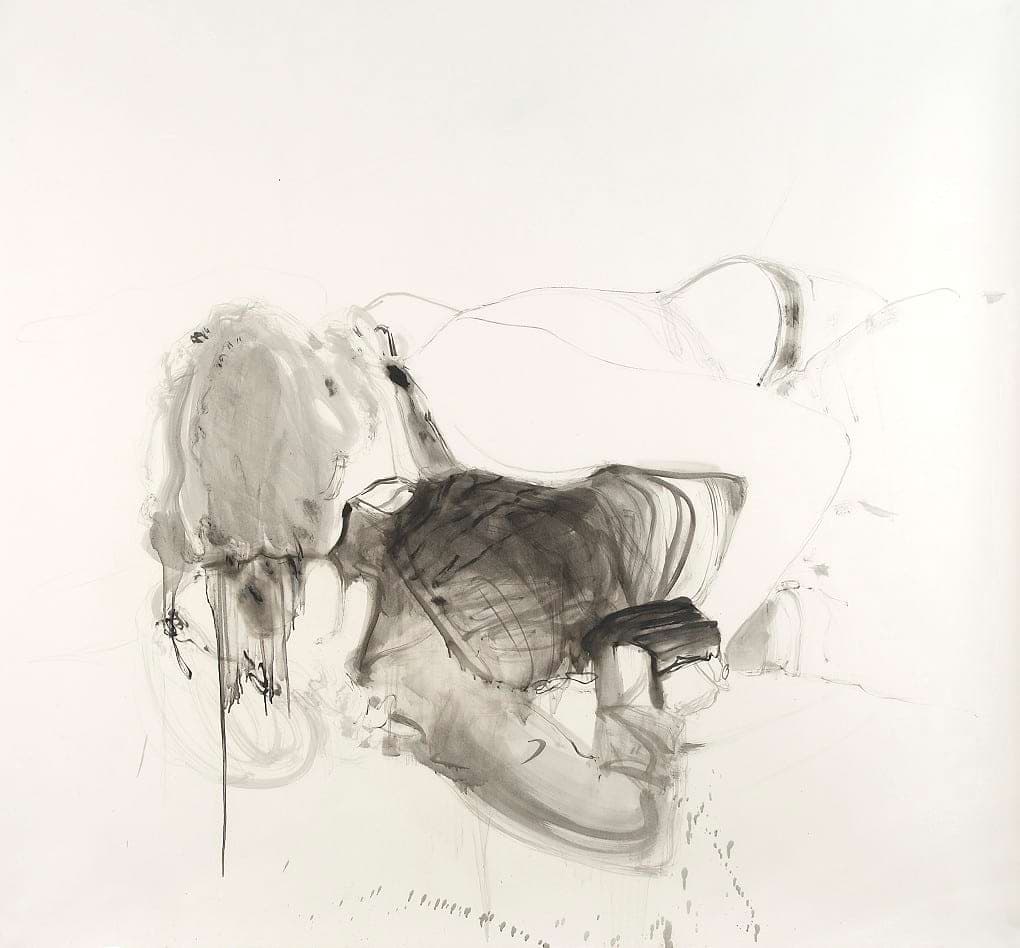
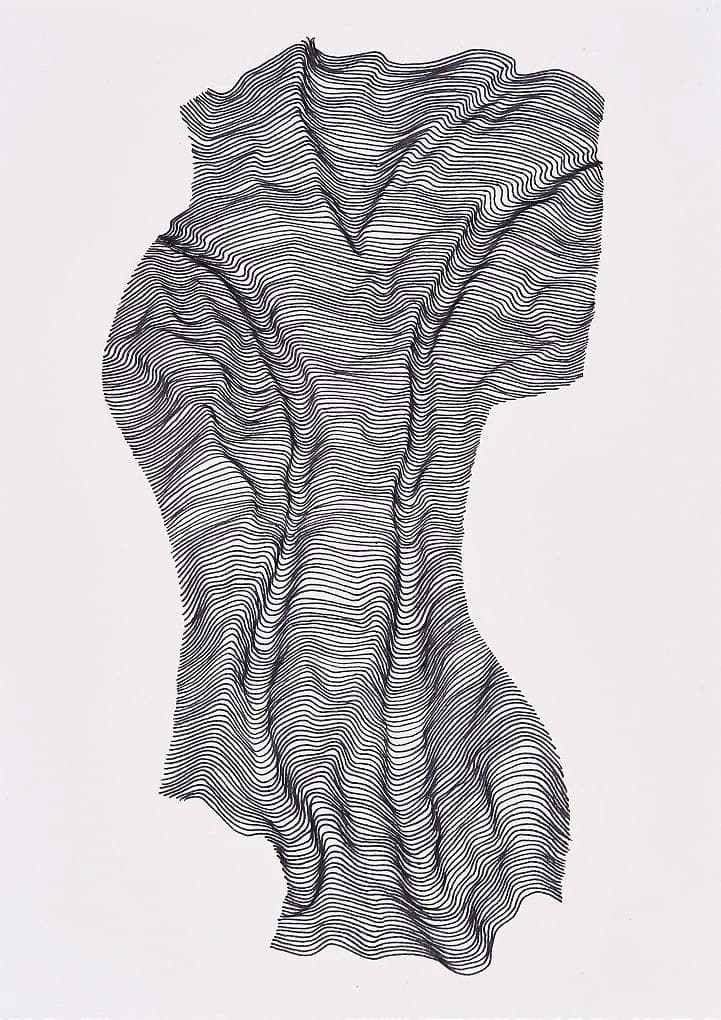
Recalling the sleeping form of a homeless person, a huddled and blanketed body lies on cardboard boxes, partially blocking the entrance to a gallery, museum or other cultural space. Forced to negotiate the shrouded human form, access is complicated for those wishing to enter or exit the space, the privileged remove of which is thrown into question. Significant here is the idea of how the hyper-visibility of marginalised and ‘unseen’ bodies is negotiated (or negated). Made apparent also, and performed, is the problematic relation of art to its market, in the symbolic inclusion of a body ordinarily excluded from such an economy.
This is a work that demands response – as those encountering it must decide whether to skirt or step-over the blanketed form. Sometimes the body is kicked, sometimes investigated, at other times fed and asked after, and in some cases even stripped of its blanket. Demonstrated in these various interactions is something of how the 'excluded' bodies of marginalised individuals come to bear on routines of privilege – the implied politics of which is critical to the chronic disparity as well as racial, gendered and economic divides that constitute the social habit and normalised violence of post-apartheid South Africa.
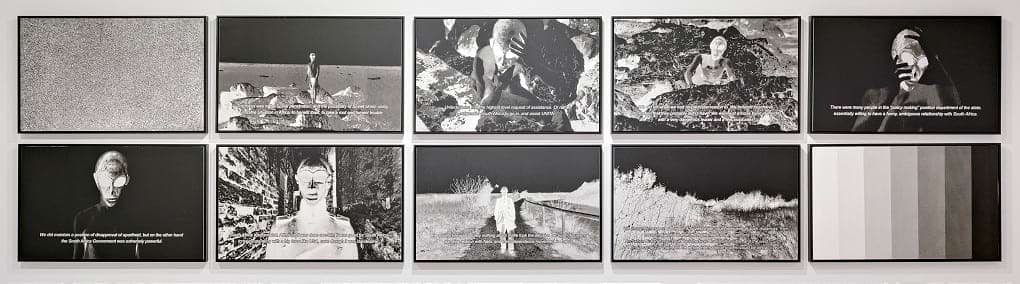
The Bad Guys and the Good Guys consists of a series of ten monochromatic silkscreen prints that trace a narrative about the influence of the Cold War in Africa. The title of the work and the printed subtitles on the screen prints were appropriated from the documentary Cold War Stories, produced in 1997 by the CNN’s founder Ted Turner. In one of the chapters of the documentary, prominent political and military figures of the two major world superpowers during the Cold War, United States and the former Soviet Union – and also from countries such as Cuba and South Africa – provide a testimony about their involvement in the long civil war in Angola. The perverse attempt to omit the secret and sinister intrusion of the international community in the Angolan civil war often boils down its causes to a mere tribal conflict.
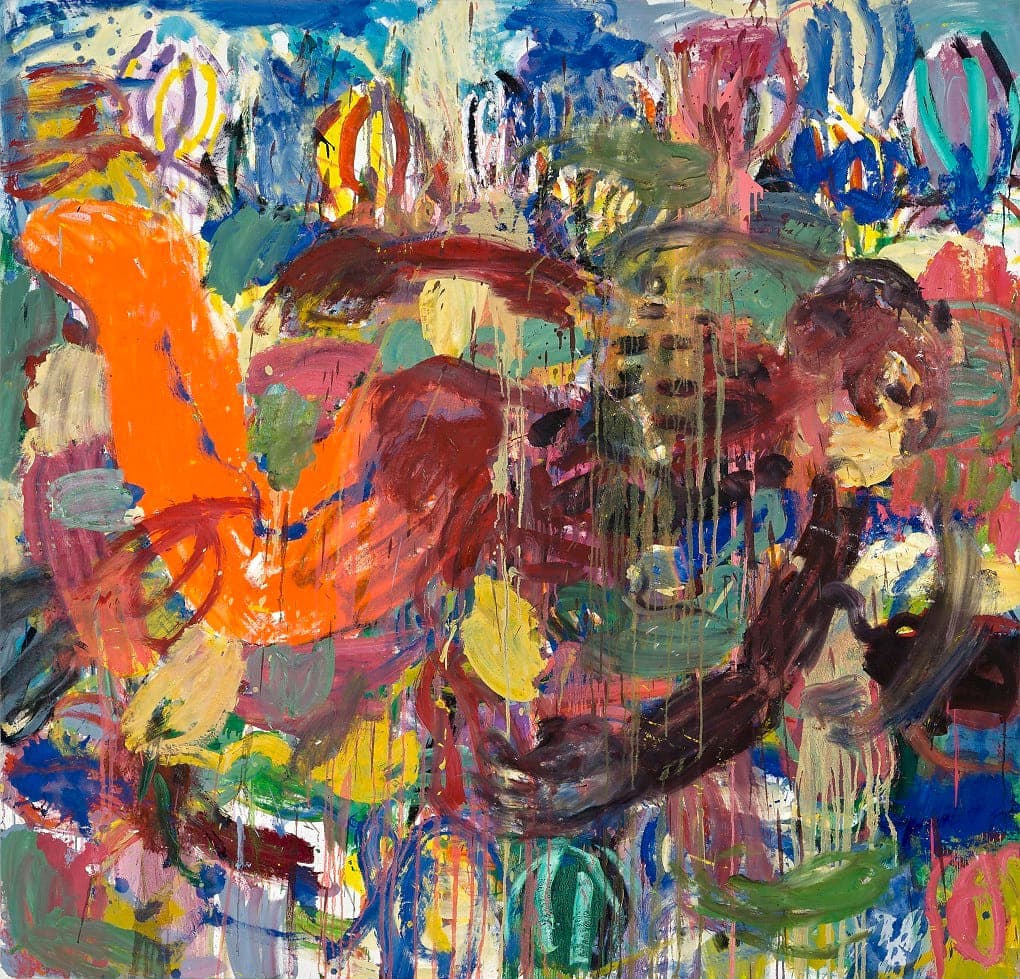
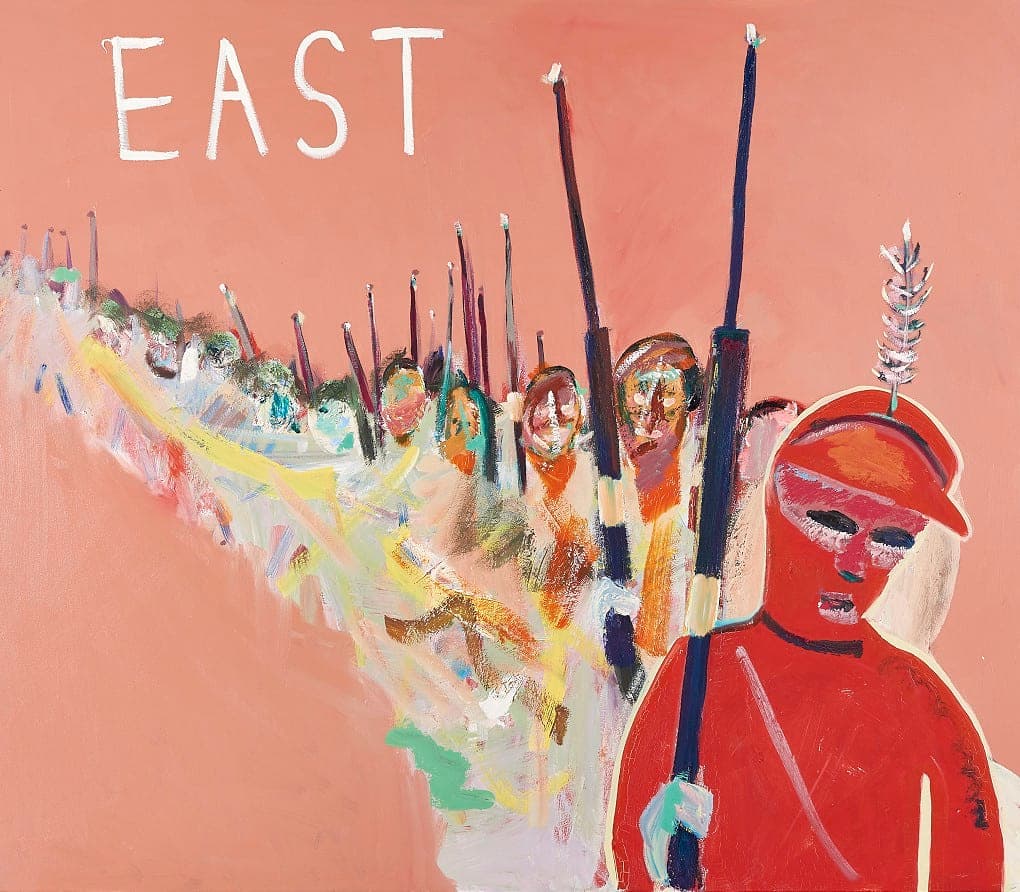
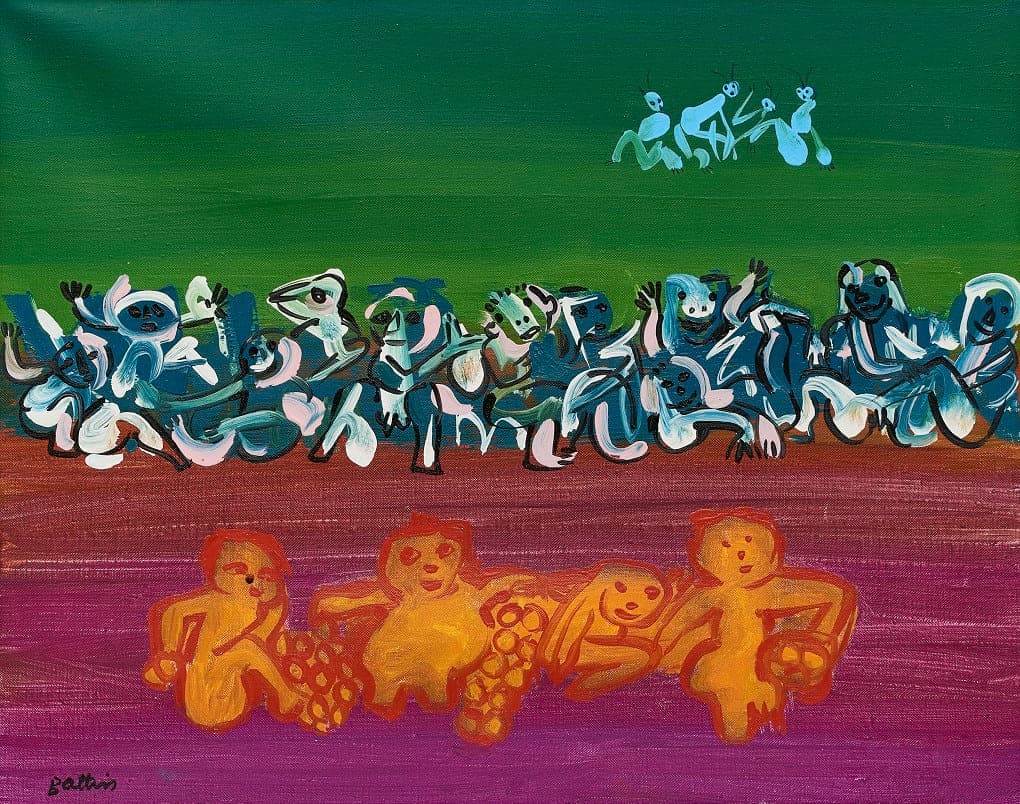
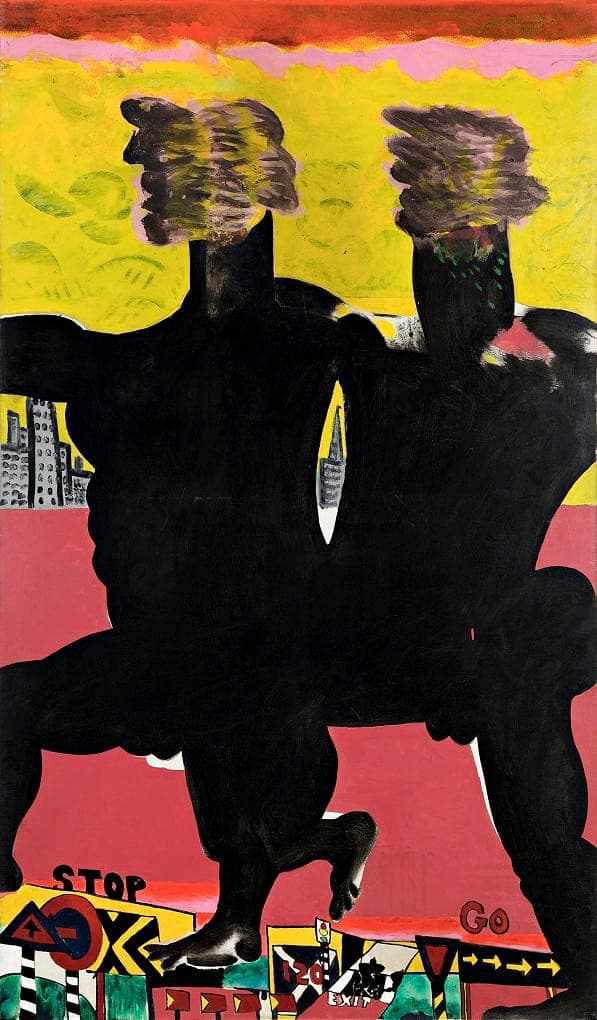
(authorised by Robert Hodgins Estate)
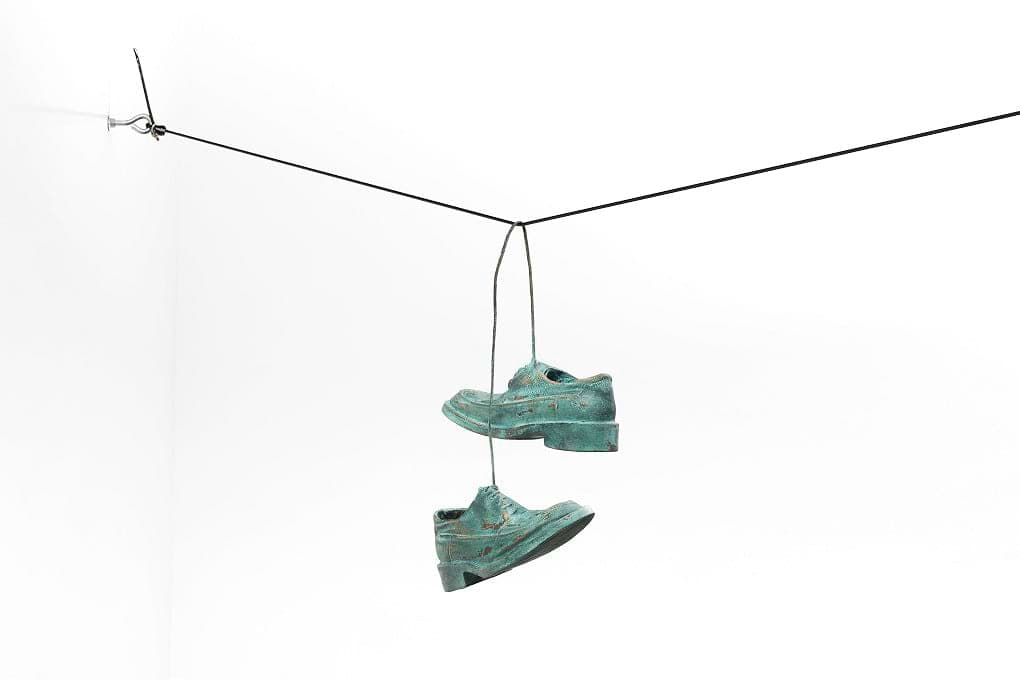
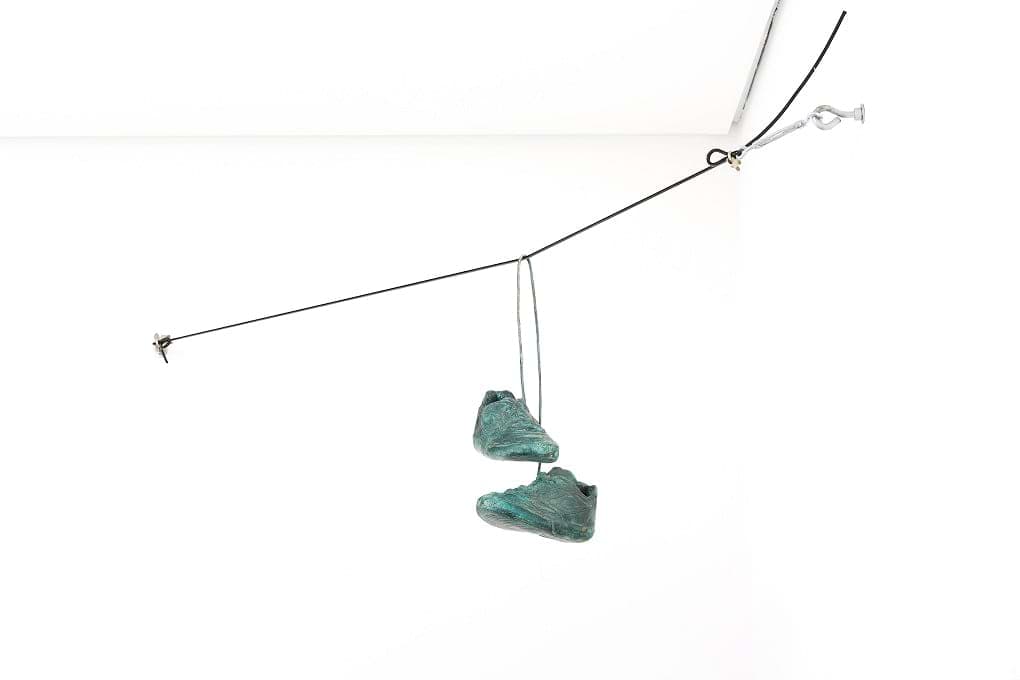
Haroon Gunn-Salie’s On the Line is a series of sculptures drawing parallels between regions within the Global South. The artworks appropriate everyday memorials and silent monuments, shoes hanging off street poles and telephone lines, often overlooked in the peripheries of our cities and the margins of our societies. On the Line consists of a series of pairs of shoes, tied together by their laces and cast in bronze. The shoes were removed from telephone wires in different sites of Favela da Serra in Belo Horizonte, Brazil.