Video
Photography credit: Aatjan Renders
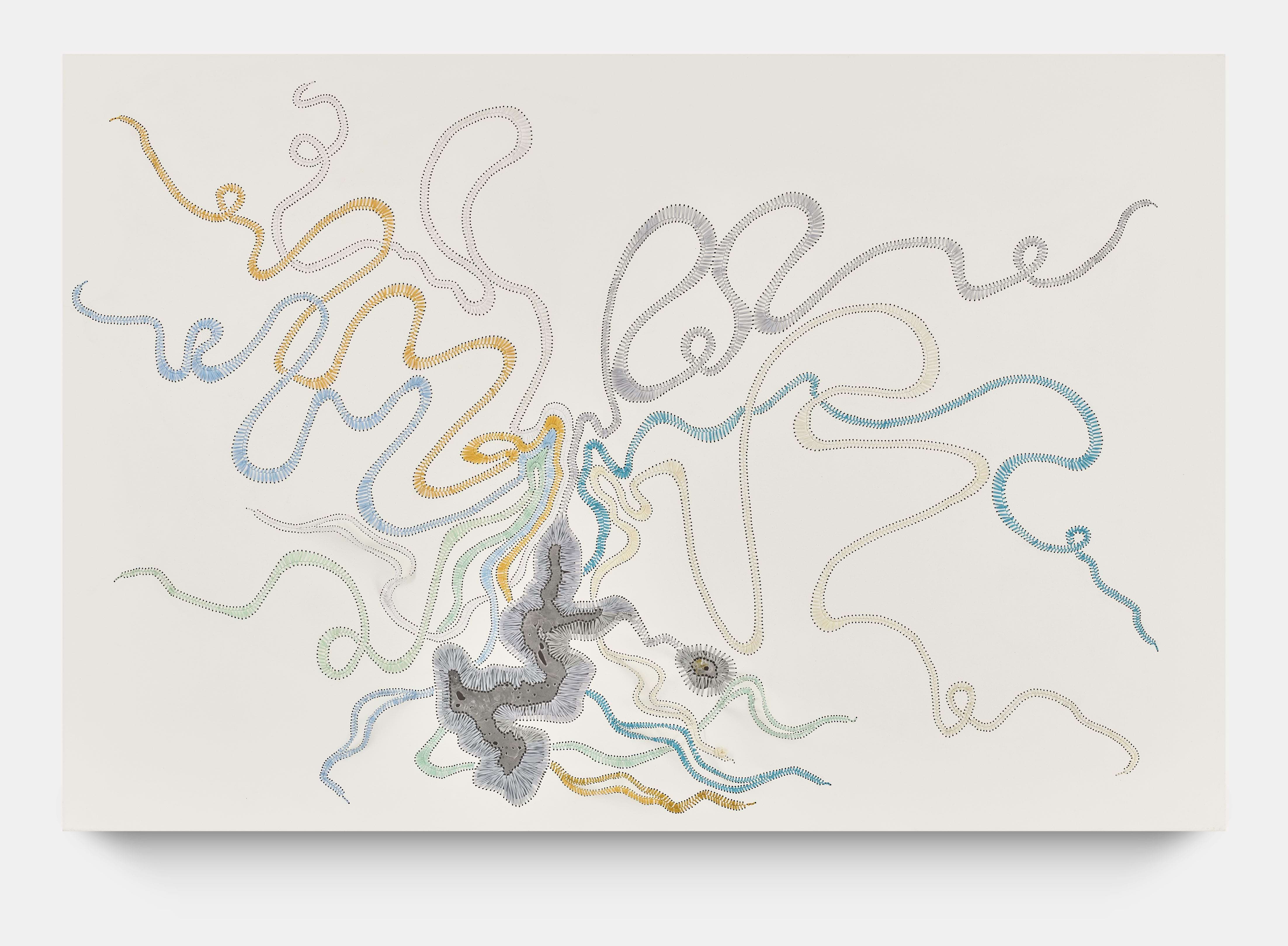
Working with various found objects and materials — leather, rubber, bronze, ribbons, copper and brass —Nicholas Hlobo considers his artistic practice to be a kind of autobiography through which he articulates a sense of self. Through an obscured grammar within a language of abstraction, Hlobo explores his psychological, emotional and spiritual journey. “My work is about my journey, how I relate to myself and to the outside world. I’m very curious about the invisible, intangible and incomprehensible aspects of that journey and there is always a slipperiness to the process of figuring it out”, says Hlobo.
Hlobo uses materials that have resonance to his personal memories, he explains; “Materials are found and used as a way to add more layers to the narrative. And how they are intervened with forms part of becoming a language that tells the story. Found objects have their own stories with various patinas depending on where they come from.”
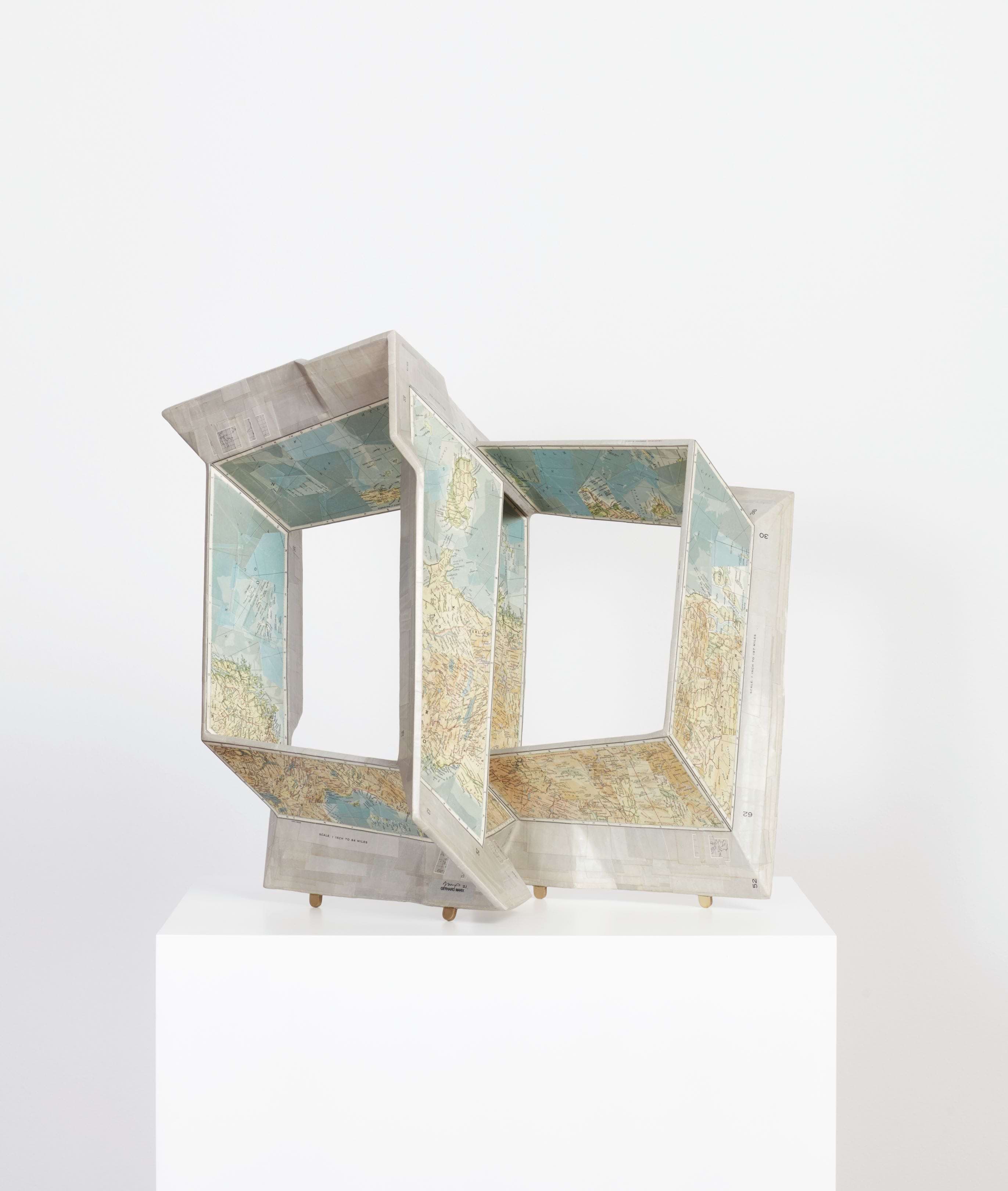
The same space three times borrows its title from a sculpture by Gerhard Marx. Appearing as an enclosed object, the work forms part of “a series of sculptural and propositional cartographies that engages physical depictions of space,” according to the artist. The work’s structure creates a sort of optical illusion in which three near identical overlapping viewpoints can be seen from different angles. The addition of collaged map fragments, taken from standard educational world atlases, prompts a reconsideration of our perspective on cartographic depictions of the planet. By creating this view, Marx offers us a “more complicated spatial experience of overlap, intersection, simultaneity, relationality and overlay.”
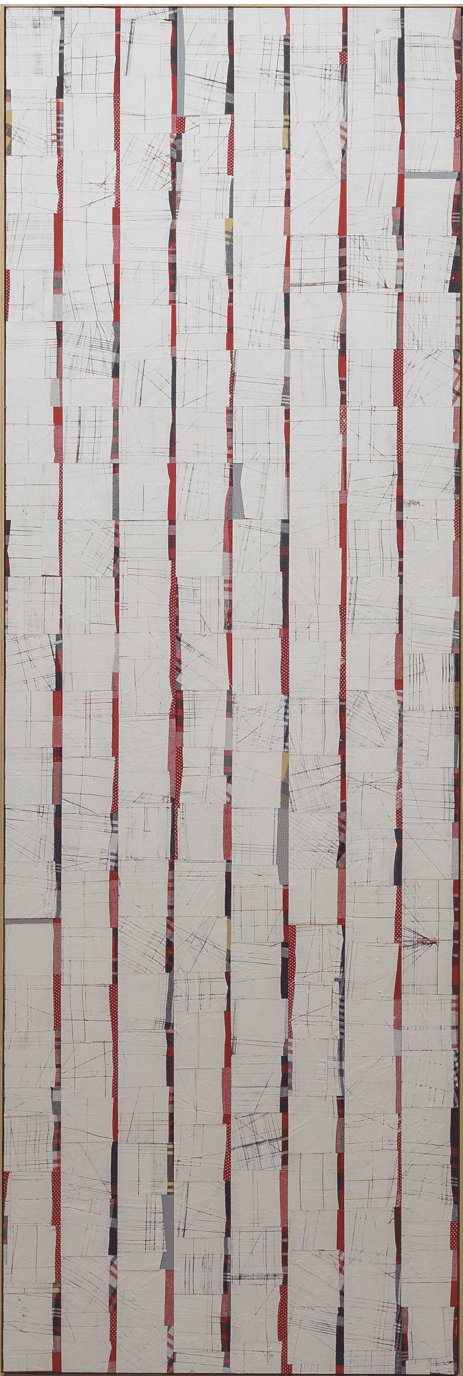
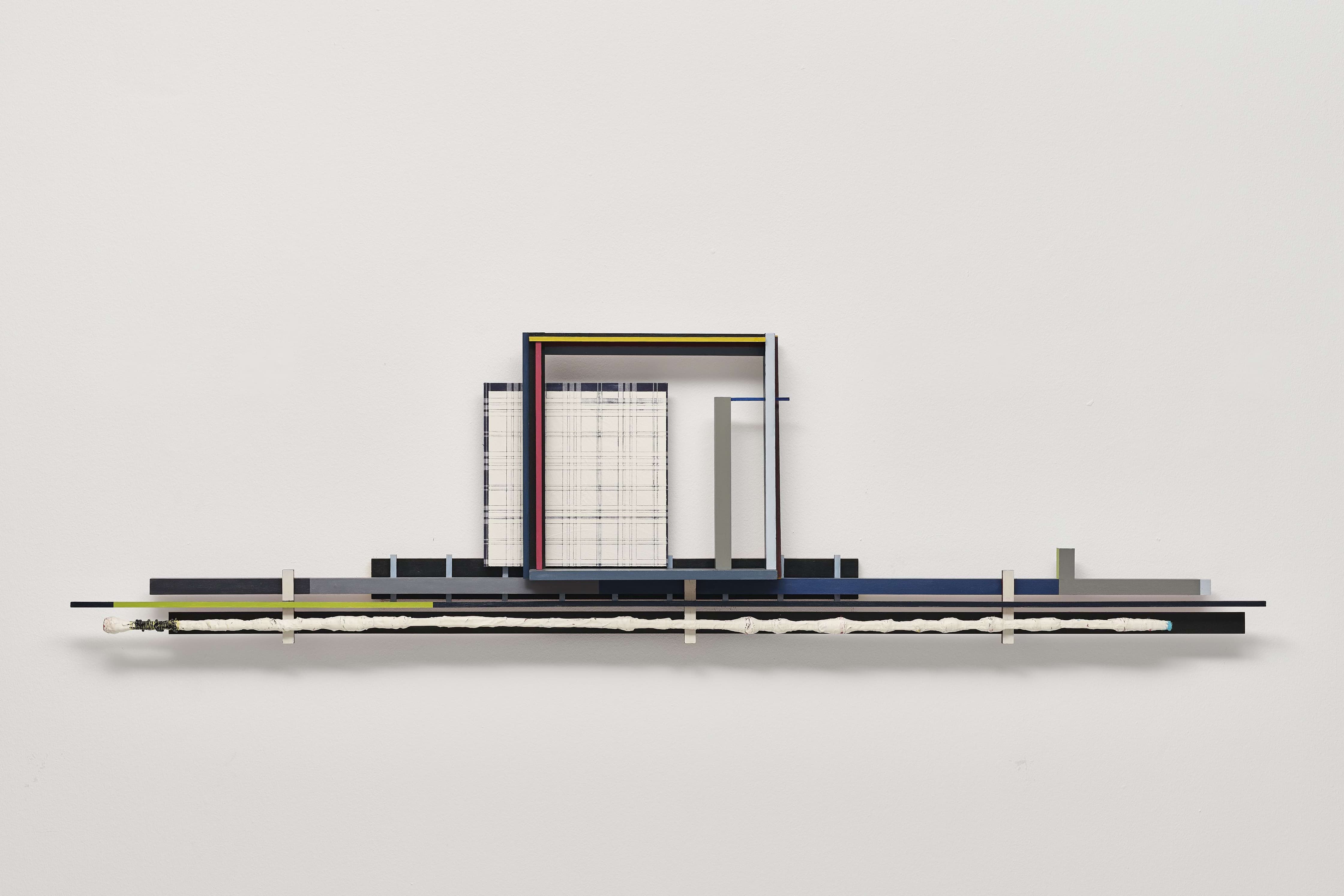
Jungerman’s horizontal works are inspired by the personal spaces where Winti devotees commune with their spiritual entities. Horizontals are composed of slats of varying length, width, and color, stacked atop one another or attached with small gaps in between. No matter the variety of additional elements or seeming randomness of a stack’s composition, the works always manifest balance. This stems from the Winti tradition of striving to achieve balance with one’s surroundings.
Photography: Aatjan Renders
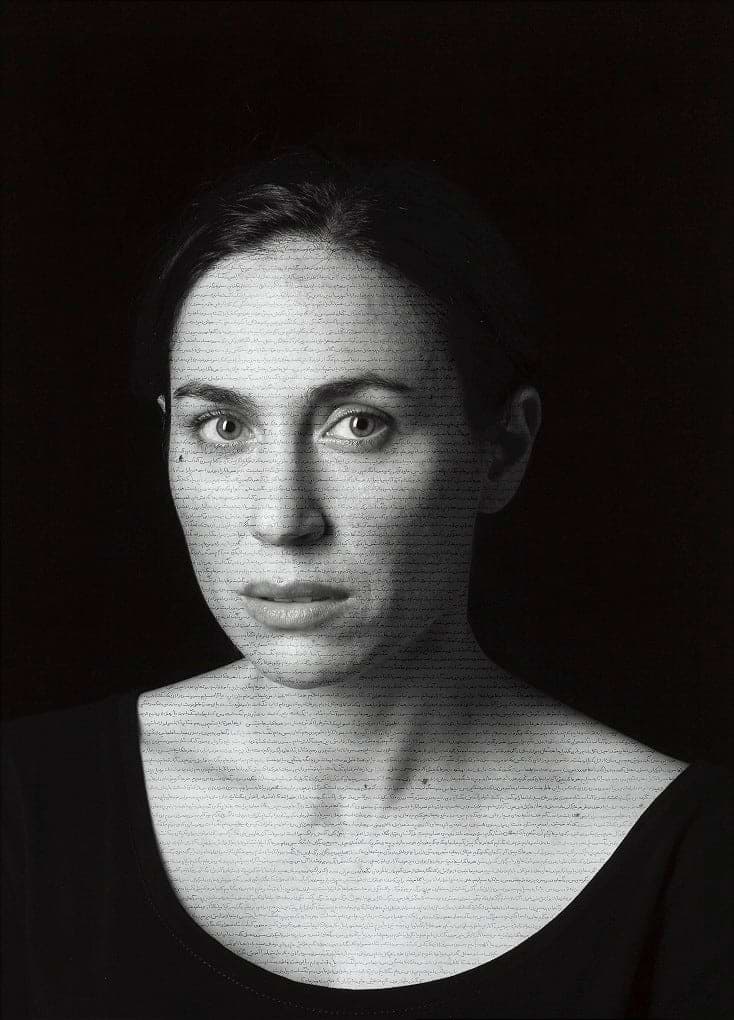
Shirin Neshat’s portraits from ‘The Book of Kings’ series depict
Iranian and Arab youth with meticulously executed calligraphic
texts and drawings inscribed over each subject’s face and body.
These texts and illustrations—drawn from the Shahnameh as well
as from contemporary poetry by Iranian writers and prisoners—
both obscure and illuminate the subjects’ facial expressions and
emotive intensity, intimately linking the current energy of
contemporary Iran with its mythical and historical past. In this
arresting body of work, Neshat returns to the confrontational
nature of her iconic Women of Allah series, while re-focusing on
themes of revolution and the bold-faced defiance of youth.