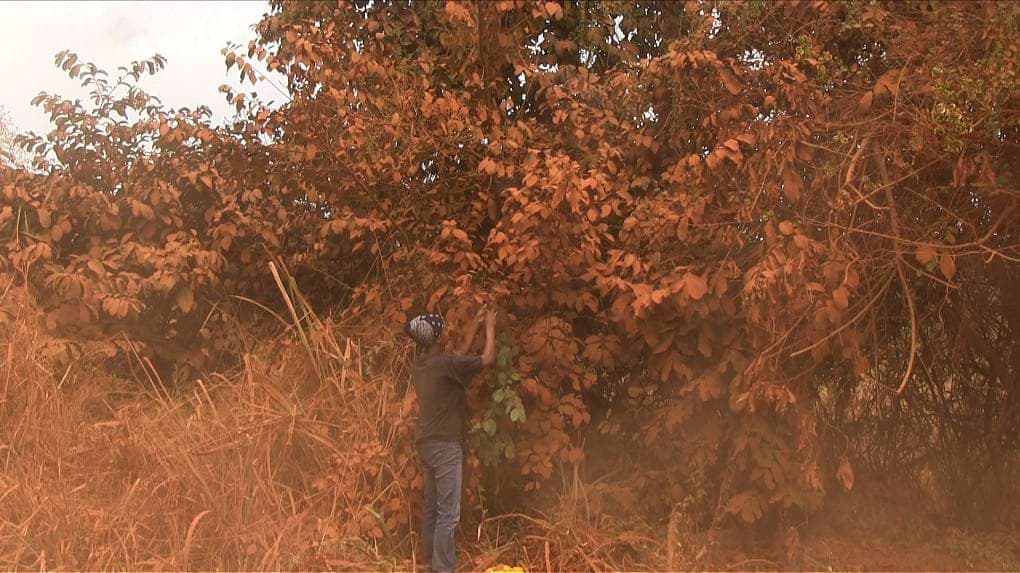
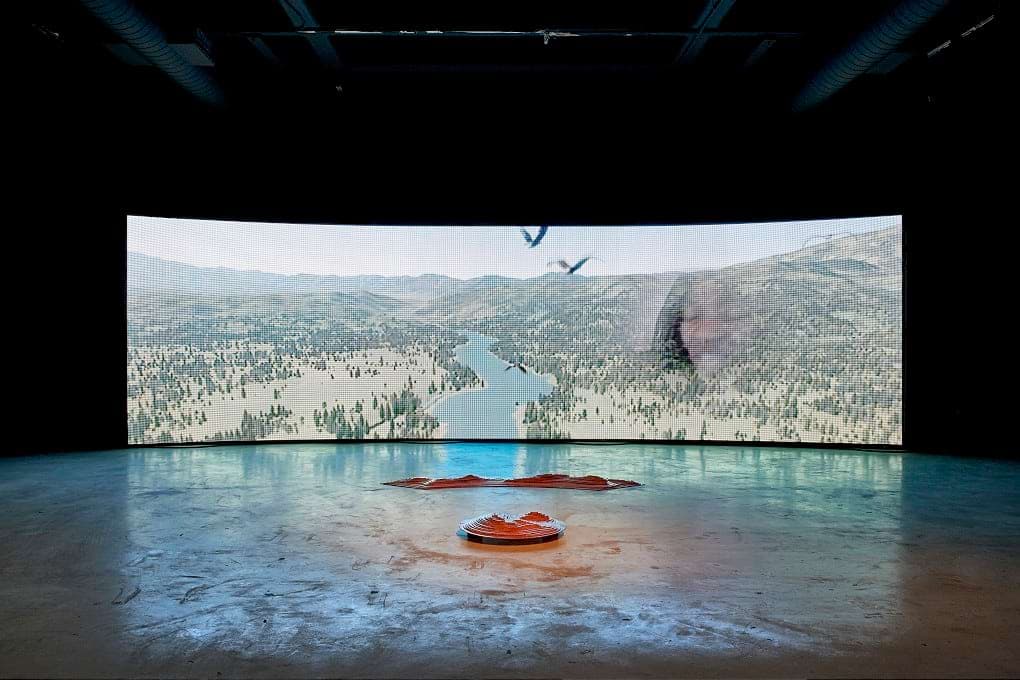
During the dry season, rural Tanzania is covered in a blanket of red dust which produces a myriad of monochromatic landscapes. For the video Vumbi, which means dust in kiswahili, the artist cleans away dust from foliage and engage in an act of subtractive painting. Kiwanga transposes a simple task from the domestic sphere into the natural environment and engages in a sisyphean action, for the foliage will quickly be buried under a new layer of dust.
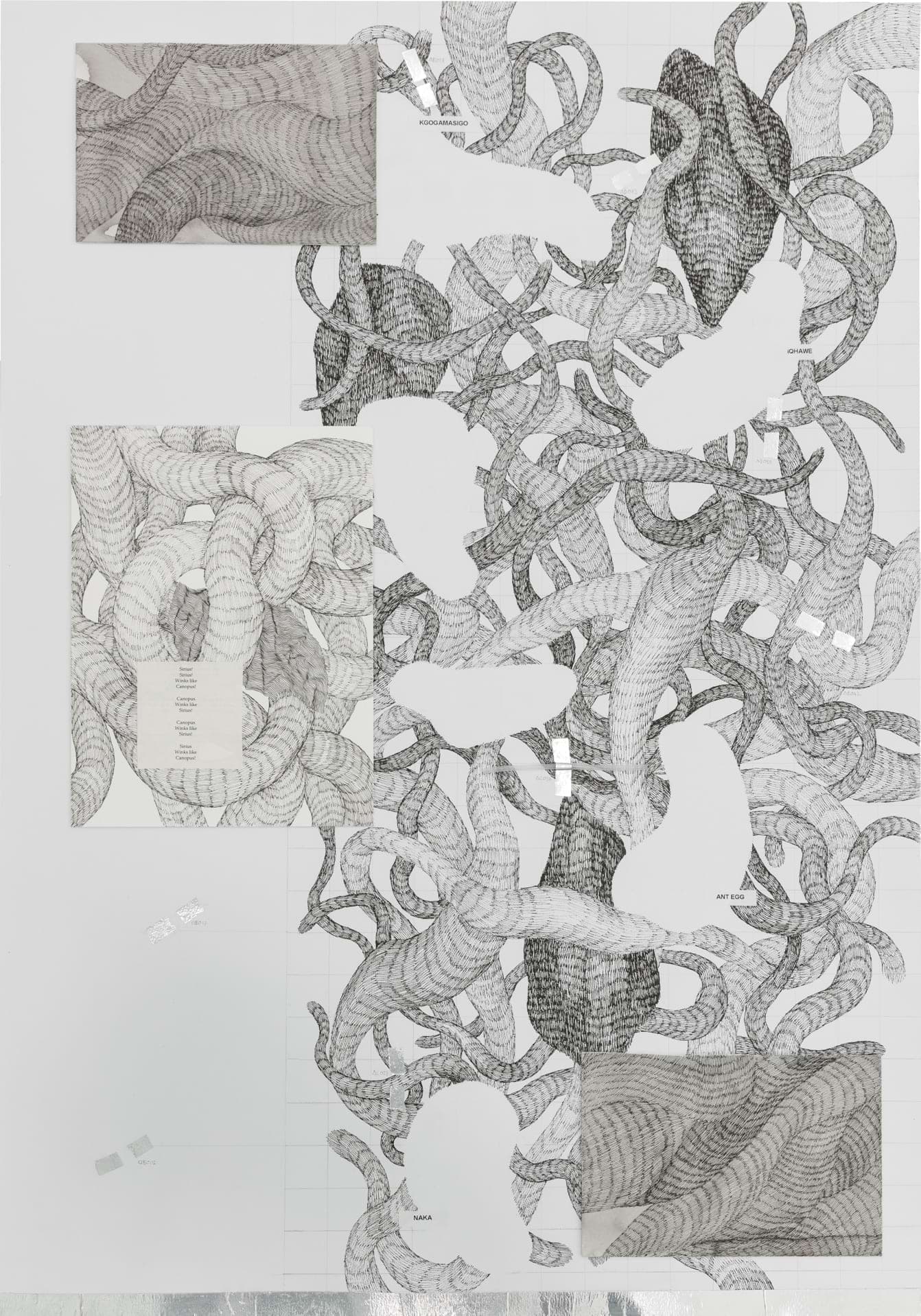
The animation POLYHEDRA is a poetic interpretation of cosmogony and the order of things —stars, earth forms and that which is beyond-what-we-can-see.
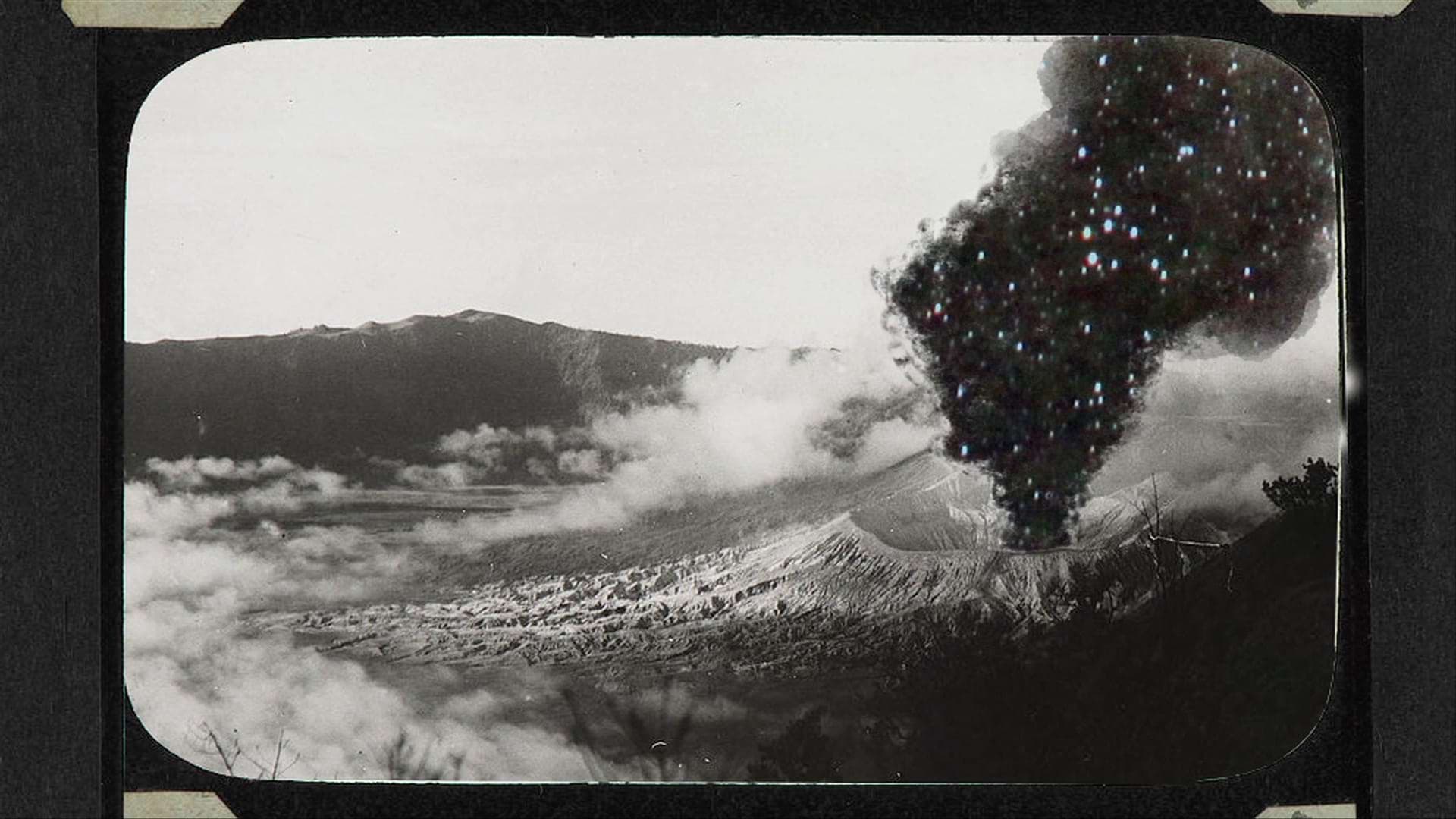
The film was created with a body of work including drawings on paper, drawings in space and sculptural objects. POLYHEDRA contains references to star mappings and the superimposition of mythological characters into the movements of celestial bodies through the sky. The animation also includes archival photographs and plates by 18th-century amateur photographer and volcanologist Tempest Anderson. Volcanic imagery ties in with Sunstrum’s idea of ‘seeing through’ the body of a volcano as a portal by which we might glimpse the inner workings of the earth. That those inner workings present themselves as powerfully destructive, simultaneously recalling notions of the beauty and sublime.
Sunstrum explains; “In creating this work, I began with the idea of ‘seeing through’ — seeing through the earth, seeing through bodies, seeing through to the stars. I was interested in finding a visual language that superimposes forms—geological forms, astronomical forms, and human forms in such a way that we might see through them and see the congruences between them. I was interested in early understandings of mathematics and geometry and how this knowledge used to be considered quite sacred knowledge. It was a knowledge that reflected a desire to know the building blocks of the cosmos—to know the codes and the equations that make up the universe.”
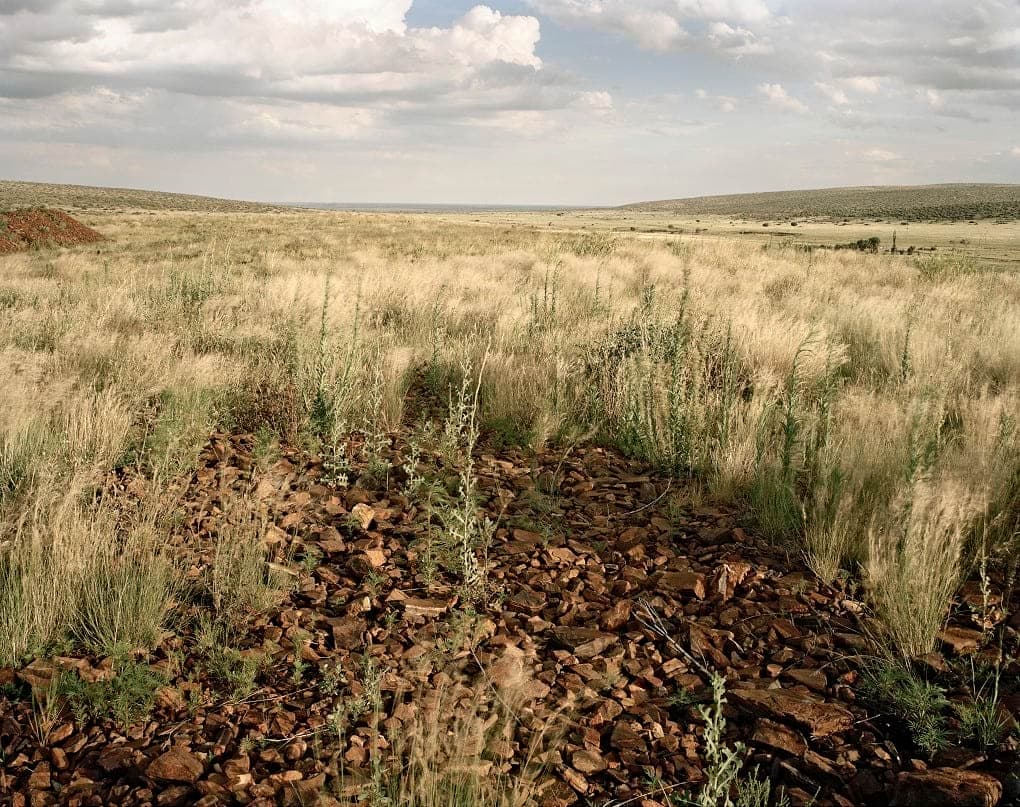
David Goldblatt was born in Randfontein, a small mining town outside of Johannesburg, South Africa. Through his lens, chronicled the people, structures and landscapes of his country from 1948, through the rise of Afrikaner Nationalism, the apartheid regime and into the democratic era - until his death in June, 2018. In particular, Goldblatt documented the people, landscapes and industry of the Witwatersrand, the resource-rich area in which he grew up and lived, where the local economy was based chiefly on mining. In general, Goldblatt's subject matter spanned the whole of the country geographically and politically from sweeping landscapes of the Karoo desert to the arduous commutes of migrant black workers, forced to live in racially segregated areas. His broadest series, which spans six decades of photography, examines how South Africans have expressed their values through the structures, physical and ideological, that they have built.
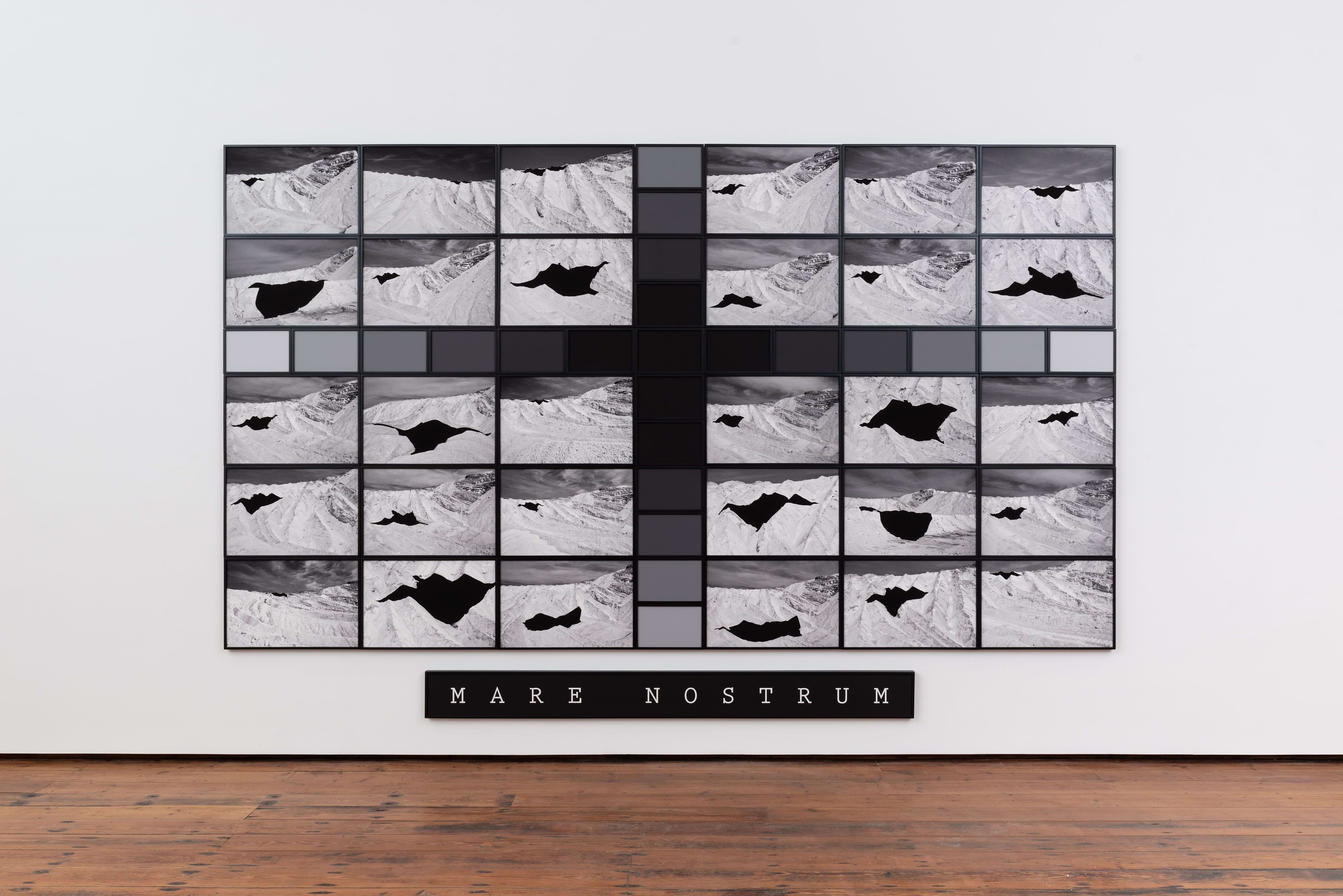
Mare Nostrum (Black Birds) is a composition of photographic images taken from the salt pans of Arles on the French Riviera in Provence. Historically the Mediterranean is a site of development for civilizations and solidarity between different populations, but also a space of death and disappearance. In this work, the crystalline transparency of the salt pans is contrasted by black shapes that interrupt the white salt and allude to the stories of those who try to cross the Mediterranean towards Europe. The title ‘Mare Nostrum’ translates from Latin into ‘Our Sea’ and is the term used by Romans for the Mediterranean denoting it as a historic site of racial, commercial and military control; a state that has returned in recent years.
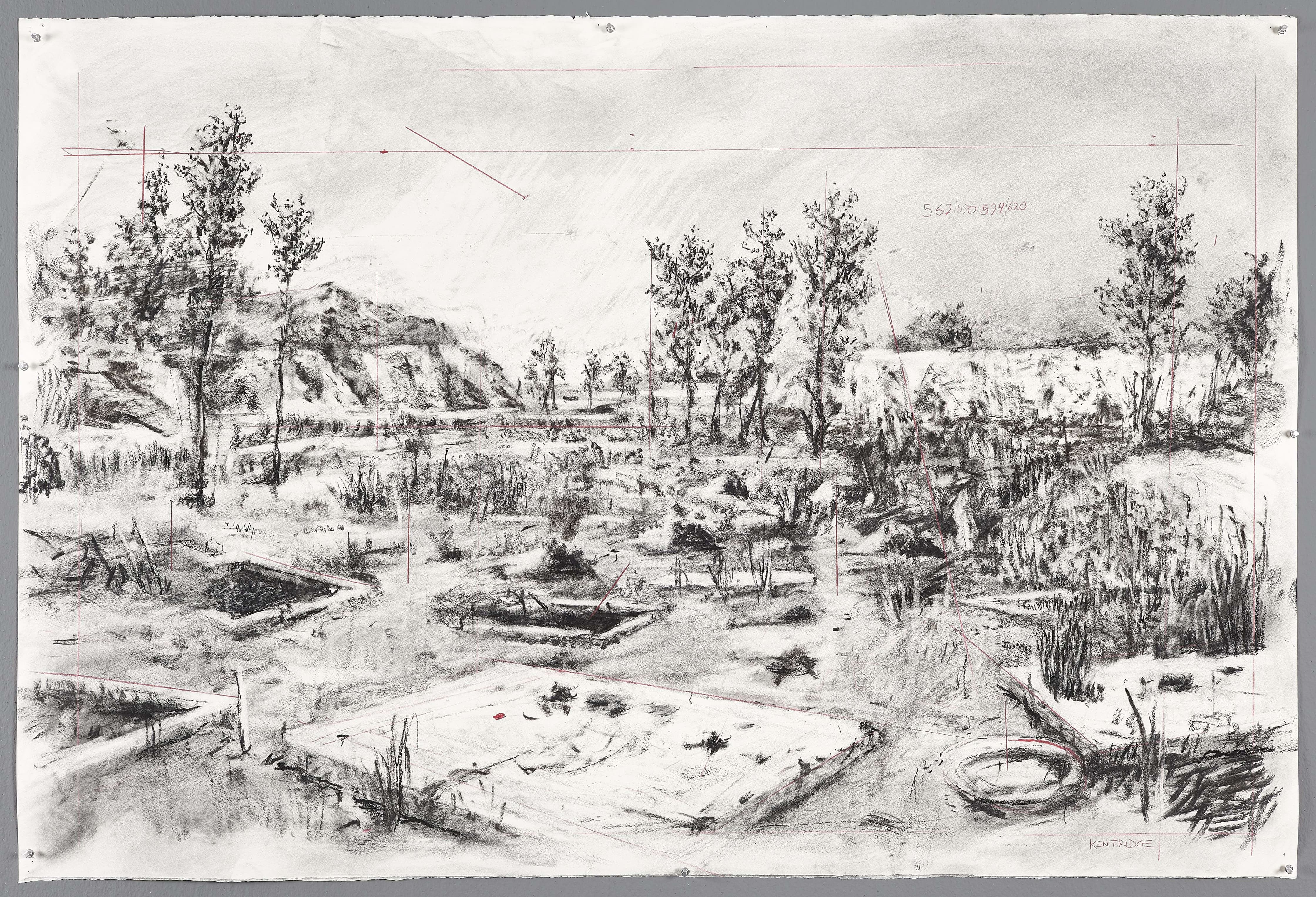
Drawing for City Deep (Zama Zama Pits) is a charcoal and red pencil drawing made as part of William Kentridge’s film City Deep (2020), his eleventh from the Soho Chronicles series. Continuing on themes found throughout the body of work, but particularly in Kentridge’s 1991 film Mine, this work explores the mining history of Johannesburg and its impact on the city. The landscape depicted in the drawing is of ‘Zama Zama pits’ - abandoned and ownerless mines - worked illegally by ‘Zama Zamas’ (which translates from Zulu to mean ‘take a chance’ or ‘try your luck’). Large open scars on the landscape, drawn without the surrounding machinery found in industrial mines, shows the damage to the landscape done long before ‘Zama Zamas’ arrive. Within the film ‘City Deep’ Kentridge situates the landscape and its informal miners in artworks at the Johannesburg Art Gallery, itself built during the gold mining heyday of Johannesburg, and contextualising the mining trade within the history of the city.
‘Deep Down Tidal’ explores trans-coceanic networks examining the political and technological effects of water as a conductive interface for communication. From fibre optic cables to sunken cities, drowned bodies, hidden histories of navigation and sacred signal transmissions, the ocean is home to a complex set of communication networks. As modern information and communication technologies become omnipresent in Western lifestyles, we urgently need to understand the cultural, political and environmental forces that shape them.
Looking at the infrastructure of submarine fibre optic cables that carries and transfers our digital data, the artist considers that the cables are layered onto colonial shipping routes. The bottom of the sea becomes the interface of painful yet celebrated advancements masking the violent deeds of modernity. ‘Deep Down Tidal’ navigates the ocean as a graveyard for Black knowledge and technologies. From Atlantis, to the ‘Middle passage’, or refuge seekers presently drowning in the Mediterranean, the ocean abyss carries pains, lost histories and memories while simultaneously providing the global infrastructure for our current telecommunications. Research suggests that water has the ability to memorise and copy information, disseminating it through its streams. ’Deep Down Tidal’ enquires the complex cosmological, spiritual, political and technological entangled narratives sprung from water as an interface to understand the legacies of colonialism.
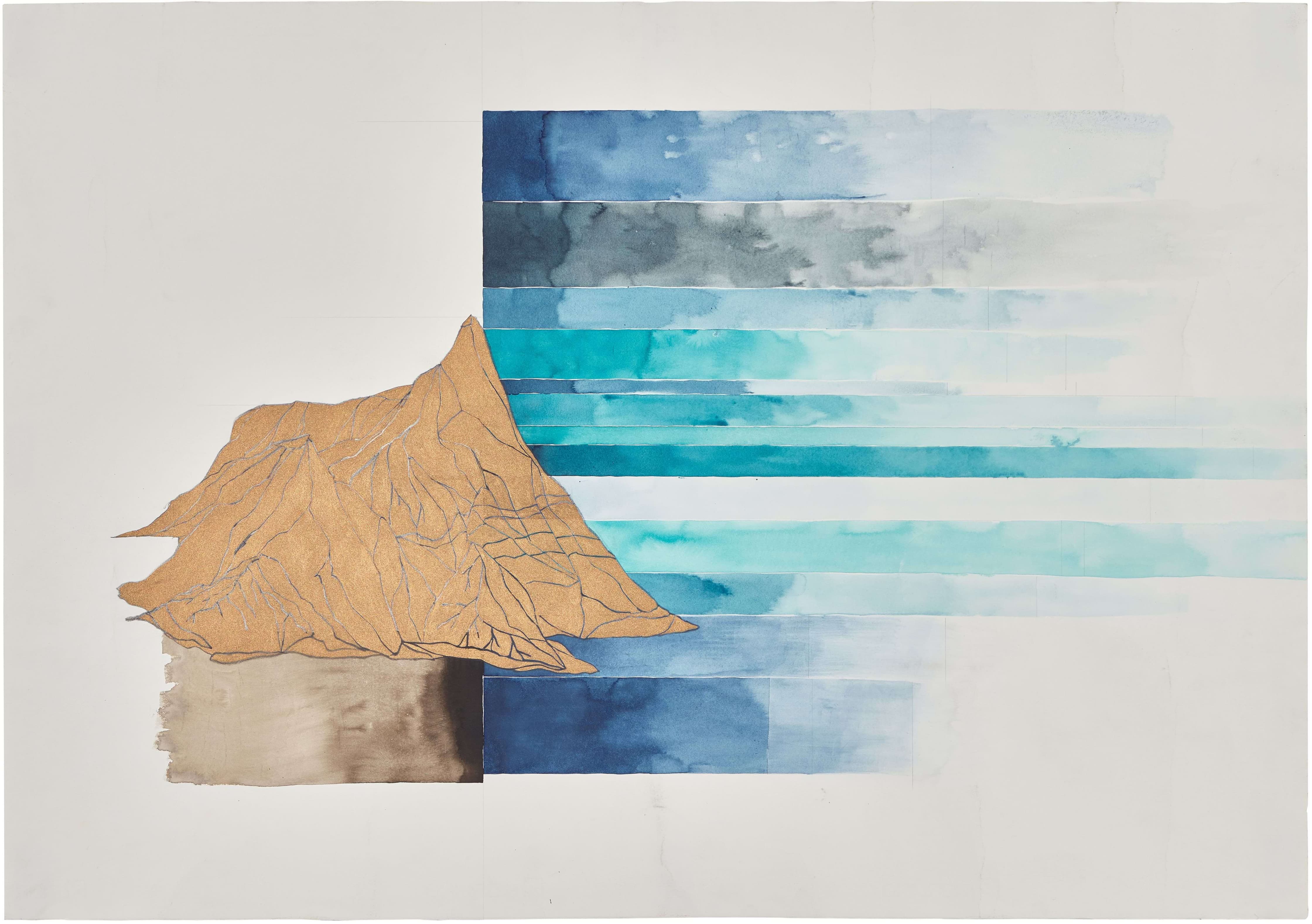
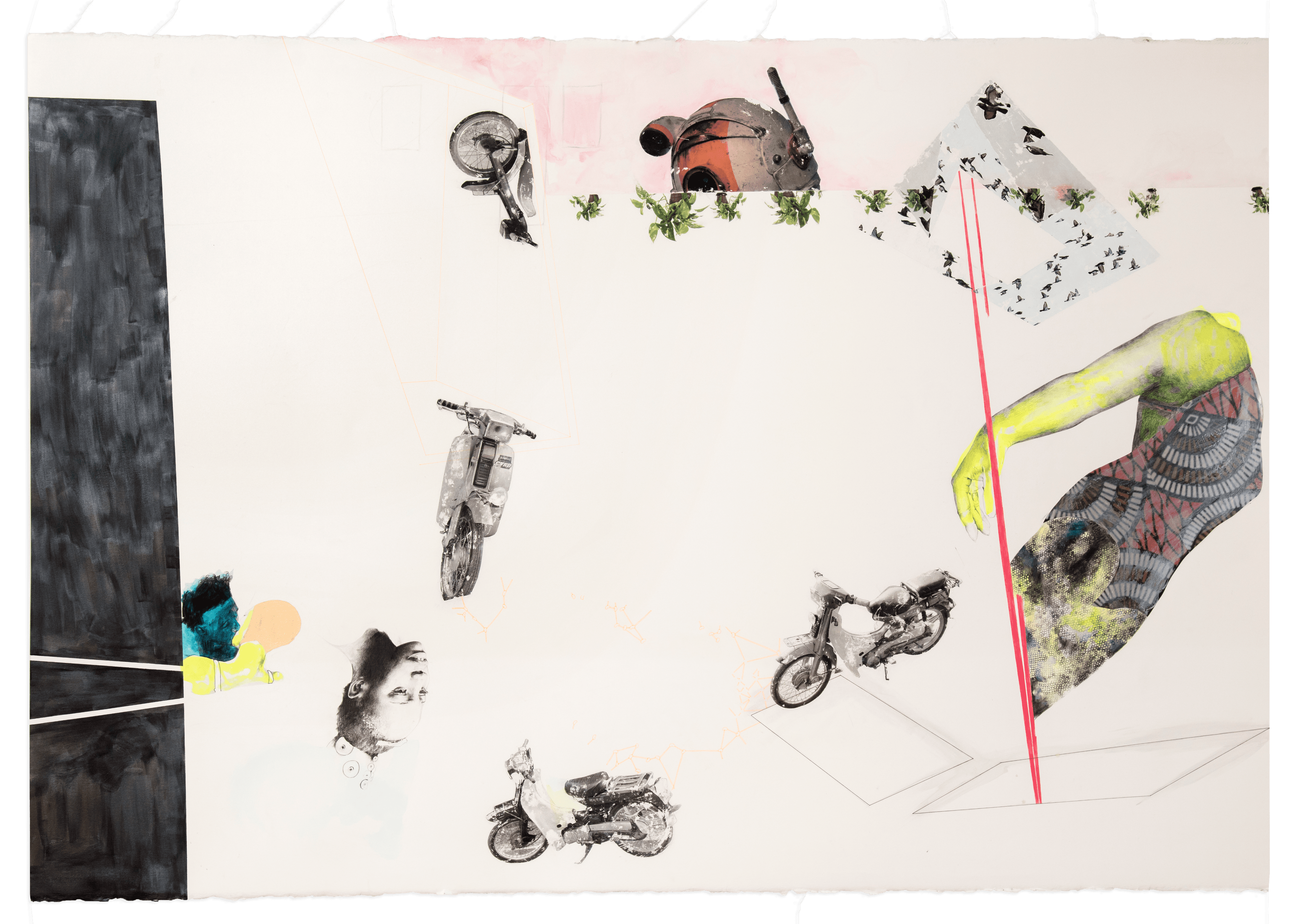
you looked for a beginning but there was none, is a mixed-media drawing coalescing imaginary places, constructed spaces and a unique cast of characters that float, dance, stretch and interact with each other. Through this work, amanze establishes a contemplative dialogue in a quest to materialize her explorations of displacement, dislocation and belonging. By cutting, dicing, sampling, rearranging and mashing together, amanze composes images that articulate free play as an act of revolution. In this work, lines cut through space and multiple sheets of paper are transferred and layered to form complex spatial configurations.
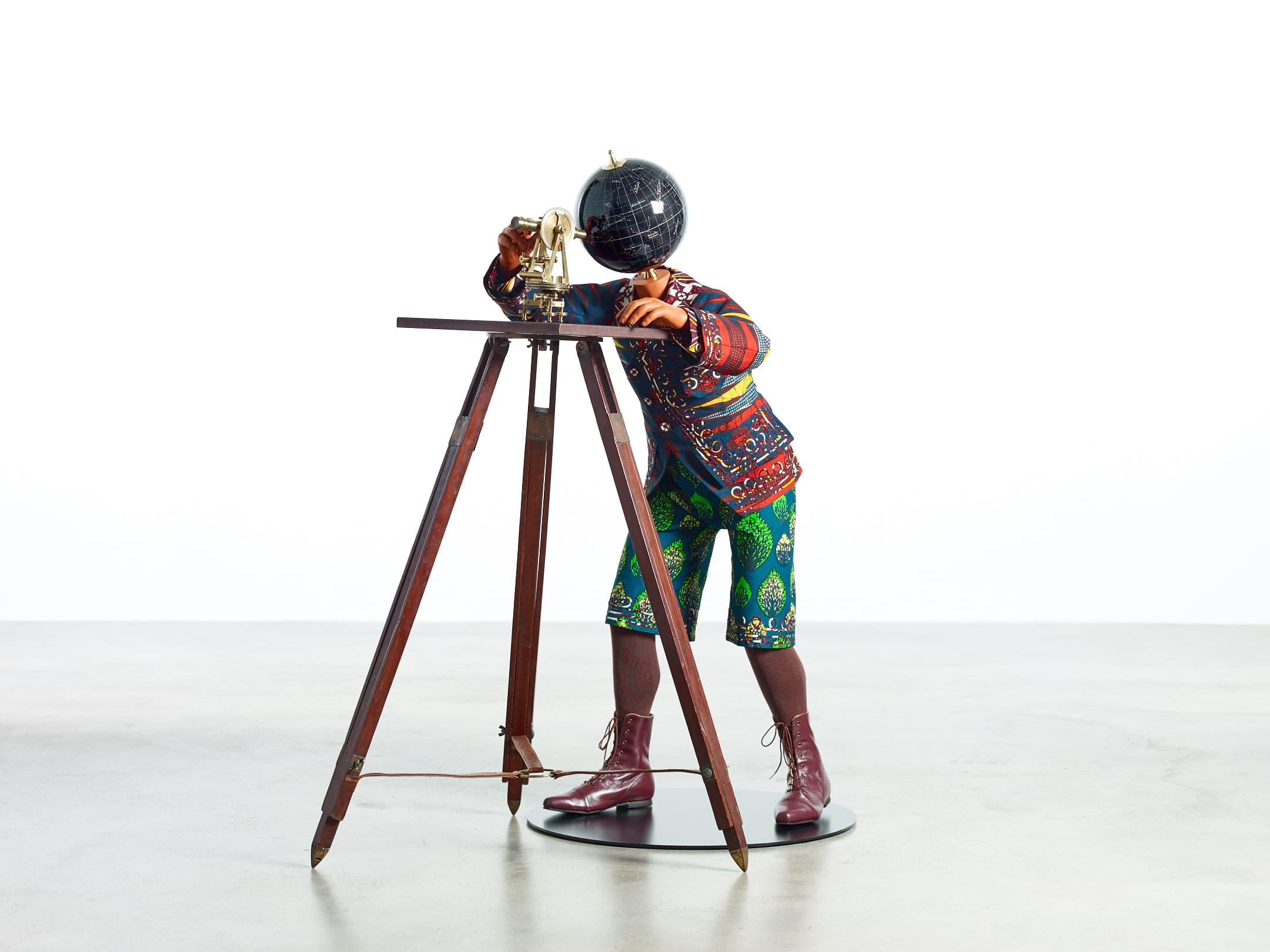
Yinka Shonibare CBE (b. 1962, London, UK) is known for his exploration of colonialism and post-colonialism within the context of globalization. He was awarded the honour of ‘Commander of the Order of the British Empire’ in the 2019 New Year’s Honours List.
Planets in My Head is a series of sculptures by Shonibare set against the current context of global anxiety about the planet. The sculptures all incorporate a globe-like form in the position of a head, which ties into the idea of breaking with traditional and established Western canons of knowledge. This concept is illustrated using the figure of children in the sculptures, who all bear Western tools which subvert our ideas around a European-inspired understanding of the world. These figures have seemingly departed Earth, entering other galaxies where they may resist the formalisation of knowledge that the West has set up. In turn, the sculptures re- imagine our dominant bodies of knowledge to create a new globalised perspective.