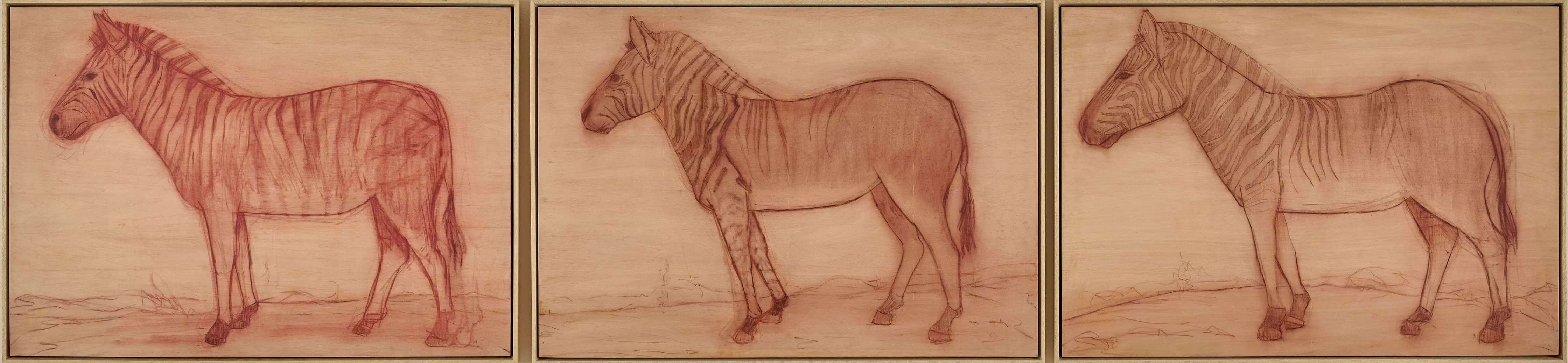
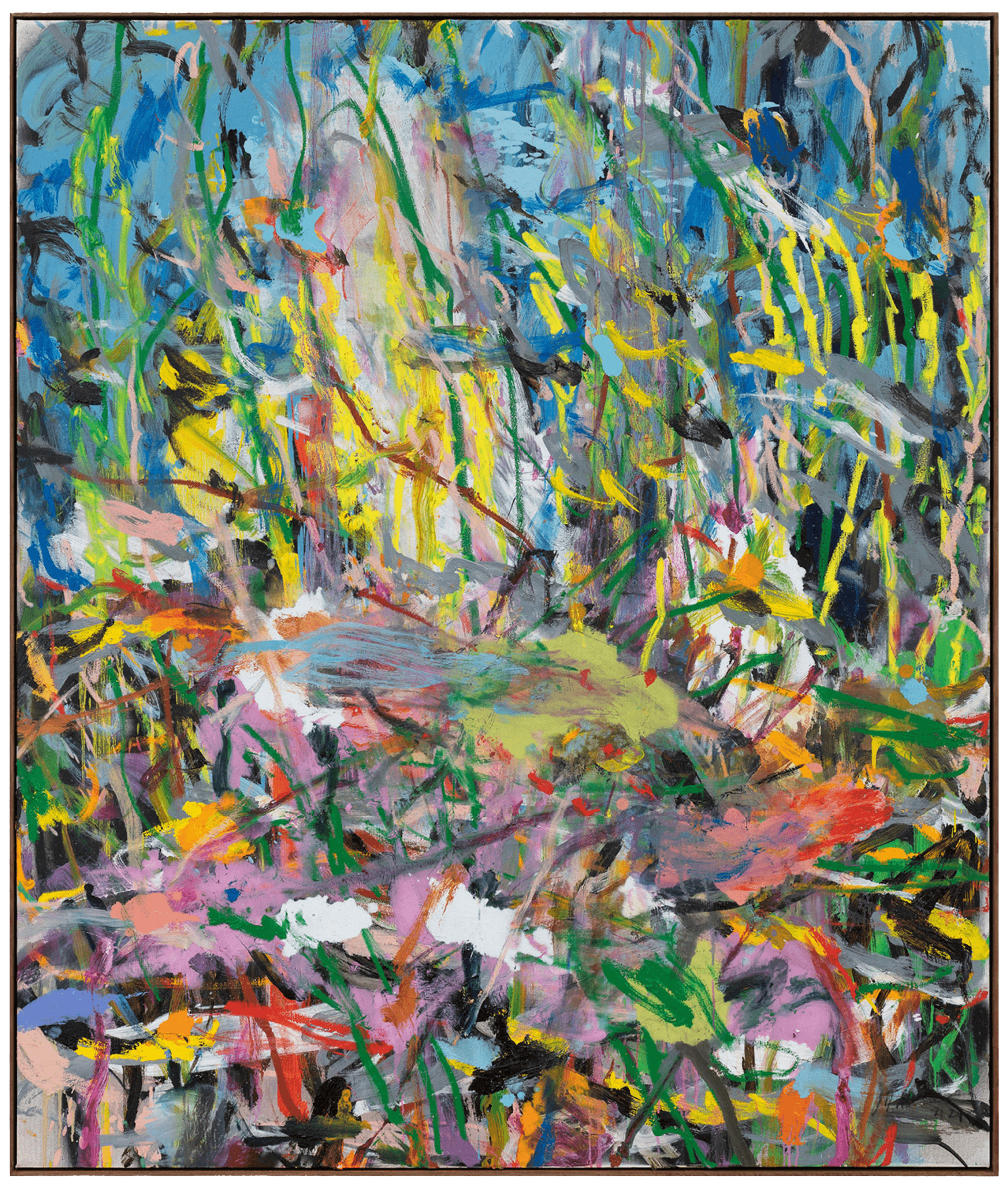
"The quagga was an ancient animal, one of the first to roam the lands of Southern Africa and thus a recurrent figure in the ancestral lore of the San and the Khoekhoe peoples. Early European explorers to the region encountered these gentle animals, delighted in how remarkably unafraid the beasts were, and then promptly hunted them to extinction. By all accounts, the meat of the quagga was not very tasty. Its hide—featuring subtle sepia markings resembling a dusty blend of zebra and antelope skin— did not preserve well enough to warrant trophy status. This leads me to imagine that the main reason these docile animals were so swiftly annihilated was for the simple fact that it was easy to do so. This thought sits sour in the back of my throat as I hunt through archival images of what this animal may have looked like. There is one hoax of a photograph dating from the early 1900s depicting what is possibly a painted pony. The only other images we are left with are the wonky field illustrations drawn by Europeans themselves as documentation of their bloody exploits. I often dream of dusty hooves—sometimes of cattle, sometimes of antelopes, and sometimes, far and fading, the hooves of a herd of quagga." - Pamela Phatsimo Sunstrum
In March 2020, as the first COVID lockdown began in Johannesburg, Kentridge started working on a series of episodic films in his home studio. The series, now known as Self-Portrait as a Coffee Pot, has extended over the last three years in its construction becoming nine 36-minute films. Each episode explores the working processes in the studio, presenting different themes through which making happens. The first three episodes of Self-Portrait as a Coffee Pot premiered at the Toronto Film Festival, and the British Film Festival in 2022. The full series is currently on view at Arsenale Institute for Politics of Representation alongside the Venice Biennale.
Video
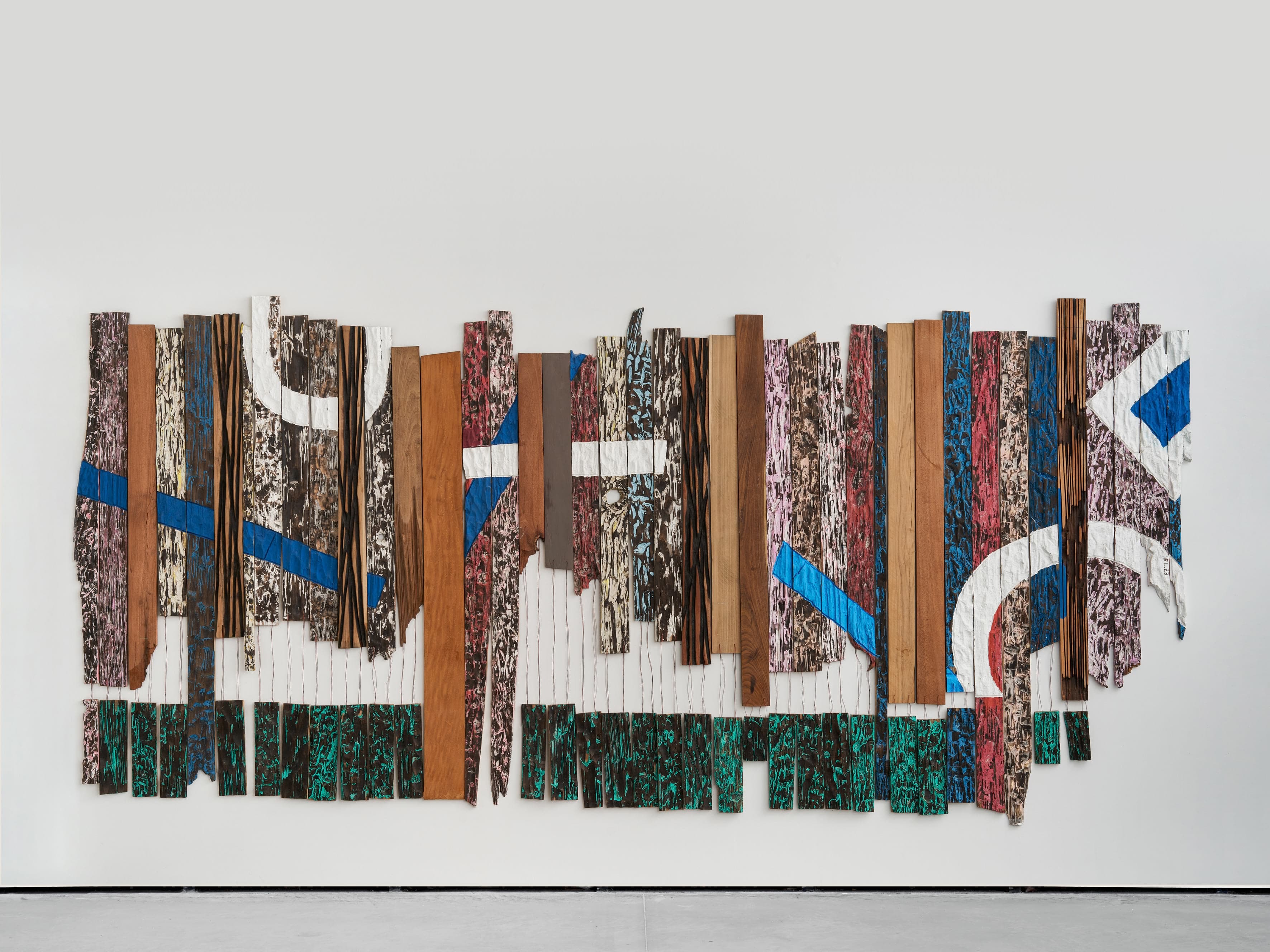
El Anatsui’s wooden sculptures form a pivotal part of his practice and conceptual thinking. Working with indigenous hardwoods sourced in Ghana and Nigeria, he employed carving, burning, painting, and staining to transform the surface of the wood. These treatments created layered textures and rich tonal variations, revealing a deep sensitivity to material and form. Many of the works are modular in structure, composed of panels that can be rearranged, introducing a sense of mutability and open-endedness that would later become central to his practice.
Emerging from the artistic context of the Nsukka School, where he taught at the University of Nigeria, Anatsui’s approach was shaped by the institution’s emphasis on synthesising contemporary art with indigenous knowledge systems. The influence of uli and nsibidi visual traditions is evident in his use of symbolic motifs and calligraphic markings, which recur across his carved wooden surfaces. Through these embedded forms, Anatsui explores themes of memory, history, and transformation – particularly the legacies of colonialism and the persistence of African epistemologies.
These works are not simply static wall pieces but carry sculptural presence and conceptual depth. Their modularity, emphasis on surface, and engagement with repetition anticipate the formal strategies Anatsui would later amplify in his iconic bottle-cap installations. In both bodies of work, the interplay between fragment and whole, permanence and change, remains a defining concern.