Exploring and championing a breadth of mediums, such as animation, sculpture, performance and drawing, William Kentridge’s complex creations are multifaceted in form, resonating with audiences through their unifying exploration of the very fabric of our existence. Revisiting and reacting to philosophical, historical or political tropes, Kentridge conjures myriad themes in his polymorphic works which are experimental and conceptually rich.
Kentridge proposes a way of seeing art and life as a continuous process of change rather than as a controlled world of certainties. He constantly questions the impact of artistic practice in today’s world and has investigated how identities are shaped through shifting ideas of history, and place, looking at how we construct our histories and what we do with them.
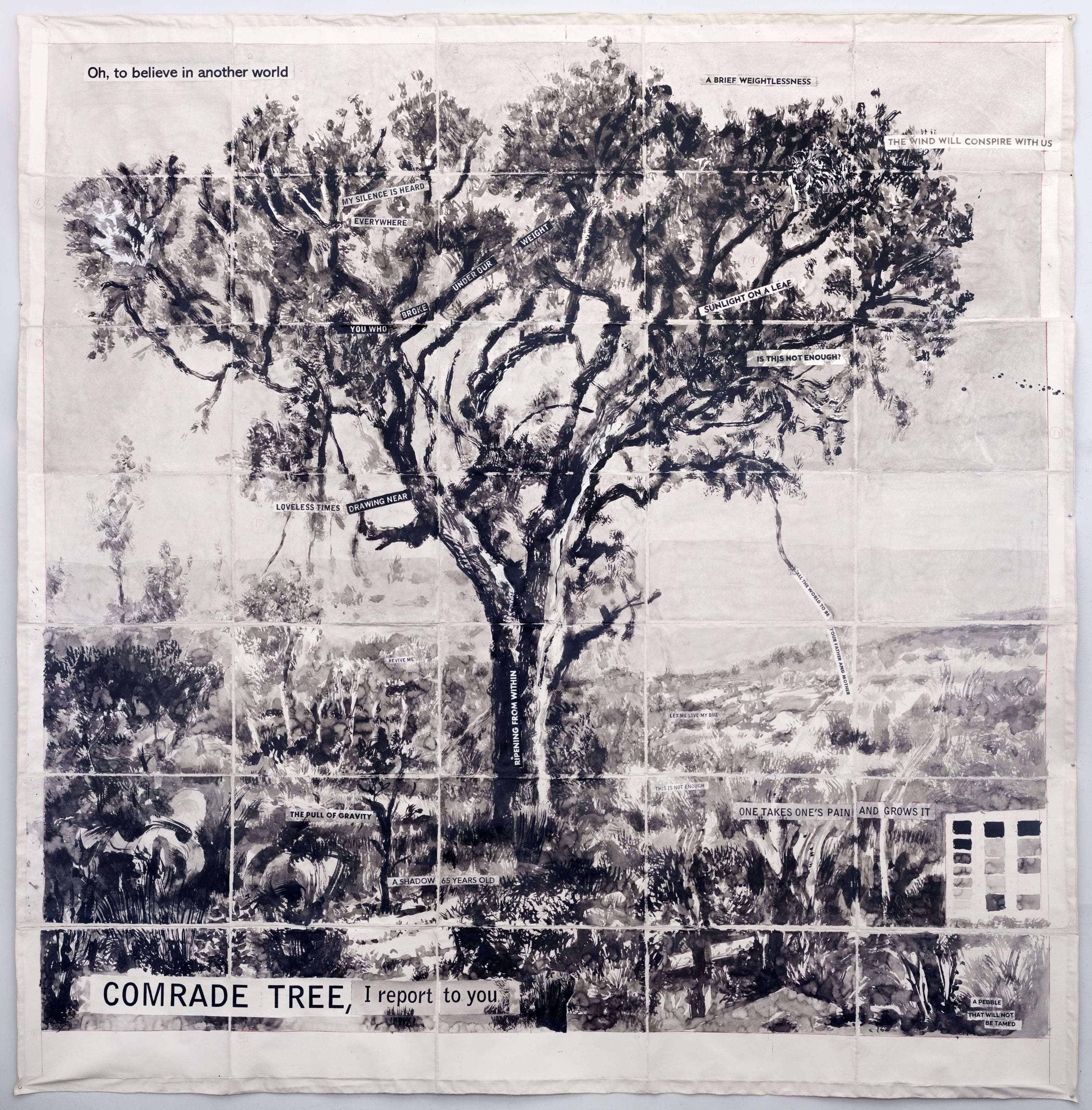
William Kentridge’s botanical drawings of trees are rendered in Indian ink on the pages of old encyclopedias, and attempt to capture the forms of trees indigenous to the area around Johannesburg. Using photographic references and drawing loosely in Indian ink, the plants are grown page by page – each page holding only a fragment of the whole. The complete botanical forms emerge more by recognition than by a pre-existing clarity as to what the plant must look like, as the pages are shifted, layered, torn, pieces added, marks added – until the tree reveals itself as complete.
Drawing from Waiting for the Sibyl (Comrade Tree, I report to you) is the latest addition to Kentridge’s series of large-scale ink drawings of trees and phrases on found paper. These drawings go hand in hand with his new opera project, Waiting for the Sibyl, which premiered at Teatro dell'Opera di Roma in September 2019. Waiting for the Sibyl was created in response to Alexander Calder’s Work in Progress – the only operatic work created by Calder and staged at the Opera in Rome in 1968.
“I thought that the paper, the fragments of paper with which I have always expressed myself , were the right elements to start the dialogue with Calder”. In Kentridge's mind, the floating papers immediately evoked the image of the Cumaean Sibyl, the priestess who wrote her prophecies on oak leaves. The floating papers, like loose leaves, with the prophesies written on them, are blown away by the wind.
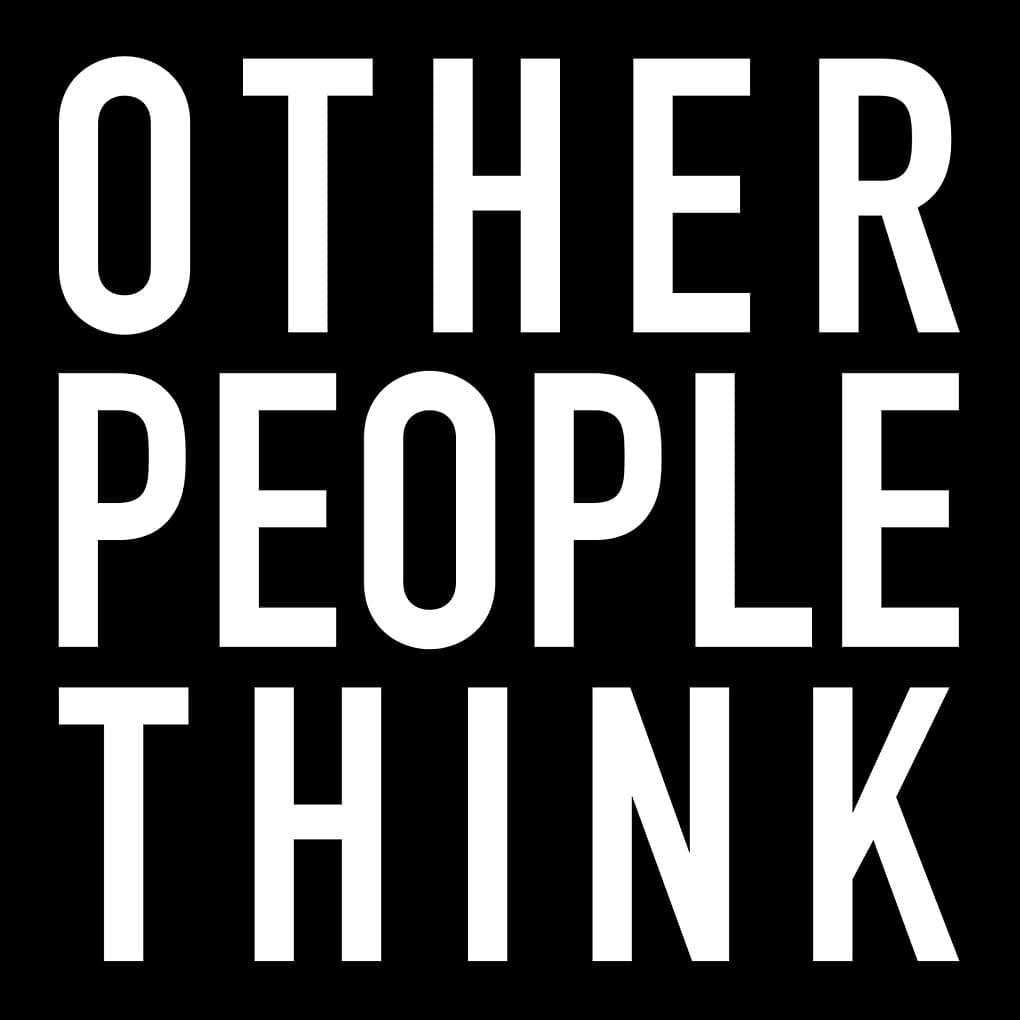
‘Other People Think’ is a conceptual lightbox work by Alfredo Jaar that draws its title from an early essay delivered by composer John Cage in 1927. In that text, Cage urged Americans to listen to and learn from Latin American voices, challenging the cultural hierarchies that shaped hemispheric relations. Jaar created the work on the centenary of Cage’s birth, transforming this overlooked historical appeal into a contemporary call for cross-cultural reflection. As a Chilean artist based in the United States, Jaar uses the piece to highlight enduring asymmetries in cultural representation and to foreground the importance of ethical listening in global discourse.
The work consists of a backlit black-and-white transparency housed in a lightbox, bearing the stark white phrase “OTHER PEOPLE THINK” in capital letters across a dark background. The simplicity of its form belies the conceptual weight it carries. By isolating this phrase and rendering it with luminous precision, Jaar compels the viewer to confront questions about whose perspectives are valued, whose knowledge is marginalised, and what it means to acknowledge the thoughts of others. Operating at the intersection of language, power and perception, the work becomes both a visual meditation and a quiet political statement – urging recognition, humility and a more expansive cultural awareness.
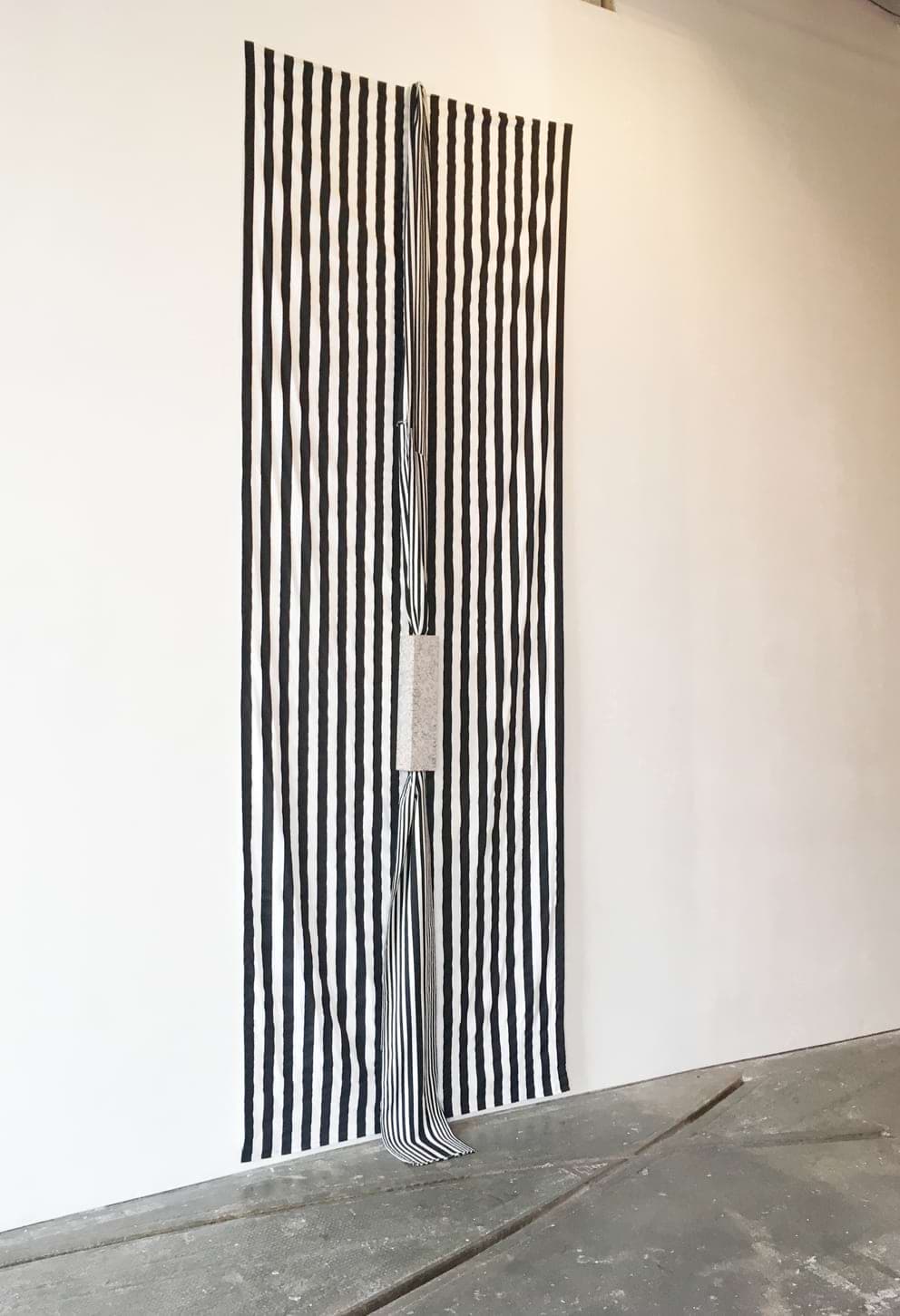
The continent of Europe is moving towards Africa at the rate of approximately 2cm per year – eventually it will slide underneath entirely. The installation Soft Measures consists of 3 sculptural, textile works through which Kiwanga considers the authority of measuring conventions while evoking deep geological time.
In the central piece, each of the two white curtains are printed with their own unique pattern of black lines spaced respectively 0.95cm and 2.15 cm apart. This regular spacing between the lines evokes a measuring instrument and corresponds to each of the velocities at which the two continents are moving toward one another. Hung on serpentining rails, these soft sculptures suggest the coming together of the two tectonic planes until they collide. This central space is punctuated by wall-based works (Zanclean & Strait), which utilize engraved Mediterranean granite and striped fabric, which is partially dyed on occasion.
Kiwanga has crafted a narrative of speculative fiction; Strata: towards a rock opera (or the law of superposition), organised in three acts, and diffused as a radio play within the space created between the curving curtains.
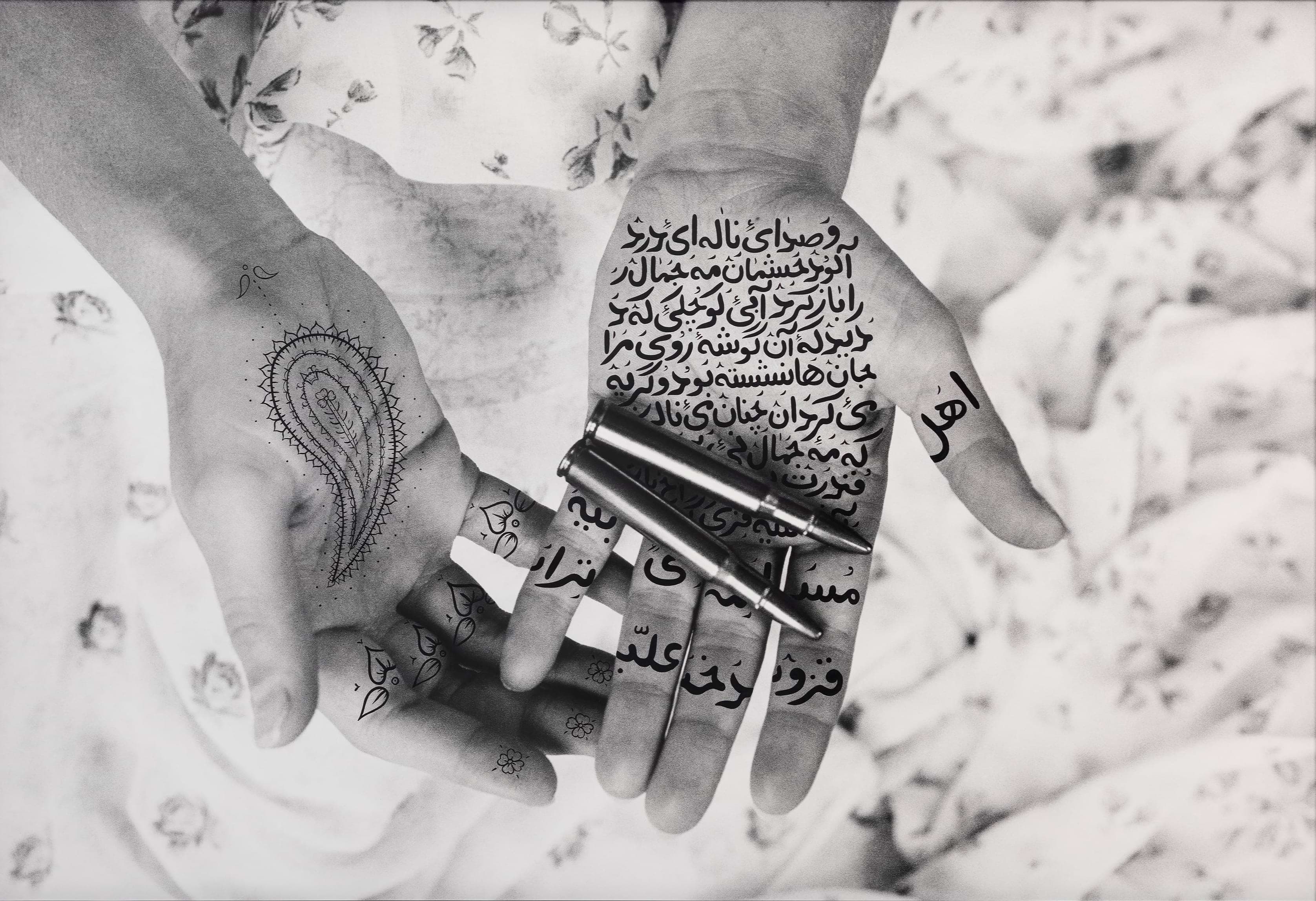
After her first trip to Iran after sixteen years of exile, eleven years after the Iranian Revolution, Neshat began capturing her first photographic body of work, entitled Women of Allah, which reflects on the ideology of Islam and the plight of women in her country. “I found myself both fascinated and terrified by the impact of the revolution,” the artist writes, “... there was so much that I didn’t understand that I desperately wanted to understand.” For the artist, Women of Allah was a way of grappling with the new circumstances in theocratic Iran – especially as they affected women, who were now required by the government to dictate where to wear the veil in public. Far from presenting a monolithic, abiding portrait of Muslim womanhood, ‘Women of Allah’ reflects the shifting and contradictory ideologies that have been projected on the figure of the Iranian woman, both by their government and by the West. Neshat’s staged images present veiled female figures, often performed by the artist herself, that can appear defiant, powerful, martial – and at other times, vulnerable, maternal, pensive.
Biko.Shabazz (al.ways/means)
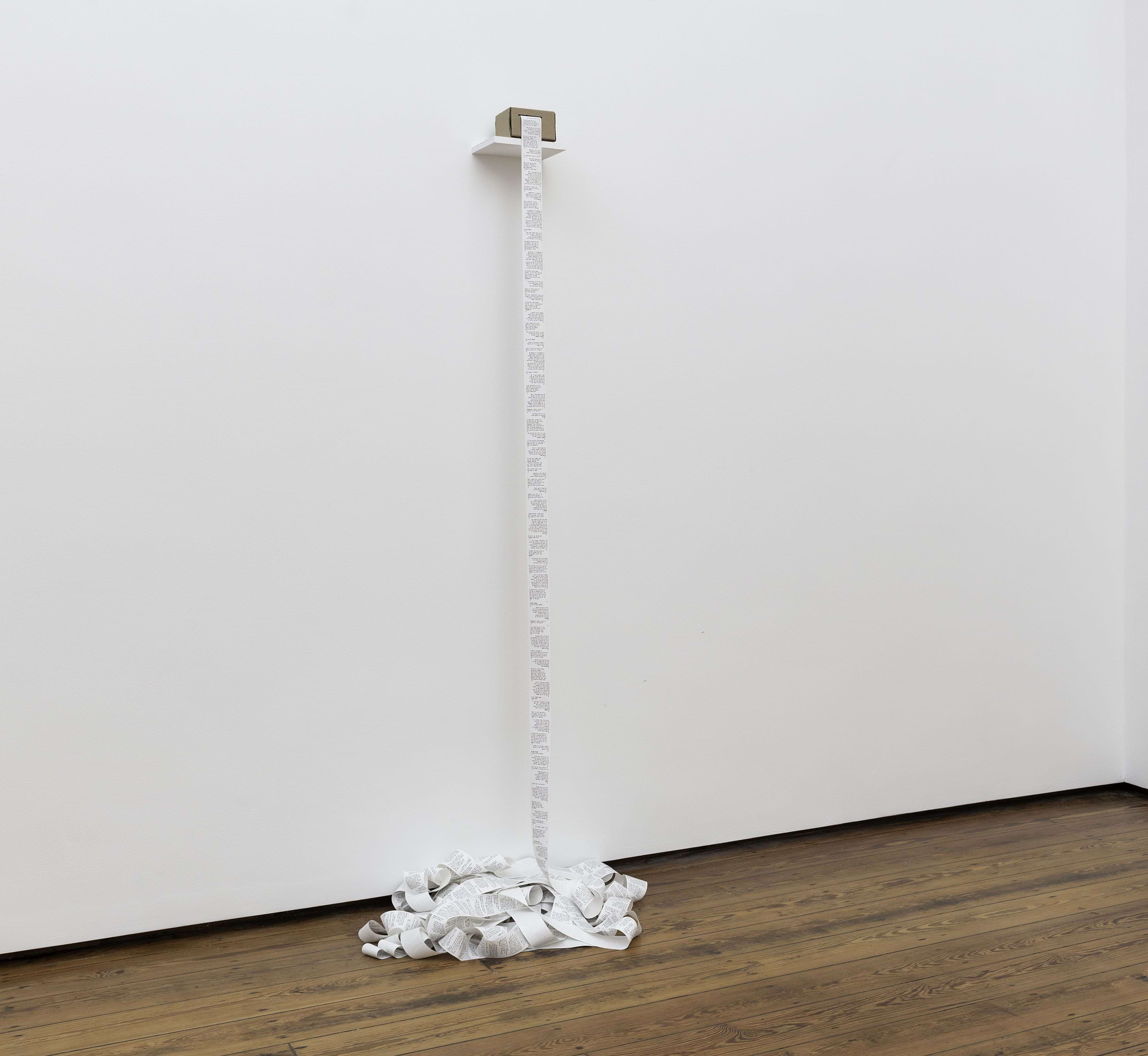
This is the penultimate work in the Biko dialogues series. The works in the series simulate dialogues between Bantu Steve Biko (the leader of the South African black consciousness movement ) and other global thinkers/dreamers/activists from the black consciousness tradition. These works are digital and physical systems designed to perform poetic conversations betwee Biko and his counterparts based on a series of keywords extracted from the written work these now dead activists left behind, in the form of interviews, autobiographies, academic theory, court transcripts etc. The conscious always operates in relation to its own unconscious. These dialogue works are automated systems for approximating a kind of black liberation dreaming. Which is to say, they assume that the archive of black consciousness thought is also an archive of black subconsciousness, and that by performing various automatic readings and writing operations on that archive we can reach toward that place of dreaming. These systems use the
archive of black conscious literature (from these various activists) as source material for a dataset which is algorithmically recombined to produce new dialogues between Biko and his peers, which are then printed in real time as an endless receipt, which acts as a kind of record of these impossible conversations. Indeed these works are another kind of dream, where Biko and his peers had a chance to meet and talk and dream.
For quite a few years I have been thinking about my role as an artist, the use and purpose of an artwork, as well as its activation and functionality.
Over time, I began using less rationality and more affection, emotion and hospitality as part of my approach to making art. That’s why I usually include a gesture of hospitality in my exhibitions, such as a piece of furniture to sit or lay down on. The idea being to spend time and remind yourself that you are not there just to watch, you are an active part of it.
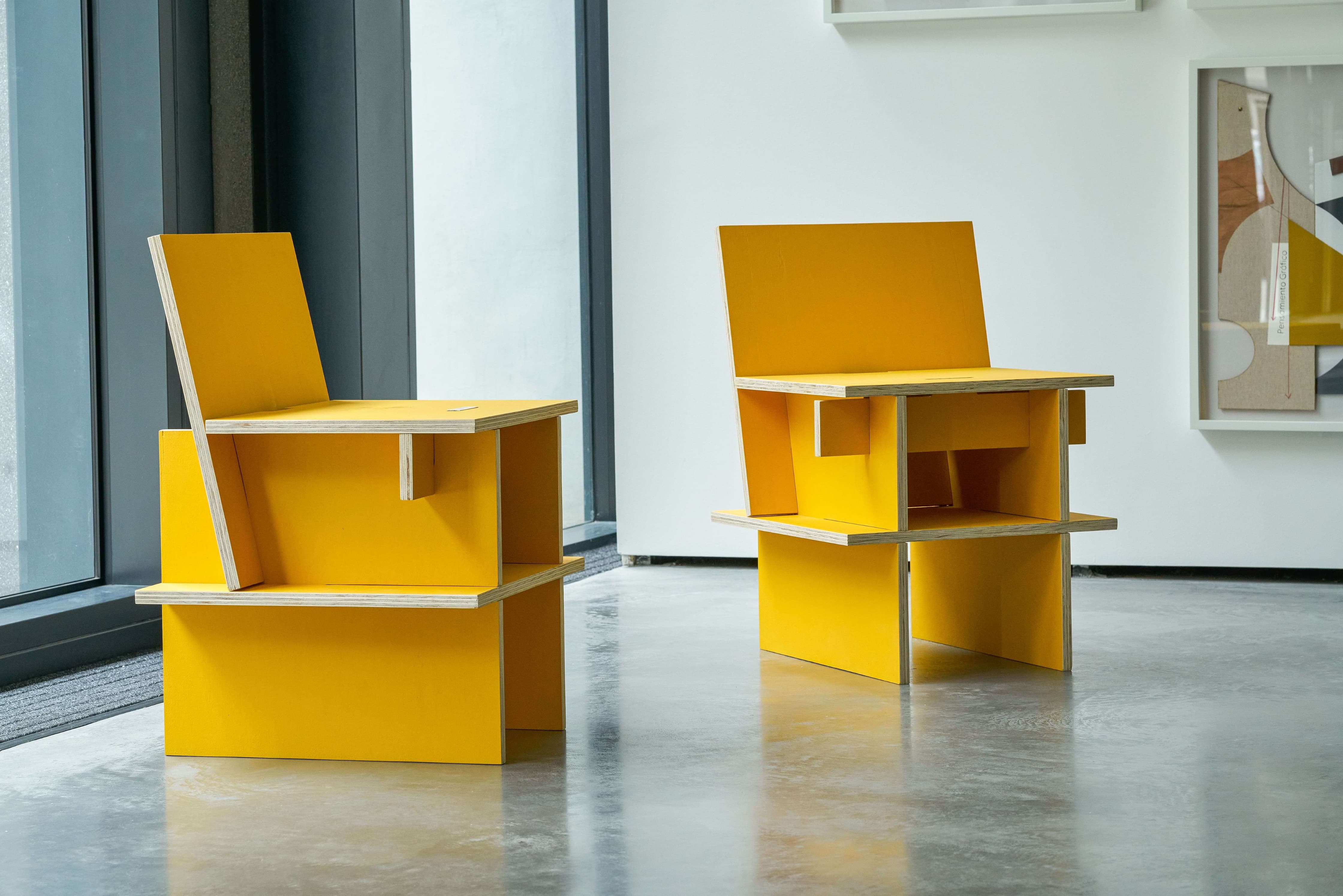
These two chairs, titled Sillas Núcleo will be replacing the chairs the gallery usually has in the space to host visitors. They are very simple chairs comprising six interlocked pieces. If you were to explode out all the individual pieces into their individual parts floating in the space, the chromatic Turmeric yellow might remind you of Hélio Oiticica’s Grande Nucleo. This work is a homage, and a reference to Oiticica and that generation of artists experimenting with the idea of a radical approach to art.
- Mateo López, 2020.
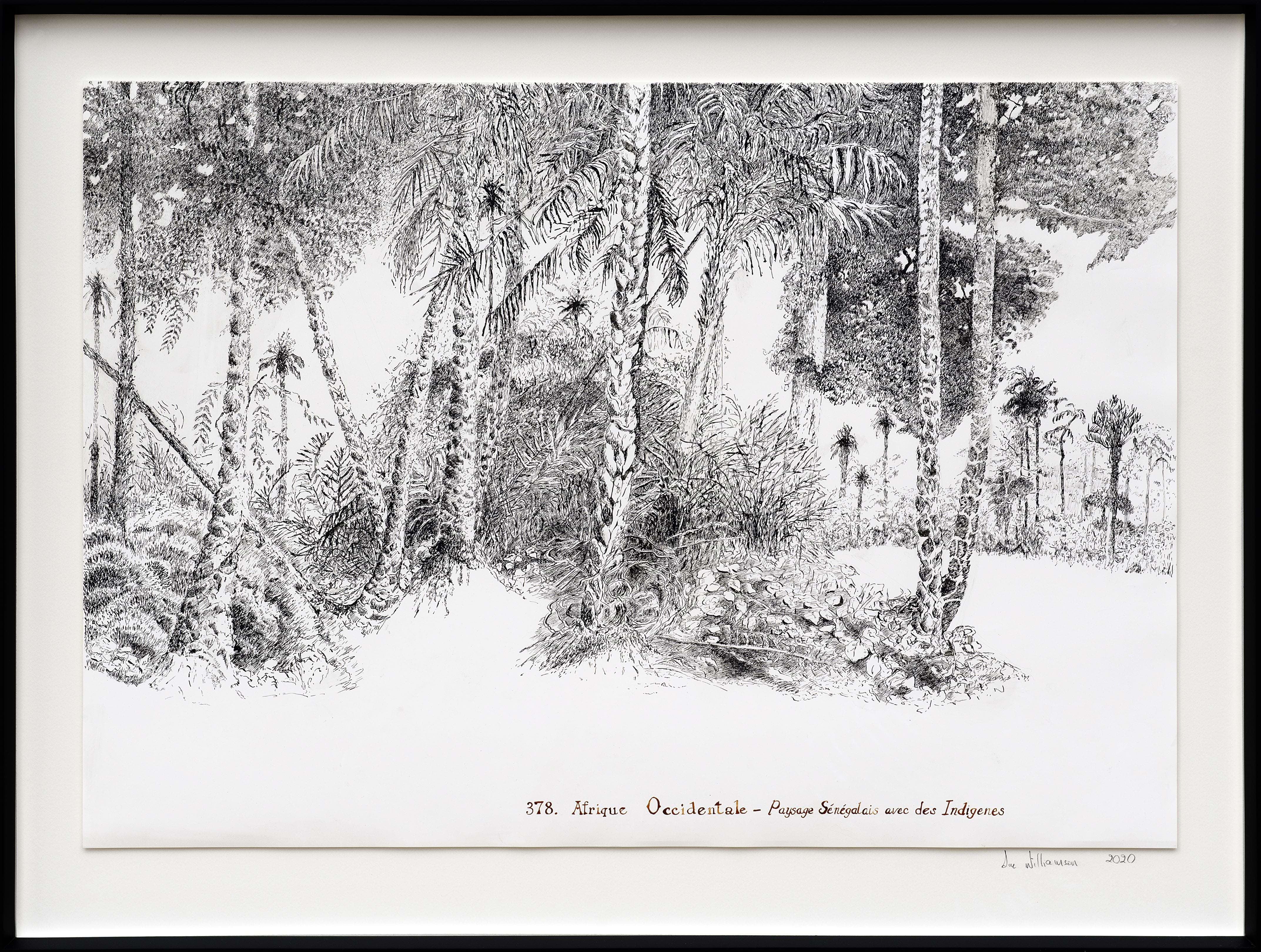
The ongoing series ‘Postcards from Africa’ engages with vintage postcards from the early 20th century, originally produced by European colonists and photographers. Part of a global craze for this new form of communication, these postcards were intended to demonstrate colonisation’s civilising effect on the dark continent, or to depict Africa as an exotic landscape for European audiences. Sourcing these images from archives, Williamson reimagines them through intricate ink drawings, layering cross-hatching and a faded palette. The drawings retain traces of habitation or recent activity — ripples in the water suggest children at play, a canoe floats on a lagoon at dusk, on a deck, fish are being chopped up, a load of wood floats in mid air, —but the people once pictured as part of the landscape are absent.
In a text by Nkopoleng Moloi for Williamson’s exhibition, ‘Distant Visions’ in 2021, “Postcards hold traces of historical memory, and through her evocative ink drawings with their deliberate erasures, Williamson seeks to confront the painful and unresolved legacies of colonialism — an important juncture in world history that has never been fully reckoned with, and whose catastrophic effects continue to be felt by millions of dispossessed peoples across the globe. In this instance, the absence makes the violence visible”.
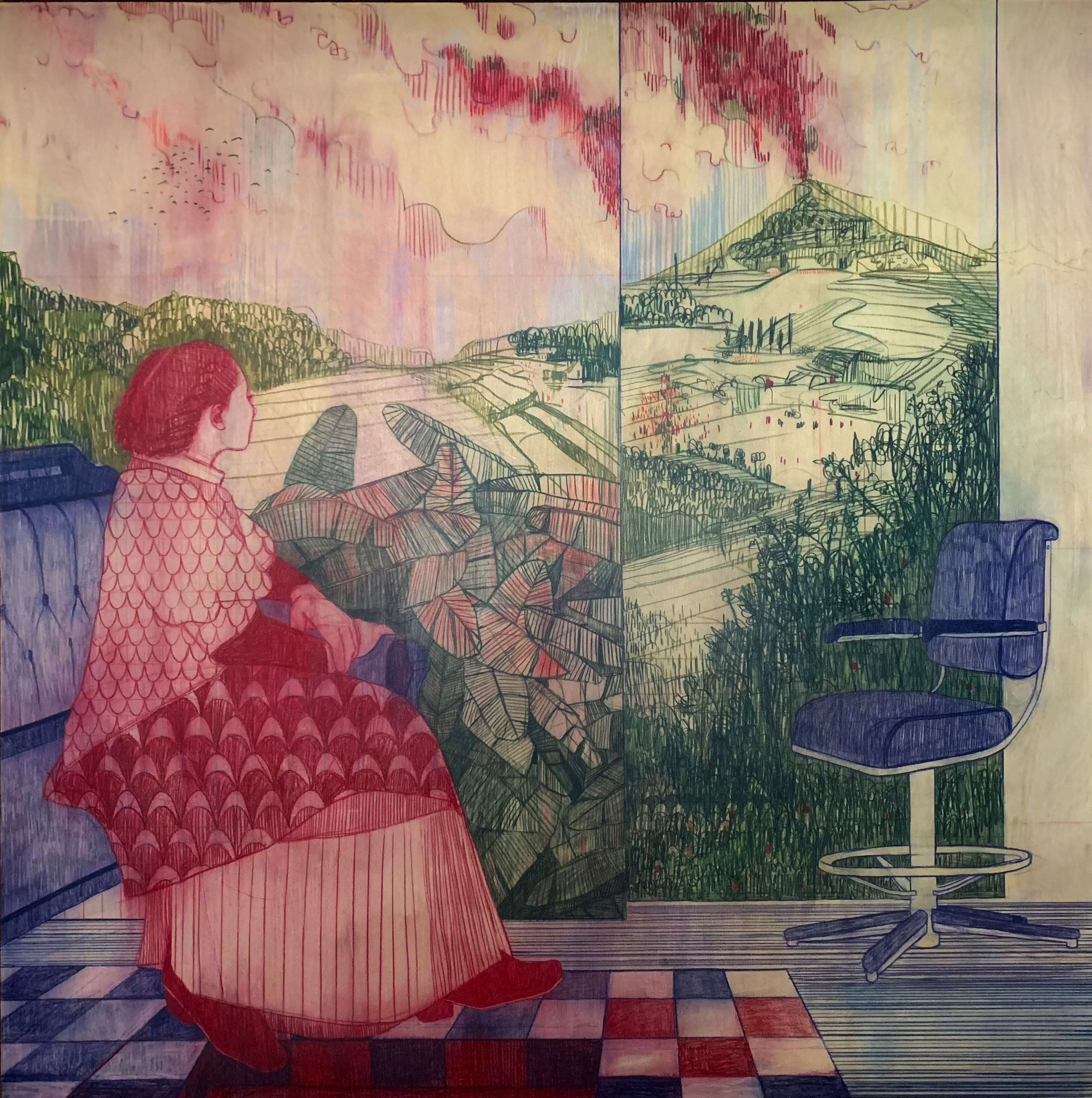
Pamela Phatsimo Sunstrum’s practice reimagines traditional mythologies through a deeply personal lens, using narrative as a means to explore identity, history, and memory. Drawing on her own experiences across multiple geographies, she shifts the perspective of classical myths inward, layering them with introspective meaning. Central to her work is the recurring presence of female figures, often situated in imagined landscapes that straddle the real and the fantastical. By referencing and altering nineteenth century photographic portraits of women of colour, Sunstrum creates composite identities that challenge reductive representations and gesture toward a space where personal history and mythological archetypes can coexist.
One of the most compelling figures in her visual lexicon is Asme, a fictional alter ego who appears throughout Sunstrum’s drawings and paintings. Through Asme, Sunstrum stages intimate, speculative narratives that speak to the complexity of Black female subjectivity. These works function as both self-portrait and story, using the figure as a vessel for exploring interiority, vulnerability, and resilience. Sunstrum’s compositions are informed by an eclectic mix of sources – including archival imagery, textbooks, films, and scientific diagrams – integrated into richly layered scenes that question linear time, fixed identity, and singular truths.
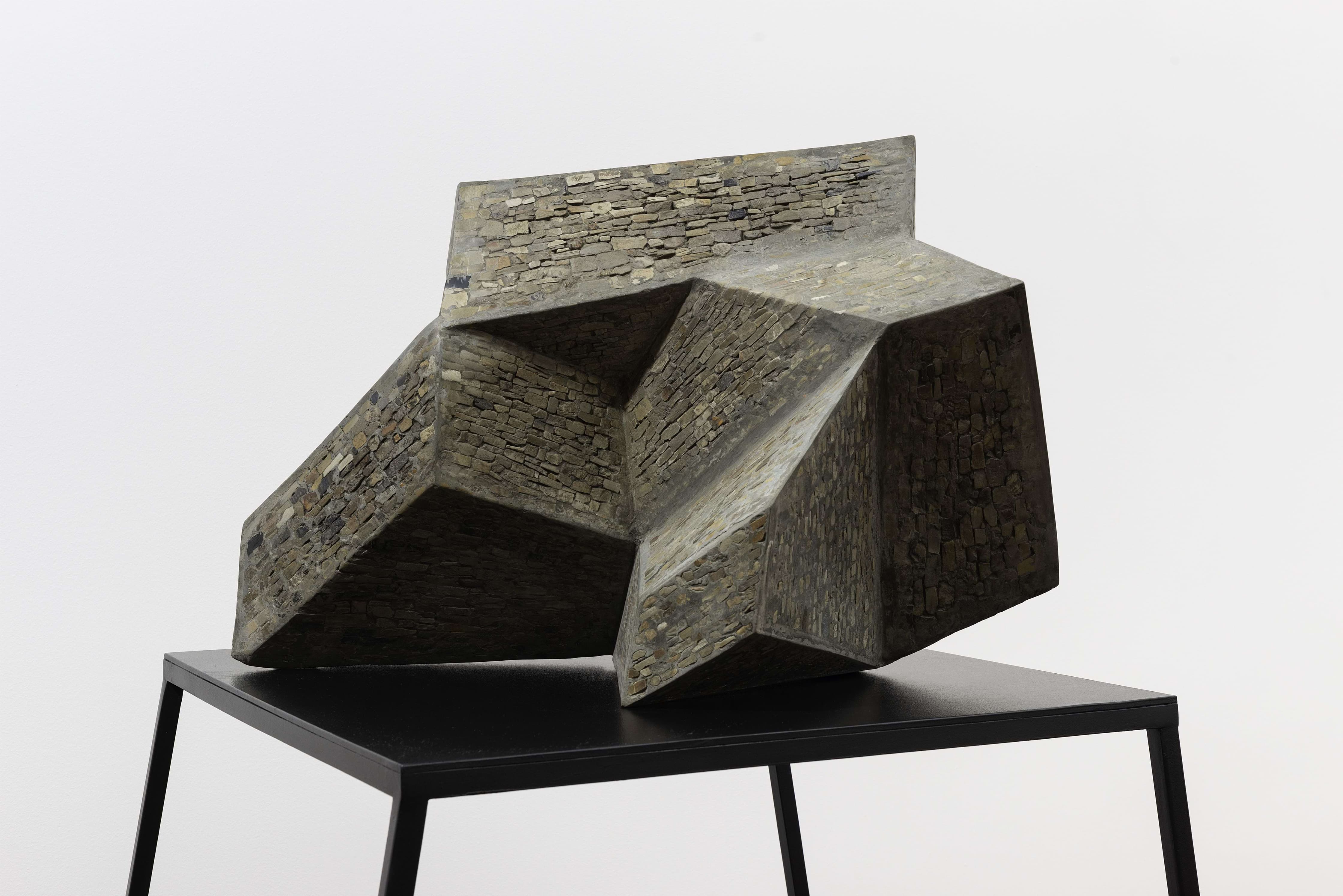
With Near Distant (stone), Gerhard Marx continues the project of transforming visual certainties into new spatial imaginaries as he engages his interest in the construct or idea of ‘distance’.
“If an encounter with an object is an encounter of presence, then the idea of distance would in some way propose an opposite encounter, an encounter with absence. Of course, there is an emotional root to an encounter with distance; distance is an open space for longing, an architecture for loss, a space of blurred certainty, an entry point to the sublime. The question, however, is to engage distance without it turning into nearness.
I have started to see this project as being inherently political, a project of undoing; of unmaking categories; of unmaking the viewer’s centrality as implied by perspective. Distance would dissolve the crisp outlines of things seen up close. In distance things can become awash, there is no clear point where one thing begins and another ends. Perhaps, I thought, I can undo the artifice of intimacy, build distance into objects, and let things become feral.” — Gerhard Marx, 2020
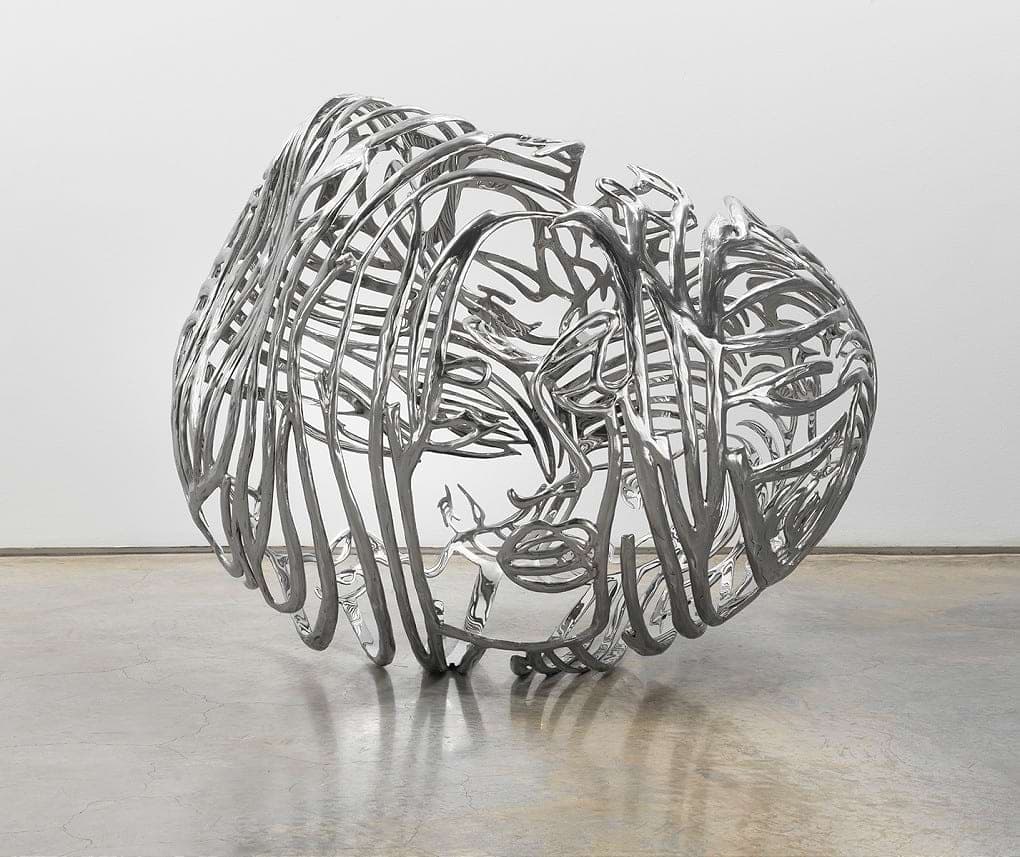
Ghada Amer is a multimedia artist whose body of work is anchored and informed by ongoing ideological and aesthetic concerns: the submission of women to the tyranny of domestic life, the celebration of female sexuality and pleasure, the incomprehensibility of love, the foolishness of war and violence, and an overall quest for formal beauty, constitute the territory that she explores and expresses in her artistic practice.
Amer's sculptures propose different ways in which the manipulation of line, shape, and colour can yield an infinite range of compositional and design effects, even within the limitations of a globular form. The women depicted in Amer's sculptures and paintings are not victims, rather, they pose self-confidently, giving their viewers a challenging look. Nudity never makes Ghada Amer’s figures seem vulnerable or shameful, in Amer’s practice, regardless of the medium, style and political demands, her figures assert themselves. With her images of self-confident women, Amer opposes institutionalised sexism.
Starting in 2010, Ghada Amer began building what has been dubbed her “egg-shaped” sculptures, oval shaped objects with flowing crisscrossed lines that produce a play of light and shadows on the wall and floor surrounding them. They invite the viewer to gaze back and forth between the inside and outside of the object and to hypnotically contemplate the space within the sculpture.
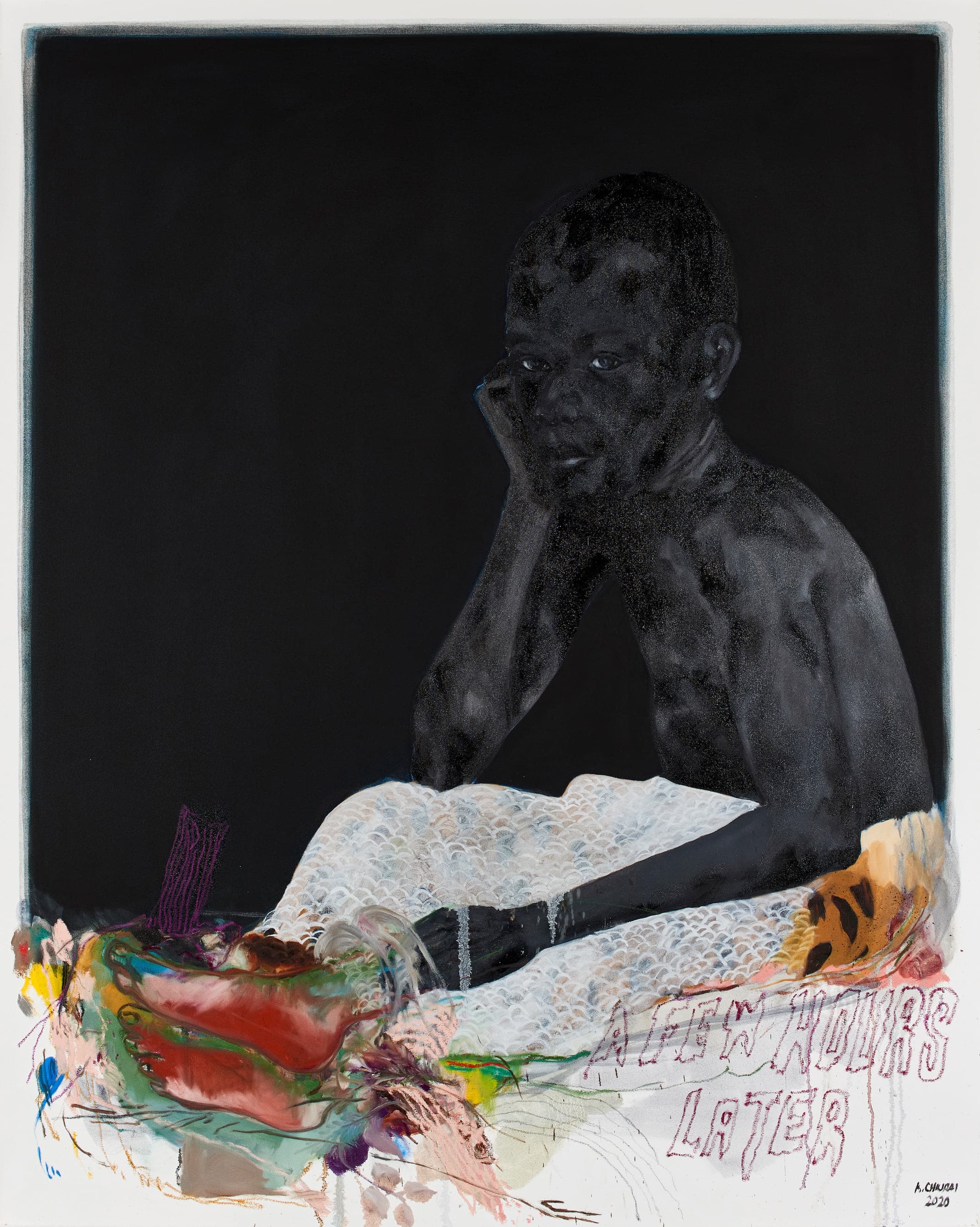
Kudzanai Chiurai employs a revisionist strategy to disrupt what he refers to as ‘ colonial futures’, embedding alternative memories into history that remedy the omissions inherent to the colonial project.
'A few hours later' forms part of Chiurai’s ongoing series 'Paintings from the Radical Archive', which pay homage to posters generated for the purpose of inciting public into political action in what is now remembered as the turbulent 1970s of Zimbabwe. The timelessness of the slogans and anthems appearing in the original posters is reiterated within Chiurai’s collage as a painful echo of their continued relevance in present-day protest actions.