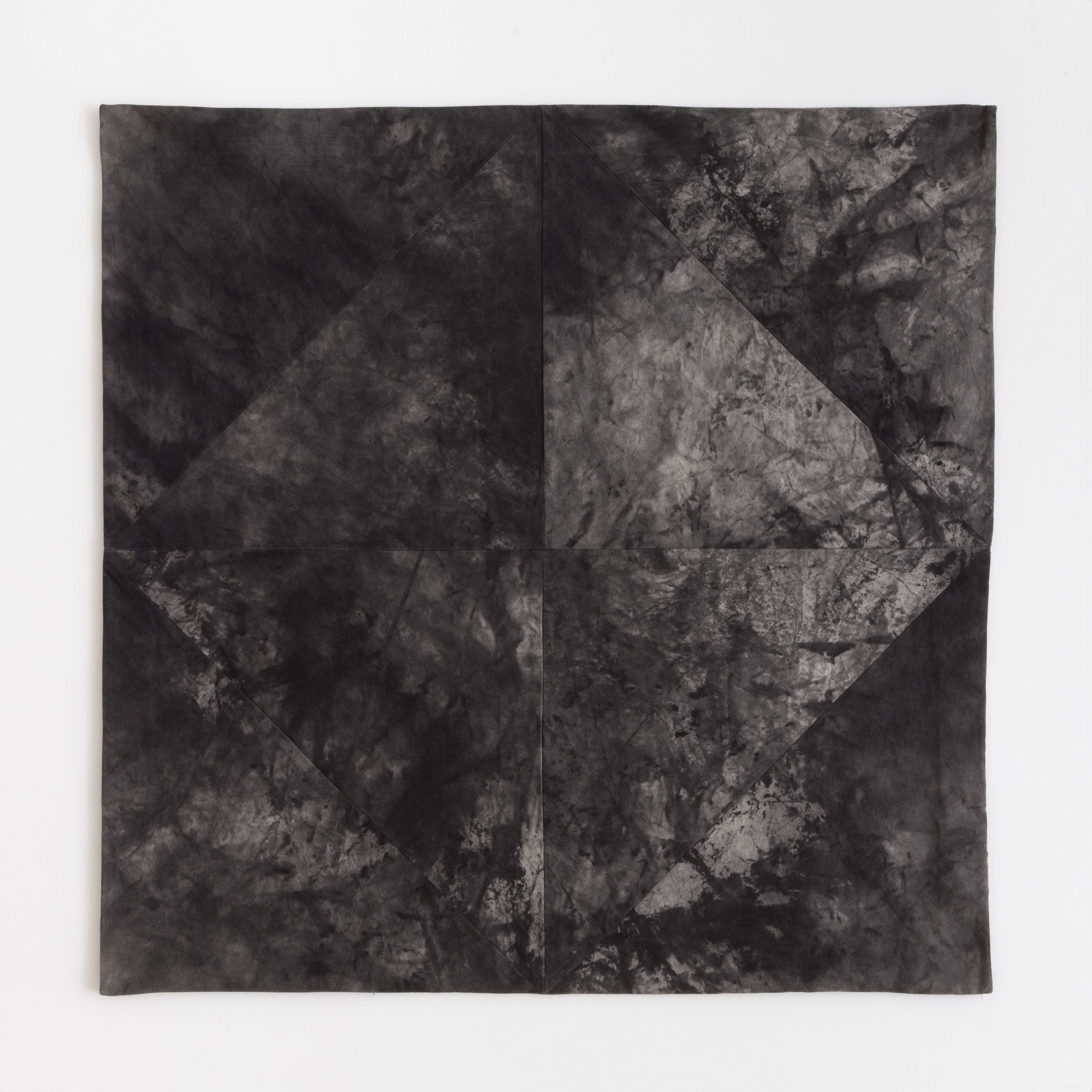
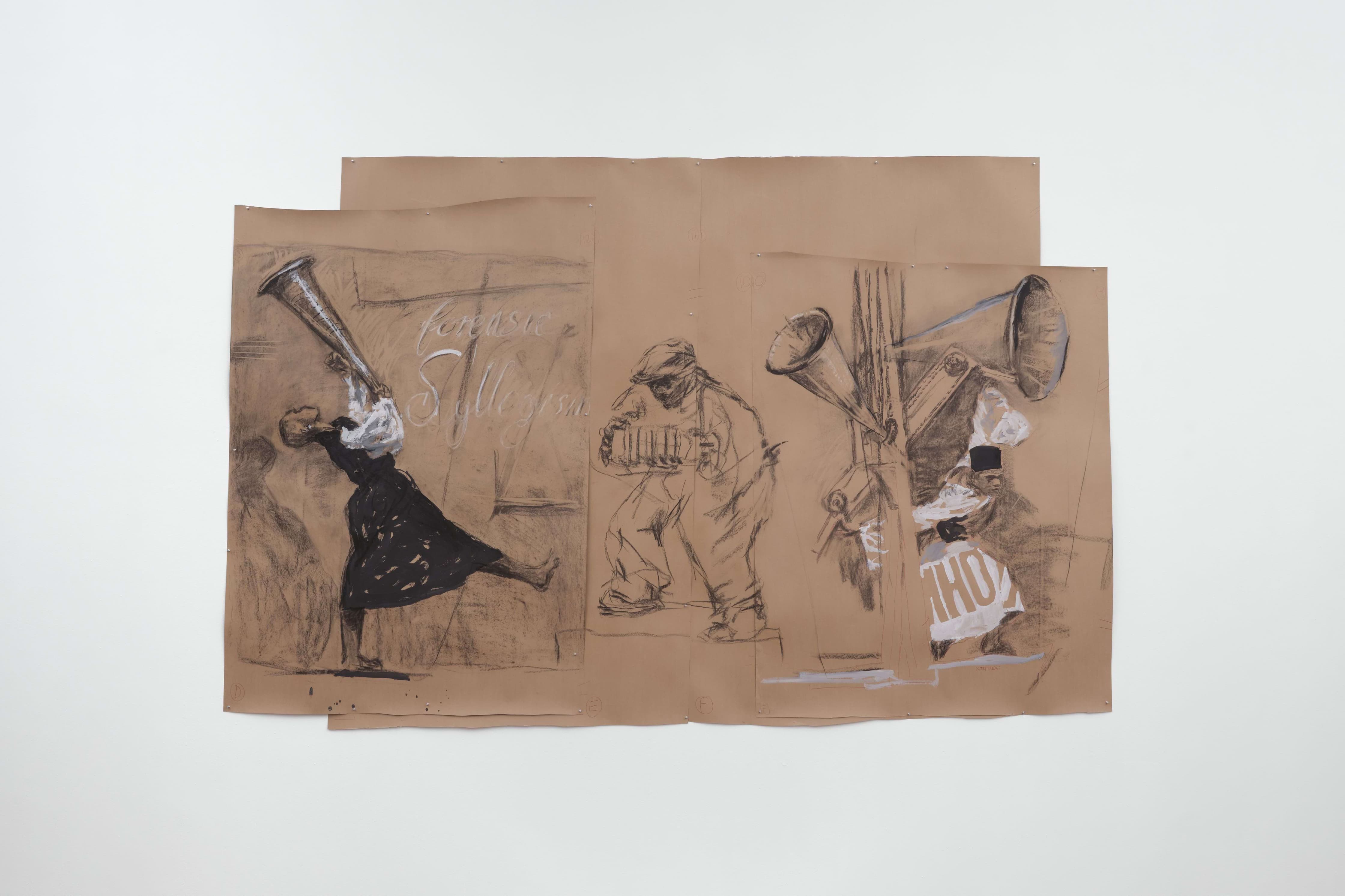
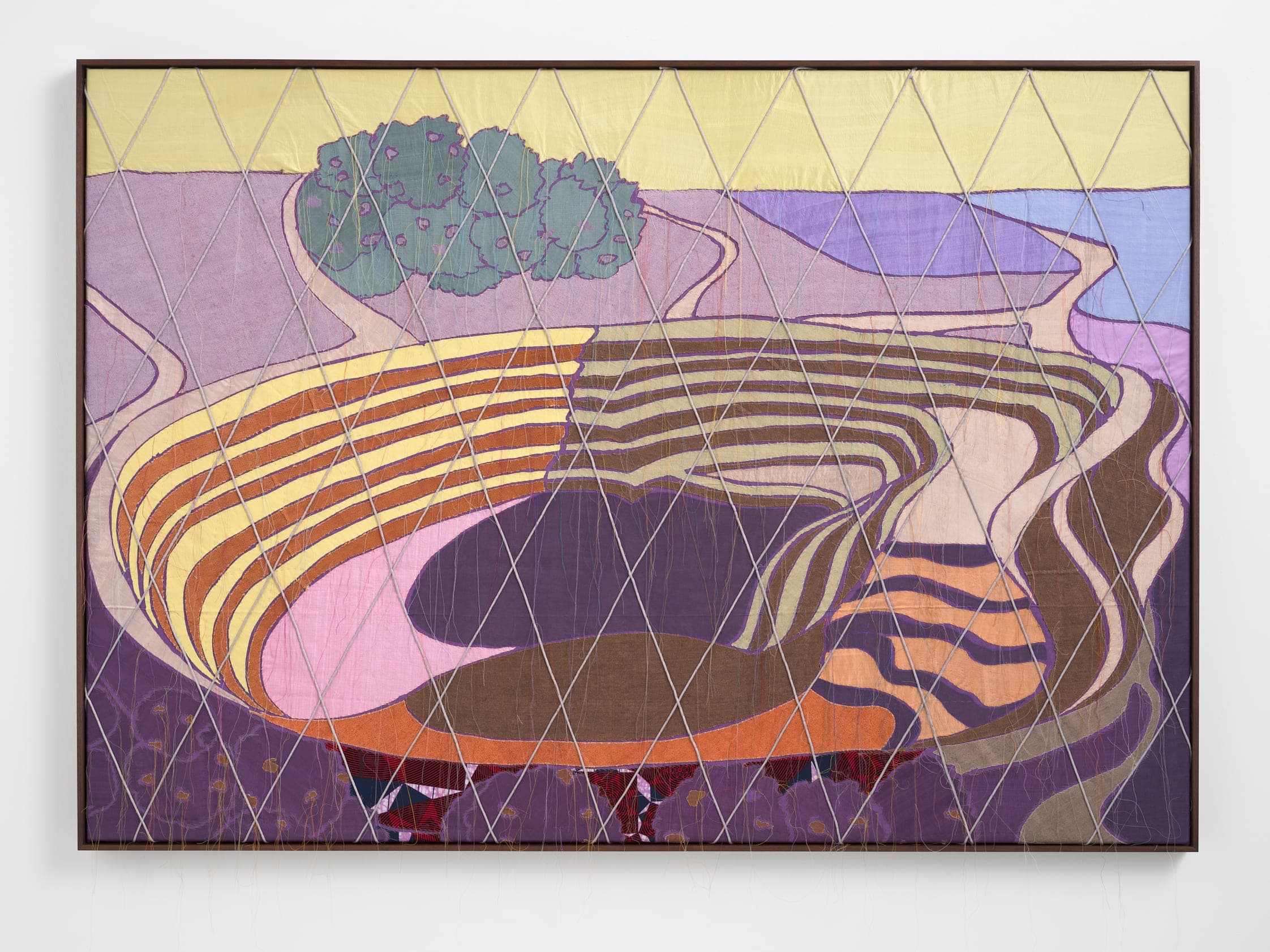
In a sequence of quilt works created out of cotton treated with pigment and saltwater from the Atlantic Ocean, Kiwanga extends the intangible components of her narrative compositions, continuing her investigation into the transatlantic slave trade. For the artist, the sea is an archive and witness of violent pasts. The cloth works combine and materialise her analysis of forced movement and liberatory strategies. Kiwanga’s use of symbols on the textiles allude to the safe houses along the Underground Railroad, often indicated by a quilt hanging from a clothesline or windowsill as a mode of communication. The geometric shapes function as conceptual coordinates of flight, escape and safety —by reading the motifs sewn into the design, a person fleeing slavery could assess immediate dangers.
Video
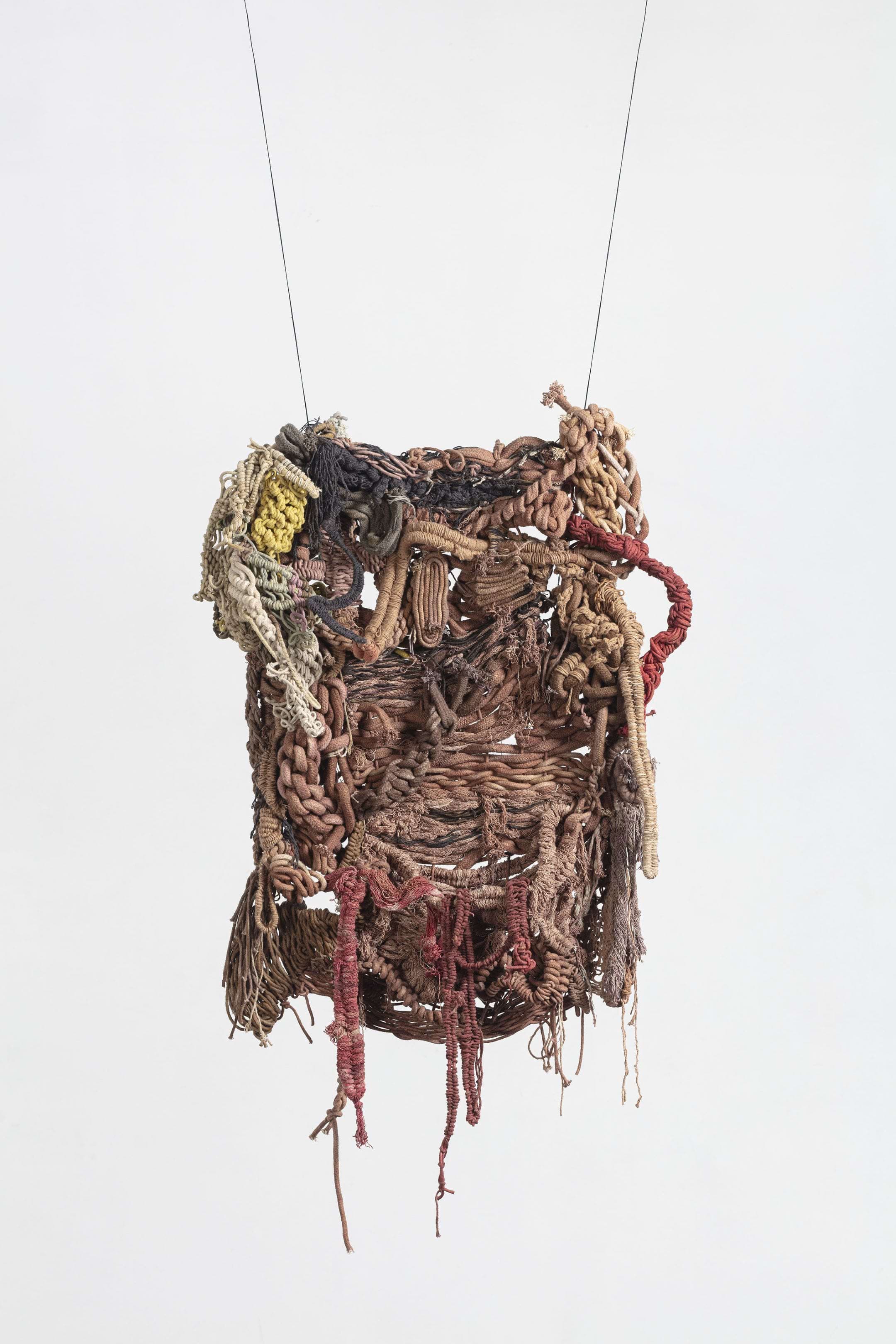
‘Caboclinho do Mato’ draws on a figure from Brazilian folklore – a small forest-dwelling man said to be one of the guiding spirits for shamanic apprentices. According to legend, Caboclinho was once an ordinary man who consumed such an overwhelming dose of ayahuasca that he crossed fully into the spiritual realm, body and soul, without dying. In Lima’s interpretation, this mythic transformation is rendered through an intricate structure of raw cotton threads, dyed using a vast range of natural pigments: black acacia, beetroot, indigo, turmeric, chamomile, avocado seed, tobacco, red wine, and many others.
The resulting form hums with layered meaning. Organic, vibrant, and richly textured, it evokes the forest’s dense, alchemical vitality – a space of both concealment and revelation. Steel wire lends subtle structure to the woven threads, suggesting a body suspended between worlds. As with much of Lima’s work, ‘Caboclinho do Mato’ resists clear categorisation, instead offering a sensorial encounter shaped by myth, material, and the transformative potential of ritual. It invites viewers to linger in ambiguity between human and spirit, forest and body, substance and vision.
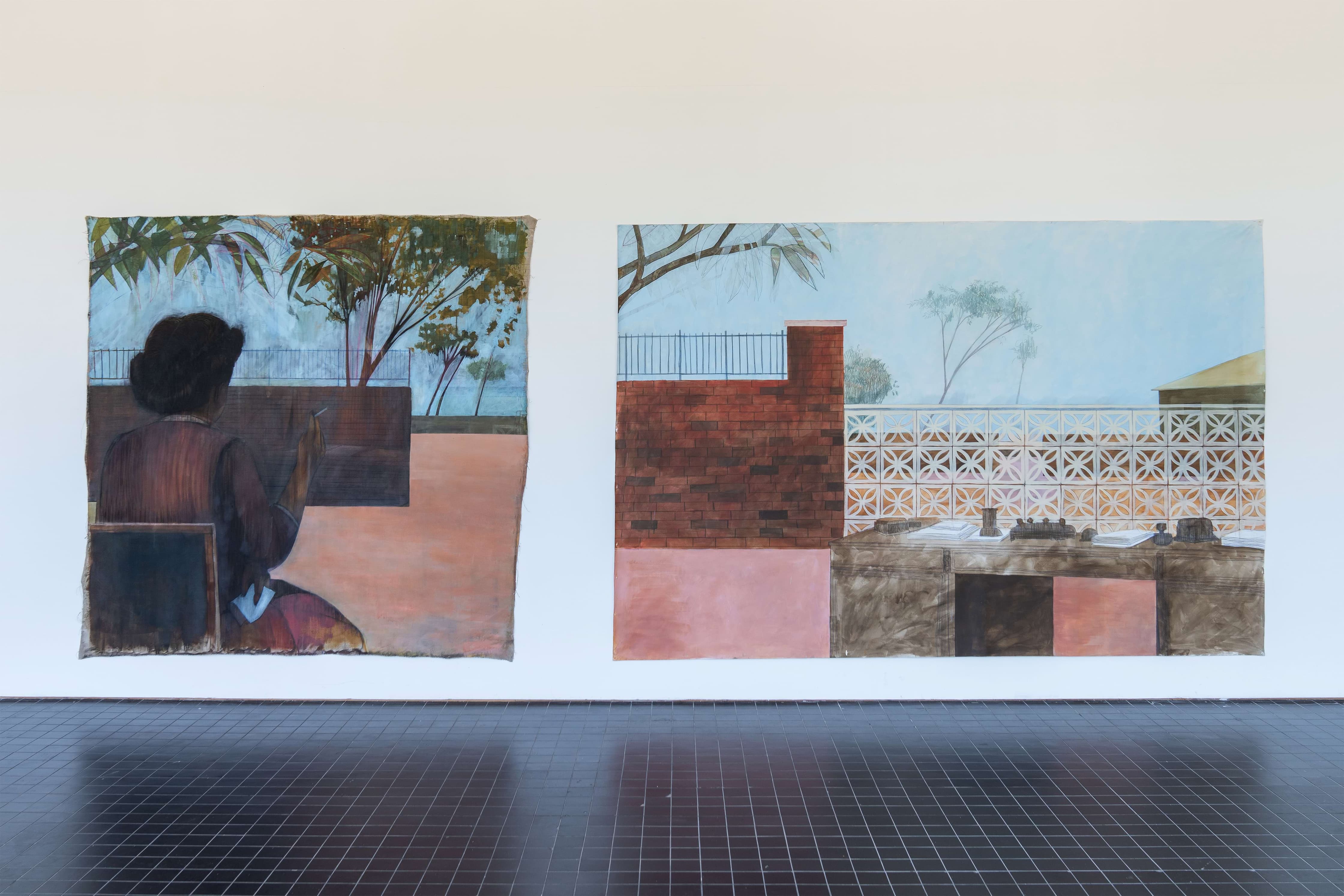
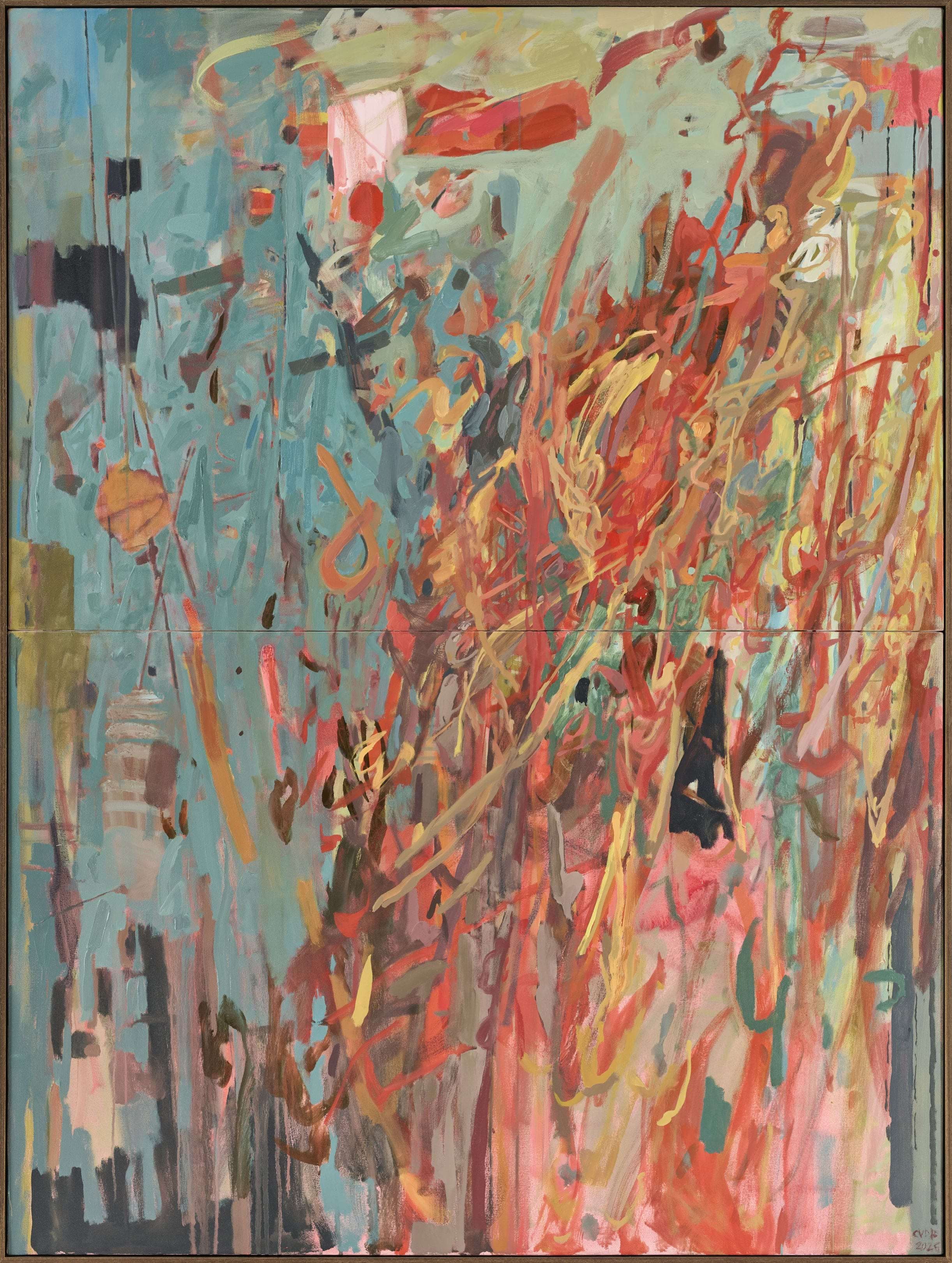
For some time Pamela Phatsimo Sunstrum has used an ever growing cast of characters to unfold a narrative that spans multiple geographical, historical, and cultural identifiers. Earliest works revolve around cosmic origin stories, ancestral archives, and the mythical hero’s quest. These beginnings then led Sunstrum to explore the identity of this hero within scientific theories on the origins and structure of the universe alongside speculative fiction and the political possibilities in imagining the future. The hero in Sunstrum’s work stands for multiplicity, nuance, and hybridity– Sunstrum’s hero is a chimerical time-and-space traveller, and thus a Deleuzean ‘radical’ whose constant state of ‘becoming’ disrupts the unidirectional and fundamentalist concerns of colonialism, capitalism, and other projects of empire building. More recently Sunstrum has explored the aesthetics of oppression and has been curious about the use of space, design, and materials to impose and coerce. For instance, recent installations such as ‘Mumbo Jumbo and The Committee’ (2022) and ‘The Pavilion’ (2023) included allusions to Victorian furniture and design. Now, two decades into the spinning of this saga, the hero in Sunstrum’s work has again time-travelled to a mid-century moment in a rural colonial outpost. Against the backdrop of a small bordertown village, this new diptych painting, ‘Exit Permit’ is a poetic amplification of the inner turmoil presented by such crossing points. In the exhibition at KM21 (Den Haag) the work is presented as a dramatic tableau: a drawing installation composed across multiple sheets of linen set among a ‘cast of characters’ made up of several pieces of furniture borrowed from the Kunstmuseum’s applied arts collections. These posed pieces of furniture become extensions of the narrative composition within Sunstrum’s painted work.
Video
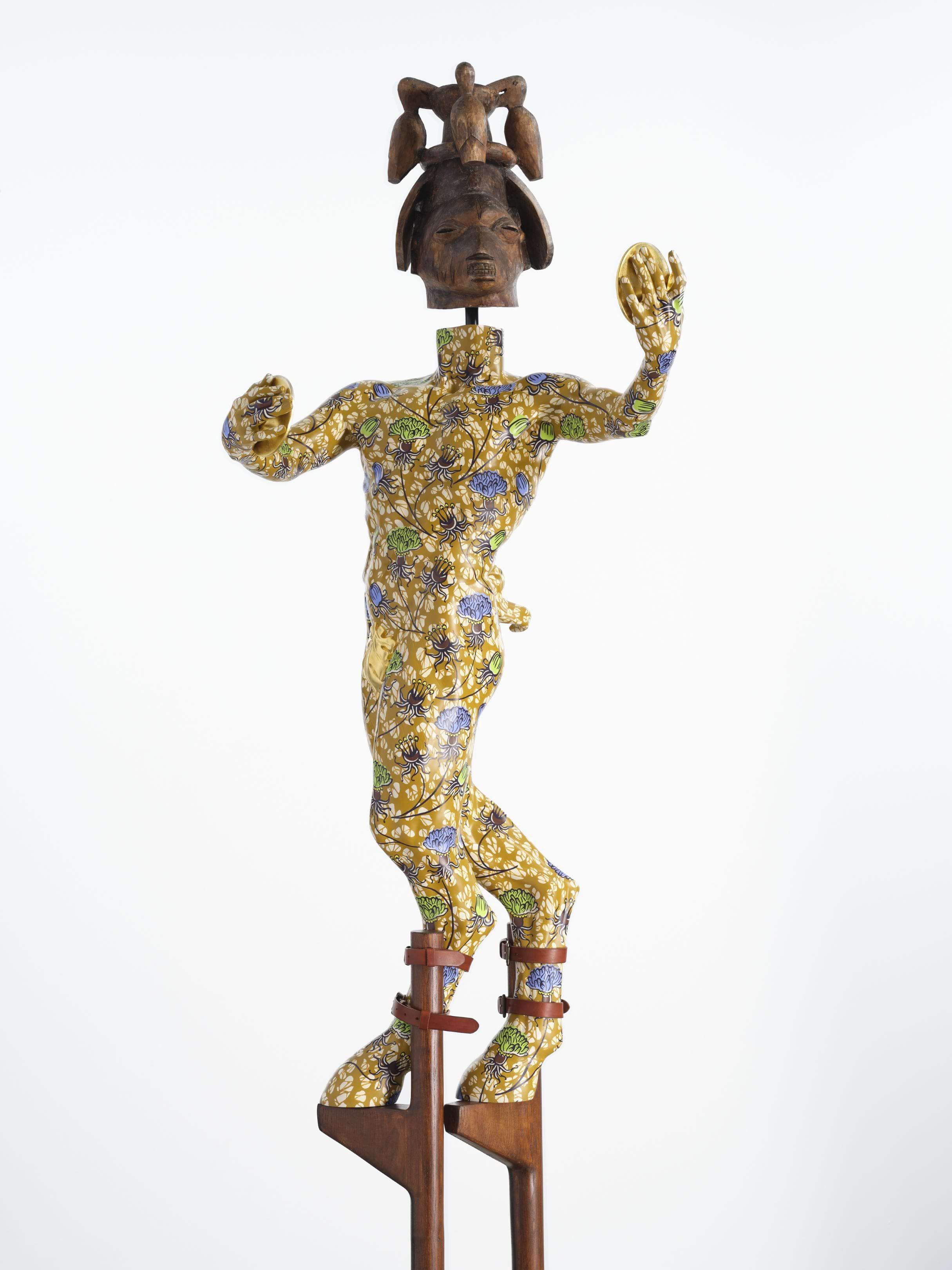
Yinka Shonibare's 'Hybrid Sculptures' merge Western mythological figures and African masks and symbols, rendered in his signature Dutch wax batik-style fabrics. These works explore themes of cultural identity, post-colonialism, and the global movement of cultural symbols. Shonibare challenges the idea of fixed identities, showing how cultures influence and reshape one another through history.
Video
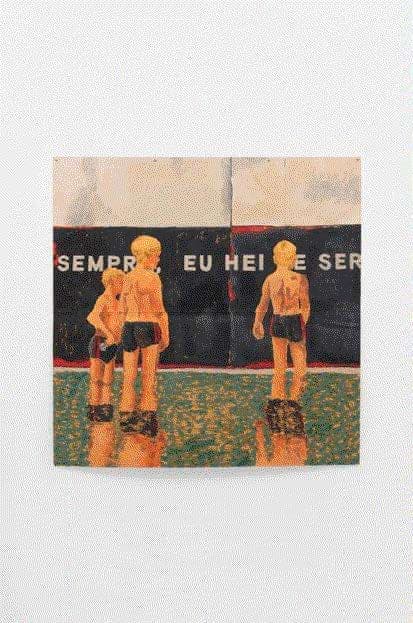
The series “Clube” was created in 2020 when Maxwell Alexandre became a member of Flamengo Club to practice swimming. It was there that he developed an interest in the “Gávea bathers” and chose them as the new central subject of his painting.
In the Brazilian context, the figure of the Gávea bather carries layered associations: rooted in the affluent Rio de Janeiro neighborhood of Gávea and its proximity to rivers, waterfalls, and beaches, it evokes a tradition of leisure and bathing culture central to the city’s identity. In art history, bathers have long served as a modernist motif—transposed into tropical light by Brazilian painters to explore questions of the body, sensuality, and national identity. Within this frame, the Gávea bather embodies both idyllic freedom and social distinction, reflecting who has access to Rio’s spaces of leisure while standing as a broader cultural symbol of Brazil’s landscape, people, and myths of belonging.