
Video
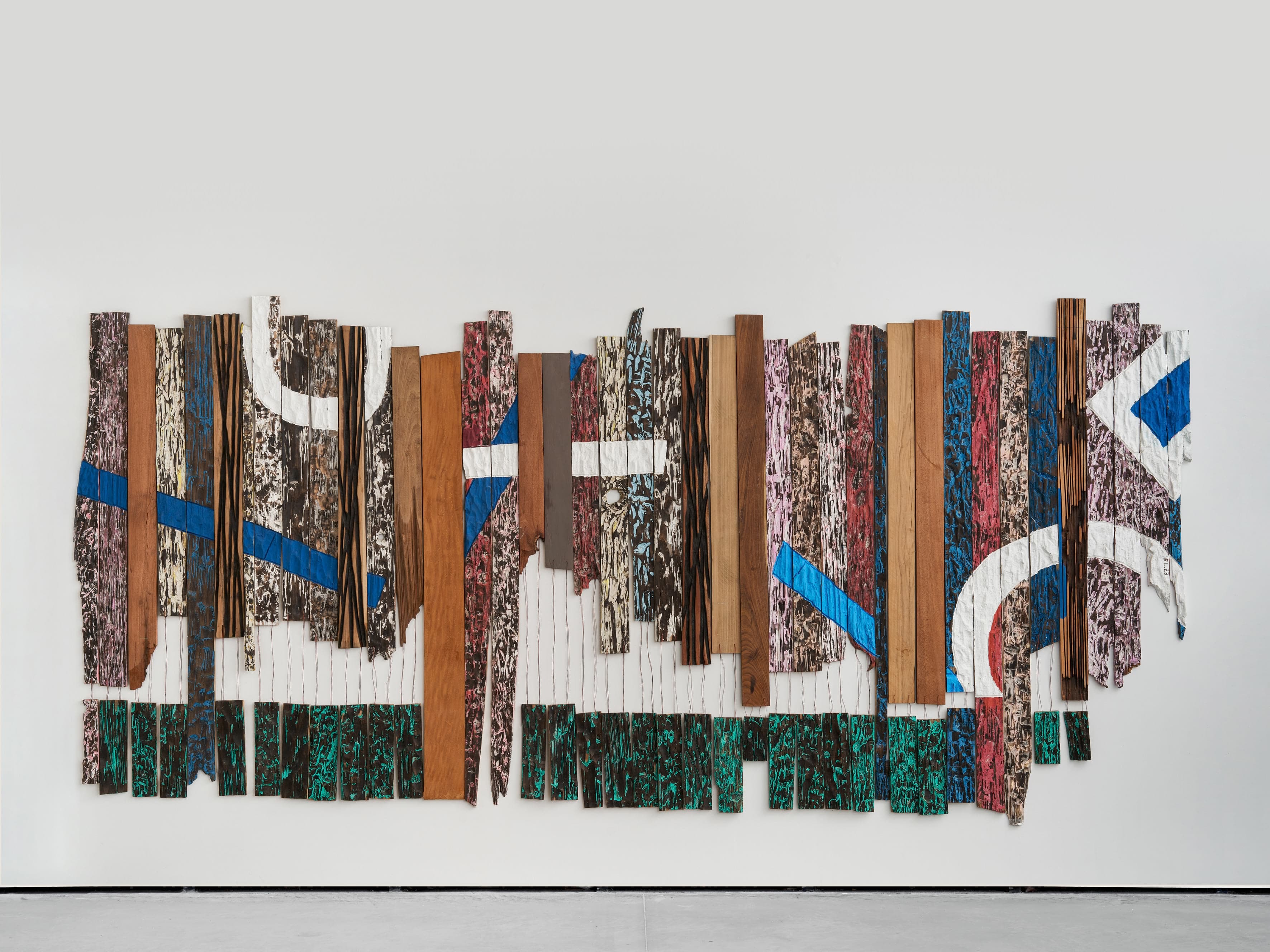
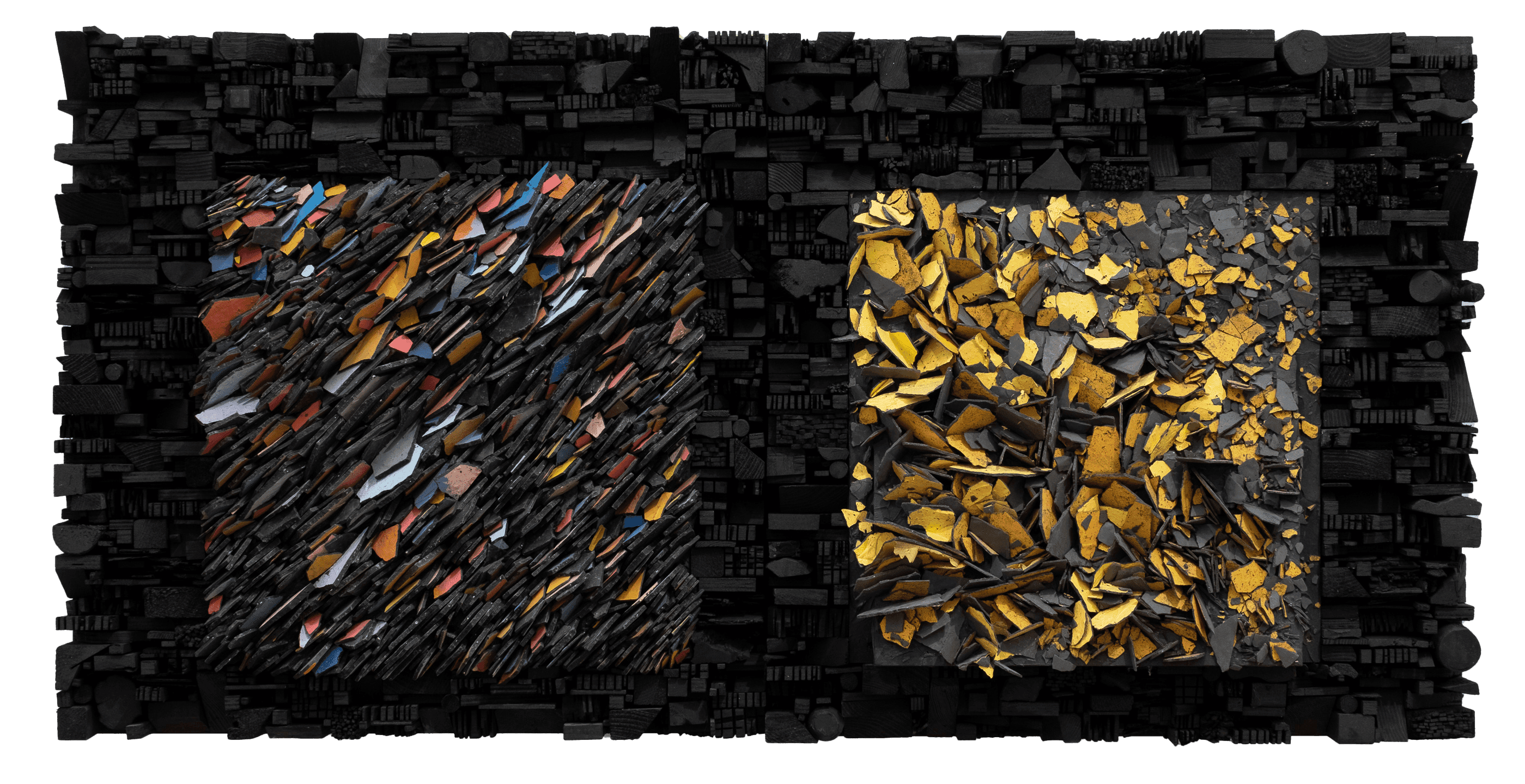
El Anatsui’s wooden sculptures form a pivotal part of his practice and conceptual thinking. Working with indigenous hardwoods sourced in Ghana and Nigeria, he employed carving, burning, painting, and staining to transform the surface of the wood. These treatments created layered textures and rich tonal variations, revealing a deep sensitivity to material and form. Many of the works are modular in structure, composed of panels that can be rearranged, introducing a sense of mutability and open-endedness that would later become central to his practice.
Emerging from the artistic context of the Nsukka School, where he taught at the University of Nigeria, Anatsui’s approach was shaped by the institution’s emphasis on synthesising contemporary art with indigenous knowledge systems. The influence of uli and nsibidi visual traditions is evident in his use of symbolic motifs and calligraphic markings, which recur across his carved wooden surfaces. Through these embedded forms, Anatsui explores themes of memory, history, and transformation – particularly the legacies of colonialism and the persistence of African epistemologies.
These works are not simply static wall pieces but carry sculptural presence and conceptual depth. Their modularity, emphasis on surface, and engagement with repetition anticipate the formal strategies Anatsui would later amplify in his iconic bottle-cap installations. In both bodies of work, the interplay between fragment and whole, permanence and change, remains a defining concern.
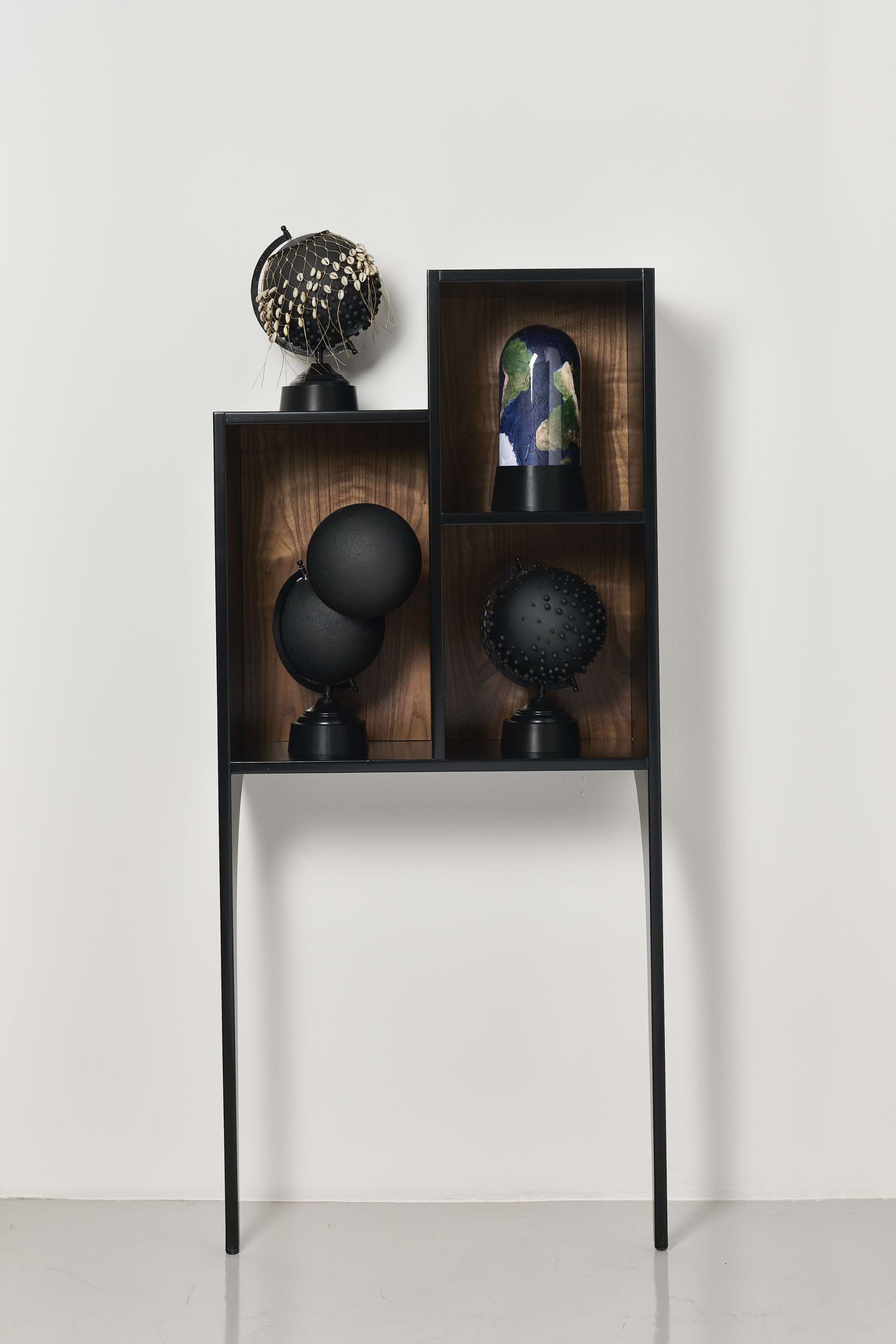
Dennis’ model cabinet 1b (work set) presents a set of globe models and shelving as a conceptual installation, challenging traditional geographic models and inviting us to see global spaces as fluid relations between ideas rather than fixed images of the world.
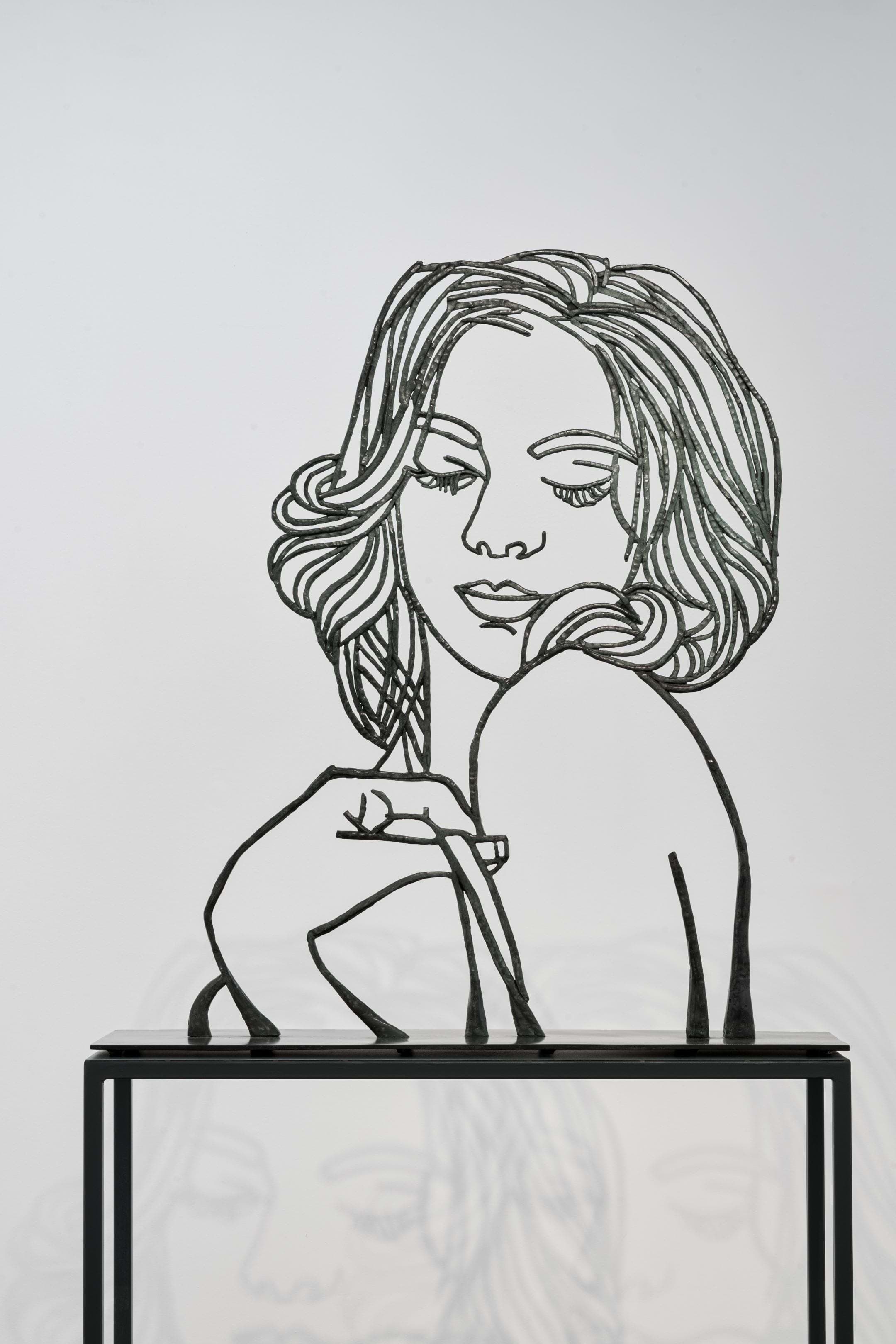
Ghada Amer's 'Suzy' (2021) and 'Dripping Jenny' (2021) are from a series of flat sculptures in bronze which play with shadow and perspective and bear striking parallels to her well-known drip paintings. They were cast in South Africa’s Workhorse Bronze Foundry and have been realised as ‘drawings in space’ – a technique that the artist developed during a residency in 2017 at the John Michael Kohler Arts Center in Wisconsin. The technique involves moulding with clay before the work is cast in bronze. For Amer, this was an essential period of training that allowed her to master the process of moulding large sculptures: “I wanted to learn how to paint with clay so that I could portray women in my sculptures as expressively as I do in my painting.”
In a series of segmented works, Leonardo Drew arranges his materials into grid-like compositions that often resemble a checkerboard. Each section operates as a distinct zone, showcasing the full range of his material vocabulary—charred wood, rusted metal, cotton, paper pulp, and glass elements—while maintaining a rhythmic overall structure. These compartmentalized surfaces create a sense of order within the visual density, allowing for contrast and variation across each square. The format serves as both containment and catalyst, emphasizing material difference while reinforcing the interconnectedness of destruction, decay, and renewal.