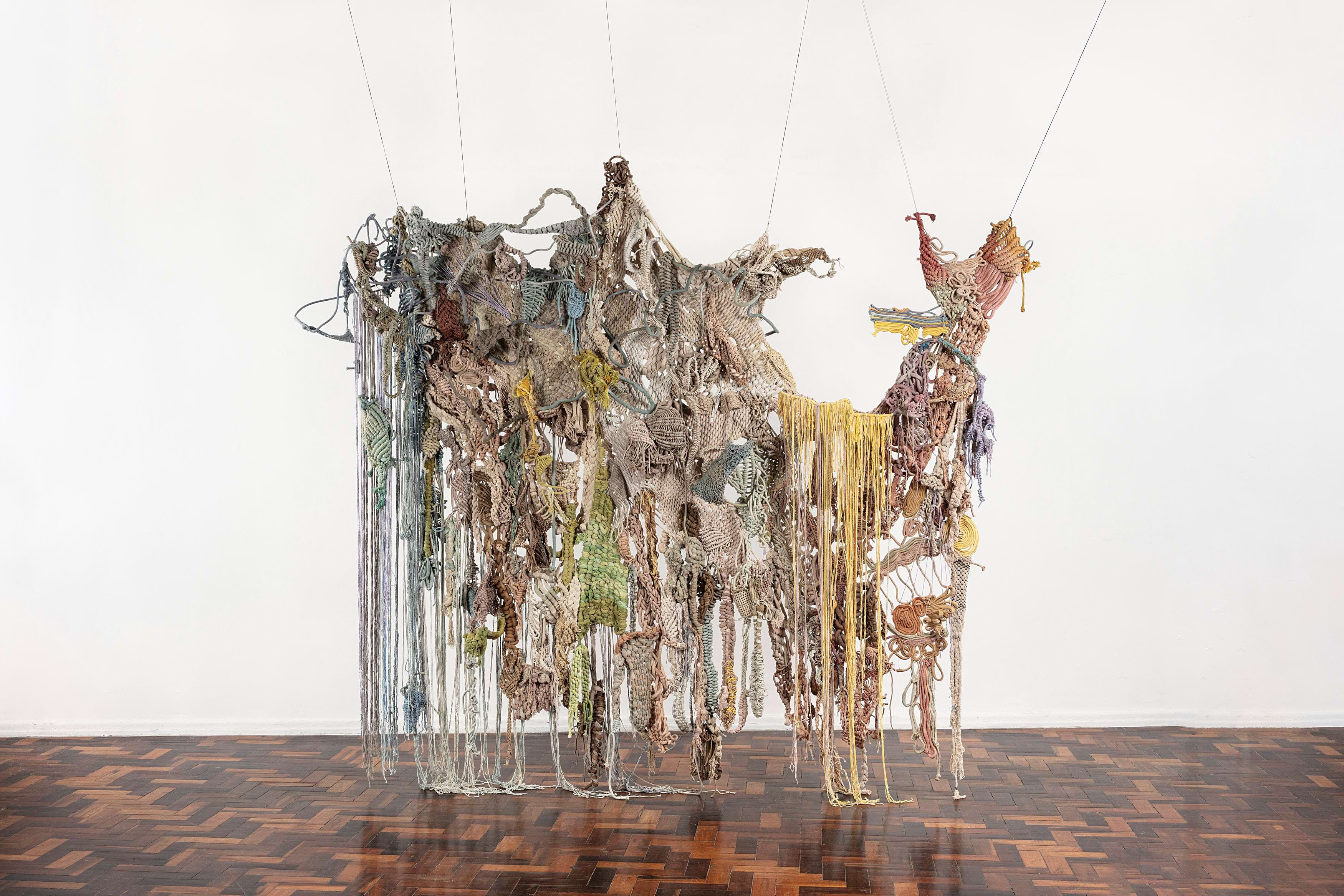
Irapuru is a magical red bird, a symbol of happiness in Brazilian folklore. According to the legend, a young indigenous man was cursed by a tribe chief for being in love with his daughter. The indigenous man became Irapuru and began to sing a beautiful song. The chief heard it and went into the forest to capture the bird, but he got lost and never returned. Irapuru still sings today, hoping that his lover will hear and recognize him. Whoever finds this bird gets a wish.
Raw cotton threads dyed by natural pigments (indigo, wine, red cabbage, porangaba, black tea, spinach, parsley, red beans, annatto, crajiru, redwood) and steel wire
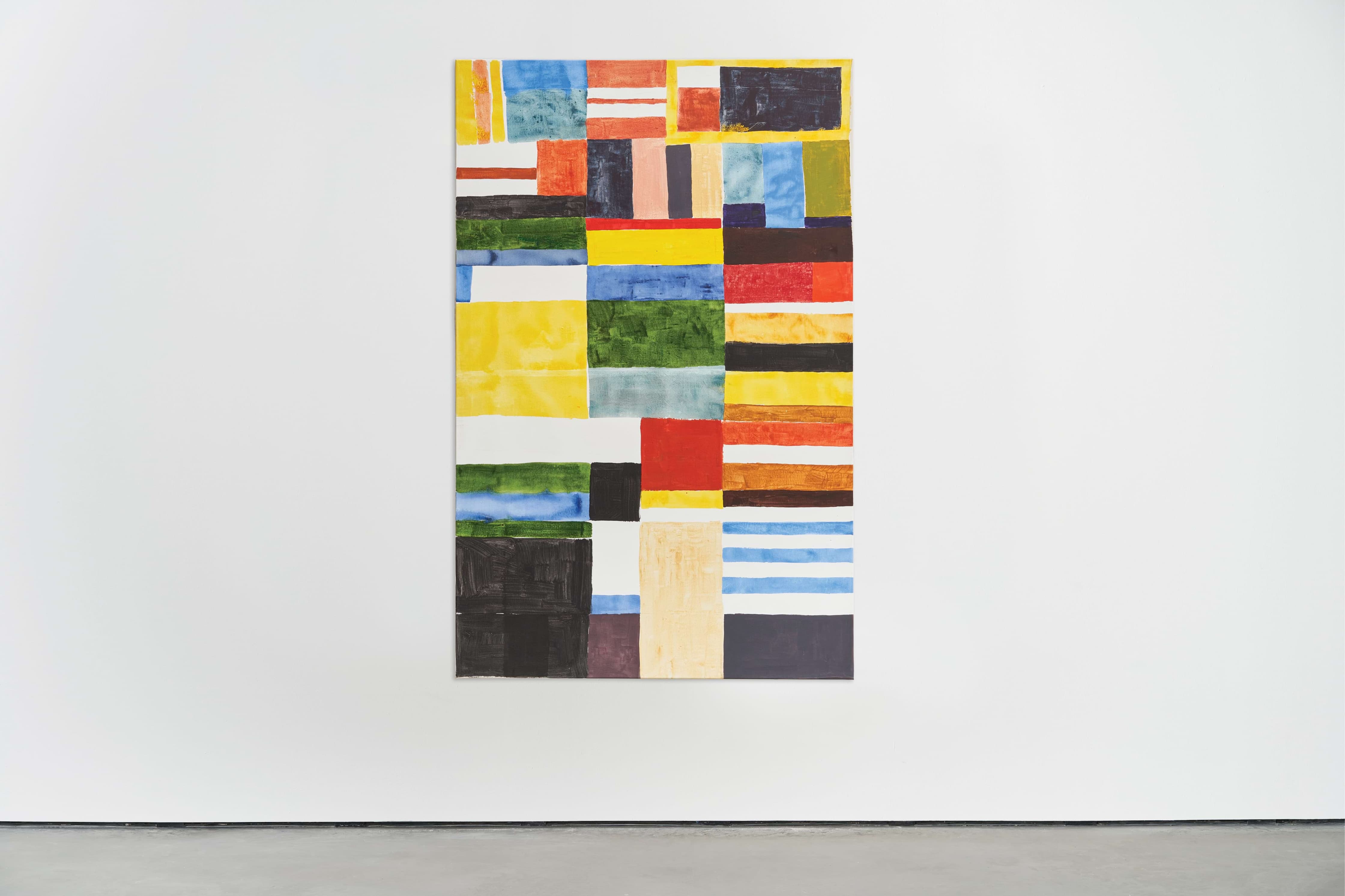
Atta Kwami (b. 1956, Accra, Ghana, d. 2021, UK) composed works of vibrant geometric patterns that are inspired by a wide range of influences, from Ewe and Assante cloth to jazz, the tradition of mural painting and the design of street kiosks along the roads of West-African towns. Kwami is known for expanding the notions of painting, basing his practice both in the visual world of his native Ghana and in reflections on modernism.
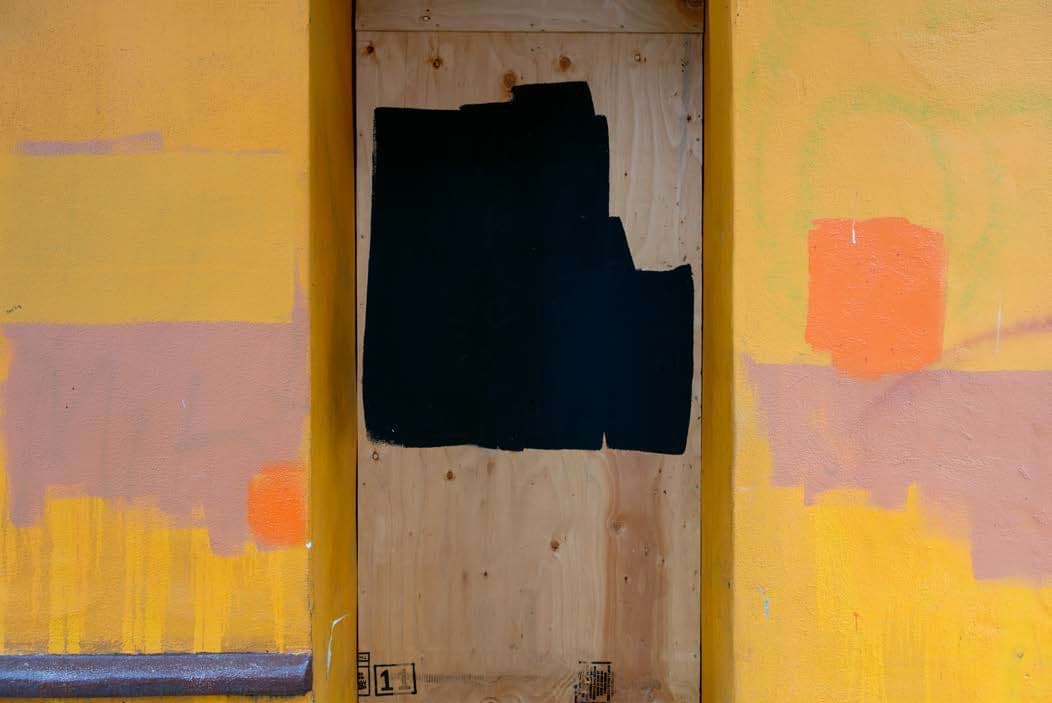
Carrie Mae Weems’s critically acclaimed 2021 series’ Painting the Town’ is the artist’s latest body of photography and was recently included in the Barbican Art Gallery 2023 survey coinciding with her current European museum exhibitions at Hasselblad Centre and Kunstmuseum Basel. The work captures shuttered hoardings of stores in Portland, Oregon, where authorities attempted to cover and erase demonstrators’ slogans following the murder of George Floyd. Almost life-size in scale, the photographs present as trompe l’oeil the painted hoardings as abstract paintings.
Video
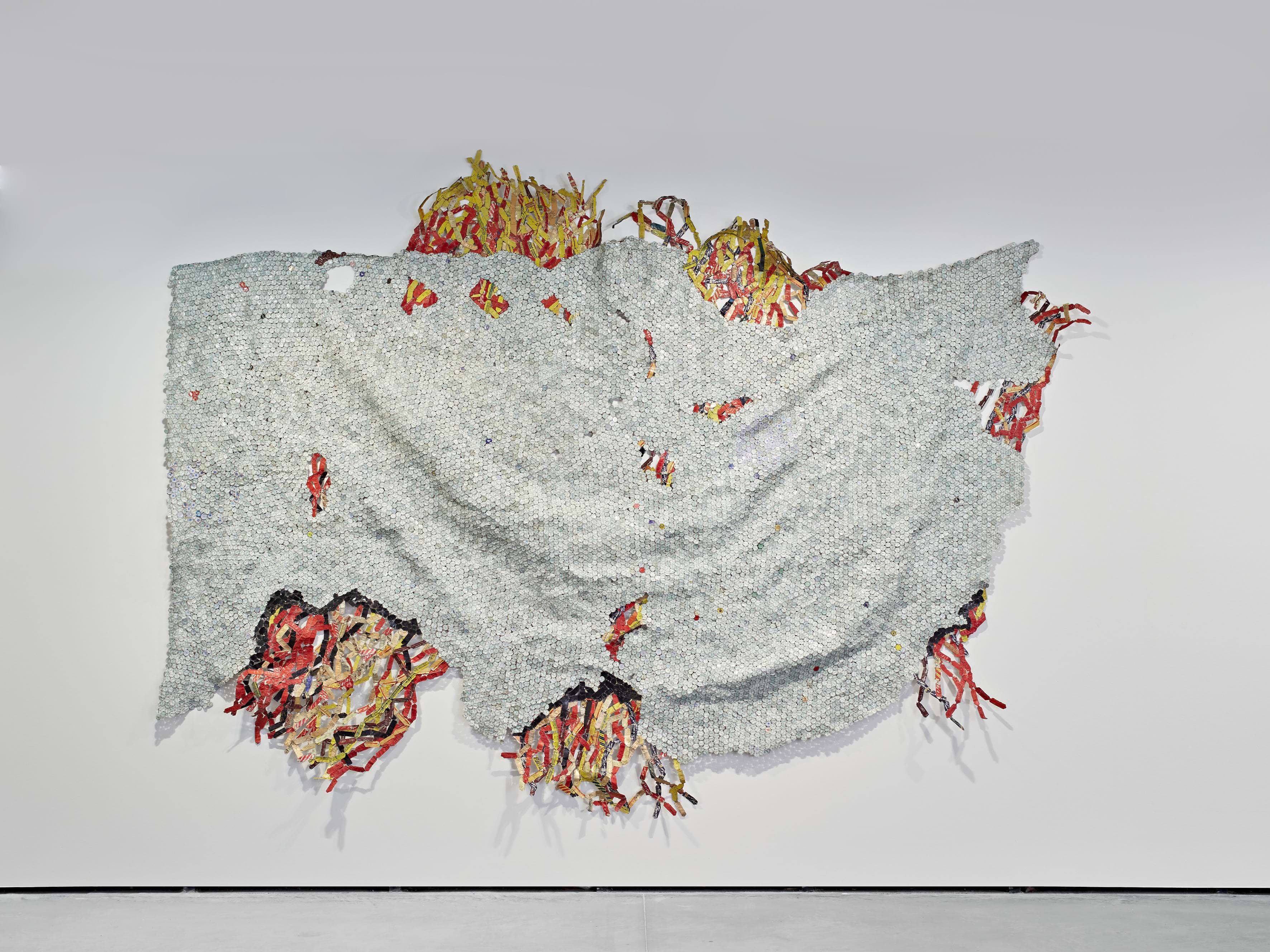
Renowned for his large-scale sculptures made from discarded consumer goods, El Anatsui transforms simple materials – such as aluminium bottle caps, foil wrappers, and cassava graters – into vast, shimmering assemblages with striking visual and conceptual impact. Beginning in the early 2000s, he began working with teams of studio assistants to cut, flatten, and stitch together these recycled elements using copper wire, producing monumental, tapestry-like forms that blur the line between sculpture and textile. While visually evocative of Ghanaian Kente cloth or ceremonial robes, the materials themselves speak to histories of trade, consumption and global circulation, tracing a line from colonial economies to contemporary waste culture.
Anatsui’s approach resists fixed definitions. His metal hangings are intentionally flexible and reconfigurable, taking on a new shape with each installation depending on the architecture and the curator’s input. This mutability reflects his broader interest in transformation, both material and cultural, and underscores his belief in art as a living, evolving form. In drawing connections between environmental degradation, the residue of colonialism, and systems of global exchange, Anatsui’s work operates across time and geography. It invites viewers to reconsider the value of the overlooked and the potential held in discarded things, defying easy classification while speaking to the fragility and resilience of the world we inhabit.
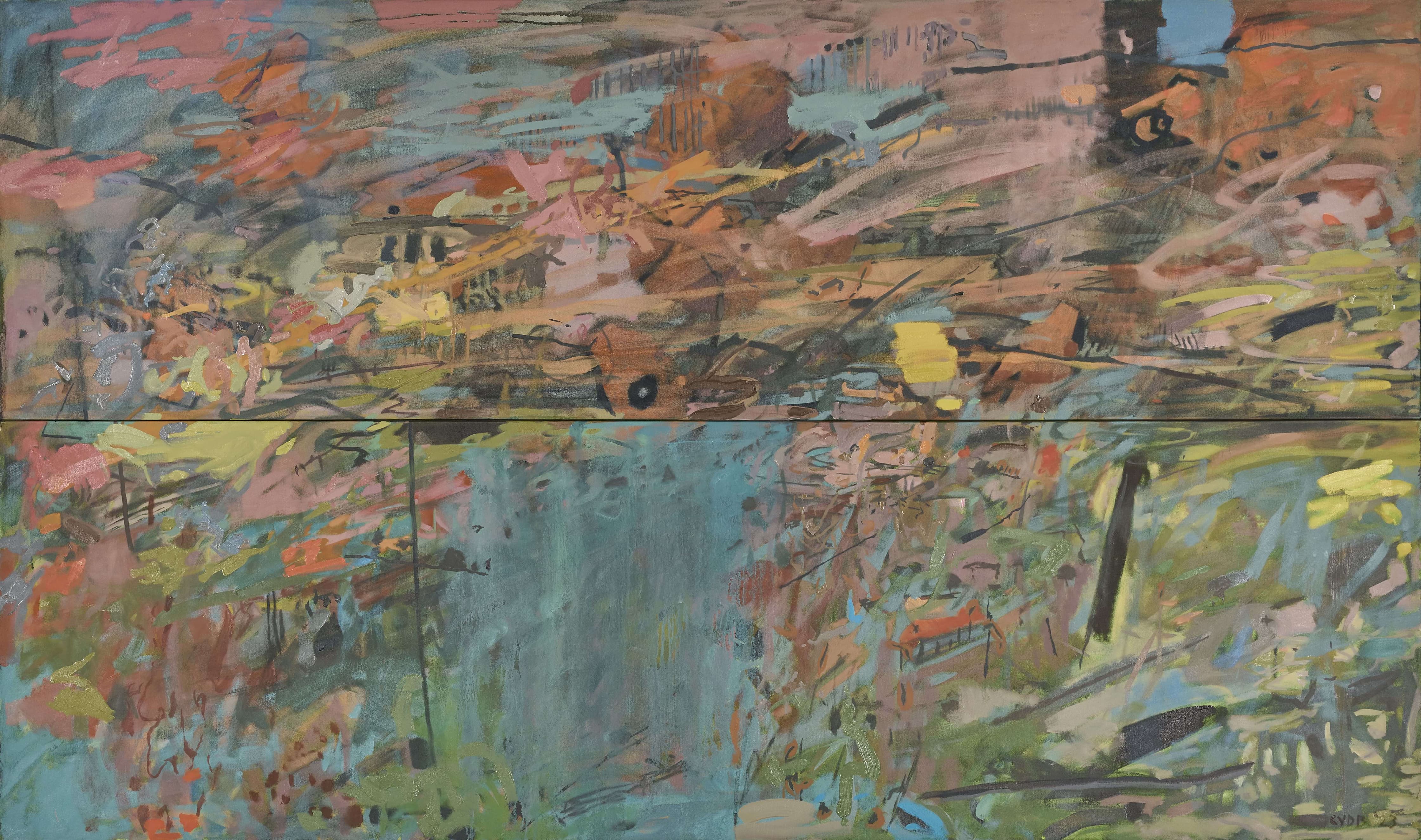
With ‘Aquifer II (Flow)’, Clive van den Berg continues his long-standing exploration of the underground as both a physical and psychological site. Rooted in personal memory yet reaching into the broader terrain of South African history, the work evokes an unseen world shaped by excavation, displacement, and forgetting. The aquifer, in this context, becomes a potent metaphor for the submerged narratives that lie beneath the surface – those shaped by personal inheritance, colonial extraction, and ecological disregard.
‘Aquifer II (Flow)’ is not a literal rendering of the landscape, but a cartography of submerged histories and emotional intensities. The work channels the artist’s interest in what is concealed – geological, ideological, or emotional. Through abstraction, Van den Berg resists traditional pictorial language, allowing instead for rupture, seepage, and uncertainty. Each mark, each shifting field of colour, gestures toward forgotten bodies, silenced geographies, and the ethical questions that linger in the aftermath of extraction. The result is a surface that holds memory like sediment, layered and unresolved. Here, painting becomes a form of excavation, and the canvas a site through which personal and political pasts flow into the present.
Video
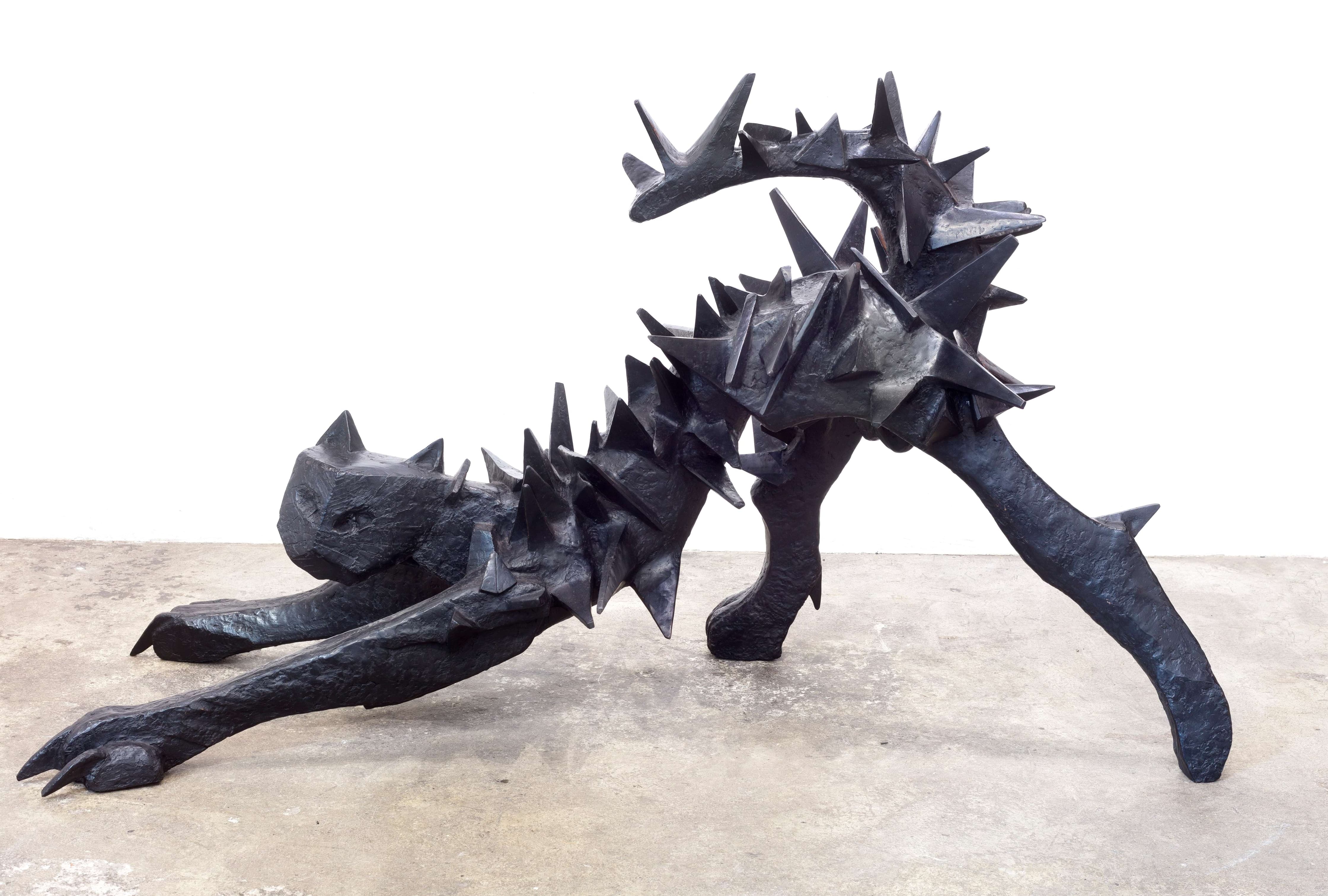
Whilst creating his paragraphs of small glyph sculptures Kentridge realised that he wanted the glyphs to be “... seen as silhouettes, but then in the working of them they shift to being something more than extrusions, they have a much wider life.”
Part of that wider life entailed selecting a few particular small glyphs to experiment what would happen to them when they were significantly larger and potentially in isolation, and key to this was to discover what would happen to Kentridge’s scribble cat were in to grow larger that life, and become what he describes as, “...the opposite of stroking a cat – the idea of when you try to stroke one, and its hair stands on end from static electricity. Mayakovsky has a character in his play ‘A Tragedy’ appeal to us to “stroke back cats, stroke back cats” catch the sparks from their fur and with that electricity and use it to run the trams the next morning. And on this larger scale it’s almost like the cat as cactus, the anti-stroke”.
This medium-sized ‘Stroke’ has two faces, indicative of the feline domestic-but-wild creatures we’ve come to know, but perhaps not entirely trust. There are also the public and private faces of both the Mayakovsky who used to believe in Bolshevism and enthusiastically espouse the party line and the one who was beginning to become wholly disillusioned by Stalinist absurdities, and also, in a broader sense, the ongoing, necessary wrestling between optimism and despondency, realism and idealism that’s at the heart of all of Kentridge's performances and projected shadows.
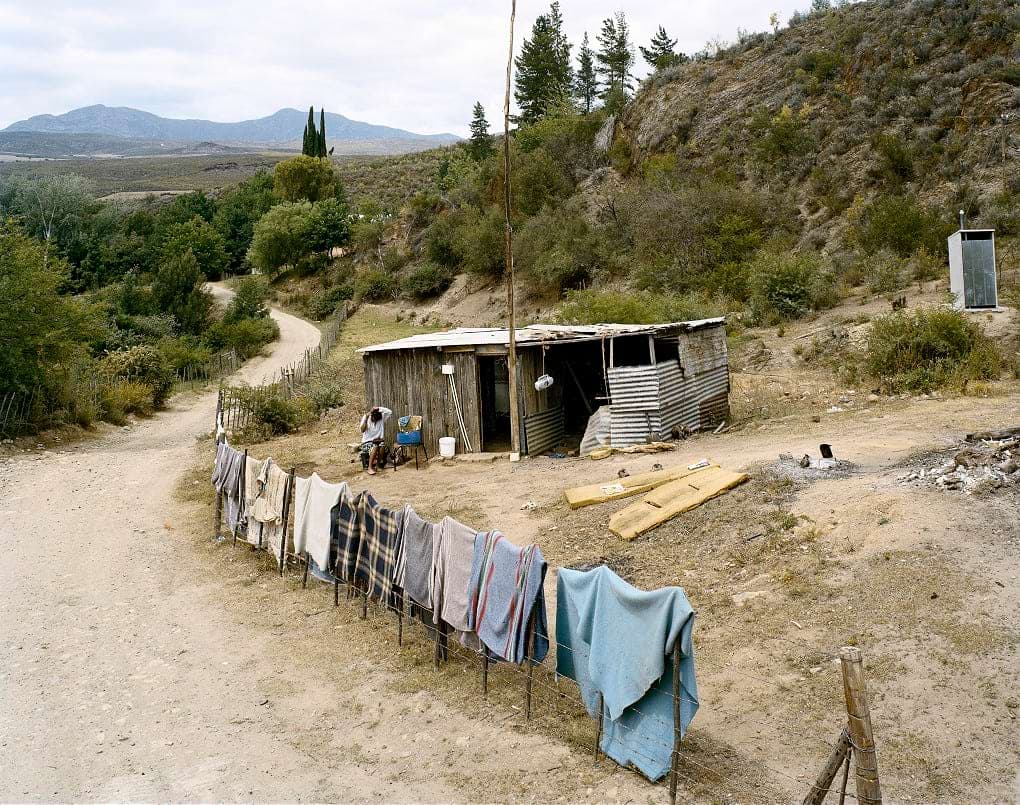
“In the 1990s my anger dissipated. Apartheid was no more. There were things to probe and criticise, but the emphasis was different. Lyricism seemed not only permissible but possible. In the late ‘90s I became aware of colour as a particular quality of this place and its light that I wanted to explore. It seemed ‘thin’, yet intense. To achieve prints that would hold these qualities I would need to print in colour in a way that was similar to that which I had developed for my black and white work … Over the generations, the land has shaped us - I say us in the broadest sense, us South Africans. And we have shaped the land. It is almost impossible now to find a pristine landscape. The grass has been grazed to the point of being threadbare, crops come and go, roads traverse, fences divide, and mines penetrate and throw up scabs of their detritus. These and our structures are the marks of our presence. I am drawn by the intimacies of our association with this land.” David Goldblatt
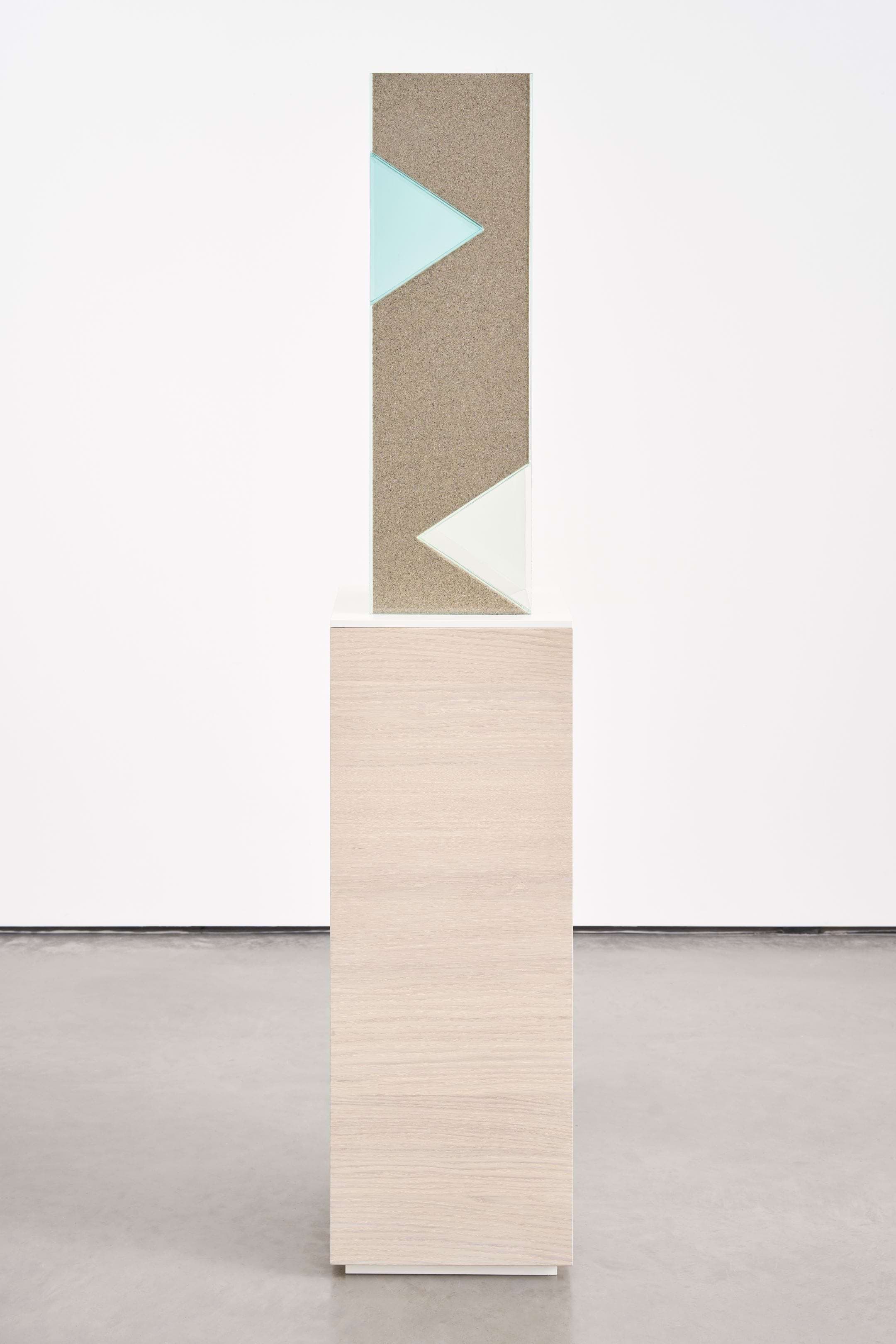
Kiwanga’s 'Shifting Sands' series considers how raw materials, particularly sand, despite being seemingly inert, actually remain in perpetual states of flux. As a trained anthropologist, Kiwanga observes how these materials mutate, travel, and evolve over time. Like people, and cultures, their partnerships and associations vary. Their values, both economically and culturally, fluctuate. Through these works (and in her practice more broadly) nature is perceived as a highly engaged actor in the course of human history.
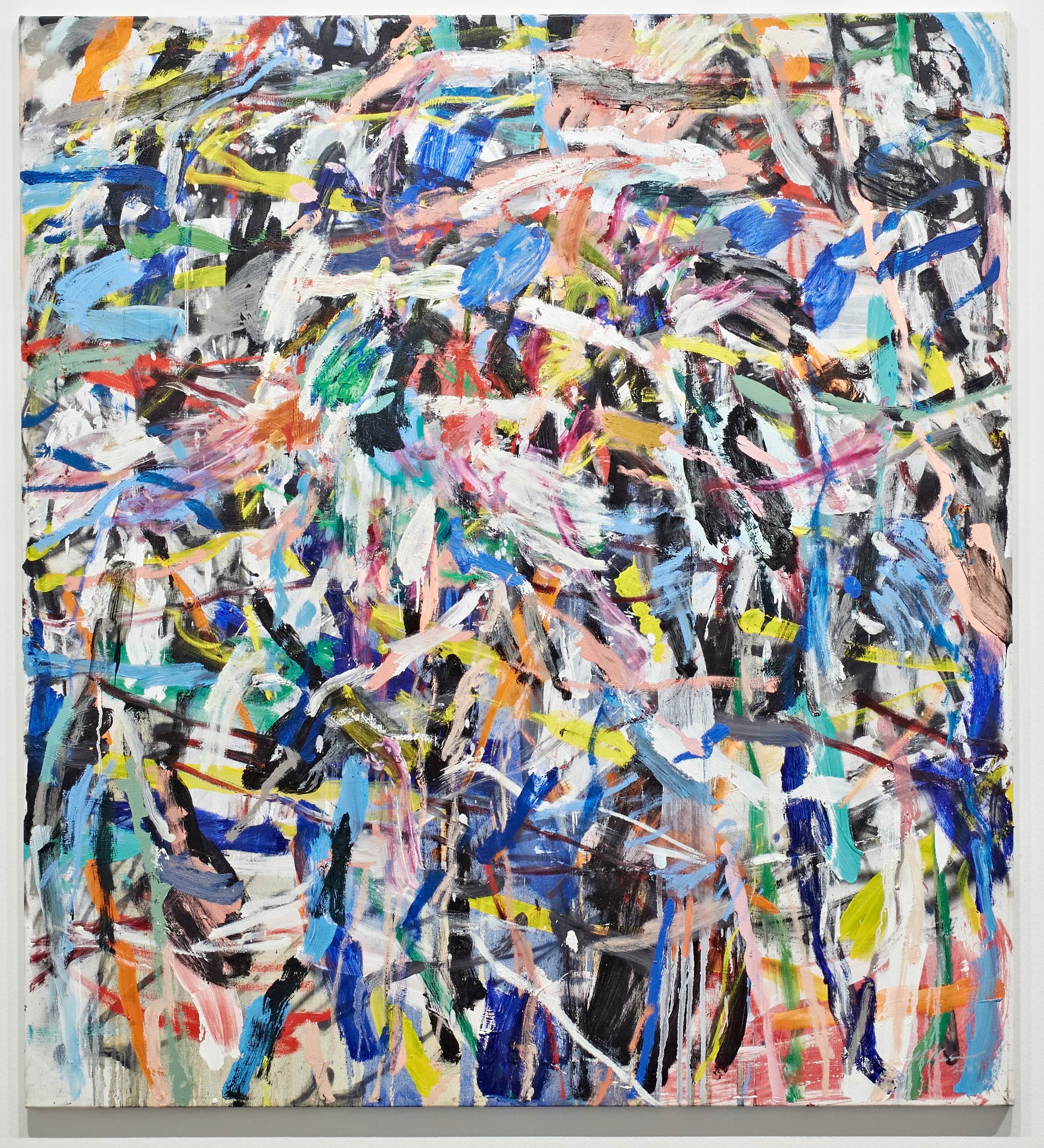
Masamvu's paintings propose scenes, fragmented bodies and passages built between figuration and abstraction, made from successive layers of colours that express the processes between the repressed desire for change and the access routes traced for the subjects' liberation. They affirm art as a territory for reflection and the need for constant renewal, suggesting that certain structures need to die and be set aside so that others can be born and blossom.
Video
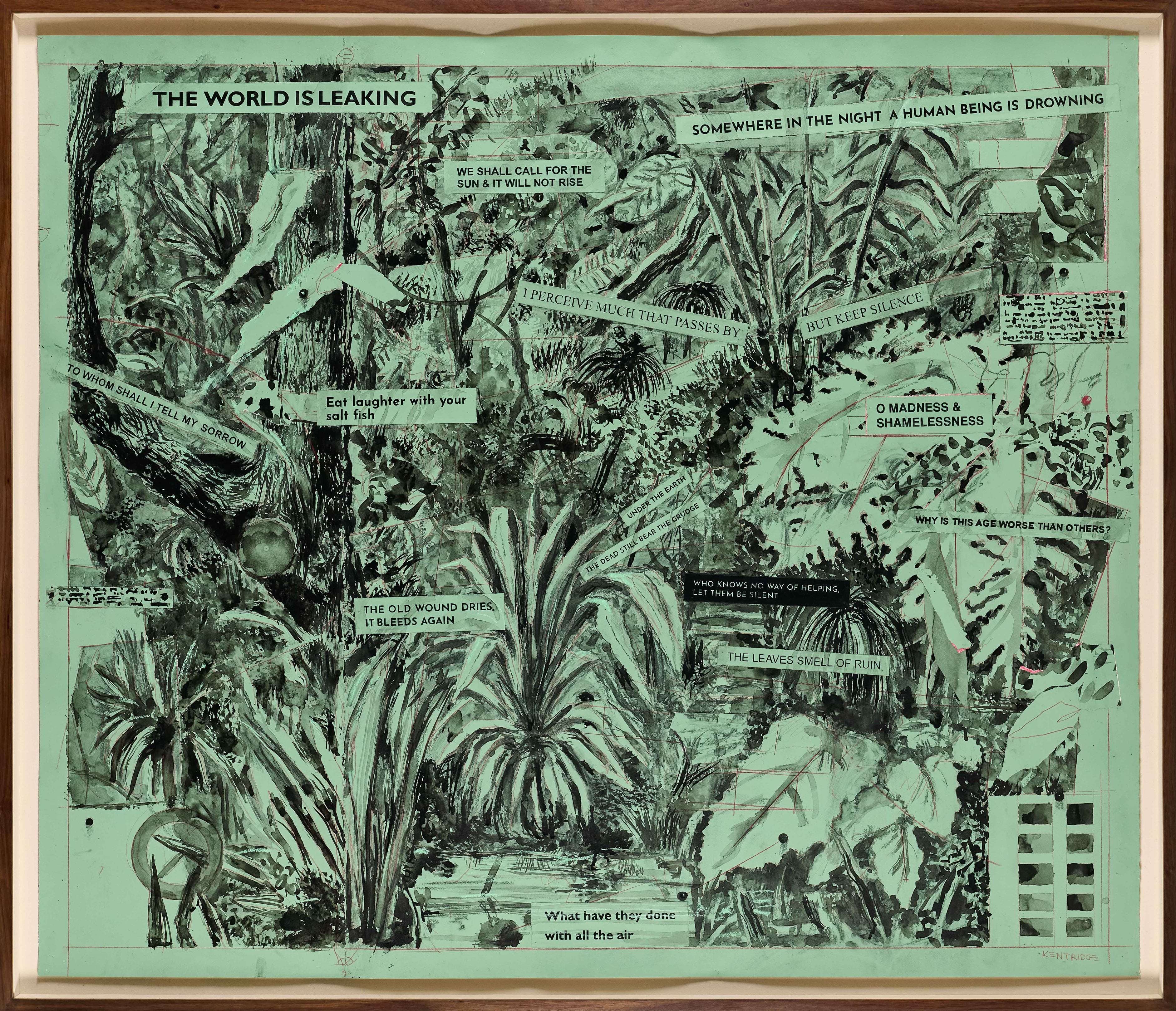
“I really liked the paper we used for the project entitled ‘Oh To Believe in Another World’ in which we needed green-screen against which we filmed the actors, so for ‘The Great Yes, The Great No’, I have drawn on the green paper itself…. What remains is the idea of the garden as jungle, the idea of the exotic Caribbean which in fact is based on a domestic Johannesburg garden.
The texts and phrases on the drawings come from the theatre productions... The idea of a drawing that you read as a text, or a text that turns into in this case the garden, is an ongoing question, and an ongoing project, of text and image, reading and looking. How much you glean from what you read, and how much what you read is changed by what you’re seeing
around it.”
The garden in which this painting was created and which Kentridge alludes to above was his parents’, Sir Sydney and Felicia Kentridge’s, garden before him – so hosted many hours of meetings with Nelson Mandela, Albert Luthuli, Desmond Tutu, Steve Biko’s family and several of Sydney's other historic and courageous clients, and was therefore the venue for the creation of some of Africa, and history’s, most memorable, vital speeches.
Echoing those enduring words with phrases from the libretto of the 'The Great Yes, The Great No' including this work’s titular phrase 'The World is Leaking’, which is repeated often during the performance, this particular painting is also projected for a whole scene across the entire backdrop during the production, as it holds within its leaves and phrases much more than simply a study of an ordinary domestic garden. Johannesburg is the largest man-made forest in the Southern Hemisphere, as it is naturally Savannah grassland, and all of its trees were planted by human hands – so there is another layer of Kentridgean thought here in that ‘the Caribbean jungle’ represented here is a kind of theatrical green-screen for words and theatrically placed horticulture, as if each tree and plant are stage props on history’s stage.