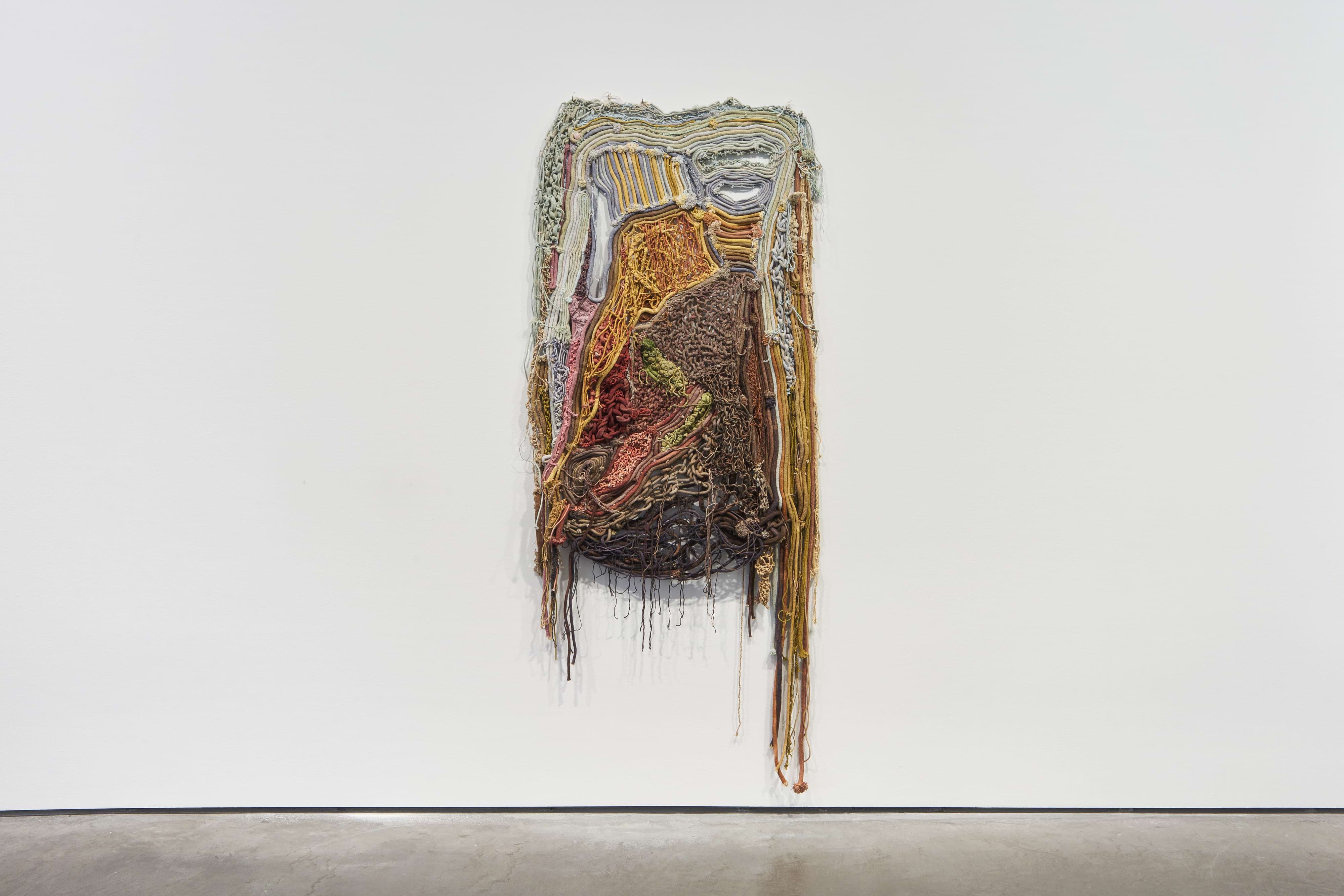
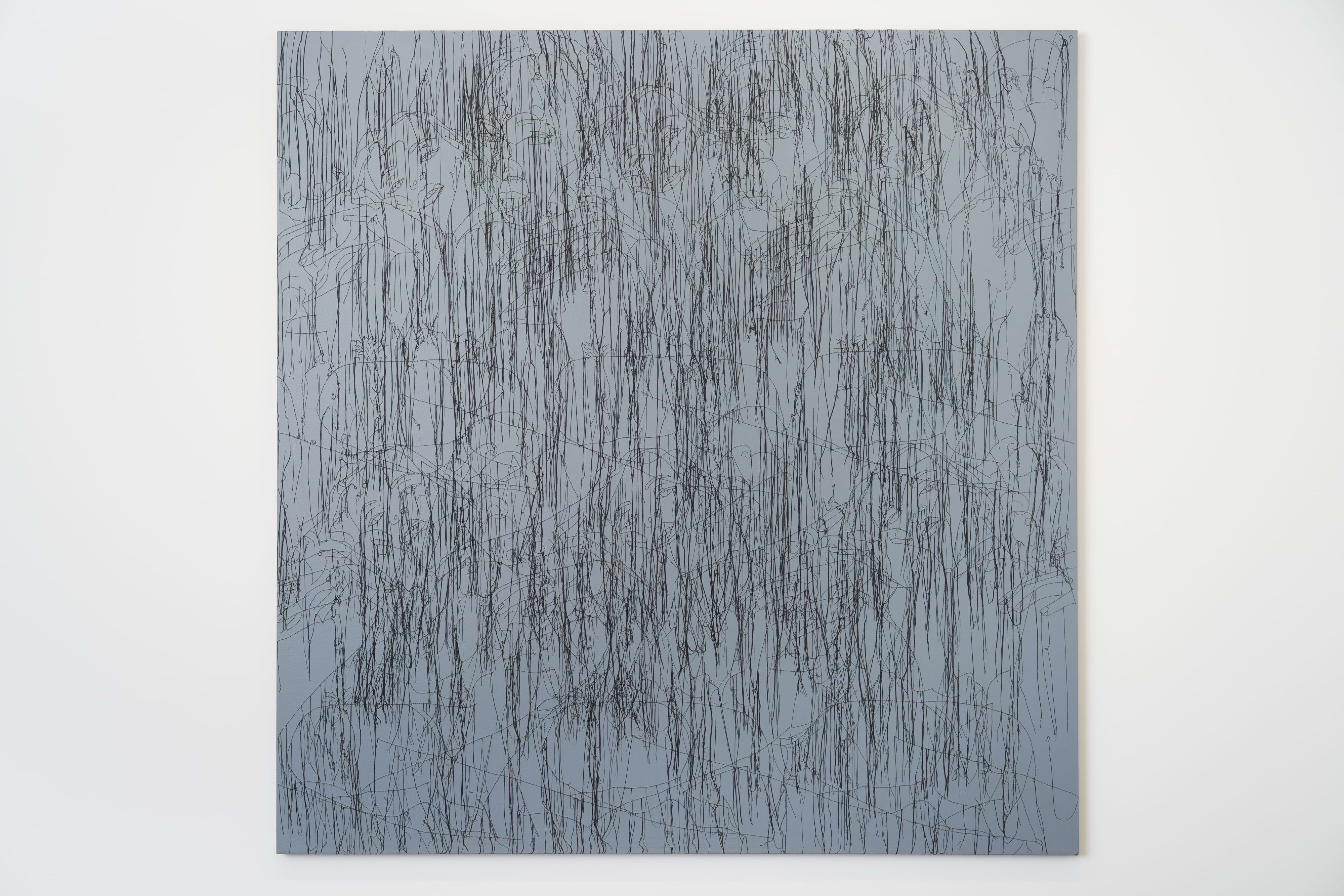
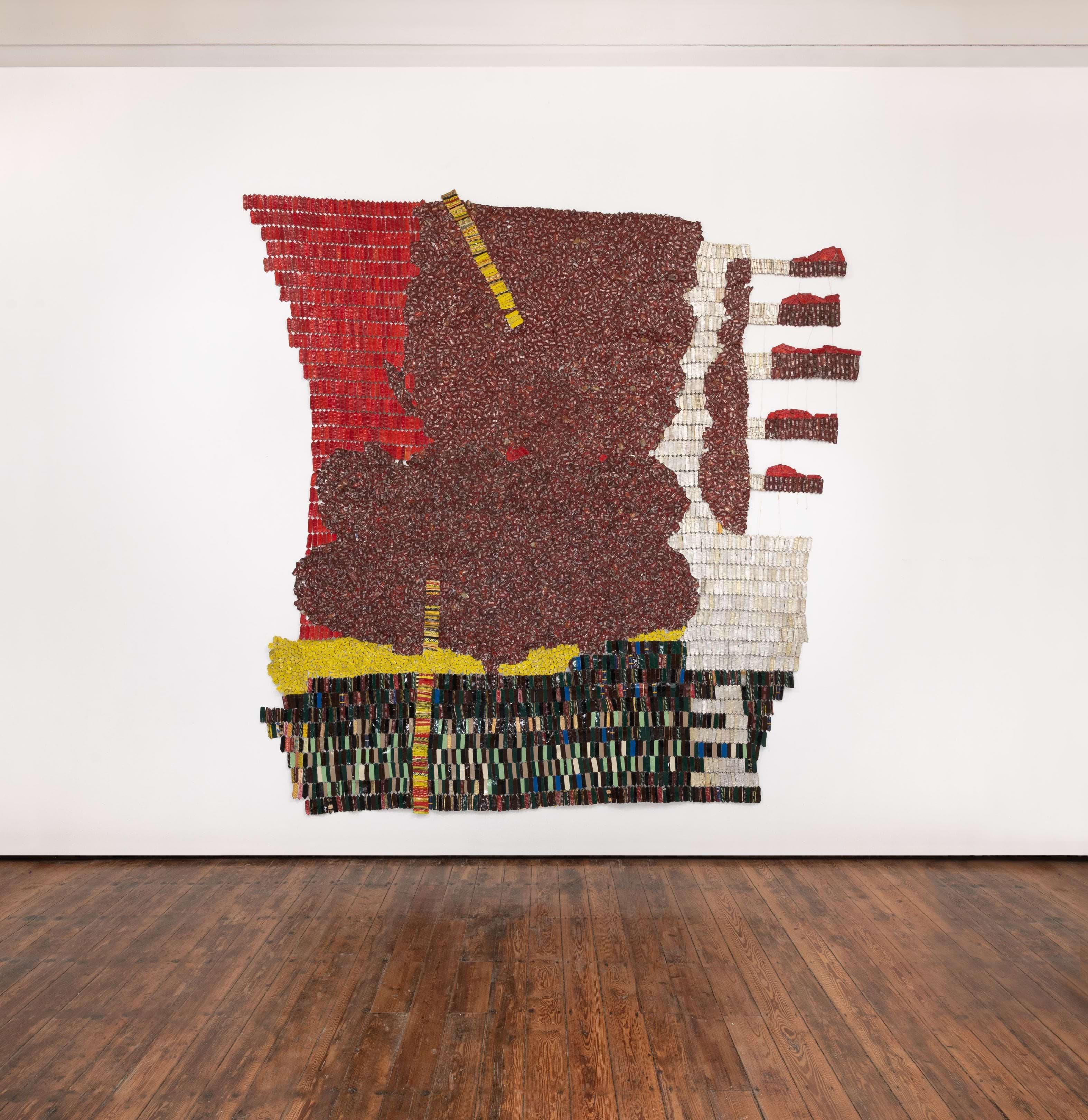
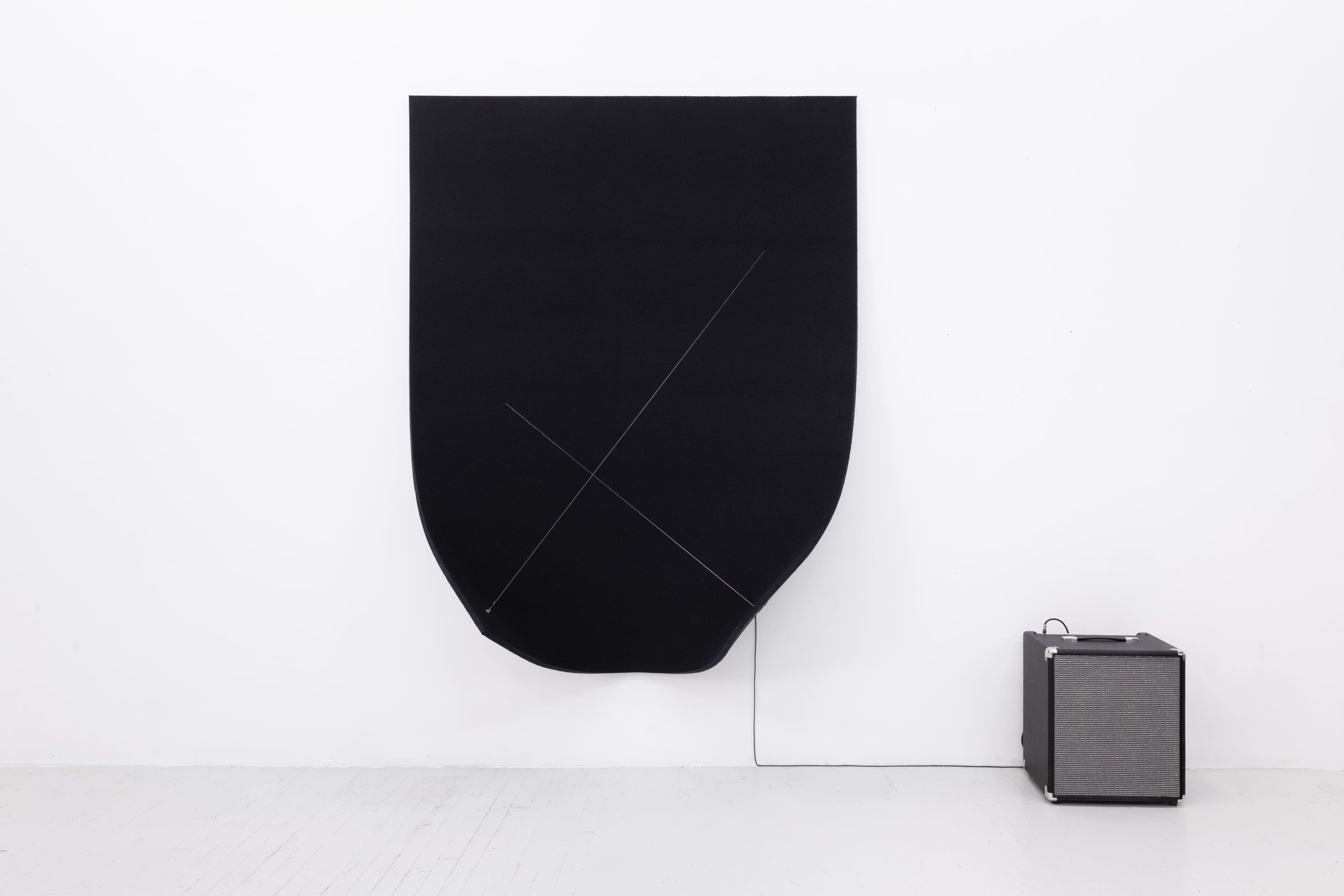
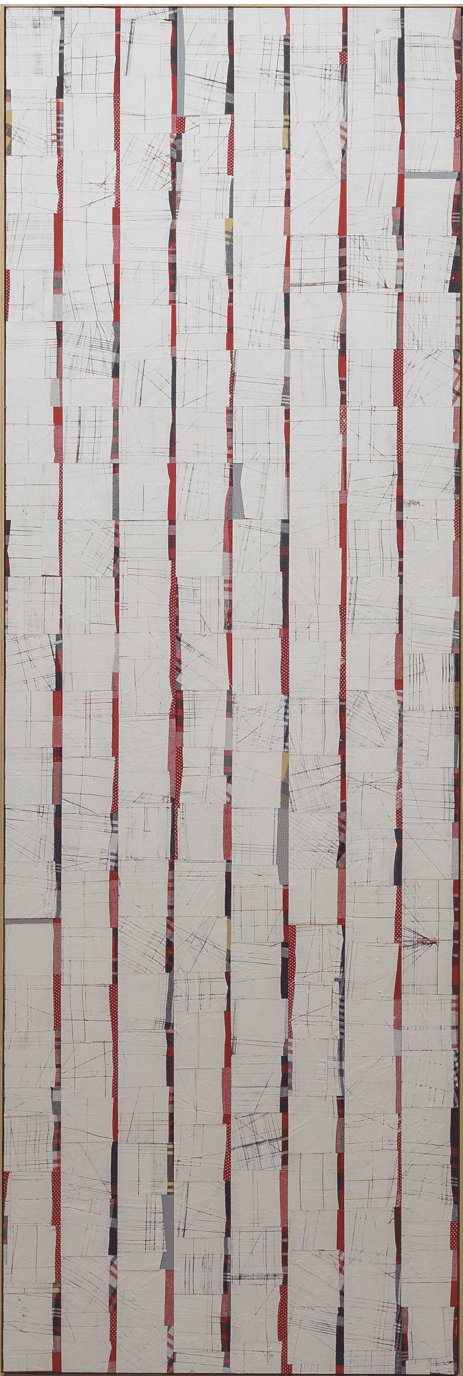
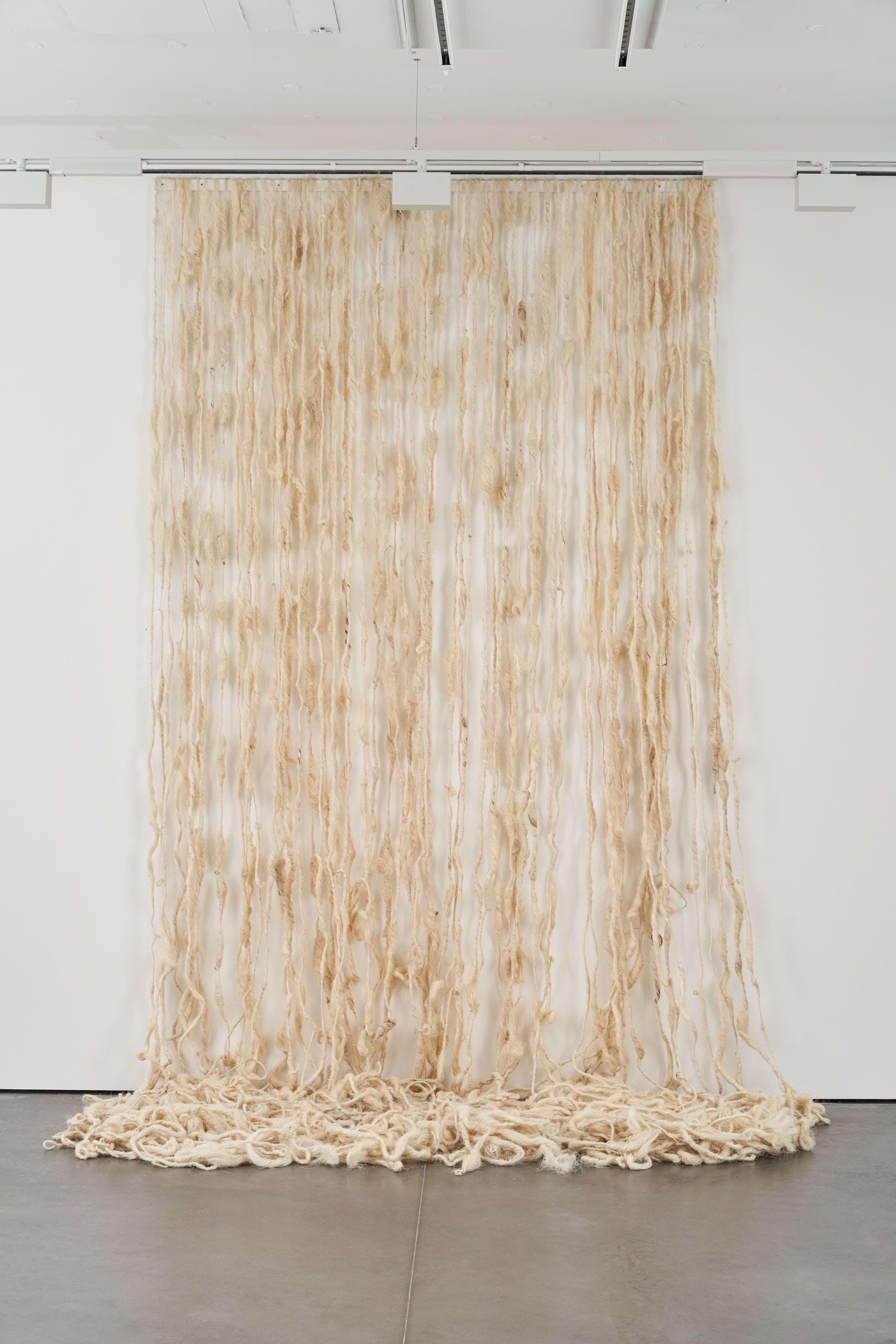
Gigantic textured drawings made from raw cotton threads dyed with natural techniques. These drawings
take time to be woven and are extracted from an imaginary of figures with complex mythologies, many
times originating from brazilian folklore characters. It is the case of Iara, a mermaid entity that would
seduce men by rivers and take them underwater. As the work is delicate and uses pigments of vegetable
origin (more fleeting than synthetic ones), its colors are likely to fade slowly, as in a slow and
imperceptible cinema.
Foto: Laura Lima Studio (provisory)
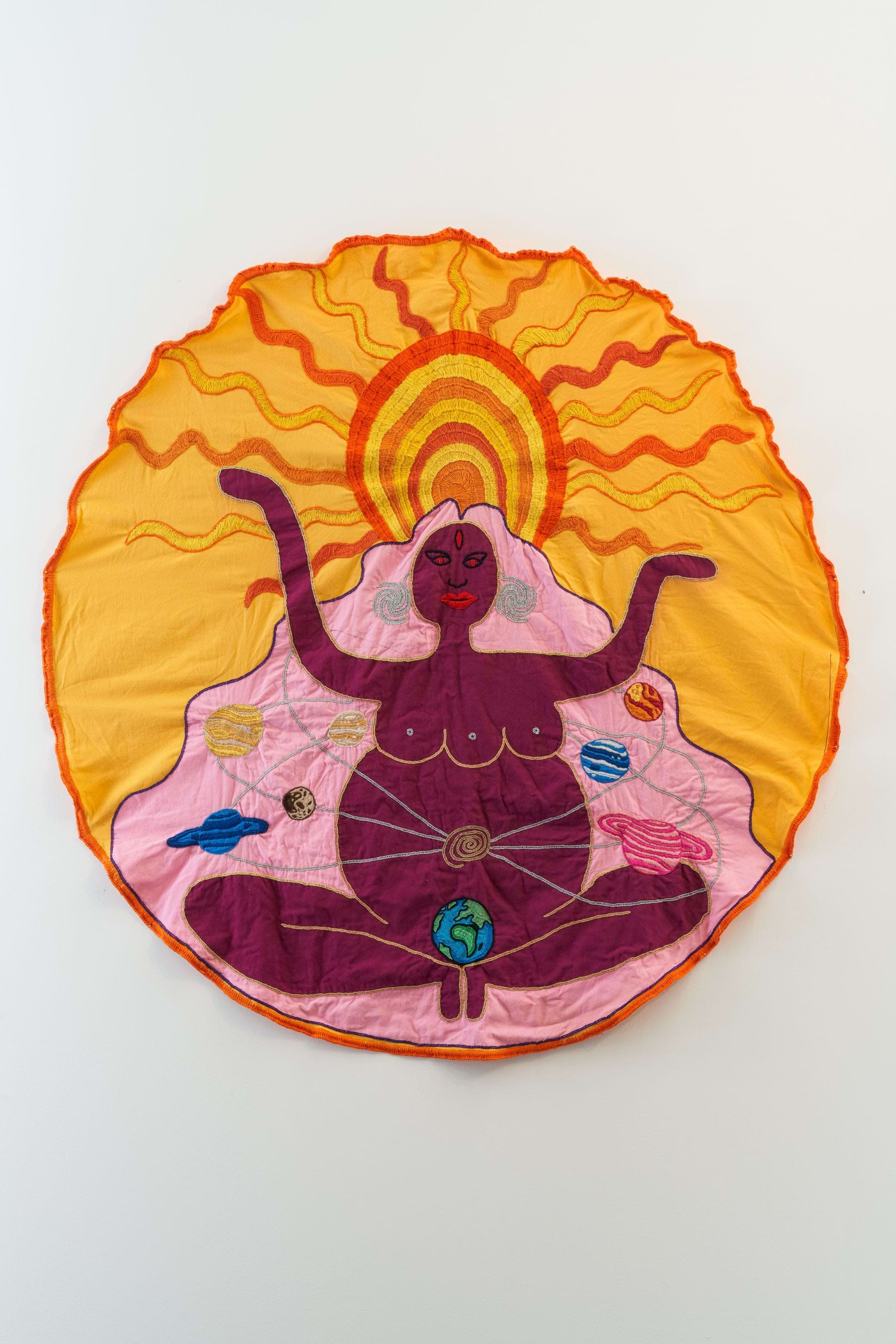
‘Mother Sun’ is the third in a trilogy of embroidered divinities, made in collaboration with Saramaca women (an ethnic group of French Guiana). The series celebrates motherhood and the fertility of existence; with each piece embroidered by hand using an ancestral Saramaca weaving tradition. Situated between Mother Moon and Mother Earth, this work honors the spirit, abundance and wisdom of the sun.
Video
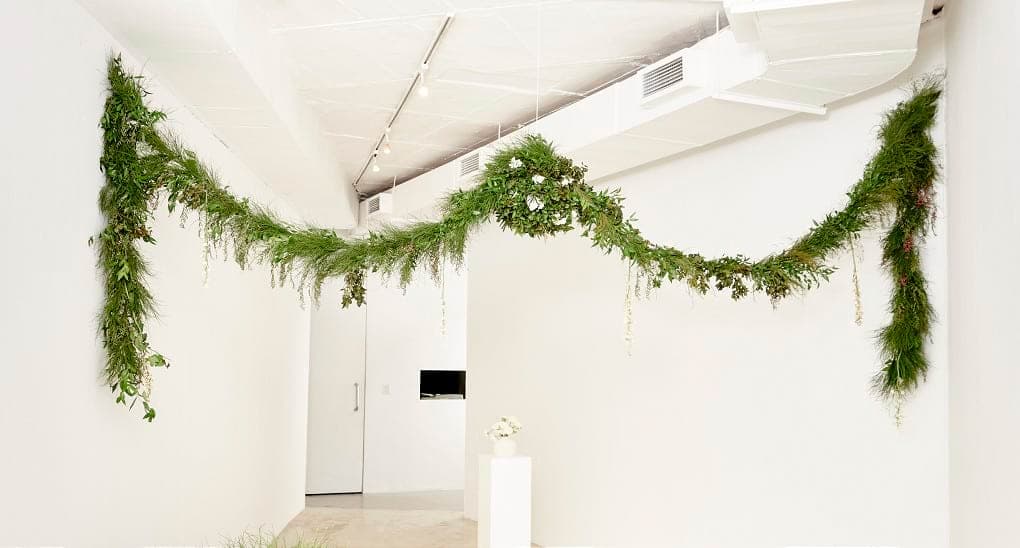
‘Flowers for Africa’ is an ongoing body of work in which Kiwanga conducted iconographic research that focused on the presence of flowers at diplomatic events linked to the independence of African countries. Situated on negotiation tables and podiums during speeches these floral arrangements become witness to historic moments. Sourcing from archival imagery, Kiwanga identifies the key symbolic moments of independence in countries throughout the African continent. Perhaps the only common element to be sourced across a range of ceremonial occasions recognising the decolonisation of Africa. These arrangements range from a boutonnière to an elaborate bouquet or a triumphant floral archway. Kiwanga then takes these images to a local florist in order to recreate the bouquets as closely as possible to the archival images. The fresh arrangements are displayed in a gallery and left to wilt over the duration of the exhibition, just as the memory of a celebratory moment might fade over time. ‘Flowers for Africa’ series is a conceptual protocol work that questions the material from which history is represented and conserved. Destined to wilt over the course of their display, the flowers invite us to reflect on time. The Flowers for Africa project began in 2013 and continues to expand. To date, sixteen different floral arrangements have been created corresponding to sixteen different countries.
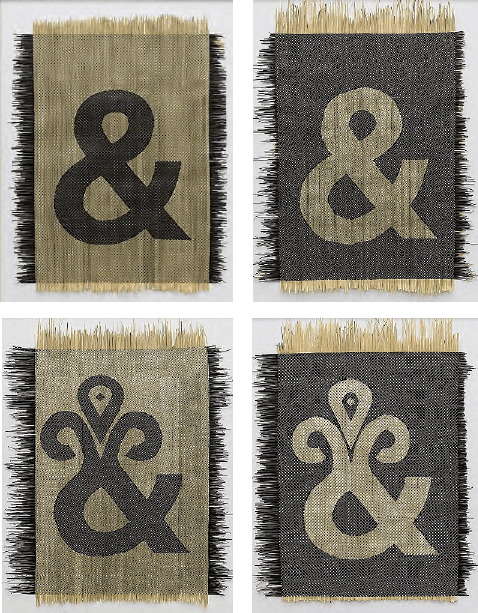
Split bamboo pus weave with kayu obol black natural dye, matt sealant
Sovereignty uses a combination of biotic, non-linear and ordered lines chaotically tangled to reflect the violently established laws that organise the flow of humans through restrictions, while also drawing attention to natural pathways and channels.
Video
Video
Photography credit: Aatjan Renders
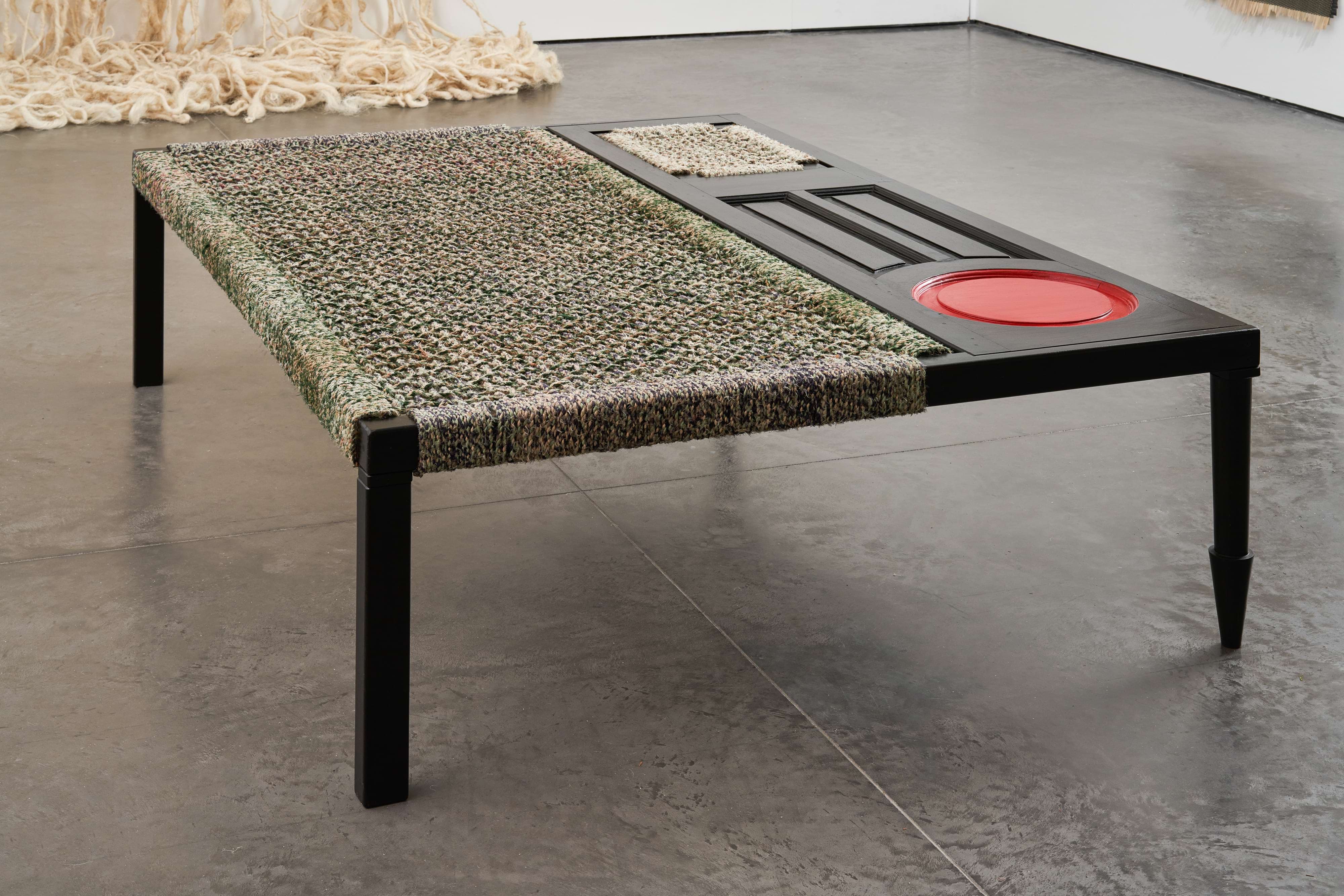
Osman Yousefzada’s works explore themes of displacement, movement, migration and climate change. In creating this work the artist returned to Pakistan, the country from which his parents migrated as a means to weave his own narrative into the violent birth of the country.
His piece 'Charpai's Sculpture', explores the traditional and contemporary techniques of Pakistani and European workshops. The work takes the charpai, a daybed typically found across South Asia, and reimagines it utilising salvaged and handmade elements. Repurposed colonial doors and woven fabric sourced from waste materials on factory floors combine in this work. The door, which for the artist stood as gates in their original context, are shifted on their axis from vertical to horizontal transforming into a component of the bed. Symbolising where spaces were once divided according to race and class - the door is dropped from a vertical to horizontal axis, shifting the power dynamic from a hierarchical to communal architectures.
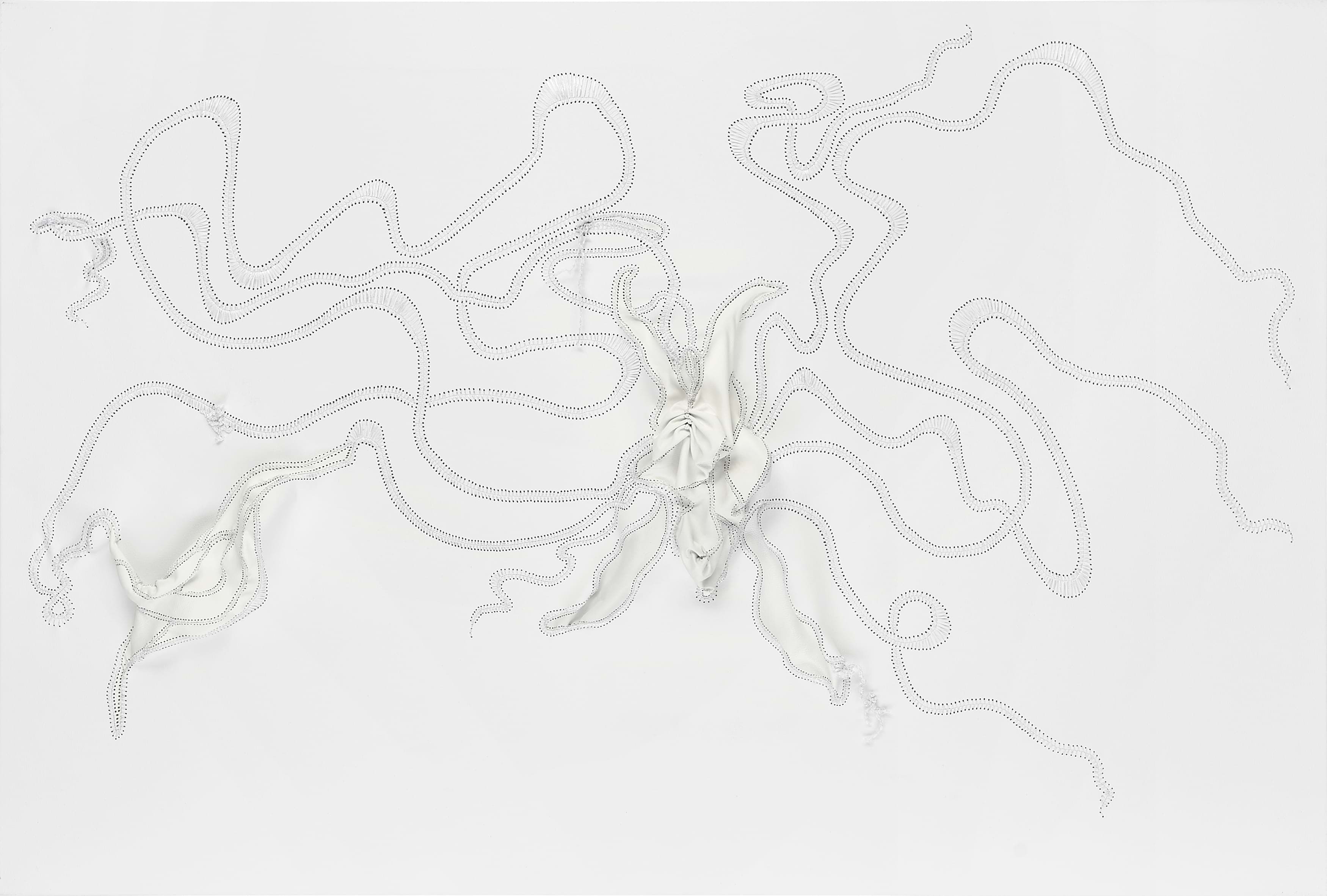
Working with various found objects and materials — leather, rubber, bronze, ribbons, copper and brass —Nicholas Hlobo considers his artistic practice to be a kind of autobiography through which he articulates a sense of self. Through an obscured grammar within a language of abstraction, Hlobo explores his psychological, emotional and spiritual journey. “My work is about my journey, how I relate to myself and to the outside world. I’m very curious about the invisible, intangible and incomprehensible aspects of that journey and there is always a slipperiness to the process of figuring it out”, says Hlobo.
Hlobo uses materials that have resonance to his personal memories, he explains; “Materials are found and used as a way to add more layers to the narrative. And how they are intervened with forms a part of becoming a language that tells the story. Found objects have their own stories with various patinas depending on where they come from.”
Ivulandlela which can be translated as “the pioneer” is about finding a path for others to follow. It is a way of paying tribute to those who come before and carve a path for others to follow.
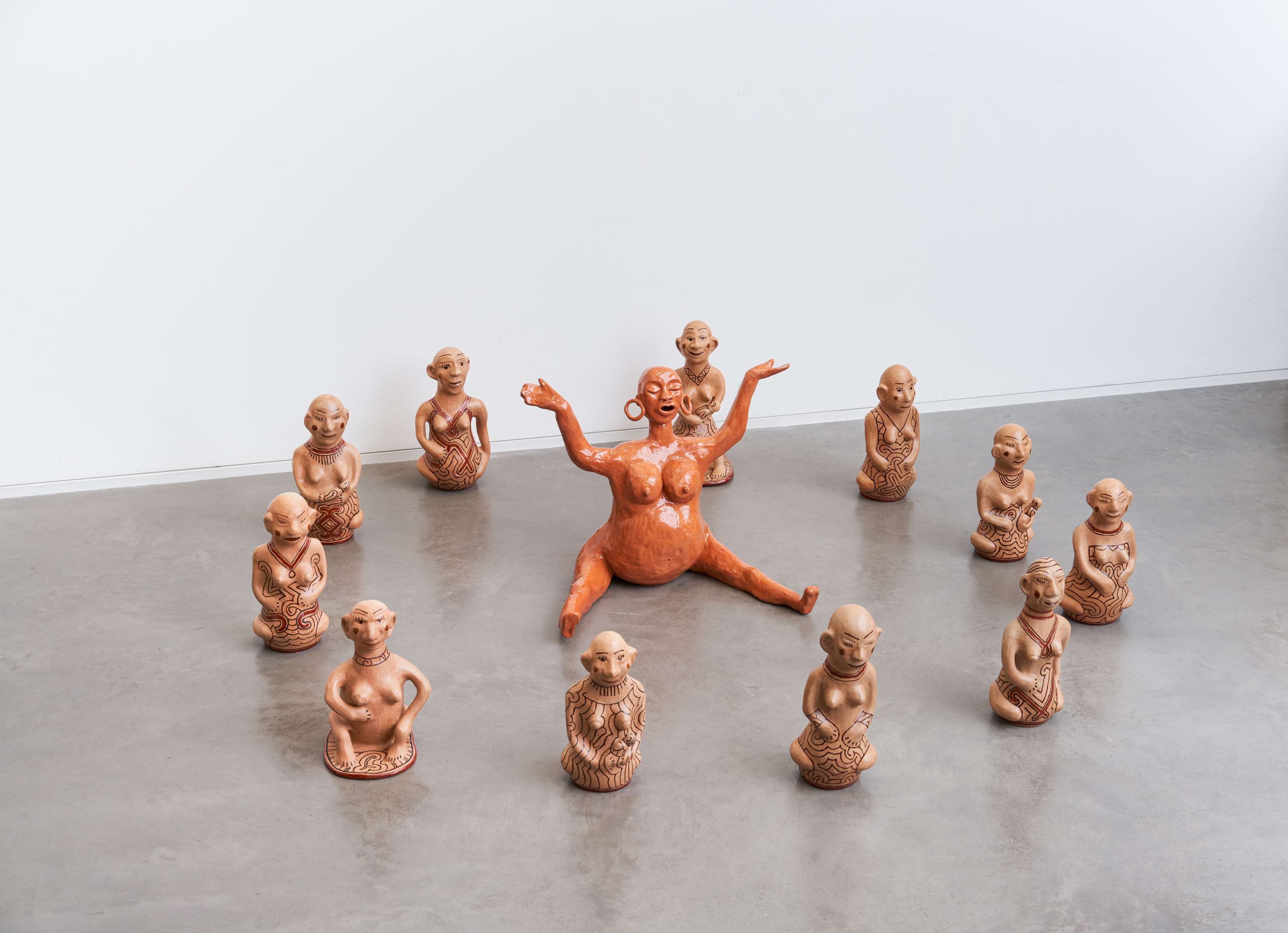
Tabita Rezaire’s ‘Fertility Ritual’, comprises 11 pottery figures, made by an indigenous elder woman of the Kalina nation from French Guiana. Using ancestral ceramic tradition throughout the process of making, the figures all depict pregnant and breastfeeding women. The central figure is crafted by the artist and at her feet are a ceramic sun and moon, alluding to the synergy between celestial and fertility cycles.