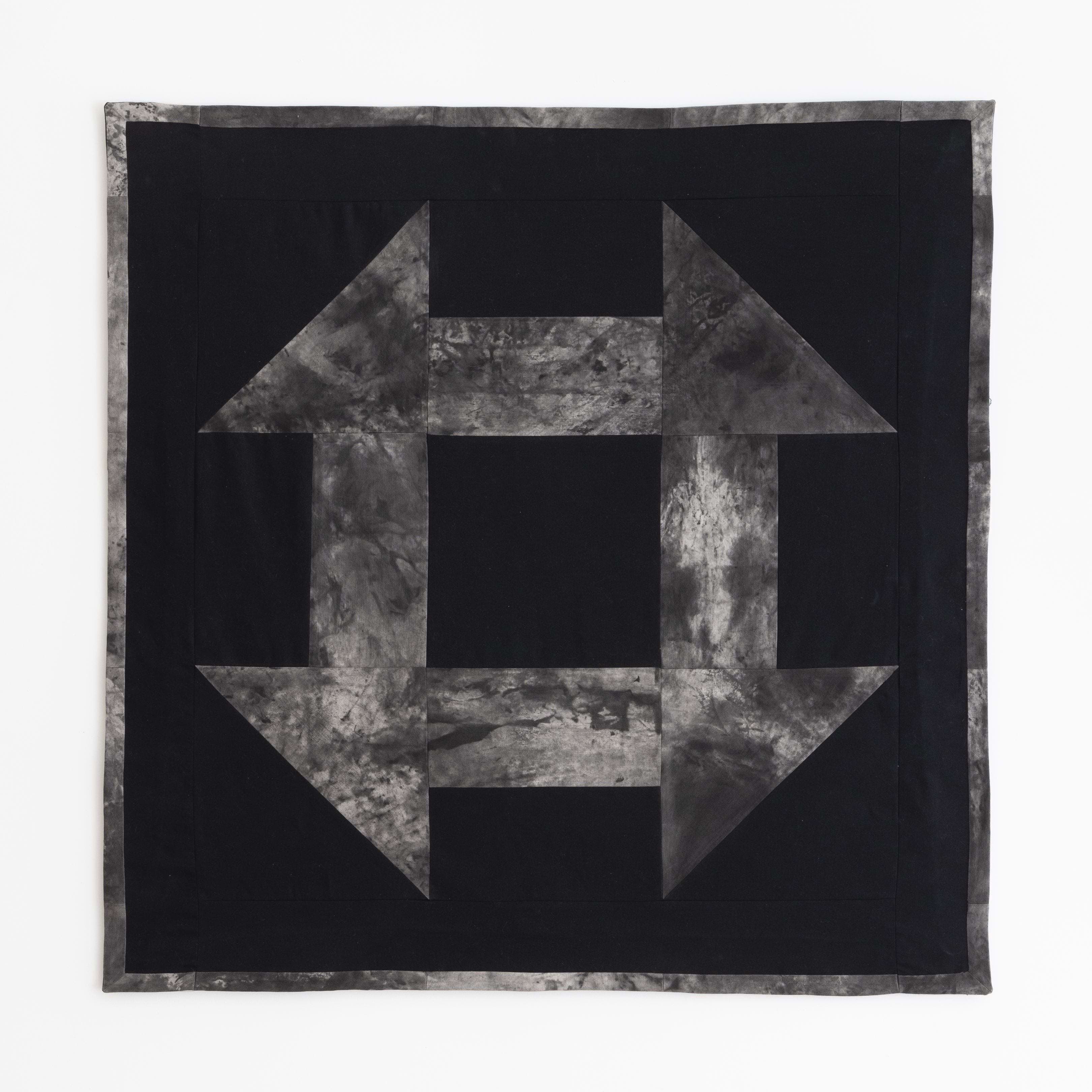
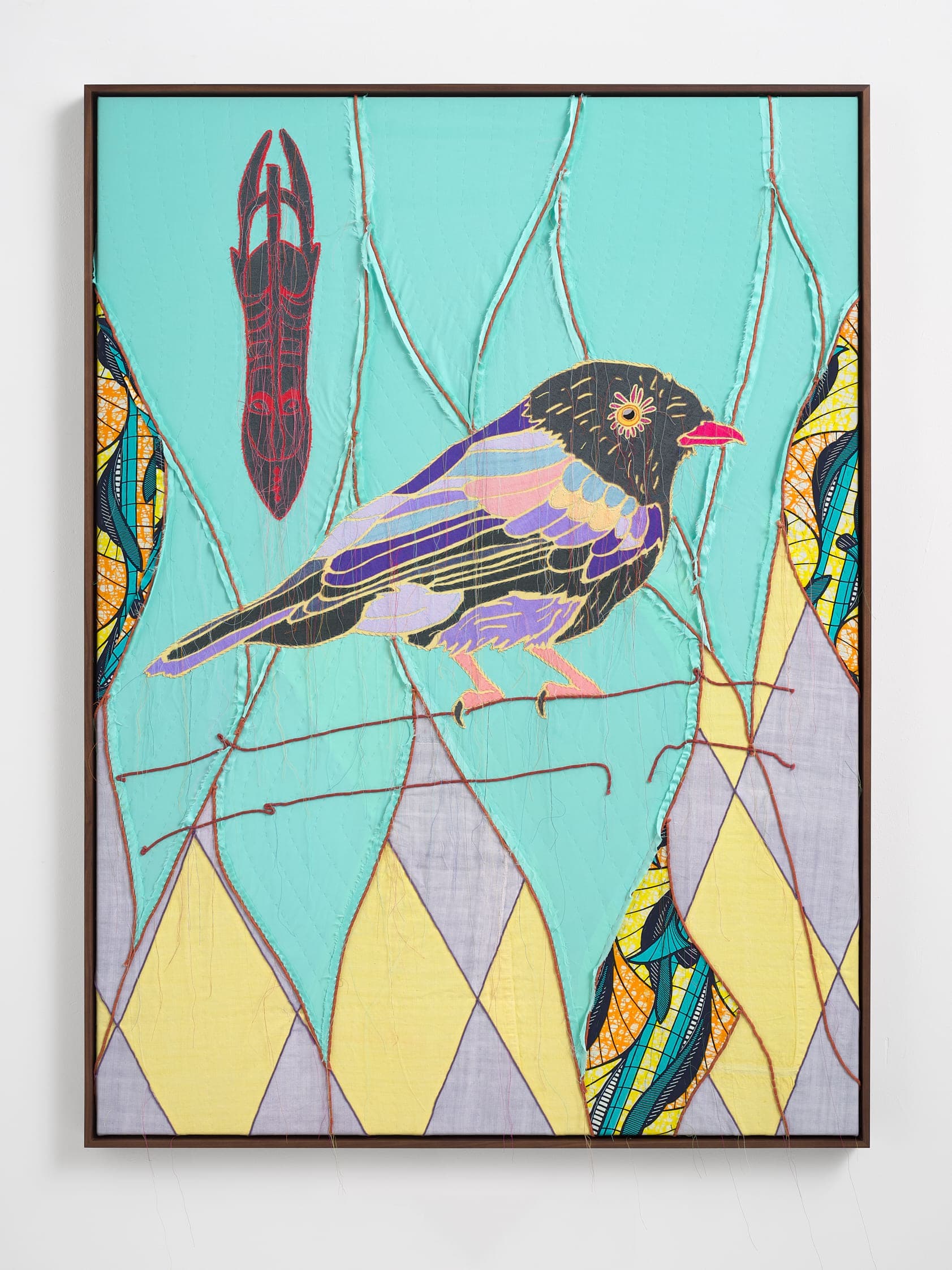
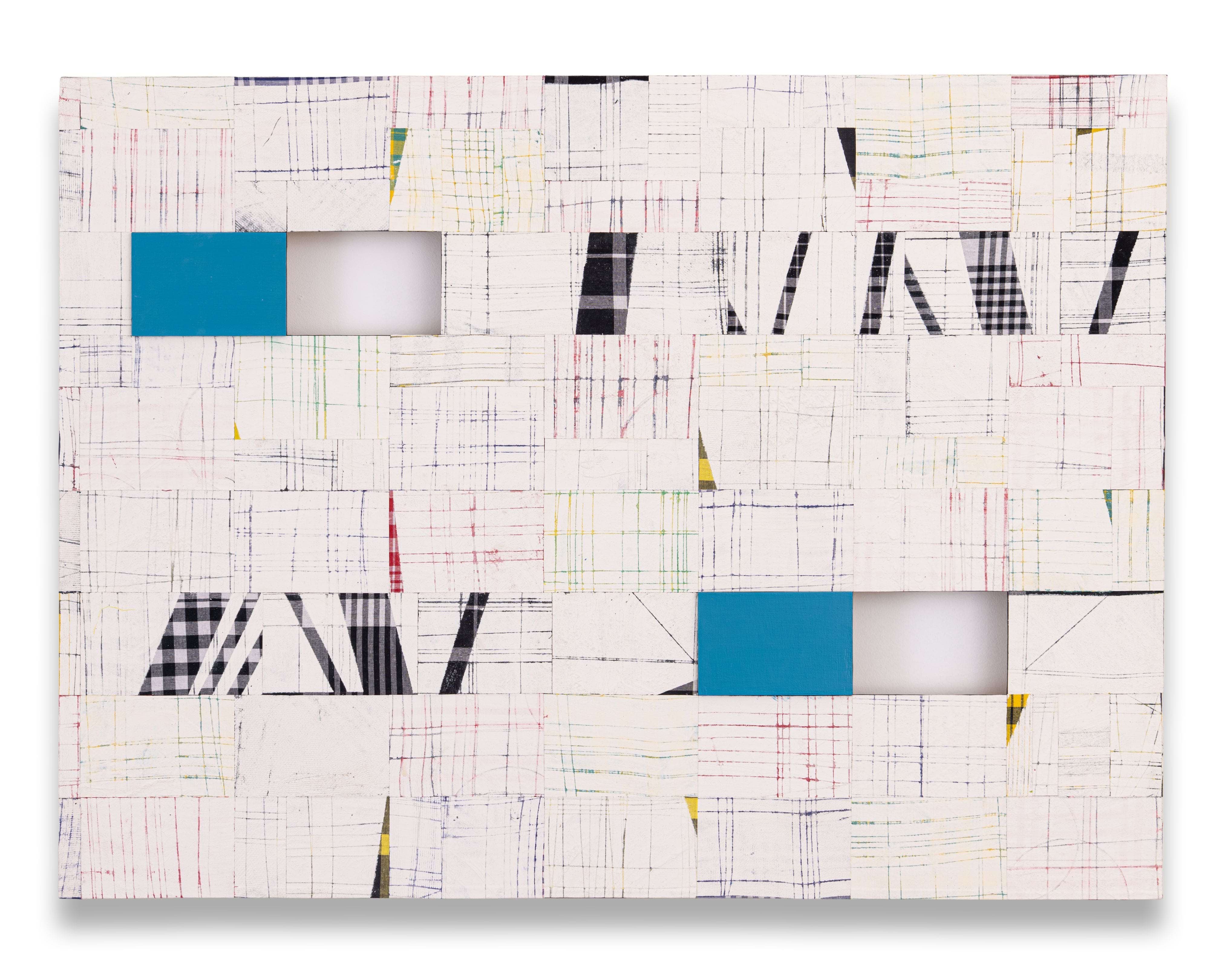
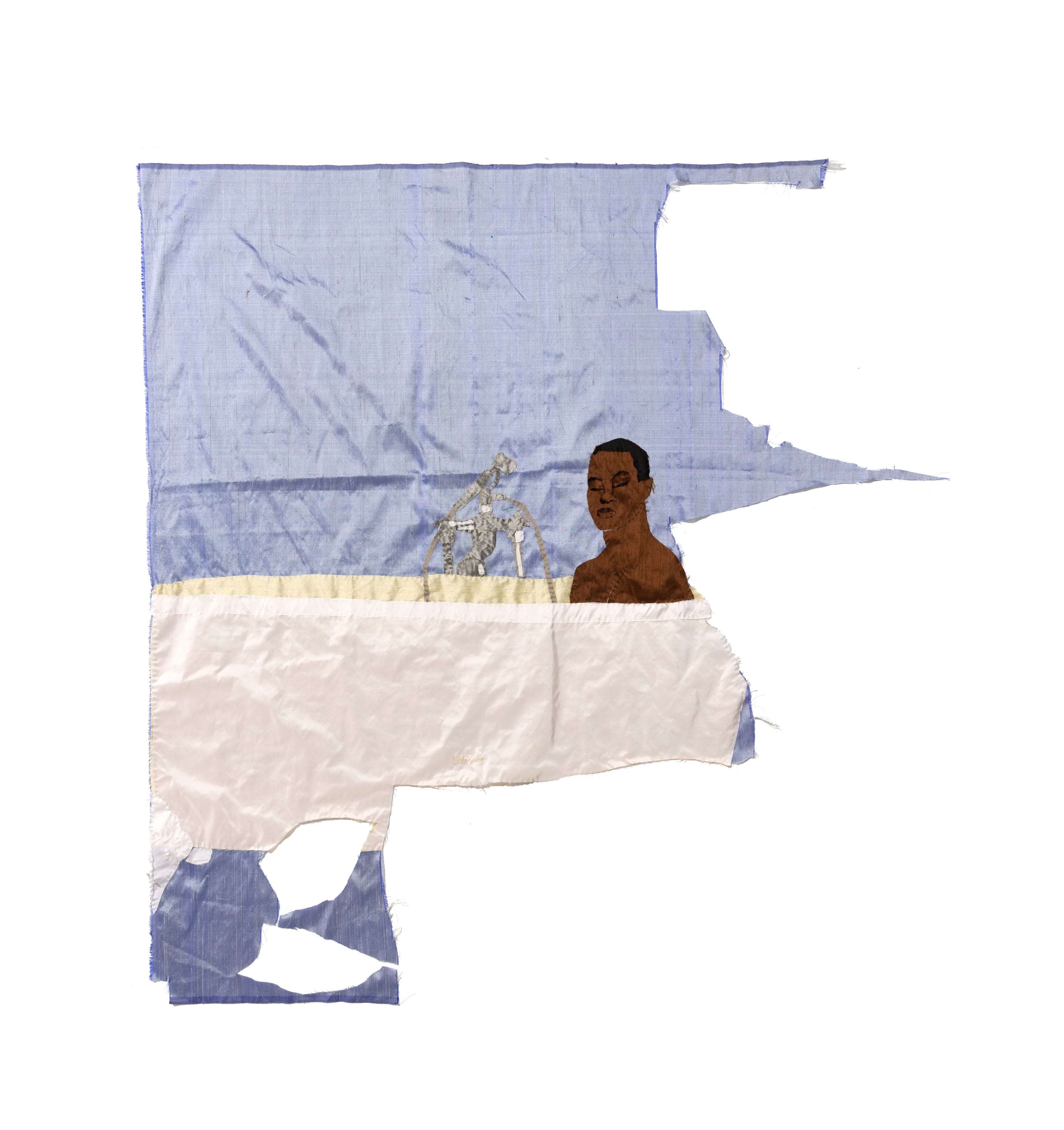
In a sequence of quilt works created out of cotton treated with pigment and saltwater from the Atlantic Ocean, Kiwanga extends the intangible components of her narrative compositions, continuing her investigation into the transatlantic slave trade. For the artist, the sea is an archive and witness of violent pasts. The cloth works combine and materialize her analysis of forced movement and liberatory strategies. Kiwanga’s use of symbols on the textiles allude to the safe houses along the Underground Railroad, often indicated by a quilt hanging from a clothesline or windowsill as a mode of communication. The geometric shapes function as conceptual coordinates of flight, escape and safety —by reading the mo-tifs sewn into the design, a person fleeing slavery could assess immediate dangers.
Video
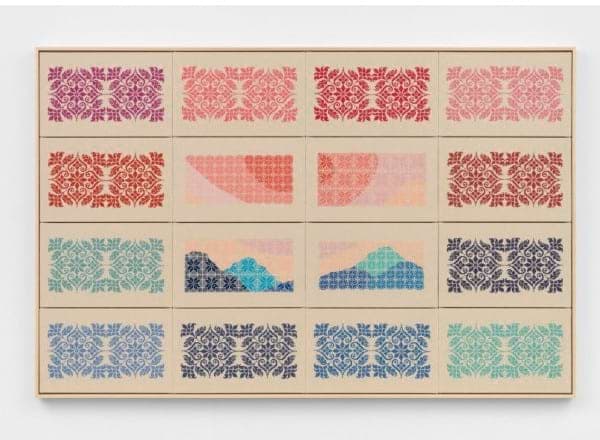
In his most recent series of embroideries, Jordan Nassar raises questions of what lies ahead. The artist depicts mountainscapes, all within the framework of tatreez, traditional Palestinian embroidery. By rendering landscapes within patterns, he creates layers of perspective that recede or bring forward imagined vistas. In these embroideries, he pieces together panels of dense pattern as if they were tiles in a mosaic. He fits them together to create compositions that vibrate with color. The resulting, checkerboard-like works were created with the participation of Palestinian craftswomen living and working in Bethlehem, Ramallah, and Hebron.
In “Master of the Eclipse”, 2024, an embroidered blue mountainscape is rendered in a floral ‘damask rose’ motif and a star-like motif symbolizing a ‘feather and moon’ or ‘Bethlehem moon’’. The mountains are lit by a bright-orange moon eclipsing the sun, which seems to radiate outwards in shades of pink and lavender.