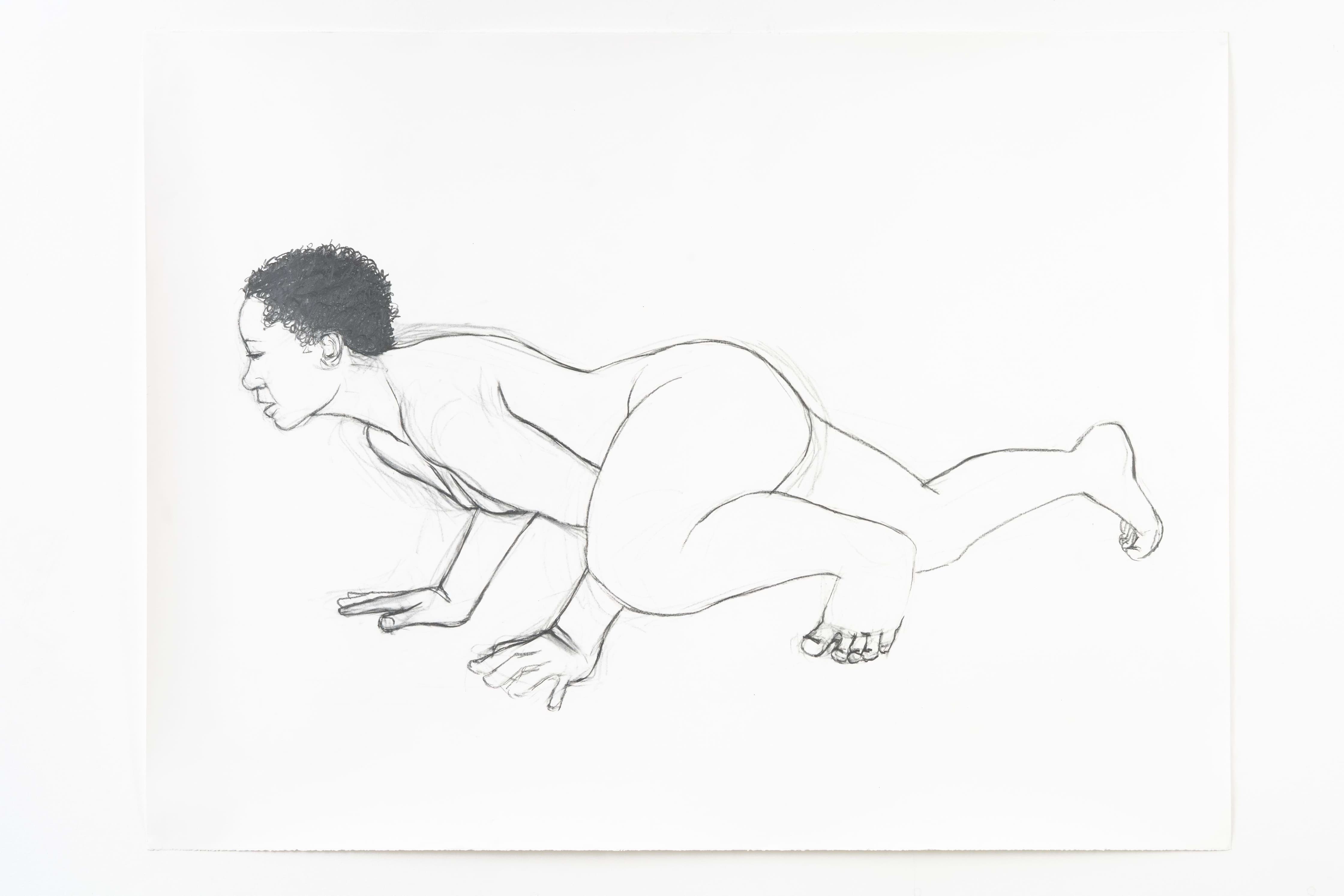
Pamela Phatsimo Sunstrum’s drawings Tangle, She is Heavy and Cuddle features the recurring figure of a character named Asme. Originating in an early animation by the artist, Asme like the name implies, both resembles but is apart from its creator. Around the same time as this character came to life, Sunstrum encountered a number of Canada geese at a pond near where she lived and began incorporating their forms into her work. The uniformity of the birds and inability to differentiate between their genders appealed to Sunstrum. Like the geese, Asme began to multiply in her form, even going so far as to mimic their gestures, blurring the line between human and animal form.“Asme is not a unique thing,” says Sunstrum, “she can communicate across time and space as a way of referencing this idea of history and how I imagine we can re-meet ourselves at different points.”
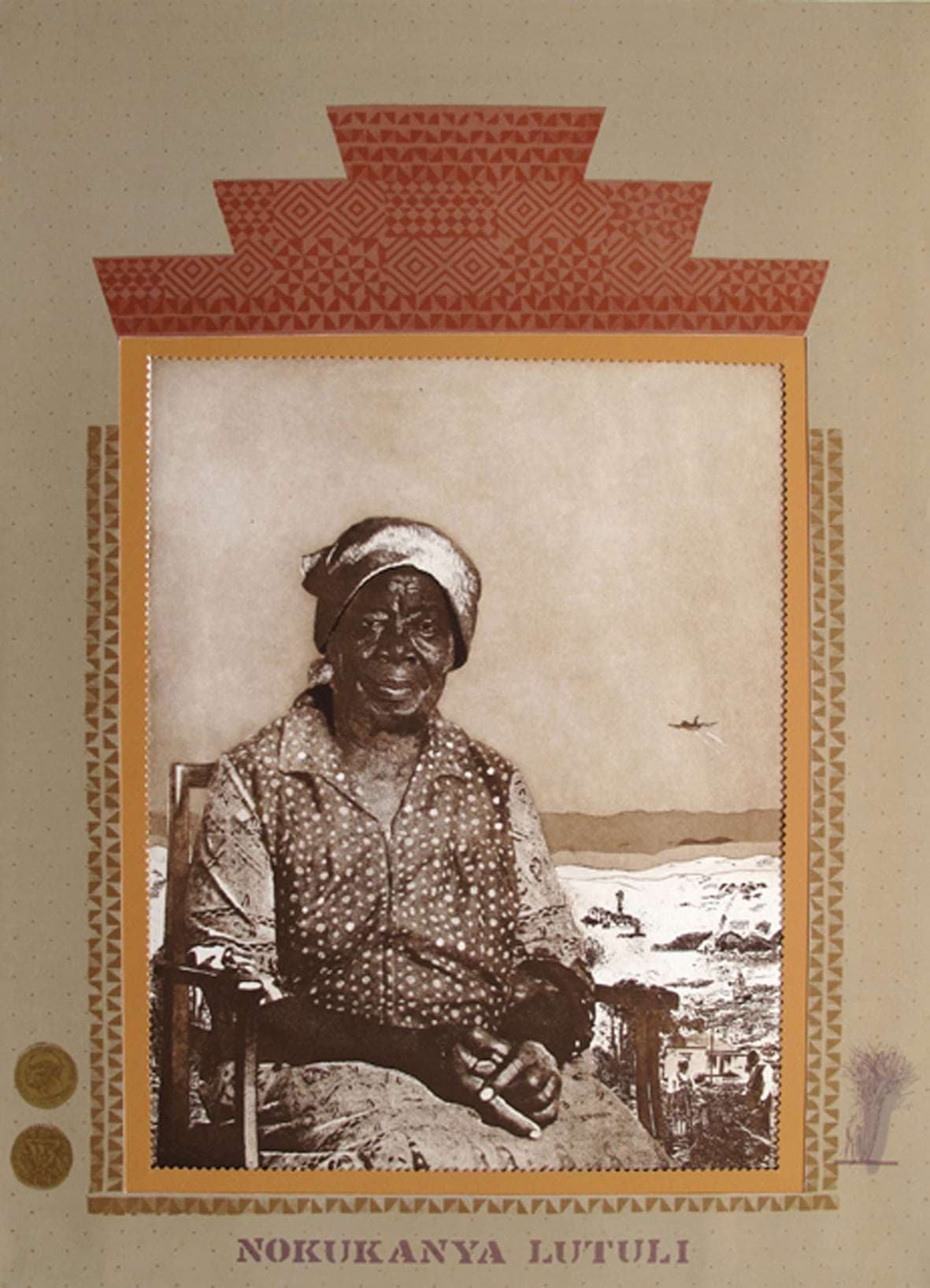
In 1982, Sue Williamson spent much of her time in Crossroads, an informal Cape Town community marked for destruction by the apartheid state. She was working with residents on strategies to oppose the demolitions. It was there that she first encountered the image of Elizabeth Paul – a Xhosa faith healer whose faded photo adorned the walls in many homes. This repetition marked Elizabeth as an important figure in the community, a person to be honoured and remembered.
Williamson began a series of photo-etched portraits with screen-printed frames, with the first in the series, a portrait of Elizabeth Paul. Each was a tribute to a woman who inspired others through her leadership, often in the struggle for liberation: Helen Joseph, Winnie Mandela, Annie Silinga, Mamphela Ramphele. Their names are familiar today, but in the 1980s they were largely invisible. Williamson’s work sought to give them visibility, and to honour them.
Her influences were many. Renaissance portraiture offered structure; the inventive frames of Crossroads homes provided texture. But more than technique, it was the desire to make these women known that shaped the work. In mass- producing and distributing postcard versions of the portraits, Williamson made the series portable, ensuring that these stories could travel, unbound by gallery walls.
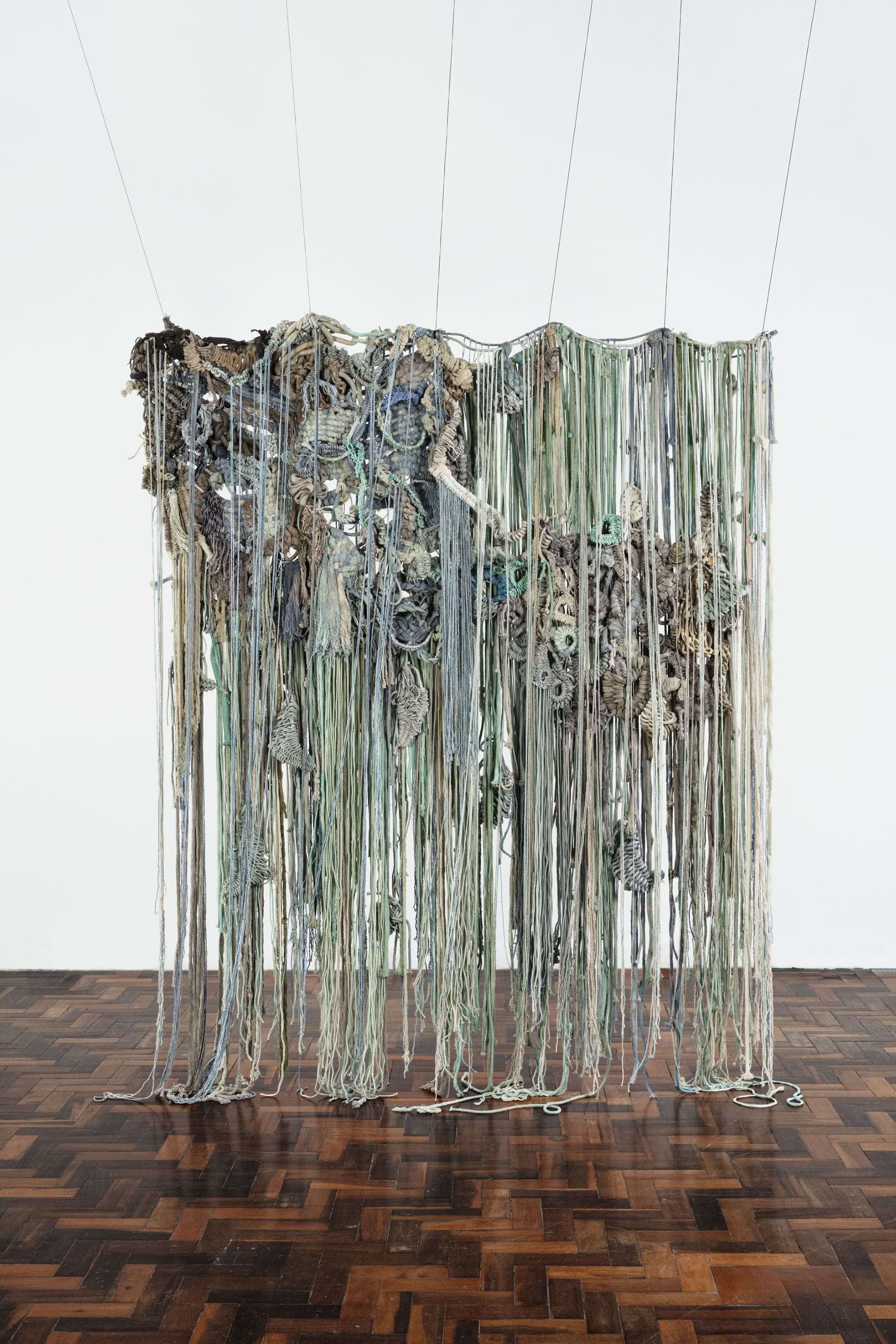
Charía is part of the Tupi-Guarani mythology. It is believed that eclipses are caused by a bluish jaguar eating the sun and moon. When the world ends, she will descend into the world and devour people. Until then, she rests beneath the hammock of Nhanderuvuçu, the supreme god.
Raw cotton threads dyed by natural pigments (indigo, red cabbage, black beans, porangaba) and steel wire
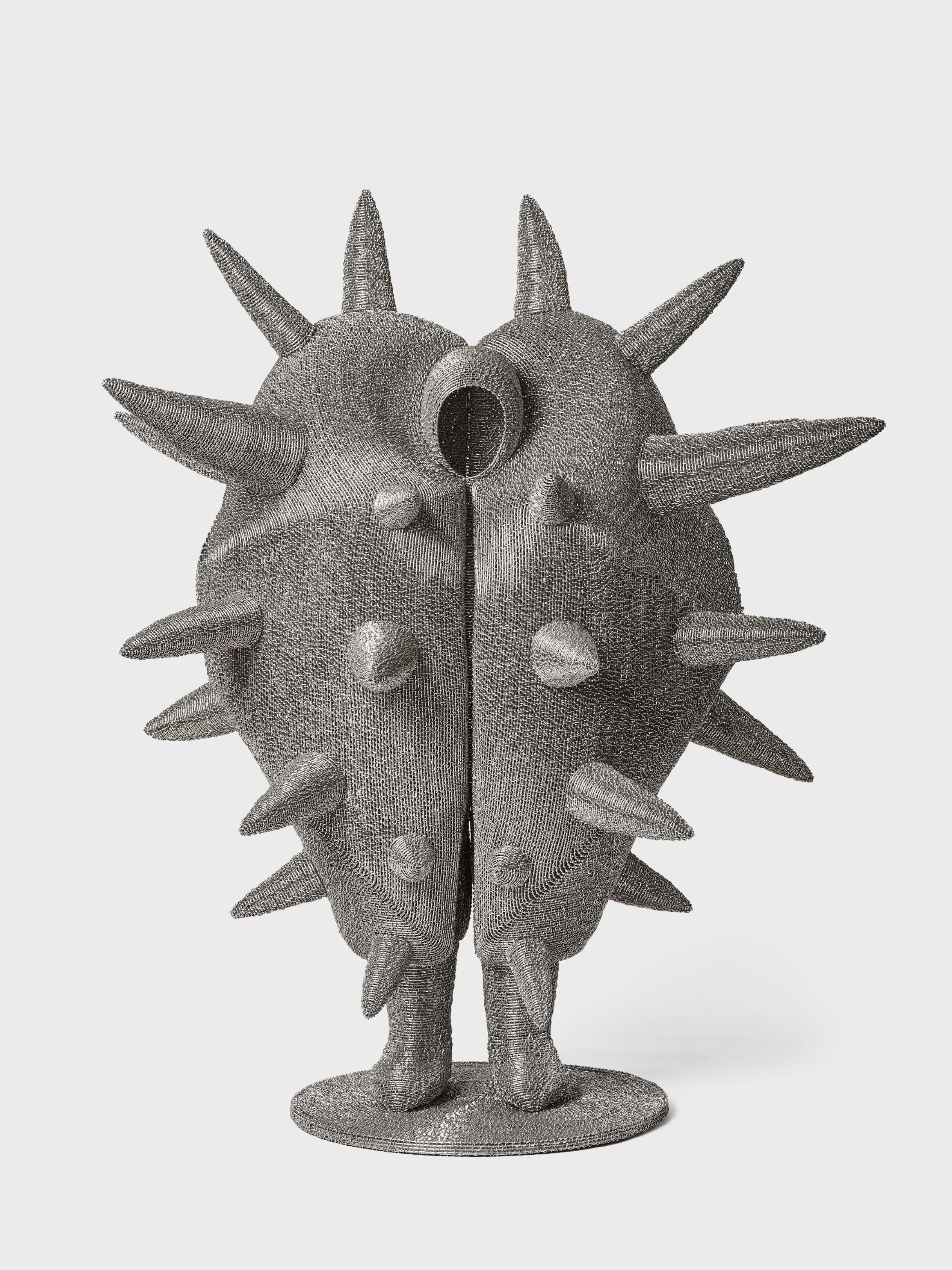
Since the 1980s, Walter Oltmann has explored the relationship between fine art and craft through hand-fabricated wire sculptures that draw on southern African wirework and domestic textile traditions. His intricate works evoke fragility, the passage of time, and transformation, often combining delicate ornamentation with unsettling or ambiguous subject matter. Empty suits, which appear frequently in his practice, act as surrogates for the body. They suggest a state of transition or metamorphosis and invite viewers to imagine a shared space between human, plant, and animal life.
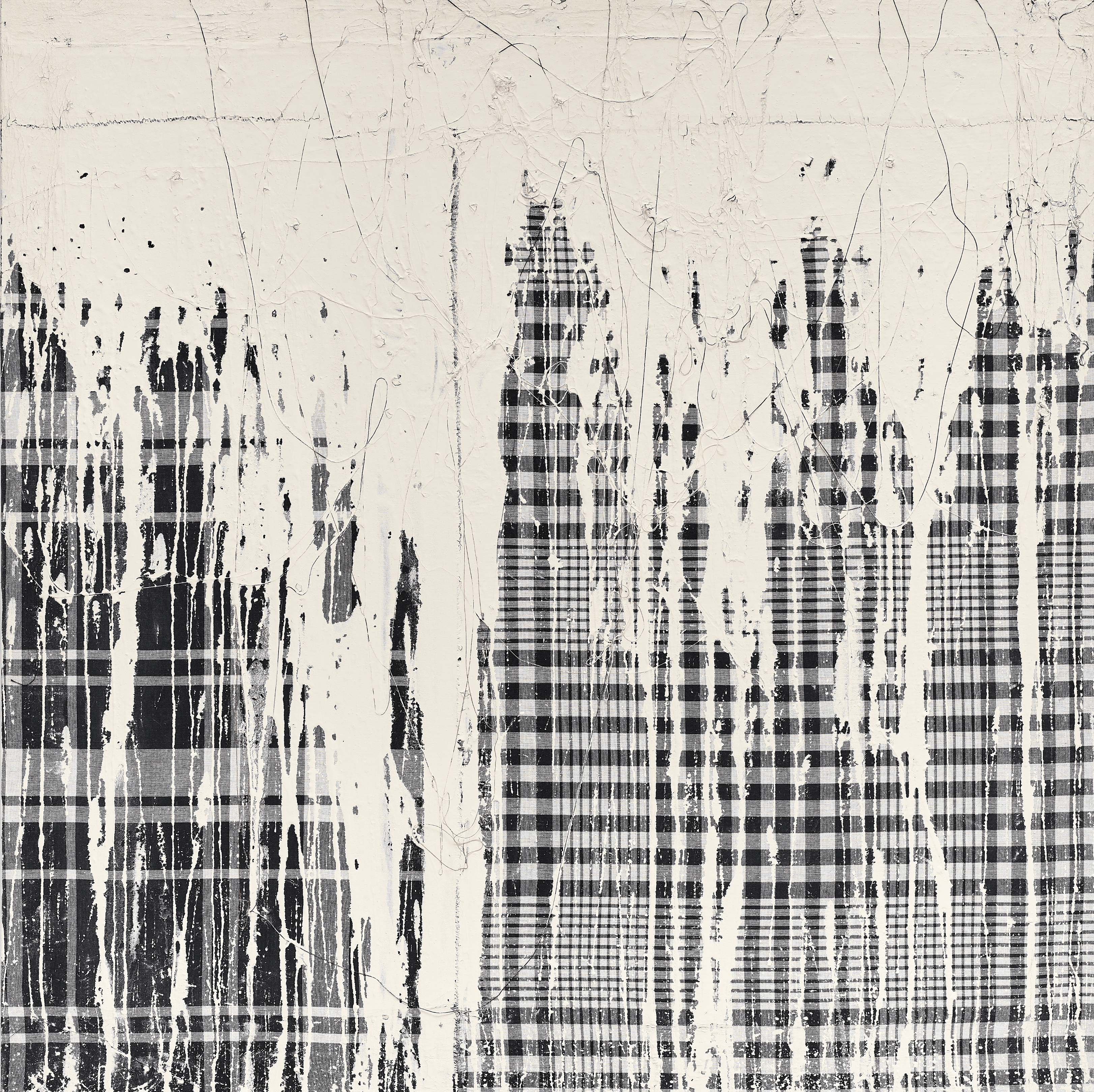
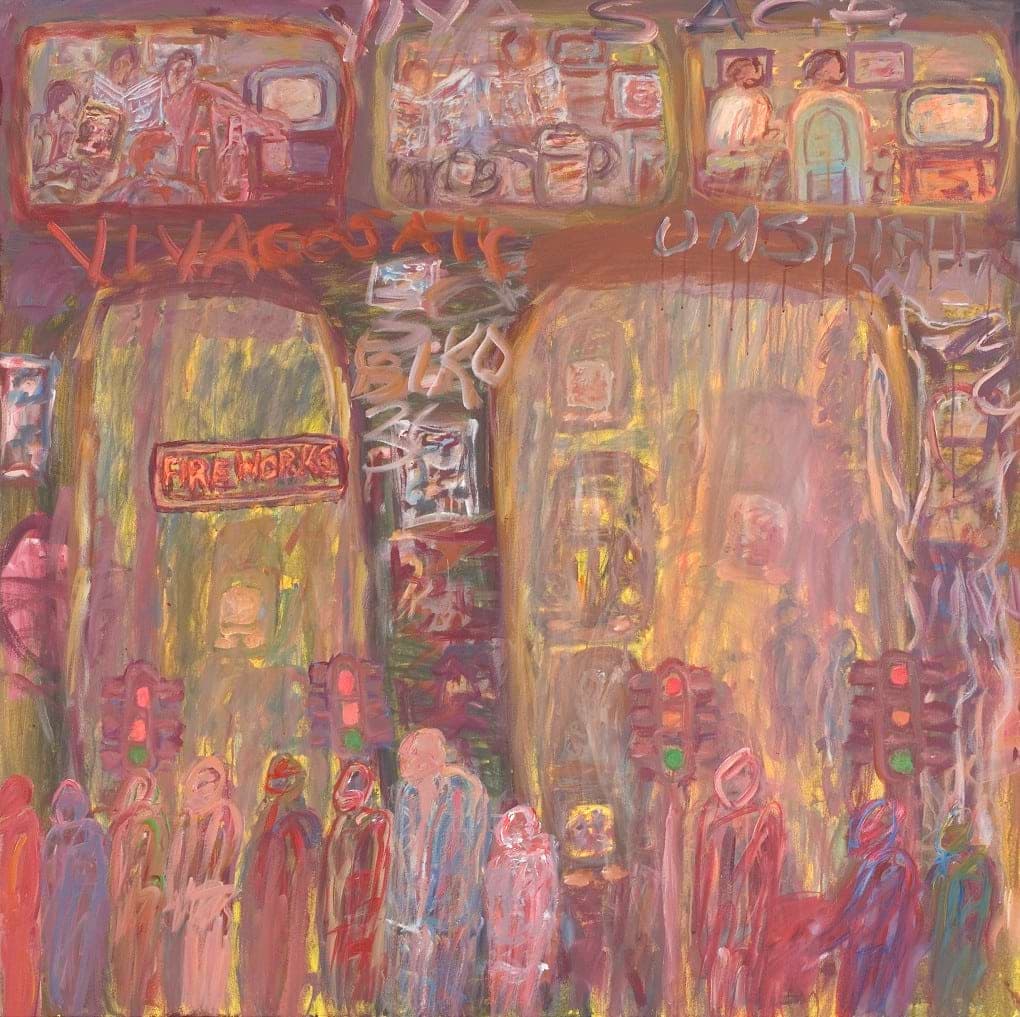
Johannesburg is a central and enduring theme in David Koloane’s work, serving as both backdrop and subject in his vivid portrayals of urban life. Through his work, Koloane captures the city’s contrasts, its vibrancy alongside hardship, its growth amid social challenges, and the resilience of its people. His depictions often focus on everyday scenes, marginalised communities, and the complex interactions within public spaces, revealing the layered realities of Johannesburg’s social, political, and cultural landscape. Rooted in his lived experience, Koloane’s work offers a powerful, empathetic exploration of the city’s spirit, struggles, and humanity.