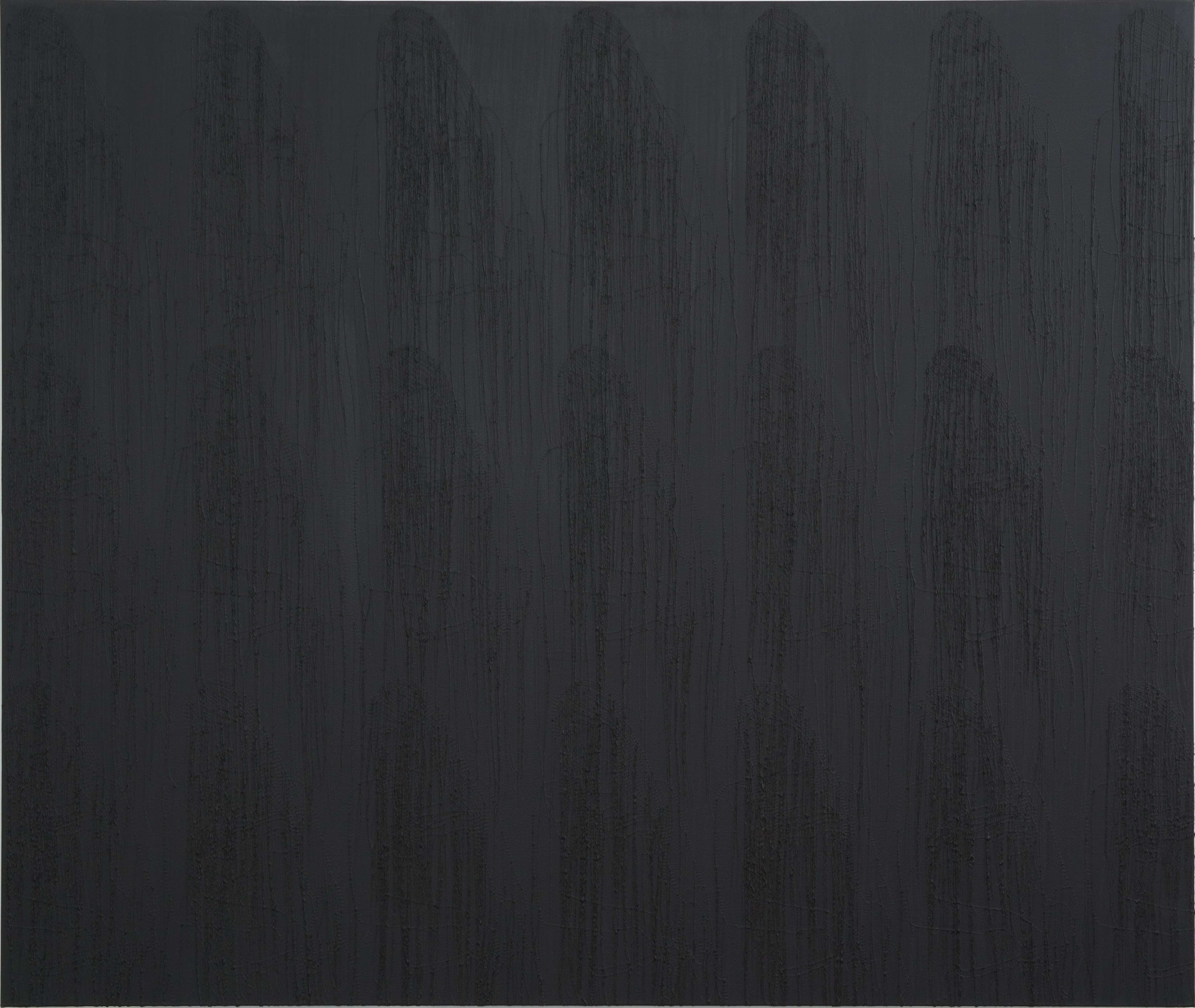
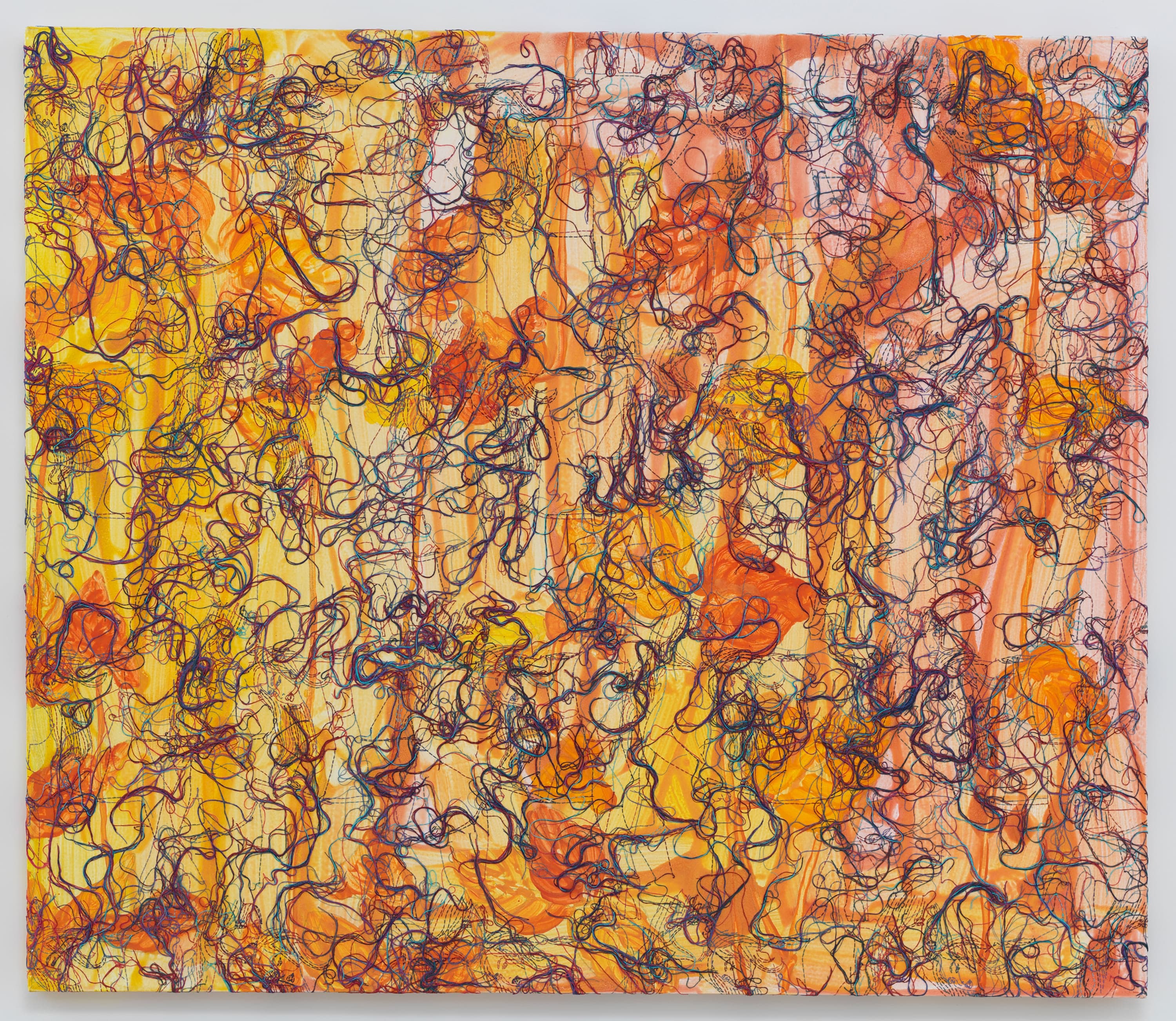
From afar Amer’s ANOTHER BLACK PAINTING (2019) reads as an abstract work rendered in rich black colour. On closer inspection, the work depicts a repeated motif of a woman's outline in black thread stitched onto a black painted surface. The repeated figure merges with the background in certain places, then re-appears elsewhere to create an important visual interplay between the abstract appearance of the canvas and its figurative elements, inviting parallels between the linearity of thread and painted brushstrokes. The effect is a visual and intellectual tension between visibility and invisibility, both of the subject depicted and the material ‘objecthood’ of the work itself. In this work, Amer points to traditions of abstraction and the canon of painting, historically dominated by men, and practices of needlework often designated as “women’s work”. ANOTHER BLACK PAINTING directs audiences to look, and look again, and question whether we can rely on vision alone.
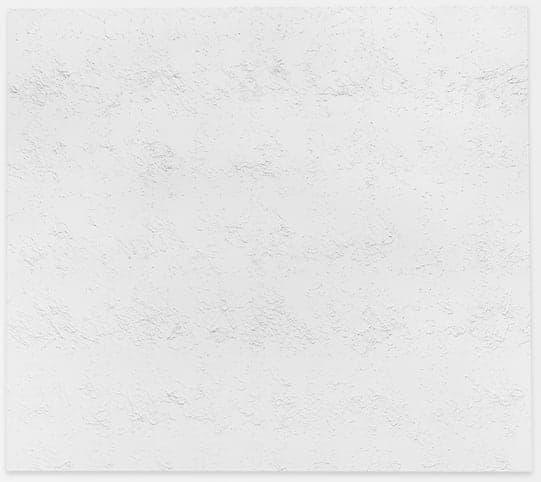
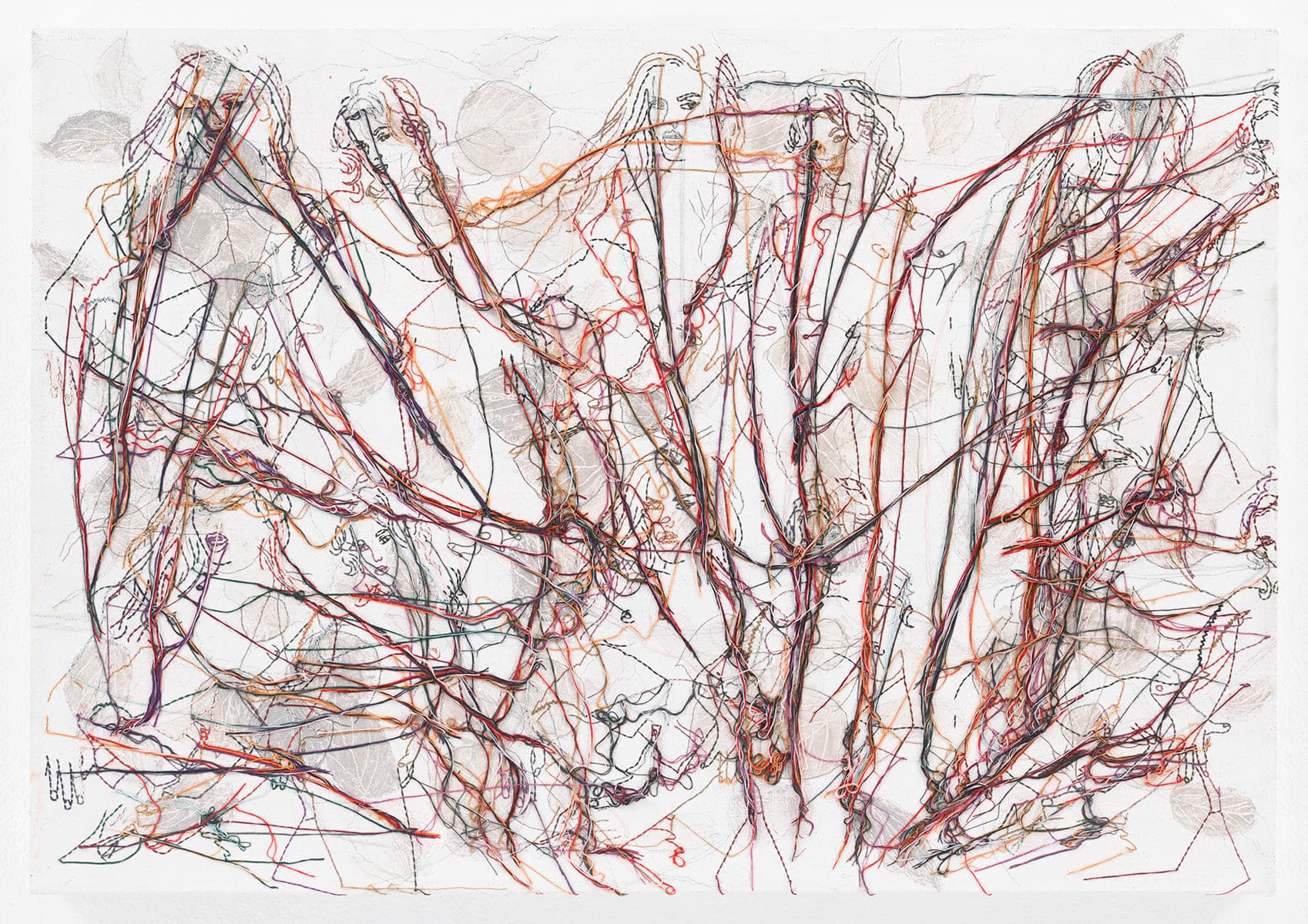
Many of Ghada Amer’s paintings make art historical references in subversive and humorous ways. White Girls and White Kiss subtly offer racial commentary, critiquing whiteness as a convention while addressing Robert Ryman. The cascading and pooling thread, omnipresent in Amer’s work, recalls Jackson Pollock. Jenni Sorkin writes in the catalogue essay, Ghada Amer's Material Plunder (2018) , “Ghada Amer has utilized the lush landscape of the art historical past from which to plunder—re-casting the role of women as subject, versus object.” Here, the female figures are naked, rendered in the style of idealized fashion sketches articulated with minimalist lines, a style that has long blurred the distinction between female and feminine.
The combination of drawing and dangling thread that hangs over the portraits like a forest of vines or a cage of hair makes the work even more visually seductive. The tendrils slightly obscure the female figure and make her more desirable because she can’t be fully visually possessed. Herein lies the tension, a woman’s body does not make the decisions regarding how she is represented nor seen. Rather, the culture around her body does this — a culture that makes her body into a territory to be conquered, a chance to be wooed, a citadel to be protected, a prize to be revered — all ways of diminishing the person to the mere status of an object of desire.
The transgressive erotic embroideries, which brought Amer to prominence in the 1990s, depict forms with the delicacy of needle and thread. The choice of this subject matter, rendered using thread and acrylic paint, speak to Amer’s interest in subverting assumptions related to the roles and attributes assigned to women, rejecting both religious-driven laws that govern women’s bodies as well as second-wave feminist ideas that reject expressions of conventional femininity as an avenue to empowerment.
“I wanted to paint with embroidery. I was speaking about women with a medium for women, and it made the speaking stronger and more present.” - Ghada Amer