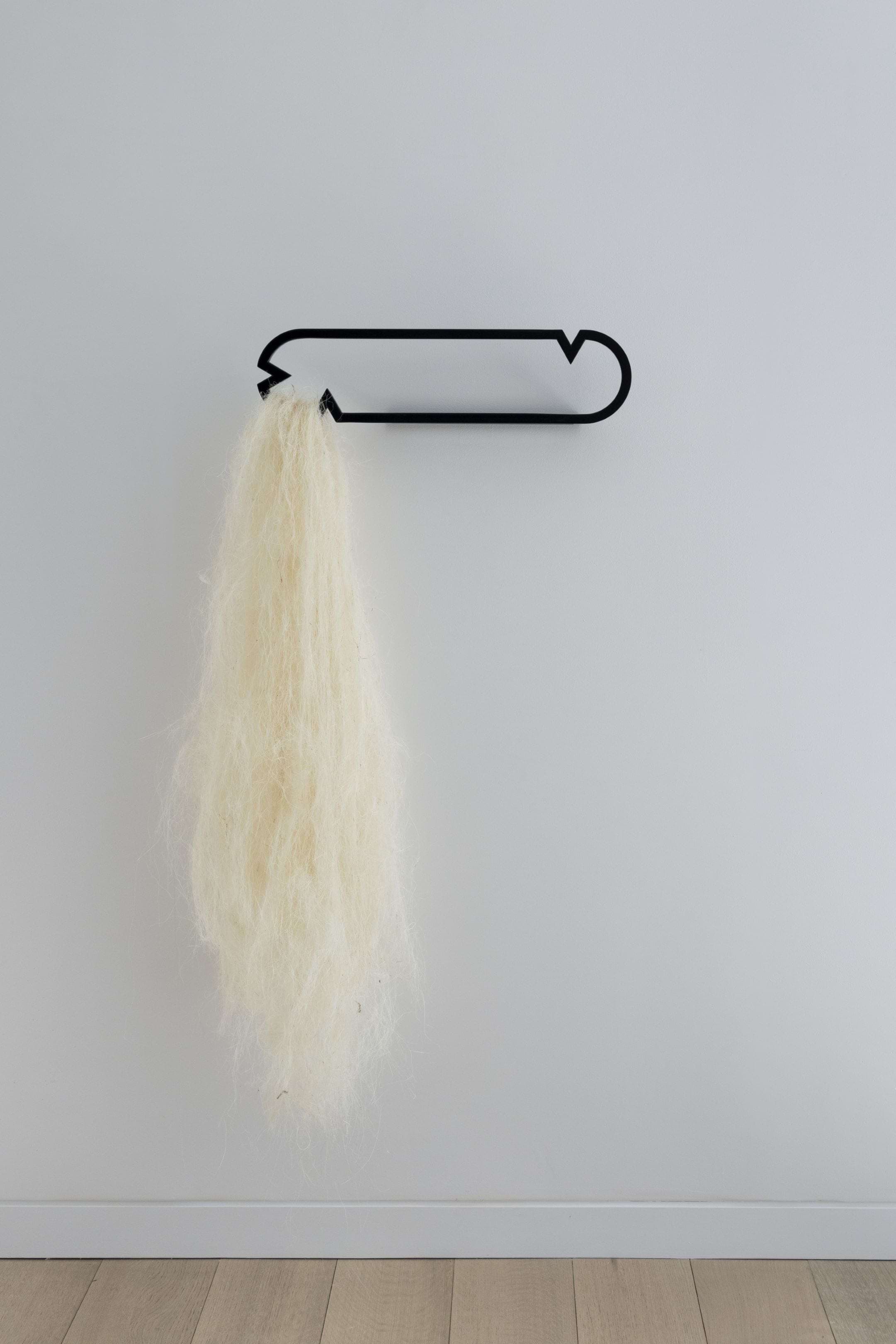

Kiwanga’s interest in the historical and symbolic affect of materials is demonstrated through an arrangement of steelworks covered in sisal fiber. The golden spun fibre, harvested from the botanical plant agave sisalana, is typically used for rope and twine. Kiwanga first encountered sisal whilst traveling through rural Tanzania where this flowering plant is a primary export commodity. Fascinated by the fiber’s colour (yellow and gold) as well as the rhythmic rows of the crop, Kiwanga came to learn more about the plant in relation to Tanzania’s political, economic and social history.
“The agave cactus was first brought illegally to Tanzania by German plantation owners who began to develop the crop on a large scale,” Kiwanga explains “At the time of Tanzanian independence, plantations that had once been privately owned were nationalised, in an attempt to assure Tanzania would be economically self-sufficient. Sisal was meant to play an economic role in the country becoming an independent socialist state. Ujamaa socialism failed, for many different reasons, but when the price of sisal plummeted on the world market it contributed to this as it adversely affected prospects of financial resilience.”
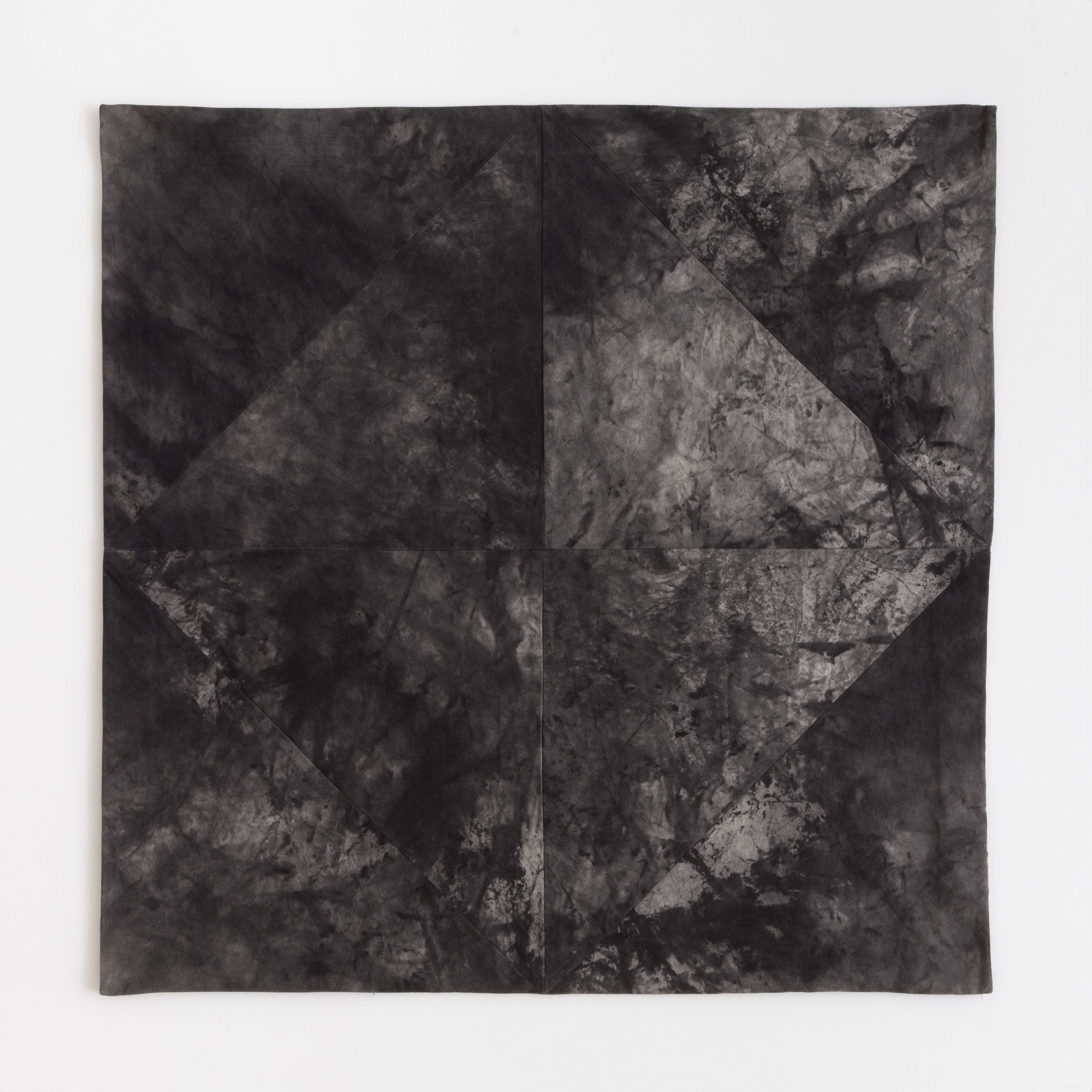
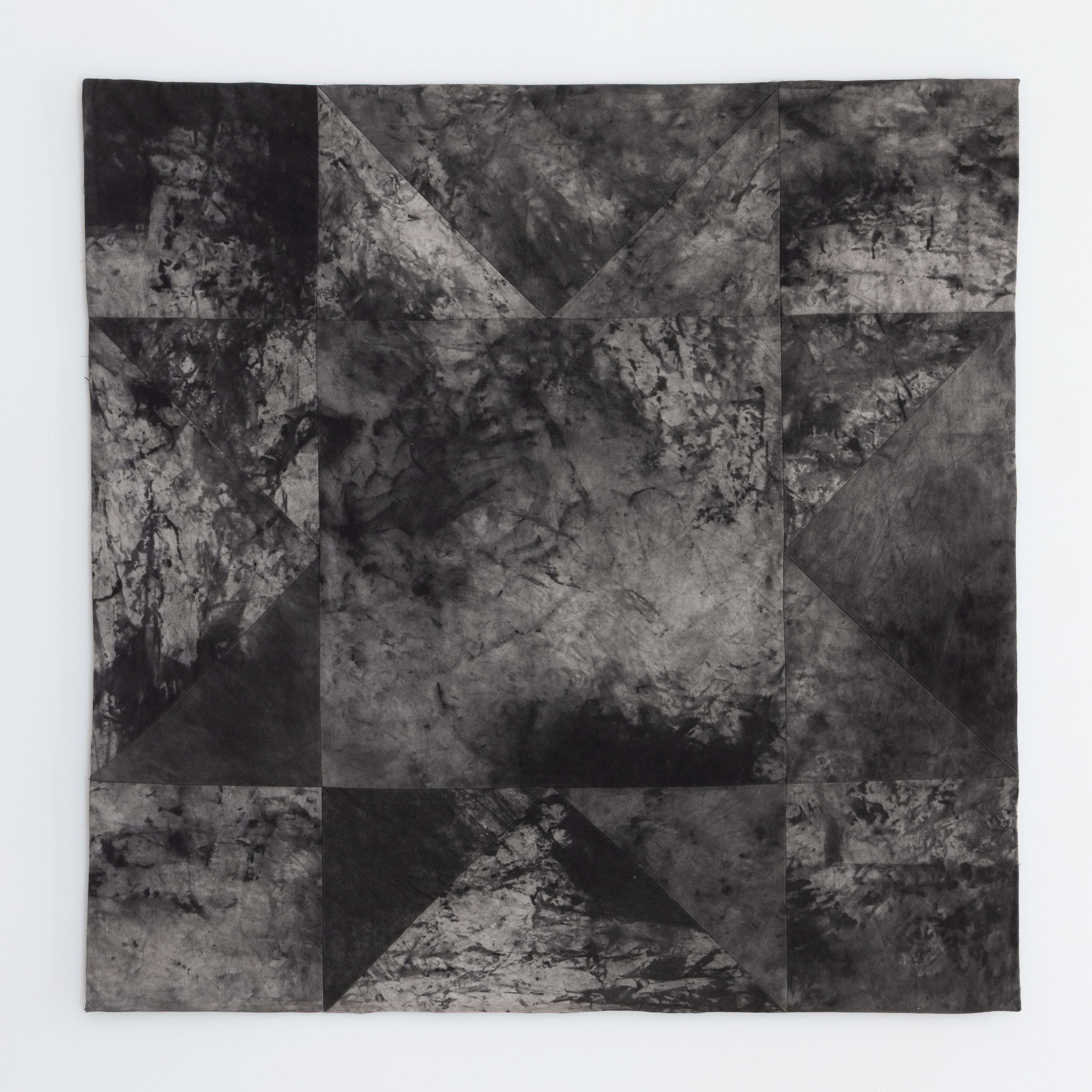
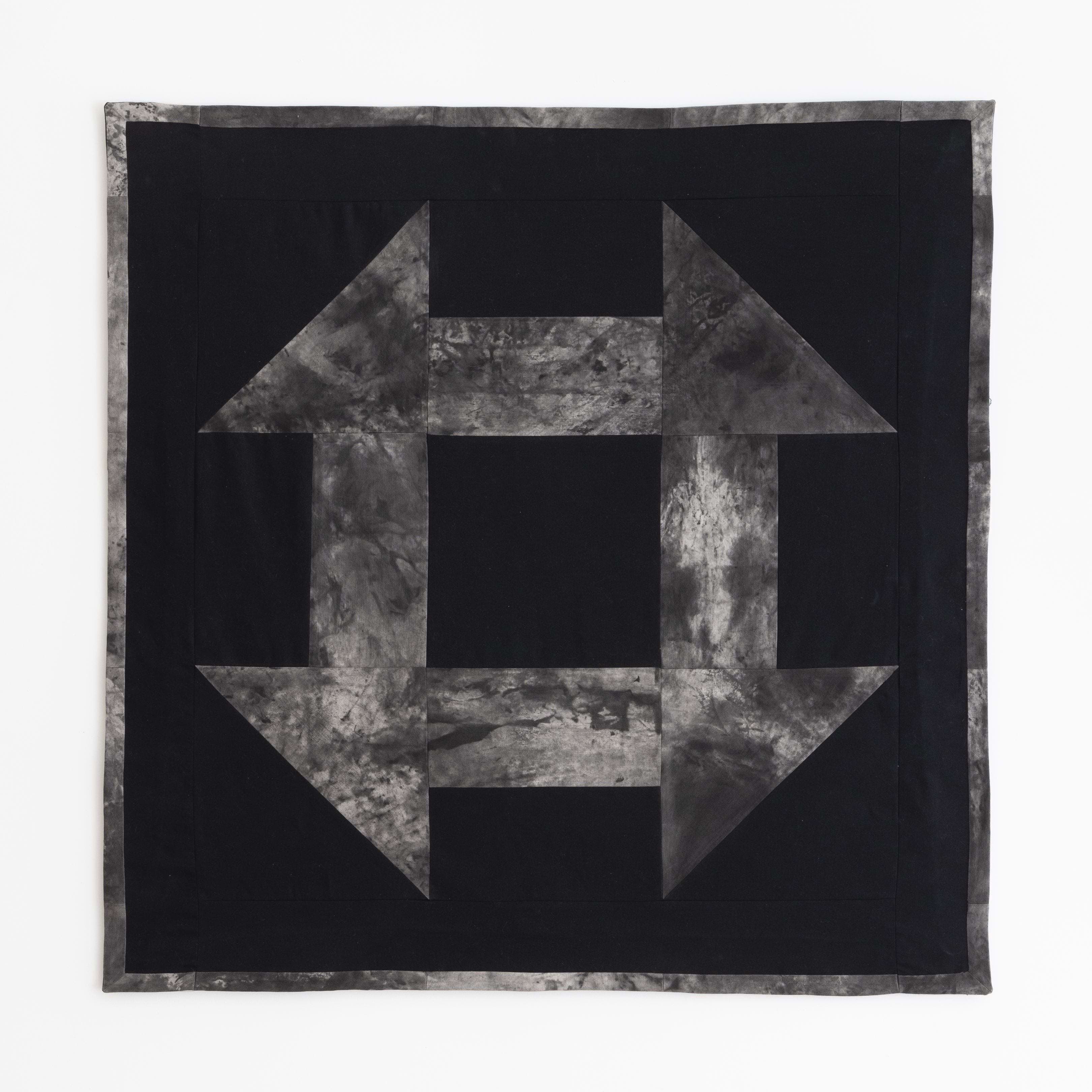
In a sequence of quilt works created out of cotton treated with pigment and saltwater from the Atlantic Ocean, Kiwanga extends the intangible components of her narrative compositions, continuing her investigation into the transatlantic slave trade. For the artist, the sea is an archive and witness of violent pasts. The cloth works combine and materialise her analysis of forced movement and liberatory strategies. Kiwanga’s use of symbols on the textiles allude to the safe houses along the Underground Railroad, often indicated by a quilt hanging from a clothesline or windowsill as a mode of communication. The geometric shapes function as conceptual coordinates of flight, escape and safety —by reading the motifs sewn into the design, a person fleeing slavery could assess immediate dangers.
In a sequence of quilt works created out of cotton treated with pigment and saltwater from the Atlantic Ocean, Kiwanga extends the intangible components of her narrative compositions, continuing her investigation into the transatlantic slave trade. For the artist, the sea is an archive and witness of violent pasts. The cloth works combine and materialize her analysis of forced movement and liberatory strategies. Kiwanga’s use of symbols on the textiles allude to the safe houses along the Underground Railroad, often indicated by a quilt hanging from a clothesline or windowsill as a mode of communication. The geometric shapes function as conceptual coordinates of flight, escape and safety —by reading the mo-tifs sewn into the design, a person fleeing slavery could assess immediate dangers.
In a sequence of quilt works created out of cotton treated with pigment and saltwater from the Atlantic Ocean, Kiwanga extends the intangible components of her narrative compositions, continuing her investigation into the transatlantic slave trade. For the artist, the sea is an archive and witness of violent pasts. The cloth works combine and materialize her analysis of forced movement and liberatory strategies. Kiwanga’s use of symbols on the textiles allude to the safe houses along the Underground Railroad, often indicated by a quilt hanging from a clothesline or windowsill as a mode of communication. The geometric shapes function as conceptual coordinates of flight, escape and safety —by reading the mo-tifs sewn into the design, a person fleeing slavery could assess immediate dangers.
Taking up a central part of the presentation is Dune, featuring two glass lenses blown from Texas silica sand. Here Kiwanga ponders the multiple forms that sand can take. A plinth filled with Silica sand asks the audience to consider the impact that these small grains have had on the environment in another collective form: as a medium for hydraulic fracturing, better known as fracking, a method of oil and natural gas extraction that began in the US commercially in the 1950s. Two lenses made from that same Silica sand are positioned in specific orientations in the sand encouraging visitors to consider the way they look at such simple and often-overlooked materials.
The Greenbook 1961 is a suite of 52 framed works. The source material comes from the 1961 issue of The Traveler’s Green Book; an annual state-by-state listing printed from 1936-1966. The publication served as a resource for African-American motorists travelling across the USA providing safe at which to stop whether they be lodgings, restaurants, or service stations. Kiwanga focuses on 1961,the year in which the Freedom Riders, a group of civil rights activists rode public interstate buses from Washington D.C. into the south to challenge the unconstitutional standard of keeping public buses segregated. Kiwanga erases information from archival scans with the exception of the state name and address. The resulting prints generate a minimal topography of a particular space and time.
The Greenbook 1961 is a suite of 52 framed works. The source material comes from the 1961 issue of The Traveler’s Green Book; an annual state-by-state listing printed from 1936-1966. The publication served as a resource for African-American motorists travelling across the USA providing safe at which to stop whether they be lodgings, restaurants, or service stations. Kiwanga focuses on 1961,the year in which the Freedom Riders, a group of civil rights activists rode public interstate buses from Washington D.C. into the south to challenge the unconstitutional standard of keeping public buses segregated. Kiwanga erases information from archival scans with the exception of the state name and address. The resulting prints generate a minimal topography of a particular space and time.
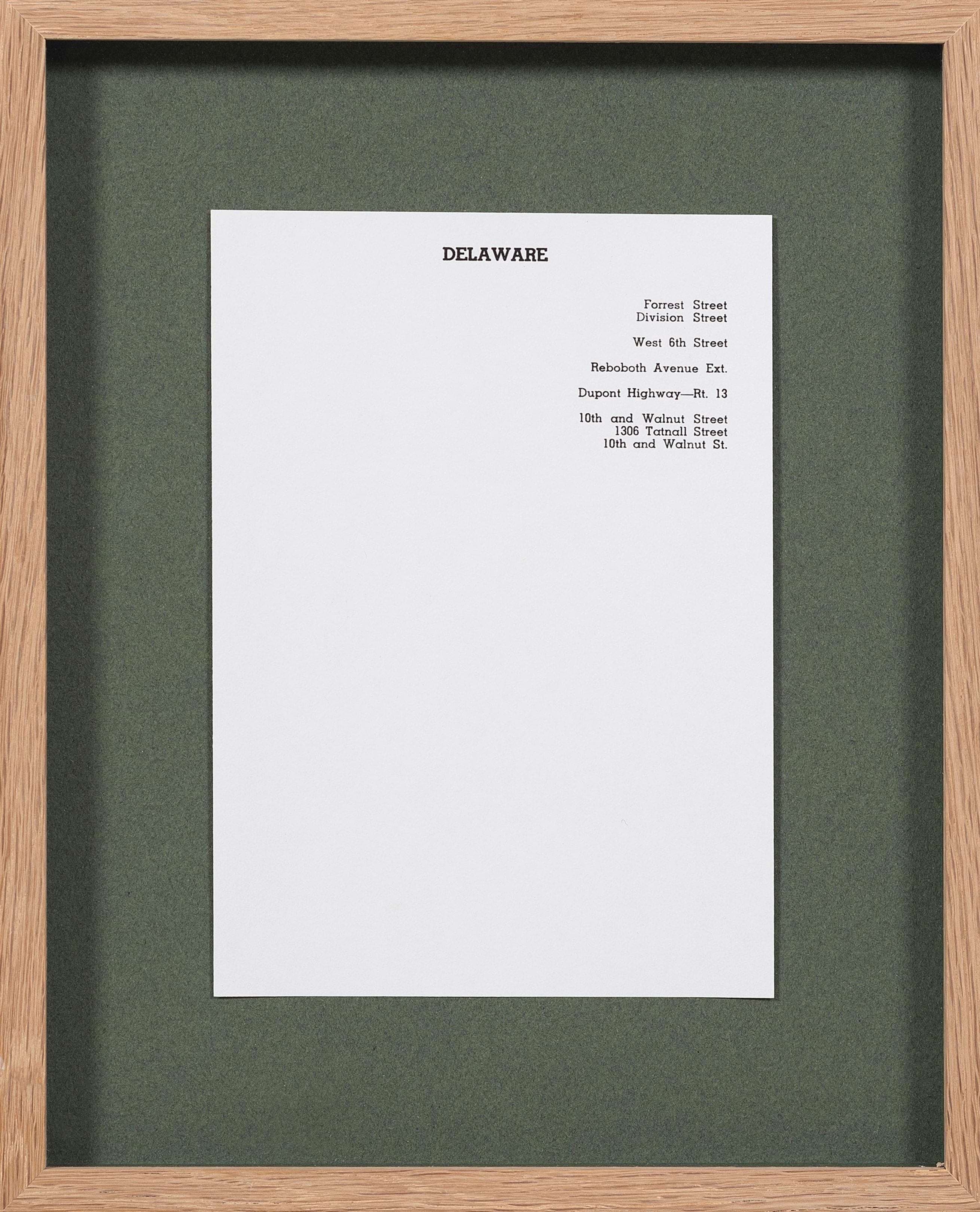
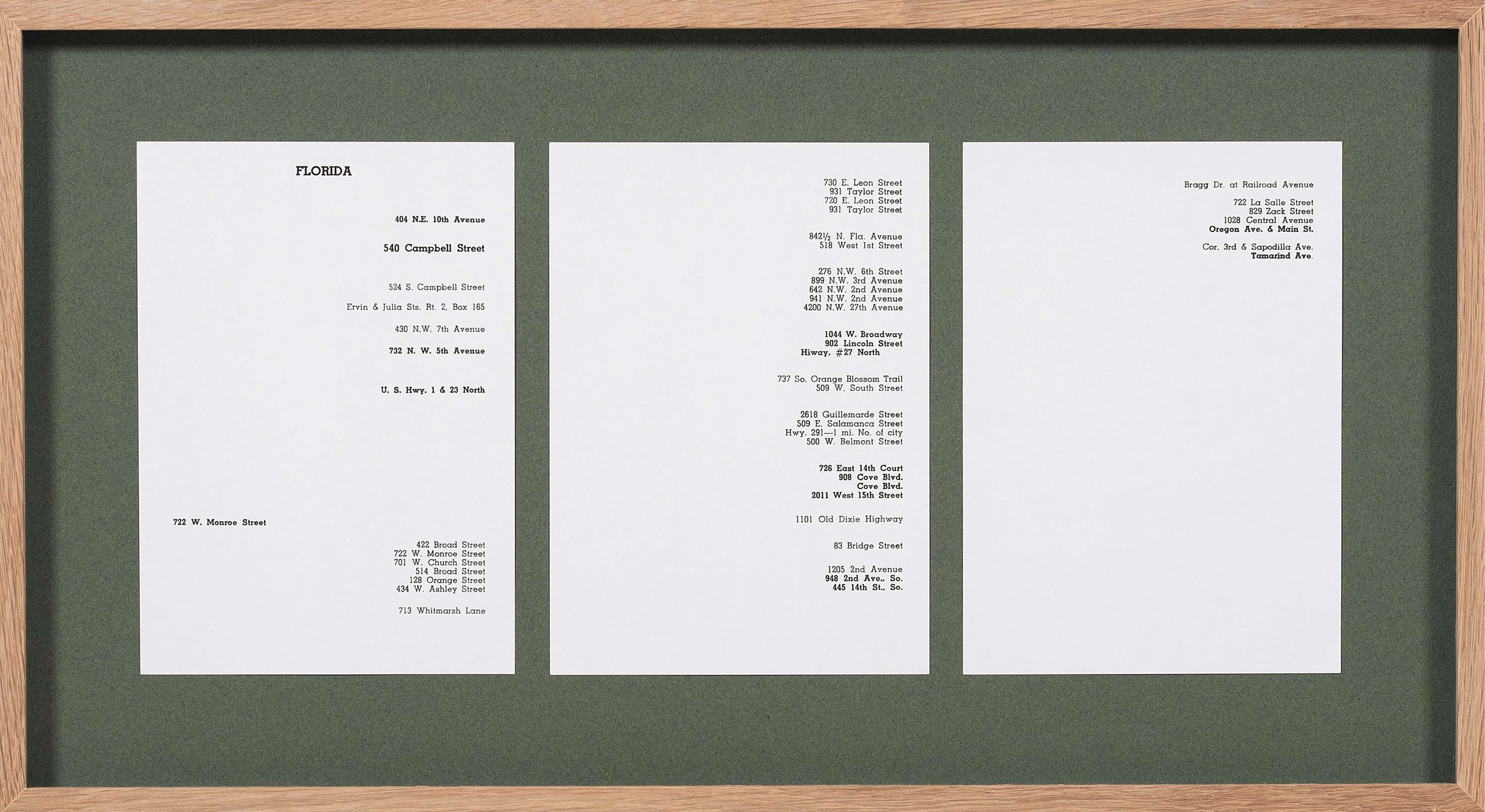
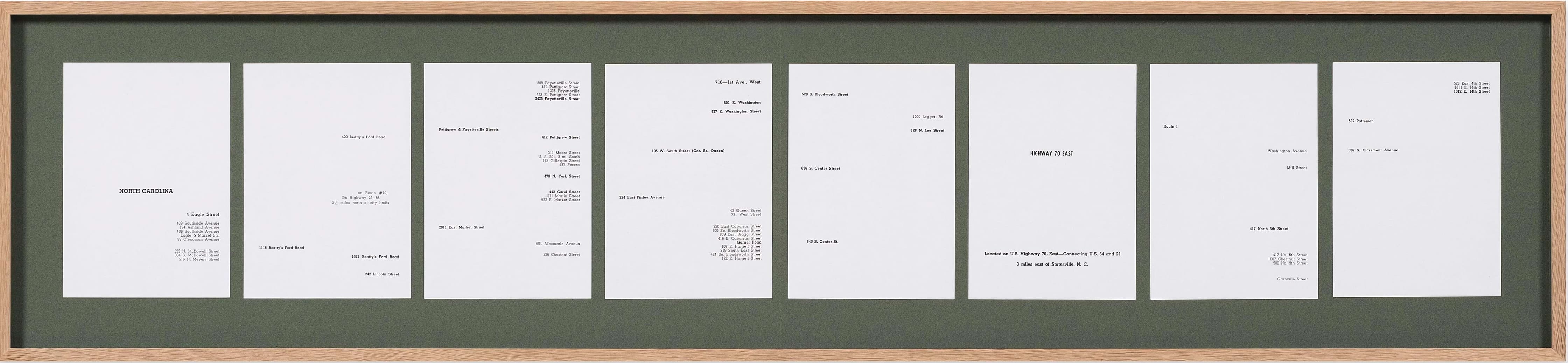
The Greenbook 1961 is a suite of 52 framed works. The source material comes from the 1961 issue of The Traveler’s Green Book; an annual state-by-state listing printed from 1936-1966. The publication served as a resource for African-American motorists traveling across the USA providing safe houses at which to stop whether they be lodgings, restaurants, or service stations. Kiwanga focuses on 1961, the year in which the Freedom Riders, a group of civil rights activists, rode public interstate buses from Washington D.C. into the south to challenge the unconstitutional standard of keeping public buses segregated. Kiwanga erases information from archival scans with the exception of the state name and address. The resulting prints generate a minimal topography of a particular space and time.