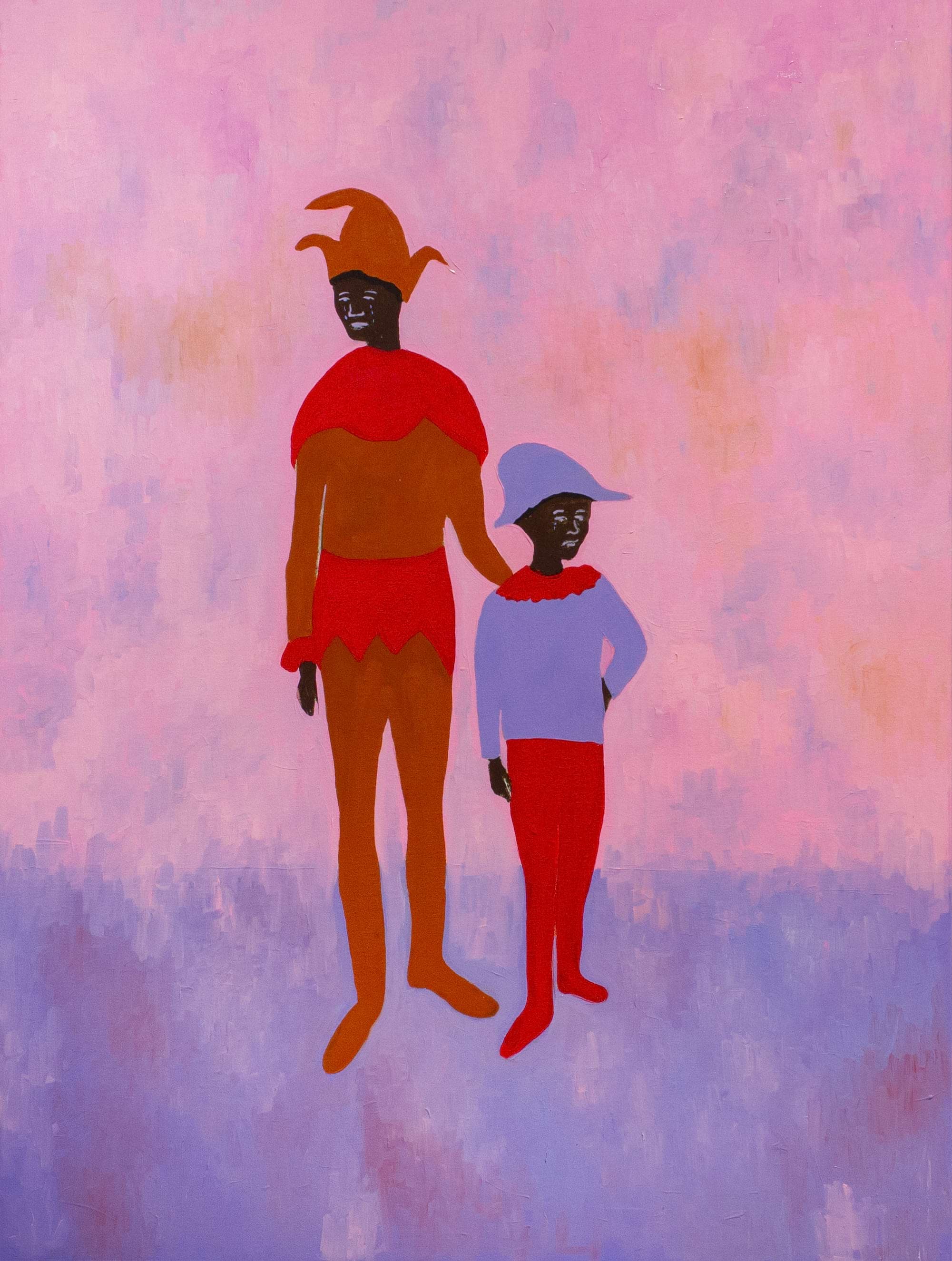
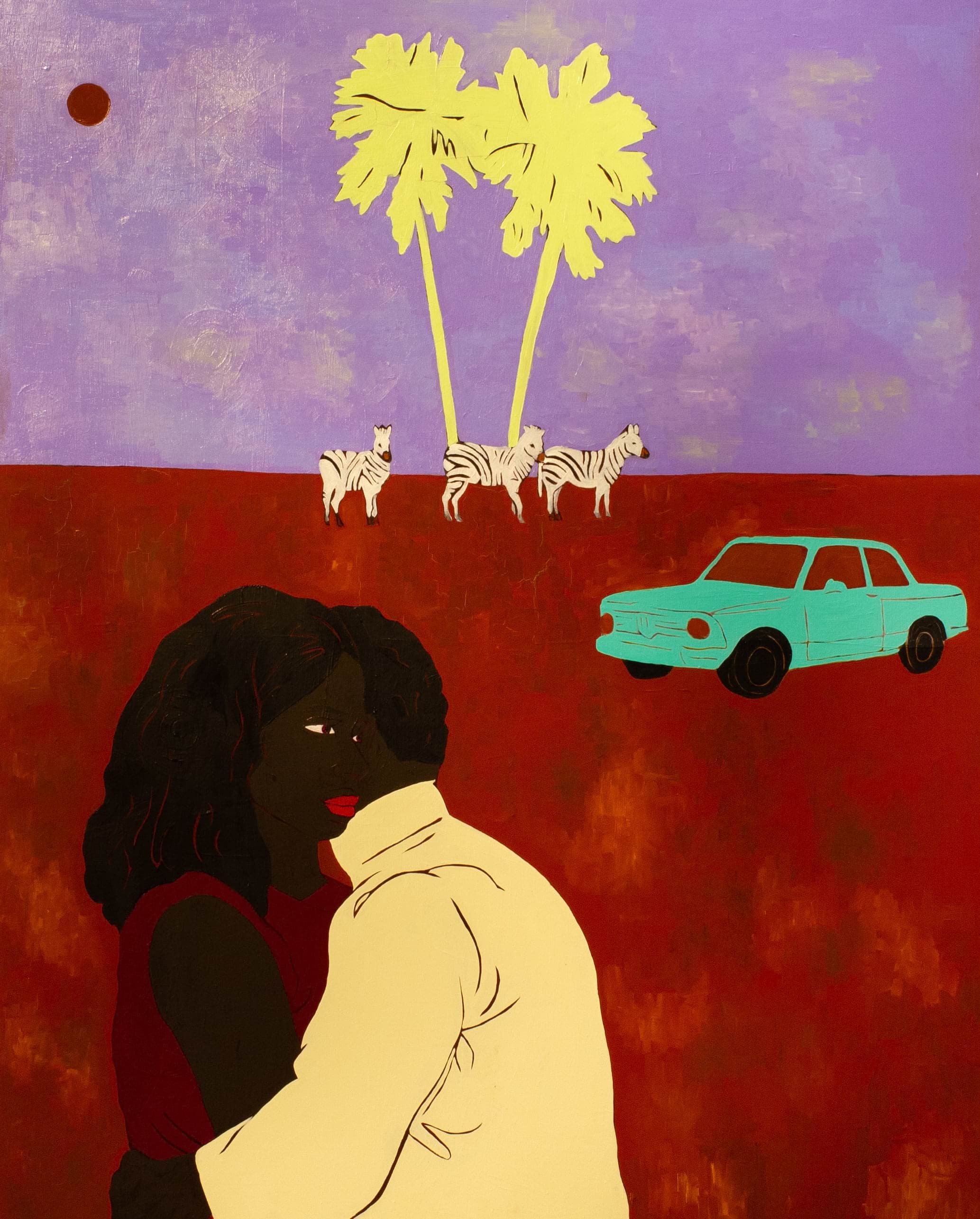
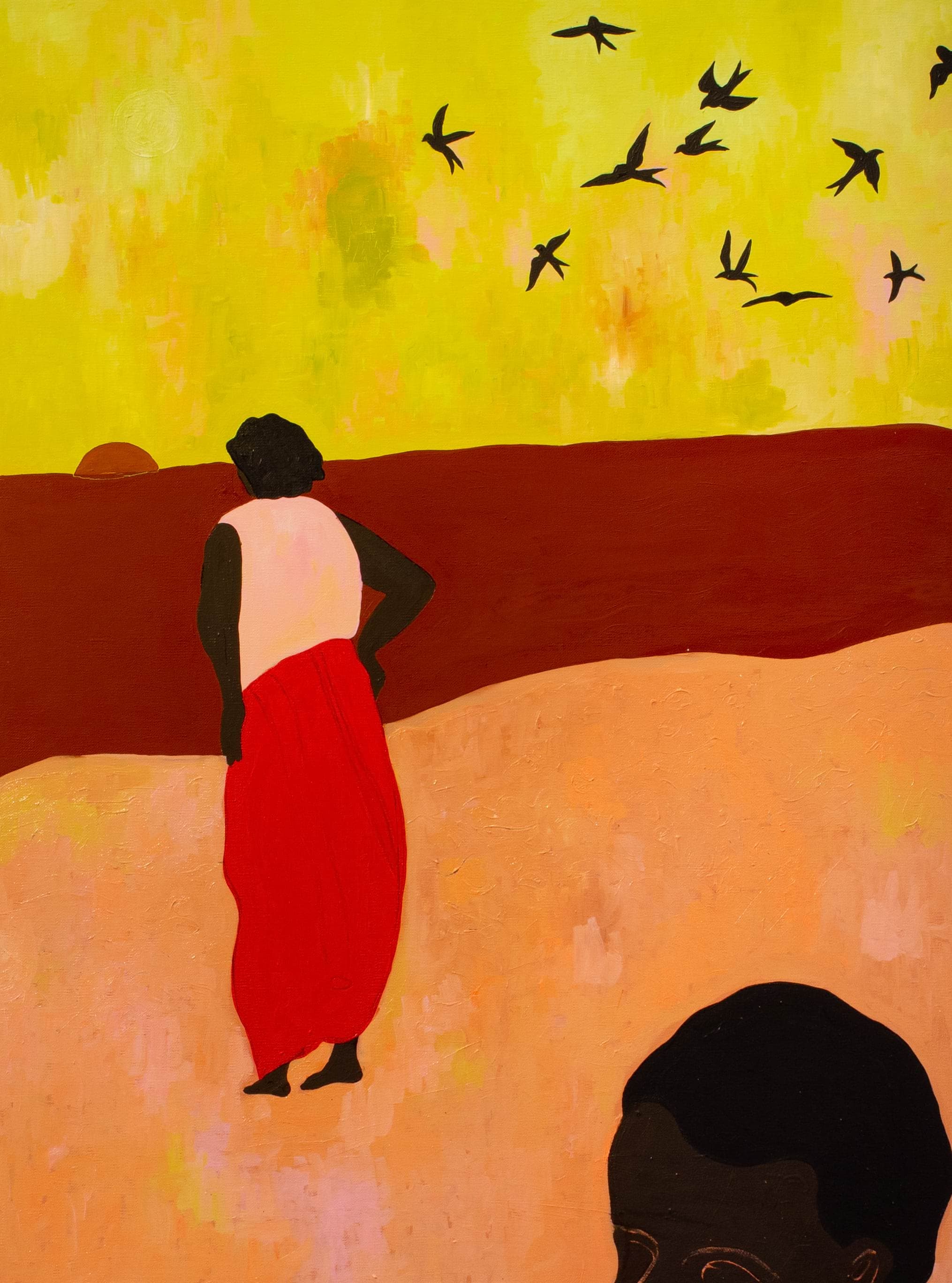
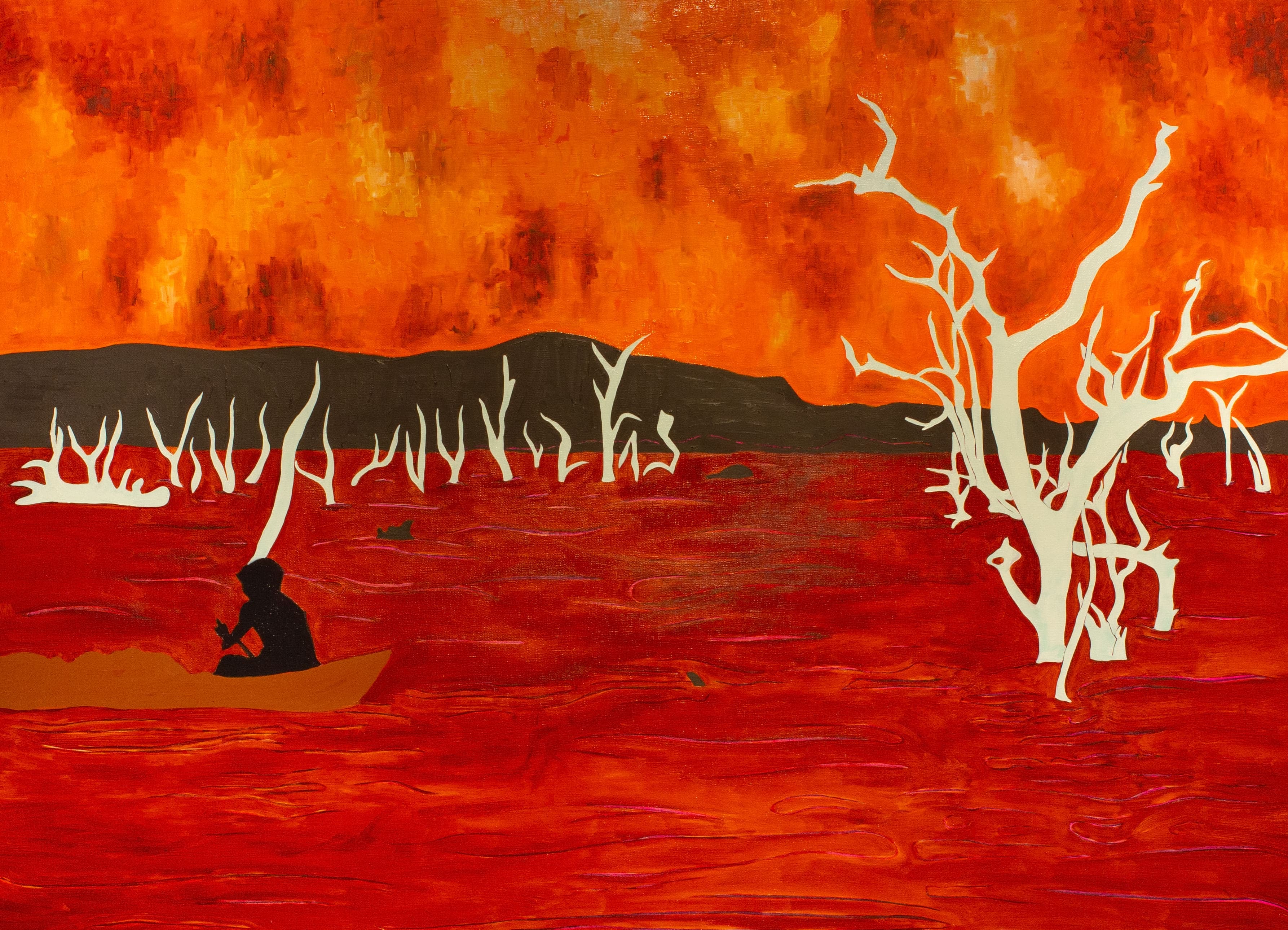
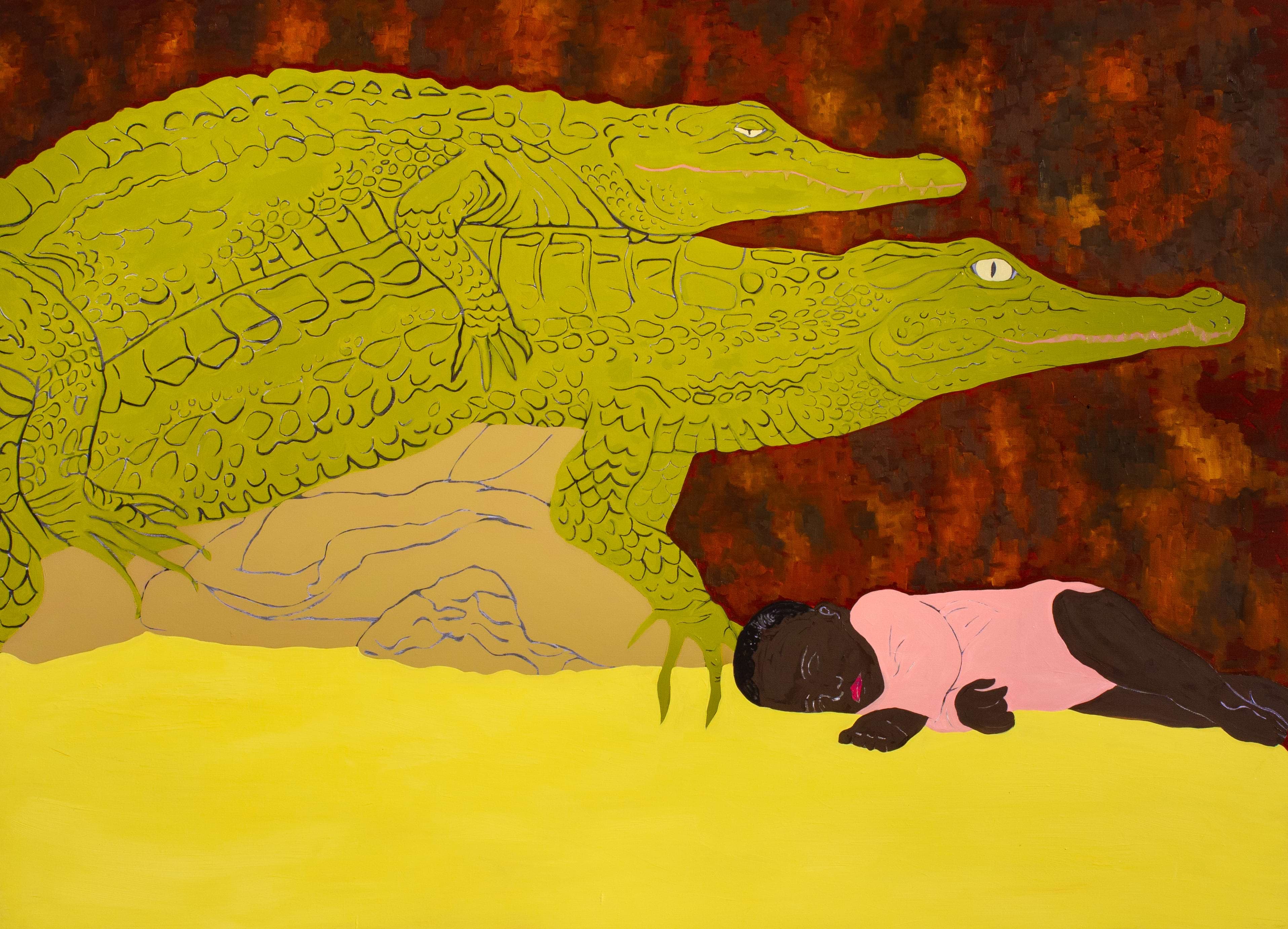
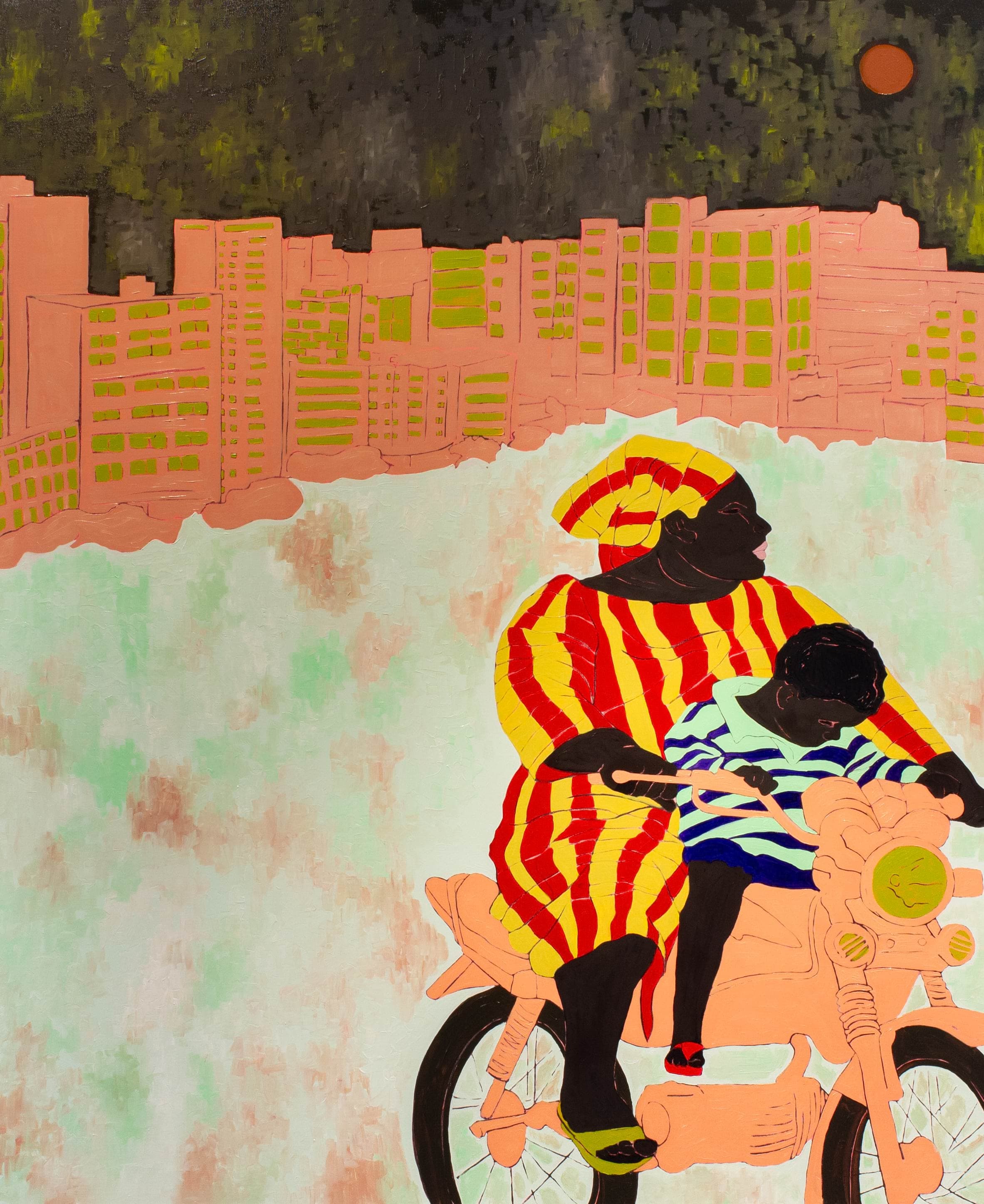
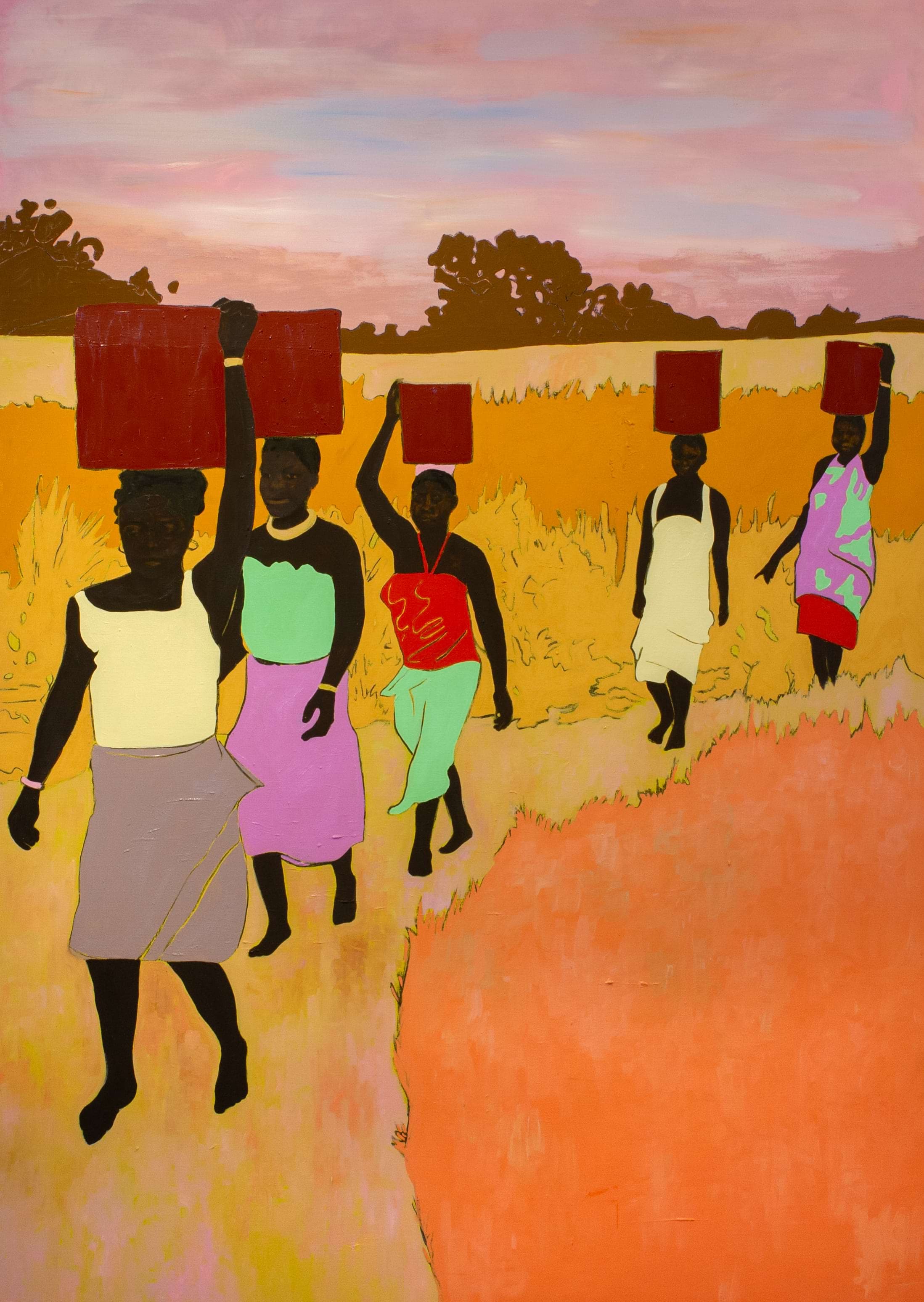
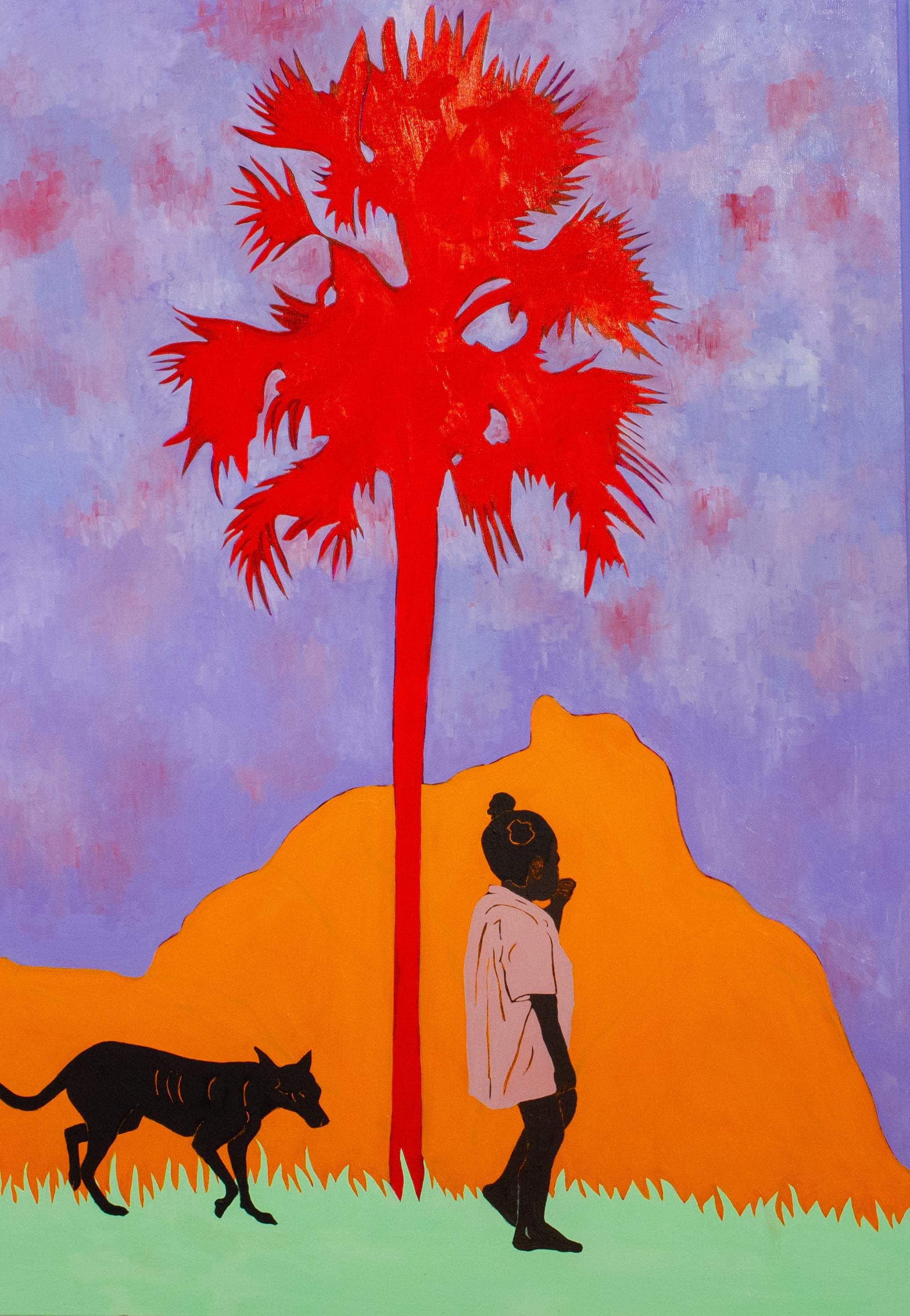
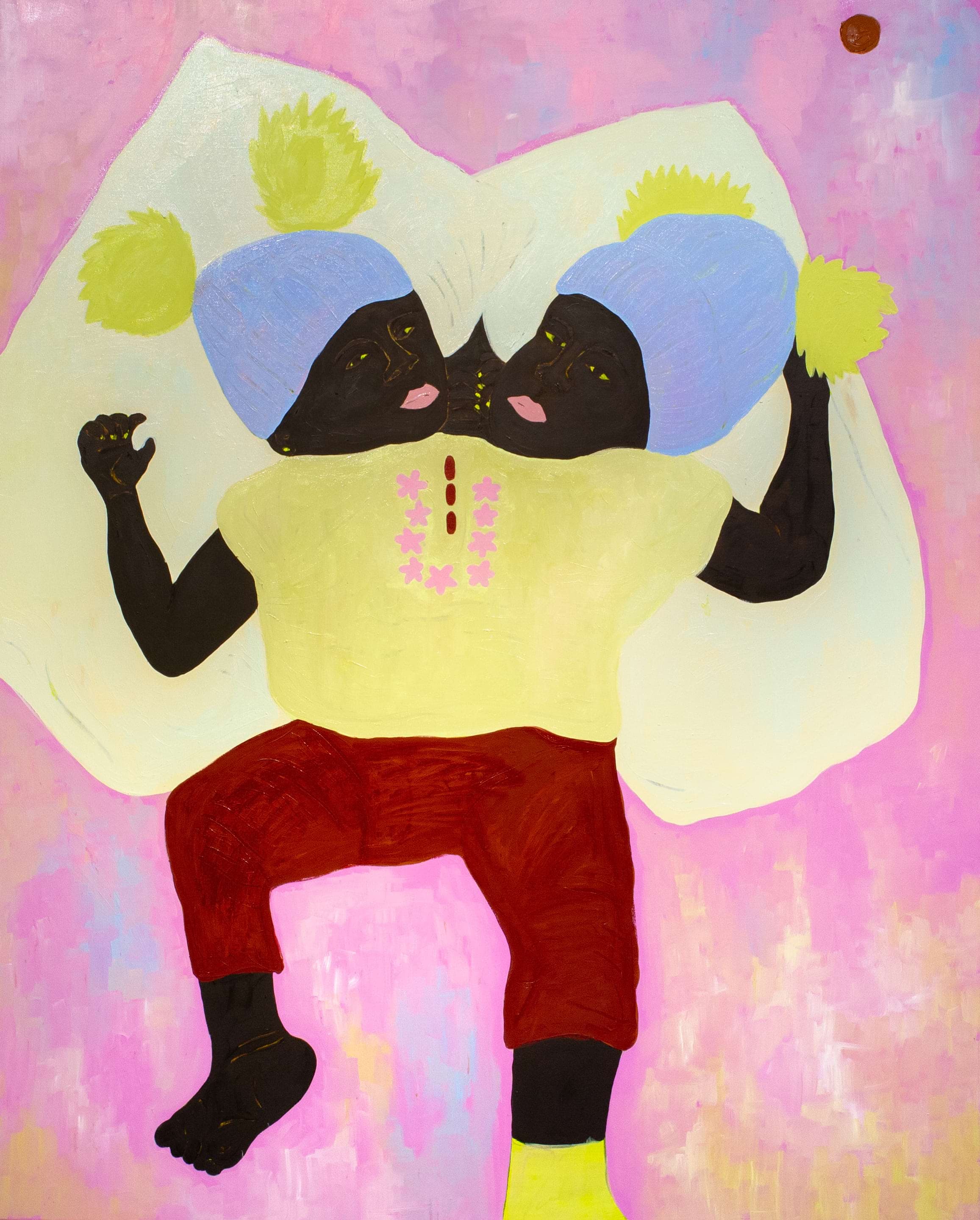
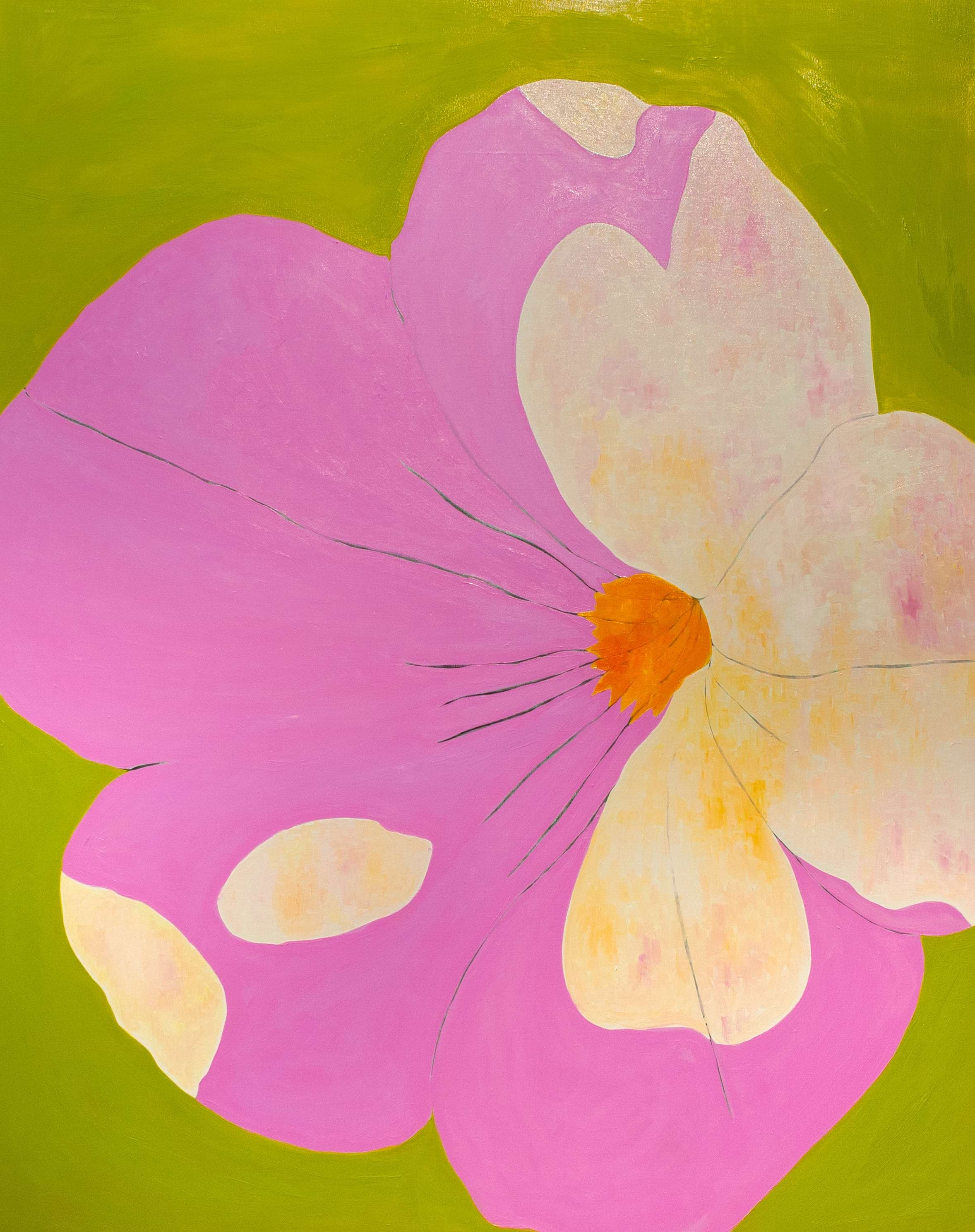
Cassi Namoda’s work engages with the layered histories and cultural complexities of post-colonial Africa, with particular focus on the intersections between vernacular traditions and the enduring imprint of Portuguese colonialism across the Lusophone world. Her syncretic paintings draw from a vast symbolic repertoire, merging global mythologies, indigenous visual languages, European art history, and colonial legacies into dreamlike narratives and evocative landscapes. Recurring figures inhabit these intimate scenes, enriched by references to literature, cinema, and architecture. Her use of washed colour, bold composition, and flattened perspective lends the work a distinct sense of magical realism. What emerges is a visual language that imbues modernity and the Western canon with a sense of longing, romance and saudade – an emotional register both tender and unresolved.
Cassi Namoda is a painter whose practice intricately brings together personal history, collective memory, and cultural inheritance. Born in Maputo and raised across multiple countries, her transnational upbringing informs the emotional and thematic breadth of her work. Trained in cinema, she approaches painting with a storyteller’s sensibility, drawing on narrative structures and imagined characters to explore intimate and societal experiences. Photographic references often initiate her process, particularly images that resemble film stills – arrested moments of everyday life imbued with quiet significance.
Her paintings merge archival fragments with lived experience, yielding scenes that are at once contemporary and steeped in historical resonance. The tensions between past and present, colonial legacy and post-colonial identity, tradition and modernity, are consistently at play. Through these dualities, Namoda examines how history is internalised and performed. Her engagement with art history is layered and deliberate; she simultaneously honours and interrogates the modernist canon. Expressionism’s emotive distortions and surrealism’s affinity for the uncanny are both visible in her visual language, giving form to the psychic and spiritual dimensions of life in Mozambique. Her scenes, rich with atmosphere, offer more than mere representations – they are meditations on belonging, displacement and the quiet complexity of human experience.