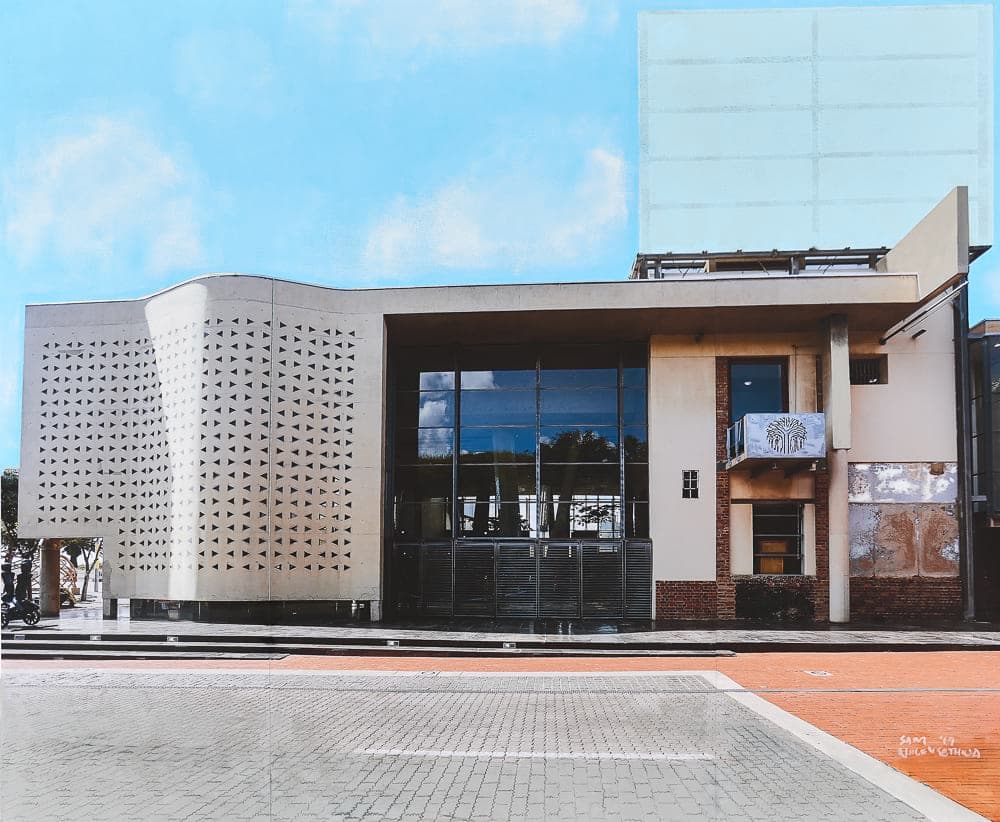
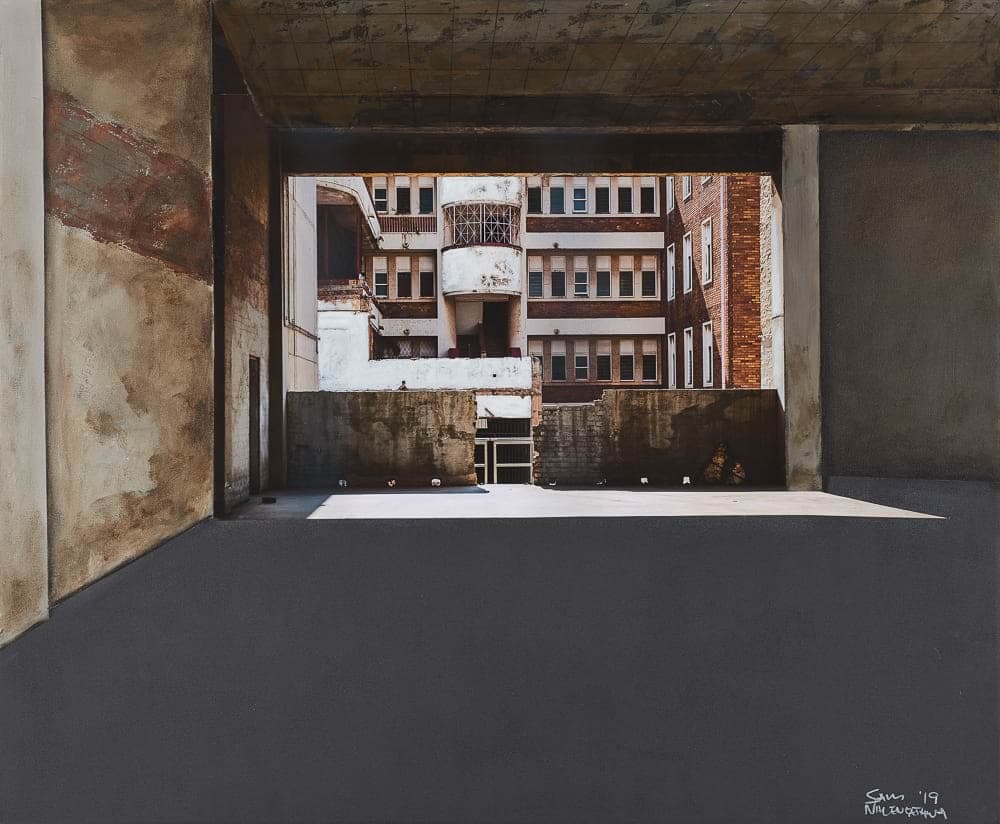
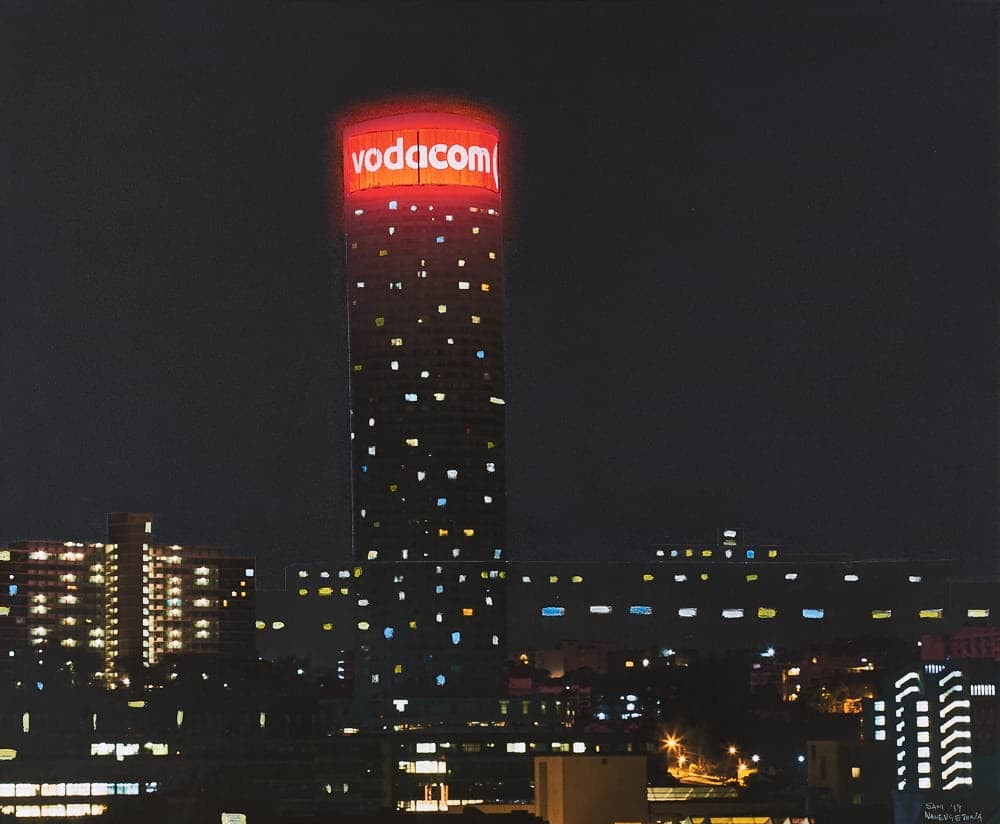
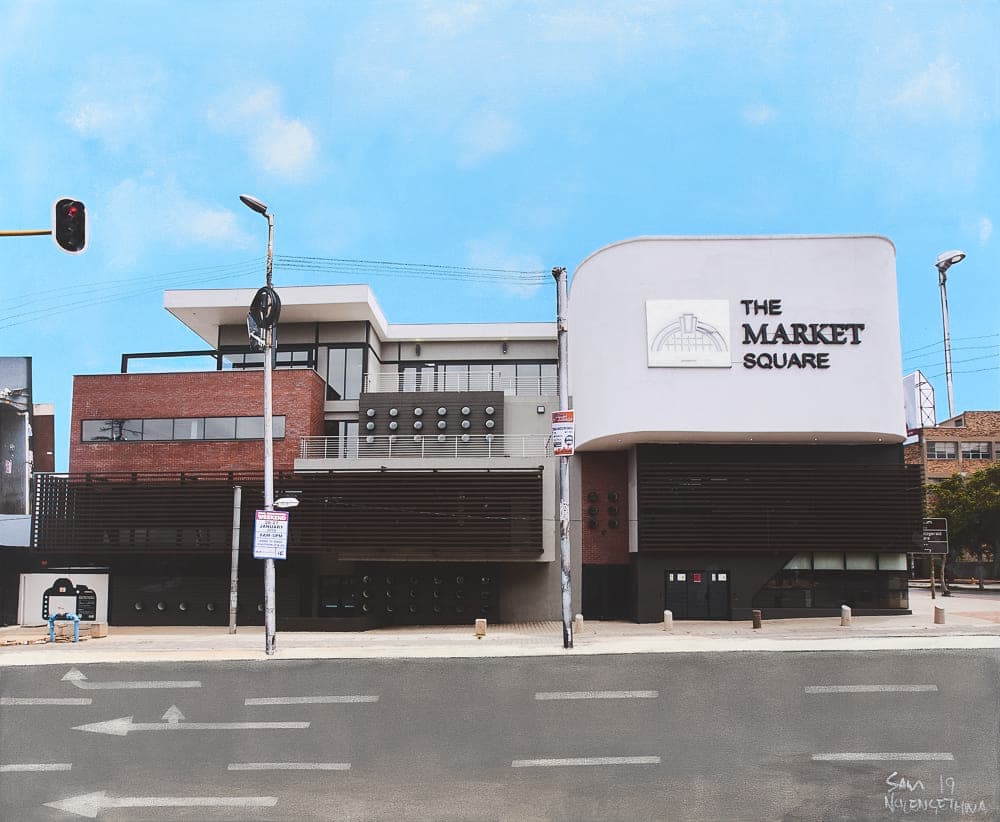
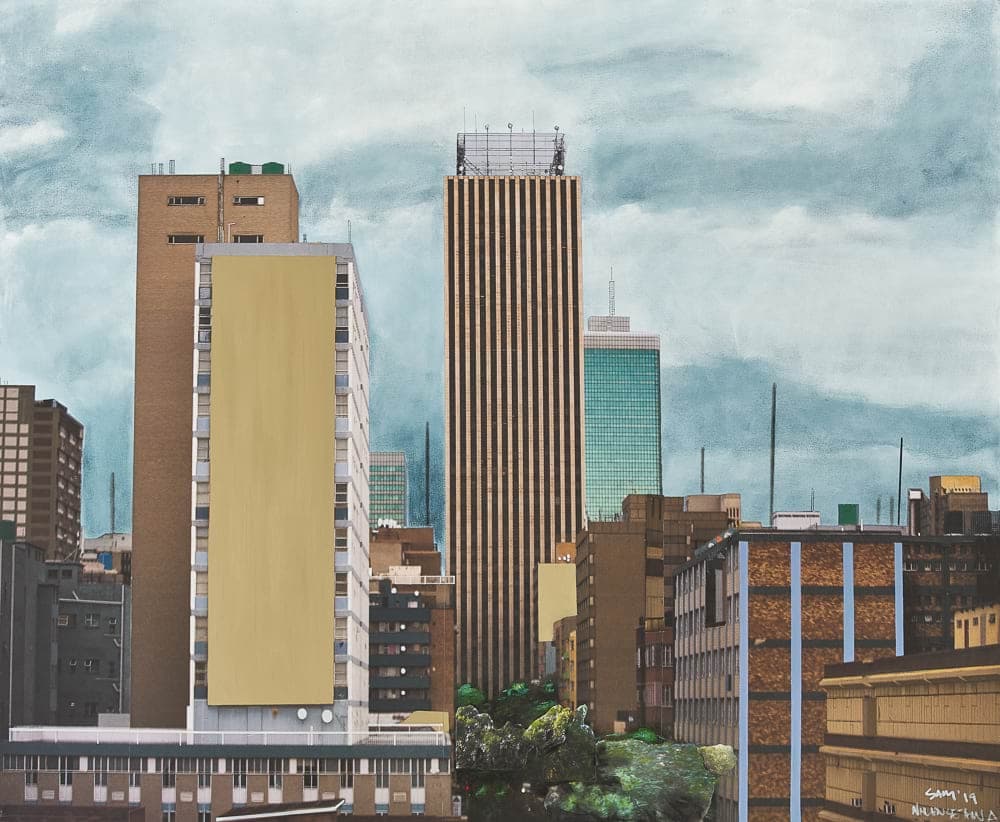
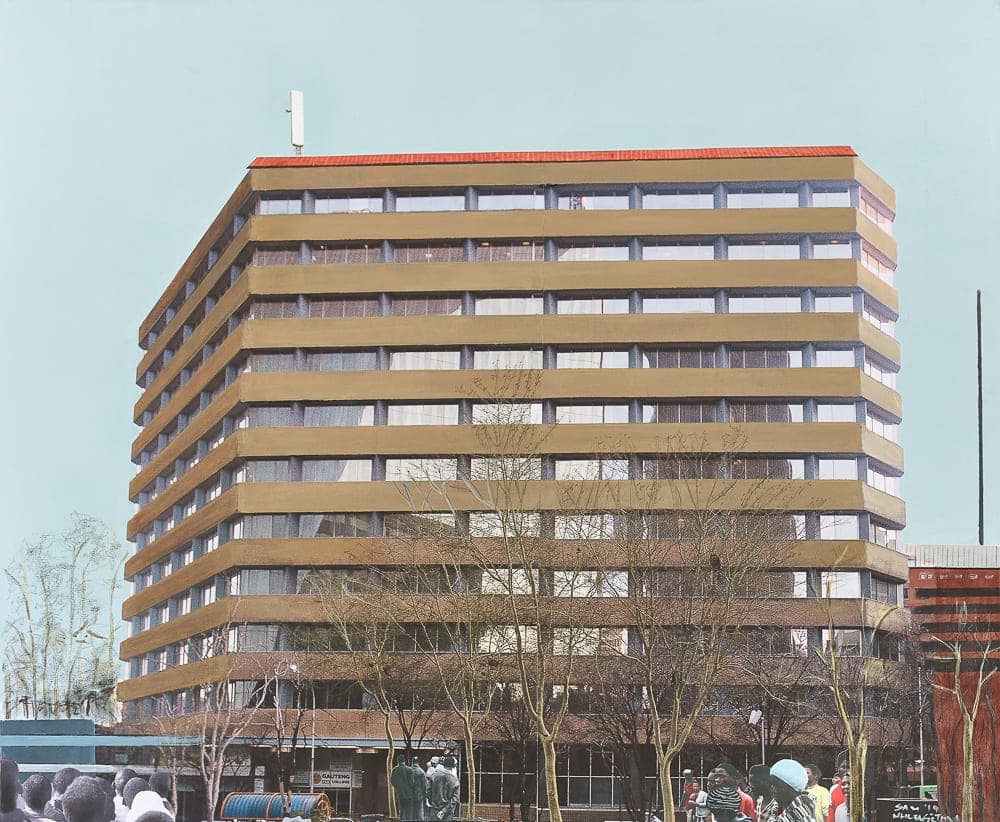
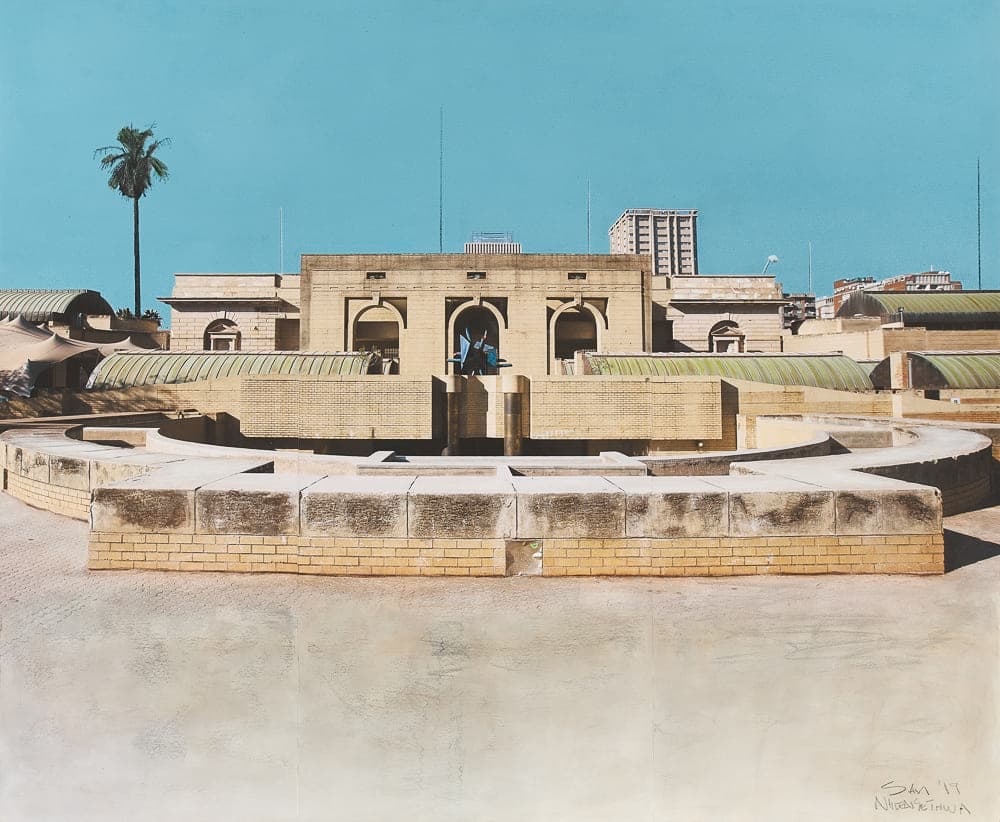
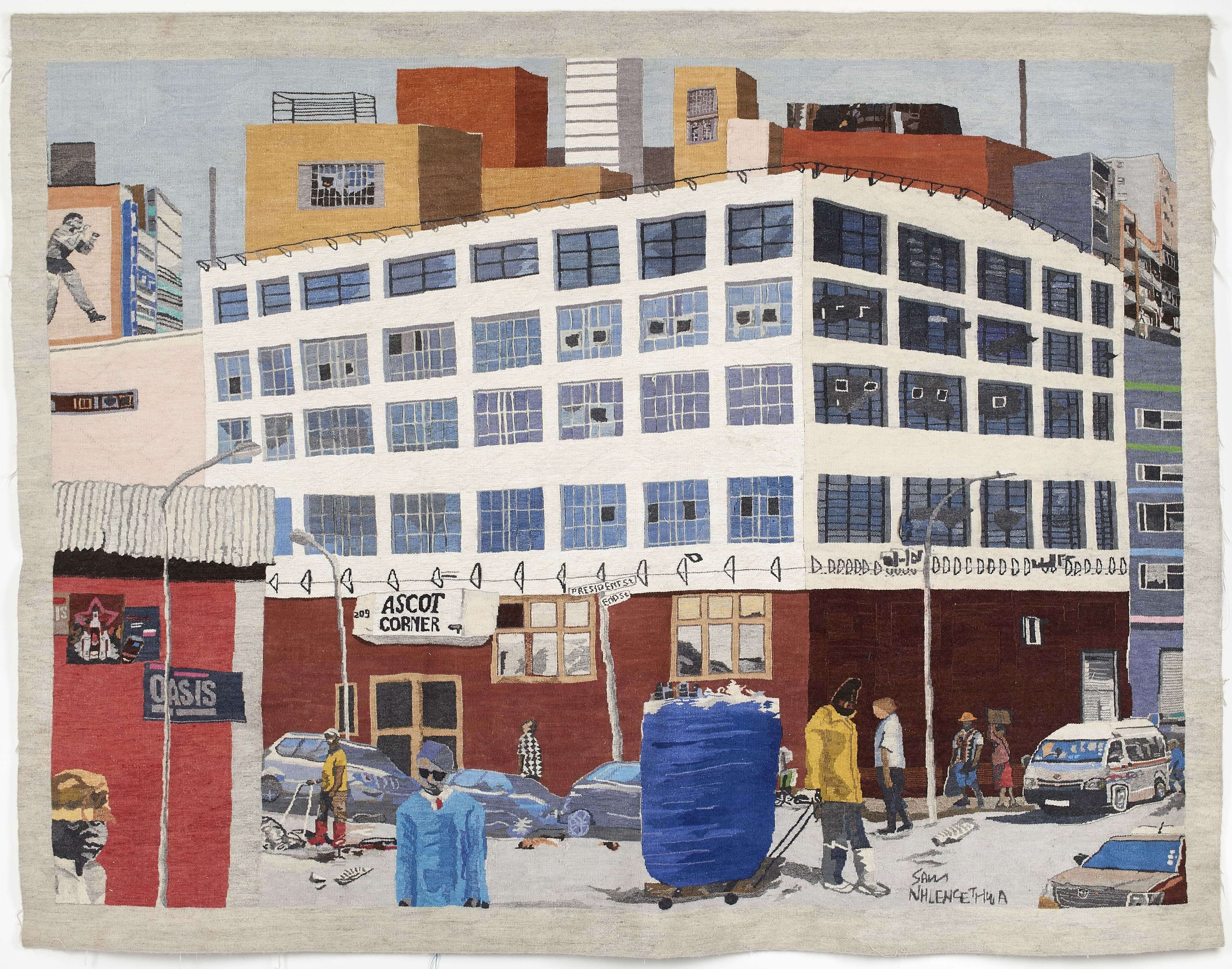
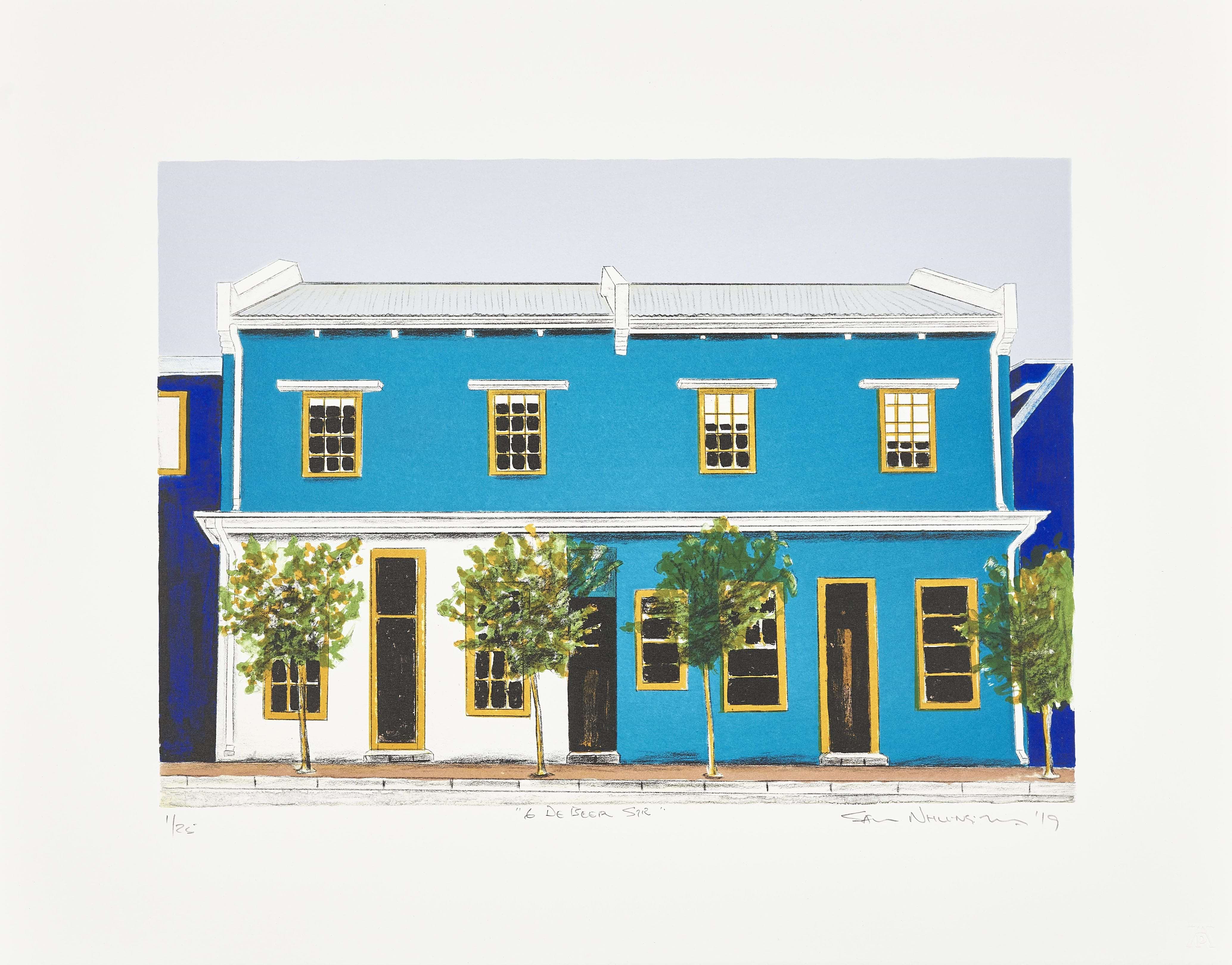
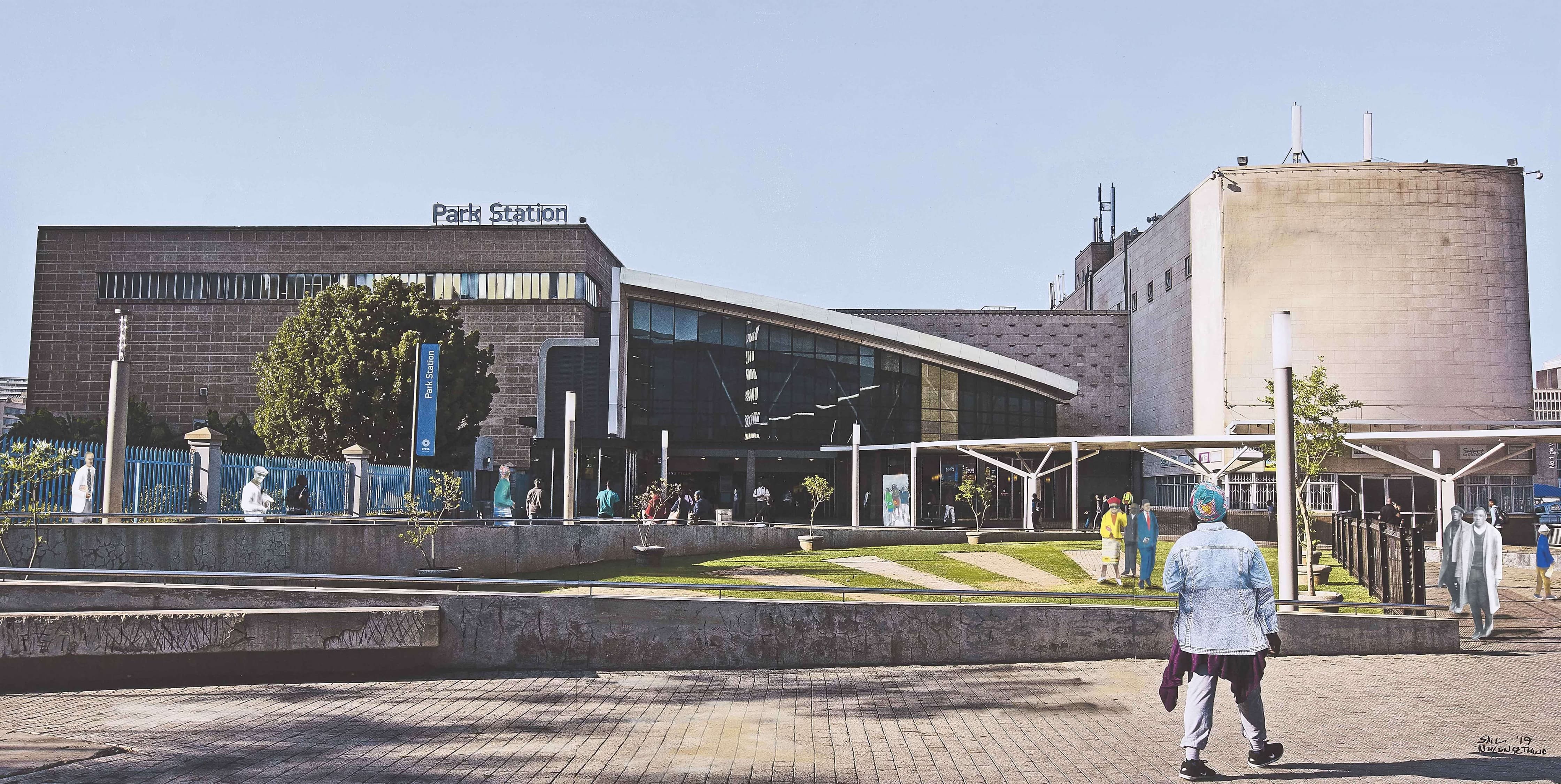
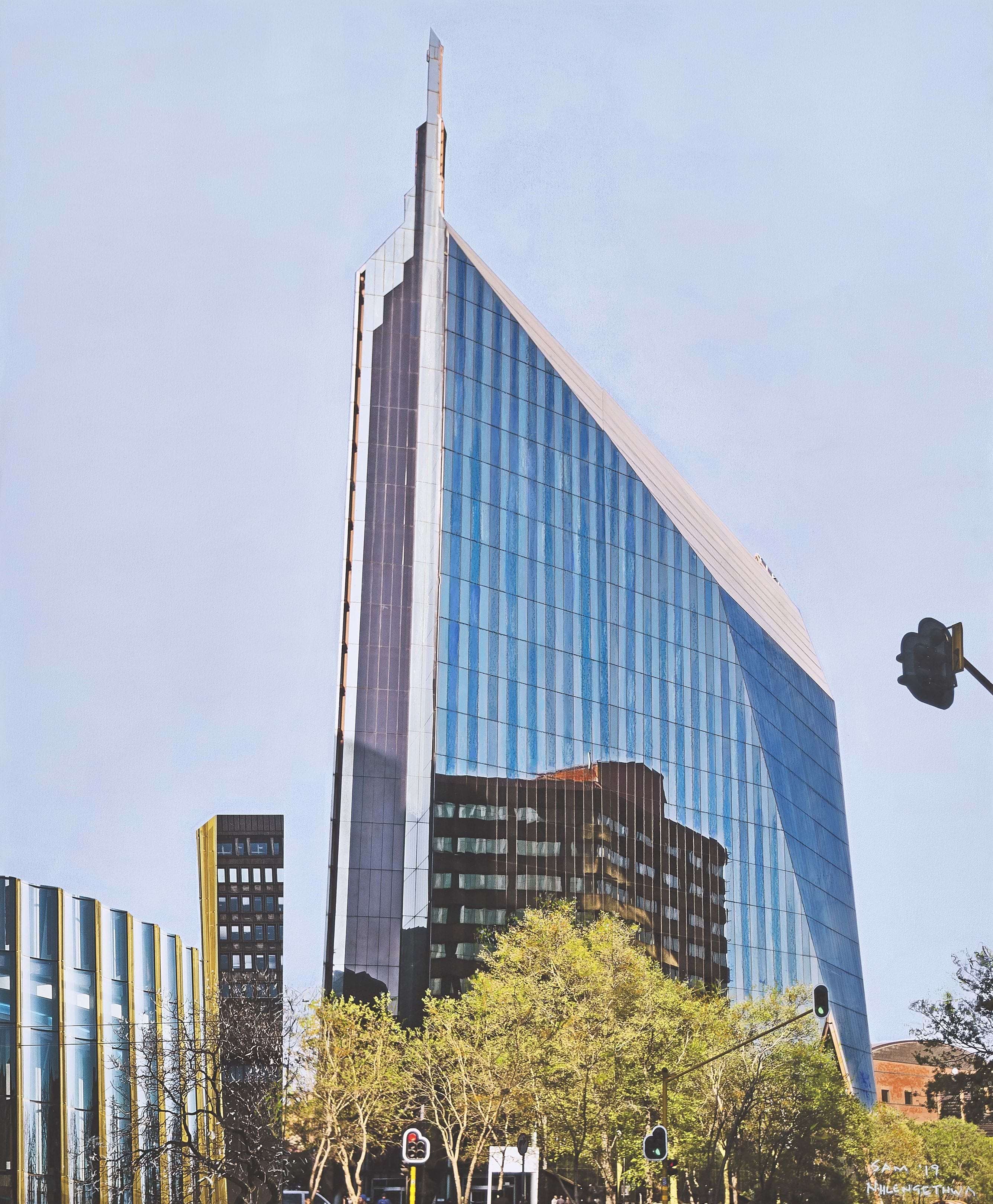
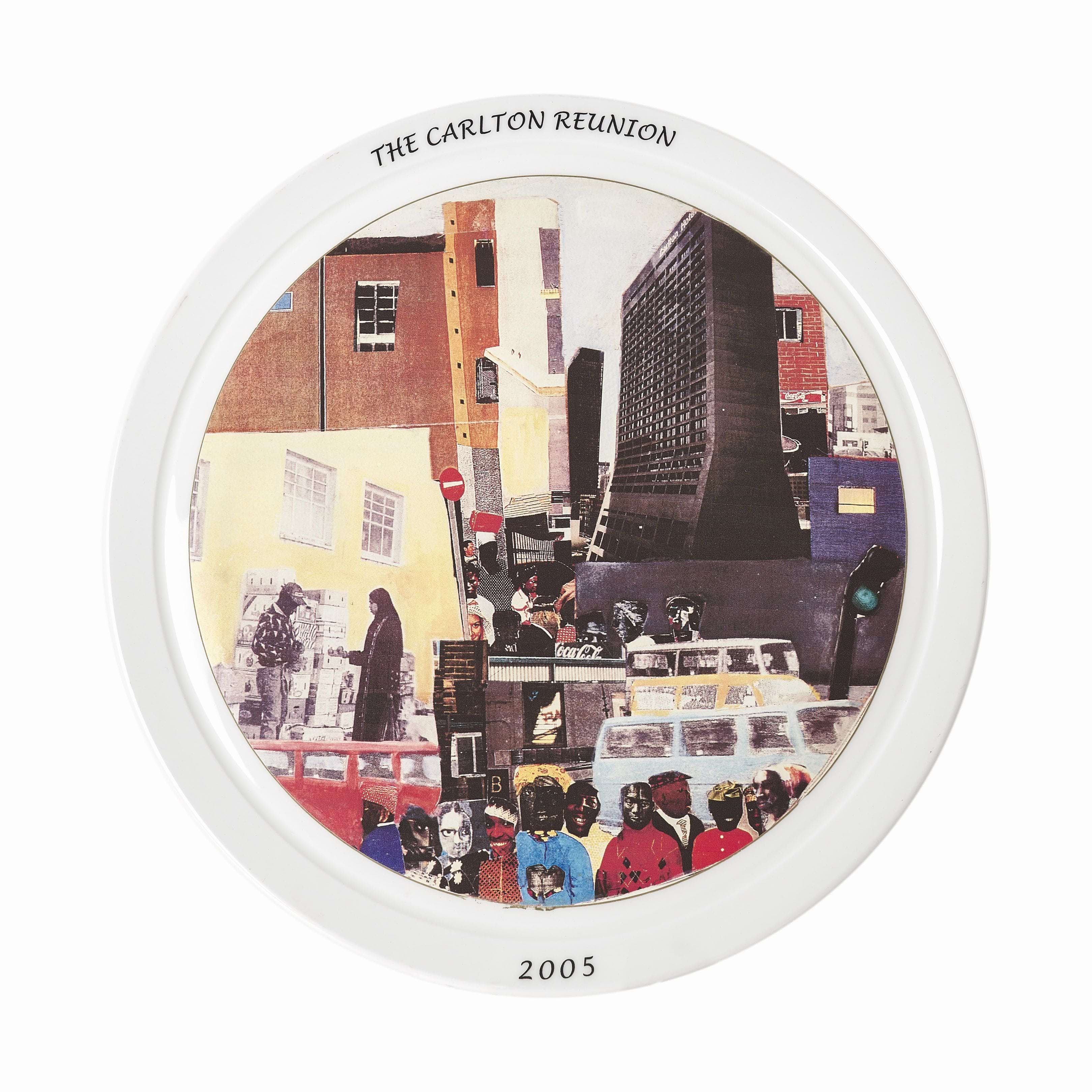
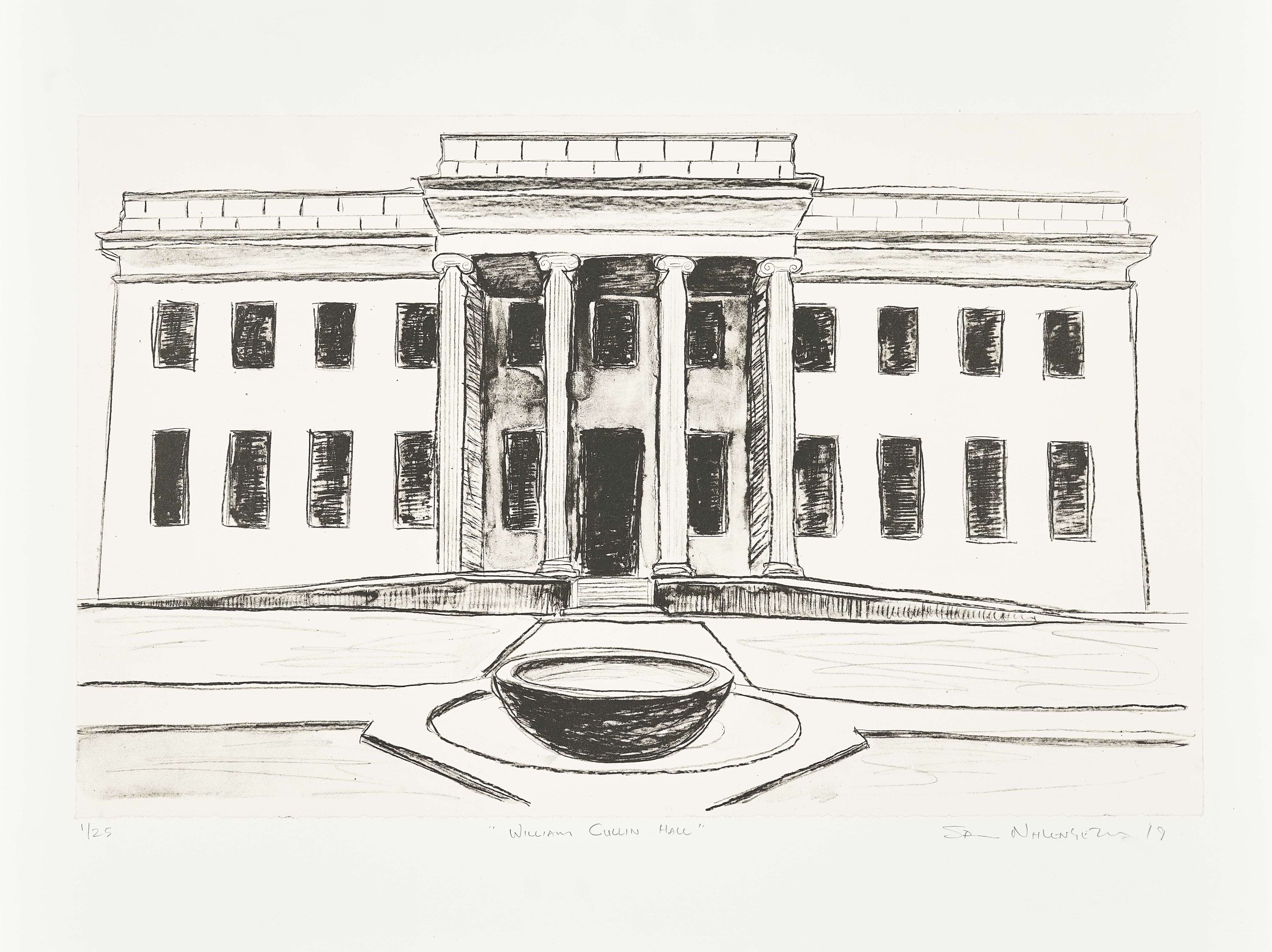
Despite living outside of the city to this day, Nhlengethwa has spent much of his life working in and around Joburg, occupying a workspace at the Bag Factory in Fordsburg for many years and more recently, a studio at August House in Doornfontein. With the series Joburg Selected, Nhlengethwa reflects on the sights and sounds he’s absorbed during this period, zeroing in on a series of buildings and places which for one reason or another occupy a place in his impression of the city.
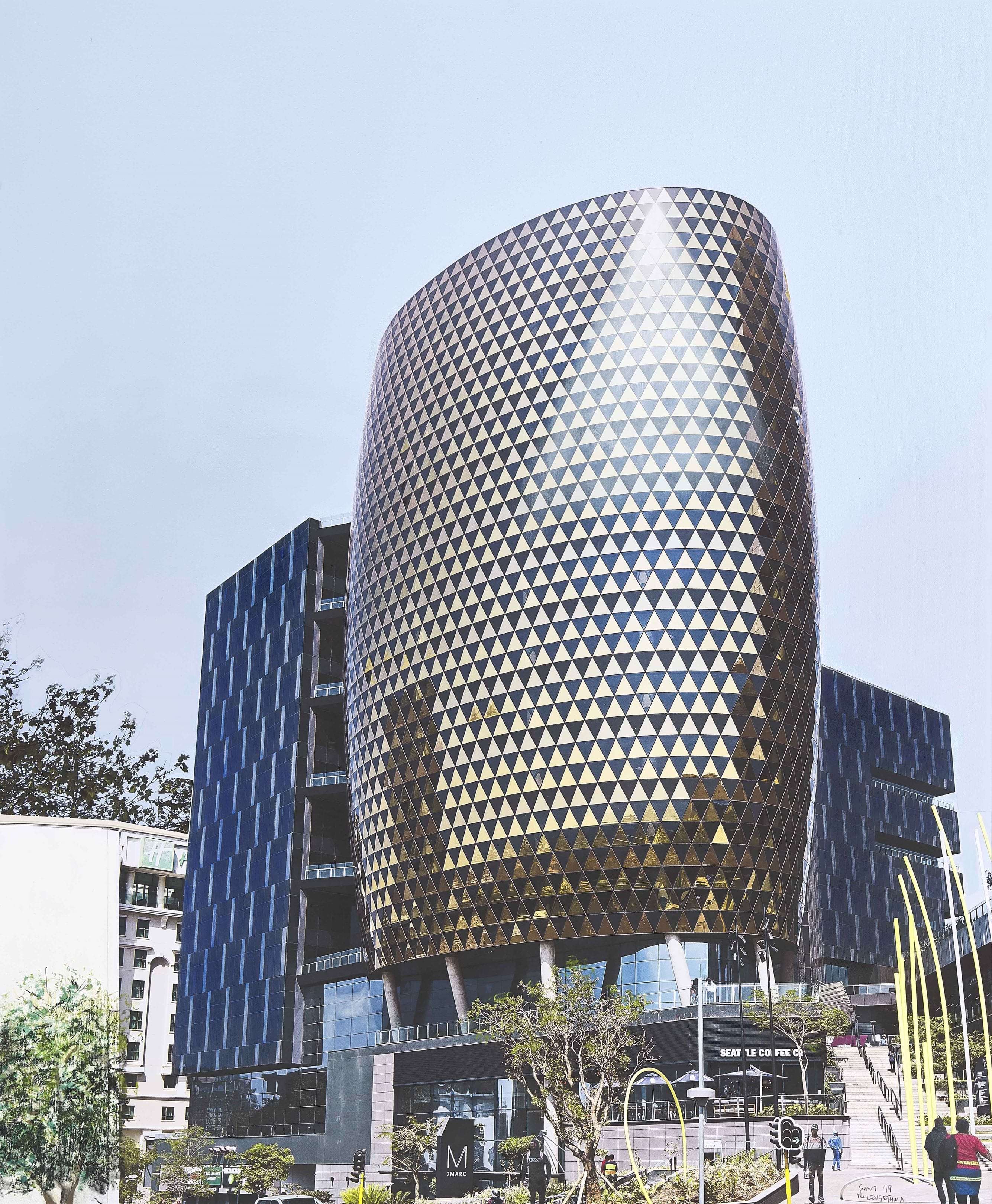
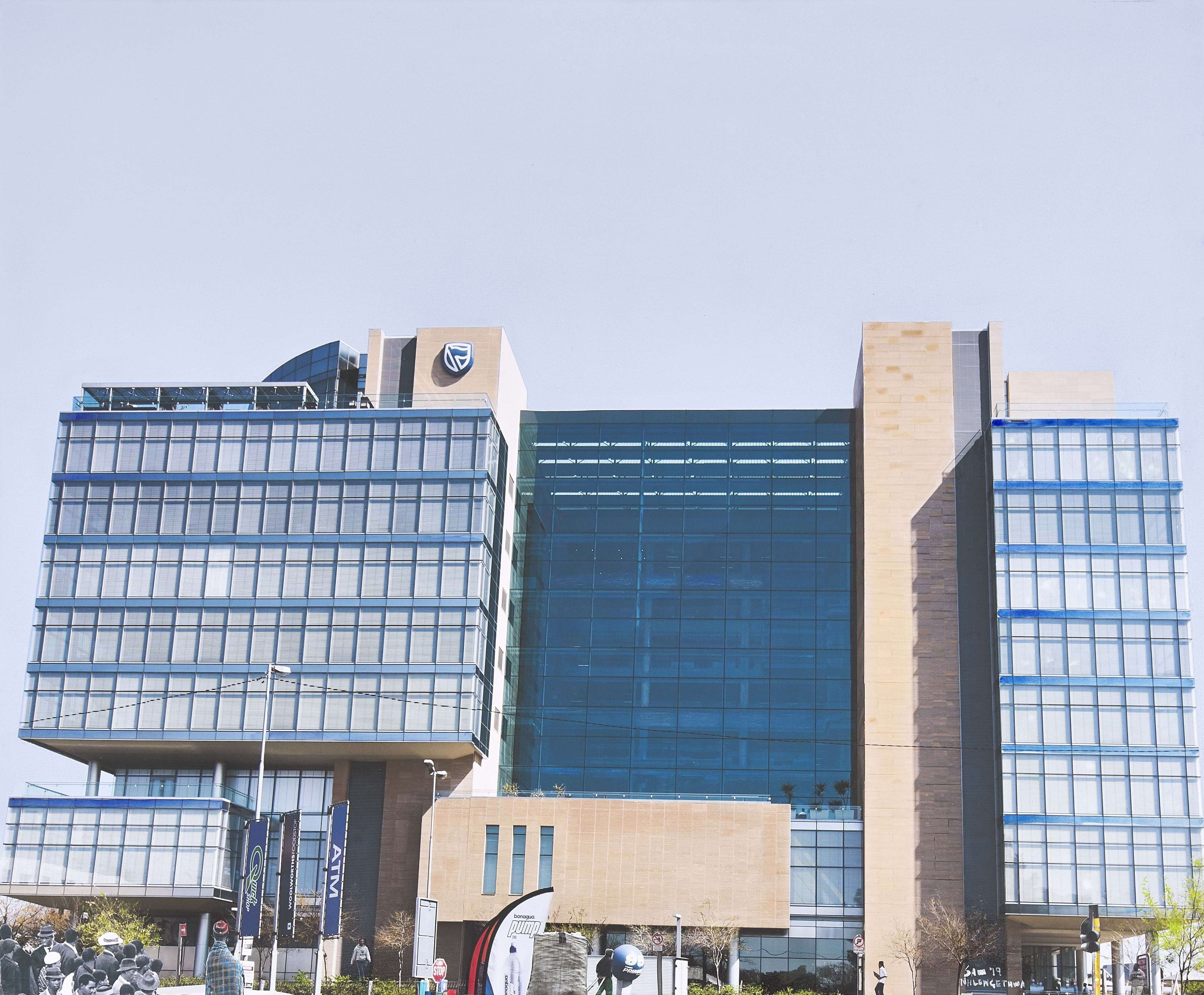
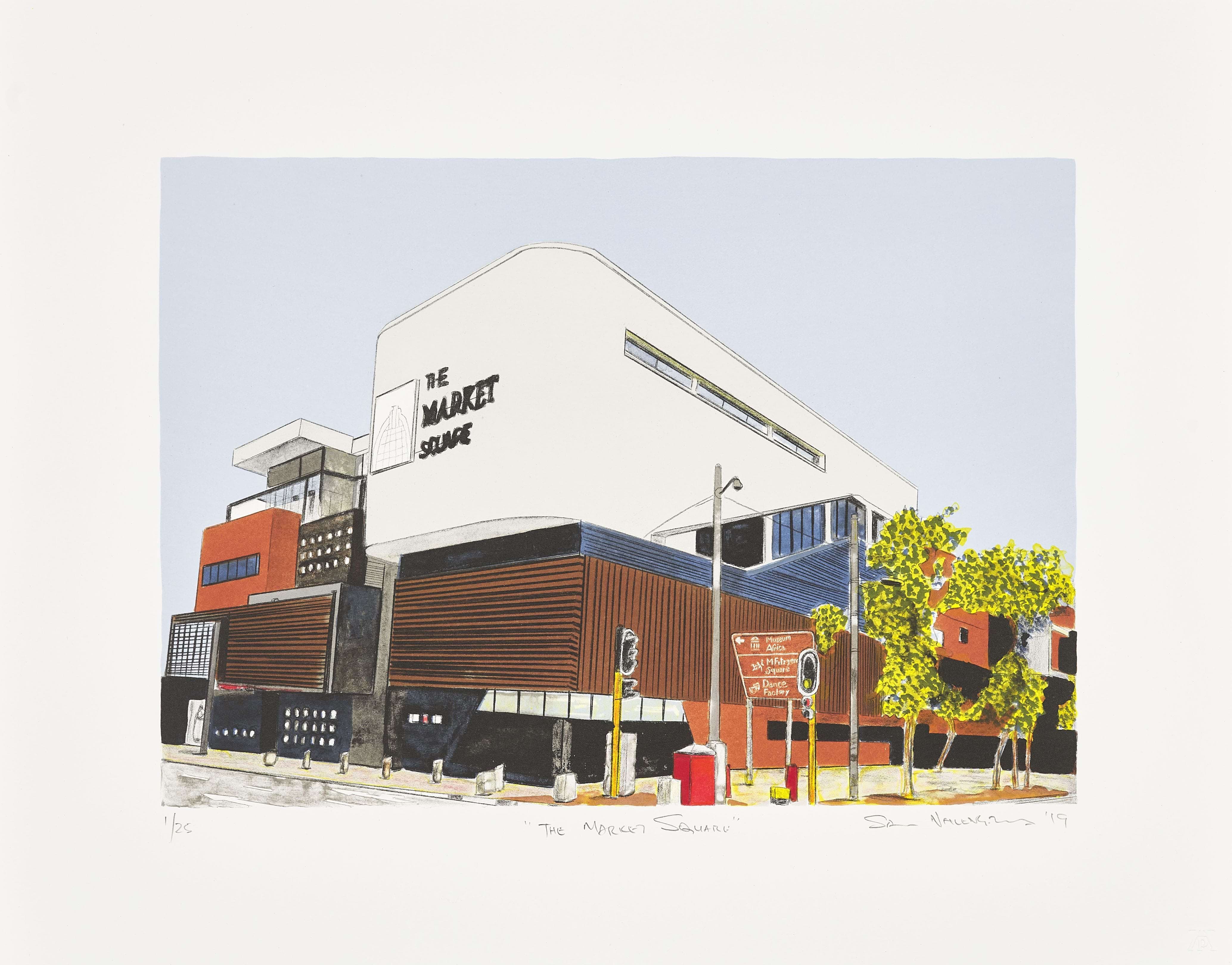
The human figures, typical of Nhlengethwa’s paintings and collage, are largely absent from this body of work. Instead, Joburg Selected is populated with a different cast of characters including the Market Theatre, Constitution Hill and Ponte City among others.
“The buildings become the persona here,” says Nhlengethwa. “They have their own stories and relate to our history in various ways.” By choosing to depict these specific sites Nhlengethwa views this work as an archive of the city and record of certain buildings that may not exist in the future. “When you look at what photographers like David Goldblatt did in the past, some of those structures no longer exist, but they’re on record. It’s about memory, more than just architecture”.
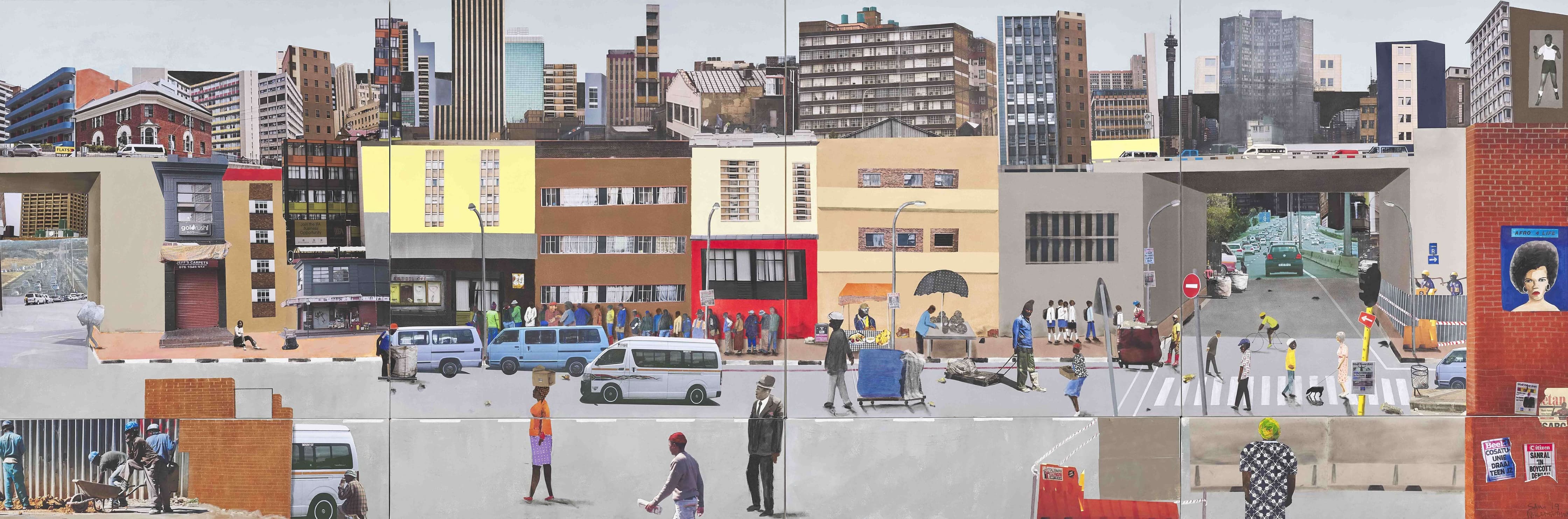
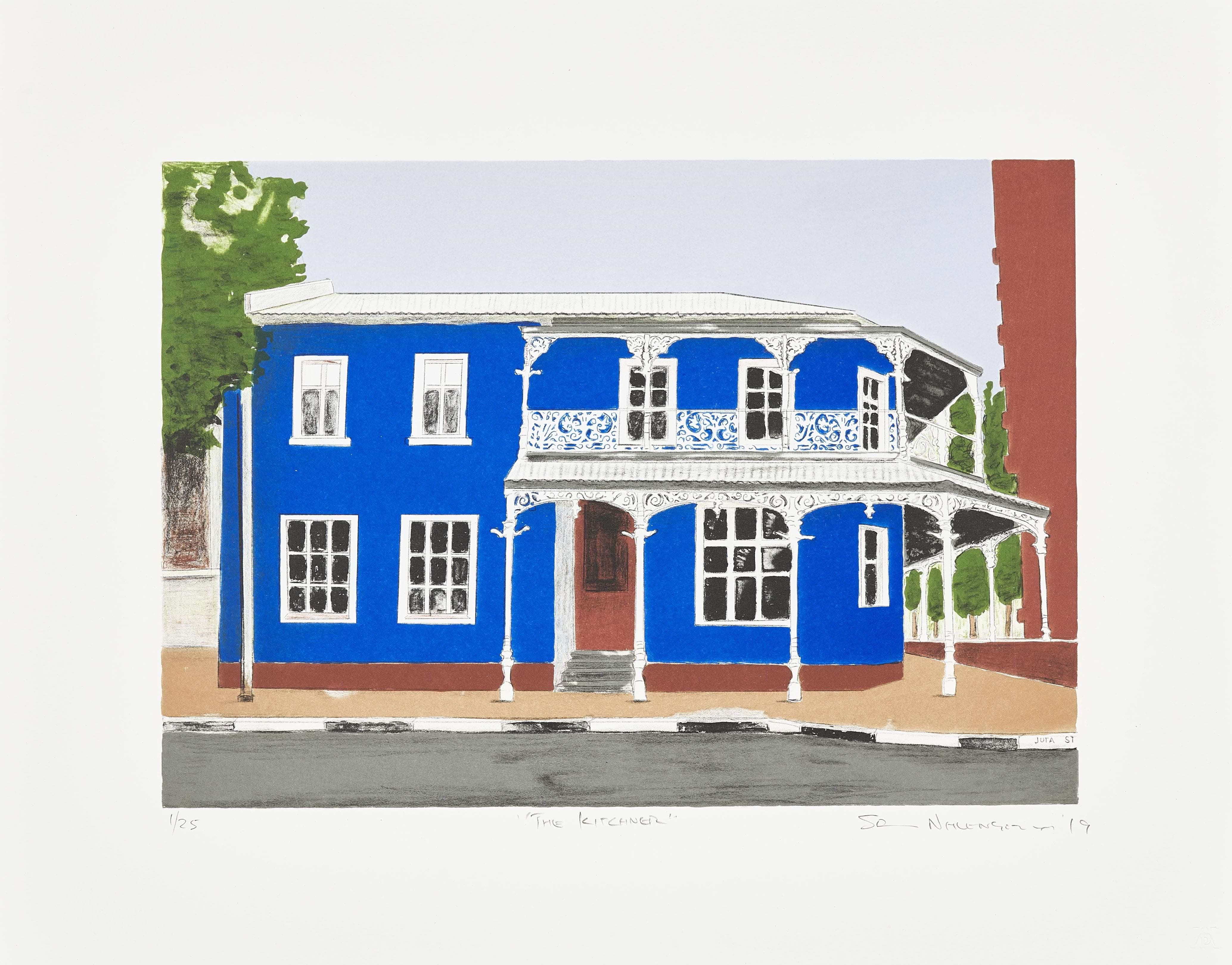
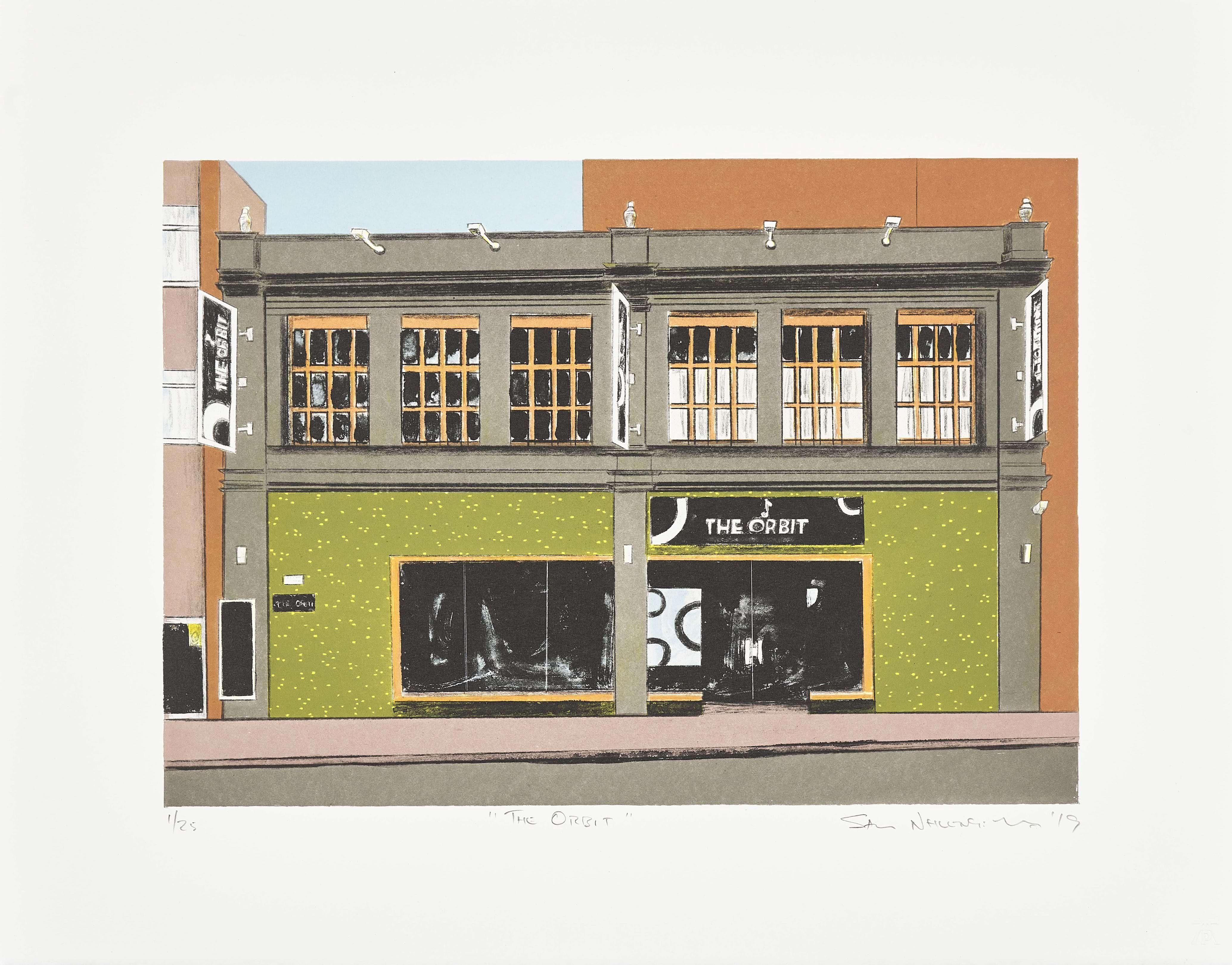
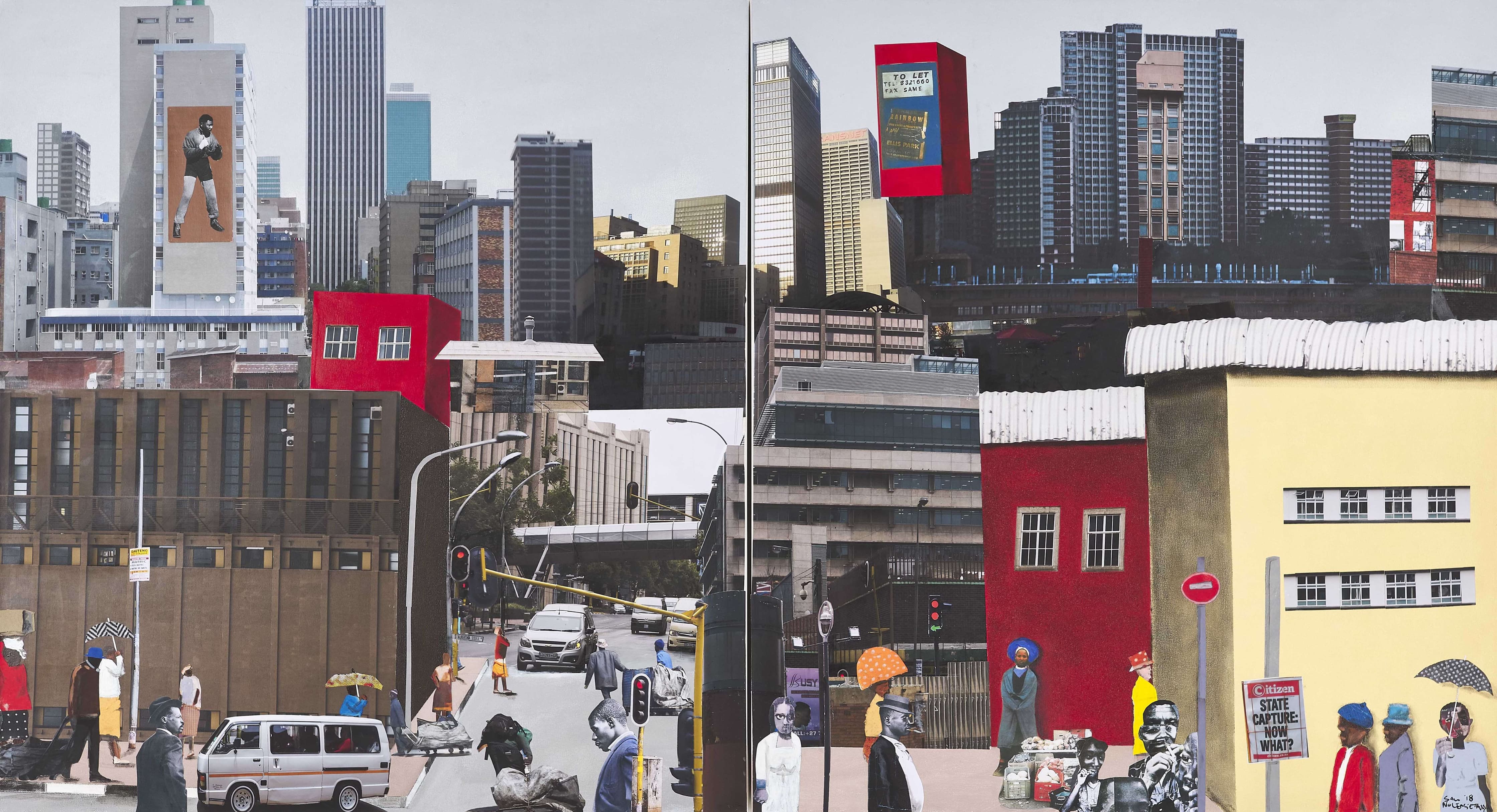
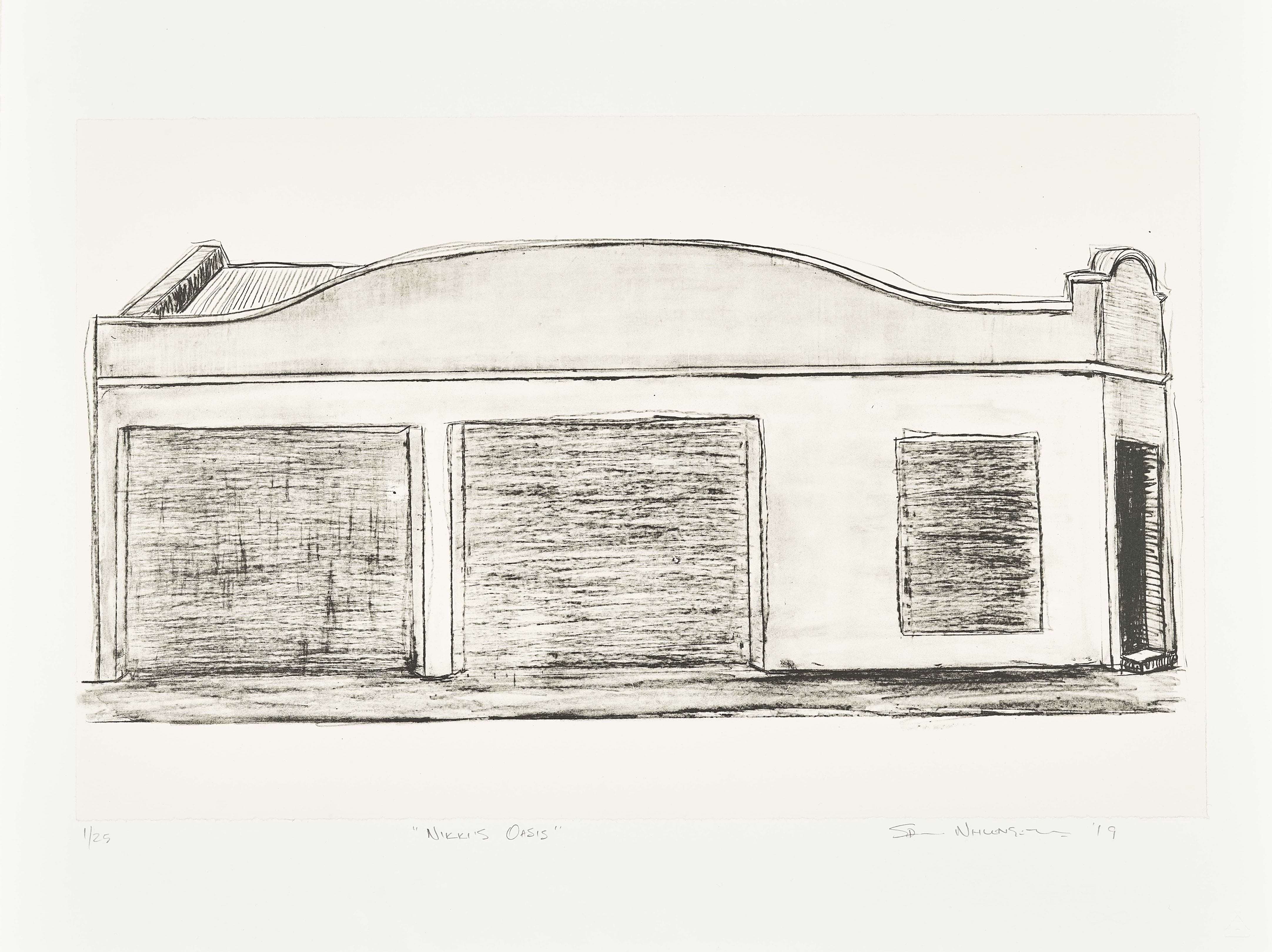
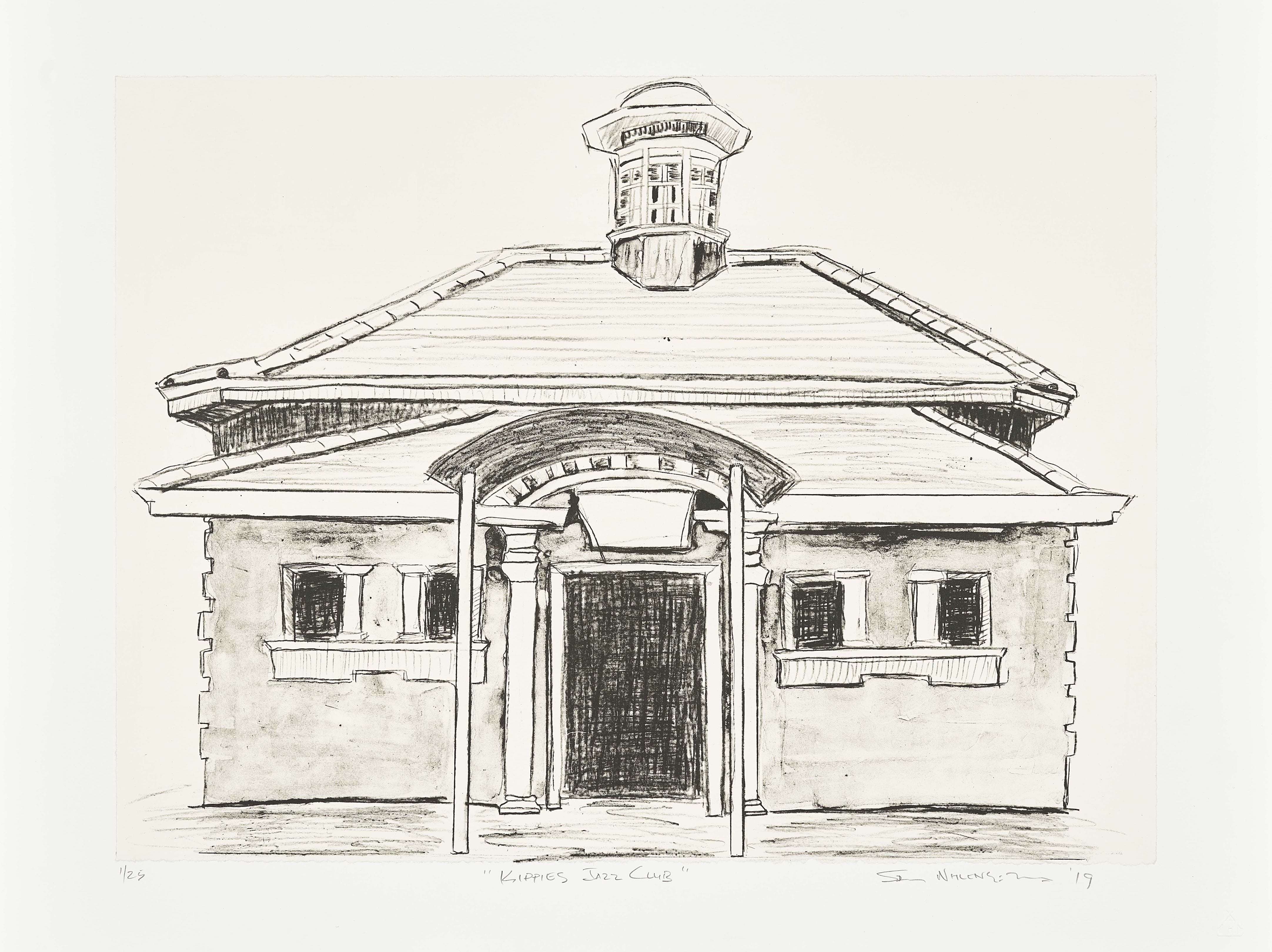
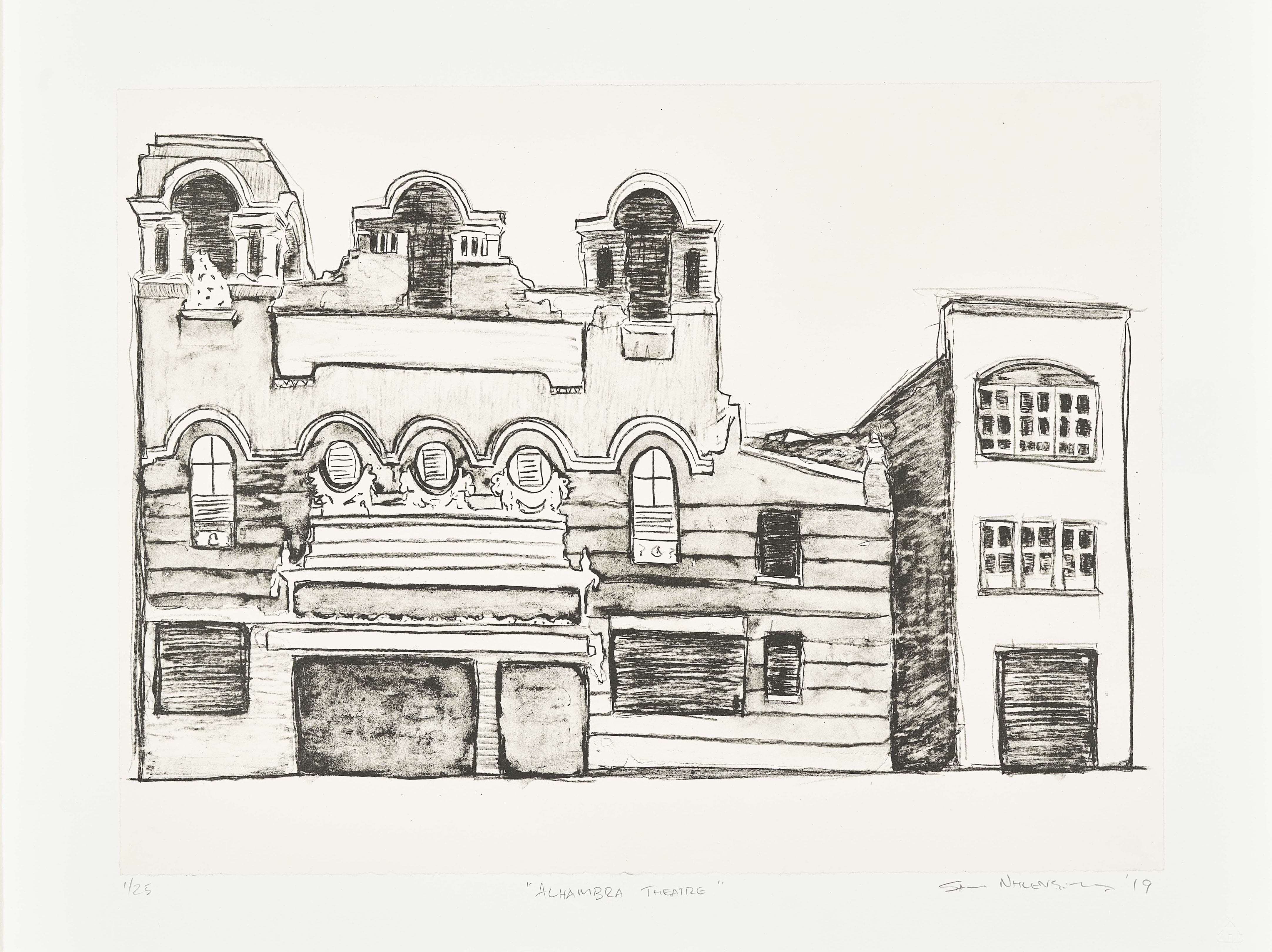
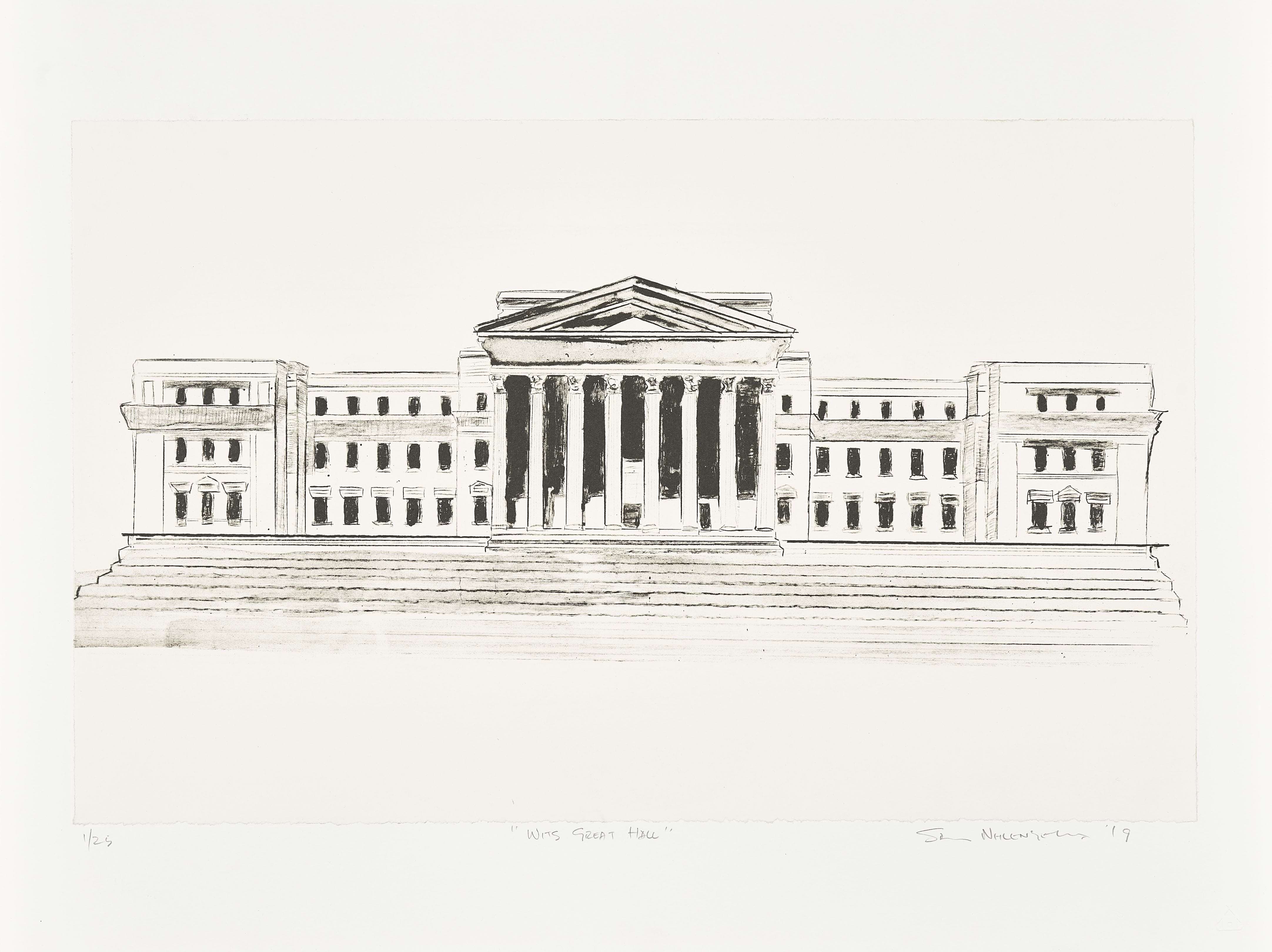
In addition to mixed media works on canvas, Joburg Selected features lithographic prints. Popular night spots such as Kitcheners and the now-defunct The Orbit are depicted in these scenes, “to remind people that we used to listen to good sounds there”. Another large work brings together several of the city’s iconic high rises into a made-up mise en scene and is titled, I Love Jozi, which for Nhlengethwa about “sums it up”.
Despite living outside of the city to this day, Nhlengethwa has spent much of his life working in and around Joburg, occupying a workspace at the Bag Factory in Fordsburg for many years and more recently, a studio at August House in Doornfontein. With the series Joburg Selected, Nhlengethwa reflects on the sights and sounds he’s absorbed during this period, zeroing in on a series of buildings and places which for one reason or another occupy a place in his impression of the city.
The human figures, typical of Nhlengethwa’s paintings and collage, are largely absent from this body of work. Instead, Joburg Selected is populated with a different cast of characters including the Market Theatre, Constitution Hill and Ponte City among others.
“The buildings become the persona here,” says Nhlengethwa. “They have their own stories and relate to our history in various ways.” By choosing to depict these specific sites Nhlengethwa views this work as an archive of the city and record of certain buildings that may not exist in the future. “When you look at what photographers like David Goldblatt did in the past, some of those structures no longer exist, but they’re on record. It’s about memory, more than just architecture”.
In addition to mixed media works on canvas, Joburg Selected features lithographic prints. Popular night spots such as Kitcheners and the now-defunct The Orbit are depicted in these scenes, “to remind people that we used to listen to good sounds there”. Another large work brings together several of the city’s iconic high rises into a made-up mise en scene and is titled, I Love Jozi, which for Nhlengethwa about “sums it up”.
Despite living outside of the city to this day, Nhlengethwa has spent much of his life working in and around Joburg, occupying a workspace at the Bag Factory in Fordsburg for many years and more recently, a studio at August House in Doornfontein. With the series Joburg Selected, Nhlengethwa reflects on the sights and sounds he’s absorbed during this period, zeroing in on a series of buildings and places which for one reason or another occupy a place in his impression of the city.
The human figures, typical of Nhlengethwa’s paintings and collage, are largely absent from this body of work. Instead, Joburg Selected is populated with a different cast of characters including the Market Theatre, Constitution Hill and Ponte City among others.
“The buildings become the persona here,” says Nhlengethwa. “They have their own stories and relate to our history in various ways.” By choosing to depict these specific sites Nhlengethwa views this work as an archive of the city and record of certain buildings that may not exist in the future. “When you look at what photographers like David Goldblatt did in the past, some of those structures no longer exist, but they’re on record. It’s about memory, more than just architecture”.
In addition to mixed media works on canvas, Joburg Selected features lithographic prints. Popular night spots such as Kitcheners and the now-defunct The Orbit are depicted in these scenes, “to remind people that we used to listen to good sounds there”. Another large work brings together several of the city’s iconic high rises into a made-up mise en scene and is titled, I Love Jozi, which for Nhlengethwa about “sums it up”.
Despite living outside of the city to this day, Nhlengethwa has spent much of his life working in and around Joburg, occupying a workspace at the Bag Factory in Fordsburg for many years and more recently, a studio at August House in Doornfontein. With the series Joburg Selected, Nhlengethwa reflects on the sights and sounds he’s absorbed during this period, zeroing in on a series of buildings and places which for one reason or another occupy a place in his impression of the city.
The human figures, typical of Nhlengethwa’s paintings and collage, are largely absent from this body of work. Instead, Joburg Selected is populated with a different cast of characters including the Market Theatre, Constitution Hill and Ponte City among others.
“The buildings become the persona here,” says Nhlengethwa. “They have their own stories and relate to our history in various ways.” By choosing to depict these specific sites Nhlengethwa views this work as an archive of the city and record of certain buildings that may not exist in the future. “When you look at what photographers like David Goldblatt did in the past, some of those structures no longer exist, but they’re on record. It’s about memory, more than just architecture”.
In addition to mixed media works on canvas, Joburg Selected features lithographic prints. Popular night spots such as Kitcheners and the now-defunct The Orbit are depicted in these scenes, “to remind people that we used to listen to good sounds there”. Another large work brings together several of the city’s iconic high rises into a made-up mise en scene and is titled, I Love Jozi, which for Nhlengethwa about “sums it up”.
Despite living outside of the city to this day, Nhlengethwa has spent much of his life working in and around Joburg, occupying a workspace at the Bag Factory in Fordsburg for many years and more recently, a studio at August House in Doornfontein. With the series Joburg Selected, Nhlengethwa reflects on the sights and sounds he’s absorbed during this period, zeroing in on a series of buildings and places which for one reason or another occupy a place in his impression of the city.
The human figures, typical of Nhlengethwa’s paintings and collage, are largely absent from this body of work. Instead, Joburg Selected is populated with a different cast of characters including the Market Theatre, Constitution Hill and Ponte City among others.
“The buildings become the persona here,” says Nhlengethwa. “They have their own stories and relate to our history in various ways.” By choosing to depict these specific sites Nhlengethwa views this work as an archive of the city and record of certain buildings that may not exist in the future. “When you look at what photographers like David Goldblatt did in the past, some of those structures no longer exist, but they’re on record. It’s about memory, more than just architecture”.
In addition to mixed media works on canvas, Joburg Selected features lithographic prints. Popular night spots such as Kitcheners and the now-defunct The Orbit are depicted in these scenes, “to remind people that we used to listen to good sounds there”. Another large work brings together several of the city’s iconic high rises into a made-up mise en scene and is titled, I Love Jozi, which for Nhlengethwa about “sums it up”.
Despite living outside of the city to this day, Nhlengethwa has spent much of his life working in and around Joburg, occupying a workspace at the Bag Factory in Fordsburg for many years and more recently, a studio at August House in Doornfontein. With the series Joburg Selected, Nhlengethwa reflects on the sights and sounds he’s absorbed during this period, zeroing in on a series of buildings and places which for one reason or another occupy a place in his impression of the city.
The human figures, typical of Nhlengethwa’s paintings and collage, are largely absent from this body of work. Instead, Joburg Selected is populated with a different cast of characters including the Market Theatre, Constitution Hill and Ponte City among others.
“The buildings become the persona here,” says Nhlengethwa. “They have their own stories and relate to our history in various ways.” By choosing to depict these specific sites Nhlengethwa views this work as an archive of the city and record of certain buildings that may not exist in the future. “When you look at what photographers like David Goldblatt did in the past, some of those structures no longer exist, but they’re on record. It’s about memory, more than just architecture”.
In addition to mixed media works on canvas, Joburg Selected features lithographic prints. Popular night spots such as Kitcheners and the now-defunct The Orbit are depicted in these scenes, “to remind people that we used to listen to good sounds there”. Another large work brings together several of the city’s iconic high rises into a made-up mise en scene and is titled, I Love Jozi, which for Nhlengethwa about “sums it up”.
Despite living outside of the city to this day, Nhlengethwa has spent much of his life working in and around Joburg, occupying a workspace at the Bag Factory in Fordsburg for many years and more recently, a studio at August House in Doornfontein. With the series Joburg Selected, Nhlengethwa reflects on the sights and sounds he’s absorbed during this period, zeroing in on a series of buildings and places which for one reason or another occupy a place in his impression of the city.
The human figures, typical of Nhlengethwa’s paintings and collage, are largely absent from this body of work. Instead, Joburg Selected is populated with a different cast of characters including the Market Theatre, Constitution Hill and Ponte City among others.
“The buildings become the persona here,” says Nhlengethwa. “They have their own stories and relate to our history in various ways.” By choosing to depict these specific sites Nhlengethwa views this work as an archive of the city and record of certain buildings that may not exist in the future. “When you look at what photographers like David Goldblatt did in the past, some of those structures no longer exist, but they’re on record. It’s about memory, more than just architecture”.
In addition to mixed media works on canvas, Joburg Selected features lithographic prints. Popular night spots such as Kitcheners and the now-defunct The Orbit are depicted in these scenes, “to remind people that we used to listen to good sounds there”. Another large work brings together several of the city’s iconic high rises into a made-up mise en scene and is titled, I Love Jozi, which for Nhlengethwa about “sums it up”.
Despite living outside of the city to this day, Nhlengethwa has spent much of his life working in and around Joburg, occupying a workspace at the Bag Factory in Fordsburg for many years and more recently, a studio at August House in Doornfontein. With the series 'Joburg Selected', Nhlengethwa reflects on the sights and sounds he’s absorbed during this period, zeroing in on a series of buildings and places which for one reason or another occupy a place in his impression of the city.
The human figures, typical of Nhlengethwa’s paintings and collage, are largely absent from this body of work. Instead, 'Joburg Selected' is populated with a different cast of characters including the Market Theatre, Constitution Hill and Ponte City among others.
“The buildings become the persona here,” says Nhlengethwa. “They have their own stories and relate to our history in various ways.” By choosing to depict these specific sites Nhlengethwa views this work as an archive of the city and record of certain buildings that may not exist in the future. “When you look at what photographers like David Goldblatt did in the past, some of those structures no longer exist, but they’re on record. It’s about memory, more than just architecture”.
In addition to mixed media works on canvas, 'Joburg Selected' features lithographic prints. Popular night spots such as Kitcheners and the now-defunct The Orbit are depicted in these scenes, “to remind people that we used to listen to good sounds there”. Another large work brings together several of the city’s iconic high rises into a made-up mise en scene and is titled, I Love Jozi, which for Nhlengethwa about “sums it up”.
Both Romare Bearden’s practice and Ernest Cole’s photojournalism sought to tell a story of African-American, pre and post Civil rights era, and South African life under apartheid, respectively. According to Nhlengethwa, “Cole used photography to tell the story of the brutal life and suffering of our people. In his images you seldom see people happy. He dealt with hard labour, the bad conditions in hospitals, everything that made us suffer under apartheid. Here was someone using a different medium to express the environment within South Africa.”
Nhlengethwa first came to learn of Bearden’s work through Bill Ainslie, a teacher, mentor and seminal figure in establishing various art institutions in South Africa. “I was just experimenting”, says Nhlengethwa. “I’ve never seen anyone else around me doing collage… and when Bill Ainslie introduced me to Bearden’s works, I was like a kid in a candy store.”
Nhlengethwa recalls being “overwhelmed by the touch and the expertise” of Bearden’s collages. This encounter with the work of an established black collage artist, early in his career, gave Nhlengethwa’s own early experimentation with collage a vital form of validation.
The canvas ultimately becomes a meeting place for the work of all three artists. Nhlegethwa sets the scene with a cityscape that contains elements that are unmistakably Johannesburg, but fragmented enough to resemble any major city in the world. Indeed for Nhlegethwa, the scenes recall Bearden’s depictions of New York City blocks. The work includes images from Coles seminal photo book “The House of Bondage” and figures inspired by Bearden’s “Prevalence of Ritual” catalogue from 1971, which Nhlengethwa first saw when visiting the Studio Museum in Harlem in 1991.