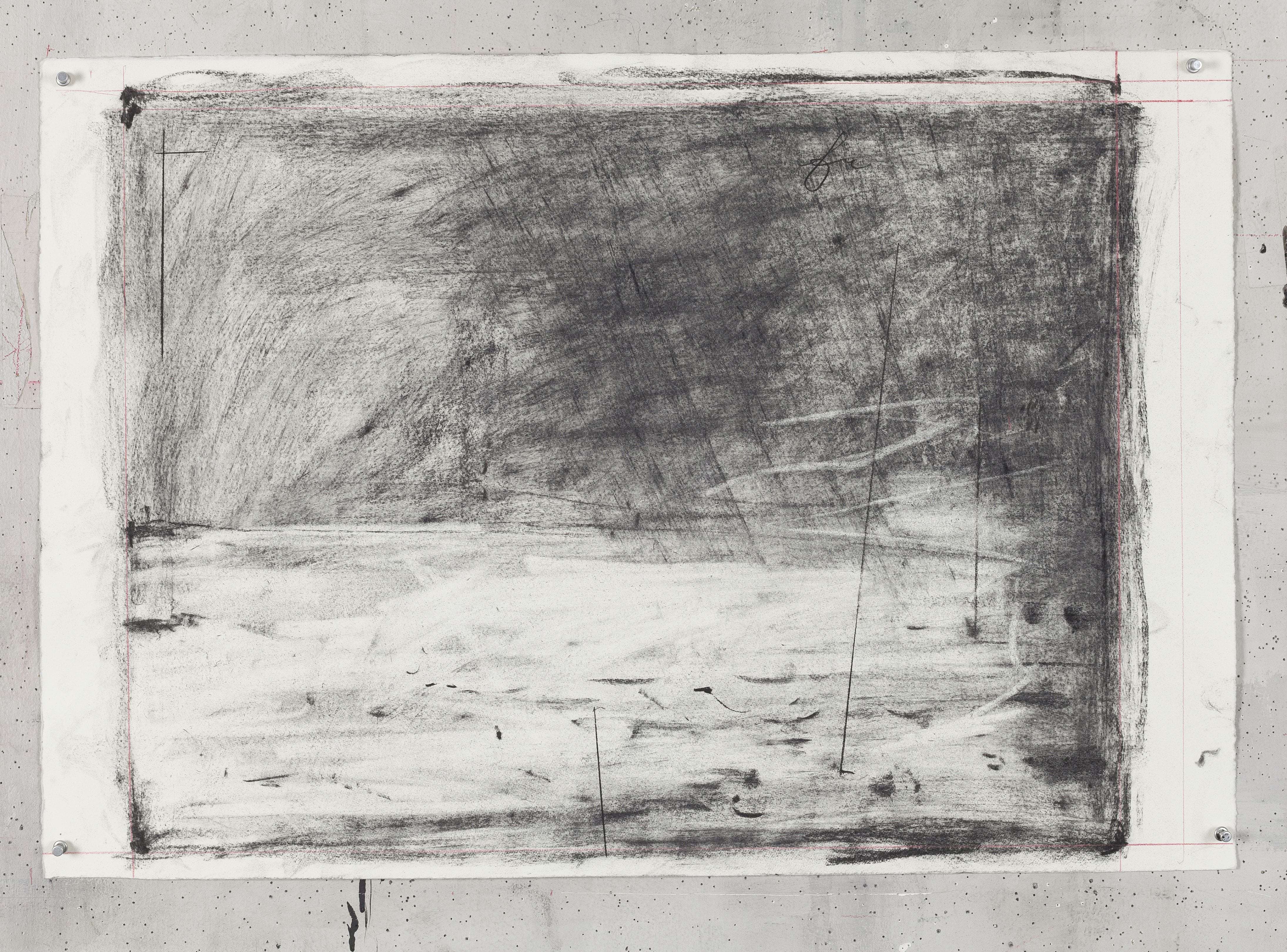
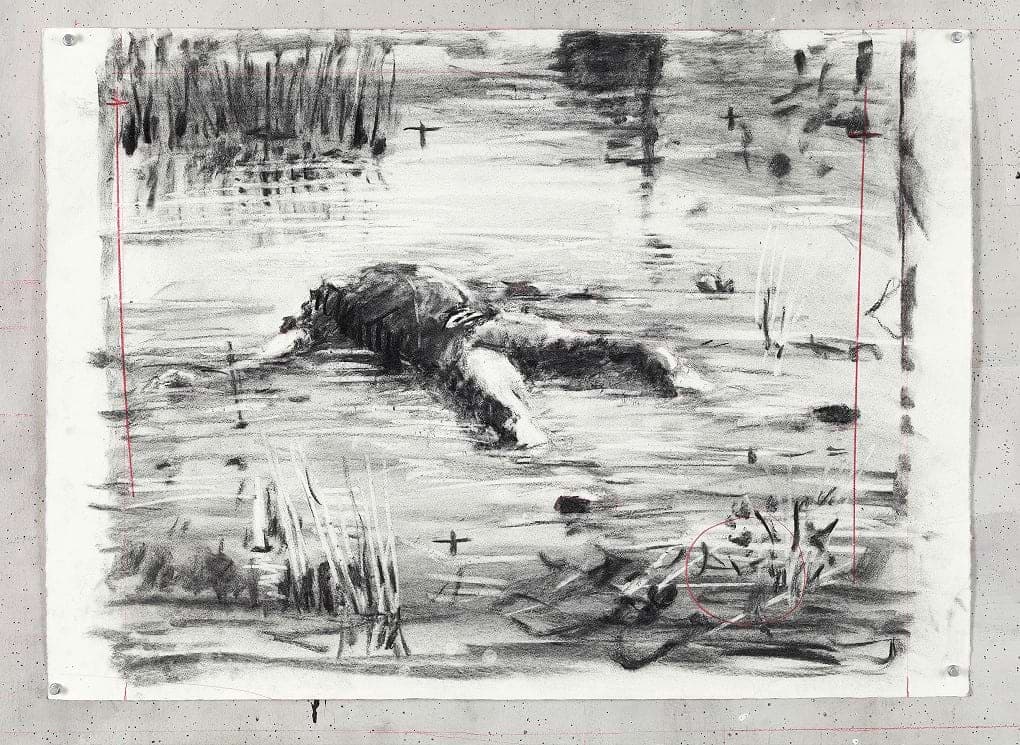
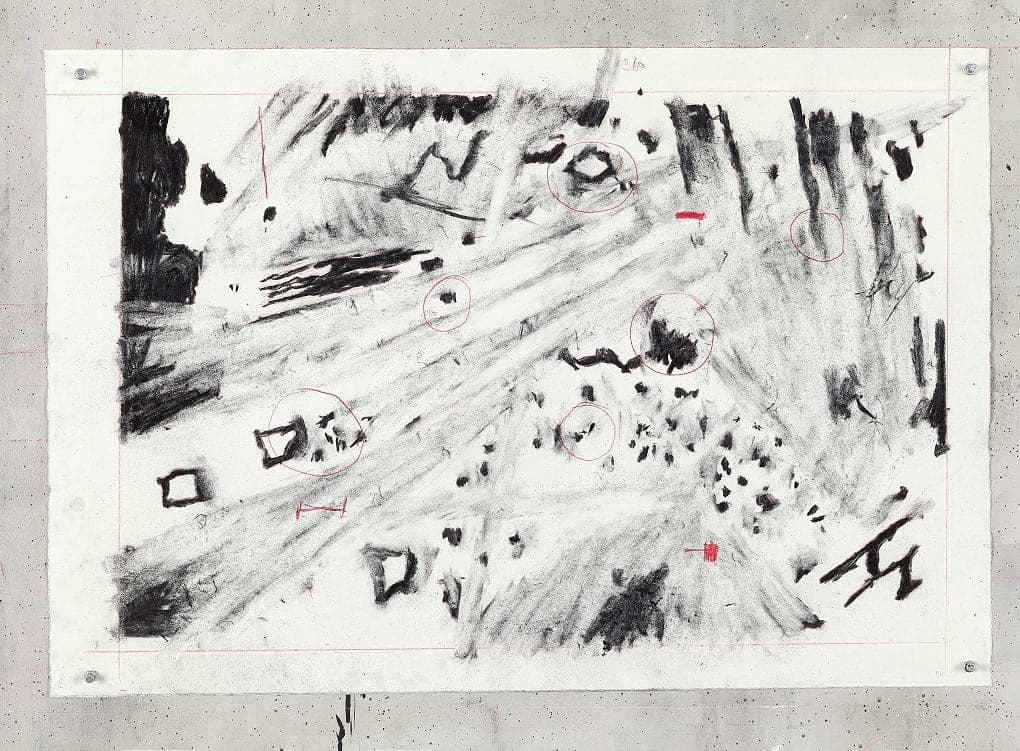
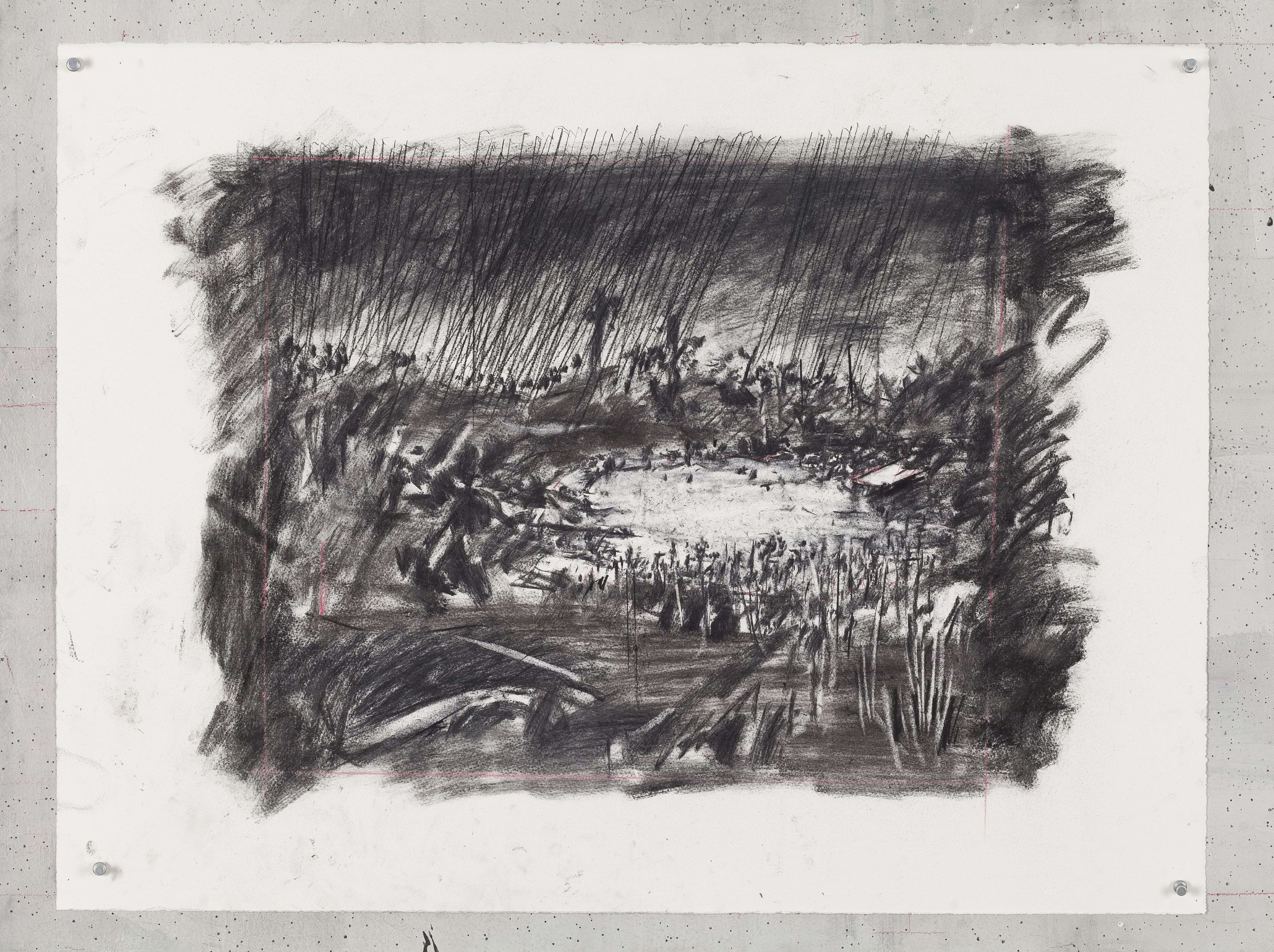
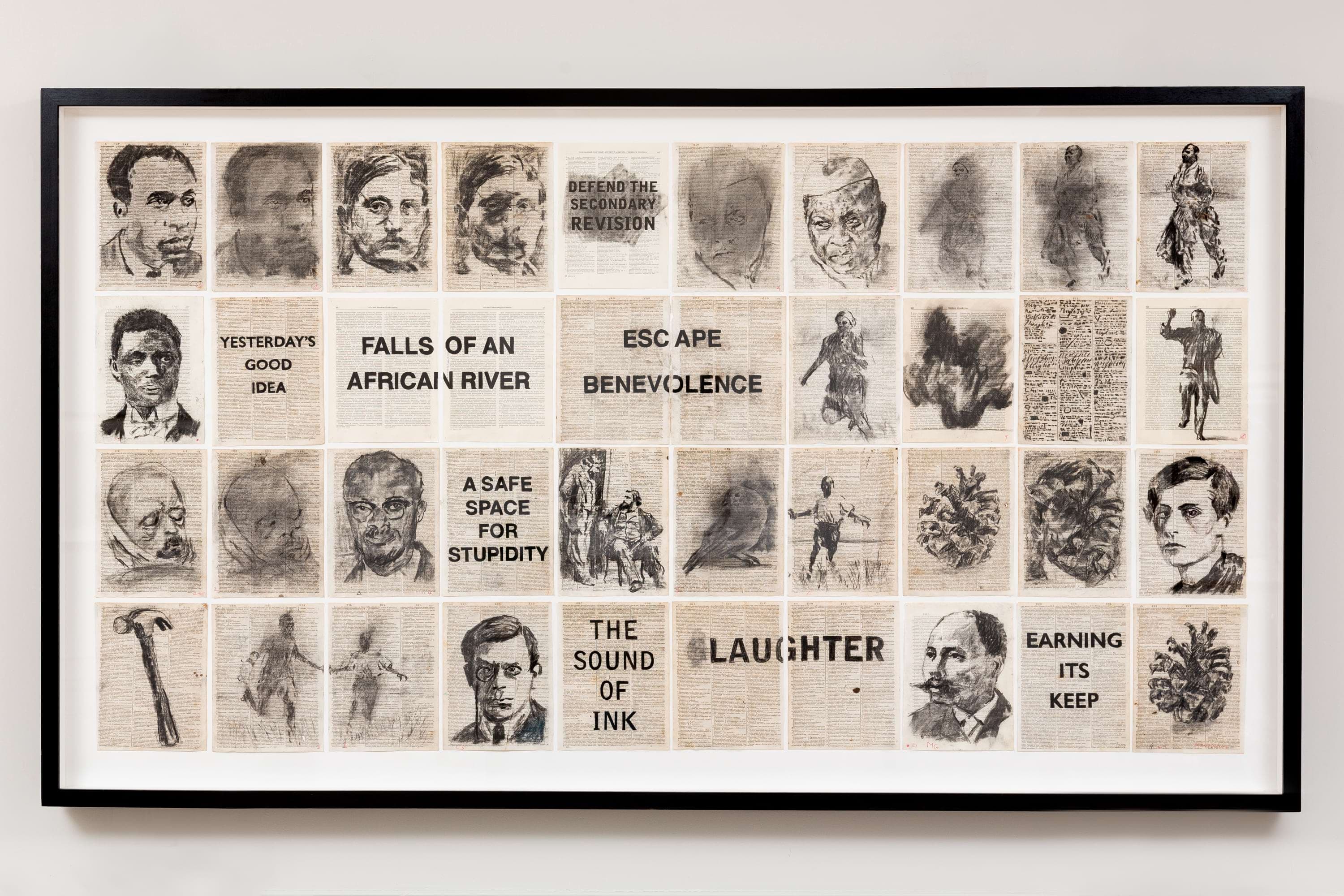
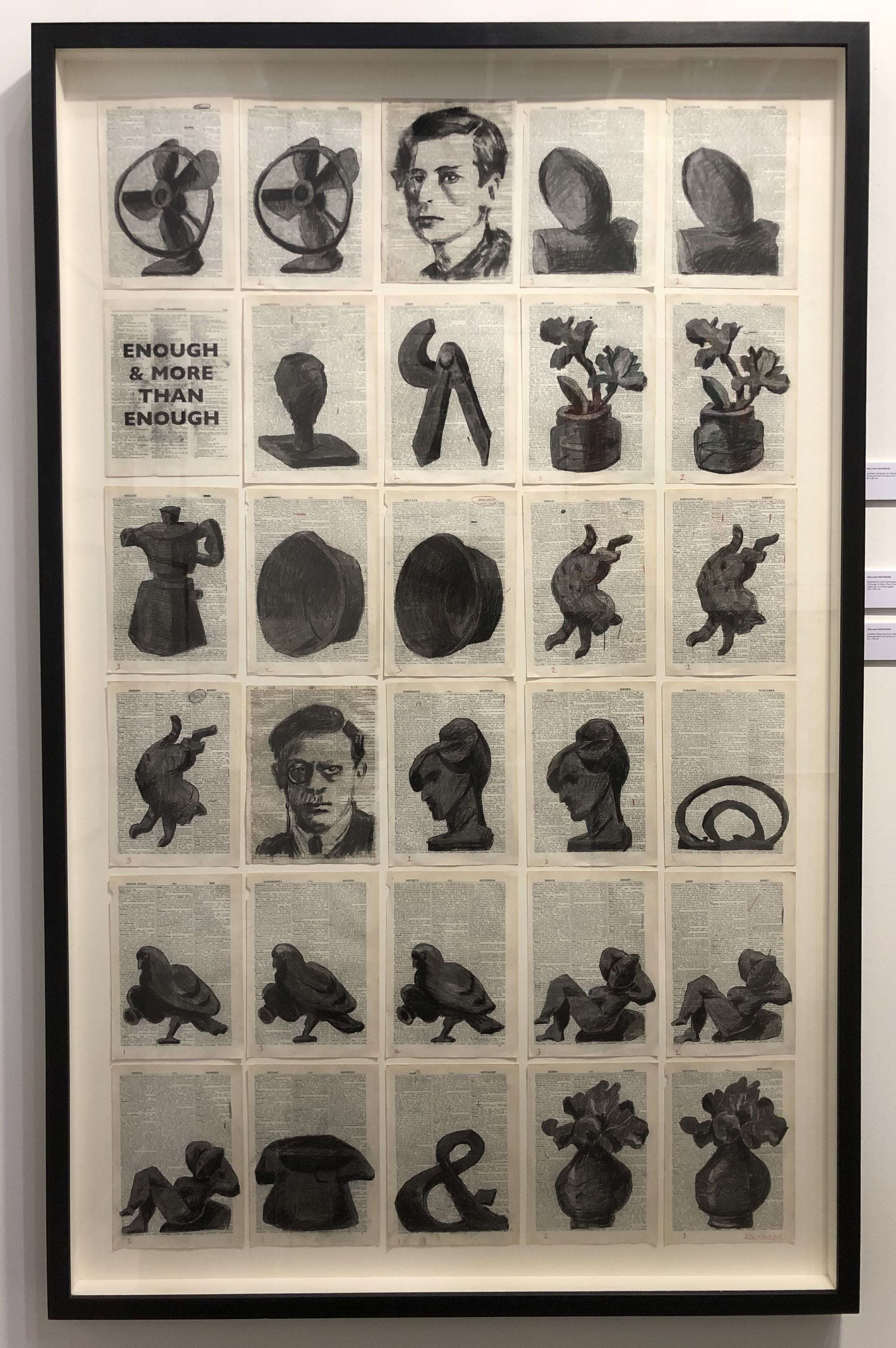
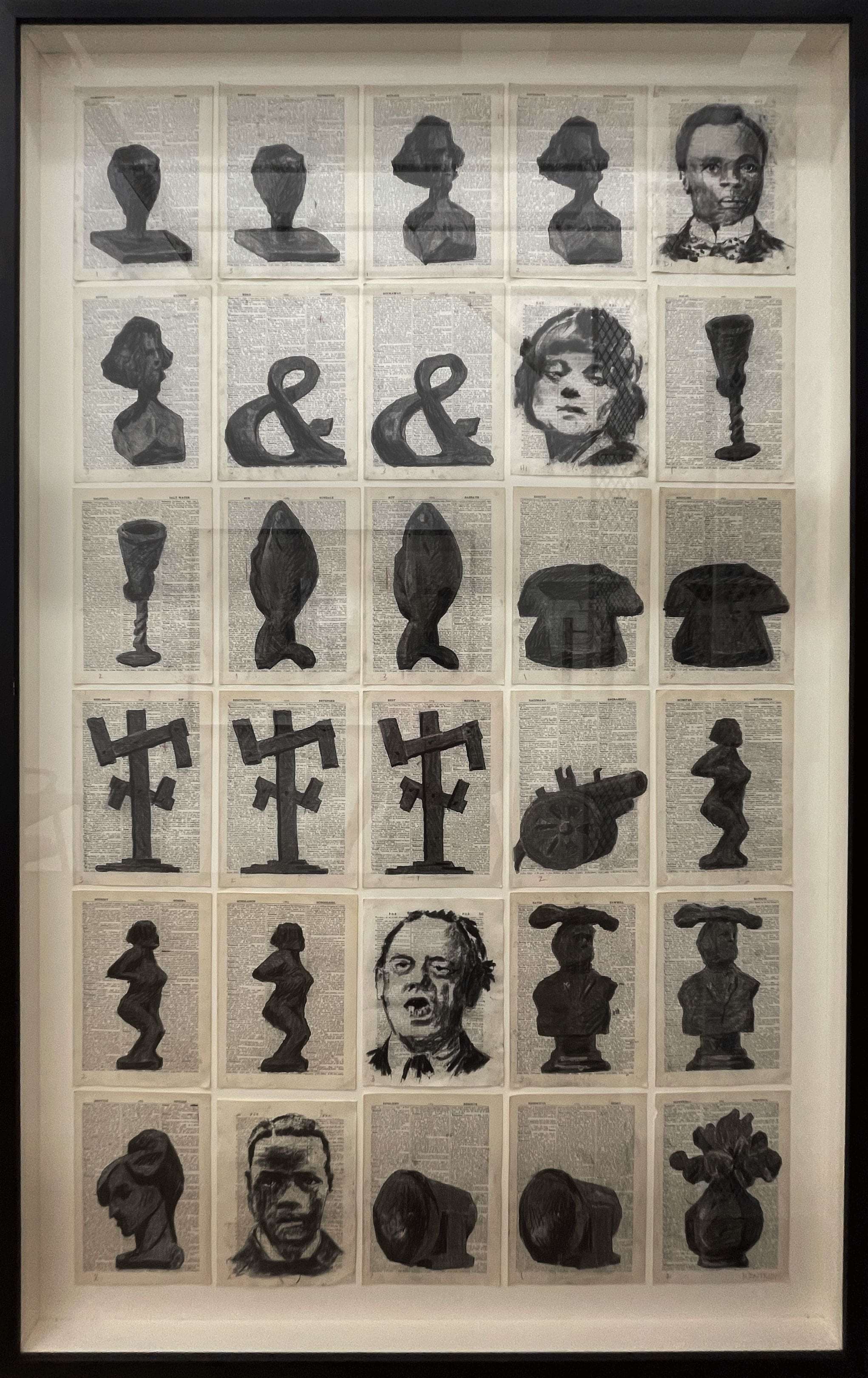
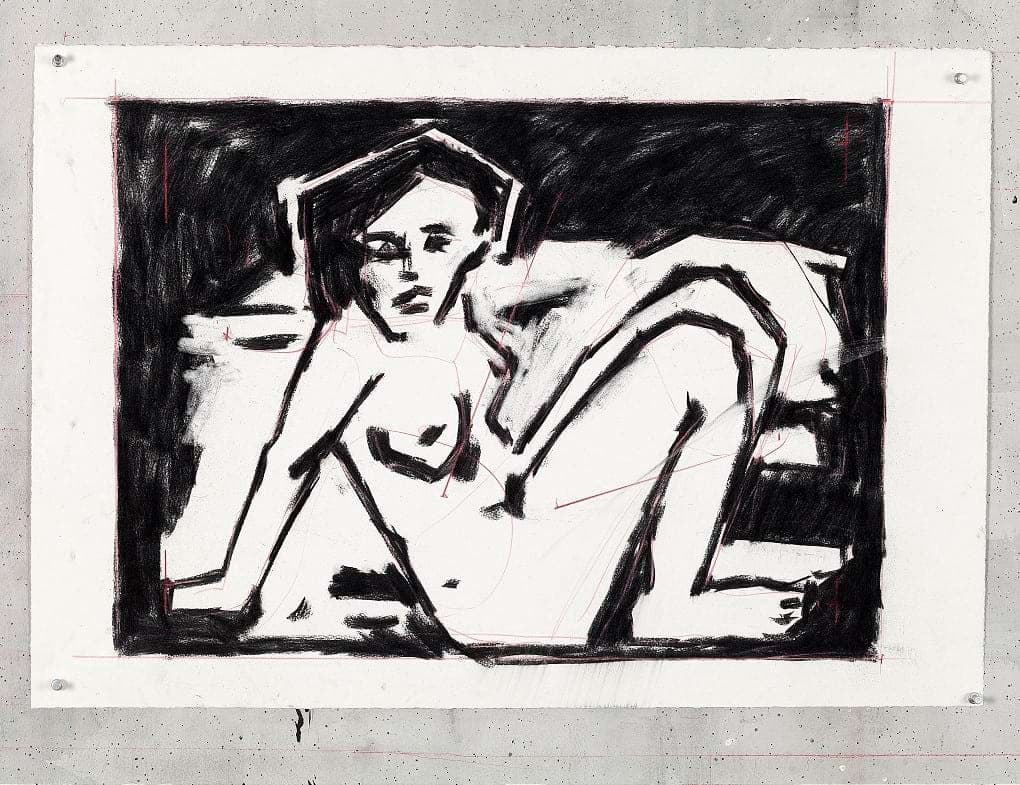
Drawing for Soft Dictionary (Earning Its Keep) is a composite drawing made in conjunction with William Kentridge’s single-channel flip book film, Soft Dictionary. Soft Dictionary is a visual record of a series of thoughts emerging and disappearing – lists of drawings made and never made, historical figures, personal references. The single channel film, and drawings try to document fragments of the non-sequiturs lodged in our heads, all of which are props in our efforts to understand the world: the very randomness of thoughts providing some of the richness of understanding. In its attempt to follow multiple streams of consciousness, it travels the boundary between incoherence, in the arbitrariness of images and references; and our constant need to make connections between images and references.
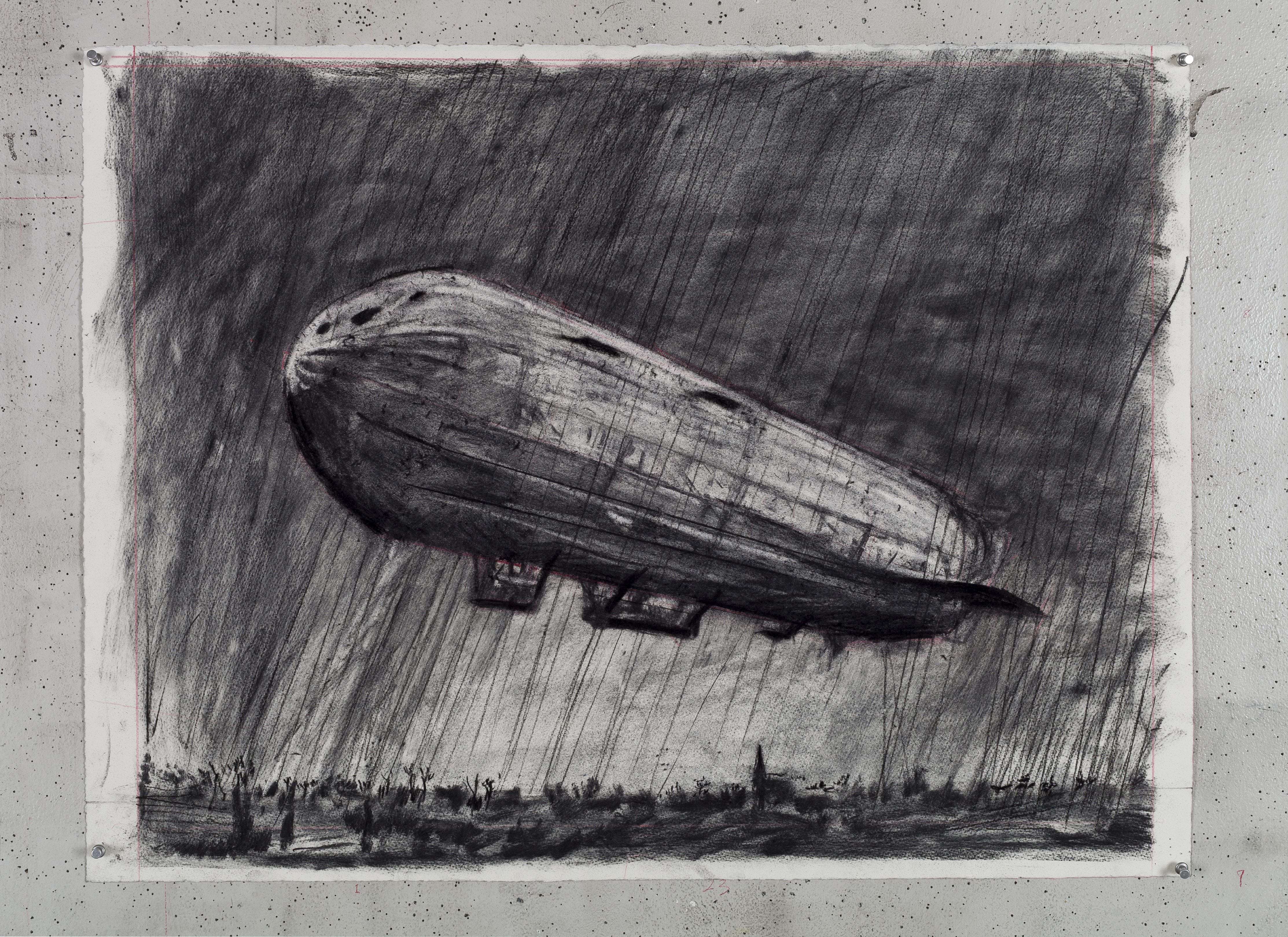
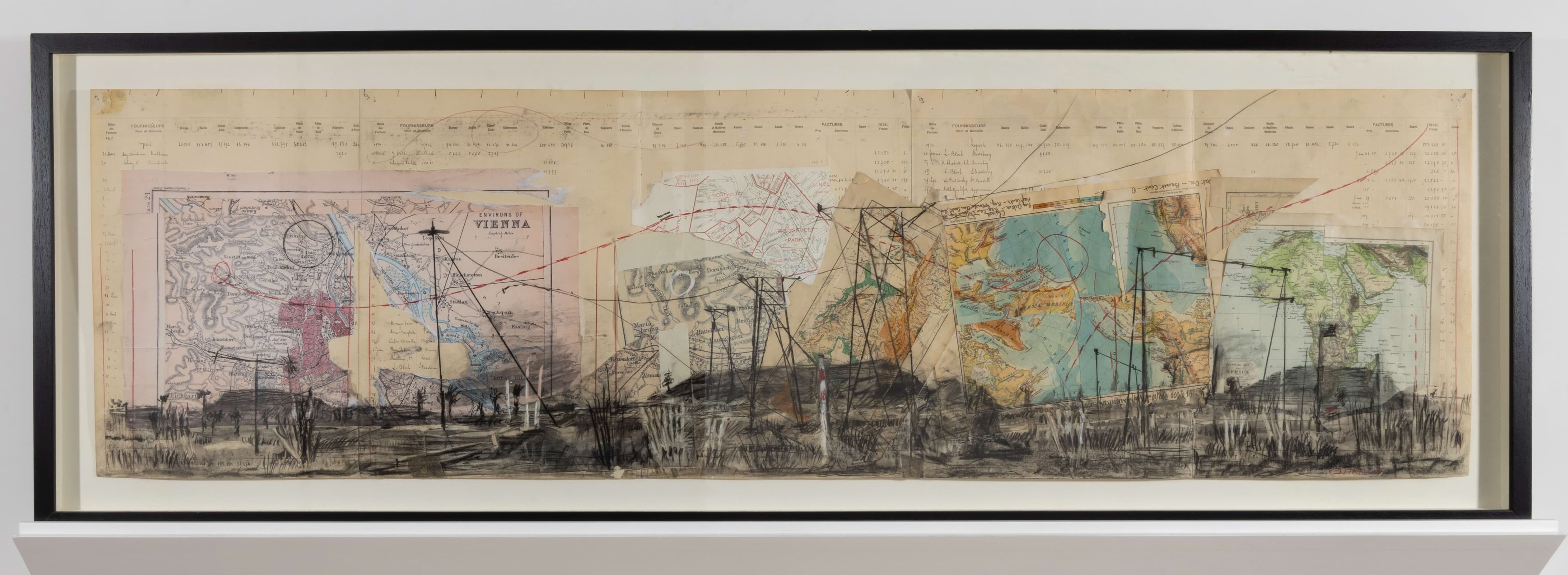
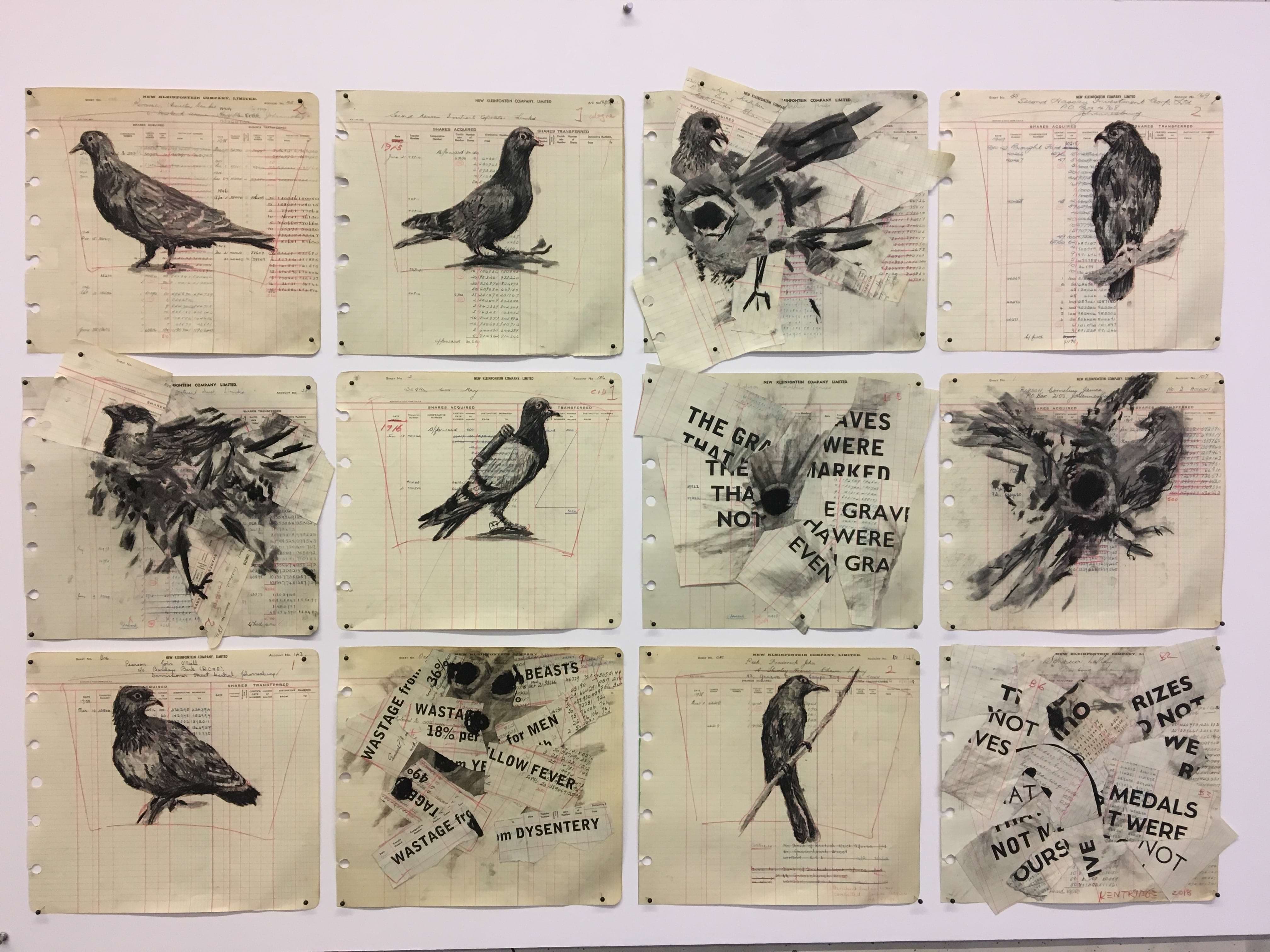
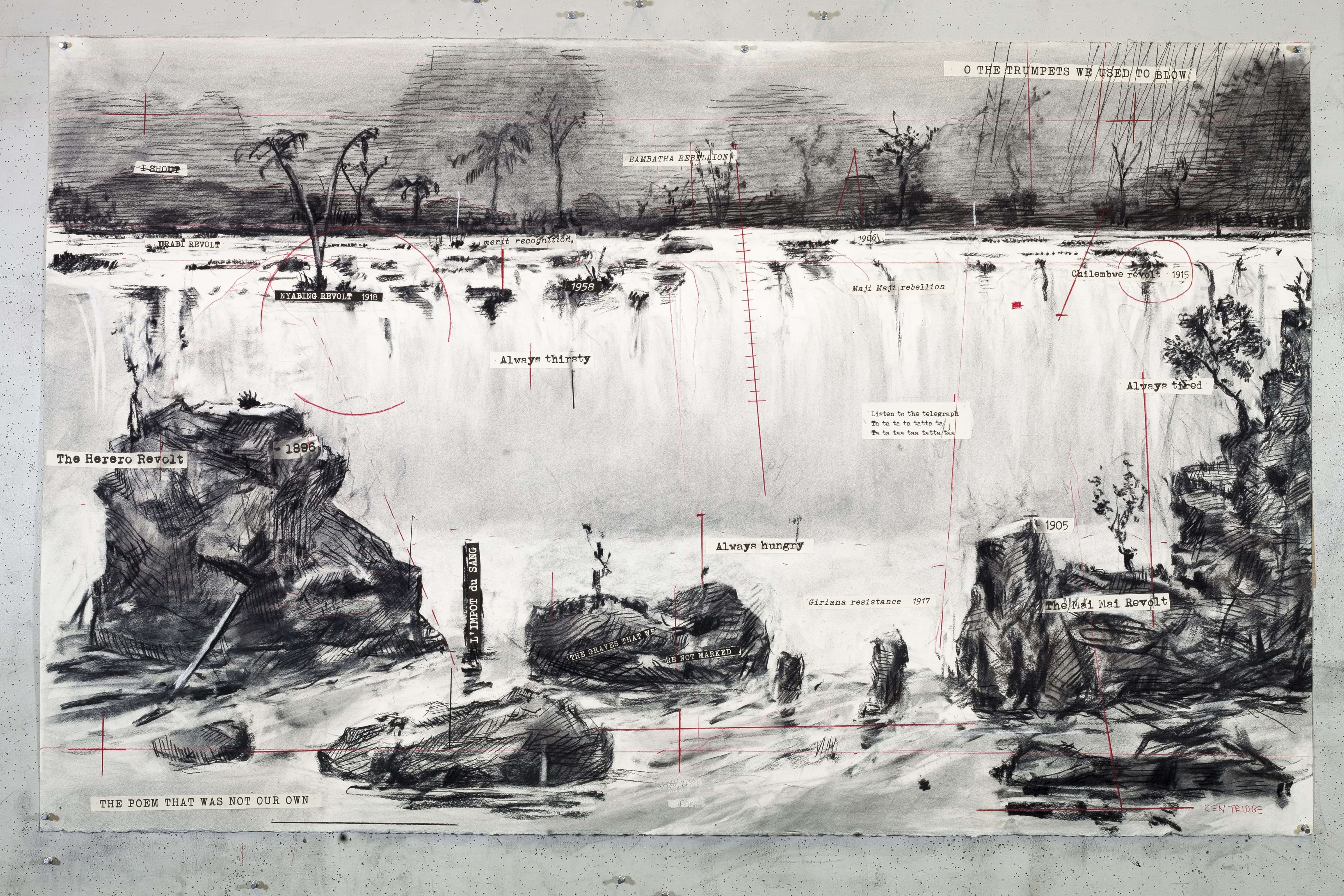
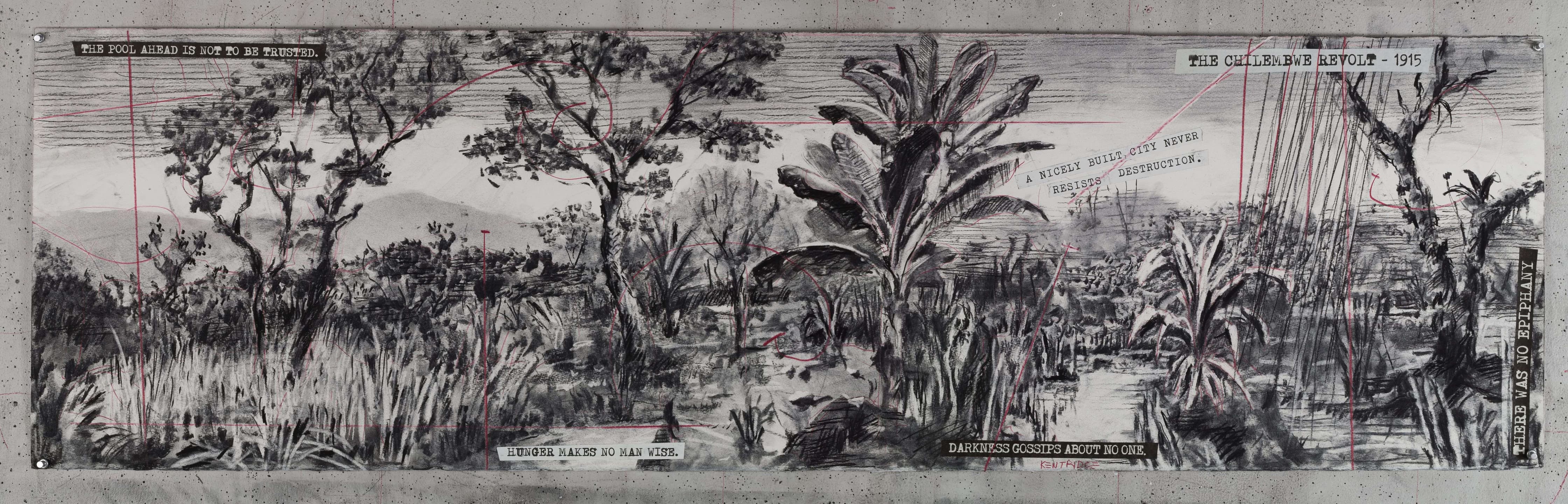
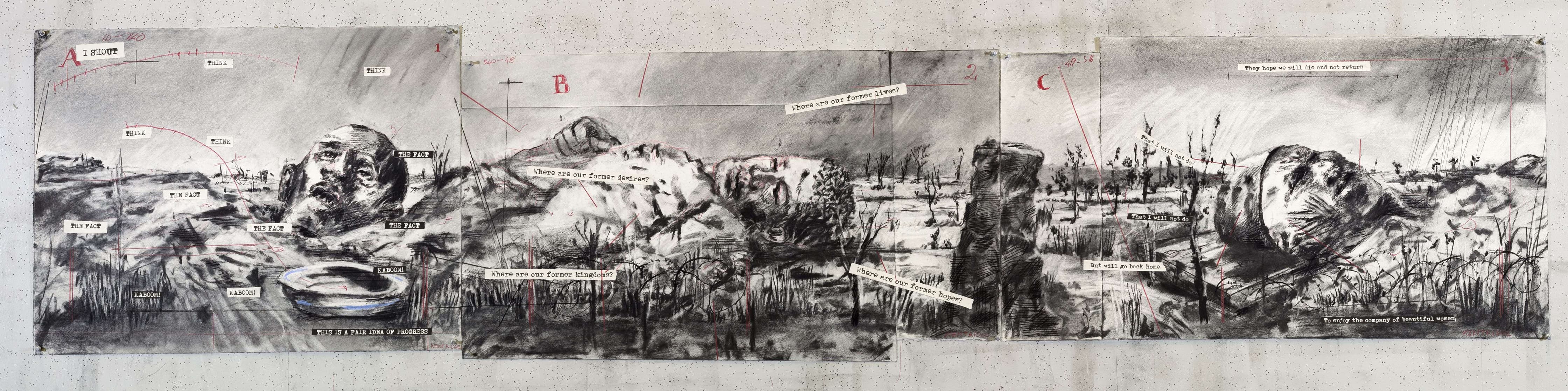
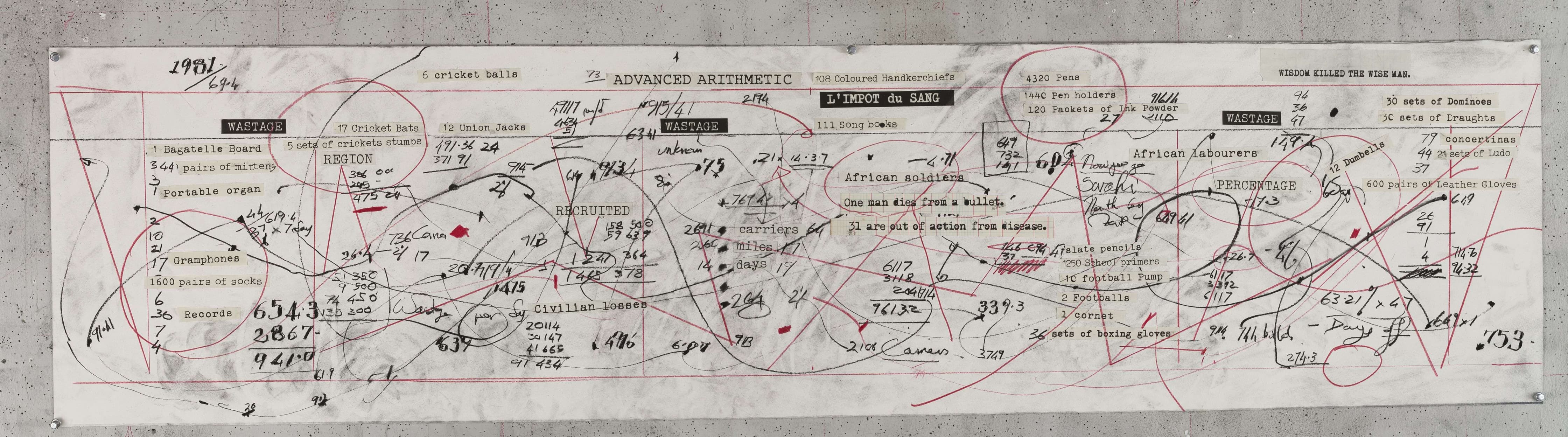
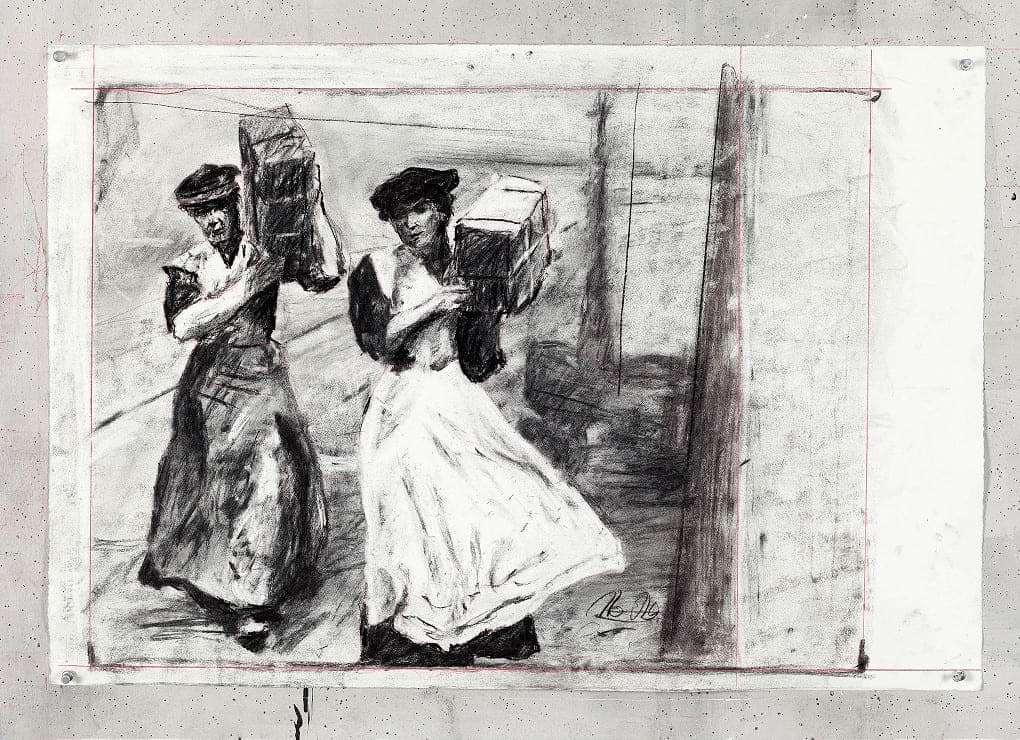
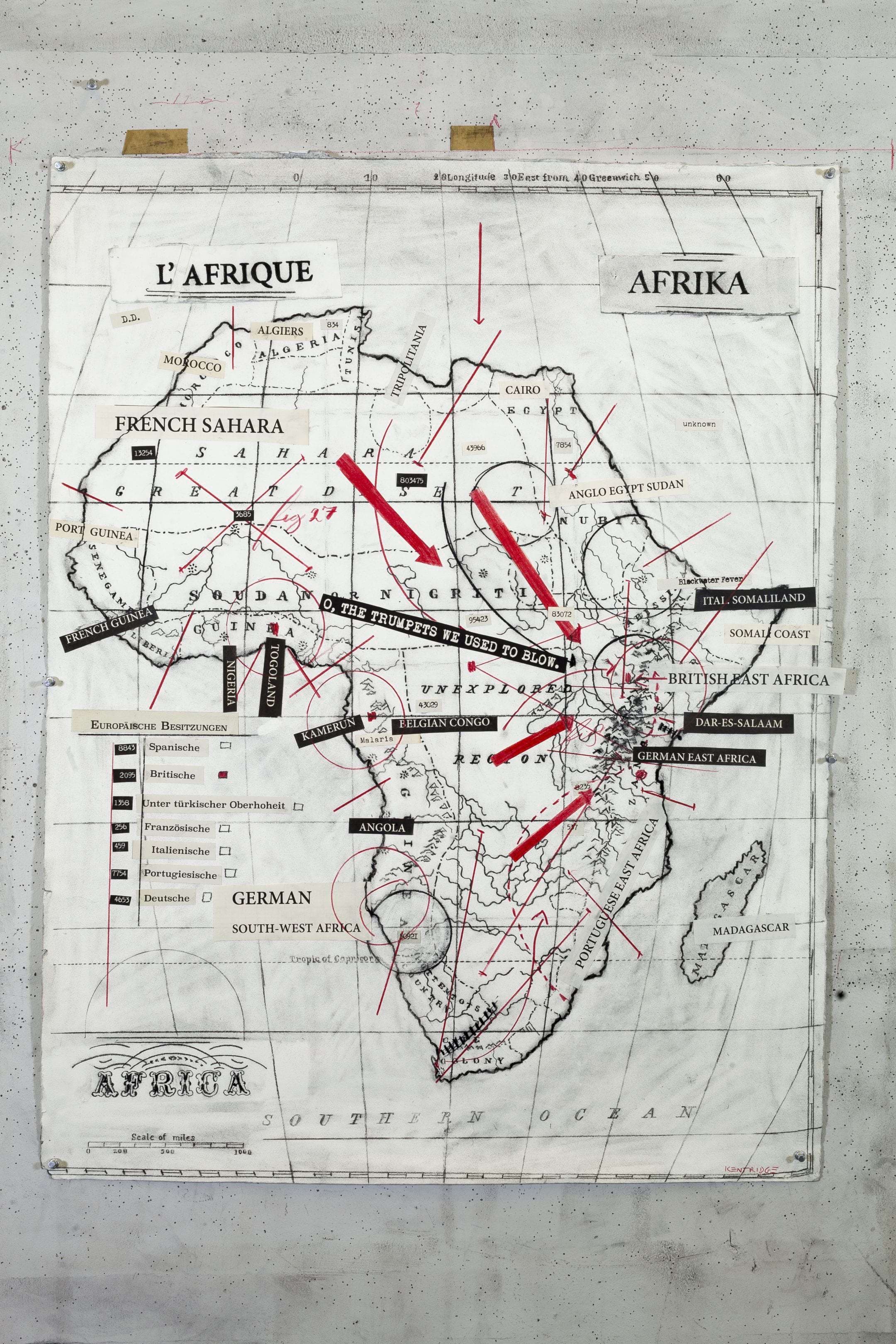
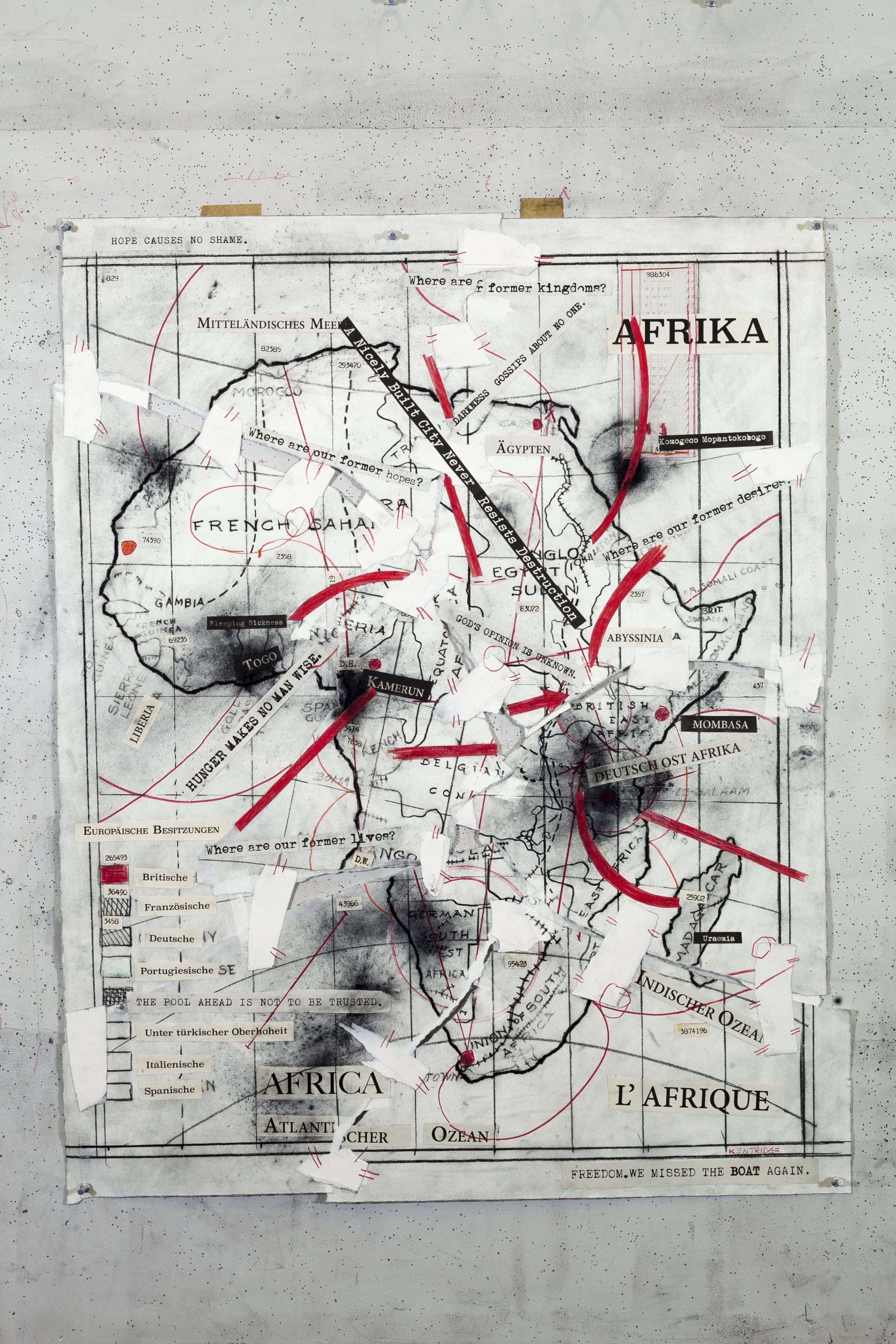
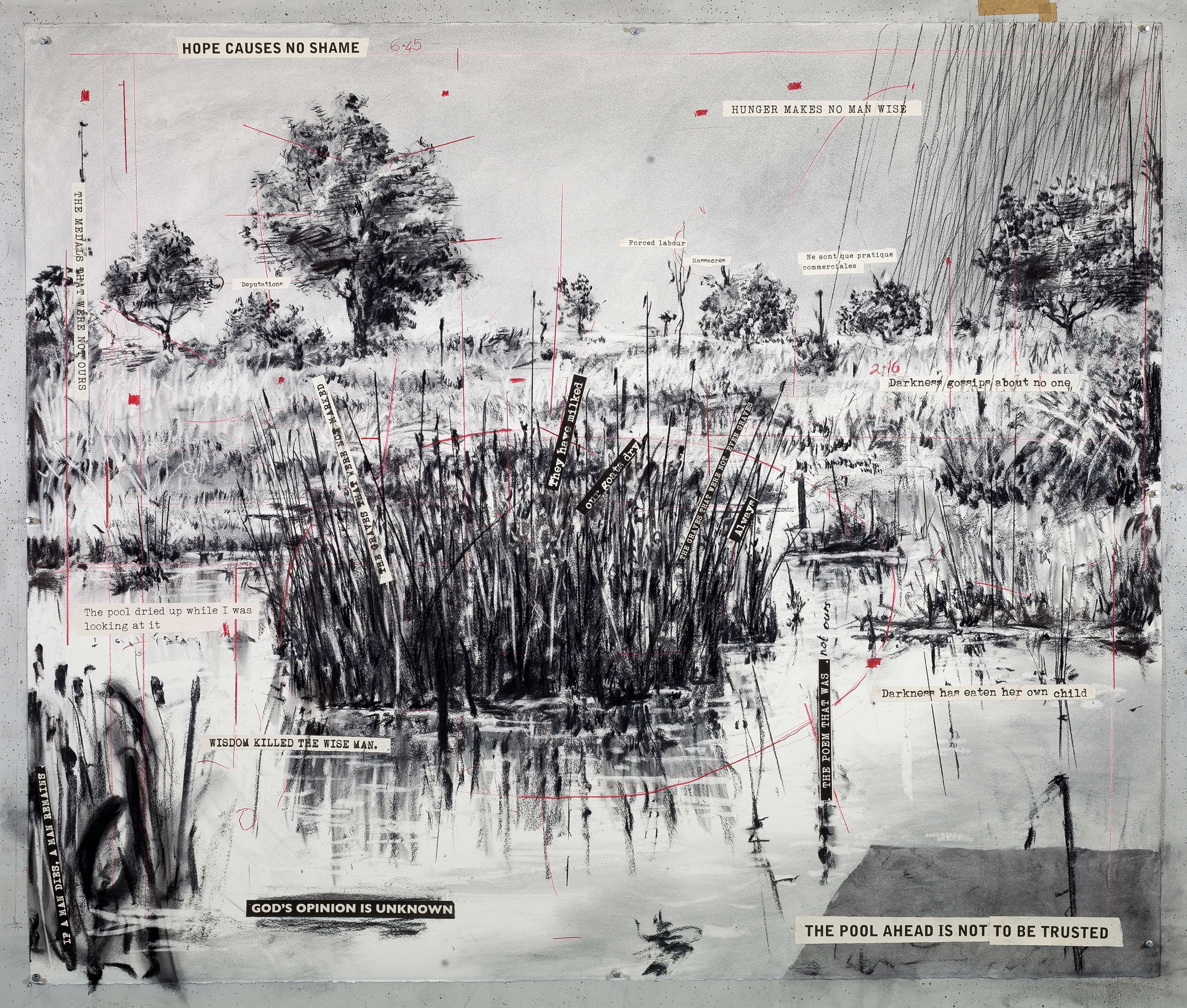
The Head & the Load, is William Kentridge's critically acclaimed production, which premiered at London’s Tate Modern in July 2018. A play on the Ghanaian proverb, ‘the head and the load are the troubles of the neck’, this large-scale production expressively speaks to the nearly two million African porters and carriers used by the British, French, and Germans during the First World War in Africa. This charcoal drawing was produced in preparation for the production and used during the course of the performance as an epic projection in front of which the action unfolds.
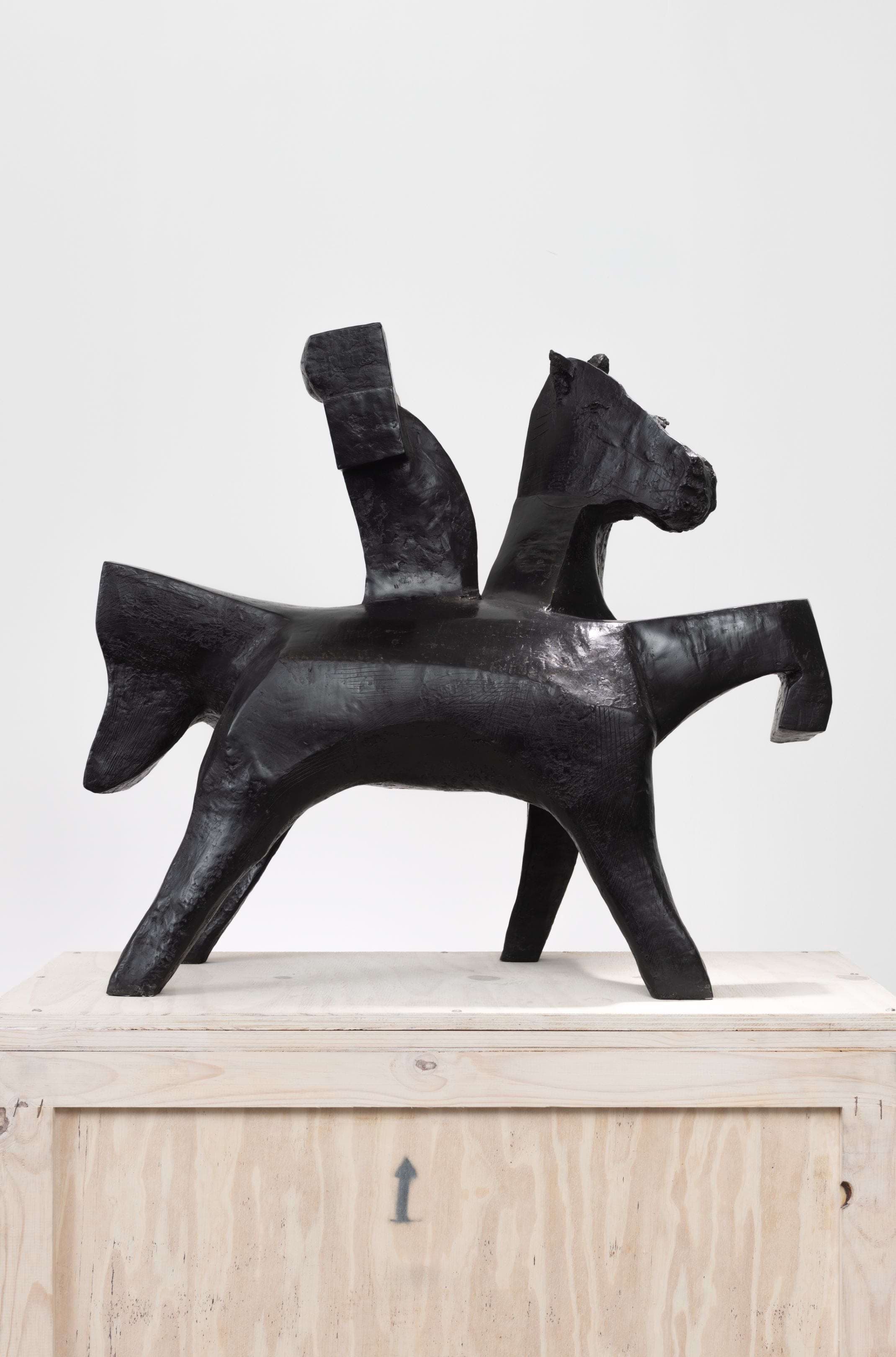
Shostakovich’s 1928 opera, The Nose, based on Nikolai Gogol’s 1836 short story of the same name, recounts the story of Kovalyov, a mid-level bureaucrat whose nose leaves his face and sets off on its own, and his attempt to find and re-attach it. William Kentridge produced a production of the Opera The Nose in 2010. One of the images of the Nose (who declared himself higher up in the bureaucratic hierarchy than Kovalyov) was as a rider of a horse, and as an equestrian statue. The animation for the projections was made with jointed paper puppets. The horses started out as animations, then became cardboard and wood, then became table-top sculptures.
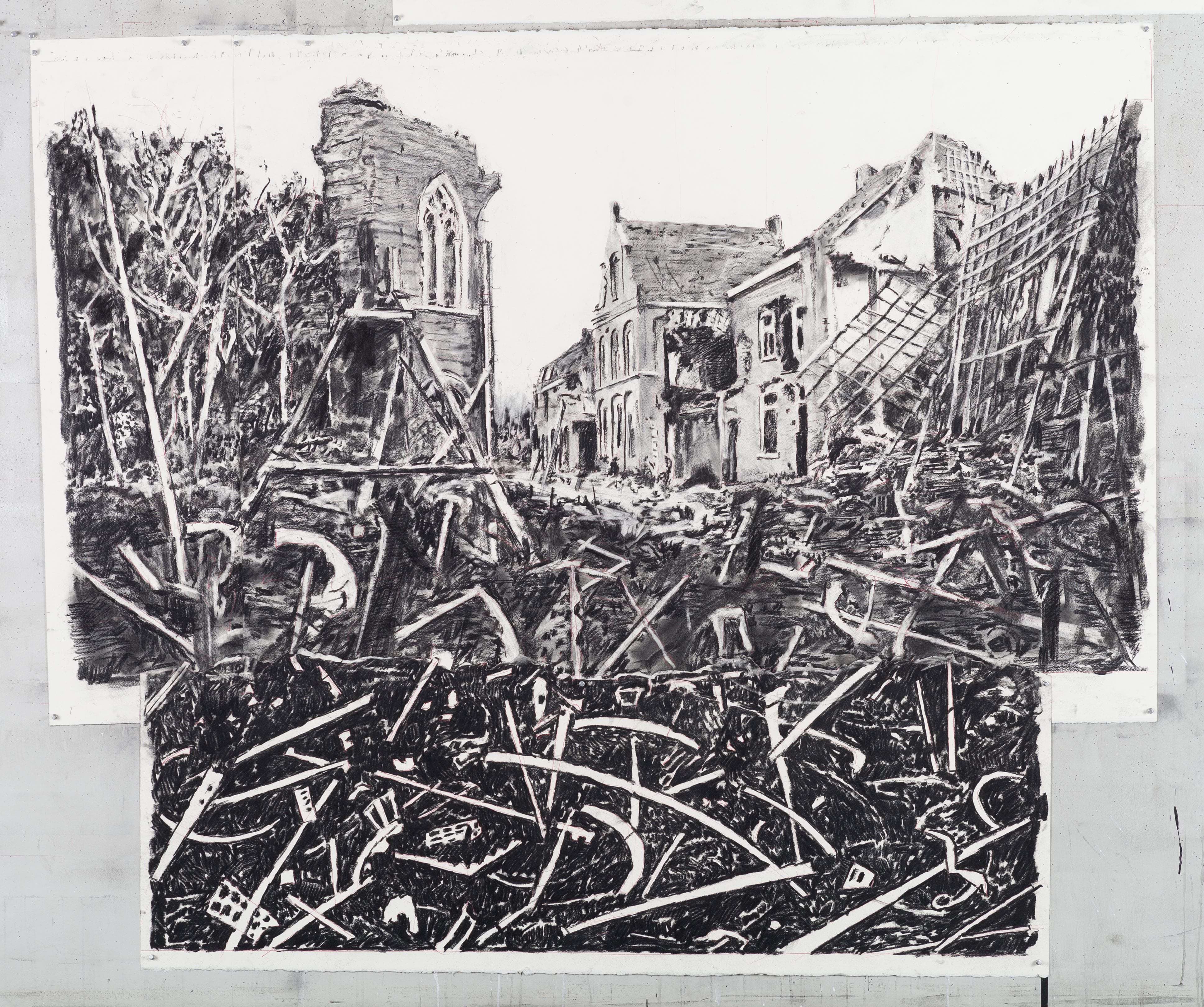
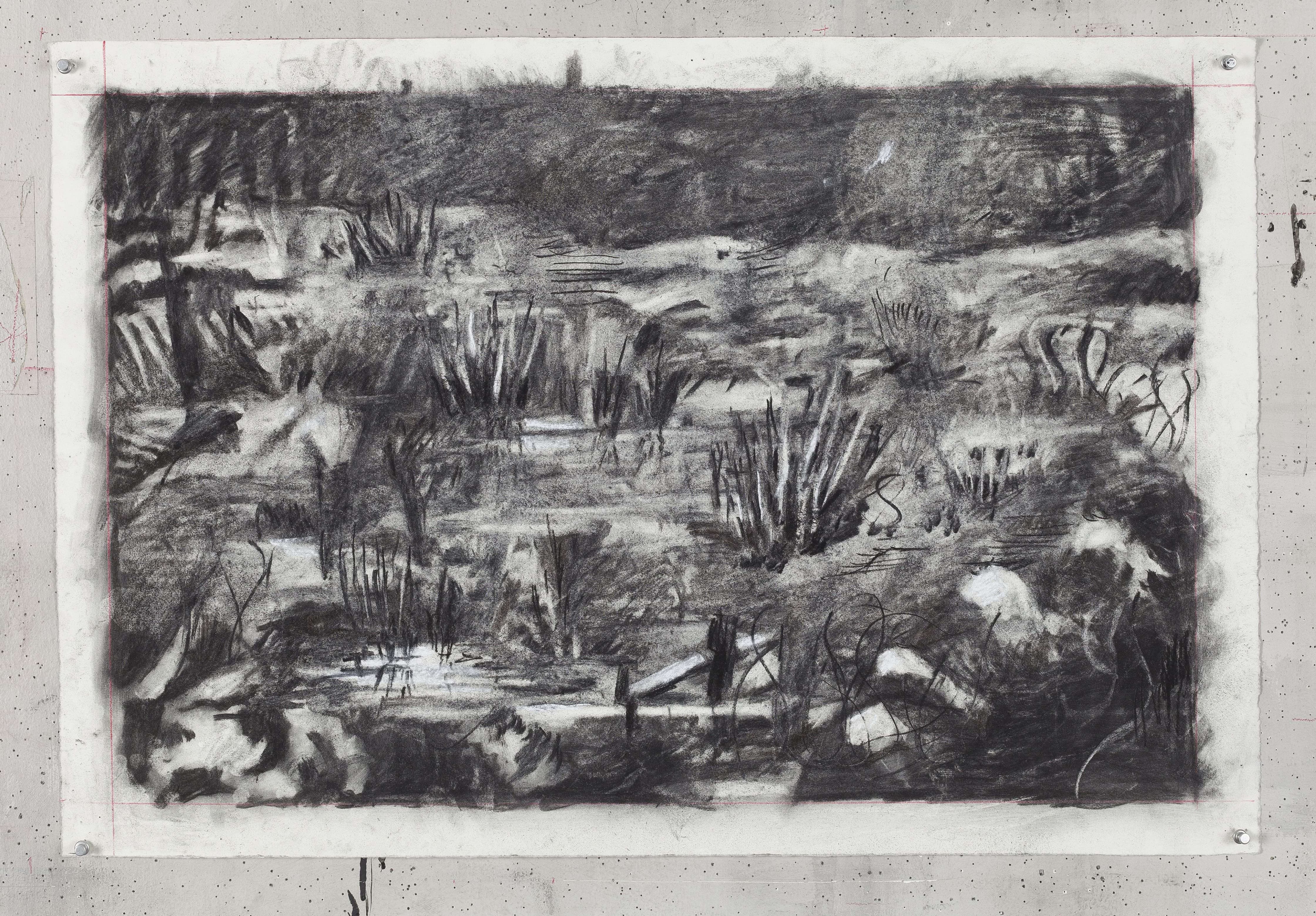
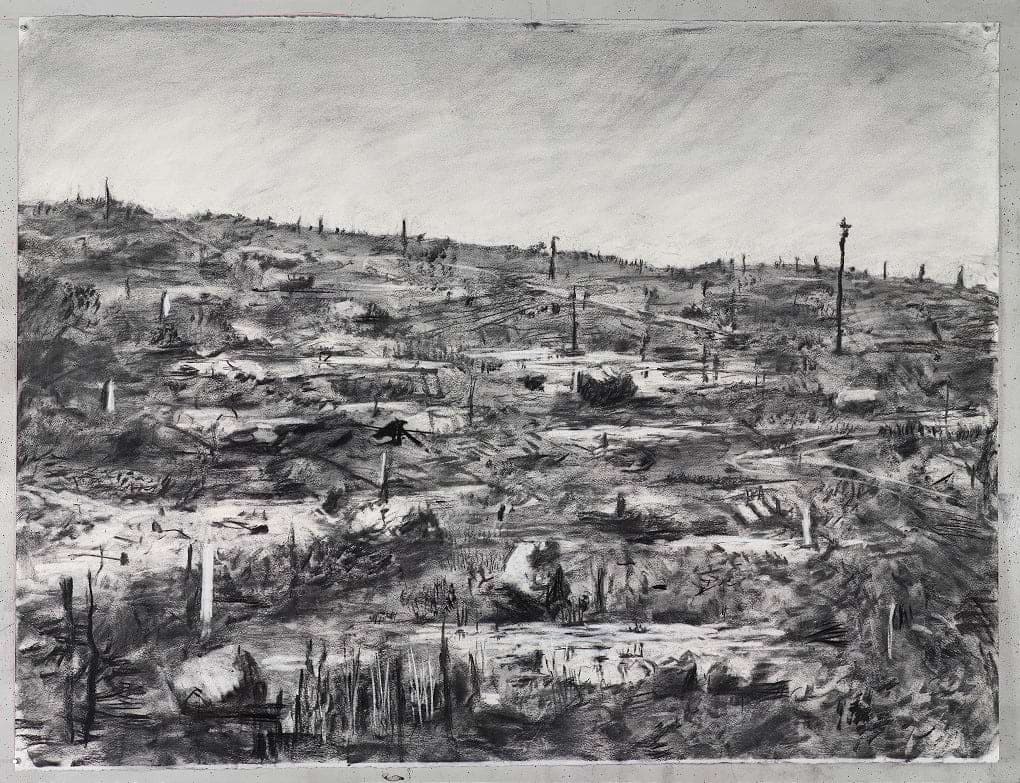
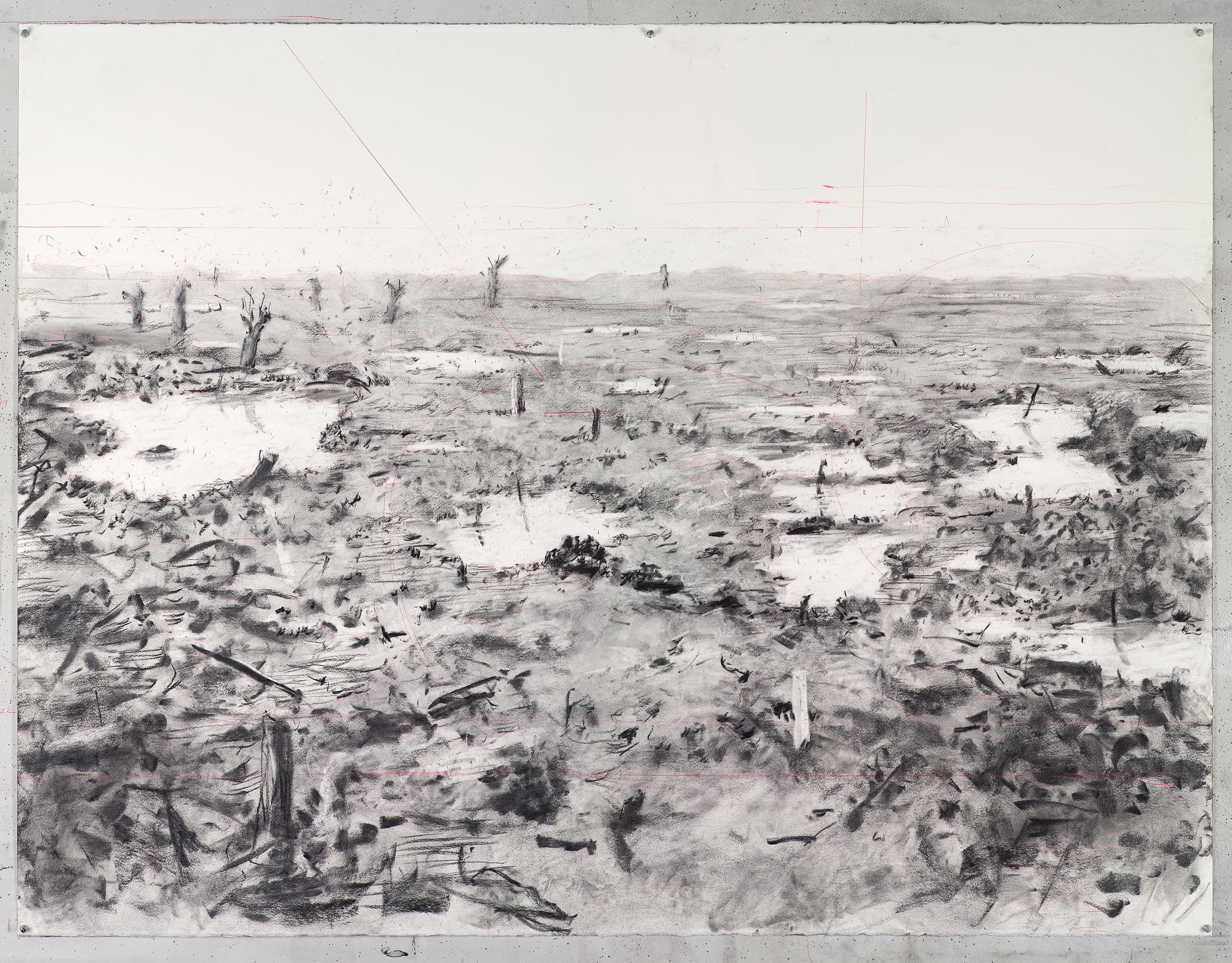
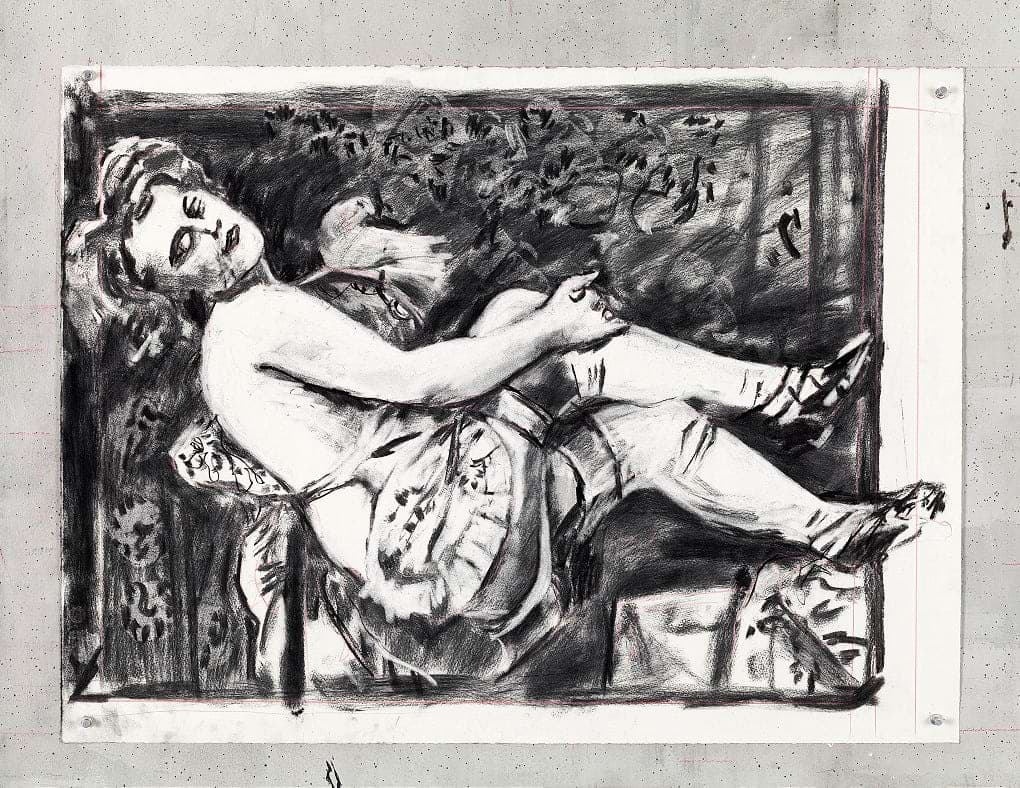
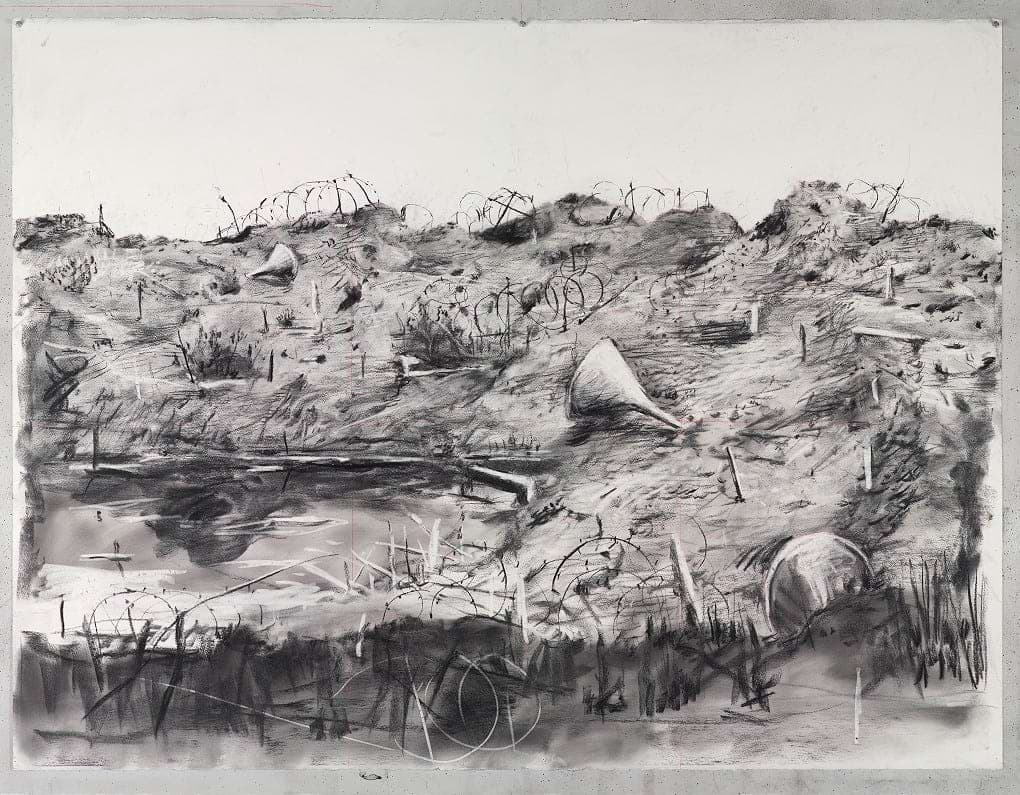
Kentridge’s Untitled (Drawing from “Wozzeck” 4) is a charcoal drawing that was used as a projected backdrop in the recent critically acclaimed production of the Alban Berg opera, Wozzeck. Kentridge chose to set the opera, based on the 1837 Buchner play of the same title, at the time of "The Great War" in Europe, as he found the play “a premonition of the war to come”. The aesthetic of this production is characterised by bleak landscapes, denuded of their trees and scarred by shell craters. Kentridge was inspired by documentary photographs, which depict the ravaged battlefields of Flanders. He explains that the opera had “to meet a material for it to take fire - with Wozzeck, it’s the roughness of charcoal drawing. So all of the projections are made out of charcoal drawings and there’s something in the graininess of the drawing itself that echoes both with the music, obviously, but also with the world that it’s depicting – of things transforming, of sounds under the earth.” The opera premiered at the Salzburger Festspiele in July 2017 and is a co-production with the Metropolitan Opera, New York and the Canadian Opera Company, Toronto.
Kentridge was invited by the Salzburger Festspiele to be the creative director of a new production of Alban Berg’s opera, Wozzeck which premiered in Salzburg in the summer of 2017. He produced a number of charcoal drawings that were used as projected backdrops in the critically acclaimed production.
Kentridge chose to set the opera, based on the 1837 Buchner play of the same title, at the time of "The Great War" in Europe, as he found the play “a premonition of the war to come”. The aesthetic of this production is characterised by bleak landscapes, denuded of their trees and scarred by shell craters. Kentridge was inspired by documentary photographs, which depict the ravaged battlefields of Flanders. He explains that the opera had “to meet a material for it to take fire - with Wozzeck, it’s the roughness of charcoal drawing. So all of the projections are made out of charcoal drawings and there’s something in the graininess of the drawing itself that echoes both with the music, obviously, but also with the world that it’s depicting – of things transforming, of sounds under the earth.” Since the Salzburg premiere, the opera has been performed at the Sydney Opera House in 2019 and will next be seen at the Metropolitan Opera, New York and Toronto, thereafter.
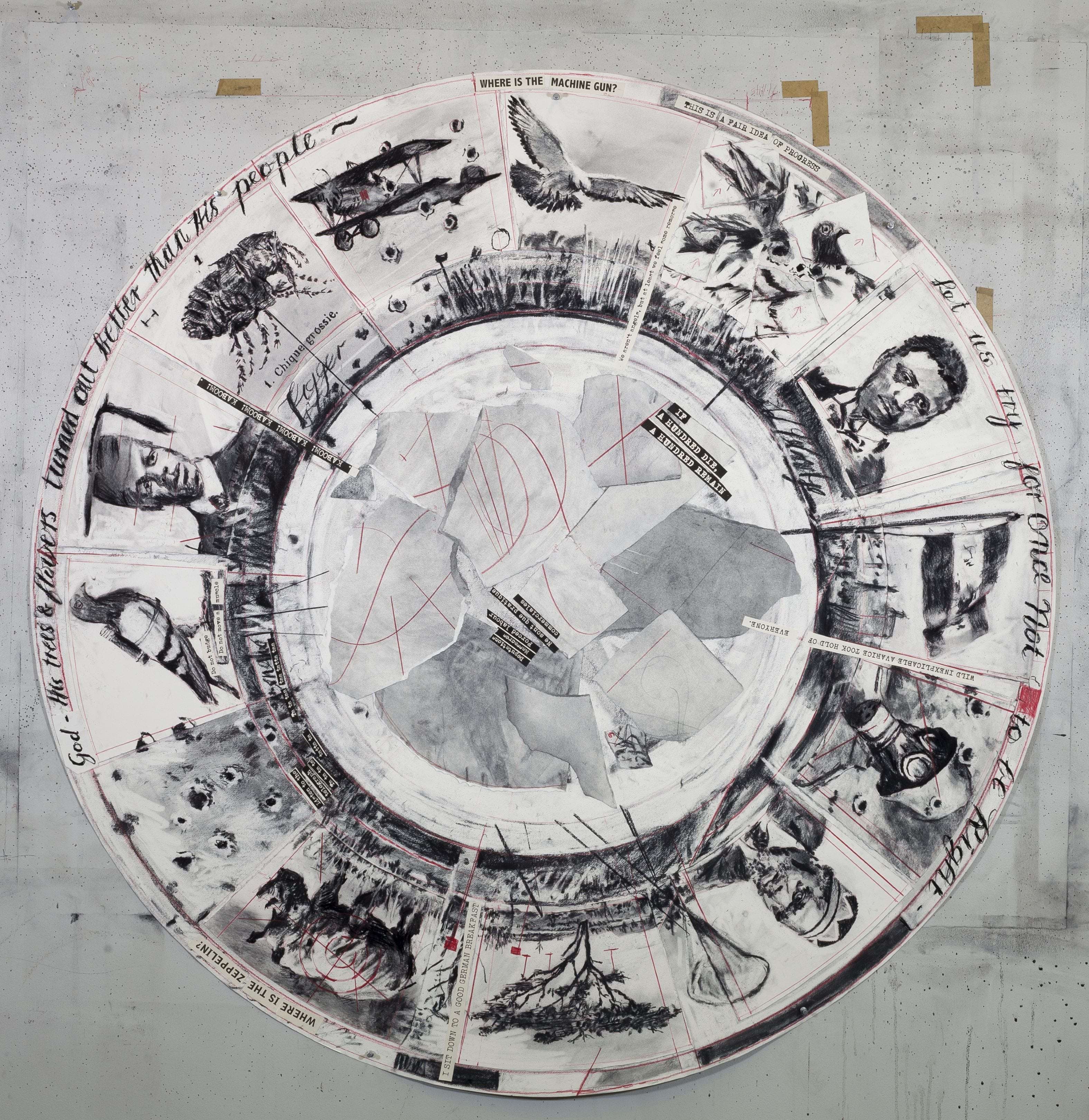
Tondo II is a drawing used as part of a rotating projection display in the critically acclaimed production, The Head & The Load, which premiered earlier this year at Tate Modern. A play on the Ghanaian proverb, ‘the head and the load are the troubles of the neck’, this large-scale production expressively speaks to the nearly two million African porters and carriers used by the British, French, and Germans during the First World War in Africa. The Head & The Load takes the form of a processional musical journey and features an international ensemble cast of singers, dancers, and performers accompanied by a chorus of mechanized gramophones alongside multiple film projections and shadow play to create a landscape of immense proportions and imagination. The Tondo drawing is informed by its function which is a rotating ark of drawings projected onto the backdrop of the production of The Head & the Load.
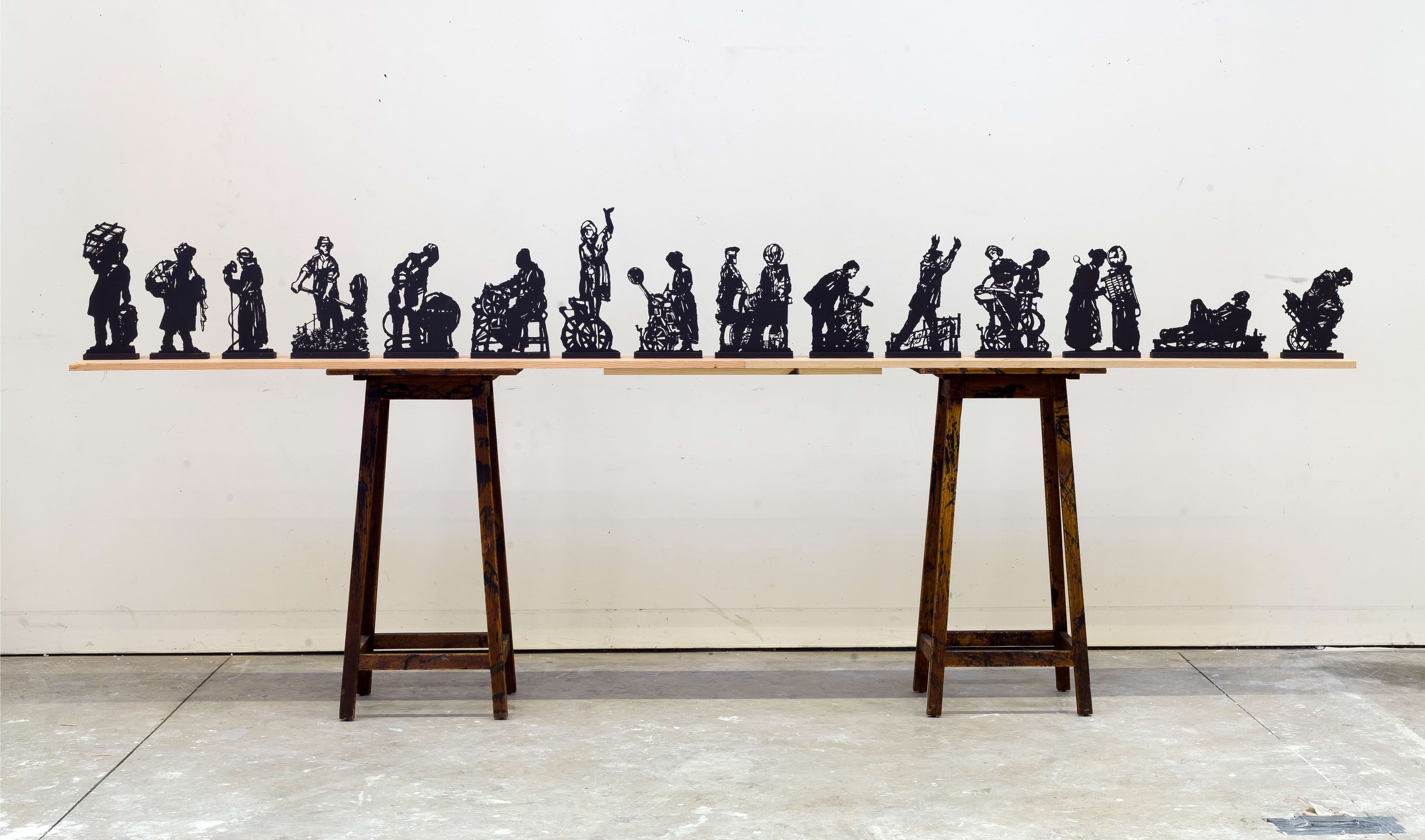
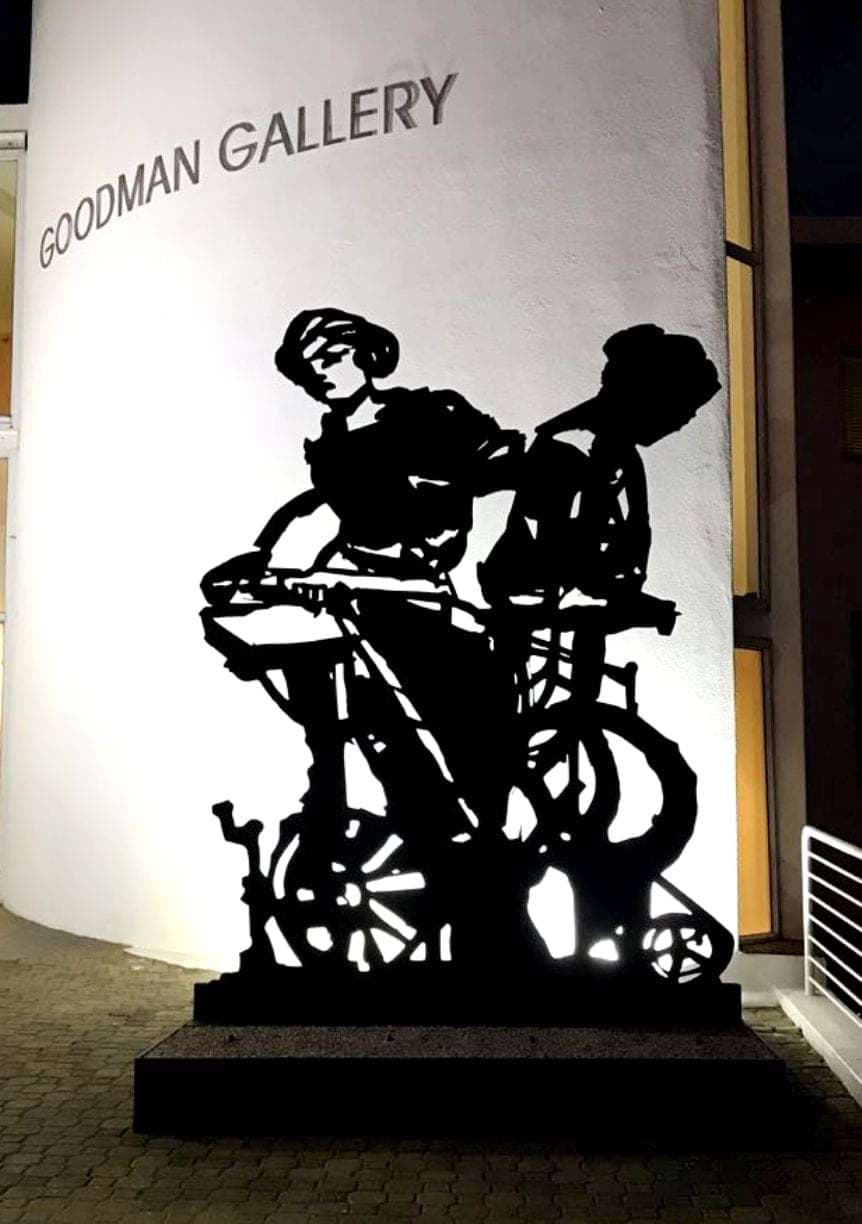
The public, site-specific installation, Processione di Riparazioniste by William Kentridge was unveiled in 2017 and took the form of a procession of colossal outdoor sculptures. The piece was commissioned by Carolyn Christov-Bakargiev and Kentridge was inspired by the ex-industrial life of the Officine Grandi Riparazioni. The work is composed of a procession of symbolic figures, in silhouette, which allude to the work of repairing trains and bodies, as well as the struggle between the Catholic church and Italian Marxists for the soul of the worker.
These sculptures exist in the form of a set of small-scale maquettes, as well as full-size, outdoor sculptures.
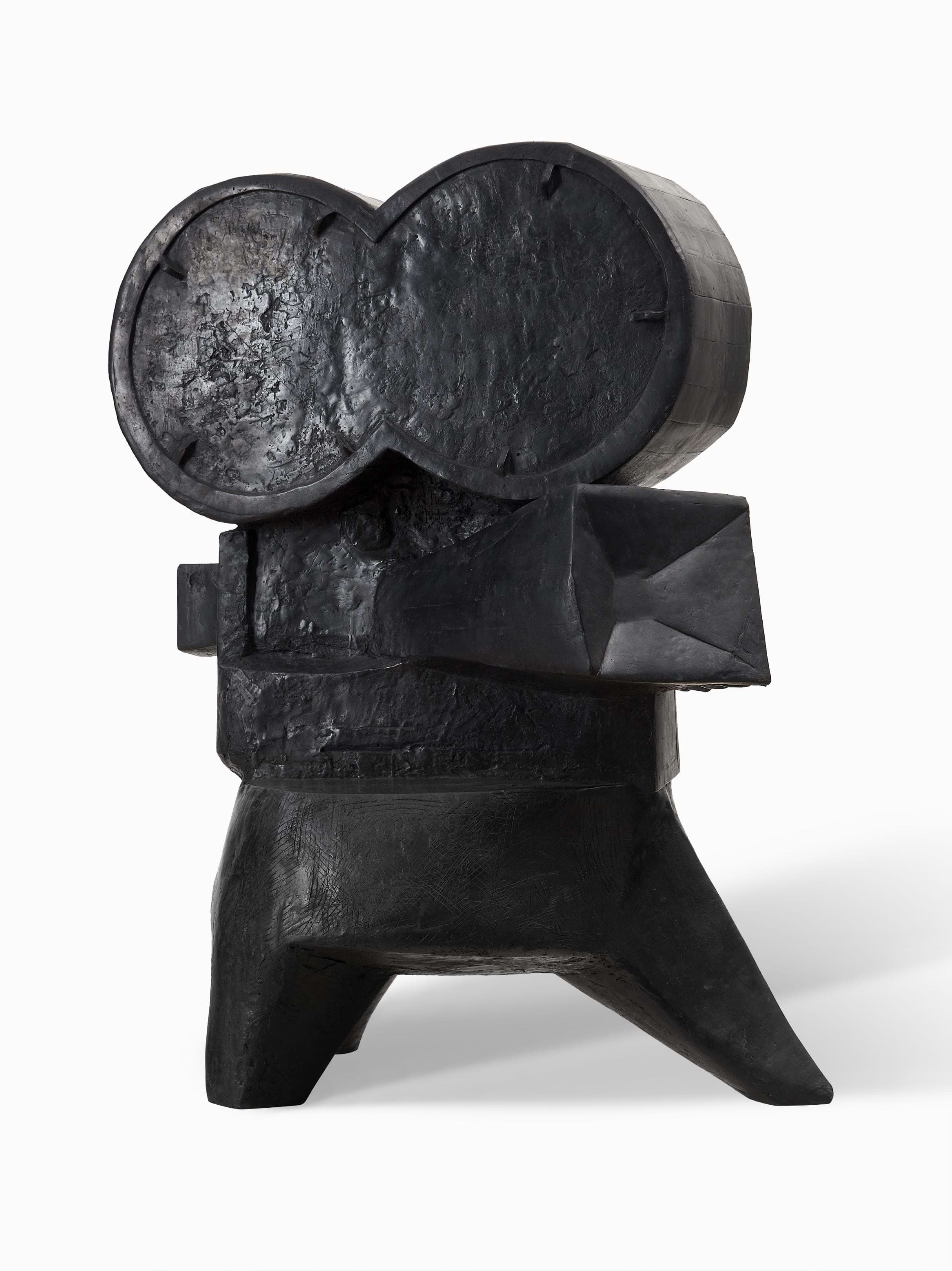
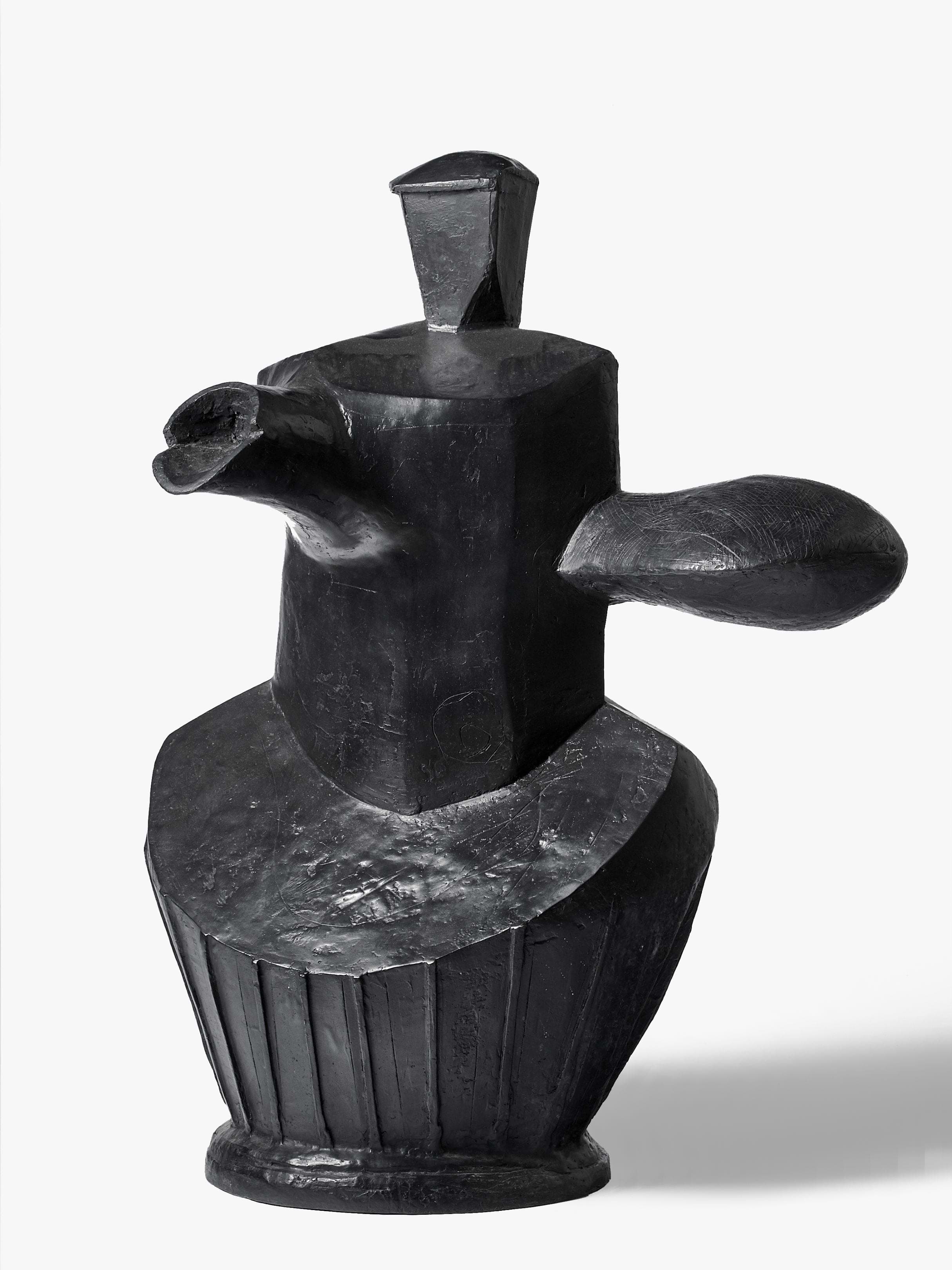
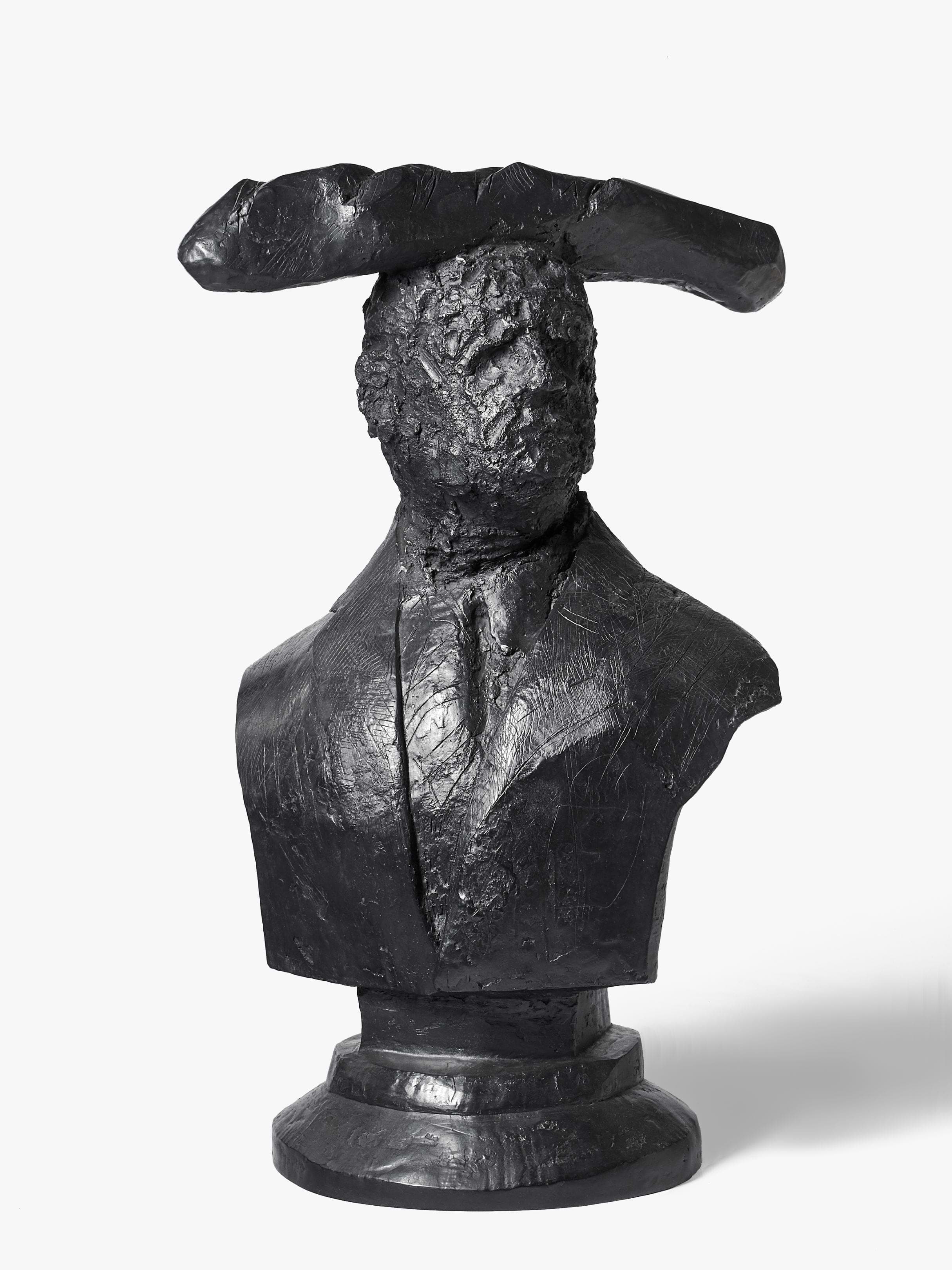
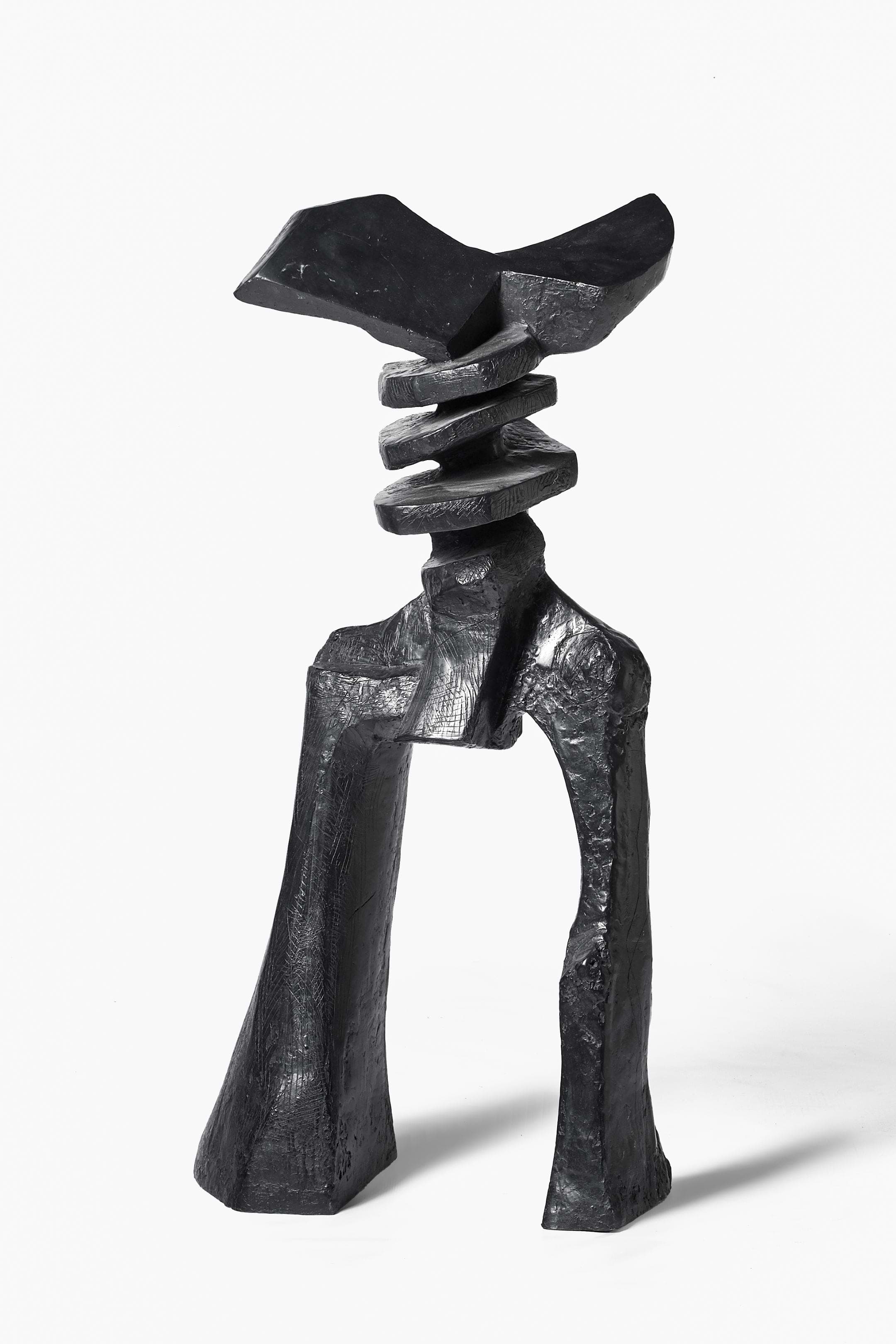
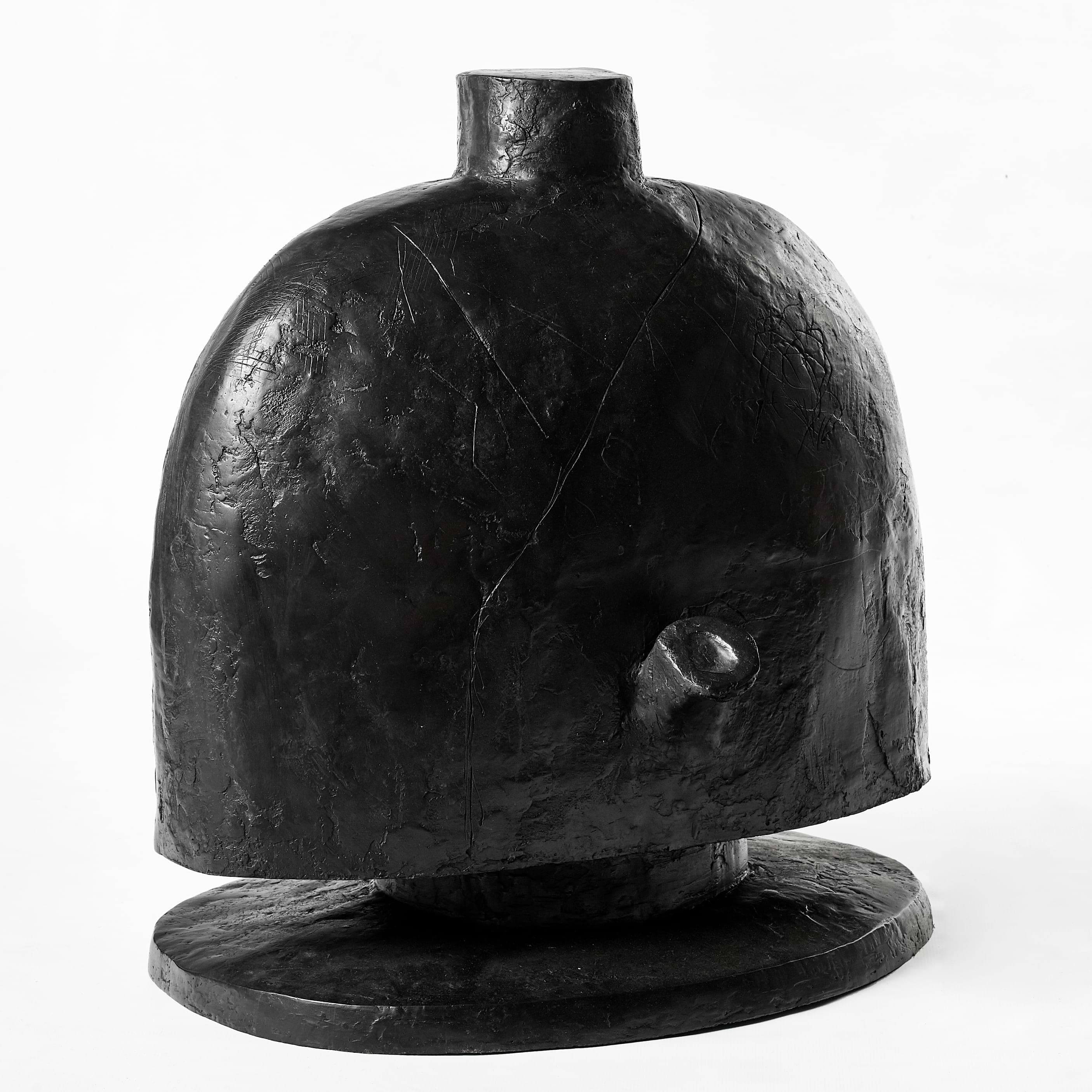
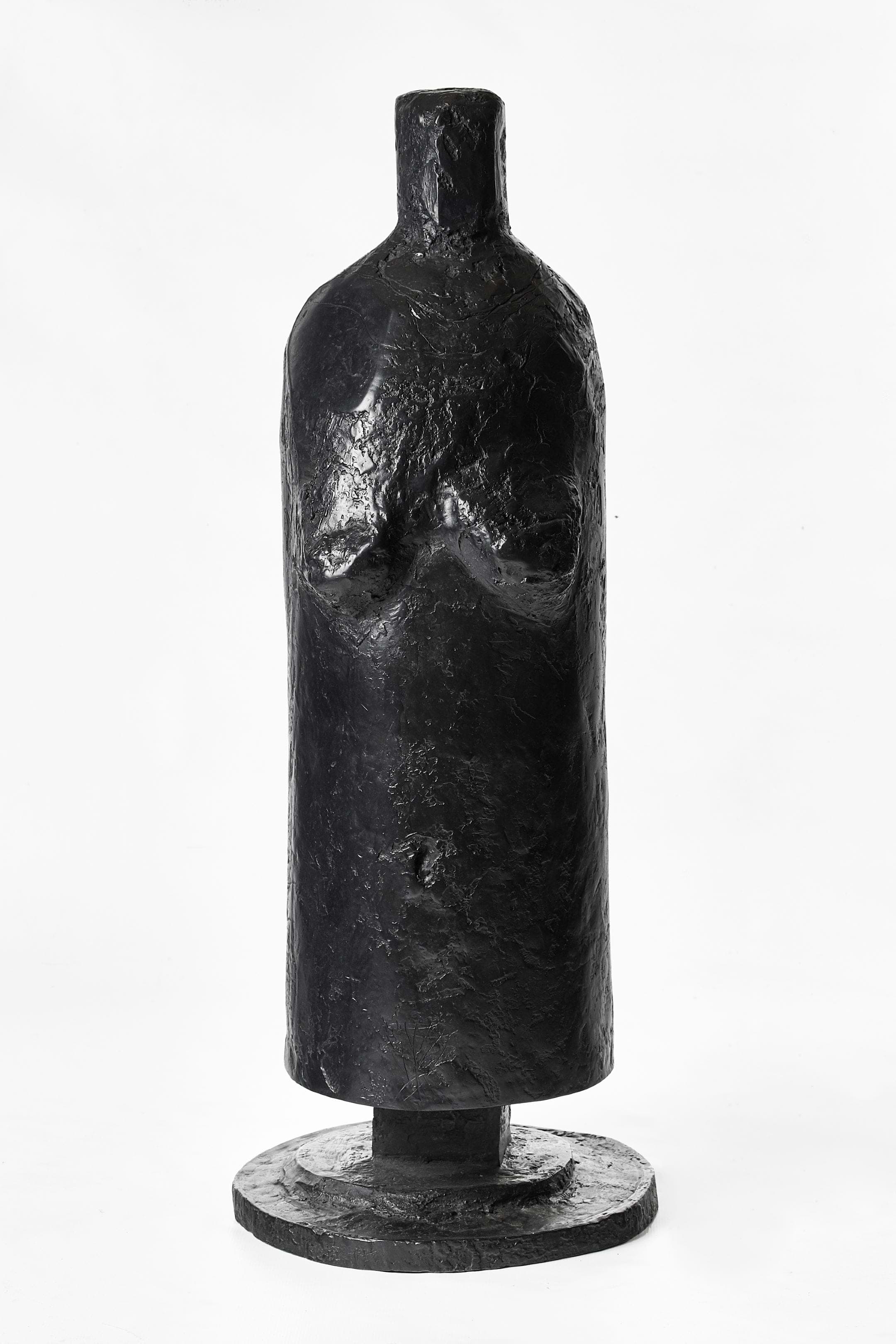
Action forms part of the Lexicon series, which is an accumulation of elemental symbols within the artist’s larger practice. The series of bronze sculptures functions as a form of visual dictionary. These sculptures are symbols, glyphs, suggested words and icons, many of which have been used repeatedly across projects and bodies of work. The glyphs can be arranged in order to construct sculptural sentences and rearranged to deny meaning. In late 2017 and early 2018, Kentridge chose a group of ten glyphs from the small-scale Lexicon set and made medium-scale versions, each of close to a metre in height.
“The glyphs started as a collection of ink drawings and paper cut-outs, each on a single page from a dictionary. Previously I had taken a drawing or silhouette and given it just enough body to stand on its own feet - paper, added to cardboard and put on a stand. With the glyphs, I wanted a silhouette with the weight that the shape suggested. A shape not just balancing in space, but filling space. Something to hold in your hand, with both shape and heft.”
— William Kentridge, Why Should I Hesitate: Sculpture (2019), Norval Foundation
ARTIST STATEMENT
William Kentridge’s 'Lexicon' (2017) is an accumulation of elemental symbols within the artist’s larger practice. The series of bronze sculptures, functions as a form of visual dictionary. These sculptures are symbols, glyphs, suggested words or icons, many of which have been used repeatedly across projects and bodies of work. The glyphs can be arranged in order to construct sculptural sentences and rearranged to deny meaning. In late 2017 and early 2018, Kentridge chose a group of ten glyphs from the small-scale Lexicon set and made medium scale versions, each of close to a metre in height.
William Kentridge’s Lexicon (2017) is an accumulation of elemental symbols within the artist’s larger practice. The series of bronze sculptures, functions as a form of visual dictionary. These sculptures are symbols, glyphs, suggested words or icons, many of which have been used repeatedly across projects and bodies of work. The glyphs can be arranged in order to construct sculptural sentences and rearranged to deny meaning. In late 2017 and early 2018, Kentridge chose a group of ten glyphs from the small-scale Lexicon set and made medium scale versions, each of close to a metre in height.
William Kentridge’s Lexicon (2017) is an accumulation of elemental symbols within the artist’s larger practice. The series of bronze sculptures, functions as a form of visual dictionary. These sculptures are symbols, glyphs, suggested words or icons, many of which have been used repeatedly across projects and bodies of work. The glyphs can be arranged in order to construct sculptural sentences and rearranged to deny meaning. In late 2017 and early 2018, Kentridge chose a group of ten glyphs from the small-scale Lexicon set and made medium scale versions, each of close to a metre in height.
William Kentridge’s Lexicon (2017) is an accumulation of elemental symbols within the artist’s larger practice. The series of bronze sculptures, functions as a form of visual dictionary. These sculptures are symbols, glyphs, suggested words or icons, many of which have been used repeatedly across projects and bodies of work. The glyphs can be arranged in order to construct sculptural sentences and rearranged to deny meaning. In late 2017 and early 2018, Kentridge chose a group of ten glyphs from the small-scale Lexicon set and made medium scale versions, each of close to a metre in height.
William Kentridge’s Lexicon (2017) is an accumulation of elemental symbols within the artist’s larger practice. The series of bronze sculptures, functions as a form of visual dictionary. These sculptures are symbols, glyphs, suggested words or icons, many of which have been used repeatedly across projects and bodies of work. The glyphs can be arranged in order to construct sculptural sentences and rearranged to deny meaning. In late 2017 and early 2018, Kentridge chose a group of ten glyphs from the small-scale Lexicon set and made medium scale versions, each of close to a metre in height.
William Kentridge’s Lexicon (2017) is an accumulation of elemental symbols within the artist’s larger practice. The series of bronze sculptures, functions as a form of visual dictionary. These sculptures are symbols, glyphs, suggested words or icons, many of which have been used repeatedly across projects and bodies of work. The glyphs can be arranged in order to construct sculptural sentences and rearranged to deny meaning. In late 2017 and early 2018, Kentridge chose a group of ten glyphs from the small-scale Lexicon set and made medium scale versions, each of close to a metre in height.
William Kentridge’s Lexicon is an accumulation of elemental symbols within the artist’s larger practice. This sculptural vocabulary is comprised of the icons, ubiquitous in Kentridge's creations, which are dispersed throughout all of the media in which he works.
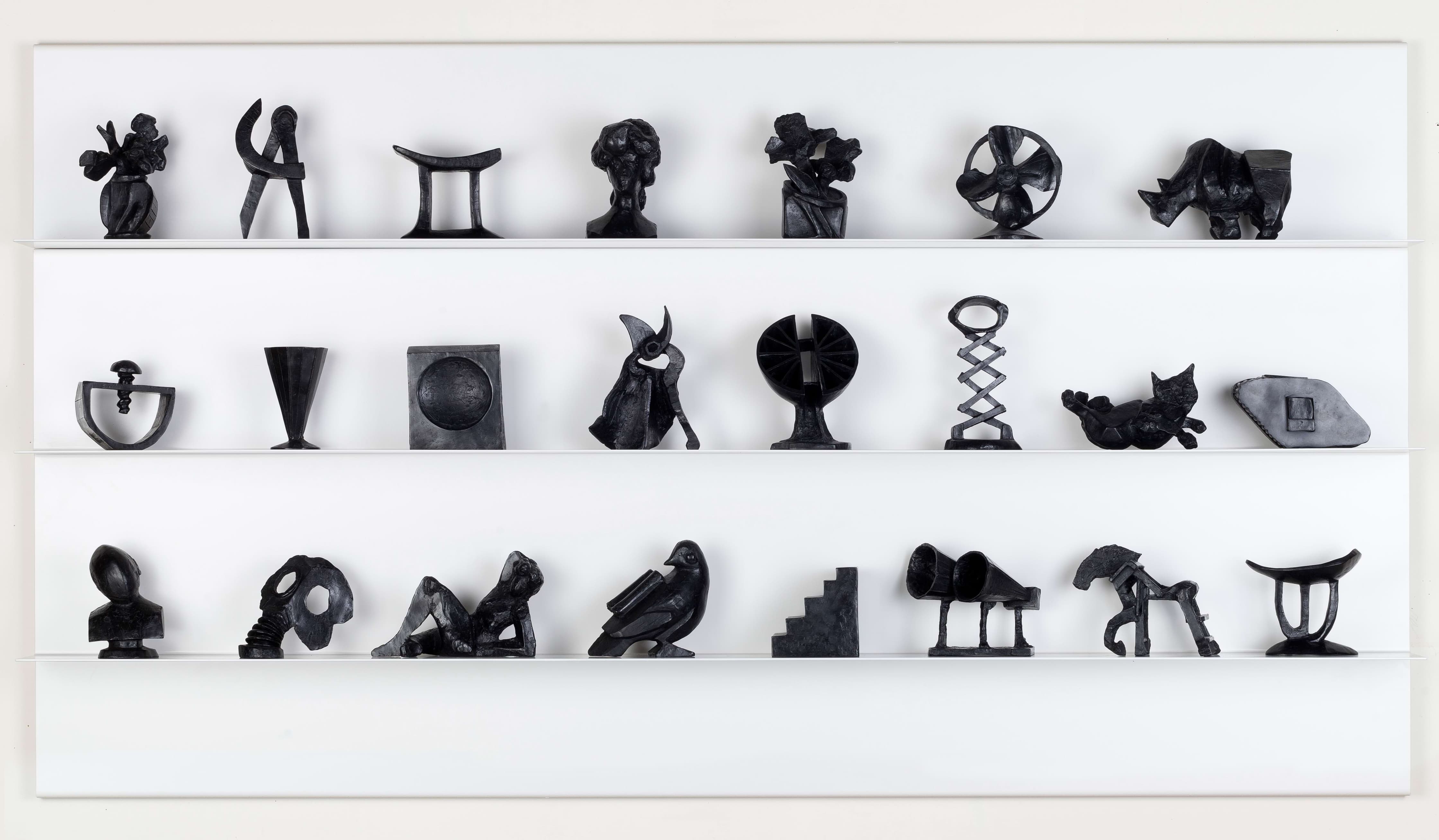
Lexicon, as a series of bronze sculptures, functions as a form of visual dictionary. These sculptures are symbols, glyphs, suggested words or icons, many of which have been used repeatedly across projects and bodies of work. The glyphs can be arranged in order to construct sculptural sentences and rearranged to deny meaning.
In 2017, Kentridge produced his first set of 44 Lexicon sculptures. The second set in this series, Paragraph II, is comprised of 23 individual bronze glyphs.
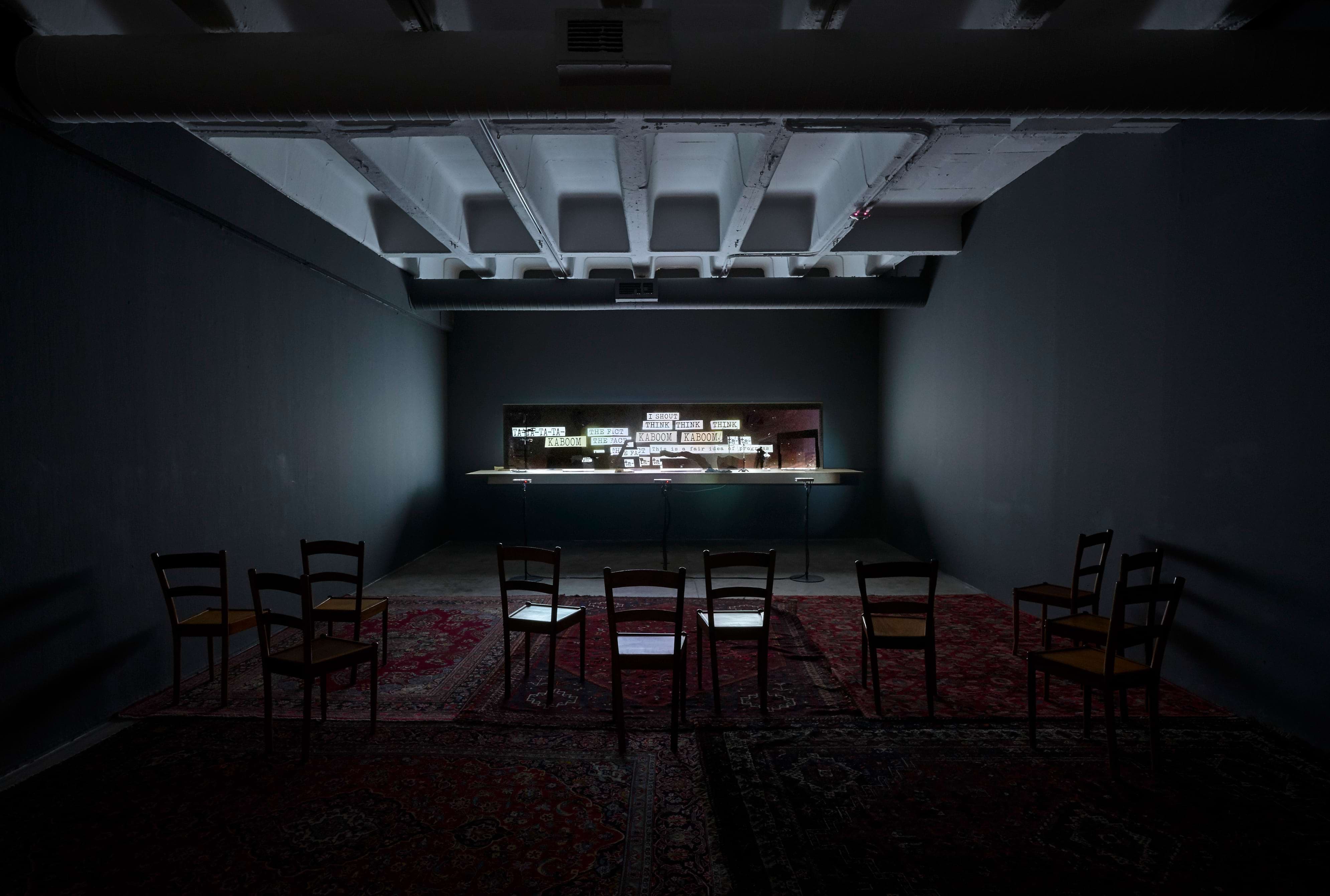
KABOOM! is a new three channel film installation created by William Kentridge from material related to his critically acclaimed production, The Head & the Load, which premiered at London’s Tate Modern in July 2018.
A play on the Ghanaian proverb, ‘the head and the load are the troubles of the neck’, this large-scale production expressively speaks to the nearly two million African porters and carriers used by the British, French, and Germans during the First World War in Africa. The Head & The Load takes the form of a processional musical journey and the spirit of the monumental production is recreated by this installation in miniature. KABOOM! fuses visually rich projections, on to a panoramic stage populated layered by sculptural objects, with an immersive soundscape, creating an experience with the energy and pathos of the live performance.
According to Kentridge, the project explores ‘the contradictions and paradoxes of colonialism that were heated and compressed by the circumstances of the war’.
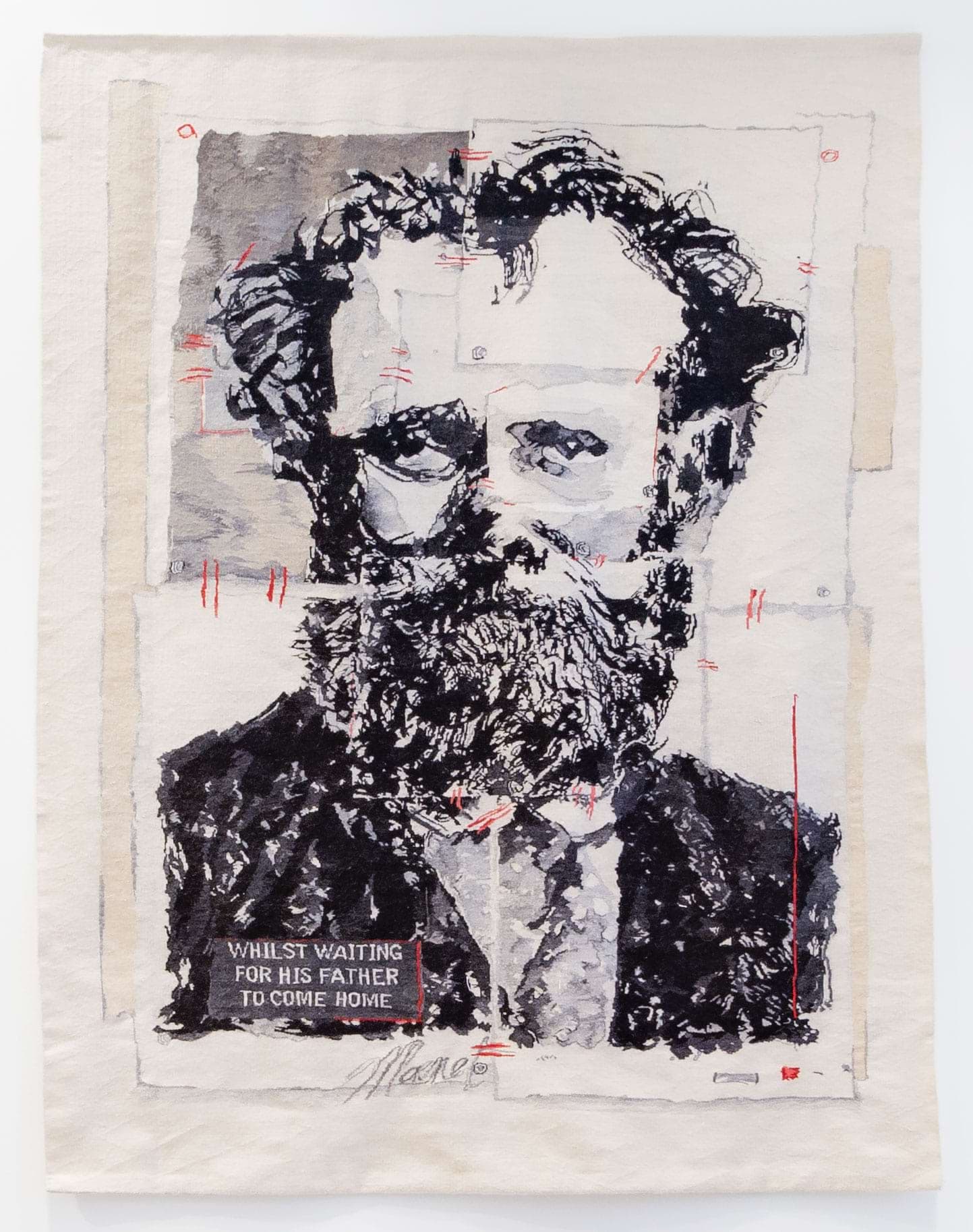
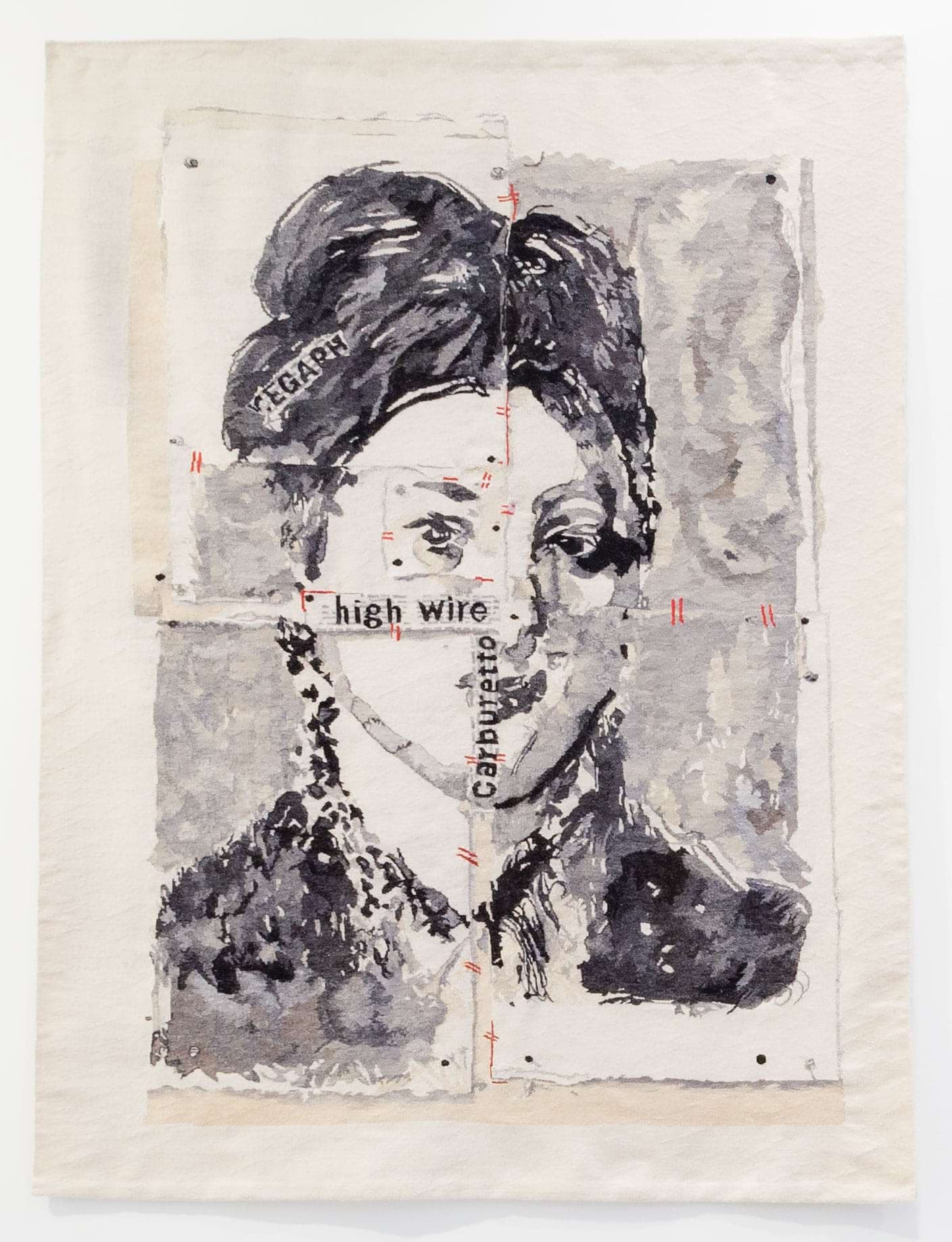
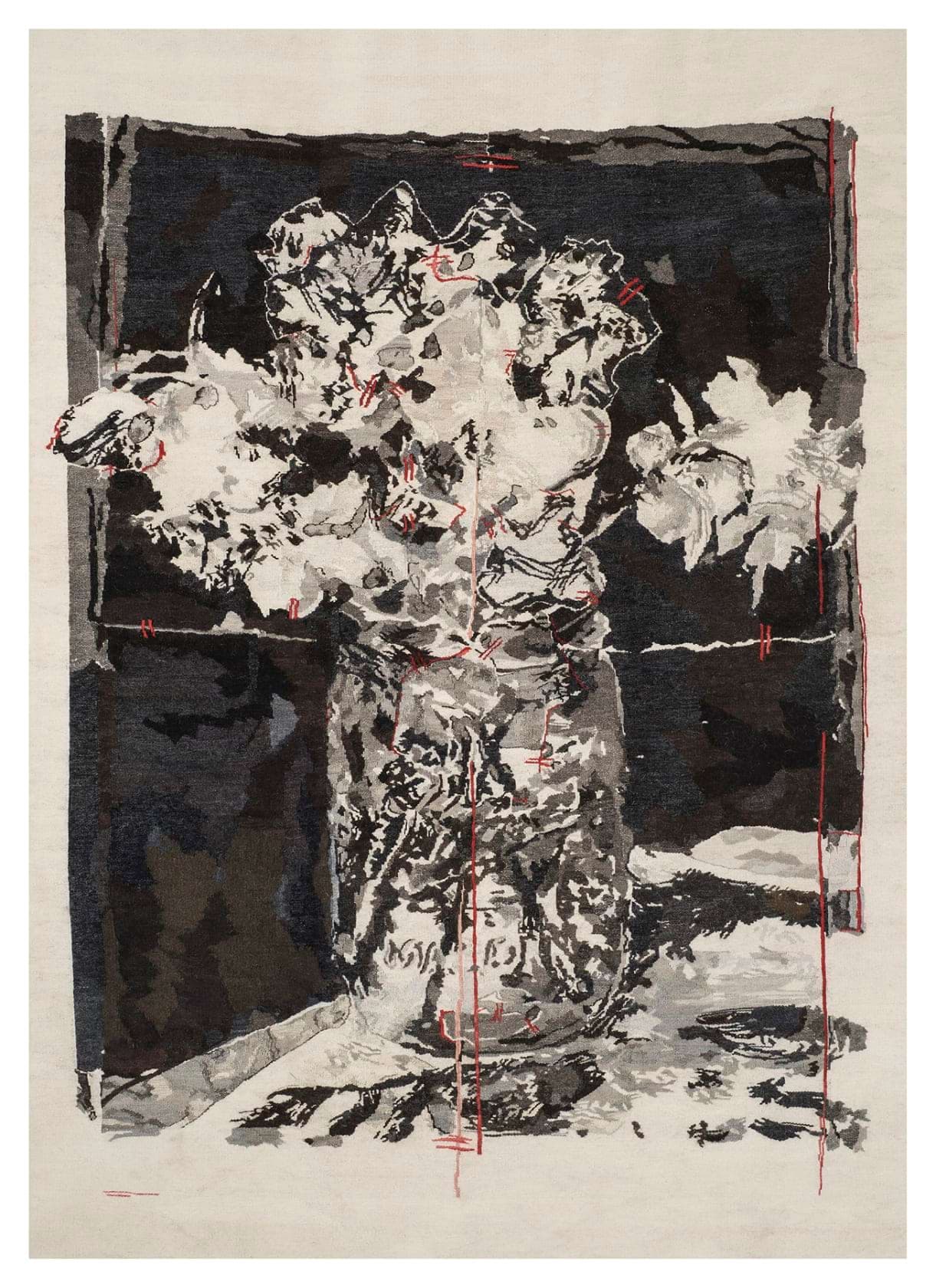
Marguerite Stephens and Kentridge have been working together on tapestries for the past twenty-four years. The longstanding collaboration between the two studios creates expressive artworks in which Stephens translates the artist’s collage drawings for the very different materials and techniques of tapestry-making.There is a contemporary sensibility in the transformation of a Kentridge image into a series of pixilated decisions: the 2000 threads of the warp, the many thousands of thread of the weft. The coherent final image is the result of many specific decisions.
A tapestry also relates in scale to a mural. But these are removable murals, and in this way relate to projections too. So the artist thinks of these sometimes as fixing the frames of a projection in the taut strings of the weaving. In translating the artist’s drawings and collages into tapestries, there is a process of amplification, expansion and refinement. They are redrawn and further detailed in thread. Lines of red, muted in the collages and drawings, become brighter. New lines are added too, giving the work a greater sense of flux, as if Kentridge was rethinking and reimagining the scene.