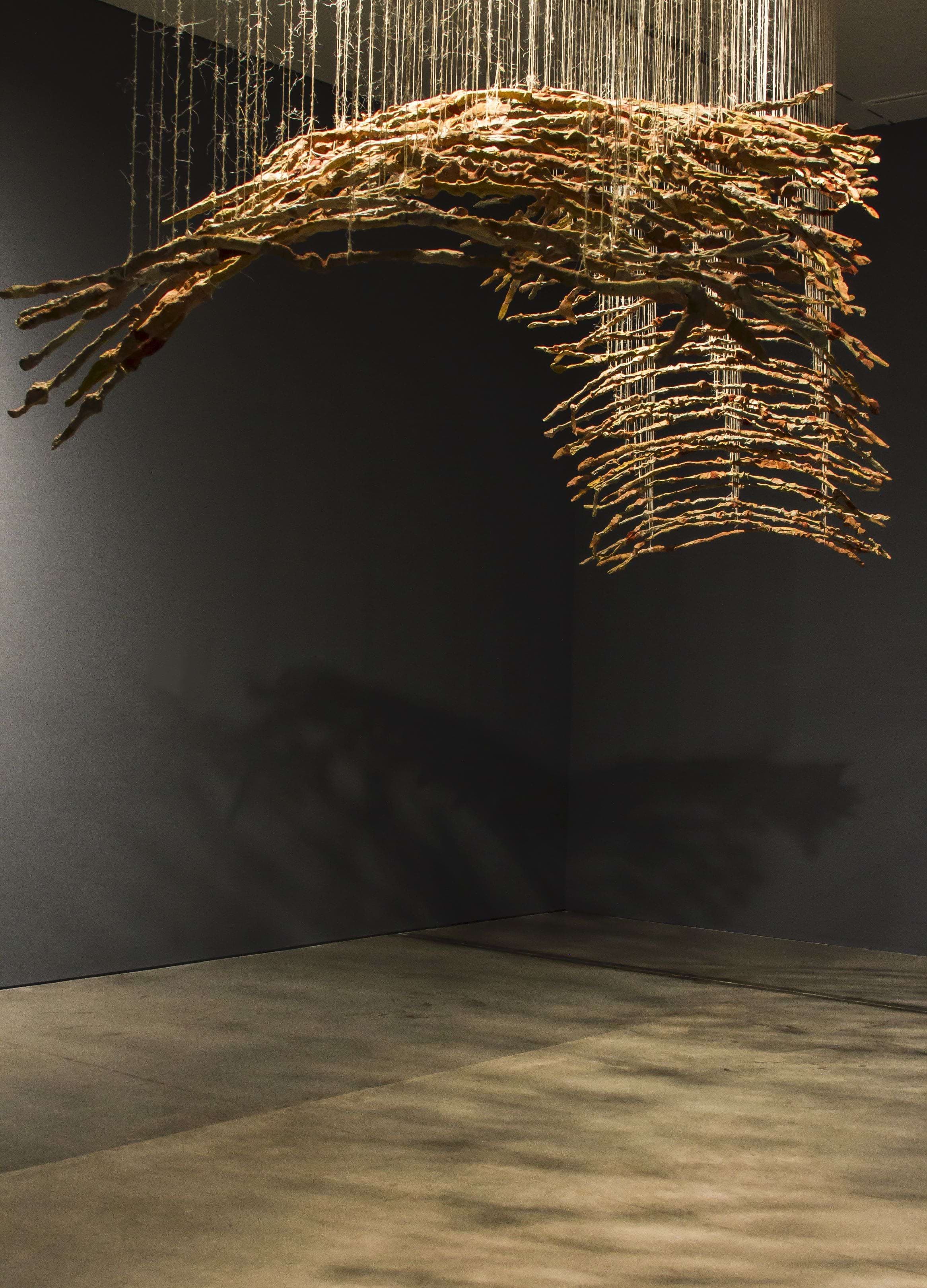
Techo de leche y tierra, is a delicate and monumental installation assembled over the viewer’s height, by artist Juliana Góngora at Biennial 12. The artist researched the process of turning liquid milk into a solid yarn with which it is possible to knit. The project was born from a tale by Marguerite Yourcenar, La leche de la muerte (The milk of death), about a buried woman whose milk continues to sprout to feed her son. Or from Hera's story, that would have created the Milky Way by the spattering of her breast milk. Juliana physically and intuitively investigated how to translate these stories into a real dimension by converting milk into fiber. She extracted the milk’s casein, added lime, and soil to form a mass combined with earth and modeled by hands. The yarn came after an experiment of two years, first in the laboratory and after in her home kitchen, where she watched carefully and emotionally, the milk always different, and extremely permeable to its surrounding environment. The yarn has an elastic and almost translucent appearance. Techo de leche y tierra (Milk and soil ceiling) embraces the bodies that circulate beneath its space.
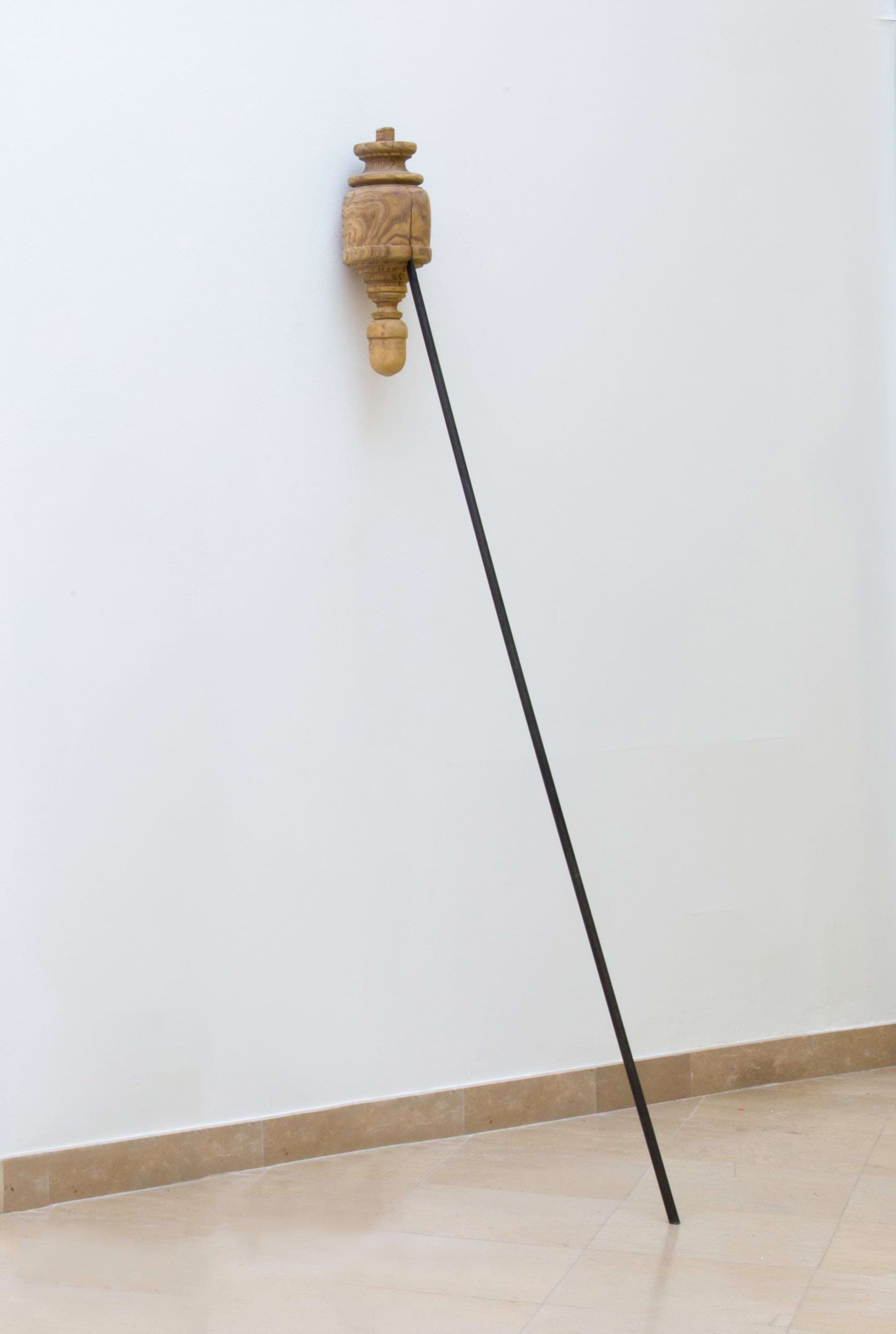
Andaluz was conceived and produced in the Andalusia Spanish region. The two objects: the wood ornament and the bar, were found wandering in Andalusia. With no apparent relationship between them, the ornament is common in the Andalusian region and the bar is a generic tool-bar for labouring in fields. Andaluz is a sculpture ruled by the principle of reciprocity: the wooden ornament and the metal bar relate in a dependent way to configure the standing structure assembled by gravity. In a reciprocal relation, there is no subordination of one to another. However, in Andaluz, the bar is slicing the wood as the blade cuts the eye in the surrealist film Un Chien Andalou (An Andalusian Dog) [1929] of Luis Buñuel and Salvador Dalí.
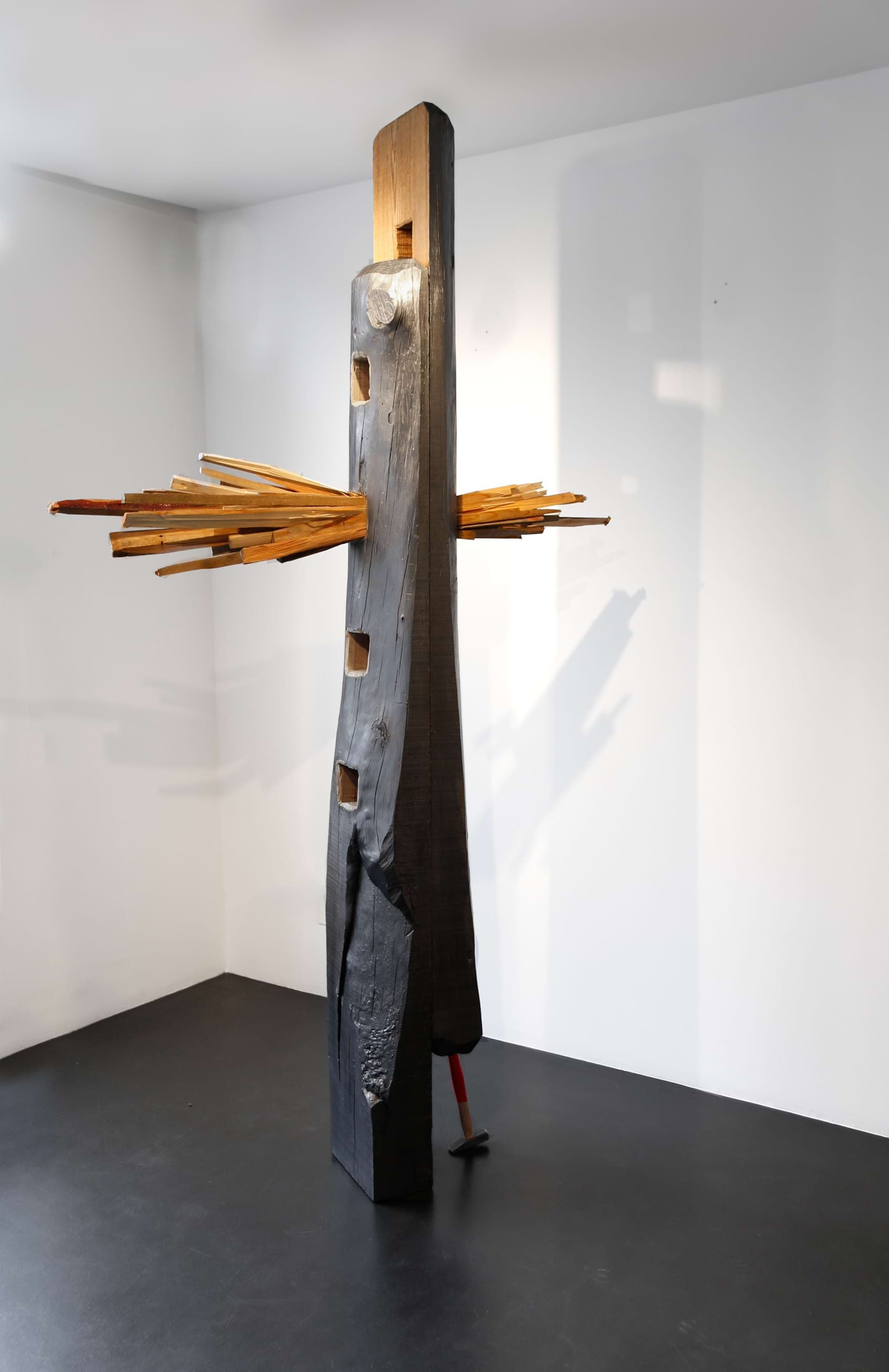
Footer is constituted by a combination of mechanical and symbolic forces. A wedge system assembles two shinny found wood logs; originally carved to be used as a fence gate. All wedges are exerting reciprocal forces in the orifice to maintain the assemblage. The same hammer used to batter the wedges, precisely fits in the bottom gap to support the structure. The red hammer becomes the mean and the end. All the elements that constitute Footer are exerting a structural function except the graphite and its allure effect.
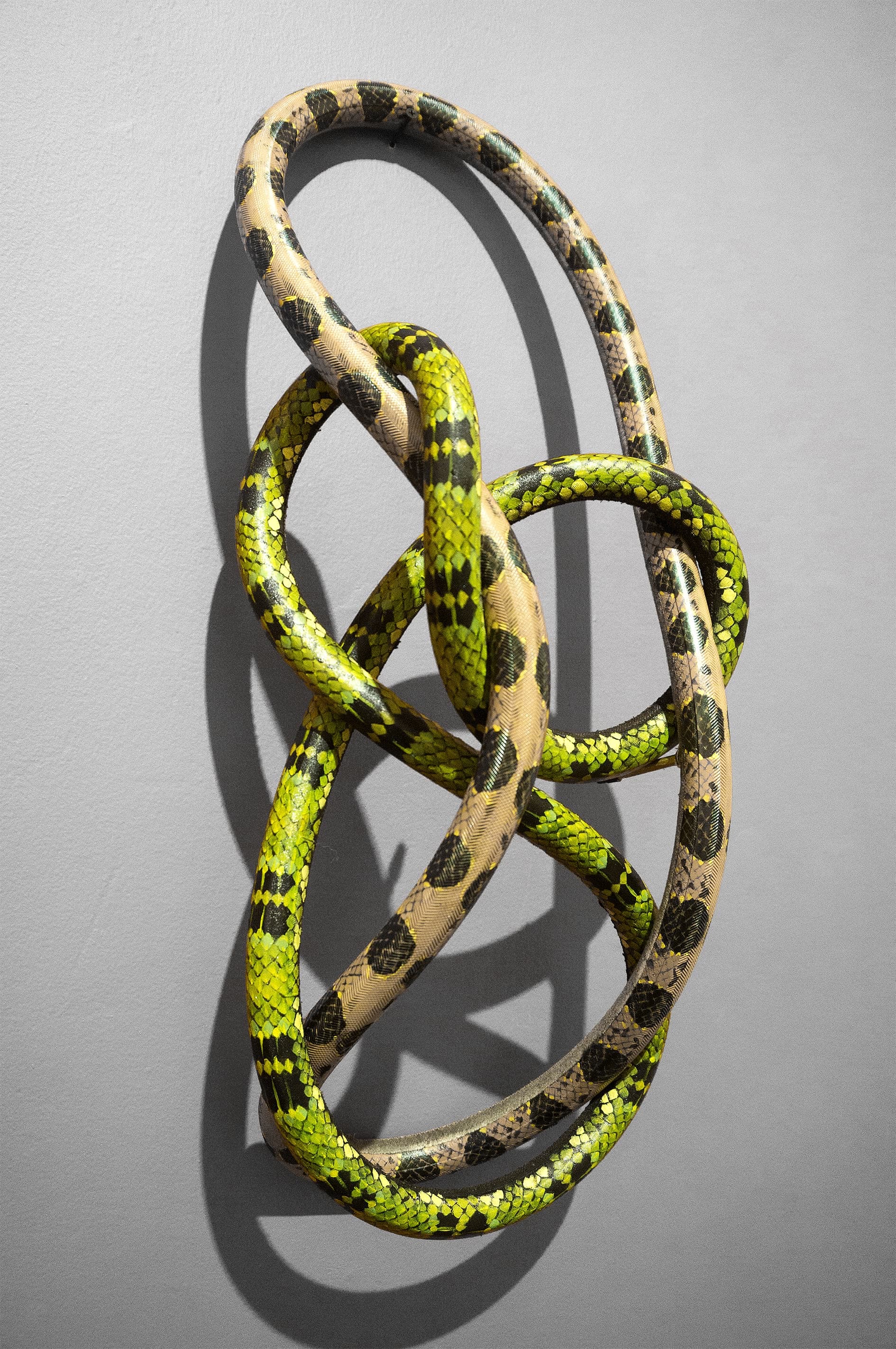
Gente Serpiente is a work made with the artists' bicycle wheels, intertwined, twisted, and painted with patterns of poisonous snakes of the tropics. This sculpture, as well as other pieces by Mazenett Quiroga, seeks to reveal and re-inscribe everyday and ordinary objects within a contemporary mythology, to reconnect them with an origin, thus recognizing their hidden life and meaning. In these objects is inscribed the life cycle and animal, cultural and geological time, since they were once marine organisms that became thanks to the action of sand, sediment, and mud in oil, then on wheels and again return to the animal world, they are snakes (symbols of eternal return) that will continue its eternal evolution and transformation beyond the obsolete and unnecessary distinction between cultural and natural objects. They are people in the sense that they possess a soul, a history, and agency in the world.
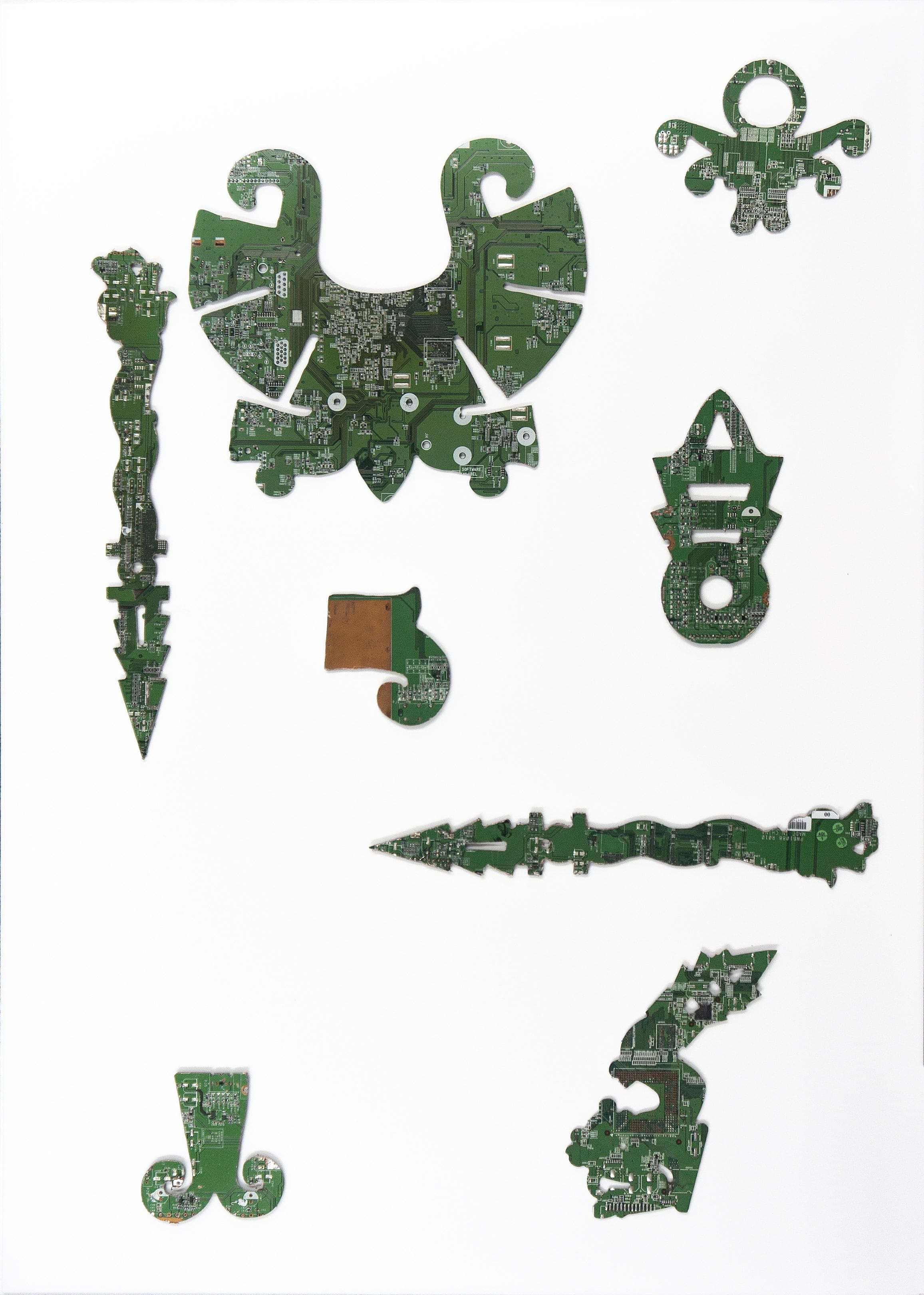
Starting from pre-Hispanic goldwork pieces that we found in the Museum of Anthropology in Mexico City and the Museo del Oro in Bogotá, we create these pieces made of cuttings from motherboard waste. They arise from a reflection on the museum as the privileged space of speculation, we understand most of the ethnographic pieces as technology from another time, whose magical and ritual function is based on information that is codified in each piece, in order to be deciphered. In the same way that motherboards are a technology of our time which is named by some indigenous people of the Amazon as the witchcraft of the white man.
These pieces challenge the speculation about the future of our material culture and its wastes as well as possible interpretations of these as magical, ritualistic, and enigmatic inscriptions waiting to be deciphered, as seen from a future archeology perspective.
These electronic boards remind us of the material and physical part of our current technology whose trend is towards the use and storage of information in electronic media, this has generated an immense amount of waste, which in turn generates practices such as urban mining in which precious metals are extracted from technological waste.
Motherboards are normally found inside the objects and remain hidden from our eyes. When exhibited, they reveal the material basis of our technology, since these boards are agglomerations and re-configurations of various and large quantities of minerals extracted from the earth.
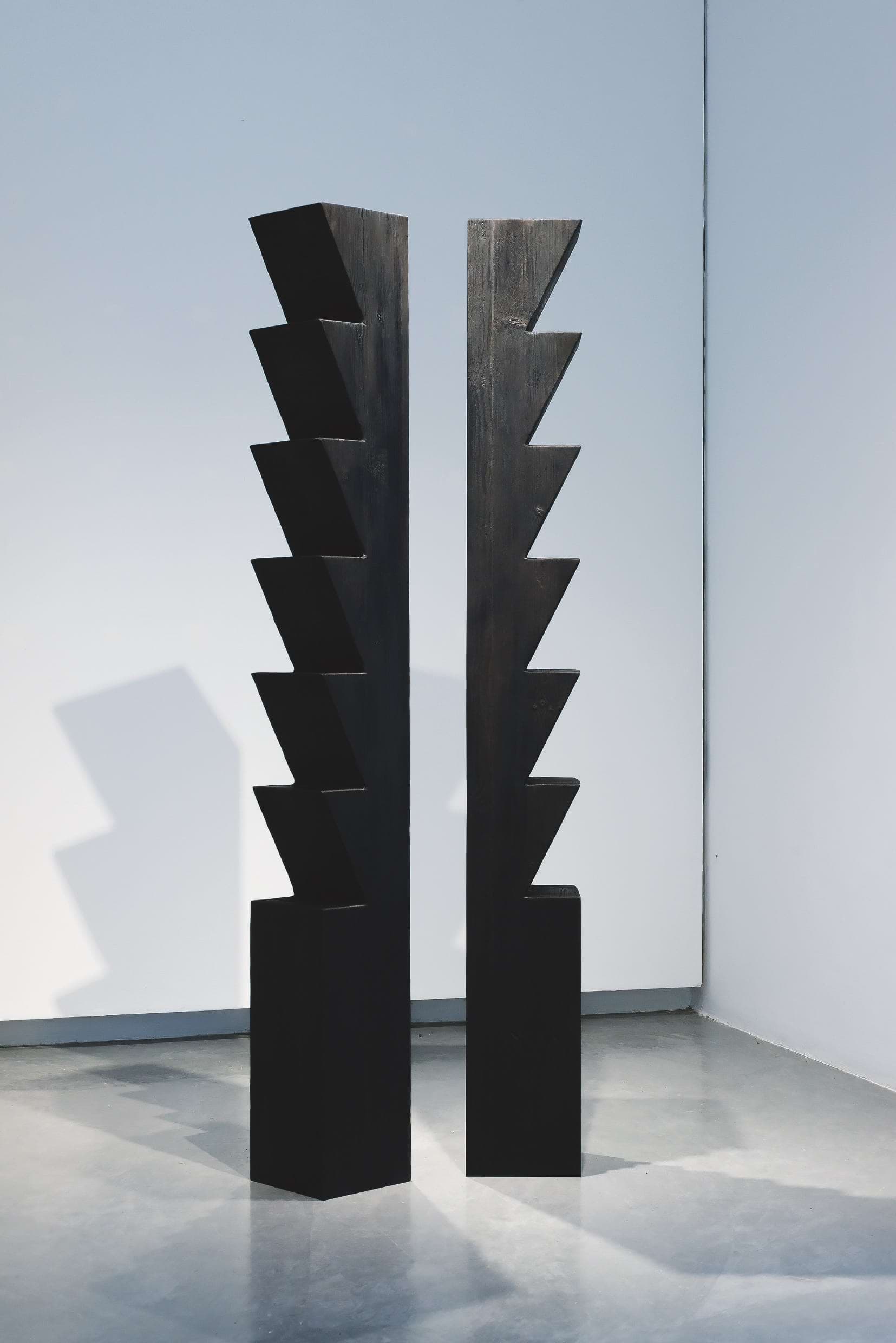
Etude pour un monument was realised for Bouhchichi’s first solo exhibition at Selma Feriani Gallery, Tunis in 2019, entitled Les Mains parallèles. The artwork creates liaisons between spaces and forms, more precisely the form of the ladder that we find in Berber and sub-Saharan architecture. The artist adopts a simplified and geometric form by questioning the impact of monuments today and their ownership by authorities. Forms are catalysts for these questions, in which they blend, connect, separate and overlay. The artist renders his relation to history more complex, from both a synchronic angle, concerning his relation to the different people and contemporary voices that are invoked, and a diachronic viewpoint, through his participation in a history of forms, in the long term.
Furthermore, the use of burnt wood connotes a violent act, paradoxically, it can also be seen as a method of preserving the material; some cultures acknowledge that burning a material is an offering of a second life. Placing both pillars side by side creates an exchange, where one element dominates the other. (extract of exhibition essay, text by Karima Boudou, 2019)
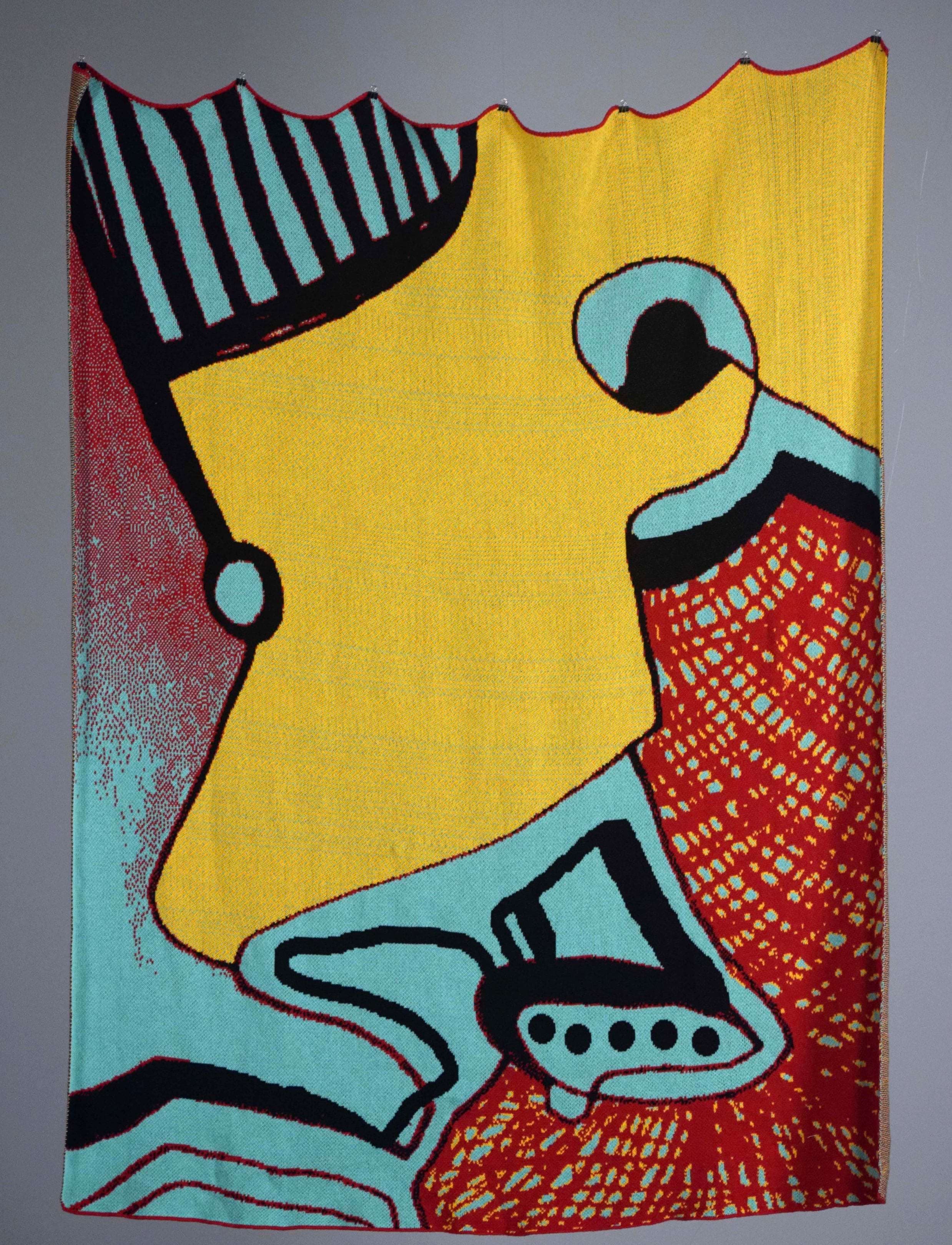
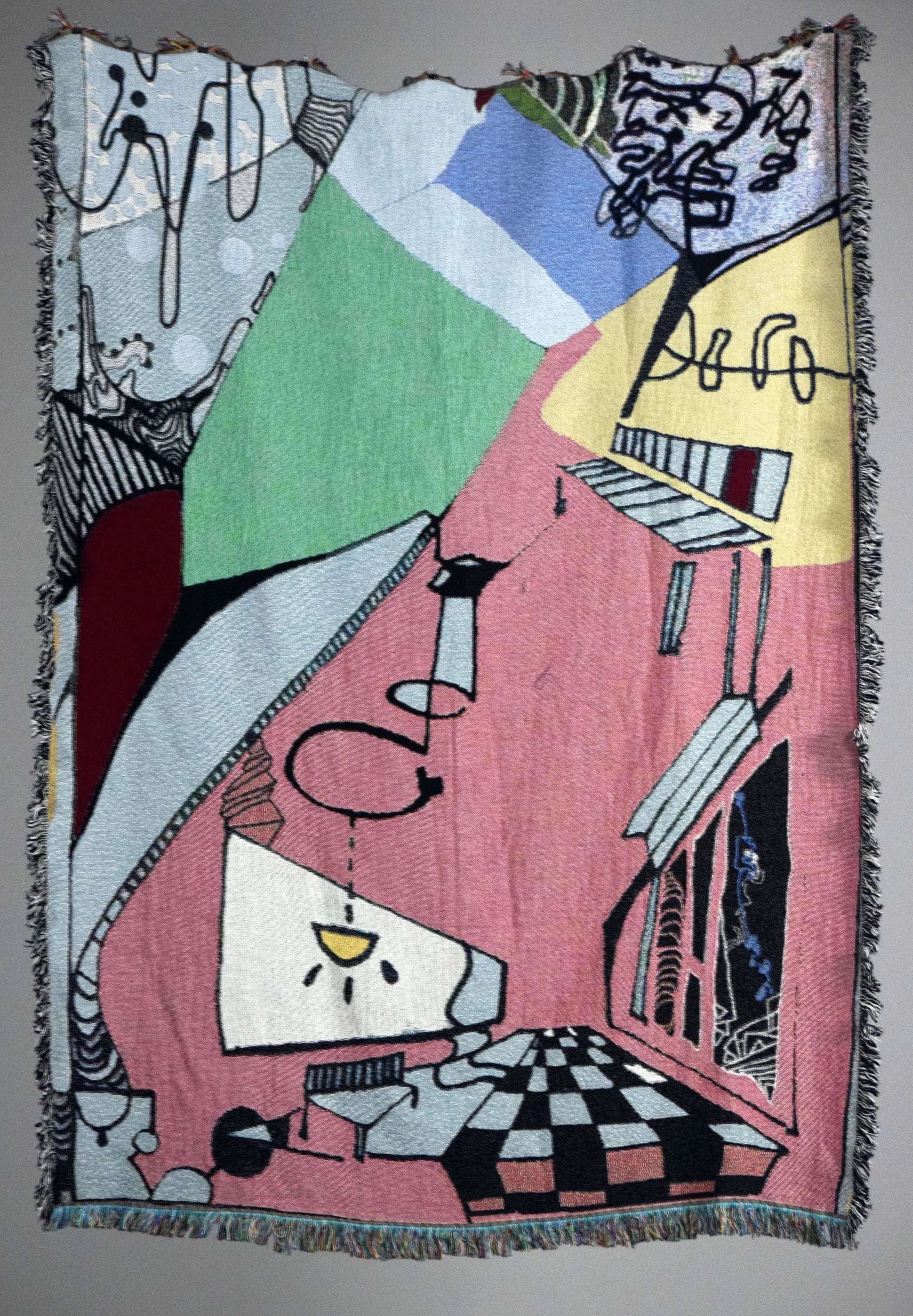
Mi espacio, tu espacio reflects the ongoing exploration of the questions: what does a safe space mean to me? How does a safe space feel to me? Where am I allowed to exist, to play, to heal, to unlearn, to decolonize, to deconstruct imposed imaginaries over my “tropical” body, my “exotic” hair and my nature of existing as a woman with “that looks like a wig” afro? This piece is a reminder that for me to decolonize the spaces I find myself in (tu espacio), I have to decolonize my own idea of self, my body and my mind (mi espacio).
Mi sala is a reflection of a moment when I was living in a house, I never called home, filled with surveillance cameras inside and outside. Being out of a space I could paint in my own colors, switch objects when I felt it, dance really loud salsa with la escoba while cleaning, cut avocados in my own way, and not being so neutral in dinner conversations made me self-conscious of existing as a not-so-free being in a space. Was I fooling myself pretending I was free? Or was I just adapting to the space because I had to? I considered “mi sala” part of the initial processes to reclaim space, power and agency to exist and play with the world I want to exist in as a free Dominican woman with an afro outside of my island.
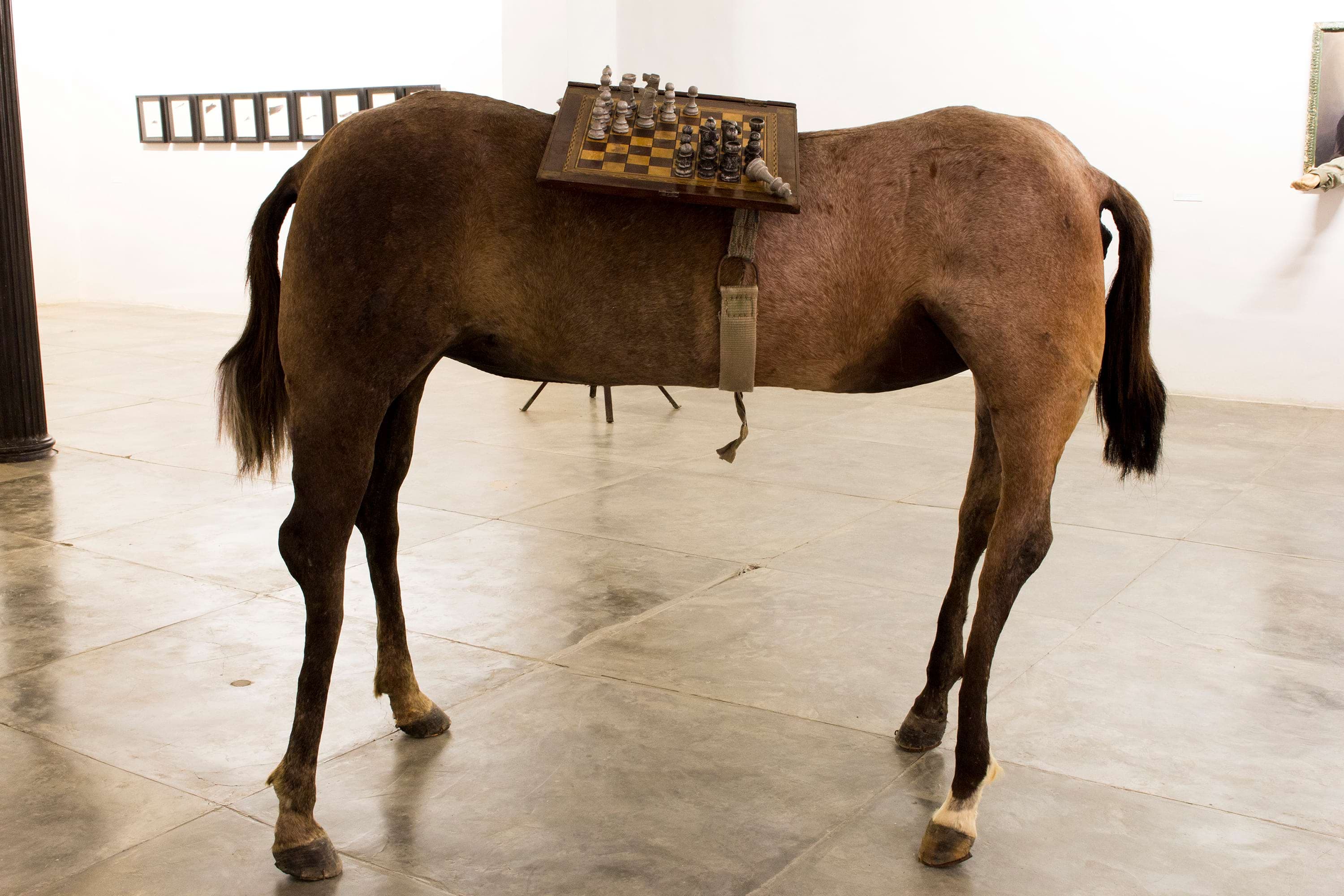
The Father of the Cuban Nation, Carlos Manuel de Céspedes, spent his last days confined in the mountains of eastern Cuba after being illegally removed from the presidency of the Republic in Arms. The pages of his diary are filled with the most passionate reflections about his life, his role in history, his enemies, the revolution and many symbolic images that resemble his sensation of a close fatal ending.
The piece is a metaphor of his agony and loneliness, of the recurrent failure in our history caused by an evil that comes from inside. The siamese mules presented as a historical relic may perfectly be taken out from a nightmare of the hero: the corpus of a nation divided under the greater evil of colonialism. In the group, in a strange chess move, the white king is left alone by his own in reference to how Céspedes was left alone by the Cubans to be killed by the Spaniards.
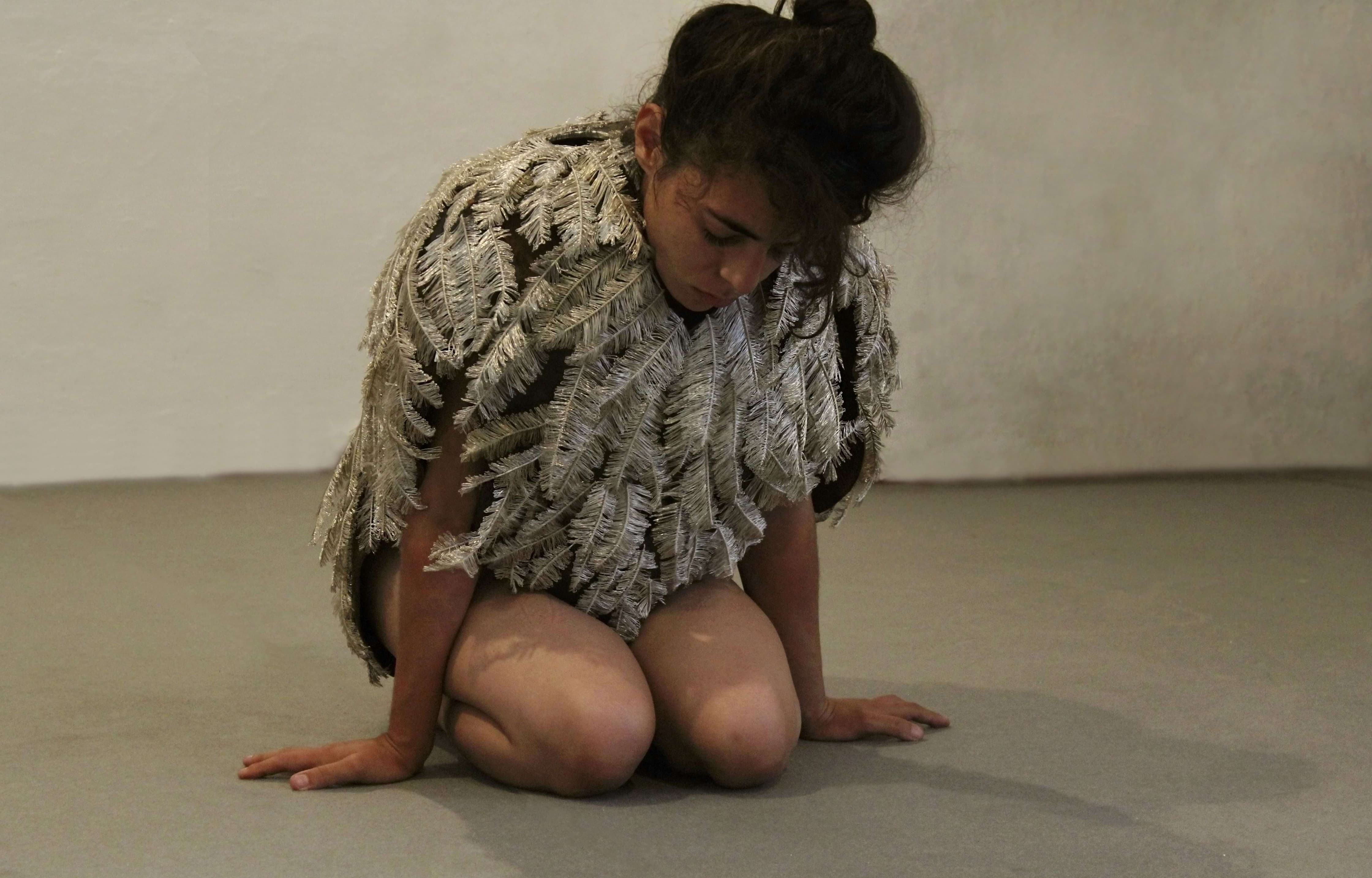
Flight is an action which goes through two stages, called “Permanence” and “Escape”, respectively.
The former in which the artist shows up wearing a metallic armor covered with feathers made with silver threads. In the latter, only the armor remains, like an empty shell, as a vestige, which activates presence from absence.
This plumage, by its material, its consistency and its weight, retains and immobilizes; the symbolism that encloses the feather as an element of ascension, movement and liberation, contrasts with an image that is shown from the static and the impossibility. Then we witness an empty plumage, as a vestige, or a fading symbol in transit from the corporeal plane to the ideal. The piece contains a duality between desire and reality, the material and the imagined, the circumstantial and a spiritual will in opposition.
Collateral to 12th Bienal de La Habana, Havana, Cuba
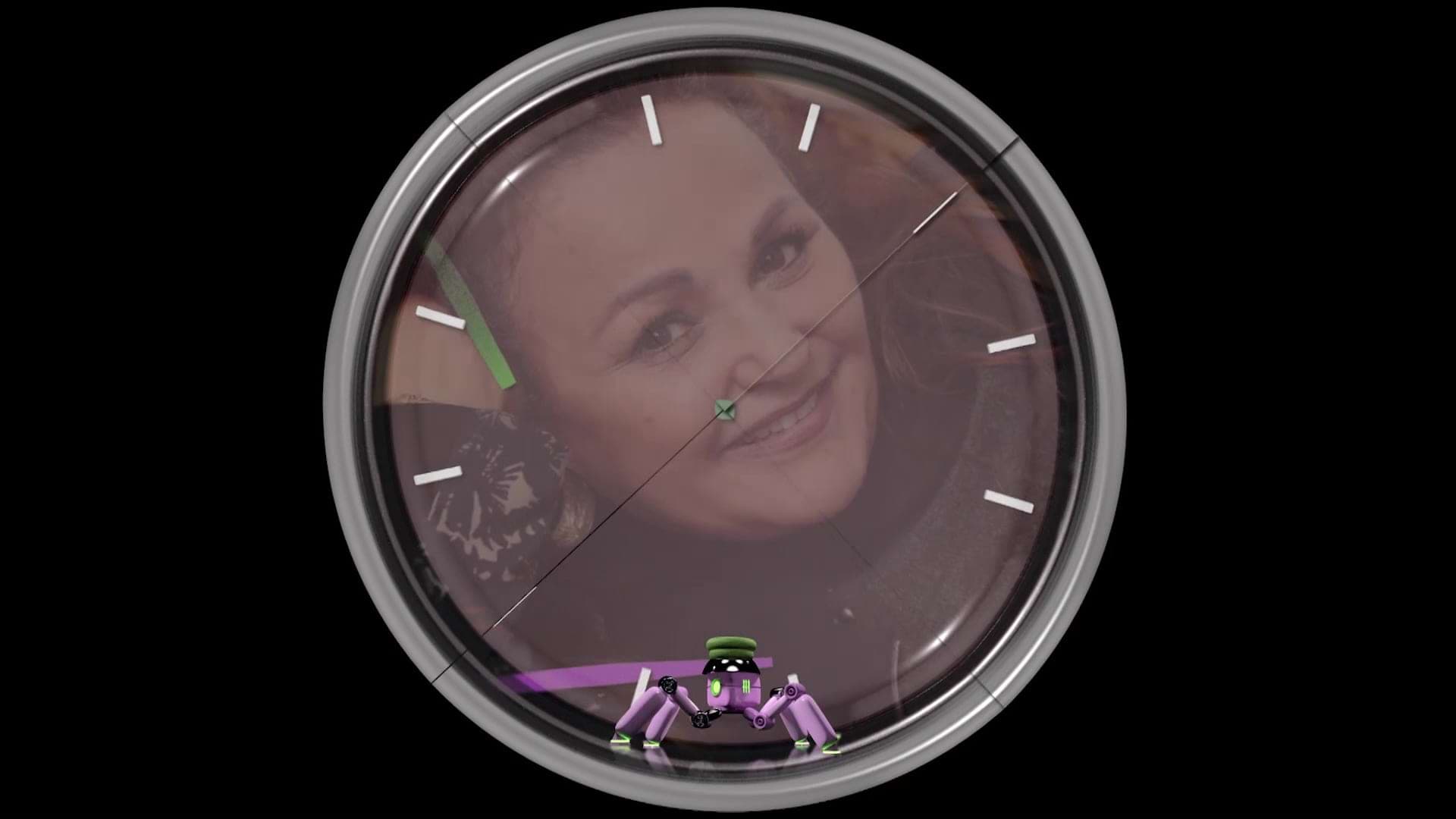
Ghariba is a portrait of women in my family and an opportunity to spend time with them. With a camera separating us, I discuss middle-age romance and sexuality with some of the main cast members from my personal childhood mythology. Lâ Atika shares her love for romance and driving cars, Bouchra shares her first experience on Tinder, Fatima-Zahra takes us on a tour of her plastic surgery practice. While the videos are constantly switching from a genre to another and the cast oscillating between familiar and strange (in arabic, Gharib), the playfulness and tenderness are constant.
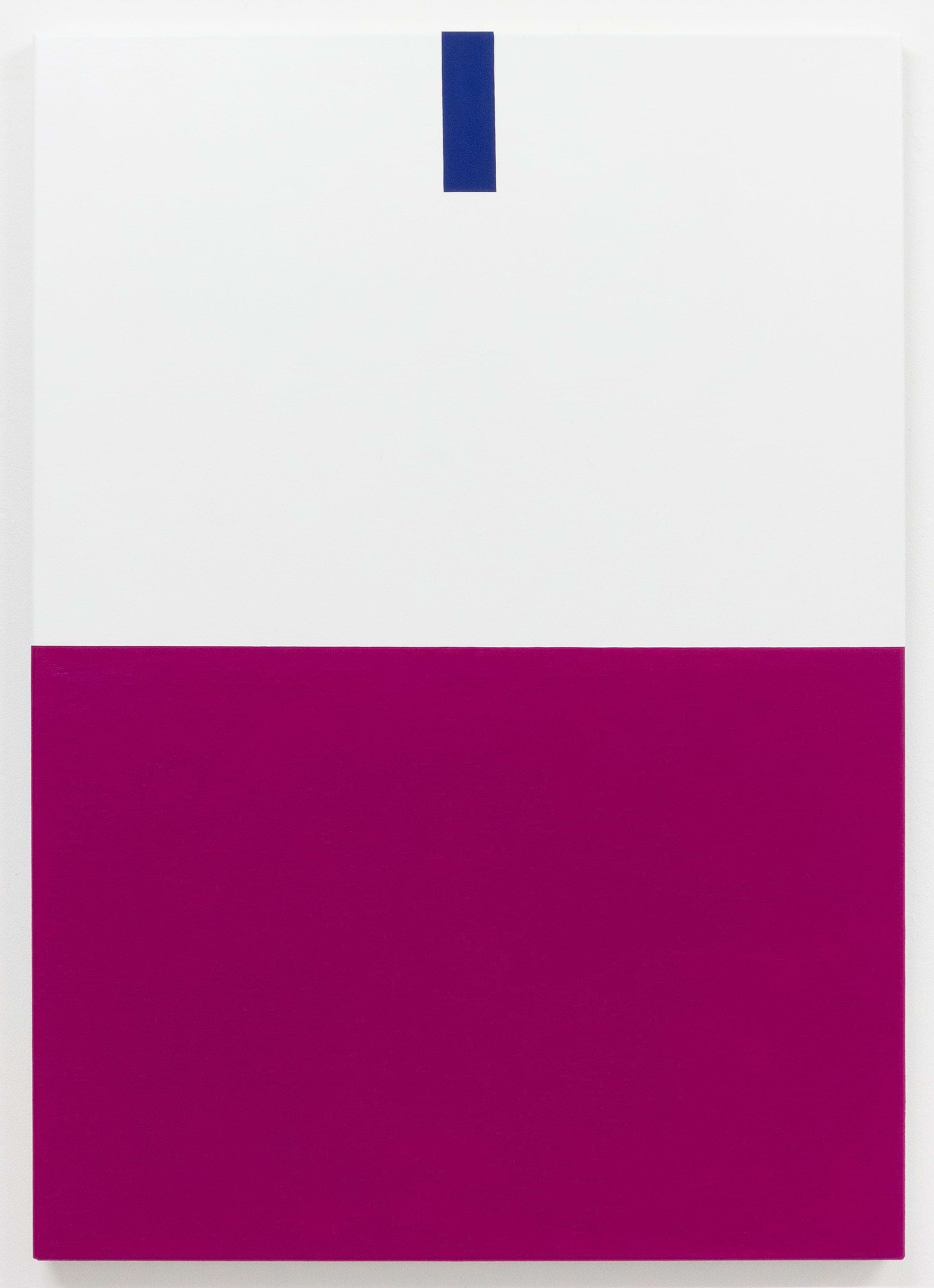
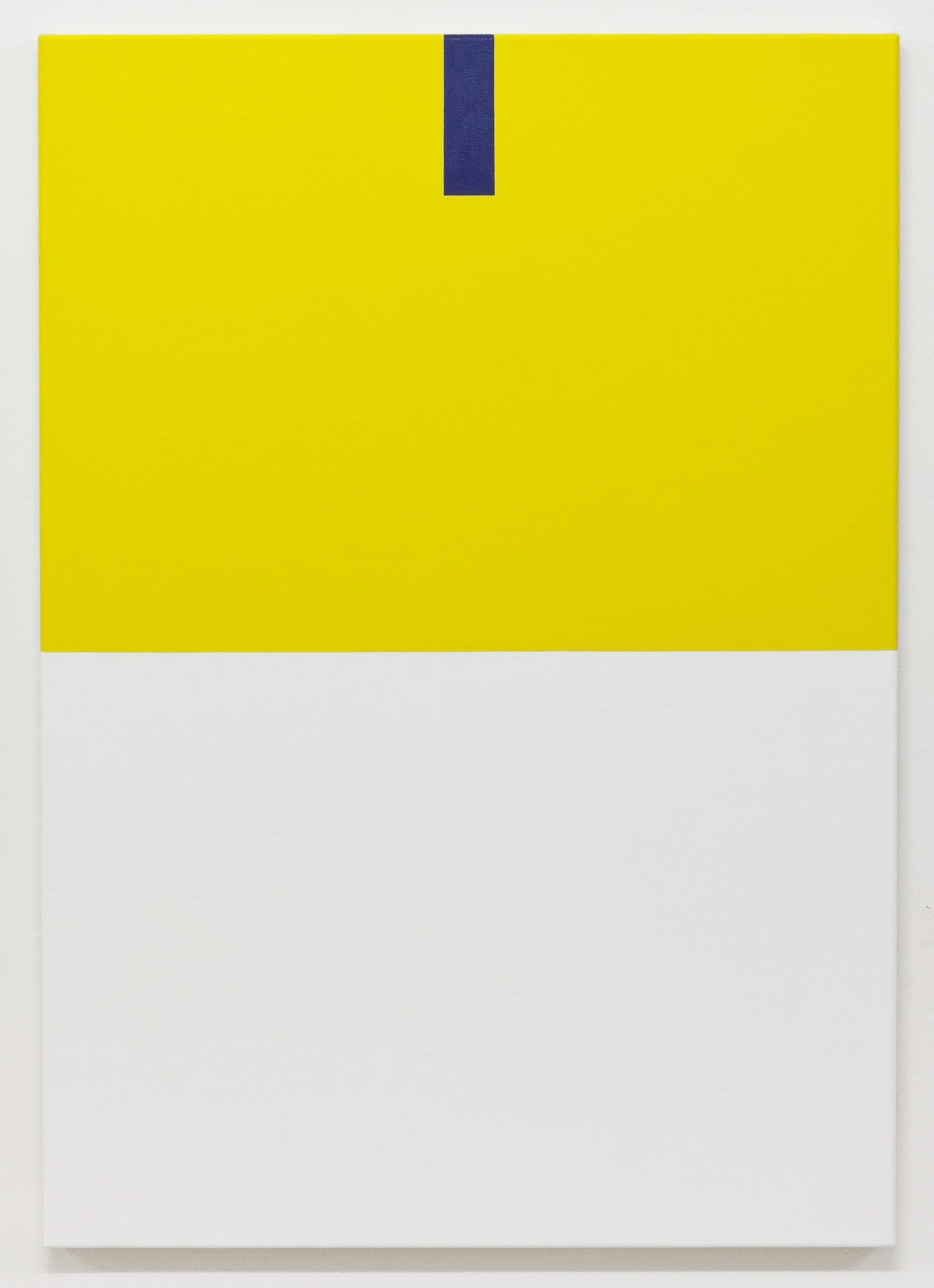
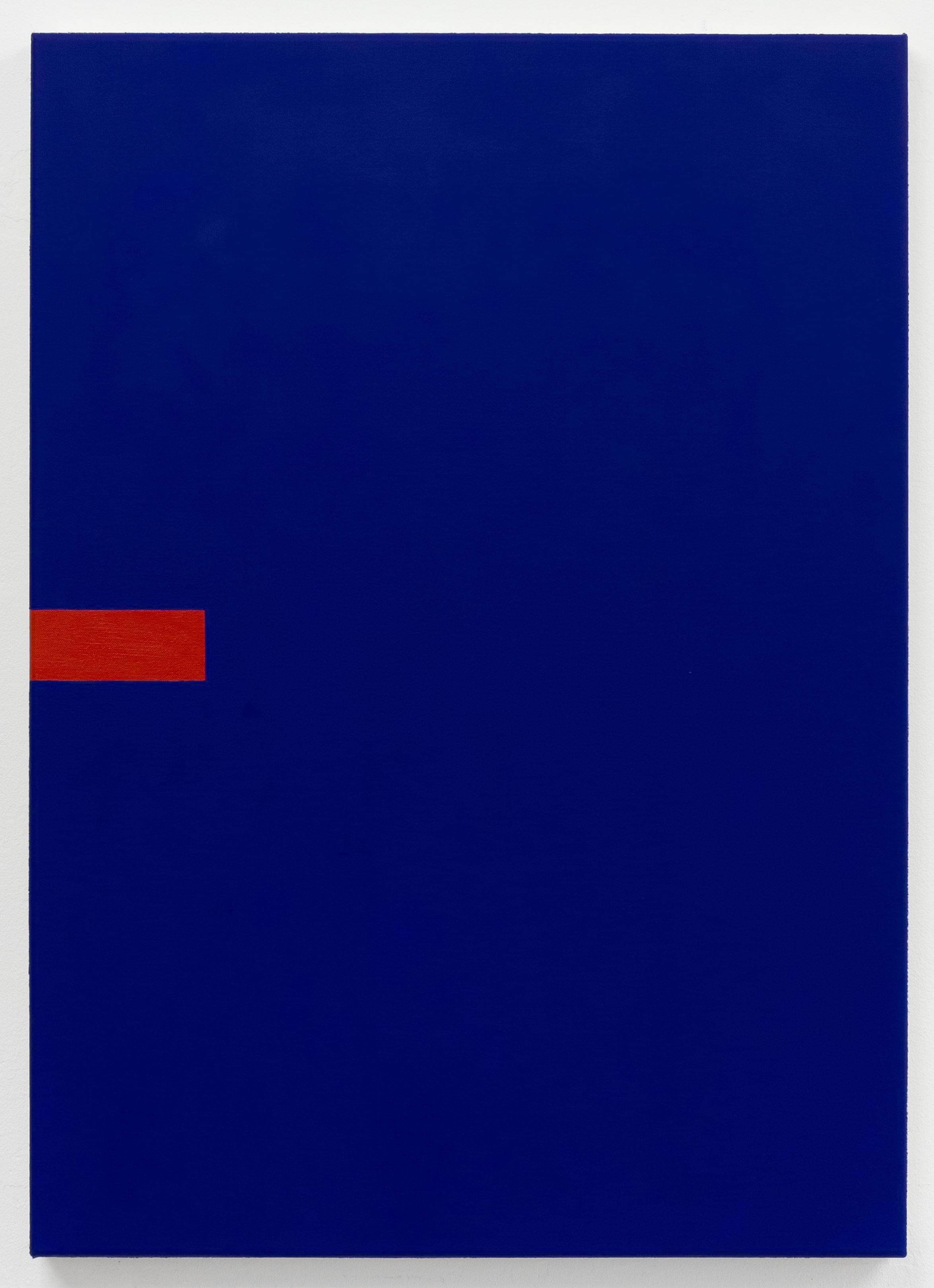
This selection of paintings by Cuban artist Yaima Carrazana appropriate and re-articulate the meticulous design of the Dutch government, reaching out to the government-wide corporate identity. The paintings are part of a series entitled “Declaration letters” taken from designs of the Ministry of Justice, Tax and Customs Administration (Belastingdienst), and documents regarding her immigration status in the Netherlands. For the artist to try to understand these documents has led her to reflect on the complexity of her own process of integration into Dutch society. Creating a series of abstract paintings in which she takes the freedom to transform the official designs of the Dutch Ministry of Justice from a very personal point of view. Yaima Carrazana’s latest works summarizes several years trying to figure out “the good life” in a foreign country.
This selection of paintings by Cuban artist Yaima Carrazana appropriate and re-articulate the meticulous design of the Dutch government, reaching out to the government-wide corporate identity. The paintings are part of a series entitled “Declaration letters” taken from designs of the Ministry of Justice, Tax and Customs Administration (Belastingdienst), and documents regarding her immigration status in the Netherlands. For the artist to try to understand these documents has led her to reflect on the complexity of her own process of integration into Dutch society. Creating a series of abstract paintings in which she takes the freedom to transform the official designs of the Dutch Ministry of Justice from a very personal point of view. Yaima Carrazana’s latest works summarizes several years trying to figure out “the good life” in a foreign country.
This selection of paintings by Cuban artist Yaima Carrazana appropriate and re-articulate the meticulous design of the Dutch government, reaching out to the government-wide corporate identity. The paintings are part of a series entitled “Declaration letters” taken from designs of the Ministry of Justice, Tax and Customs Administration (Belastingdienst), and documents regarding her immigration status in the Netherlands. For the artist to try to understand these documents has led her to reflect on the complexity of her own process of integration into Dutch society. Creating a series of abstract paintings in which she takes the freedom to transform the official designs of the Dutch Ministry of Justice from a very personal point of view. Yaima Carrazana’s latest works summarizes several years trying to figure out “the good life” in a foreign country.