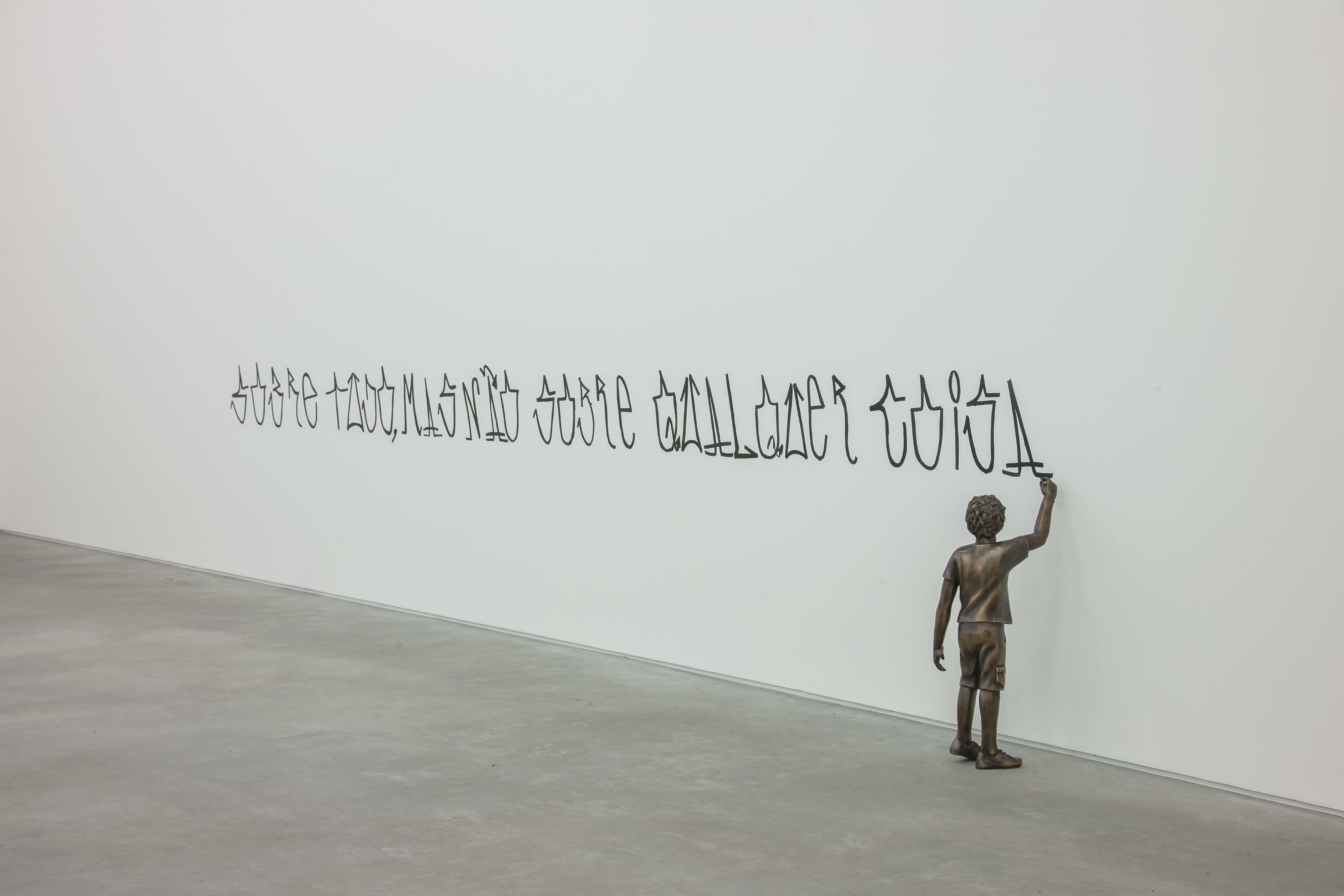
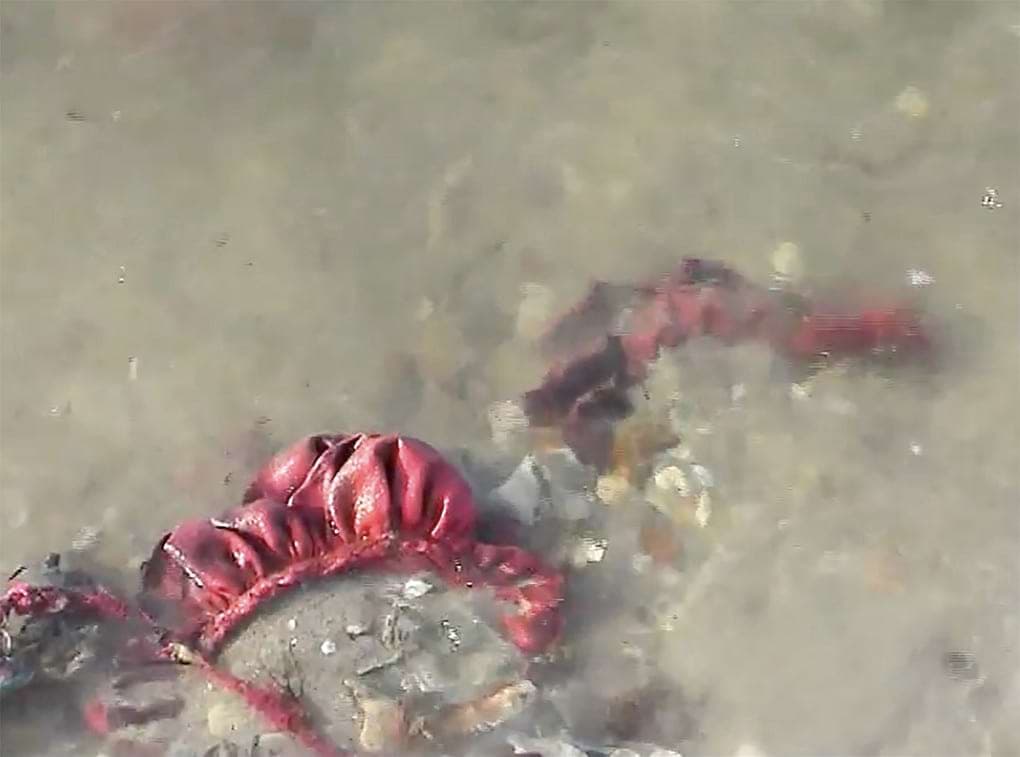
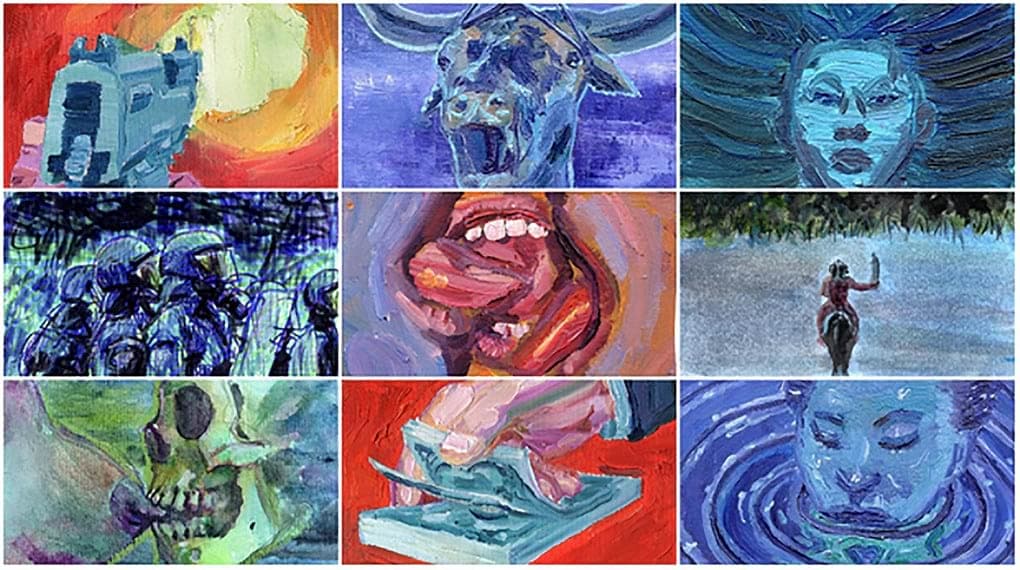
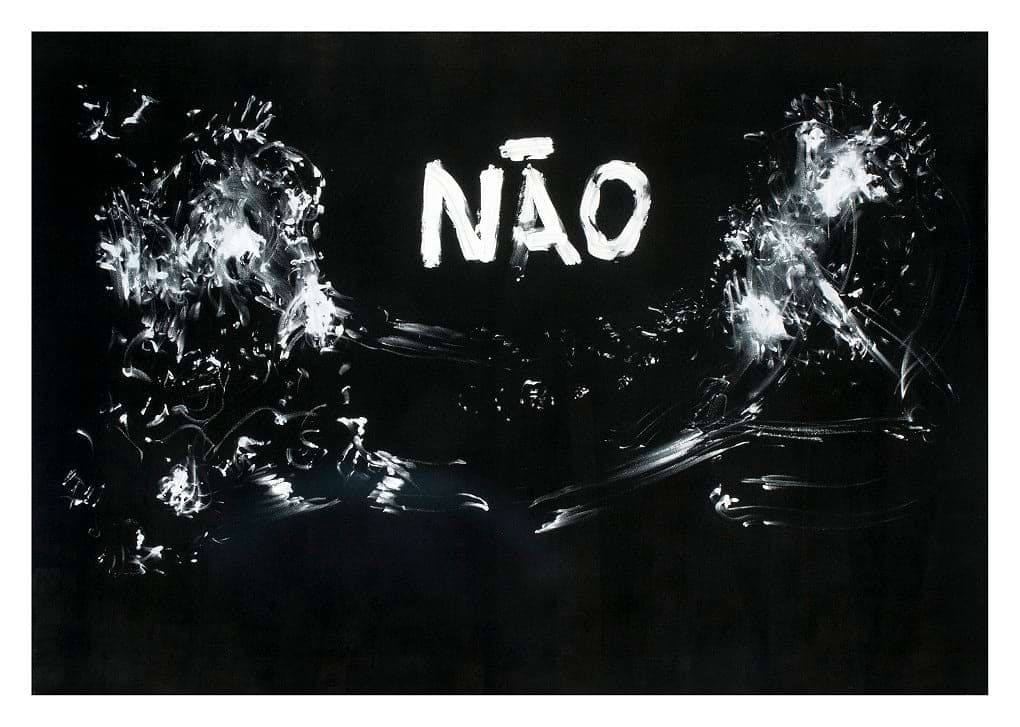
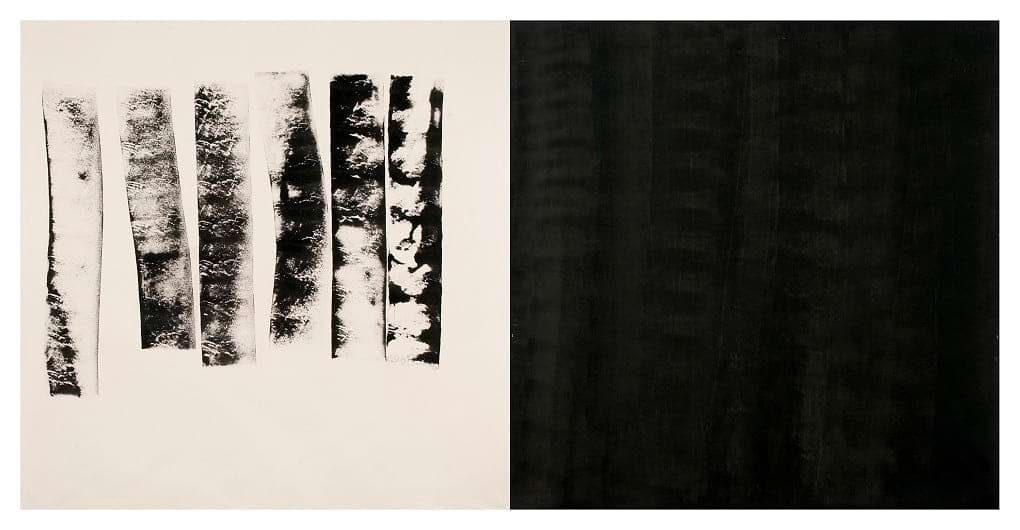
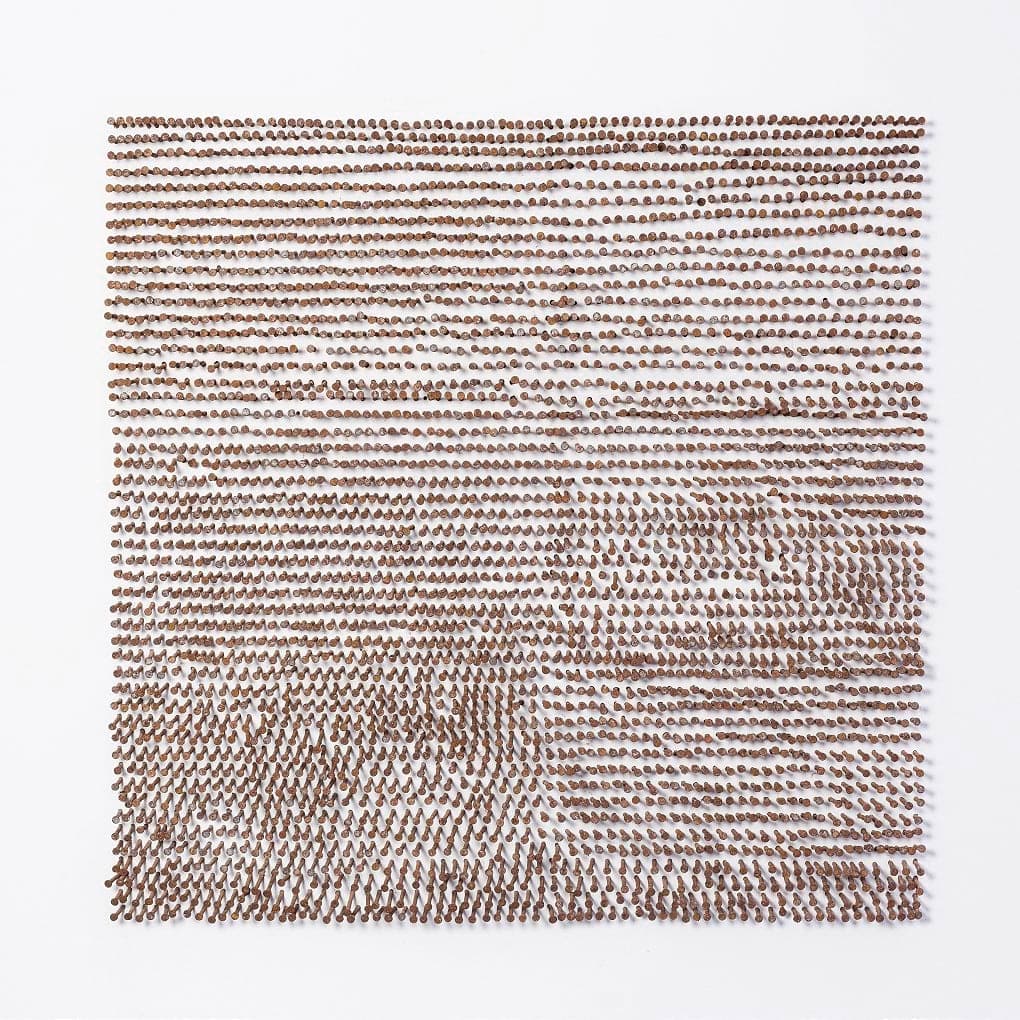
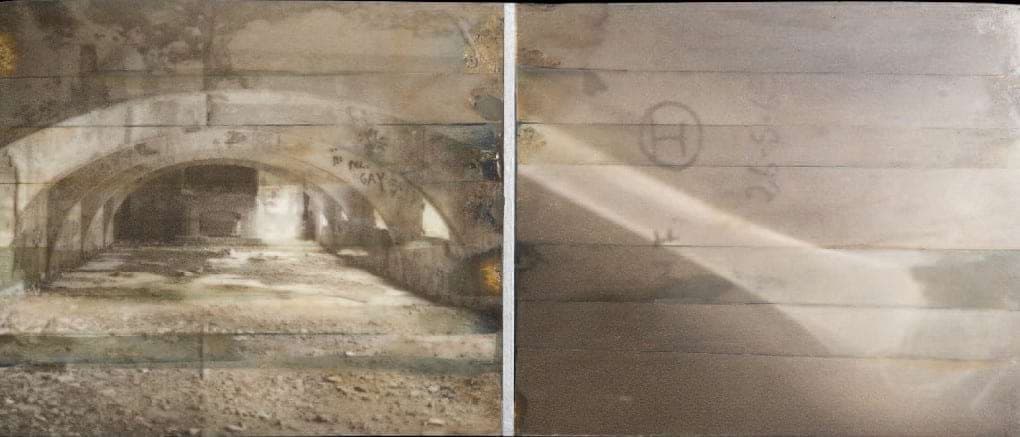
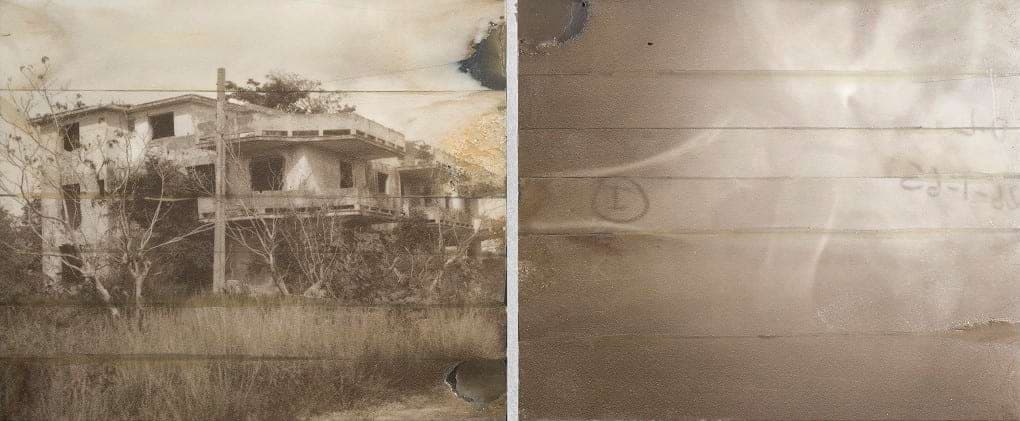
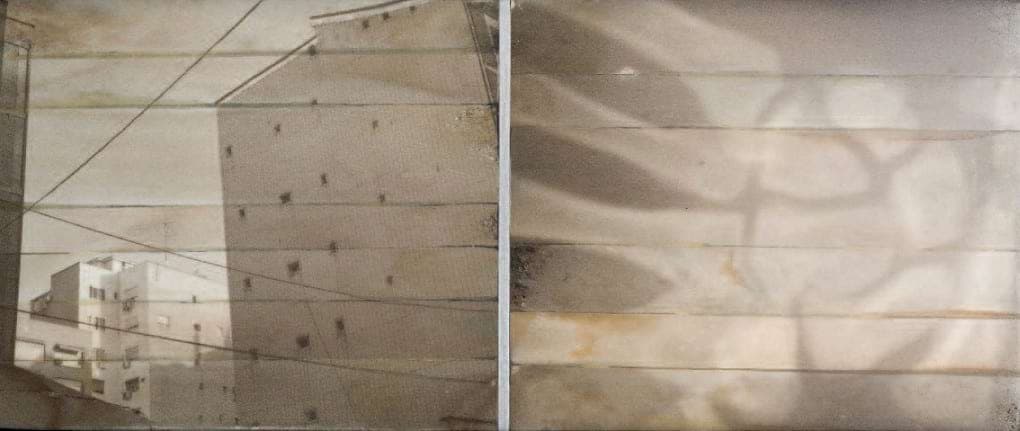
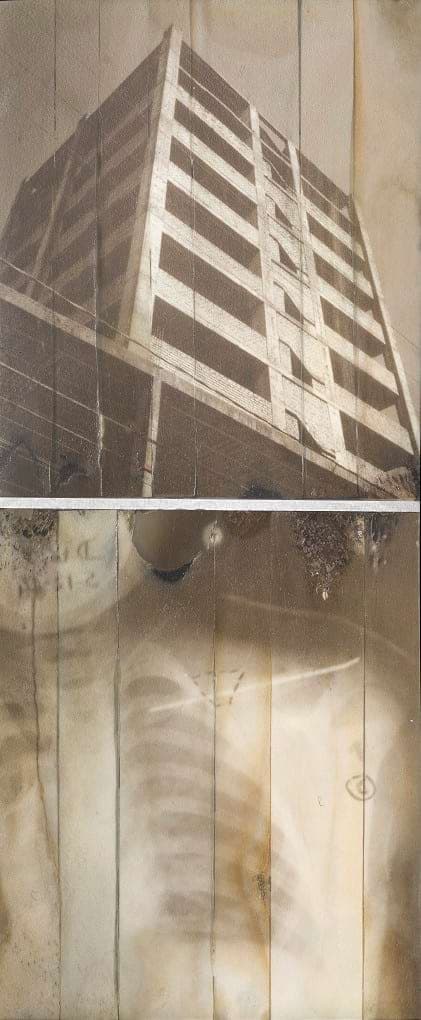
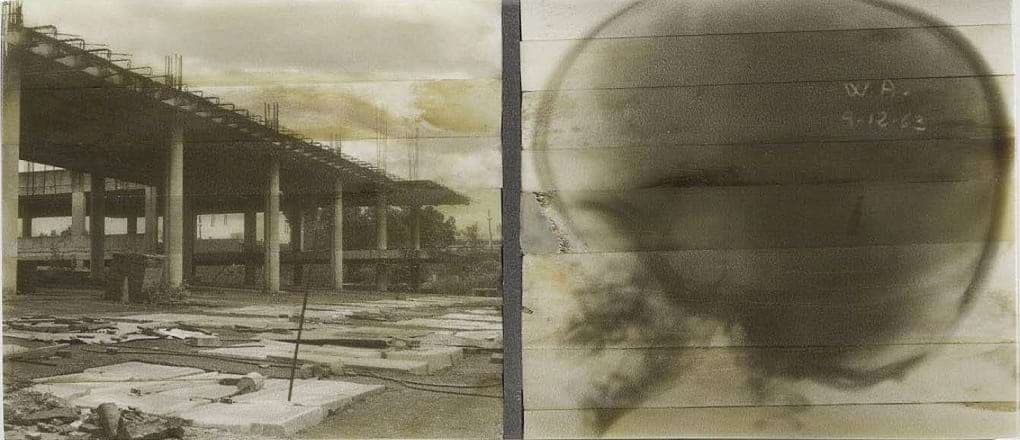
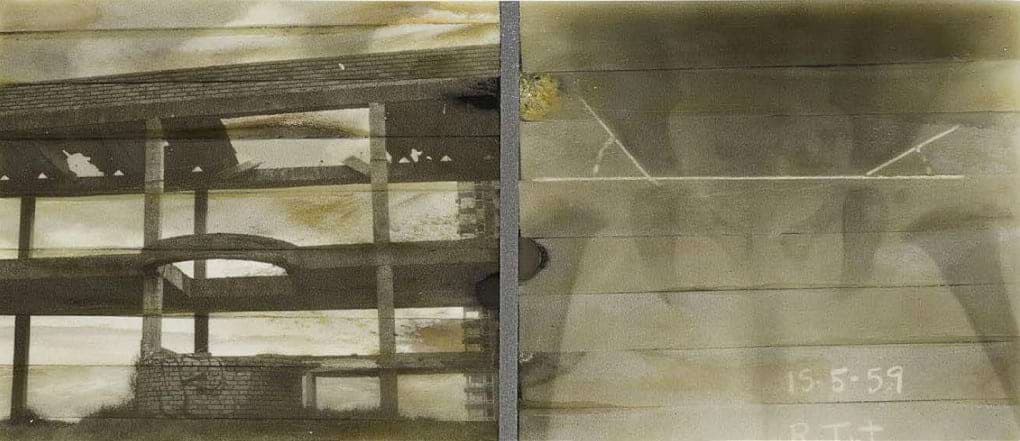
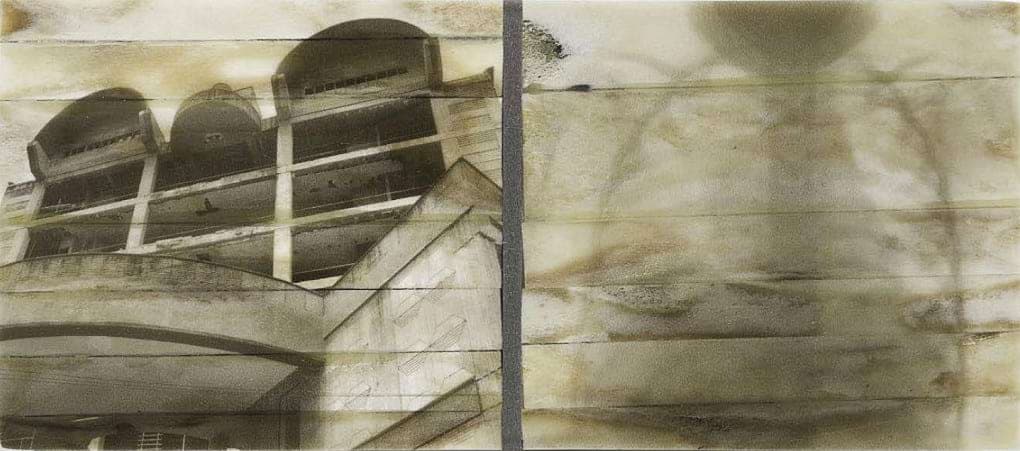
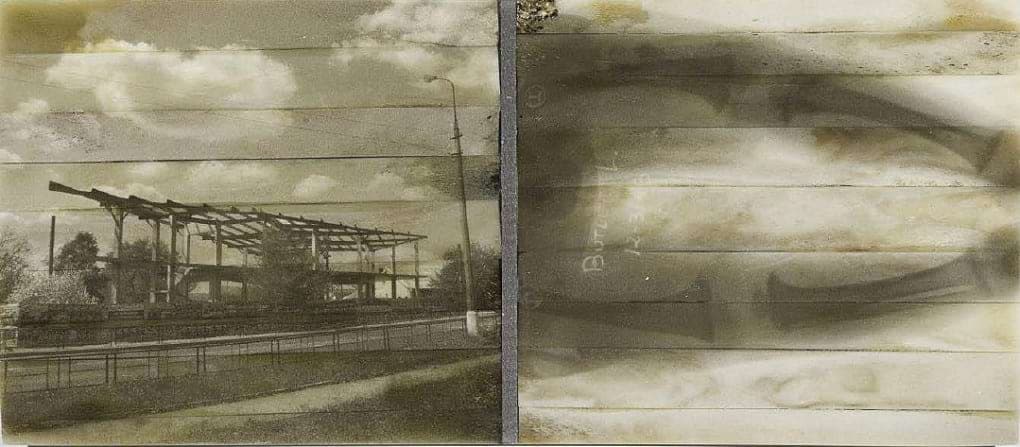
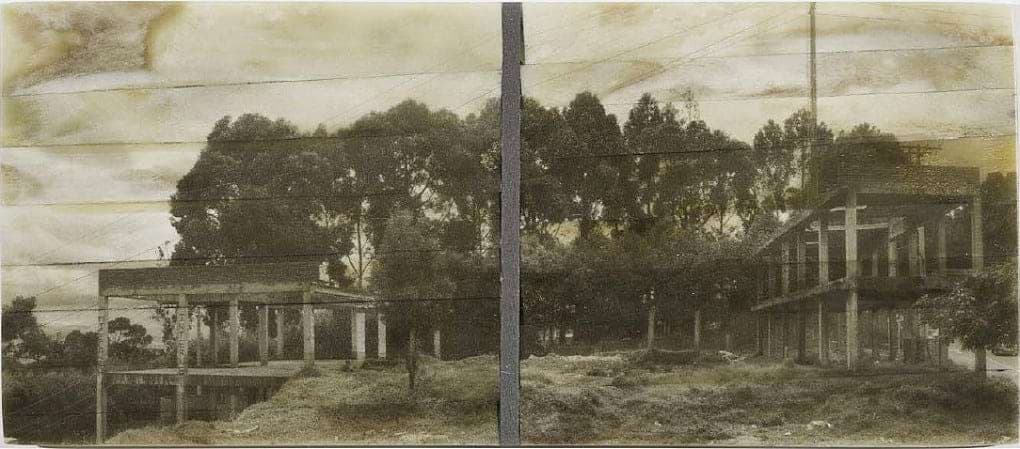
The works of Gustavo Speridião are guided by the idea of “Kino-Glaz”, or “Cinema-Eye”, a concept developed by the Russian avant-garde. His actions are sustained by the idea that the artistic world should imitate the human eye and uses this technique to explore situations in daily life. His works are characterised by spiritual juxtapositions, attention to language, composition and colour; criticizing and engaging with the history of art and contemporary culture. In Paisagem Russa (Russian Landscape), Speridião indirectly references Russian artist Kazimir Malevich, and his seminal painting – Black Square. Malevich was among a group of artists abruptly moving from figuration to abstraction, while dealing with the ideological sentiments of the communist revolution in the early days of the Soviet Union. Many art critics described Black Square as the “zero point of painting", Malevich himself saying, “It is from zero, in zero, that the true movement of being begins.” In Paisagem Russa Speridião playfully points to the way in which there always something preceding everything, even the zero point, by portraying his own equivalent of Black Square, as well as the broad, beautiful and powerful strokes that got him to "zero".
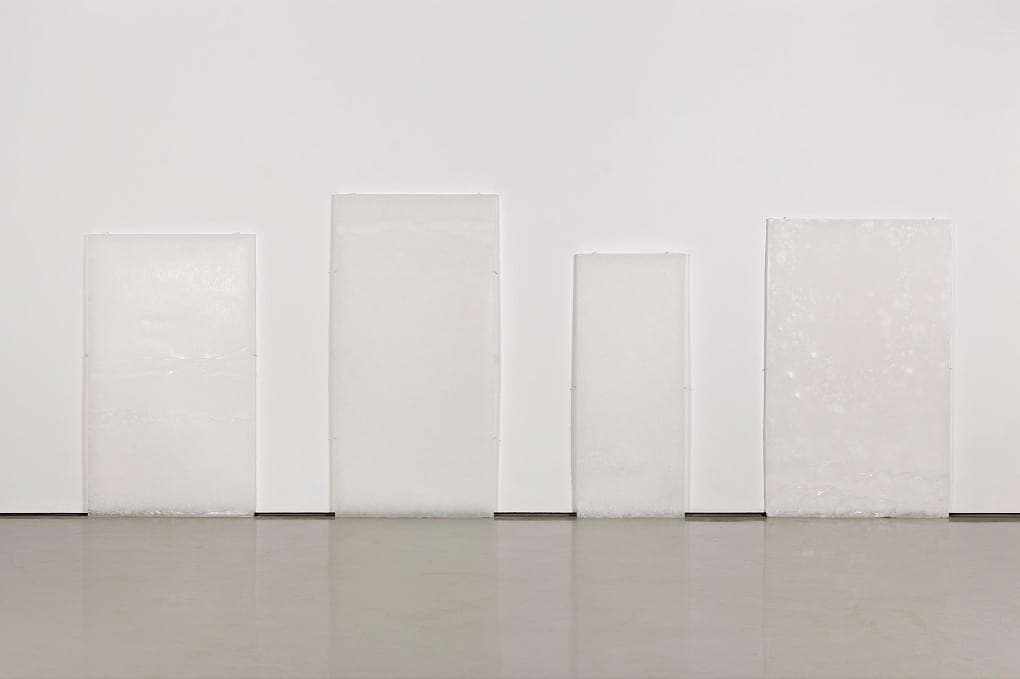
Four paraffin wax panels
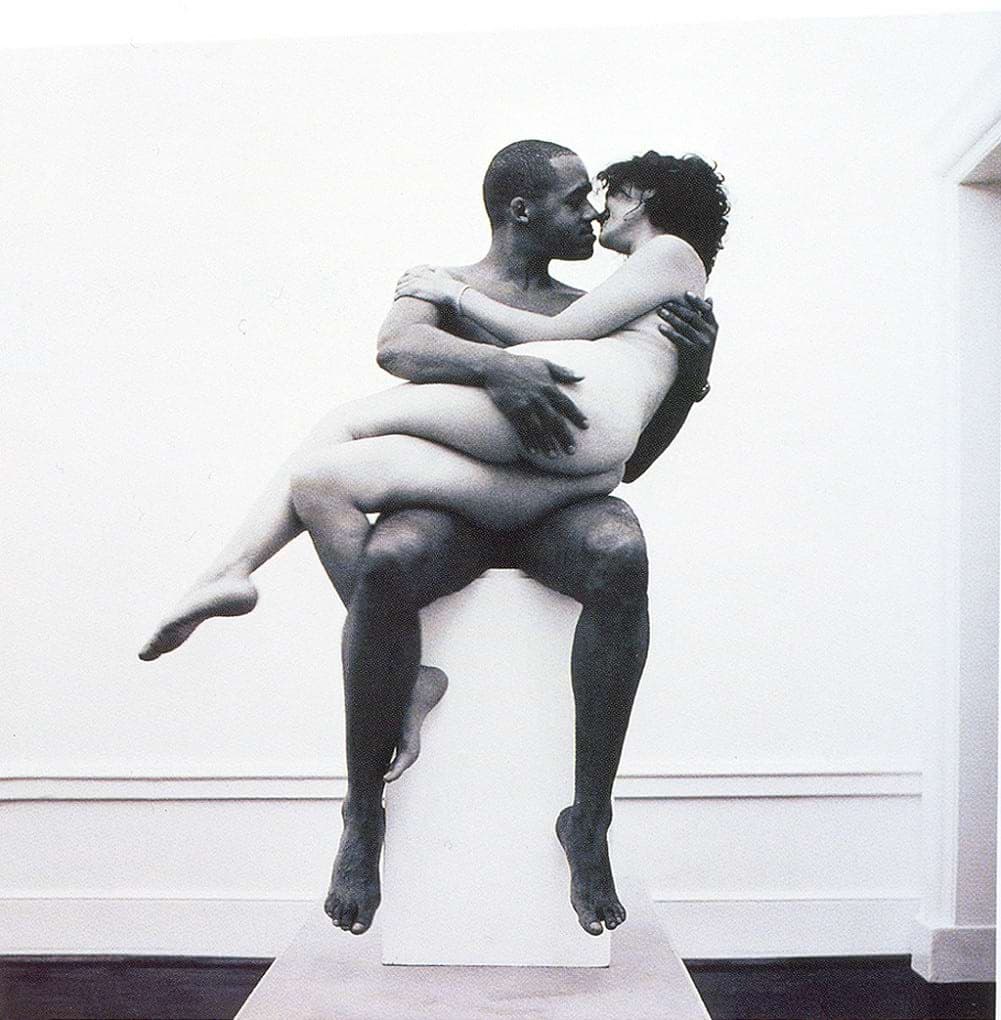
The Kiss is a black and white print that draws from Rodin’s famous marble sculpture bearing the same title. The visual impact of the image is heightened by the stark contrast between the Black man and the light-skinned woman
in a loving embrace. The image captures the still-strained racial dynamics
in the South African context. However to limit the implication of this image
to South Africa would be to do it injustice since this is a charged subject everywhere that notions of self are predicated on racial identity. Rather than simply producing another piece of “protest” art, Rose has chosen to depict the couple in a loving embrace while at the same time taking a swipe at the “white washing” of the art history that had sought to relegate Black subjects to the periphery and the exotic.
Of course even here things are not quite what they seem since the woman in the image is Rose herself, a Black woman, read as belonging to the “coloured” race in the South African context, who could at first glance however easily be taken for a white woman. This image skilfully complicates the quotients by which we gauge racial identities, while exposing our own preconceived notions of race.
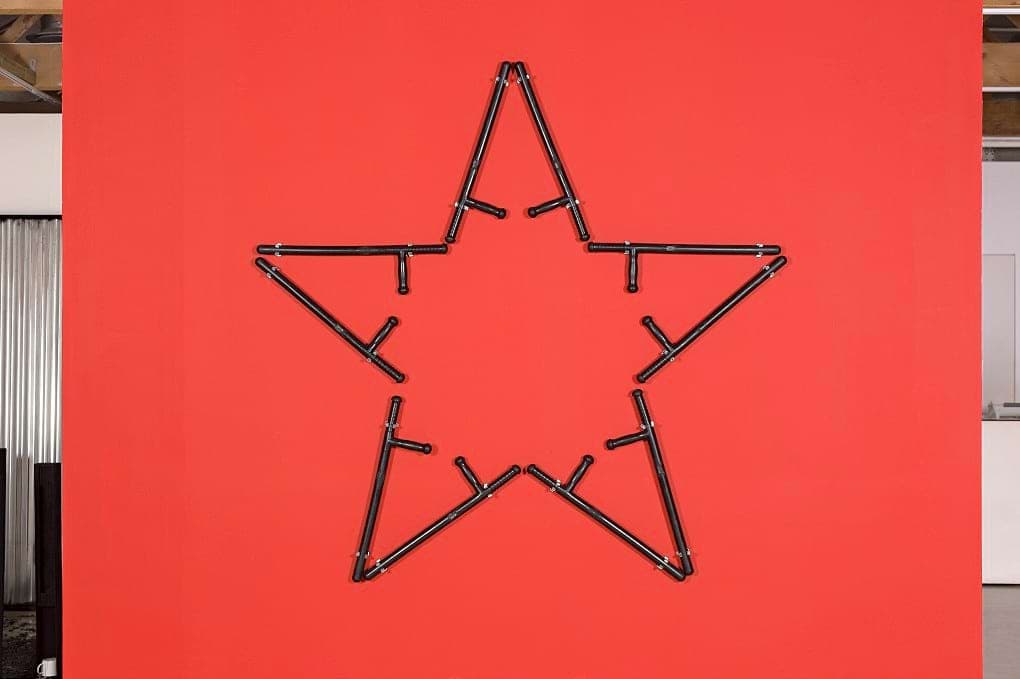
For several years Kendell Geers has been using police batons as both a symbol and an object within his work. These installations are concerned with power, its relations, and the manner in which it shapes our experiences. Often described as interventions, the relentless physicality of his work acts to shock and disrupt our perception of the status quo – to map the degree to which individual agency is constrained by the existing establishment, and to attempt to explode those borders. This collection of stark objects focusing on notions of violence and the debris of a dysfunctional society come together to form a landscape scarred by the effects of violence and littered with its remnants. But they are also monuments – simultaneously an ambivalent valorisation of the means deployed by power in its own defence, and a eulogy for a world order on the brink of destruction.
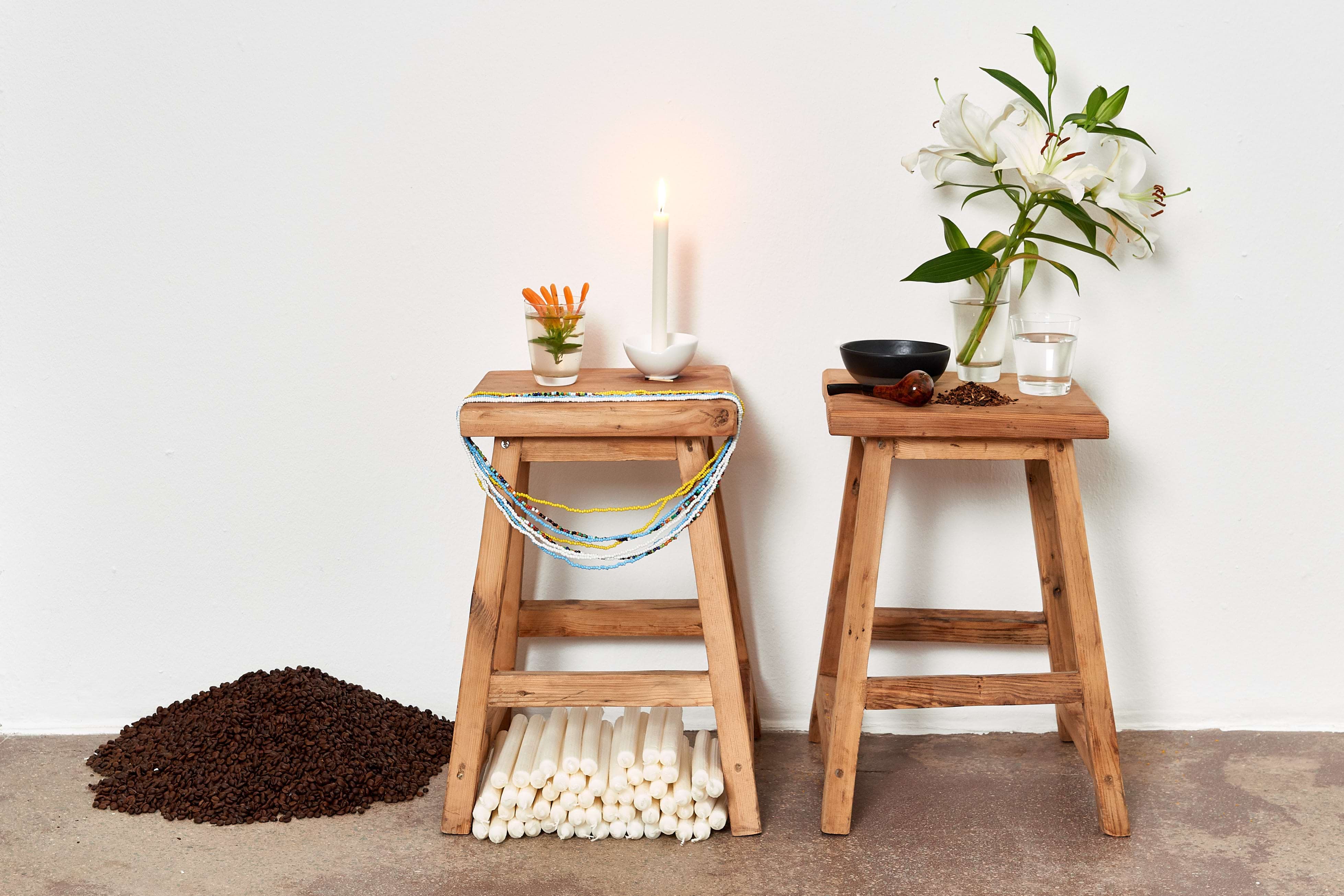
'The Desire Project' (2015 -16) is composed of a three act video installation, with environment, and printed impressions, representing three chronological moments – 'While I Walk', 'While I Speak' and 'While I Write'. In this piece, Grada Kilomba uses the written word as the only visual element, accompanied by a rhythmical drumming as a metaphorical voice, indicating the emergence of a speaker who has been historically silenced by colonial narratives. Before entering the video installation, one passes a shrine dedicated to the ancestor Escrava Anastácia, whose mouth has been sealed. Kilomba plays with the concept of memory, “as something we cannot simply forget” and raises the questions of ‘who can speak’ and ‘what can we speak about’ before entering the visual space.The work was commissioned for the 32nd Bienal de São Paulo – Incerteza viva [Live Uncertainty].
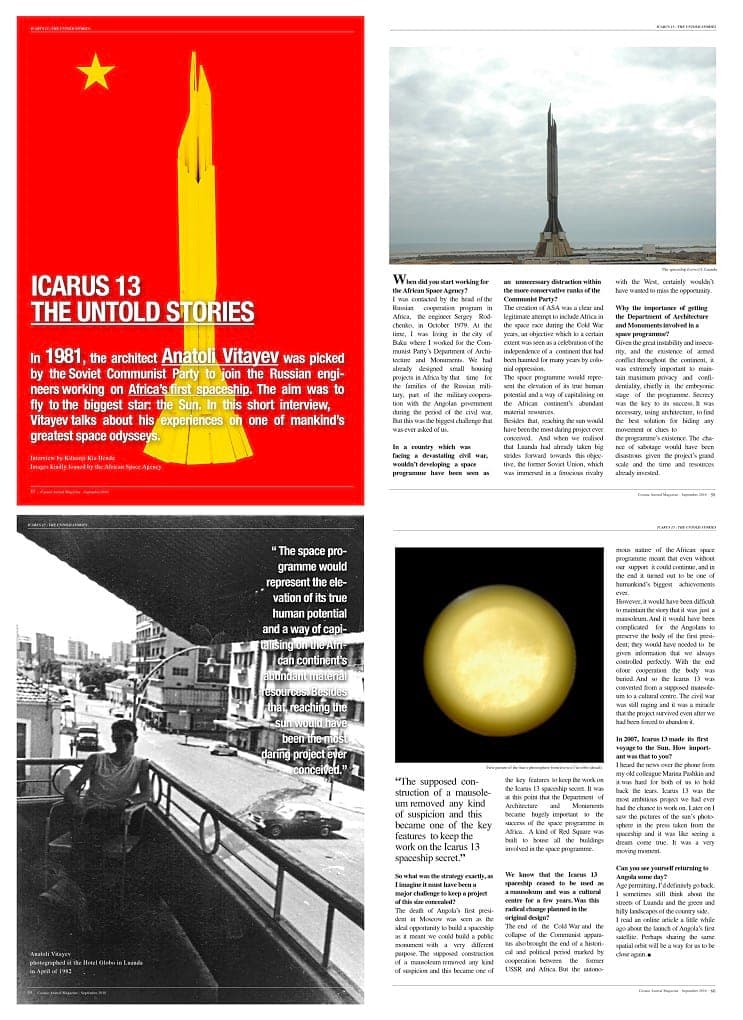
At a conference titled “Museum (Science) fictions” at the Centre George Pompidou in in Paris 2016, Kiluanji Kia Henda presented work from his Icarus 13 series: a fictitious interview with the Russian Architect Anatoli Vitayev, about his collaboration with the Angolan ASA (African Space Agency), on the first trip carried out to the sun.
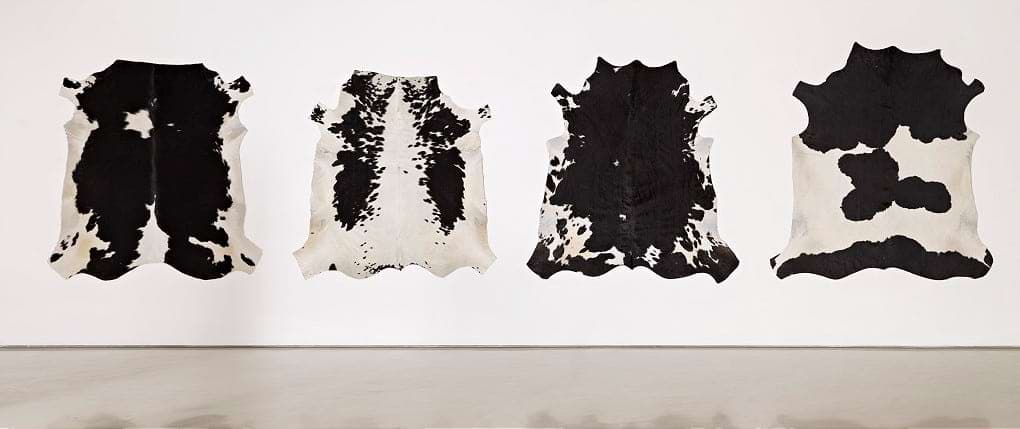
Four cow hides