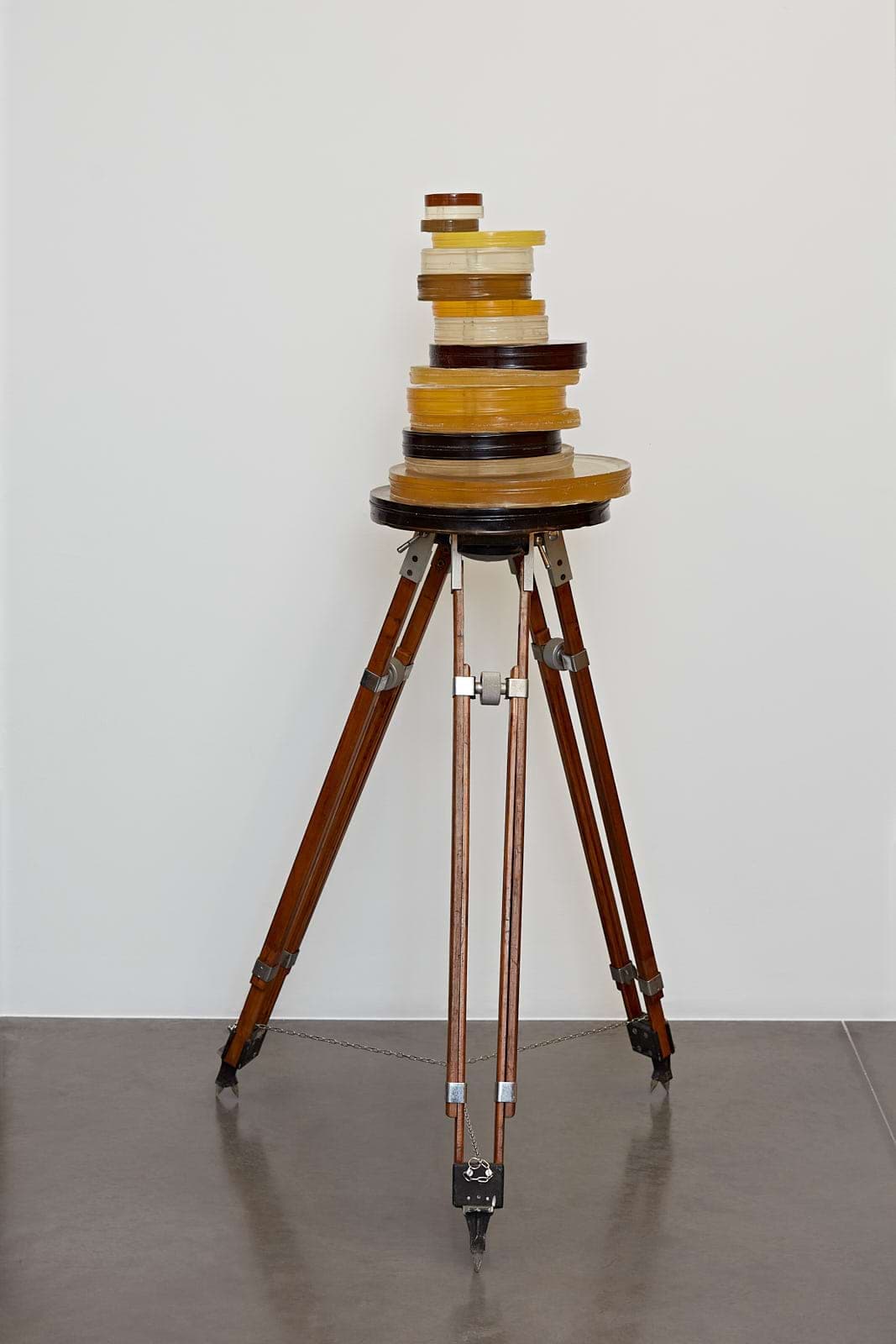

Zineb Sedira explores how cinema helps shape collective histories, particularly in societies emerging from oppression. “Films were especially important back then in the Global South because the majority of the population was illiterate,” says the artist. “Cinema was a form of education.” Mixed-media sculpture 'Film Canisters II' features a mound of earthy-toned film reels made from resin, stacked on a three-legged pedestal that recalls a camera tripod. Though the reels no longer function as tools for projecting images, their ghostly, frozen form captures the storytelling power of film. The hardened resin echoes the fluidity of memory, much like how still images preserve fleeting moments.
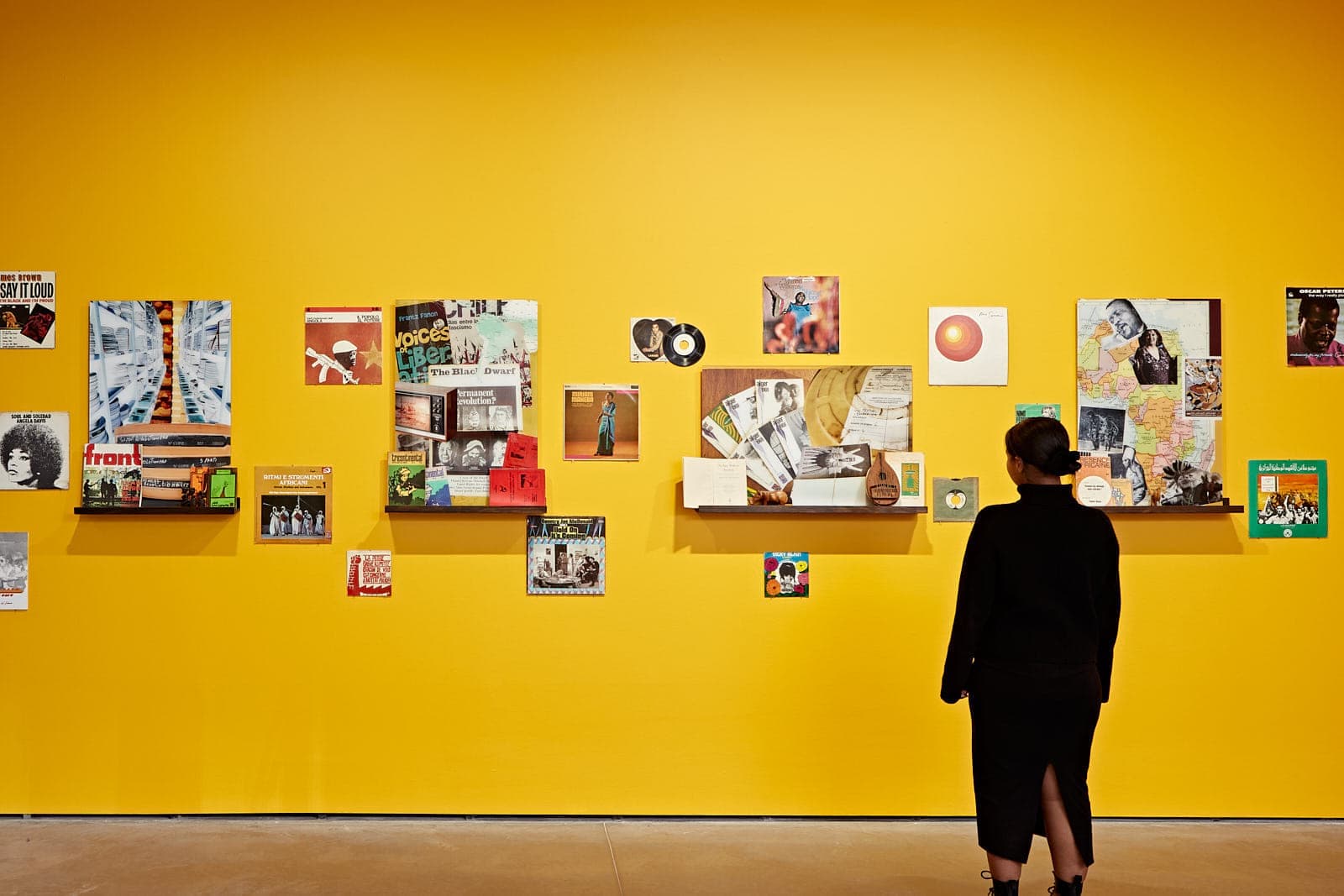
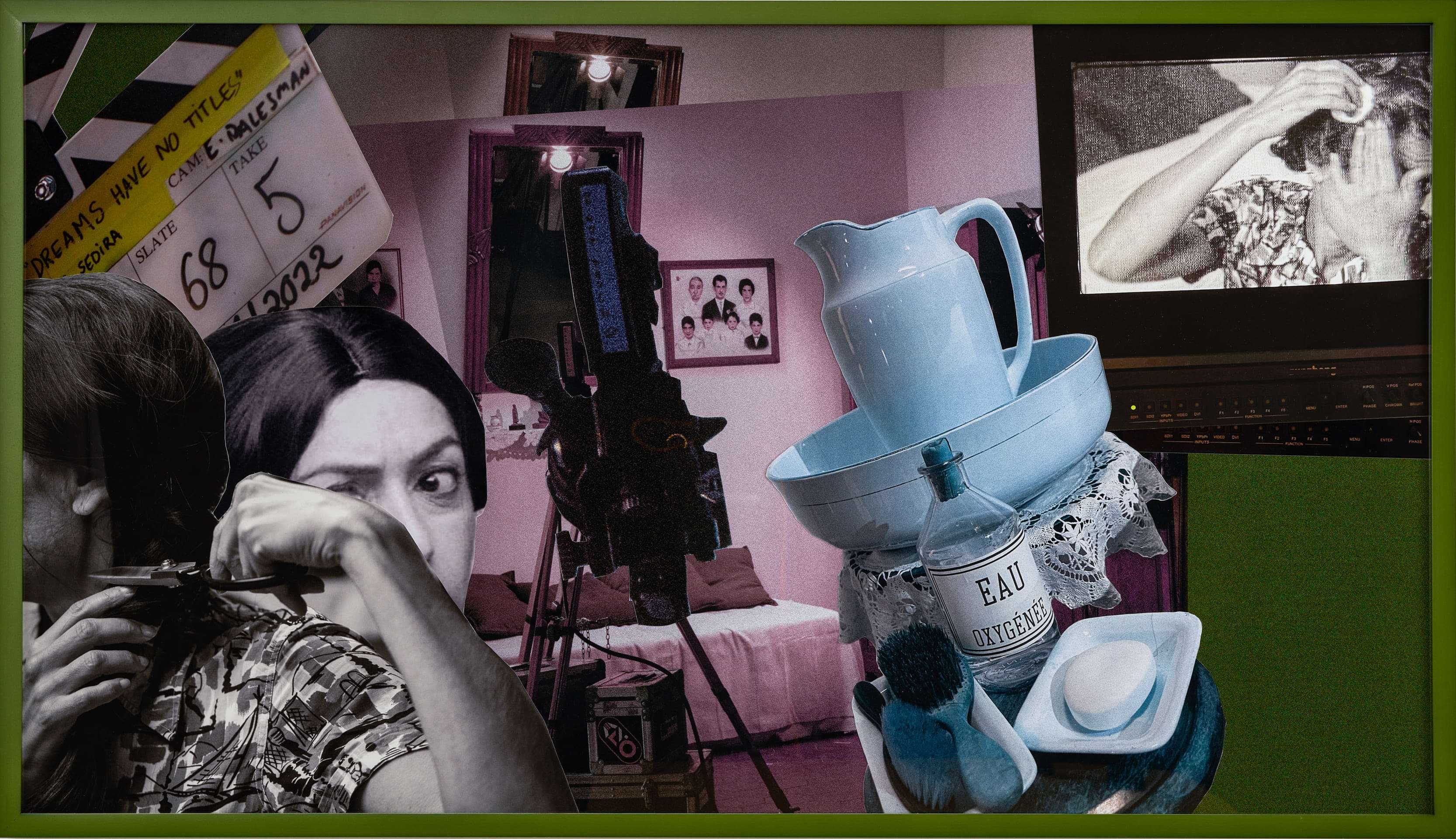
'For a Brief Moment the World was on Fire' (2021) consists of eight colour photomontages. These works visualise the collective history of a global utopian liberation moment. Sedira suggests that this story is incomplete and can be told by aggregating multiple images from multiple archives. The photomontages are made by combining visuals and texts sourced from countercultural, anti-colonial, and liberation-focused newspapers and pamphlets, as well as newly discovered materials from institutions such as the Cinémathèque d’Alger, the Centre culturel algérien in Paris, and other archival collections. Sedira considers collage-making as “similar to editing film” and fittingly, the works include books, DVDs, vinyl, printed film stills, and photographs, all merging into energetic compositions that encapsulate the energy of a half-century-old revolutionary festival.
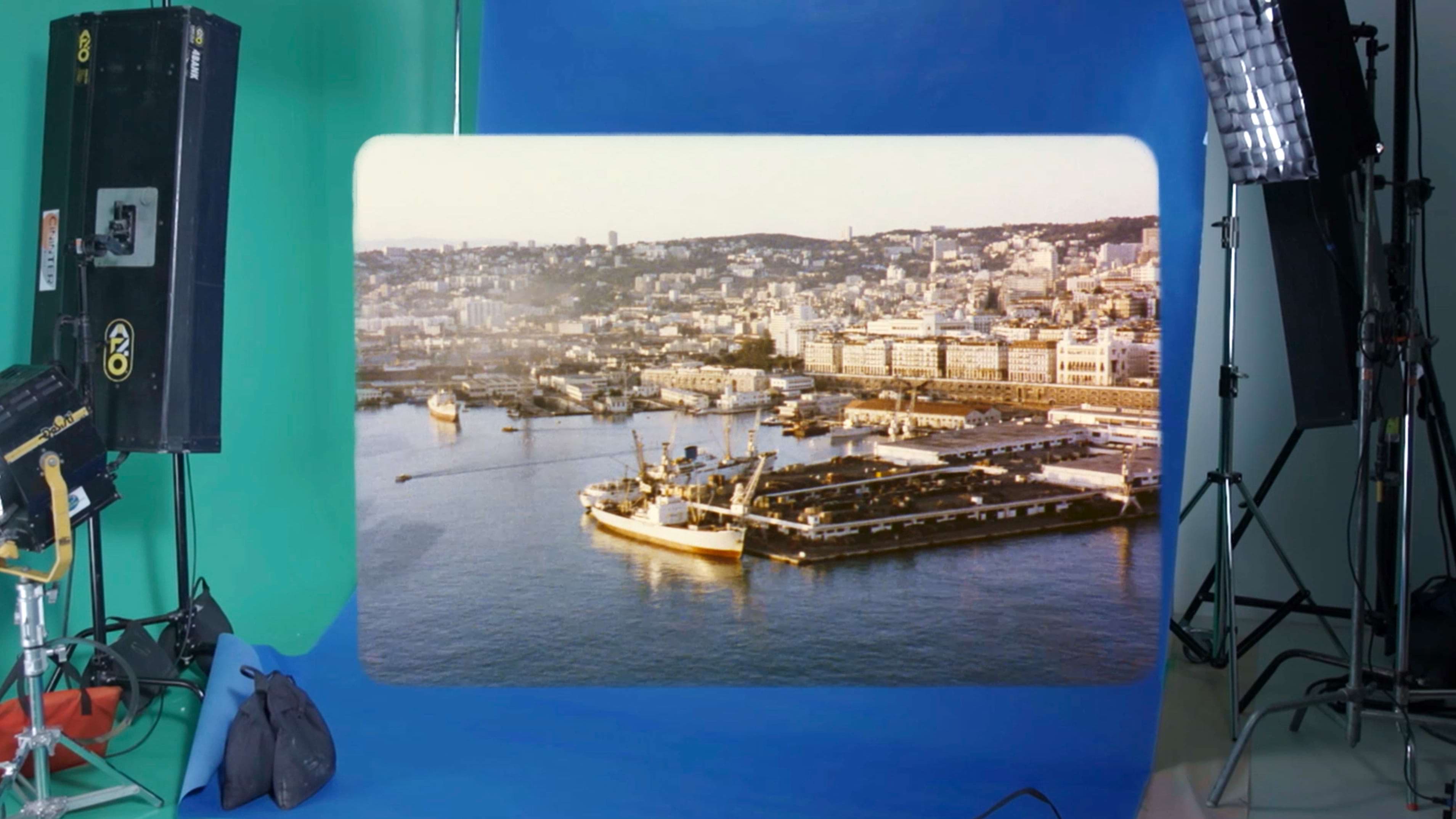
The film ‘Dreams Have No Titles’ by Zineb Sedira was first presented as part of an immersive installation at the French Pavilion during the 59th Venice Biennale in 2022. Blending autobiography, fiction, and documentary, the film revisits a radical moment in the cultural and political history of the 1960s and 1970s, focusing on transnational cinematic collaborations between Algeria, France, and Italy. It pays homage to activist filmmaking and its role in postcolonial movements, particularly the way cinema functioned as a form of resistance and emancipation.
Deeply rooted in Sedira’s personal history—her family's emigration from Algeria to France, her upbringing in Paris, and her later move to London—the film addresses broader themes such as colonial legacy, migration, integration, and globalisation. Through voiceover and reenactment, Sedira constructs a narrative that challenges fixed notions of national identity and calls for more inclusive, decolonised representations of history.
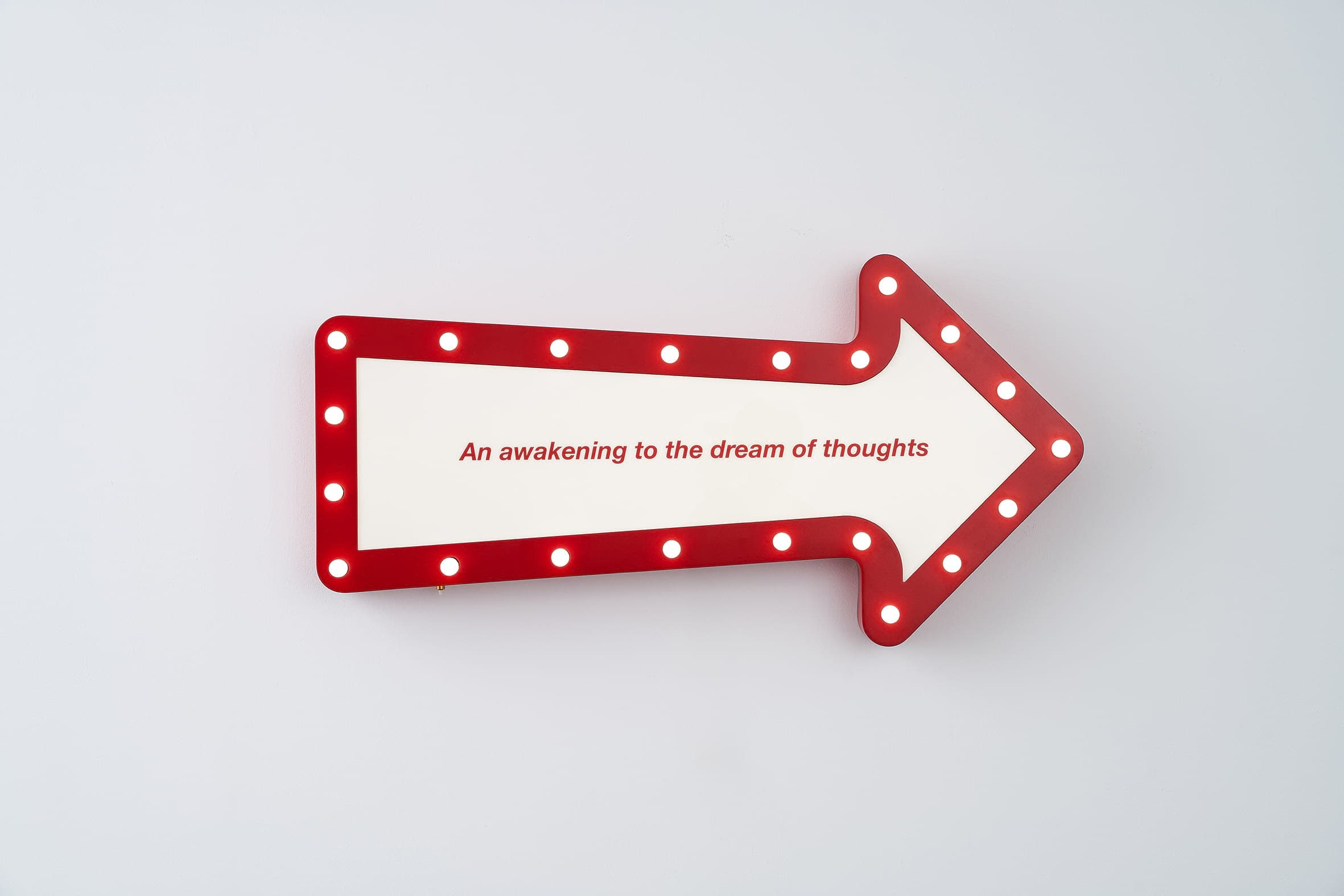
Zineb Sedira (b. 1963 Paris, France) addresses themes of history, migration and storytelling. The role of the archive has played an increasing role in Sedira’s practice, providing the artist a tool to question so readily accepted historical narratives. An Awakening to the Dream of Thoughts forms part of a new series of lightboxes in which Sedira highlights sentences sourced from so-called “third world” militant texts to transform them into slogans. Sedira illuminates these captions in works which make reference to iconic Hollywood billboard signs, with each collated quote further spotlit in lights by surrounding individual bulbs.