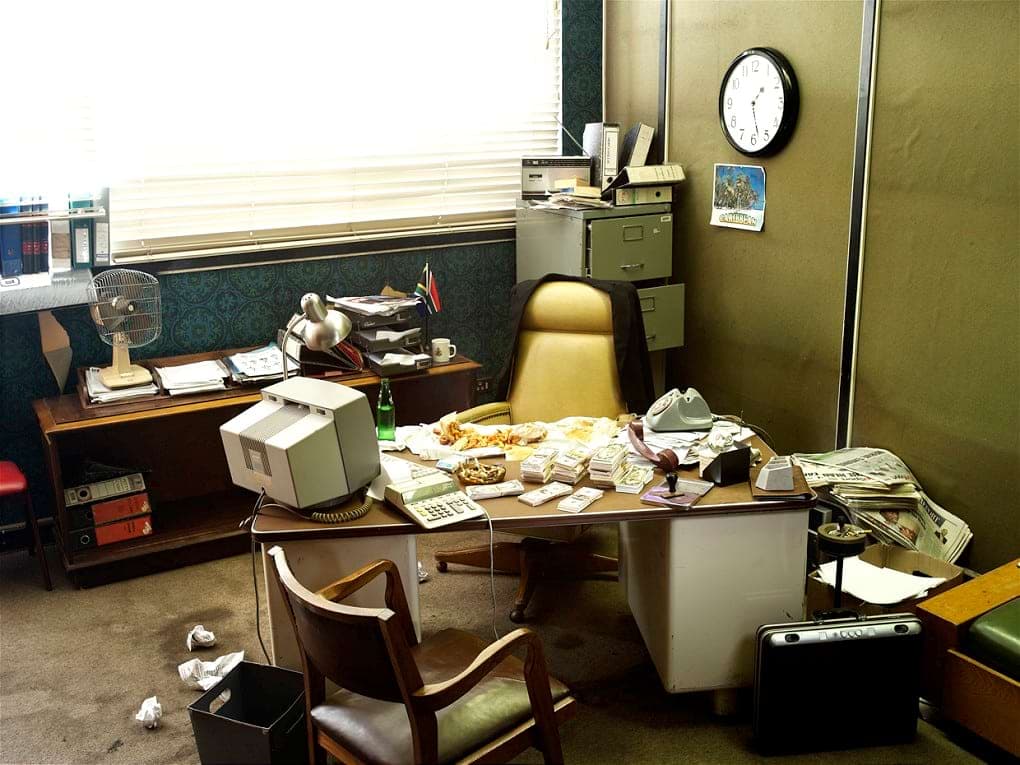
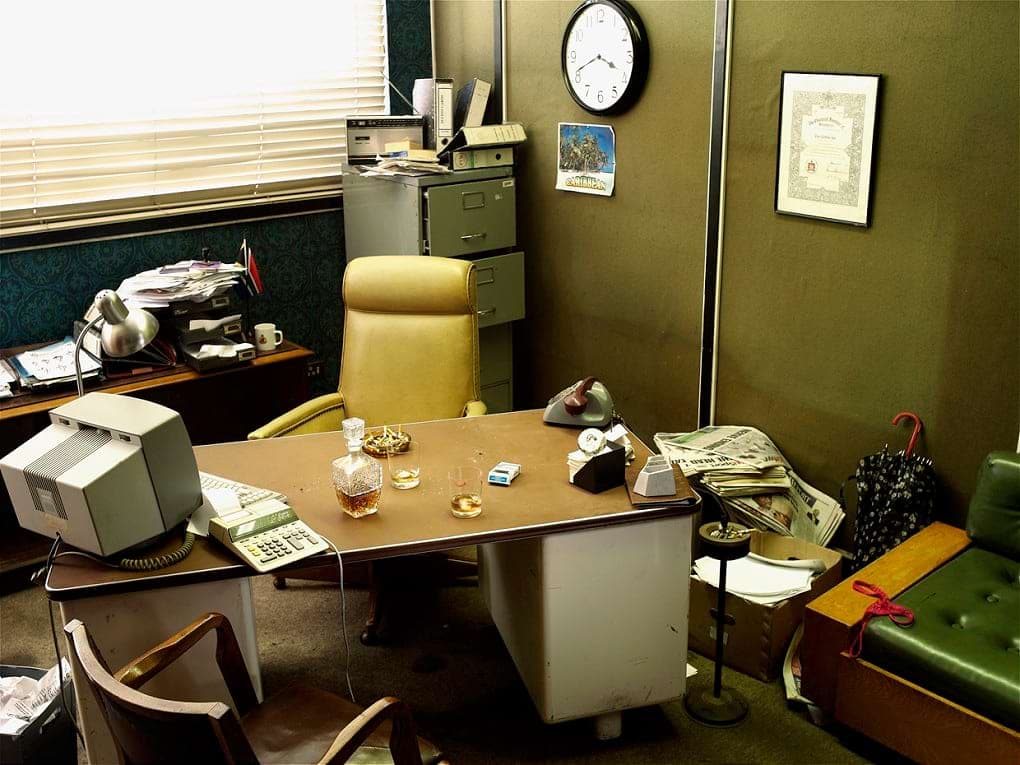
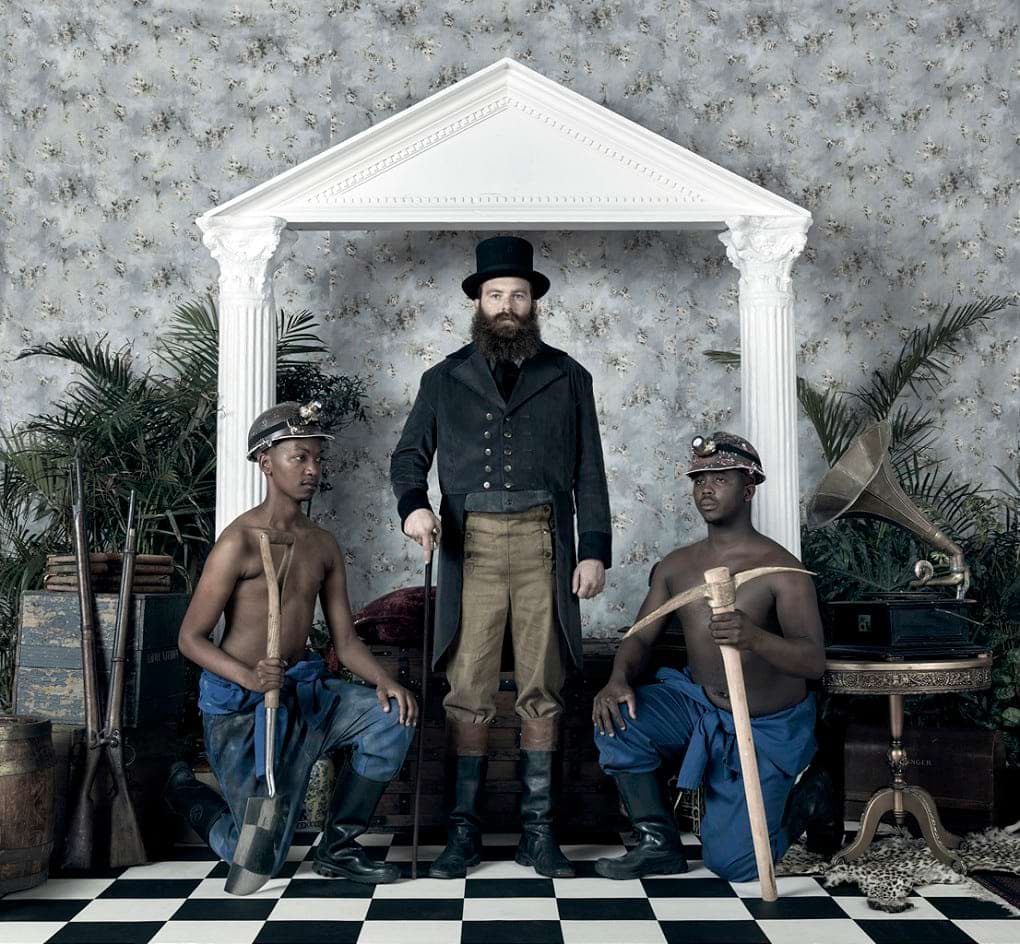
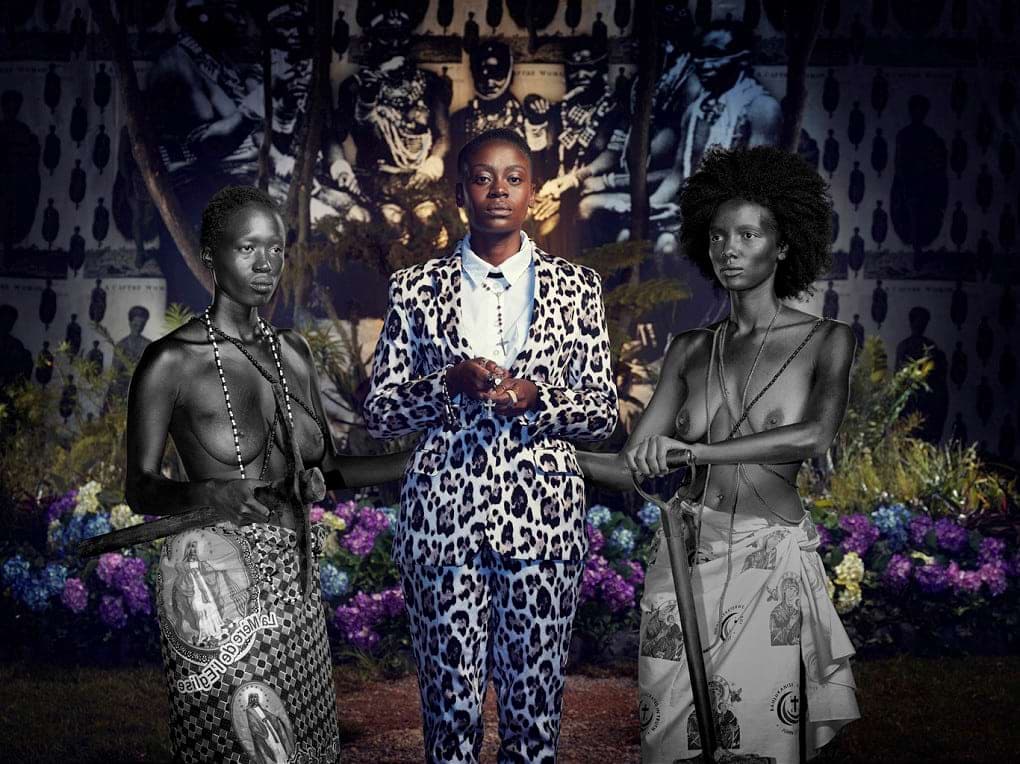
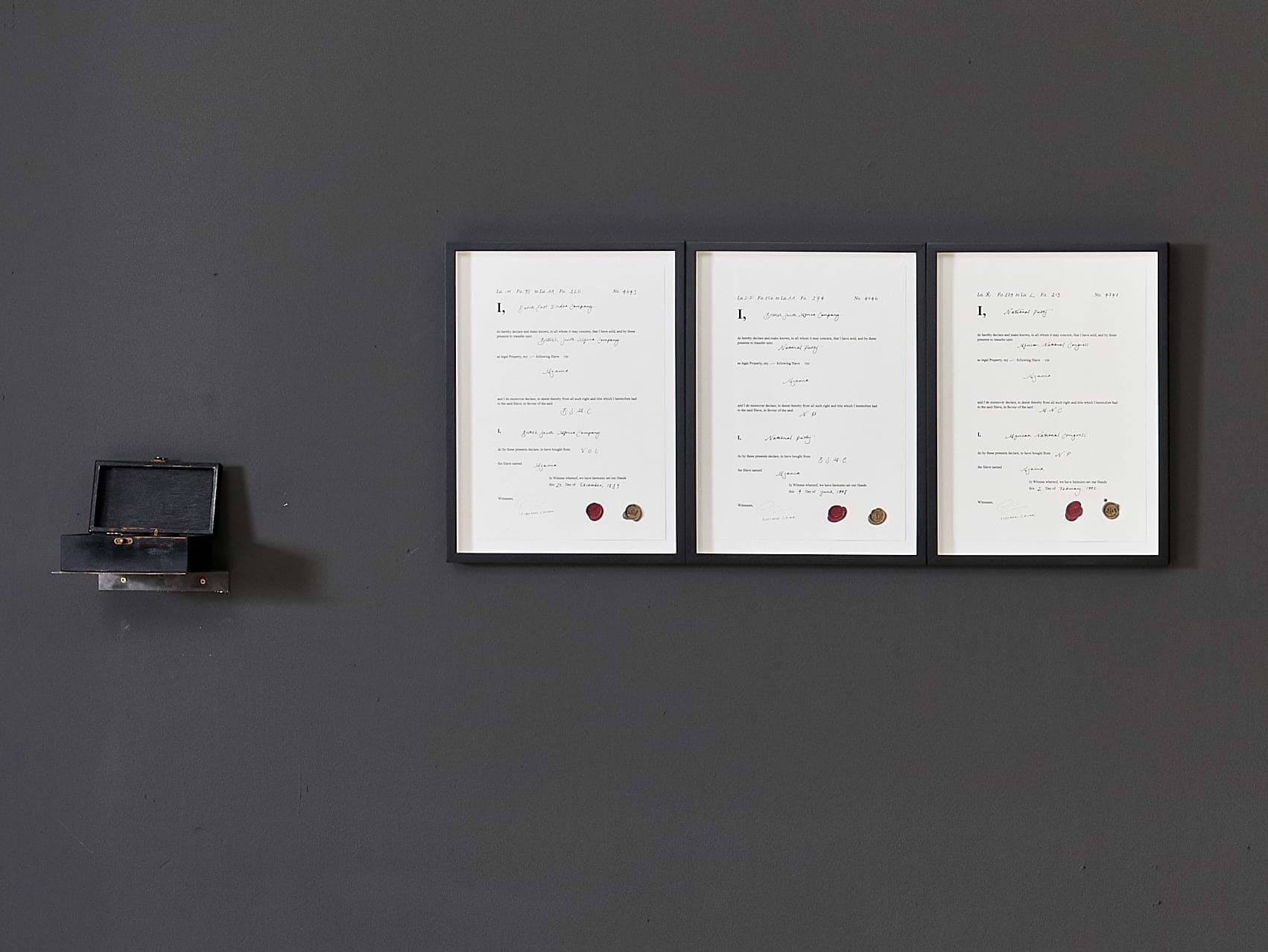
Kudzanai Chiurai’s practice employs a revisionist approach to disrupt what he terms “colonial futures,” embedding counter-memories into historical narratives as a means of addressing the omissions and distortions of the colonial project. Through photography, film, installation, and performance, his work opens up new readings of visual culture in Africa, advancing a decolonial framework that foregrounds the political complexities, social textures, and divergent voices present across the continent.
‘We Live in Silence’ marks the final chapter in a three-part series that also includes ‘Revelations’ and ‘Genesis [Je n’isi Isi]’. This ambitious body of work continues Chiurai’s interrogation of postcolonial power structures by constructing alternative histories. Drawing inspiration from Mauritanian filmmaker Med Hondo’s 1967 anti-colonial film ‘Soleil Ô’, Chiurai responds to the expectation that African migrants to Europe must think, speak, and understand the world through the lens of their colonisers. Through a process of visual mimicry and re-enactment, he restages scenes from the film alongside references from popular culture and art history to propose new, speculative readings of the colonial archive.
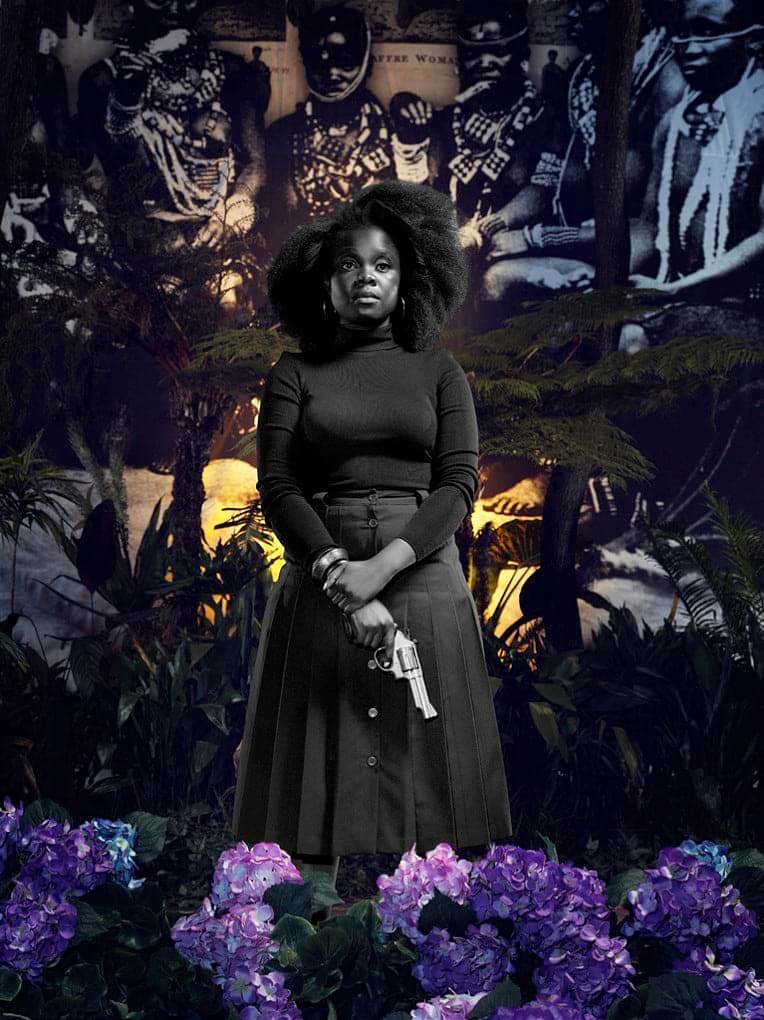
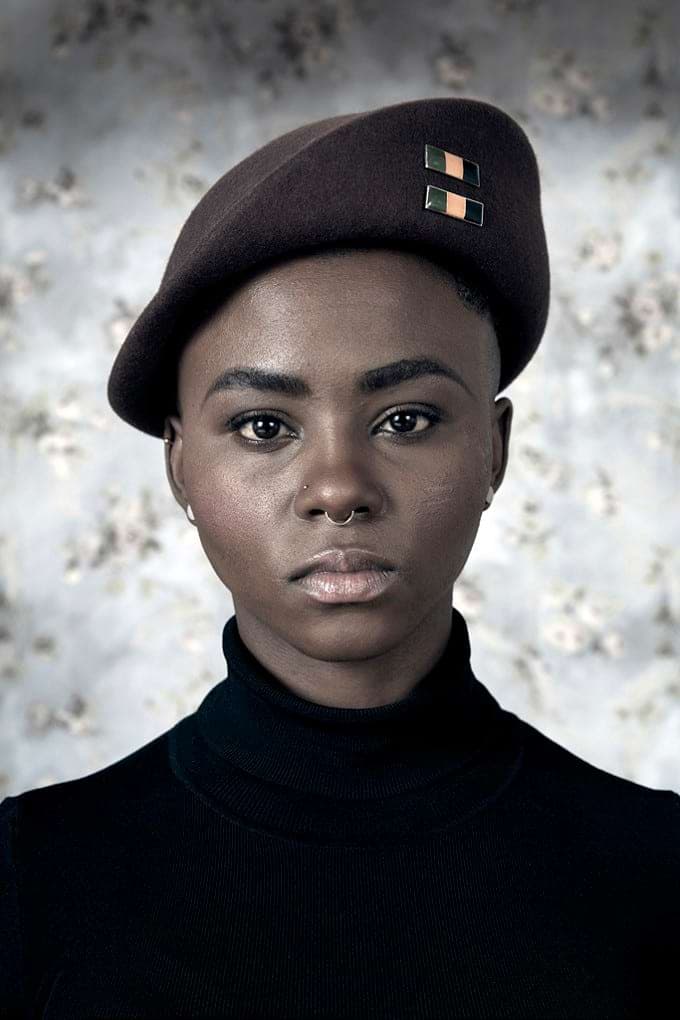
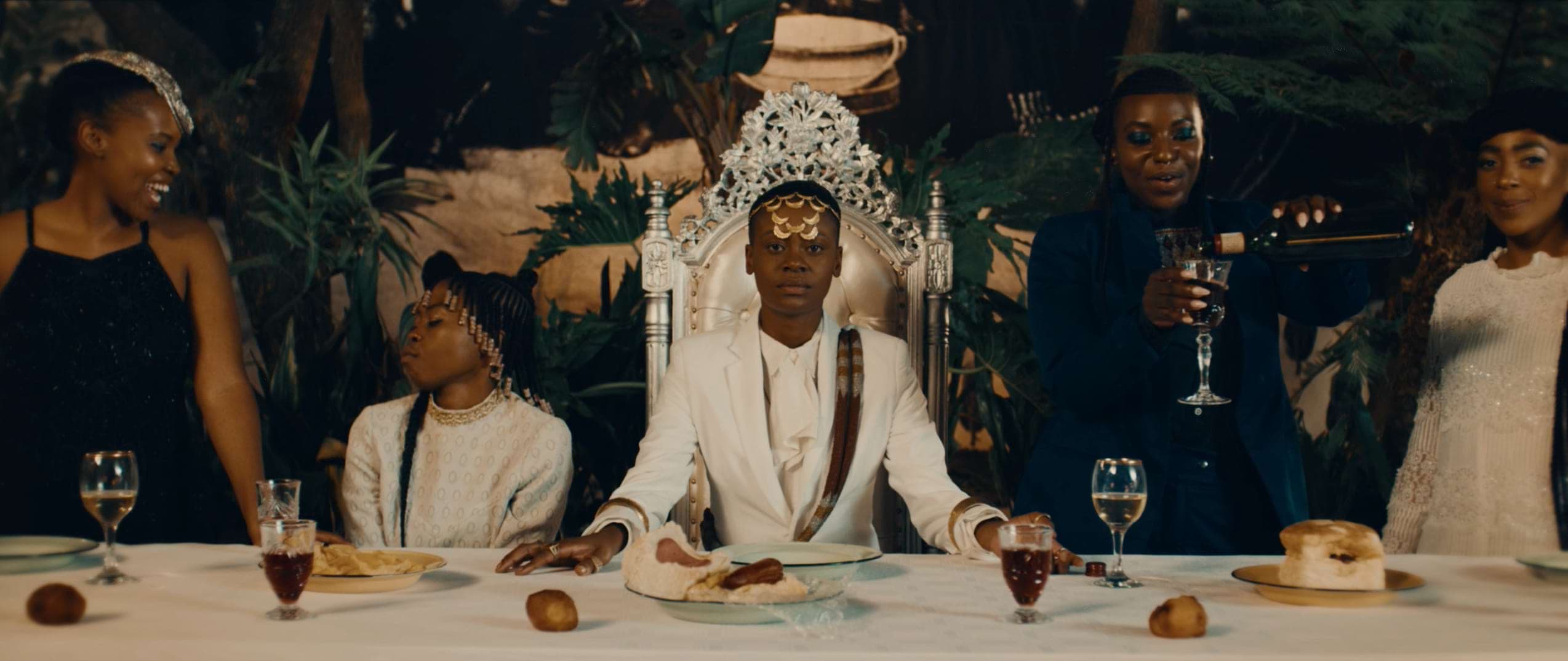
Central to the series is Chiurai’s repositioning of the female figure in liberation narratives. By casting women as the protagonists in his imagined histories, he challenges the entrenched gender bias that frames the black male as both the primary victim of colonisation and the agent of liberation. These reimaginings not only broaden the historical scope but also restore agency to figures long excluded from dominant narratives.
What emerges is a surrealist world where the most vulnerable are elevated to the realm of gods and ancestors. Figures appear adorned in radiant regalia, flanked by spiritual entities, and enthroned as liberators and freedom fighters. The dreamlike compositions prompt viewers to question inherited histories and break free from the narrow constraints of colonial logic.
In much of his artistic practice, Chiurai has been concerned with contradictory themes of domination and independence; war and liberation; post-colonialism and colonial futures. These ideas are still present, but through the act and reflection on his home country, he poses the question ‘what next?’. In the film, Chiurai’s fictional character repeatedly asks this question – as she listens to the soundtrack of a revolution that was meant to liberate her – but instead is delivered a ‘harvest’ or answer that cannot be reached, that sits rotting and turning to dust.
Drawing on Mauritanian filmmaker Med Hondo’s 1969 film ‘Soleil Ô’, Kudzanai Chiurai’s ‘We Live in Silence (Chapters 1–7)’ offers a layered and introspective reflection on the enduring legacies of colonialism during the early years of African independence. Taking Hondo’s critique as a point of departure – particularly his portrayal of the expectation that African migrants to Europe must think, speak, and interpret the world through the lens of their colonisers – Chiurai constructs a visual response that challenges these imposed ideologies. Through what he describes as “counter-memories,” he disrupts “colonial futures,” producing images that directly contest dominant historical narratives.
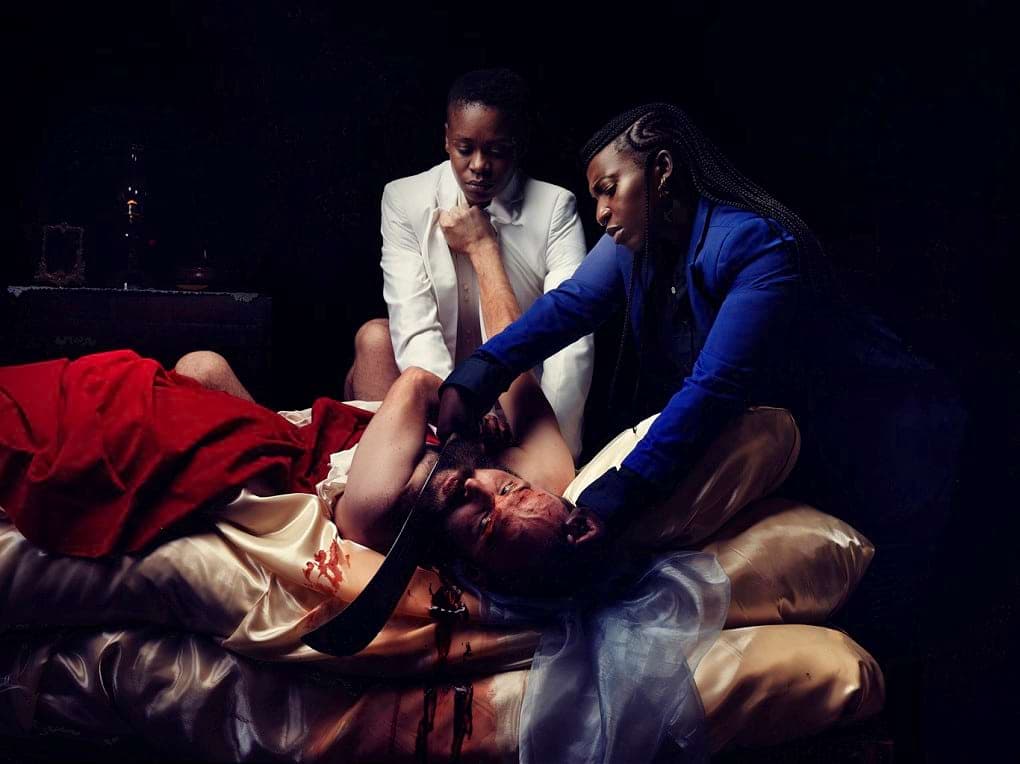
Chiurai reconstructs scenes in dialogue with ‘Soleil Ô’, incorporating references from popular culture and art history to propose alternative versions of both colonial pasts and imagined futures. A central concern in the series is the role of women in liberation movements. Referencing revolutionary leader Thomas Sankara’s statement that “there is no true social revolution without the liberation of women,” Chiurai deliberately casts female figures at the forefront of struggle. In doing so, he confronts the gender bias that frequently centres the black male as both the primary victim of colonisation and the presumed liberator of the post-colony.
Chiurai draws on religious and populist iconography, repurposing symbols once used to reinforce colonial and racial ideologies. These images are recontextualised to reflect a black experience shaped by both spiritual authority and political betrayal. By collapsing distinctions between past, present, and future, ‘We Live in Silence’ places the viewer within a non-linear narrative space that challenges fixed historical timelines. This temporal fluidity allows Chiurai to explore how the psychological and institutional residues of colonial power persist across generations. His protagonists, once marginalised, begin to assume positions of dominance – raising critical questions about how cycles of power and oppression are sustained and inherited.
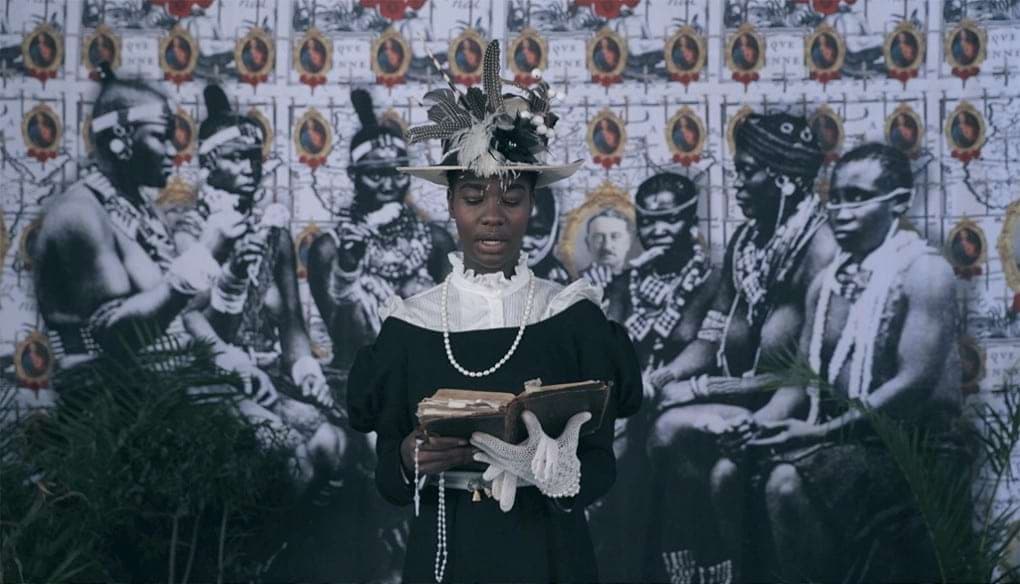
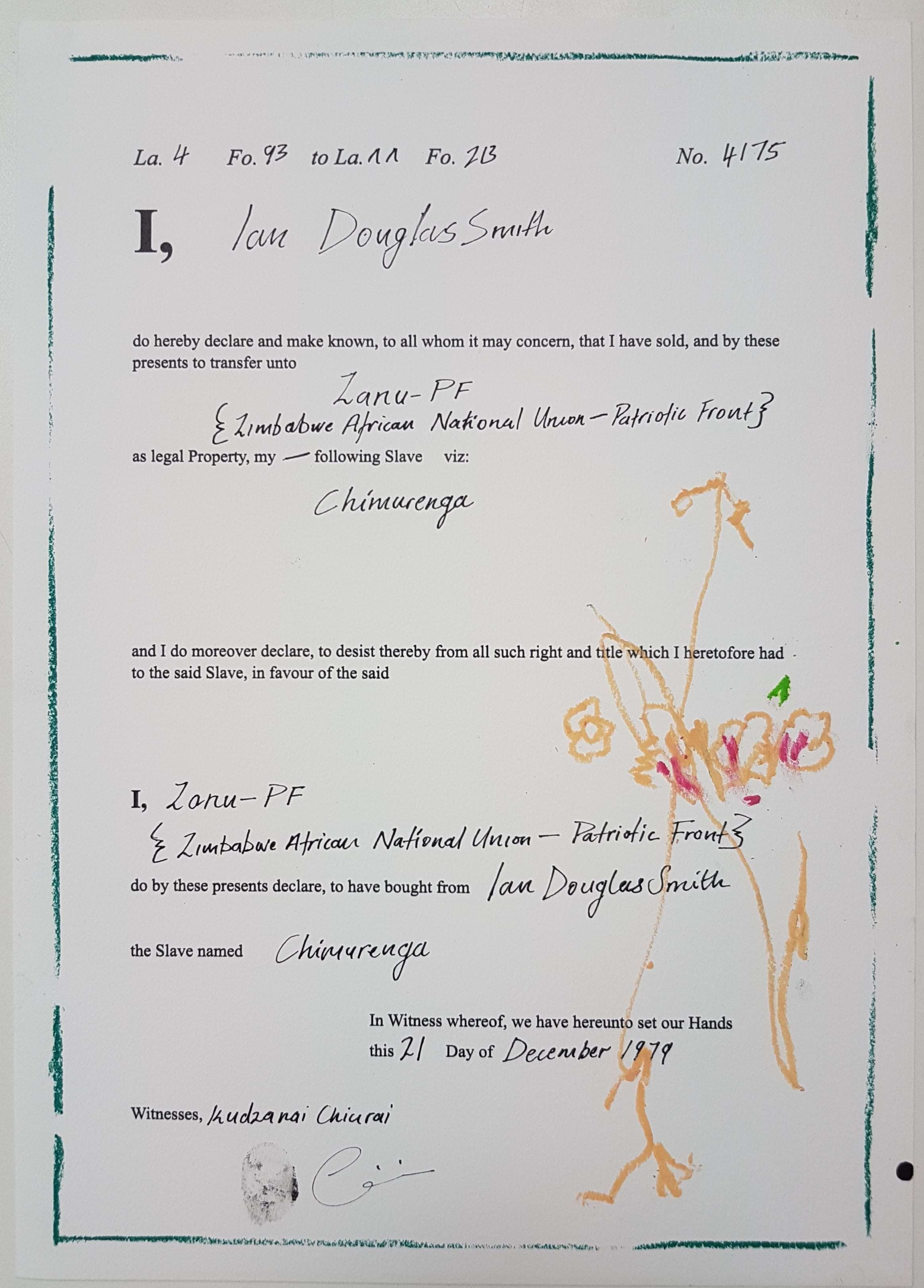
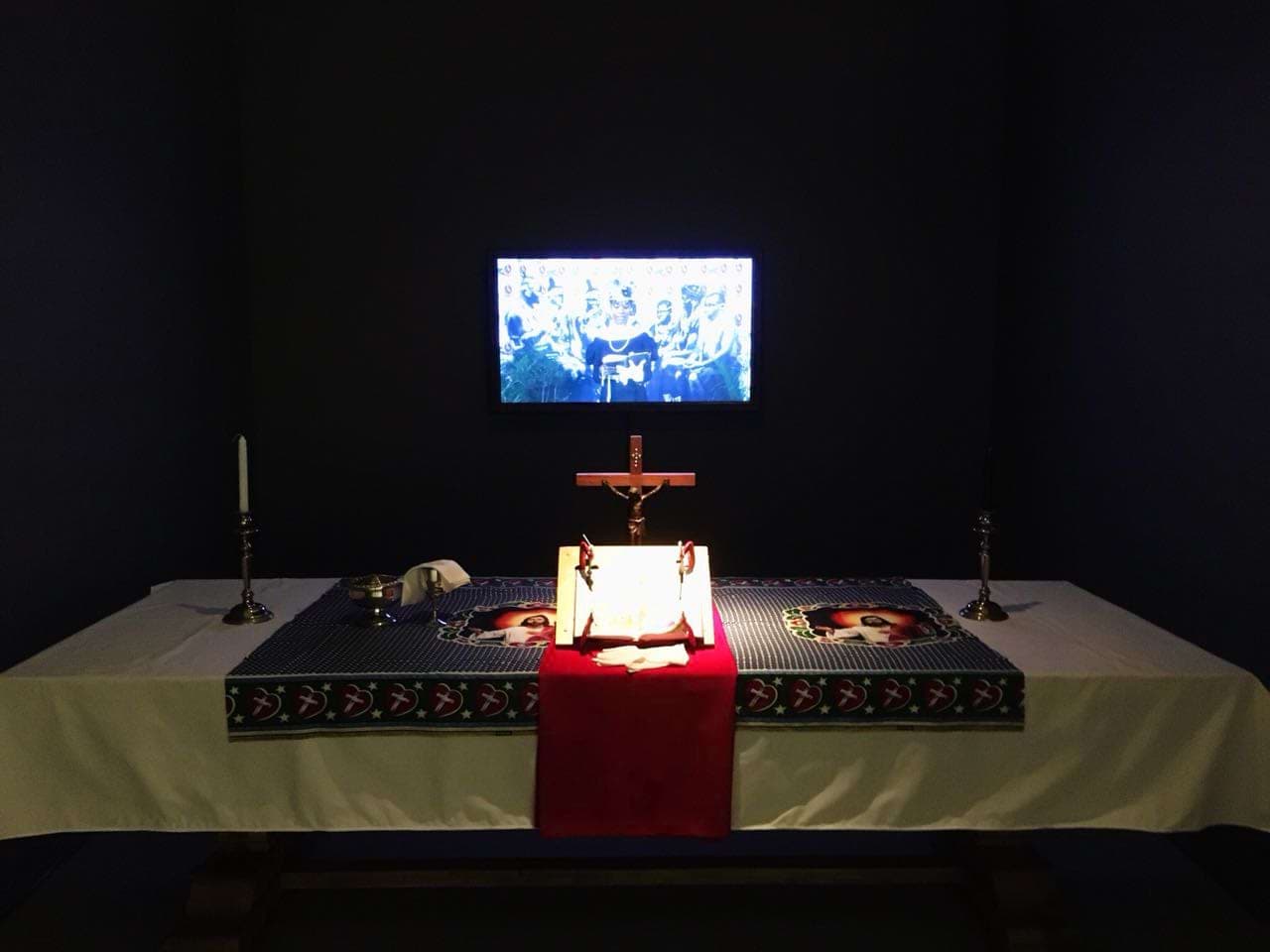
The video work Sins of the Father (2016) explores the close relationship between colonialism and Christianity. The missionary effort was a major part of, and a partial justification, for the advancement of colonialism, and also served as a means for erasing indigenous names, language, beliefs, and history; replacing them with Eurocentric, patriarchal belief systems. Dressed in conservative Western attire, with Bible in hand, the black African woman in the work recites the Hail Mary over and over. The video is presented behind a ‘Holy table’ installation, which is overlaid with religious themed Dutch-produced African wax fabric, various items of the Eucharist, and a Catholic Orthodox Bible clamped open to reveal only the Book of Judith. Chiurai has covered the visible pages with crude crayon drawings and renamed it ‘The Book of Nehanda’. Nehanda was one of three spirit mediums who led the Chimurenga in Zimbabwe against the British South Africa Company. She was eventually captured and sentenced to death by hanging for the murder of a white Native Commissioner. It is believed that her head was decapitated and sent to Queen Victoria as a gift