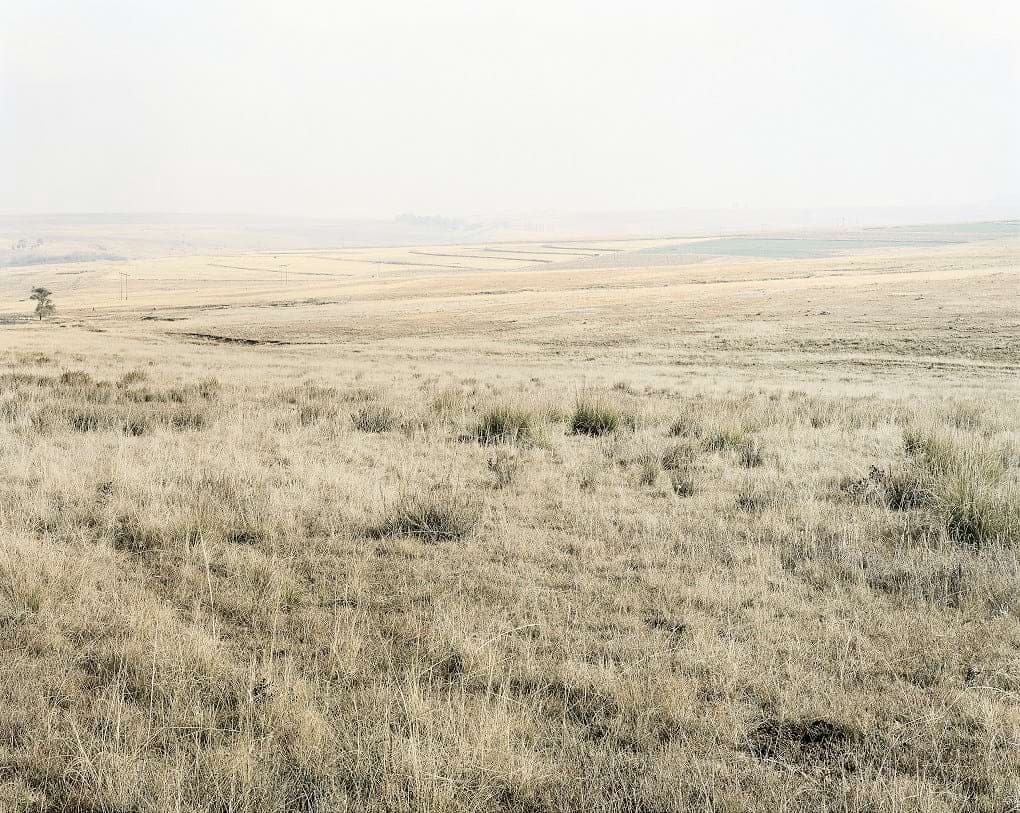
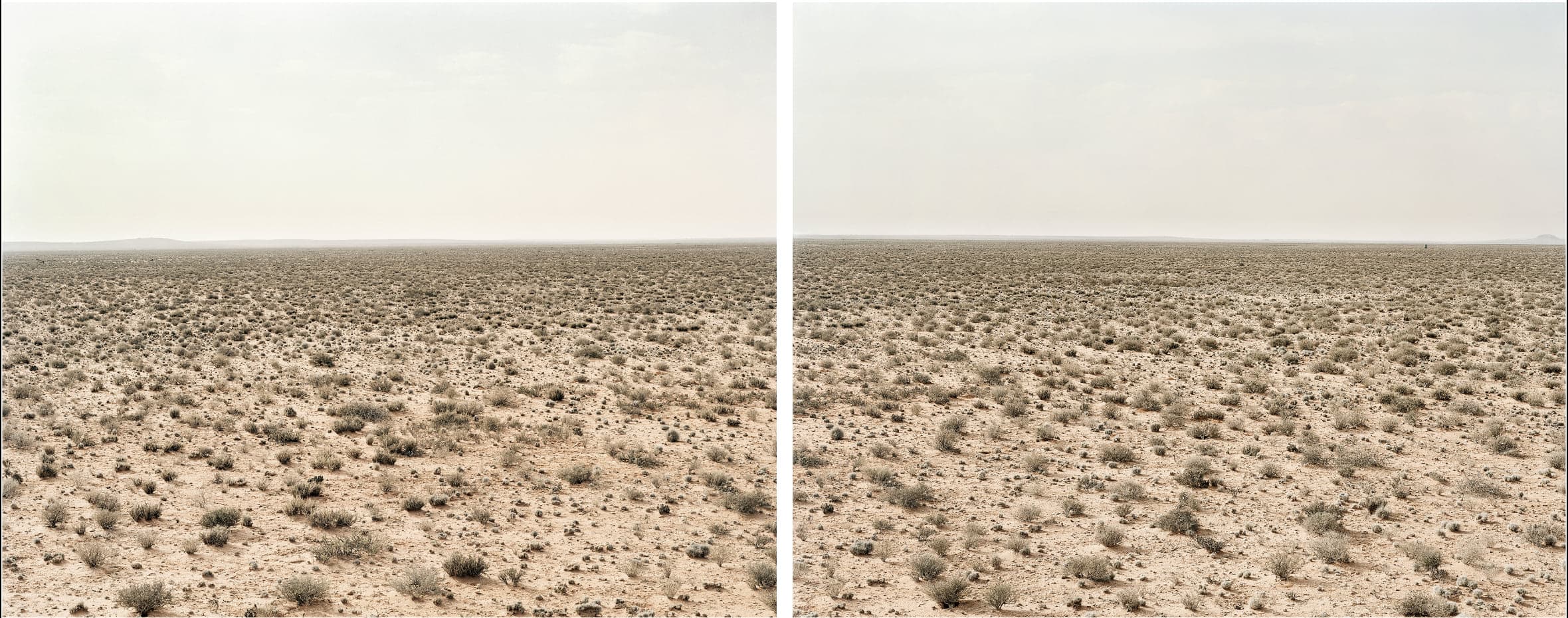
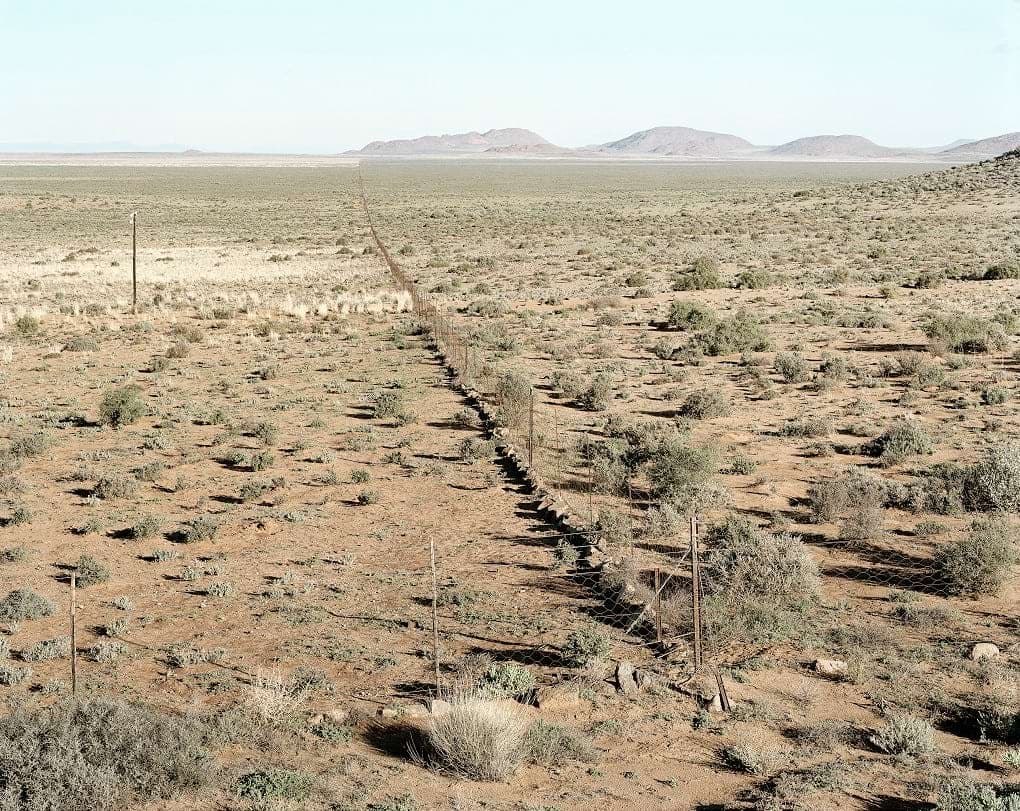
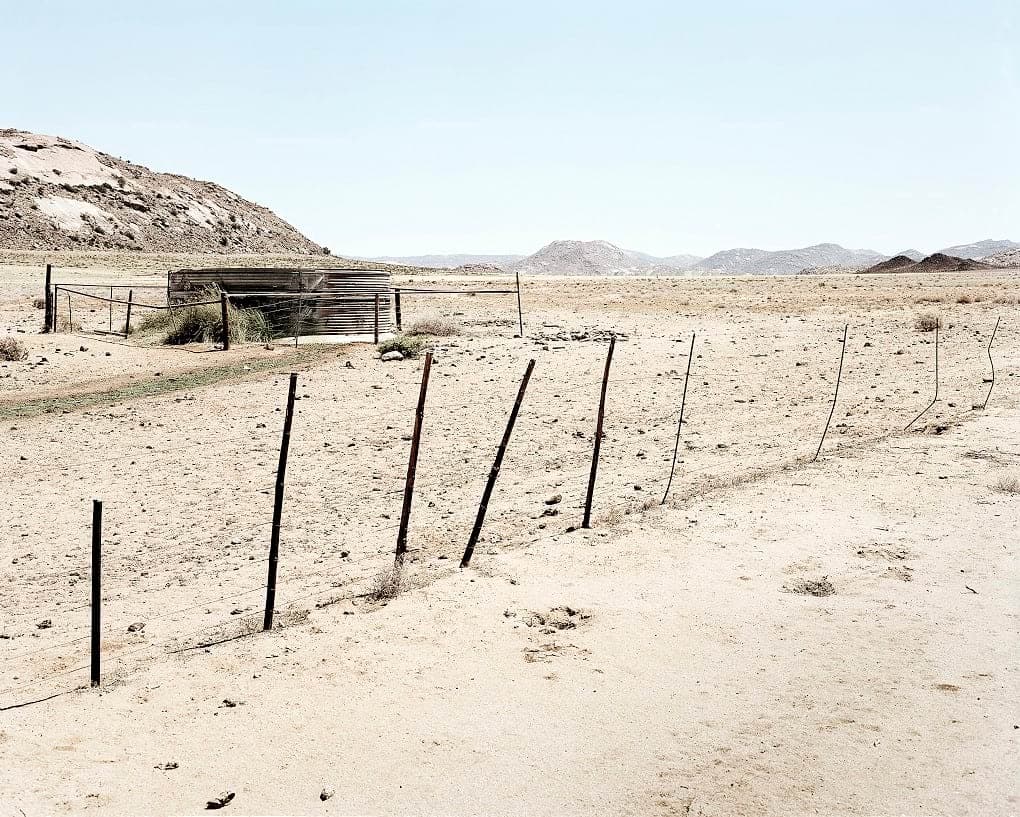
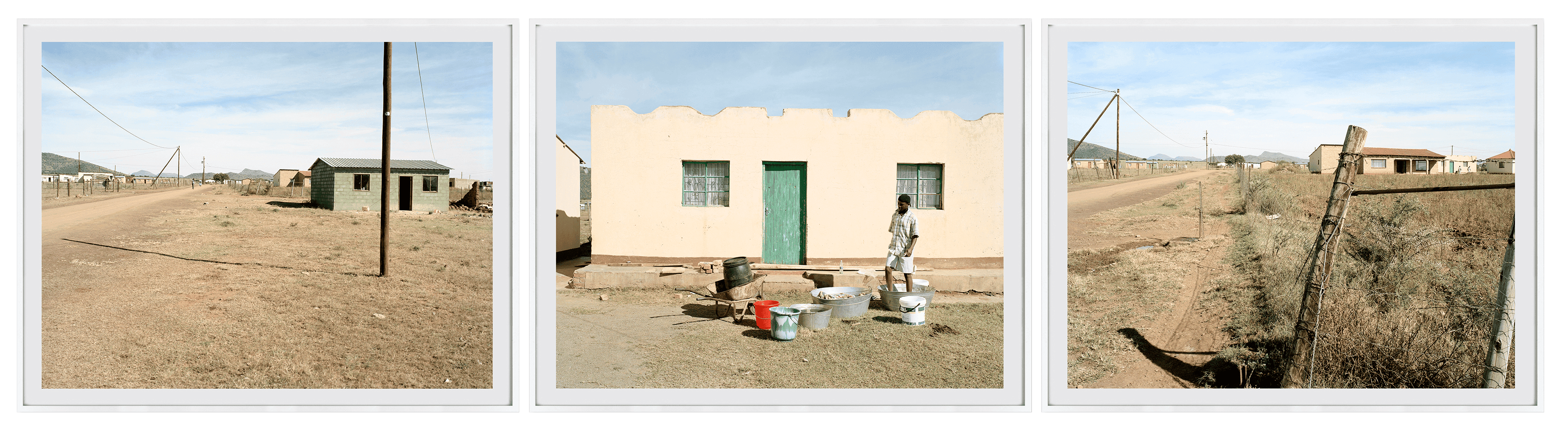
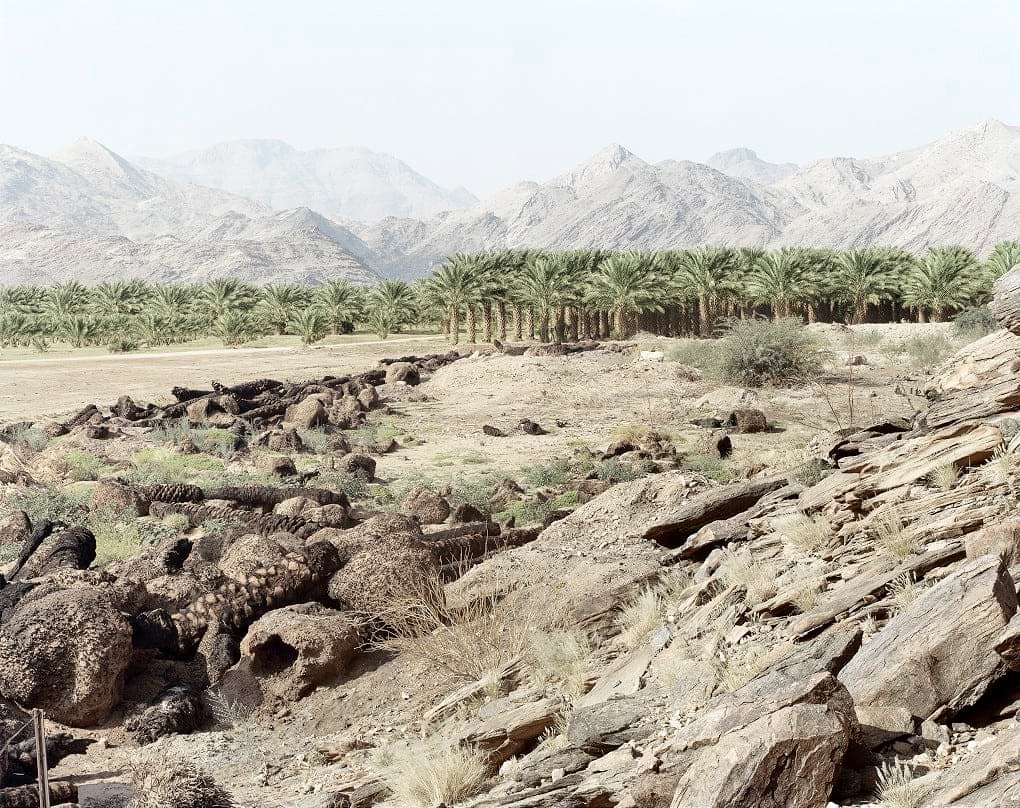
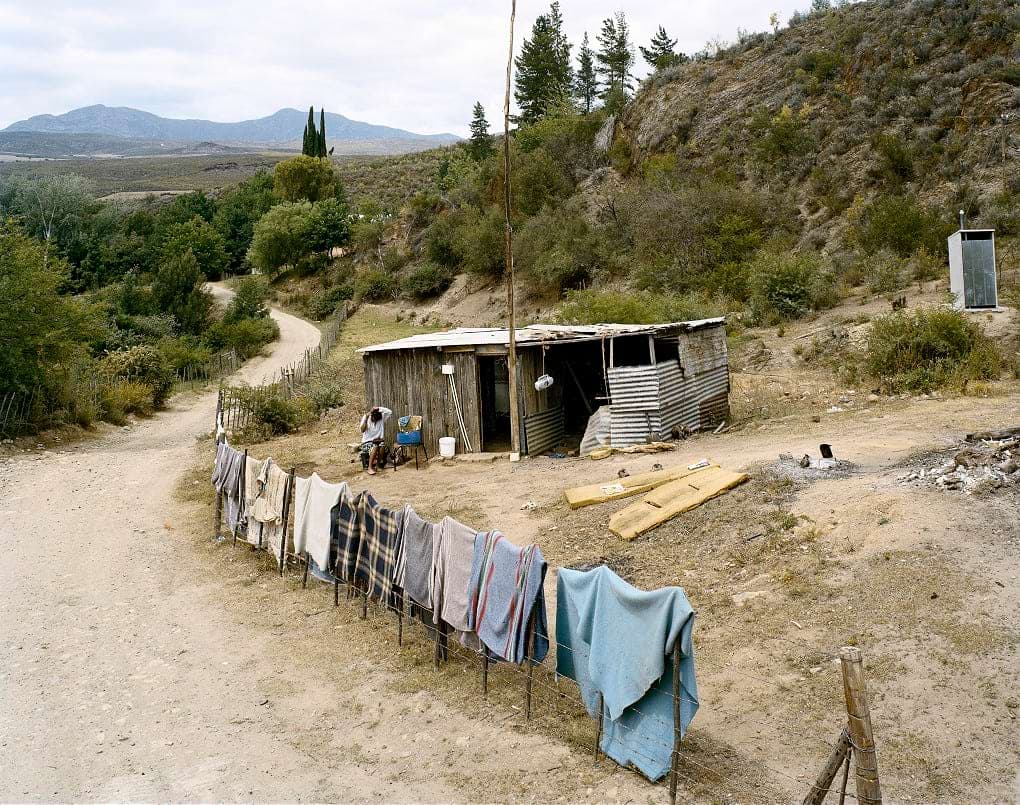
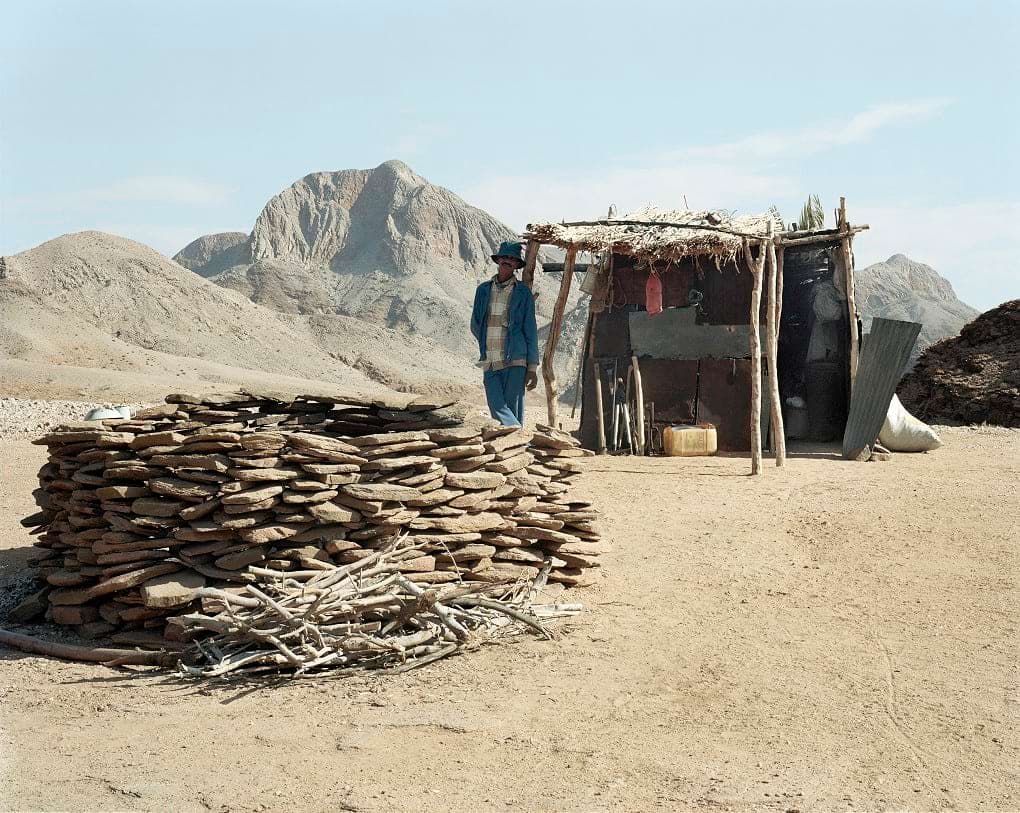
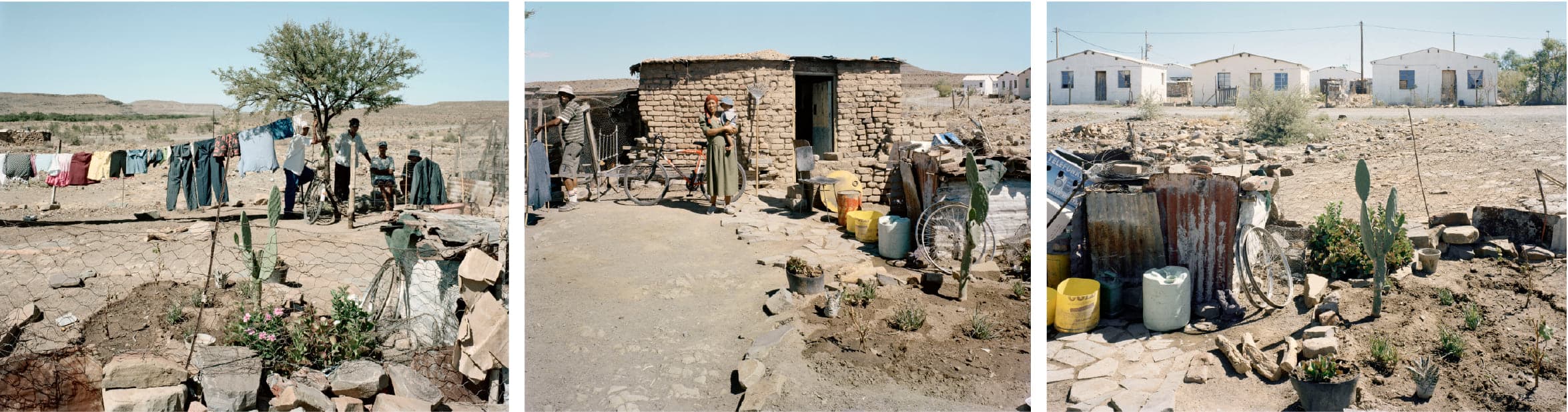
“In the 1990s my anger dissipated. Apartheid was no more. There were things to probe and criticise, but the emphasis was different. Lyricism seemed not only permissible but possible. In the late ‘90s I became aware of colour as a particular quality of this place and its light that I wanted to explore. It seemed ‘thin’, yet intense. To achieve prints that would hold these qualities I would need to print in colour in a way that was similar to that which I had developed for my black and white work … Over the generations, the land has shaped us - I say us in the broadest sense, us South Africans. And we have shaped the land. It is almost impossible now to find a pristine landscape. The grass has been grazed to the point of being threadbare, crops come and go, roads traverse, fences divide, and mines penetrate and throw up scabs of their detritus. These and our structures are the marks of our presence. I am drawn by the intimacies of our association with this land.” David Goldblatt
“In the 1990s my anger dissipated. Apartheid was no more. There were things to probe and criticise, but the emphasis was different. Lyricism seemed not only permissible but possible. In the late ‘90s I became aware of colour as a particular quality of this place and its light that I wanted to explore. It seemed ‘thin’, yet intense. To achieve prints that would hold these qualities I would need to print in colour in a way that was similar to that which I had developed for my black and white work … Over the generations, the land has shaped us - I say us in the broadest sense, us South Africans. And we have shaped the land. It is almost impossible now to find a pristine landscape. The grass has been grazed to the point of being threadbare, crops come and go, roads traverse, fences divide, and mines penetrate and throw up scabs of their detritus. These and our structures are the marks of our presence. I am drawn by the intimacies of our association with this land.” David Goldblatt
“In the 1990s my anger dissipated. Apartheid was no more. There were things to probe and criticise, but the emphasis was different. Lyricism seemed not only permissible but possible. In the late ‘90s I became aware of colour as a particular quality of this place and its light that I wanted to explore. It seemed ‘thin’, yet intense. To achieve prints that would hold these qualities I would need to print in colour in a way that was similar to that which I had developed for my black and white work … Over the generations, the land has shaped us - I say us in the broadest sense, us South Africans. And we have shaped the land. It is almost impossible now to find a pristine landscape. The grass has been grazed to the point of being threadbare, crops come and go, roads traverse, fences divide, and mines penetrate and throw up scabs of their detritus. These and our structures are the marks of our presence. I am drawn by the intimacies of our association with this land.” David Goldblatt
“In the 1990s my anger dissipated. Apartheid was no more. There were things to probe and criticise, but the emphasis was different. Lyricism seemed not only permissible but possible. In the late ‘90s I became aware of colour as a particular quality of this place and its light that I wanted to explore. It seemed ‘thin’, yet intense. To achieve prints that would hold these qualities I would need to print in colour in a way that was similar to that which I had developed for my black and white work … Over the generations, the land has shaped us - I say us in the broadest sense, us South Africans. And we have shaped the land. It is almost impossible now to find a pristine landscape. The grass has been grazed to the point of being threadbare, crops come and go, roads traverse, fences divide, and mines penetrate and throw up scabs of their detritus. These and our structures are the marks of our presence. I am drawn by the intimacies of our association with this land.” David Goldblatt
“In the 1990s my anger dissipated. Apartheid was no more. There were things to probe and criticise, but the emphasis was different. Lyricism seemed not only permissible but possible. In the late ‘90s I became aware of colour as a particular quality of this place and its light that I wanted to explore. It seemed ‘thin’, yet intense. To achieve prints that would hold these qualities I would need to print in colour in a way that was similar to that which I had developed for my black and white work … Over the generations, the land has shaped us - I say us in the broadest sense, us South Africans. And we have shaped the land. It is almost impossible now to find a pristine landscape. The grass has been grazed to the point of being threadbare, crops come and go, roads traverse, fences divide, and mines penetrate and throw up scabs of their detritus. These and our structures are the marks of our presence. I am drawn by the intimacies of our association with this land.” David Goldblatt
“In the 1990s my anger dissipated. Apartheid was no more. There were things to probe and criticise, but the emphasis was different. Lyricism seemed not only permissible but possible. In the late ‘90s I became aware of colour as a particular quality of this place and its light that I wanted to explore. It seemed ‘thin’, yet intense. To achieve prints that would hold these qualities I would need to print in colour in a way that was similar to that which I had developed for my black and white work … Over the generations, the land has shaped us - I say us in the broadest sense, us South Africans. And we have shaped the land. It is almost impossible now to find a pristine landscape. The grass has been grazed to the point of being threadbare, crops come and go, roads traverse, fences divide, and mines penetrate and throw up scabs of their detritus. These and our structures are the marks of our presence. I am drawn by the intimacies of our association with this land.” David Goldblatt
“In the 1990s my anger dissipated. Apartheid was no more. There were things to probe and criticise, but the emphasis was different. Lyricism seemed not only permissible but possible. In the late ‘90s I became aware of colour as a particular quality of this place and its light that I wanted to explore. It seemed ‘thin’, yet intense. To achieve prints that would hold these qualities I would need to print in colour in a way that was similar to that which I had developed for my black and white work … Over the generations, the land has shaped us - I say us in the broadest sense, us South Africans. And we have shaped the land. It is almost impossible now to find a pristine landscape. The grass has been grazed to the point of being threadbare, crops come and go, roads traverse, fences divide, and mines penetrate and throw up scabs of their detritus. These and our structures are the marks of our presence. I am drawn by the intimacies of our association with this land.” David Goldblatt
“In the 1990s my anger dissipated. Apartheid was no more. There were things to probe and criticise, but the emphasis was different. Lyricism seemed not only permissible but possible. In the late ‘90s I became aware of colour as a particular quality of this place and its light that I wanted to explore. It seemed ‘thin’, yet intense. To achieve prints that would hold these qualities I would need to print in colour in a way that was similar to that which I had developed for my black and white work … Over the generations, the land has shaped us - I say us in the broadest sense, us South Africans. And we have shaped the land. It is almost impossible now to find a pristine landscape. The grass has been grazed to the point of being threadbare, crops come and go, roads traverse, fences divide, and mines penetrate and throw up scabs of their detritus. These and our structures are the marks of our presence. I am drawn by the intimacies of our association with this land.” David Goldblatt
“In the 1990s my anger dissipated. Apartheid was no more. There were things to probe and criticise, but the emphasis was different. Lyricism seemed not only permissible but possible. In the late ‘90s I became aware of colour as a particular quality of this place and its light that I wanted to explore. It seemed ‘thin’, yet intense. To achieve prints that would hold these qualities I would need to print in colour in a way that was similar to that which I had developed for my black and white work … Over the generations, the land has shaped us - I say us in the broadest sense, us South Africans. And we have shaped the land. It is almost impossible now to find a pristine landscape. The grass has been grazed to the point of being threadbare, crops come and go, roads traverse, fences divide, and mines penetrate and throw up scabs of their detritus. These and our structures are the marks of our presence. I am drawn by the intimacies of our association with this land.” David Goldblatt
“In the 1990s my anger dissipated. Apartheid was no more. There were things to probe and criticise, but the emphasis was different. Lyricism seemed not only permissible but possible. In the late ‘90s I became aware of colour as a particular quality of this place and its light that I wanted to explore. It seemed ‘thin’, yet intense. To achieve prints that would hold these qualities I would need to print in colour in a way that was similar to that which I had developed for my black and white work … Over the generations, the land has shaped us - I say us in the broadest sense, us South Africans. And we have shaped the land. It is almost impossible now to find a pristine landscape. The grass has been grazed to the point of being threadbare, crops come and go, roads traverse, fences divide, and mines penetrate and throw up scabs of their detritus. These and our structures are the marks of our presence. I am drawn by the intimacies of our association with this land.” David Goldblatt