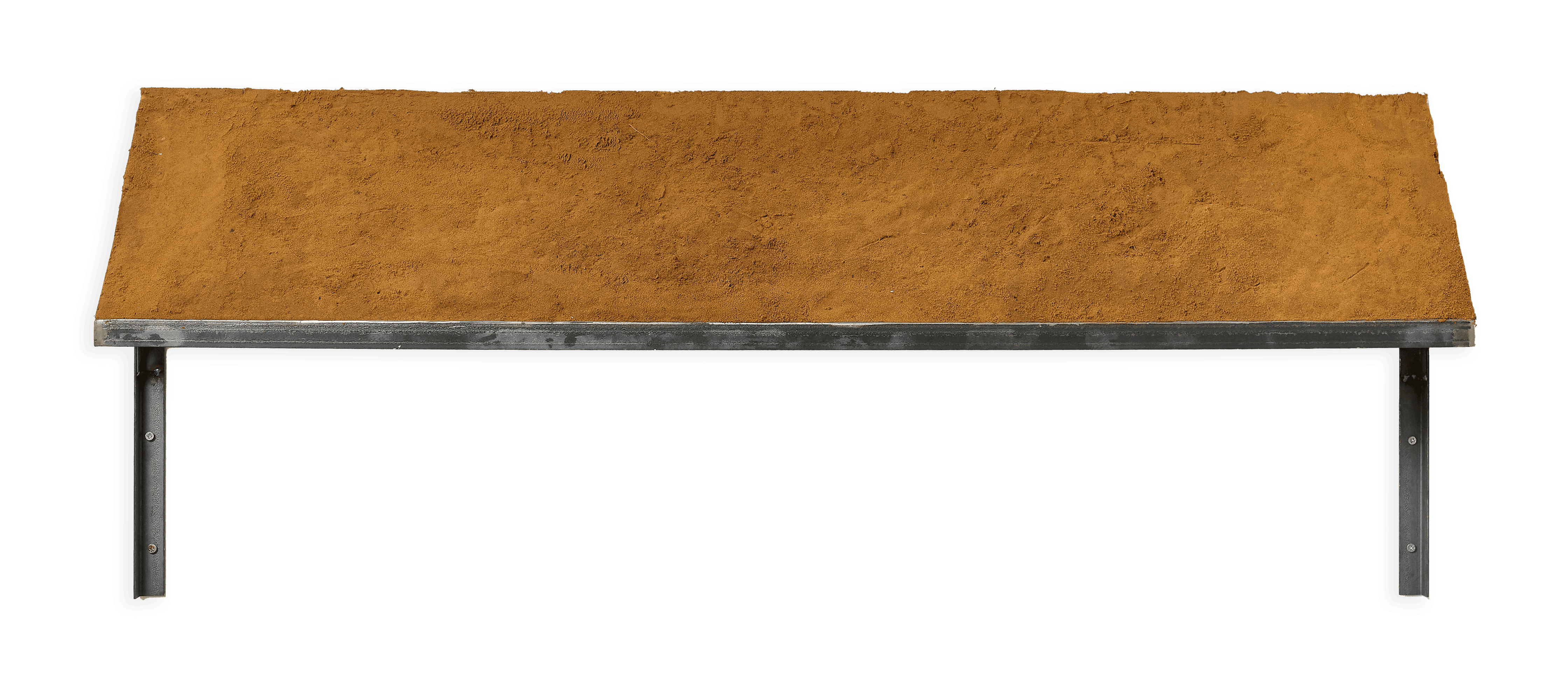
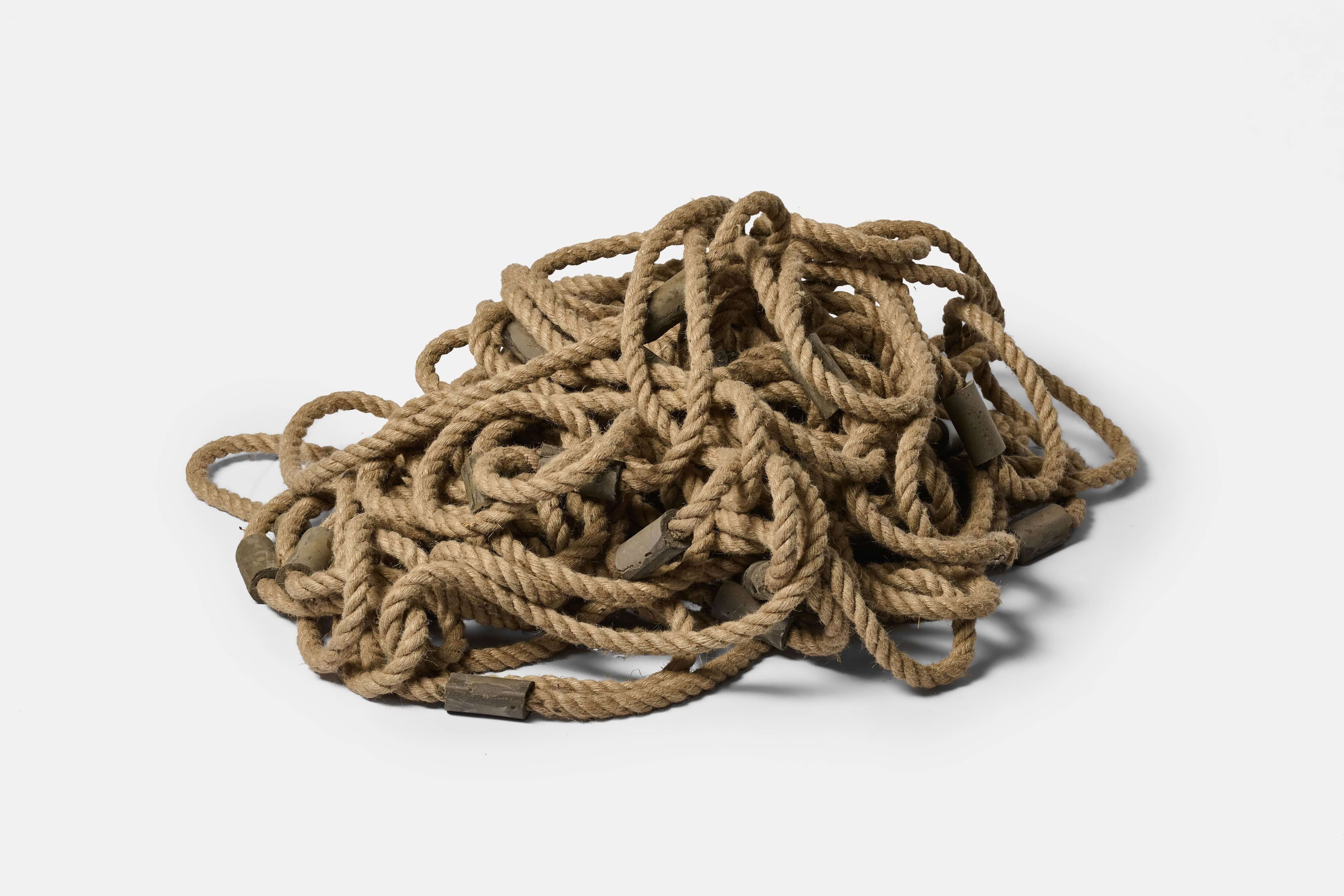
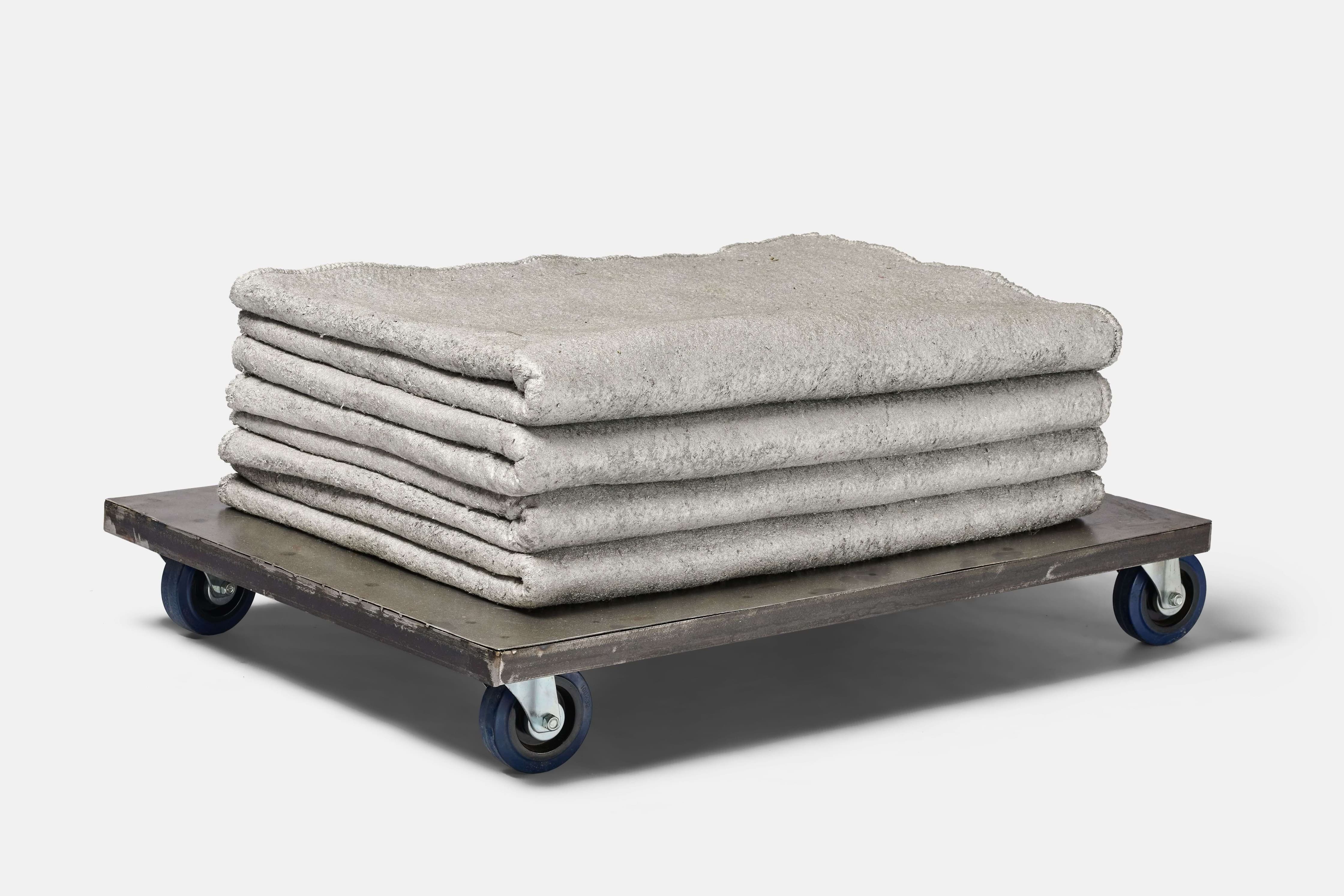
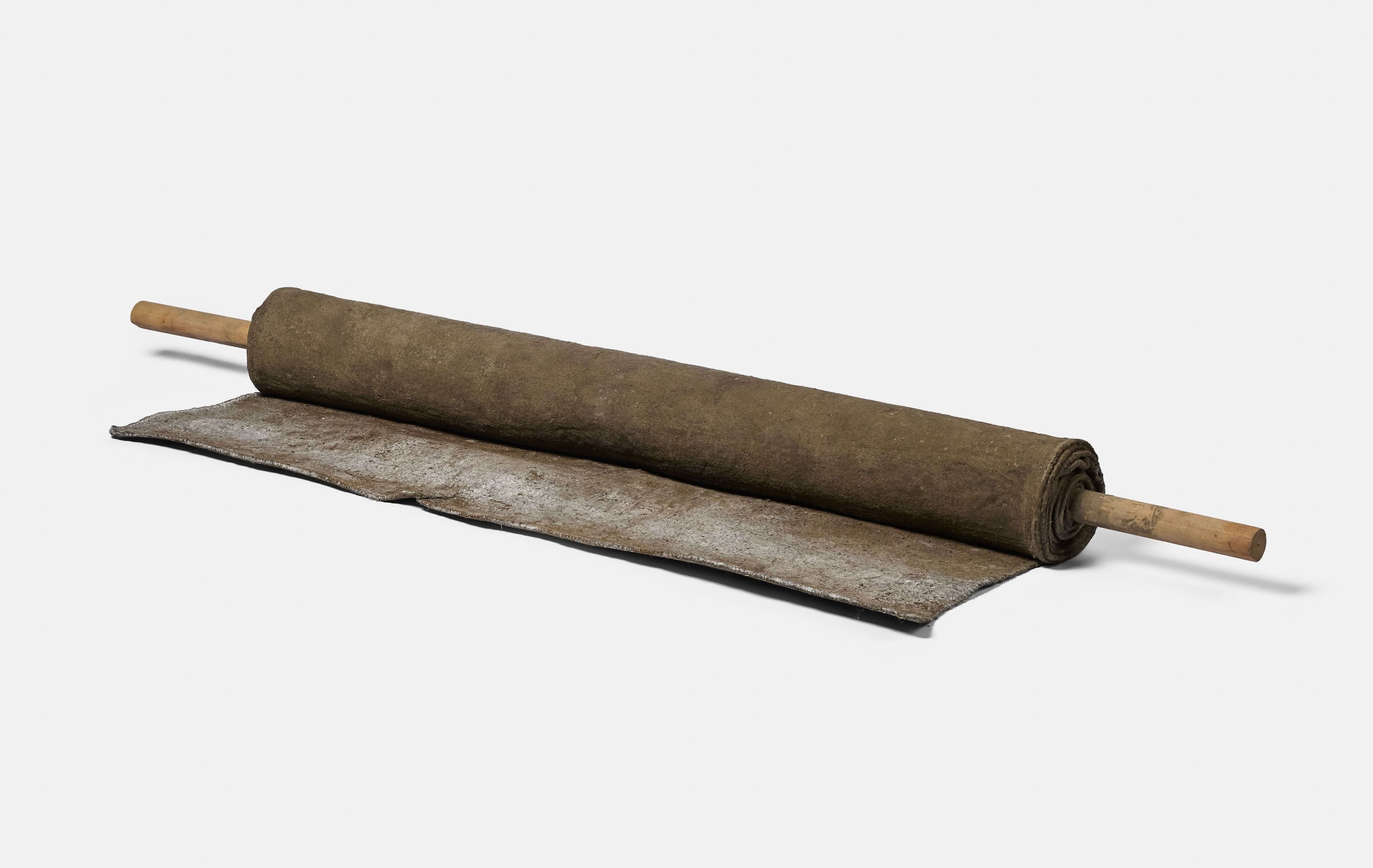
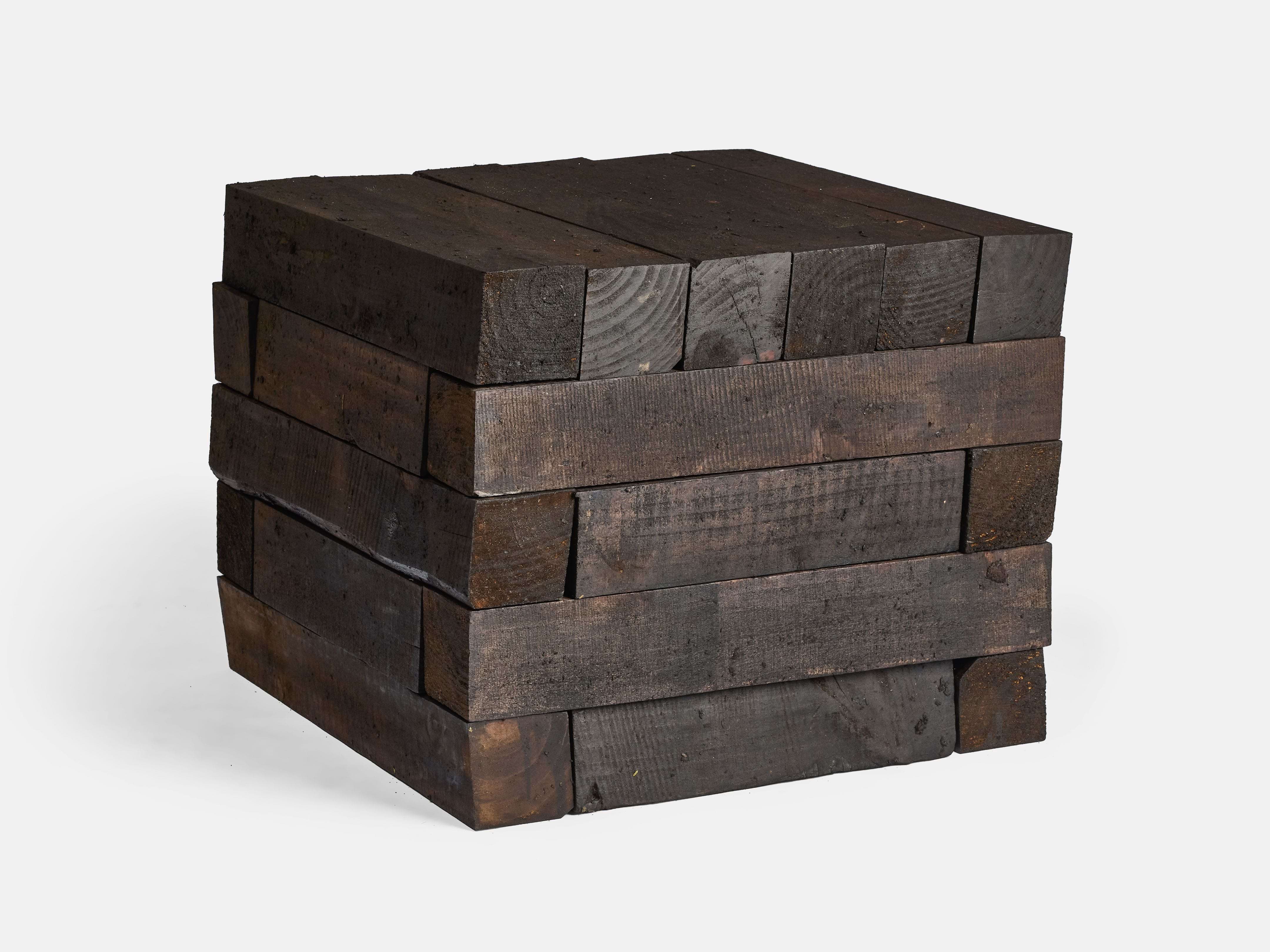
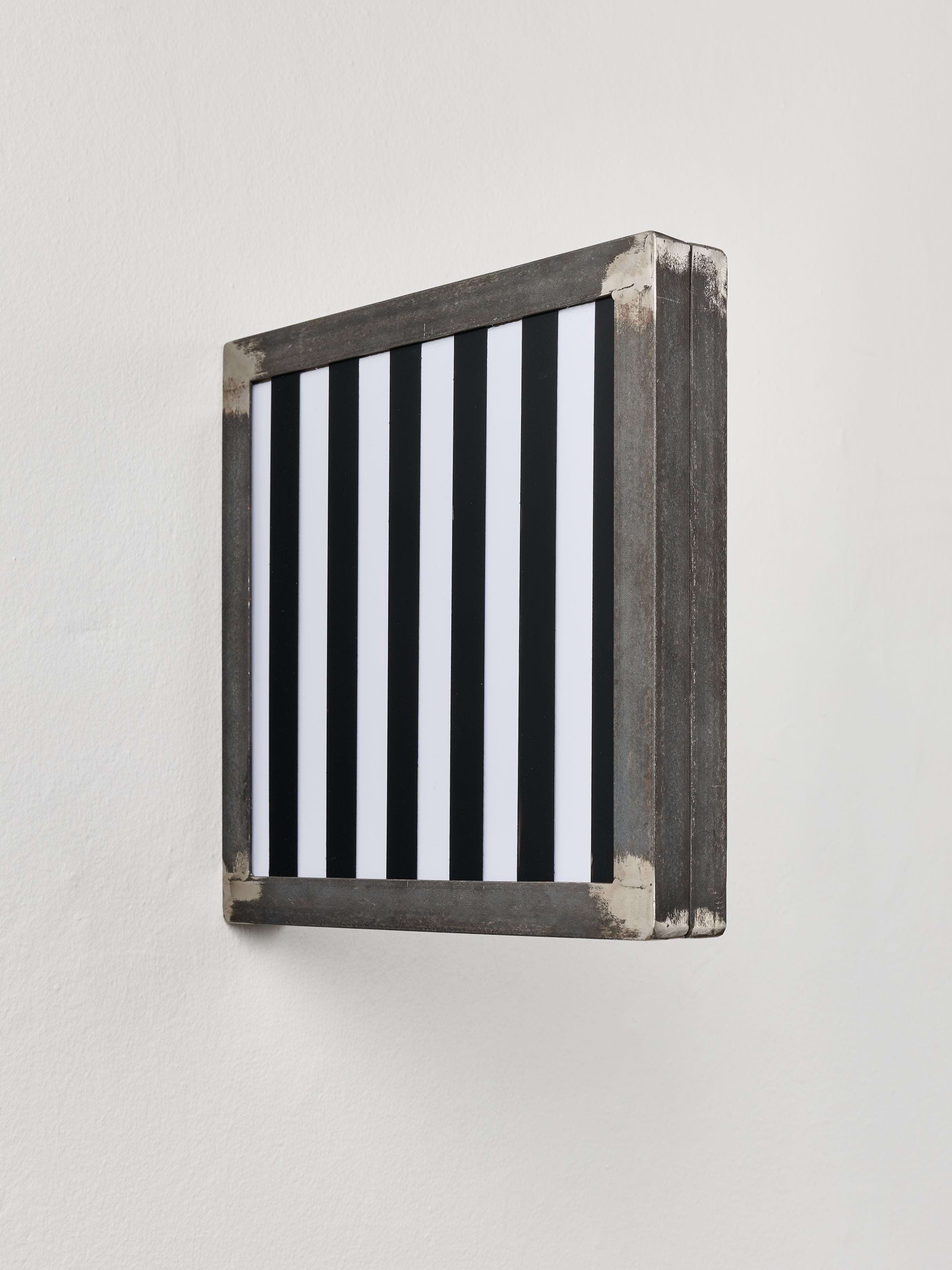
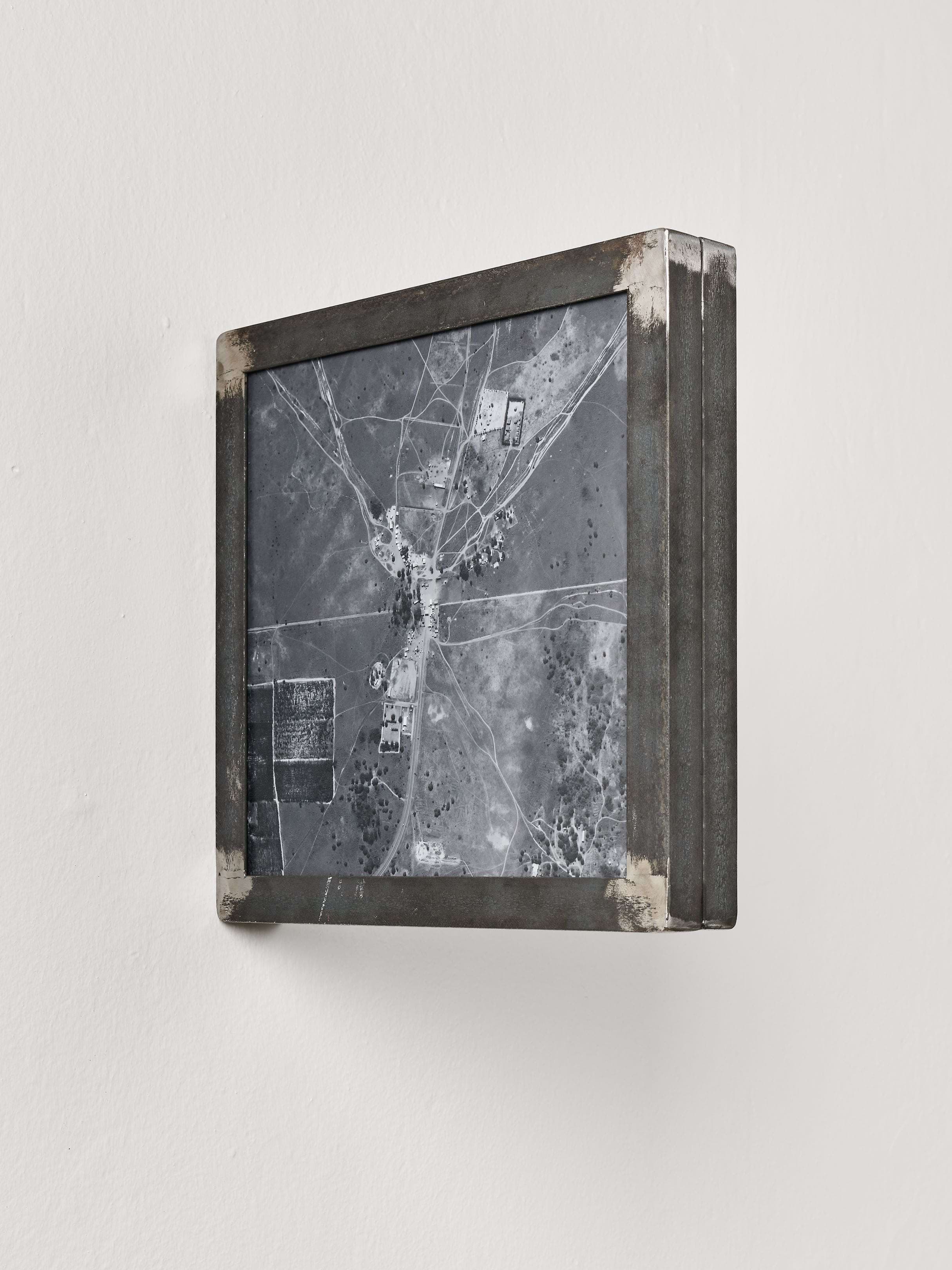
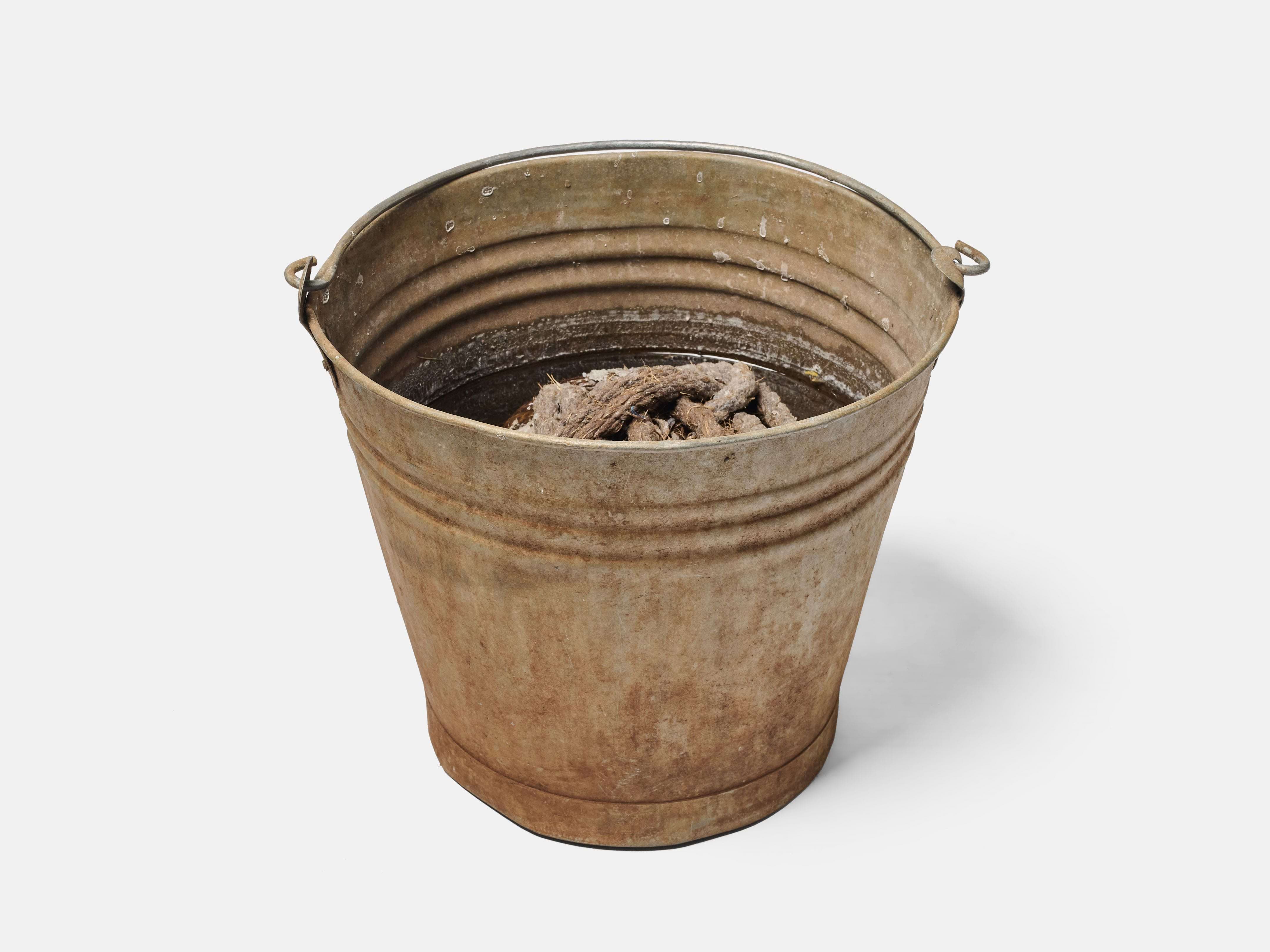
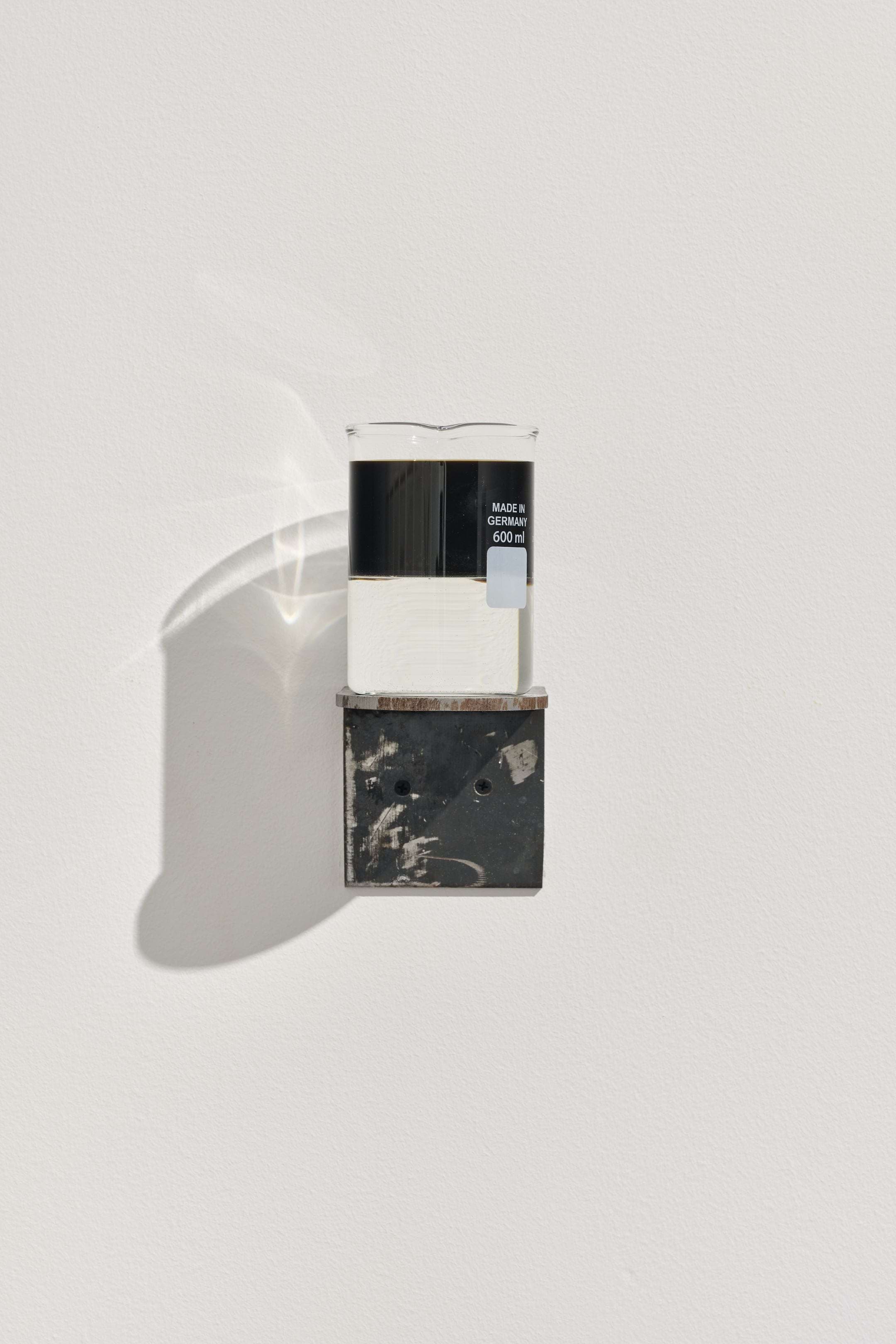
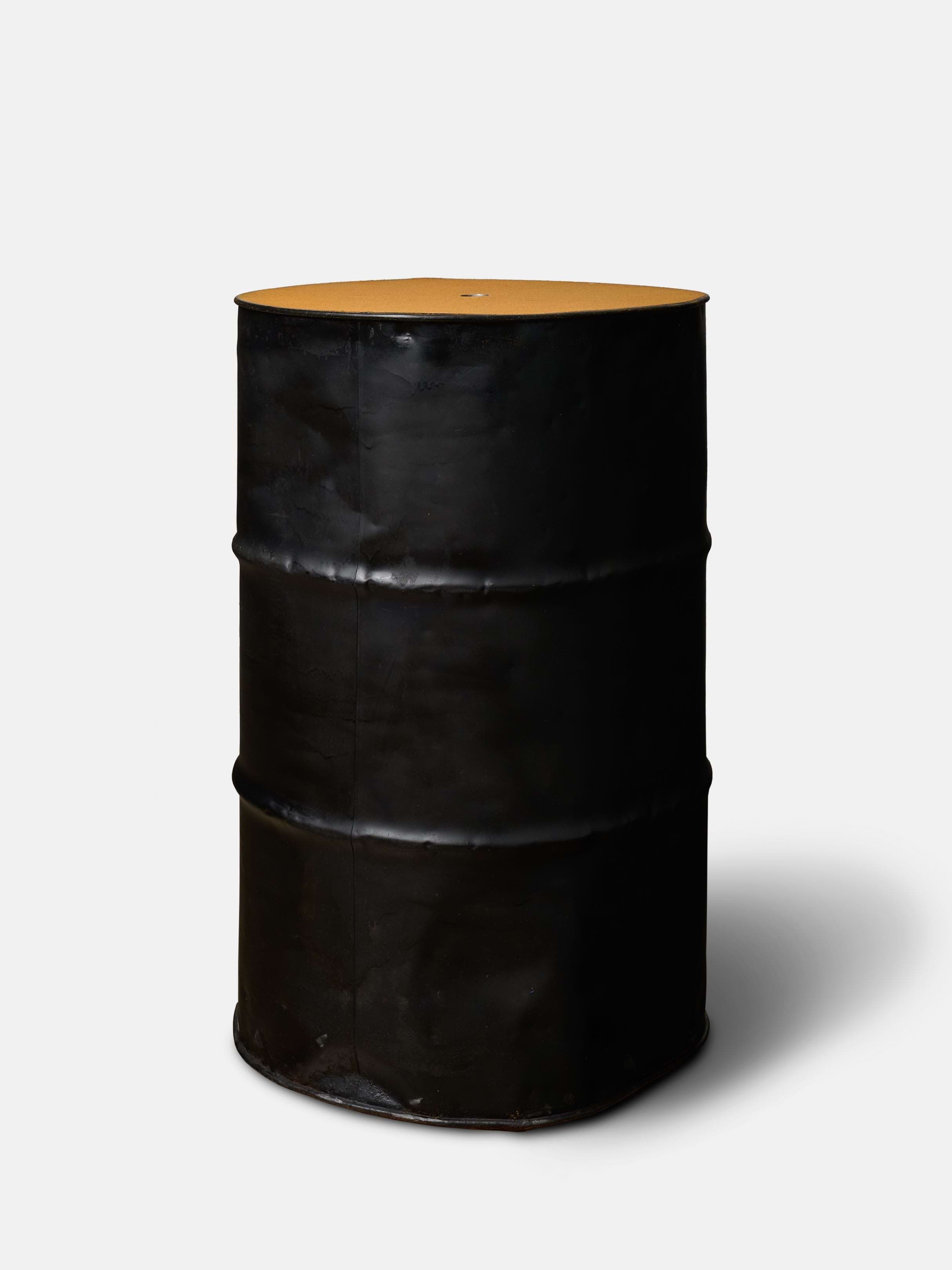
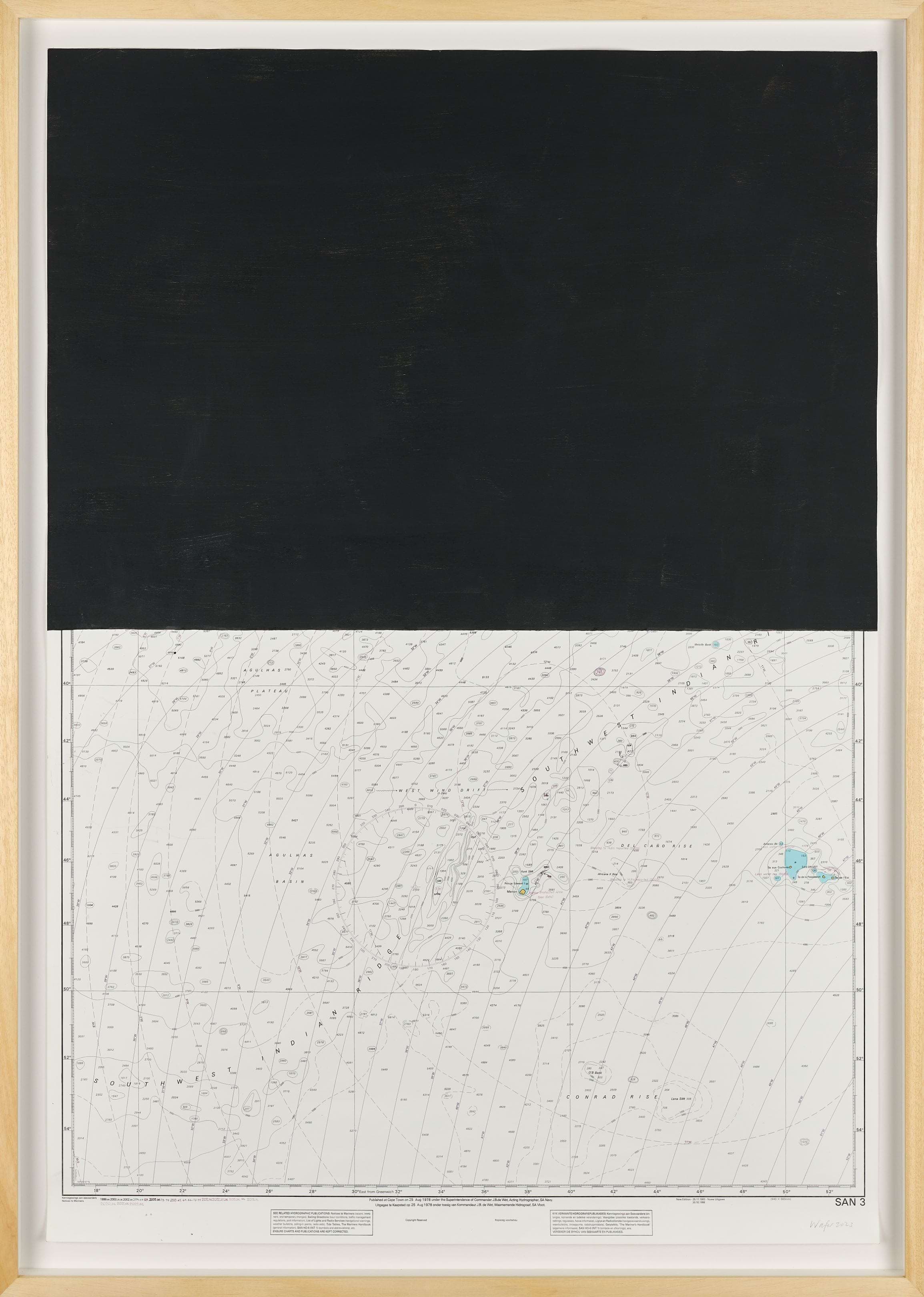
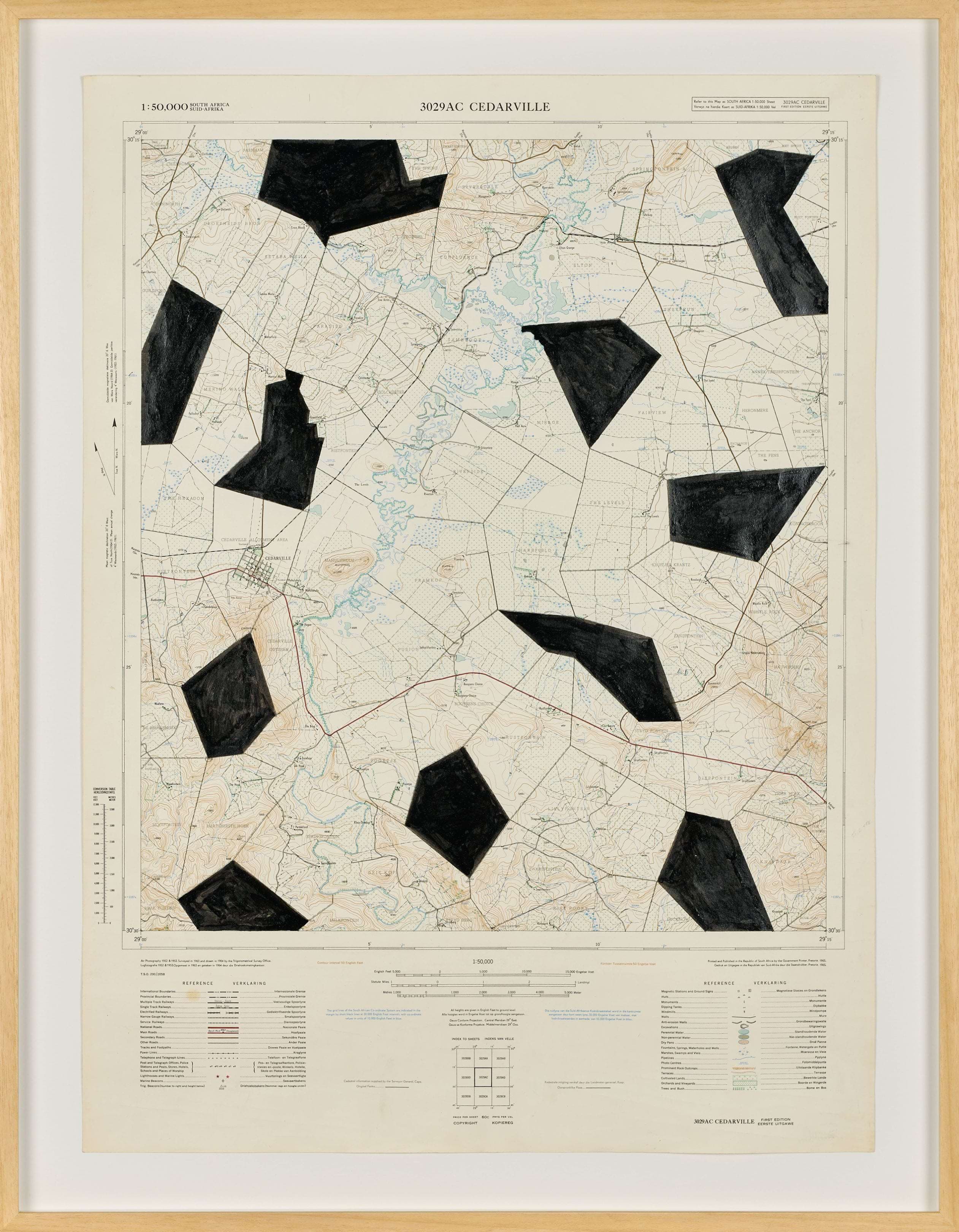
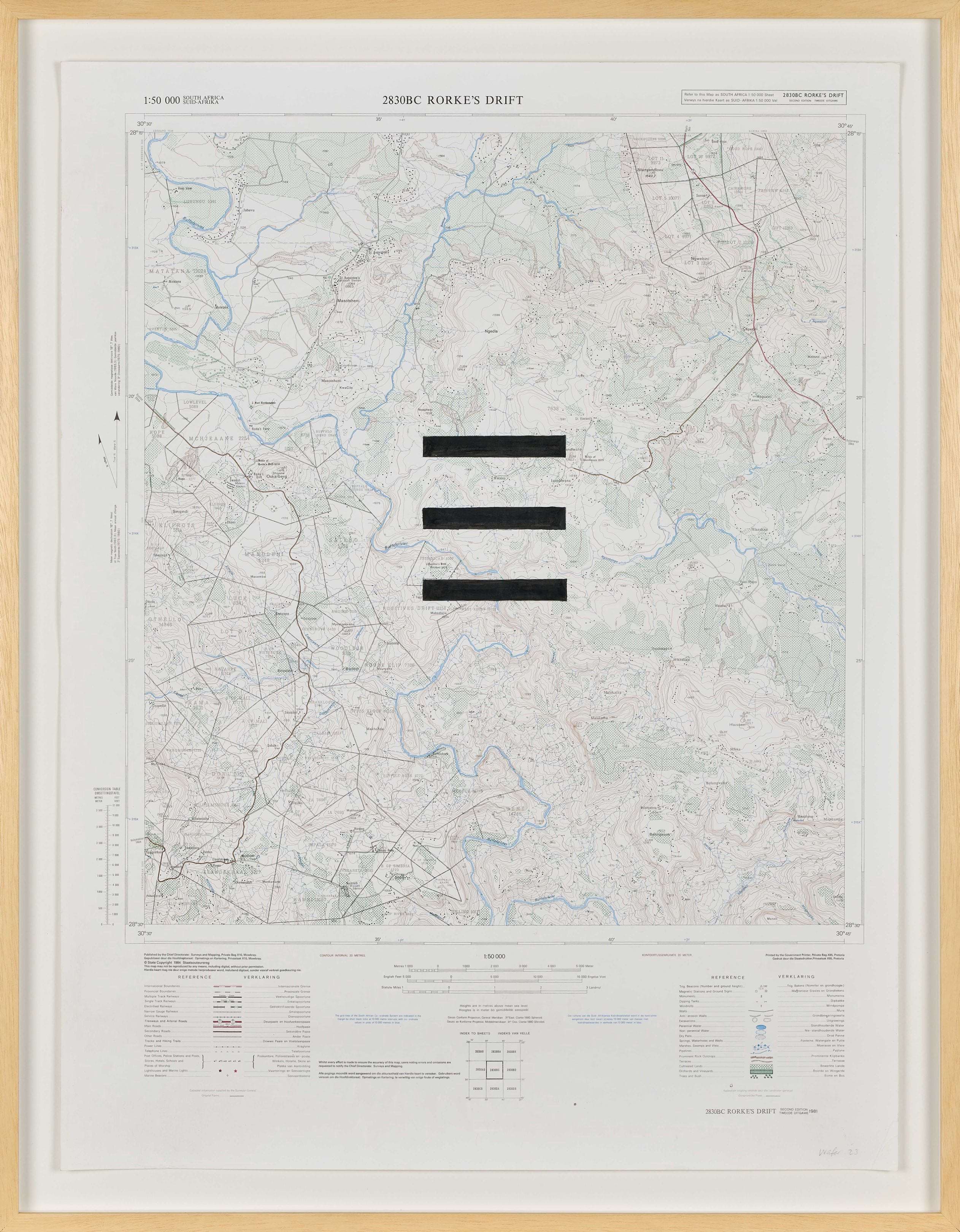
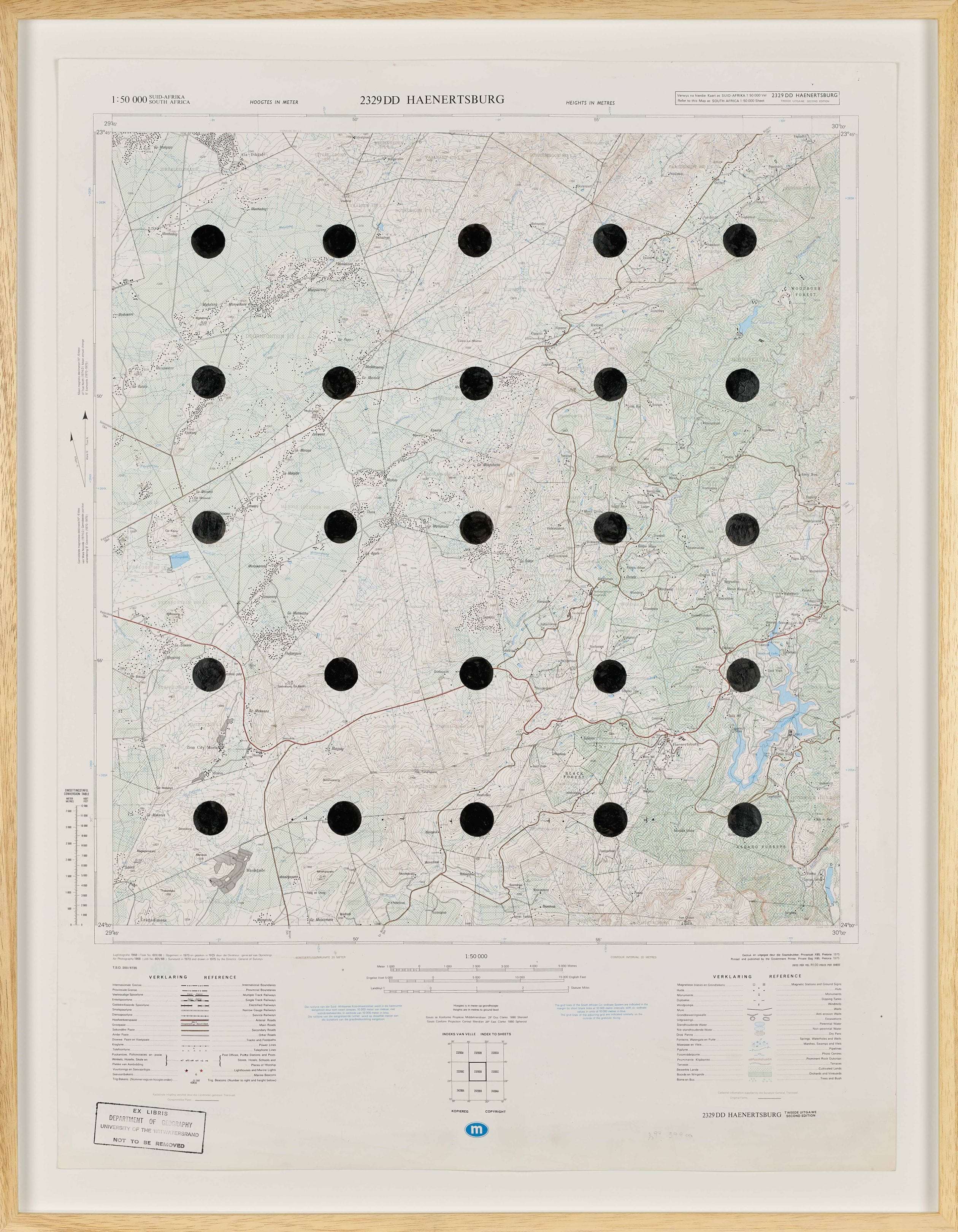
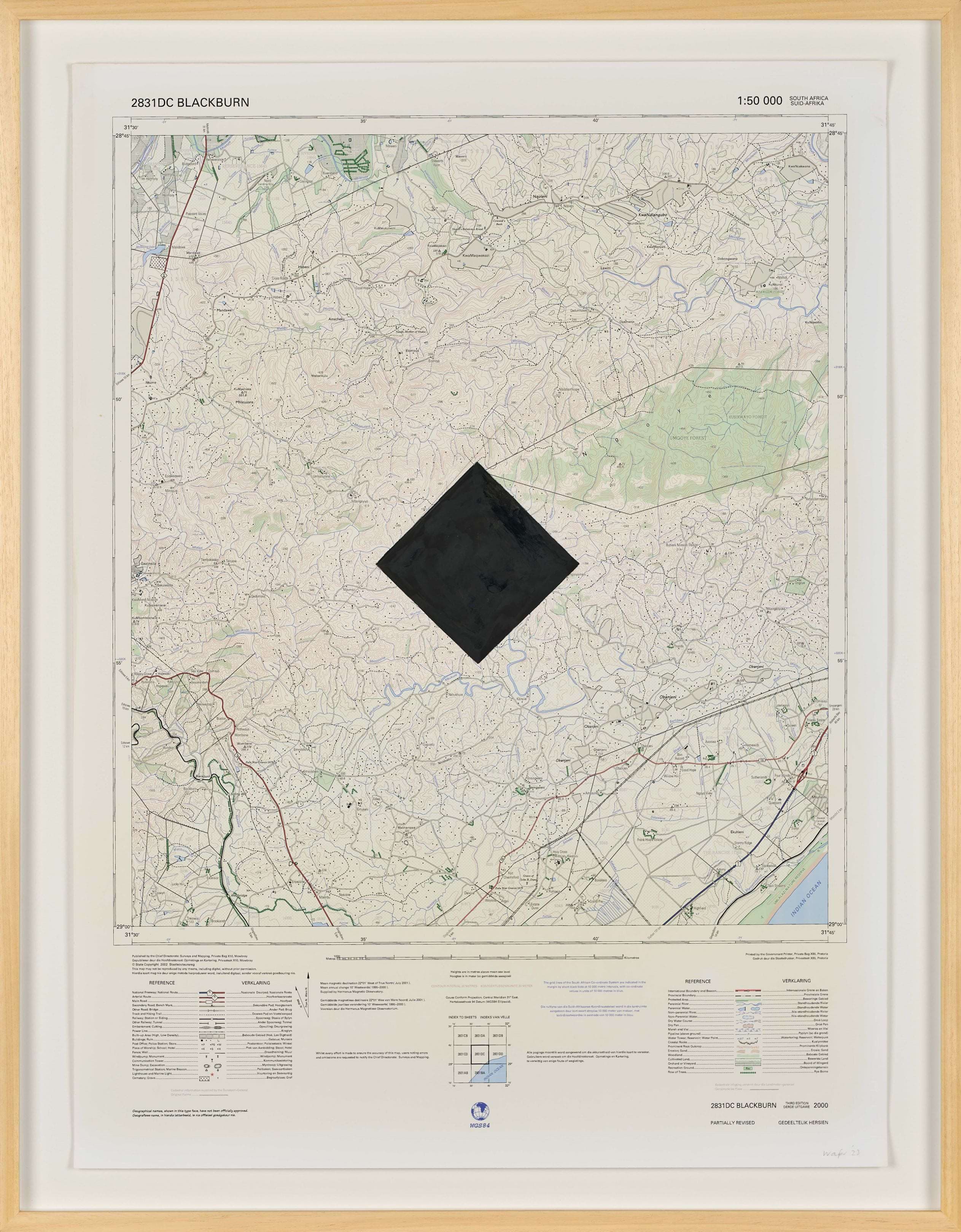
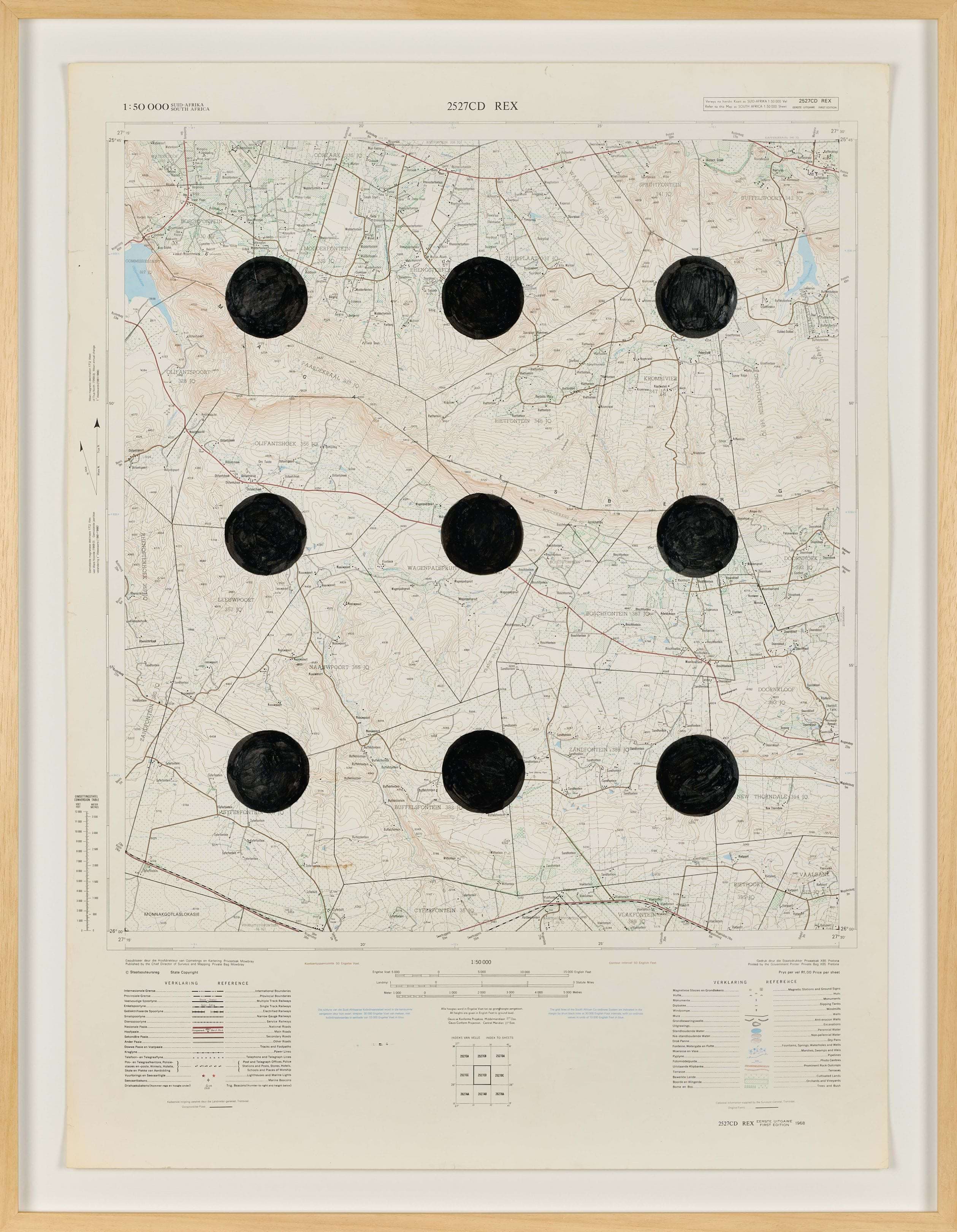
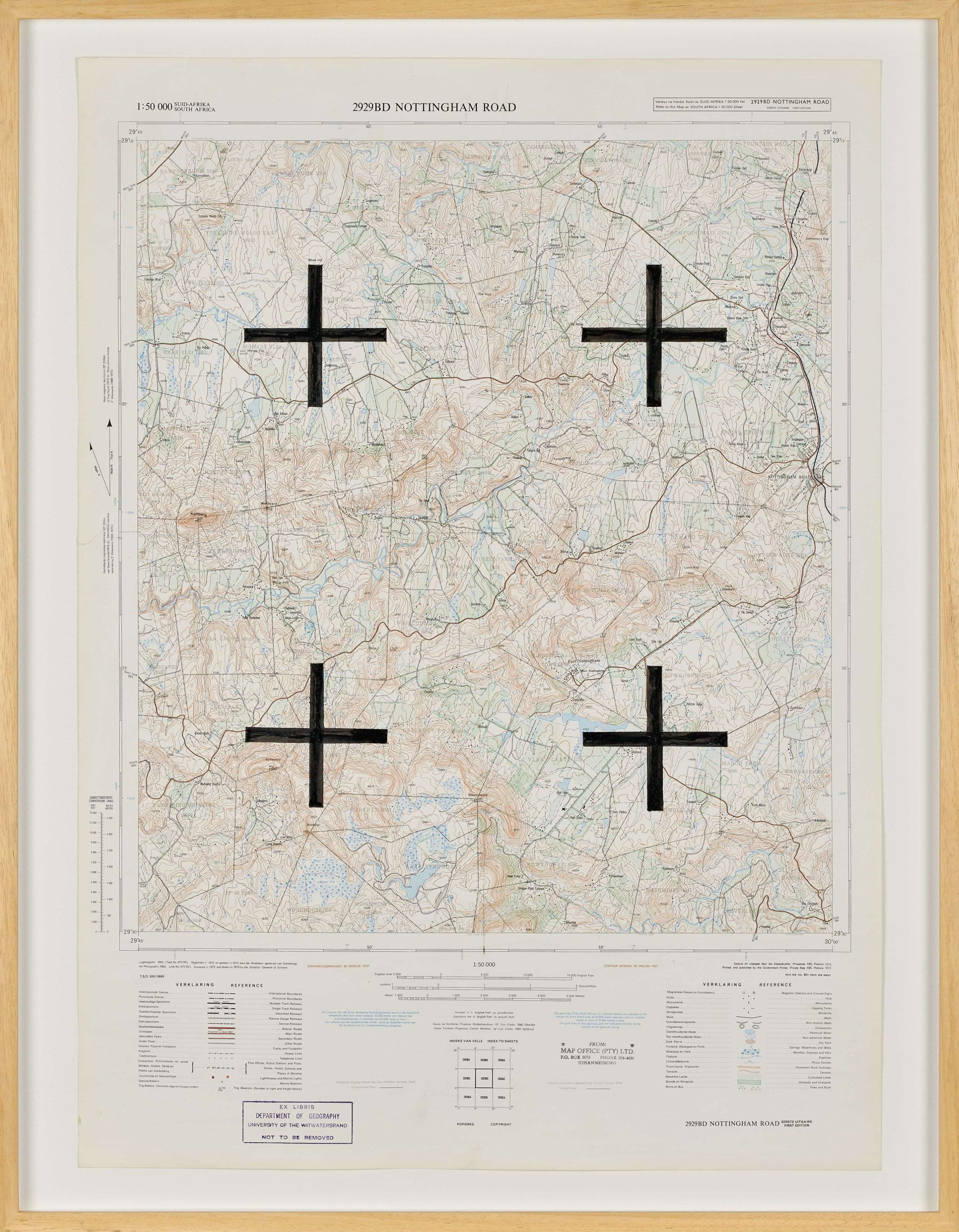
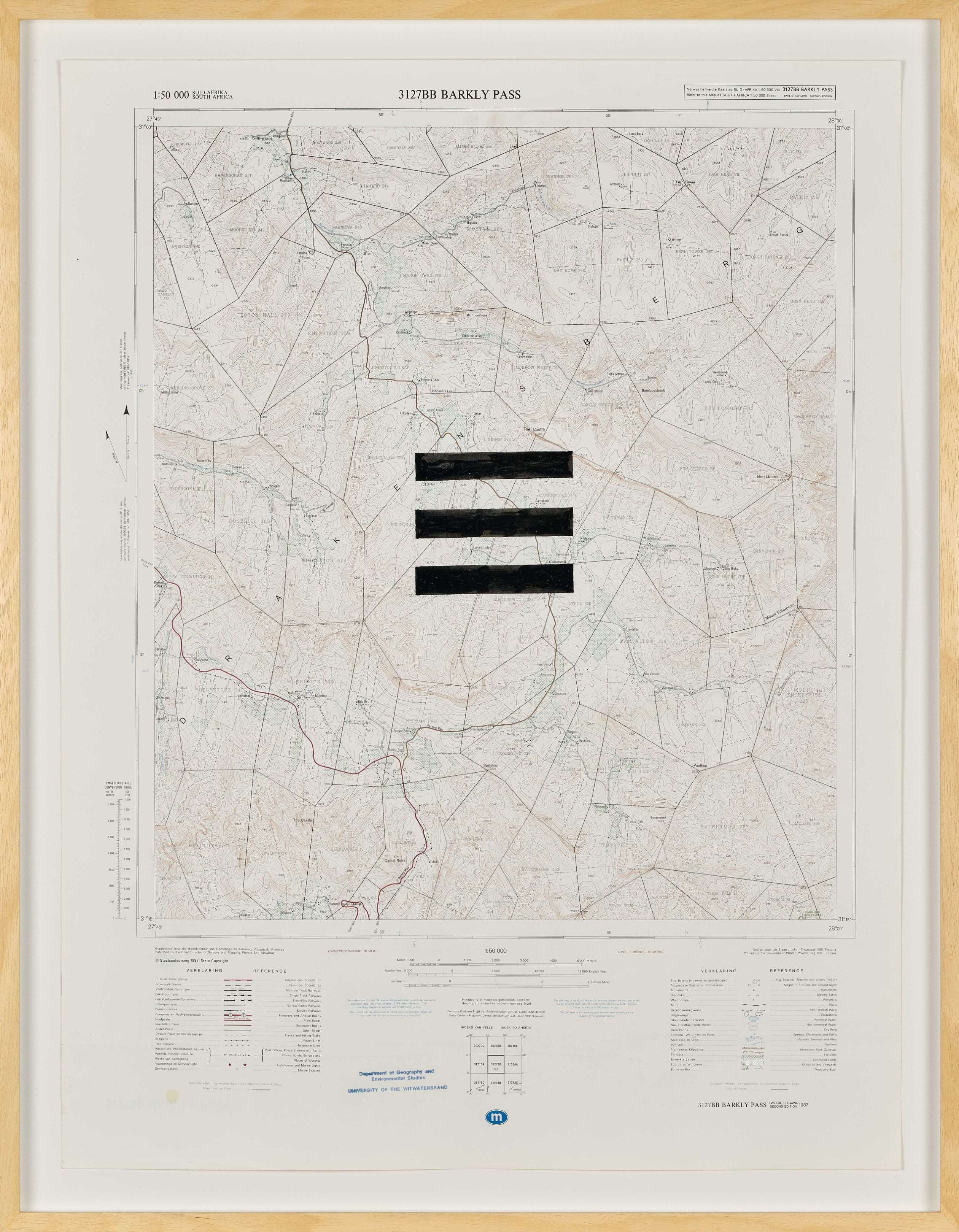
'Slope' is part of 'Material Immaterial’ an exhibition held at Goodman Gallery Johannesburg in 2023. In this body of work, Jeremy Wafer continues his sustained investigation into the entanglements of place, history, and the body through material. The body of work reflects on the artist’s enduring preoccupation with systems of measurement, mapping, and the politics of land and sea. Through tactile and conceptual explorations, Wafer invites viewers to consider the often invisible frameworks, geographic, political, and mnemonic, through which land and identity are apprehended, shaped and contested.
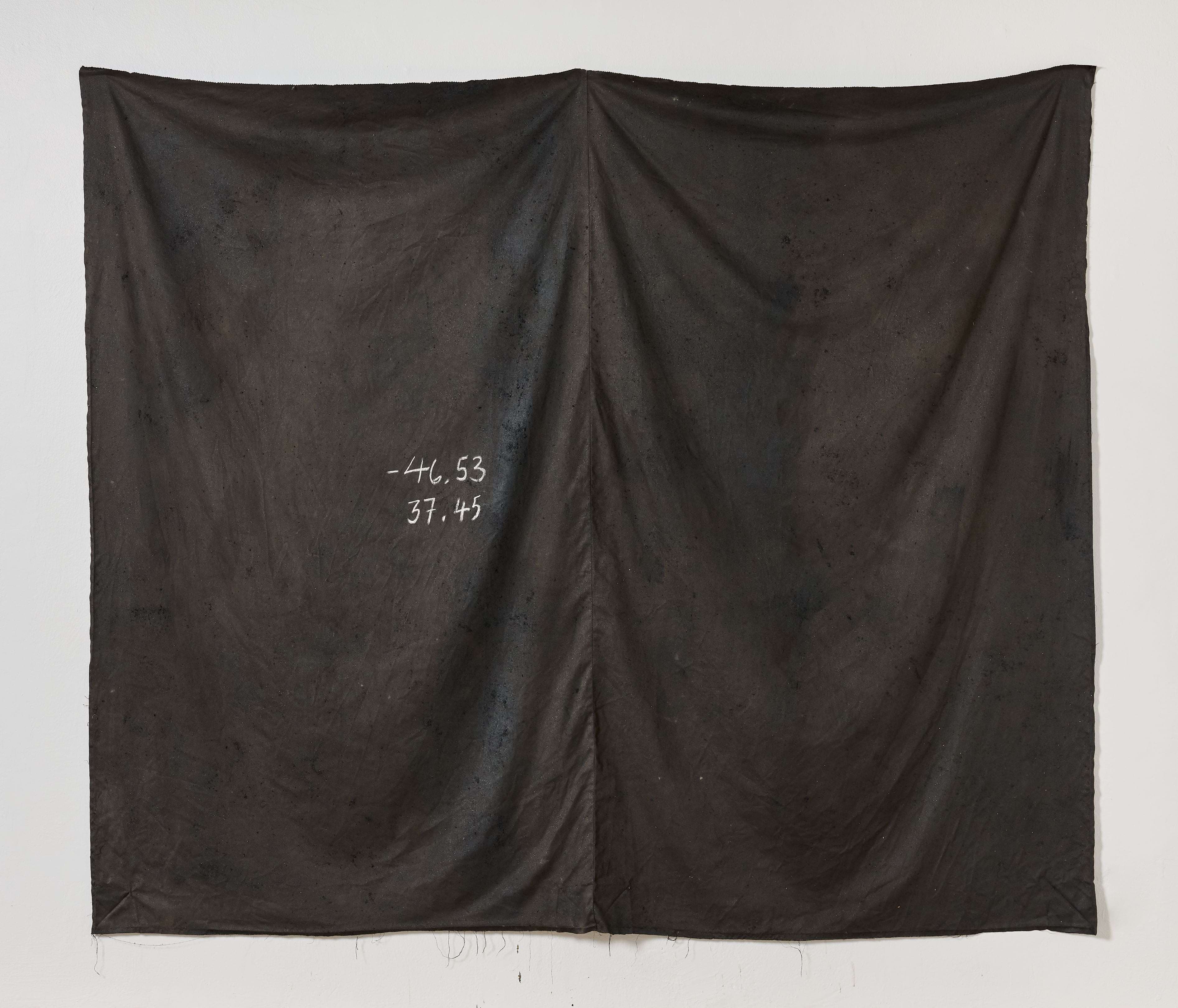
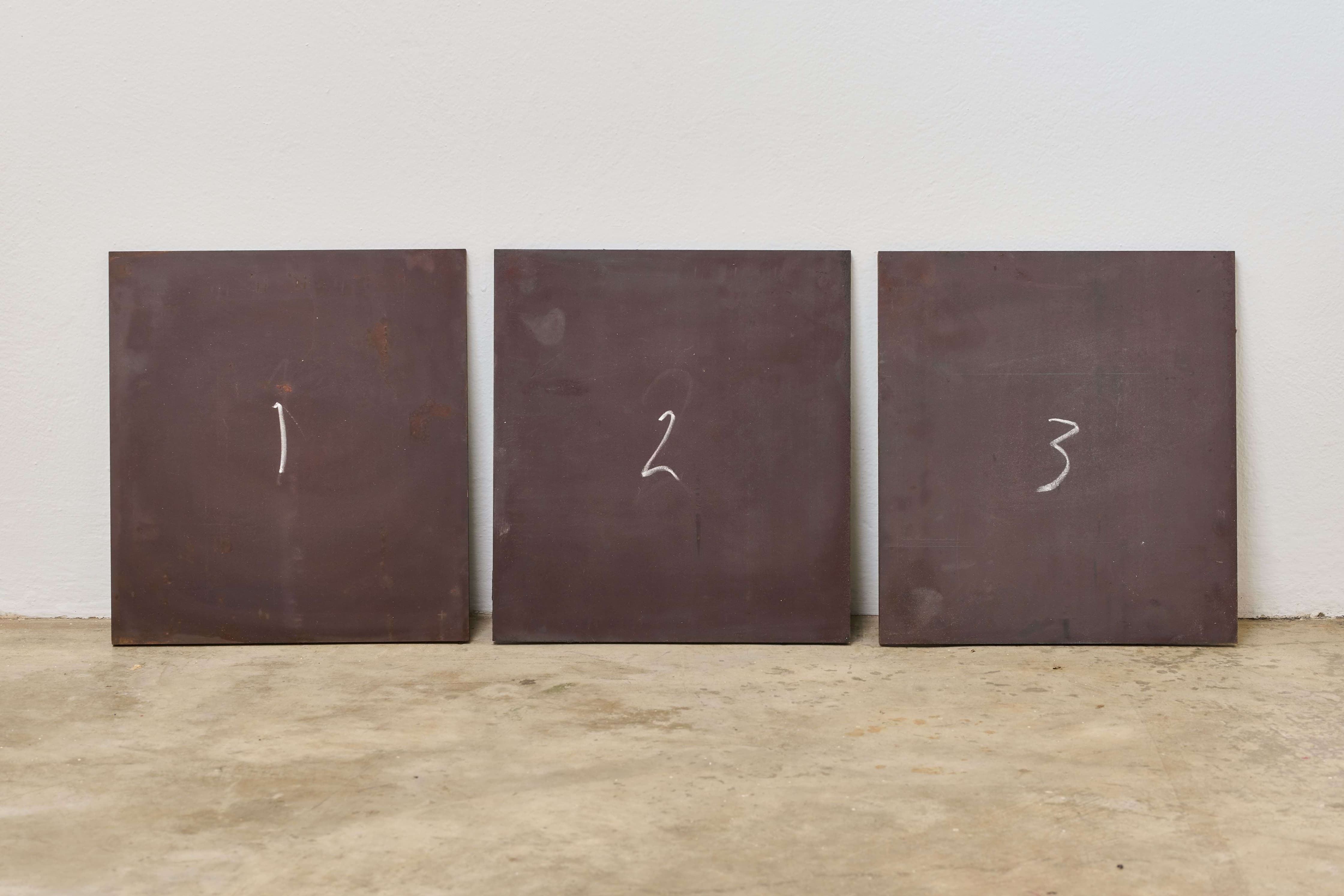
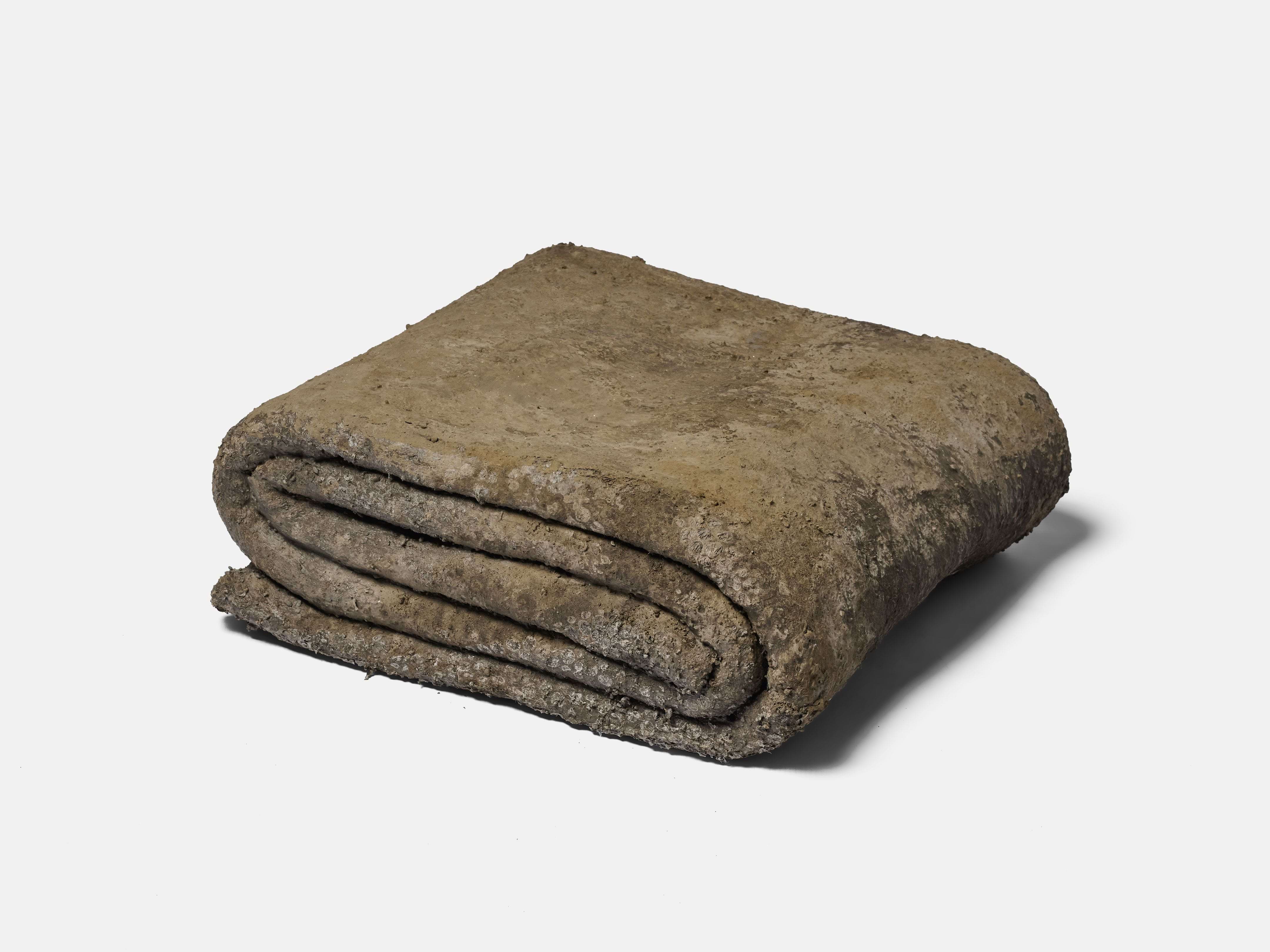
'Roll' was included in 'Material Immaterial', an exhibition held at Goodman Gallery Johannesburg in 2023. In this body of work, Jeremy Wafer continues his sustained investigation into the entanglements of place, history, and the body through material.The exhibition reflects the artist’s enduring preoccupation with systems of measurement, mapping, and the politics of land and sea. Through tactile and conceptual explorations, Wafer invites viewers to consider the often invisible frameworks, geographic, political, and mnemonic, through which land and identity are apprehended, shaped and contested.
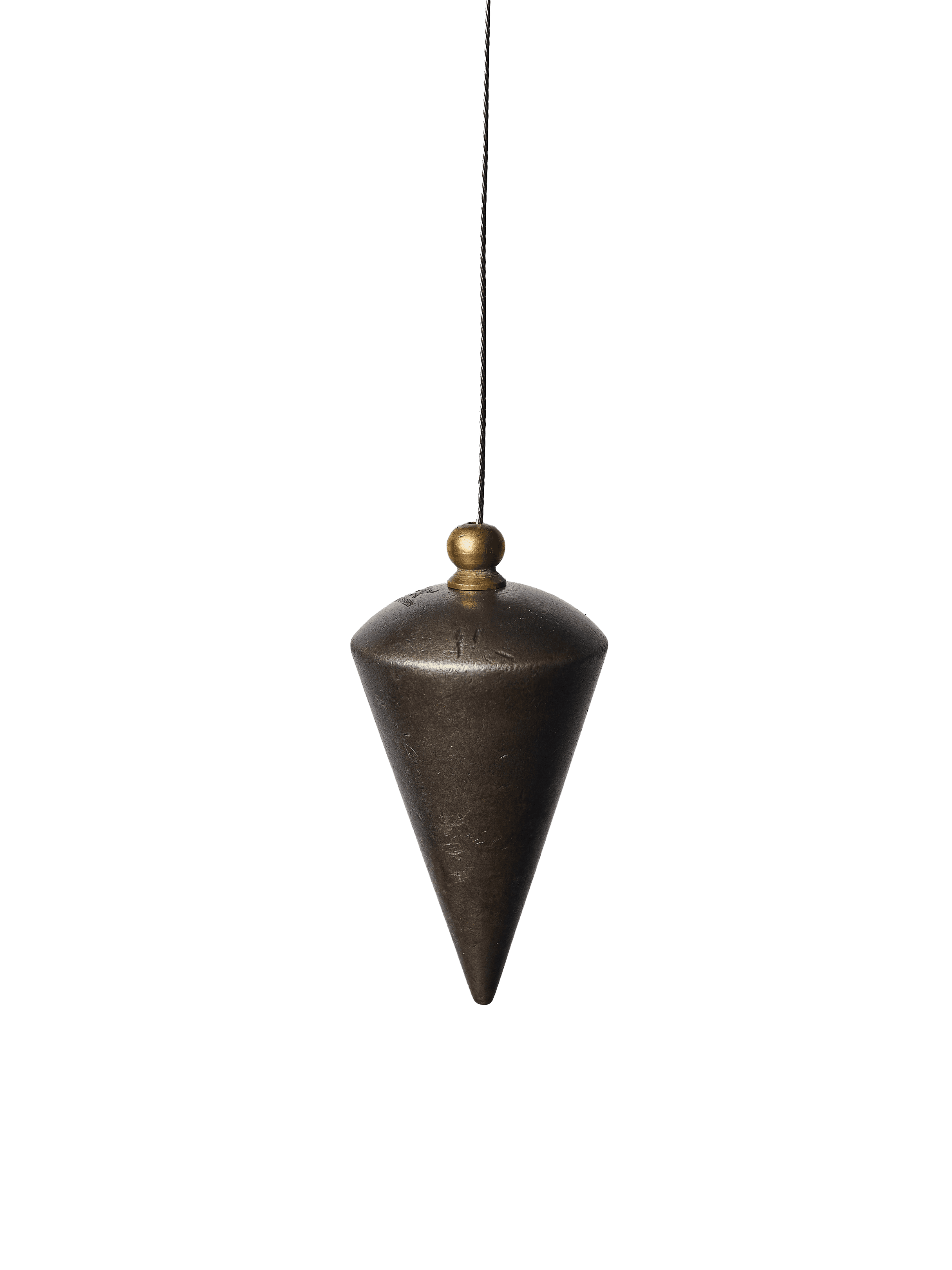
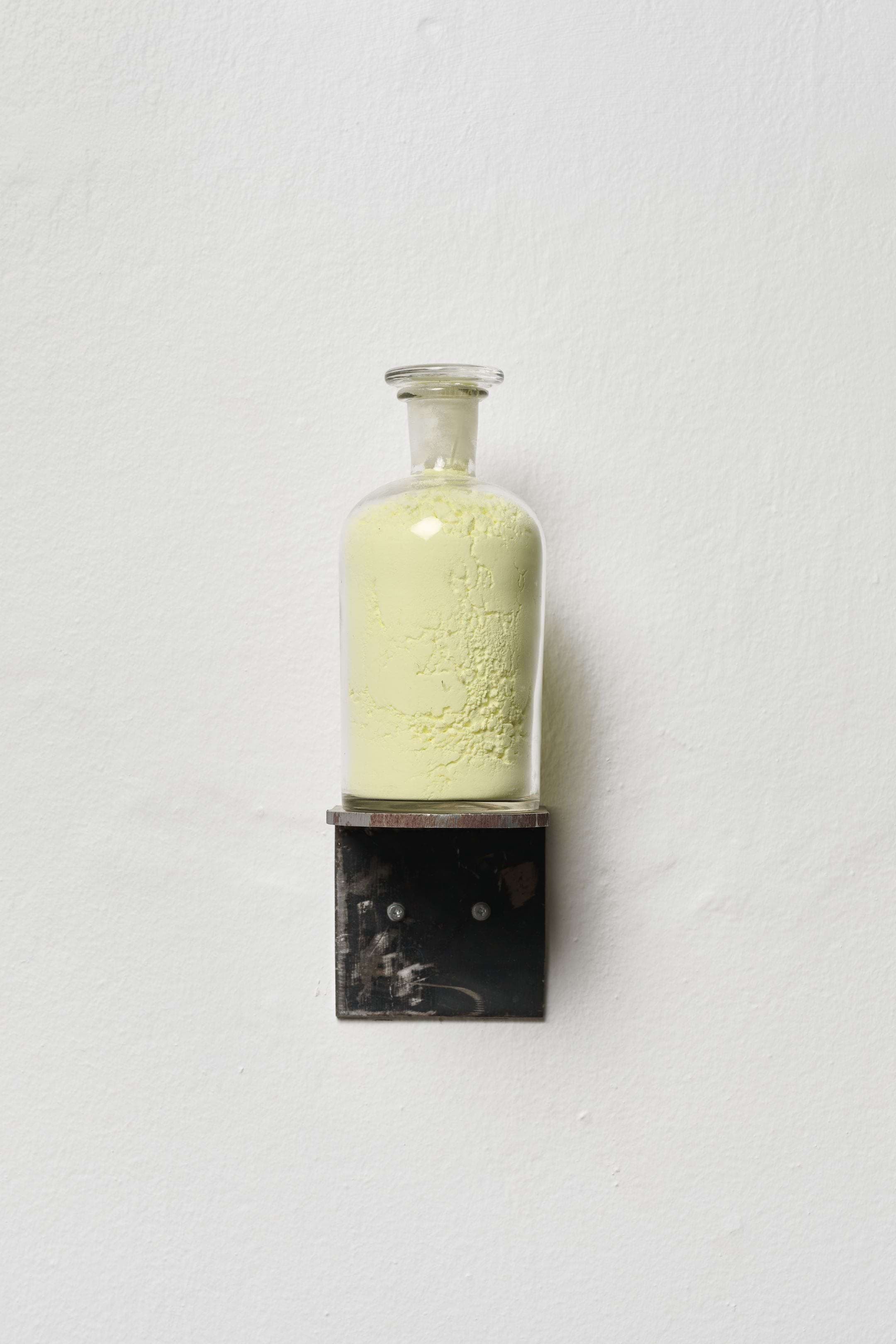
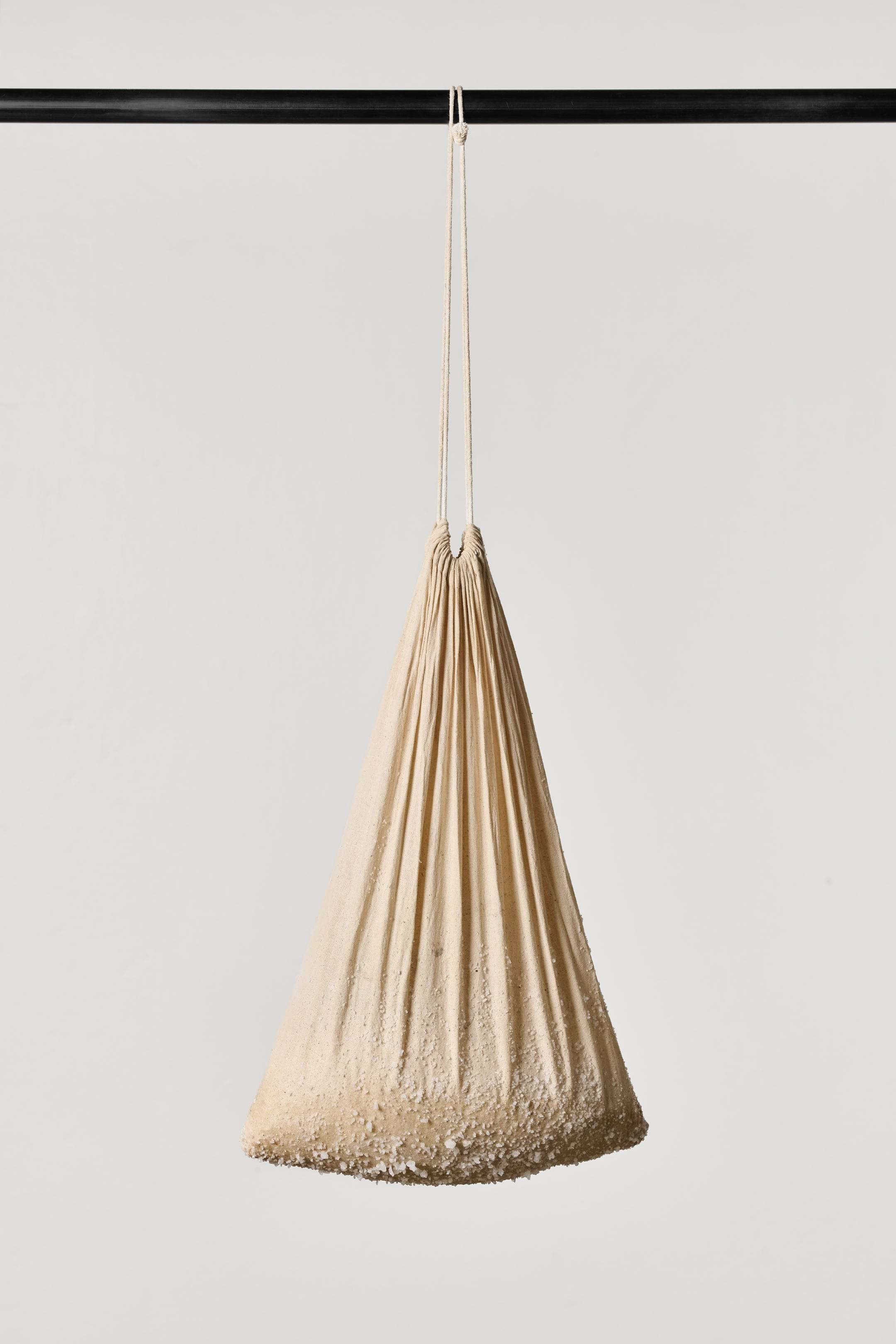
'Plumb' was included in 'Material Immaterial', an exhibition held at Goodman Gallery Johannesburg in 2023. In this body of work, Jeremy Wafer continues his sustained investigation into the entanglements of place, history, and the body through material.
The exhibition reflected the artist’s enduring preoccupation with systems of measurement, mapping, and the politics of land and sea. Through tactile and conceptual explorations, Wafer invites viewers to consider the often invisible frameworks, geographic, political, and mnemonic, through which land and identity are apprehended, shaped and contested.
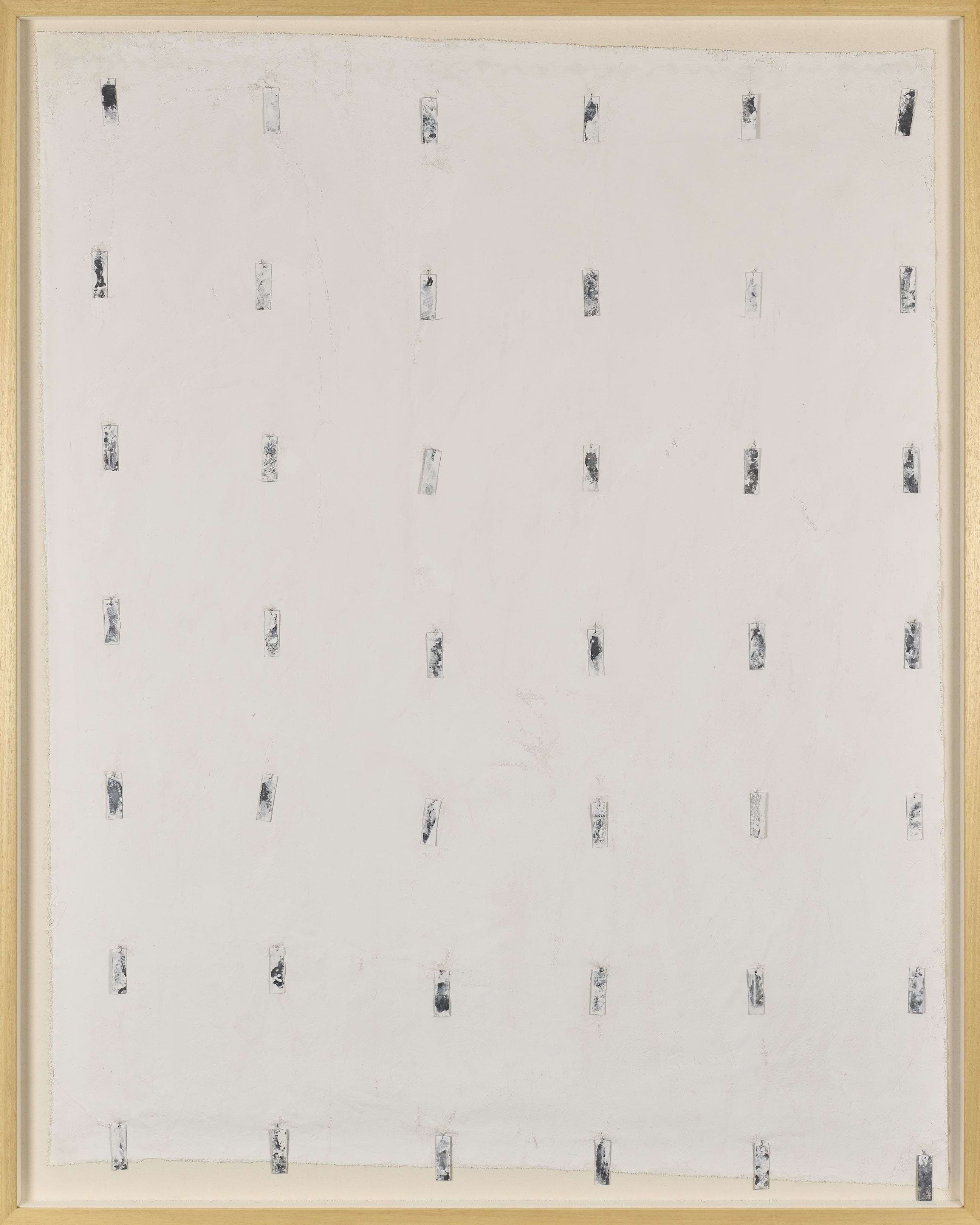
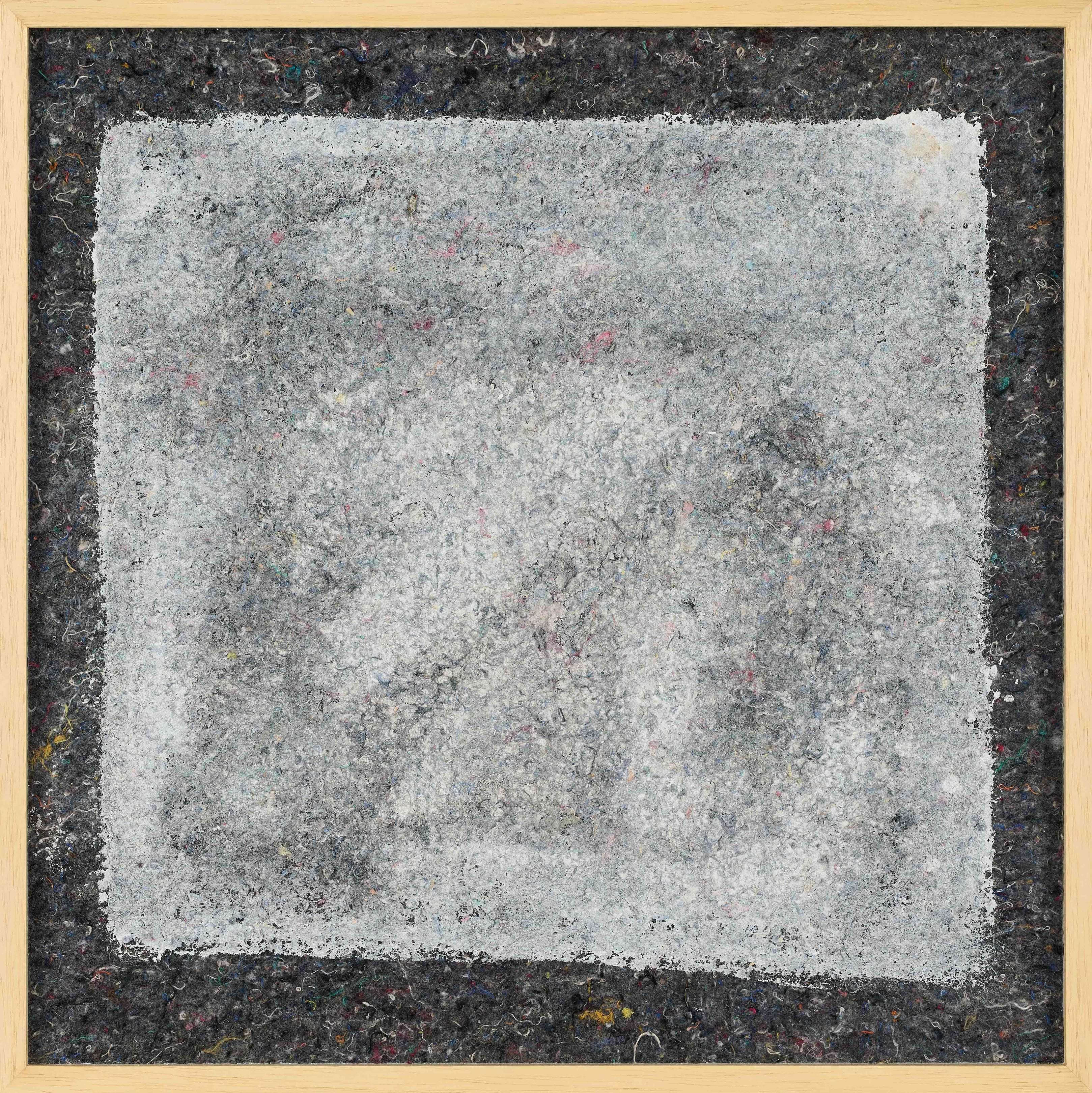
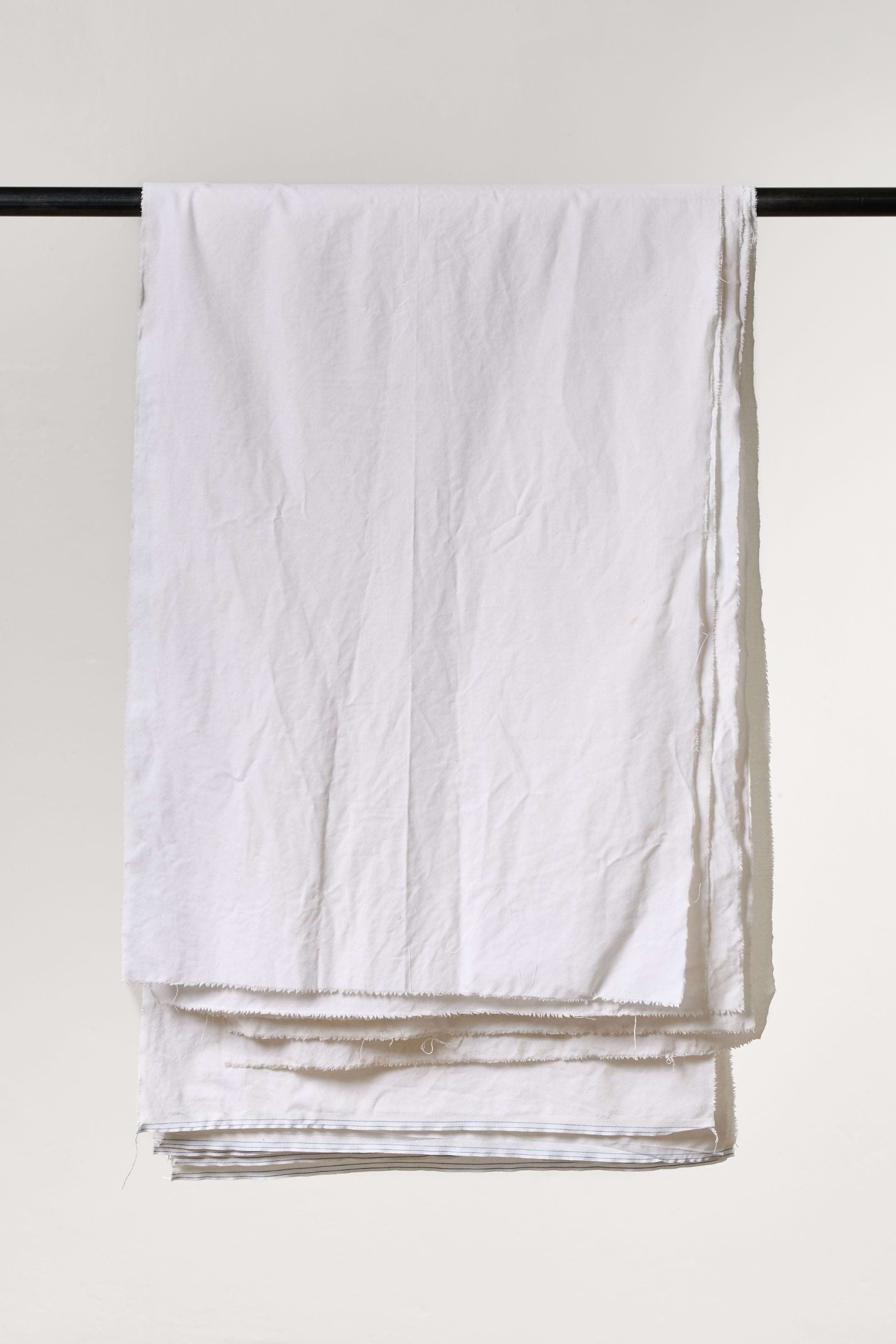
‘Lime’ was included in ‘Material Immaterial’, an exhibition held at Goodman Gallery Johannesburg in 2023. Created as part of his practice following a residency at NIROX Sculpture Park, the work features canvas covered in whitewash, loosely hung on the wall, from which forty-two metal appendages dangle. Drawing on the seafaring tradition of wrapping deceased sailors in cloth weighted to sink to the ocean floor, ‘Lime’ evokes themes of loss, burial, and the relationship between the body and the landscape of the sea.
Made from cloth, whitewash, lead, and wire, the work takes the form of a whitewashed shroud, evoking both concealment and preservation. With this Jeremy Wafer continues his sustained investigation into the entanglements of place, history, and the body through material.
Jeremy Wafer (b. 1953, Durban, South Africa) works across sculpture, photography, video and drawing, exploring the politics and poetics of place. Rooted in South Africa’s social, cultural and political geography, his work engages issues of land and territory, particularly themes of location, dislocation, possession and dispossession.
Throughout his forty-year career, Wafer has employed topographic and oceanic references to consider the geological and sociohistorical realities and imaginaries that surround his sites of investigation.
Wafer’s work features in the following public collections: the National Museum of African Art, Smithsonian Institute in Washington DC; South African National Gallery in Cape Town and the Johannesburg Art Gallery.
Notable solo exhibitions Arc, Goodman Gallery, London (2022); Index, Goodman Gallery, Cape Town (2017); Goodman Gallery, Johannesburg (2014); Structure: Avenues and barriers of Power, a retrospective at KZNSA Gallery, Durban (2009). Group exhibitions include Centre of Gravity, The Old Soap Works, Bristol (2020); Ampersand, University of Johannesburg Art Gallery, Johannesburg (2019); Everywhere but Here, Cite International des Arts, Paris (2017); What remains is Tomorrow, The Pavilion of South Africa at the 56th Biennale di Venezia, Venice (2015); Witness, Linden Centre for Contemporary Art, Melbourne (2014); Views of Africa, Smithsonian National Museum of Air and Space, Washington DC. (2013); and 20: Two Decades of South African Sculpture, NIROX Foundation, the Cradle of Humankind, (2010).
23) salt bag “" 300 x 400
chart “” chart, salt 1000 x 700
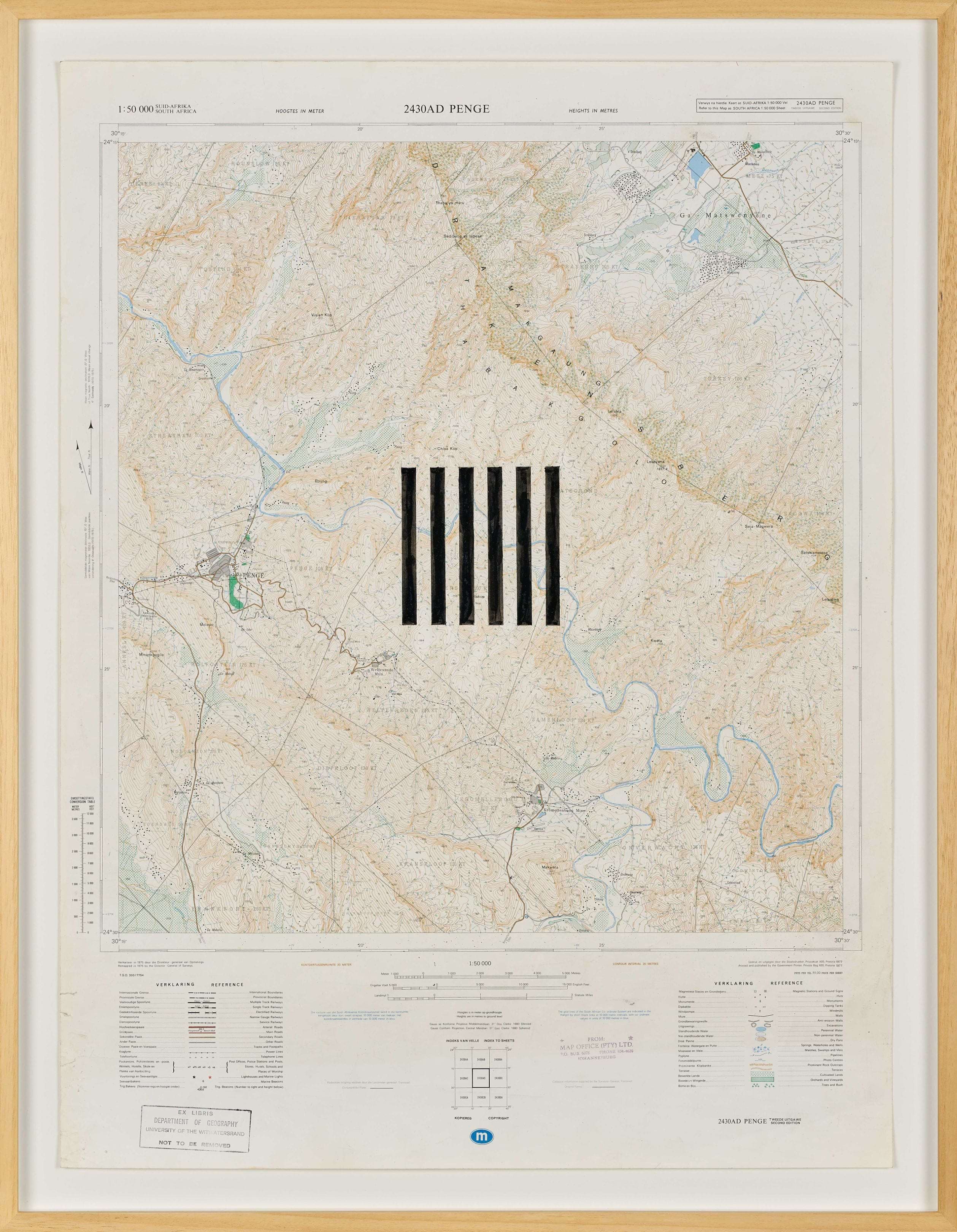
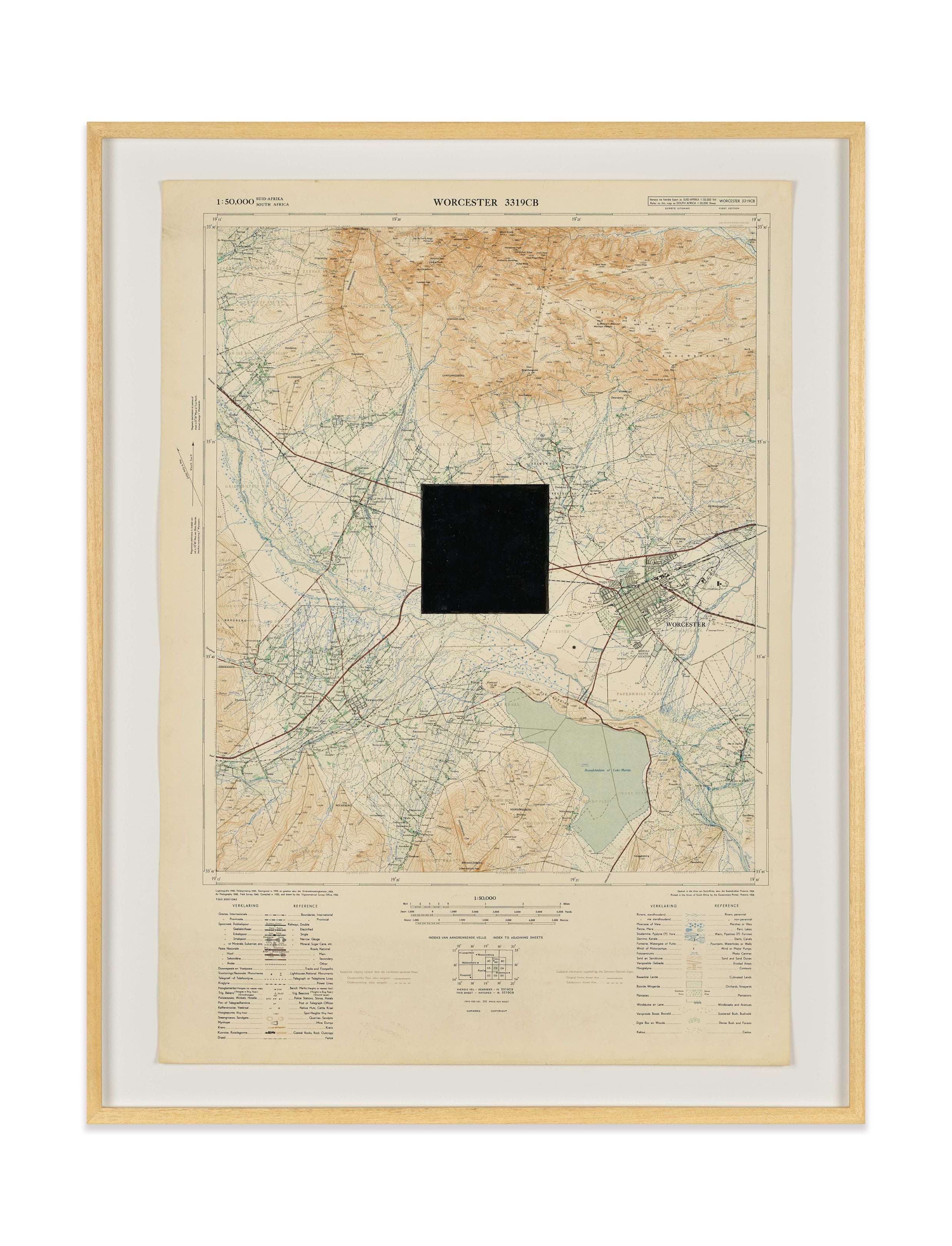
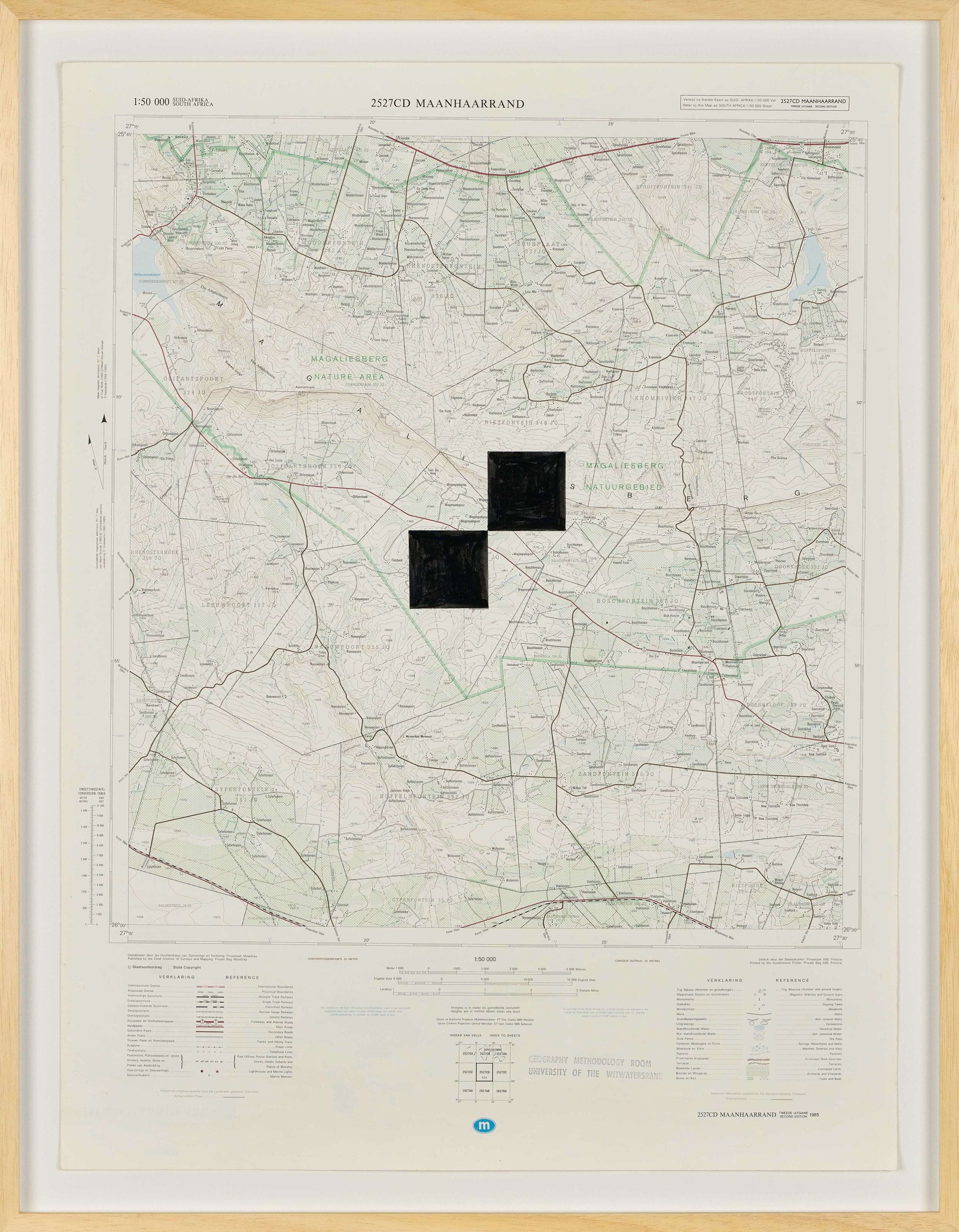
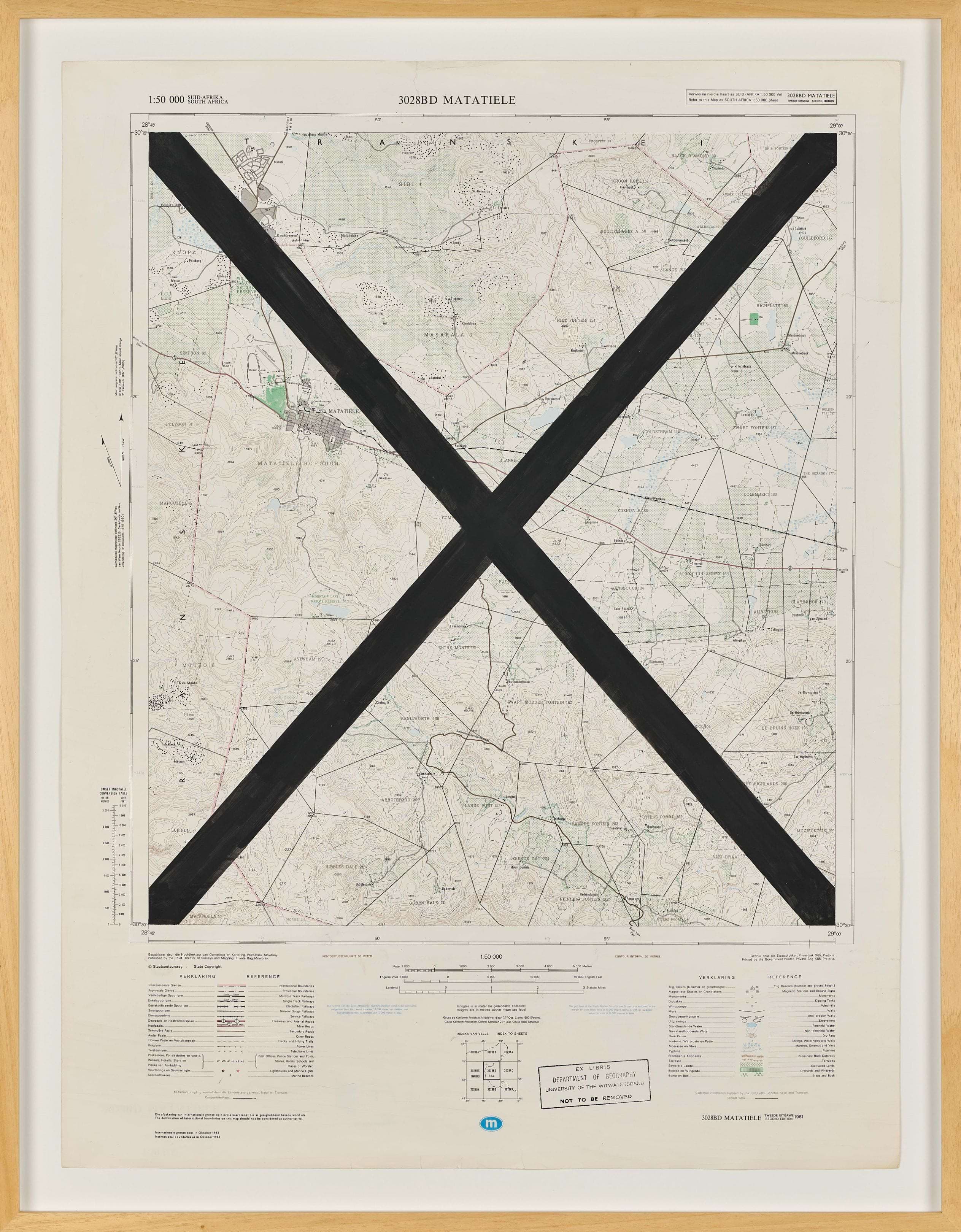
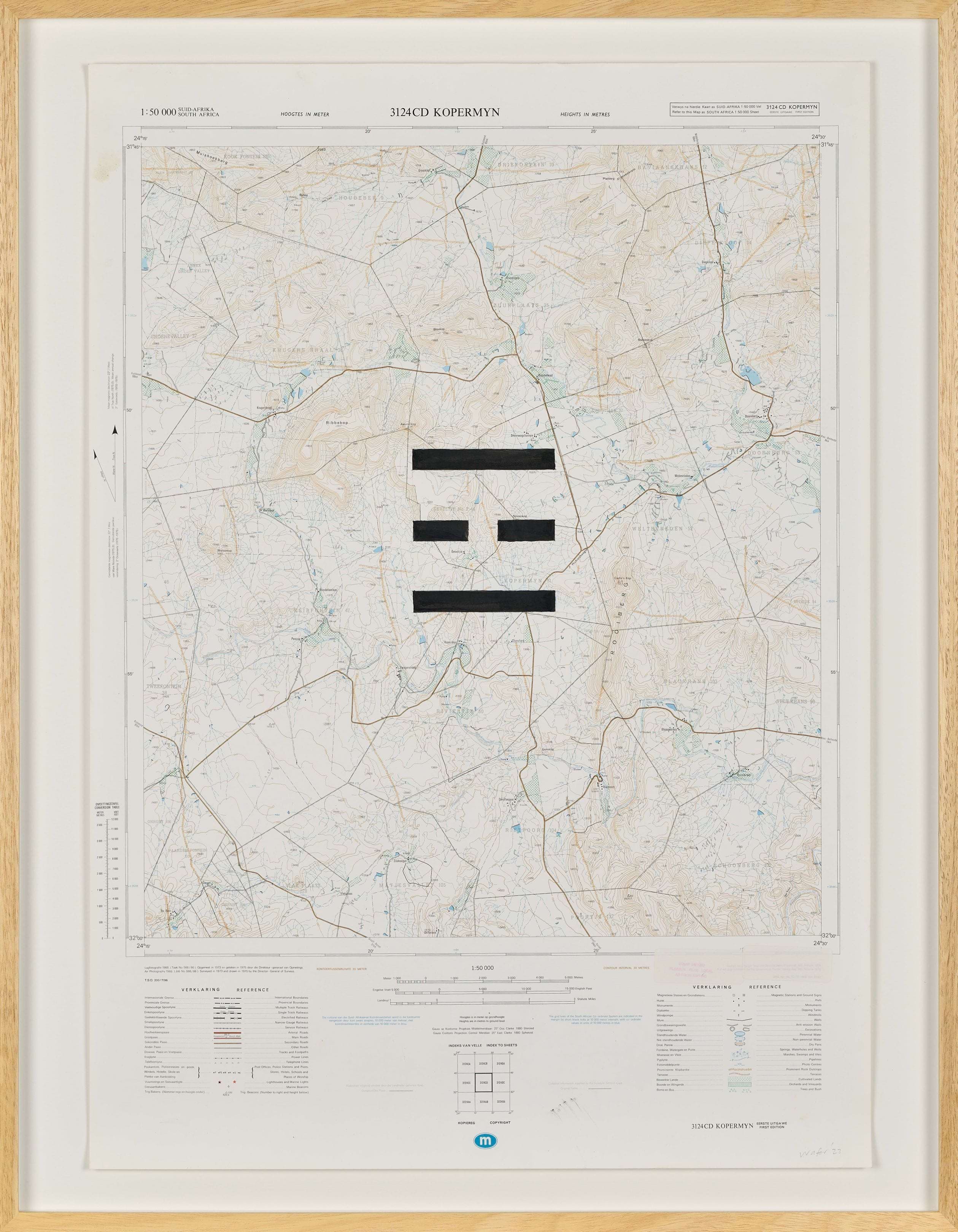
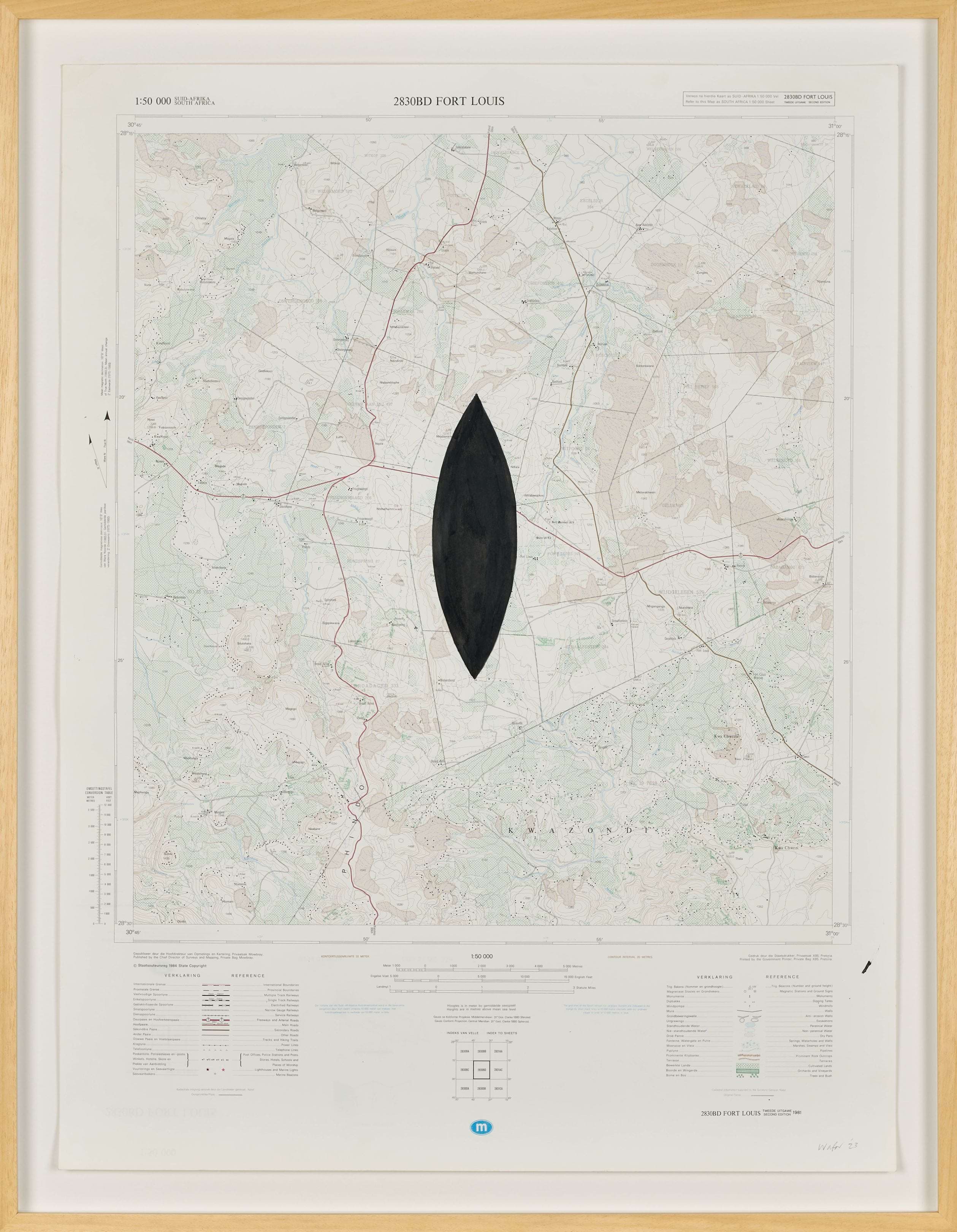
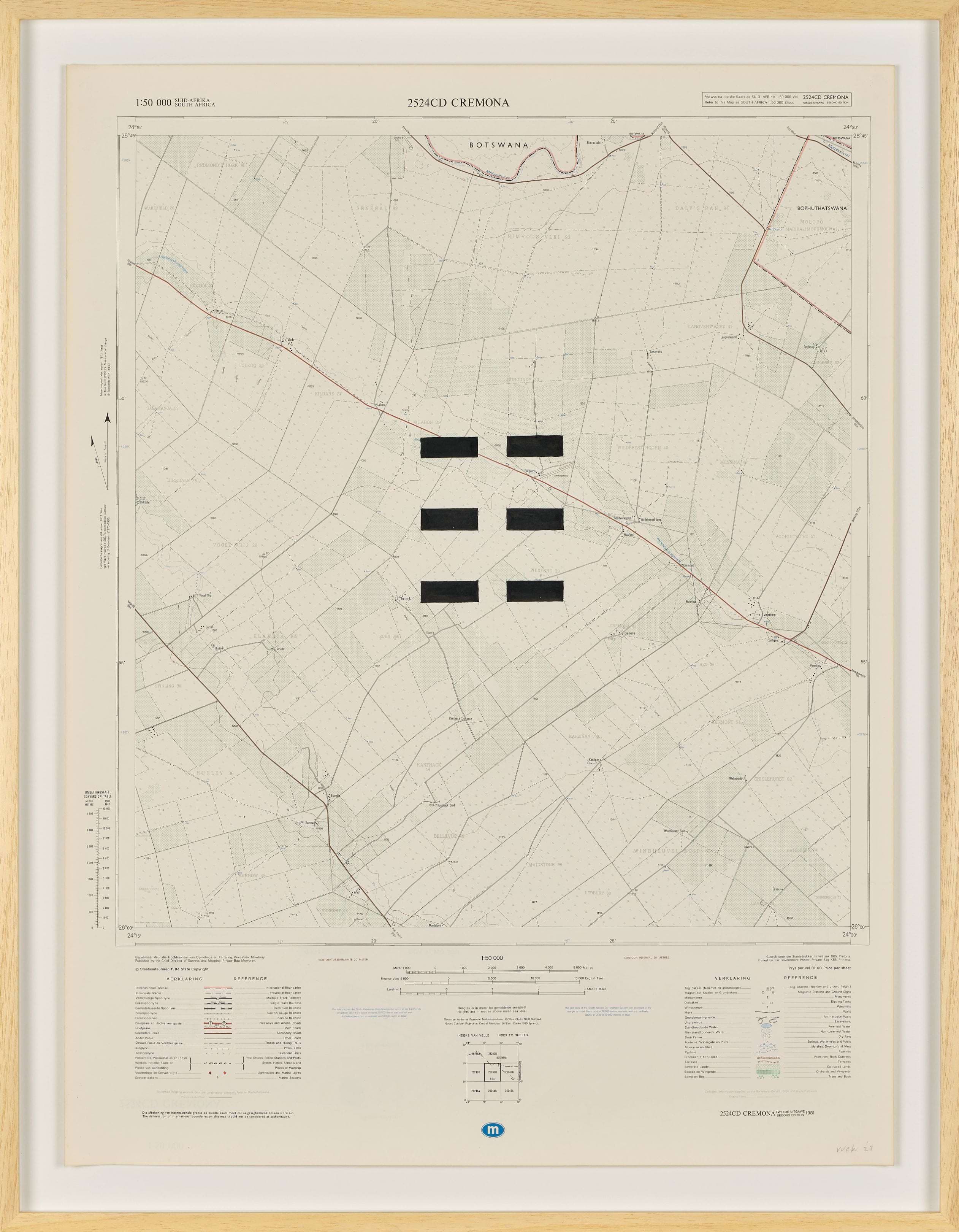
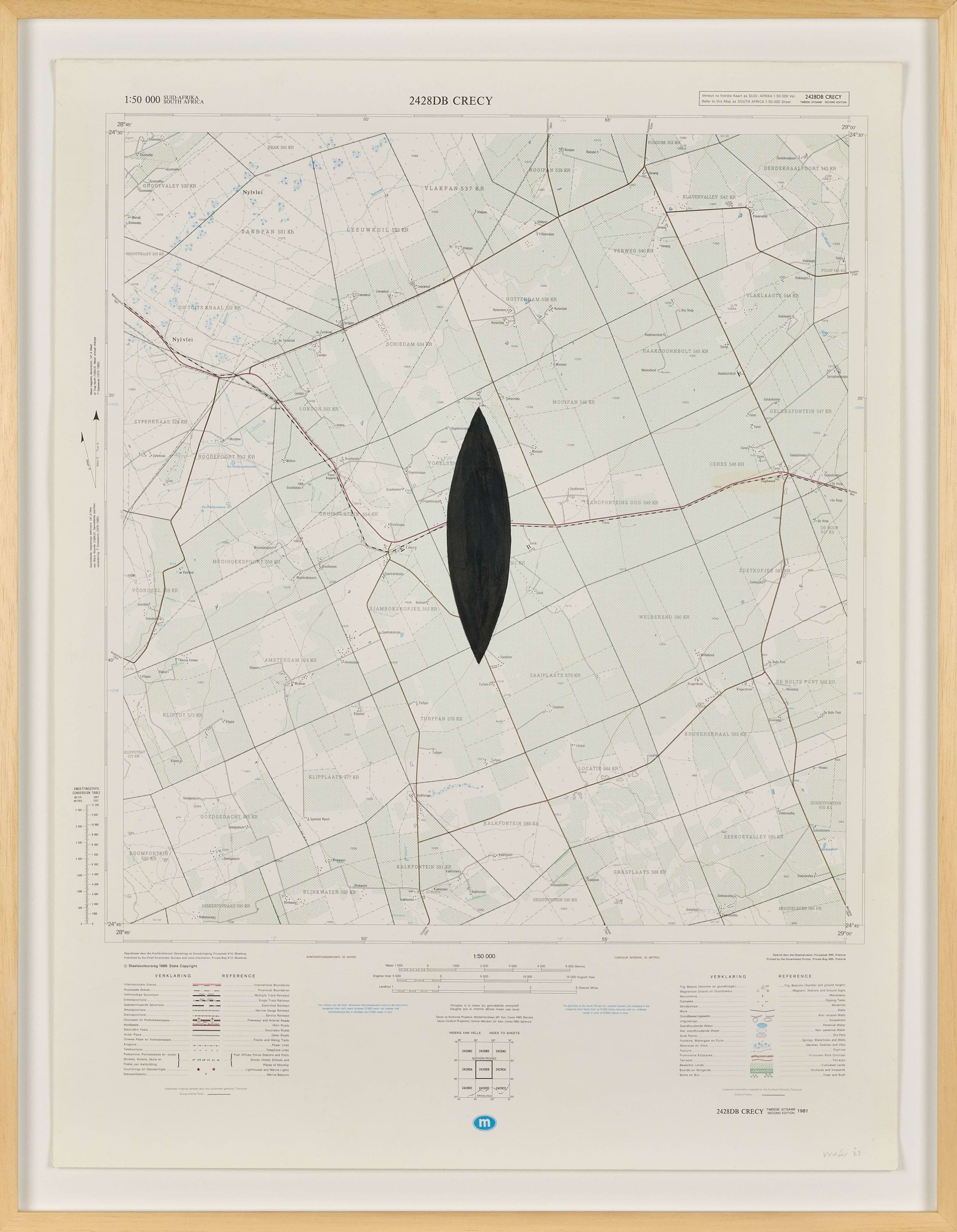
Jeremy Wafer’s location works on found maps form part of his broader inquiry into how space is measured, named, and claimed. By marking, altering, or overlaying printed maps (often institutional or administrative in origin) Wafer disrupts their assumed neutrality and objectivity. These works interrogate the authority of cartographic systems and their role in the colonial and political control of land.
In repurposing these documents, Wafer explores ideas of displacement, memory, and the instability of place. His minimal interventions draw attention to the friction between personal experience and imposed structure, asking viewers to reconsider the ways in which maps both reveal and obscure the complex realities of the landscapes they depict.
Jeremy Wafer’s location works on found maps form part of his broader inquiry into how space is measured, named, and claimed. By marking, altering, or overlaying printed maps (often institutional or administrative in origin) Wafer disrupts their assumed neutrality and objectivity. These works interrogate the authority of cartographic systems and their role in the colonial and political control of land.
In repurposing these documents, Wafer explores ideas of displacement, memory, and the instability of place. His minimal interventions draw attention to the friction between personal experience and imposed structure, asking viewers to reconsider the ways in which maps both reveal and obscure the complex realities of the landscapes they depict.
Jeremy Wafer (b. 1953, Durban, South Africa) works across sculpture, photography, video and drawing, exploring the politics and poetics of place. Rooted in South Africa’s social, cultural and political geography, his work engages issues of land and territory, particularly themes of location, dislocation, possession and dispossession.
Throughout his forty-year career, Wafer has employed topographic and oceanic references to consider the geological and sociohistorical realities and imaginaries that surround his sites of investigation.
Wafer’s work features in the following public collections: the National Museum of African Art, Smithsonian Institute in Washington DC; South African National Gallery in Cape Town and the Johannesburg Art Gallery.
Notable solo exhibitions Arc, Goodman Gallery, London (2022); Index, Goodman Gallery, Cape Town (2017); Goodman Gallery, Johannesburg (2014); Structure: Avenues and barriers of Power, a retrospective at KZNSA Gallery, Durban (2009). Group exhibitions include Centre of Gravity, The Old Soap Works, Bristol (2020); Ampersand, University of Johannesburg Art Gallery, Johannesburg (2019); Everywhere but Here, Cite International des Arts, Paris (2017); What remains is Tomorrow, The Pavilion of South Africa at the 56th Biennale di Venezia, Venice (2015); Witness, Linden Centre for Contemporary Art, Melbourne (2014); Views of Africa, Smithsonian National Museum of Air and Space, Washington DC. (2013); and 20: Two Decades of South African Sculpture, NIROX Foundation, the Cradle of Humankind, (2010).
Jeremy Wafer’s location works on found maps form part of his broader inquiry into how space is measured, named, and claimed. By marking, altering, or overlaying printed maps (often institutional or administrative in origin) Wafer disrupts their assumed neutrality and objectivity. These works interrogate the authority of cartographic systems and their role in the colonial and political control of land.
In repurposing these documents, Wafer explores ideas of displacement, memory, and the instability of place. His minimal interventions draw attention to the friction between personal experience and imposed structure, asking viewers to reconsider the ways in which maps both reveal and obscure the complex realities of the landscapes they depict.