
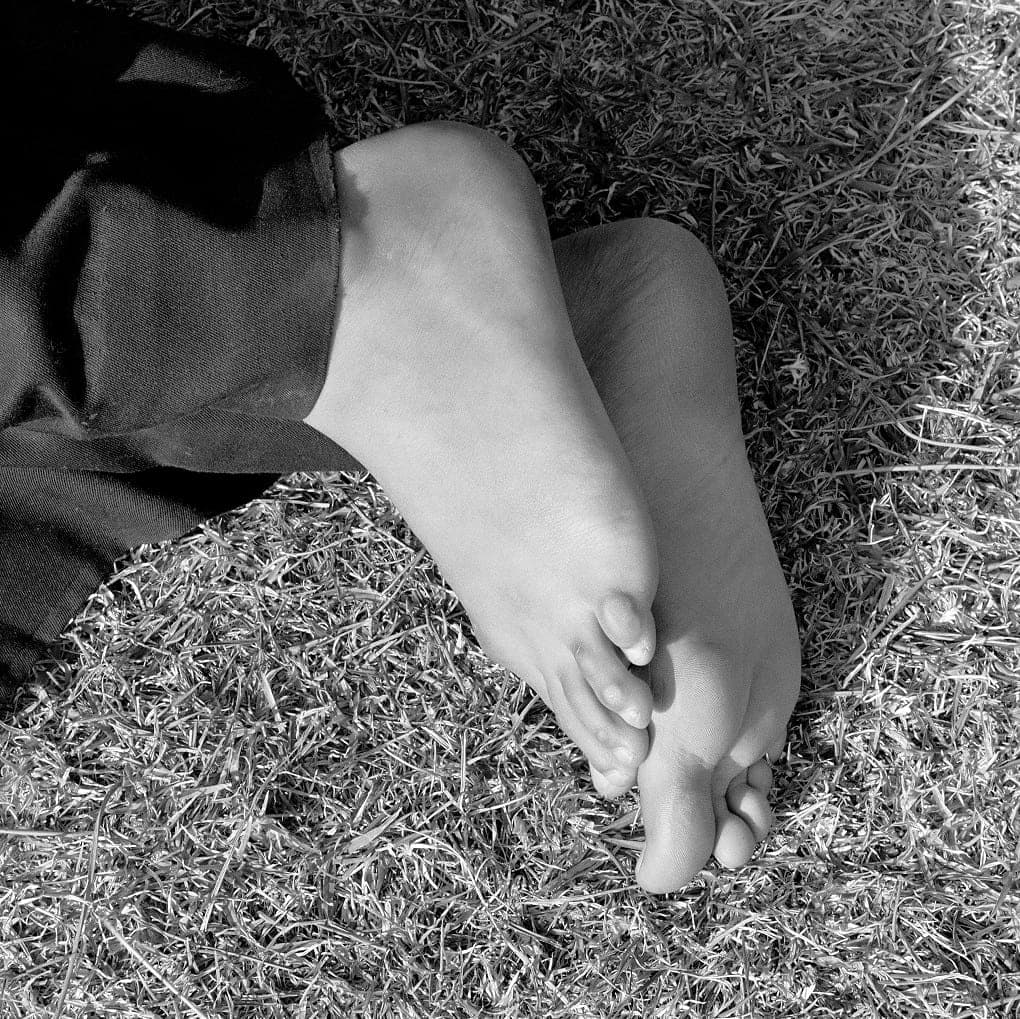
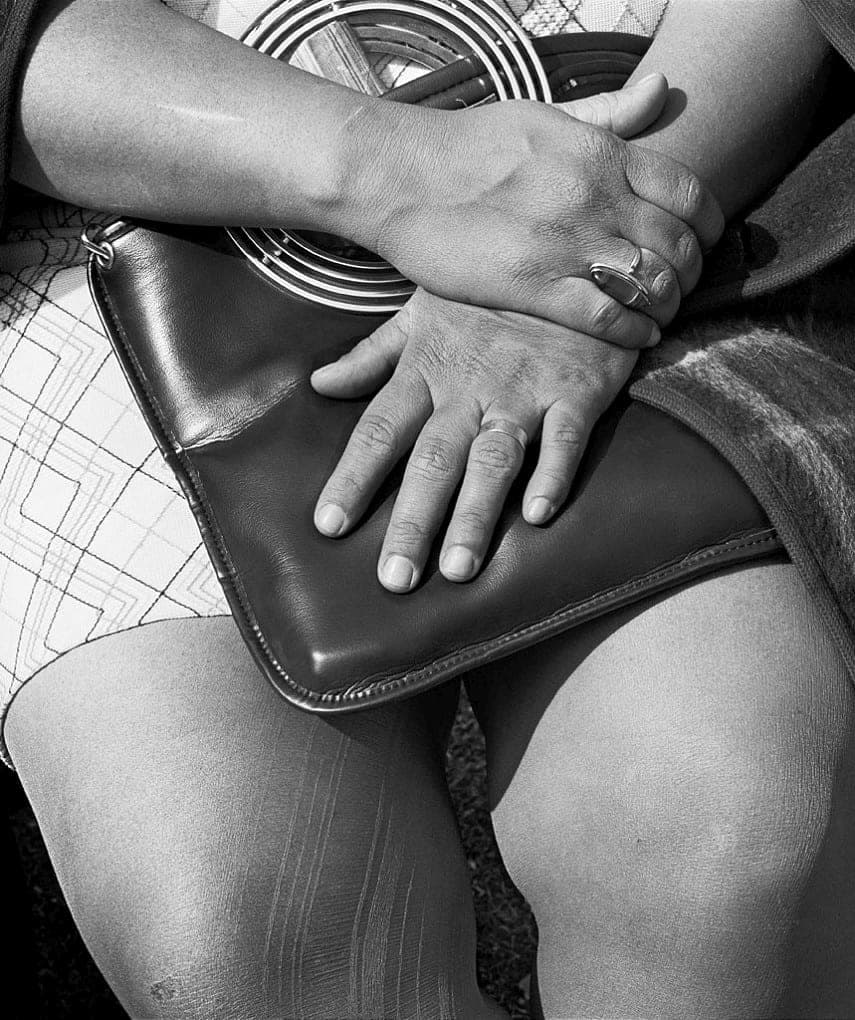
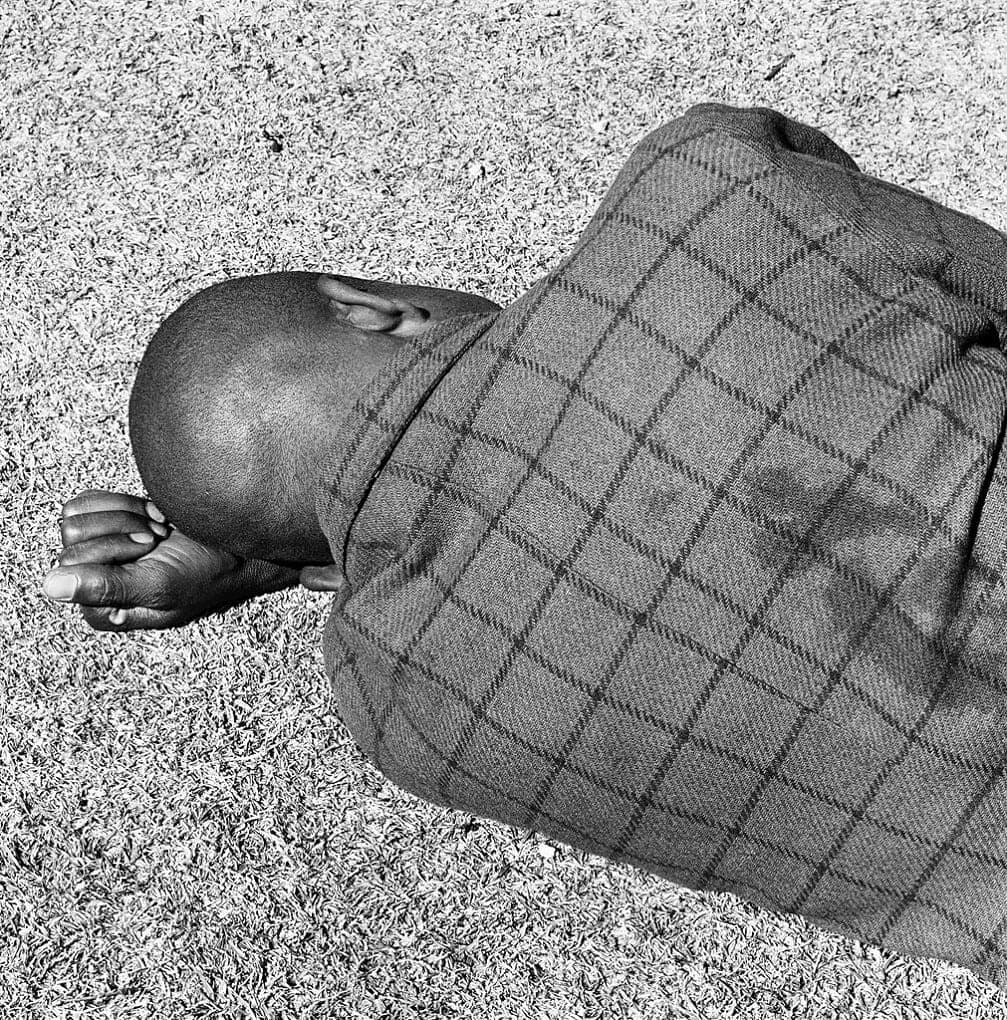
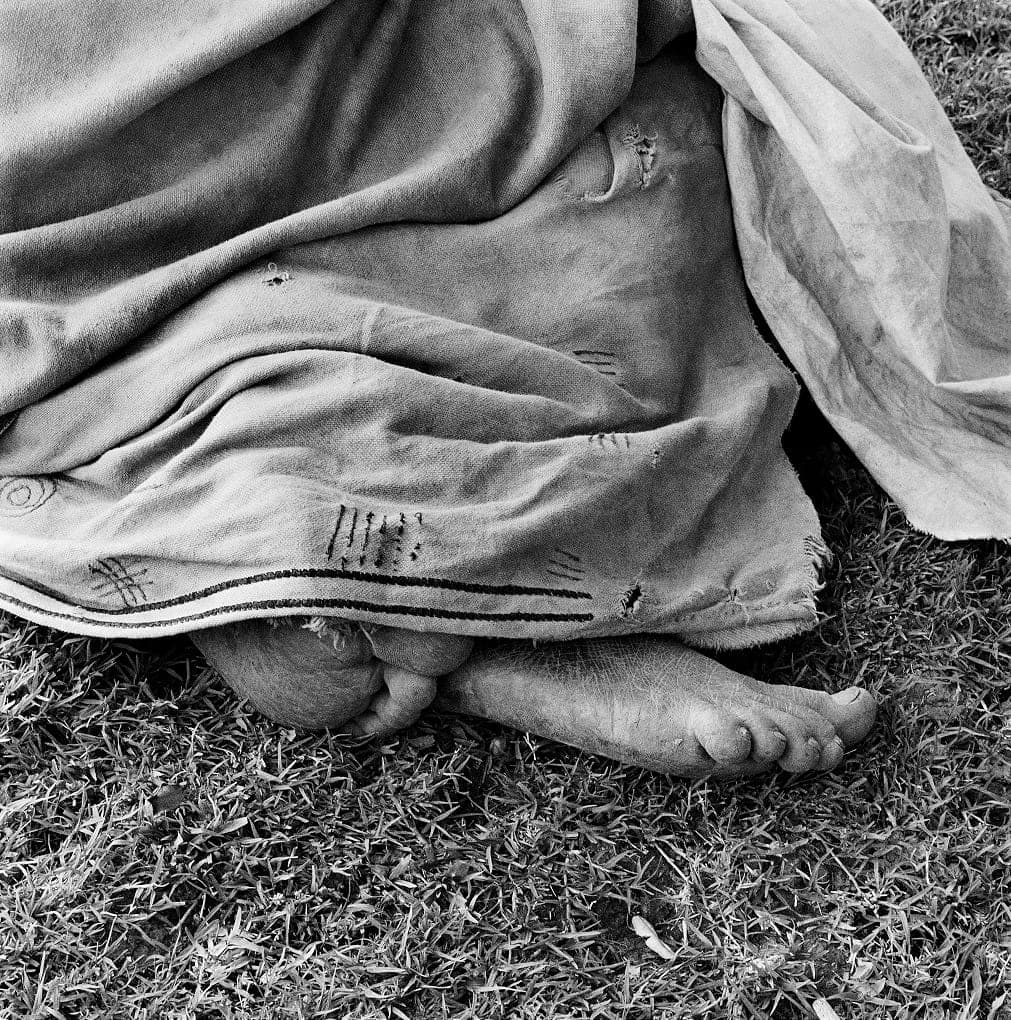
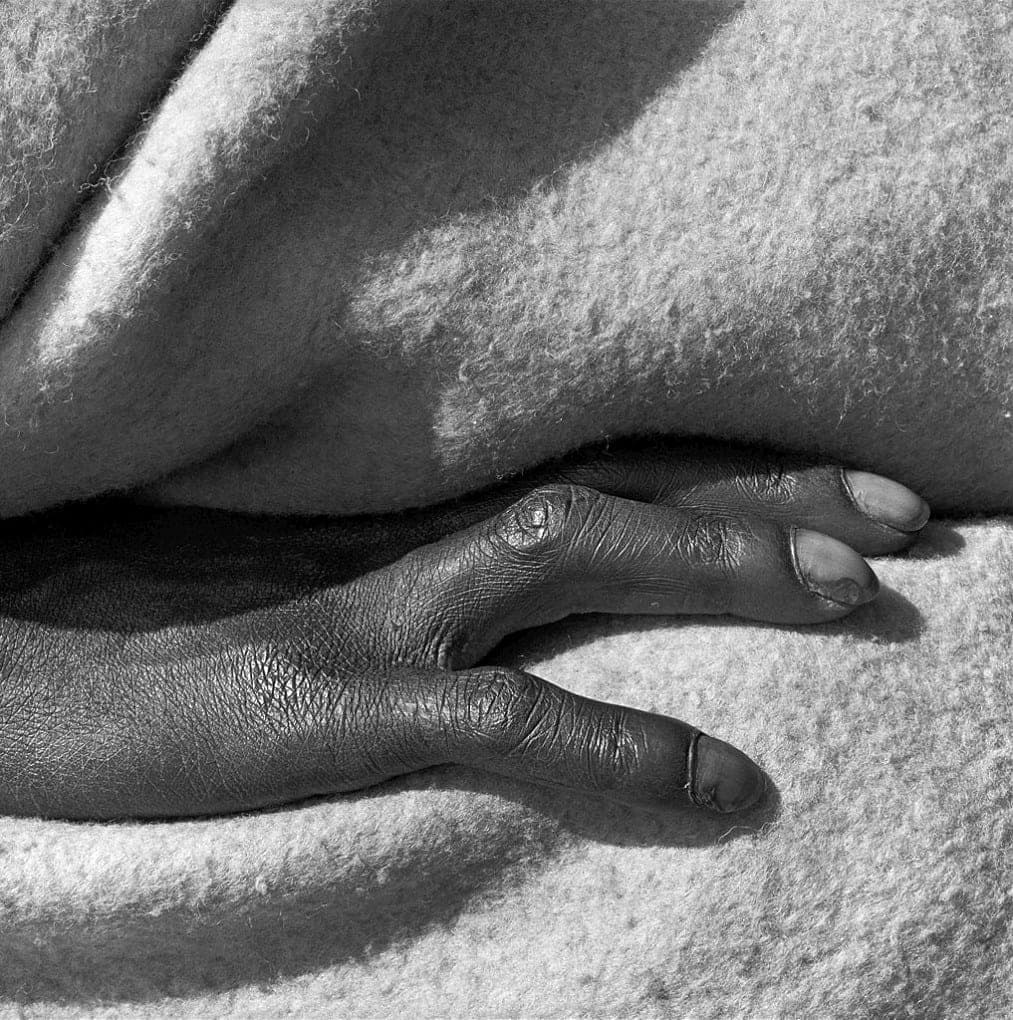
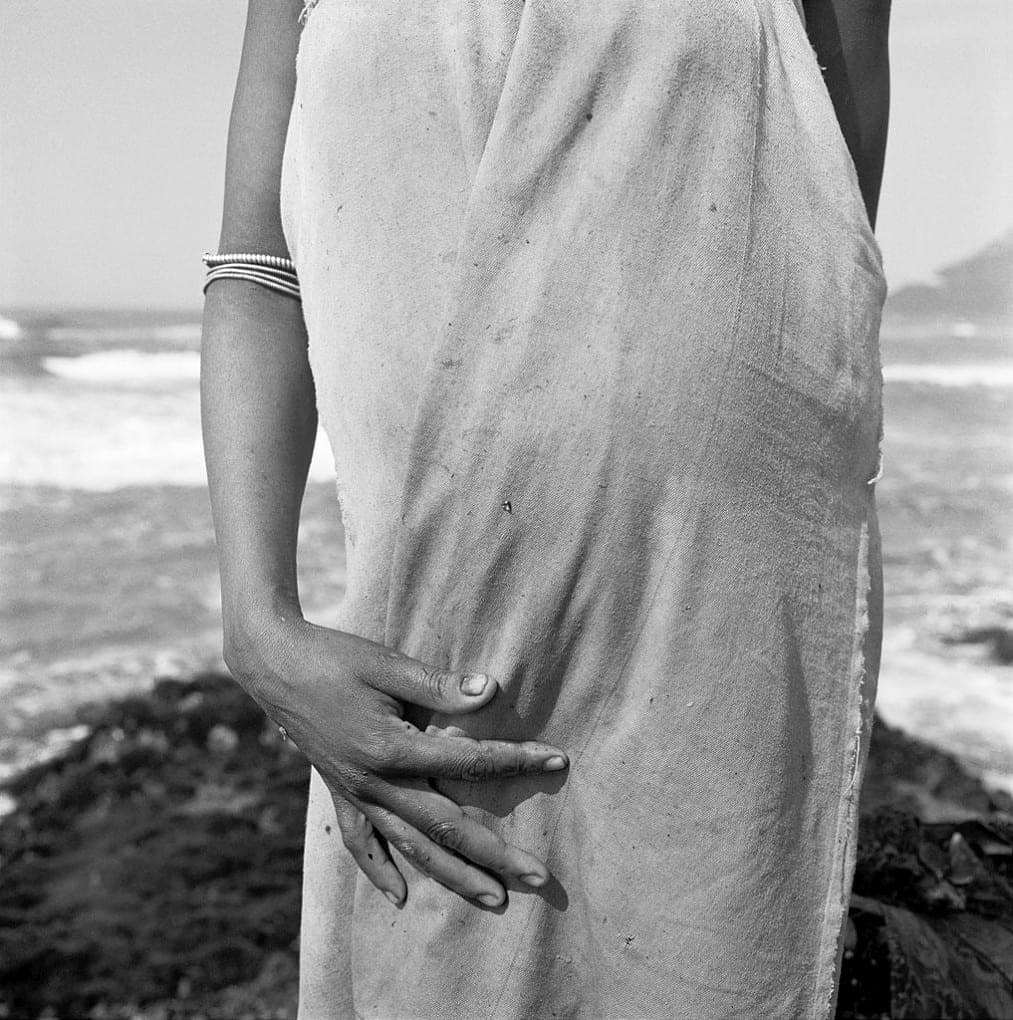
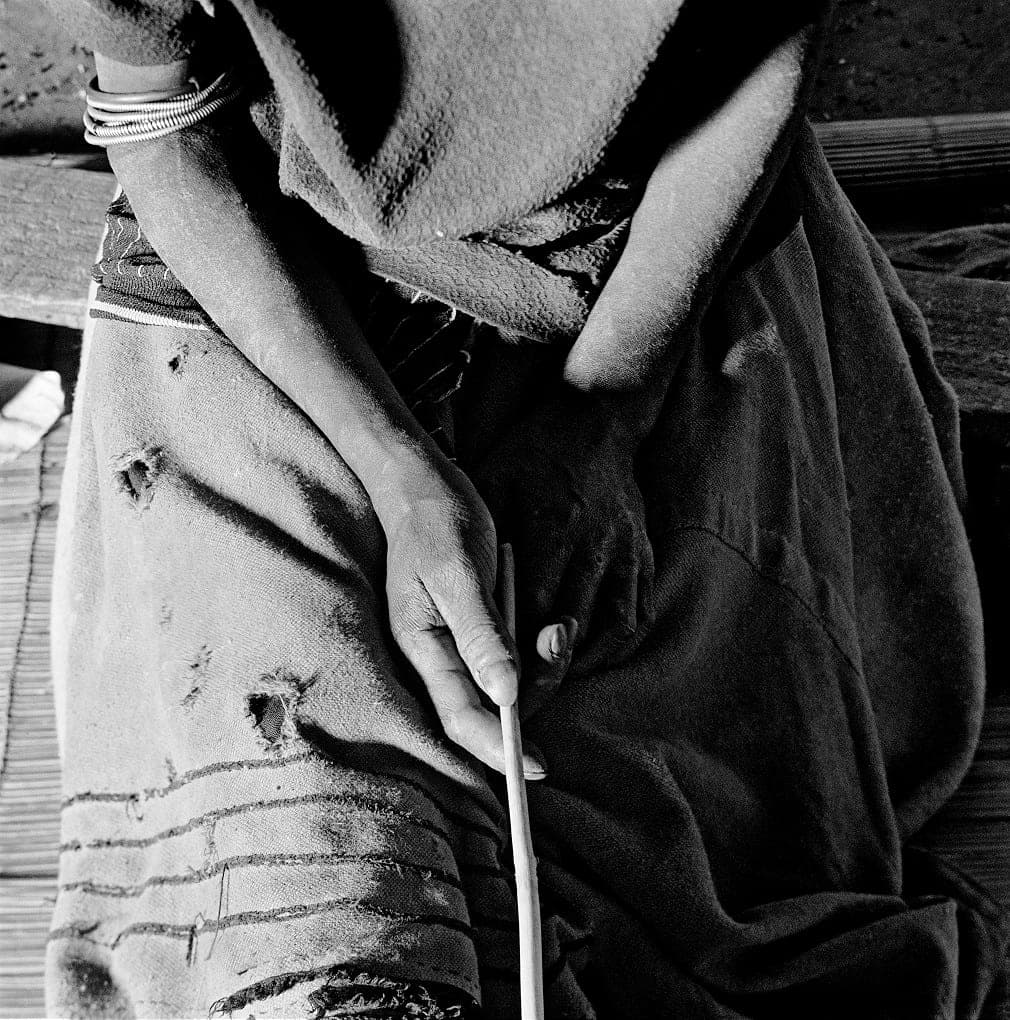
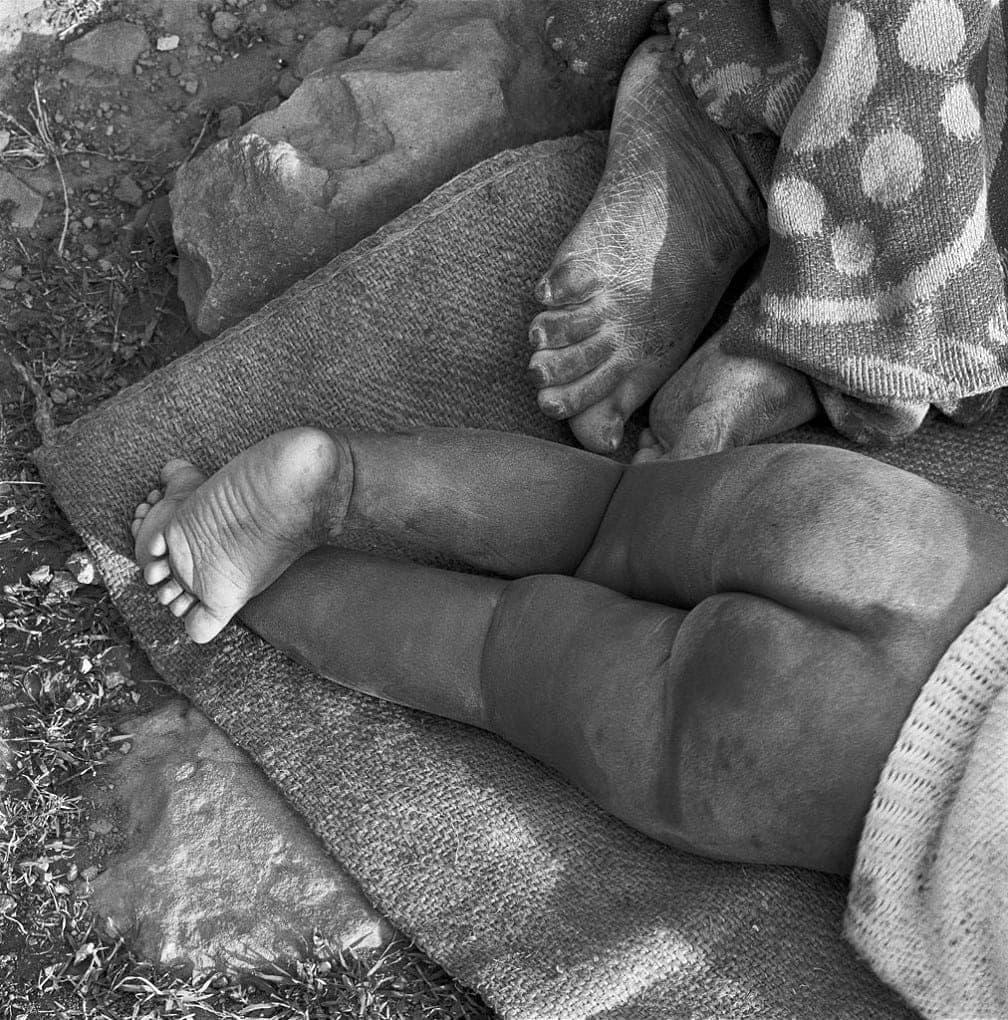

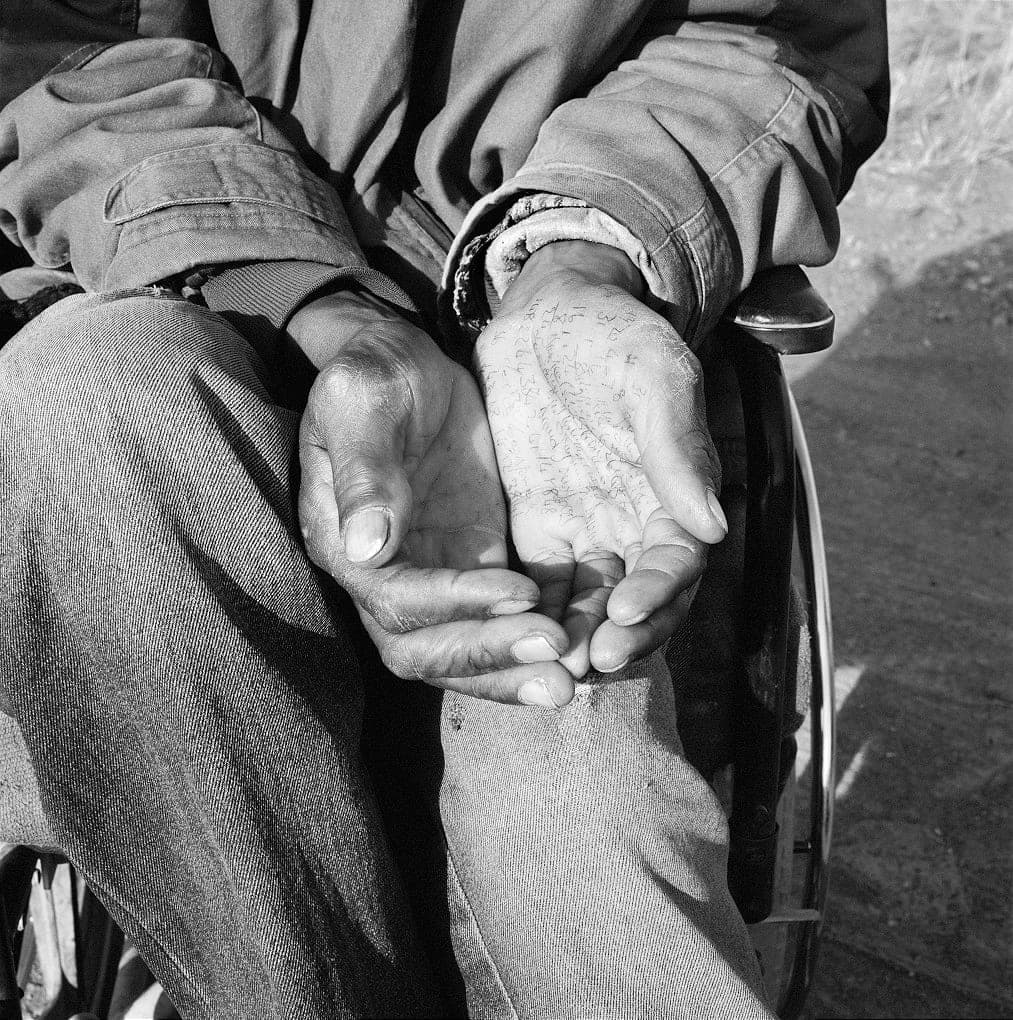
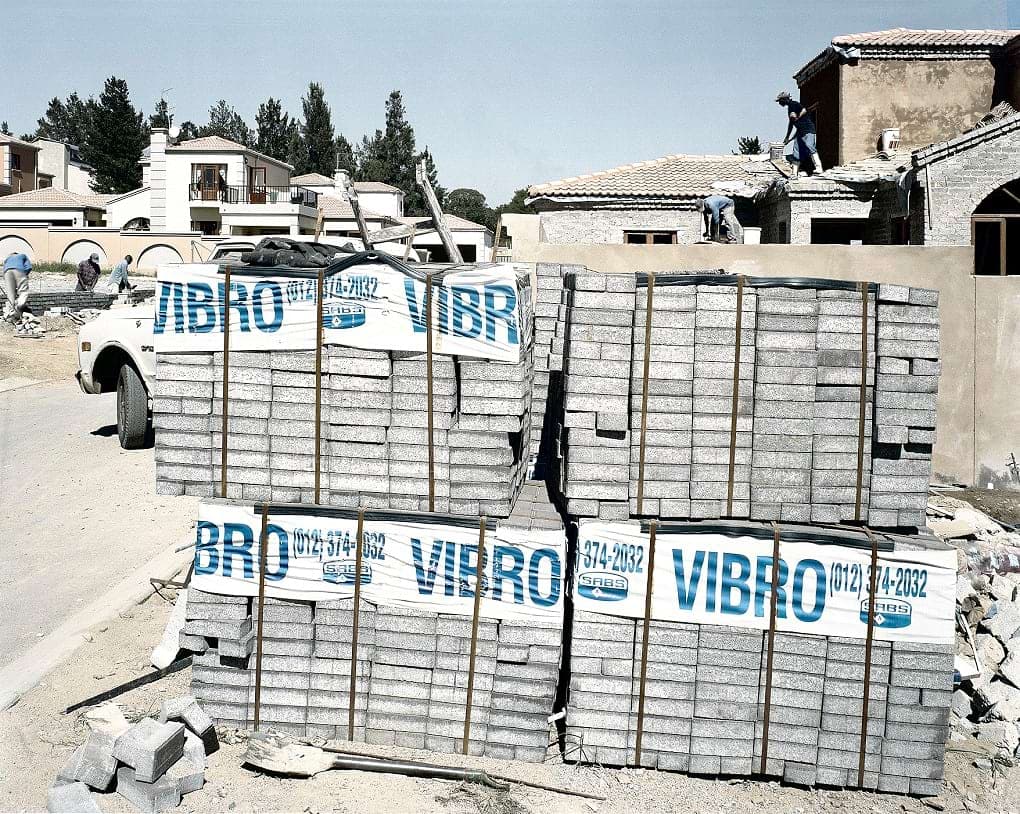
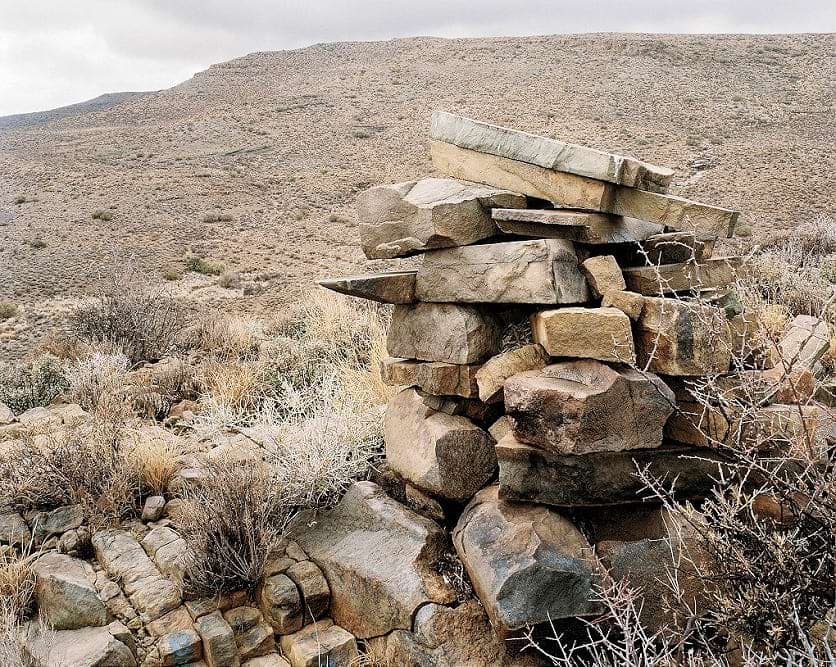
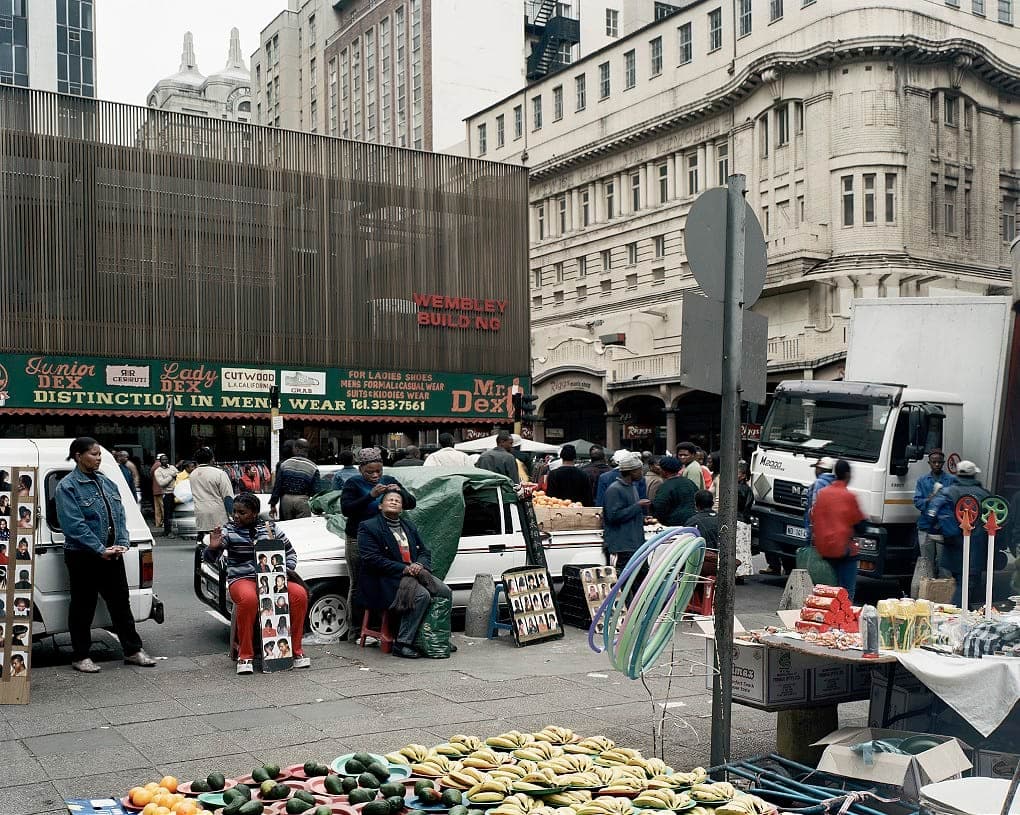
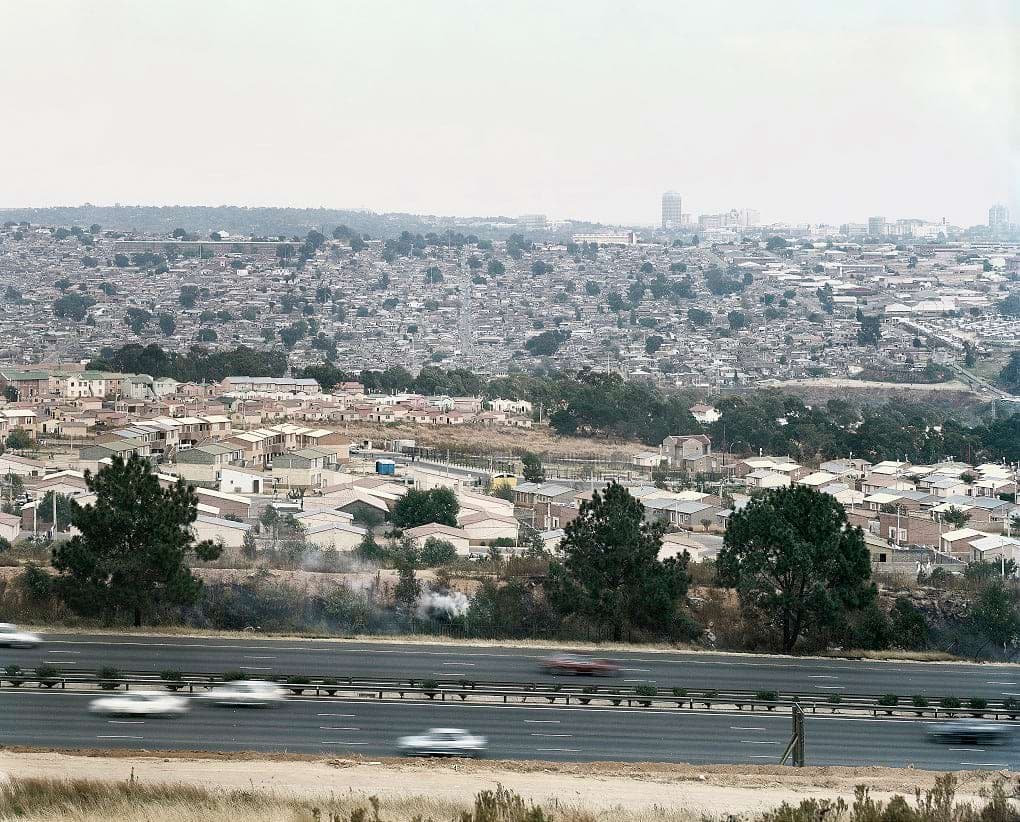
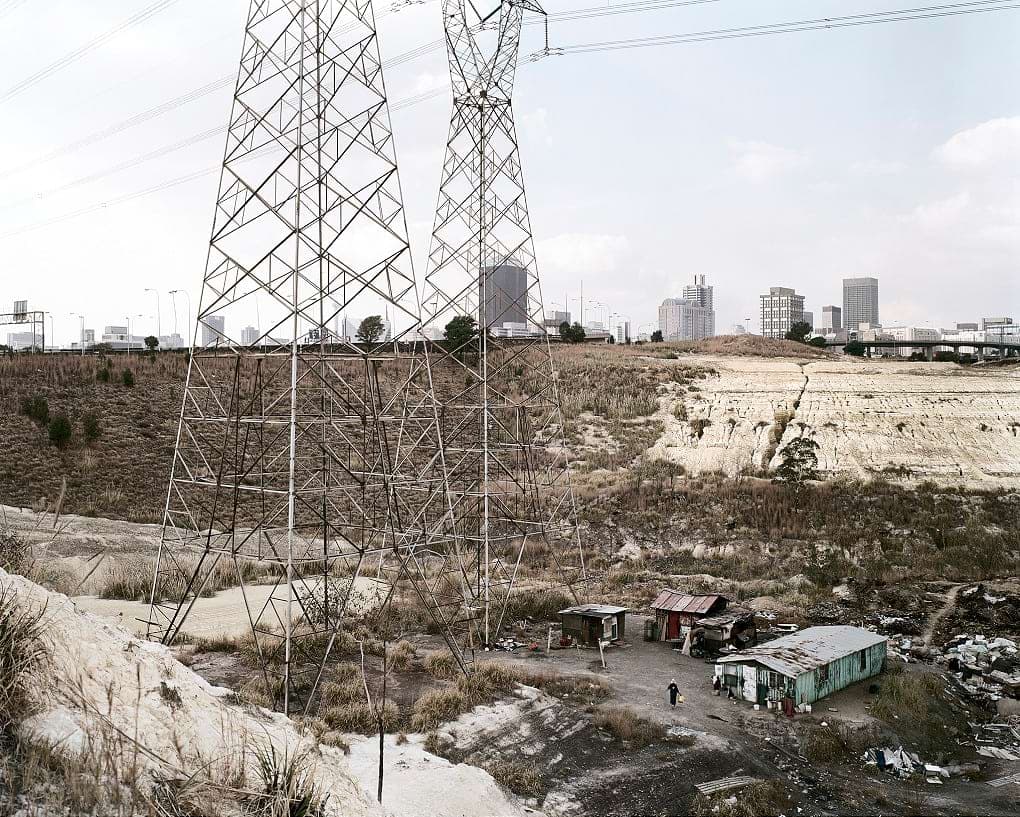
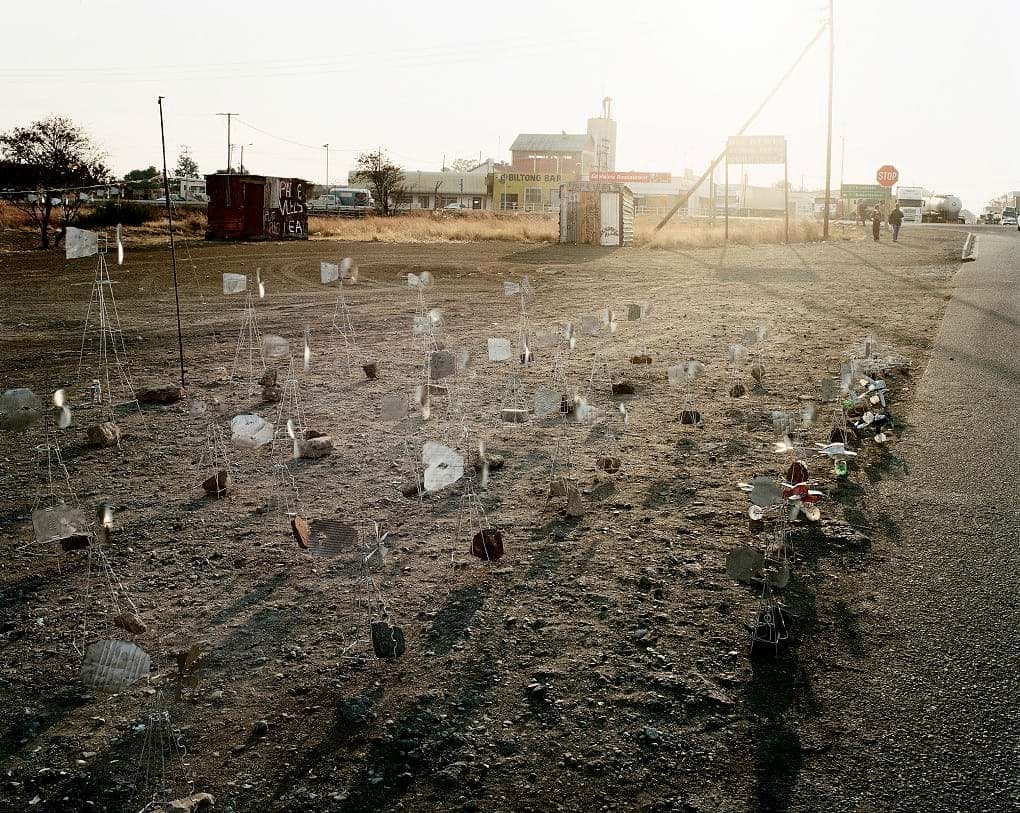
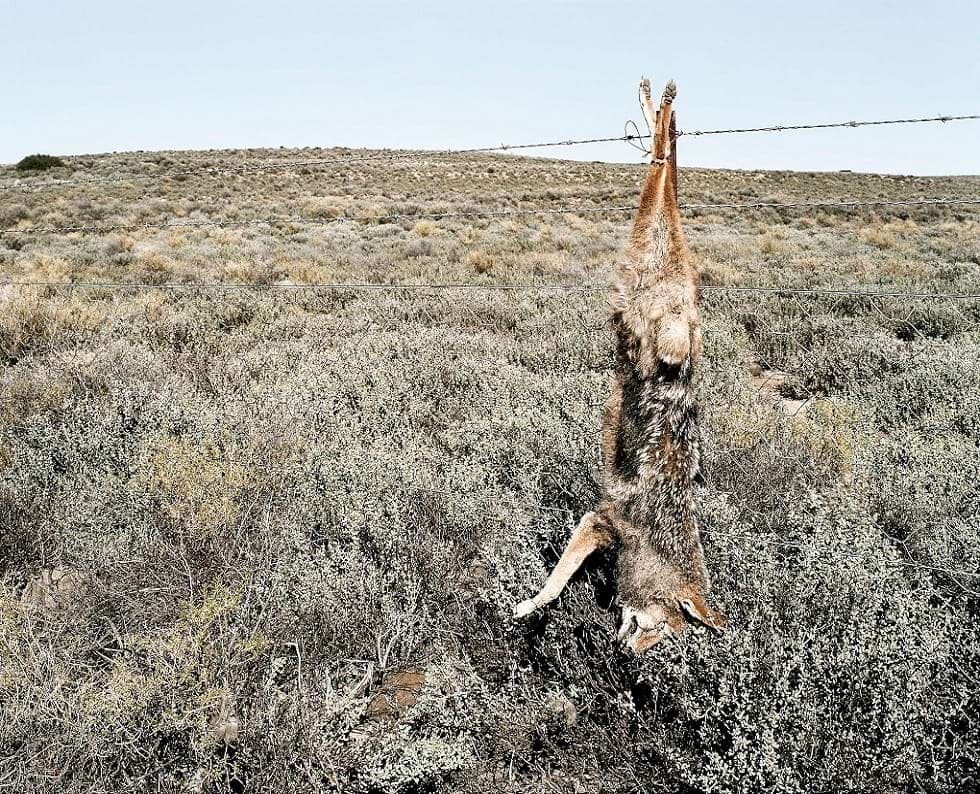
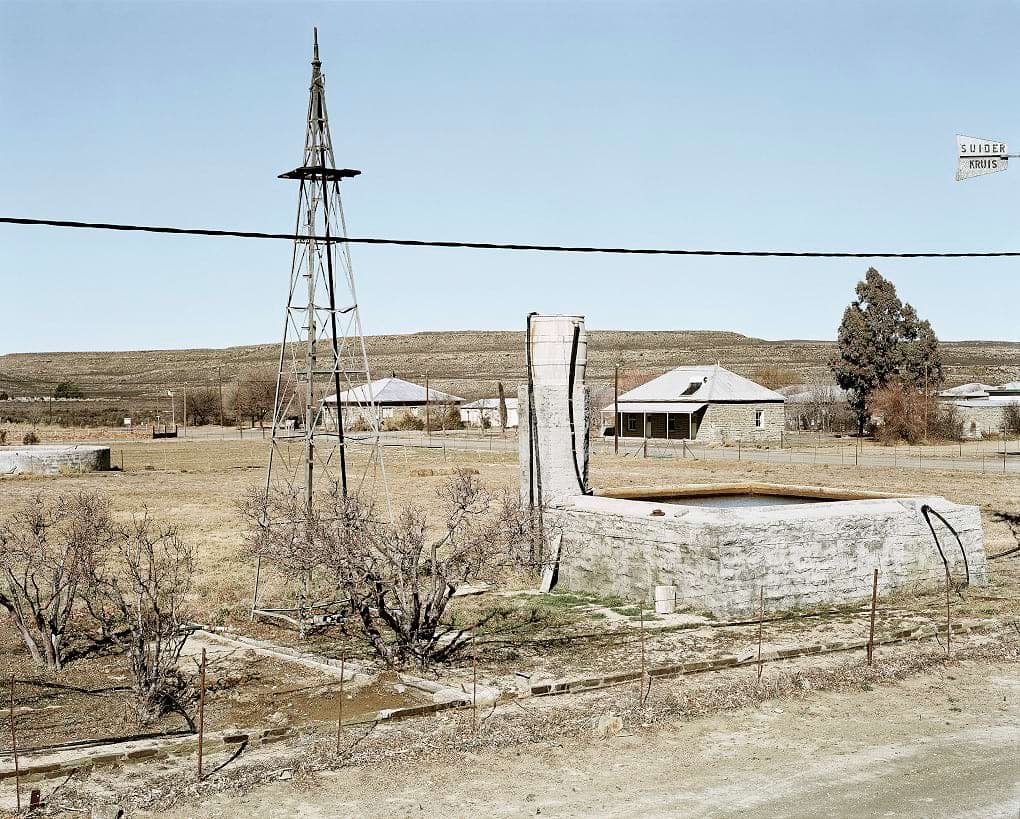
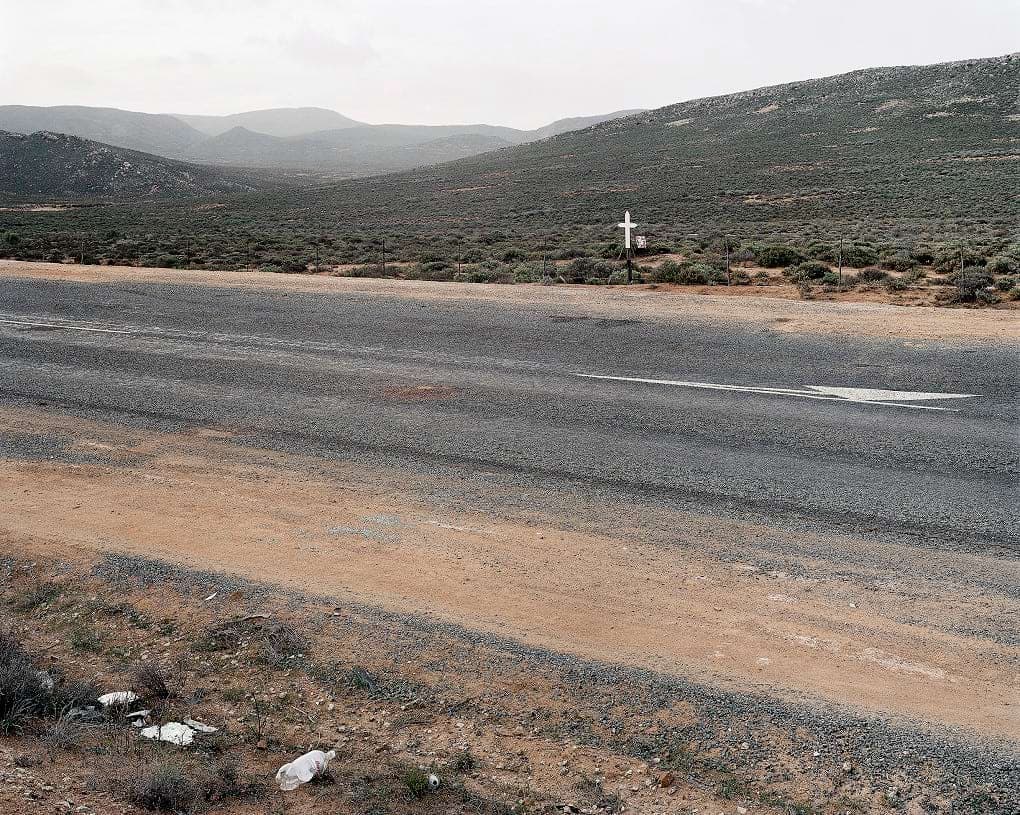
David Goldblatt’s ‘Intersections’ is a major body of colour work produced between 2001 and 2011, marking a notable departure from the black-and-white photography that defined his earlier career. Motivated by the shifting political landscape of post-apartheid South Africa and new possibilities in digital printing, Goldblatt turned to colour to more fully capture the layered and often contradictory realities of the period. The series spans vast landscapes, urban and rural settings, monuments and subtle traces of human presence – subjects united by Goldblatt’s enduring concern with how political and moral values are inscribed in the physical world.
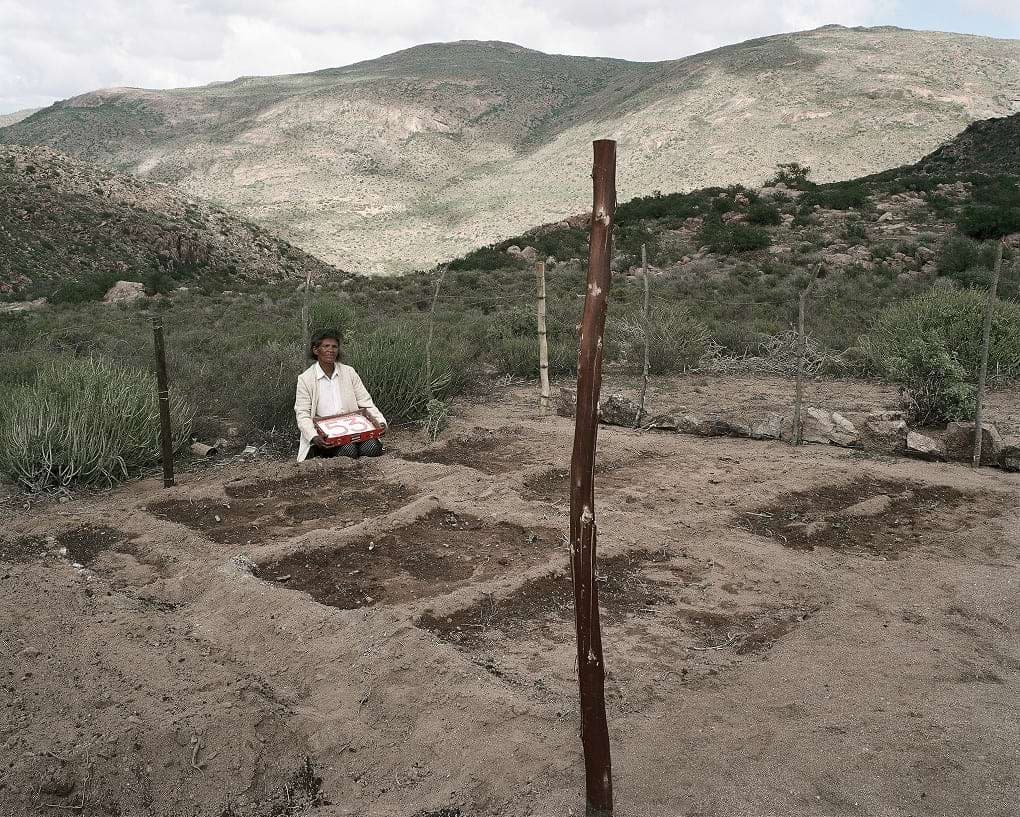
Five themes underpin the ‘Intersections’ series: the elusive presence of “fuck all” landscapes, the visual and symbolic function of fences and boundaries, the persistent histories of possession and dispossession, the quiet aftermath of mortality and memory in the era of HIV/AIDS, and an expanded awareness of photographic perspective. Travelling the country in a campervan, Goldblatt photographed open and often featureless terrain, scenes where human presence was marked not by people but by poles, fences or signage. In so doing, he captured the enduring effects of colonial and apartheid spatial planning, especially regarding land use and ownership. Increasingly, he acknowledged his own position in the act of seeing, presenting multiple viewpoints and inviting reflection on the role of the photographer. Together, these works form a nuanced and expansive visual inquiry into South Africa’s evolving landscapes of power, memory and meaning.
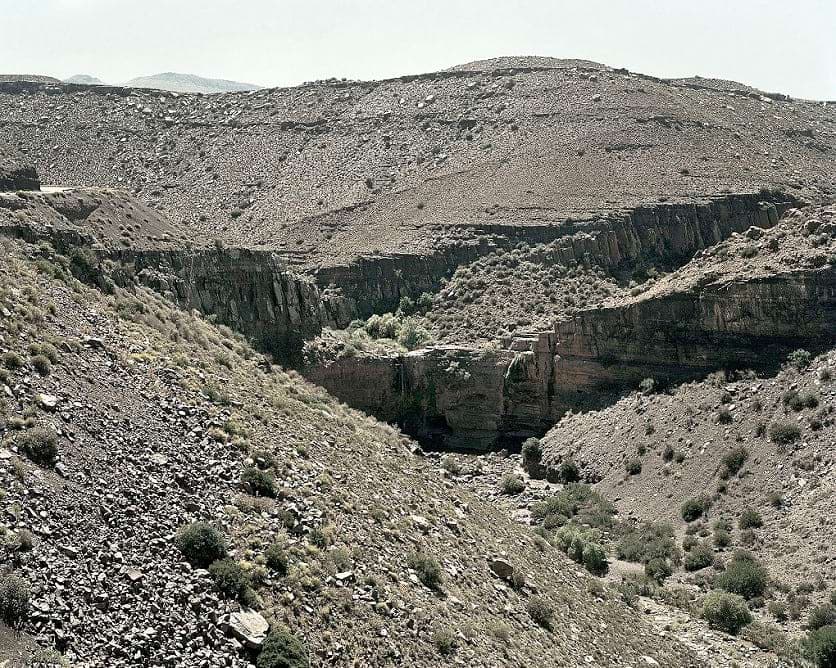
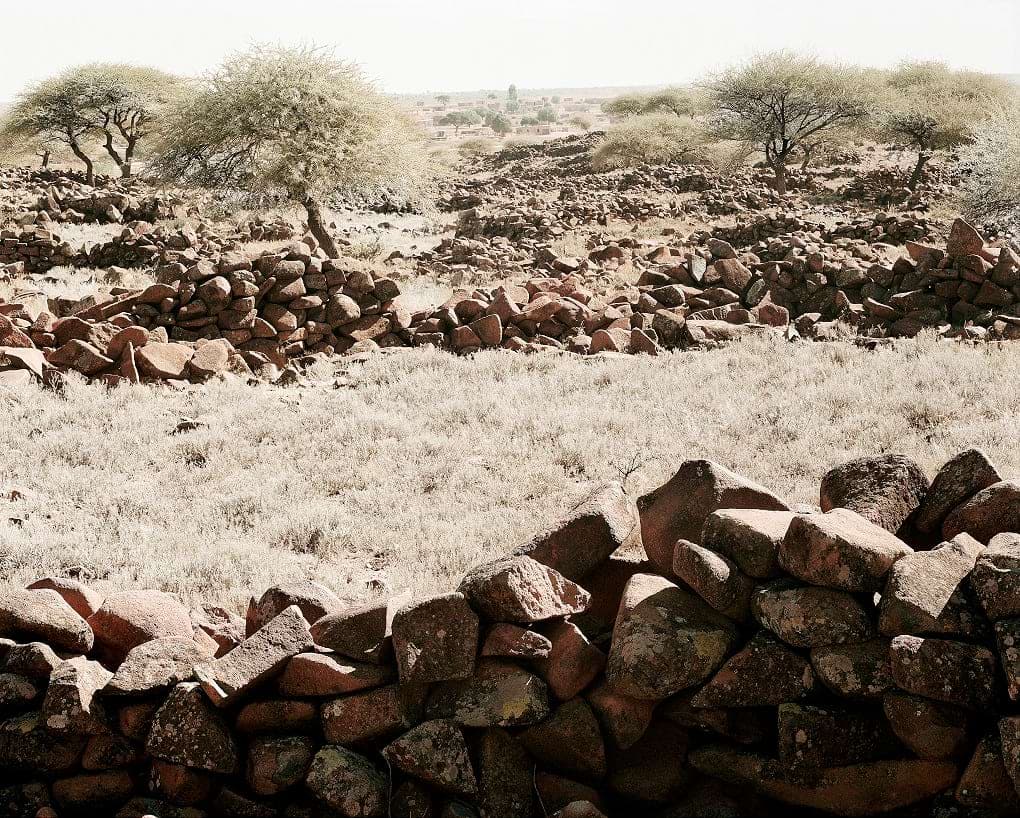
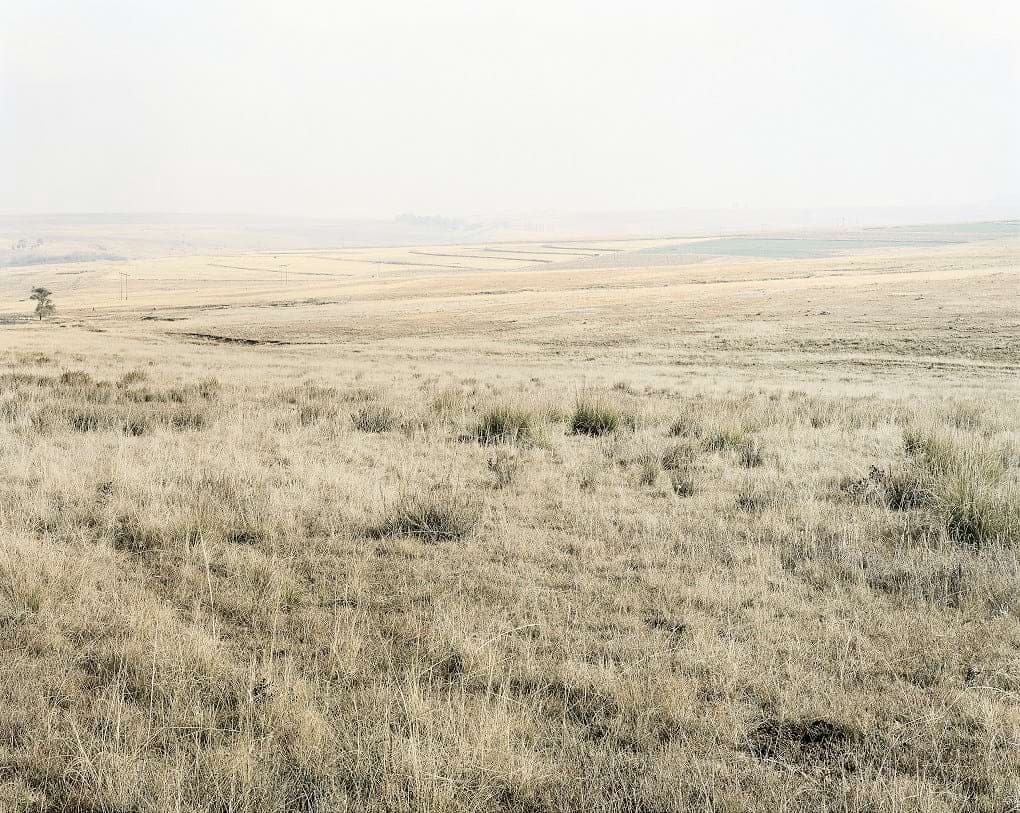
Driving across South Africa in a kitted-out campervan, Goldblatt describes the landscape as “deep, bland, vast and seemingly featureless.” He wrote that “precisely in these qualities is a presence that is difficult to hold or suggest in photographs. As soon as you try to bring what is before you into some sort of visual coherence, it eludes, it seems to move away. There seems no focal point, no way of coherently containing it. Often it is what I call a ‘fuck all’ landscape. Somehow one has to find ways of being true to what is there and yet bringing it fully to the page or print.” (Regarding Intersections, 2014).
David Goldblatt’s ‘Intersections’ is a major body of colour work produced between 2001 and 2011, marking a notable departure from the black-and-white photography that defined his earlier career. Motivated by the shifting political landscape of post-apartheid South Africa and new possibilities in digital printing, Goldblatt turned to colour to more fully capture the layered and often contradictory realities of the period. The series spans vast landscapes, urban and rural settings, monuments and subtle traces of human presence – subjects united by Goldblatt’s enduring concern with how political and moral values are inscribed in the physical world. While ‘Intersections’ signals a change in both medium and approach, it retains the critical rigour and quiet observational precision that distinguish Goldblatt’s work.
Five themes underpin the ‘Intersections’ series: the elusive presence of “fuck all” landscapes, the visual and symbolic function of fences and boundaries, the persistent histories of possession and dispossession, the quiet aftermath of mortality and memory in the era of HIV/AIDS, and an expanded awareness of photographic perspective. Travelling the country in a campervan, Goldblatt photographed open and often featureless terrain, scenes where human presence was marked not by people but by poles, fences or signage. In so doing, he captured the enduring effects of colonial and apartheid spatial planning, especially regarding land use and ownership. Increasingly, he acknowledged his own position in the act of seeing, presenting multiple viewpoints and inviting reflection on the role of the photographer. Together, these works form a nuanced and expansive visual inquiry into South Africa’s evolving landscapes of power, memory and meaning.
A0+
“In the 1990s my anger dissipated. Apartheid was no more. There were things to probe and criticise, but the emphasis was different. Lyricism seemed not only permissible but possible. In the late ‘90s I became aware of colour as a particular quality of this place and its light that I wanted to explore. It seemed ‘thin’, yet intense. To achieve prints that would hold these qualities I would need to print in colour in a way that was similar to that which I had developed for my black and white work … Over the generations, the land has shaped us - I say us in the broadest sense, us South Africans. And we have shaped the land. It is almost impossible now to find a pristine landscape. The grass has been grazed to the point of being threadbare, crops come and go, roads traverse, fences divide, and mines penetrate and throw up scabs of their detritus. These and our structures are the marks of our presence. I am drawn by the intimacies of our association with this land.” David Goldblatt