Over the past four decades, Yinka Shonibare CBE RA (b. 1962, UK) has become well known for his exploration of colonialism and post-colonialism within the contemporary context of globalisation. Shonibare’s work examines race, class, and the construction of cultural identity through a sharp political commentary on the tangled interrelationship between Africa and Europe and their respective economic and political histories.
The artist’s work is held in notable museum collections including Zeitz MOCAA, Cape Town; Norval Foundation, Cape Town; Tate, London; the National Museum of African Art, Smithsonian Institute, Washington D.C; Museum of Modern Art, New York; Guggenheim, Abu Dhabi; Moderna Museet, Stockholm and the Museum of Contemporary Art, Chicago.
Recent survey exhibitions and retrospectives include Yinka Shonibare CBE: Planets in My Head; Frederik Meijer Gardens & Sculpture Park, Michigan (2022) and Yinka Shonibare CBE: End of Empire; Museum der Moderne; Salzburg (2021).
In 2022, Shonibare unveiled three major sculptural works in Stockholm, the United Kingdom and the United Arab Emirates. In recent years, he has unveiled work from his Wind Sculpture series at Norval Foundation in Cape Town (2019) and Central Park, New York (2018). Shonibare was also nominated for the Turner Prize in 2004, and in 2002, he created one of his most recognised installations, Gallantry and Criminal Conversation for Documenta XI.
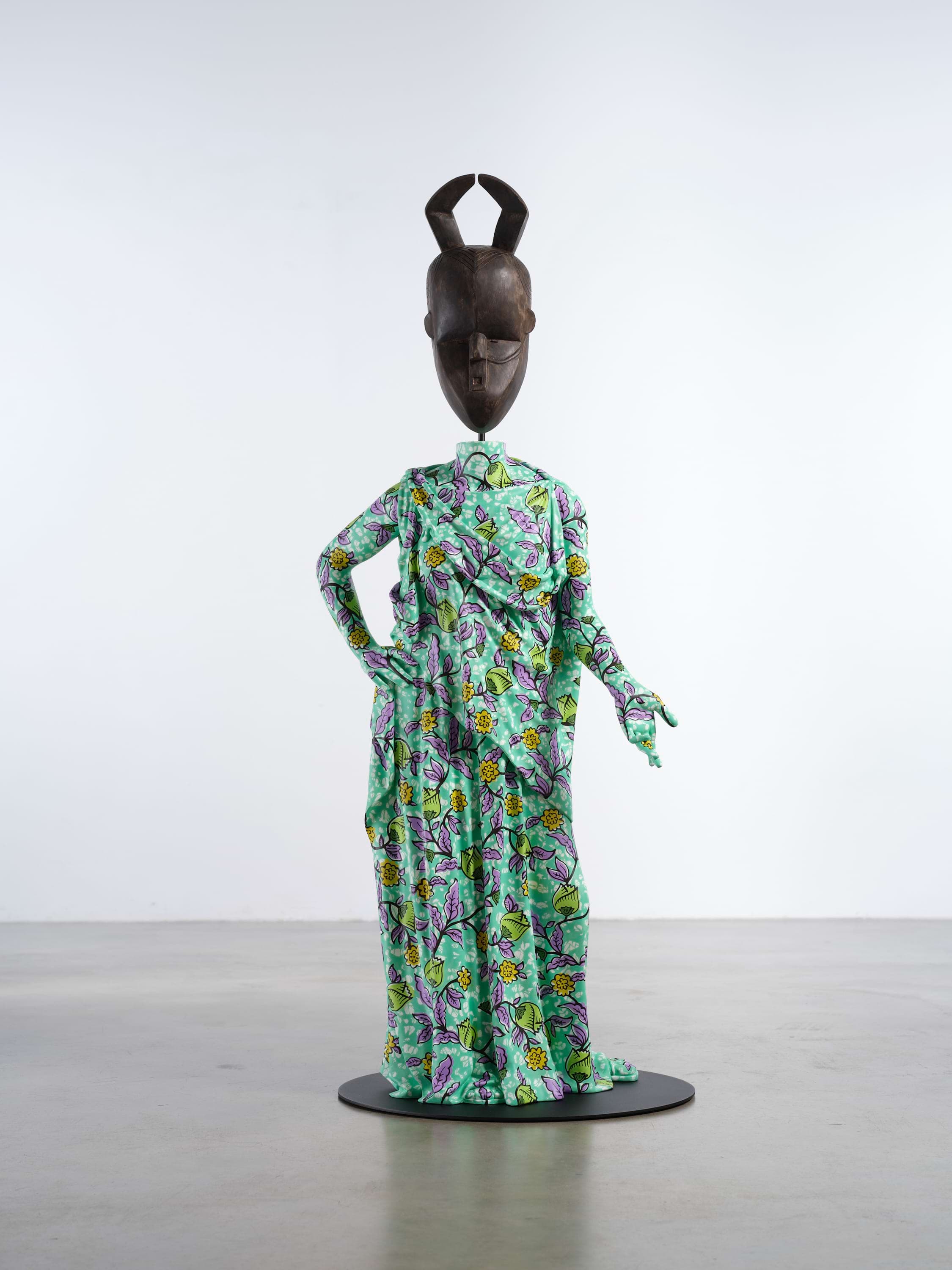
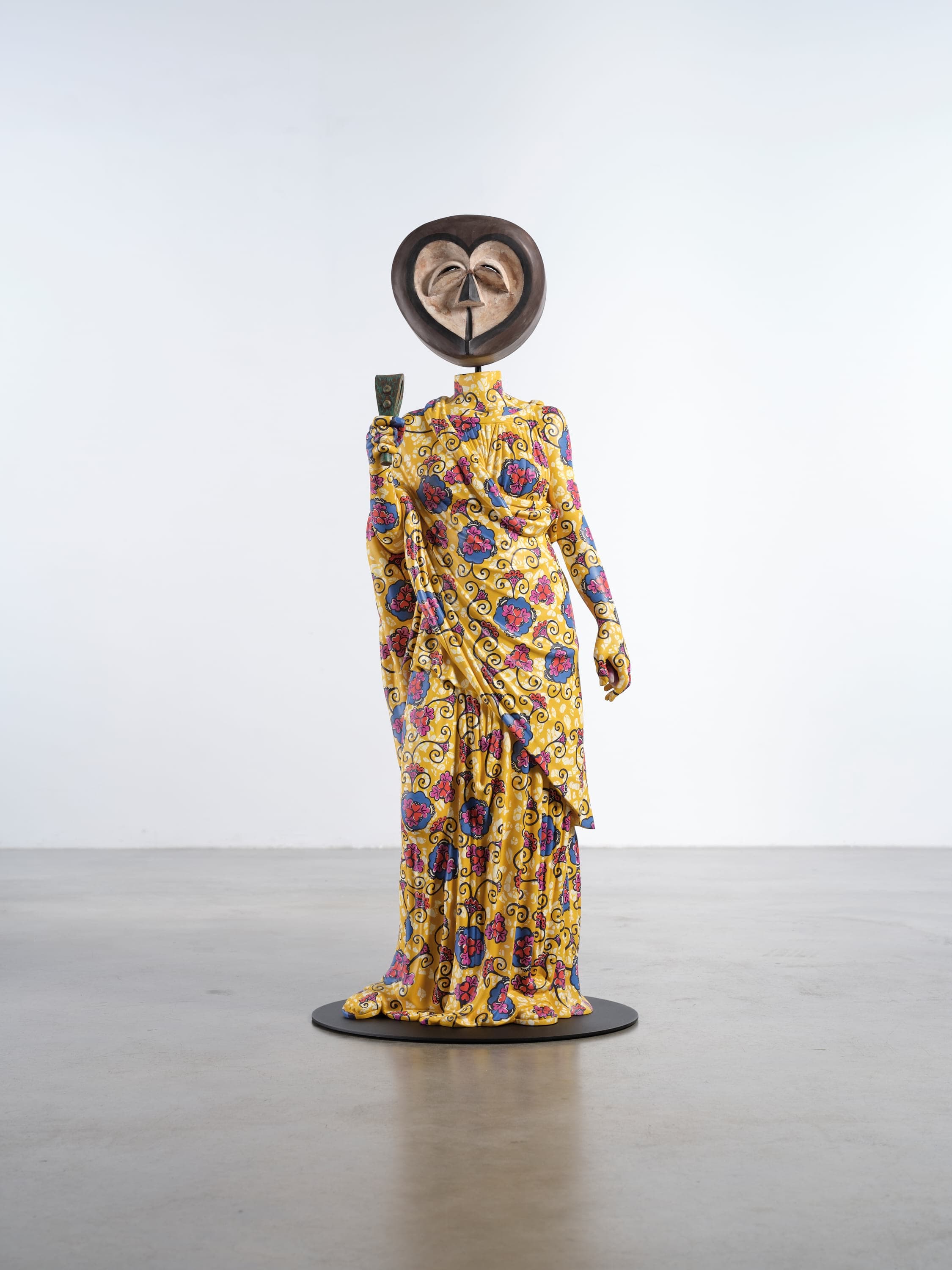
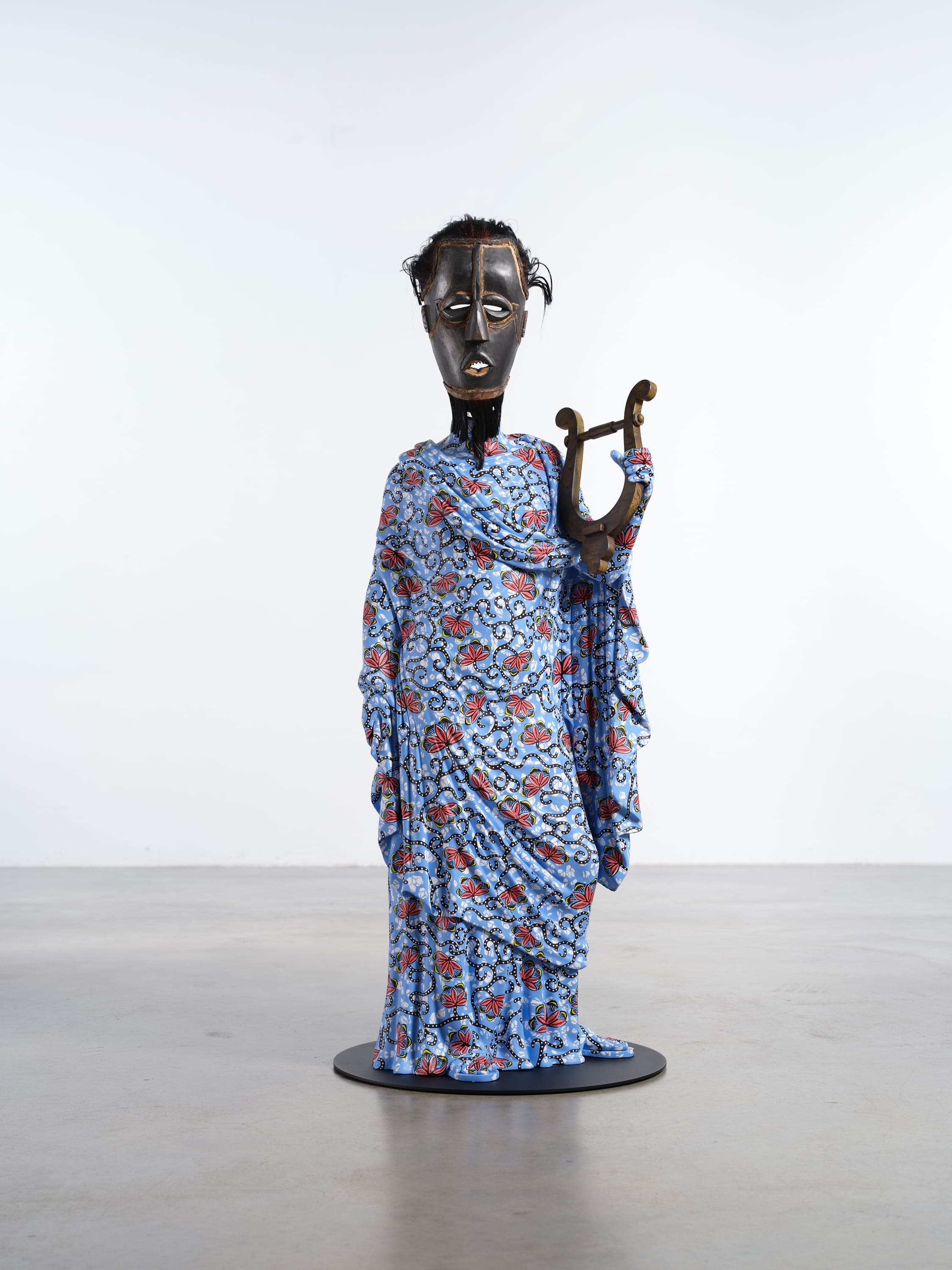
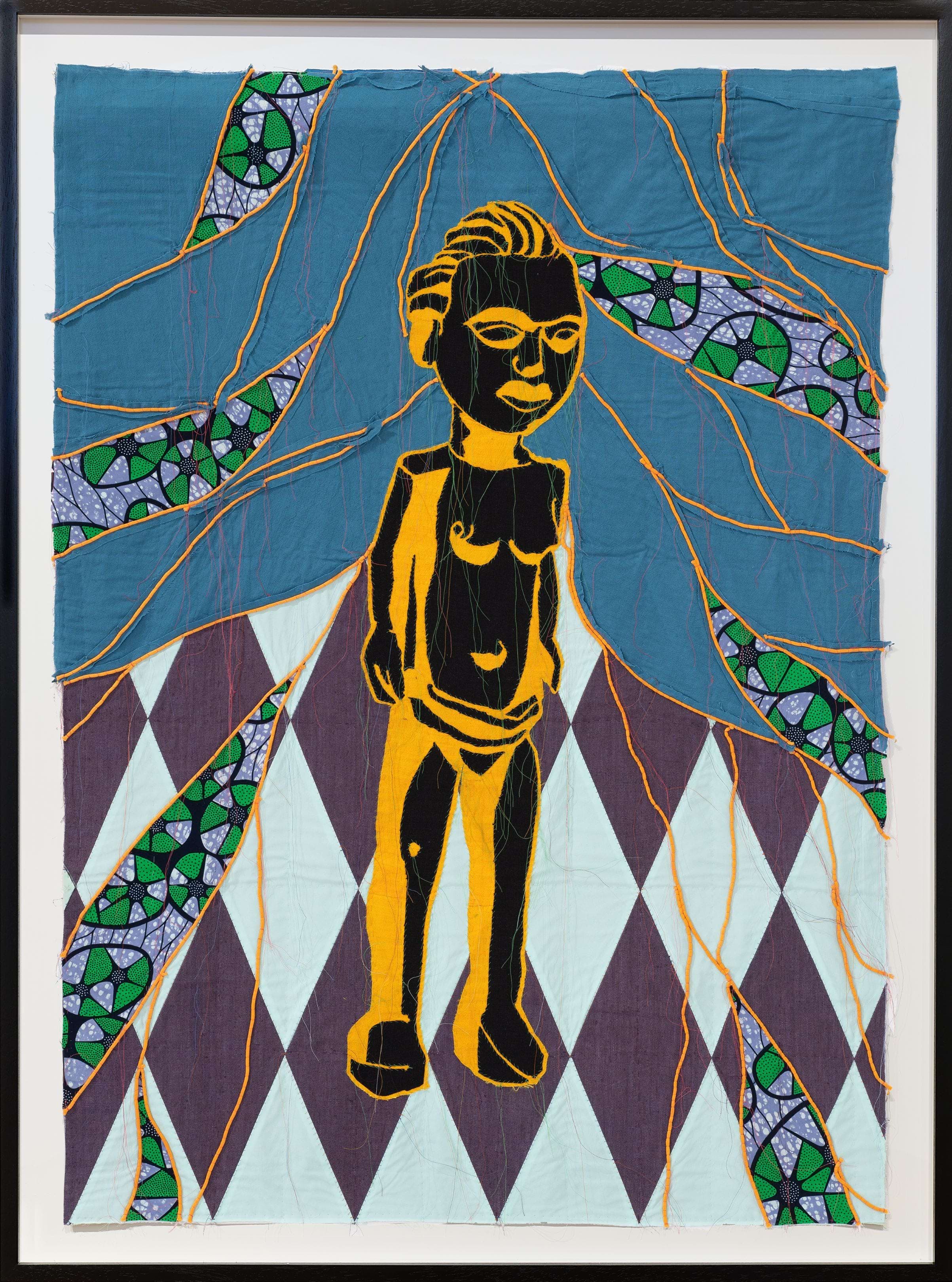
A series of vibrantly coloured, hand-stitched quilts illustrate African artefacts which formed part of the private collections of influential modernist artists such as Matisse and Derain. Classical European sculptures of goddesses drawn from Greek and Roman mythology are hand-painted with Shonibare’s signature Dutch wax batik patterns, their heads replaced with replicas of African masks complimentary to the figure’s associated myths. Each mask has been drawn from a prominent twentieth-century artist’s collection.
A series of vibrantly coloured, hand-stitched quilts illustrate African artefacts which formed part of the private collections of influential modernist artists such as Matisse and Derain. Classical European sculptures of goddesses drawn from Greek and Roman mythology are hand-painted with Shonibare’s signature Dutch wax batik patterns, their heads replaced with replicas of African masks complimentary to the figure’s associated myths. Each mask has been drawn from a prominent twentieth-century artist’s collection.
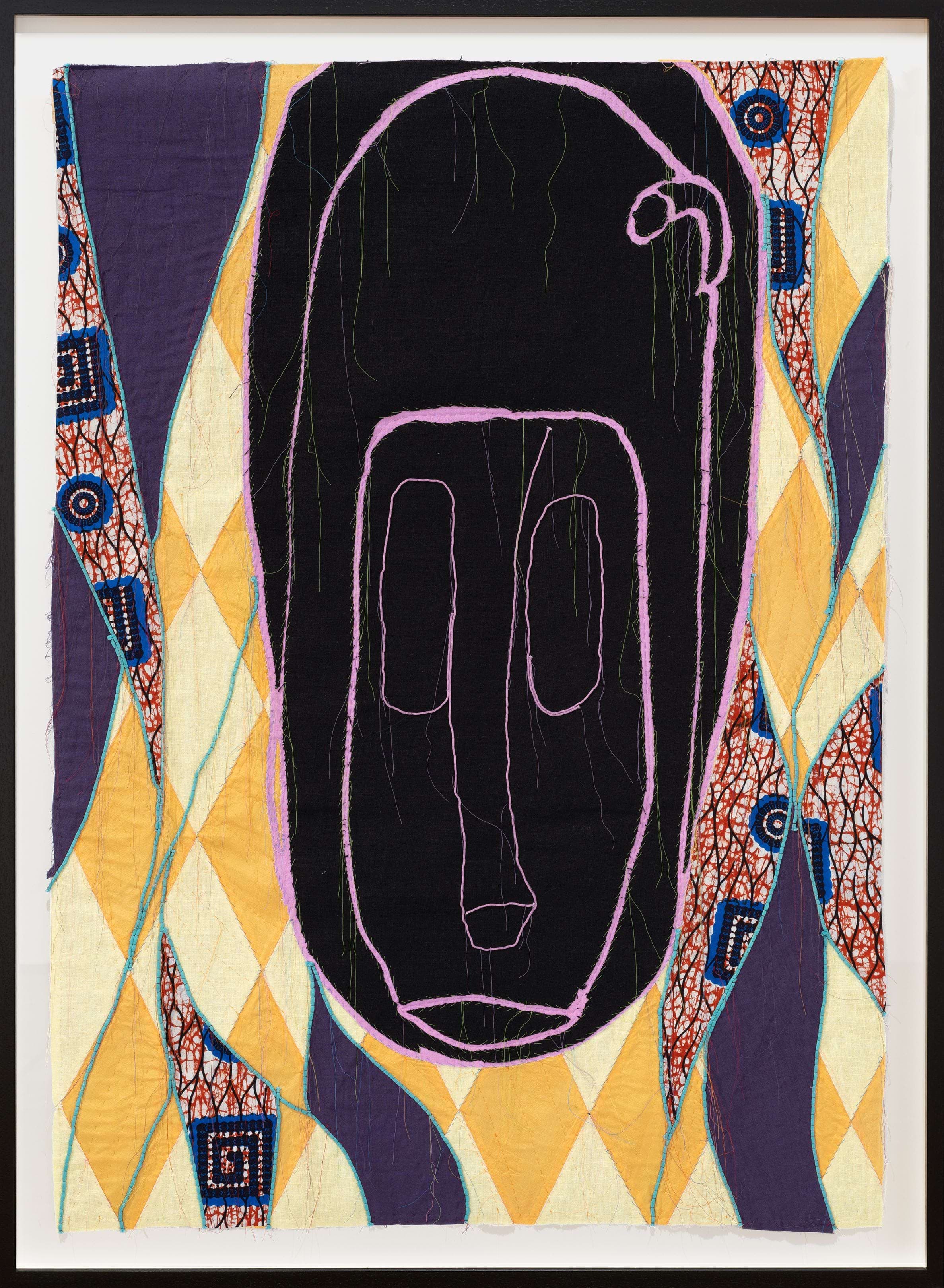
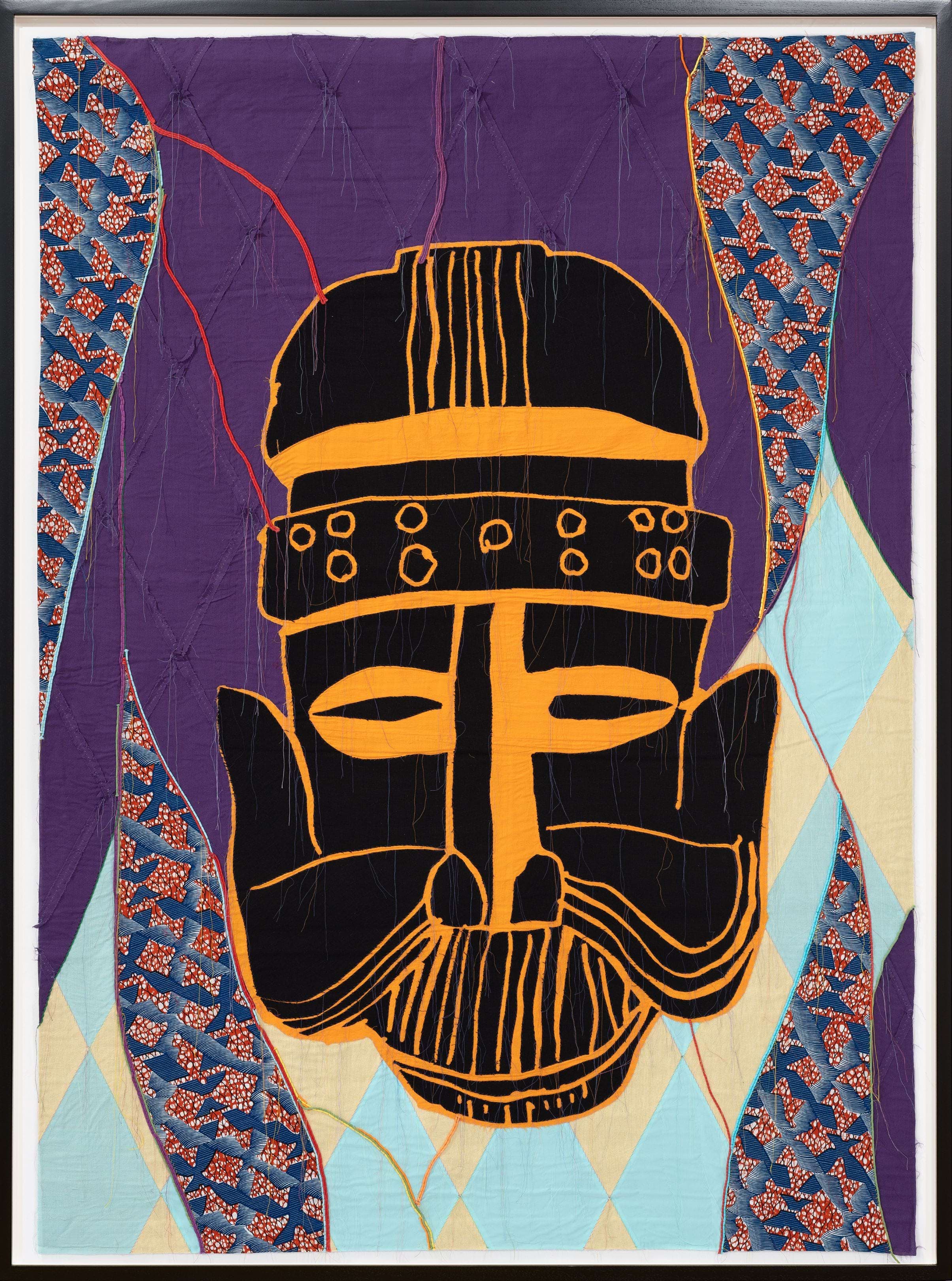
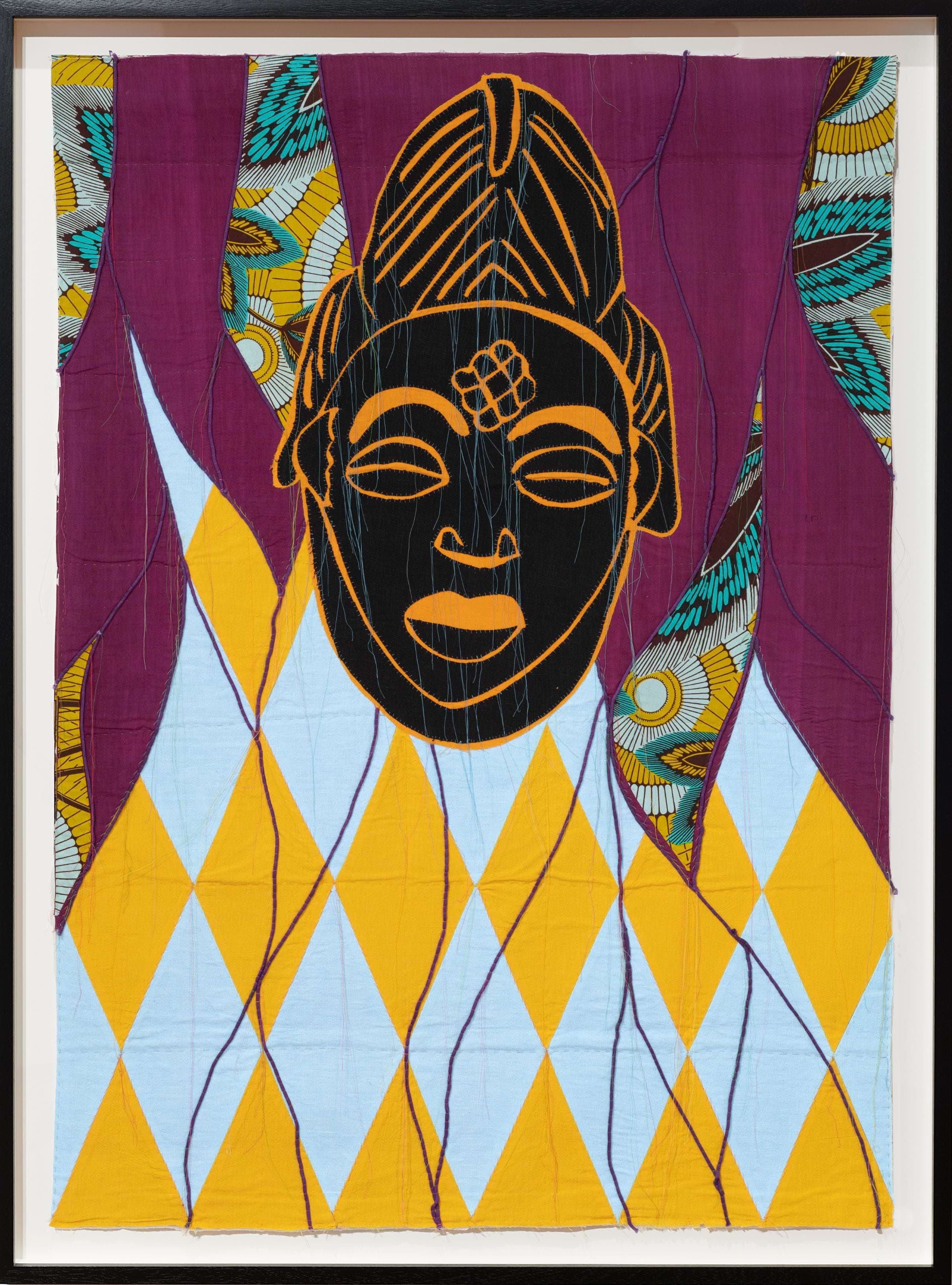
Modern Magic VI forms part of the artist’s series of vibrantly coloured, hand stitched quilts that depict the African artifacts held in the private collections of influential modernist artists such as Matisse, Picasso and Derain.
In this piece, the artist depicts the Punu mask originating from the Punu peoples in Southern Gabon. Worn by male dancers during a stilt dance called “mikudj”, the mask depicts an idealised and stylised female face. Embellished in classical nineteenth century fashion, including a coiffure composed of a central lobe and two lateral tresses, scarring (cicatrization) motifs on the forehead and temples. Applied to the surface of the mask was Kaolin, a material sourced from local riverbeds and associated with the healing and spiritual, ancestral realm of existence. Using this material celebrated both the beauty of a mortal woman and marked her transformation into a transcendent being.
Over the past four decades, Yinka Shonibare CBE RA (b. 1962, UK) has become well known for his exploration of colonialism and post-colonialism within the contemporary context of globalisation. Shonibare’s work examines race, class, and the construction of cultural identity through a sharp political commentary on the tangled interrelationship between Africa and Europe and their respective economic and political histories.
Shonibare’s work will also be part of the main exhibition curated by Adriano Pedrosa and the official Nigerian Pavilion at the 60th International Art Exhibition - La Biennale di Venezia in April. A solo exhibition of his work will be presented at the Serpentine Galleries, London later this year.
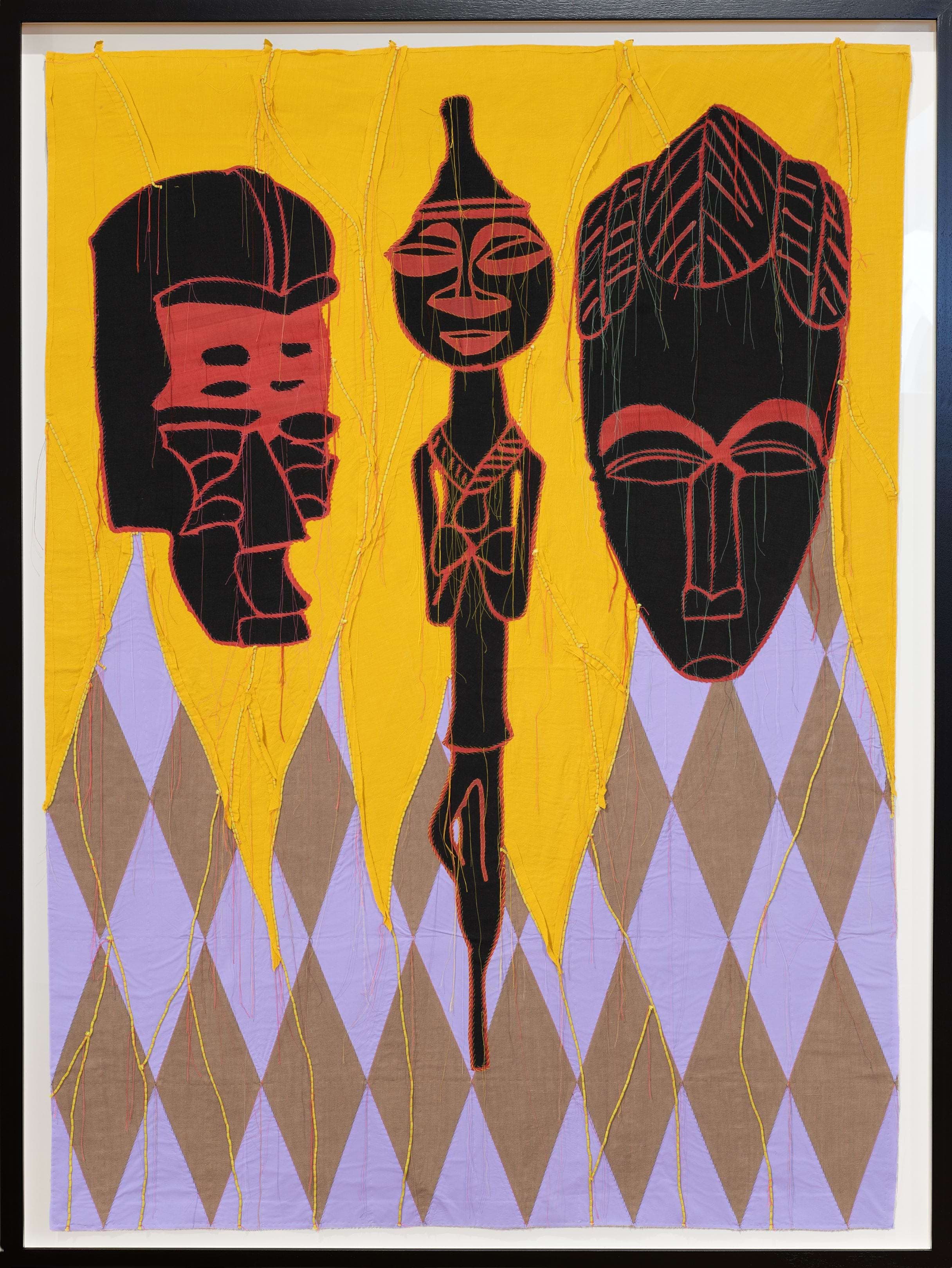
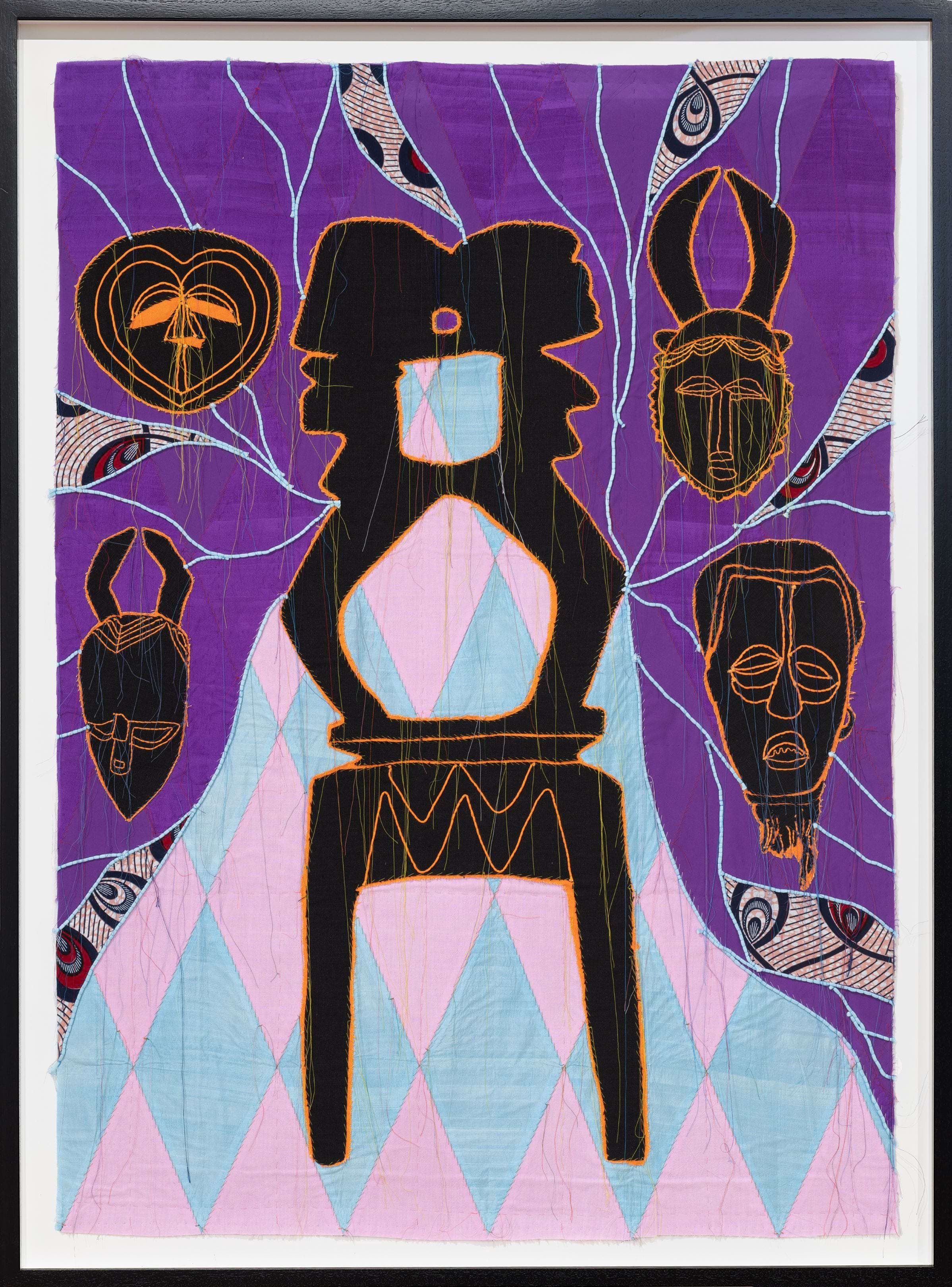
Modern Magic VII forms part of the artist’s series of vibrantly coloured, hand stitched quilts that depict the African artifacts held in the private collections of influential modernist artists such as Matisse, Picasso and Derain.
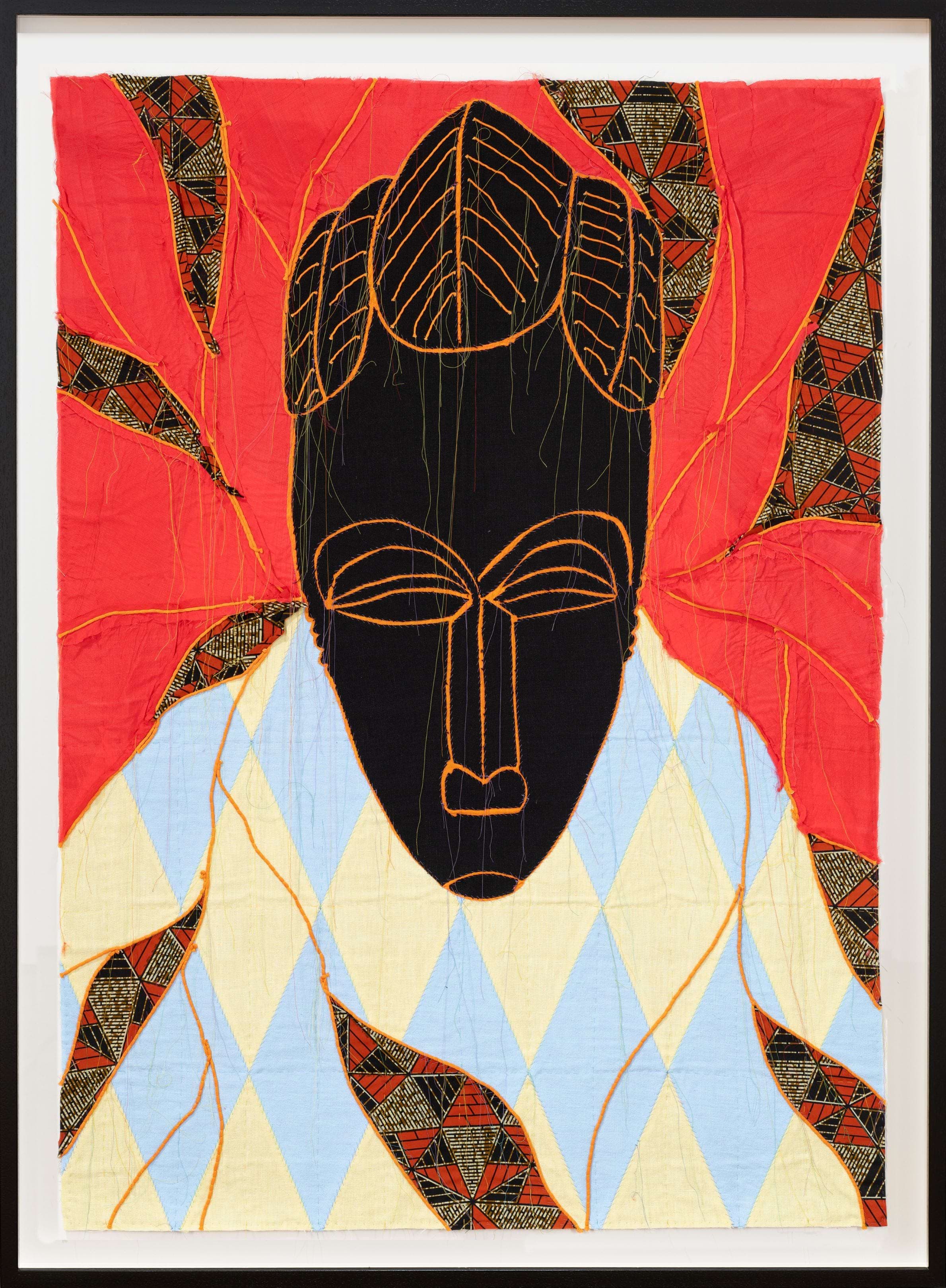
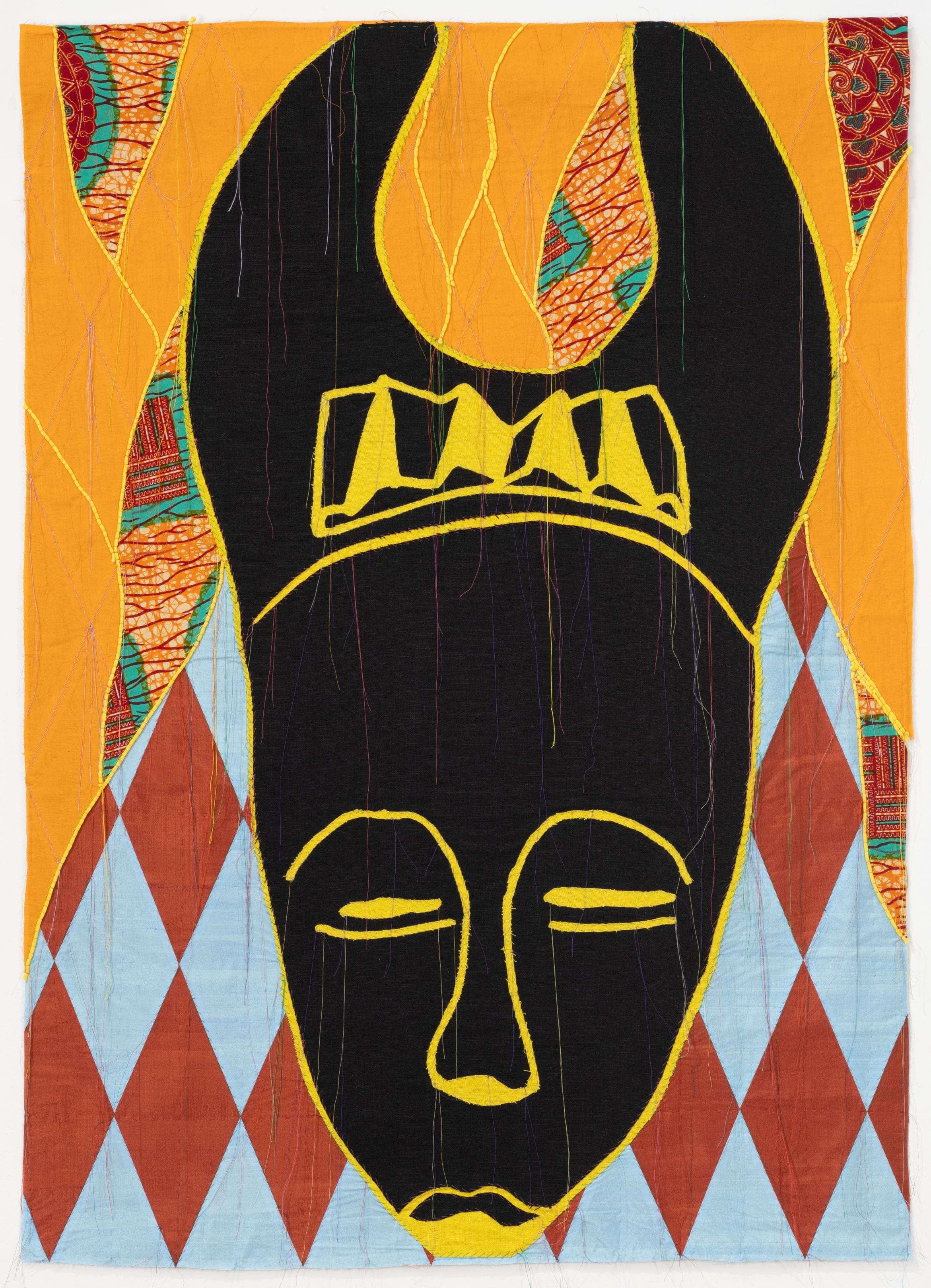
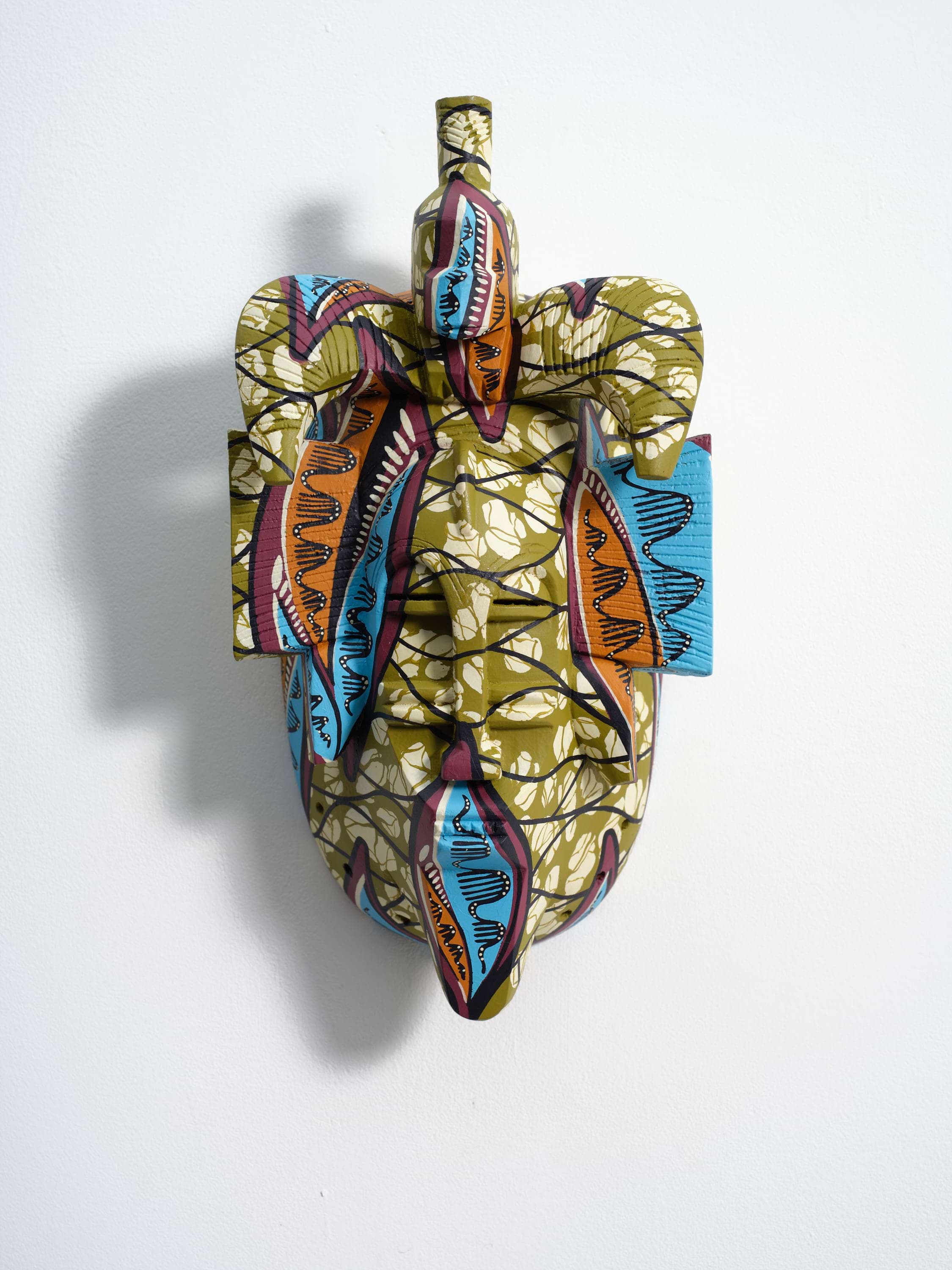
Modern Magic VIII forms part of the artist’s series of vibrantly coloured, hand stitched quilts that depict the African artifacts held in the private collections of influential modernist artists such as Matisse, Picasso and Derain.
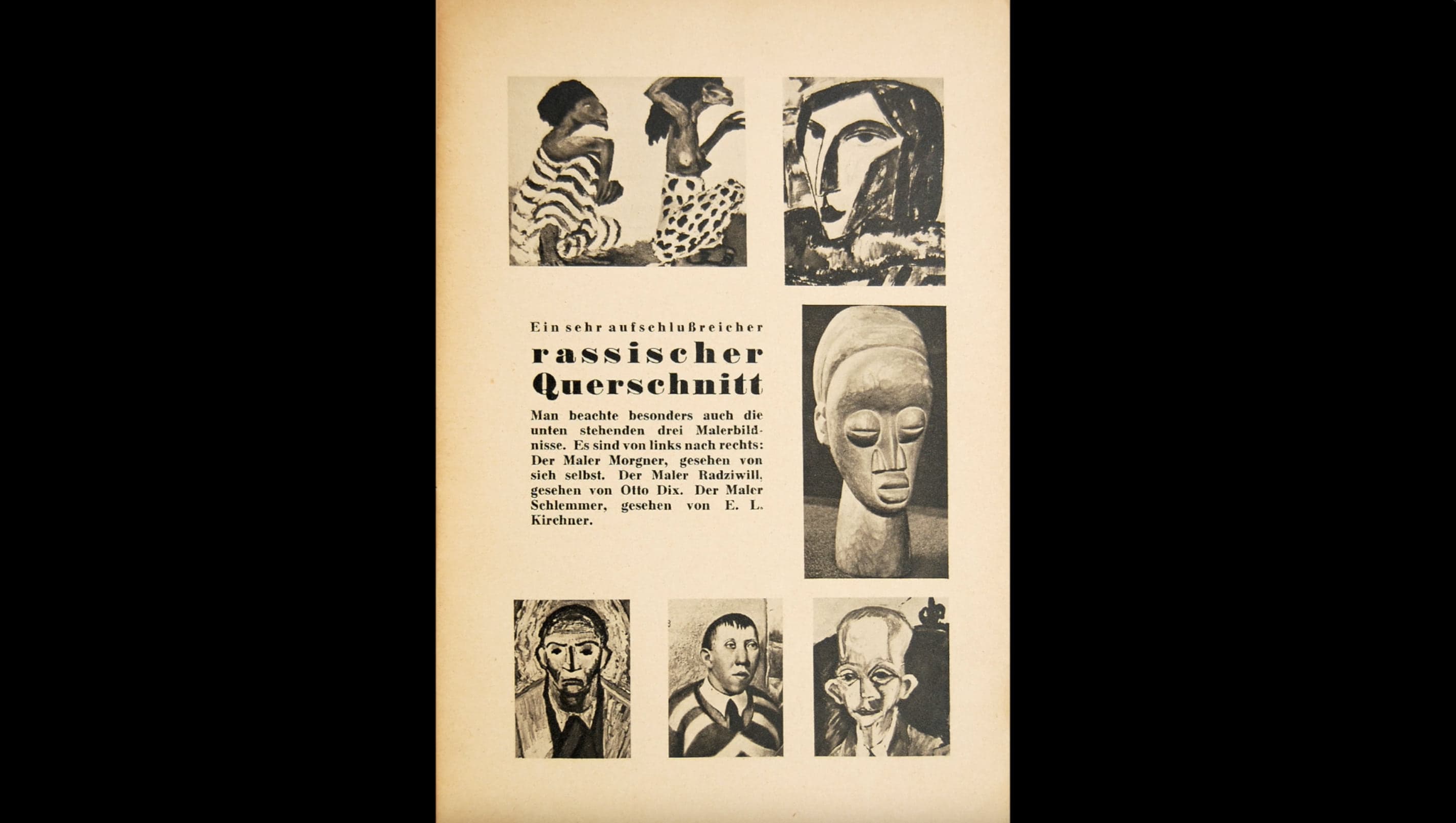
In this work the artist depicts a ceremonial mask from the Baule or Yaure people of Côte d'Ivoire, the human face and horns mimics a similar mask held in the collection of Pablo Picasso. Through this depiction, the artist considers how African aesthetics have shaped Western Modernist expression. The Modern Magic series respond to the widely acknowledged influence that African imagery had on major twentieth century artists and on entire Western art movements, such as Cubism, Dada and Surrealism.
Video
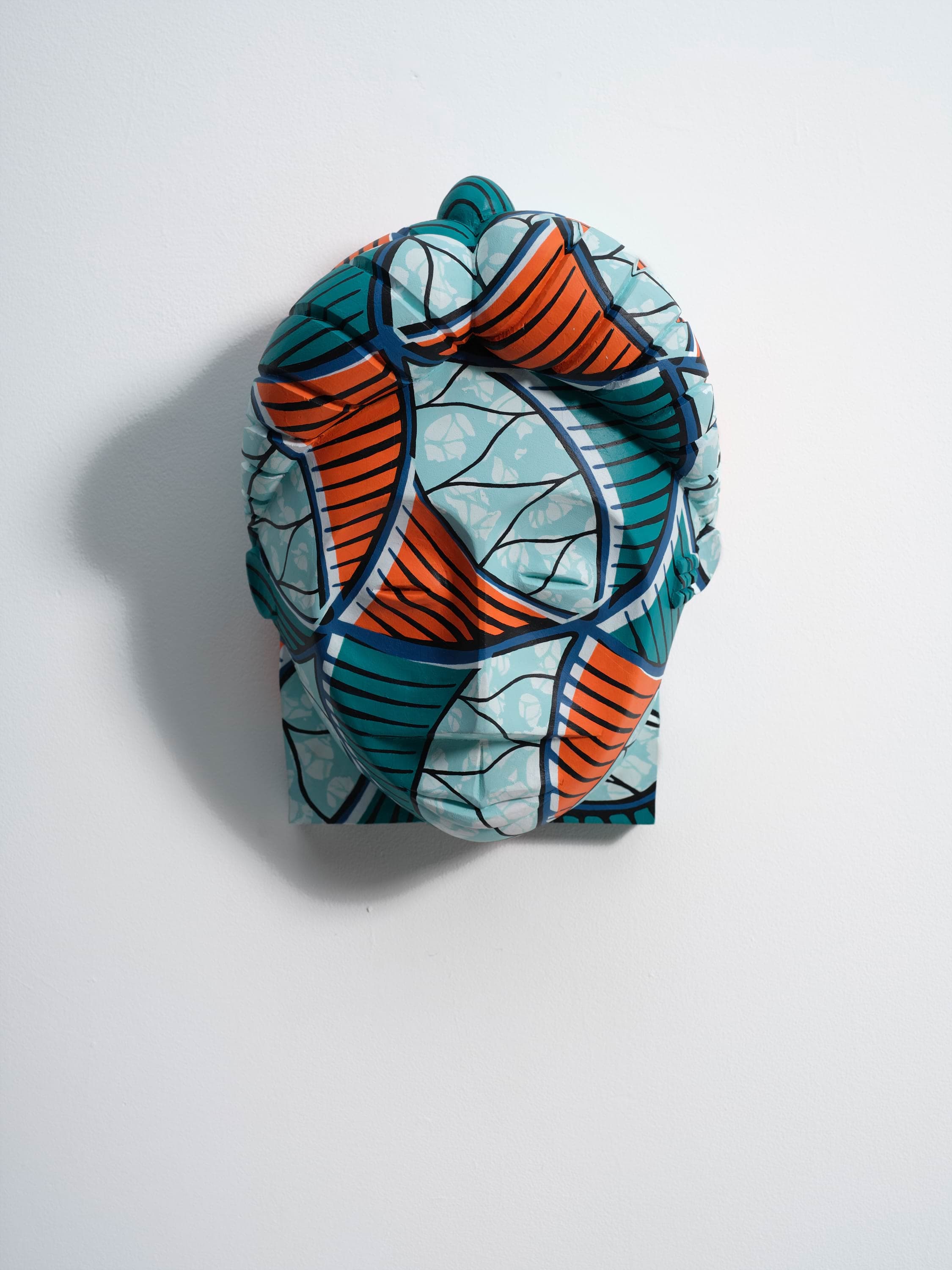
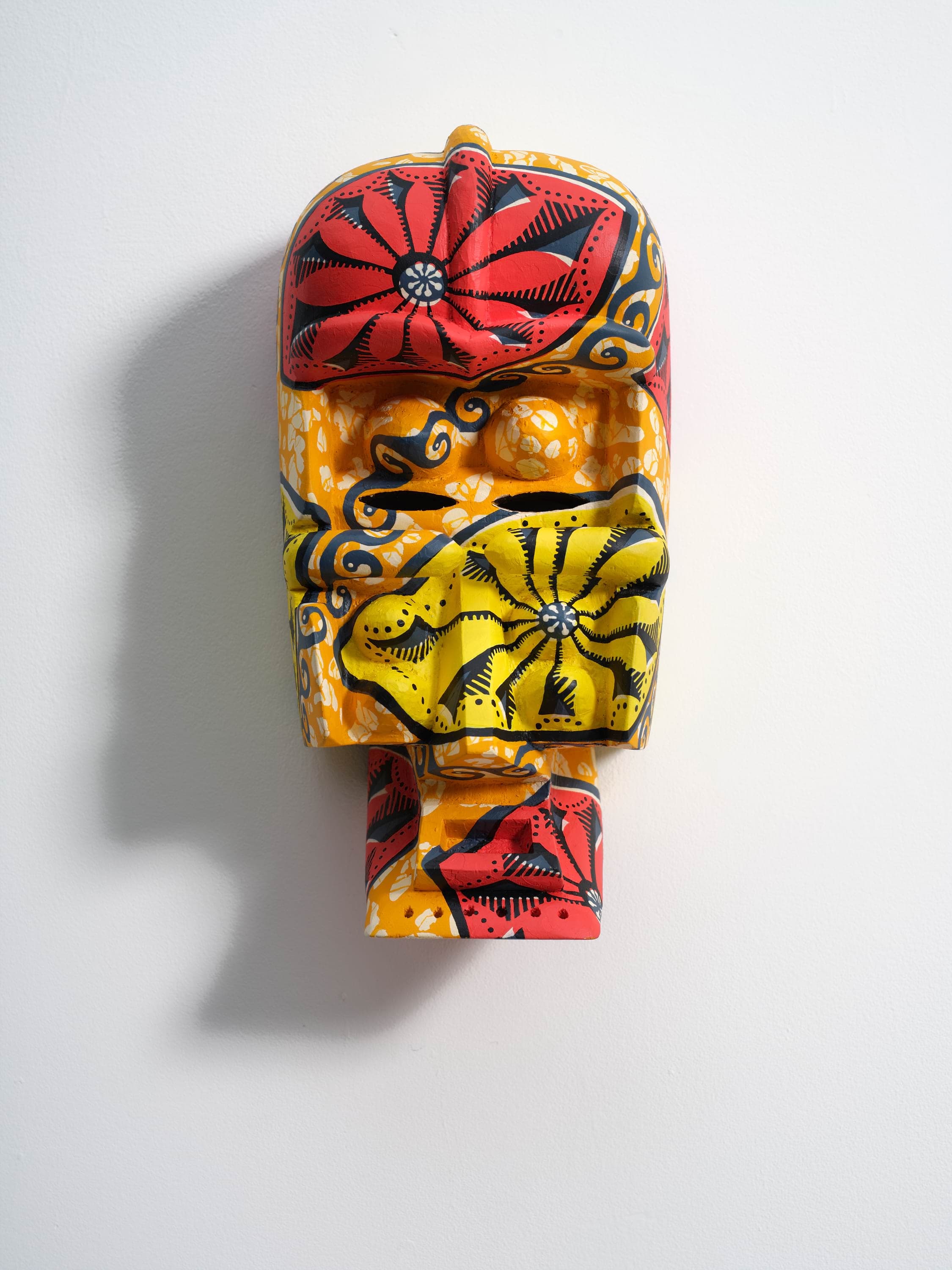
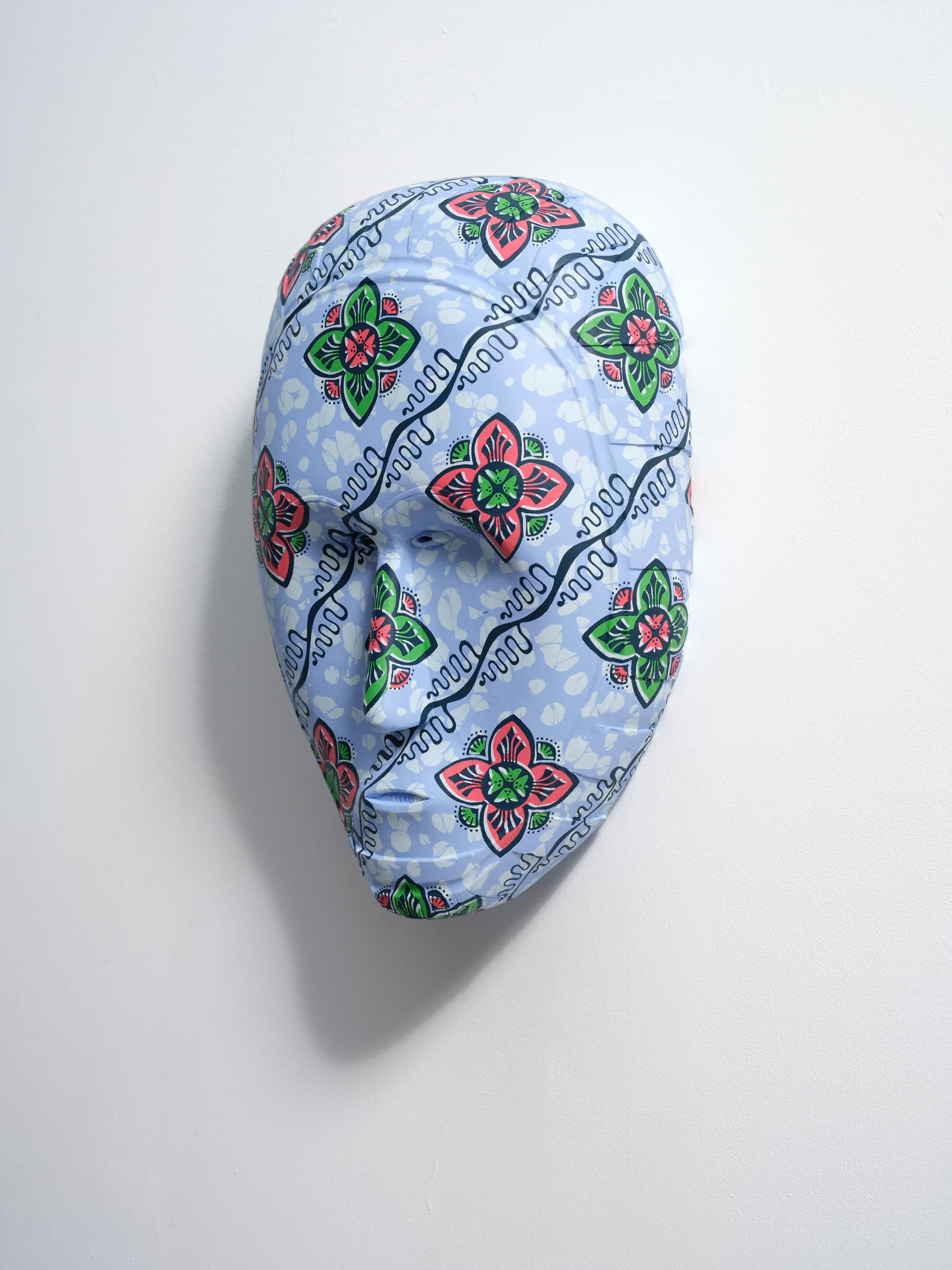
‘Hybrid Mask (Shira-Punu)’ is an intricate, hand-painted mask, which presents historical archive material that conveys the fashion of African art and cultures in 1920-30s Paris. The work exposes the conflicted relationships between ‘western’ and ‘tribal’, appropriation and admiration. According to Shonibare, “Paris of the early 20th century was hungry for the energy and culture of African communities, informing the nightlife, intellectual and literary scene, art, dance design and politics. It became a European centre for Black culture, fluctuating between facilitating black empowerment and reinforcing the fetishisation of African cultures by the mostly white bourgeois elite.” A brief look at the impact of African aesthetics on key western artists from this era shows the pervasive nature of this influence. Artists including Georges Braque, André Derain and Amedeo Modigliani all collected artefacts from the African continent which inspired their work.
The ‘Hybrid Mask’ series by Yinka Shonibare is intricate, hand-painted masks that consider how African aesthetics have shaped western modernist expression. Using the collections of African artefacts of Georges Braque, André Derain and Amedeo Modigliani as a starting point they are a response to the widely acknowledged influence that African imagery had on major twentieth-century artists and on entire western art movements, such as Cubism, Dada and Surrealism. The work exposes the conflicted relationships between ‘western’ and ‘tribal’, appropriation and admiration.
“I want to challenge notions of cultural authenticity, by creating a composite ideology, ‘a third myth’, exploring appropriation, cultural identity, and the ability to transform beyond what is expected and therefore compels us to contemplate our world differently” - Yinka Shonibare CBE RA.
Video
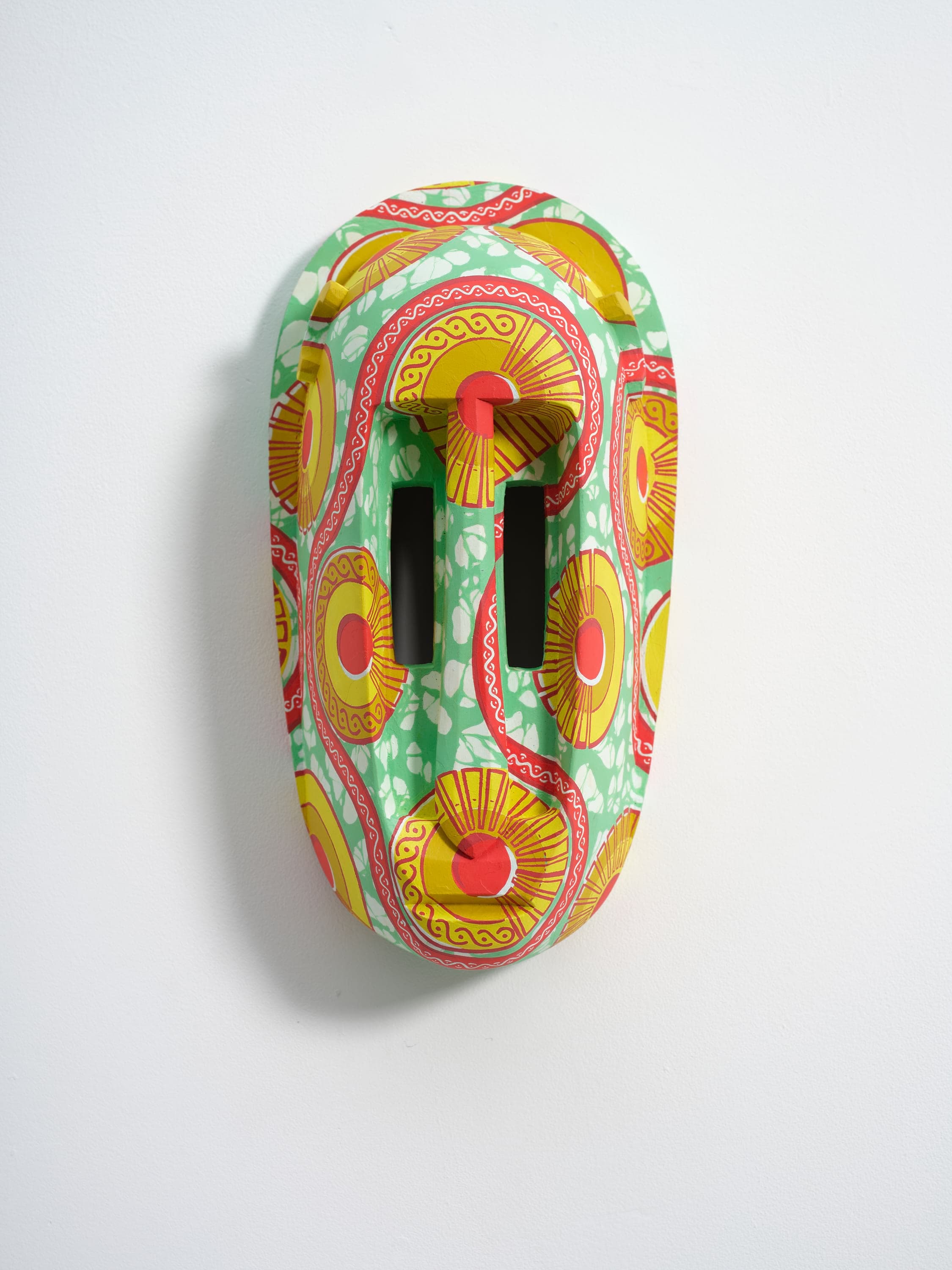
Hybrid Mask (Fang) II recreates a mask from André Derain's collection, now housed in the Centre Pompidou Collection. The Hybrid Mask series by Yinka Shonibare are intricate, hand-painted masks that consider how African aesthetics have shaped western modernist expression. Using the African artefacts held in the collections of Georges Braque, André Derain and Amedeo Modigliani as a starting point they are a response to the widely acknowledged influence that African imagery had on major twentieth century artists and on entire western art movements, such as Cubism, Dada and Surrealism. The work exposes the conflicted relationships between ‘western’ and ‘tribal’, appropriation and admiration.
“I want to challenge notions of cultural authenticity, by creating a composite ideology, ‘a third myth’, exploring appropriation, cultural identity, and the ability to transform beyond what is expected and therefore compels us to contemplate our world differently” - Yinka Shonibare CBE RA.
The Hybrid Mask series by Yinka Shonibare is intricate, hand-painted masks that consider how African aesthetics have shaped western modernist expression. Using the collections of African artefacts of Georges Braque, André Derain and Amedeo Modigliani as a starting point they are a response to the widely acknowledged influence that African imagery had on major twentieth-century artists and on entire western art movements, such as Cubism, Dada and Surrealism. The work exposes the conflicted relationships between ‘western’ and ‘tribal’, appropriation and admiration.
“I want to challenge notions of cultural authenticity, by creating a composite ideology, ‘a third myth’, exploring appropriation, cultural identity, and the ability to transform beyond what is expected and therefore compels us to contemplate our world differently” - Yinka Shonibare CBE RA.