Video
Video
Video
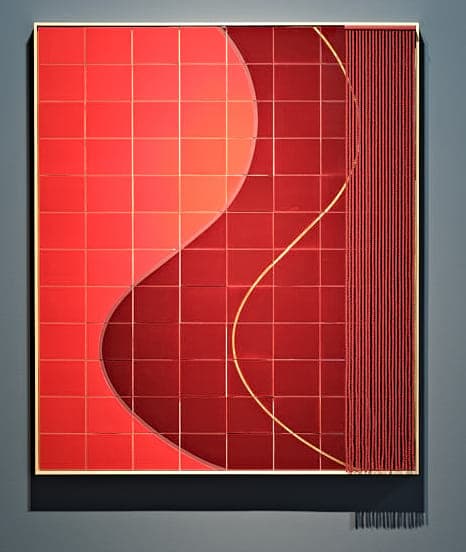
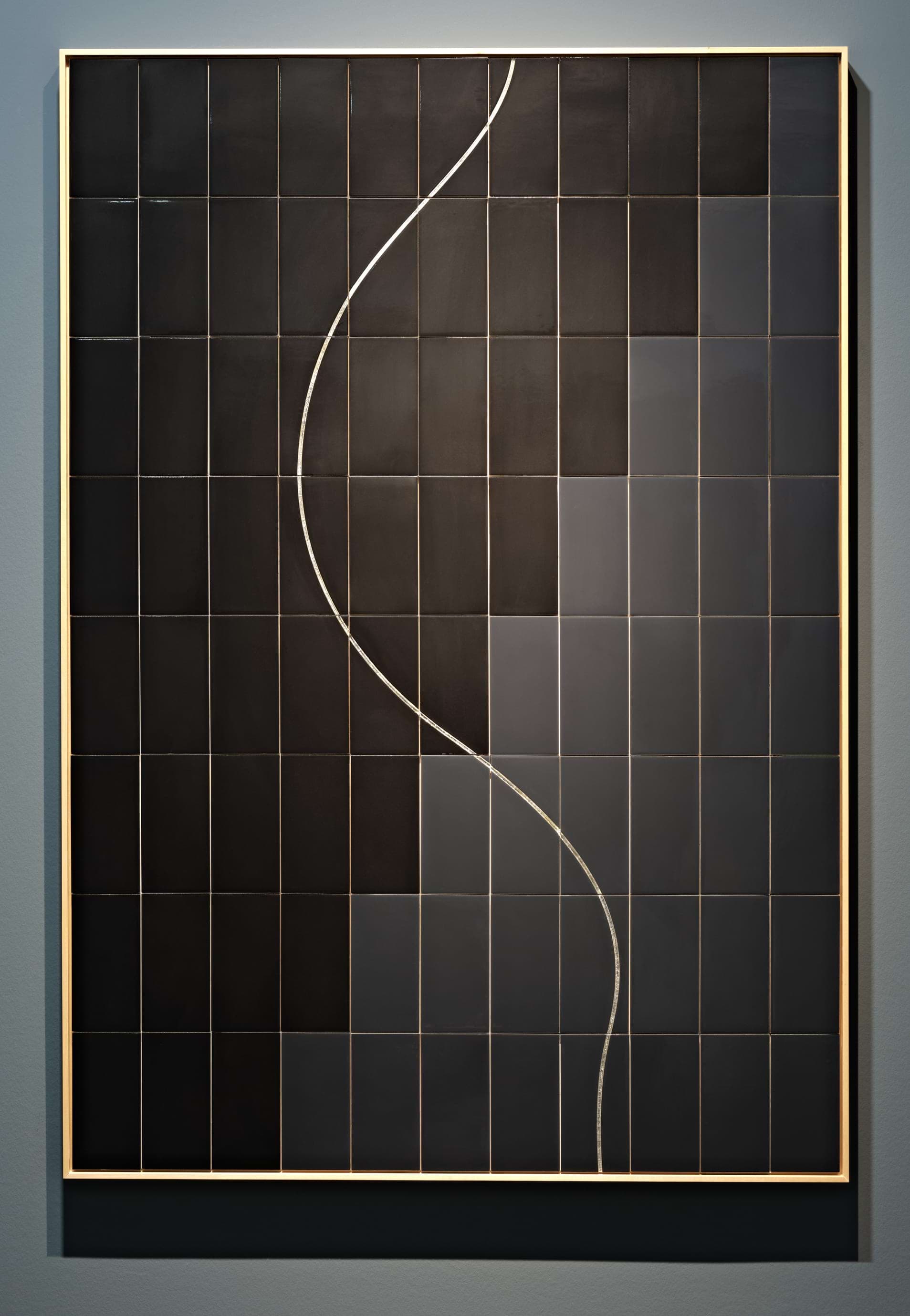
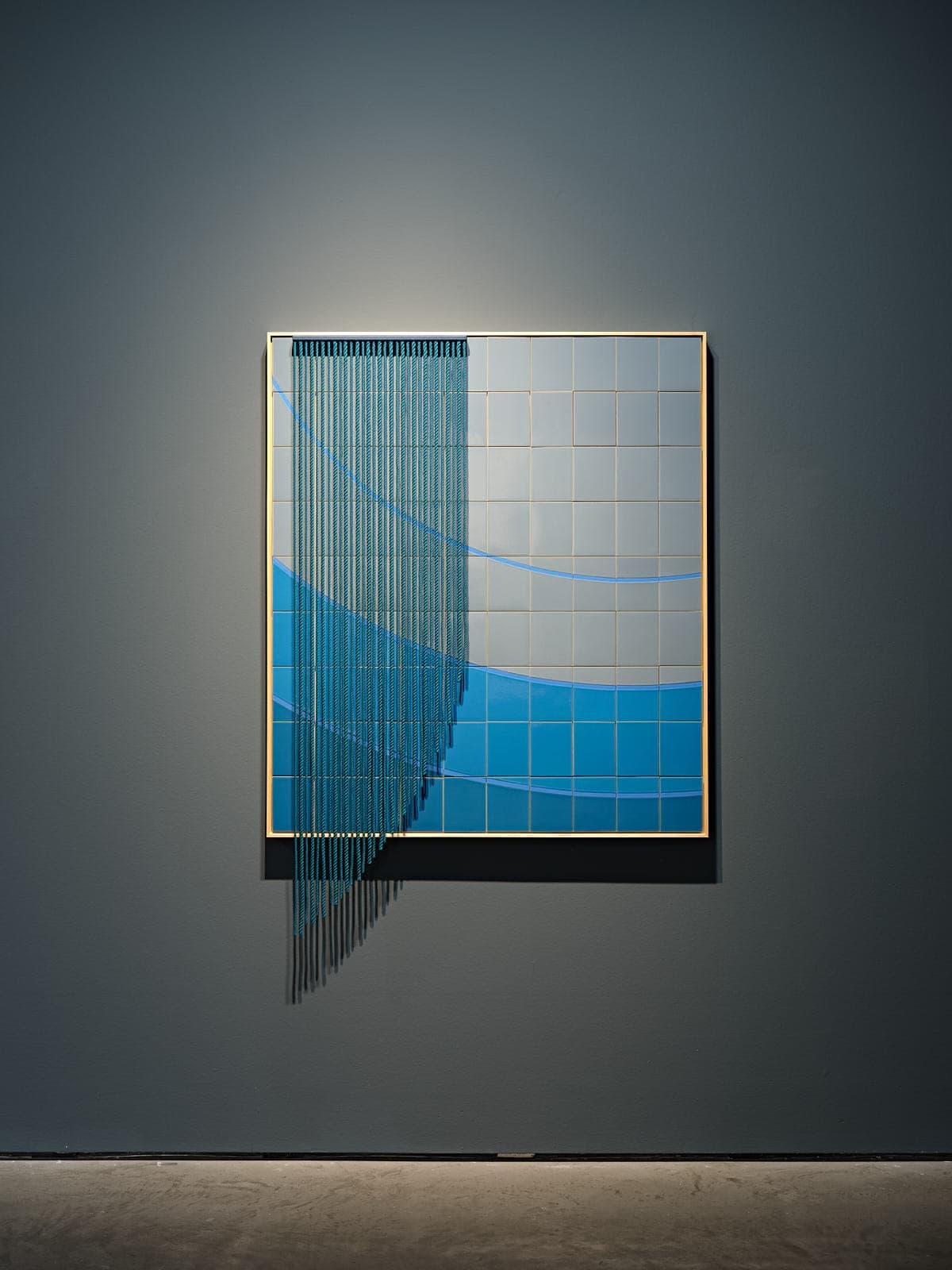
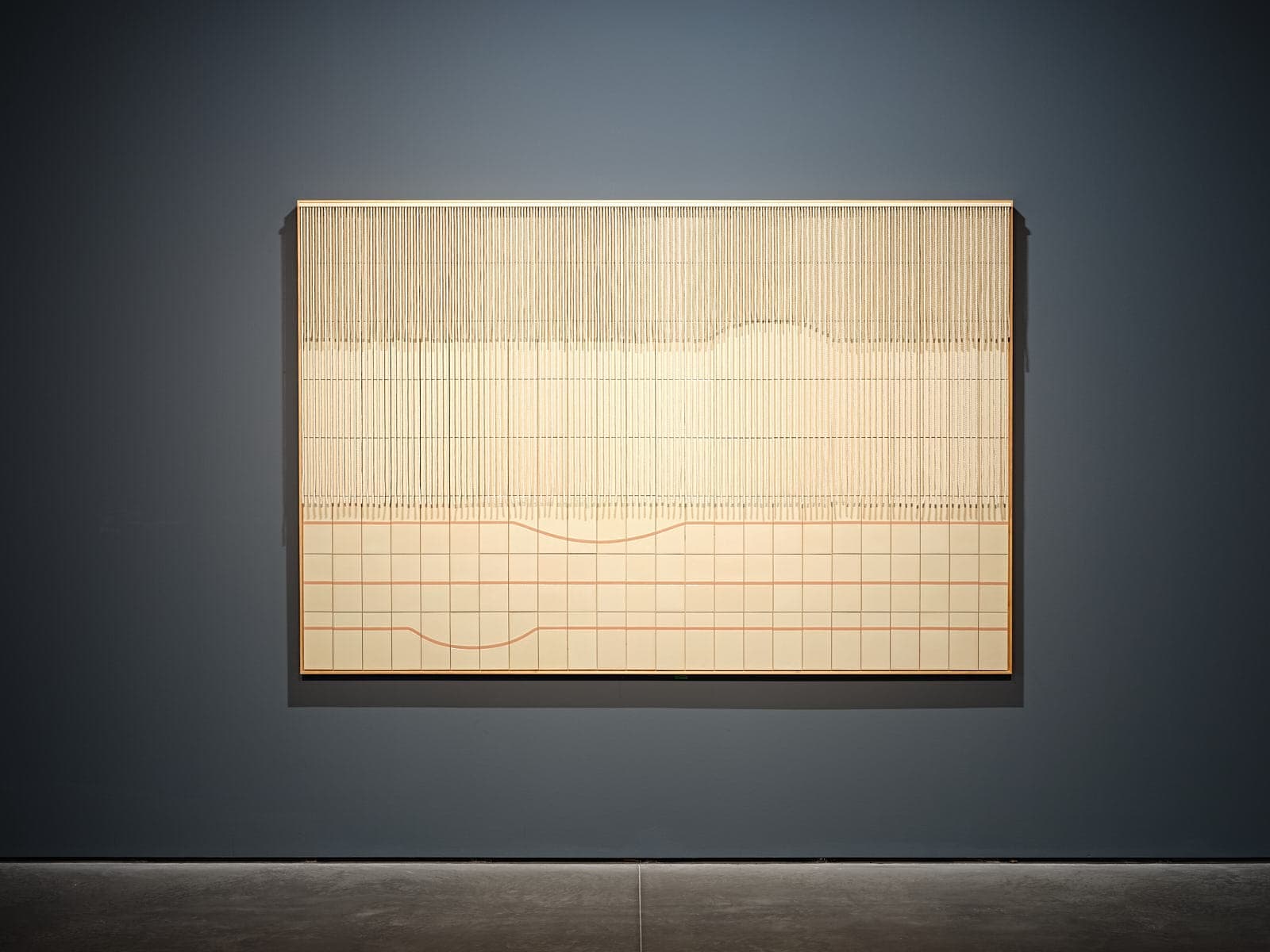
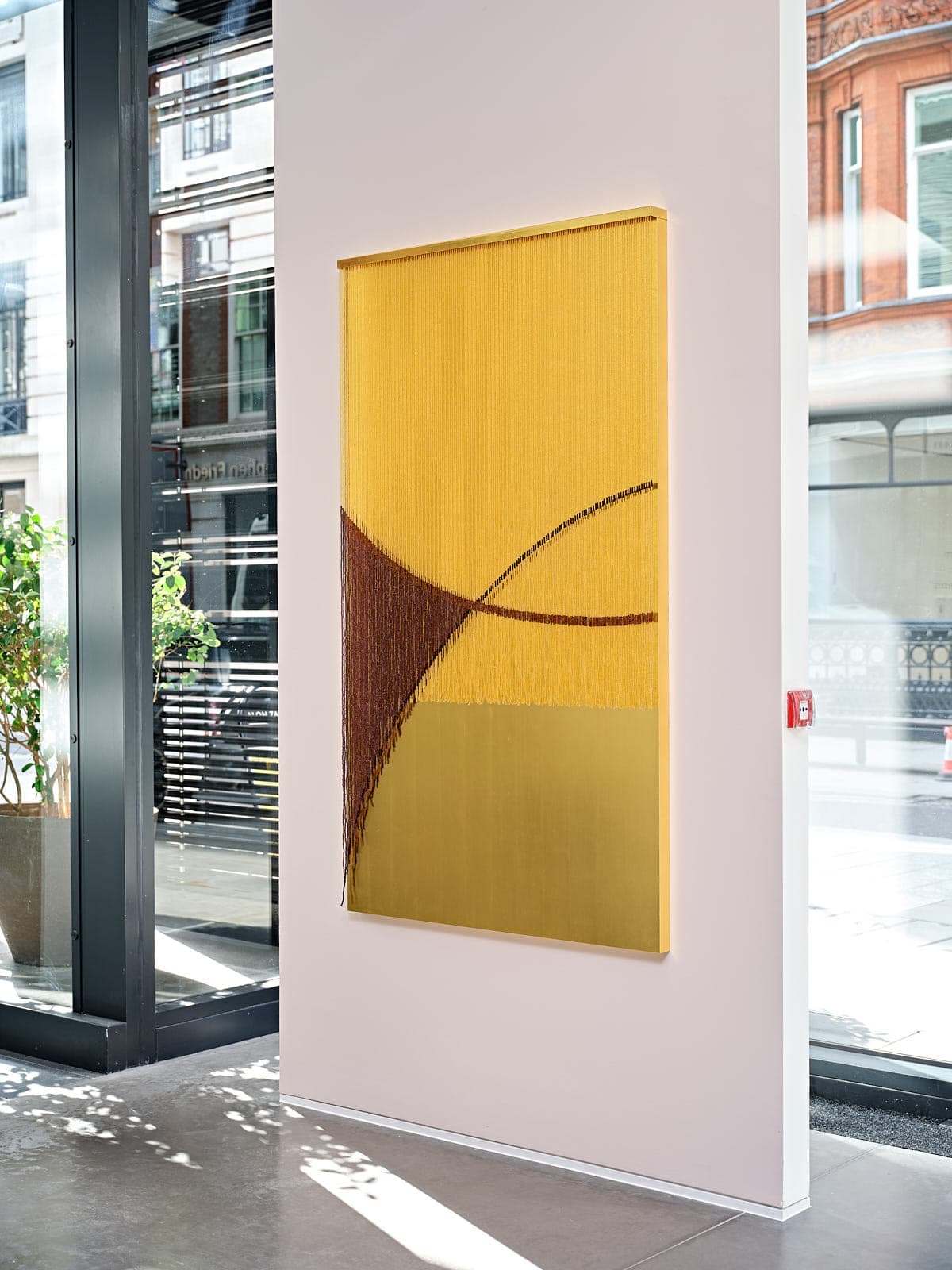
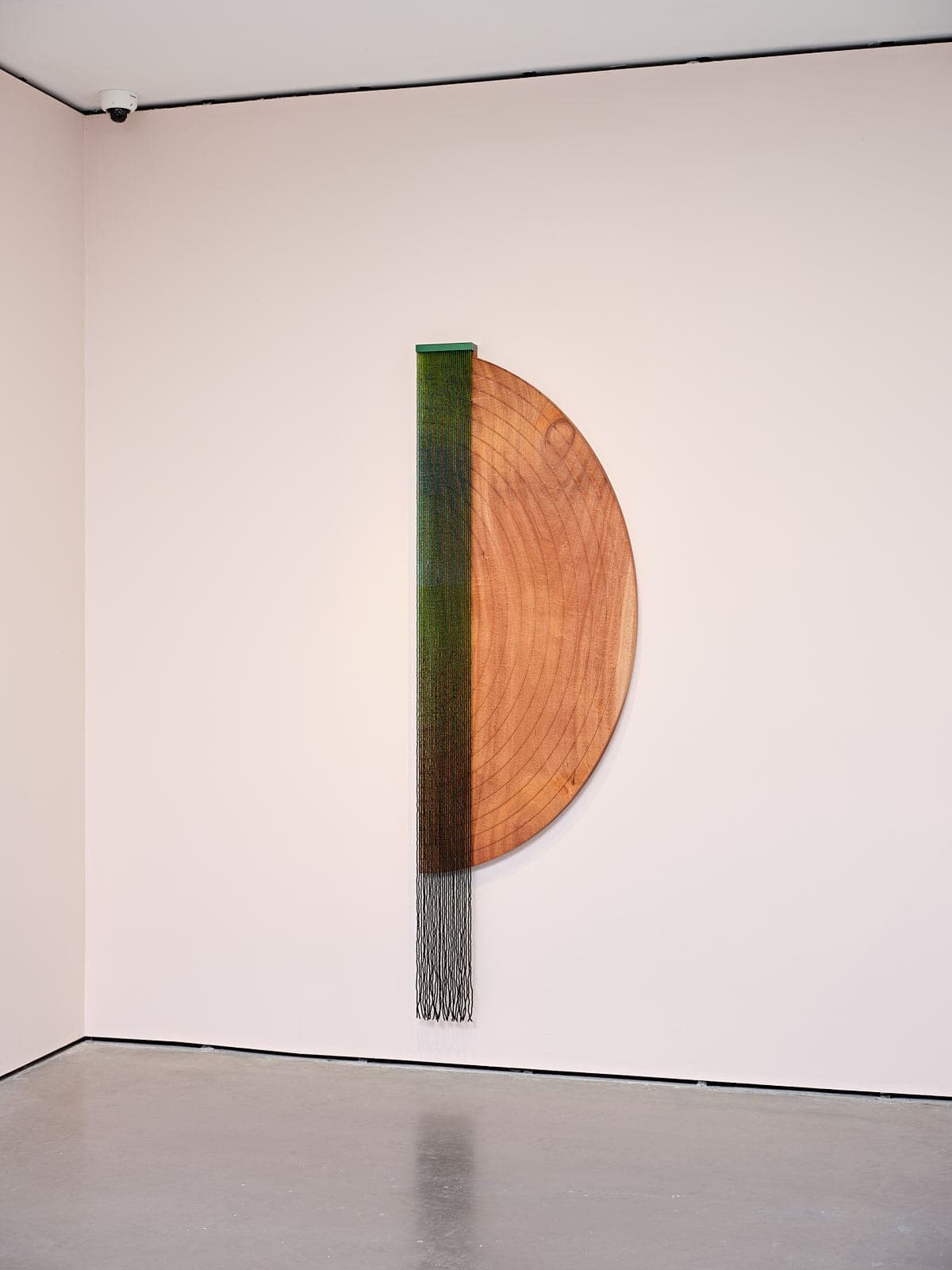
Kapwani Kiwanga’s practice is grounded in deep research, bringing to light suppressed histories and the systemic structures that shape contemporary realities. Canopy belongs to a series of works that explore the elemental processes of world-building—how knowledge, identity, and cosmology are both materially and conceptually constructed.
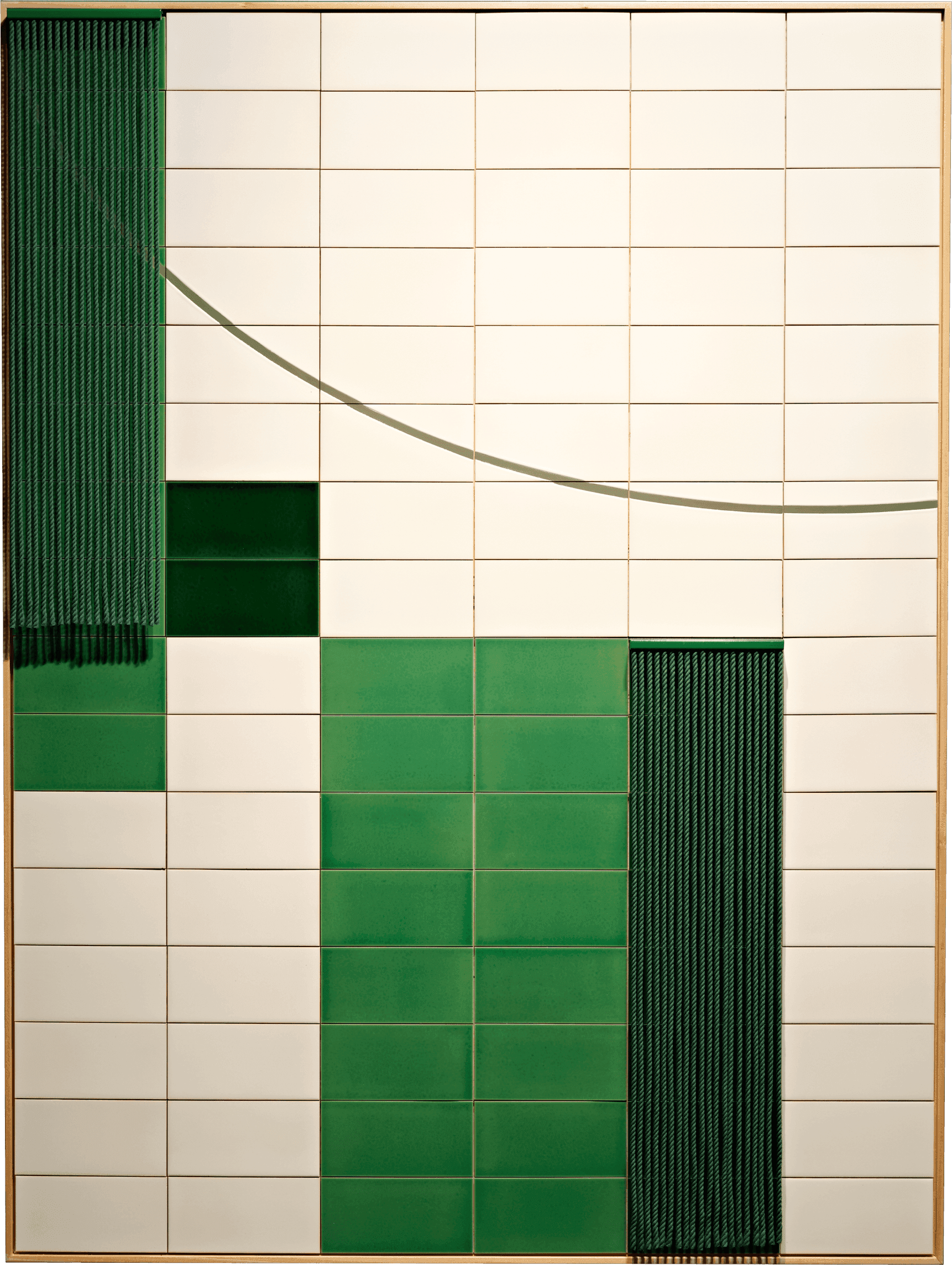
Originally conceived for her first solo exhibition in Portugal at the Serralves Museum, Canopy is composed of handmade Portuguese ceramic tiles arranged in a precise, rhythmic grid. The restrained palette—predominantly white interspersed with varied shades of green—evokes minimalist abstraction while alluding to systems of data visualization, topographic mapping, and architectural planning. A curved line arcs gently across the composition, drawing on the ellipse as a fundamental geometric form and suggesting a meeting point between intersecting fields—visible and invisible, material and immaterial.
Kiwanga incorporates cotton thread, twisted into rope, as a reference to the colonial economy. In maritime Portugal, rope was traditionally made from hemp linen, yet cotton quickly became one of the most coveted commodities in colonial trade. Here, the fibre is transformed through ancestral techniques into a tactile element that speaks to both craft and capital. Cotton was not only central to trade routes and economies of exploitation but also laid the groundwork for the industrial textile revolution in Europe. By embedding this material into her work, Kiwanga points to the entangled histories of extraction, labour, and knowledge transmission.
For Kiwanga, clay is both materially grounded and symbolically charged—a substance that ties humans to the Earth and recurs in creation myths as the source of life itself. In Canopy, the ceramics function as a kind of material witness, holding layers of cultural and geopolitical sediment. The use of Portuguese tiles, in particular, reflects a history of craft, commerce, and empire, anchoring the work in a specific social and economic context while opening it up to broader cosmological inquiry.
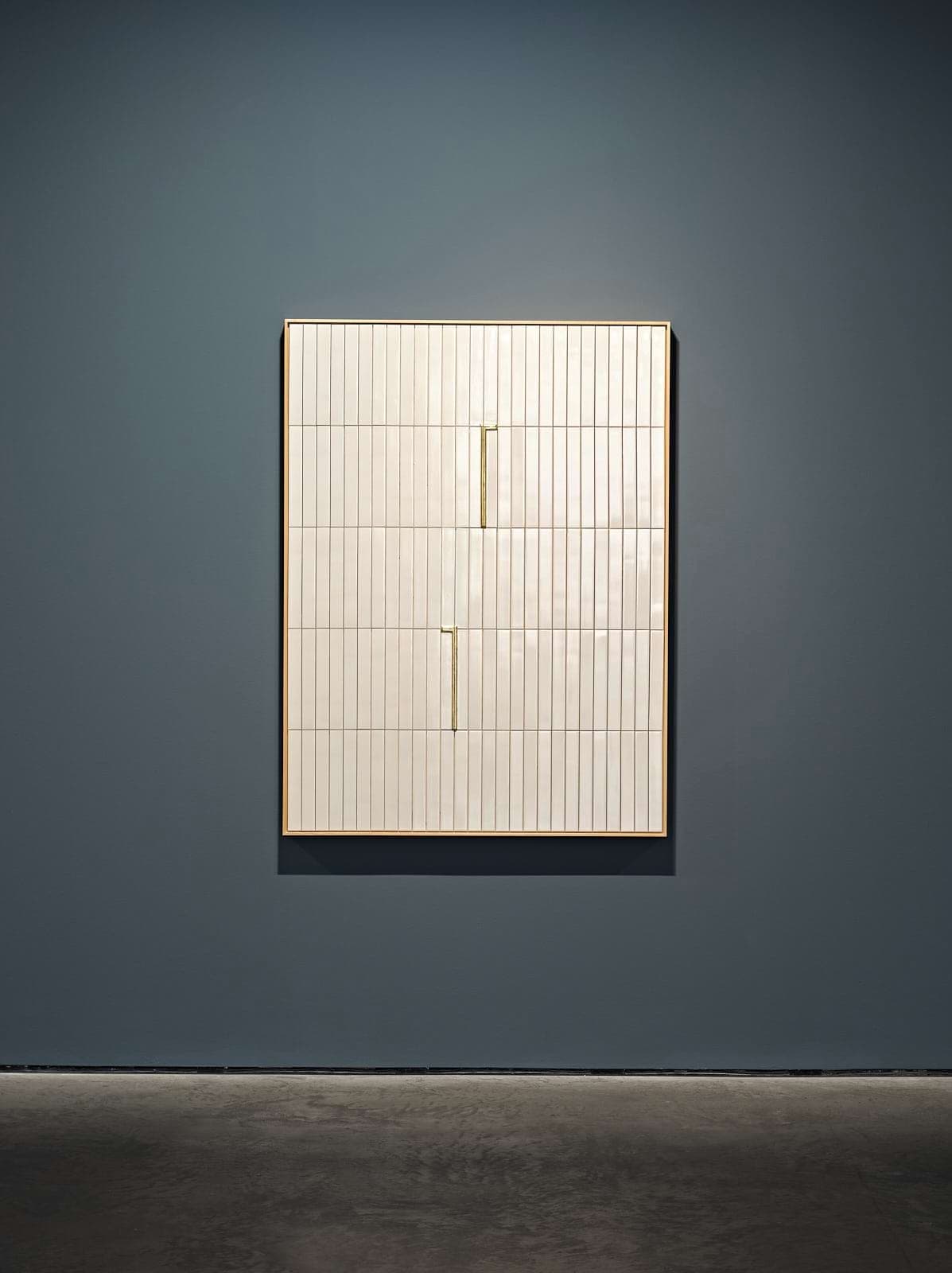
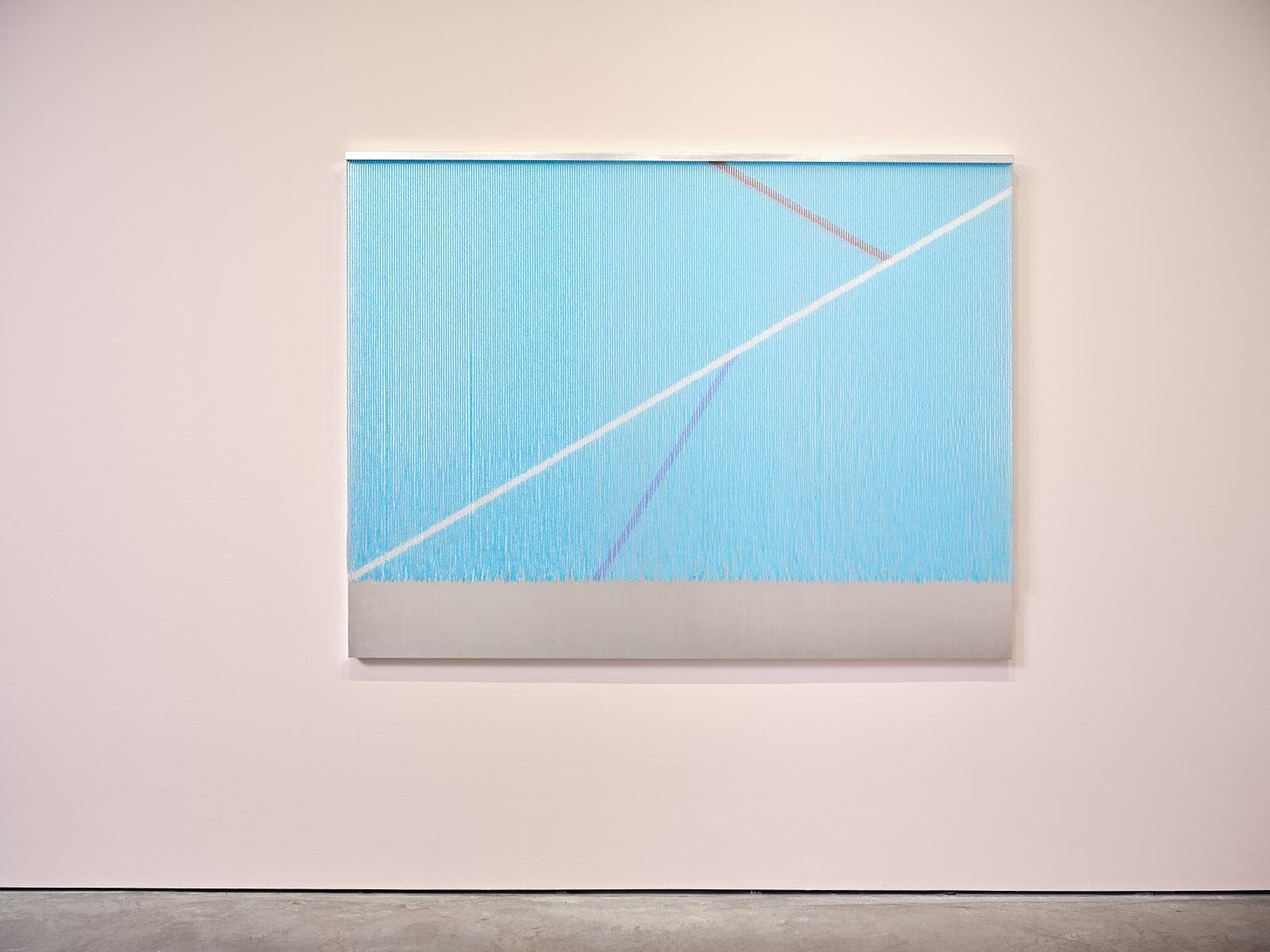
The titles of the series—Magma, Rift, Cascade, Dune, Canopy, Astres—evoke geological, ecological, and celestial forces. They gesture toward imagined cosmogonies and shifting worldviews, suggesting that the construction of reality is as much an aesthetic and symbolic act as it is a political one. Through the interplay of glaze, thread, rope, and earth, Kiwanga invites viewers to consider alternative narratives—those inscribed in materials, in bodies, and in the very ground beneath our feet.
Video
Video
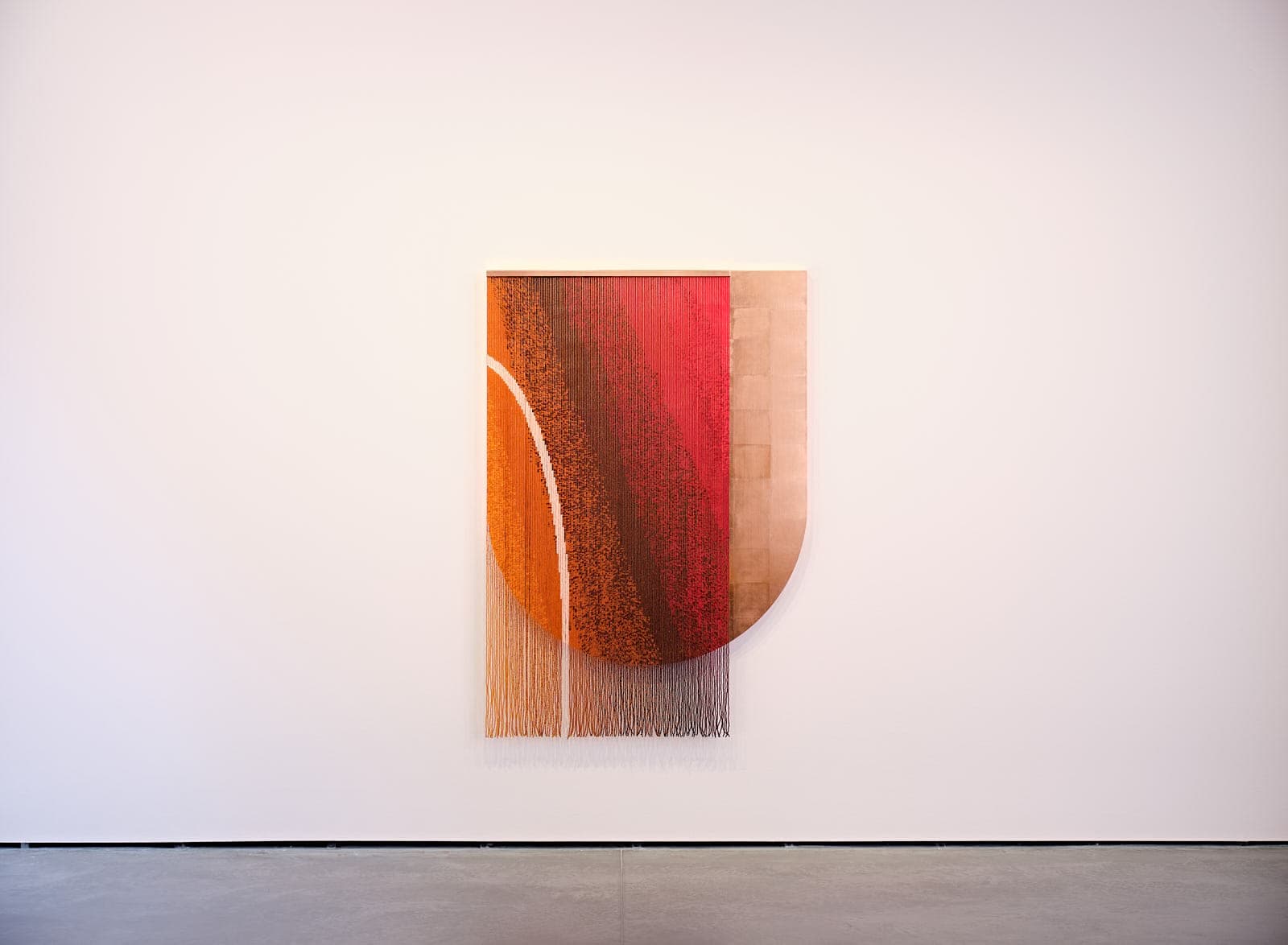
Kapwani Kiwanga’s beaded textile 'A Coincidence of Wants: Copper-Reds' is composed of tiny glass beads, a resonant trade material first introduced in the artist’s acclaimed installation for the Canada Pavilion at the 2024 Venice Biennale.
Developed by Venetian traders and historically circulated as currency and instruments of colonial exchange, glass beads are a core material within Kiwanga’s expansive practice, which she uses to draw attention to the enduring legacies of transoceanic trade networks.
This work’s geometric structure and copper-red palette reflect Kiwanga’s distinctive use of minimalist abstraction across sculpture, installation and painting, including her monumental Studio Museum commission BLEED.
Recent awards include the Marcel Duchamp Prize (2020), Zurich Art Prize (2022) and Joan Miró Prize (2025), a major international award for an artist at a breakthrough stage in their career.
Current/forthcoming exhibitions: Changing States, Fundació Joan Miró, Barcelona (until 13 September 2026); BLEED, site-specific installation, Studio Museum in Harlem, New York (until 1 April 2027).