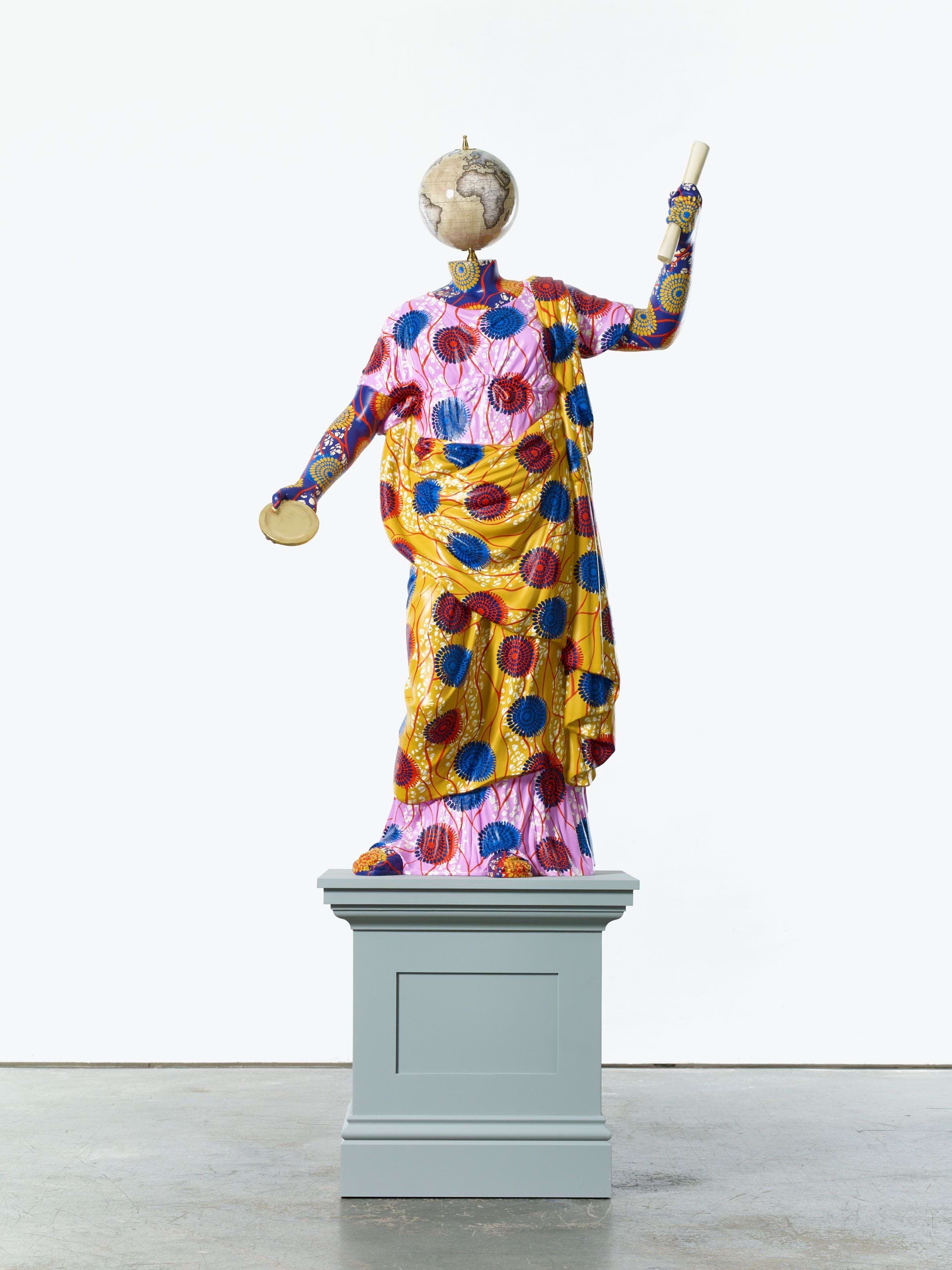
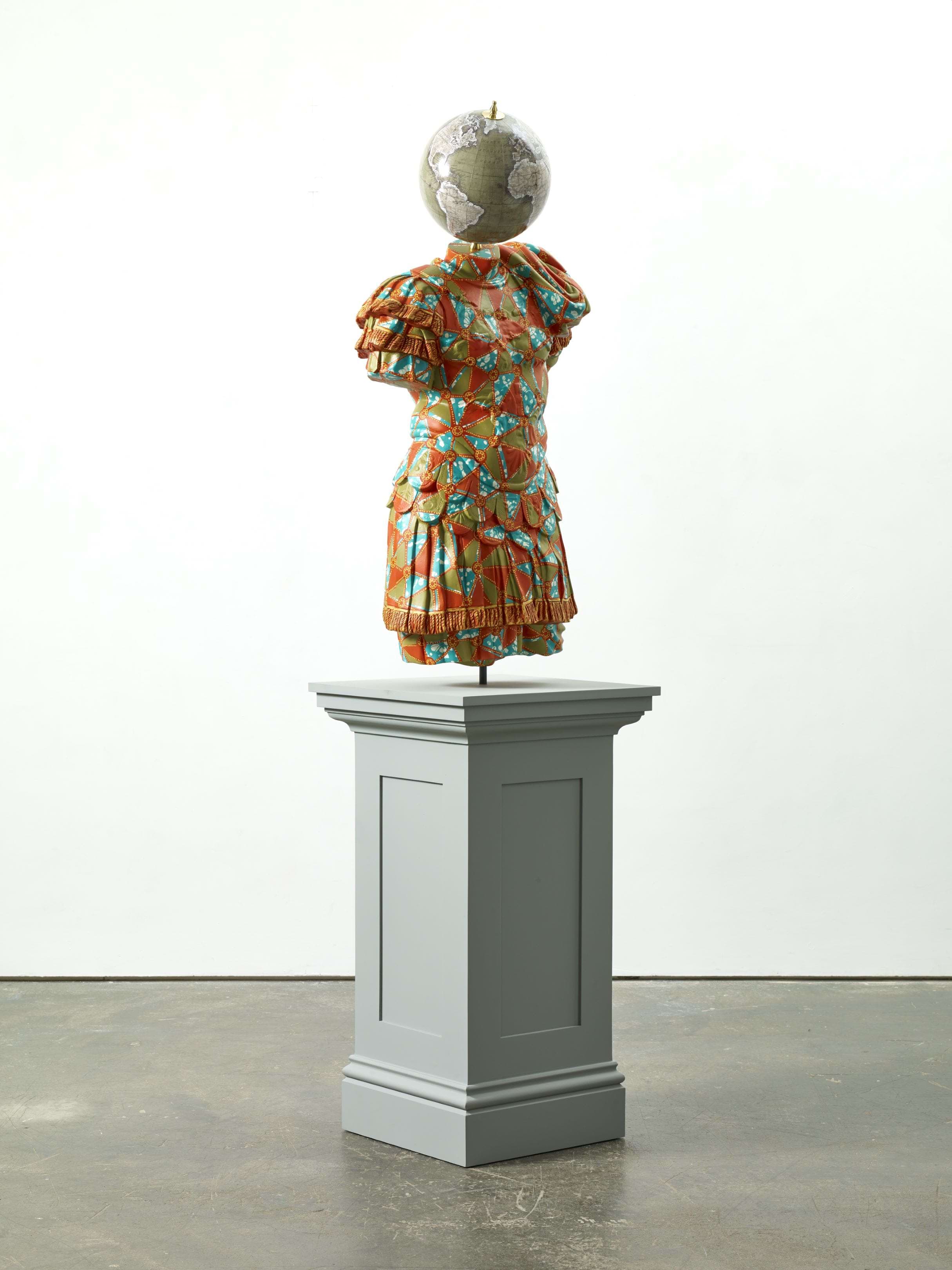
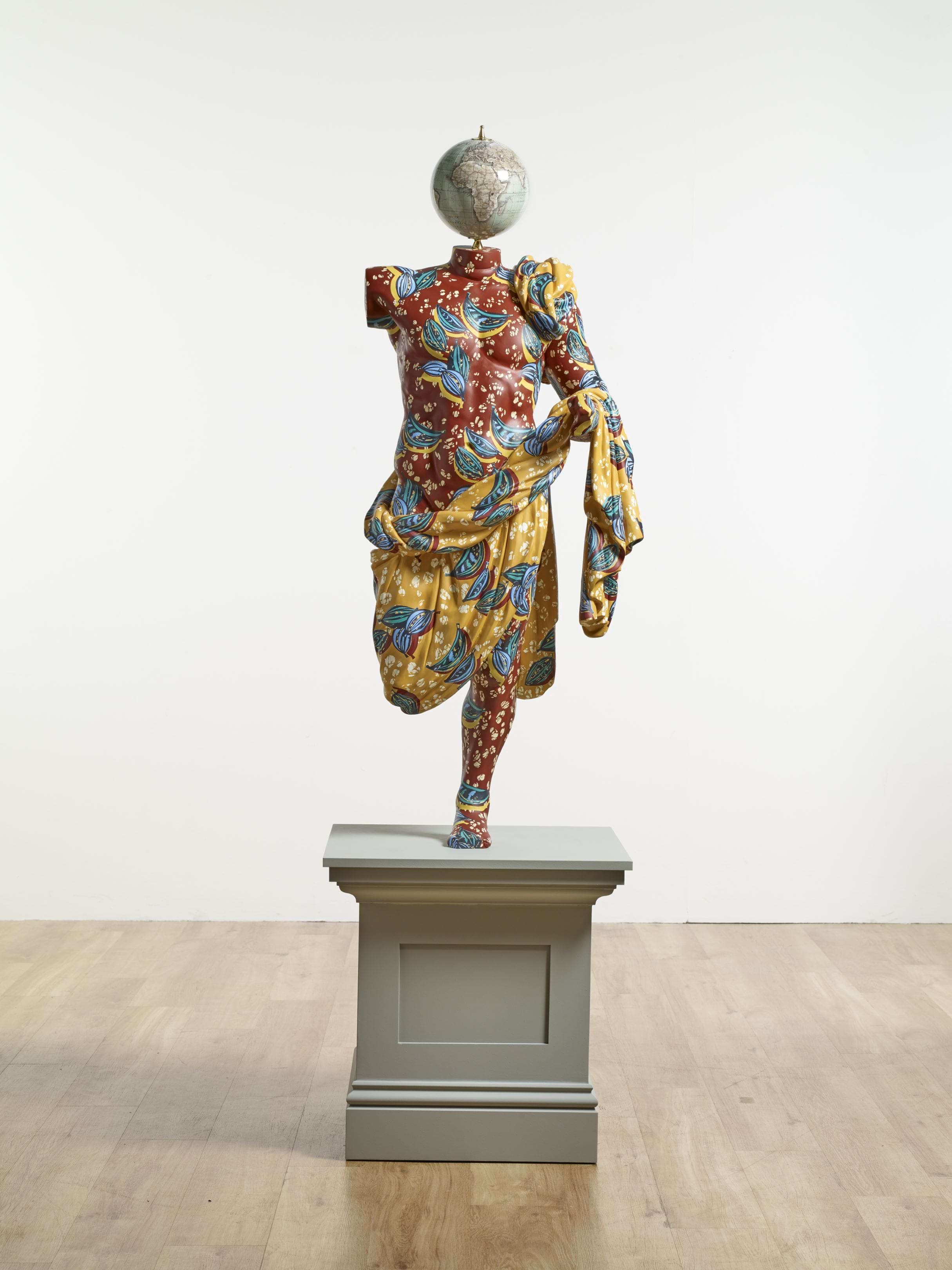
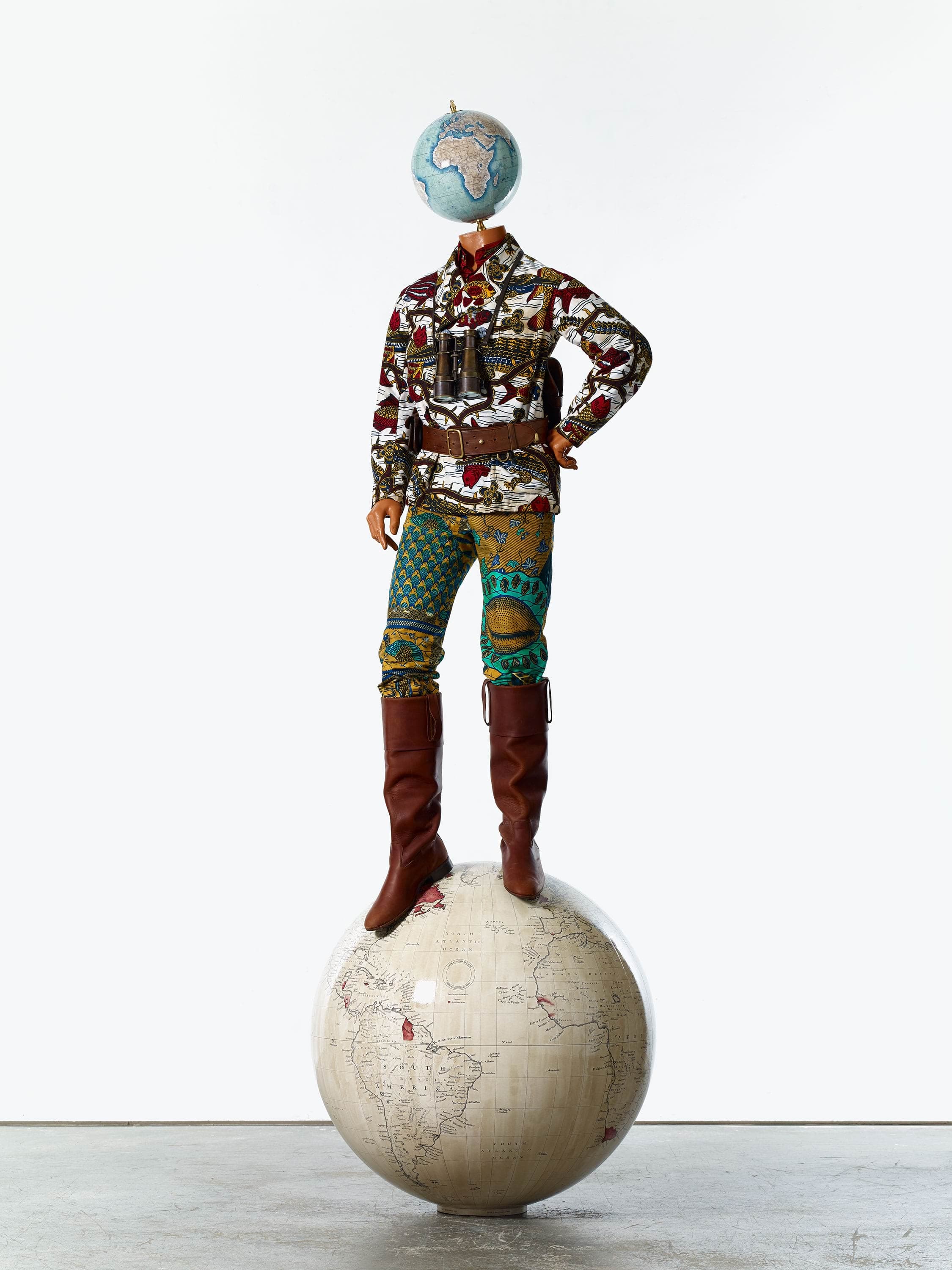

Through beguiling sculptures, Yinka Shonibare CBE sparks a state of charged curiosity in considering narratives of power and reinvention in relation to the rise and fall of western empires and the struggles for African Independence. Embellished in Dutch wax Batik / ‘African’ textiles, Shonibare transforms the classical white marble bodies of historical symbols associated with the Roman and British Empires into colourful sculptures; placing the pattern directly onto the skin. In so doing, Shonibare clashes the ideological implications of the textile with classical sculpture.
Can the power of collusion and hybridisation create a third ideal that transcends prejudice? This exploration of hyphenated or ‘mongrelised’ selves prompts ways for expanding dialogues on cultural ‘appropriation’, teasing out possibilities for re-imagining modern African identities that complicate essentialist constructs of race and nationality, as well as movement of the pattern-adorned body and its connotations of sexuality, masculinity, athleticism and the ideal body.
The General of Tivoli is a recent work that sees the transformation of the once decorated, in the glory of the Roman Empire and the British Empire, interrogating a narrative of power, death and reinvention. The ruins of the General of Tivoli is embellished in “African” Batik patterns transforming it from the white marble classical body into a colourful classical sculpture. It is the decoration of power in the wrong colours. Some might say the right colours, as the original classical sculptures would have been painted in bright colours. Can the transformation and the hybridisation of icons of power be the solution to breaking down absolute binaries required by dictatorship and prejudice? Can the power of collusion and hybridisation create a third ideal which transcends prejudice?
Video
'The African Library' is a commemoration to those who played a significant role in the African independence movements. The installation consists of thousands of books covered in the artist’s signature Dutch wax fabrics, with the names of notable figures from the continent’s past and present printed on the book spines. Highlighted are those who supported and fought for independence whilst other books bear the names of preeminent Africans who have helped shape the continent’s modern identity since self-rule. These names include the heads of state, both good and bad, and the names of Africans both on the continent and from the diaspora, who have made consequential contributions to aspects of African life.
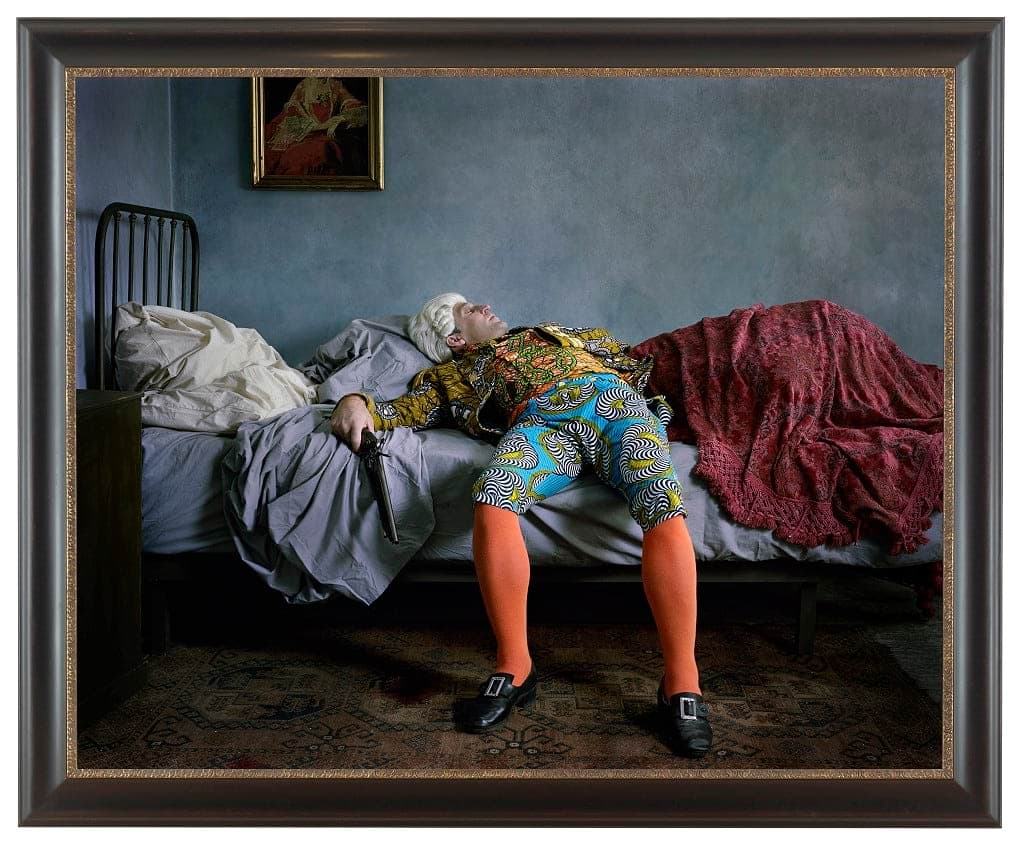
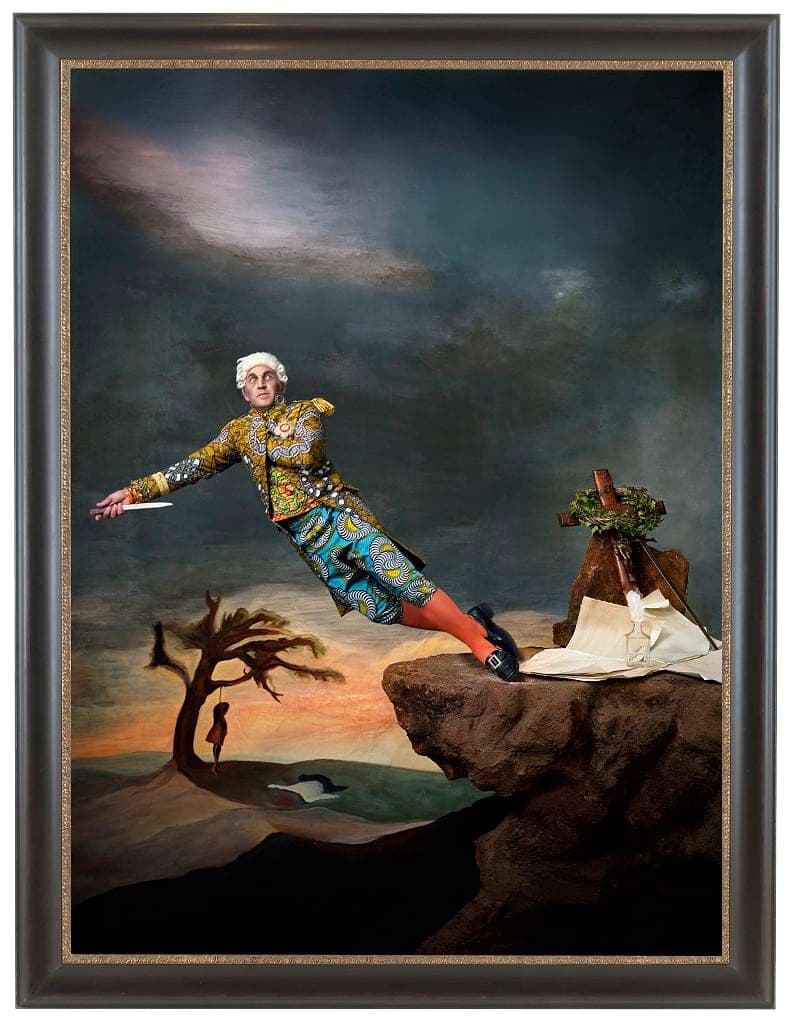
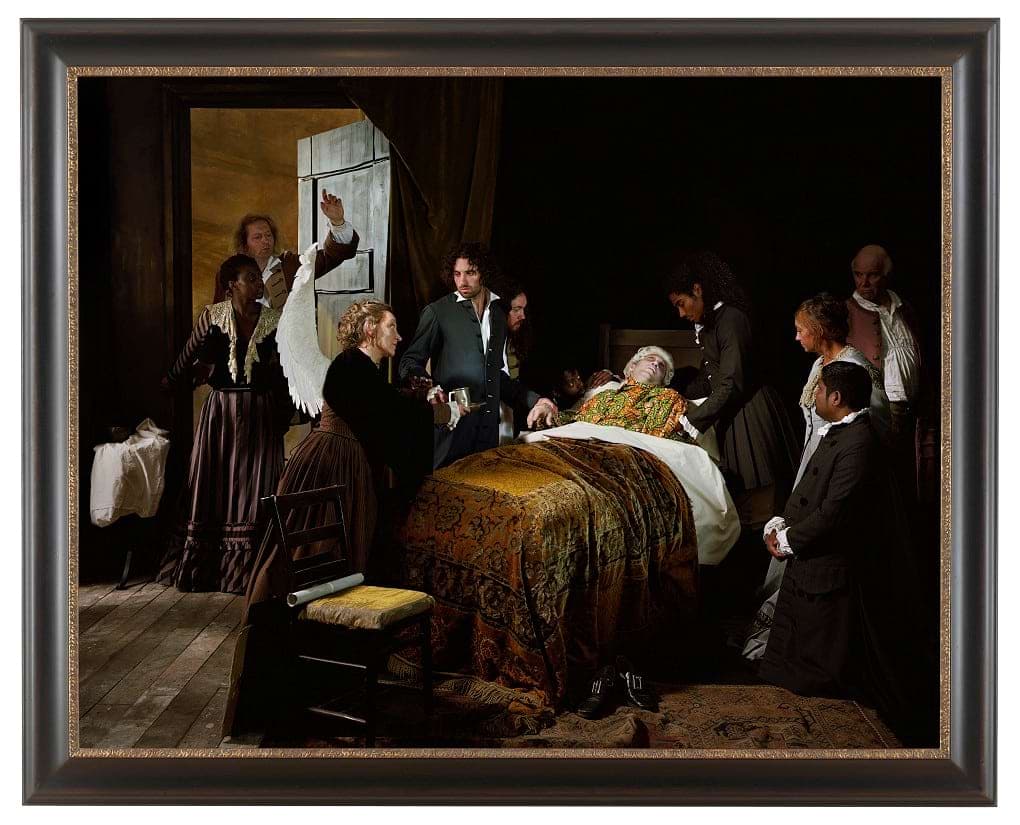
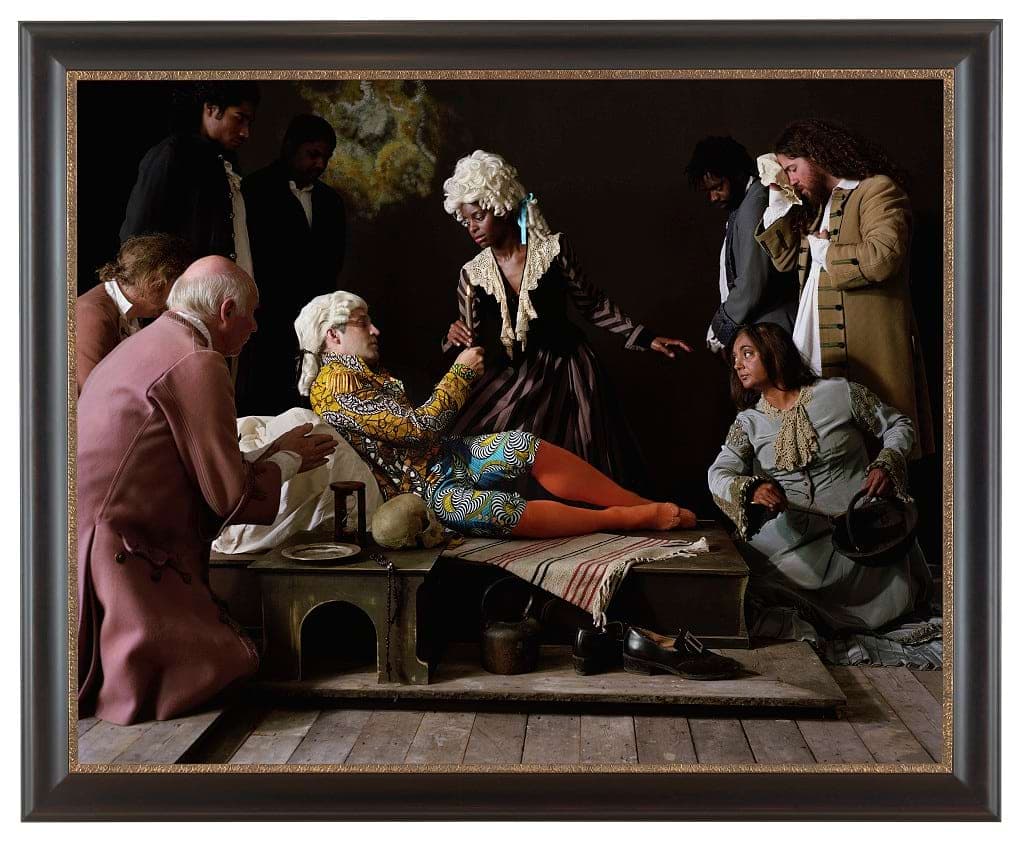
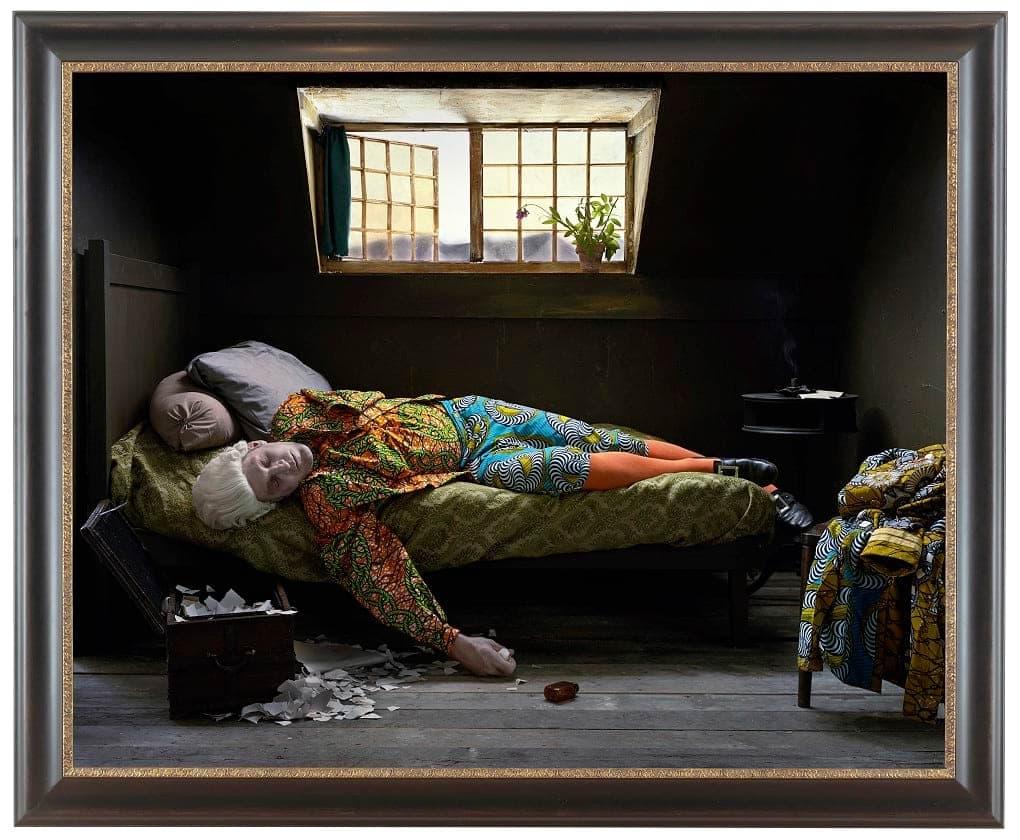
In a series of photographic works, entitled Fake Death Pictures, Yinka Shonibare MBE stages and photographs five tableaux, which he refers to as “a re-enactment of suicide through the history of death in Painting.” The central figure in all of these works, a stand-in for Lord Nelson, is dressed the same throughout the series of photographs. While the reference paintings for the artist span a vast range of time from c.1593-1877, the majority of these paintings date from the 19th century. In the work Fake Death Picture (The Suicide - Manet ) the incongruity of the dress and time period is striking, multiple aspects of the re-interpretation of this impressionist work have been choreographed to convey different messages. In this body of work Shonibare literally and metaphorically re-colors scenes from history. By beginning within the western-centric art historical framework that often portrays scenes of elite privilege and inserting strongly symbolic textiles and actors of colour into the equation, the racial and class codes are variously subverted obscured. This subversion of codes asks the viewer to question the meanings and history that these context-specific images reference.
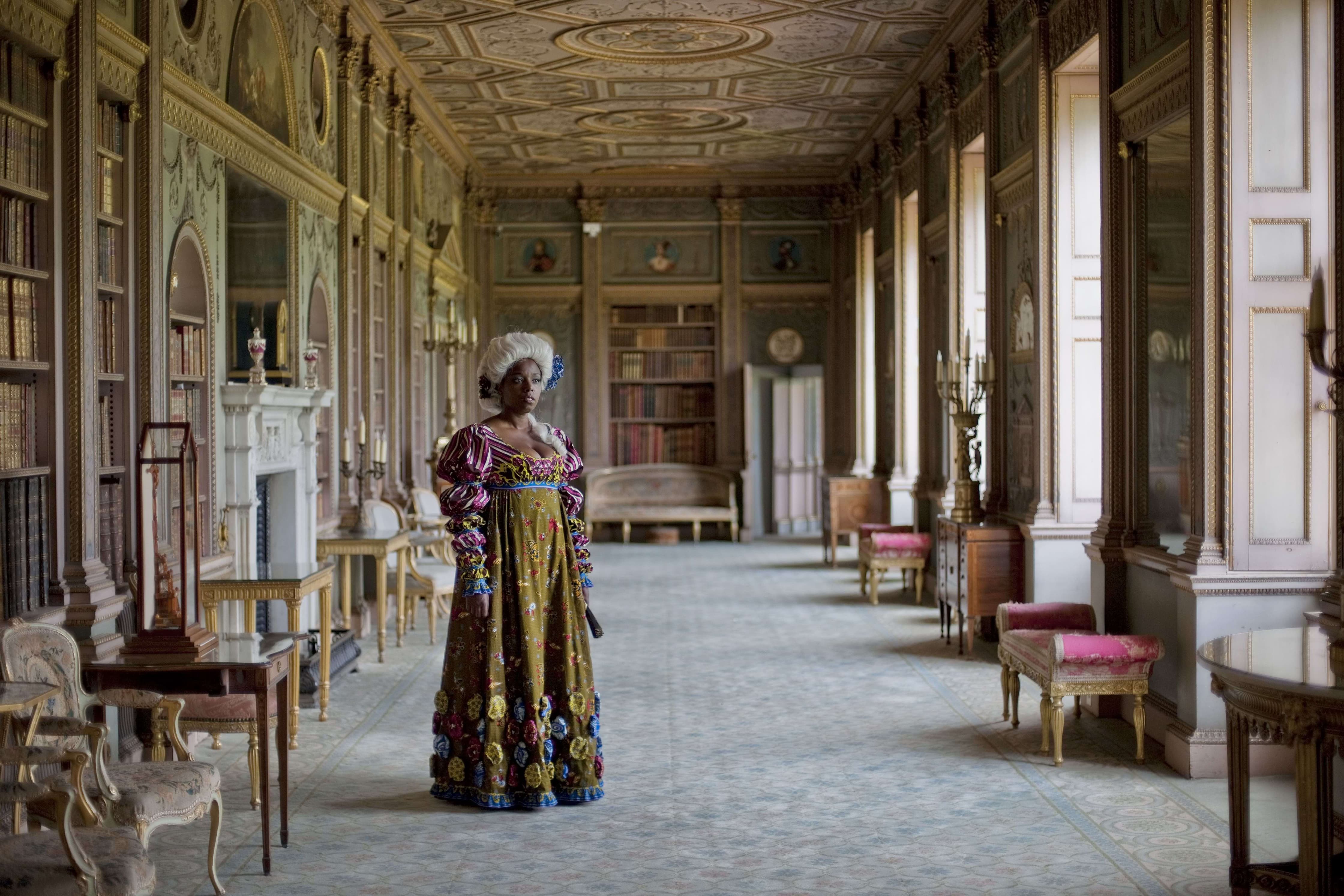
The film Addio Del Passato (“so closes my sad story”), 2011, in which the character of Frances Nisbet, Lord Nelson’s estranged wife, sings the eponymous aria from the last act of Verdi’s opera La Traviata. Shonibare finds a parallel in the story of Nelson’s betrayal of his wife and his passionate love affair with Lady Hamilton, to the feelings of loss and yearning as expressed by the opera’s heroine Violetta on the eve of her death.
In the film Addio Del Passato, 2011, (“so closes my sad story”), a black female opera singer has been ‘blind cast’ to play the character of Frances Nisbet, Lord Nelson’s estranged wife. Throughout the film, she sings the eponymous aria, the heroine Violetta’s death lament, from Verdi’s opera La Traviata (1853). Her lament is repeated three times with subtle variations in staging, and is periodically intercut by watery images of Nelson with his consort, Lady Hamilton.