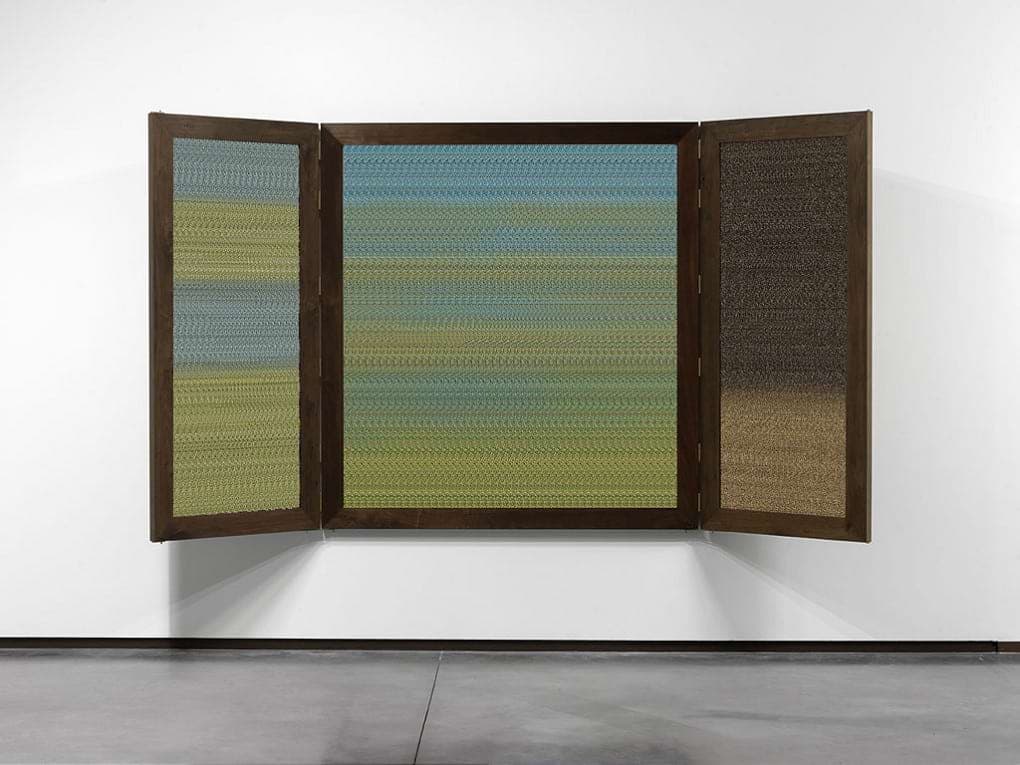
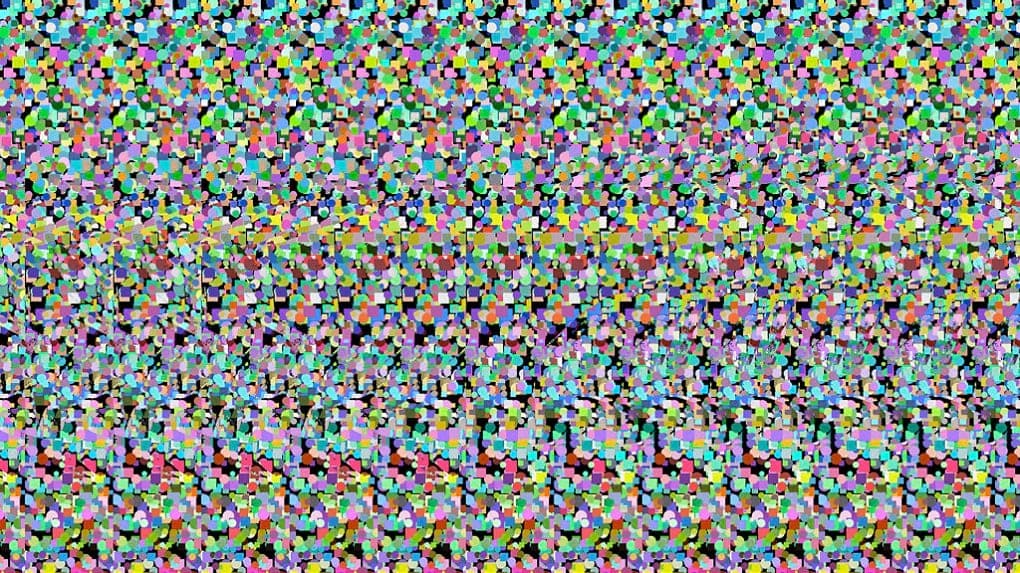
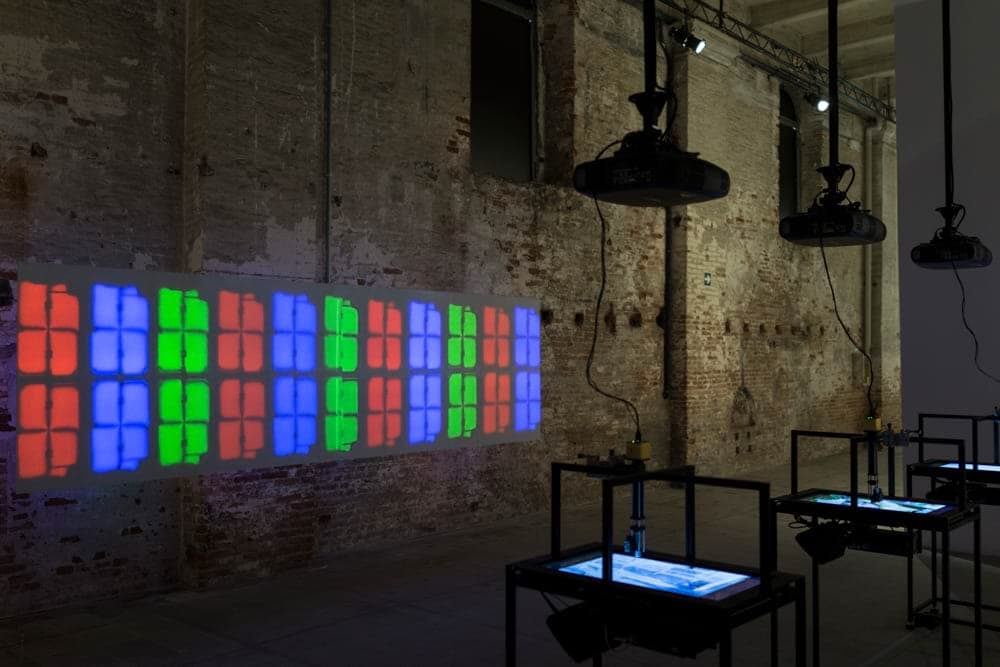
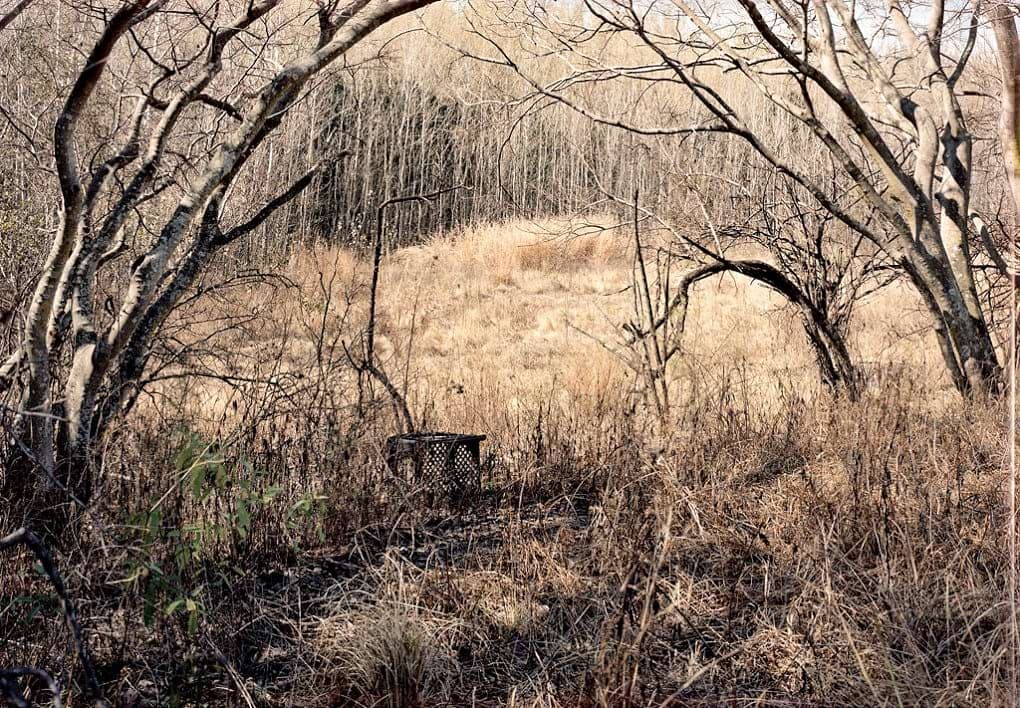
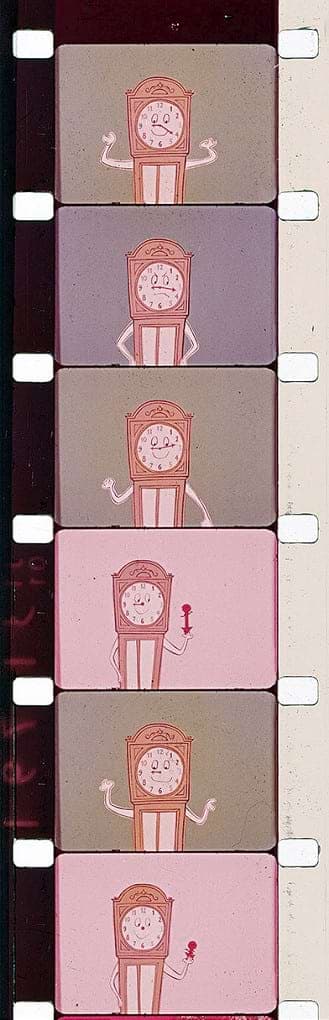
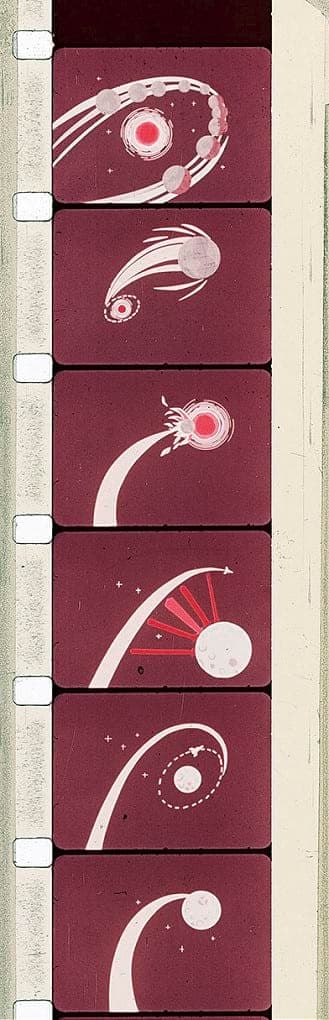
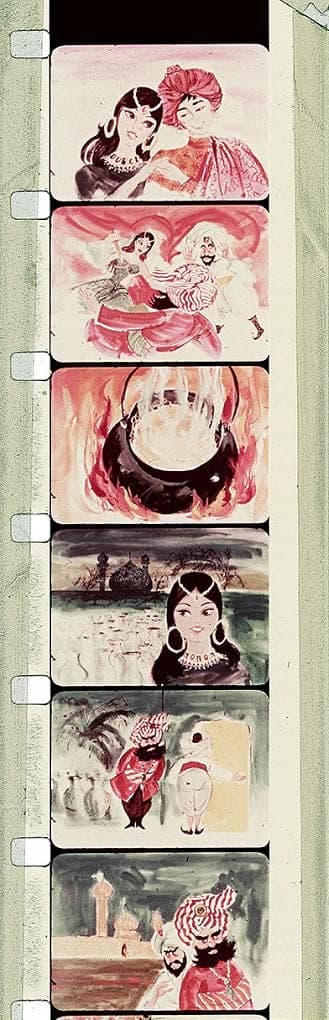
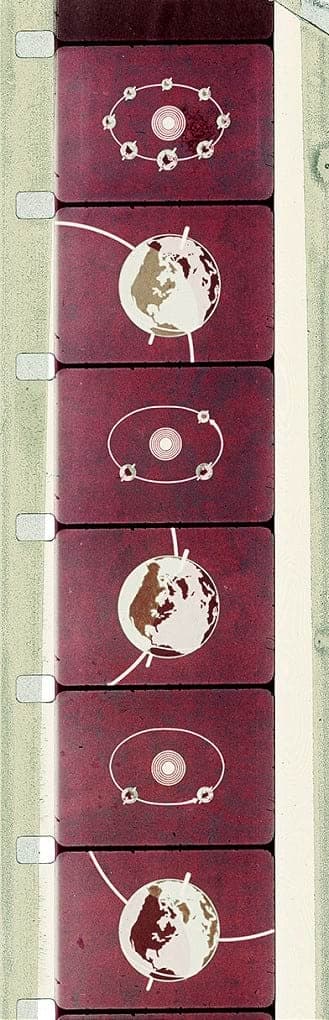
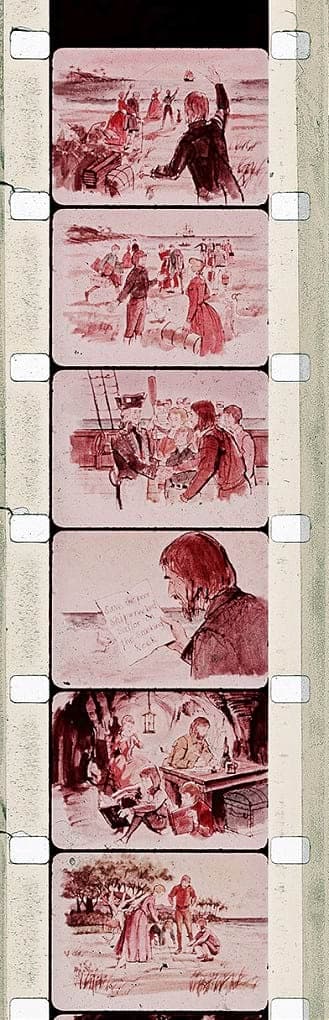
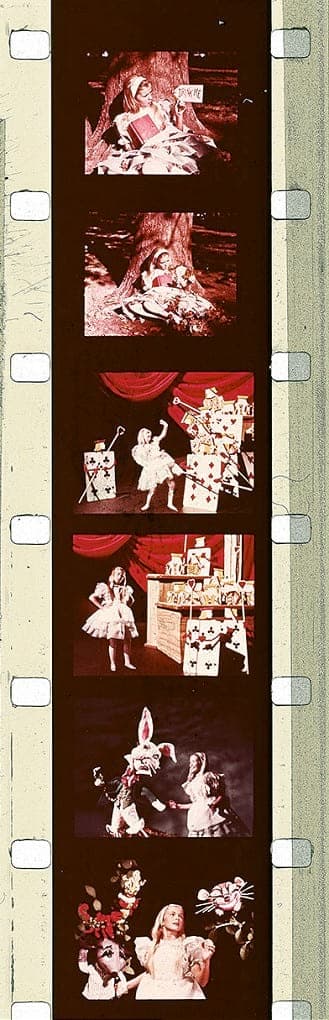
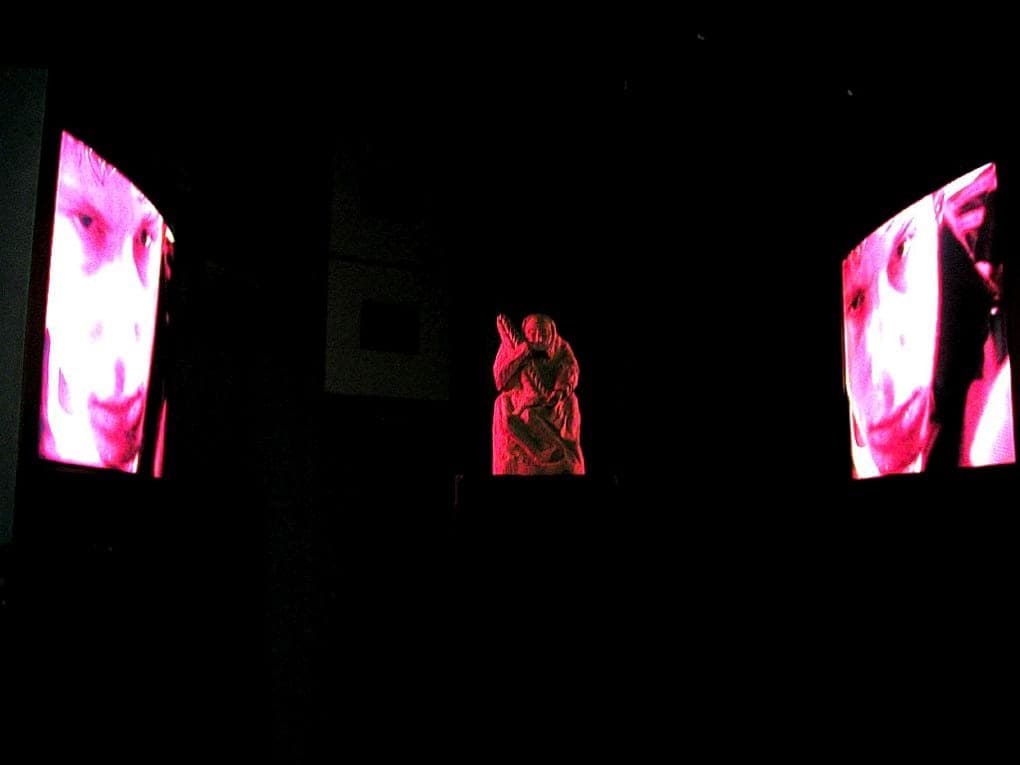
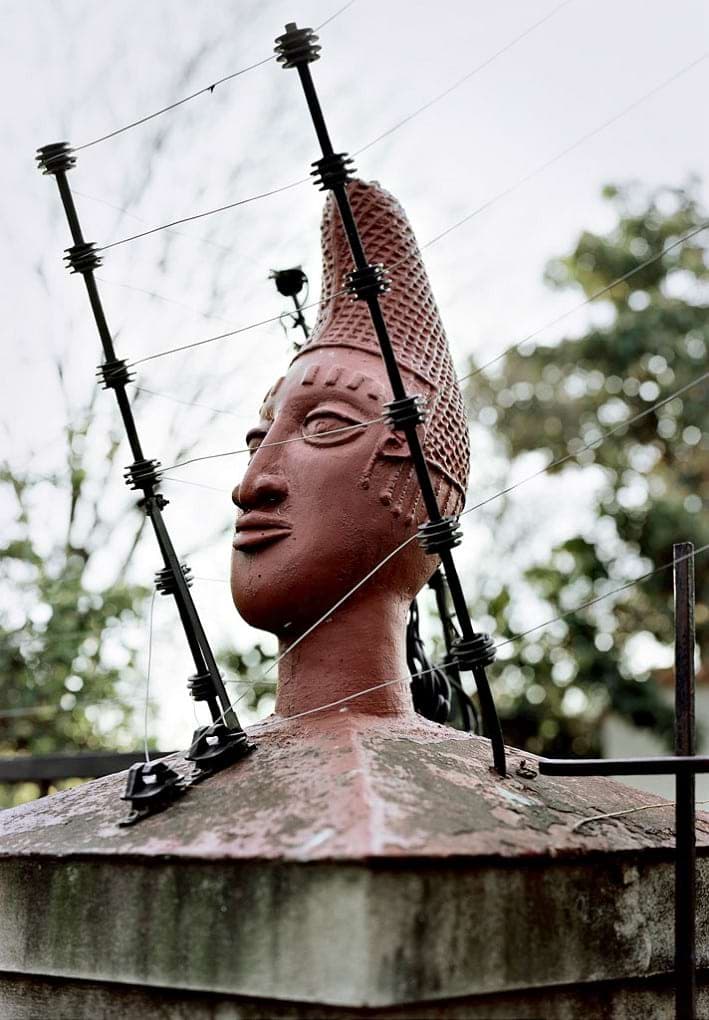
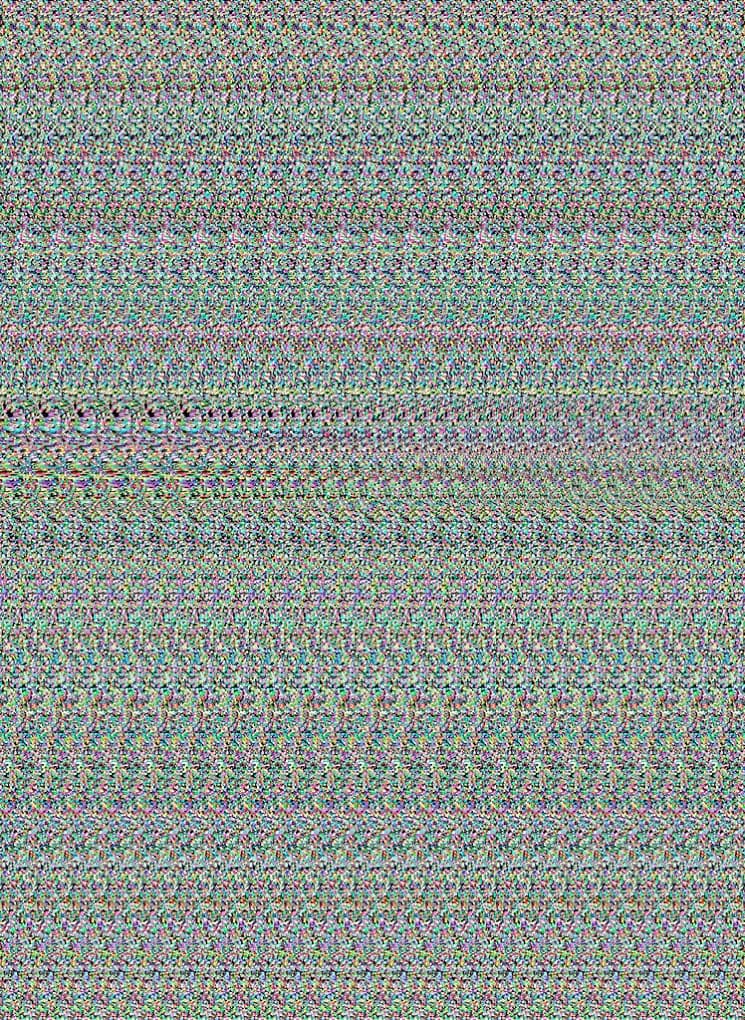
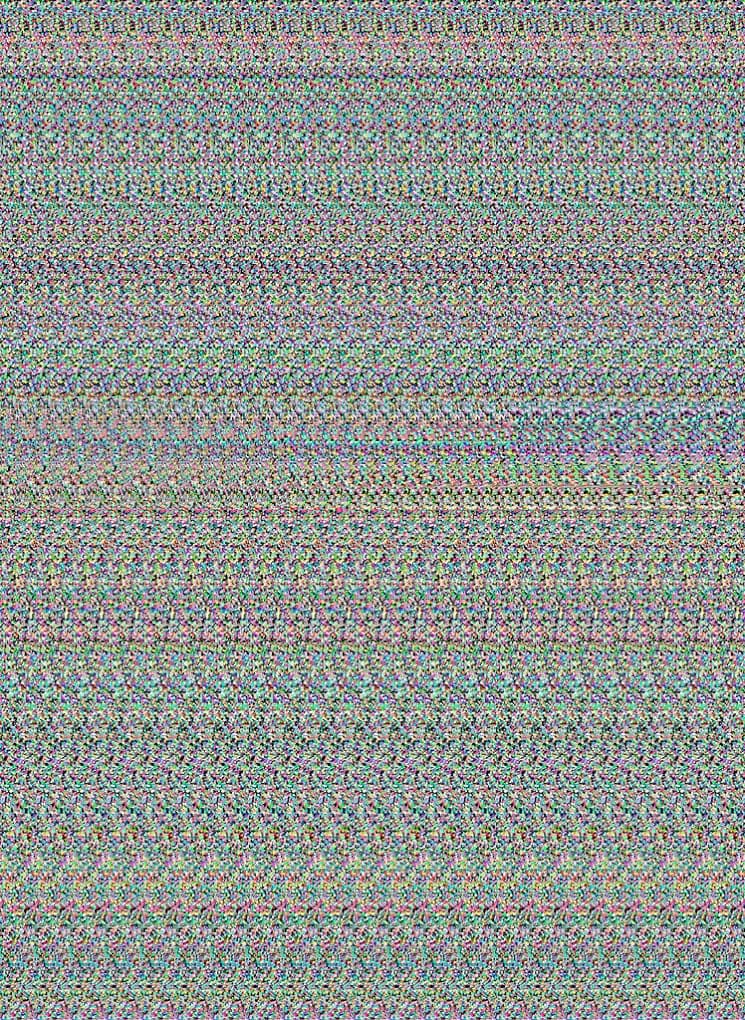
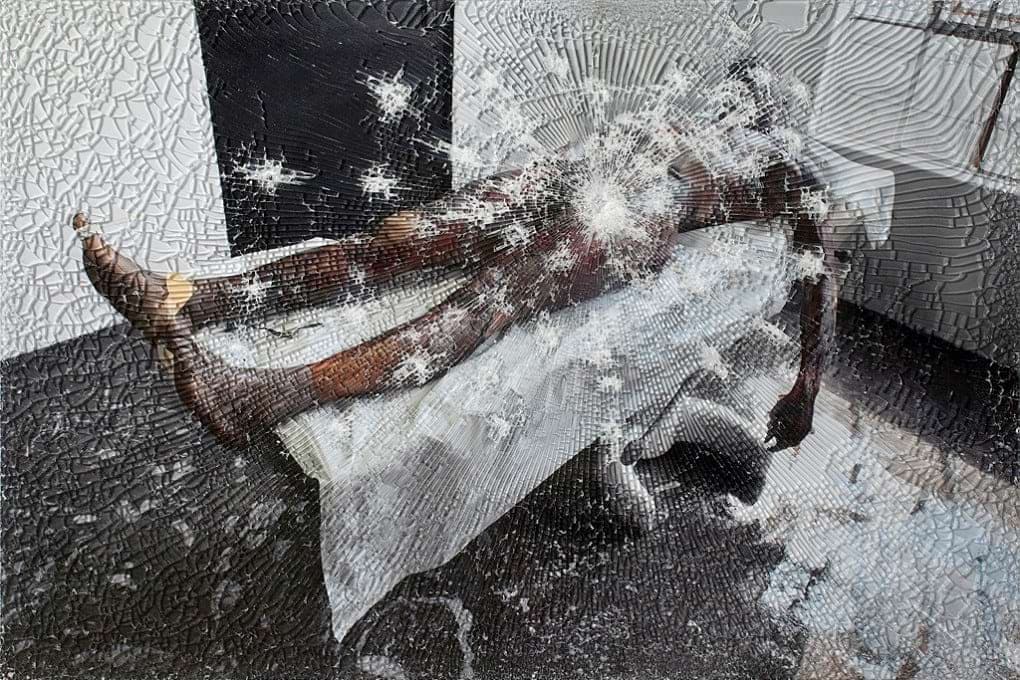
Pixel Interface magnifies and combines a single line of pixels from three video plinths, each playing a different source:
(a) documentation of the 1967 Hubel and Wiesel neuroscience experiment that first mapped how individual neurons in the eye respond to the direction of movement;
(b) a downloaded animation censored by accumulating white lines that progressively obscure the instruments of violence shown; and
(C) a reworked version of Subotzky's own earlier stop-motion piece Don't Even Think of It (2012), similarly censored until its visual and narrative coherence dissolves.
Custom-built microscopes on each plinth feed into HD cameras and projectors, throwing the three magnified pixel streams onto a single rear-projection screen with a 33% overlap, so that red, green and blue mix in real time to produce shifting, flickering fields of colour. The effect is close to stained glass.
The work is in part a tribute to Paul Sharitz's Shutter Interface (1975)and poses questions as to whether abstraction can adequately represent violence, or whether reducing it to pure colour and flicker only deepens the problem of complicity between the image maker and what the image contains.
Included in All the World's Futures, the 56th Venice Biennale (2015), curated by Okwui Enwezor.
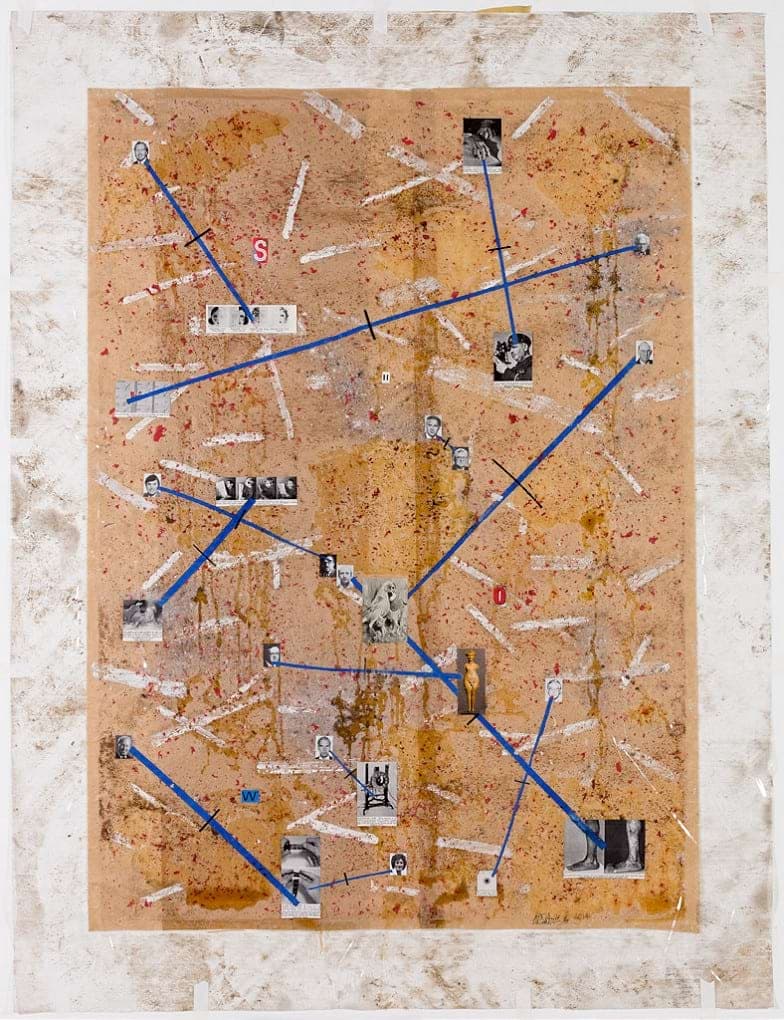
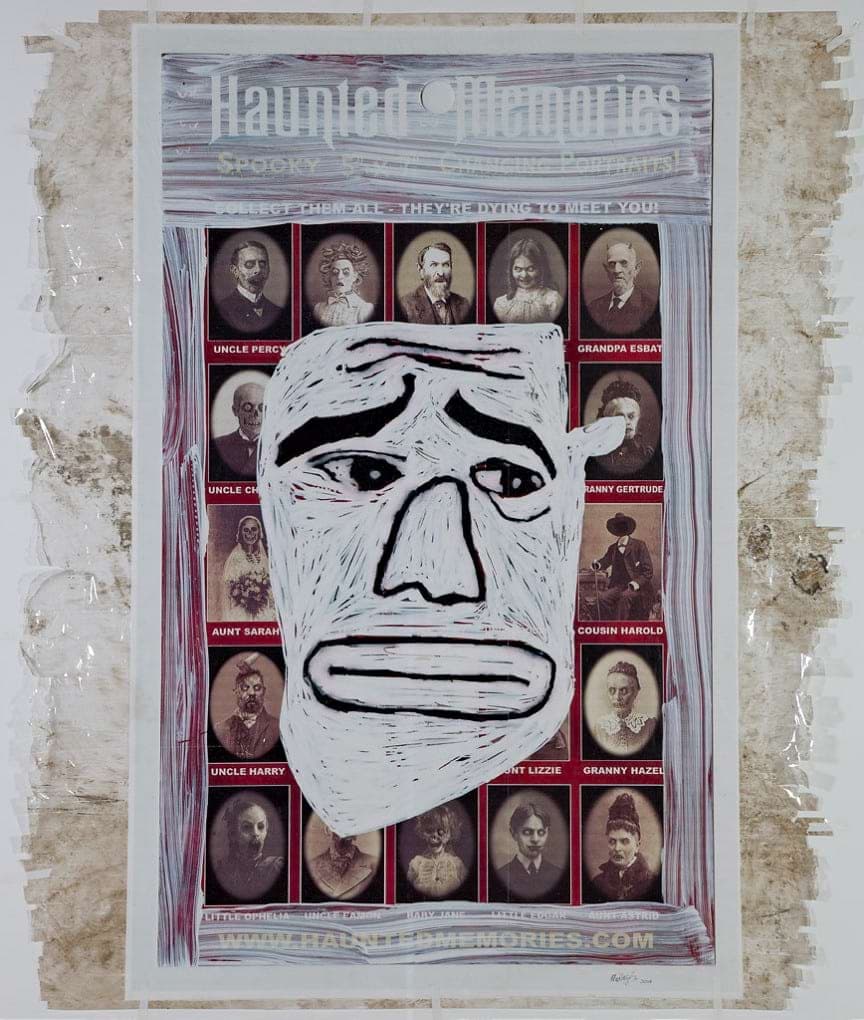
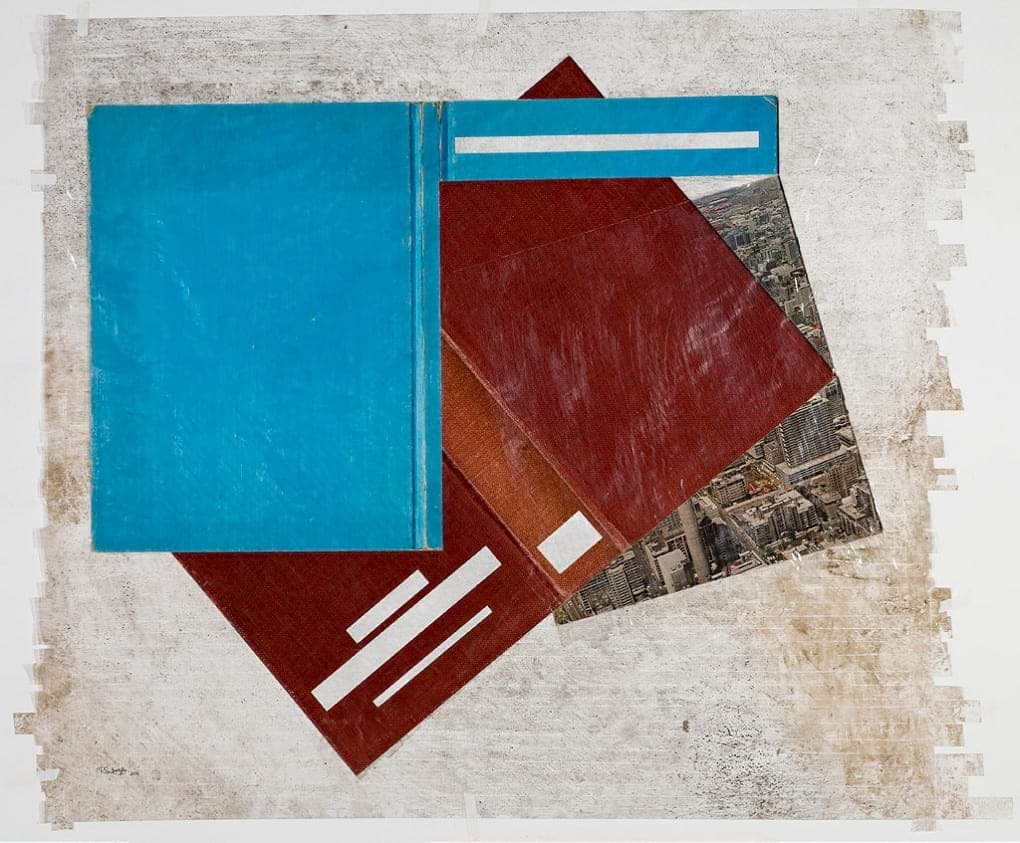
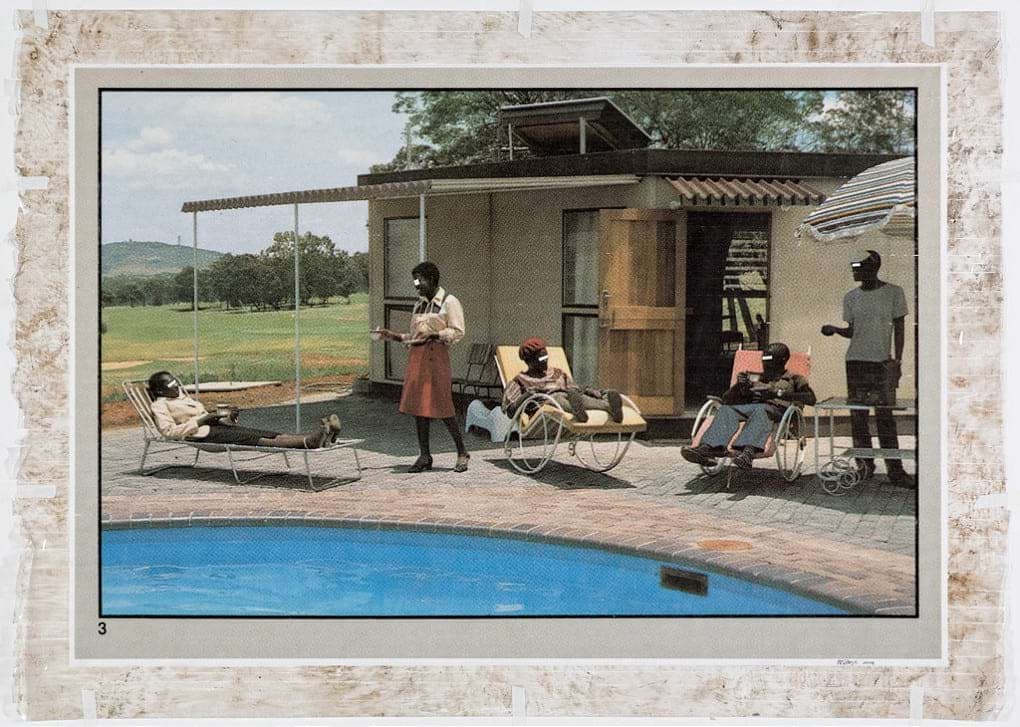
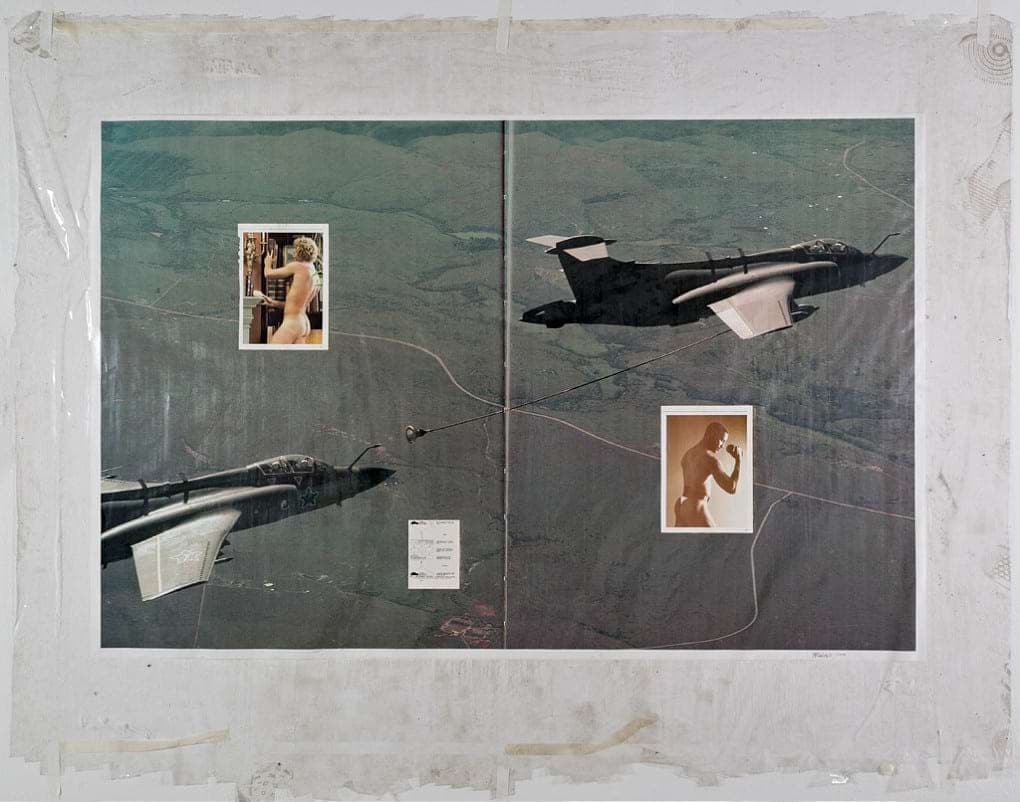
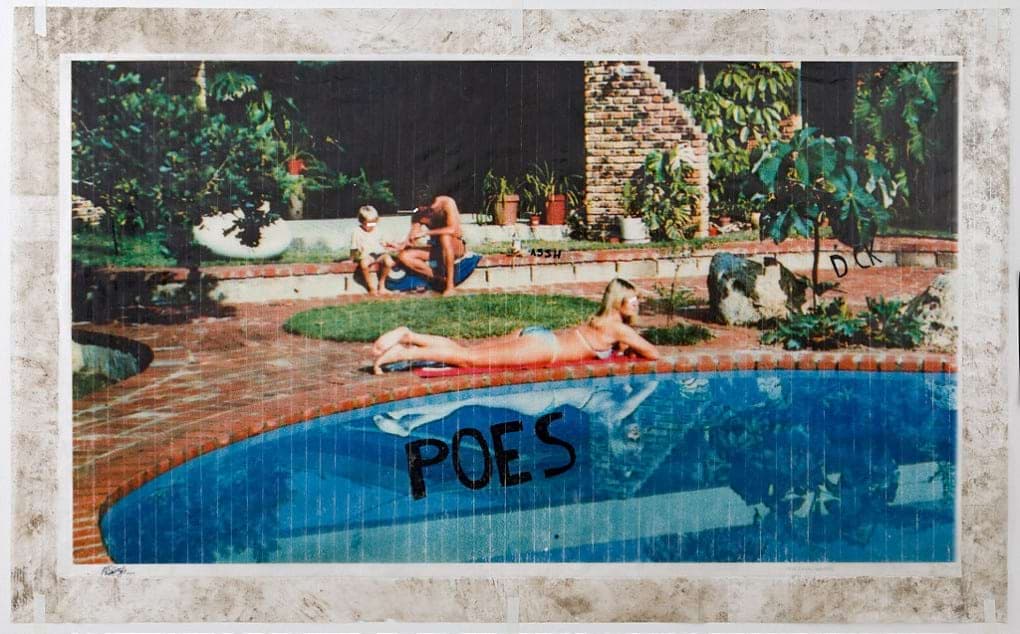
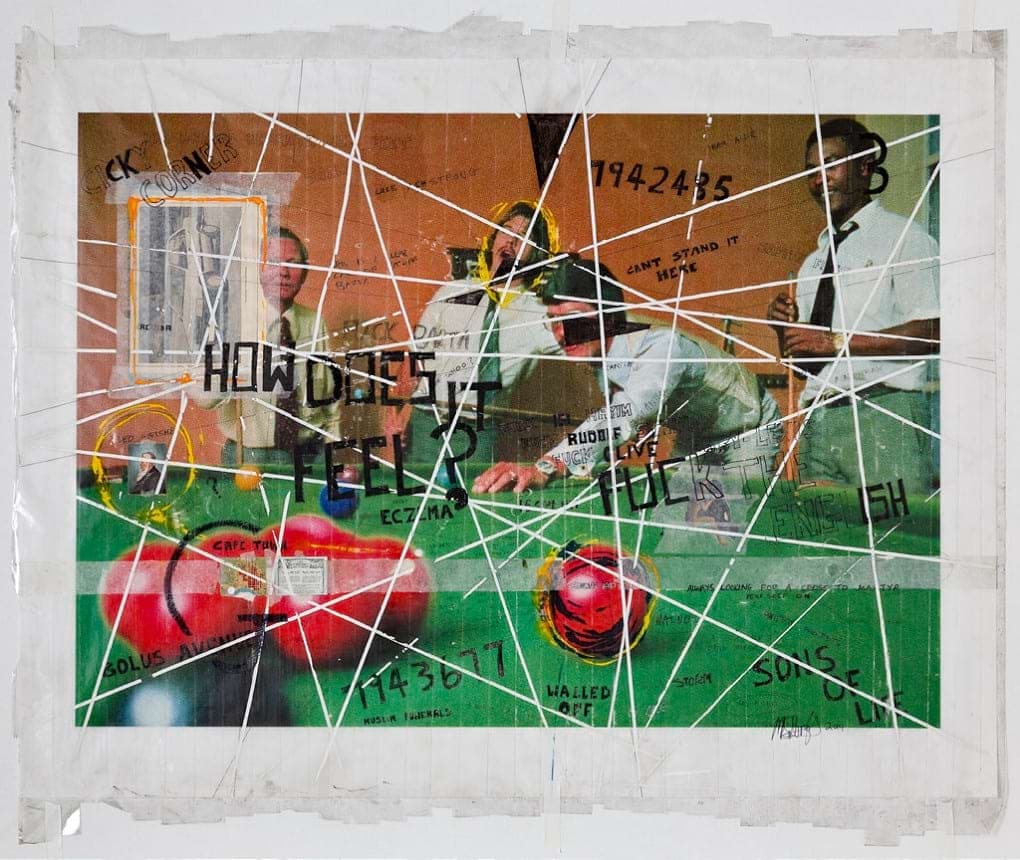
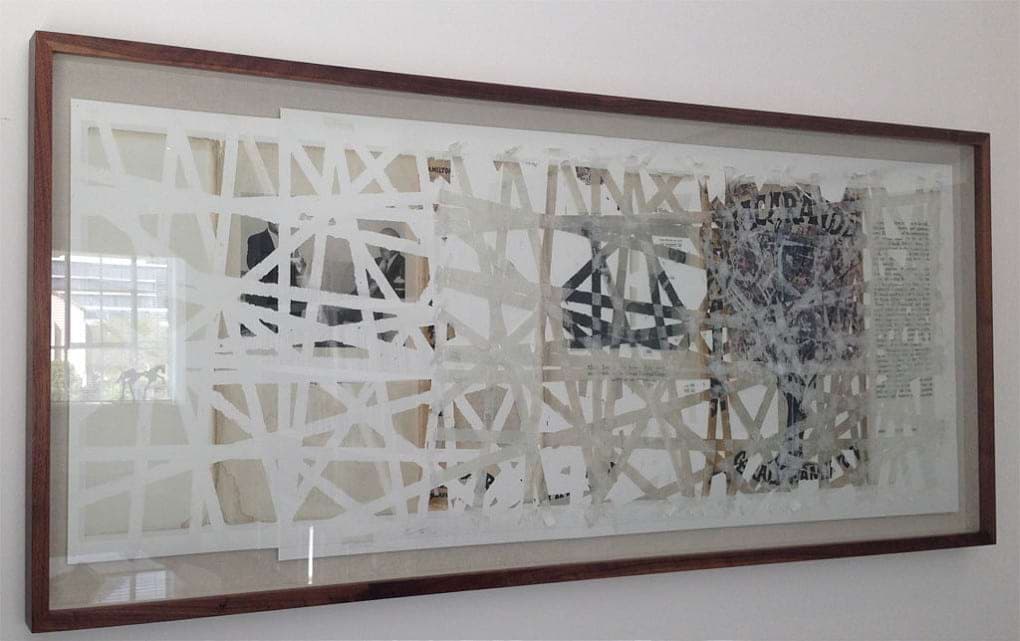
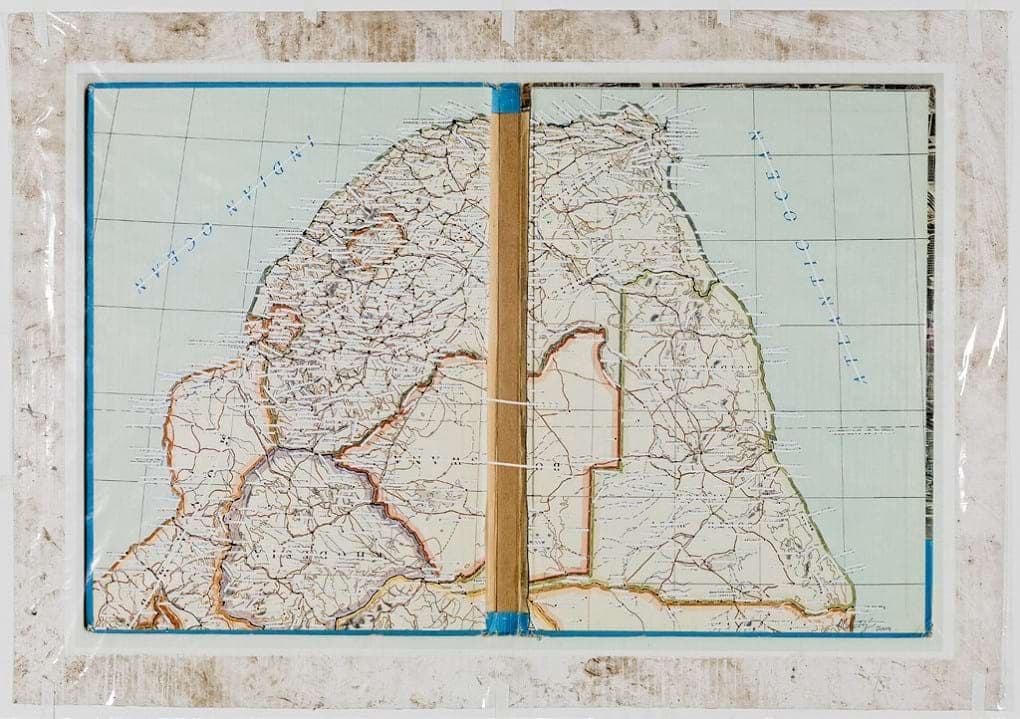
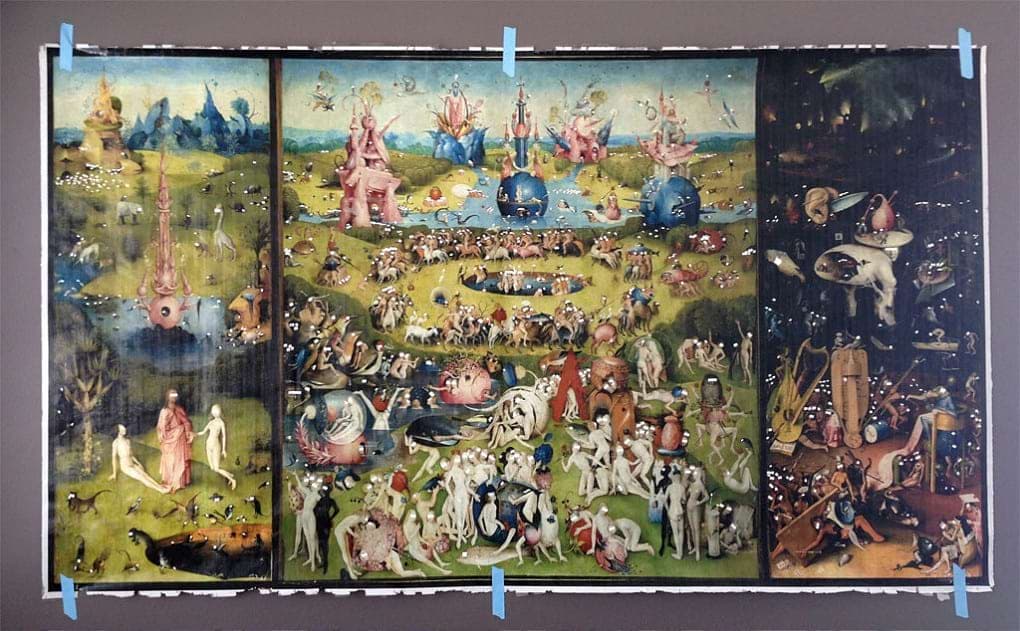
The series of Sticky Tape Transfers arises out of Mikhael Subotzky’s continuing attempts to understand the relationship between the physical and representational structures of images. Much of his recent work has been concerned with the nature of the representational surfaces of photography. Sticky Tape Transfer 10, After Bosch was made while investigating Bosch’s Garden of Earthly Delights for a larger work. This Sticky Tape version censors the eyes of every living creature in a high-resolution print of Bosch’s painting.
The inkjet print of the source image, once reworked and censored using white-out tape was laid on the artist’s studio floor and the entire surface covered with tape. After a number of days the tape is ripped from the surface of the print – a process of separation which is fundamental to the works and which expresses Subotzky’s unease with the production of “finished” images.