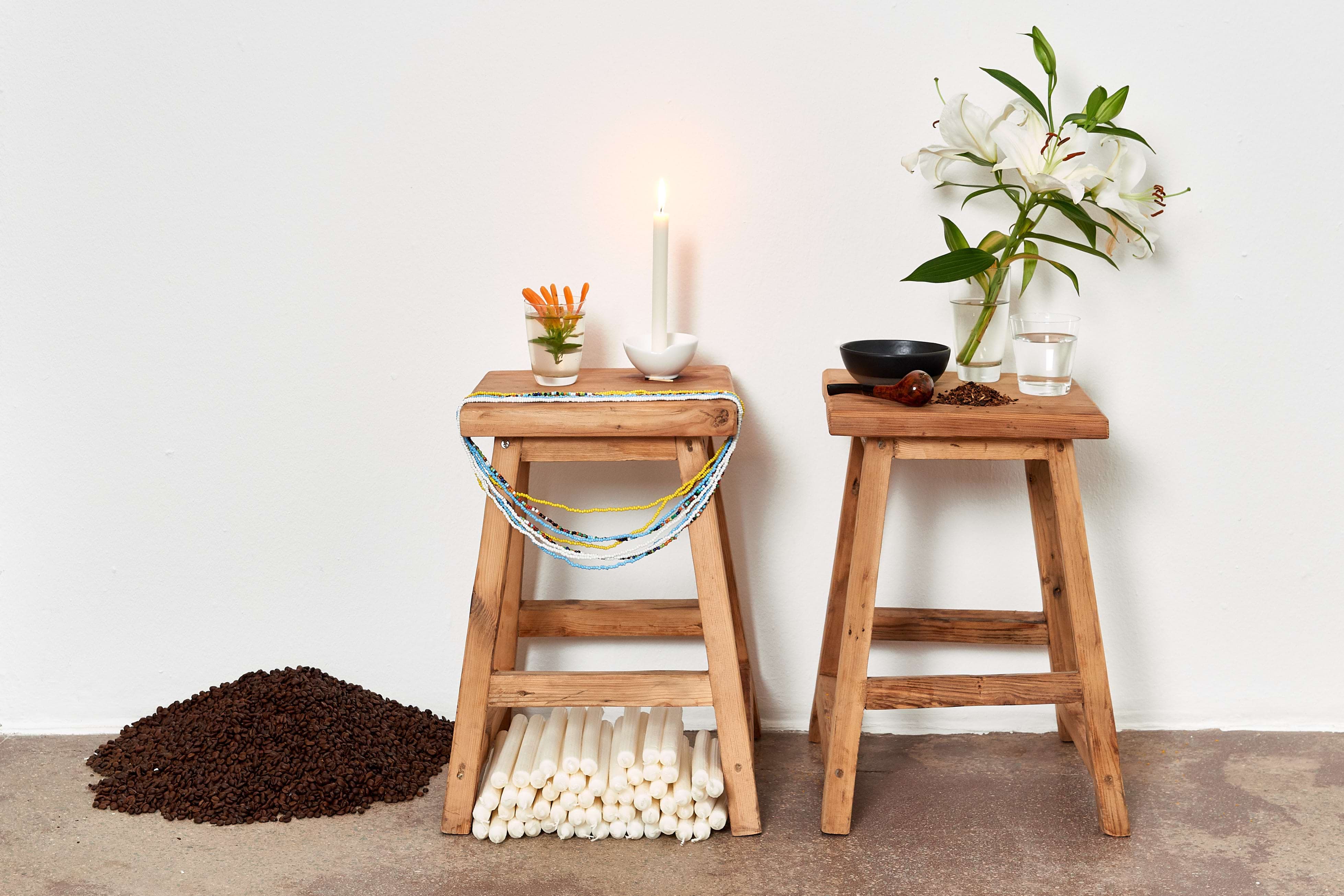

'The Desire Project' (2015 -16) is composed of a three act video installation, with environment, and printed impressions, representing three chronological moments – 'While I Walk', 'While I Speak' and 'While I Write'. In this piece, Grada Kilomba uses the written word as the only visual element, accompanied by a rhythmical drumming as a metaphorical voice, indicating the emergence of a speaker who has been historically silenced by colonial narratives. Before entering the video installation, one passes a shrine dedicated to the ancestor Escrava Anastácia, whose mouth has been sealed. Kilomba plays with the concept of memory, “as something we cannot simply forget” and raises the questions of ‘who can speak’ and ‘what can we speak about’ before entering the visual space.The work was commissioned for the 32nd Bienal de São Paulo – Incerteza viva [Live Uncertainty].
Credits: Written, Directed, and Edited by Grada Kilomba. Produced by Moses Leo.
Performed by Martha Fessehatzion, Moses Leo, Grada Kilomba, Zé de Paiva.
Music composed by Neo Muyanga. Director of Photography by Zé de Paiva.
Camera Assistance by Laura Alonso, Tito Casal. Costume Design by Moses Leo.
Sound Engineering by Gabriel do Val. Commissioned by the 32. Bienal de São Paulo.
With the support of Goethe-Institut São Paulo, EGEAC, and the International Film Festival Rotterdam.
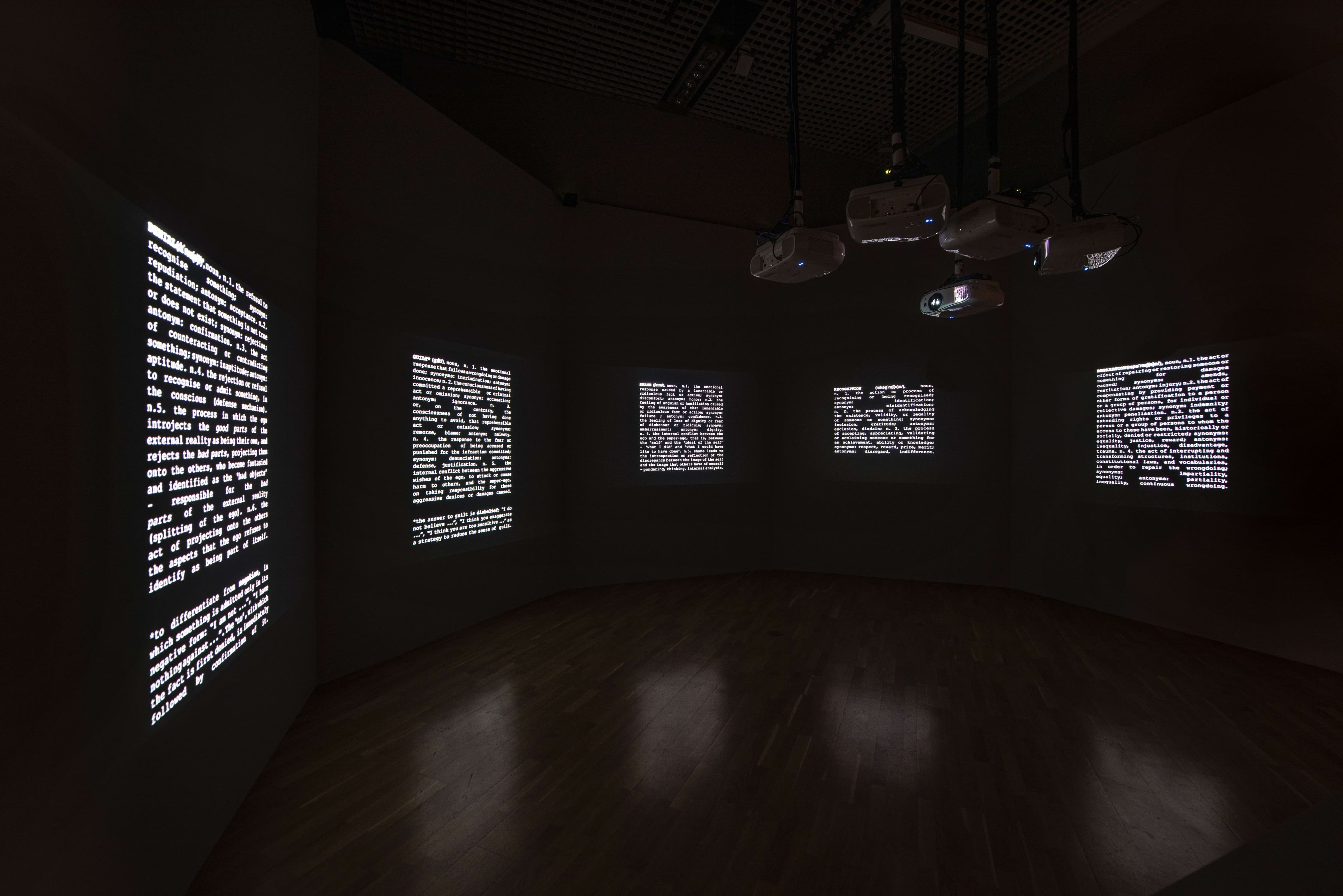
'The Dictionary' (2019) is a work in which five channels project definitions of five words into a darkened room. The words - 'denial', 'guilty', 'shame', 'recognition' and 'reparation' - are revealed and intensely described as their synonyms and antonyms. The words are projected in the walls of the room, creating a chronology of consciousness, until they disappear again leaving the audience in an enveloping sound installation of evening- song and crickets and the night sky
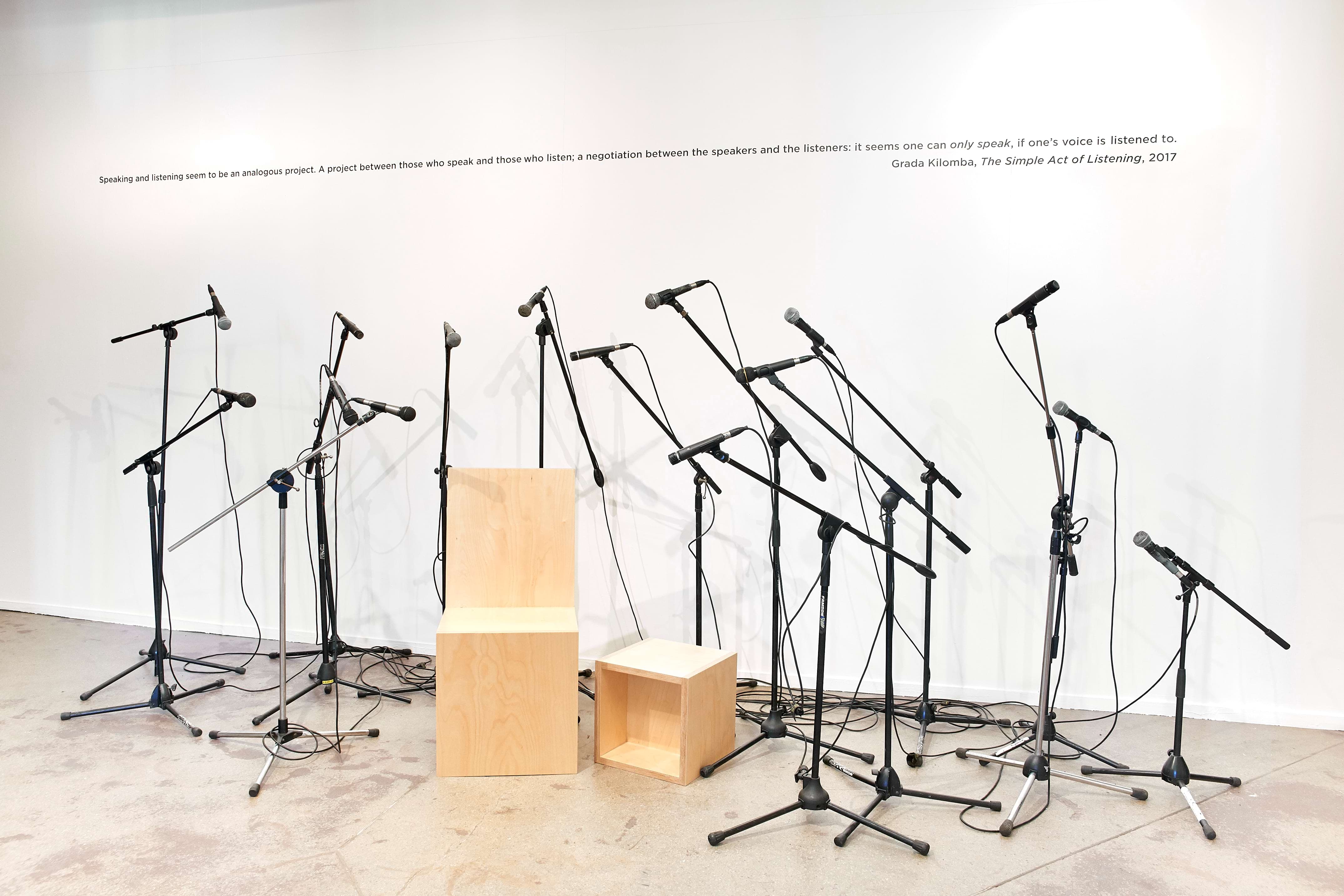
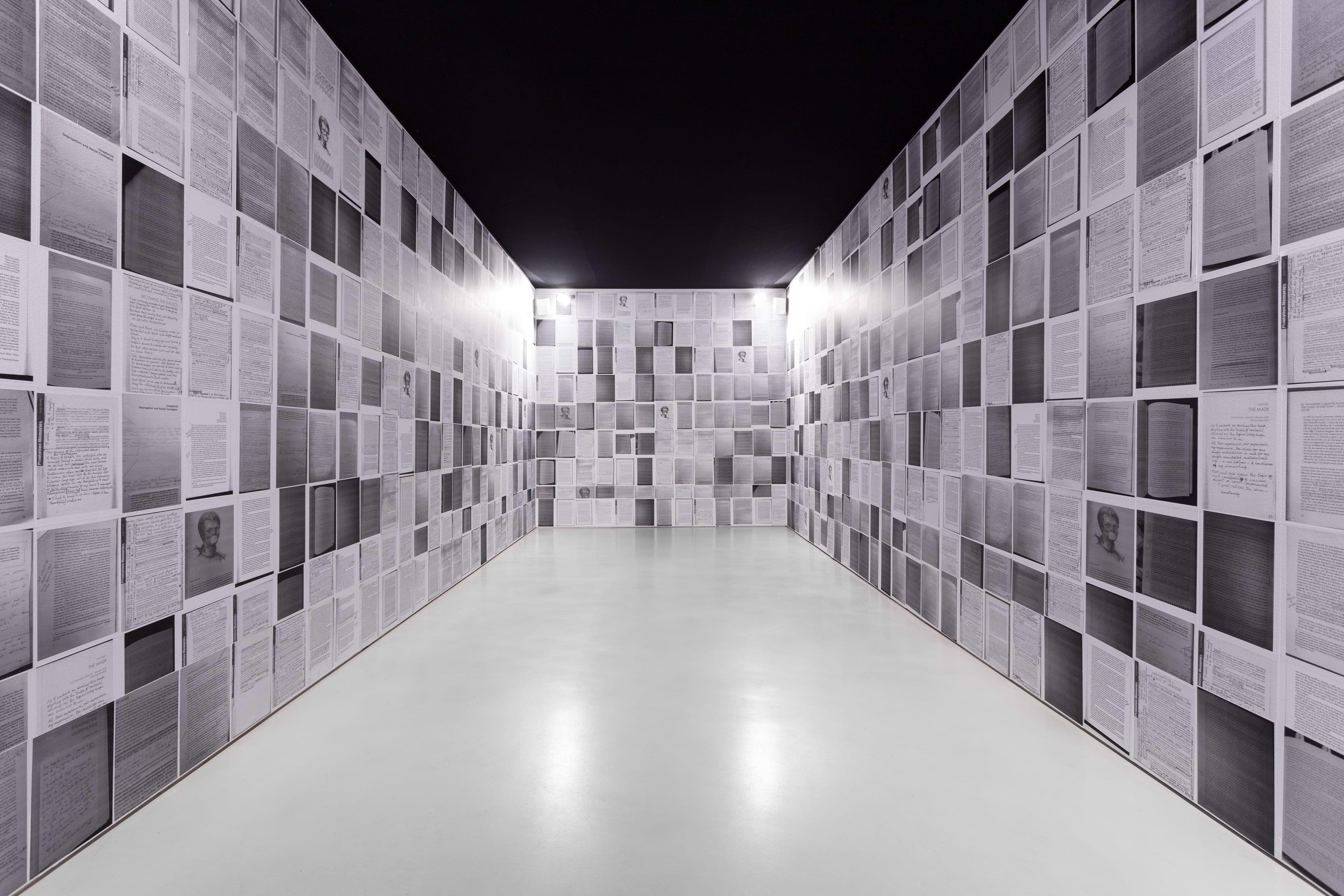
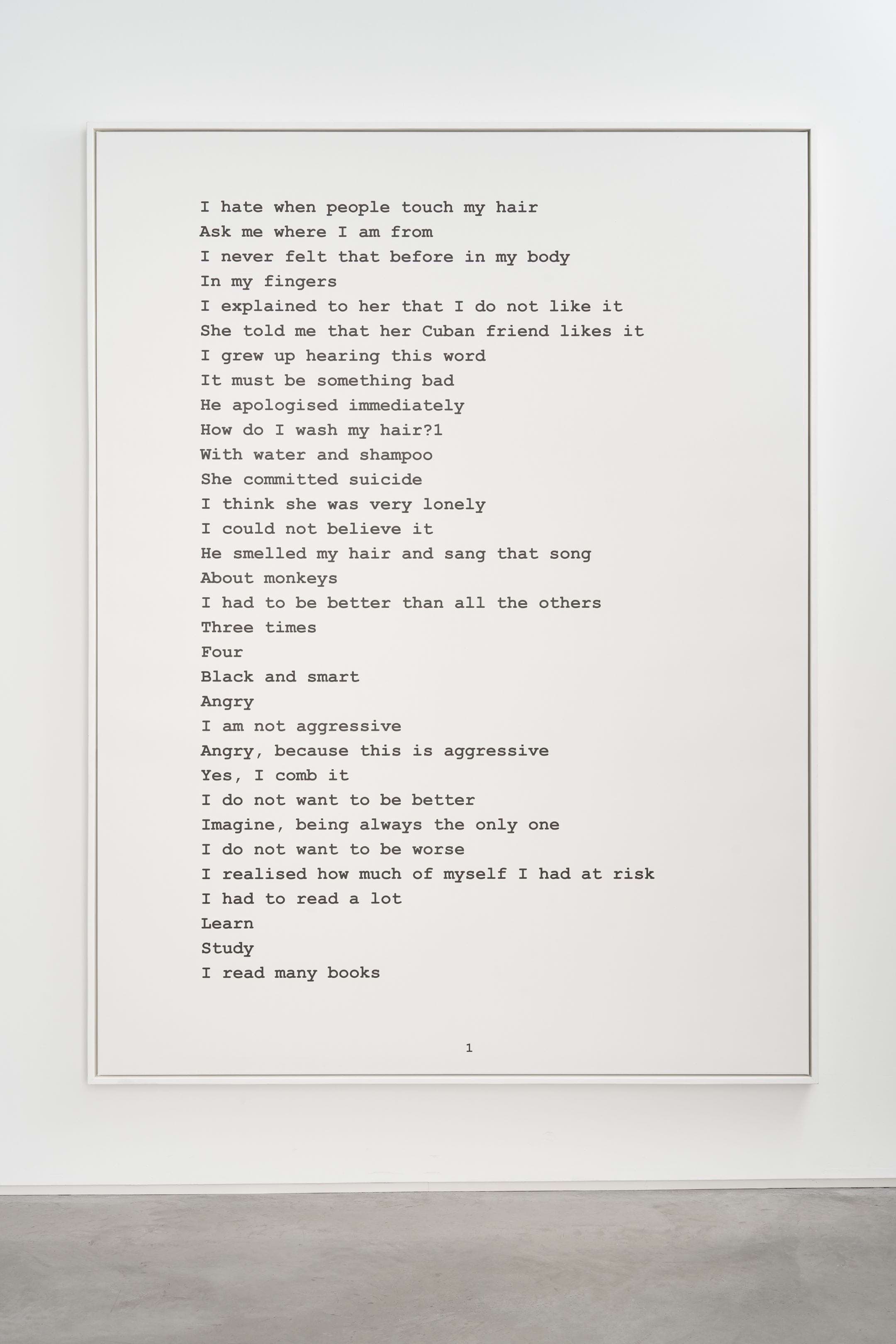
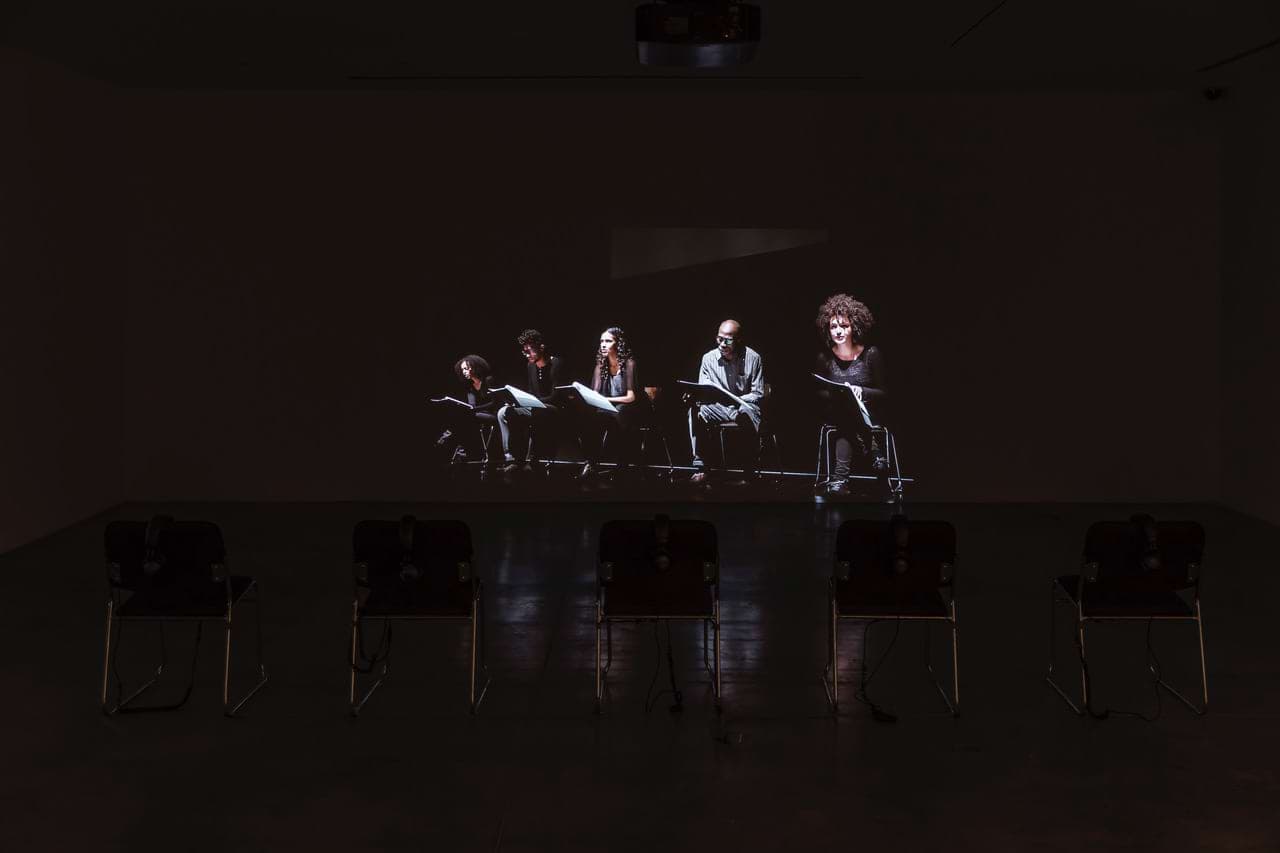
'The Chorus' (2017) is a wall installation based on the artist's previous literary work and her very unique practice of exploring the performative aspects of her texts. This piece is the result of an experimental work with actors from the African Diaspora, during rehearsals for a staged reading, in Berlin. Kilomba developed the repetition of the most emotional and evocative phrases for the actors, and composed the chorus.
Playing with the idea of a manifesto, the final poem is printed on a large wall, exposing the most subtle, but traumatic and violent forms of everyday racism.
“Her work underlines the perpetuation of colonialism. A proud and irreducible political and feminist interpellation, and it explodes in lucid writing.”- Visão Magazine
Credits: Written, directed and edited by Grada Kilomba. Performed by Martha Fessehatzion, Moses Leo, Michael Edode Ojake, Araba Walton, Sara-Hiruth Zewde. Camera by Zé de Paiva, Kathleen Kunath, Thabo Thindi. Light and Sound Design by Grada Kilomba. Music by Geisbaba (Michael Geithner and Moses Leo). Editing by Grada Kilomba. Post Production by Zé de Paiva. Produced by Grada Kilomba in co-production with Kultursprünge im Ballhaus Naunynstrasse Berlin. Staged Reading based on the book by Grada Kilomba Plantation Memories. Episodes of Everyday Racism, Unrast Verlag, Münster, 2008
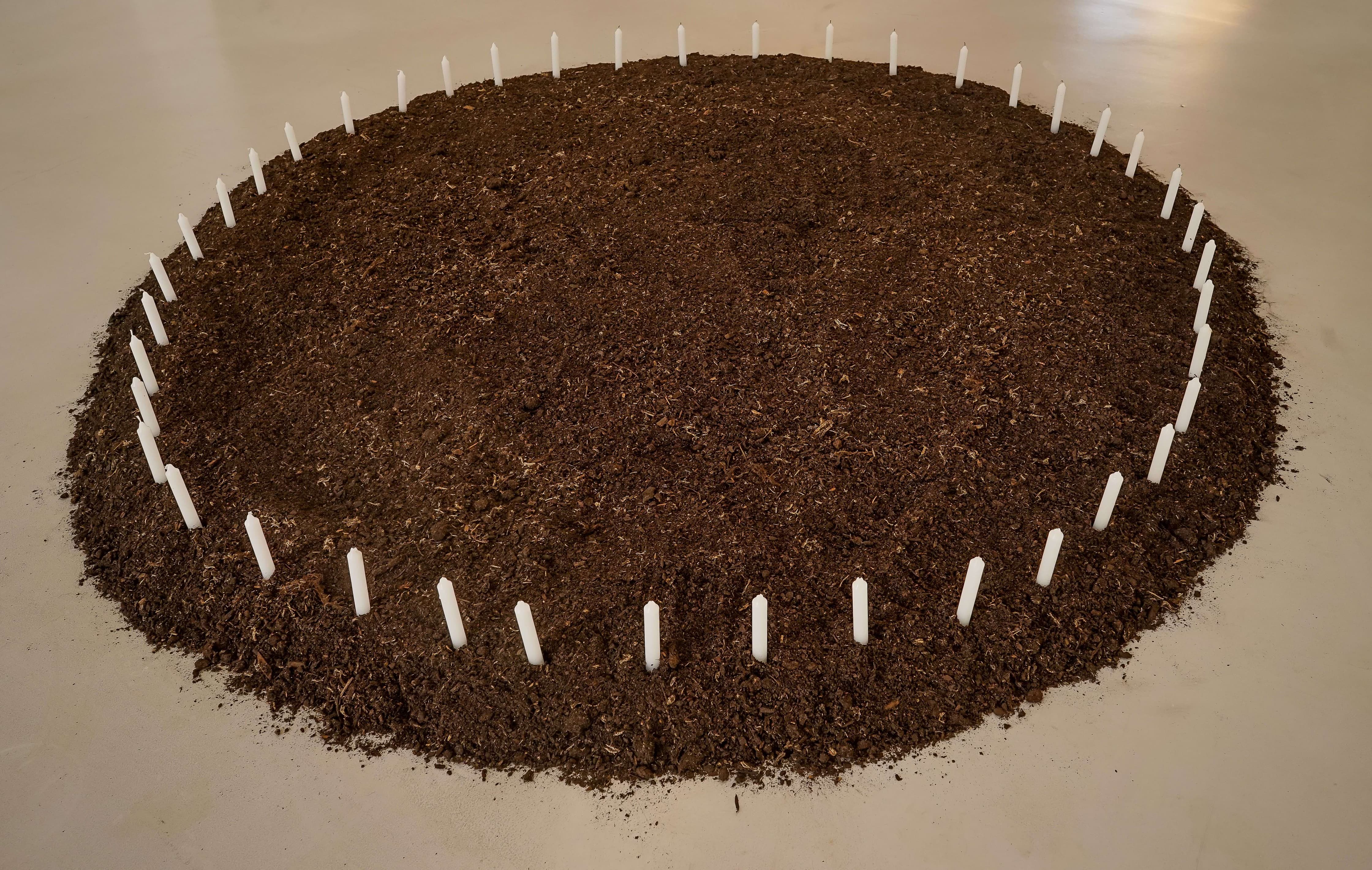
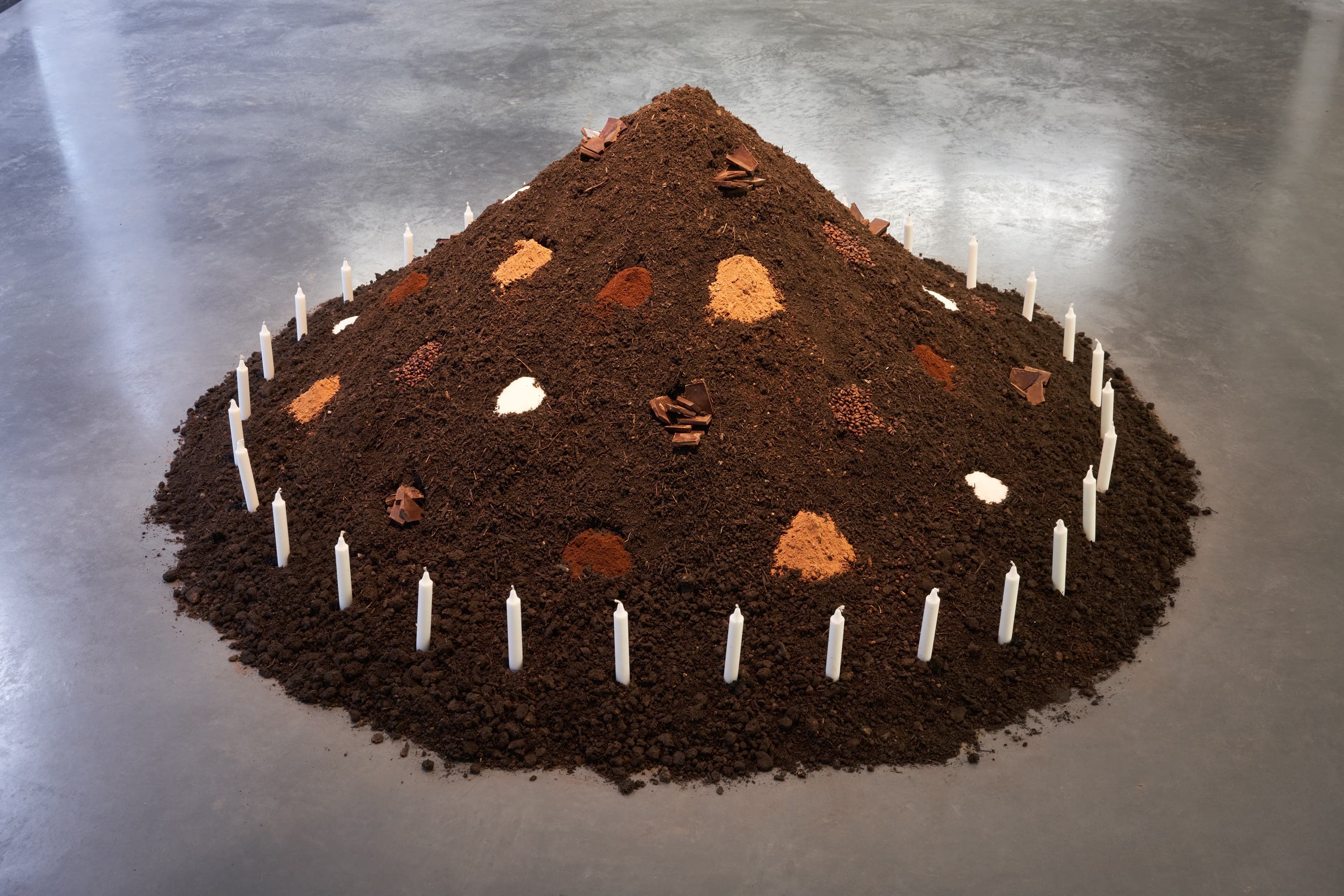
Grada Kilomba’s distinctive practice draws on the repressed history of colonialism and its traumatic legacy to create new forms of knowledge. In her emotive installation Table of Goods (2017), Kilomba memorialises centuries of labour and deaths of black bodies on sugar and chocolate plantations.