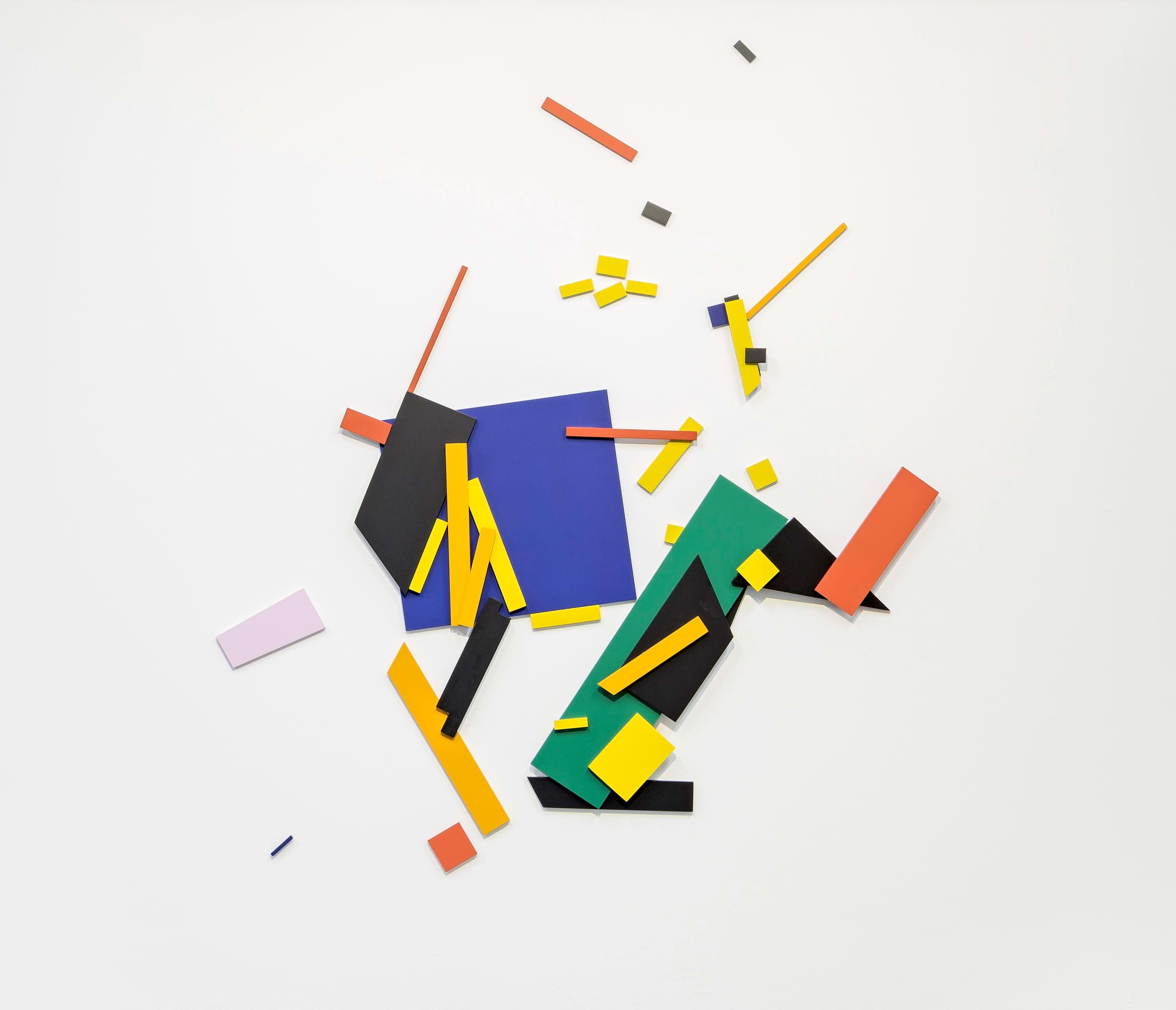

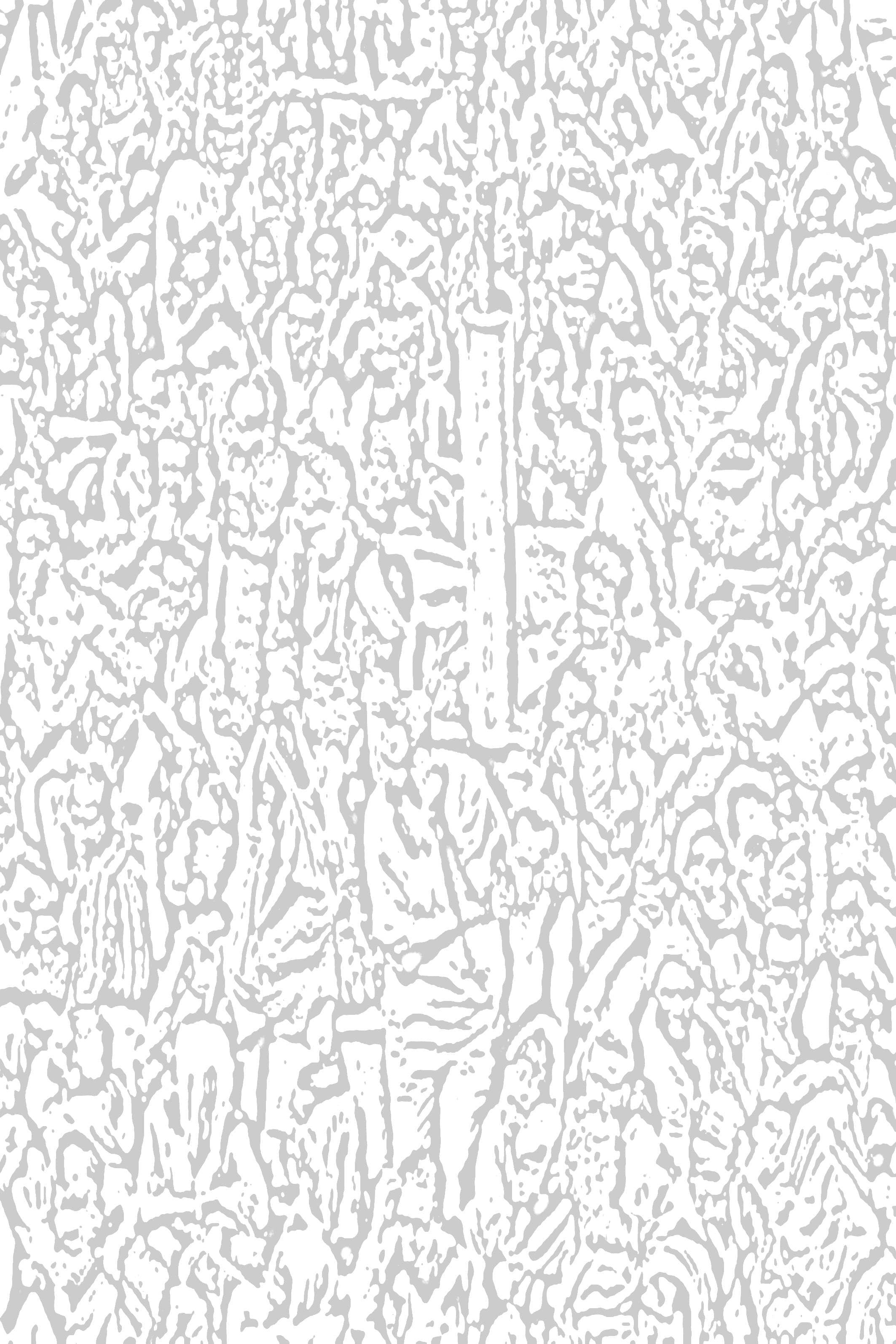
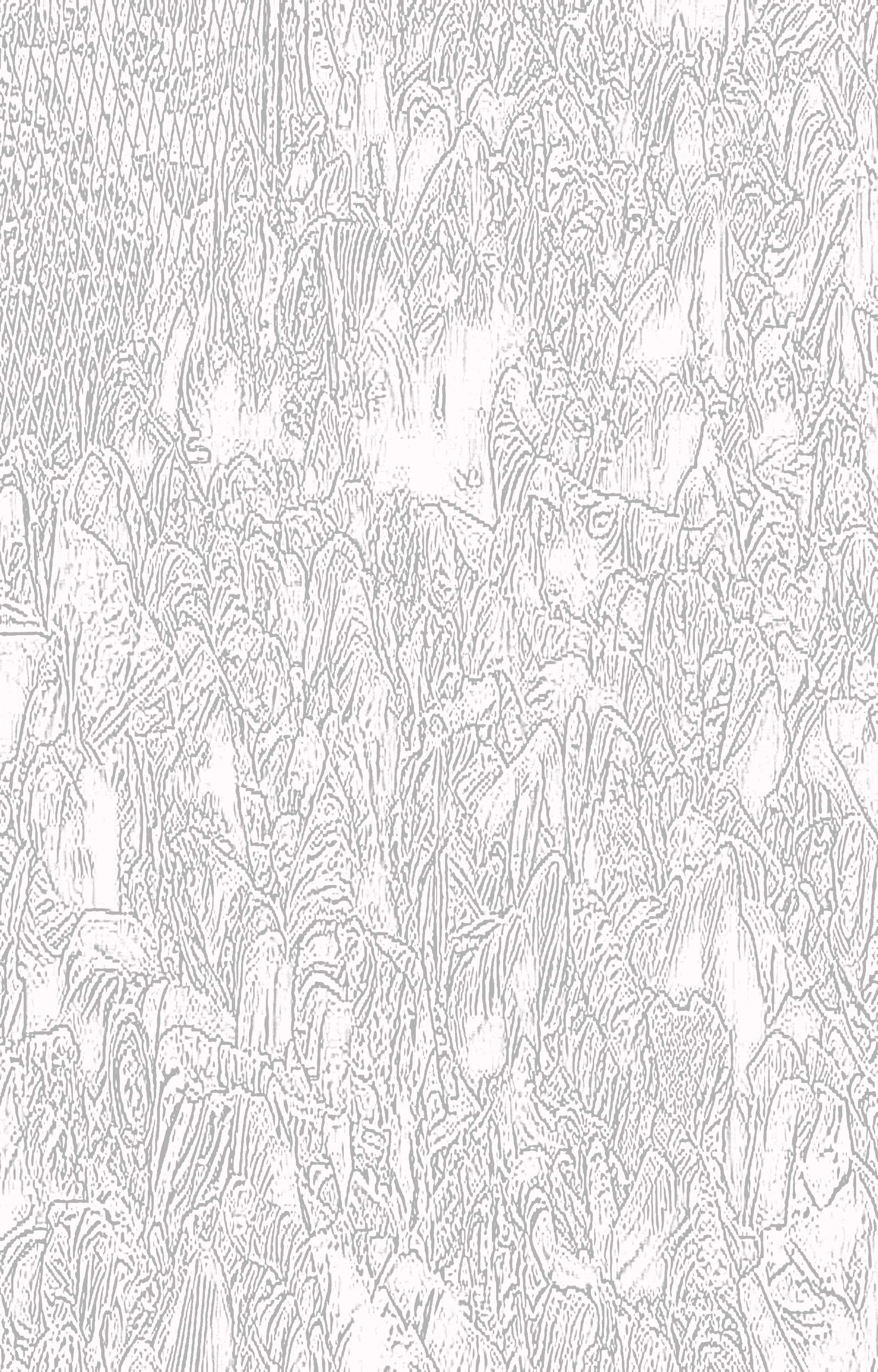
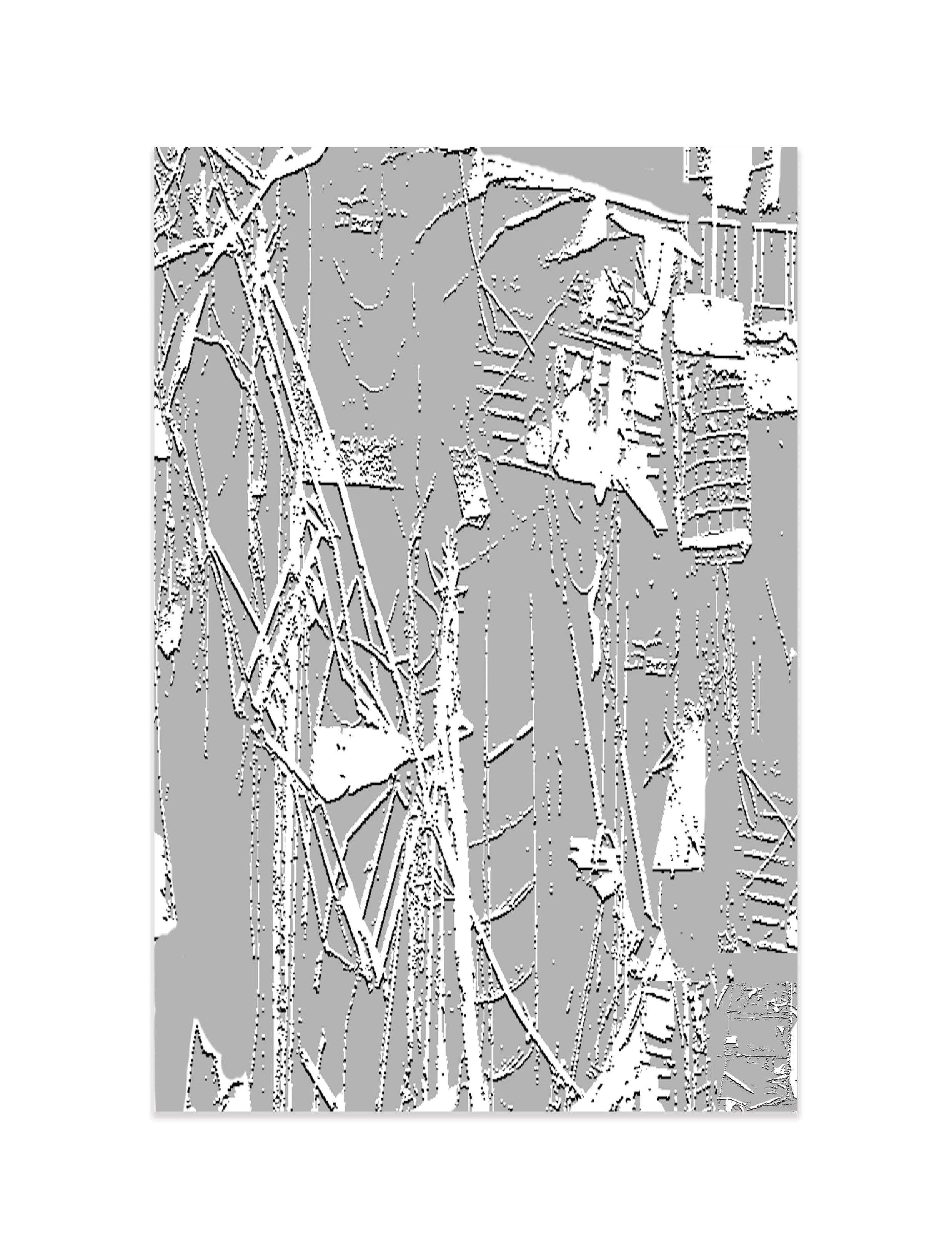
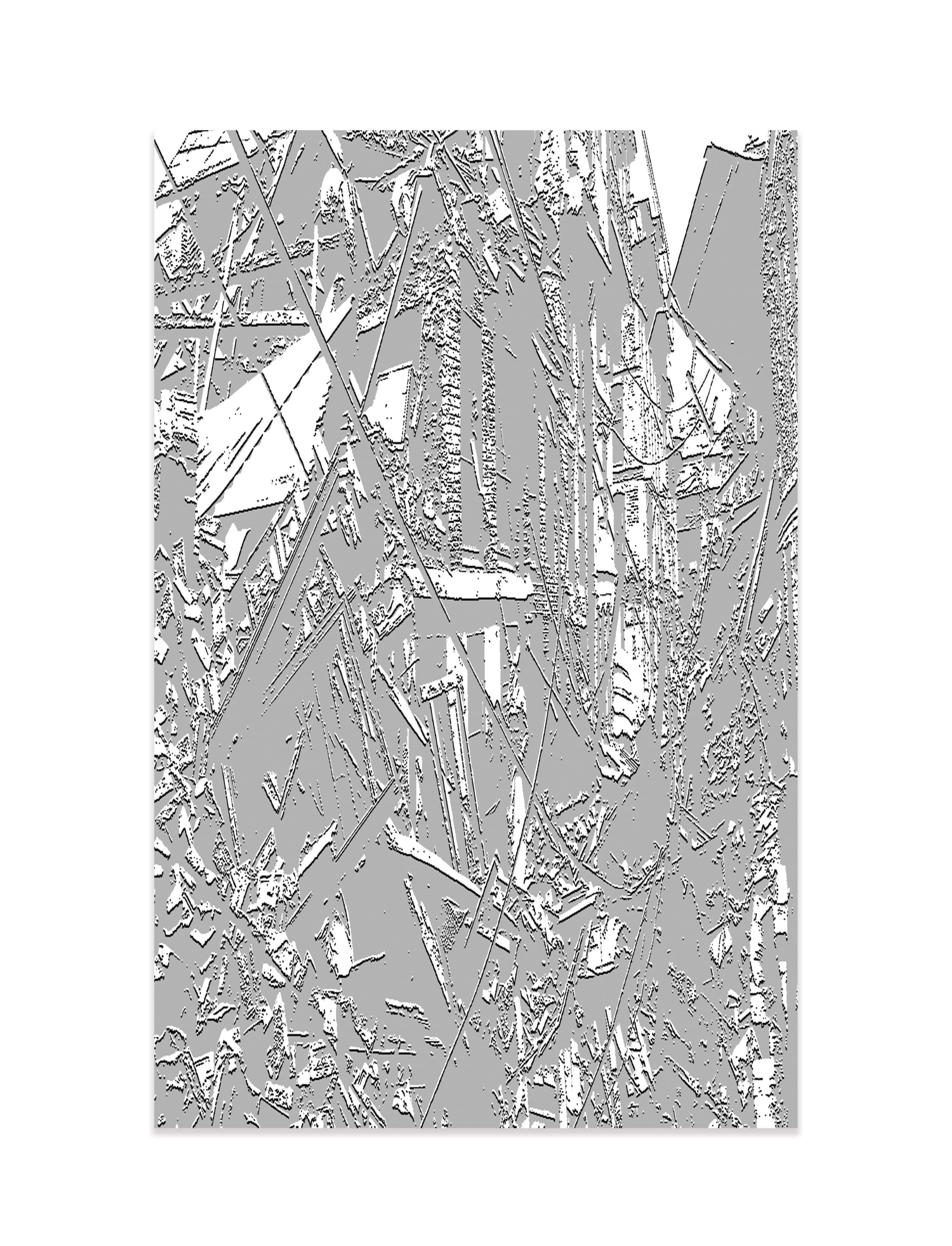
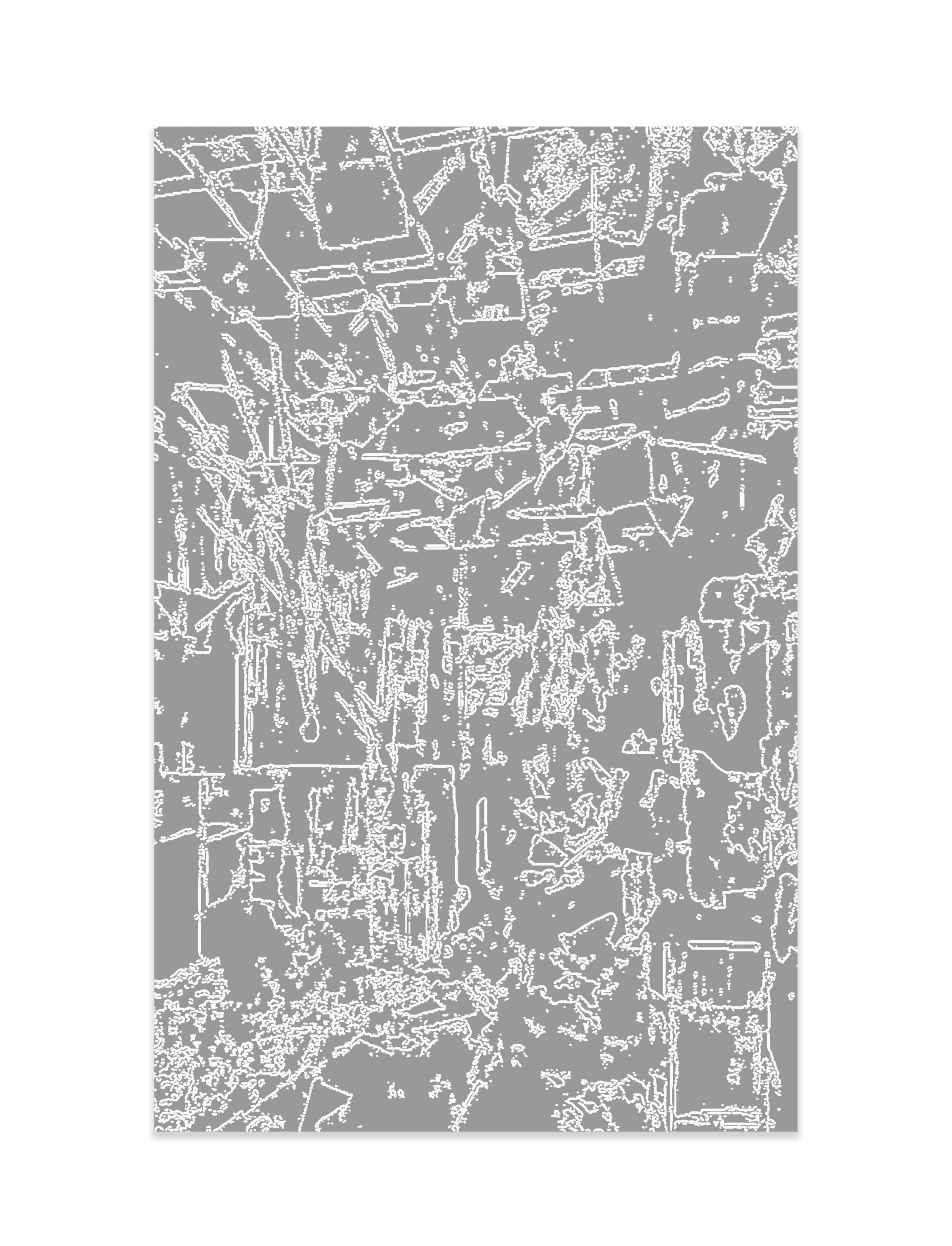
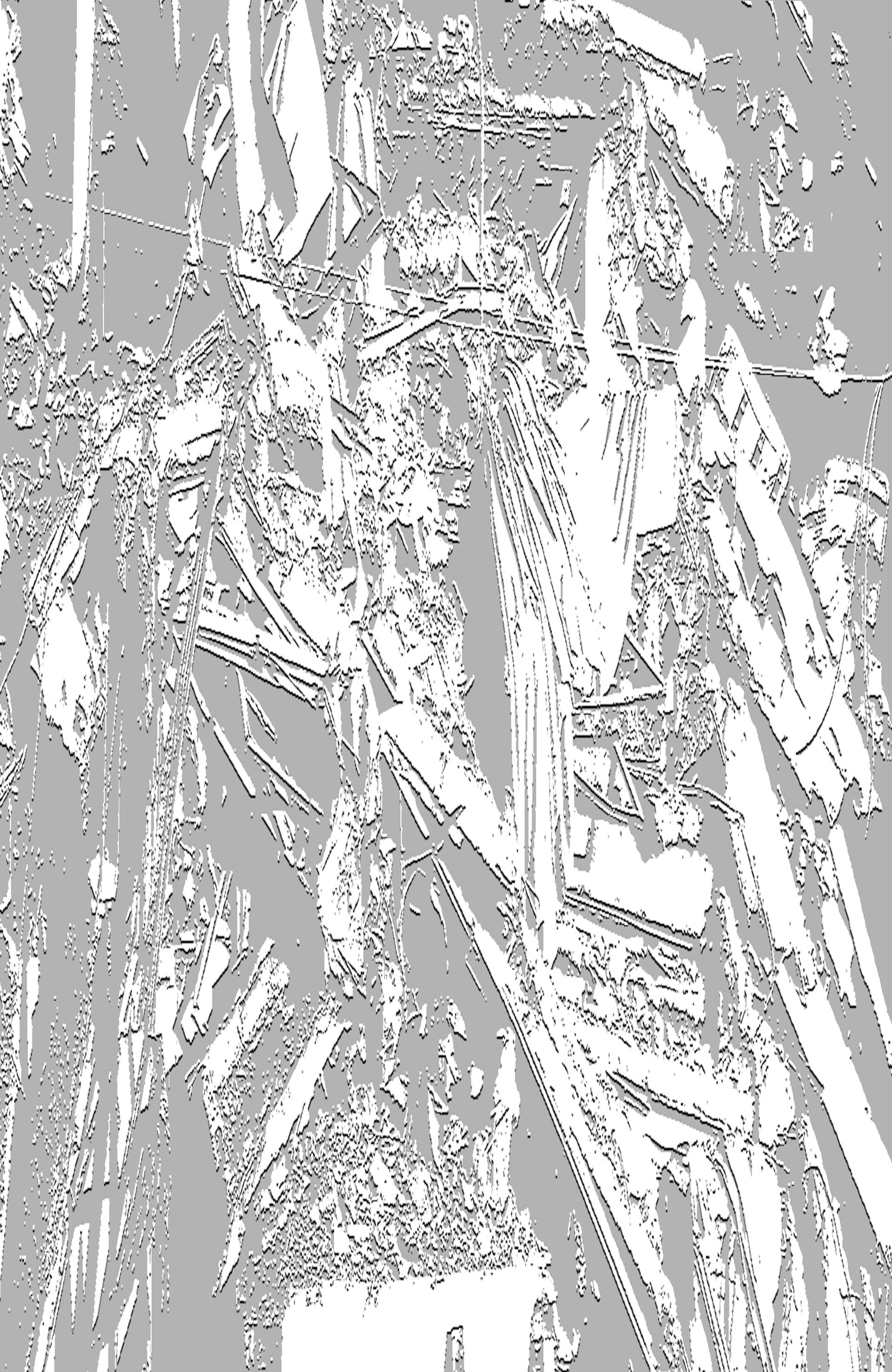
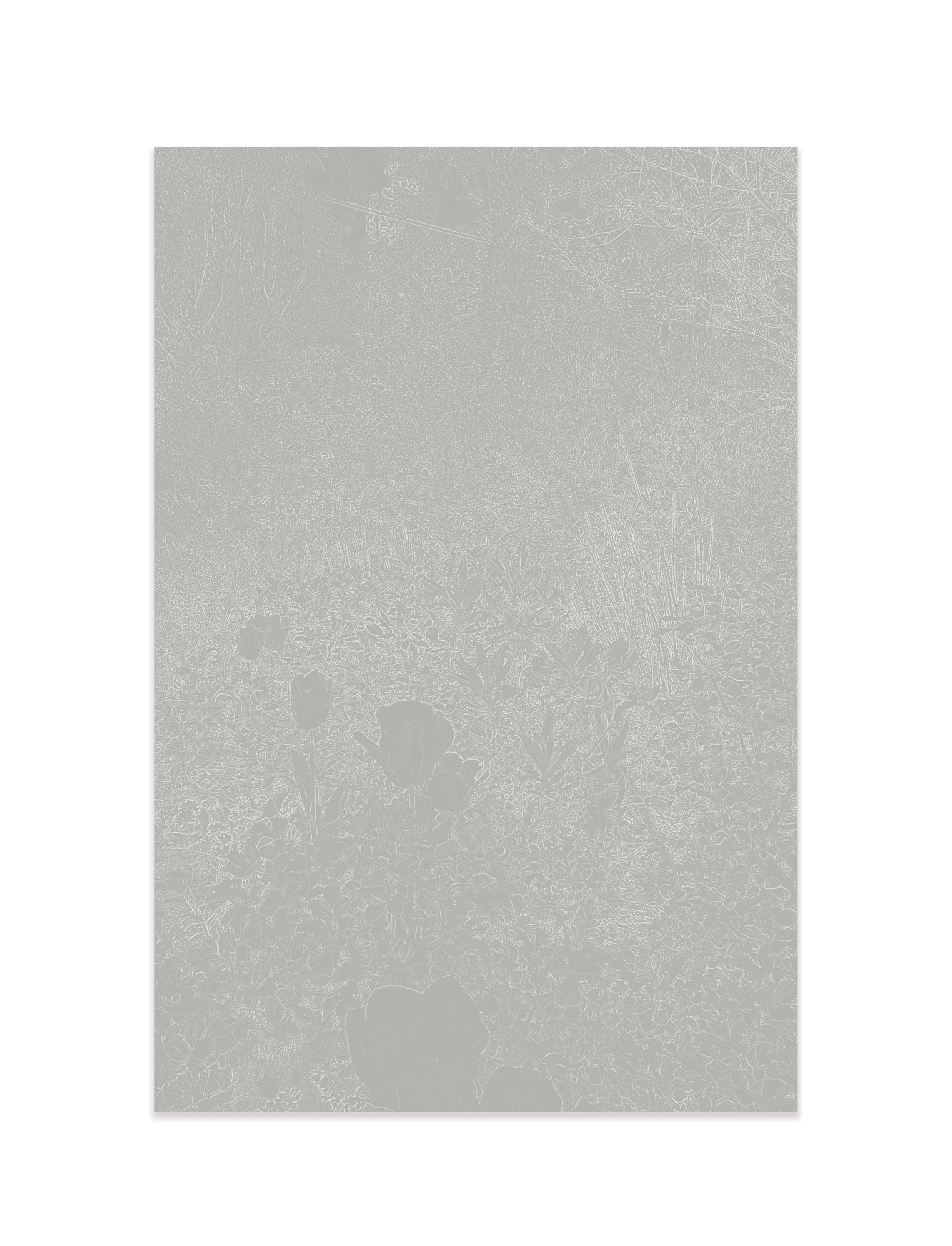

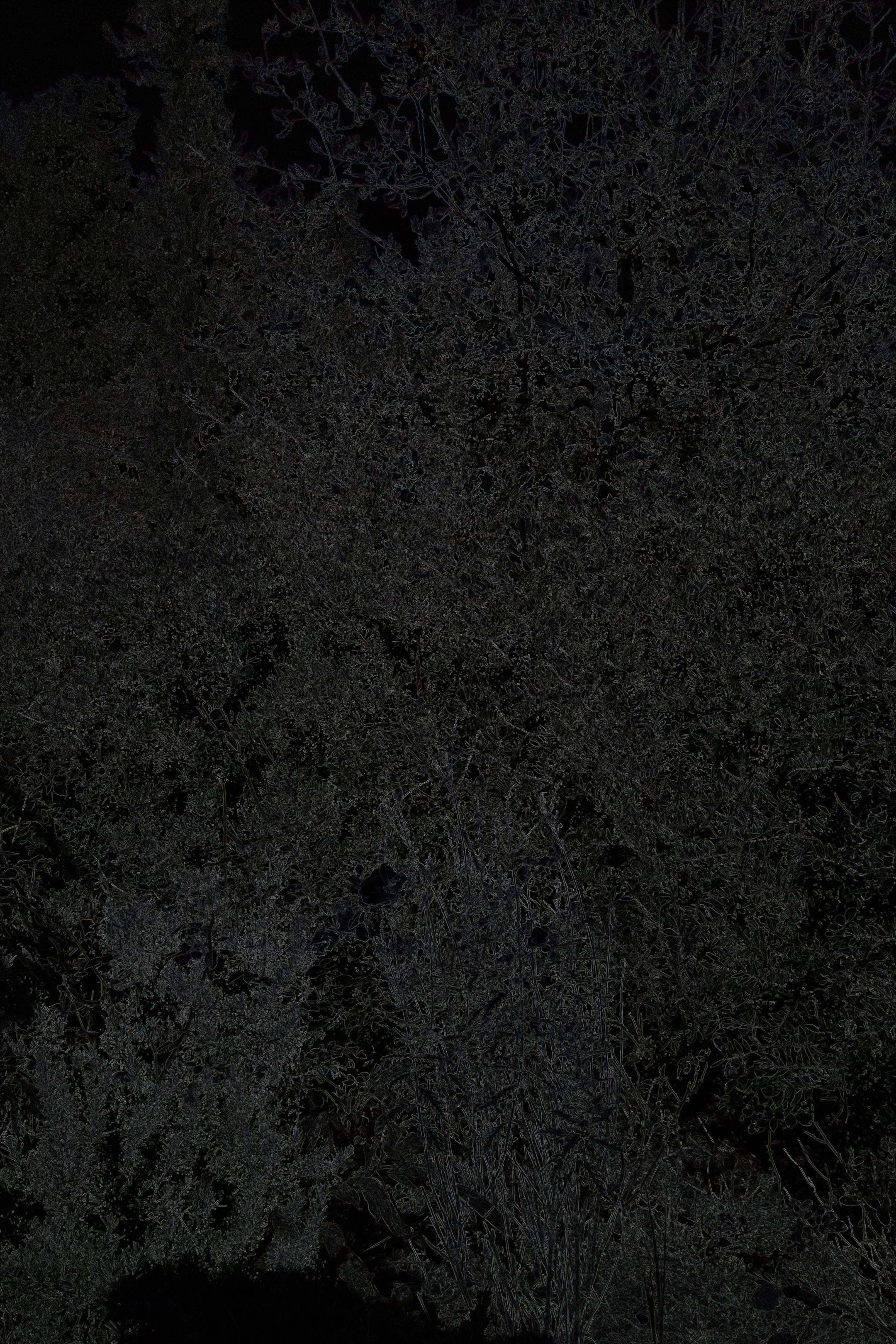
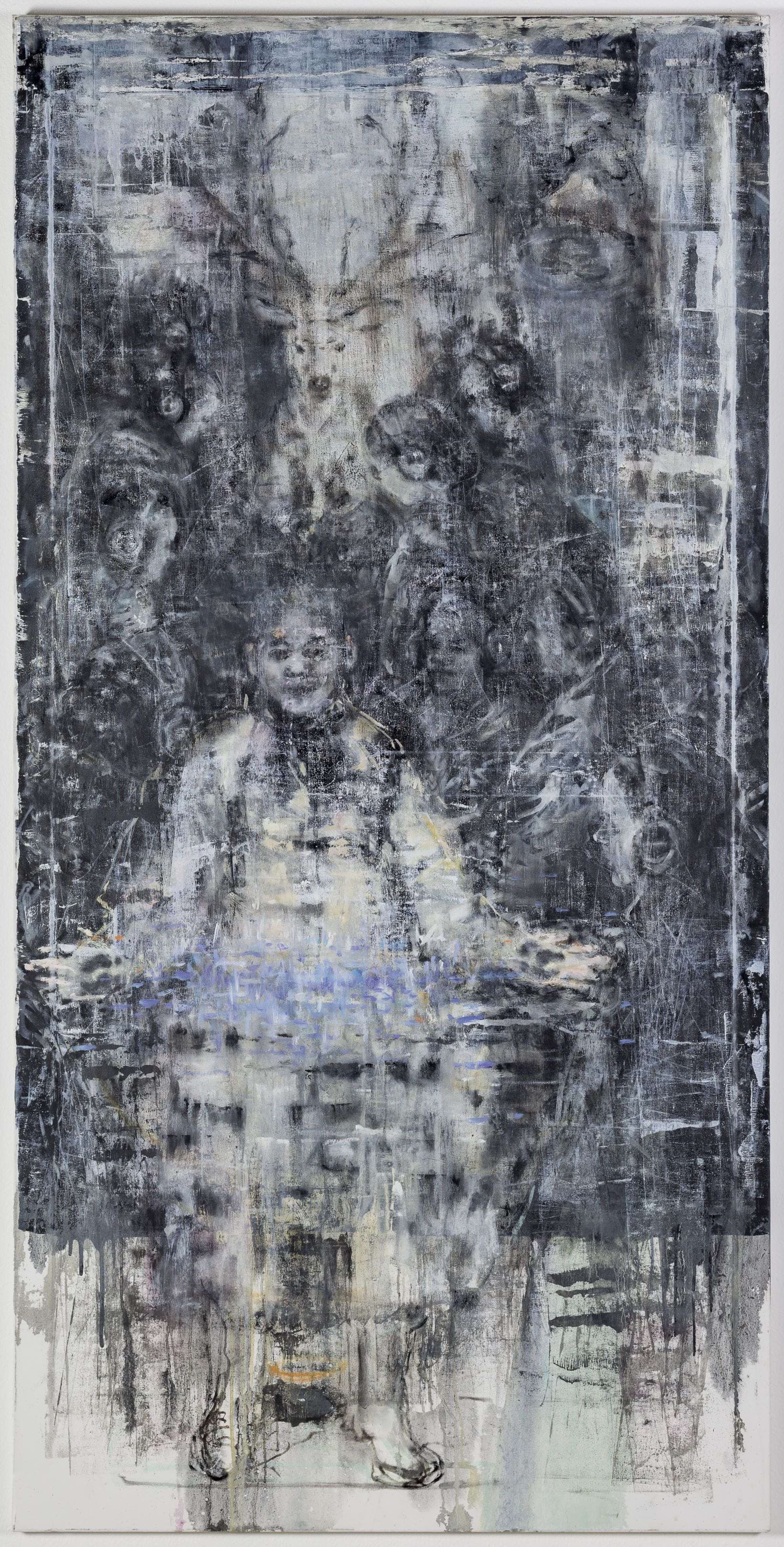
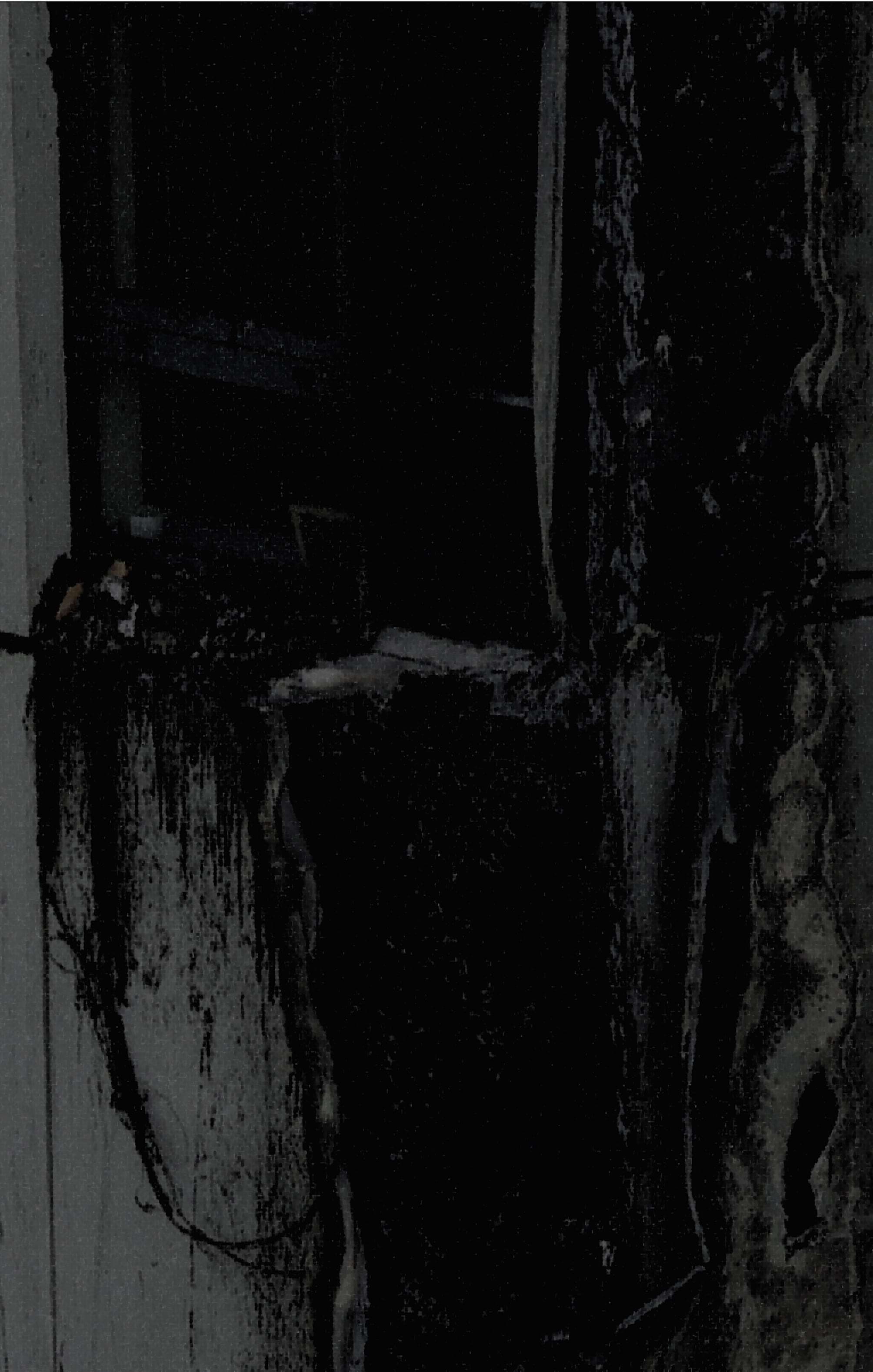
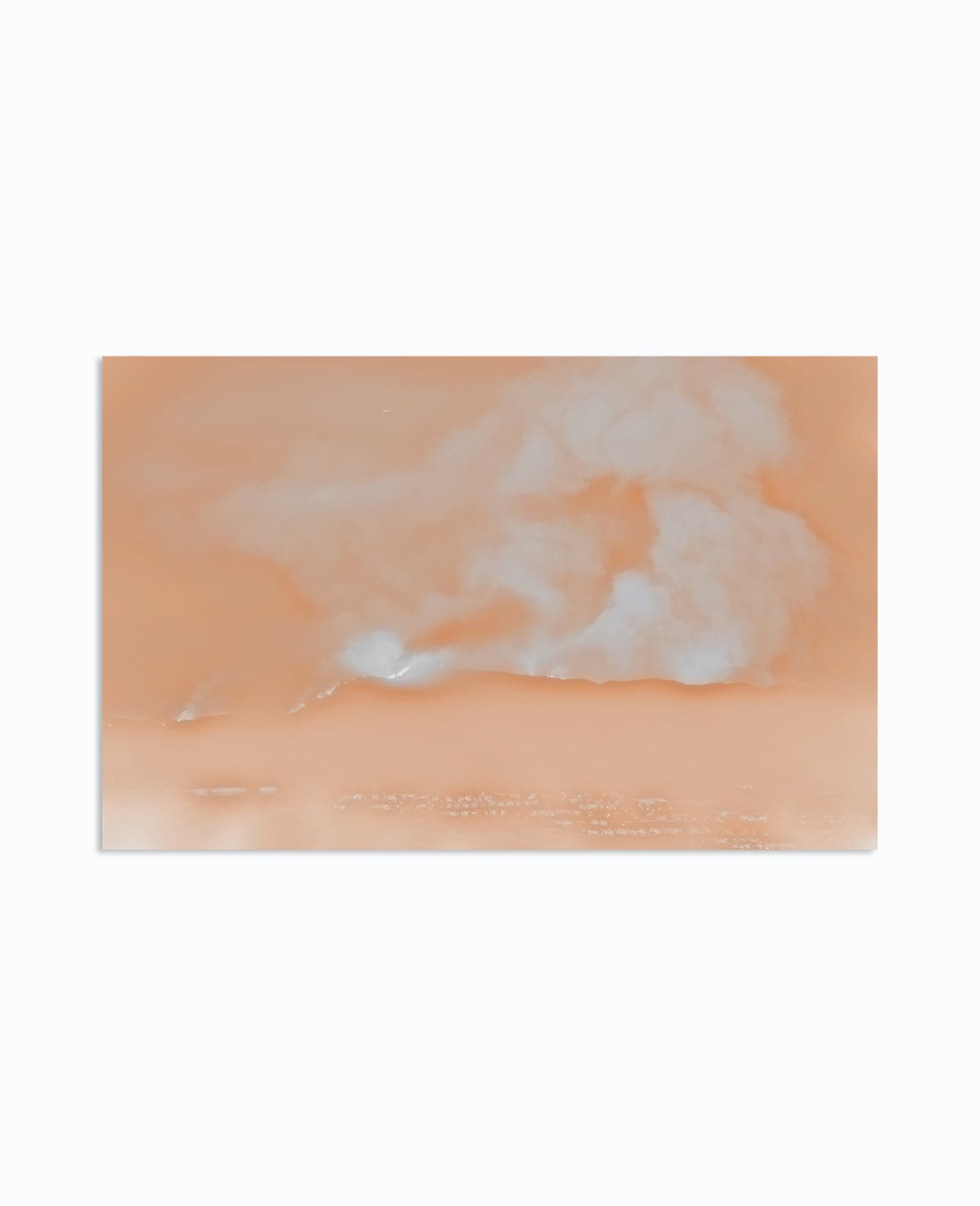
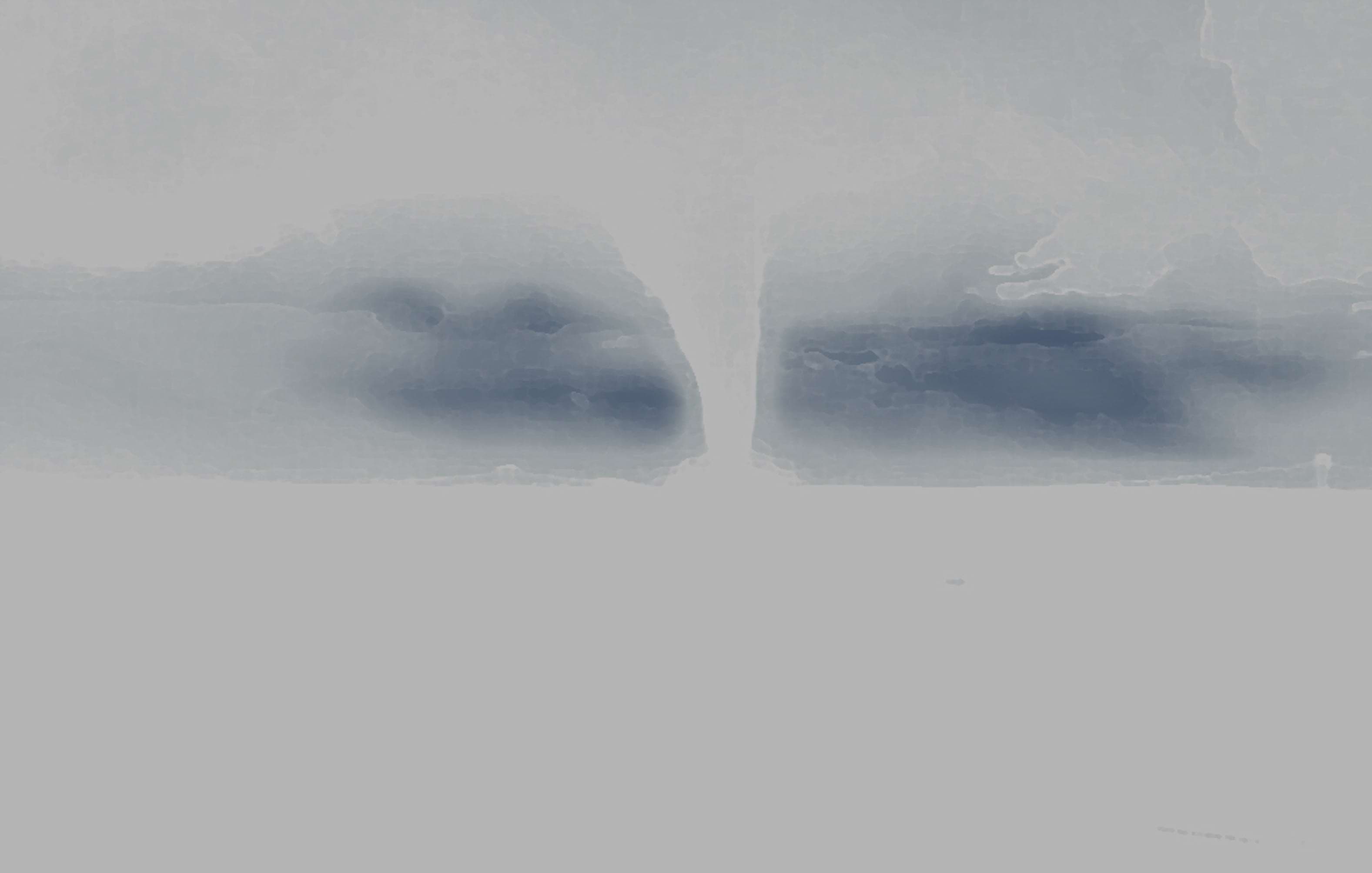
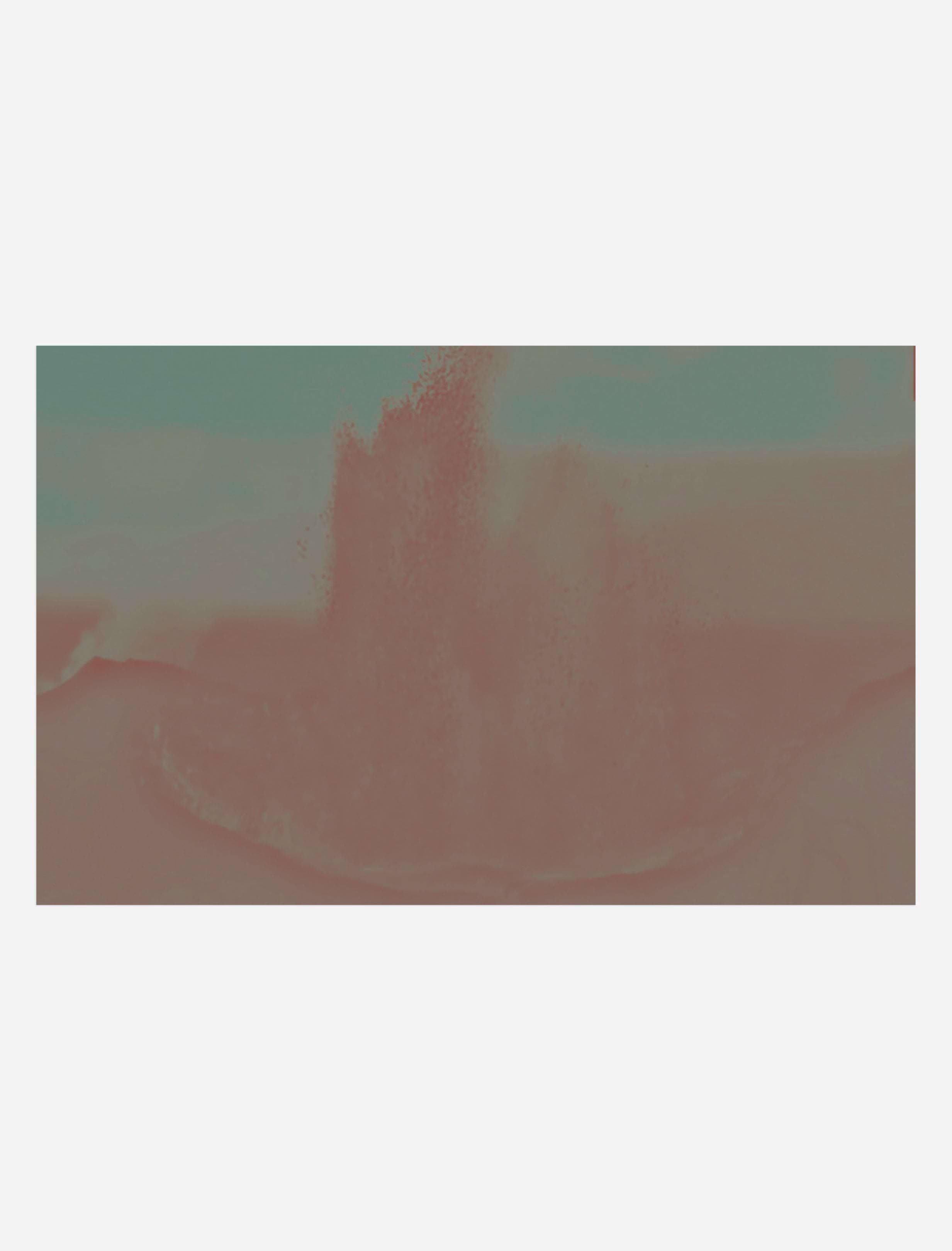
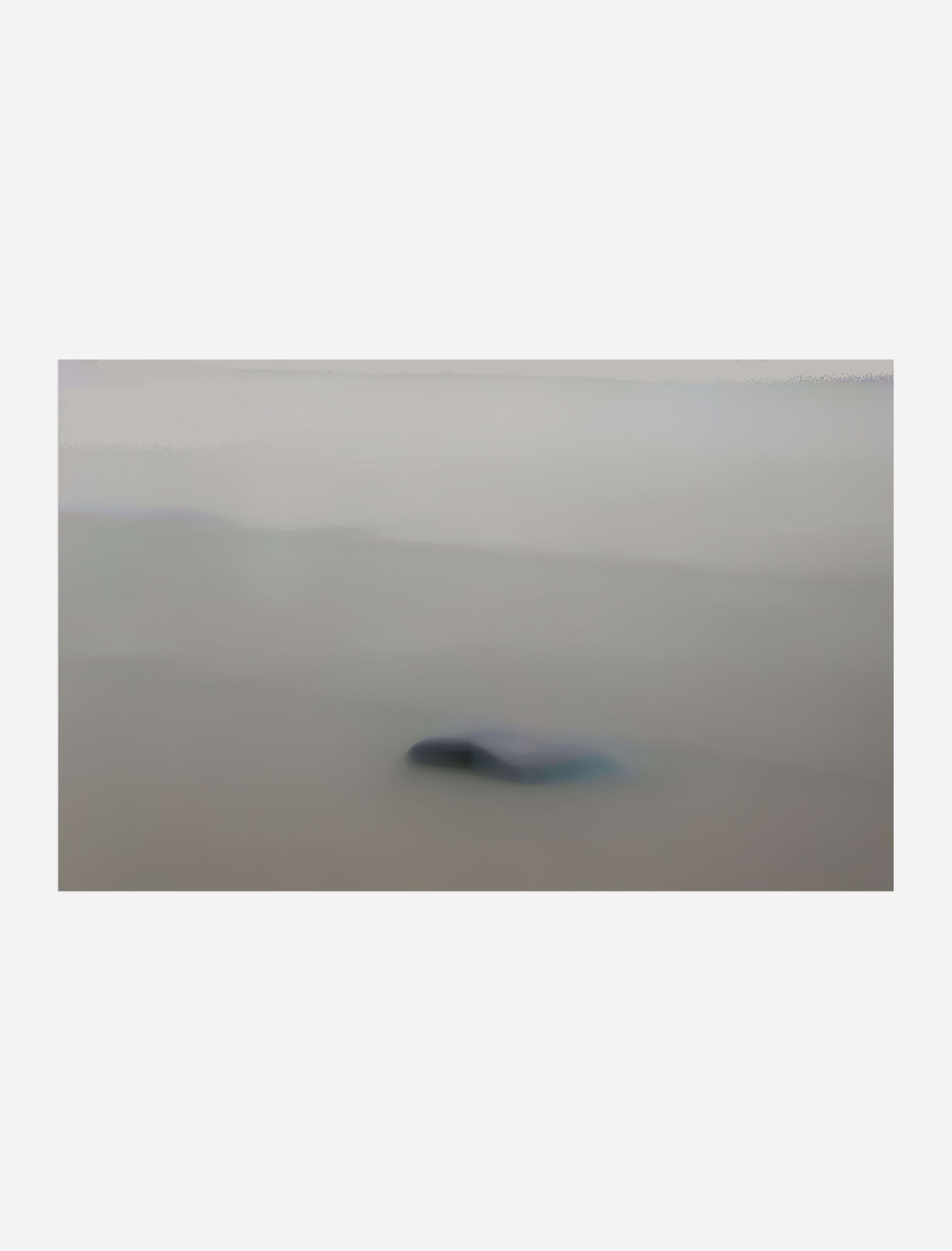
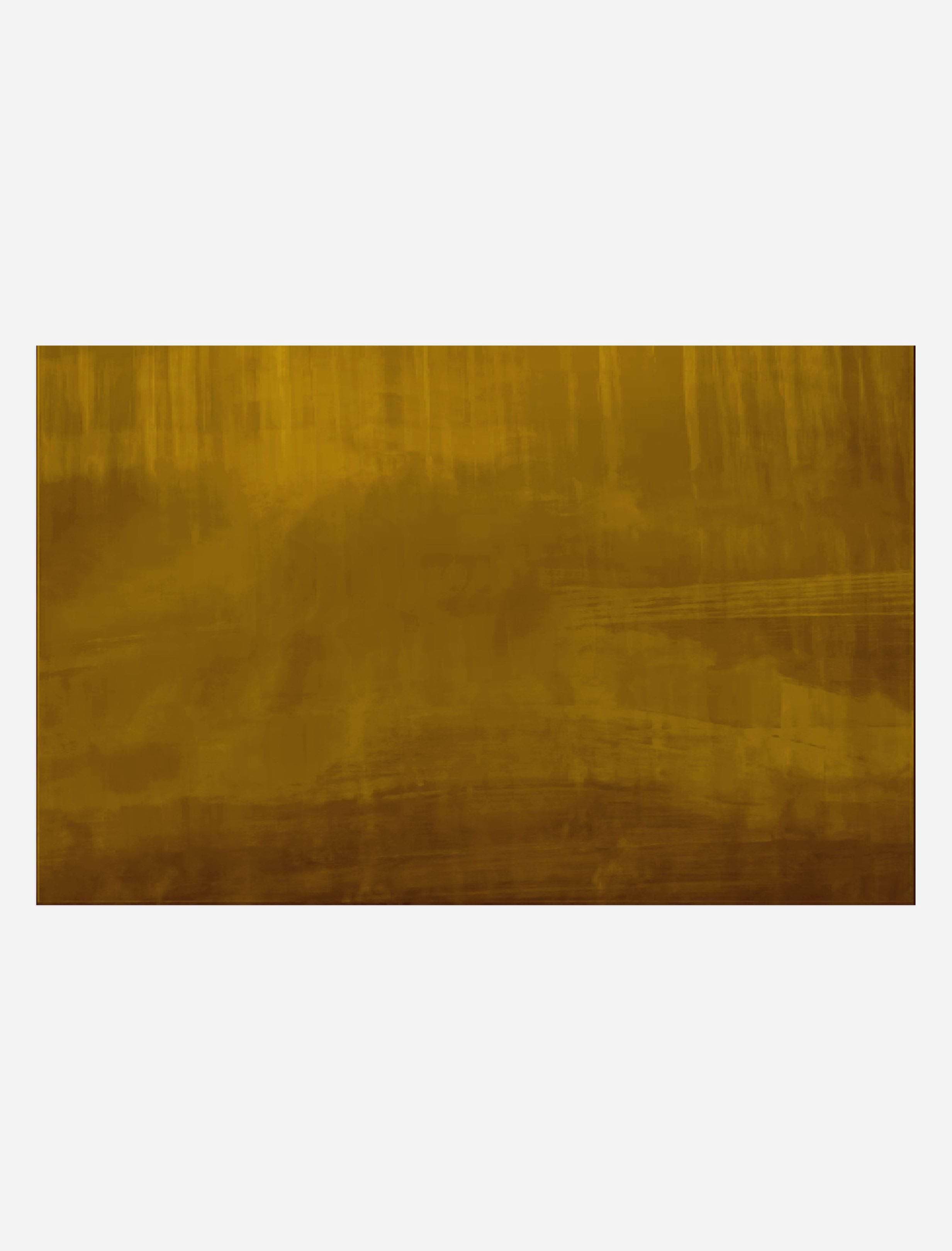
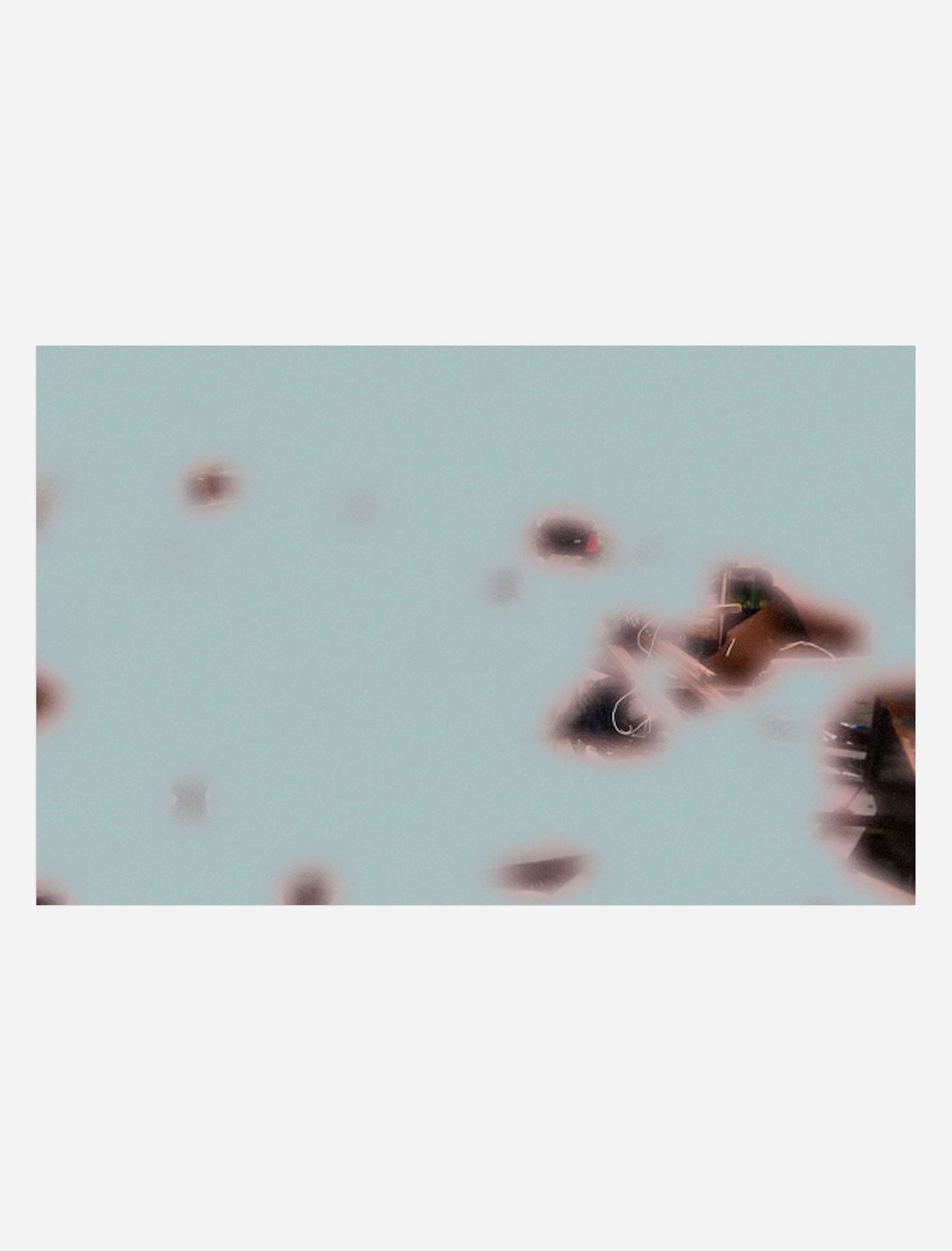
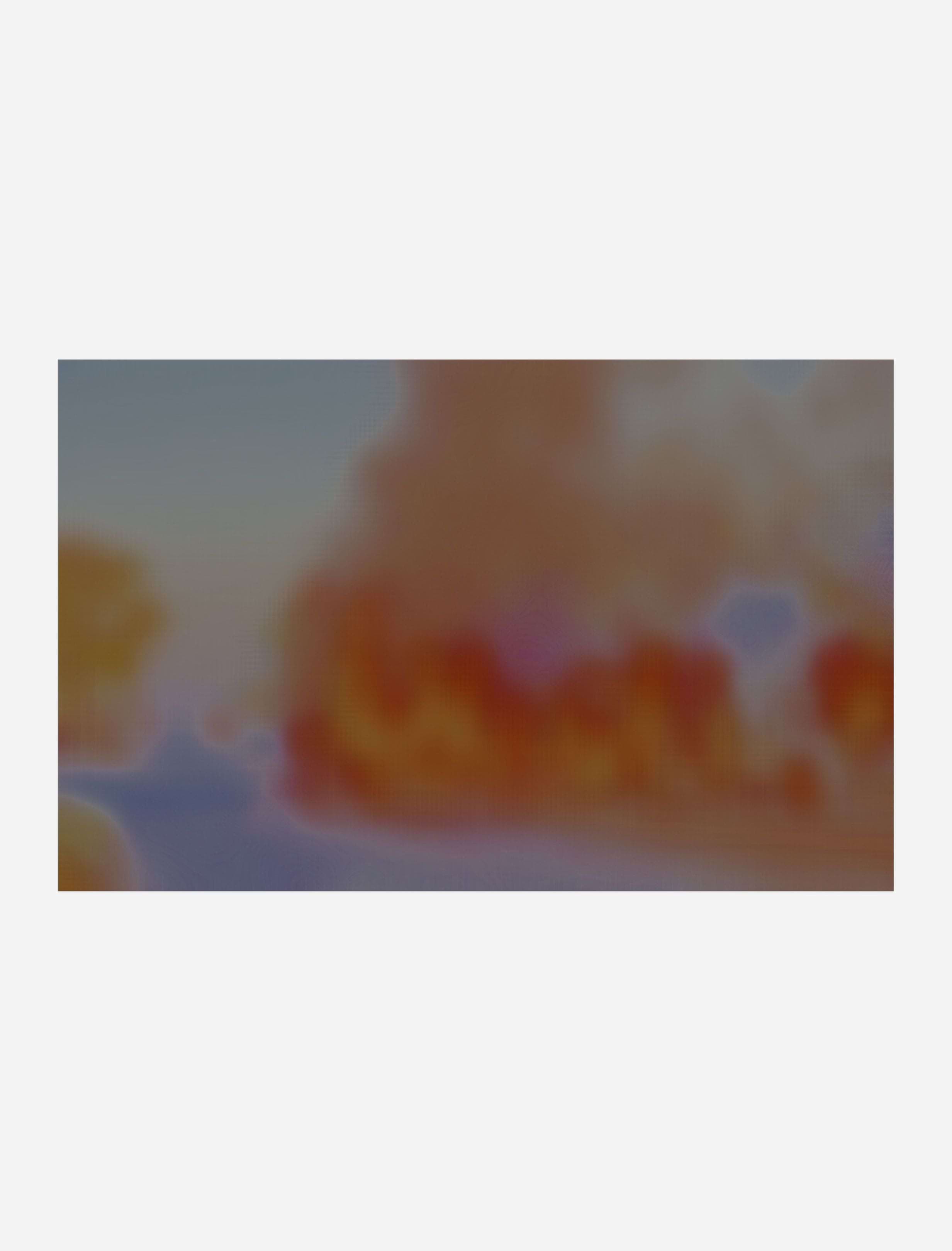

Rose Shakinovsky’s conceptual approach to painting practice originates from found photographs of political upheavals such as Hurricane Beryl, which affected the island of Carriacou, in Grenada in 2024, the heavy rainfalls that caused landslides in the Southern region of Ethiopia in 2024 or the insurrection that took hold in Haiti in 2023, resulting in an escalation of violence and displacement of citizens, including women and children. Shakinovsky subjects these images to digital manipulation using basic computer filters until unexpected abstract forms emerge. Her work examines political, ecological and social disasters filtered through chance and recognition.
Shakinovsky’s paintings remove recognisable features of the original photographs through opaque digital processes, coupled with a slow and rigorous painting technique. In this way, Shakinovsky reduces the object to its formal and most basic qualities, focusing on its texture, colour and composition while simultaneously intuiting its conceptual possibilities. She refers to this as a process that reveals "parallel realities" that maintain the essence of the tragic source material while creating an entirely new visual language that escapes traditional abstract painting categories. Yet when placed beside the original photograph, and although marks might initially appear as mere dabs of paint, the compositional connections remain undeniable.
Within this body of work, Shakinovsky continues exploring her interest in art history and how various forms of language and storytelling can impact history. She does this while consciously working against and challenging traditional art historical representations.
Rose Shakinovsky’s conceptual approach to painting practice originates from found photographs of political upheavals such as Hurricane Beryl, which affected the island of Carriacou, in Grenada in 2024, the heavy rainfalls that caused landslides in the Southern region of Ethiopia in 2024 or the insurrection that took hold in Haiti in 2023, resulting in an escalation of violence and displacement of citizens, including women and children. Shakinovsky subjects these images to digital manipulation using basic computer filters until unexpected abstract forms emerge. Her work examines political, ecological and social disasters filtered through chance and recognition.
Shakinovsky’s paintings remove recognisable features of the original photographs through opaque digital processes, coupled with a slow and rigorous painting technique. In this way, Shakinovsky reduces the object to its formal and most basic qualities, focusing on its texture, colour and composition while simultaneously intuiting its conceptual possibilities. She refers to this as a process that reveals "parallel realities" that maintain the essence of the tragic source material while creating an entirely new visual language that escapes traditional abstract painting categories. Yet when placed beside the original photograph, and although marks might initially appear as mere dabs of paint, the compositional connections remain undeniable.
Within this body of work, Shakinovsky continues exploring her interest in art history and how various forms of language and storytelling can impact history. She does this while consciously working against and challenging traditional art historical representations.
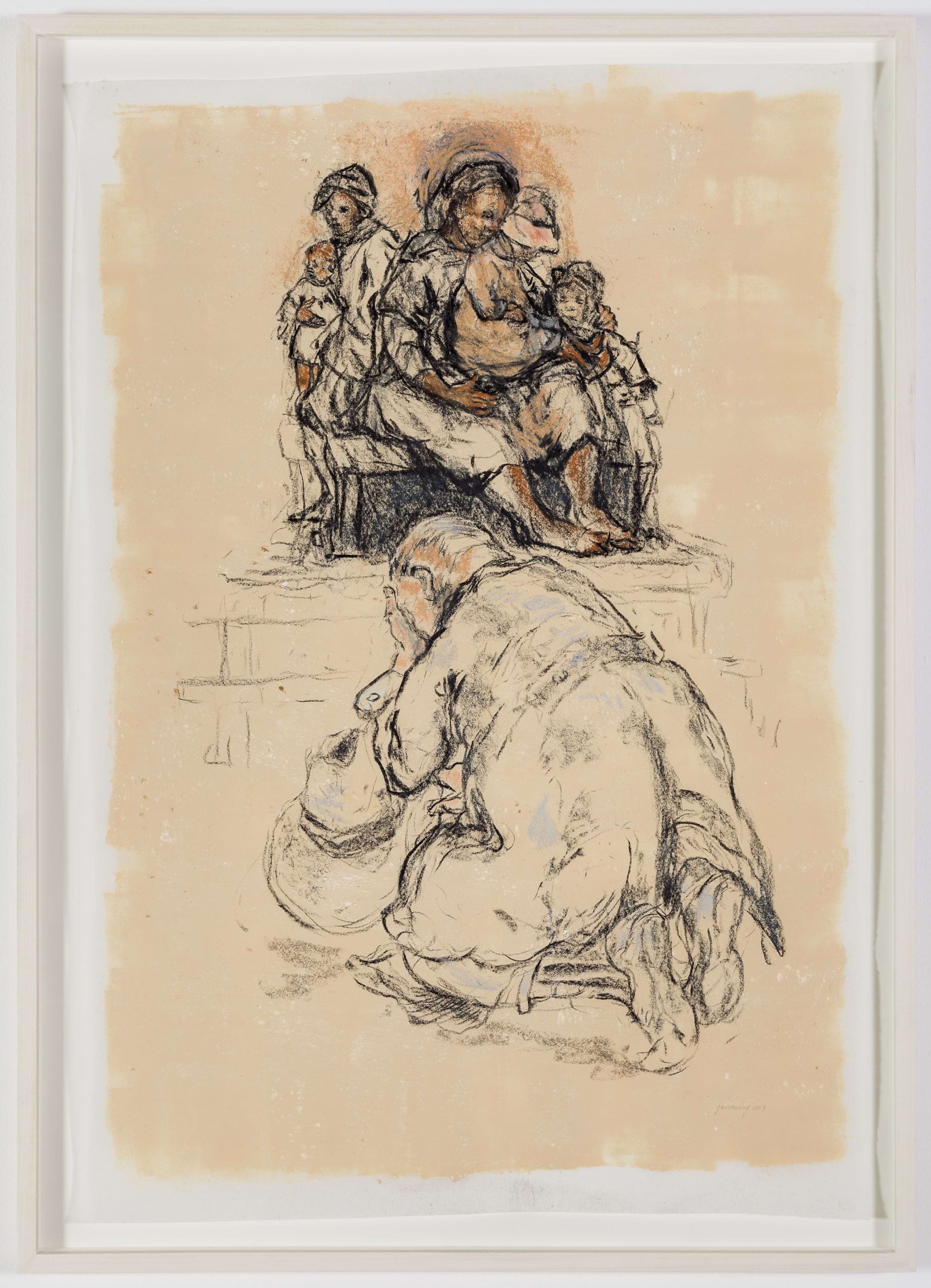
Claire Gavronsky’s language incorporates both paintings and drawings that capture intimate moments of human connection amid crisis and displacement. A central thematic is concerning women supporting women, in what the artist calls "fleeting moments," that represent deeper relationships and connections which are often overlooked. The work is a response to ongoing conflicts and warfare, while also addressing femicide as an epidemic in most societies. Rendered in subtle tones with muted backgrounds and dynamic compositions, her paintings feature a gestural approach that recalls Renaissance paintings and red chalk drawings.
A key aspect of Gavronsky’s work is the emphasis on intimate human gestures: embracing, holding and carrying, as forms of resistance and healing. Her paintings capture pairs and groups of women figures in moments of comfort, support and connection. She deliberately strips away background and context to focus on the emotional and physical language between the subjects.
Her approach combines observational drawing with imagination, sometimes using herself and her partner Rose (one half of the collective rosenclaire) as models to capture specific emotional states. Her compositions deliberately place viewers within the supportive circles of women, creating works that go beyond specific periods or geographies while addressing universal experiences of loss, solidarity and conflict.
Claire Gavronsky’s language incorporates both paintings and drawings that capture intimate moments of human connection amid crisis and displacement. A central thematic is concerning women supporting women, in what the artist calls "fleeting moments," that represent deeper relationships and connections which are often overlooked. The work is a response to ongoing conflicts and warfare, while also addressing femicide as an epidemic in most societies. Rendered in subtle tones with muted backgrounds and dynamic compositions, her paintings feature a gestural approach that recalls Renaissance paintings and red chalk drawings.
A key aspect of Gavronsky’s work is the emphasis on intimate human gestures: embracing, holding and carrying, as forms of resistance and healing. Her paintings capture pairs and groups of women figures in moments of comfort, support and connection. She deliberately strips away background and context to focus on the emotional and physical language between the subjects.
Her approach combines observational drawing with imagination, sometimes using herself and her partner Rose (one half of the collective rosenclaire) as models to capture specific emotional states. Her compositions deliberately place viewers within the supportive circles of women, creating works that go beyond specific periods or geographies while addressing universal experiences of loss, solidarity and conflict.
Rose Shakinovsky’s conceptual approach to painting practice originates from found photographs of political upheavals such as Hurricane Beryl, which affected the island of Carriacou, in Grenada in 2024, the heavy rainfalls that caused landslides in the Southern region of Ethiopia in 2024 or the insurrection that took hold in Haiti in 2023, resulting in an escalation of violence and displacement of citizens, including women and children. Shakinovsky subjects these images to digital manipulation using basic computer filters until unexpected abstract forms emerge. Her work examines political, ecological and social disasters filtered through chance and recognition.
Shakinovsky’s paintings remove recognisable features of the original photographs through opaque digital processes, coupled with a slow and rigorous painting technique. In this way, Shakinovsky reduces the object to its formal and most basic qualities, focusing on its texture, colour and composition while simultaneously intuiting its conceptual possibilities. She refers to this as a process that reveals "parallel realities" that maintain the essence of the tragic source material while creating an entirely new visual language that escapes traditional abstract painting categories. Yet when placed beside the original photograph, and although marks might initially appear as mere dabs of paint, the compositional connections remain undeniable.
Within this body of work, Shakinovsky continues exploring her interest in art history and how various forms of language and storytelling can impact history. She does this while consciously working against and challenging traditional art historical representations.
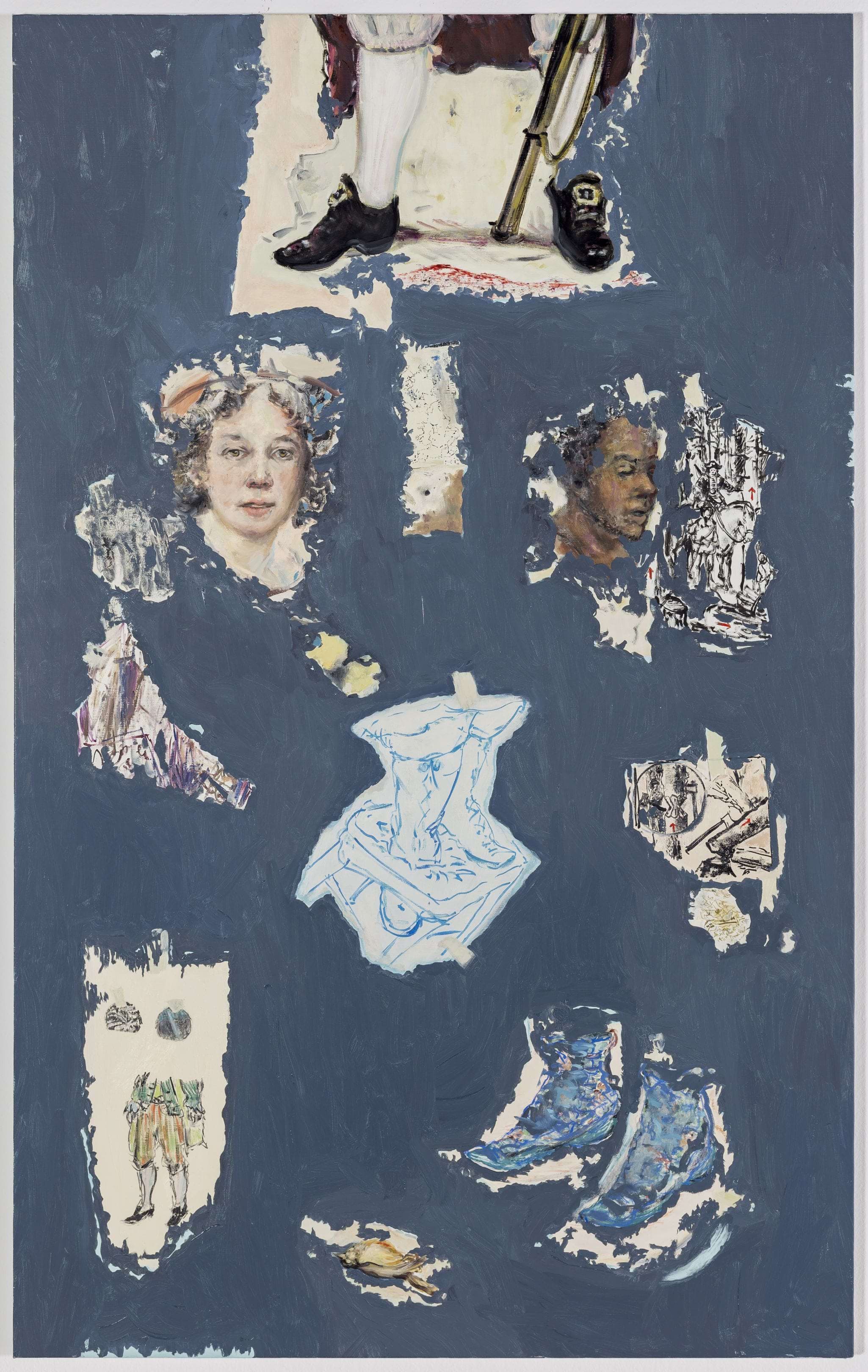
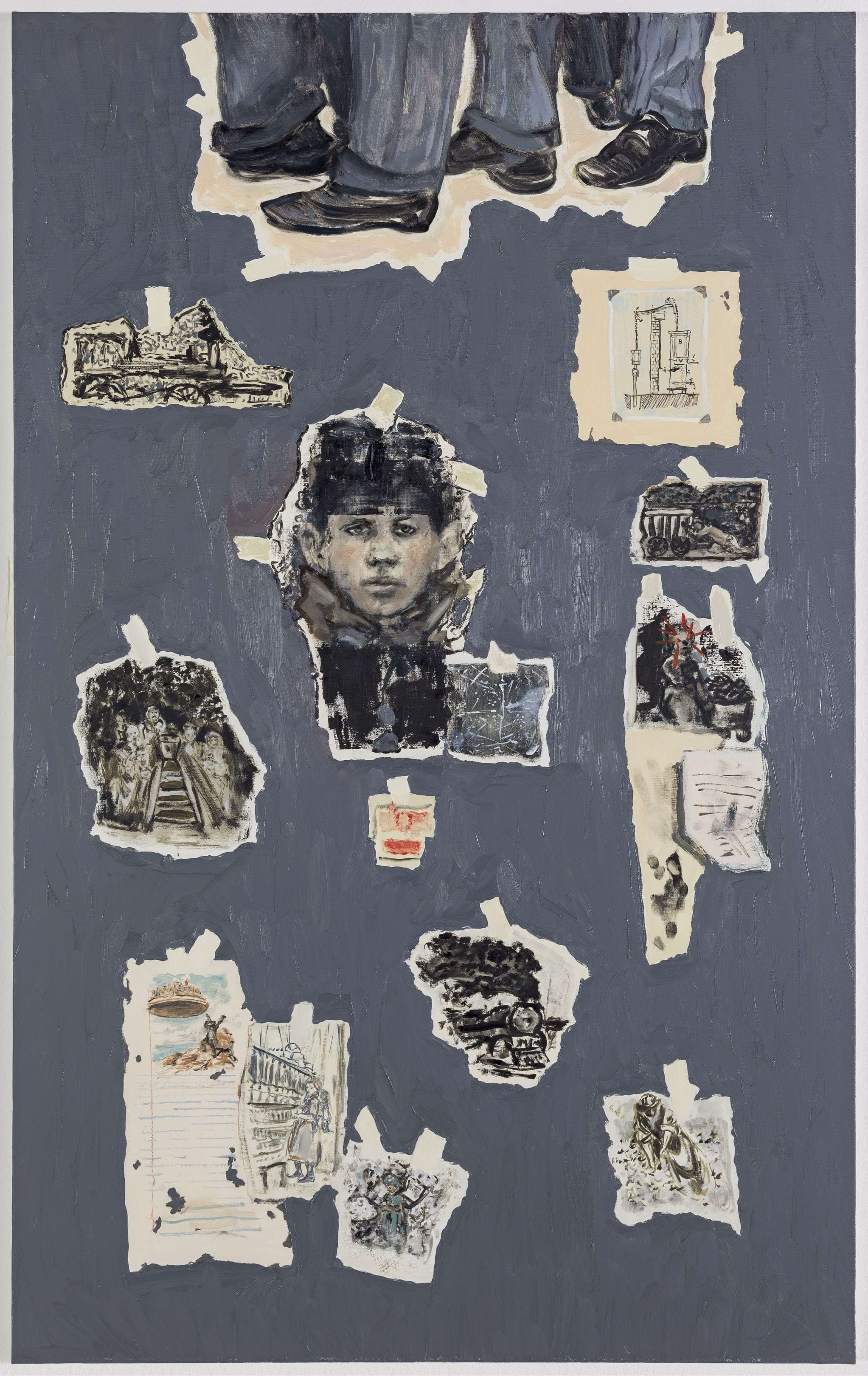
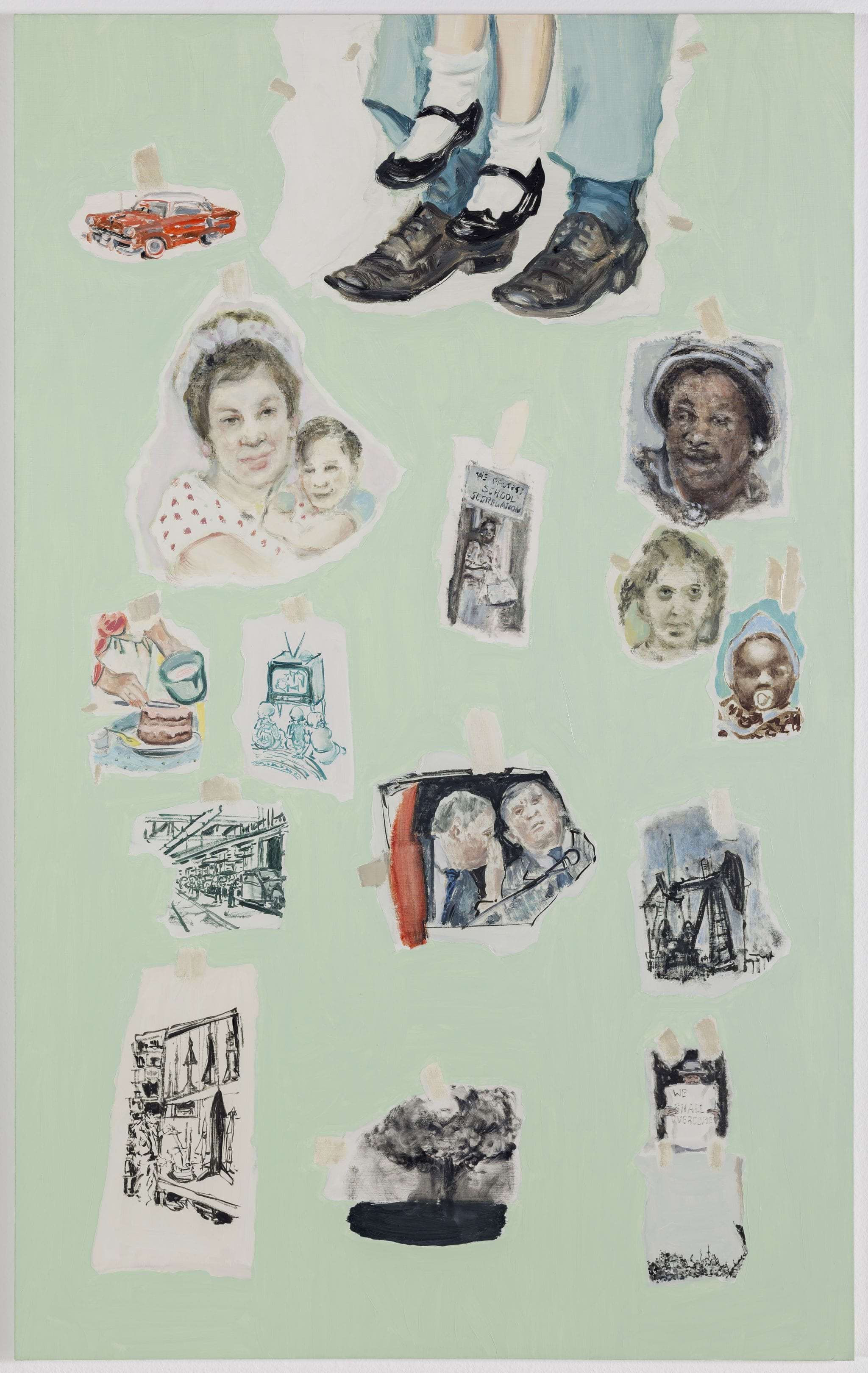
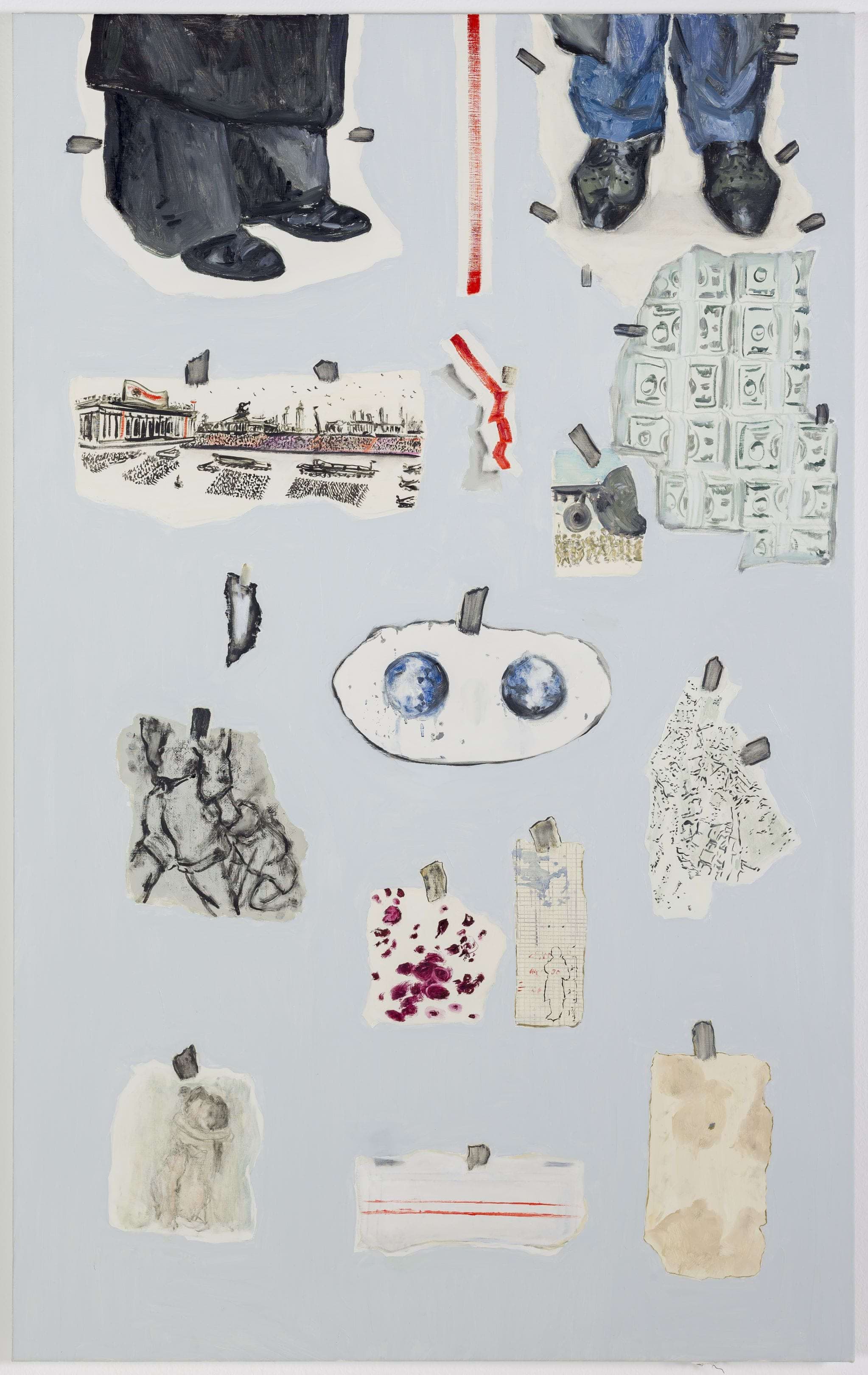
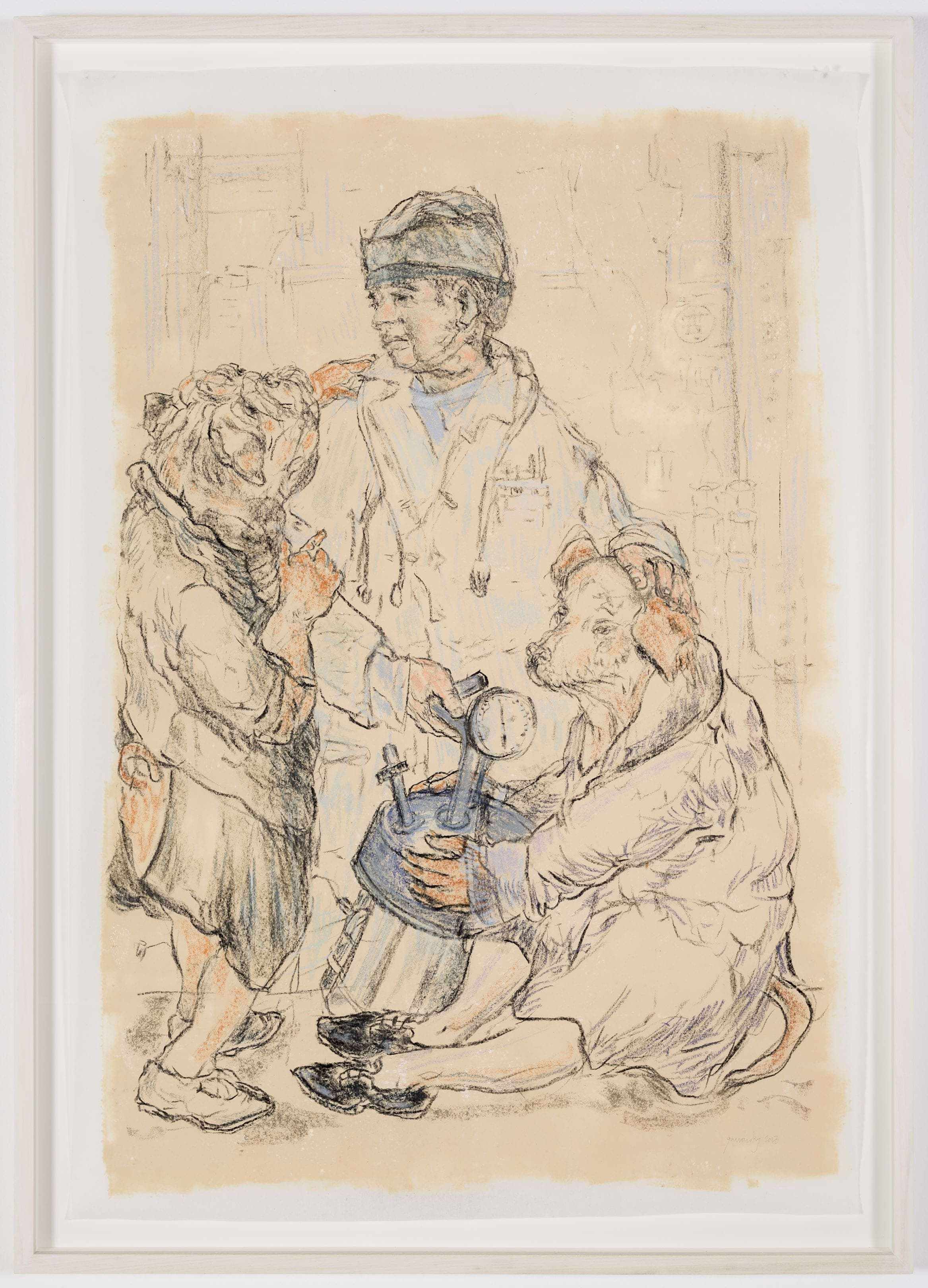
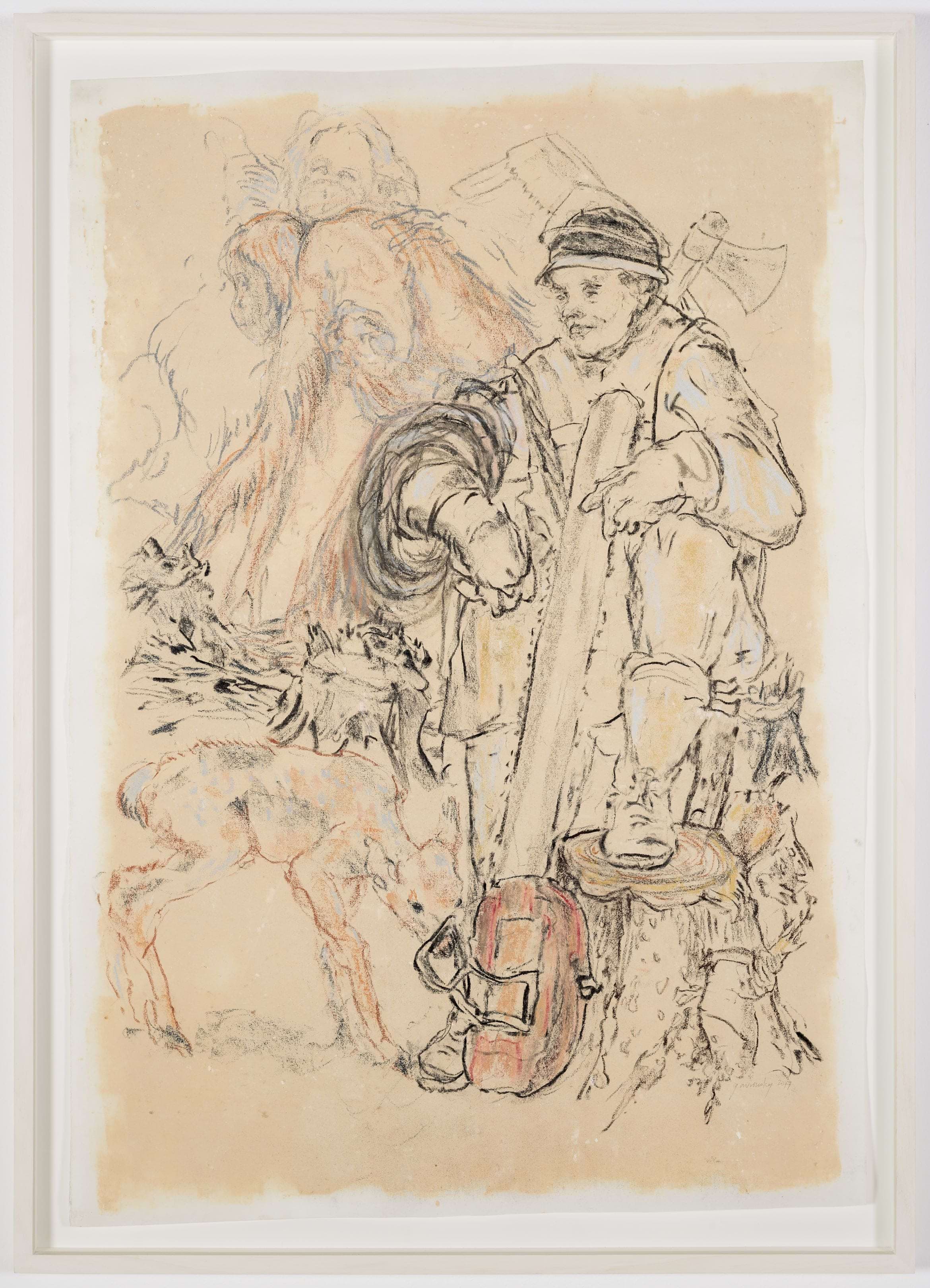
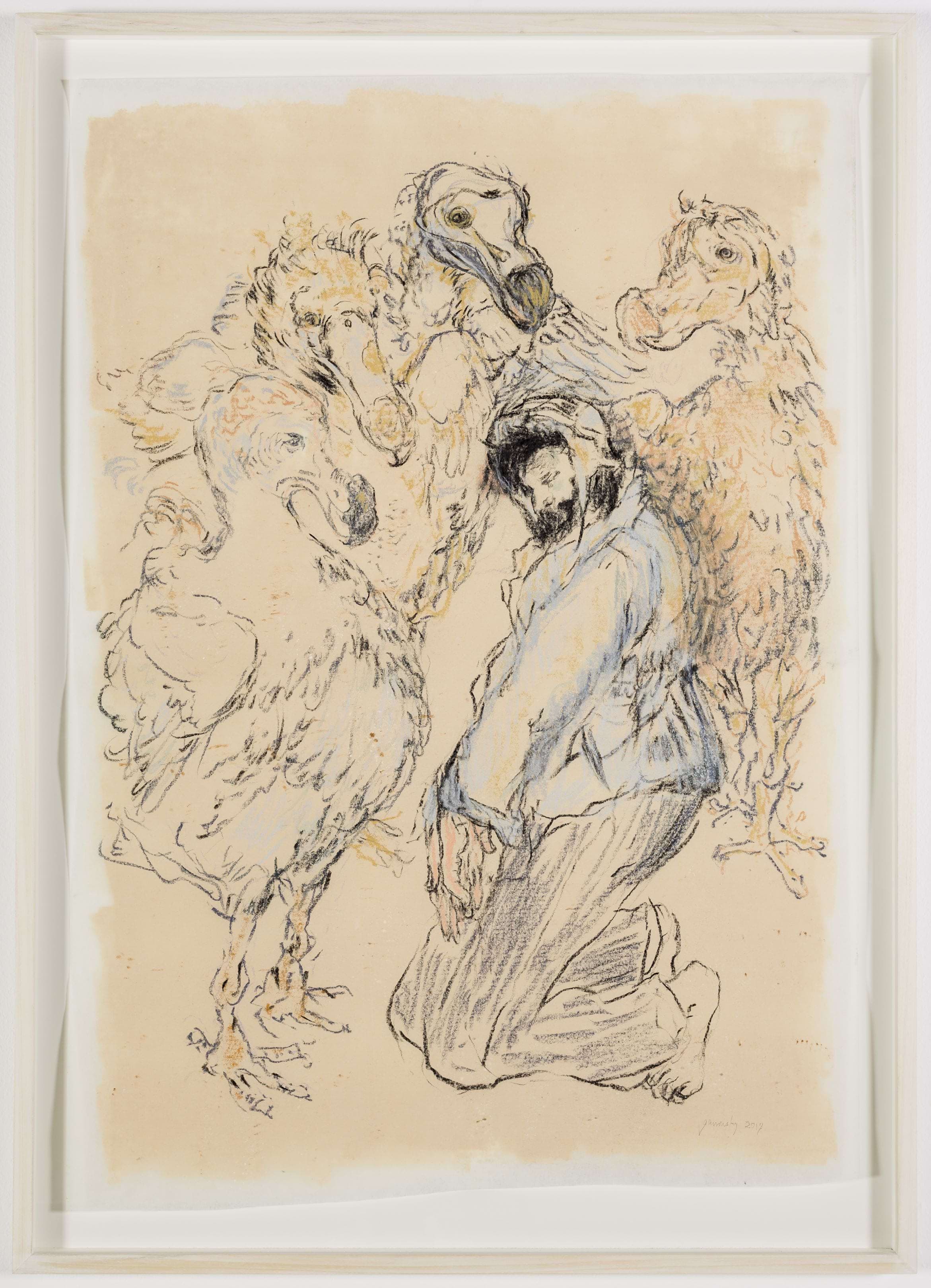
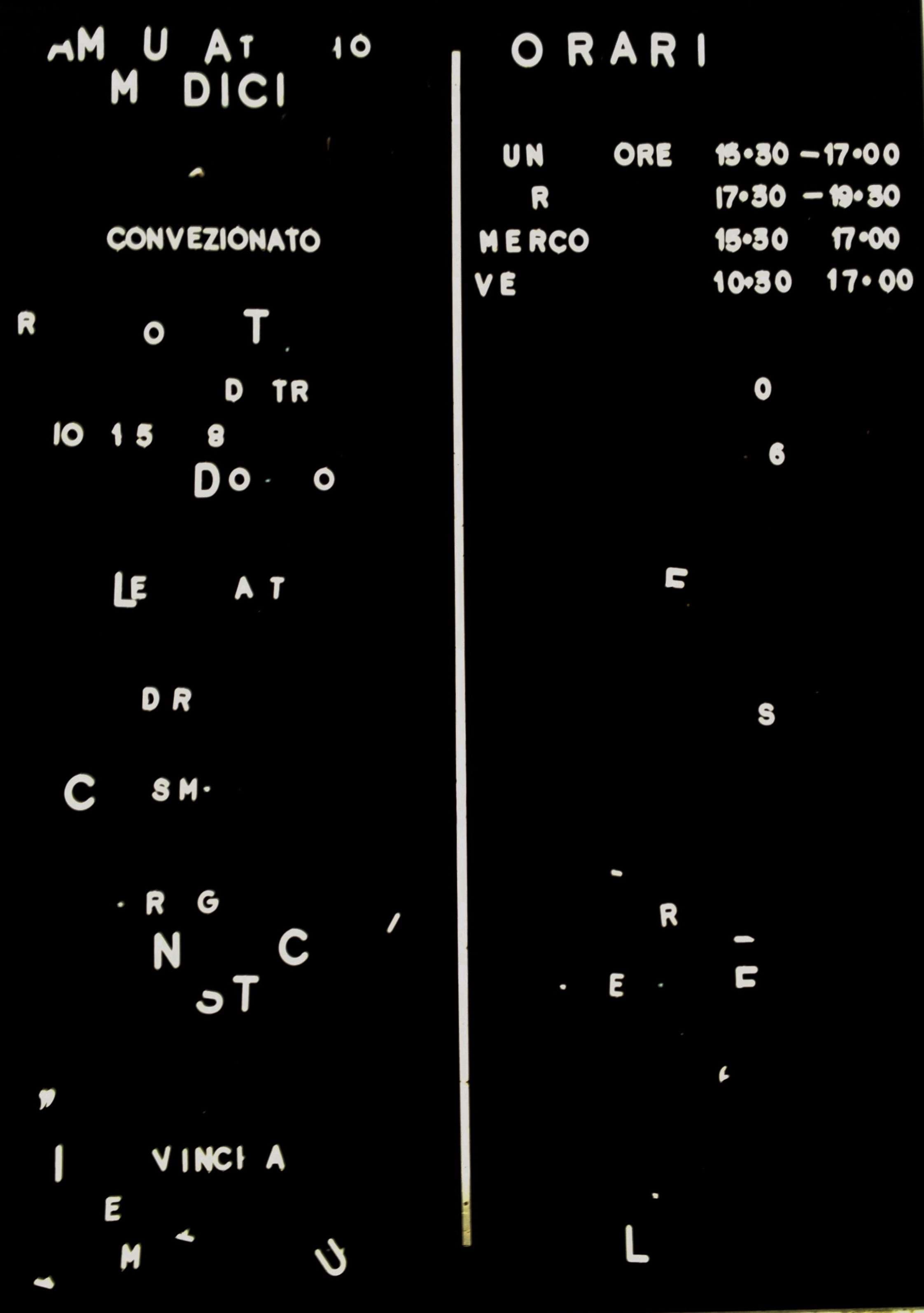
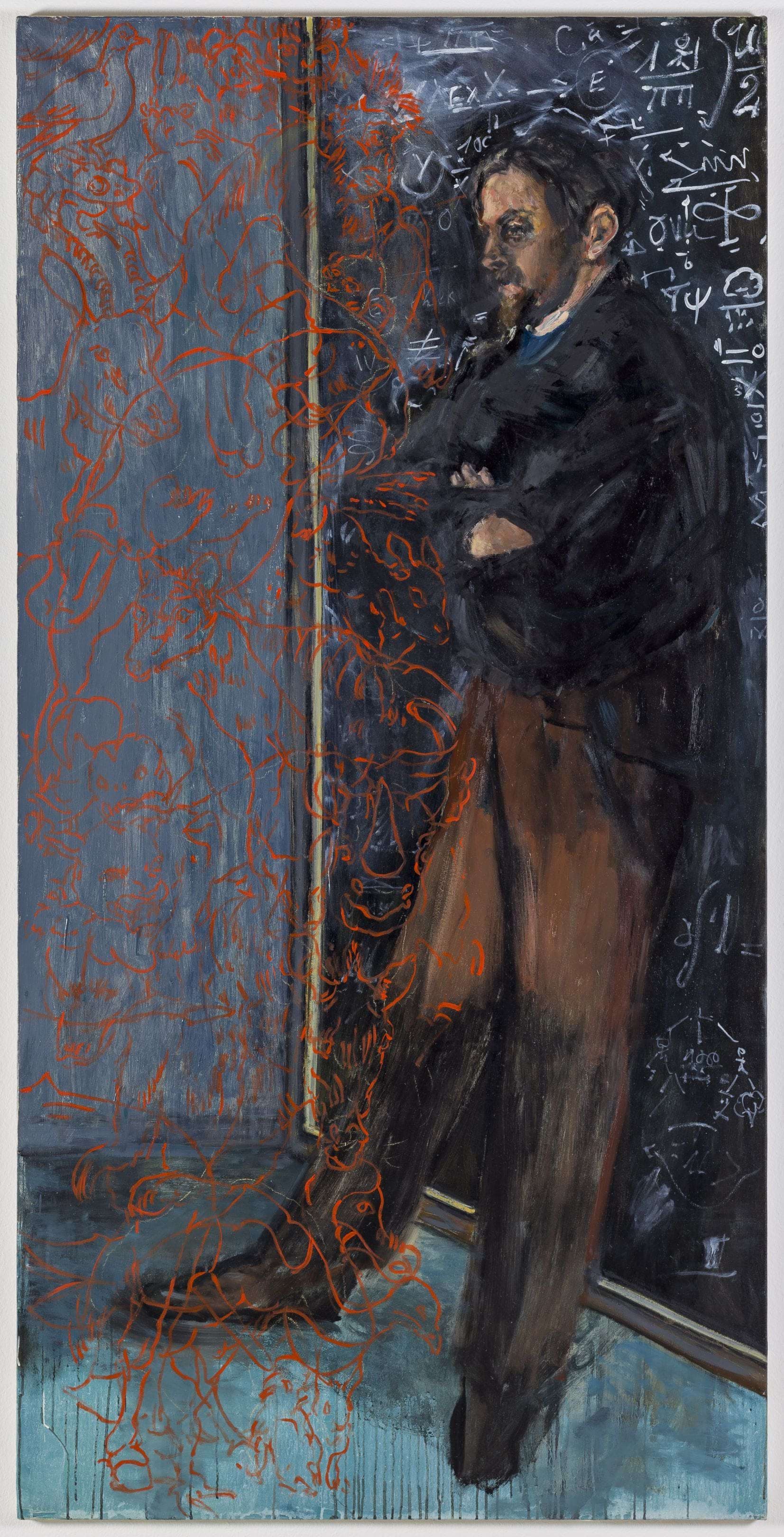
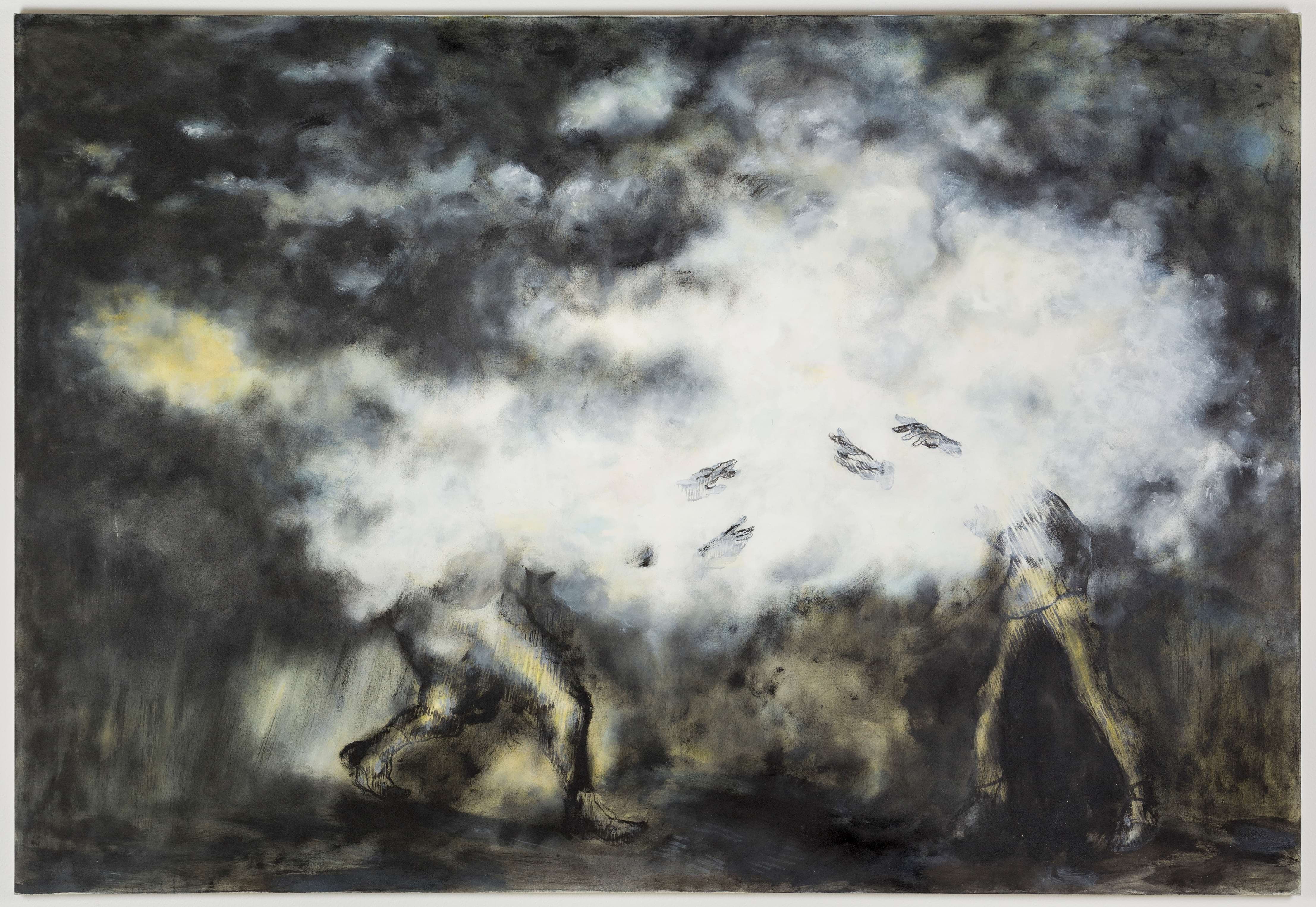
This work by Claire Gavronsky is taken from her exhibition titled Speechless which explored the historical context and consequences of the Anthroposcene/ Capitalocene. Many artists, scientists, anthropologists and philosophers have over the past decade been trying to define and come to grips with finding appropriate languages to describe the implications of this new era. Some see it as yet another Western-centricity and colonial mode of representation while others see the possibility of it as a process in constant flux between the self, the other and the nonhuman.
Claire has traced the consequences of industrialization and colonialism from the 1800’s, through the Great Acceleration of the 1950’s to the present. The work reflects the exploitation and appropriation of natural and human resources and leaves us literally with the last man standing.
Speechless also however has a flip side, that of wonder when we are left silent in the face of beauty, empathy, the inexplicable and the beyond human.
To be speechless is also knowing when not to speak, when it’s time to listen and even perhaps disappear.